




 By Staff
July 15th, 2024
BURLINGTON, ON
Animal Services will continue to host educational pop-ups at various rec centres and public libraries on Thursdays throughout the summer. Drop by to learn about coyote-proofing their property, and what to do if they see a coyote.
Last year a number of people were bitten by coyotes, one a very young child in the backyard.
If you can’t get to a Pop Up here are the rules you have to follow.
Stop feeding coyotes
Never feed coyotes. This includes intentionally feeding them or accidentally by leaving food waste on private or public property. Feeding coyotes teaches them to depend on human handouts and can cause them to become too familiar with humans. This can lead to aggressive behaviour near people and dogs.
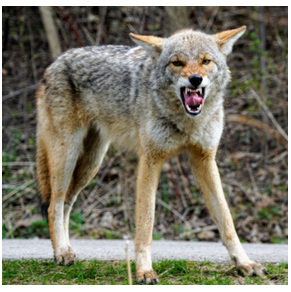
The Coyote can be very dangerous. Never run if this is the way the animal is looking at you. Wave your arms and make a lot of noise.
Hand and ground feeding wildlife on private or public property is prohibited by the City’s Animal Control By-law (60-2005).
The City’s Lot Maintenance By-law (49-2022) requires waste, compost, pet food and animal food be stored in a clean and well-maintained manner so as to not attract rodents, vermin, insects, pests or wildlife, or create a health and safety hazard, save and except as permitted under the City’s Animal Control By-law.
Contraventions of By-law 60-2005 or By-law 49-2022 may be subject to a fine.
Animal Control Officers have the discretion to issue tickets of $250 or issue a court summons with an increased fine range from $500 up to a maximum of $100,000. A summons is usually reserved for serious offences and repeat offenders.
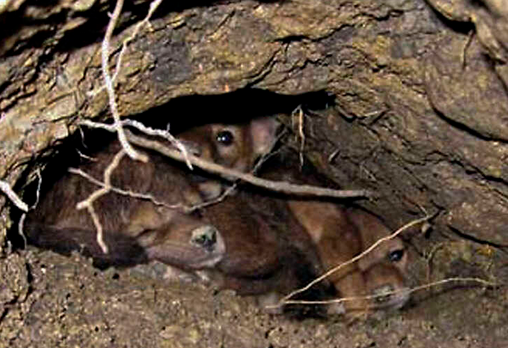
Coyote pups n their den.
Make sure garbage, compost and pet food are stored in a place coyotes cannot access.
On garbage collection day, place your garbage at the curb in the morning instead of the night before.
Dealing with coyotes
Coyote sightings are common. If you see a coyote, keep your distance and the animal will most likely avoid you. If you come across a coyote:
- Stop and pick up small children and pets
- Use hazing techniques – shout loudly and wave your arms high in the air
- Back away slowly while remaining calm
- Never run or turn your back on a coyote
If you see a sick or injured coyote, please fill out this form.
Coyote sightings and vocalizations may increase during season active times of the year such as:
- January to February: mating season
- March to May: den selection and pup rearing
- September to December: dispersal of pack members
Understanding the benefits of coyotes in our ecosystem helps to promote a preserve healthy wild spaces.
If a coyote poses an immediate threat to public safety, call 9-1-1 and alert the Halton Regional Police Service (HRPS).
Deterring coyotes from your property
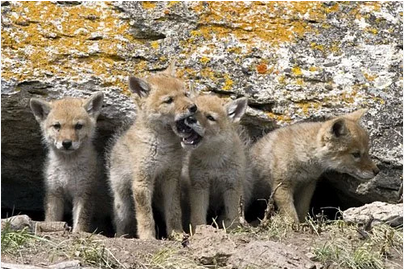
Coyote pups coming out of their den.
Residential neighbourhoods are an ideal coyote habitat. Water, shelter and food sources like garbage, pet food and birdfeeders make residential areas appealing to coyotes.
By-law 49-2022 is the City’s Lot Maintenance Bylaw. A property owner is responsible to keep their lot clean and clear of debris. Residents and property owners can make sure they comply with the bylaw by ensuring their property is tidy and clear of garbage, food, brush, long grass and wood piles which are ideal den sites for coyotes or other wild animals that attract coyotes. Backyard bird feeders are exempt under the City’s Lot Maintenance Bylaw (49-2022). They must be well maintained to avoid fines.
You can make your property less inviting to coyotes by:
- Cleaning up after your dog, as coyotes are attracted to dog feces
- Use wire screening to close off spaces around and under decks and sheds . Make sure the wire screening goes at least 20 centimetres underground
- Putting up a two-metre-high fence that extends at least 20 centimetres underground
- Removing all water and food sources from your yard, including birdseed and fruit that has fallen to the ground. These foods can also attract smaller animals that in turn attract coyotes
- Removing long grass, dead brush and wood piles, as these provide potential den sites for coyotes or other wild animals that attract coyotes
- Storing garbage, compost and pet food in a place coyotes cannot access, like a garage or shed
- Using flashing lights and motion sensors
Hazing coyotes
Consistent hazing will scare off coyotes by re-instilling their fear of humans. Any time you see a coyote in a residential area, use hazing techniques to scare it away, such as:
- Spraying the coyote with water from a garden hose or a water gun filled with vinegar
- Throwing small rocks, large sticks, cans and or rubber balls near the coyote
- Using air horns and whistles or banging pots
- Waving your arms and making yourself look as big as possible
- Yelling loudly

A coyote being taught how to howl
Protecting pets from coyotes
Never leave pets unattended. Coyotes can hunt cats and small dogs. They may view dogs as a threat to their territory or family. You can protect your pets by:
- Keeping your pets on a short leash when walking outdoors. Ninety-two per cent of conflict between wildlife and dogs occurs when dogs are off-leash
- Using caution on trails at dawn and dusk – this is when coyote activity is highest
- Avoiding known den sites and thick vegetation where coyotes may seek cover. This is especially important in denning season (April to June) and the dispersal period (September to October) when coyote pups are leaving the den
- Not leaving pets unattended in your backyard, especially in areas that back on to ravines or woodlots
- Keeping cats indoors
- Neutering and spaying dogs, as coyotes are attracted to and can mate with dogs that have not been spayed or neutered
Related news stories:
City manager fails to advise council on a critical report on Coyote problem
Adults bitten while sitting outside a residence

