Marcus Gee, a Toronto Star columnist, had this to say on the day America celebrated its 250th anniversary.
“ In a few well-chosen words, Thomas Jefferson and his fellow founders managed to express the principles not just of the American Revolution but of the cause of freedom everywhere.
“We hold these truths to be self-evident,” says the declaration’s most famous passage, “that all men are created equal, that they are endowed by their Creator with certain unalienable rights, that among these are life, liberty and the pursuit of happiness.”
One needs to read those words a second time to let the strength they convey set in.
Thomas Jefferson was a Founding Father and the third president of the United States from 1801 to 1809. He was the second vice president under John Adams. Jefferson was the primary author of the Declaration of Independence and a leading proponent of democracy, republicanism and natural rights.
“We could argue all day about whether the United States truly lived up to those ideals, then or later. If all men were created equal, what about Jefferson’s slaves? As Martin Luther King Jr. was to observe two centuries later, when it came to its Black citizens, America failed to deliver on the “promissory note” of its founding document.
“What is indisputable is the impact of those 35 words. As familiar as they are, they still land with freshness and force. “These truths” surely are self-evident – plain and obvious to anyone who can see, hear and think. We are all born equal. We deserve to live our lives in freedom. That right does not have to be bestowed on us. It is “unalienable.” It comes with being human. No tyrant has the right to take it away.
“The “pursuit of happiness” is the phrase in the Declaration that stands out the most. So modern-sounding, so simple. For what does anyone anywhere really want but a chance at happiness, however they may define it?
“The gift America’s founders gave to the world was to conceive a form of government that, for the first time, made such a pursuit possible for large numbers of ordinary people. Based on “the consent of the governed” rather than divine right or brute force, the American formula proved more resilient, adaptable and ultimately stable than any monarchy or autocracy.
“The Declaration of Independence laid the foundation for the most successful exercise in self-government the world has ever seen.
“From a collection of disparate political units on the eastern seaboard of North America, the United States grew into a dynamic nation that spanned the continent, then a military and economic superpower that straddled the globe. For all its sins, crimes and blunders, it has been an unparalleled force for good, what Barack Obama liked to call the one truly “indispensable nation.”
“It saved the democratic world, in turn, from militarism, fascism and communism. It gave the world the airplane, jazz, rock music, the smartphone and the personal computer. Americans have won three times as many Nobel prizes as the second-place nation, Britain. Despite the idiocies of the Trump administration, from self-defeating protectionism to wildly improvident public spending, its innovative, enterprising companies lead the world, most recently in the AI revolution.
“More important than all that, its ideals have stood as a beacon to the world. Even if the stature of the United States has fallen during the current chaos, that beacon still burns. Millions of people around the world look to it hopefully, from the fighting soldier in the trenches of Ukraine to the rebellious student on the streets of Myanmar.
What kind of America will that young boy live in?
“Tarnished as it may be, the American idea as expressed in the Declaration of Independence still means something. As the United States celebrates this clouded birthday, that is worth remembering.”
Worth remembering as well is how the elected leadership has failed the people that elected them.
America has some very hard years ahead of it – they stand a chance of failing as a Republic.
What impact is that going to have on Canada as we struggle to change some of the alignments we have relied upon for at least three decades?
If Prime Minister Mark Carney is right and that the relationship with the United States has ruptured, we will have to find a way to take from the American experience the parts that were really important: “We hold these truths to be self-evident,” that all men are created equal, that they are endowed by their Creator with certain unalienable rights, that among these are life, liberty and the pursuit of happiness.”
There is some good news in the tax increase projections.
The current council cannot increase taxes. Tax increases will be made by the Council that is elected on October 26th, 2026.
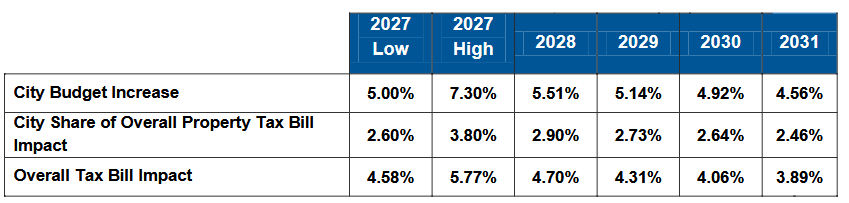
Tax increases have grown in the last two terms of the current City Council; the cumulative growth exceeding 40%. These are numbers that are not sustainable.
And yet the increases that are on the table range from 5.% to 7.3%
City Staff provided council with a preliminary financial outlook for the City’s 2027 budget and to identify key economic and financial factors that may influence the overall tax increase required to maintain existing service levels and advance Council priorities. To reduce the tax burden, service levels are going to have to be reduced; not something City Council wants to talk about.
This forecast is preliminary in nature and will continue to be refined through the 2027 budget development process. The higher range includes increasing the City’s contribution to capital reserves to help reduce the projected $350 million infrastructure deficit over the next 10 years as identified in the City’s 2025 Asset Management Plan update.
That infrastructure deficit is due to the fact that the Council in place at the time did not set aside the sums that were needed to keep the infrastructure up to date. You are now paying for the mistakes made by the council that has been in place for the last eight years.
Every Council since 2010 has flubbed on setting aside funds for catching up on the cost of maintaining the infrastructure.
When the provincial government told Burlington that the was going to get an addition to the Joseph Brant HOspital thay added that we would have to put up a third of the clst – even though helath is a provincial matter.
An architect’s rendering of the new entrance to the Joseph Brant Hospital. The citizens of Burlington paid for one third of the cost to build – that included a new parking garage just to the west of the hospital.
Nevertheless, there was a special levy put in place to pay for the hospital. When that had been paid for, did the city stop collecting the levy? Not a chance – when municipal finance people get their hands on some of your money – they don’t know how to give it back to you.
That hospital levy was rolled over into becoming a new infrastructure levy.
At some point there has to be a deep study on just how the city is handling the infrastructure deficit.
What’s really cheeky is that two members of the current council think they can do a better job and replace Mayor Meed Ward.
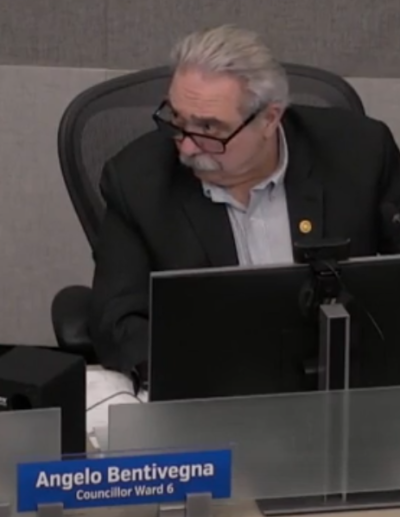
Councillor Bentivegna, who is not running for Mayor, is on record as saying he voted against the Council budget seven out of eight occasions.
So no one is to blame?
The last two lines are both misleading and classic disinformation. The city knows better; the Chief Financial Officer, Craig Millar should be both ashamed and embarrassed for putting numbers out like this
Craig Millar should be both ashamed and embarrassed for putting numbers out like this.
This Council has yet to learn that they cannot continue to baffle the public with misinformation.
The City collects the Regional taxes and the School Board taxes. That is what they do – just collects the money and passes it along.
But they have this slimy little trick of telling people that when you add all three taxes together- municipal, regional and school board the level is lower.
City Council is responsible for one level of taxation. What the city receives and what it spends.
Council passed a motion to direct finance staff to report back with a range of additional taxing scenarios and any impacts those scenarios would have on existing commitments, community services or the capital levy of 2% to achieve these reductions.
The scenarios are:
No more than inflation
A zero % increase
Remember this when you prepare to cast your vote next October.
For generations, homeownership has been a cornerstone of the Canadian dream. It has represented stability, financial security, community involvement and an opportunity to build wealth over time. But a recent national survey conducted by Abacus Data for the Canadian Home Builders’ Association (CHBA) suggests that while Canadians, particularly younger Canadians, still aspire to own a home, many are losing confidence that they will ever achieve that goal.
The survey of 3,000 Canadians paints a picture that should concern policymakers at all levels of government. The findings reveal a growing gap between aspiration and reality, especially among younger adults who increasingly see homeownership as something they want, but may never attain.
The good news is that the desire to own a home remains remarkably strong. Seven in ten non-homeowners say they still want to own a home someday. Among Canadians aged 18 to 29, that number rises to an astonishing 89 per cent. Even among households earning less than $50,000 annually, six in ten still hope to become homeowners one day.
Those numbers tell us something important. Despite years of rising housing costs, high interest rates and affordability challenges, young Canadians have not abandoned the dream of homeownership. What has changed is their confidence.
According to the survey, only 29 per cent of non-homeowners are confident they will ever be able to buy a home. Among younger Canadians, uncertainty is particularly acute. Forty-two per cent of those aged 18 to 29 say they hope to buy a home someday but are unsure whether it will ever be possible.
Michael Collins-Williams, appearing before Burlington City Council on a development charge issue. Seated is Vince Molinaro.
Michael Collins-Williams, Chief Executive Officer and spokesperson for the WEHBA was testifying at a federal government hearing on development issues.
He made an interesting remark.
“The definition of just what a development charge is in 2005 versus in 2015 versus 2025 is quite different.
The different components that go into development charges have changed significantly over the last couple of decades, and unfortunately, what we’re including in development charges, at least in Ontario today, includes a variety of items that benefit the entire broader community, rather than having that direct nexus between the new housing development and the infrastructure required.
“In my view, a generational wealth transfer or generational inequity that younger people are being saddled with the cost for infrastructure that previous generations were not.”
This is all we were able to pick up – we are working at getting the complete transcript of the hearing.
Development charges are such a hot financial and political topic today that we all must agree on just what development charges are.
As good as it gets – and only in Burlington. From now through to the end of August.
Sitting in a pleasant park in the early evening listening to pleasant music is close to as good as it gets.
Every year, Concerts in the Park provides a diverse collection of ensembles and genres.
In the shade of the trees, letting the music come to you.
End your day on a high note at the Central Park Bandshell (Music Centre) every Sunday and Wednesday evening from 7 to 8:30 p.m. from June 21 until Aug. 30.
It was fate – the invisible hand of global justice… or maybe an angry God. Just as Carney and Smith were heading for a Calgary podium to announce their new oil pipeline, which the PM contended would make us the global energy super power, a climate disturbance – a massive storm – the third in as many days, took out my satellite TV, internet and hydro.
Prime Minister Mark Carney.
Carney had dug into his background as a dealmaker, banker, and venture capitalist to save Premier Smith from falling on her face over this pipeline matter. It was an obvious solution assuming Canada really does need another pipeline. And it may be necessary because fossil fuels make up something like a quarter of our US exports and who knows when Mr. Trump will want to roll over on us again.
Danielle Smith
Pierre Poilievre
Smith and her federal colleague, Mr. Poilievre preferred a pipe into the environmentally sensitive northern BC waters. They wanted to declare war on environmentalists, British Columbians and the indigenous. But the optimal solution was a no-brainer. Add another pipe on top of the existing TMX – the one Justin Trudeau had built a decade ago. Though nobody at the podium, including his successor, thanked the former PM for his foresight a decade ago.
Carney may be helping to further destroy the planet’s environment as we know it, but he is doing what he said he would do – building a new pipeline. That same day, he quashed potential criticism from anti-pipeline critic BC premier David Eby by preserving the tanker free zone on BC’s northern coast (also Trudeau) and promising him loads of federal cash for west coast projects.
Carney was busy that day, also signing onto another free trade deal, this time with the Philippines, to help counter our losses in export revenue to the US. Canada’s percent of exports south of the border has fallen from 76% to 68% since the Trump tariffs arrived. And more Trump tariffs are on the way. The US president has refused to extend CUSMA or USMCA, the so-called free trade pact that gets most Canadian products duty-free access into the hands of Americans.
He will roll over on us again.
Trump seems to like the 15% tariff he imposed under Section 122 of the 1974 Trade Act, though that is only a temporary measure in theory. But 15% would be better than the 50% now applied to Canada’s metals and the 25% on autos. Trump is rarely deterred by treaties, so has no remorse about these tariffs that boldly contravene CUSMA. So we need to get used to it – the virtual end of CUSMA is around the corner.
Meanwhile, as we pass another Canada Day there are very positive milestones. For example, the LCBO ban on Yankee booze has been a real boost for our local industry. Canada has performed magnificently in the soccer world cup games. CBC has announced that we will be participating in future Eurovision music contests. And Canadian music icon Bryan Adams has released another song telling Mr. Trump to keep his hands to himself. Much to be proud about but much more still to accomplish.
Ray Rivers, a Gazette Contributing Editor, writes regularly applying his more than 25 years as a federal bureaucrat to his thinking. Rivers was once a candidate for provincial office in Burlington. He was the founder of the Burlington citizen committee on sustainability at a time when climate warming was a hotly debated subject. Ray has a post graduate degree in economics that he earned at the University of Ottawa. Tweet @rayzrivers
Burlington Public Library announces the winners of this year’s Write Here Write Now writing contest.
It’s no secret that Burlington is home to an incredible community of writers. Every year, local storytellers of all ages share their creativity, imagination, and passion through Write Here Write Now, proving that the love of writing is alive and well in our city.
The contest ran from May 1 to May 31 and was open to everyone ages 9 and up who lives, works, or attends school in Burlington.
Announcing the Winners
This year’s contest attracted an outstanding 202 original short stories. BPL staff reviewed every submission and were inspired by the creativity, originality, and imagination on display. Award-winning local authors Jennifer Mook-Sang, Sylvia McNicoll, and Erin Pepler, generously shared their time and expertise as guest judges.
The calibre of this year’s entries was so impressive that the award categories were expanded to include second- and third-place winners in every age category—giving even more talented writers the recognition they deserve.
“We hope you’ll take a moment to read these fantastic winning entries,” says contest organizer and librarian Kumkum Bhandari. “The talent and dedication behind them are truly admirable.”
Congratulations to the winners of Write Here Write Now 2026!
Thank you to everyone who entered Write Here Write Now. It takes real courage to share your creative work, and we are proud of all of you.
If you’re interested in participating in the future, keep an eye out for the 6th annual Burlington Literary Festival this November, where writers of all ages can sharpen their skills through a variety of engaging workshops.
Excitement is building across the GTHA as the City hosts its final FIFA World Cup 2026™ match – Portugal vs. Croatia – tonight, Thursday, July 2 at 7 p.m.
Customers staying in downtown Toronto until after the last scheduled train on their line should plan ahead and be prepared to use alternative ways to get home.Late-night GO bus service is available from Union Station Bus Terminal. Buses are expected to be busier than usual.
MetroLynx wants to remind you of special GO Transit and UP Express services planned for the tournament to help keep commuters and soccer fans moving safely and quickly across the region.
As of June 10, 2026, GO train service on Lakeshore West and Lakeshore East were increased to provide frequent 15-minute service throughout most of the day. Across the network, this will mean nearly 3,000 weekly GO trips available during the tournament.
Enhanced GO Transit and UP Express service for FIFA World Cup 2026™ Toronto fans from June 10 to July 5, 2026:
Before and after Toronto match times, the Lakeshore West line will operate up to six trains per hour between Exhibition GO and Union Station.
GO bus service to Niagara Falls will be increased during the tournament period, with additional weekday and weekend trips on Route 12 to support regional travel. Regular service on Route 12 returns on Monday, July 20, 2026.
Reminder that if you are enjoying post-match celebrations, last trains are scheduled as:
Lakeshore West trains departing Union Station as late as 12:47 a.m.
Last eastbound departure from Exhibition GO 12:36 a.m.
Last westbound departure from Exhibition GO 12:55 a.m.
Lakeshore East trains departing Union Station as late as 12:50 a.m.
UP Express trains departing Union Station as late as 1:45 a.m.
Regular service resumes Monday, July 6. It’s important to visitgotransit.comand check schedules for the most up to date departure times.Customers are also encouraged to sign up for On the GO Alerts to receive real time updates about trip schedules, delays or disruptions.
Exhibition GO will be closed to non-customers on match days
To keep things moving smoothly, we’re asking people:
Not to walk through Exhibition GO Station unless they’re boarding a train.
To use the official marked pedestrian route on Strachan Ave instead of cutting through.
We appreciate everyone’s cooperation, as we work to keep transit running safely and smoothly.
Walking option from Union Station
Customers travelling through Union Station can also use the official pedestrian route to reach the events. The scenic walk takes approximately 45 minutes to Toronto Stadium (at Exhibition Place) and about 30 minutes to FIFA Fan Festival™ Toronto, with wayfinding in place at Union Station and along the route. Fans can make their way to the official pedestrian route by exiting Union Station through the York Concourse (York Street exit). Walking south along the York St Teamway to Bremner Blvd and west along Bremner.
Check out our recent social videos about the sports fan experience HERE and former Toronto FC captain and TSN analyst, Steve Caldwell making special announcements when fans head to matches HERE.
Bringing a bike with you?
With so many people using GO Transit during the FIFA World Cup 2026™, space is limited. Please consider leaving your bike at home. If you’re bringing a bicycle on a GO train during this time, use bike coaches if available or board at Designated Bicycle Zones. A maximum of two bikes can fit on a bike rack on each GO bus. Find out more about travelling with your bike on GO here: https://www.gotransit.com/en/your-commute-to-go/biking-and-go-transit
To support safe and reliable service during FIFA World Cup 2026™, customers are strongly urged not to bring e-bikes on Lakeshore East and Lakeshore West trains within two hours before and after Toronto match times.
At all other times, the existing e-bike policy remains in effect, including peak-period restrictions into and out of Union Station. For existing policy details, visit gotransit.com/bicycles.
Learn more about how Metrolinx is helping commuters and fans travel safely and smoothly during FIFA World Cup 2026™ in Toronto HERE.
One-Day Weekend Passes give you unlimited travel across the GO Network for a day on Saturdays, Sundays and some holidays for just $10.
To pay for your fare, tap your credit, Interac debit, or PRESTO card at the start of your trip. Remember to tap off at your destination.
We expect a large number of fans attending and encourage everyone to play their part in contributing to our collective safety. If you witness an incident, please call GO Transit Security Dispatch at 1-877-297-0642. You can also text ‘HELP’ to 77777 (not available to international carriers), to communicate in real-time with a GO Transit Security Dispatcher.
Remember to spread out along the platform to reduce crowding and to make boarding faster and safer. When exiting the train, or waiting on the platform, please stay behind the yellow line and do not cross the tracks.
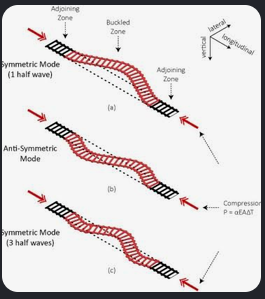
The hot weather has a significant effect on the GO rail network.
The potential impacts to GO Train service resulting from the hot weather and heat patrols taking place across the GO rail network.
A heat warning from Environment Canada is in effect today for our service area. During prolonged periods of high heat, we are required to run trains at slower speeds. To ensure the safety of our customers and crew, slow orders are issued along the network.
As a result, some trips may be cancelled or delayed on your line today arriving 10 to 15 minutes later than originally scheduled at their destination.
Please stay well hydrated, drink plenty of water and bring enough for your entire trip as not all GO stations have food or beverage options available. Plan ahead and give yourself extra time for travel.
Heat-related delays can be frustrating for customers, however Metrolynx must take proactive measures to ensure the GO Transit network operates safely in all kinds of weather conditions.
Learn more about how high temperatures can affect our rails HEREand watch our video about heat patrols HERE.
Almost everyone strolling along the Naval Promenade was wearing a T-shirt with the word Canada on it. Those who weren’t strolling found space beneath trees to gather and enjoy the day with friends and family.
The shade and the few breezes helped in dealing with the really oppressive heat.
The police presence was stronger than I expected.
There were both sworn officers and auxiliary police on duty for the day. Lots of pizza was ordered.
Had there been any disturbances, the police had a “paddy wagon” on hand to take people to the lock up.
This bit of beach next to the Pier wasn’t part of the original plan. When a local swimmer was attempting an across Lake Ontario swim, the city created a pathway to the water to celebrate the arrival of the swimmer. Rough weather put an early end to the swim, but citizens got a tiny beachfront out of it.
Many found a place to get into the water to cool off.
There was very much in the way of politicking. Candidate for Mayor Rory Nisan parked a van on Brant Street with his signage. Burlington MP Karina Gould was one of the first people to arrive on the site to set up her table where people were offered a small plant or a Canadian flag or a paper cup they could use to drink water. Some took all three.
Burlington MP Karina Gould was on hand to meet her constituents.
Candidate for Mayor, Rory Nisan took up a parking spot on Brant Street
They came in all sizes and shapes, with most wearing a T-shirt with the word Canada on it.
The pace was slow and leisurely.
That lemonade stand in the background did a brisk business.
Many people from diverse communities wore traditional attire and kept cool. The waffle cone helped.
Where shade was to be found, people gathered. The paramedics that were on hand throughout the day reported that there were a number of people – “ten to 12, not more than that” who needed help. Other than giving people a place to rest there was nothing serious. “People do need to learn to adjust what they do to the weather they face. Climate change is now a fact.
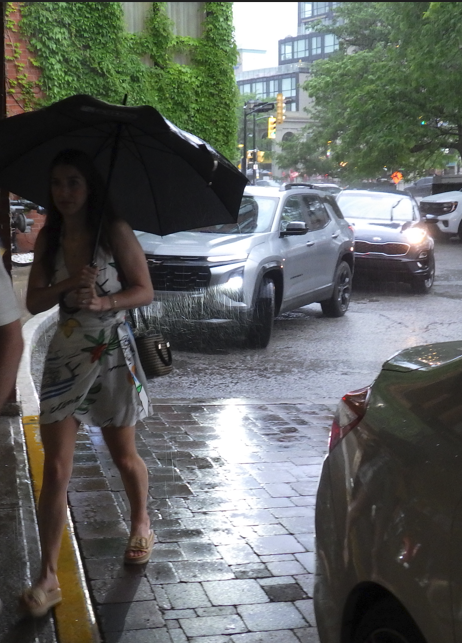
And then it rained. Great big fat drops of rain poured for about twenty minutes. Thunder roared and lightning flashed across the sky several times.
It just poured for a solid twenty minutes.
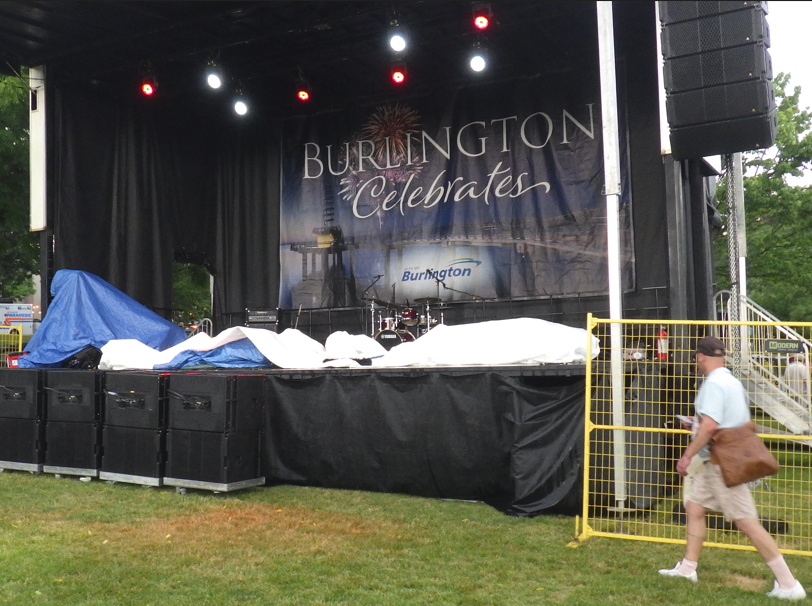
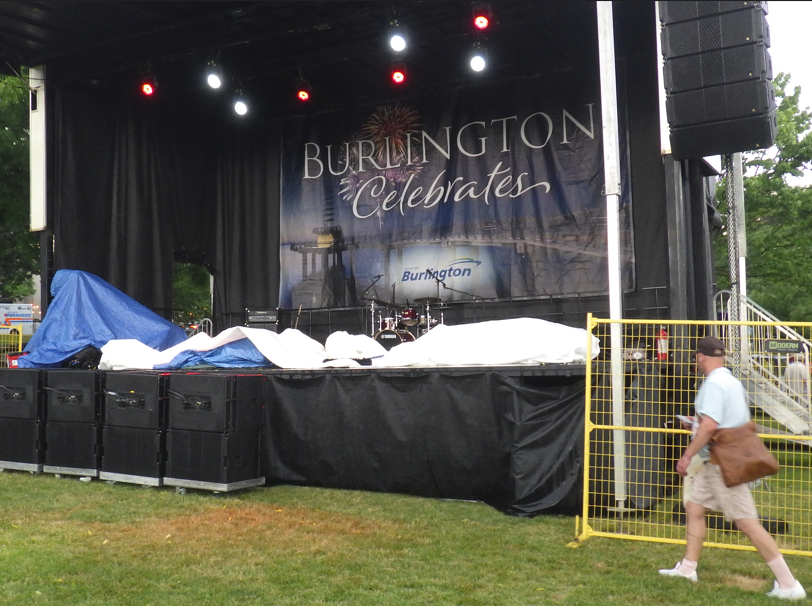
That put a damper on the bands that were scheduled to play on the main stage.
The performances were put on hold until the rain stopped. When this picture was taken, we were advised that the drone performance would not take place – and the fireworks were iffy.
The traditional Canada Day was saved. The hundreds of people who trooped their way to Spencer Smith Park were dry and awed by the spectacle.
Remember the rule: ALWAYS look at the address the email came from.
This address: apablo@takeaway.es This is not a Shoppers Drug Mart email address.
The scam itself is neat. You bring a strong brand name that is offering something that makes sense. Ties in with the values of the brand. Something Shoppers may well do.
But they didn’t.
Here is what the scammers thought they could get past you:
Thank you for being part of our story. As we celebrate 25 years of Shoppers Drug Mart Online, we’d like to recognize the customers whose loyalty and confidence have made this incredible milestone possible.
To celebrate this special milestone, we’ve partnered with some of the world’s most renowned fragrance houses to bring you a memorable gift. As a token of our appreciation for your continued trust and loyalty, you’ll have the opportunity to receive an exclusive complimentary fragrance from our special anniversary collection.
Your loyalty has helped shape the past 25 years of Shoppers Drug Mart Online. We’re honoured to celebrate this milestone with you and look forward to many more years together.
If you clicked on that red box underneath the scam – you would have taken the first step to allowing them to steal your identity.
Conservation Halton has installed 18 new electric vehicle (EV) charging stations at five of its Conservation Areas. These installments mark a significant step forward in supporting sustainable transportation options and enhancing Conservation Halton’s park visitor experiences across the watershed.
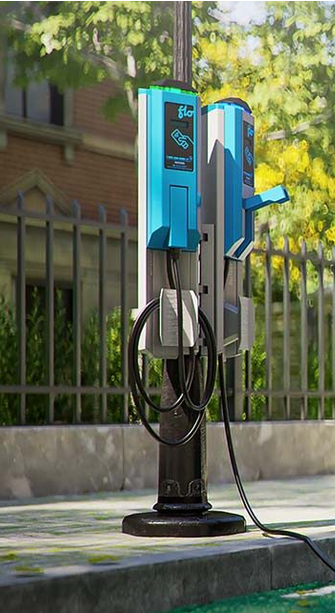
Level 2 J-1772 7.2kW FLO EV charging spots.
The new charging stations are available to visitors of Area 8, Hilton Falls, Kelso, Mountsberg, and Mount Nemo Conservation Areas. Two EV charging stations were previously installed at Conservation Halton’s administrative building. By increasing access to EV infrastructure in rural Halton, Conservation Halton is helping reduce barriers to low-emission travel while encouraging more environmentally conscious recreation.
All funds collected through Conservation Halton’s EV charging stations are directed to the Conservation Halton Foundation to help maintain the parks, protect biodiversity, and support education programs for the local community.
“The charging stations in our parks are more than convenience. We’re aligning our infrastructure with our values,” said Craig Machan, Parks & Operations Director at Conservation Halton. “Providing EV charging spots make it easier for park guests to make sustainable choices while enjoying nature, and they represent an important investment in the future of our parks.”
Conservation Halton’s 20 EV charging stations are partially funded through Natural Resources Canada’s Zero Emission Vehicle Infrastructure Program. The EV chargers and software at Conservation Halton’s administrative building were generously donated by Eaton.
Each Conservation Area features Level 2 J-1772 7.2kW FLO EV charging spots.
Area 8: two charging ports near the wall of the main building
Hilton Falls: four charging ports near the park entrance gate
Kelso: six charging ports at the Visitor Centre and Boat Rentals parking lot
Mountsberg: four charging ports at the Visitor Centre parking lot
Mount Nemo: two charging ports at the main parking lot
Conservation Halton’s administrative office features two Level 2 J-1772 7.2kW Eaton EV charging spots.
If you have been charged for medically necessary cataract surgery and eye measurement tests, the government should reimburse you and get the money back from the person or clinic that charged you. (If you are complaining to the Ministry, cite Section 13 (3) of the Commitment to the Future of Medicare Act, Ontario (2004). Anyone in Ontario can make a complaint to the Ministry of Health or ask questions by calling toll-free at 1-888-662-6613 or by emailing protectpublichealthcare@ontario.ca.
Under the Canada Health Act (federal legislation) and Commitment to the Future of Medicare Act (Ontario’s legislation), all medically necessary surgeries – including cataract surgery – and diagnostic tests (like lab tests, MRIs, CT scans and eye measurement tests for cataract surgery) are covered under OHIP.
OHIP covers all medically necessary surgeries and diagnostics.
Under the Canada Health Act (federal legislation) and Commitment to the Future of Medicare Act (Ontario’s legislation), all medically necessary surgeries – including cataract surgery – and diagnostic tests (like lab tests, MRIs, CT scans and eye measurement tests for cataract surgery) are covered under OHIP. Patients cannot be charged for services that are covered by OHIP. In fact, it is an offense under the Commitment to the Future of Medicare Act, Ontario (2004) to charge a patient for a medically necessary surgery or test. If you have been charged unlawfully for a surgery or test then the provincial government is supposed to get you reimbursement & offenders are supposed to be fined.
Selling queue jumping is prohibited.
Under the Canada Health Act and Commitment to the Future of Medicare Act, patients cannot buy their way to the front of the line, pushing other patients back. No private clinic can tell patients that they can get care faster if they pay a fee. Again, under Ontario law, this is an offense.
The following information is from the Ministry of Health:
Laser cataract surgery is covered by OHIP.
Cataract and intraocular lens exchange surgeries are covered by OHIP, regardless of how the surgery is performed (e.g., by laser, scalpel or other). Any clinic telling you otherwise is misinforming you.
Purchasing medically unnecessary services cannot be a condition of receiving medically necessary health care services.
Patients cannot be told to pay for unnecessary extra measurement tests and so-called “upgraded” lenses to get the medically necessary surgery. Private clinics are not allowed to tell patients they have to pay for a “special” lens in order to get cataract surgery at that clinic.
Physicians or clinics must provide patients with sufficient information so that they can make a voluntary informed decision.
So-called “upgraded” lenses often are not actually for cataract surgery but for some other optic “correction”. We are putting these words in quotes because it is a “buyer beware” situation. The lens you need for cataract surgery is covered. Other lenses do other things. Some people buy lenses that they are told will improve their vision and they won’t require glasses. To be clear, those are not for cataract surgery. Some lenses work well and some do not. Please research the options you are considering from credible medical sources (not private clinics trying to make money). Some patients tell us that they are unable to drive at night after getting so-called “upgraded” lenses that do not work as they were told.
Patients have the right to informed consent. That means full information. Private clinics cannot manipulate patients into believing that they will not have good results if they get the OHIP-covered service. Cataract surgery is one of the safest surgeries with a very high success rate of 98%. Patients are often not told that “OHIP-covered” eye surgery has an extremely high rate of success and is all that they need. Patients cannot be told that the “OHIP-covered” surgery is unsafe or inadequate, “basic” or otherwise substandard to manipulate them into paying more or buying medically unnecessary tests and lenses.
There is no “standard” lens that is the only type of lens covered by OHIP.
Physicians must assess and test all patients to determine the necessary individualized lens that the patient needs. This individualized lens is covered by OHIP. That lens is unique to your eye. The assessments and tests done to determine the type of lens the patient needs are up to date and good quality.
If patients voluntarily choose to purchase added services, then they are entitled to receive credit for the cost of the medically needed service.
For example, if a cataract surgery patient voluntarily chooses to purchase lenses that are medically unnecessary, then they must receive credit for the cost of the medically necessary lenses. The credit must appear in their invoice.
The equipment used and the personnel required to perform the surgery or service
are covered by OHIP and are not the financial responsibility of the patient.
Eye drops or ointments used in the clinic before or after cataract surgery are covered by OHIP. Other eye drops are not covered by OHIP but may be by the ODB.
From communications with the Ministry of Health and Ontario Drug Benefit (ODB) program in 2026: Eye drops used in a clinic to facilitate cataract surgery are covered by OHIP as a part of the surgery. Eye drops that are prescribed for patients to take home before or after the surgery are not covered by OHIP. We called and found that some of the take-home eye drops are covered by the ODB program if you are eligible for the ODB (this includes people age 65 and older, long-term care home residents, people living in a Community Home for Opportunity, home care recipients, Ontario Works/ODSP recipients, people enrolled in the Trillium Drug Plan. At that link (https://www.ontario.ca/page/get-coverage-prescription-drugs) you can search for particular drugs to see if they are covered. Just scroll down to the “search for covered drugs” button. You can call the ODB program with questions at 1-888-405-0405.
These are meant to muffle the sound of a car engine – not broadcast it.
Our resident asked us to publish his concern:
I would like to express my concern about the constant loud noises originating from motorcycles and various motor vehicles, whose owners seem to find enjoyment in elevating the noise of their engines on purpose.
These activities increase during evenings and weekends, and the noises are above accepted normal levels. Martha Street has become a racetrack, and it is becoming very annoying !
To be sure, we do tolerate the normal traffic noise typical of a vibrant city downtown. It is part of urban living of course. These engine noises are extreme, and the City needs to do something about it.
I am writing to you in the hope that by publishing this issue, other residents might have some comments, pro or con. I am not sure about any existing bylaws that should address this annoyance, and it sure bothers me and my wife.
I don’t recall ever seeing a police cruiser pull over a noisy car or motorcycle as long as I have lived and worked in Burlington.
We can’t expect the police to be cruising up and down the core streets waiting to hear the roar from a muffler. But it should be possible to have a plainclothes officer in the area- when he or she hears a sound that is above the accepted limit they would call the cruiser that was in the area, pass along the license number, make and colour of the car and the direction it was travelling.
Wouldn’t take long to recover of the officer’s salary. Just stand outside the Black Swan on Brant.
Table game variants can dramatically change both the pace and risk profile of your casino experience. Not all games with the same name follow identical rules, so small details may significantly affect strategy and outcomes. Understanding these differences can help players make more informed choices at digital tables.
If you use online casino platforms, you will quickly notice subtle but crucial rule changes between versions of classic table games.Online roulette highlights how games with the same name may have different rules or payouts. Familiarity with table game variants enables you to anticipate key differences in volatility and house edge, making each session more predictable and clear.
Rule variations and their impact on decision making
Table game variants are important because rule changes can significantly influence your decisions and outcomes. For example, the number of decks in a blackjack game or whether the roulette wheel uses European or American conventions will affect the odds and how often you win or lose.
Often, platforms use familiar game titles but introduce custom rules that modify optimal strategies or payout frequencies. Players who recognize these rule adjustments can more accurately assess session volatility and adapt their play accordingly.
Recognizing distinct roulette, blackjack, and baccarat formats
When comparing roulette variations, observe that single-zero tables commonly offer better odds for players than double-zero versions. Side bets or alternative payout rules on totals, such as the “en prison” or “la partage” options, can affect expected returns and influence bet selection.
Pay attention to Black Jack
In blackjack, pay attention to house rules such as when the dealer must stand, how many hands can be split, or whether doubling down is permitted, as these alter the decision points of each round. Baccarat variants might adjust commissions on banker wins or feature unique side bet options, changing the pace and payout structure of each hand.
Comparing digital tables with live dealer experiences
Digital versions of table games generally offer faster bets and adjustable stakes, while live dealer streams recreate some of the social features found in physical casinos. When participating at a streamed table, expect defined betting windows and opportunities for real-time interaction with the dealer or other players.
Transparency tools, like persistent rules displays and easy access to payout information, are increasingly available, allowing you to check game details before or during your session. Session pace can differ as well, since live dealers provide a steady rhythm, while fully digital games progress instantly
The federal government’s Bill C-22, theLawful Access Act, has been much criticized for its domestic privacy implications. Less widely discussed is that it could also present a serious threat to data privacy from foreign governments, especially the ever more aggressive Donald Trump administration in the United States.
Research by the Citizen Lab and the Canadian Civil Liberties Association (CCLA) on Bill C-22 and on its predecessor Bill C-2, the Strong Borders Act, which contained the same provisions concerning foreign data sharing, indicates the current legislation might quietly pave the way to giving U.S. law enforcement unprecedented access to personal data stored in Canada, even if held by Canadian companies.
This is especially concerning in light of recent news that the U.S. Department of Homeland Security sought detailed information from Google about a Canadian man living in Canada after he criticized the Trump administration and the U.S. Immigration and Customs Enforcement agency (ICE) on social media.
Such a degree of extraterritorial privacy invasion puts in an even more alarming light what were already disturbing implications associated with this bill.
Bill C-22 would provide expanded surveillance powers to Canadian law enforcement and the Canadian Security Intelligence Service, including the ability to order any business involving digital services to build new technical surveillance capabilities, mandatory one-year metadata retention and a lower legal threshold to obtain subscriber data.
Public Safety Minister Gary Anandasangaree has indicated he is open to amending the bill in response to vociferous opposition from human rights and civil liberties advocates, legal scholars, prominent technology companies and other businesses, the other federal parties and the non-profit encrypted messaging provider Signal.
However, the Liberals have pushed to conclude Commons committee study of the bill despite severe procedural deficiencies, such as committee members not receiving key witness briefs prior to the deadline for amendments.
The analysis by Citizen Lab — an interdisciplinary research laboratory at the University of Toronto, focused on the intersection of information and communication technologies, human rights and global security — suggests the legislation may be preparing the way for Canada to eventually implement one or both of two cross-border law enforcement data-access agreements.
One is a potential agreement under the U.S. CLOUD Act, which would allow U.S. law enforcement to request personal data directly from Canadian technology companies, bypassing authorization by Canadian courts. This would have detrimental impacts on human rights, in particular, privacy, equality and free expression, while potentially leading to subordination of Canadian constitutional law to the U.S.’s lower legal standards.
In view of the potential repercussions, the federal government should withdraw or amend — with human rights-protecting recommendations provided by the CCLA and Citizen Lab — Bill C-22’s provisions concerning sharing data with foreign states and should also decline to enter into a CLOUD Act agreement with the U.S.
In the meantime, it is worth examining and recognizing the full weight of what could happen to or be done with Canadian data and the personal information of Canadian residents if it gets further into the hands of U.S. government or private actors.
At the outset, U.S. government actors face many fewer constraints than their Canadian counterparts on their ability to collect and use personal data in ways that may be illegal, unconstitutional or would violate human-rights laws in Canada.
In its pursuit of indiscriminate detentions and mass deportations, including intimidating and retaliating against protestors in Minnesota, ICE accumulated surveillance data using technologies such as facial recognition and social media analytics.
ICE further contracts with surveillance companies such as Penlink for phone tracking software and Palantir to “streamline” the identification and deportation of immigrants.
Additionally, U.S. law enforcement has criminally charged, imprisoned or prosecuted people in relation to abortion — which is legal and a constitutionally protected medical procedure in Canada — using private Facebook messages, location data from data brokers, as well astext messages and search history.
You may think, if that is all happening in the U.S., what does it have to do with Canadian data?
First, while any CLOUD Act agreement might restrict the U.S. to targeting only U.S. citizens and residents, Canadian data might still be incidentally collected – for example, a Canadian user’s texts or private messages with someone investigated or charged in the U.S.
Or, if U.S. law enforcement issued to a Canadian service provider a keyword or geofence “reverse warrant” — where the request is for a list of all individuals who searched certain terms or all individuals who were at a specific location at a given time — it could also capture large swaths of personal data that is Canadian, even if the targeted person is not.
Second, invasive surveillance practices normalized in the U.S., such as a higher likelihood of being forced to turn over one’s social media history, can impact those trying to cross the Canada-U.S. border.
If there is already little to stop U.S. law enforcement from seizing peoplein Canada or demanding private details about those living in Canada with no substantial ties to the U.S., we should at least not encourage or sanction this level of encroachment within our own laws as well.
Third, more integrated cross-border data sharing between Canadian and U.S. police could all but eliminate any remaining possibility of true digital autonomy. There would be little meaningful shield against U.S. law enforcement requesting that data under a CLOUD Act agreement, even if it were stored by a Canadian company in Canada.
Facial recognition technology is being used now in Toronto.
This may result in enabling an increasingly rogue Trump administration to more powerfully target critics and travellersfrom Canada at any point and, at minimum, risks making the Canadian legal system and technology industry (further) complicit in human rights violations perpetrated by U.S. law enforcement.
Even if one were to trust U.S. law enforcement and government agencies with private data, however, there is no guarantee it would not fall into the hands of American private actors.
For example, Elon Musk and his acolytes in the Department of Government Efficiency obtained access to a breathtaking range of sensitive data in 2025 on tens of millions of government employees and individuals throughout the U.S.
This included:
Social Security and Medicare data;
financial and personal information of anyone ever paid by the U.S. federal government;
contract details of business competitors;
intimate employee data from invasive “bossware” surveillance; and
other highly sensitive information such as tax filings, biometric data, private health and medical records, personal housing information and detailed location data of children.
Such unfettered access matters because what were once sequestered databases of personal information collected for purely administrative purposes can now, through contracts with ethically compromised companies such as Palantir, be transformed into a detailed government-wide surveillance structure for monitoring, profiling and targeting people and marginalized communities.
This goes beyond the scope of Palantir’s existing contracts in Canada, which are themselves questionable, given the government’s lack of candour, as well as other ethical and human rights concerns with the company.
Moreover, once in the hands of the private sector, there is no telling where collected Canadian data could end up.
This includes being used to train algorithmic decision-making systems that exacerbate discrimination; being potentially ingested by LLMs to be regurgitated in response to user prompts; or combined with existing datasets to engage in detailed profiling and social sorting that eventually form the basis of unjust business practices; or even sold back to government agencies, merging intelligence and commercial surveillance.
A more integrated data-sharing system with the U.S. would further expose Canadian data to these kinds of risks and objectionable uses.
Existing CLOUD Act agreements between the U.S. and the United Kingdom and Australia mention but do not specify data-retention limits, raising questions about cases of incidental collection. Collected personal data is protected only according to U.S. domestic laws, at best, under these agreements, with no legal recourse for those whose rights have been violated as a result of data shared under a CLOUD Act agreement.
This means that Canadian data, if ever in the hands of U.S. law enforcement, would theoretically be protected only by the U.S.’s weaker privacy laws. Further, U.S. law has historically accorded foreigners’ privacy and human rights less protection than its own citizens, if any protection at all.
Even less reassuringly, the U.S. already treats its citizens’ personal data with constitutional disregard when incidentally collected in the context of foreign intelligence, by retaining it in a database for future search queries.
If Bill C-22 passes as is, it could put in place one piece of a bigger cross-border law enforcement data-sharing system, as envisioned in the CLOUD Act and other international data-sharing treaties.
Once completed, this system could further expose Canadian residents and our human rights to U.S. government and corporate surveillance apparatuses and their well-documented abuses of power. This is the last thing Canada needs in an era of destabilized relations with an increasingly authoritarian Trump administration.
Therefore, the federal government should withdraw Bill C-22’s provisions involving sharing data with foreign states, among other provisions, or otherwise suspend the bill’s progress through Parliament until and unless the government has provided opportunities for full public and parliamentary debate.
At a minimum, the government should amend the bill to implement recommendations that the CCLA and Citizen Lab have put forward, which are necessary to mitigating the negative human rights impacts of cross-border law enforcement data sharing.
The government should also simply decline to enter into a CLOUD Act agreement with the U.S. Failing that, it must ensure that any prospective agreement includes hardline protections maintaining Canadian constitutional standards of privacy, equality, and other human rights and fundamental freedoms under the Canadian Charter of Rights and Freedoms.
Prime Minister Mark Carney’s stance toward the post-2024 U.S. administration has been erratic. One day, Canada’s ties with the U.S. are “weaknesses,” then another day he calls for a new Canada-U.S. partnership, with rhetoric that plays into Trump’s crass demagoguery.
Carney should follow through on his initial position — the one central to his election — and avoid deepening the very ties that threaten to put cornerstone Canadian constitutional rights and legal principles at risk at a time when upholding them is more crucial than ever to the future of a country that purports to actualize and safeguard democratic ideals.
Cynthia Khoo is a technology and human rights lawyer at Tekhnos Law and a senior fellow at the Citizen Lab at the University of Toronto.






 By Pepper Parr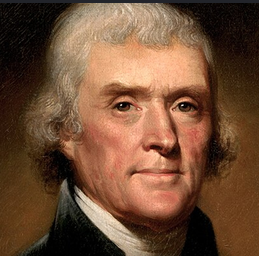


 By Pepper Parr

 By Gazette Staff
 By Gazette Staff


 By Ray Rivers



 Ray Rivers, a Gazette Contributing Editor, writes regularly applying his more than 25 years as a federal bureaucrat to his thinking. Rivers was once a candidate for provincial office in Burlington. He was the founder of the Burlington citizen committee on sustainability at a time when climate warming was a hotly debated subject. Ray has a post graduate degree in economics that he earned at the University of Ottawa. Tweet @rayzrivers
 By Gazette Staff
 By Gazette Staff
 By Gazette Staff
 Bringing a bike with you?
  A heat warning from Environment Canada is in effect today for our service area. During prolonged periods of high heat, we are required to run trains at slower speeds. To ensure the safety of our customers and crew, slow orders are issued along the network.










 By Gazette Staff

 If you clicked on that red box underneath the scam – you would have taken the first step to allowing them to steal your identity.




 By Gazette Staff


 By Sadie Smith

 By CynthiA Koo
 In the meantime, it is worth examining and recognizing the full weight of what could happen to or be done with Canadian data and the personal information of Canadian residents if it gets further into the hands of U.S. government or private actors.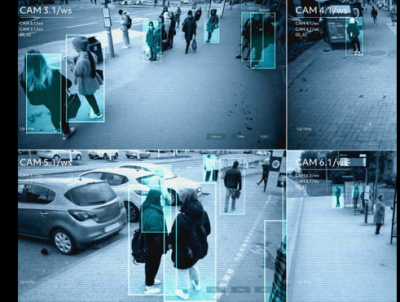
 The government should also simply decline to enter into a CLOUD Act agreement with the U.S. Failing that, it must ensure that any prospective agreement includes hardline protections maintaining Canadian constitutional standards of privacy, equality, and other human rights and fundamental freedoms under the Canadian Charter of Rights and Freedoms.