Major changes in car insurance will come into effect July 1st

By Gazette Staff

June 2nd, 2026

BURLINGTON, ON


Insurance for car drivers undergoes a significant change on July 1st.

Nine out of 12 standard auto accident insurance benefits become optional. They are meant to give consumers more choice.

Get the insurance cover you need, given your individual circumstances.

The provincial government is making these changes to provide Ontario drivers with more flexibility.

The changes mean consumers have to make some difficult trade-offs between modestly lower premium costs and taking on additional risk.

What’s optional and what’s not?

The following auto accident benefits will become optional: income replacement benefits; non-earner benefits; caregiver benefits; lost educational expenses; expenses of visitors; housekeeping and home maintenance; damage to personal items; death benefits and funeral benefits.

Standard medical, rehabilitation and attendant care benefits will continue to be included in all auto insurance policies, which cover medical expenses, therapy, personal care assistance for injuries from an accident (including doctor visits), physiotherapy and help with daily activities such as bathing.

How will this impact insurance premiums?

Drivers on tight budgets may choose not to opt in.

Removing all of the optional auto accident benefits will save Ontarians approximately $100 a year (that’s around $8 a month).

Who should opt in and who should opt out?

Those purchasing a policy on or after July 1 will have to opt in to the optional accident benefits they want to purchase. Make a point of asking your insurance agent or broker which benefits are included in your quote.

For some Ontario drivers, it might make sense to opt out of some of the benefits. A retired person likely won’t need income replacement. What new changes mean for pedestrians not covered by insurance

Talk to your insurance broker to get the details you need.

For those trying to save money, reach out to an insurance broker to see if there are other ways you can save

The IBC and the Financial Services Regulatory Authority of Ontario (FSRA) have information on their websites that explain what each of the nine optional benefits encompass. Consumers with questions about the changes can reach out to the IBC through its consumer information line at 1-844-227-5422.

You can change your optional accident benefits any time, so if you have a change of heart or your circumstances change (having a child or starting a new job), you can contact your insurer, agent or broker to review your options. Just keep in mind that only the coverage in place at the time of an auto accident will apply to your claim.

Return to the Front page

Nisan keeps the location of his first campaign meeting secret - announces a three pillar platform

By Gazette Staff

June 1st, 2026

BURLINGTON, ON


Rory Nisan held his first campaign to be elected Mayor of the City on Sunday at a downtown location.

That location wasn’t made public – Nisan appears to have wanted his people in the room and not those who might have some pointed questions.

The campaign is reported to have three pillars

Fiscal responsibility

Affordability

Quality of life.

Nisan didn’t have much to say about any of the three other than to point out that business people have two ways to get control of the finances: earn more – spend less.

Nisan: his budgets would be tied to the rate of inflation. No word on what he would cut if he had to.

City’s said Nisan have a third option, which is to tax the public.

The “dozens” of people at the meeting  are  reported to have chanted Rory, Rory, Rory.

Nisan said he said no to the city’s last three budgets. Instead, his potential budgets would be more tied to the rate of inflation.

Nisan is reported to have said Council “will be a real team of seven, which is something that has been lacking lately.”

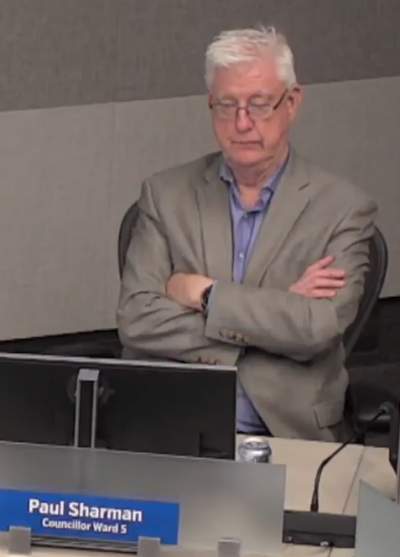
Nisan did a whack job on Councillor Sharman and his pension benefits.

On that note, Nisan is correct.  The whack job he did on Councillor Sharman over his pension benefits was close to the most disgusting behaviour seen at what has been a very divisive Council.  The only one who bests Nisan is Mayor Meed Ward and her rant on Councillor Stolte.

The event, filled with handshakes, hugs, and photos, included only a brief speech from the councillor, and was otherwise an informal interaction between him and supporters.

Burlington Today reports that “Nisan has served as Ward 3 Councillor since 2018. He was previously a Senior Police Advisor with Foreign Affairs Canada.”

Foreign Affairs department is officially known as Global Affairs Canada,

He was not a “police” advisor.  The role he held was not a Senior position.  He did advance work for meetings that were scheduled by Global Affairs Canada.

Return to the Front page

Burlington minor hockey team travels to Kelowna for a once-in-a-lifetime experience

By Gazette Staff

June 1st, 2026

BURLINGTON, ON


A Burlington minor hockey team’s season of giving back came full circle this weekend, as the U10 Burlington Bulldogs travelled to Kelowna for a once-in-a-lifetime experience with NHL legend Jarome Iginla through the Giuseppe x Dr. Oetker Practice with a Pro program.

The team earned the opportunity after a season of meaningful community impact, raising funds, collecting donations for families in need, and supporting seniors and veterans across Burlington.

While in Kelowna for Memorial Cup festivities, the Bulldogs participated in an on-ice practice coached by Iginla, as well as took part in a series of hockey-themed experiences, celebrating the recognition of their efforts beyond the rink.

Return to the Front page

Residential Builders (RESCON) propose solution to the housing crisis: It is structural, decades in the making, and the result of public policy failure.

By RESCON

June 1st, 2026

BURLINGTON, ON


The housing affordability crisis in Ontario is no longer a cyclical enigma that will magically correct with time.

It is structural, decades in the making, and the result of public policy failure.  The data tells a stark story. Without deliberate, co-ordinated reform across all orders of government, affordability will not return to historical
norms for at least another decade – if at all.

The scale of the problem is difficult to overstate. Housing starts in Ontario totaled roughly 12,700 units in the first quarter of 2025, the weakest quarterly performance since the aftermath of the 2008-09 financial crisis. In the GTA, new home sales collapsed to just 5,314 units in 2025.

This is happening even as the province targets 175,000 new homes annually. Actual delivery is falling short by more than 100,000 units per year.

The gap is not a blip. It is the result of four decades of policy accumulation that has fundamentally reshaped the cost structure of housing.  The affordability ratio – which is the share of household income required to carry home ownership costs – peaked at roughly 63 per cent in 2022, far above the long-run average of about 38 per cent. While it has eased to around 42 per cent in early 2025, it remains structurally elevated. Without reform, a full return to historical norms is unlikely before the mid-2030s.

The good news is that this crisis is, in substantial part, policy-constructed – and therefore policy-addressable – but only if governments are willing to undertake reforms that are politically difficult but economically necessary.

AFFORDABILITY CRISIS

Without deliberate, co-ordinated reform across all orders of government, affordability of housing will not return to historical norms for at least another decade – if at all.

First, there must be a permanent restructuring of development charges.

Government-imposed costs now account for 35.6 per cent of the price of a new home in Ontario. In some markets, municipal fees alone add between $102,000 and $196,000 per unit. In Toronto, the charges have risen more than 1,000 per cent since 2009 – vastly outpacing inflation.

These charges function as a hidden tax on new buyers, forcing them to finance infrastructure upfront that benefits entire communities over decades. The solution is straightforward in principle: shift infrastructure funding away from
upfront levies and toward long-term financing tied to asset lifecycles.

This would immediately lower entry costs for buyers and reduce the compounding “tax-on-tax” effect created when HST is applied on top of these fees.

Second, we must have enforceable limits on approval timelines. Time is money in housing development, and Ontario’s system is extraordinarily slow. Approval timelines in the GTA range from 14 to 25 months, nearly double the national average. Each month of delay adds thousands of dollars per unit in carrying costs.  The province must impose statutory limits – ideally under 12 months – with financial consequences if municipalities fail to meet them.

Third, Ontario should make HST relief permanent on new homes up to $1-million. The temporary nature of the recent announcement limits the impact. Making HST relief permanent – and ideally extending it through federal participation – would remove a significant demand-side barrier, particularly for first-time buyers. It would also improve market confidence.

Fourth, industrialized and offsite construction needs to be scaled up. Governments must actively support a transition toward modular and off-site construction through targeted incentives and procurement reforms. These methods can reduce construction timelines by up to 50 per cent.

Fifth, building codes need to be modernized to unlock missing middle housing. One of the most impactful reforms is the adoption of singlestair building designs for mid-rise construction. Widely used in Europe and recently embraced in B.C., this model allows for more efficient building layouts on smaller urban lots.

Requiring two sets of stairs makes many mid-rise projects financially unviable. Changing the rules could unlock a substantial share of urban land for gentle density and increase supply without altering neighbourhood
character dramatically.
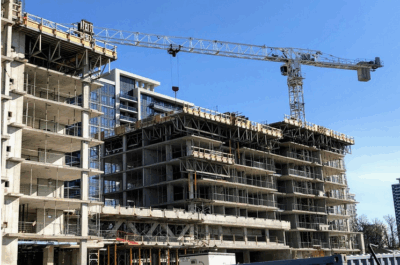
Developers have put some of their projects on hold -no one is buying.

Together, these five reforms would address the core drivers of the affordability crisis: excessive government-imposed costs, regulatory delay, weak productivity, and constrained land use. They are practical, evidence-based measures that directly target the policies inflating housing costs. Without structural reform, Ontario will remain trapped in a cycle of undersupply and unaffordability.   Temporary measures – such as the short-term tax relief or funding agreements – will provide a brief reprieve, but they do not sufficiently
address the underlying problem.

Recent federal-provincial cooperation and growing political consensus around the severity of the housing crisis create the conditions for meaningful change. But that window will not remain open indefinitely.  Without action, an entire generation will be priced out of the market.

The goal of restoring affordability is achievable but only if governments are willing to confront the policies that created the problem in the first place – and commit to fixing them for the long term.


 

Return to the Front page

Ward six candidate Frank Domenic makes a false claim

By Gazette Staff

June 1st, 2026

BURLINGTON. ON


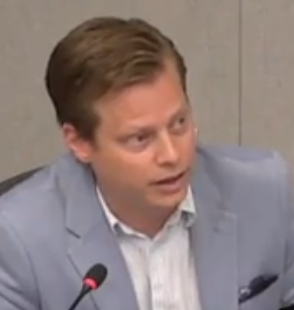
Frank Domenic: The voters in Ward 6 get to decide if this is the kind of person they want representing them on City Council.

Frank Domenic, a candidiate running for the Ward 6 Council seat, said on his Twitter (X) account that “Two Burlington City Councillors are collecting bonuses for being senior citizens, a move which Councillor Rory Nisan calls unprecedented.

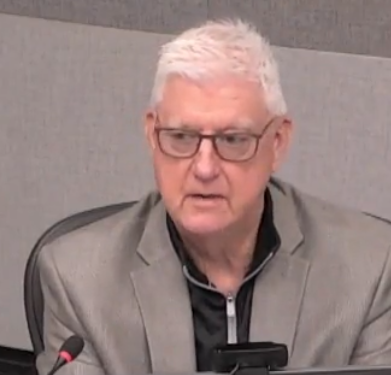
Councilor Nisan was wrong when he went on at length about pension monies Councillors Sharman and Betivegna were paid once they pass the age of 68.

People on the city payroll have a sum deducted from their paychecks that goes into the OMERS pension fund.  As a benefit that every staff member gets, the city adds an amount.  The employee and the city amounts are invested by the OMERS people which pays out the pension when a person retires.

OMERS does not accept pension payments for a person older than 68.

Questioning the pension funds that were given to Councillor Sharman was close to the most disrespectful thing done by one Council member to another.

Councillor Sharman felt that was unfair and believed he should be given the city contribution.

After considerable research the city HR department agreed with Sharman and an amount was paid out.

The payment was not a bonus.  It was funds that every council members get.  Those under 68 have the funds put into their OMERS pension fund.  For those over 68 – they are given the funds which they can put into whatever pension arrangement they have.

The Halton Region Police Services Board did this with Chief Tanner.  It is a common practice and Frank Domenic knows or should know that.

One could conclude that Frank Domenic may not be suited to serve as a City Councillor


Return to the Front page

Gazette on election debates

By Pepper Parr

June 1st, 2026

BURLINGTON, ON

OPINION

The 2026 municipal election is going to be a lot different than what took place in 2022.  The pandemic resulted in people having the behave differently and to be careful about how the congregated.

Voters will decide on who the Council members will be on October 26th

The 2028 election resulted in a huge change in the makeup of the seven member council.  Five of the seven were brand new to politics.  The hope was that they would grow as a team.  Council turned into a divisive organization.

The election we are now working through is going to be much more robust than what took place in 2022.  It also has the potential to elect a new Mayor.

There are good candidates in most of the wards, the exception being ward 6.

The Gazette has decided it will not be accepting election advertising from any candidate.

We will however, offering editorial space to those who are running for the first time.

Each month from June to September each candidate will be offered free news space where they can set out their campaign, what they would do as a Council member if they were elected.  The only role the Gazette will play in the content is the writing of the headline.  Incumbents have a huge advantage over people running for the first time.  We take the position that voters deserve to hear what a candidate has to say.

The Gazette is preparing to hold debates at both the Mayoralty and ward levels.  We are preparing to meet with people who will serve as moderators and others who will serve as panel members.  Panel members will be putting questions to the candidates.

The Roseland Community Organization will be hold a Mayor level debate and debates involving the ward 4 vote only.  That will take place on October 20th, at Port Nelson United Church where there is a limited amount of space.

The Gazette is looking at a location with more than enough space for a large turnout and plenty of parking space.


Return to the Front page