





 By Gazette Staff
August 21st, 2025
BURLINGTON, ON
With lazy, hazy August days soon giving way to school bells and homework, Michael Savage says parents should slowly start re-introducing September routines now to give children the strongest start to the year.
 The Brock University Professor of Educational Studies says that’s especially true for families that opted to have a more unstructured summer rather than taking part in a slew of camps and other activities.
“Introducing more structure and school-type activities over these next few weeks is important because otherwise it’s like jumping into a cold pool when you’re hot — it will be a shock to the system,” he says.
Savage, who has a background in education and clinical psychology and was also an elementary and secondary school teacher, says kicking back in the summer has proven benefits.
“There is absolutely good rationale for giving them a break; children and adolescents need to destress because toxic stress does build up and can lead to educational and mental health issues,” he says.
That’s part of what drove this year’s “feral/wild summer” social media trend, he says, which encouraged families to provide more time for independent play and exploration during the summer break instead of racing from one planned activity to the next.
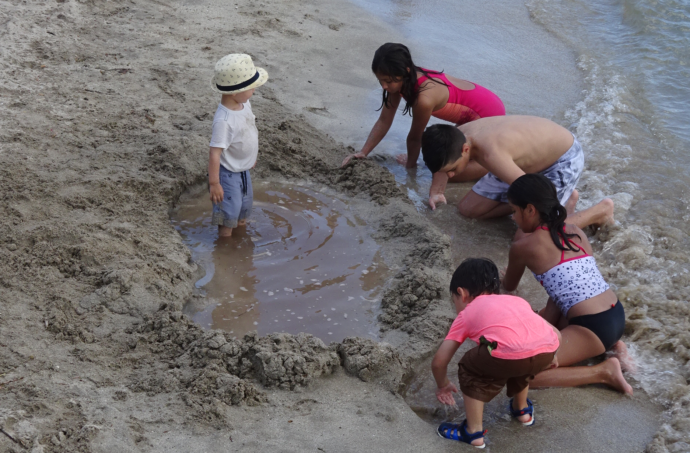
“Research has shown that unstructured play for children is beneficial for problem solving, social skills and co-operative skills,”
“Research has shown that unstructured play for children is beneficial for problem solving, social skills and co-operative skills,” Savage says. “Really, unstructured time and play is beneficial for people of all ages because you cannot have your entire life dictated by somebody else. If you do, you won’t be able to think as independently, be as creative or be able to take risks, and you will have more anxiety and depressive symptoms as a result.”
It’s important, however, not to take an all-or-nothing approach, he says.
“The key, as with almost everything, is that you want to have a balance between structured versus unstructured play,” Savage says. “It’s not one-size-fits-all approach, either. You have to look at your circumstances and child and find an individualized plan that works for your family.”
He says access to safe spaces for free play, arranging appropriate supervision, limiting screen time and navigating financial barriers are important considerations when incorporating more free play.
“If you have a child on the autism spectrum or with attention deficit hyperactivity disorder, you will also want to have some level of structure in place all the time, because unstructured environments for people with those particular challenges can be exacerbating,” he adds.
Savage encourages families to spend the remaining summer days balancing between safely engaging in unstructured play and building routines that will help kids be successful in the classroom.
He suggests gradually trying to roll back bedtimes to get children ready for earlier wake-up routines, playing educational games and reading independently and as a family, and spending time socializing with school friends.
Educators should also take an easing-in approach when returning to the classroom, he says.

They’ll want to be doing some review and reinforcement — particularly in math.
“It’s very important for educators to recognize that students will not be at the optimal level when they first enter the classroom in September,” Savage says. “They’ll want to be doing some review and reinforcement — particularly in math, because research shows there is often a lot of loss there due to the ‘summer slide’ phenomenon — and not expect students to take on new material right away.”
He also suggests striking a balance between drilling down on the fundamentals and engaging with one another to build a sense of community in the classroom.
“Let students get used to working with each other, being in the school environment and getting into the routines again — as well as having a say in what those routines are,” Savage says. “From a psychological point of view, allowing students to have a say in what that structure looks like is beneficial. If they do, there will be more buy-in and they will then help you enforce those rules overall.”

Discover more from Burlington Gazette - Local News, Politics, Community
Subscribe to get the latest posts sent to your email.
