




 By Sidsel Nørgaard
June 25th, 2025
BURLINGTON, ON
Statista has recently reported that the Canadian casino market could hit $9,57 billion by the end of 2025. Looking ahead, the market could continue growing by a CAGR of 2.67%, showing how deeply ingrained gambling is in the country’s culture. As if that’s not impressive enough, studies show that about six in ten Canadians often gamble. So, why do you think this practice is so common in this country?
One reason is how it wraps risk in tight regulation, accessible player tools and a culture that actively discourages recklessness. It’s like stepping into a well-hosted party where the drinks are flowing but no one’s allowed to get out of hand. The whole idea is to safeguard everyone, from seasoned players to curious newcomers.

It’s like stepping into a well-hosted party.
This is especially clear in the digital space, where the rise of safe online casinos in Canada has completely changed how players experience gambling. Beyond just offering convenience, these licensed sites come with proper measures baked into their design to ensure you engage more responsibly. But since this is just scratching the surface, you want to hang around and discover more about how Canada protects participants in the gambling industry.
A Framework Built for Fairness
Each province in Canada has its own gaming authority, which tailors rules to local communities and can evolve more responsively. Take Ontario, for instance. Since launching its regulated iGaming market in 2022, the province has been a benchmark for online gambling safety. Can you believe that, according to igamingbusiness.com, the gross gaming revenue for 2024-25 alone reached CA$3.20 billion? This is a 32% year-on-year increase!
Licensed operators must pass strict audits, follow player protection protocols and commit to transparent advertising standards. And do you know what? You won’t see famous faces in gambling ads because Ontario’s government doesn’t just allow that. Such moves ensure even the most vulnerable populations are protected from the possibility of gambling disorders.
Many people often begin doing something because they saw their favourite celebrity doing it. And if they see these celebrities in gambling ads, they could become curious and start considering gambling. It gets challenging when the person being influenced is underage and cannot engage with restraint.
In British Columbia, the Gaming Policy and Enforcement Branch (GPEB) oversees all regulated gambling forms, including:
- Online gambling
- Lotteries
- Land-based casinos
The GPEB, through the provincial Gaming Control Act and Gaming Control Regulations, also oversees the provinces’ responsible gambling programs. This is harm reduction in action.
A Prevailing Focus on Security

Cyber attacks are doing extensive damage to websites around the world.
Seeing everyone paying attention to online security in the general gambling industry should not be surprising. With many players joining, especially online, the amount of available customer data increases, making the sector a prime target for threat actors. You may be surprised to learn that this is part of why the global online gambling market is ranked as the third most targeted sector by cyberattacks.
This is why players, including Canadians, have become more security-conscious. Most of them will often examine a website’s security measures before signing up for it. In response to this, operators have been implementing advanced security measures like AI algorithms to improve their appeal to security-conscious players. And this is beyond just the basic encryption.
Operators have been using AI to detect unusual login patterns and flag malicious activity in real-time, preventing attacks from happening. Good enough, artificial intelligence is even capable of identifying threats that may escape human detection. According to Cobalt, 70% of cybersecurity experts claim this technology effectively detects threats that would have gone unnoticed.
AI can also identify vulnerabilities in systems and applications, allowing for proactive patching and mitigation before attacks can be launched. This guarantees players’ safety and encourages them to remain connected with gambling platforms.
Other security features to keep you safe
Besides artificial intelligence, there are more common features like 2FA. 2FA, surprisingly, can protect you from about 99.9% of targeted attacks. When it comes to phishing scams, which are prevalent in online gambling, 2FA can keep off up to 96%. At such a time when cyberattacks have become common, who would not want to take advantage of such a statistic? Absolutely, no one!
You will only need your password and something you have, like a code from your phone or something you are, like a fingerprint. This ensures your account remains safe even if someone hacks your password. To further improve their security measures, most operators have implemented SSL encryption. It uses a combination of encryption techniques, including asymmetric and symmetric encryption, to protect sensitive information during online transactions and other data transfers.
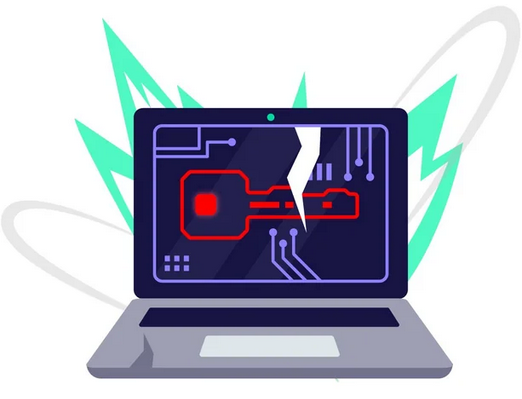
Robust technologies are creating the right environment for the industry’s further growth.
You don’t just want a higher hand value than the dealer in a blackjack game. The experience that comes with it also matters. Imagine the pain of exposing your personal information to threat actors just because you logged into an untrustworthy platform. Of course, you would not want this for yourself. Thankfully, through bodies like the GPEB, the country’s provincial governments actively monitor operators and regularly give updates to reflect changing risks and new technologies.
Gambling providers are also not left behind in this struggle to create a safe gambling scene in Canada. You’ll find self-exclusion features on most of their platforms to help you regulate yourself. Others have implemented more robust technologies like AI to keep players from cyberattacks, creating the right environment for the industry’s further growth.

Discover more from Burlington Gazette - Local News, Politics, Community
Subscribe to get the latest posts sent to your email.
