



 By Gazette Staff
July 19th, 2026
BURLINGTON, ON
This story came out of a tip we were given by a Gazette reader: that the TCB office building in Burlington was up for sale. We reached out to Burlington Economic Development and Tourism (they have rebranded themselves to Discover Burlington) and have yet to hear back from them. While researching we learned just what it is TCB does; fascinating.
Cellular agriculture and alternative protein are fast becoming technological options to consider as our agricultural systems start to struggle with population growth, poverty, and climate change.
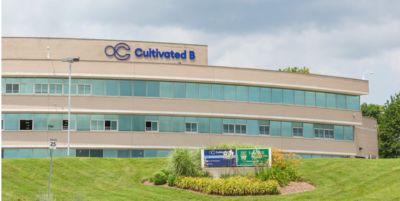
Why is the building up for sale?
German-based TCB, or The Cultivated Bee, are pioneers in this kind of biotech and are keen to see it added to the global agenda. I sat down with CEO Dr. Hamid Nouri here in Dubai to talk about the feasibility of cultivated meat and precision fermentation. Have to say, particularly for someone in your kind of area of expertise and innovation, a gathering like this has to be worth it just for the fact that there are so many different people here with so many different skills.
What does this mean to Burlington?
Dr. Hamid Noori was interviewed by Andrew Wilson at the United Nations Climate Change Conference that took place in Dubai, United Arab Emirates, in early December 2023.
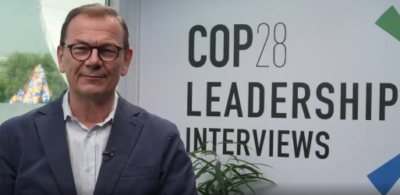
Andrew Wilson
Andrew Wilson: It indeed is. Like you have people from all over the planet with various ideas, craziest ideas, but also ideas that have been proven, and this is necessary because true innovation happens when you put the right people in the right place at the right time and make sure that they are able to communicate and talk to each other. We are benefiting from it. We are very happy to be here, and I think that events like this one are also going to be a huge facilitator for a discipline. That’s great. Let’s take this to the studio and talk in a bit more detail.
Wilson: First of all, briefly talk us through what the cultivated bee or TCB, what that is, what we do.
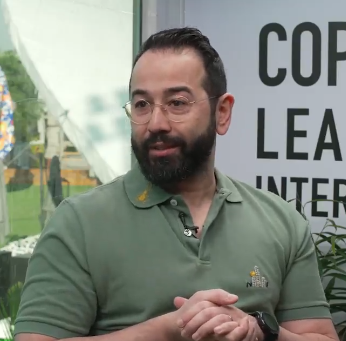
Hamid: “You are always exposed to them without consciously knowing that the most expensive drugs and the important drugs in the world are actually produced in such bioreactors.”
Hamid: The Cultivated B (TCB) is a bioengineering company, established in 2021. Headquartered in Heidelberg, Germany. We have subsidiaries in Ontario, Canada. In a nutshell, we are a company that is focused on protein production machines, where we have a very specific way of defining what the machine is. Plus, everything in the world can be. The Cultivated B R&D team is based in Germany. PreFer Industries and n!Biomachines, based in Canada, are subsidiaries of TCB.
Bioreactors, which are, in fact, heavy machines made of steel or glass.
We work on producing so-called bioreactors, which are, in fact, heavy machines made of steel or glass to provide an environment for different organisms to grow in the area, even animal cell cultures.
You are always exposed to them without consciously knowing that the most expensive drugs and the important drugs in the world are actually produced in such bioreactors.
The COVID vaccines were produced in such systems. Now we are bringing them, specifying them for the future of agriculture in the world. We produce proteins that could also be useful for human or animal nutrition. That’s one set of machines that we focus on. And the other thing is that everything else for us is a machine alone, like plants are for us machines too.
Typically, plants produce their own sort of proteins. But what we are focused on is that we bring proteins that normally do not occur in plants.
Animal proteins, for instance, that can either reach vegan products for the market or also provide alternatives for more scalable production of rare proteins with certain nutritional values, so this is all about the principal focus is resource scarcity, the views of the agriculture sector.
Resource scarcity is a major factor for our philosophy, right? So because generally believe that humanity has been dealing with resources as if they are, as they are obviously not, and they are reaching slowly that limit. So it would provide us with an with a good opportunity to generate more for the ever growing human population. Manatee is growing. It would require protein for its nutrition. It is meant to be doubled in the next decade. In order to satisfy that need, we need to look for for other resources as well. But we take a very technological approach. So we are less ideological in that sense, or less focused on the end product with the actual food, but more on the technology that comes.
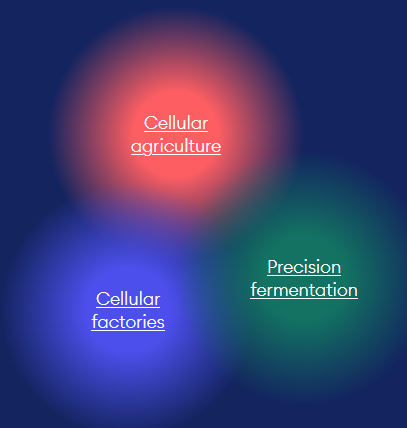
Wilson: So I’ve read that you concentrate on things like cultivated meat and precision fermentation. So I guess these are cell structures of some sort. But does this mostly apply to replacing meat and replacing crops?
Hamid: Hamid:No, not at all. As a matter of fact, precision fermentation is added value for typical and traditional agriculture.
Hamid: No, no, no, not at all. As a matter of fact, precision fermentation is added value for typical and traditional agriculture. Imagine normally when even you have a bundle of soybean or a bundle of barley, you may get 30 cents for that. Once you bring your proteins inside that, that the farmer is going to get potentially hundreds of dollars just for cultivating them. But doing exactly the same as she was doing before, so it is by no means an eradication or replacement of existing traditional agriculture, and we oppose even that idea.
We rather consider it as a very enriching, complementing element that would, on the one side, add to the nutritional profiles of the humanity, but also fill the gap for the growing population, so nonetheless bringing some new technologies that everyone would benefit. But I wouldn’t say that we are going to challenge existing landscape.
Wilson: Okay, so Hamid, we’re getting into areas that few people understand in any amount of detail. So, is there any way you could just simplify process as part of what you do so that I can understand it?
Hamid: Sure. Let me maybe start with an example to break it down. There is currently a large group of people who are interested in trying out, exclusively, even consuming vegan products, and there are vegan sausages and different type of products on the market. The main issue with most of them is the texture. Right, they do not normally have the texture that we’re used to, they feel rubbery. That texture is provided by animal proteins that are normally not occurring in plants.
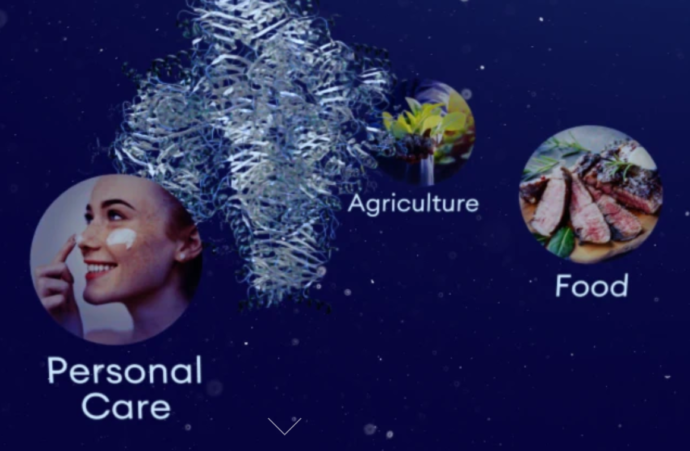 So what we do is we bring those proteins, using a relatively solid technology, inside the plant, and what happens is that basically the genetic machinery of the plant that is normally reading one by one and translating along the genetic code proteins now learns that there is in fact, a new protein to translate and put there, and it just does. The advantage is the plant is authentic, exactly the same plant that you had before. You just now learn to do something new. In a sense, we teach plants or soybeans how to move if you want to have it like that.
There is an advantage, a major advantage here in terms of sustainability, and this is that that plant and everything else that was any still be used for anything else as well. A lot of these plants can produce isolates, protein isolates, used for biomass, for animal feed, etc. None of it will be affected by the fact that the plant has most of the problems, and in terms of particularly crops, is this similar to genetic modification as far as wide scale crop growth is concerned? In a sense, yes. Although the in order to teach the plant to translate its amino acids into proteins, for instance, animal-like proteins.
But the typical genetic engineering approaches in plant biology in agriculture were meant to just increase the harness. We are on top of that, adding additional value to the level that plants could become new sources of producing pharmaceuticals, or also food ingredients that normally would come from, for instance, animal breeding, etc.
Wilson: Are you encouraged by the agricultural sector or by the food production sector? Are you being challenged by them? Are people welcoming or suspicious or both of the work that you’re doing.
Hamid: I would say both, to be very honest. We have a lot of interest from the food production sector. Some companies, Family Foods, for instance, in Germany, is a company that has focused a lot on transforming the industry from within. This is where we were even inspired to start doing so, doing what we are doing right now. There is, in that sense, a need for transformation that larger industries are recognizing. And I have to admit, the larger the factories and the industries are, the higher the chance they like these new ideas because these new ideas help them adjust to the new trends in society and the new mindset of society. There is some resistance, on the other hand, which I believe to a certain degree is also due to the fact that we haven’t been able to communicate the advantages for all the sides, right? So, for instance, many people from traditional agriculture may consider what we do competing, whereas I consider that being synergizing, and in the end, in fact, adding value. For instance, even for the animal breeding industry, these ideas could be synergistic because they could lead to circular economy effects. You may even get more value out of what you had before, while you may even breed less animals, so it could be a true win-win. But communication hasn’t been taking too much place here to to reach that.
Wilson: Well, you mentioned synergy and communication. Here we are at COP 28. This is the largest such gathering to look at all these kind of issues, and we know that the headline is emissions reduction. But beneath that, there is sustainability conversation. All sorts of different parties coming to talk exactly about how we manage our resources, how we proceed, how we make best use of what we have left. Surely, you have quite a part of plenty of those discussions.
Hamid: I think we do. As a matter of fact, I think that we do, and this comes from both sides: climate change and sustainability elements. Resource scarcity was one of the topics that you mentioned that goes hand in hand with the sustainability topics. Less energy consumption, less resource consumption, and gaining more value is one. But we also need to pay attention to the fact that climate change is going to affect traditional agriculture as well, and we need to find new ways for the farmers of the future to actually generate revenue to to gain some power over time. Although the world is changing in the region where we are currently, the first conflicts are occurring because of lack of water. Right, this is something we cannot underestimate and just ignore it. There is no way that we can have very large-scale traditional agriculture here and there where there is no water. So we need to come up with new approaches that would enable that. And this is one of those things that our companies focused on, non-ideologically and very technologically oriented, very pragmatic approach in that sense, but in in its sense, we are there so that in 20 years, farmers in this region can also be better.
Wilson: So for you then, Dr. Hamid Nouri, how important is this work on a personal plan?
Hamid: Okay, I have been a scientist my entire life, right? I never wanted to be anything different, and it turned out that this, what we are doing right now, could be a legacy element for for my entire life. Doing something that has an impact, has a direct, measurable impact on human society, is something everyone would dream of. I was always dreaming of doing this , and I think, in a sense, part of what I always wanted to do and what I always wanted to be.

Discover more from Burlington Gazette - Local News, Politics, Community
Subscribe to get the latest posts sent to your email.

Leave a Reply