





 By Pepper Parr
February 16th, 2026
BURLINGTON, ON
With little in the way of public notice, five of the seven members of Council have put the financial well-being of taxpayers at risk.
In September of 2025, Council approved as Motion to Direct the Commissioner of Development and Growth and the Chief Financial Officer to report back to the Pipeline and Permit Committee on October 9th on the options for a two year temporary development charges (DC) reduction with an appropriate impact analysis.
Early in the process of determining what a DC charge change would mean, the amount was suggested as a 20% reduction.
The cost to the city was estimated to range between $3,000,000 and $7,500,000
The property tax impact would be an increase between 0.06% to 1.44% .
All this went to Council on October 14th, 2025 and included:
For applications where a Site Plan or Zoning By-law Amendment is required, DC
rates are frozen for 18 months following approval.
Municipalities are allowed to charge interest over this time, not to exceed a maximum rate as prescribed by the DC Act.
Full exemptions for affordable housing units.
Full exemptions for non-profit housing developments.
Full exemptions for two (2) additional residential units within and/or ancillary to existing and new developments.
DC discounts for rental housing based on number of bedrooms per unit.
DC installment plan for purpose-built rental units – 6 annual installments payable starting from date of occupancy
Development charges are revenue to the city. When received they go into a reserve account from which they can be drawn when infrastructure has to be built.
Under the Development Charges Act any DC discounts from an amended by-law, which is what the city is proposing to do now, would need to be funded from the general tax base – which is you the taxpayer.
In the report Staff provided, they note that Development charges are difficult to estimate and are highly dependent on development activity. There has been very little development activity in Burlington in the last six months. One significant development pulled their plans.
Fast forward to February 9th were a Staff report talks in terms of temporarily eliminating Development charges.
The Agenda for that meeting set out to:
presents options to temporarily eliminate development charges either by pursuing amendment(s) to the City’s Development Charges by-law (DCs) or amendment(s) to the City’s Affordable Rental Housing Community Improvement Plan (ARHCIP).
After considerable debate, at times there were just five of the seven Council members at the table, they decided to xxxx and sent that recommendation to Council, which meets on Tuesday.
Between the adjournment of the Standing Committee, Mayor Meed Ward issued a Statement and Direction using the authority she has under the Strong Mayor Powers Act.
Those powers were given to the Mayor when Council signed a pledge to build 29,000 housing units by 2031. The City is nowhere near that number.
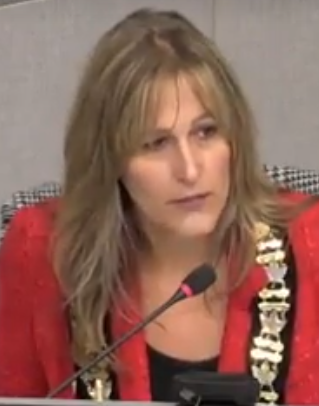
Mayor Marianne Meed Ward
Using her Strong Mayor Powers Mayor Marianne Meed Ward directed the Chief Financial Officer to include the following information in the CFO’s follow up memo to
Council, to be included on the February 17, 2026 Council agenda, regarding report “Options for the temporary elimination of Development Charges (DGM-03-26)”:
1. Development Charge Exposure Assumptions
Provide a detailed breakdown of the assumptions underlying the estimated Development Charge (DC) exposure range of $16 million up to $42 million, including:
o The assumed total number of residential units;
o The assumed unit mix by housing type;
o The applicable DC rate per unit type; and
o The resulting aggregate totals supporting both the $16 million and $42
million scenarios.
This information shall be presented in chart form and clearly outline all assumptions used in each scenario to enable Council to evaluate the likelihood and scale of the potential financial exposure; and,
2. Forecast of 2026 Residential Completions
Provide a forecast, informed by recent CMHC data and historical local development trends, identifying the number and type of residential units reasonably anticipated to achieve substantial completion in 2026, together with the corresponding DCs payable under current rates; and,
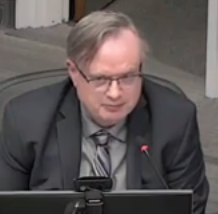
CFO Craig Milar has been tasked with a mammoth job with a couple of days to get it done. We will see how well he has done on Tuesday
3. Associated Development Revenues
For the realistic forecast described in Item 2, as well as for the $16 million and $42 million scenarios, provide the estimated corresponding:
o Assessment growth;
o Building permit revenue;
o Parkland dedication revenue;
o Community Benefits Charge (CBC) revenue; and
o Any other development-related revenues.
The analysis should clearly identify revenues that would not be realized if such projects do not proceed; and,
4. Historical Residential Assessment Growth
Provide the City’s residential assessment growth for each of the past ten (10) year; and,
5. Historical and Recent Residential Development Charge Revenues
Provide the actual residential DC revenues collected in each of the past ten (10) years, together with the amount of DC revenues received in January 2024, January 2025, and January 2026, to provide historical context and assist in assessing
recent trends relative to the projected exposure scenarios; and,
6. Anticipated Funding Source – Realistic Scenario
For the realistic forecast described in Item 2, identify the anticipated funding source(s) required to offset any foregone Development Charge revenue, including:
o The potential use of operating surplus;
o The potential use of capital reserves and any other applicable reserves; and
o The current balance of applicable capital reserves and other reserves available to support such funding; and,
7. Alternative Implementation – Development Charge Grant Program
Provide an analysis of whether, as an alternative to amending the City’s Development Charges By-law, Council could establish a Development Charge Grant program that would:
o Provide a grant equivalent to the DC payable upon commencement of construction within a defined two-year period;
o Avoid amendments to the DC By-law; and,
o Reduce the risk of potential statutory challenges or unintended rate-locking implications associated with future by-law revisions; and,
8. Eligibility Criteria for Grant Program
As part of the analysis in Item 7, assess whether eligibility for a DC Grant program could be limited to residential units below a specified value threshold (for example, $1.75 million or another defined amount), thereby excluding luxury
residential units from eligibility.
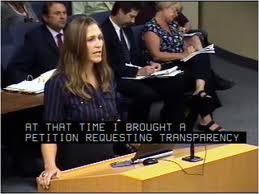
Marianne Meed Ward was just a citizen when this picture was taken. She became a Council member and then Mayor of the City and appears to have left the words behind.
None of the ask has been made available to the public. It will be presented during the Council meeting on Tuesday. So much for transparency and accountability.
The options that were set out in the Staff report were:
Options
- Apply a temporary 2-year Residential DC exemption through an amendment to the DC By-law.
All residential developments will receive a full exemption of City development charges.
Estimated Cost $16.7M-41.3M
- Applying a temporary 2-year exemption for all Apartment units through an amendment to the DC By-law
All apartment units will receive a full exemption of City development charges
Other residential unit types are not affected and City DCs will continue to be applicable
Estimated Cost $10.7M-26.6M
- Apply a temporary 2-year exemption on 2BR+ Apartment units through an amendment to the DC By-law
Only 2BD+ apartment units will receive a full exemption of City development charges
Designed to incentivize larger high-density (apartment) units.
Other residential unit types are not affected and City DCs will continue to be applicable.
There was an additional Do Nothing option, which staff advised against for the following reasons:
Without action, it will likely mean development charges will not be collected, given market conditions and developments will not have been able to advance to occupancy in the near term.
A do-nothing approach would protect City documents (DC By-law and Background Study and the ARHCIP) from appeal or from compromising future updates.
A pause on action would allow the impact of other City, Provincial and Federal actions to play out which may provide insights into the best contribution and role the City can play to support the creation of new housing and the achievement of growth forecasts and ambitious housing targets.
Working together with the development community to resolve the extensive broad appeals to the BOP,2020 and subsequent appeals to OPA 2 would enable the City to even more aggressively pursue streamlining policies and processes to support City Council’s housing objectives. Unlocking those key appeals can pave the way for future phases of the Zoning By-law project and the Community Planning Permit System
How bad are things in the development community?

Related content:
Focus Burlington argues taxpayers should not be bailing out developers.
Gaetan: Keep an eye on this one.

Discover more from Burlington Gazette - Local News, Politics, Community
Subscribe to get the latest posts sent to your email.

I don’t believe Burlington needs this type of housing we need more Detached and SemiDetached homes
I am against bailing out developers. I also question wether Burlington needs this kind of growth.