





 By Miles Rakadovic
November 20th, 2025
BURLINGTON, ON
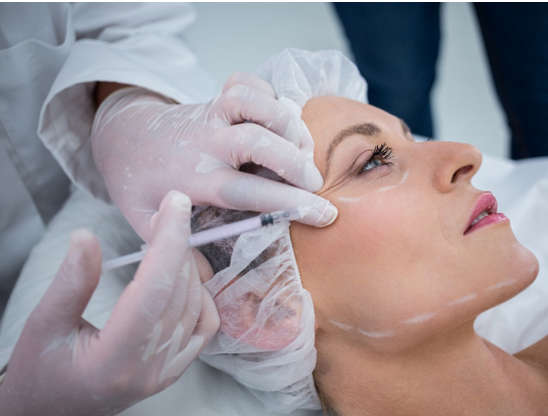
Offers long-lasting results due to repositioning foundational structures.
As patients require their faces to look younger, natural, and expressive—rather than tight or overcorrected—facial rejuvenation methods have changed over time. For a long time, the deep plane facelift has been considered as one of the most advanced traditional methods that is notable for its strong lifting ability. But a modern Optimum Mobility Facelift is being talked about widely for its capability to provide natural movement, quick recovery, and very personalized results. We have dissected each technique to understand how they work and why the new method is a clear winner in terms of advantages.
Deep Plane Facelift Explained
Deep plane facelift focuses on changing the position of the inner parts of the face instead of just pulling the skin tighter. This technique addresses sagging at its foundation.
Key characteristics of a deep plane facelift:
Targets deeper tissues such as the SMAS (superficial musculoaponeurotic system), ligaments, and deeper fat pads
Increases the facial features as a whole instead of just skin tightening
Gives a powerful midface lift effect, which helps cheek sagging and nasolabial folds to lessen
Offers long-lasting results due to repositioning foundational structures
Benefits:
- More natural contouring compared to skin-only lifts
- Noticeable improvement of the midface and jawline areas
- Long-lasting outcomes that keep the changed structure visually intact over time
Limitations:
- More extensive dissection is needed, thus, the swelling and bruising can be more pronounced
- Usually has a longer recovery period
- Offers less flexibility for customizing tension or movement in isolated regions
- May feel more “fixed” initially due to full-depth release of tissues
Even the deep plane facelift is still a powerful choice, however, due to its severity and longer recovery time, it is not suitable for every patient.
What Makes the Optimum Mobility Facelift Different?
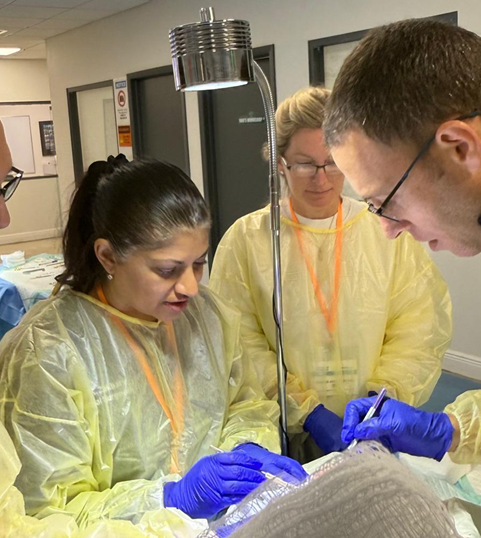
Less harm to the patient’s body tissue because of a more precise and targeted release.
The Optimum Mobility Facelift is a new generation facial rejuvenation concept highly focused on the factors of precision, movement, and individualized lifting rather than on full-depth tissue release.
Core principles of the Optimum Mobility technique:
- Selective tissue mobilization instead of wide dissection
- Targeted adjustments to specific areas:
- Midface
- Jawline
- Neck
- Preserves the main anatomical structures, which makes it possible for the face to have more natural expressions
- Individualized lift according to the patient’s distinct facial features and aging pattern
Benefits of the Optimum Mobility method:
- Less harm to the patient’s body tissue because of a more precise and targeted release
- Recovery is quicker and swelling is less, as compared to deep plane methods
- More natural facial movement, both at rest and when smiling or speaking
- Highly adaptable, surgeon can thus shape and refine each facial area separately
This adaptability is one of the main reasons the technique is quickly becoming preferred by both surgeons and patients.
Side-by-Side Comparison
Surgical Depth & Release
- Deep plane: broad, full-depth tissue release
- Optimum Mobility: selective, controlled mobilization
Facial Expression & Movement
- Deep plane: may temporarily reduce natural movement
- Optimum Mobility: maintains natural movements
Recovery Time
- Deep plane: longer, with more swelling
- Optimum Mobility: faster healing, less downtime
Customization
- Deep plane: limited ability to target specific zones independently
- Optimum Mobility: highly personalized for each area of the face
Overall Comfort
- Deep plane: more extensive procedure
- Optimum Mobility: more refined, less traumatic
Why the Optimum Mobility Facelift Outperforms the Deep Plane Technique
Results that look better in motion, not just in stillness.
The Optimum Mobility Facelift takes it a step further with the deep plane method by providing:
More balanced results due to selective adjustment
Smoother transitions of the cheek, jawline, and neck areas
Improved natural expression, because key tissue attachments remain intact
Results that look better in motion, not just in stillness
Greater patient comfort with less swelling and a shorter recovery period
A customized lift that suits each patient’s unique anatomy
The innovative technique of the next generation is a powerful combination of the surgical intervention and the natural-looking result.
Who Benefits Most From Each Procedure?
Deep plane facelift candidates:
Patients with significant sagging or deep facial folds
Those seeking maximum structural repositioning
Optimum Mobility Facelift candidates:
Patients wanting natural movement and individualized results
Individuals seeking effective rejuvenation with reduced downtime
Ultimately, a consultation with a skilled facial surgeon is the best way to determine the ideal approach.
Final Thoughts
Although a deep plane facelift is still a strong and effective method for facial rejuvenation, the Optimum Mobility Facelift can provide additional benefits such as increased personalization, better natural movement, and a less painful recovery. For many patients, it represents the next level in achieving youthful, lively, and harmonious faces of the highest quality.

Discover more from Burlington Gazette - Local News, Politics, Community
Subscribe to get the latest posts sent to your email.
