




 By Joe Gaetan
January 17th, 2026
BURLINGTON, ON
Special to the Gazette
Strong mayor powers were supposed to make municipal government more efficient. What we are now seeing, however, is a shift in democratic balance that risks weakening Council, concentrating authority, and confusing accountability.
A recent exchange sparked by Hamilton Councillor Rob Cooper, and then echoed here in Burlington, should not be dismissed as sour grapes or rookie frustration. Cooper’s observation that council feels “ornamental” under strong mayor powers cuts to the heart of the issue: elected Councillors increasingly lack the authority to meaningfully shape budgets, staffing decisions, and strategic direction – the very things voters care most about.
Mayor Marianne Meed Ward’s response in the Hamilton Spectator, is legally correct and politically careful. Yes, Councillors can propose amendments. Yes, mayors can choose to collaborate. Yes, vetoes can be overridden with a two-thirds vote. But those are procedural safeguards, not structural guarantees.
The real issue is not whether collaboration is possible – it is whether it is required.
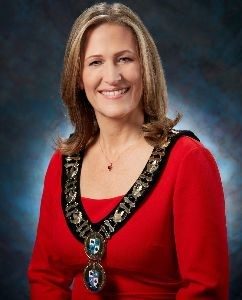
Mayor Marianne Meed Ward wearing the Chain of Office and exercising Strong Mayor Powers.
Under strong mayor powers, collaboration depends entirely on the goodwill of the person wearing the chain of office. That is not governance by design; that is governance by discretion. Democracy should never depend on the restraint of one individual.
In Burlington, Council formally asked the mayor to delegate discretionary strong mayor powers, including control over hiring and firing the Chief Administrative Officer. That request was declined. Two CAOs have been hired in two years. Tax increases have exceeded those of the previous council term. And despite claims of broad support, Council does not vote on the budget as a whole – a striking departure from decades of democratic practice.
Pretending this represents shared governance confuses participation with power.
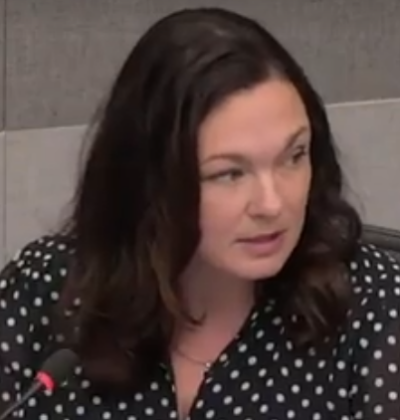
Ward 2 Councillor Lisa Kearns

Ward 3 Councillor Rory Nisan – chooses to live in ward 2
Councillors Lisa Kearns and Rory Nisan are correct to call out the erosion of council authority. Their argument is not partisan. It is principled. It is rooted in a simple democratic premise: authority must come with accountability, and accountability must come with consent.
What makes this moment particularly consequential is that strong mayor powers are now shaping the electoral landscape. Hamilton Councillor Cooper’s comment – “My name will be on the ballot. The question is, where?” – signals what many are beginning to realize: if the mayor alone controls the budget, staffing, and strategic direction, then the mayoral race becomes disproportionately powerful, while Councillor campaigns risk becoming little more than advisory exercises.
Strong Mayors cannot wash their hands.
The province deserves blame for creating this framework, but mayors cannot wash their hands of responsibility while retaining the powers. You cannot hold the authority of the office and disclaim responsibility for its outcomes. Leadership means owning both.
“Strong Mayor Powers” versus Reality
Strong mayor powers were supposed to strengthen municipal governance. Instead, they are weakening trust, distorting accountability, and centralizing decision-making in ways that voters neither asked for nor endorsed.
Efficiency without legitimacy is not progress.
Authority without accountability is not leadership.
And democracy without meaningful council participation is not democracy at all.
As voters head toward the next municipal election, the question is no longer just who should lead – but what kind of governance we are willing to accept.
 Joe Gaetan a resident of Burlington who comments frequently on civic matters

Discover more from Burlington Gazette - Local News, Politics, Community
Subscribe to get the latest posts sent to your email.

Government by fiat! Power… corrupts, and absolute power corrupts absolutely (Lord Acton).
“Autocracy in municipal government means one person (like a mayor) holds nearly absolute power, making decisions with minimal council or public input, shifting from traditional shared governance to centralized control, often seen in debates over “strong mayor” powers that allow vetoes or staff control, contrasting with democratic models where power is dispersed among councillors for collective decision-making. While true autocracy involves unrestrained power, the term often describes trends towards authoritarian leadership at the local level, raising concerns about democratic accountability and checks and balances”.
Provincial legislation granting mayors veto power over bylaws, control over hiring/firing, or ability to override council decisions, leading to concerns of “dictatorship,” according to CTV News:
https://www.ctvnews.ca/london/article/its-more-like-a-dictatorship-local-mayors-reject-strong-mayor-powers/
I am involved in a group called Restore Democracy Ontario which is working to pressure the government to repeal the undemocratic strong mayor powers, and to inform the electorate about the importance of voting for those municipal mayors and councillors who value democracy. We believe this should be and will be an issue in the October municipal elections, the first since the powers were enacted. It is believed that the province will soon expand the powers to the remaining Ontario municipalities (mostly rural ones), and this too will keep this in the news. We expected that announcement before Christmas; we wonder what the delay means. Perhaps it means: they don’t like bad press? Our website is: http://restoredemocracyontario.ca.
We will be posting all three of these articles which Joe mentions on our site shortly. We also have plans to post a list of mayoral candidates’ answers to the questions Blair raises above.
Many mayors have refused the powers, others have returned those they are legally able to back to council. In Burlington, our mayor did NOT return the powers as requested by a majority of her councillors. There is no place in a democracy for minority rule and no way should senior staff be able to be hired and fired based on the whims of one person — the mayor. This clearly creates at the very least the strong possibility of disfunction and easy manipulation on the administrative side. Many now also question what it means for the election campaigning for mayors running again. Will any staff be pressured to assist in the background on re-election campaigns? When one’s job could be on the line, how could one refuse?
It is impossible for me to believe that the pre-2019 Ward 2 Councillor Meed Ward would not have led the charge against such powers had they been given to Mayor Goldring. She’d have been shouting about Saving Democracy from the rooftops, and every day on good old CHCH.
Thank you for writing this article, Joe. It speaks to SMPs and their dangers to municipal democracy specifically, but tangentially also to the same sort of dangers provincially in Ontario with so many regulatory decisions being made quickly by the Premier without the expected debate in the legislature and with the tacit approval of his majority government MPPs. The creation of Strong Mayor Powers is just on of these decisions and itself binds the mayors that accept and use them to the will of the Province.
Protections in regions and municipalities of authorities over planning, zoning and the environment have been whittled down or simply dismantled under the cry of “Build, Build, Build” from the province and taken away public control of important decisions on land use and given that control to hand-picked party loyalists who will get the job done without oversight. And I have to ask “How has that worked out so far, Premier?”
So strong Prime Minister powers, strong Premier powers and Strong Mayor Powers have become a fact of life today in Canada. We can look south and see what is happening to democracy, but we must look here as well and ask where our democracy is heading?
Gary: A good read on the subject is, “Un Democratizing the City? Unwritten Constitutional Principles and Ontario and Ontario’s Strong Mayor Powers, by Alexandra Flynn, University of British Columbia, Supreme Court Law Review, Volume 15, Article 5. In her concluding remarks she shares, the following, ” The Province of Ontario’s strong mayor legislation is unprecedented in framing municipalities as mere administrative bodies, rather than governments”.
Source: https://digitalcommons.osgoode.yorku.ca/cgi/viewcontent.cgi?article=1447&context=sclr
An excellent analysis, Mr. Gaetan.
I don’t believe that there is a more important governance issue in Ontario today than Strong Mayor Powers (SMP); specifically, their continued adoption and use or their repeal and return to Council as a whole. This single, overarching question of democratic principle provides a critical focal point for the 2026 municipal elections. “Do you, mayoral candidate x, y or z, endorse the continued use of SMP or would you return these powers, in total, to the duly elected Council?”
We, the electorate, need to ensure that this simple question is asked of each mayoral candidate and that the answers received are clear, direct and unequivocal.
Blair, I have to ask myself how many councillors knew that approving the Mayors “Direction”, set the upside for the tax increase and the rest was performative. More to come as we enter the election cycle. Same goes for voting for Mayor in the next election, voters need to know ‘what” not “who” they are voting for as SMP has changed the rules and not in a good way.
Joe, I agree and in this time of personality over policy, I think that the “what” and the “who” are fused as never before.