





 By David Graham
June 2nd, 2026
BURLINGTON, ON
I grew up in Cape Breton, N.S., in the 1970s. The parents of kids at my school had jobs at the steel plant, the coal mine, the fish plant. They weren’t rich. But most of them owned homes. They saved, they bought and the houses were there to buy because builders could afford to build them.
What builders have to go through today to get a construction permit would be unrecognizable to anyone in 1975, when Canadians were putting up 230,000 new homes a year with two-thirds of the work force we have now.
Fifty years later, with twice the population, we are still putting up the same number of homes. CIBC economists Benjamin Tal and Katherine Judge explained the problem succinctly in a recent report: “Prices are too high to buy and not high enough to build.”
Every story about Canada’s housing crisis is focused on “affordability,” and for good reason. Families are squeezed.
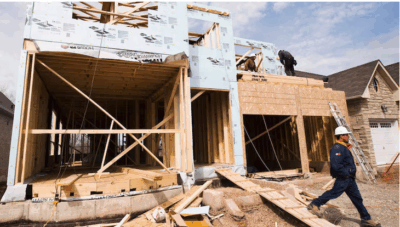
Every story about Canada’s housing crisis is focused on “affordability,” and for good reason. Families are squeezed.
Young people are locked out. It’s painful, but affordability is the symptom of an underlying disease. The disease is feasibility.
For almost 20 years, Atlantic Developments has built and sold condominium projects in downtown Halifax.
In many instances, we provided the opportunity for young people to get into home ownership. But construction costs in the past five years have gone up much faster than the incomes of potential buyers. The economics of building condominiums in Halifax, like much of the rest of Canada, is broken.
Here’s the hard truth: If it’s not feasible for the people who build conventional market housing to make a profit, they stop building. Private developers are the source of 95 per cent of Canadian housing supply. When they stop building, the consequences show up three to five years down the road, with less supply, tighter vacancy rates, higher rents and longer commutes for workers who can’t live near their jobs.
Canada is now one of the hardest places in the developed world to get a construction permit. We’ve built up, layer by layer, a regulatory maze.
A small apartment project in a mid-sized Canadian city can take four to five years from conception to completion. A big project in Toronto or Vancouver can take a decade. Consider this: We ask builders to bet on economic conditions five to 10 years out, in a country where even the Bank of Canada won’t forecast beyond two or three years.
Canada is not alone. Consultants from McKinsey and Co. reported that global construction productivity has not improved in decades, and an RBC report says that Canadian construction labour productivity declined by 37.3 per cent from 2001 to 2023.
Every project is a prototype. Every site has different zoning rules, approvals, inspectors and utility hookups, involving two or three levels of government as well as water, power and telephone utilities. Cumulative oversight, and fees that sometimes comprise 30 per cent of construction costs, are suffocating project feasibility.
Municipalities, creatures of provincial charters, with limited revenue sources and much infrastructure obligation have paid for growth with growth, distorting market efficiency. We have hit a tipping point.
If the federal government wants more housing fast and cost effectively, it must negotiate deals with provinces and municipalities that reduce development charges, hasten approvals and help pay for infrastructure that aligns with population forecasts.
Prime Minister Mark Carney and Ontario Premier Doug Ford made a good start with their recent $8.8-billion infrastructure announcement that included development-charge reductions, cost sharing on infrastructure and a time-limited 13-per-cent rebate on HST for all buyers up to $1-million that declines for a home purchase above $1.5-million.
The Carney team must make similar deals with other provinces and municipalities.
Continued and expanded Canada Mortgage and Housing Corp. construction and takeout financing programs, make it feasible to build and attainable to buy with the double-barrelled benefit of price competitiveness and additional opportunities for home ownership.
Finally, Ottawa should aim to reduce market uncertainty. It is easier for builders to take calculated risk in a complicated industry if governments project population trends and intentions.
A long-term steady and stable supply of housing is vital to social cohesion, equality, productivity, GDP and Canada’s ambitious prosperity plan.
In my old neighbourhood, homes that were built for steel workers and miners 50 year ago are still providing shelter to families.
For decades we have, step by step, with the best intentions, made it harder and harder for builders to put roofs over our heads.
If we want more homes, governments have no choice but to tackle feasibility.
Private developers are the source of 95 per cent of Canadian housing supply. When they stop building, the consequences show up three to five years down the road, with less supply, tighter vacancy rates, higher rents and longer commutes for workers who can’t live near their jobs.
David Graham is the Founder of Atlantic Developments

Discover more from Burlington Gazette - Local News, Politics, Community
Subscribe to get the latest posts sent to your email.

“a time-limited 13-per-cent rebate on HST for all buyers up to $1-million”
Many homes in Burlington are valued between $900K – $1.1M
Consider two Burlington homes side-by-side on the same street.
One home is on the market for $999K
Its neighbour, has some upgrades and is on the market for $1,100K
The first will have 0% HST applied. $999K = $999K
The second home asking $1.1M will have 13% HST kick in adding $143,000 more in taxes. = $1,243K
Buyers are not going to want to pay that extra tax – so it will put a chill on home sales priced over $1M.
Sellers of homes worth over $1M will be forced to sell their home at a loss for $999K, – or not sell at all, or wait until the time limit is up.