




 By Gazette Staff
June 26th, 2026
BURLINGTON, ON
Ontario was sitting on roughly $10.5 billion in development charge (DC) reserves by the end of 2024, according to a recent report from Desjardins that argues municipalities have become overly accustomed to the fees as a source of revenue.
More controversial still, DCs remain one of the most serious obstacles to new housing in a province where affordability is crumbling.
DCs are levied on residential and non-residential construction to help municipalities pay for infrastructure needed to support growth — think: roads, water and wastewater systems, parks, transit, and community facilities — but the report notes that the sheer size of Ontario’s reserve suggests revenues are accumulating faster than they’re being spent.
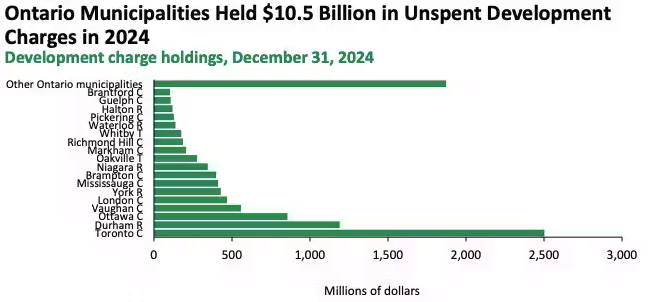
“Some level of accumulation is expected, as DCs are collected upfront while major infrastructure projects are delivered over many years and often require large, indivisible investments,” writes Desjardins Economist Kari Norman. “However, the scale of these balances means that a portion of infrastructure costs is effectively prefunded by earlier cohorts of homebuyers in order to meet future growth needs.”
In Ontario in particular, DCs have risen rapidly over the past two decades — by around 500%. Other cost drivers have increased to a lesser degree. Construction wages, for example, have risen 70% over the same period, while general inflation has increased 55%. “Taken together, these patterns suggest DCs are driven more by policy design than by underlying costs, with outcomes that vary markedly across jurisdictions,” says Norman.

Discover more from Burlington Gazette - Local News, Politics, Community
Subscribe to get the latest posts sent to your email.

Leave a Reply