




 By Gazette Staff
April 16th, 2026
BURLINGTON, ON
Early data from Hamilton Health Sciences (HHS) suggests that having midwives on staff at small community hospitals could be a game changer provincially and nationally, with improvements including: more vaginal births and lower Cesarean section rates; fewer interventions like vacuum-assisted deliveries; and shorter hospital stays that help bring down health-care costs.
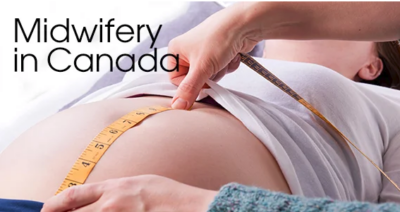 Data showing such benefits was collected by West Lincoln Memorial Hospital (WLMH) in Grimsby. This small community hospital, which is part of HHS, handles low-risk pregnancies and births, and C-sections. WLMH launched its Hospitalist Midwifery Program in 2024, making it one of the first hospitals in Ontario and Canada to employ midwives as hospital staff.
Data shows improvements for patients, teams and the hospital since the addition of hospital midwives, who work with obstetricians, family physicians and community-based midwives.
A new addition to the WLMH family
Midwives are professionally trained and licensed to provide care throughout pregnancy, birth, and postpartum. While hospitalist midwives are fairly new to WLMH, community-based midwives with hospital privileges have been delivering babies there for more than 25 years.
WLMH currently has four full-time, two part-time and seven casual part-time hospitalist midwives on staff who work 12-hour shifts, providing 24/7 coverage for labour and birthing, and postpartum care.
The vast majority of WLMH newborns are delivered by doctors and community midwives, with obstetricians and several local family doctors delivering about 70 per cent and community midwives delivering 30 per cent.
WLMH’s hospitalist midwives don’t typically deliver babies. Instead, their role includes assessing patients and ordering any needed tests, medications, or ultrasounds, and overseeing part of labour. They keep doctors and community midwives informed of patients’ progress, and call on them to attend when needed for labour and delivery.
This frees up these providers, who are on-call, to focus on other clinical needs, like caring for other patients, until closer to delivery.
After births, hospitalist midwives work with nurses to support the mother and baby, including running a postpartum clinic where families return for care in the days after going home, and well-baby checks.
The “what” vs. the “why”
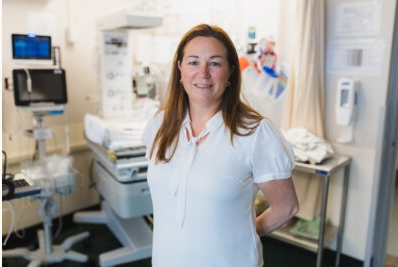
Stephanie Skeldon, clinical manager of obstetrics and newborn services at WLMH.
While data suggests improvements since hospitalist midwives joined the WLMH team, reasons for these positive changes are still being explored. Stephanie Skeldon, clinical manager for obstetrics and newborn services and outpatient services at WLMH, believes a streamlined approach to care, with hospitalist midwives’ niche expertise supporting nurses, doctors and community midwives, is driving improvements for pregnant patients and the teams caring for them. This includes improved patient flow and a reduction of burnout among on-call doctors and community midwives.
“Our Hospitalist Midwifery Program could serve as a model provincially and nationally for other smaller hospitals caring for low-risk pregnancies and births,” she says.
Lowering C-section rates
Of the 500 births at WLMH in 2025, 400 (80 per cent) were vaginal and the rest were C-section. That compares to 2024, when 306 of 413 births (74.1 per cent) were vaginal; and 2023 when 326 (72.6 per cent) of 449 births were vaginal.
Vaginal birth is considered best for both mother and baby whenever possible. C-sections are higher risk and more costly to the health-care system. Mothers having C-sections tend to stay in hospital longer, have more pain and longer recovery times, and are at higher risk of complications like infection. Having a C-section can increase risks in future pregnancies, such as a higher incidence of a condition called placenta accreta, where the placenta grows too deeply into the wall of the uterus and doesn’t separate easily after the baby is born.
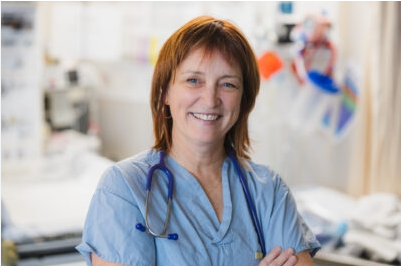
Hospitalist midwife Pilar Chapman,
“The most effective way to bring down C-section rates is to help more mothers have vaginal births,” says WLMH hospitalist midwife Pilar Chapman, adding that this is where hospitalist midwives play a key role. Chapman is site lead for the hospital’s midwifery program.
Hospitalist midwives have improved staff’s confidence in encouraging position changes and movement during labour, says Chapman.
“Small interventions, like encouraging patients to walk through labour or use a peanut ball when they have an epidural can help reduce the chance of the patient having a C-section.” This peanut-shaped support is placed between a labouring patient’s legs, especially with an epidural, to help keep the pelvis open and encourage labour to progress.
A second chance
“We used to believe, ‘once a C-section, always a C-section,’ when discussing how someone with a previous C-section would delivery future babies,” says Chapman, adding that for many women, planning a vaginal birth after a previous C-section can be a safe option, depending on their health, and type of scar from their previous C-section, or other potential complications.
Midwives have expertise in supporting future vaginal births for these patients, which showed in the data.
In 2025, 37 WLMH patients who had a previous C-section qualified to try a vaginal birth. Of those, 57 per cent tried and 81 per cent were successful. For other community hospitals in Ontario of the same size, 33 per cent per cent of patients tried and 75 per cent per cent were successful. For all Ontario hospitals, regardless of size, the attempt rate was 31 per cent, with a 73 per cent success rate.
“We’re averaging higher than comparable hospitals, as well as Ontario hospitals as a whole,” says Skeldon.
Fewer interventions
In 2025 at WLMH, very few babies born vaginally were vacuum-assisted deliveries – just under five per cent. This low rate is in stark contrast to the provincial average for community hospitals, where it was 13 per cent.
“We’re not sure why we have such a low vacuum rate, but we’ve seen a decrease since hospitalist midwives were added to the team,” says Chapman. “Perhaps it’s the midwives’ influence in encouraging patients to adopt various positions during the pushing place that’s having an impact.”
Shorter stays
Data shows that WLMH mothers and their newborns have been going home sooner, and patient surveys have also shown overwhelming praise for this new option of an early supported discharge.
Before hospitalist midwives joined the team, it was standard practice to keep mothers and their newborns in hospital for at least 24 hours so babies could undergo routine screening tests. But hospitalist midwives opened a clinic to provide these tests, allowing parents to be discharged sooner and return to visit the clinic with their newborns for screening. In 2025, 47 per cent chose to return home within 24 hours, and then visit the clinic.
“One of the things that makes early discharge safe is having the ability to return to the hospital easily, without having to go through the emergency department,” says Skeldon, adding that the outpatient clinic provides this support.
“I’m incredibly proud of the work our team is doing,” adds Skeldon. “Our unique approach is bringing changes for the better, and I believe that’s reflected in the data we’re seeing.”

Discover more from Burlington Gazette - Local News, Politics, Community
Subscribe to get the latest posts sent to your email.
