





 By Sara Faro
May 17th, 2026
BURLINGTON, ON
Canada’s healthcare system is often discussed in broad terms through the lens of emergency room wait times, family doctor shortages, and hospital funding pressures.
But beneath those larger conversations, another shift has been quietly unfolding across Ontario’s healthcare landscape: the growing divide between publicly funded care and privately accessed specialized treatment.
 For many Ontarians, the distinction between public and private healthcare still feels relatively straightforward. Essential medical services are covered through OHIP, while elective or cosmetic procedures are paid for privately.
In reality, however, the line between those categories has become increasingly complex, particularly in fields such as plastic surgery, dermatology, fertility treatment, mental health services, physiotherapy, and diagnostic imaging.
Patients today are navigating a healthcare system where access, wait times, and quality-of-life concerns often intersect in ways that do not fit neatly into traditional policy debates.
The Growing Grey Area in Specialized Care
Plastic surgery is one of the clearest examples of this complexity. Public perception often associates the specialty exclusively with cosmetic procedures, despite the fact that plastic surgeons also perform a significant amount of reconstructive and medically necessary work.
Breast reconstruction following cancer treatment, trauma reconstruction, burn care, skin cancer repair, congenital abnormalities, and complex hand surgery all fall within the same medical discipline.
In Ontario, some reconstructive procedures are covered through OHIP when deemed medically necessary, while cosmetic procedures remain privately funded. Yet the distinction between medical necessity and quality of life is not always as simple as policy language suggests.
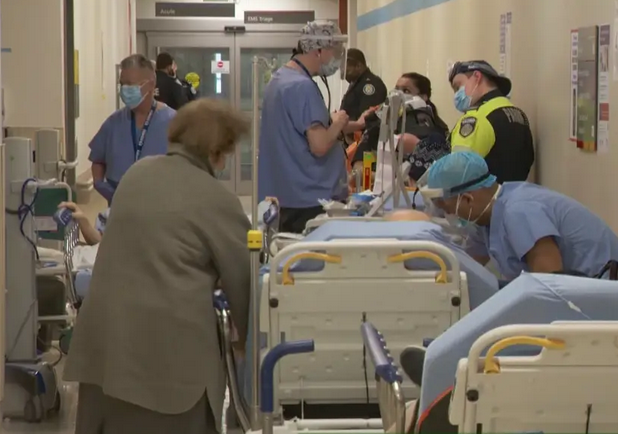
Many hospitals cannot handle the demand for service: crowding results.
Patients experiencing chronic discomfort, post-pregnancy physical complications, significant weight-loss changes, or long-term self-image concerns may not meet OHIP funding criteria despite experiencing very real physical or psychological impacts on their daily lives. In many cases, patients find themselves in a grey area where treatment could improve well-being substantially, but remains financially inaccessible because it is classified as elective.
At the same time, wait times across portions of the public healthcare system continue placing additional pressure on both patients and specialists. While emergency and urgent care understandably remain priorities, many non-life-threatening conditions can still significantly affect quality of life even if they are not considered medically urgent within the broader system.
As a result, more Ontarians are increasingly exploring private healthcare options for specialized consultations, diagnostics, and procedures that fall outside publicly funded timelines or eligibility requirements.
According to Dr. Waqqas Jalil of Aspect Plastic Surgery in Toronto, many patients seeking consultations are not necessarily motivated by vanity, but by concerns related to confidence, discomfort, recovery after major life changes, or a desire to improve quality of life after years of postponing treatment.
That changing patient mindset reflects a broader evolution happening throughout healthcare. Increasingly, patients are prioritizing preventative care, mental well-being, mobility, confidence, and long-term quality of life alongside traditional medical outcomes. The healthcare conversation is no longer centred exclusively around survival or acute illness. For many people, it is also about function, dignity, comfort, and emotional well-being.
Ontario’s aging population is adding another layer to the discussion. As demographics shift, demand for specialized healthcare services continues growing across both public and private sectors. Older populations often require more complex care, more follow-up treatment, and greater access to specialists, while younger generations are simultaneously more willing to pursue preventative and elective treatments that previous generations may have ignored altogether.
The result is a healthcare environment facing pressure from multiple directions at once.
 Critics of expanding private healthcare options often argue that a larger private sector risks deepening inequality by creating two tiers of access based on income. Supporters, meanwhile, argue that private clinics can reduce pressure on overloaded public systems by absorbing demand for elective procedures and consultations that do not require hospital resources.
The reality is likely more nuanced than either side fully acknowledges.
Ontario already operates within a hybrid healthcare environment in practice, even if politically the conversation around privatization remains highly sensitive. Many services that significantly impact quality of life, including therapy, dental care, fertility treatment, physiotherapy, and prescription medications, already exist partially outside universal coverage depending on a patient’s insurance or financial situation.
Specialized care increasingly falls into that same complicated territory.
At the same time, physicians themselves are navigating mounting pressures. Administrative burdens, staffing shortages, rising operational costs, and growing patient demand continue affecting healthcare providers across nearly every specialty. Clinics and specialists are being asked to deliver increasingly personalized care within systems that are often stretched thin financially and operationally.
 For patients, the experience can feel frustratingly inconsistent. Access to care may depend not only on medical need, but also on geography, referral pathways, financial flexibility, insurance coverage, and the ability to navigate a highly fragmented system.
Yet despite the tension surrounding public versus private healthcare discussions, one reality remains consistent across both sides of the debate: patient demand for specialized care is growing, not shrinking.
The broader challenge facing Ontario may not simply be whether care is public or private, but whether the healthcare system as a whole can adapt to changing expectations around health, wellness, aging, recovery, and quality of life in the decades ahead.
Those conversations are unlikely to disappear anytime soon. As wait times, demographic pressures, and healthcare costs continue evolving, Ontario’s divide between public and private specialized care may become one of the defining healthcare discussions shaping the province’s future.

Discover more from Burlington Gazette - Local News, Politics, Community
Subscribe to get the latest posts sent to your email.
