



 By Liam McGee
October 31st, 2024
BURLINGTON, ON
Since moving to Burlington ten years ago, I have been fascinated by the brand of municipal politics practiced here. I come from quite a different local experience, a more active one, and have often remarked on the relative passivity of this City’s residents. It seems to take a fair amount to get people here excited. It happened in 2018 when the current Mayor and Council were first elected (to their current roles) and it may be happening again with the Mayor’s second budget under the aegis of her Strong Mayor powers. It would appear that many people have issues with the proposed expenditure plans for 2025. And perhaps even more find that the process of civic communication and engagement used to present and explain the planned budget was unsatisfactory and unsatisfying.
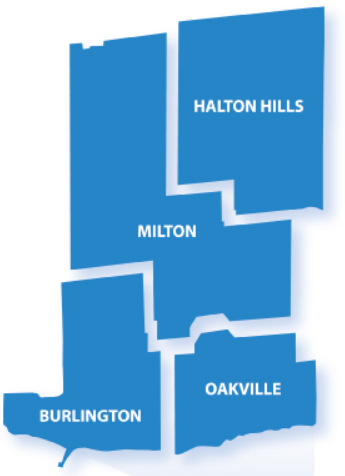 Times of popular discontent are often the very best times to introduce change -to pose the challenging questions and unusual ideas that might lead to improved approaches and better ways of doing things. So, in this spirit and before Burlington begins its 2025 budget debate next week, I ask why do each of the municipalities within the Halton Region have separate purchasing, traffic, transit, fleet management, bylaw enforcement, human resource, records management, permitting and Information technology functions – to name an obvious few? Why are there four separate and quite distinct web sites with equally varied backend customer interfaces? Why are the administrative and operational processing systems all “roll your own”? The four municipalities are fundamentally the same business with identical core administrative processes and needs. Indeed, there are also common statutory requirements to much of what they do through the prescriptions of the Ontario Municipal Act. But each municipality has established itself as a discreet entity – a fiefdom unto itself. Even the governance structures of each municipality differ to the degree permissible under provincial oversight. The result is duplication of effort, bloated bureaucracy, needless expense, reduction of bench strength (scarce skills and technical expertise) and inconsistent if not conflicting citizen experience.
I believe that political entities habitually resist aggregation in any form; they instinctively fear the loss of identity, power and control that comes with consolidated operations or being only part of a larger whole. So, for example, when the Ford Government introduced its Regional Review in 2019, the common reaction of most well-run municipalities was to oppose regional amalgamation as a loss of “local voice” and sensitivity to unique citizen needs. Eventually the initiative died in a very opaque cloud of political confusion and counter-direction. But, was the fear of loss of local autonomy ever ground-truthed against actual experience and has the citizen experience in the Halton municipalities been rich and satisfying as a result. I would argue to the contrary.
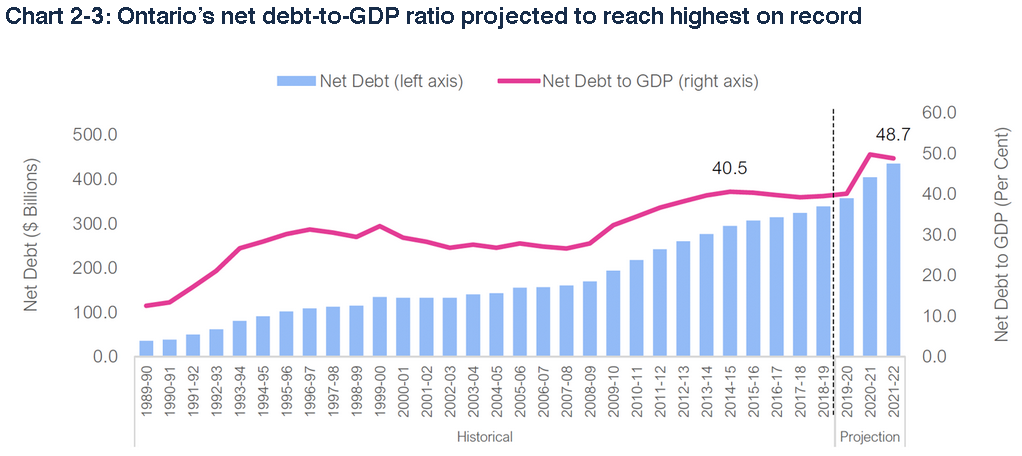
1: This is not an economically sustainable model 2: how much does this debt cost the taxpayer ?
 Now may be the time that these long-term Halton career politicians actually assumed a true leadership role and worked, as a collective, to rationalize their common services into a shared resource pool. Of course, this would be flying in the face of the current Ford government direction towards disaggregation – a return to over 400 little service centres with over 400 voices chirping in the wind (and over 400 varied client/customer experiences). In this time of mounting budget pressures and fiscal uncertainty, consolidation of essential support services provides economies of scale, operational savings, greater purchasing power and consistency of approach. It allows for the development of centres of expertise/excellence with a depth of resource strength, reduced bureaucracy and the development of critical back-up and recovery services. It provides the mechanism, the structure, for improved levels of support to the region’s citizens. Most importantly, and somewhat ironically given the popular wisdom of five years ago, it actually strengthens “local voice” – but more on this aspect later.
Liam McGee is a retired university professor – political science and sociology. Taught at two Canadian universities during his career. Burlington resident for 10 years, lives with his wife of 45 years and two large dogs. Three grown children who now have lives of their own and bring the grandchildren with them when they visit.

Discover more from Burlington Gazette - Local News, Politics, Community
Subscribe to get the latest posts sent to your email.

Over the years various Hospitals and/or Hospital Fondations have amalgamated or have shared resources, with other Hospitals in Ontariio. There are substantial
human resource savings & economies of scale in purchasing. It could work in Municipal gov’t also.
Where did this guy live before?
Well said, Liam.
Very well written. An interesting perspective and arguement for true amalgamation. It’s time to come together. The new city of Halton?