 By Staff By Staff
September 4th, 2023
BURLINGTON, ON
Phil Pothen, Ontario Environment Program Manager at Environmental Defence said the following about the resignation of Steve Clark as Minister of Municipal Affairs and Housing over the Greenbelt scandal. .
 “The resignation of Minister Clark is a predictable attempt at damage control but that is no substitute for reversing the $8.3 billion Greenbelt giveaways in their entirety. “The resignation of Minister Clark is a predictable attempt at damage control but that is no substitute for reversing the $8.3 billion Greenbelt giveaways in their entirety.
“Given the findings of the Auditor General and the Integrity Commissioner and the vast 350km2 supply of designated development land we had in the Greater Toronto and Hamilton Area alone (before this government took office), sprawling further outwards, let alone into the Greenbelt, cannot be justified and will only make things worse. Any Minister who persists in claiming otherwise, will only be implicating her or himself in what, going forward, they will know is a false story and disreputable, harmful policy initiative.
“It is clear that the Greenbelt removals are not about housing, therefore the Premier, Cabinet and PC MPPs need to immediately take the following actions:
• Restore protection to every acre of land Minister Clark removed from the Greenbelt and prohibit any further removals
• Reinstate the Duffins Rouge Agricultural Preserve Act
• Reverse the various boundary expansions and sprawl MZOs authorized by the Minister’s Office
• Overhaul land use rules to slam the brakes on sprawl and focus development on adding compact, affordable homes to existing neighbourhoods and settlement areas
Background Information:
 There are 59,000 hectares of land designated for development in the GTHA alone, without including the 3,000 hectares removed from the Greenbelt. There are 59,000 hectares of land designated for development in the GTHA alone, without including the 3,000 hectares removed from the Greenbelt.
If some of the lands were developed at even the modest densities of Toronto’s Trinity-Bellwoods neighbourhood, only 15,000 hectares would be needed to house the population projected for the region by 2051. See more at: https://environmentaldefence.ca/the-big-sprawl-the-gtha-has-more-than-enough-land-designated-for-development/
Ontarians know that we can build homes in cities and towns where we already have services and where public transit and walkability lead to lower costs and higher quality of life. In fact, a new public opinion poll conducted by Environics for the Alliance for a Livable Ontario shows that 83 per cent of Ontario residents want homes built within cities and towns where services exist – and not on the Greenbelt.
About ENVIRONMENTAL DEFENCE (www.environmentaldefence.ca): Environmental Defence is a leading Canadian advocacy organization that works with government, industry and individuals to defend clean water, a safe climate and healthy communities.

 By Staff By Staff
September 4th, 2023
BURLINGTON, ON
Before his Minister of Municipal Affairs and Housing resigned Premier Doug Ford spoke to the Association of Municipalities in Ontario using phrasing that appeared to be putting the blame for the housing crisis on the backs on immigrants.
In an opinion piece Toronto Star political columnist Martin Regg Cohn Political Columnist, late in August said:
“He used the same phrasing again two days later, reading from the same Teleprompter: “Failing to act threatens to erode our unwavering support for immigration.”
“Again on Monday, in a highly touted speech to municipal leaders from across the province, the premier repeated his gut-the-Greenbelt-or-else warning: “Failing that would threaten to erode Canadians’ unwavering support for immigration.”
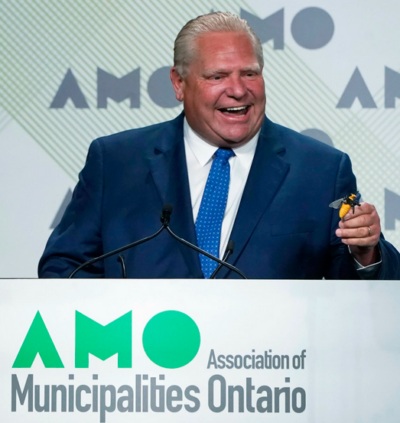 Premier Doug Ford: Does he understand the people of Ontario? “Over and over, again and again, Ford purports to be raising the alarm in his role as a guardian of social cohesion. But if tolerance is truly his goal, the premier is playing with rhetorical fire.
“It’s not a dog whistle. It’s a bullhorn being blown from Ford’s bully pulpit.
“The premier’s comments this week to the Association of Municipalities of Ontario were especially unseemly and unsettling. His speech brought back memories of Ford’s performance in early 2018, when he told an audience of northern mayors that he wanted to put Ontarians to work first, before ever letting in foreigners who might take their jobs.
“Back then, Ford’s parochial pitch fell flat in front of a more worldly audience of northerners, who well understood the massive demand for talented foreign doctors and nurses, teachers and preachers, traders and tradespeople in their rapidly depopulating cities and towns. But it took a while for the premier to catch on.
“Again in 2018, Ford turned his wrath on “illegal border-crossers,” picking a fight with Prime Minister Justin Trudeau by claiming, wrongly, that “this mess was 100 per cent the result of the federal government.” It was an attempt to whip up resentment then, just as he risks fanning prejudice now.
Let’s be clear about the housing squeeze, the Greenbelt gambit and the foreign factor. No matter how many times Ford tries to connect the dots and paint by numbers, he is making it up as he goes along.
“As much as Ford keeps pointing to future immigration levels as justification for his action, the truth is that the housing shortage long predates it. Even as the premier continually cites the Greenbelt giveaway as the prerequisite to building new homes, the reality is that his own housing advisory task force (and the auditor) argued the precise opposite.
“In fact, there is more than enough land that can be repurposed to meet the government’s building targets without cannibalizing protected lands. In any case, the auditor’s report notes that the government had already met its specific housing targets last October, a full month before it suddenly went back to the well by targeting the Greenbelt.”
 By Staff By Staff
September 4th, 2023
BURLINGTON, ON
Minister of Municipal Affairs and Housing Steve Clarke gave Premier Doug Ford his letter of resignation and posted the contents on Twitter (X)
 Steve Clark: Now just the MPP for Leeds-Grenville-Thousand Islands and Rideau Lakes. The release of a damning report from Ontario’s integrity commissioner finding that Clark violated the integrity act “by failing to oversee the process by which lands in the Greenbelt were selected for development “, was the beginning of the end for Clark
In his letter Clark said:
“Although my initial thought was that I could stay in this role and establish a proper process so that these mistakes don’t happen again, I realize that my presence will only cause a further distraction for the important work that needs to be done and that I need to take accountability for what has transpired.”
Clark said he plans to continue as MPP for Leeds-Grenville-Thousand Islands and Rideau Lakes.
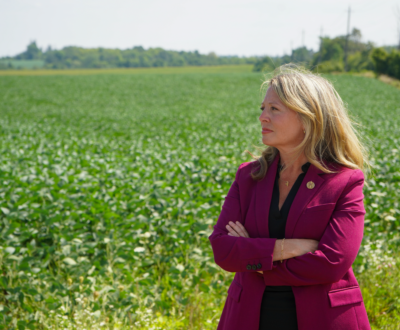 Marit Stiles: Leader of the Official Opposition NDP Marit Stiles, the Leader of the Official Opposition NDP said in a media release:
“Steve Clark is finally taking some responsibility for his role in the government’s Greenbelt scandal. But the Auditor General’s report, the Integrity Commissioner’s report, and now a potential criminal investigation clearly show that this corruption reaches far beyond Clark’s office.
“Now it’s time for Doug Ford to face the music.
“Recall the legislature so we can restore these lands to the Greenbelt; and give Ontarians the transparency and accountability they deserve from a Premier.”
 By Pepper Parr By Pepper Parr
September 4rd, 2023
BURLINGTON, ON
David Crombie, former Mayor of Toronto and a lifelong Conservative who served in the government of Joe Clark and Stephen Harper talks about Premier Doug Ford in a 35 minute podcast with one of the Liberal leadership candidate. The following are excerpts from that podcast.
“The original promise to the public, was to not touch the Greenbelt. That was followed by a talk he gave to a number of developers telling them that he would open up the Greenbelt.
“When the Conservative government was re-elected the in 2022 everything changed.
 David Crombie “He was at least honest enough to say “it’s a scam. I don’t believe in the Green Belt. It’s a sea of weeds.”
“No one should be fooling around here. This is not just going to adjust the Green Belt. They want to blow it up. Why?
“Because green belts are our preserves for a long time. The point of having a preserve is to not have speculation of land prices.
“He’s now let loose thousands of acres of land to speculation.
“The auditor general’s report, was incredible enough.
“The Minister’s chief of staff resigns
“Nothing changes
“The idea that a Minister is responsible for what happens on his watch is forgotten.
”We’ve got a situation where the Housing Minister’s Chief of staff attends a private construction dinner where developers are literally handing him private packages
“People are busy so they can’t pay attention to all of this all the time.
“This is daylight robbery. This is not fooling around. A bit of corruption here, a bit of corruption there. This is a heist.
“These guys are bent on doing it.
“Again, listen to the premier, the Premier says the buck stops with me. I take full responsibility.
“Unbelievable, you’re a minister. Is there any world in which you wouldn’t know what was going on in your office?
“I mean, I don’t usually use these words. It’s not my style. But you’ve got to get through to people. These guys just will not tell the truth. And they’ll lie anytime they need to. And they’ve been doing it ever since the idea that somehow the Minister is not accountable for his chief of staff. That is so bizarre.
“The government’s ideology in many ways, is do whatever you can to win and do whatever you can get away with.
“It hurts me to say it, I’ve worked with all three political parties.
“We really need to close ranks when it comes to people who bold faced lie, and at the same time, ruin the future for your children.
“And grandchildren. That’s what they’re doing.”
Link to the full podcast
By Evelyn Brown
September 4th, 2023
BURLINGTON, ON
Quality garage doors can last for decades. However, with that long of use, there are bound to be damages or breakdowns that require their repairs. As reported by Home Advisor and Improvement the average cost of a garage door remodel is $218, with high-end parts running around the $553 mark.
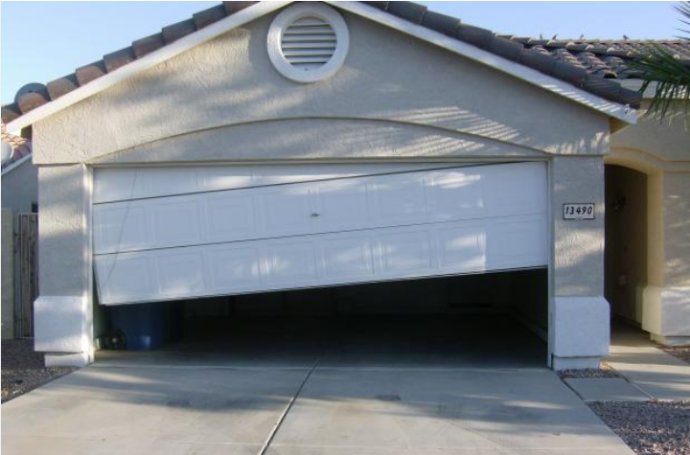 Is this a repair you can do yourself or do you need a trained person to fix it? When repairs are needed, you have two options: do it yourself or call a handyman. The first option seems more advantageous financially, but it’s not always possible. We will look at all the options on how you can reduce the cost of garage door repair
At the stage of diagnosis
● Self-diagnosis. Try to identify the problem on your own. Read the manual for your door, they usually have a section with the most common difficulties and how to solve them. Or look for the answer to your question online, perhaps watch a few videos. This will help save you money on calling a professional.
● Online consultation of a craftsman. Some masters provide such services via the Internet and such a consultation can be free or cheaper than a house call.
At the stage of selection of materials
● Reuse of materials. Before buying, check to see if you already have some of what you need.
● Buying used parts. Sometimes used but quality materials can cost much less.
● Buying non-original parts. To benefit at the moment, you can opt for cheaper analogs of the part you need. However, this entails risks of its more rapid failure.
At the stage of work
● Self-repair. Many simple tasks, such as lubrication, replacing small parts, and re-configuring the remote control can be done with your hands. Find detailed video instructions and get started.
● Combining tasks: If you need to do something not only to the garage door but also something else to repair, try ordering all the work at once, it may come out cheaper than repairing individually. At least for the cost of calling a handyman.
● Call a handyman in advance. Urgency always affects the final cost of the work. If your breakdown does not require urgent repair, then call the master on normal terms in his nearest window.
At the stage of choosing an executor
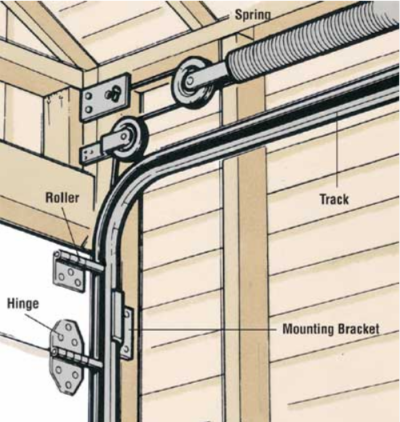 If you are going to attempt to repair a garage door by yourself become familiar with all the parts. ● Price comparison. Compare the proposals from different performers. Not only by cost but also by the tasks included in it.
● Online auctions and platforms. Sometimes on specialized platforms, you can find performers who are ready to do the work cheaply.
● Discounts or promotions. Some companies offer discounts in the “dead” season or promotions for certain types of work.
Additional tips
● Training videos and tutorials. There are enough resources on the Internet where you can see how to perform this or that repair yourself.
● Sharing experiences. Ask for advice from friends or neighbours who have already faced a similar problem. Perhaps the neighbour’s son will fix your gate cheaper than the master.
● Preventive measures. Most people don’t worry about their garage door until something breaks. However, the truth is that your door should be well-oiled, nuts and bolts tightened, and well-balanced. This greatly affects both its functionality and how long it will last. Is your garage more than a couple of years old? Get an annual tune-up from a professional garage door service company and you’ll avoid costly repairs in the future.
Self-repair vs. calling a master: Where is the benefit?
When deciding whether to do the repair yourself or to call a master, you should take a responsible attitude and evaluate several factors:
1. Financial costs for materials, tools, and work. Remember that if you do not have the necessary equipment, the result may be more expensive than if you hire a professional.
2. Time and effort. Evaluate how complex the job is and how much time it will take. And what financial consequences will come with the risk of making a mistake,
3. Quality and results. If you have the necessary experience, the result can be at the level of a professional. But remember that the handyman gives a warranty on his work, which can be beneficial to you.
4. Personal Safety: Some jobs can be dangerous without the proper equipment and knowledge. And professional handymen know and follow the standards, removing the risks from you.
Based on these criteria, you can choose between self-repair and calling a handyman. Each case is unique, so it’s important to conduct a full assessment before making a decision.
When it is more cost-effective to call a handyman
In some situations, calling in a handyman can be more beneficial:
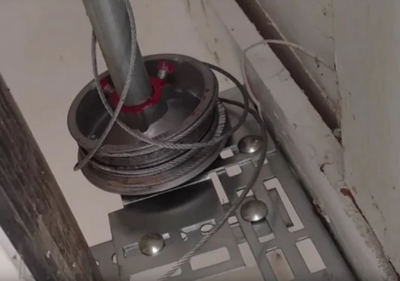 A broken cable can be done by an experienced handi-man or a neighbour who understands mechanics. 1. Technical complexity. If the breakdown involves complex mechanisms such as automatic opening and closing, it is better to entrust it to a professional. A mistake in repair can lead to costly consequences.
2. Need for specialized tools. Sometimes repairs require specialized tools, which are quite expensive and will not pay for themselves in one repair.
3. Parts. Professionals often have access to parts at wholesale prices and can offer a better price than retail stores.
4. Warranty case. If your door is still under warranty, repairs will probably be free or cheap as long as a certified craftsman does the work. If you do it yourself, you may even nullify your warranty.
5. Warranty on work done. Many professional services offer a warranty on their services, which can save you money in the long run.
6. Time Savings. If you don’t have the free time or desire to research how to make repairs, calling a handyman can be more cost-effective in terms of your time. And if you translate that into the cost per hour of your work as well, for sure.
7. Adherence to standards and norms There are some instances where repairs must be done according to certain standards that only a qualified professional knows.
While do-it-yourself repairs may seem cheaper at first glance, the long-term economic and safety factors often speak in favor of calling in the professionals.
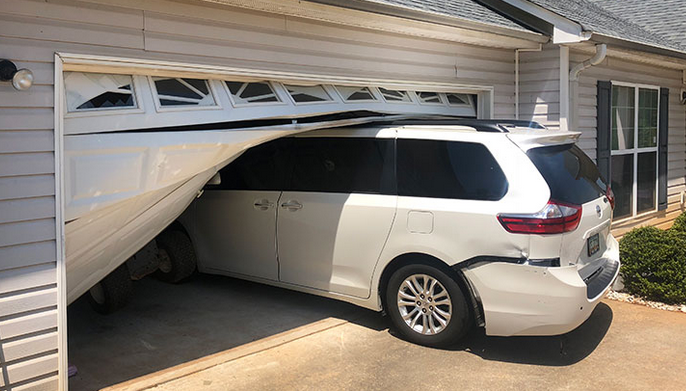 This is probably going to require professional trained help. Conclusion
With the variety of options in today’s world, finding a way to make garage door repair cheaper is not difficult. As a rule, the financial benefit requires balancing it with the investment of your time, risks incurred, or lost profits.
Choosing to make a financial outlay, such as calling a repairman, provides a strategic benefit that can be overlooked at the moment. Make an informed decision based on your priorities and you’ll be on the plus side either way.
An international strategist points to a perfect storm of stretched house prices, weak affordability, and over-leveraged mortgage borrowers characterizing the Canadian housing market.
By Zakiya Kassam
August 29, 2023
BURLINGTON, ON
An international strategist is warning that Canada could be sitting on the largest housing bubble of all time.
“I’ve analyzed housing bubbles in the developed world and Canada’s really got a unique one to its own,” Phillip Colmar, Managing Partner and Global Strategist at MRB Partners, told BNN Bloomberg last week.
Canada has stretched house prices and weak affordability, said Colmar. He also put particular emphasis on the country’s household debt levels.
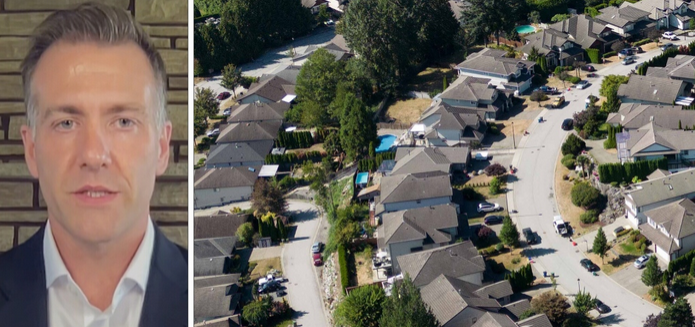 Phillip Colmar, Managing Partner and Global Strategist at MRB Partners. Canadian households packed on $16.5B in debt in the first quarter of this year, according to data from Statistics Canada (StatCan). That included $11.2B in mortgage debt. While that figure represents a “relatively slow” quarter for mortgage borrowing — it follows “record” levels of debt packed on in Q2-2021 and Q2-2022 — StatCan also reports that mortgage interest payments grew 12.6% on a quarterly basis and 69.7% compared with the first quarter of 2022 “as a result of ongoing rate hikes.”
Obligated payments of principal fell 6.8% “as the significant stock of variable rate mortgages likely allowed interest payments to further adjust without a concomitant rise in principal.”
Meanwhile, a “decline in households’ disposable income” pushed the country’s household credit market debt as a proportion of household disposable income to 184.5% in the first quarter, up from 181.7% in the prior quarter.
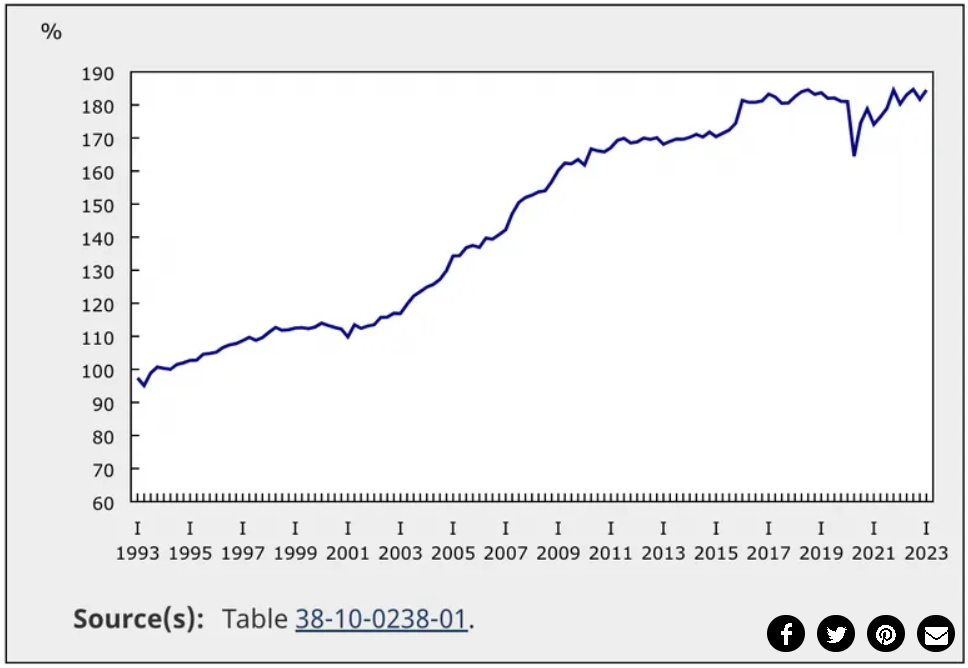 Household credit market debt to household disposable income, seasonally adjusted (Statistics Canada) Household credit market debt to household disposable income, seasonally adjusted (Statistics Canada)
“The worst part for a housing bubble is when you have a credit bubble underneath it. And the amount of Canadians leveraged into the system versus incomes is is pretty astronomical,” continued Colmar.
Meanwhile, banks are doing what they can to keep Canadians in their mortgages, including offering borrowers the option to tap into relief plans, payment deferrals, and extended amortizations.
RBC, for instance, recently disclosed that the number of Canadian residential mortgages with amortization periods surpassing 25 years was up 40% year over year in July. Similarly, TD reported an annual rise of 35%. Both banks say they’ve seen a spike in loans extended over 35 years.
This kind of ‘hand holding’ is what’s keeping the rate of mortgage delinquencies low, Victor Tran, mortgage and real estate expert with RATESDOTCA, told STOREYS in a previous interview. It’s also one of the things keeping the housing bubble at bay for the time being.
“[Banks] are basically just kicking the can down the road. They’re helping these customers out,” said Tran. “If lenders stop helping these customers out, then yeah, we’re going to start seeing a huge increase in mortgage delinquencies and mortgage defaults. And sure, we may see many forced sales in the market.”
Tran also pointed out that Canadians are holding onto their mortgages at the expense of other credit products.
“For example, credit cards, student loans, lines of credit, some auto loans — they’re starting to see a huge rise in delayed or missed payments,” he said. “That was kind of expected due to inflation and rising costs. Because if anyone has to miss a payment, they would leave the mortgage payment or any type of housing payment to be left last to miss.”
Although it remains to be seen if the Bank of Canada will opt to raise its policy rate in the months to come, further volatility is sure to bleed into the mortgage space, which could ramp up the severity of a recession.
Experts have been split on when, or even if, a recession will hit — a key factor that will precipitate a housing bubble burst. Just last month, an RBC report predicted a moderate economic contraction in 2023. A July report from financial advice provider Finder, however, found a 50-50 split between economists who believe a recession will happen in the next year and a half and those who don’t expect a recession to happen within the next two years at all.
But looking ahead to early September, when Canada’s next GDP report is due to come out, economists surveyed in a recent Reuters poll pointed to a sharp slowdown in economic growth as being likely.
“Not to be too scary, but there is definitely a risk here that if mortgage rates go higher, or unemployment were to rise when we hit the next recession, then this thing does end up in a deleveraging cycle,” Colmar said.
Picked up from STOREY.CA; the online platform for real estate news.
By Staff
September 1st, 2023,
BURLINGTON, ON
It seems that Canadians are a little out of the loop when it comes to their own mortgages.
The Real Estate and Mortgage Institute of Canada (REMIC) painted a pretty dismal picture of Canadian borrowers earlier this month, reporting that 58% can’t recall what their monthly mortgage payments are “without looking them up.”
REMIC also revealed that 68% of current borrowers are “murky” on what their monthly payments would be if the Bank of Canada raised its policy rate to 5% (and mind you, the rate hit 5% in July) including close to 32% who say they don’t know and over 36% who say they’re unsure.
There’s shock value to those figures — at first blush, they’re uncomfortably high and seem to point to a sort of irreverence in a high-stakes borrowing scenario — but experts point out that mortgage holders these days are facing an unusual level of nuance. Interest rates haven’t held steady for more than a few months at a time since last March, and mortgage rate volatility has certainly been one of the fallouts.
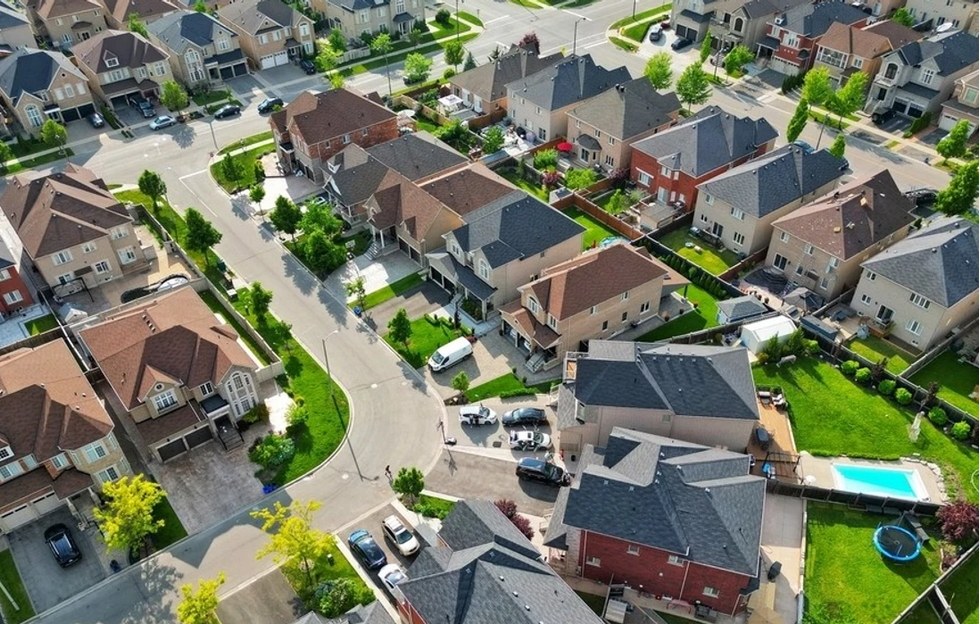 How many of these home owners know what is set out in their mortgage? Andy Hill, mortgage broker and Co-Founder of ratefilter.ca, says that it makes sense to him that only a portion of borrowers — and he surmises those with an adjustable-rate product, as well as fixed- and variable-rate carriers who are up for renewal — would be hyper-aware of their monthly mortgage payments, as only some are “at the whim” of interest rate fluctuations.
“If they’re not coming up for renewal, if they’re not an adjustable-rate mortgage, effectively, they have no reason to make that sort of calculation at this specific time,” he says.
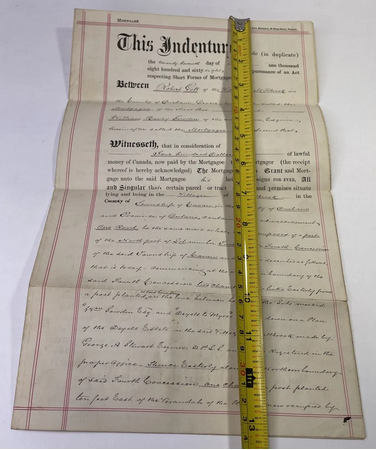 Early mortgage documents were to some degree hand written. Similarly, Victor Tran, mortgage and real estate expert with RATESDOTCA, notes that it’s not uncommon for current borrowers to be less “in tune” with the broader market dynamics that inform things like mortgage rates as they move away from the initial purchase of their home, saying that consumers tend to be “reactive as opposed to proactive.”
“They usually look into these sorts of things when they actually have to,” he adds.
READ: “Mortgage Malaise”: Over A Third Of Canadians Regret Their Current Mortgage
With another BoC rate decision slated for next week, Tran urges borrowers coming up for renewal in the coming months to be proactive: “shop around” with different lenders and, although predictions are mixed on whether the bank will opt to hike or hold, consider locking in a rate preemptively.
“If rates go up, you’re protected at a slightly lower rate. If the rates go down, then great, you just reapply for that new rate hold or a new pre-approval,” he says.
Tran also notes that, while the BoC’s policy rate dictates the prime rate, which is then tied to variable-rate mortgages and lines of credit, consumers can follow the Canada government bonds for some insight into fixed-rate mortgage products.
“As Canada government bonds increase, fixed rates will also increase. And vice versa — if bond yields are coming down, fixed rates will also come down,” he says. “And people can monitor that online. You can just Google ‘Canada five-year government bond’ or ‘three-year government bond.’ And the fixed rates are tied to those directly.”
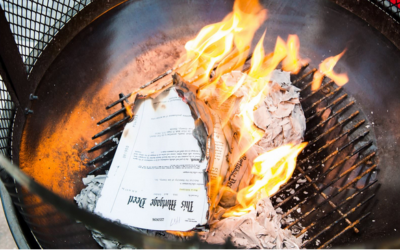 Many churches and some families celebrate the end of a mortgage by burning it. But regardless of the bank’s next move or the type of mortgage scenario Canadians are finding themselves in, Hill stresses that there’s power in doing your homework and not just relying on “experts” to inform your next mortgage move (or sticking with the same product out of convenience.)
“You really want to do a little bit of research into the mortgage you’re currently in and what you’re being offered,” he says. “Look at the bank that you bank with, look at what other banks have available, look at the broker network — I think all of those avenues are good to explore. Just like one would with any other investment, you want to check out the variety of different options available, and then be empowered in your own decision making.”
Content was picked up from STOREY.ca; the online platform for real estate news.
|
|