 By Pepper Parr By Pepper Parr
March 27th, 2026
BURLINGTON, ON
 Nate Erskine Smith when he was in Burlington seeking the leadership of the Ontario Liberal Party. Bonnie Crombie won that race. Erskine Smith went to to win the Beaches EAst York Street in Toronto and is currently a member of Parliament and is running for the provincial seat of Scarborough East York, which is he winds, gets him into Queen’s Park where he has made it clear he will work at becoming party leader and run against Doy Ford in the next provincial election. It’s a stretch. Nate Erskine Smith opines on the 2026 Ford Budget saying they “released a budget yesterday that might well have been entitled “tired and short on ideas” instead of “a plan to protect Ontario”
It’s been too long since our last post, as I’ve had my head down focused on the provincial nomination race in Scarborough Southwest (help us here!) and serving constituents at the Danforth office. You can read this full Q&A with Beach Metro about next steps.
Need to toot my own horn on this one. I was the founding editor of what was the Ward 9 News and is now the Beach Metro.
The rundown on the Ontario Budget can be found below. We also just finished recording a piece on the notwithstanding clause (with the Bill 21 hearing before the Supreme Court earlier this week), which should be out soon. And the Uncommons podcast is returning after a hiatus, with guest Karina Gould.
Ontario Budget 2026: there is no plan.
It’s more apparent than ever that it’s past time for change.
The Ford government released a budget yesterday that might well have been entitled “tired and short on ideas” instead of “a plan to protect Ontario.” A series of re-re-announcements more than anything, mediocre past hits on repeat.
The temporary move to lift HST from new homes (in partnership with the feds) and the tax cut for small businesses will help a little for sure. Of course, it’s all deficit financed in a bloated and mostly directionless budget that would have the Tories screaming if any Liberal thought to introduce it.
Transit policy still reads like it’s scrawled on the back of a napkin, and the uncosted tunnel is top of that list. The One Fare Program extension is welcome, but it pales in comparison to the delays and mismanagement of the GO Expansion we need to connect our province. When we talk at the federal level about building with speed and scale, this isn’t it.
Public education is an embarrassing state of affairs, with total education sector funding now at the lowest percentage it’s been in thirty years. An entire generation is getting less than they need and deserve. Yes, there is some modest increase in funding for autism services, but it won’t go nearly far enough for the tens of thousands of kids on the waiting list. And while the government correctly identifies a real need – namely purchasing gaps for teachers – their proposed solution is more friendly to Staples than it is for the classroom.
Overall, funding for public education since 2018 hasn’t kept pace with inflation, and this year is no different. It is cuts by stealth and a clear signal that our kids don’t matter to this administration. They somehow find funding to put cops in our schools when we don’t have enough teachers.
And for higher education, the Ford government is moving forward with deep cuts to OSAP, pushing post-secondary opportunities away from the students in the greatest need and saddling those who can least afford it with more debt.
On housing, starts have fallen off a cliff, the Minister tells us he doesn’t even think about meeting the government’s own target – “I’m not a housing expert” is the refrain – and while the tax cut is decent short-term relief for some, there’s no support for municipalities to speed up timeline approvals, no move to use new technology, and no effort to address homelessness or support non-market housing.
On healthcare, expanded home care is welcome as is continued funding for building new hospitals. But there remains a gap from what the Ontario Hospital Association needs, and the Ford cuts to safe consumption sites will be measured in lives lost and increased emergency department visits the system can’t afford.
Hallway healthcare is worse than it has ever been, an issue Ford told us he’d fix back in 2018. If he can find “a few billion” for a Toronto convention centre no one asked for, the rest of Ontario should be asking why “a few billion” can’t be found for healthcare.
On public safety, the focus on expanded prison capacity is an absolute necessary. But so too is making the justice system function, and that’s a continued failing. It all comes on the heels of a cartoonishly failed attempt to silence protest, instead of focusing seriously on the effective enforcement of existing laws against harassment, intimidation, and hate.
On energy, the government is deficit financing untargeted consumer subsidies but leaving it entirely to the federal government to finance long-term clean energy investments that will create jobs and opportunity. We need a serious and strategic plan to drive economic opportunity through clean, affordable, and sovereign energy.
That’s just it, though. There is never a plan. Never has been a plan. Never will be a plan.
Ontario is overpriced and mismanaged, and there’s nothing in the budget that takes seriously the cost of living.
There is, though, a little change buried in the budget to our freedom of information laws. Yes, they are gutting transparency laws retroactively (retroactively!) because Ford doesn’t want the business of the province he’s conducted on his personal cell phone to be made public. After the Greenbelt and Skills Development scandals, why bother with transparency anyway?
We deserve better. It’s as simple as that.

 By Gazette Staff By Gazette Staff
March 27th, 2026
BURLINGTON, ON
When the legislators stand up at Queen’s Park and talk in terms of billions of dollars in deficits, most of us pause to recall just how many zeros there are in a billion – knowing that we are never going to see one. Millions has a hope, as long as you are buying lottery tickets.
But there was a small perk for the small business sector. Taxes for small business companies are being reduced from 3.2% to 2.2%, which will give $1.1 billion in relief to 375,000 small businesses over three years.
As for the rest of the economy: health care is getting more, education is getting more:
Health and hospitals
$1.1 billion over three years for increased home and community care, serving thousands more patients plus a $1.1 billion — or four per cent — funding boost for hospitals. The Ontario Hospital Association has warned many of its members are projecting deficits as costs rise six per cent a year due to a growing population.
 This situation will only get worse – the baby boomers have already begun to overwhelm the public health system.
Education funding
Somewhere between $300 million and $400 million more annually for education over the next three school years, representing a 2.47 per cent increase from an estimated $40.5 billion this year to $41.5 billion in 2028–29; colleges and universities will receive a previously announced $6.4 billion in additional funding over four years.
 There was never a consensus on having police officers in schools. The budget includes money to put police officers in schools.
In 2026–27, the government is projecting a deficit of $13.8 billion, improving to a deficit of $6.1 billion in 2027–28 and a surplus of $0.6 billion in 2028–29 – which is the year the next provincial election is projected to take place.
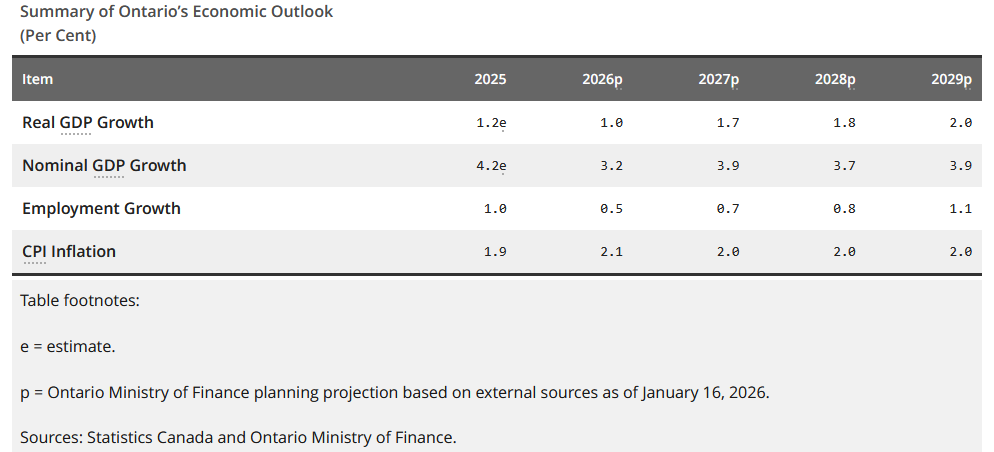
All of the numbers above don’t factor in the decisions made by the President of the United States.
By Gazette Staff
March 27th, 2026
BURLINGTON, ON
 Doesn’t matter where your home is on the spectrum: there will be a mortgage attached to it. By the numbers:
83%
The percentage of surveyed Canadians who say they’ve never missed a mortgage payment — despite increasing financial pressure. (More than two out of three ain’t bad.)
$2.25M
The amount the Ontario government is investing to expand access to inclusive, barrier-free community spaces across the province.
Ownership Stats: Roughly 66% of Canadians are homeowners, with about 32% holding a mortgage and 20–24.6% owning outright.(Source CMHC)
 By Gazette Staff By Gazette Staff
March 27th, 2026
BURLINGTON, ON
The Ontario government released the salaries of Ontario Public Service and broader public sector employees who were paid $100,000 or more in 2025.
There are 908 organizations in Ontario that do not have any employees earning more than $100,000.
 There is a reason for calling the civil servant salary listing the Sunshine List. It was created by the Mike Harris government in 2006 and is read by every municipal employee in the province. There are thousands in the province that are paying that kind of money – the dollars that come out of your pocket.
What used to be called the Sunshine list is a phrase the province didn’t use in its media release.
The Gazette will need a day or two to download the data and format it to make it readable.
People can go to the list where the data is searchable.
Link to that location is HERE.
The Public Sector Salary Disclosure Act, 1996 requires organizations that receive public funding from the Province of Ontario to make public, by March 31 each year, the names, positions, salaries and total taxable benefits of employees paid $100,000 or more in the previous calendar year.
Over 50 per cent of this year’s growth was driven by municipalities, which includes local police and fire services whose work continues to protect Ontario communities. Of the total list, more than half is comprised of public service organizations like school boards, hospitals and public boards of health, which in large part is comprised of nurses and teachers.
 By Pepper Parr By Pepper Parr
March 27th, 2026
BURLINGTON, ON
The Burlington Post has realized that they are having a hard time of making a go of it as an online operation and have decided to go back to print – something the knew a lot about.
The Burlington Post will not be on your doorstep – there are a couple of dozen locations around the city where it can be picked up. No word on how big the print run will be.
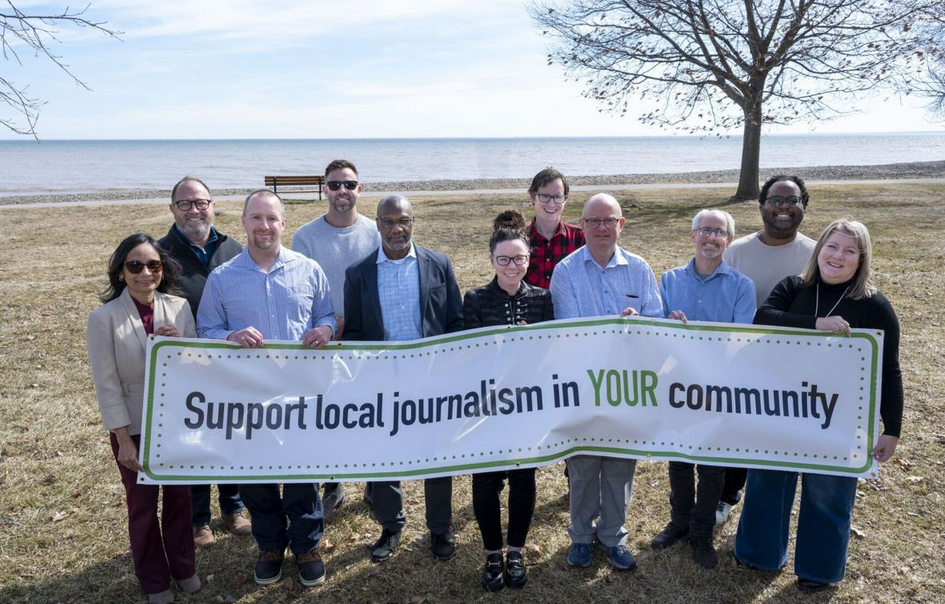 A collection of “ink-stained wretches” back doing what they used to do. The Post has been available since Wednesday at the following locations:
There is still a demographic that prefers reading newspapers in print rather than online. The problem is these people are north of sixty and aren’t doing a lot of buying. Is this a market advertisers want to pump money into?
They will pick up a lot of election advertising during the soft summer months.
They are probably going to bring an end to the Burlington Independent which has been publishing in Burlington for more than a year. They recently announced an Oakville edition.
Metroland, owners of the Post and the Beaver, were forced to seek bankruptcy protection and cease the print publication of weekly community newspapers across the province in September 2023.
 By Gazette Staff By Gazette Staff
March 27th, 2026
BURLINGTON, ON
Residents are invited to attend Burlington’s first Community Traffic Forum, a collaborative event co-hosted by Councillor Lisa Kearns and Councillor Paul Sharman, focused on the future of local mobility and transportation safety in Burlington.
The Community Traffic Forum will bring together residents, City staff, regional partners, and transportation experts for meaningful discussion on traffic priorities, mobility challenges, and future‑focused solutions across the city. The forum is designed to encourage constructive dialogue and gather community input to help inform transportation planning and road safety efforts.
 Traffic backed up on Lakeshore Road at Brant. Event Details:
- Date: April 1, 2026
- Time: 6:30 p.m. (doors open at 6:15 p.m.)
- Location: Art Gallery of Burlington
- REGISTRATION IS A MUST. Click HERE to register
 Councillor Kearns at one of her ward meetings. “As Burlington continues to grow and develop, the pressures on our roads and transit systems continue to increase,” said Councillor Lisa Kearns. “Traffic congestion and mobility challenges cannot be addressed in silos. We need to work together, across City departments, regional partners, and with our community, to identify solutions now, rather than waiting until challenges become much harder and more costly to fix.”
 Councillor Sharman: the reality is that growth can be managed more effectively with modern solutions- particularly on-demand and flexible transportation systems. “Traffic and congestion in Burlington are shaped by our unique location at the end of Lake Ontario, where Highways converge around a natural bend in the corridor. This creates a bottleneck that regularly pushes highway traffic onto local roads as drivers try to get around delays. Further, while there’s a perception that more high-rise development will automatically increase congestion, the reality is that growth can be managed more effectively with modern solutions- particularly on-demand and flexible transportation systems that reduce reliance on single-occupancy vehicles and make better use of our existing road network.” ~ Councillor Paul Sharman
Participating organizations and partners include representatives from:
- Burlington Transit
- City of Burlington Transportation Services
- Burlington Integrated Mobility Transportation
- Halton Region Infrastructure & Environmental Services
- Halton Region Integrated Master Plan team
- Metrolinx
- Halton Regional Police Service
- Additional regional and community transportation partners
Event Details:
- Date: April 1, 2026
- Time: 6:30 p.m. (doors open at 6:15 p.m.)
- Location: Art Gallery of Burlington
By Gazette Staff
March 27th, 2026
BURLINGTON, ON
Mr. Speaker, I have the honour to rise today to present a petition on behalf of residents of Burlington and citizens of Canada.
 Following the tragic loss of her daughter Katie Pryla, a constituent of mine noted that connective tissue disorders, such as Marfan syndrome, often go undiagnosed, despite clear clinical signs such as scoliosis, hypermobility, long limb proportions and early connective tissue complications. It can lead to unforeseen medical consequences, particularly for those who become pregnant. Following the tragic loss of her daughter Katie Pryla, a constituent of mine noted that connective tissue disorders, such as Marfan syndrome, often go undiagnosed, despite clear clinical signs such as scoliosis, hypermobility, long limb proportions and early connective tissue complications. It can lead to unforeseen medical consequences, particularly for those who become pregnant.
Therefore, the petitioners are requesting that the Government of Canada establish national screening guidelines for Marfan syndrome and related connective tissue disorders, especially for patients presenting with scoliosis or similar connective tissue disorders; implement national education and awareness programs for physicians, specialists and other health care professionals on identifying and managing connective tissue disorders; require genetic and cardiac screening protocols for IVF and high-risk pregnancy patients with connective tissue indicators; and support public awareness initiatives to educate Canadians on the signs and risks of Marfan syndrome and the importance of early education.
If the government were to do such things, it could help prevent the tragic and unnecessary loss of life.
I am pleased to be able to present this petition on behalf of my constituents.
By Gazette Staff
March 27th, 2026
BURLINGTON, ON
 Additional GO train service Due to a number of ongoing events in Downtown Toronto on March 27 and 28, we have added some Lakeshore West and Lakeshore East service to help get you to and from your events.
Lakeshore West:
Friday, March 27:
- 16:46 departs Oakville GO making all stops to Union Station 17:30.
- 17:16 departs Oakville GO making all stops to Union Station 18:00.
- 17:46 departs Oakville GO making all stops to Union Station 18:30.
- 18:16 departs Oakville GO making all stops to Union Station 19:00.
Saturday March 28:
Eastbound-
- 10:57 departs Burlington GO making all stops to Union Station 12:00.
- 11:27 departs Burlington GO making all stops to Union Station 12:30.
- 13:02 departs Burlington GO making all stops to Union Station 14:05.
- 13:32 departs Burlington GO making all stops to Union Station 14:35.
Westbound-
- 12:10 departs Union Station and ends at Exhibition GO at 12:16.
- 12:40 departs Union Station and ends at Exhibition GO at 12:46.
- 15:02 departs Union Station making all stops to Burlington GO 15:32.
- 16:02 departs Union Station making all stops to Burlington GO 16:32.
By Gazette Staff
March 27th, 2026
BURLINGTON, ON
Registration is now open for spring recreation programs.
The City has enhanced the Recreation Fee Assistance Program, so more Burlington residents can access quality programming that supports health, wellbeing and community belonging.
 Last month, City Council received a staff report outlining enhancements made to the City’s Recreation Fee Assistance Program in 2025 to improve access and better meet the needs of individuals and families facing financial barriers to participation. Last month, City Council received a staff report outlining enhancements made to the City’s Recreation Fee Assistance Program in 2025 to improve access and better meet the needs of individuals and families facing financial barriers to participation.
Staff made enhancements to the program to better support residents:
- Broadened eligibility criteria now include residents living under the Low‑Income Cut Off (LICO) as well as those with a household income up to 25% above the LICO. This extends support to those experiencing near‑poverty or cyclical financial hardship.
- A streamlined two‑year approval cycle and a revised support model to minimize applicant paperwork, maximizes access to funding, and creates a predictable process.
Summer camp support has been expanded, helping families access childcare during school breaks.
Foundational to the program are principles of confidentiality, equity, accessibility and responsible management of City resources, while ensuring that all residents have fair access to recreation programming regardless of financial barriers.
More information about the City’s recreation fee assistance program, including eligibility criteria, an online calculator to help determine eligibility, application instructions and an FAQ, visit Burlington.ca/FeeAssistance.
 By Gazette Staff By Gazette Staff
March 26th, 2026
BURLINGTON, ON
The Canadian Football League’s (CFL) Hugh Campbell Distinguished Leadership Award will be given to Ron Foxcroft for his impact on officiating in the league. The Fox 40 and Fluke Transport owner and former basketball official received the honour at the 2026 CFL Coach of the Year Celebration on March 25 at The Westin Edmonton.
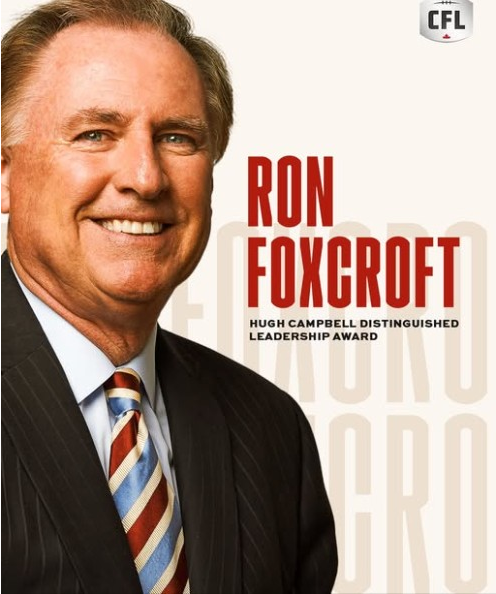 Foxcroft joins Wally Buono, Norman Kwong, Bob Ackles, and John Hufnagel. in being given the Leadership Award.  A piece of plastic got turned into a multi-national corporate endeavour. Innovative financing and a measure of moxie made it all come together. Foxcroft’s signature invention – the Fox 40 pealess whistle – rings out hundreds of times during each CFL game.
CFL Commissioner Stewart Johnston said: “Too often, good officiating goes unnoticed and underappreciated – but not by Ron,” , his efforts to recognize CFL officials is unmatched and we deeply appreciate all he does to uplift them as they prepare for their biggest moments on our game’s biggest stage.”
While Foxcroft is best known for his career as an NCAA basketball referee, his interest in officiating spanned other sports. For over 30 years, Foxcroft and Fox 40 have honoured Grey Cup officials. He annually hosts a luncheon for the crew ahead of the championship, presenting each member with a Grey Cup Officiating Ring for reaching the pinnacle of their profession. Foxcroft is a staunch supporter of officiating across multiple sports, including Canadian football, at the grassroots and amateur levels.
Foxcroft follows an impressive list contributions to the CFL; he joins Wally Buono, Norman Kwong, Bob Ackles, and John Hufnagel.
Hugh Campbell is a 10-time Grey Cup champion and one of the greatest players, coaches, general managers and team executives in CFL history.
By Gazette Staff
March 27th, 2026
BURLINGTON, ON
 For more than two decades, Women as Career Coaches (WACC) has brought together youth and mentors for an evening of storytelling, guidance, and career exploration. For more than two decades, Women as Career Coaches (WACC) has brought together youth and mentors for an evening of storytelling, guidance, and career exploration.
On Thursday, April 9, 2026, this signature event returns to the Burlington Convention Centre, featuring inspiring voices from the local community, including Burlington Mayor Marianne Meed Ward, Judy Lung, an industry leader at the Toronto International Film Festival and the Golden Globes, and Shazia Akbar, founder of Okare AI.
WACC 2026 will once again connect students with women and gender-diverse professionals from across industries, including the arts, skilled trades, politics, AI and more, offering meaningful conversations, real-world insights, and powerful mentorship moments that help shape future career pathways.
 Shazia Akbar will give insights into machine learning and Artificial Intelligence (AI). She has done very well in an industry that was male-dominated for a long time.  Judy Lung has established a reputation in the promotional side of the film industry, serving as a leader at the Toronto International Film Festival. WACC is a long-standing community movement, one that builds confidence, sparks curiosity, and empowers young people to envision what’s possible. Through interactive networking, small-group discussions, and engaging spotlight speakers, attendees gain valuable perspectives from those who have navigated diverse and often non-linear career journeys.
Mayor Marianne Meed Ward will share insights from her leadership journey in public service, while Judy Lung will offer a unique perspective from her work with the Toronto International Film Festival, the Golden Globes and Canada’s creative industries, and Shazia Akbar will give insights into machine learning and Artificial Intelligence (AI)—demonstrating the many pathways to success available right here in the region and beyond. More speakers will soon be announced.
Date: Thursday, April 9, 2026
Time: 5:15 p.m. – 9:00 p.m.
Location: Burlington Convention Centre, 1120 Burloak Drive, Burlington
Women as Career Coaches welcomes women, women-identifying, two-spirit, non-binary, and gender-fluid participants. Thanks to generous community support, the event remains free and accessible to youth attendees.
 By Tom Parkin By Tom Parkin
March 27th, 2026
BURLINGTON, ON
Statistics Canada data shows a decline in bar sales and a hike in fast-food purchases.
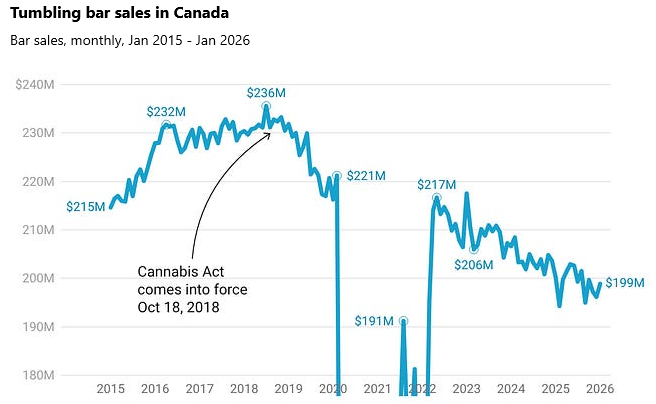 Bar sales, monthly, Jan 2015 – Jan 2026 Is it a coincidence that sales in Canadian bars peaked just before the Cannabis Act came into effect on October 18, 2018?
In October 2018, bar receipts totaled $232.4 million, just ahead of $232.3 million in October 2017, Statistics Canada’s seasonally adjusted data shows. But since October 2018, bar sales have been in long-term decline, falling 14 per cent to $198.9 in January 2026. That doesn’t include the impact and inflation and population growth — clearly the fall in bar receipts in far deeper.
But is a switch from alcohol to cannabis the cause of falling bar sales? Certainly, the timing points in that direction. But to have a firmer view, let’s look into that in a future Data Shows.
Yet bar sales didn’t shift and stabilize in response to cannabis legalization. They have been in a consistent fall that perhaps was kicked off by legalization, deepened by the social isolation of the pandemic, and pushed deeper by the rising costs of the inflation surge of 2022-2023.
Whatever the factors causing the demise of the bar, falling bar sales means people are spending less time spent at bars. And less time socializing at bars. We’re seeing a trend toward more loneliness and more unhappiness among Canadians. Less time at bars may be a cause or symptom of that.
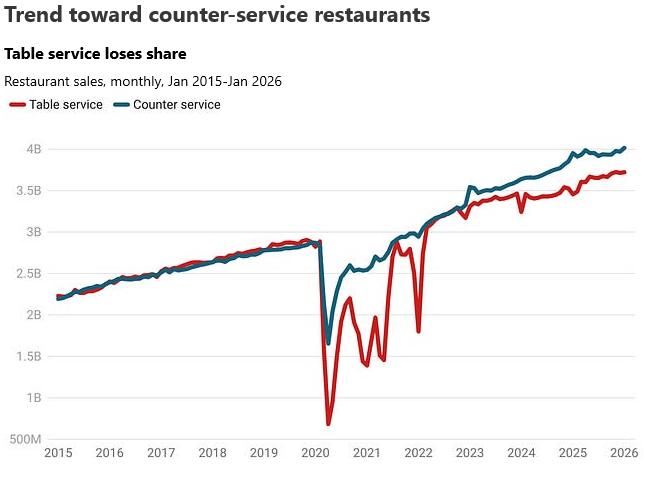 Restaurant sales, monthly, Jan 2015-Jan 2026 Statistics Canada also released data on Thursday that shows a large gap emerging between sales at full-service restaurants, which have table service, and limited-service restaurants, those that provide counter service.
Restaurants are also a site of socializing. And again the trend isn’t good.
In the late 2010s, monthly sales at full-service and limited-service restaurants were consistently very close, with table service restaurants usually slightly ahead of counter-service restaurants.
Then the pandemic dropped a bomb on table service restaurants. Limited service restaurants, which are often also take-out, suffered less and recovered more quickly.
But sales at full-service restaurants did bounce back and by August 2022 once again exceeded sales at limited-service restaurants. In September 2022, restaurants with table service had sales of $3.26 billion while sales at counter-service restaurants were $3.25 billion.
The recovery was short lived.
From September 2022 to January 2026, full-service sales are up 5.7 per cent. In the same period, limited-service sales rose 17.6 per cent. But adjusting for 8.6 per cent CPI inflation from September 2022 to February of 2026, full-service is down 2.6 per cent and limited-service is up 8.1 per cent.
When the 5.9 per cent estimated population increase from October 1, 2022 to January 1, 2026 is factored, inflation-adjusted per person spending on full-service restaurants has fallen 8.2 per cent while spending at limited service restaurants has increased 2.1 per cent.
Of course, in mid-2022 came the inflation wave, driven by food price hikes, which may have pushed people away from the higher cost of full service restaurants.
A small luxury most people used to enjoy at least occasionally — and which brought people together — is eroding. And maybe that too, has something to do with why Canadians aren’t feeling so happy anymore.
 By Andrew Wilson By Andrew Wilson
March 27th, 2026
BURLINGTON, ON
For families across the Greater Toronto–Hamilton Area (GTA), daily life involves a constant stream of decisions — from choosing childcare and financial tools to selecting restaurants, subscription services, and digital platforms. With so many options available, most of us rely on what’s easiest: Google rankings, Yelp reviews, TikTok recommendations, or “Top 10” lists.
 Can they be trusted? But here’s the catch — while these rankings feel authoritative, how they are actually built is often unclear. What criteria were used? Were the results tested or simply curated? And more importantly, can they be trusted?
This is where methodology becomes critical. In an environment saturated with polished recommendations, methodology is the layer that separates visibility from credibility. Understanding how rankings are created helps consumers move from passive scrolling to informed decision-making.
Why Verified Gaming Site Rankings Reflect a Broader Shift in Consumer Trust
The shift toward methodology-backed evaluation is particularly visible in regulated online entertainment, where transparency directly impacts user safety and financial outcomes.
Research into how Canadians select casino operators shows that credibility cues — particularly third-party endorsements — carry more weight than promotional offers in the initial shortlisting phase. Users who cross-reference verified gaming site rankings, according to player behaviour studies, place particular emphasis on accredited sources that disclose their evaluation methodology upfront. Criteria like withdrawal limits, live dealer game availability, and provincial licensing status consistently appear at the top of the evaluation checklist for Canadian players.
This behavior reflects a broader consumer trend. Across industries, people increasingly trust structured comparisons over brand storytelling, and transparency over visibility.
For GTA families, this translates into everyday decisions — whether comparing private schools in Oakville, evaluating mortgage providers regulated by the Financial Consumer Agency of Canada (FCAC), or selecting healthcare services.
“Consumers are no longer persuaded by visibility alone — they look for verifiable criteria and repeatable evaluation processes,” notes a recent report from the Ontario Securities Commission (OSC).
The Rise of Algorithm-Driven Decisions in Everyday Life
 Today, algorithms quietly shape most of our choices. Whether it’s Google’s search rankings, Amazon’s product listings, or TripAdvisor reviews, the top results are often perceived as the best. Today, algorithms quietly shape most of our choices. Whether it’s Google’s search rankings, Amazon’s product listings, or TripAdvisor reviews, the top results are often perceived as the best.
But algorithms prioritize engagement, relevance, and user behavior — not necessarily quality.
In practical terms:
- A restaurant in Burlington might rank highly because of recent reviews, not consistent service quality
- A tutoring platform may appear first due to SEO optimization rather than proven outcomes
- A home service provider in Hamilton could be featured based on advertising spend
This creates what experts call a “visibility bias” — where what we see first feels like the safest choice.
Interesting fact: Over 70% of users never scroll past the first page of Google results, according to data from Statista, reinforcing how heavily algorithms influence decisions.
What Most Rankings Don’t Tell You
Behind many “Top 10” lists lies a lack of transparency.
 In many cases, rankings do not disclose: In many cases, rankings do not disclose:
- How criteria are selected
- When the content was last updated
- Whether placements are influenced by partnerships or affiliate models
As a result, a typical list might be:
- Outdated
- Influenced by monetization
- Not tailored to your specific needs
“A ranking without disclosed criteria is not an evaluation — it’s a curated opinion,” says a consumer transparency analyst at the University of Toronto’s Rotman School of Management.
This is particularly relevant in sectors like financial services, digital subscriptions, and healthcare, where decisions carry long-term consequences.
Methodology as the Foundation of Trust
So what does “methodology” actually mean?
In simple terms, it’s the structured process behind how something is evaluated.
A reliable methodology includes:
- Clear evaluation criteria
- Consistent scoring across all options
- Comparable metrics
- A repeatable testing process
For example:
- A restaurant review might assess food quality, service speed, and pricing consistency
- A financial product review could compare interest rates, fees, and accessibility under Canadian banking regulations
Without this structure, rankings are subjective.
“Methodology turns opinion into evidence,” states a report by the Canadian Competition Bureau.
Information Asymmetry in the Digital Age
Every transaction involves an imbalance of information — businesses know more than consumers.
In the digital era, this gap has widened dramatically.
 Brands now use: Brands now use:
Targeted advertising
Personalized offers
Data-driven messaging
Put simply:
“You’re seeing the version of the product the brand wants you to see.”
This is especially important in areas like:
- Financial decisions
- Subscription services
- Online platforms
Interesting fact: Canadian consumers interact with up to 6,000 ads per day across digital channels, according to Think with Google Canada.
Where Methodology Matters Most for Families
For families in affluent GTA communities, the stakes are often higher.
Key areas where structured evaluation matters most include:
- Education tools (private tutors, online learning platforms)
- Family finance products (insurance, investment platforms regulated by IIROC)
- Healthcare services (clinics, wellness programs)
- Travel and hospitality (hotels, booking platforms)
- Digital subscriptions and entertainment
In these cases, poor decisions don’t just waste money — they impact time, wellbeing, and long-term outcomes.
“Higher-cost decisions require higher-quality information,” emphasizes a study from McMaster University’s DeGroote School of Business.
How to Recognize a Reliable Review Platform
Not all “independent” platforms are truly independent.
A reliable review platform should:
- Clearly explain how rankings are created
- Define evaluation criteria
- Update content regularly
- Disclose partnerships or commercial relationships
- Use multiple metrics rather than a single score
Transparency is key. If a platform doesn’t explain how it ranks options, it’s worth questioning its reliability.
The Shift Toward Data-Informed Consumer Culture
We are entering a new phase of consumer behavior — one driven by data rather than branding.
Key developments include:
 AI-powered comparison tools that analyze multiple data points in real time AI-powered comparison tools that analyze multiple data points in real time- Financial dashboards used by Canadian banks like RBC and TD
- Increased regulatory oversight, especially in Ontario’s AGCO (Alcohol and Gaming Commission of Ontario) and financial sectors
Ontario, in particular, has become a model for structured transparency across industries.
“Trust is shifting from brands to systems,” according to a Deloitte Canada consumer trends report.
This means:
- Marketing alone is no longer enough
- Verified data is becoming the default expectation
Conclusion
Algorithms are useful — but they are not enough.
Rankings without methodology can mislead, especially in a digital environment where visibility often outweighs substance.
For modern consumers — particularly families making high-impact decisions — the shift is clear:
- Don’t just accept rankings
- Understand how they are built
- Prioritize transparency and verifiable data
The goal isn’t to reject marketing — it’s to balance it with evidence.
In a world of endless recommendations, the most valuable skill is not finding more options — it’s knowing which ones are built on something real.
 By Ronald Rodriguez. By Ronald Rodriguez.
March 27th, 2026
BURLINGTON, ON
Looking back at 2024, the gaming industry was already in the middle of a massive expansion. Global revenues had surpassed most entertainment sectors, player counts were climbing across every platform, and studios were racing to keep up with demand. But several forces were quietly building momentum beneath the surface — forces that would reshape the way games are built, played, and monetized over the next two years.
 Trends that defined the transformation. By early 2026, the landscape looks significantly different. Some of these shifts were predictable. Others caught even industry insiders off guard. Here are five trends that defined the transformation.
AI Went From Buzzword to Built-In
In 2024, every studio was talking about artificial intelligence. Most of the conversation revolved around generative tools — AI-assisted art pipelines, dialogue generation, procedural level design. The technology was promising but rough around the edges, and players were understandably skeptical about what it meant for creative quality.
Two years later, the conversation has shifted. AI is no longer a headline feature. It has become infrastructure. Matchmaking systems use machine learning to reduce skill gaps and keep sessions competitive. NPC behaviour adapts to individual play styles, creating encounters that feel less scripted. Even quality assurance has been transformed, with automated testing tools catching bugs that would have taken human testers weeks to identify.
The studios that gained the most ground were not those that used AI as a marketing hook, but those that embedded it quietly into systems players interact with every session. The result is a smoother, more responsive experience that most users never consciously notice — which is exactly the point.
The Line Between Gaming and Gambling Blurred Further
One of the more contentious developments since 2024 has been the continued convergence of traditional gaming and real-money mechanics. Loot boxes never disappeared — they evolved. Seasonal battle passes, gacha systems, and token-based in-game economies have become standard features across genres, from mobile RPGs to competitive shooters.
 Skill-based bonus rounds At the same time, the online casino sector went through its own parallel evolution. Platforms introduced gamified loyalty programs, skill-based bonus rounds, and social features borrowed directly from mainstream gaming. Anyone who followed the trajectory of casino games in 2024 could see the early signs of this convergence taking shape, as operators began borrowing gameplay loops and progression systems from the wider gaming world.
The overlap is hard to ignore. Players who grew up with free-to-play monetization models are now a core demographic for iGaming operators, and the design language flows both ways. Regulators in several jurisdictions have started treating certain in-game purchase mechanics with the same scrutiny previously reserved for licensed gambling products, a shift that has forced studios to rethink how they structure virtual economies.
Cloud Gaming and Mobile-First Finally Delivered
Cloud gaming spent years as a technology that was perpetually almost ready. In 2024, services like Xbox Cloud Gaming and GeForce Now had solid libraries but inconsistent performance, particularly outside major urban centres. Latency remained a dealbreaker for competitive play, and data costs made it impractical for many mobile users.
The expansion of 5G networks through 2025 changed the equation. Not overnight, and not everywhere, but enough to push cloud gaming past the tipping point in key markets. Subscription models stabilized, performance benchmarks improved, and the catalogue of available titles grew to the point where cloud-only players no longer felt like second-class citizens.
Mobile gaming, meanwhile, completed its shift from a casual sideshow to the primary platform for a majority of global players. The distinction between a mobile game and a console game has become increasingly meaningless. Titles that would have been exclusive to PC or console three years ago now launch simultaneously on mobile with near-identical feature sets.
Regulation Caught Up With the Industry
Governments moved slowly on gaming regulation for years, but the pace picked up sharply after 2024. The European Union advanced proposals targeting loot box transparency. Australia introduced mandatory spending disclosures for games marketed to minors. In North America, several provinces and states expanded their oversight of both gaming monetization and online gambling advertising.
 Age verification tools. For players, the impact has been broadly positive. Clearer spending limits, better age verification tools, and more transparent odds disclosures have become common features rather than exceptions. Studios initially resisted some of these measures, but the ones that adapted early found that player trust translated directly into longer engagement and higher lifetime value.
The regulatory push also accelerated industry self-regulation. Major publishers adopted voluntary codes of conduct around monetization, partly to get ahead of legislation and partly because consumer sentiment made it a competitive advantage.
Community-Driven Development Took Centre Stage
Perhaps the most underrated shift since 2024 has been the changing relationship between studios and their player bases. Early access models were already common, but the feedback loop has tightened considerably. Developers now routinely share roadmaps, hold public votes on feature priorities, and integrate modding support from launch rather than adding it as an afterthought.
This is not just a goodwill exercise. Studios that adopted transparent development processes saw measurably better retention rates and stronger community advocacy. Games that launched with modding tools built record-setting user-generated content libraries within months. The old model of a sealed, finished product released on a fixed date has given way to something more fluid — a continuous collaboration between creator and audience.
 Faster, smarter, and more connected The gaming industry in 2026 is faster, smarter, and more connected to its audience than it was two years ago. Not every trend has been universally welcomed, and there are legitimate concerns about monetization, data privacy, and the long-term effects of AI on creative jobs. But the pace of change shows no signs of slowing, and the players who shaped these trends through their choices and spending habits remain the most powerful force in the industry.
By Nicholas Grant
March 26th, 2026
BURLINGTON, ON
Local citizens and members of the business community gathered Tuesday in the Appleby Ice Centre to discuss amendments to Burlington’s Community Improvement Plan (CIP) and affordable housing.
The CIP is a series of policies aimed to incentivize developers and property owners to evolve Burlington’s urban areas and to create more diverse housing so that the city can keep up with housing demands.
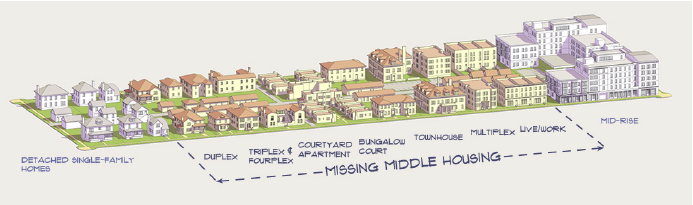
The City of Burlington has expressed desire to diversify options and to build up what is considered the “Missing Middle Housing”. The missing middle housing are multi-unit buildings that fit somewhere in between single-family detached homes, and low-rise buildings. Some examples of missing middle housing include: duplexes, fourplexes and townhouses.
 Ward 6 Councilor Angelo Bentivegna on the left and Director of Community Development Jamie Tellier talking to a resident. The city recently received $21 million from the Housing Accelerator Fund (HAF), as well as an additional 3-4 million in funds for 2026. HAF is part of the federal initiative to increase the access to housing through local incentives. Burlington was one of such recipients of funding under the fund’s $4.4 billion budget.
Some attendees of the event expressed frustration with the lack of transparency and accountability for where the $21 million from HAF went, and whether the three to four million dollars allocated to the project for 2026 will make a difference in achieving the city’s housing goals.
 The policy paper that supports much of the Community development planning The housing target for Burlington is 29,000 units, a number city officials admit they are not on track to achieving.
“We want metrics,” one attendee said. “And we want realistic metrics… I’d rather know, I don’t need numbers floating around that have no meaning, and no relevance to what we’re doing and trying to accomplish”.
This feedback was heard loud and clear from the city’s housing staff, acknowledging that “We didn’t give you everything you need to know to understand this program. We’re working furiously” Manager of Policy and Community of the City of Burlington Alison Enns said.
One of the programs available and a highlight of the plan is the Missing Middle Affordable Grant Program. The program takes aim at purpose built multi unit affordable rentals by introducing a series of financial incentives for developers.
The financial incentives include waiving municipal permit fees, grants towards pre construction designs, and up to $10,000 per affordable unit built.
In order to be eligible for grants under this program, a building needs to have fifteen per cent of built units as affordable; the developer need only keep it at ‘affordable’ rates for a minimum of 10-15 years depending on the program, after which, they are free to charge market rates.
The city’s definition of what is affordable is based on the Development Charges Act. which classifies affordable as a unit where “Rent is no greater than 80 per cent of the average market rent”. For the City of Burlington this means ‘affordable’ rent for a one bedroom unit is $1,733 or less, with affordable ownership rates being a property sold for $484,000 or less.
 It was a small audience with a lot of questions – many that weren’t answered. Manager of Policy and Community of the City of Burlington Alison Enns is in the front row, second from the right. The city doesn’t intend to incorporate income testing to designate what is considered affordable. Income testing, also known as a “Means Test” , determines whether a person is eligible for benefits from government programs based on income and wealth. It is used to assess who is in need, in order to determine the level of financial assistance needed.
“The objective is not solely affordable housing, It is the creation of housing”, Enns claimed. She urged other levels of government to step in “To deal with that deeper level of affordability”. She claims the city’s objective with the affordable housing initiative was to build on other programs. “We are very bit players on this”.
There’s a lot that remains to be seen about the city’s strategy and how it plans to reach its targets. They urge the community to get involved and engage with them. The last virtual open house takes place this Thursday, the 26th of March from 7-9 PM on Zoom.
Photo credits Nicholas Grant
By Gazette Staff
March 25th, 2026
BURLINGTON, ON
Natalie Pierre will get to experience a citizen protest outside her Harvester Road constituency office on March 28th

 By Joe Gaetan By Joe Gaetan
March 25th, 2026
Third in a Four-Part Series
Introduction
The first article in this series examined how strong mayor powers were introduced. The second explored how they function in practice. This instalment explores: what do Ontario’s leading municipal institutions and professional bodies actually think of them?
Some of the answers are neither simple nor flattering
Across academic, administrative, and municipal governance organizations – IMFG, Strategy Corp’s CAO survey, AMO, and AMCTO – a pattern emerges: cautious skepticism, institutional unease, and deep concern about democratic and administrative integrity. While a minority see potential efficiency gains, most question whether the cure matches the disease.
IMFG: Innovation or Democratic Risk?
 The Institute on Municipal Finance and Governance (IMFG), is a non-partisan academic hub at the University of Toronto. The Institute on Municipal Finance and Governance (IMFG), is a non-partisan academic hub at the University of Toronto.
Some panelists warned that Ontario’s version of strong mayor powers does not resemble the American model cited in its defence. Rather than empowering mayors vis-à-vis senior governments, the framework may subordinate them to provincial priorities, effectively making them conduits for Queen’s Park rather than counterweights to it.
Others argued that strengthening the executive could improve accountability and reinforce a city-wide perspective.
Most striking is the minority-rule provision introduced under Bill 39. Bylaws deemed to be aligned with provincial priorities may pass with support from only one-third of council. This has no parallel in western democracies and a departure from longstanding democratic norms.
The institute also raised structural concerns: Will politicization of the public service intensify? Do all mayors have the administrative capacity to manage expanded powers? How will this framework function in smaller municipalities. The conclusion was not that strong mayor powers will necessarily fail – but that their long-term implications for autonomy, accountability, and democratic legitimacy remain uncertain and are potentially profound.
CAOs: Frustration Inside the Machine
If IMFG provides the theoretical critique, Ontario’s Chief Administrative Officers provide the lived experience.
 Strategy Corp’s confidential CAO survey reveals sharp divisions – but the dominant tone is frustration. Many senior administrators describe the legislation as unnecessary and destabilizing, arguing it attempts to solve a problem that did not exist. Nearly three years in, there is little evidence that housing supply – the stated rationale for the powers – has measurably improved. Strategy Corp’s confidential CAO survey reveals sharp divisions – but the dominant tone is frustration. Many senior administrators describe the legislation as unnecessary and destabilizing, arguing it attempts to solve a problem that did not exist. Nearly three years in, there is little evidence that housing supply – the stated rationale for the powers – has measurably improved.
Concerns are practical and immediate: the line between politics and administration is blurring; council dynamics are shifting; some elected members feel sidelined; and employment security for senior leaders is more uncertain.
Some mayors have delegated certain authorities back to council or the CAO. Delegation is reversible – that reversibility could create instability.
With the 2026 municipal election approaching, CAOs express unease. A new mayor could adopt a very different approach.
AMO: A Democratic Line in the Sand
The Association of Municipalities of Ontario (AMO), representing more than 400 municipal councils, drew a firm line on two elements: the unilateral hiring and firing authority over senior staff, and, the one-third voting threshold.
AMO warned that concentrated authority over department heads runs counter to good corporate governance practice.
The AMO has stated that allowing, bylaws for example, to pass with the support of only one-third of council violates basic democratic principles and norms. Such a mechanism risks disenfranchising elected councillors and destabilizing municipal governance.
AMO’s own survey underscores the following concern: 77 percent of mayors and 95 percent of councillors reported that they do not support the new powers.
AMCTO: Administrative Strain and Blurred Lines
 The Association of Municipal Managers, Clerks and Treasurers of Ontario (AMCTO) provides detailed operational data. The Association of Municipal Managers, Clerks and Treasurers of Ontario (AMCTO) provides detailed operational data.
While many mayors have retained powers related to CAO appointments and committee structures, relatively few have aggressively exercised them. Yet even limited use has generated administrative strain: inconsistent legislative interpretation: additional burdens on staff; blurred accountability lines; and uncertainty regarding liability and professional neutrality.
AMCTO research – echoed in the CAO survey – finds no measurable correlation between the use of strong mayor powers and increased housing starts. The central promise of the legislation remains unproven.
At the same time, AMCTO reports that the framework is altering workplace dynamics. Staff are tasked with implementing mayoral directives that may bypass traditional consultation processes, creating reputational and operational risk. Even when powers are not exercised, their retention leaves employment stability and organizational structure subject to unilateral change.
A Converging Institutional Message
Across these organizations, three themes converge:
- Democratic legitimacy concerns, particularly regarding minority-rule thresholds:
• Blurring of political and administrative roles, with risks to staff neutrality; and
• Unclear evidence that the powers are achieving their stated housing objective.
 Strong mayor powers were introduced as tool targeted to build homes faster. Instead, they have reshaped municipal governance architecture – altering relationships between mayors, councils, staff, and the province. Strong mayor powers were introduced as tool targeted to build homes faster. Instead, they have reshaped municipal governance architecture – altering relationships between mayors, councils, staff, and the province.
The housing crisis may have triggered the reform, but the implications extend far beyond housing.
The fourth and final article in this series examines how these powers have played out in Burlington.
Strong Mayor Powers Part 1
 Joe Gaetan has a Bachelor’s degree in General Studies in Applied Studies from Athabasca University. He started his studies at the University of Waterloo, due to a job transfer to Alberta he finished his degree at Athabasca University. Joe Gaetan has a Bachelor’s degree in General Studies in Applied Studies from Athabasca University. He started his studies at the University of Waterloo, due to a job transfer to Alberta he finished his degree at Athabasca University.
By Pepper Parr
March 25th, 2026
BURLINGTON, ON
Everybody knew, or at least those who have an understanding of what goes on at City Hall.
The event was scheduled to start at 11:30 – at about 11:15, people began to show up.
It didn’t take long for what turned out to be a very respectable crowd to be in Civic Square waiting for Lisa Kearns to tell them what they were hoping she would tell them – she was going to run for Mayor
“I love this City, I’ve always loved this city. I knew one day that I would call Burlington home.
 Kearns: I’ve shown up. I’ve listened. I’ve kept trust. I’ve asked the tough questions. “As your Councillor, I’ve shown up. I’ve listened. I’ve kept trust. I’ve asked the tough questions.
“Today, we are not just talking about the future – we are choosing how we shape it, together.
“I believe it’s time to get back to basics. Back to leadership that is present, accountable, and grounded in the everyday lives of the people we serve.
“That’s the foundation. And when we get that right – everything else becomes possible.
“I bring another perspective that matters – unmatched real-world corporate experience that shapes how I approach every tax dollar spent.
“Budgets aren’t just numbers on a page – they are priorities. They are the hard choices. Hard choices everyone is making these days. And they must reflect discipline,
accountability, and respect for the people facing a tax bill.
“Fiscal responsibility means making sure that growth today doesn’t become a burden tomorrow. It means delivering real proven value that makes your life better, not just
promises and not the desire of the day.
“Burlington is more than a place. It is a community defined by compassion, resilience, and a quiet determination to look out for one another.
“I’m intending to run for mayor because Burlington deserves leadership that is ready on day one. Kearns was not able to finish the sentence – the applause just burst – even Kearns was a bit taken aback.
She continued: “Leadership that understands both the complexity of our challenges and the strength of our community. Leadership that knows this city – not just in policy, but in practice.
“What people want is not complicated.
“People want a city that is welcoming, safe, and filled with opportunity.
“A city where you can enjoy your neighbourhood with pride, where families feel secure, and where we take care of the spaces we all share.
 When she said: “”I’m intending to run for mayor…” the applause was electric. Kearns was taken aback for a couple of seconds. “Here’s what I know.
“The next chapter of Burlington won’t be defined by one decision, or one issue. It will be D E F I N E D by how we
lead. And I believe that we need to lead from out in the community with transparency and accountability.
“Leadership should look like this:
 People wanted to record what they were certain was an important occasion. “Listening to every voice from every corner of the City. Every neighbourhood, every business, every community.
“Because leadership isn’t about standing above people. It’s about standing with them.
“That is why I am stepping forward.
“That’s what makes this moment so special to me.”
It took five seconds for the crowd to gather around her for the best photo op she has ever had.
The campaign doesn’t start officially until May 1st, but expect her to see every event she can cover in day and be out the next day doing the same thing.
By Gazette Staff
March 25th, 2026
BURLINGTON, ON
Ward 2 resident and businessman Brad Harness announced to that he is running in the 2026 municipal election to become the next Ward 2 Councillor for Burlington and Halton.
“Coun. Lisa Kearns has done a great job representing Ward 2. She is now running for mayor. I hope to be the choice of Ward 2 voters to represent them on city and regional council,” say Harness.
 Brad Harness: He will be holding a series of neighbourhood meetings during his campaign. “I grew up here – and I live in Ward 2, and my business is located here. It matters to me in what direction our city goes, and for me, it’s important that council be responsive to the majority wishes of city residents and taxpayers.”
Harness was born in Toronto and grew up in Burlington. He graduated from McMaster University with a degree in Social Sciences and from Sheridan College with a diploma in business management. After completing his education, he began a long career as a naval officer, having an interest in serving his country. Upon retiring from the Navy, he began his publishing business and has spent the past three decades as a journalist. He has covered municipal and regional politics in more than 30 Ontario municipalities and brings that knowledge of ‘other ways to do things’ to Burlington and Halton councils.
Brad is married to Hong Chen, a retired high school teacher. The couple have three married sons (working in police, transportation, and health care) and four grandchildren. He has been involved in political work at the municipal, provincial and federal levels in the past. His company has been involved in community news, local publications, internet websites, as well as in rental properties and investments.
Brad has sat on boards of directors for businesses, volunteer groups, and condo corporations.
Brad’s hobbies include painting, music, sailing and staying fit. He has volunteered in minor sports (baseball and soccer), the United Way, the Terry Fox Run for Cancer Research, the Rotary Club, and local heritage projects.
Brad has already started making his way around Ward 2, and will be doing his best to reach all homes. He wants to learn firsthand the priorities of Ward 2 residents and businesses and represent those priorities on council. He will be holding a series of neighbourhood meetings during his campaign.
“So far, I can say that the priorities of Ward 2 are: having more predictability regarding property tax increases, transportation issues (traffic and transit), maintaining lower building heights, and having a more accessible city hall.”
By Terence Thresh
March 4th, 2026
BURLINGTON, ON
 This article explores which gambling sites generally offer fast withdrawal times and what Canadian players should consider when comparing platforms. Some online gambling sites are recognized for quicker withdrawal processing times, often ranging from instant to a few business days depending on the payment method and verification requirements. Casinos like Premium Casino Bonus and select competitors aim to optimize withdrawal efficiency, but exact timelines vary by method, jurisdiction, and regulatory compliance.
For many online gamblers, the speed at which winnings are processed and funds are returned can be as important as the games themselves. Withdrawal times are influenced by a combination of casino banking policies, payment method processing times, account verification steps, and regulatory obligations. This article explores which gambling sites generally offer fast withdrawal times and what Canadian players should consider when comparing platforms.
Factors That Affect Withdrawal Speed
Before identifying specific sites, it is essential to understand the main variables that influence how quickly players receive their funds:
- Verification Status: Many casinos require identity and payment method verification before processing the first withdrawal. This step can add an initial delay.
- Payment Method: E-wallets like MuchBetter, PayPal, and cryptocurrencies often process withdrawals faster than bank transfers or card payments.
- Processing Policies: Some casinos release funds to the payment provider quickly but still list a pending period while internal reviews are completed.
- Regulatory Compliance: Operators in regulated markets, such as those overseen by the Alcohol and Gaming Commission of Ontario (AGCO), adhere to strict anti-money-laundering checks which can affect processing times: https://www.agco.ca
Understanding these elements helps contextualize why withdrawal speeds vary across sites and methods.
 Interac is a safe and efficient way of transferring funds – works only in Canada Sites Known for Faster Withdrawals
 E Wallets are popular and efficient. Certain online casinos publish estimated withdrawal times for various payment options. The following categories are helpful guides:
1. Instant or Near-Instant Withdrawals
- E-wallets and Digital Wallets: Wallets like MuchBetter, Neteller, or ecoPayz typically facilitate rapid transfers once the casino approves the request.
- Cryptocurrencies: Bitcoin, Ethereum, and other crypto options may process faster because they rely on decentralized networks rather than traditional banking rails.
Casinos that support these technologies, including Premium Casino Bonus, often show quicker turnaround for approved withdrawals.
2. Same-Day to 2-Day Bank Transfers
- Interac e-Transfer: In Canada, Interac e-Transfer can complete within hours to a couple of days once the withdrawal request is authorized.
- Instant Banking Methods: Some platforms offer direct bank options that may complete in a similar timeframe.
3. Up to 5 Business Days
- Credit/Debit Cards and Bank Wire Transfers: These traditional methods are more secure but can require longer processing windows, often extending up to five business days or more.
Premium Casino Bonus provides a mix of these options, typically emphasizing methods that reduce waiting periods for Canadian players.
Comparing Popular Online Casinos
 Casinos want to know who they are dealing with: verify your credentials and you are good to go. When comparing withdrawal speed across established brands, policies differ significantly.
For example, platforms like JackpotCity Casino and Spin Casino generally offer standard processing windows that can range from same-day e-wallet releases to several business days for bank transfers. Their timelines are comparable to industry norms, though specific experiences may vary according to the player’s verification status and chosen banking method.
In contrast, casinos such as Lucky Ones Casino or Casoola Casino highlight broader support for fast digital wallets and may publish clearer breakdowns of expected wait times by method. Similarly, brands like JustCasino and Dudespin Casino include multiple quick payout options, though actual turnaround still depends on internal verification processes.
Other competitors—including LuckyWins Casino, Golden Tiger Casino, Casino Classic, and Yukon Gold Casino—offer a mix of payment methods with varied processing timelines. Some may prioritize larger banking networks over speed, resulting in extended withdrawal windows.
Practical Tips for Faster Withdrawals
Even at sites known for efficient processing, individual experience can vary. Consider these recommendations to help minimize delays:
 Verification is essential: you have to do it before you can withdraw. 1. Complete Verification Early
Submitting documents for identity and banking verification soon after registration can prevent holds when requesting a withdrawal.
2. Choose Faster Payment Methods
Whenever available, e-wallets and cryptocurrencies typically deliver funds more rapidly than bank wires or cards.
3. Understand Terms & Limits
Review the casino’s posted timelines and any associated conditions (e.g., minimum withdrawal amounts, frequency limits) to align expectations.
4. Monitor Account Status
Inactive accounts or changes in personal information can trigger additional reviews, adding to processing time.
Conclusion
Withdrawal times at online gambling sites differ based on a combination of payment method, regulatory compliance, and internal risk controls. Casinos like Premium Casino Bonus and several competitors provide options that support quicker payouts, particularly through e-wallets and digital assets. However, exact speed varies and is dependent on verification status and the player’s chosen banking method.
Regulated markets, including Ontario under AGCO oversight, require platforms to balance efficient payouts with robust compliance practices. Understanding how these factors interact enables players to make informed choices based on their priorities for speed, convenience, and transparency.
Partea superioară a formularului
|
|