 By Gazette Staff By Gazette Staff
March 17th, 2026
BURLINGTON, ON
Whether you’re new to the volunteer management profession, or looking to re-energize and upgrade your knowledge, this 2-day in-person training experience has you covered. Over the course of two interactive, full-day workshops, we’ll explore the entirety of the volunteer engagement cycle, taking deep dives into planning, recruitment, screening, onboarding, supervision, retention, and more. You’ll hear from experts in the field while building the essential components of your own approach. Plus, you’ll leave at the end of the second day with your own workbook filled with ideas, next steps, templates, and more. Lunch will be provided both days, and we’ll have plenty of refreshments and opportunities to connect with peers throughout the program.
 By the end of the two training days, participants will: By the end of the two training days, participants will:
-A detailed understanding of the volunteer management cycle
-Templates and tools to plan and recruit for volunteer roles effectively
-Insight into appropriate, respectful screening
-Tips for planning orientation and training that engages volunteers
-Resources for successful supervision, support, and retention
-New ideas to inform successful, meaningful involvement throughout the volunteer’s engagement
-Suggestions for keeping the learning going
Registrants must commit to attend both training days: June 2 and June 9. Workshops will be held at the Joseph Brant Museum, Shoreline Room, 1240 North Shore Blvd E, Burlington.

 By Gazette Staff By Gazette Staff
March 17th, 2026
BURLINGTON, ON
If you are one of those that insists on driving into Toronto – read on
There are people who have learned – GO is a much easier on your nerves way to get to the Big Smoke.
 Hardeep Singh Grewal, Parliamentary Assistant to the Minister of Transportation: ” we’re standing up for drivers”. The Ontario government is proposing a regulatory amendment to the Highway Traffic Act that would allow single-occupant vehicles to use High Occupancy Vehicle (HOV) lanes during off-peak hours, making better use of existing highway infrastructure to help reduce gridlock and keep drivers moving on provincial highways. Ministry of Transportation modelling shows the change would improve travel times for all users, with average speeds increasing in both HOV and general-purpose lanes across major highways during off-peak hours. If implemented, this change would take place before the end of 2026, following a period of public consultation.
 Changes coming to who can use the HOV lanes “Gridlock is costing our economy billions of dollars every year and robbing Ontario drivers of valuable time and quality of life,” said Prabmeet Sarkaria, Minister of Transportation. “By allowing single-occupant vehicles to use HOV lanes during off-peak hours, we would help keep drivers moving across the province, so they can spend less time in traffic and more time with their families and friends.”
 HOV lanes are currently restricted to vehicles with two or more occupants, as well as buses, licensed taxis, green-plate vehicles, airport limousines, motorcycles and emergency vehicles. The government is exploring regulatory changes to allow single-occupant vehicles to drive on all existing, planned and future HOV lanes during designated off-peak hours. Existing HOV lane rules would apply outside of off-peak hours, which will be identified through analysis of current traffic data and consultations. These times will not include the busiest weekday morning or evening commute periods. Once finalized later this year, the new off-peak hours will be set out in regulation. HOV lanes are currently restricted to vehicles with two or more occupants, as well as buses, licensed taxis, green-plate vehicles, airport limousines, motorcycles and emergency vehicles. The government is exploring regulatory changes to allow single-occupant vehicles to drive on all existing, planned and future HOV lanes during designated off-peak hours. Existing HOV lane rules would apply outside of off-peak hours, which will be identified through analysis of current traffic data and consultations. These times will not include the busiest weekday morning or evening commute periods. Once finalized later this year, the new off-peak hours will be set out in regulation.
“Expanding the use of HOV lanes would give more drivers the freedom to choose which lanes they use outside of rush hour,” said Hardeep Singh Grewal, Parliamentary Assistant to the Minister of Transportation. “By rethinking our approach to HOV lanes, we’re standing up for drivers and ensuring we get the most out of Ontario’s transportation network.”
Ontario currently has 237 kilometres of HOV lanes, with plans underway to add another 146 kilometres to the network. Expanding the use of HOV lanes would ensure drivers have more choice to reach their destination during off-peak hours.
Quick Facts
- Single-occupant vehicles remain the dominant mode of transportation on Ontario’s highways, representing 72 per cent of vehicles on provincial highways in 2022.
- The proposed use of HOV lanes during off-peak periods will be informed by consultations with stakeholders and traffic data.
- Commercial motor vehicles longer than 6.5 metres would continue to be restricted from using HOV lanes under the proposed changes.
- Single-occupant vehicles with High-Occupancy Toll permits can pay to access HOV lanes on sections of the Queen Elizabeth Way, Highway 403 and Highway 410.
 By Gazette Staff By Gazette Staff
March 17th, 2026
Burlington, on
Homeowners with stronger credit scores are increasingly defaulting on their mortgage payments, an alarming trend that reveals the impact of higher mortgage rates on traditionally lower-risk borrowers.
New data from Equifax Canada show defaults growing not only for the weakest subprime borrowers, but also for more financially stable homeowners with credit scores in the 621 to 680 range, which is the middle-tiered group.
Equifax’s credit scores are rated on a scale from 320 through 880, with the more creditworthy, or prime borrowers, above 660 and the weakest below 580. The scores are based on customers’ past histories of managing their debt.
More of the mid-tier borrowers – known as near-prime borrowers – are missing their mortgage payments by at least 90 days. Across the country, their delinquency rate increased by 31 per cent from the fourth quarter of 2024 to the same period in 2025, according to Equifax data.
The week’s best fixed and variable mortgage rates
That was an even quicker pace than the weakest subprime borrowers, with credit scores of 320 to 520 and of those in the 521 to 580 range. Over the past year, their delinquency rates rose 23 per cent and 28 per cent, respectively.
 Equifax said in an e-mail to The Globe and Mail that there is an “alarming acceleration of financial stress” that is rapidly expanding to more creditworthy borrowers, and said it was an indication that “severe payment shock is actively spreading from subprime borrowers into the established middle class.” Equifax said in an e-mail to The Globe and Mail that there is an “alarming acceleration of financial stress” that is rapidly expanding to more creditworthy borrowers, and said it was an indication that “severe payment shock is actively spreading from subprime borrowers into the established middle class.”
“Nobody’s excluded,” Kathy Catsiliras, Equifax Canada’s vice-president of analytical consulting, said in an interview. Ms. Catsiliras said having a good credit profile does not necessarily mean a customer has a lot of extra cash to handle higher mortgage payments.
“Savings are depleting because they’re just trying to keep up, trying to stay current, trying to stay on top of payments. So distress is really coming through,” she said.
Although the Bank of Canada slashed interest rates in 2024 and 2025, mortgages are still pricier than during the pandemic’s real estate boom when the interest rate on home loans was below 2 per cent.
Today, the popular five-year fixed rate mortgage is being advertised in the 3.6-per- cent to 4-per-cent range. The higher monthly mortgage payments combined with higher grocery bills and other living expenses are eating away at Canadians’ paycheques and savings.
Across the country, more homeowners are falling behind on their mortgage payments with those in the priciest real estate markets of Toronto and Vancouver leading the way.
The Equifax data show homeowners in those two markets along with the relatively expensive markets of Brampton, Markham and Oshawa are under greater stress. In these five cities, the delinquency rate has increased for every type of mortgage borrower.
Delinquencies for near-prime borrowers in those five markets rose at the highest pace, rising 55.6 per cent from the fourth quarter of 2024 to the same period last year. Subprime borrower delinquencies went up by 50 per cent; prime borrowers climbed by 32.5 per cent and those with the highest credit scores saw their delinquency rate increase by 4.5 per cent.
“A lot of consumers are really feeling squeezed, and even more so where the mortgage monthly payment is now significantly higher,” Ms. Catsiliras said. “That’s what we’re seeing in terms of why we’re seeing delinquency rates spike.”
 The Equifax data show that the homeowners with the largest mortgages or home loans greater than $800,000 are having more trouble making their payments. The Equifax data show that the homeowners with the largest mortgages or home loans greater than $800,000 are having more trouble making their payments.
In Ontario and British Columbia – home to Canada’s most expensive real estate – the delinquency rate on those super large loans increased by 28 per cent and 26 per cent, respectively, over the past year.
Ms. Catsiliris said higher interest rates on a large mortgage can result in a significant jump in monthly payments.
While the rate of delinquencies has climbed, the overall level is not high across the country for those with a credit score near-prime and above.
Nationally, the delinquency rate for near-prime borrowers was 0.44 per cent in the fourth quarter of last year. For the weakest subprime borrower, the delinquency rate was 15.3 per cent and for the most creditworthy borrowers, it was 0.01 per cent, according to Equifax. The delinquency rate across all borrowers in the country was 0.26 per cent at the end of last year.
 In the five pricey real estate markets, the delinquency rate for near-prime borrowers was 0.64 per cent in the fourth quarter of last year. It was 19.97 per cent for the weakest borrowers or those with a credit score between 320 and 520; and 0.01 per cent for the strongest, according to Equifax. In the five pricey real estate markets, the delinquency rate for near-prime borrowers was 0.64 per cent in the fourth quarter of last year. It was 19.97 per cent for the weakest borrowers or those with a credit score between 320 and 520; and 0.01 per cent for the strongest, according to Equifax.
Nearly two-thirds of the near-prime homeowners took out loans from the country’s five largest banks, according to Equifax, while the rest got their mortgages from other lenders.
In a report released last week, the Canada Mortgage and Housing Corporation says economic uncertainty, rising inventories of unsold homes and a sharp drop in condominium presales are expected to weigh down new home construction over the next several years.
After strong growth in housing starts in 2025, CMHC is forecasting that housing starts will decline nationally from 2026 to 2028, due to high construction costs, tighter financing conditions, weaker demand and developers postponing projects.
 By Serena Sirb By Serena Sirb
March 17th, 2026
BURLINGTON, ON
As spring arrives in Burlington, residents are seeking ways to take their fitness outdoors while also staying safe. This has led to a rise in community fitness programs leveraging secure online platforms for group challenges and virtual coaching.
Digital tools can provide structured group engagement. They can also provide encrypted progress logs and privacy-focused data handling through user-friendly interfaces. These tools are great for those looking to make the most of the warmer months and longer days.
Entertainment Apps and the Rise of Secure Digital Platforms
 There is nothing more exhilarating than a spring run outdoors. Beyond fitness, digital entertainment apps have also remained popular as residents transition into spring. This includes streaming services, multiplayer games and even casino platforms. While they can’t be classed as fitness apps, they’ve helped set expectations for smooth interfaces, strong account protection and reliable payment systems. In terms of iGaming, an online Pokertube review provides insight into how casino platforms manage user safety, encryption and responsible account features.
Fitness app developers are borrowing ideas from this type of entertainment platforms that successfully keep users engaged while also protecting personal information. New features like secure logins and community leaderboards mirror systems that entertainment apps already have.
Spring Fitness Apps: Secure, Structured and Effective
Many Burlington residents are now looking to complement local fitness programs with spring fitness apps. These apps provide safe and structured ways to stay active both indoors and outdoors. These platforms combine secure account management, community accountability and guided workout plans that help users maintain consistency as they build on the habits established over winter.
Safety and Privacy Features
 Many apps now prioritize digital security. As we already discussed, these mirror the standards seen in online entertainment and gaming platforms. Leading apps like Strava, MyFitnessPal and Fitbit offer features such as encrypted progress logs to protect user activity data. Many apps now prioritize digital security. As we already discussed, these mirror the standards seen in online entertainment and gaming platforms. Leading apps like Strava, MyFitnessPal and Fitbit offer features such as encrypted progress logs to protect user activity data.
Plus, two-factor authentication features ensure secure logins and compliance with Canada’s PIPEDA privacy regulations. These safeguards ensure that personal metrics, location data and health information remain confidential. This gives users peace of mind while engaging in virtual and outdoor fitness challenges.
The prices of these apps vary, with free versions available. However, getting a premium version of one of these apps ensures better data, as well as more enhanced safety and privacy features. To give you an idea of premium pricing, Strava Premium is $14.99 CAD per month.
Structured Weekly Plans and Progress Tracking
Apps like Nike Training Club and Runkeeper provide structured workout plans with clear progression schedules. Weekly check-ins and guided programs encourage disciplined pacing. This is similar to what local group challenges promote. Users can track incremental improvements in endurance or flexibility. They can then adjust workouts as needed. For example, research shows that consistent adherence to structured training programs can lead to measurable health gains, such as up to a 15.10% improvement in VO₂ max over a 10-week period. This highlights the real-world return on investment in terms of cardiovascular fitness.
Tailored Outdoor and Home Workouts for Spring
 Yoga classes take place in parks and in Civic Square in Burlington. Apps like Down Dog offer customizable yoga and mobility sessions for those training both indoors and in the park. Fitbit and Runkeeper are also good for tracking performance metrics such as your heart rate. They’re also great at keeping track of step counts and distance — particularly useful as warmer temperatures make running and cycling along Burlington’s waterfront and trails more appealing. With this advanced data, you can combine data-driven insights with guided routines to monitor health gains. You can then use the data to optimize workout intensity. Overall, this allows you to build consistent spring fitness habits.
These apps illustrate how secure and socially engaging platforms can complement Burlington’s spring fitness initiatives. Residents can feel empowered to stay active safely thanks to the privacy protection, goal tracking and measurable results features offered. They can also track progress and see tangible improvements in health. Such insights can prove to be a huge boost for stamina and commitment to exercise as the days grow longer and the weather improves.
Integrating Wearables and Smart Devices
 Once connected, customizable yoga and mobility sessions for those training both indoors and in the park. This spring, many Burlington residents are also using wearable devices to enhance their fitness sessions. Most commonly, devices like Fitbit, Apple Watch and Garmin trackers keep users in the know about key health metrics. This includes heart rate, step counts, active minutes and even VO₂ max estimates.
These devices can be connected with the apps we mentioned before. Once connected, customizable yoga and mobility sessions for those training both indoors and in the park. and stay accountable to their fitness goals.
Staying Both Safe and Active in Spring
Based on local sporting news, there are many sports events and outdoor activities that pick up through the spring season. As the season continues, Burlington residents can leverage these tools to maintain consistency and track measurable gains. They can also use them to participate in a growing culture of safe, low-risk, digitally enabled sports activities.
Whether through municipal programs, outdoor group runs or hybrid virtual challenges, spring in Burlington has become an opportunity to stay active, healthy and connected — enjoying the season’s milder weather and renewed energy. Residents can combine these events with premium fitness apps and enjoy guided workouts, progress tracking and community accountability, while making the most of everything the season has to offer.
 By Pepper Parr By Pepper Parr
March 16th, 2026
BURLINGTON, ON
 Good fun – good beer – just don’t colour it green – please First day of Spring Break. Decent weather.
What will the second day of Spring Break bring ?
St. Patrick will grace the lives of every Irish person in the city – even those Italians who are sure there is at least a bit of Irish blood in them.
Every bar and pub in the city will have an Irish Offering. Think of which one will do it up best.
 By Gazette Staff By Gazette Staff
March 16th, 2026
BURLINGTON, ON
Dr. Robin Lennox, Ontario NDP Shadow Minister for Mental Health and Addictions with responsibility for Primary Care, issued the following statement after reports the Ford government is ending provincial funding for supervised consumption sites on June 13, including Moss Park and Fred Victor in Toronto:
 A scene in the laneways and parking lots of every major city in Ontario “This is a deadly and irresponsible decision. Cutting off funding for supervised consumption sites will make our communities less safe. These sites provide a safe and monitored space for people using substances. Removing them means we will see more drug use and overdoses occurring in public spaces, including parking lots, restaurant bathrooms, libraries, or public transit.”
“Let me be perfectly clear: this will not make Ontario’s toxic drug crisis disappear, it will only make things worse. I am one of too many people across Ontario who lost someone they cared about to overdose this week. Family members, friends, and co-workers are grieving while the Premier and the Minister of Health dismantle services proven to save lives.”
 Young lives are being wasted. The province wants to close down all the Supervised Consumption Sites “Supervised consumption sites save lives. Full stop. We have more than 30 years of evidence from across Canada and around the world showing these services reduce overdose deaths, reduce the spread of HIV and hepatitis C, and connect people to care,” Dr. Lennox continued. “Anyone can be impacted by substance use. Everyone deserves the support they need to live a safe and fulfilling life.”
“Announcing this on a Friday after the workday as people head into the weekend is incompetent cowardice,” said Dr. Lennox. “Here in Hamilton, our public library is overwhelmed by the fallout of the supervised consumption site closure. Paramedics responded to 199 overdoses in the month of February – the most we’ve ever seen. We simply do not have the capacity in our communities and emergency services to absorb the impact of more reckless policy decisions”
“Our hospitals and paramedics are already stretched thin, and this will drive more overdoses into the street and into emergency rooms. What we need is a government that leads with evidence and compassion, not stigma. Listen to municipalities, health experts, and front-line workers who are pleading for action.”
Of course Burlington doesn’t have a drug problem – so the news means nothing here.
By Gazette Staff
March 16th, 2026
BURLINGTON, ON
For a swimming club that a majority of Council members weren’t prepared to work at saving the Burlington Aquatic Devilrays (BAD) are doing rather well.
Coming off their most successful annual fund raising swimming competition (the largest spring meet ever) hosted at the Centennial pool, they have more than a dozen members of the Youth program in Spain on a training program.
 BAD Youth training in Spain during the Spring School Break The objective is to compare the training techniques of teams that come here from all over the world: have fun while building their strength and swimming skills, strengthen their bonds with their teammates and coach, build friendships with swimmers from other countries, do some excursions that have educational value and represent Burlington and the sport they love in future competitions.
 BAD swimmers building their strength and swimming skills. BAD is gradually recovering from the loss of pool time and gaining new swimmers. It’s been tough but the club is resilient. You don’t build a 40+ year legacy without depth in coaching and reputation.
Through it all, none coaches left the club, demonstrating steady support for their head coach. They now have a strong Board that has adopted first-class ‘not-for-profit’ governance and administrative disciplines. They are bringing a high degree of professionalism and opportunity to the swimmers and their families. The passion shows.
 By Gazette Staff By Gazette Staff
March 16th, 2026
BURLINGTON, ON
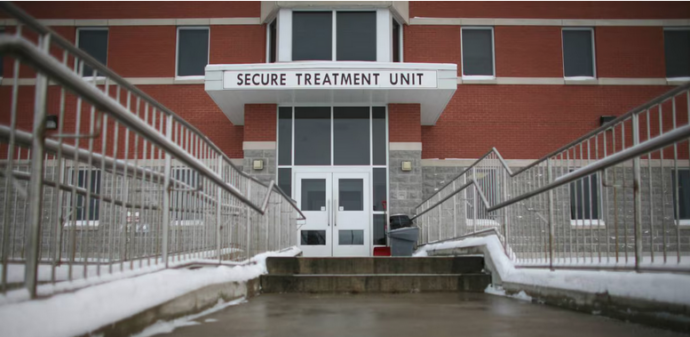 St. Lawrence Valley Correctional and Treatment Centre. The project will add 295 new correctional beds in Eastern Ontario As part of its work to keep dangerous offenders behind bars by building and expanding jails and correctional facilities, the Ontario government is issuing a Request for Qualifications (RFQ) to build the new Brockville Correctional Complex and expand the St. Lawrence Valley Correctional and Treatment Centre. The project will add 295 new correctional beds in Eastern Ontario and is part of the government’s plan to add 1,436 new correctional beds across the province by 2032.
“Our government is cracking down on criminals by building jails and strengthening the bail system to keep violent offenders where they belong: behind bars,” said Premier Doug Ford. “The Brockville expansion is part of our plan to add over 1,400 beds in correctional facilities across the province and ensure lack of space is never an excuse to grant offenders early release.”
Last fall, the Ontario government introduced the Keeping Criminals Behind Bars Act, 2025, to hold offenders accountable by making bail more stringent and consequential for people accused of serious crimes. As part of a comprehensive bail reform strategy, Ontario is expanding specialized bail prosecution teams, made up of dedicated Crown prosecutors who partner with provincial and local police to keep serious offenders behind bars.
“When violent and repeat offenders break the law, Ontarians expect them to be held accountable,” said Solicitor General Michael Kerzner. “That’s why our government is strengthening bail laws and making generational investments to expand correctional capacity across Ontario, so that we always have room to keep offenders behind bars and off our streets.”
The Ontario government is making historic investments to ensure dangerous criminals are never released due to a lack of space in adult correctional institutions. The building of the new Brockville Correctional Complex and expansion of the St. Lawrence Valley Correctional and Treatment Centre is part of a broader plan to strengthen Ontario’s correctional system with new beds, facility expansions and modernization projects, including:
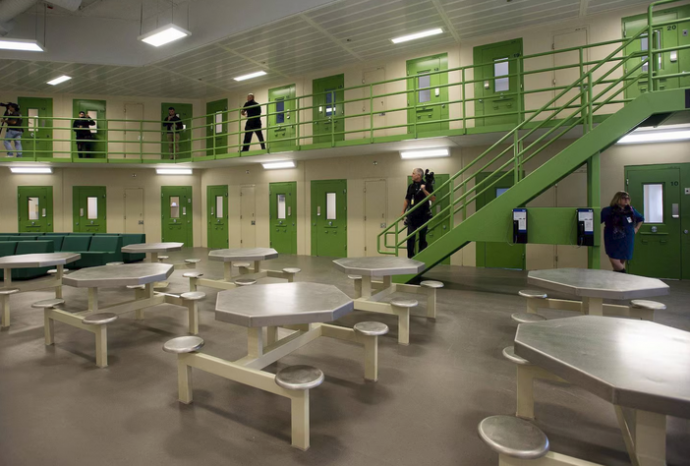 One wing of the Toronto South Detention Centre 345 new beds at the Thunder Bay Correctional Complex
320 new beds at the Toronto South Detention Centre
150 new beds between three modular expansions in Niagara, Milton and Sudbury
91 new beds at the Quinte Detention Centre
235 new beds at the Eastern Ontario Correctional Complex.
In the coming months, the government will unveil additional expansions, totalling hundreds of new beds, to further increase capacity across the province.
By Gazette Staff
March 16th, 2026
BURLINGTON, ON
Chinese EV’s are coming to Canada.
The federal government has a deal with the Chinese government that permits China to sell 49,000 EV’s in Canada each year.
News earlier today has Lotus, the British sports car brand that currently sells just one model at low volume in Canada, is aiming to be among the first companies to sell Chinese-made electric vehicles in this country under the federal government’s new import quota system.
 Lotus Eletre, a battery-powered “Hyper SUV” made in Wuhan, China. It is already listed on dealer websites and is expected to land in Canadian showrooms in the third quarter of 2026 The brand, known as a cult-favourite maker of lightweight performance cars, is now under the umbrella of Chinese giant Geely, which also owns Volvo and Polestar.
The car it is hoping to start shipping to Canada is the Lotus Eletre, a battery-powered “Hyper SUV” made in Wuhan, China. It is already listed on dealer websites and is expected to land in Canadian showrooms in the third quarter of 2026, according to Massimiliano Trantini, president and chief executive officer of Lotus Cars Americas.
“Our Eletre is already homologated [meets road worthiness standards] for Canada and we will be hosting our official launch event very soon,” Mr. Trantini said in an e-mail to The Globe and Mail.
The price will likely be well into six-figure territory. The vehicle will have a cabin lined with leather from Scottish tannery Bridge of Weir, and up to 905 horsepower. The Lotus Eletre is not – to state the obvious – one of the affordable new Chinese EVs many Canadians were hoping to see after the federal government announced lower tariffs and a new quota system.
Part of the rationale for slashing tariffs was that it would boost the availability of affordable EVs. By 2030, the government says, about 70,000 Chinese-made EVs will be imported under the new quota system and half will need to have an import price of $35,000 or less.
Unlike other cars the brand makes, the Lotus Eletre all-electric SUV is neither lightweight nor low-power.
The company has six dealers across Canada, with plans to add more. “Our plan is to grow the dealer network in line with demand, which we expect to increase rapidly following our market entry,” Mr. Trantini added.
The Eletre may be a tough sell in Canada. Sales of EVs dropped significantly last year and there are already a wide range of high-priced luxury electric SUVs on offer from other brands including the likes of BMW, Mercedes-Benz, Audi, Rivian, Tesla, Volvo, Porsche and Cadillac.
By Gazette Staff
March 16th, 2026
BURLINGTON, ON
 It wasn’t the suit that got him fired for a rant that went above and beyond what was seen as acceptable.
Last week Conservative MP Andrew Lawton, an avid convoy chronicler, proposed honouring Cherry with the Order of Canada.
He wrote: “For decades, Don Cherry has celebrated hockey, honoured veterans, and said what millions think — without apology.” CPC leader Pierre Poilievre approved, writing:
“Don Cherry embodies what it means to be a proud Canadian.” And Danielle Smith, the premier of Alberta, jumped on board.
Eighty-five-year-old Don Cherry made what many people felt were racist remarks during his weekly Coach’s Corner segment as part of Hockey Night in Canada.
Cherry told long time co commentator Ron McLean, he rarely sees people wearing poppies anymore to honour veterans, appearing to take aims squarely at those he believes are new immigrants.
“Whatever it is, you love our way of life. You love our milk and honey. At least you can pay a couple of bucks for poppies or something like that.
“These guys pay for your way of life that you enjoy in Canada, these guys paid the biggest price.”
McClain also facing backlash online for not saying anything in response, instead flashing him a quick thumbs up.
Many Canadians promptly took to social media to condemn Cherry’s comments as racist and call for his firing. Sportsnet, which produces Hockey Night in Canada, has apologized, saying in a statement, “Don’s discriminatory comments are offensive and they do not represent our values and what we stand for as a network.”
Sports writer Shereen Ahmed says Cherry’s comments took a personal turn when he said, “You people”, she adds “his narrative that those who served our country were all white is not only historically inaccurate, but an insult to the thousands of veterans and their families. Cherry’s comments should start a deeper conversation about systems of racism that exist in Canada and in hockey. ”
“That Don Cherry gets to sit there and opine about how we remember vets is horrible to me. I mean, this is a man who’s never served.
After Cherry’s comments, even the Canadian Armed Forces tweeted a reminder about the important contributions and sacrifices soldiers of color have made to Canada’s military. It says they fought to fight for Canada. They fought for the chance to give their lives for Canada. They fought for your right to choose. They are US.
CBC, which broadcasts Hockey Night in Canada in a sub-licensing deal with Rogers, said in part in a statement that it “has no purview over any editorial choice of commentators, or what they say.
 By John Bowles By John Bowles
March 16th, 2026
BURLINGTON, ON
For many years, oral health existed somewhat on the sidelines of Canada’s healthcare system.
Dental care has traditionally been treated as a separate category of health services, often dependent on private insurance or out-of-pocket payments.
 From childhood development to chronic disease management, dental care is now widely viewed as an important component of long-term health outcomes. However, in recent years the conversation around oral health has been changing. Policymakers, healthcare professionals, and researchers are increasingly recognizing that dental health is deeply connected to overall health and well-being.
Across Canada, new initiatives and research are bringing greater attention to the role oral health plays in preventive medicine. From childhood development to chronic disease management, dental care is now widely viewed as an important component of long-term health outcomes.
Oral Health as Part of Preventive Healthcare
Preventive healthcare focuses on stopping medical problems before they develop into more serious conditions. In dentistry, this approach includes routine checkups, professional cleanings, fluoride treatments, and early detection of potential problems such as cavities, gum disease, or oral infections.
Dentists are often able to identify health issues at an early stage, sometimes even before patients experience noticeable symptoms. For example, gum inflammation may signal the early stages of periodontal disease, a condition that can lead to tooth loss if left untreated. Early detection allows dental professionals to intervene before the problem becomes more severe.
Preventive dental care also plays an important role in reducing healthcare costs over time. Treating advanced dental issues such as infections, root canals, or tooth extractions can be significantly more expensive and complex than addressing early-stage problems through routine care.
Because of this, many public health experts are advocating for stronger integration between dental services and broader healthcare planning.
Links Between Oral Health and Overall Health
 Many patients assume cavities are only the result of brushing habits or sugar intake, but the reality is more complex. Scientific research over the past two decades has strengthened the understanding that oral health is closely linked with overall health. The mouth serves as an entry point to the body, and bacteria from oral infections can enter the bloodstream and affect other organs.
Studies have shown connections between gum disease and conditions such as cardiovascular disease, diabetes complications, and respiratory infections. Chronic inflammation in the mouth may contribute to inflammatory responses elsewhere in the body, which can worsen existing health conditions.
For patients living with diabetes, for example, gum disease can make blood sugar levels more difficult to control. At the same time, poorly managed diabetes can increase the risk of developing periodontal disease. This two-way relationship highlights why oral health cannot be viewed in isolation from the rest of the healthcare system.
Pregnant patients may also benefit from strong oral healthcare, as untreated gum disease has been associated with higher risks of pregnancy complications in some cases.
These connections are leading healthcare professionals to emphasize the importance of routine dental visits as part of comprehensive health management.
Expanding Access to Dental Care in Canada
Access to dental care remains an important topic across Canada. While many Canadians receive dental coverage through employer benefit plans, a significant portion of the population does not have regular access to dental services.
 Children, seniors, and lower-income households are often among the groups most affected by gaps in dental coverage. Children, seniors, and lower-income households are often among the groups most affected by gaps in dental coverage. In response, governments and public health organizations have been exploring programs aimed at improving access to basic dental services.
Expanding preventive care programs can have significant long-term benefits. Early dental treatment reduces the risk of emergency dental visits and hospital interventions, which are often far more costly for the healthcare system.
Improved access also supports better health equity, ensuring that individuals across different communities have the opportunity to maintain good oral health.
The Role of Patient Awareness
While policy and healthcare infrastructure are important factors, patient awareness also plays a major role in improving oral health outcomes. Daily habits such as brushing twice a day, flossing, limiting sugary foods, and attending regular dental appointments remain the most effective strategies for preventing dental disease.
Education campaigns across Canada are increasingly focusing on helping patients understand the long-term benefits of preventive dental care.
“Many patients assume cavities are only the result of brushing habits or sugar intake, but the reality is more complex,” explained family dentist Dr. Harpreet Atwal. “Research into the oral microbiome shows that every patient has a unique bacterial environment in their mouth. Genetics can influence which bacteria thrive, which means some people may naturally be more susceptible to tooth decay even when they maintain good oral hygiene.”
Understanding these individual differences can help both dentists and patients take a more personalized approach to oral health.
Looking Ahead
 Oral health is expected to become a more prominent part of national healthcare discussions. As Canada continues to focus on preventive healthcare, oral health is expected to become a more prominent part of national healthcare discussions. Researchers are continuing to explore how oral bacteria, lifestyle habits, and systemic health conditions interact to influence dental disease.
At the same time, policymakers and healthcare leaders are examining ways to expand access to dental services and improve public awareness of oral health.
These developments reflect a growing recognition that oral health is not simply about maintaining a healthy smile. It is an important part of overall health, quality of life, and long-term healthcare sustainability.
By strengthening preventive dental care, improving access to services, and encouraging better public awareness, Canada can continue moving toward a healthcare system that fully recognizes the vital role of oral health in supporting the well-being of its population.
 By Sadie Smith By Sadie Smith
March 17th, 2026
BURLINGTON, ON

Digital currencies have rapidly emerged as an alternative payment method in online casino gaming, providing both benefits and challenges. Appeal stems from quicker transactions and the potential for more privacy compared to traditional payment systems. As operators and players adjust to these developments, regulatory frameworks and user expectations are evolving alongside these technologies.
Cryptocurrencies started as a niche innovation but now serve as a mainstream payment option for funding online casino accounts, largely due to global digital commerce and a growing demand for faster settlements. bitcoin casino has become a leading example of how digital currencies interface with gambling platforms, combining efficiency with new technology. This shift influences both the way players interact with online gaming and how operators manage payments. Understanding these trends is increasingly important for those involved in online gaming today.
From niche asset to common payment options
 The need for immediate payment, proved compatible with cryptocurrencies. The rise of cryptocurrencies from a specialized digital asset to a frequent payment choice in online casino gaming began as users sought out fast, borderless money solutions. Many people became interested in these digital currencies as a way to participate in global transactions without the wait times associated with ordinary banking processes. Online gaming, characterized by international participation and the need for immediate payment, proved compatible with cryptocurrencies. As demand for rapid deposits and withdrawals grew, online casinos integrated digital currency options to satisfy user expectations. This transformation has changed how gaming platforms attract and retain technology-aware audiences.
The move from credit cards and bank transfers to cryptocurrency has improved the user experience for many. When users fund their accounts, cryptocurrencies let them bypass middlemen who might otherwise cause processing delays. In practice, depositing and withdrawing through digital currencies can grant quicker access to winnings and allow for more regular transactions. These features distinguish cryptocurrency payment systems for those who value speed, flexibility, and broad accessibility. Nonetheless, the adoption of these payment options requires both operators and players to address new complexities.
How casino users interact with digital currencies
Most online casino gaming sites now allow users to choose cryptocurrencies in the digital wallet section of their account for both deposits and withdrawals. Typically, funds are sent from an external wallet and credited after blockchain network confirmation. In contrast to card payments, which involve third-party processors, cryptocurrency transfers are direct and largely operate outside traditional financial systems. This can reduce payment denials stemming from network, bank, or jurisdictional issues—a significant factor in cross-border gaming. For withdrawals, players enter a wallet address and wait for network confirmation, offering greater control over timing and privacy.
However, cryptocurrencies can require more technical steps, especially for users less familiar with wallet administration. Players must monitor transaction statuses and be mindful of network congestion, which can delay processing during busy periods. Compared to conventional payments, digital asset transfers may offer smaller minimums and more variable transaction speeds, depending on the chosen currency. Although handling balances and withdrawals with cryptocurrencies is becoming simpler, it is generally more involved than mainstream payment routes. This environment highlights increased autonomy but also underscores the necessity of user education regarding transaction procedures.
Transaction speed, fees, and market volatility
One major appeal of using cryptocurrencies in online casino gaming is the typically fast settlement of funds compared to bank transfers. Often, transactions clear within minutes, depending on network activity and required confirmations. Crypto payment fees are frequently lower than those tied to conventional methods, especially for international transactions where cross-border charges otherwise apply. Nevertheless, the price volatility of most digital currencies can affect the value of deposits between sending and receipt, creating possible risks for player balances. Users should remain mindful of how fluctuations could impact available funds within short periods.
For those who want predictable transaction costs, cryptocurrencies may provide mixed experiences. Some offer consistently low fees, while others can rise considerably during periods of network congestion. The benefit of fast, inexpensive transfers must be balanced with the need to understand shifting market circumstances. As the use of digital currencies expands, both players and operators are adopting risk management strategies such as stablecoins or instant currency conversions. These innovations can reduce unpredictability, but core challenges related to digital asset volatility remain.
Compliance requirements and consumer protection measures
 Although cryptocurrencies are often thought of as private payment options, online casino platforms subject to gaming regulation must implement compliance checks similar to those in traditional banking. These measures include identity verification and monitoring for suspicious transactions, in line with anti-money laundering requirements. The use of cryptocurrencies within online casino gaming operates within this framework, where operators must authenticate player identity and fulfill reporting obligations, even when digital assets are used. Consequently, the belief of complete anonymity does not hold true on regulated gaming sites, where identification and ongoing oversight are mandatory. These safeguards seek to protect both users and platforms. Although cryptocurrencies are often thought of as private payment options, online casino platforms subject to gaming regulation must implement compliance checks similar to those in traditional banking. These measures include identity verification and monitoring for suspicious transactions, in line with anti-money laundering requirements. The use of cryptocurrencies within online casino gaming operates within this framework, where operators must authenticate player identity and fulfill reporting obligations, even when digital assets are used. Consequently, the belief of complete anonymity does not hold true on regulated gaming sites, where identification and ongoing oversight are mandatory. These safeguards seek to protect both users and platforms.
Security is a crucial consideration because most cryptocurrency transactions are irreversible. If a player loses wallet access or falls victim to scams such as phishing, it is seldom possible for the platform to recover funds. Whether players use self-managed wallets or the built-in wallets provided by online casino gaming operators, risks will vary in terms of convenience, protection, and potential vulnerabilities. The way digital assets are stored can influence recovery options in cases of lost access or unauthorized transfers. In this developing sector, keeping informed about wallet management and platform security is vital for minimizing losses.
By Gazette Staff
March 15th, 2026
BURLINGTON, ON
Despite the development community wailing about the end being near – development applications are still getting to City Hall
A development proposed for 1056 – 1060 Brant is under review with a Statutory Public Meeting scheduled for April 14, 2026 at 9:30 am
This proposed development would consist of an 11 – storey residential building with approximately 93 residential units, including a mix of 1, 2 and 3 bedroom units.

 Site located just south of the QEW
 By Gazette Staff By Gazette Staff
March 15th, 2026
BURLINGTON, ON
March 14 was Genealogy Day, making it the perfect time to learn more about your ancestors. Whether you are completely new to genealogy or have already begun to research your family history, we offer some helpful steps you can take to learn more about your roots.
Gather What You Know
Write down the personal details, like names, birthdates, marriages, and deaths, of all family members you may know. It will also be useful to record any locations they may have lived or been buried. Ask family members to help you fill in gaps: Your brother may remember Grandpa’s birthday, and your aunt might know where your great-grandparents lived before moving to Canada.
This information can help you determine what parts of the family tree still need to be filled in and provide clues as you research into ancestors even further back.
Start Searching
Generally, you’ll work backwards, generation by generation. Try to start with the easiest family line first. So, if you know more about your maternal grandparents, start with them. Here are some tips on where to begin and how to approach your search.
BPL’s Genealogy Site
Visit Burlington Public Library’s Genealogy web page, where you’ll find links to key online resources, such as Ancestry Library Edition and FamilySearch.org.
Ancestry Library Edition – Provides census information, vital records (birth, marriage and death), immigration and military records, and more. Access for free onsite at all BPL branches. Bring your own device or use a library computer to explore this database.
FamilySearch.org – The largest genealogy database in the world. Find census records, immigration records, digital microfilm collections, and more. BPL is a FamilySearch.org Affiliate Library, providing access to restricted digitized microfilm onsite at all our branches.
Newspapers
Newspapers provide invaluable insight into the past. You can find life announcements (births, marriages, deaths), or even an article about a tea party they hosted, their class ranking at school, or a letter to the editor that shows their personality!
You can use the Burlington Newspaper Index to help you find mentions of ancestors in local newspapers. Search by name to find which newspaper and page number they appear on to speed up your search.
Many years of the Burlington Post have been made available online via Newspapers.com, accessible onsite at all library branches. Other local newspapers, such as the Burlington Gazette and Hamilton Spectator, are available on microfilm.
Archives
Local archives may hold materials related to your family, the schools they attended, the businesses they worked or shopped at, and more.
Do you have Burlington ancestors? You can search the Burlington Digital Archive for digitized archival material, or Archeion, our archival database for all records in our collection. You can also search the Burlington History Index for your family name to see what records may be available. Just remember, the index is not exhaustive and only acts as a starting point for research.
 Glenview Public School – Class Photo, 1958. Burlington Historical Society, Digital Archive Learn From Others
If you hit a roadblock or need inspiration, it’s useful to learn from others’ experiences. Genealogy publications, such as Families and the Halton-Peel Newsleaf, include advice, research stories and more from fellow genealogists. You can read in-library use issues from the Burlington History Room—just ask a staff member for help.
Think Outside the Box
Be creative about where you look. Genealogical research is both an art and a science, so trust your curiosity and let your inner sleuth lead the way.
The Burlington History Room is home to a wide range of helpful reference materials, including Burlington high school yearbooks. Vernon’s City Directories can help track ancestors who moved frequently and shed light on their occupations. Online collections, such as the Burlington Digital Archive, may even turn up a photograph—perhaps of your great-grandmother’s sports team—that can offer clues to her age and help you estimate when she was born.
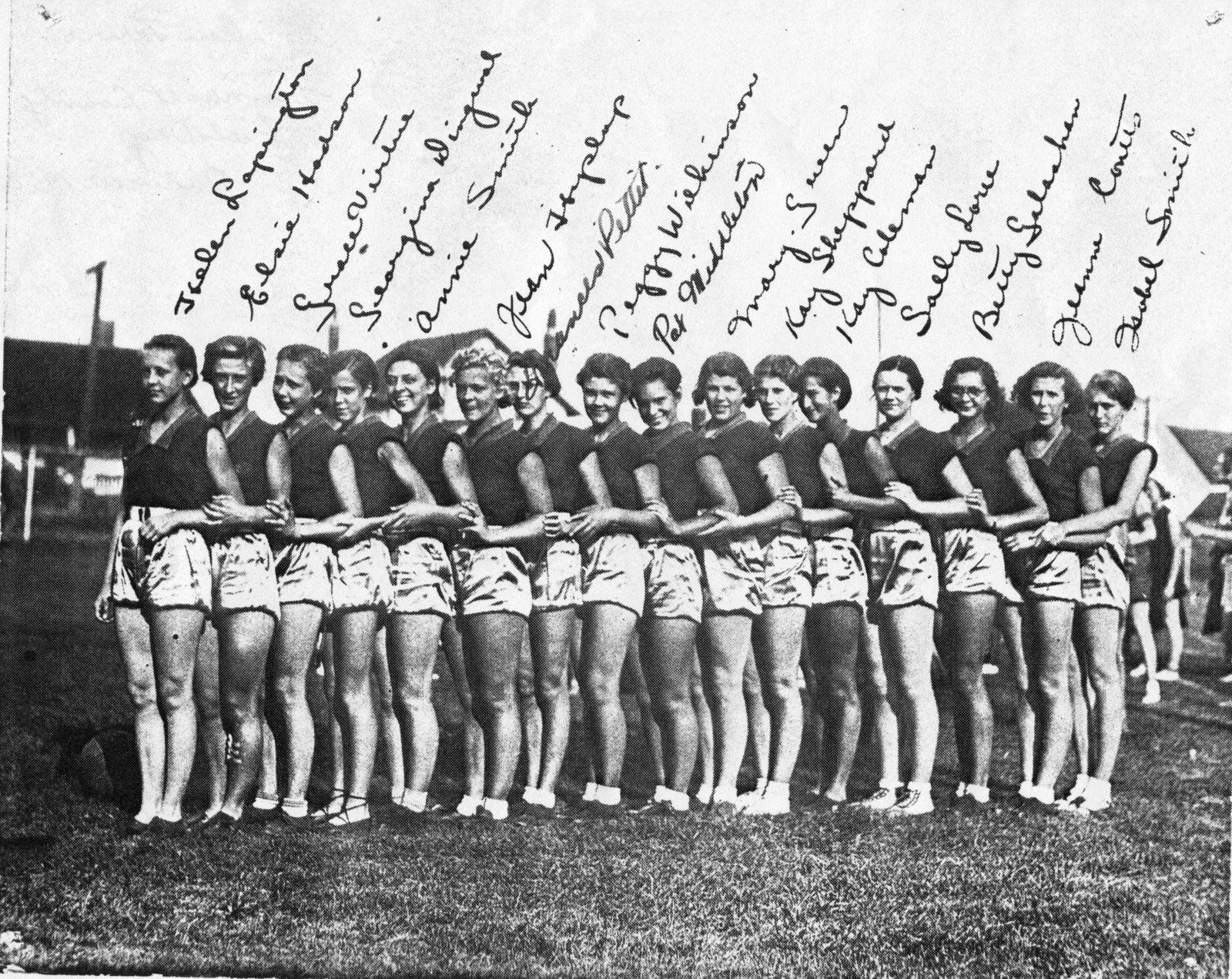 Burlington High School winning women’s team, 1932. Burlington Historical Society. A Word About Restrictions & Privacy
Depending on where and when your ancestors lived, you may have trouble accessing information about them based on privacy laws. The Canadian census, for example, is only available to the public after 92 years. The 1931 Canadian Census was released in 2023, so you will only find ancestors using census records up to this year. Hoping to find information in a 1950s census? You’ll have to wait or look for alternative sources of information.
We Can Help
Genealogy is a fun and rewarding pursuit. If you have questions about using databases or accessing archival items, don’t hesitate to contact the Local History and Digital Archive Coordinator by email or call 905.639.3611 extension 1155.
By Gazette Staff
March 15th, 2026
BURLINGTON, ON
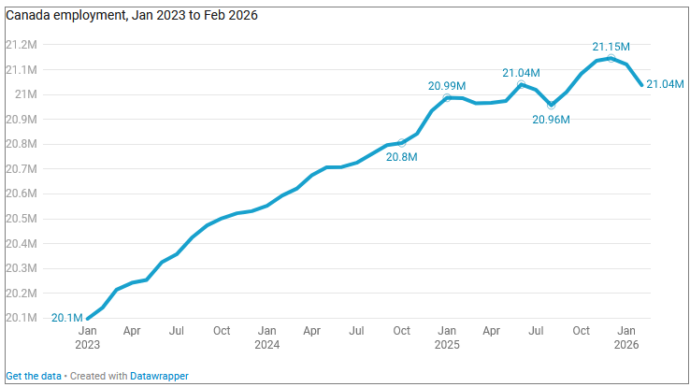
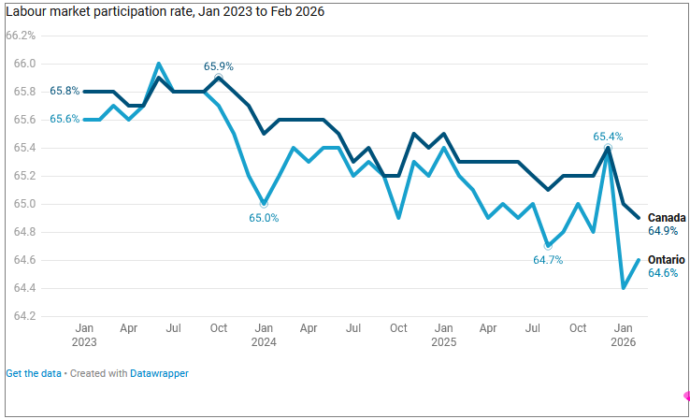
The New Democratic Opposition at Queen’s Park issued a statement on new labour force data showing Ontario’s unemployment rate rose to 7.6 per cent, with an alarming 672,400 people unemployed.
 Decent-paying jobs just aren’t available to young people – they don’t exist. Shadow Minister for Economic Development, Job Creation and Trade, Catherine Fife (Waterloo); and Shadow Minister for Finance and Treasury Board, Jessica Bell (University–Rosedale), issued the following statement
“Doug Ford keeps saying Ontario is doing great, but one of the most alarming numbers in today’s report is youth unemployment,” said Fife. “When young people are losing jobs and can’t find work, it’s a warning sign that the economy isn’t working for the next generation.”
“Ontario should be leading the country in job creation,” said Bell. “Instead, we’re losing jobs in major economic sectors, from manufacturing to retail to hospitality. Where is Doug Ford’s jobs plan?”
“This plan should start with major investments in public services and infrastructure, from hospitals to transit, that improve the services people rely on and create thousands of good jobs,” added Fife. “And it means much stronger Buy Ontario, Build Ontario rules so governments and public agencies use their buying power to support Ontario and Canadian employers,” concluded Bell.
 By Gazette Staff By Gazette Staff
March 14th, 2026
BURLINGTON, ON
The Creative Community Hive is hosting a free drop- in open art studio at the Orchard Community Hub ,2400 Sutton Drive, Burlington .
We are a creative arts platform in Burlington offering a variety of FREE programs for older adults.

Chilax – was a new word for me. Chill and relax.
By Raymond Blake
March 14th, 2026
BURLINGTON, ON
In times of crisis, Canada has a long tradition of leaders who manage to add to the national fabric with a vital narrative. Mark Carney is the latest.
The best remembered speeches in Canadian history have come at moments of crisis and uncertainty, when prime ministers capture the public’s imagination through carefully crafted performative speech acts, inviting citizens and the world to see Canada in a particular light.
 The speeches become a part of the national fabric, influencing how Canadians perceive and understand themselves. These moments are important to the country over the long term. They give rise to collective emotions of pride, reassurance, and loyalty, and over time, the narratives embedded in those speeches become a part of the national fabric, influencing how Canadians perceive and understand themselves.
Such defining rhetorical moments are relatively rare in Canadian history, as I note in my recent book, Canada’s Prime Ministers and the Shaping of a National Identity.
Mark Carney had such a moment on the global stage in Davos at the World Economic Forum.
Carney crafted his speech at a moment when many Canadians feel they are living through an existential crisis with the country under assault from the United States and amidst great stirrings of disunity, particularly in Quebec and Alberta.
But Canadians have felt this kind of anxiety about global instability and national unity many times before.
A historic Cold War call
In 1948, for instance, Canada was a restless nation. It was coming out of the Great Depression and six years of war. The world was fast descending into the Cold War.
 Former Prime Minister William Lyon Mackenzie King, In September of that year, William Lyon Mackenzie King, prime minister at the time, was in Paris addressing the United Nations. He warned against a world divided by the great powers and called for genuine international co-operation. “The good of each is bound up in the good of all,” he asserted.
The speech was a hit. King was interrupted twice by applause and received “a resounding ovation as he returned to his seat,” the press reported.
His remarks were described as “the first moral call” of a new world order based on the emerging liberal internationalism and multilateralism of the day, according to a report in The Globe and Mail.
Accordingly, King went home and continued to build a new identity around social security.
National unity has been the first duty of prime ministers, and they understand that what they say matters greatly.
In their speeches they attempt to build a national story, evoke a shared identity, and convey to Canadians and others what Canada is and what it aspires to be. Their speeches are crafted to be both meaningful and motivational and are meant to steer citizens to seeing the nation itself in specific ways.
King was performing Canada’s emerging role as a moral middle power in a divided world. Carney accomplished the same at Davos in front of political, cultural and financial elites in a speech widely judged to be brilliant, inspiring, and confident.
Like King and every prime minister since, Carney knows that national unity is sustained by narratives and stories.
Since his decisive win as Liberal leader, Carney has seized the political context shaped by Donald Trump, framing a narrative of Canada around unmistakable threat and resolve.
 Prime Minister Mark Carney with United States President Donald Trump in the Oval Office “President Trump is trying to break us so that America can own us,” Carney said back in April 2025. The language was blunt by Canadian standards. But it reflected a public mood increasingly shaped by anxiety and anger.
Carney has positioned himself as the credible manager with the steady hand to guide Canada through turbulent times.
His highly publicized visits to China, Qatar, Davos, India, Japan and Australia have reinforced the themes.
In Beijing, Carney spoke openly about the emergence of a new world order and made a trade deal that emphasizes co-operation in what he sees as a divided and fragmented global environment. Later in Qatar, he acknowledged that the world has fundamentally changed and securing new trade partnerships and investments are necessary to reduce Canada’s reliance on any single country.
Davos, however, was the centrepiece and Carney played to a Canadian audience even if few Canadians were physically present in the theatre where he spoke.
It was in Quebec City two days later that he would speak to the nation, delivering a speech titled “Building Canada” that all prime ministers have routinely given as their call to national unity. The venue – the Citadelle of Quebec next to the Plains of Abraham – was the wrong one, though, angering some politicians and commentators but pleasing many.
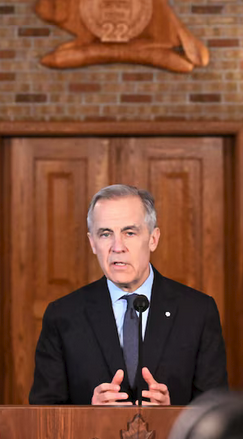 Prime Minister Carney speaking at the Citadelle of Quebec/ The crest of the Royal 22nd Regiment carved in wood above the door. The location was very significant. Location is never neutral in politics, particularly in a country as regionally and historically complex as Canada.
The Plains of Abraham are a place of defeat for French-Canadians, a reminder of a lost nation. It’s where the French were forced to surrender Quebec to the British in 1759 in the Battle of Quebec, leading to the fall of New France. It was the start of English domination over French-speaking people in North America.
Carney’s Canada story in Quebec City was one of solidarity, generosity, caring and “how we look out for each other and ensure that no child, no family, no one is left behind” as the nation responds to moments of genuine uncertainty.
The Plains of Abraham, he said, are “where Canada began to make its founding choice of accommodation over assimilation,” reframing the British conquest as the start of a partnership.
Across Quebec intellectual and political circles, the reaction was immediate.
“Perhaps Mr. Carney wasn’t paying attention in his history classes, or maybe the history he learned doesn’t quite align with reality,” journalist and political commentator Chantal Hébert told Radio-Canada.
“Mr. Carney’s speech can only lead to the independence of Quebec,” Parti Québécois Leader Paul St-Pierre Plamondon said.
The plains are now part of Battlefields Park, which has served as a backdrop for official visits and cabinet retreats. But not for formal speeches by prime ministers. They are sensitive to its status in Quebec history.
Carney was in Quebec City for a cabinet meeting when he delivered his speech at the Citadelle. He described Canada as a nation unlike any other: “a beacon – an example to a world at sea.”
He talked about diversity as a strength, rights and freedoms as fundamental. How Canada was built by partnership over domination, compromise over division. Like so many of his predecessors, Carney quoted George-Étienne Cartier’s depiction of “different races” living not in conflict but in co-operation, “great families beside each other.”
Carney acknowledged that Canada did not have a straight path to accommodation and inclusion. He mentioned the Acadian deportation and the historic Durham Report, with its push for French assimilation. But he noted the resilience of the French, and how “progress came through tension, compromise, and sometimes failure.”
Each generation of Canadians, he said, “has built a modern, progressive, liberal state that embraces the values of caring and sharing, of equity and fairness for all.”
How Canada can put Carney’s Davos speech into action
Giving life to the Carney vision for Canada
What makes a good leader in Canada today?
It’s not the first time a prime minister has miscalculated the significance of the Plains of Abraham.
In 2009, Stephen Harper was keen on promoting a better understanding of Canada’s history. A re-enactment of the Battle of the Plains of Abraham was planned for the 250th-anniversary. Harper cancelled it after members of the Bloc Québécois and Parti-Québécois and others objected.
New or not, voters like the message
Broadly speaking, Carney’s talk of Canada has reassured many Canadians. A Leger poll taken after both speeches shows growing support for his narrative. In Quebec, support jumped four percentage points for the Liberals and nine per cent for Carney as the best choice for prime minister compared with late last year.
Both speeches contain little that has not been spoken of by earlier prime ministers. They all tell Canadians their country is an example to the world. Carney continued that tradition at Davos, saying Canada “was among the first to hear the wake-up call” of the dangers presented by Trump without naming him.
 We do not know how Mark Carney’s prime ministership will unfold or where his narrative of Canada will lead. But it is clear that the country has a prime minister who understands how to use national stories to respond to the needs and anxieties of the nation. The Davos speech tapped into what many Canadians want for their country in a disruptive world: bold leadership. Carney declared Canada will lead in building a better world. He situated Canada on the side of good, bringing to the world “the power of legitimacy, integrity and rules” that will lead it to a better place.
In that moment, a prime minister commanded global attention and spoke with confidence on Canadians’ behalf. For that, many of them cheered.
We do not know how Mark Carney’s prime ministership will unfold or where his narrative of Canada will lead. But it is clear that the country has a prime minister who understands how to use national stories to respond to the needs and anxieties of the nation. His challenge will be to build a national story that is not simply built on anger and resentment toward the United States.
Raymond Blake is professor of history at the University of Regina and winner of the 2025 Shaughnessy Cohen Prize for Political Writing from the Writers’ Trust of Canada.
By Gazette Staff
March 14th, 2026
BURLINGTON, ON
NEW ONLINE MODEL REGISTRATION IS OPEN
 Examples of past model entries. Organized in conjunction with the IPMS Hamilton Modellers Club, HeritageCon is widely regarded as Canada’s greatest plastic scale model contest and sale.
It’s not just a contest — it’s a full-day celebration of craftsmanship, aviation history,
and community!
 Canadian Warplane Heritage Museum Canadian Warplane Heritage Museum
Time: 9 am to 5 pm
Admission: Admission Tickets and Model Registration will not be available at the door.
Adult (age 18+) $20.00
Child (age 6-17) $15.00
Model Contest Registration (unlimited model entries per person) $10.00
Model Contest Registration – upon purchasing your Model Contest Registration, you will receive an email with instructions and a link to add your model(s). Model Contest Registration closes on March 28 at 11:59 pm.
Free admission for museum members and children 5 & under. Complimentary passes are not valid for this special event. No exchanges or refunds.
Registration and Tickets HERE
 By Ray Rivers By Ray Rivers
March 14th, 2026
BURLINGTON, ON
OPINION
Almost 150 countries voted to adopt in 2007 the UN Declaration of the Rights of Indigenous People. Canada was one of four nations which objected but nine years later enshrined the Declaration into Canadian law. And from the perspective of Canada’s first nations that became the tipping point for resolving land claims.
The Supreme Court of Canada had opened the country to indigenous land claims back in 1973, and one of the first being the multi-party agreement on the James Bay hydro project in Quebec. But in keeping with Canada’s reconciliation policy close to 2000 land claims have been filed with the federal government. In the case of British Columbia, something like 95% of the land mass is subject to various land claims.
 The Cowichan tribe of the Coast Salish Nation have a deep culture that has been retained – as Indigenous people they want their land rights respected. Typically the feds settle these claims through agreements, extinguishing the claim by giving land and/or money to the claim holder. But some claims have also ended up in court. In August of 2025 a landmark decision in one of Canada’s longest trials the BC Supreme Court awarded the Cowichan tribe of the Coast Salish nation title over a part of Lulu Island in Richmond BC. That title includes land occupied by the governments and over a hundred private homes.
This is the first time an indigenous land claim has been awarded, which included title over privately held (fee simple) property. The homeowners, like most other Canadian homeowners, believing they had exclusive ownership rights, were stunned by the decision. The judge didn’t rule on whether the private property rights were now extinguished, but rather suggested the governments should sort this out.
Cowichan leaders are promising they won’t force out the homeowners who now apparently will share title to their homes, but that does little to relieve their anxiety. To make matters worse for the homeowners, despite this being one of the longest trials in Canadian history, the court denied the governments’ requests to formally notify the homeowners and allow them to participate.
Needless to say the homeowners are confused and anxious about their future and unsure if this decision will make it more difficult or even impossible to sell their homes or even get a mortgage. And they are rightfully indignant that they had been excluded from this trial which was also very much about their rights. The court decision is already affecting them emotionally and threatens to hit them economically as well.
The decision is being appealed by the governments and no doubt by the homeowners, but also by other Coast Salish bands claiming they too had an historical presence on Lulu Island.
 Cowichan leaders are promising they won’t force out the homeowners who now apparently will share title to their homes, but that does little to relieve their anxiety. It was 1853 when BC governor James Douglas promised the Cowichan, who represent a branch of the Coast Salish people, that the Crown would treat them with justice, humanity, and respect, and protect their lands if they remained peaceful. He indicated their village sites would be set aside as reserves. However, the government subsequently sold this land to settlers without their consent. Will the Cowichan and their future generations respect their promise regarding existing private homes?
This was a court decision and courts are structured for confrontation, not necessarily reconciliation. Appeal of this decision will ultimately and unfortunately end up in the Canadian Supreme Court since the Cowichan have now been given new rights at the expense of others.
While we were all promised that reconciliation would bring people together and further reduce racism and conflict, this decision promises to do just the opposite. Given the reaction to this ruling, it is anything but reconciling and that begs the bigger question – if it’s not broken should we be trying to fix it.
Below is an excerpt from the Fraser Institute’s published summary on the substance of the trial. I had not attended the trial so cannot warrant its complete accuracy.
“The judge declared that three square miles in the heart of Richmond is now Aboriginal title. Critically, the Cowichan did not sue the fee simple title owners (both businesses and residences). Therefore, she did not make a specific order declaring those titles were invalid. However, she declared Aboriginal title was superior to fee simple titles.
The basis for finding Aboriginal title was her determination that, as of 1846 (when the British Crown entered into the Oregon Treaty with the United States, and thereby declared sovereignty over what became B.C.), a band of a little over 1,000 Aboriginal peoples, now known as the Cowichan, used the area each summer for fishing. It was not their permanent home. They lived on Vancouver Island. They occupied the Richmond lands for only a few months each summer. But the judge determined that that was sufficient to meet the test of “exclusive occupation” required to establish Aboriginal title. This is the test laid down by the Supreme Court of Canada.
The Colony of B.C. started issuing fee simple titles in the Richmond area in the 1860s. The Cowichan that had fished during the summer had left the area by about 1870. There has been no connection between them and the area since then. But various courts have ruled there is no need for “continuous occupation.” So long as the judge can find on the evidence that the band had exclusive occupation in 1846, Aboriginal title can be declared. That is what the judge did.”
 Ray Rivers, a Gazette Contributing Editor, writes regularly applying his more than 25 years as a federal bureaucrat to his thinking. Rivers was once a candidate for provincial office in Burlington. He was the founder of the Burlington citizen committee on sustainability at a time when climate warming was a hotly debated subject. Ray has a post graduate degree in economics that he earned at the University of Ottawa. Tweet @rayzrivers. Ray Rivers, a Gazette Contributing Editor, writes regularly applying his more than 25 years as a federal bureaucrat to his thinking. Rivers was once a candidate for provincial office in Burlington. He was the founder of the Burlington citizen committee on sustainability at a time when climate warming was a hotly debated subject. Ray has a post graduate degree in economics that he earned at the University of Ottawa. Tweet @rayzrivers.
Background links
UN Declaration – Land Claims – Federal Claims Program – Musqueam Appeal – Coast Salish – Fraser Institute –
|
|





 By Tom Parkin