





 By Laura Fuerte
November 12th, 2025
BURLINGTON, ON
For a long time now, online casinos have leaned heavily on digital frameworks, kind of inevitable, really, when it comes to shielding both their own operations and the people playing there. Security tech isn’t tucked away in some dusty corner; these days it’s involved in, well, pretty much every layer, from guarding personal info to keeping an eye out for odd betting behavior that might signal foul play. There’s been a real uptick—around 37% more attacks targeting gambling platforms in 2023 than the year before. That’s a lot.

Cyber crime can be stopped with strong security humming quietly in the background, unseen.
Understandably, tech spending is ramping up. Still, Now, casino operators are on the hook for fairness in games, juggling rules that cross borders, and, not to forget, helping users stick to healthy playing habits. If you squint a bit, it’s not so much an online gaming business anymore as a tech outfit, with security humming quietly in the background, unseen. That undercurrent, or so it seems, is what keeps players sticking around and nudges the whole industry forward, even if it tends to go unnoticed.
Encryption and data security advances
Every online casino must guarantee that financial details and personal data remain confidential.
SSL and TLS encryption, those acronyms pop up a lot, are now usually considered pretty fundamental for protecting sensitive data. They create protected channels between players’ computers (or phones) and the casino’s servers, helping keep things like sign-ups, payments, or just spinning a slot machine away from prying eyes. }
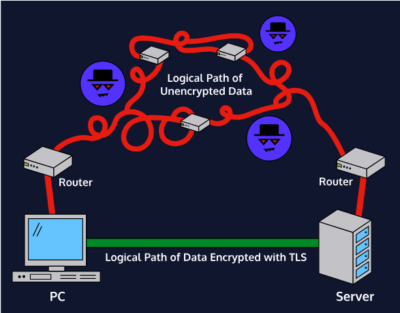
More than you might want to know about TLS
TLS 1.3 (the latest update, for those keeping score) is being picked up faster lately; somewhat shorter handshakes seem to be the draw. And not to get too deep into the weeds, but nearly every significant casino group was planning a move to quantum-resistant encryption by mid-2024. Maybe a bit ambitious, given the looming spectre of quantum computing, but preparation has its merits.
Lattice-based algorithms and other tools from the world of post-quantum cryptography, well, they’re not everywhere yet, but the early adopters are dipping their toes in. Most operators eye these upgrades as vital not just to keep payment info safe, but also in protecting the random outcomes and records stashed away on servers.
Encryption tends to be at the heart of bigger digital safety plans, making mischief difficult for both the amateur intruder and the more advanced (and determined) attackers. Those casinos prioritizing security upgrades? They often seem to have an easier time checking all the compliance boxes whenever a new privacy rule comes along, and, it’s worth noting, navigating those independent security audits that everyone dreads.
Artificial intelligence and behavior monitoring
There’s a sense now that artificial intelligence is almost inseparable from online casino security. Not everywhere, maybe, but increasingly so. AI systems churn through vast piles of gameplay data, scanning for nuances, little fingerprints of fraud or someone trying to tip the scales unfairly. Fraud prevention numbers shot up once machine learning tools came into play, most notably in live dealer and peer-to-peer setups. Apparently, these models sort through millions of actions and withdrawal attempts looking for links or telltale patterns associated with collusion, chip dumping, or bots that aren’t supposed to be there.
It doesn’t stop at actions; weird login behavior (think accounts accessed from two far-flung regions at once) can instantly trigger a closer look. By feeding real-world outcomes back into the system, casinos let AI adjust on the fly, spotting newer, more subtle threats over time.
Both supervised and unsupervised techniques are in use, mixing adaptability and speed, qualities that, realistically, few human-only security teams could consistently keep up with. Still, it’s not infallible. Some would argue these models miss context or flag harmless anomalies, so human oversight is hard to remove entirely.
Surveillance infrastructure and integrity controls

Surveillance technology in online casinos has moved well beyond just sifting through event logs.
Surveillance technology in online casinos has moved well beyond just sifting through event logs. Increasingly, these platforms roll in visual tools, like facial scans, to bolster identity checks, where required. Research hints that biometrics are being tested out as a way to further clamp down on fraudulent account creation. High-def cameras may be more commonly associated with brick-and-mortar casinos, but the software cousins now monitor digital tables and sessions for things that wouldn’t show up with older systems.
RNG (Random Number Generator) reliability forms the backbone of game fairness. Regulators in most regions appear to want external audits of these RNG systems at least every quarter, but there are exceptions. On top of that, blockchain has cropped up as a possible solution, offering ledgers meant to keep transaction records tamper-resistant. Not foolproof, but a useful deterrent. If someone tries to quietly adjust a record, it’s likely to set off internal alarms.
Meanwhile, analytics tools frequently scan through player deposits or trends looking for blips that might signal something amiss, though, sometimes, it’s just randomness or luck at play. The idea is to build up enough layers, if one misses, maybe another one catches trouble before it spirals.
Network architecture and regulatory compliance
One big shift underway: zero trust architecture gradually replacing those old “flat” network setups. By splitting up systems, payment modules in one bucket, player data someplace else, game logic in another, casinos hope to reduce the damage any single breach can cause. The move to zero trust has, in some circles, led to data theft attempts dropping a noticeable amount—about a quarter less within half a year—though results may vary. This newer model leans hard on granular authentication checks, basically never letting anyone (or anything) waltz in without proving permission over and over again.
Compliance, always lurking in the background, leans more on automation these days. Tools track requirements for anti-money laundering, customer identity, and data rights on a loop. Legislation like the GDPR (Europe) and the CCPA (California) brings big headaches if requests aren’t handled quickly, potential fines can be a real motivator. Audit trails, churned out by automated systems, are now routinely requested when operators enter new regions. None of this is a magic bullet, but it’s a step toward keeping regulators and skeptical players, if not happy, at least reassured.
Embracing responsibility in online platforms

Though, as always, nothing’s totally perfect.
Developments in security tech have nudged the bar higher on what it means to protect players, not just from criminals, but sometimes from their own habits. Operators have started baking tools like self-exclusion, deposit caps, and help centers right into user dashboards, not without some technical hiccups, but integration seems to be improving. The real trick is making sure these safeguards don’t get left behind as systems grow more complex.
If anything, the hope is for technology not just to meet legal requirements, but to genuinely help folks maintain control. Players are prompted to reflect on their limits and offered resources if their habits begin tipping into risky territory. There’s a sense that responsible play, when nudged along by the right tech, could quietly fortify both personal safety and broader trust in the whole world…though, as always, nothing’s totally perfect.

Discover more from Burlington Gazette - Local News, Politics, Community
Subscribe to get the latest posts sent to your email.

Wow- I can see the effort to make this readable and thank you for that. If I understood correctly, the risk of privacy breachers in the on-line gambling world are still there and very real. Big efforts are being made to mitigate these with some successes, but not yet fully there. I think this would be great to update 1-2 per year since I imagine this world changes very quickly. Thank you for keeping us in the know.