




 By Mark Denver
June 12th, 2026
BURLINGTON, ON
A reader writes and asks: “Is online poker actually growing, or does it just feel that way because I keep seeing ads for it everywhere?”
Fair question. And the answer is – yes, it’s genuinely growing. Not ad-budget illusion. Real numbers.

People from anywhere in the world can get in on a poker game.
Mobile poker app downloads jumped over 30% in 2023 alone. That’s not a blip. That’s a structural shift in how poker enthusiasts engage with the game.
Online poker isn’t a niche hobby anymore. It hasn’t been for a while. Millions of new poker players join platforms every year, and the data across multiple sites confirms it’s only accelerating.
Why Participation Exploded – And Why It Stayed High
The pandemic forced people online. We all know that story.
But what’s interesting is that poker enthusiasts who began playing online during lockdowns didn’t quit when restrictions lifted. They stayed. They brought friends. They got competitive.
Faster internet helped. Better mobile interfaces helped. Live dealer options helped. Each barrier that disappeared brought in another wave of casual players who previously couldn’t be bothered.
Free poker did a lot of the heavy lifting here, and that’s something the industry doesn’t talk about enough. Platforms that let beginners play poker with zero financial risk – through free poker modes – quietly built their future paying audiences. Once you’ve played a few hundred free poker games and you’re not embarrassing yourself anymore, the jump to real money feels a lot smaller.
That quote should be printed and framed in every poker product meeting. Free poker wasn’t charity. It was strategy.
A well-designed poker app also removed the last real excuse not to play. You don’t need a desktop setup. You don’t need a poker room nearby. You need a phone and fifteen minutes. That accessibility shows up directly in the participation numbers.
Who Is Actually Playing? The Demographics Are Surprising
The poker enthusiasts driving platform growth right now aren’t who you might envision if you closed your eyes and imagined “poker player.”
Three groups dominate the data:
- Ages 25-34: The largest single group – about 38% of active users on most major platforms
- Ages 35-50: The fastest-growing group, up 22% year-over-year since 2022
- Female players: Now about 28% of new registrations, up from 18% in 2019

Major increase in the number of women playing poker: Are they winning?
That last number deserves more attention than it gets. A ten-point jump in female registration over five years isn’t a rounding error. It’s a real demographic shift – and platforms that ignore it are leaving money on the table.
Geography matters too. Urban poker players still lead in volume, but suburban and rural participation is climbing as mobile access improves. States with regulated markets show longer average session times – which suggests that legal clarity genuinely makes poker players more comfortable.
BetMGM’s player data is a useful example here. Their poker tournaments serve both casual players and serious grinders within the same system. That dual appeal isn’t accidental – it’s built into how they structure promotions.
PokerStars remains one of the largest platforms in the world. Researchers cite its user base constantly when studying online gambling behavior – it’s the benchmark everything else gets measured against. For poker enthusiasts who want access to thousands of real opponents across many poker games, it’s still hard to beat.
Regulation Is Shaping Player Behavior More Than Anyone Expected
Six U.S. states have legalized and regulated online poker as of 2024: Delaware, Michigan, Nevada, New Jersey, Pennsylvania, and West Virginia.
Six. Out of fifty. So most American poker players are still operating in legal grey zones – and that matters.
Participants in regulated states behave differently. They deposit more often. They play longer sessions. They report higher satisfaction. The data points to one clear reason – legal clarity reduces anxiety around real money transactions and payouts. When you know you can actually get your money out, you play more freely.
- New Jersey leads in total player volume among regulated states
- Michigan hit its projected 3-year numbers in just 18 months after legalization
- Nevada has the highest average buy-in amounts – which reflects an experienced player base that’s been at this a long time
The platforms operating across multiple regulated states have a real advantage here. They can compare state-specific behavior and adjust poker tournament timing, game availability, and promotions accordingly.
Participants stuck in unregulated states often end up on platforms like Bovada – real money cash games and poker tournaments built around Texas Hold’em and Omaha. The demand is clearly there. The regulation just hasn’t caught up yet.
Which raises the obvious question – why are only six states regulated in 2024? What’s the holdup? That’s a conversation worth having with your state representatives, not just your poker group.
Which Poker Games Are People Actually Playing?
The traffic data here is pretty lopsided, honestly.
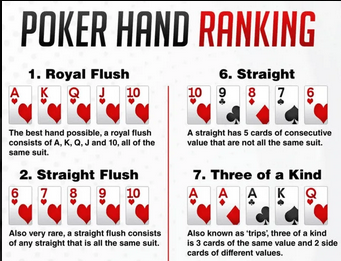 Texas Hold’em dominates. About 70% of all online poker traffic across major platforms. Its mix of skill, strategy, and luck creates something that’s easy to enter but deep enough to keep poker enthusiasts hooked far longer than simpler variants.
For a full platform-by-platform breakdown of poker games and traffic data, casino jesus has useful comparisons that help you find where the real action is in specific variants.
Here’s how the major variants rank by traffic share:
- Texas Hold’em – ~70% of total traffic
- Omaha (PLO) – ~18% of total traffic
- Seven-Card Stud – ~5% of total traffic
- Mixed games and other variants – ~7% combined
Omaha is the clear runner-up among poker games. Four hole cards, bigger hands, more action – it appeals to experienced poker enthusiasts who want higher variance. Platforms that build up Omaha traffic tend to pull in higher-stakes regulars alongside their Hold’em crowd.
Using the Data to Actually Get Better
This section focuses on practical steps for improvement.
The poker enthusiasts improving fastest in 2024 aren’t always the most talented. They’re the most systematic. They treat session history as data, not just a record of wins and losses.
Platforms now offer hand history exports, positional win-rate breakdowns, and VPIP tracking – tools that used to require third-party software. If your platform offers these and you’re not using them, you’re leaving a real edge sitting idle.

The social layer of a poker game isn’t just a nice feature – it drives measurable engagement that shows up in the numbers.
Social features produce useful data too. Poker enthusiasts who play poker with friends in private club formats show higher session frequency and longer platform retention than solo players. That social layer isn’t just a nice feature – it drives measurable engagement that shows up in the numbers.
Serious poker enthusiasts often use a dedicated poker app to track table selection metrics. Average pot size, players-per-flop percentage, hands-per-hour – all of these signal table profitability before a single card is dealt. If your platform shows this data in the lobby, use it.
The ability to play poker online has also opened doors that used to belong exclusively to elite competitors. Events modeled on the World Series of Poker have expanded into the digital space – giving everyday poker enthusiasts access to tournaments they never could have reached before.

Discover more from Burlington Gazette - Local News, Politics, Community
Subscribe to get the latest posts sent to your email.

Leave a Reply