





 By Ray Rivers
February 3rd, 2026
BURLINGTON, ON
In many ways, there has been too much discussion about Canada’s EV mandate, introduced during the Trudeau years as a climate change initiative. It is one of the few remaining vestiges of climate policy that we associate with former PM Justin Trudeau.

Gaz guzzlers: Advertising taught us to love them.
An EV mandate has long been opposed by the big three US automakers since it would ultimately mean the end of the gas guzzler. They are opposed to essentially scrapping their outdated internal combustion infrastructure. A second reason has to do with the symbiotic relationship of these large corporations and those in the petroleum sector.
The mandate included a 20% interim 2026 target for EVs. When PM Carney, realized, among other factors, that the 20% target would not be attainable this year he paused the interim requirement. That pausing raised the hopes of the conventional auto industry that the entire mandate was also on its way out the door.
EV sales in North America have fallen off a cliff since Mr. Trump put a curse on them after returning to office. And the father of the modern EV, Elon Musk, almost killed the Tesla as buyers penalized him for all he did during his disastrous stint at the White House.. That is the USA, but too many of us Canadians tend to follow America’s lead – so Canadian EV sales here have also crashed.
Built into the federal EV mandate is an option for a kind of EV trading scheme. The mandate allows credits to be created by those overachieving the mandated levels and allowing them to sell credits to those who don’t. This is a bizarre provision which complicates the mandate and creates potentially unintended consequences.
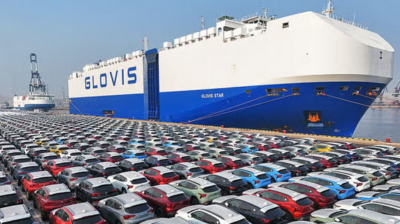
50,000 of these Electric Vehicles will arrive in Canada – what will the take up be?
The domestic makers complain that imported Chinese EVs will be able to earn credits. And selling those credits would hypothetically put an estimated billion dollars into Mr. Xi’s Beijing bank account. That should be enough to kill the mandate, they say.
As for the so-called Big Three, nobody serious about the environment should ever take their advice. GM and Ford were heavily complicit in masking and hiding how their products would hasten the advent of climate change. For over 50 years ago they have hidden this truth from the public. They can’t be trusted with our future.
Those American based auto makers are on their way out anyway, being called home by Mr. Trump. The number of vehicles the big three produce in Canada and the number of people they employ to make them have dramatically tumbled over the last decade. Honda and Toyota have replaced them and they also build better cars, according to most reviews. So Canadians need to say good riddance as the last factory built US car plant in Canada eventually closes.
The EV mandate, notwithstanding disappointing sales of those vehicles this past year, has probably already been a success in signalling to the industry and consumers that it is time to change up their ride. The history of subsidies for EV purchases has been moderately successful, particularly when there had been a significant price differential.
What is lacking is adoption of a standardized universal auto charging system and a national highway of reliable, easy to use EV chargers from sea to sea to sea. That is currently one of the biggest drawbacks to broader EV adoption. Otherwise EVs should sell themselves. They are faster, quieter, less costly to operate and virtually maintenance free – with or without an EV mandate.
There is a place for mandates and prohibitions. A federal appeal court has just ruled that plastic is a toxic substance allowing the continued banning of unnecessary plastic products like shopping bags and drink straws. Surely no reasonable person would argue that car exhaust is any less toxic.
 Ray Rivers, a Gazette Contributing Editor, writes regularly applying his more than 25 years as a federal bureaucrat to his thinking. Rivers was once a candidate for provincial office in Burlington. He was the founder of the Burlington citizen committee on sustainability at a time when climate warming was a hotly debated subject. Ray has a post graduate degree in economics that he earned at the University of Ottawa. Tweet @rayzrivers
Background links:
Auto Complaints – GM/Ford complicity – Big Three on Their Way Out – Plastic Toxicity –

Discover more from Burlington Gazette - Local News, Politics, Community
Subscribe to get the latest posts sent to your email.

They are also expensive to buy. And the charging stations need to charge faster. I understand that one of the Chinese cars recharges fully in 10 minutes, and they are cheaper.
I wish Canadian Tire would introduce the Chinese EVs into Canada with a Motomaster logo slapped on the front.
They already import stuff from China.
And they already have tires and service stations across Canada.
Plus we’d get back $100 in Canadian Tire money (for windshield washer fluid) on every one we buy.
What a load of nonsense.Ford and GM have been building billions of dollars worth of EV and battery plants .Now with lack of buyers they are taking billion dollar losses.No shareholder wants to invest in companies without a market.Ford is currently re building it’s plant in Oakville to make trucks since there IS A MARKET.
EV range in our cold climate is still an issue. And EV’s are more reliable; until they n ed a battery. $$$$
It’s about time Carney cancel the useless EV mandate for good, it was a bad idea to begin with and its only getting more problematic as it creates confusion in the market place and impacts jobs in Canada.
When something does not go according to plan, like the growth in the EV market, it’s easy to blame Trump. The market was softening well before Trump, and if you follow the global markets, the biggest manufacturer in the world, Toyota, said it was not going to build EV’s but build hybrids.
The EV market was propped up the 3 “F’s”, Freebies, Fleets and Fanboys. Freebies are government incentives, when these disappeared, the market dropped. When fleets realized the economics of EV did not make sense, they stopped buying, and the market cooled. Fanboys are the early adopters, every new technology has its fanboys that will put up with the negatives in order to have the new tech, once the new adopters hit market saturation, no more growth.
Are EV’s faster than ICE vehicles? On acceleration across an intersection, yes, but is the same as many hybrids. On long trips not a chance when you factor in charging times, EV’s adds hours to long journeys and is well documented.
I have driven now 4 years in a row from Burlington to San Diego, it is rare to see an EV in the fast lane. Why, speeds above 100 km/h significantly reduce range. I can travel all day long at 140 km/h with one fuel stop for 10 minutes.
The need for more charging points is a fallacy – it does not make a long trip better. Even here in southern California, with a plethora of charging options, a trip from San Diego to Sedona AZ can easily take 12 hours in an EV, this is a 7 hour tip in in regular car.
Are EV’s less expensive, or as Ray puts it cheaper to operate? This is very site/person specific – I’m surprise an economist would make a broad proclamation.
When I factor in the higher purchase cost and higher depreciation and do a proper present worth analysis it works out to be more expensive. EV owners rarely consider the opportunity cost of the additional money an EV costs. This is also why the market has dropped off, the financial calculation of an EV does not make sense for many people.
And lastly, EV’s are not quieter, noise from a modern car is largely tire noise and wind noise, again well documented and hence are about the same. An EV reversing is clearly more noisy, and more irritating.
Battery short circuiting and fire risk of an EV is real. More and more jurisdictions are restricting where you can park and charge an EV. Repair costs from accident damage is considerably higher with an EV and this is starting to be reflected in insurance rates.
We own 5 vehicles, 3 of which are collector cars, I have my own shop complete with a hoist, do my own work. I maintain our vehicles very well, expect to get 500,000 km out of our Grand Cherokee. The collector vehicles have increased in value and insurance is relatively in expensive. I study this market and am always on the lookout.
So, in conclusion, its time to let market forces determine the best mode of transportation for people, time for Carney to scrap the EV mandate entirely and steal another Conservative policy.