
City hires legal talent with a very impressive pedigree; probably costing us a fortune but the price will be worth every penny.

By Pepper Parr

BURLINGTON, ON.  July 3rd, 2013.  They went into closed session and stayed there for well over an hour while media cooled their heals in the foyer.

This was the first time city council members got a chance to talk one on one with the legal hired guns the city has hired to steer them through a very sticky set of situations related to the Air Park problem.

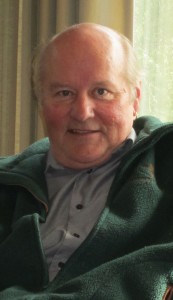
Ian Blue, a lawyer with an expensive pedigree that will serve the city well in a critical fight.

Ian Blue of the firm Gardiner Roberts is said to have significant experience in constitutional law matters, including experience in airport fill disputes in Ontario and was involved in the New Tecumseth and Scugog disputes.  These two were situations where land fill on airport lands were part of the difference of opinions that brought the lawyers into the room.

Blue is a Queen’s Counsel, an appointment he was given in 1985 when the honorific mattered, and a senior counsel and advisor on complex energy, electricity and environmental law matters that have administrative-law, business-law and constitutional-law issues.

He has acted for both private sector and public sector clients. He has appeared before all levels of courts in Ontario, Alberta, Nova Scotia and the Yukon and before both levels of the Federal Court. He also has appeared before the Supreme Court of Canada. In addition, he has appeared before the National Energy Board, the Ontario Energy Board, the New Brunswick Energy and Utilities Board, before arbitration panels and other regulatory bodies.

Blue has been a Bencher of the Law Society of Upper Canada and as a past Chair of the Administrative Law and Environmental Law Sub-Sections of the Ontario Bar Association.  These are significant positions within the legal profession.  This lawyer would have run circles around Glenn Grenier, the lawyer Vince Rossi has hired to spin tales of what the city can and cannot do in terms of regulating what happens to land in the Escarpment.

Blue is also a prolific legal writer and speaker on practice and legal topics and is a contributor to various lawyers’ publications.  He has also assisted in drafting federal legislation and Ontario legislation and was the draftsman of the Gas Distribution Act, 1999, as well as regulations made under that act, for the Province of New Brunswick.

Ian Blue studied at Dalhousie University – one of the very best law schools in the country.

This guy writes the law that the rest of us have to follow.

He is costing the city a very pretty penny but they would appear to have gotten the right guy to steer council through very complex matters.

Now – why does all this matter?  After all – there are really not that many people impacted by what Vince Rossi is doing with his Air Park.  If that is your thought – re-think.

What Vince Rossi is attempting to do is completely circumvent the city’s authority to determine how the community grows and what kind of community Burlington wants to be.

If there is an Air Park along the lines of what Vince Rossi wants – that decision gets made by the community.

If Burlington is going to have the kind of air port Vince Rossi wants to develop – Vince Rossi is going to have to do that development in concert with the city and follow the by-laws the city has in place. economic development is a city and Regional domain – not that of an individual entrepreneur. Mr Rossi has some expensive lessons to learn.

This city did not want a highway rammed through the Escarpment and it fought to ensure the provincial government listened to what we had to say.

Burlington had grown to the point where they no longer wanted to be an extraction site for the aggregate industry and fought to ensure that Nelson Aggregates was not given another permit to pen up a second quarry.  That fight cost the city millions but there will not be another quarry.

Now the city has to fight again to prevent an entrepreneur from deciding, by himself, how this city is to develop.

If there is to be an airport of any significant side – that decision will be made by city council and the Regional Council who will inform and educate its citizens will decide what kind of development takes place.

Vince Rossi, owner of the Burlington Executive Air Park at a meeting with members of the Rural Burlington Green Coalition

The public is not yet fully aware of just what the ramifications are should an airport that is anywhere near what Vince Rossi wants to build.  Mr. Rossi has to learn that the “community” makes these decisions – not a single entrepreneur who has managed to convince a bank to loan him $4.5 million.  The TD Bank, the people who put the $4.5 million mortgage on the property, has some explaining to do and in the fullness of time they will pay a price for their decision.

For the immediate future, the city can take some comfort in know they have someone with the depth and the experience to take on this task.  The man is also incredibly well-connected.  He served as Legislative Counsel to a former President of the Privy Council, the Honourable Alan J. MacEachen, P.C. who was Government House Leader.  THAT is impressive.  It would seem evident that Ian Blue sees merit in the battle Burlington has on its hands and has decided to bring his talent to bear on that problem.  Lawyers of this calibre get their pick of what they choose to do; that Blue decided to take this one on over many others that would have come his way speaks volumes.

Finally Ian Blue studied at Dalhousie University where Constitutional law is taught better than anywhere else in the country.  Blue also served in the Canadian Army.  The information in his profile suggests that he is a Maritimer as well – and that never hurts.


Return to the Front page

Shane Cooper got left off the list; our apologies.


By Pepper Parr

BURLINGTON, ON.  July  2, 2013.  Somehow we missed one – there were xx people arrested and charged with various offenses last week and we reported on that occurrence but Shane Cooper got left out of that editorial roundup.  We wouldn’t want Mr. Cooper to feel left out – so here is what they nailed him for:

Shane COOPER (41 years) of Carlisle.
Conspiracy to traffic (2 counts)
Trafficking (Cocaine)
Trafficking (Marihuana) 2 counts
Possession for the Purpose (Marihuana) 3 counts
Possession for the purpose (Cannabis resin) 2 counts
Possession of Cocaine
Possession of Oxycodone
Possession Hydromorphone
Produce a controlled substance.

The first part of that series of arrests is detailed in a previous report.

Police in the Region spend the bulk of their time on traffic offenses and drug raids which usually includes the Guns & Gangs Guys as well.  The two seem to go together.

Elsewhere in the paper we pass along the view of our columnist Ray Rivers who thinks some drugs should be legalized.


Return to the Front page

Should marijuana be made legal? One man’s opinion.

By Ray Rivers

BURLINGTON, ON.  July 2, 2013  Canada was the first nation in the world to ban cannabis, back in 1923, driven to action by a transplanted Alberta magistrate, eugenicist and racist, pen-named ‘Janey Canuck’.   A prolific Maclean’s Magazine columnist whose book, ‘The Black Candle’, warned about the dangers of “Chinese opium peddlers” and “Negro drug dealers;” she convinced legislators to adopt prohibition without a word of public debate.

 So it was fitting that Maclean’s, in a recent issue on cannabis, reviewed the facts, acknowledged the error of its ways, and is now calling for legalization.  The facts can be summarized as follows:

 1.  Safety.  Well nothing is perfectly safe, but puffing ‘weed’ is safer than drinking alcohol, smoking cigarettes, or adding salt to your steak. It is not addictive, doesn’t ‘gateway’ to other drugs, and smoking doesn’t cause cancer – in fact, may protect against it.

 2.  Wasting resources.  I thought this would appeal to fiscal conservatives, but alas!  Enforcement is costly, so is imprisonment and so are the courts.  People behind bars aren’t contributing to the economy, they are draining it.

3.  Protecting Children. Despite prohibition, more Canadian children have tried ‘grass’ than anywhere else in the west, including decriminalized Spain.

4.  Eroding societal values.  If the law is an ass, people will ignore it and hate the cops.  Legalization would kill black-markets and gangsters faster than a speeding bullet.  And aren’t prisons just training academies for inmates wanting to become better criminals?

 5.  Provincial budgets.  The LCBO gives1.2 billion dollars a year to the provincial government, in addition to the 13% HST and 10% licensing fee.  Why wouldn’t we want to regulate the production and sales of recreational cannabis and use the revenues to pay for public services?

 ‘The Black Candle’ was wrong, but it is never too late to do the right thing.  Back in the early 1970‘s The Royal Commission on the Non-Medical Use of Drugs (LeDain Report) called for de-criminalization of cannabis.  In 2002 a Senate committee reported that “… drug legislation was largely based on a moral panic, racist sentiment…” and also called for legalization.  Chretien and Martin started drifting towards de-criminalization but then Stephen Harper, another transplanted Albertan, like Ms. Canuck, came along to reverse progress.  Drug enforcement is back big time.  Today growing six hemp plants will get you an automatic 6 months in the big-house.

 Richard Nixon’s war on drugs in the US was an absolute failure.  Jails are half-filled with drug inmates, drug crime is at an all-time high and drug use in America has never been higher.  In light of this, many states have taken action to start decriminalizing drugs.  Washington and Colorado, are legalizing, developing infrastructure and rules for cultivation and marketing.  The US feds, like their Canadian counter parts, have ultimate jurisdiction, but they’re not interfering.  Is that because their last three presidents were self-proclaimed potheads?

 Stephen Harper claims to never have smoked ‘pot’.  So his head should be clear – right?  Not at all.  Last year, addressing the Summit of the Americas, he admitted “…that the current approach is not working. But it is not clear what we should do.”  Still ignorance hasn’t deterred him from going back to what doesn’t work – aggressive criminalization. 

 Since the Conservatives came to power in 2006, drug-related arrests have mushroomed by 41% and over 400,000 people have been arrested.  And, Harper can’t even articulate why.  In a 2010 YouTube clip the PM miserably failed to make a single coherent point in defense of his neo-con drug policy – just ended up mumbling something about drug cartels. 

 Now, if Harper is concerned about drug cartels he needs to visit Mexico.  That country used to have one of the toughest policies on drugs anywhere, which ultimately led to its deadly drug wars.   The wars became so vicious that the Mexican government has now decriminalized small quantities of all major narcotics. 

 Of course, Mr. Harper should have gone to learn the Mexican experience before he saddled us with his ill-advised, retro drug laws.  And why not take along his conservative ally, Rob Ford?  Toronto’s controversial mayor might be interested to know that smoking crack-cocaine is now legal in Mexico. 

Ray Rivers writes weekly on both federal and provincial politics, applying his more than 25 years as a federal bureaucrat after which he decided to write and has become a  political animator. Rivers was a candidate for provincial office in Burlington where he ran against Cam Jackson in 1995, the year Mike Harris and the Common Sense Revolution swept the province.

The views of the author are his alone

Return to the Front page