The rejection of the Burlington Aquatic Devilrays’ (BAD) proposal appears to have occurred during the “initial screening” stage of the RFP evaluation process. This step determines whether submissions meet all mandatory requirements before they are considered further. Common mandatory elements typically include:
Proof of incorporation (non-profit or otherwise)
Signed submission forms, insurance certificates, bid bonds or securities submission by the specified deadline
Municipal procurement policies generally state that failure to meet any of these requirements results in automatic disqualification, with no discretion to reconsider. According to the City of Burlington’s Bids and Tenders website, “To be considered for evaluation,” bidders must meet three mandatory conditions, including the requirement that:
“Bids must include a current and valid certificate of incorporation as a Non-Profit or Not-for-Profit organization.”
“Bids not meeting the above mandatory requirements will be rejected.” (See Exhibit 1)
However, as per Service Ontario (Exhibits 2, 3, and 4), there is no such official designation or category issued by the province. This raises serious questions about the fairness and legal clarity of the procurement criteria used to disqualify BAD.
Beyond the legal and administrative questions lies a deeper concern: the impact on children and families. With about 400 members and more on a waiting list, BAD provides critical athletic and developmental opportunities. GHAC, by contrast, appears to be in the early stages of building a new membership base and seemingly dependent on swimmers migrating from BAD. As one councillor accurately stated, this is a zero-sum game. In this case, the children are the ones losing out—some may be left without a club, without coaching continuity, and without competitive prospects.
The City now finds itself in a difficult position. On one hand, staff have committed to an agreement with GHAC. On the other, BAD may have legitimate grounds to pursue legal remedy in Superior Court, especially if the procurement process was flawed or misunderstood. If there is a way for the City to resolve this issue proactively, more children, families, and residents will benefit than if this is left to be determined through litigation.
Some BAD families are already leaving the program due to the uncertainty, and delays in resolution only increase the harm. The City must move quickly to assess whether the current course of action can be modified in the public interest.
Key questions must still be answered, such as:
Was the process flawed in some respect in the first place?
Would awarding the contract to BAD have resulted in less disruption and harm? Will the GHAC model lead to higher costs for families?
Having reviewed this situation through the lens of the available facts, applicable case law, and the Bellamy Report’s recommendations on procurement transparency, I urge Council to:
1 Take all reasonable steps to amicably resolve the situation with BAD without resorting to litigation
2 Initiate a thorough and independent investigation into how and why this outcome occurred.
WE WOULD ADD TO THAT – KEEP THE PROCESS OPEN TO THE PUBLIC. Staff are expected to be transparent and accountable.
The residents of Burlington—and anyone considering doing business with the City—deserve a transparent and accountable procurement process. While some may hope this controversy fades away, it is in the public interest that it does not.
On average, workers have regained some ground since the 2022 inflation spike, but the good times might be short-lived without action against job loss and falling GDP.
On one hand, the data showed April average wage gains were ahead of inflation. But the data also shows unemployment rising and GDP contracting. That trend is not only bad news for workers losing an income today, it threatens other workers’ continued wage gains in the future.
Average workers’ earnings increases pull ahead of inflation
The average Canadian worker’s weekly earnings increased 4.4 per cent between April 2024 and April 2025, according to a Statistics Canada survey released June 26. Earnings changes result from lower wages, fewer hours or a combination of both.
The largest gains were by workers in information and culture, real estate and rentals, and the finance and insurance sectors. But earnings increases were not even or everywhere. The average worker in utilities, retailing and wholesale trade experienced a weekly earnings drop.
Price hikes were lower than the average weekly earnings increase. Inflation data released June 26 showed a 1.7 per cent increase in the Consumers Price Index from May 2024 to May 2024, the same rate as between April 2024 and April 2025.
Big hikes in housing costs have moderated as mortgage rates, asking rent and house purchase prices decline. But housing costs in May 2025 were still up 3.0 per cent from a year ago, significantly faster than general inflation. Grocery costs, up 3.4 per cent from a year ago, also continue to run ahead of the general CPI increase, threatening household budgets.
Gasoline prices are down from a year ago reflecting the carbon tax’s demise and crude prices falling from over $80 USD in May 2024 to about $60 USD in May 2025.
But jobs and GDP decline, centred in Ontario
The bad news for workers is rising unemployment, which hit 7.0 per cent nationally in May 2025, up from 6.3 per cent in May 2024, according to Statistics Canada’s Labour Force Survey released June 4.
Connected to the Ontario-centred jobs slowdown, Canada’s GDP is getting smaller. From a peak of $2.294 trillion in January, GDP fell to $2.292 trillion in April, according to Statistics Canada data released June 26. Statistics Canada has provided “advanced information” about May, expecting GDP to fall a further 0.1 per cent, or $2 billion, to $2.290 trillion.
An annual data release in early May showed in 2024 Ontario’s GDP grew second slowest among the provinces. However, monthly data releases do not include provincial information.
GDP decline is not even across industries. Service-producing sectors generally continued to grow but goods-producing sectors shrank. In May 2024, manufacturing contributed $211 billion to Canadian GDP but fell to $203 billion in May 2025, a drop of 3.7 per cent. In contrast, the finance and insurance sector rose from $166 billion in May 2024 to $172 billion in May 2025, an increase of 3.7 per cent.
What’s next?
Certainly the economy is stalled very likely data to be released in July will likely show more GDP and job losses, in turn threatening workers’ continued wage gains revenging inflation.
Politicians, particularly the premier of Ontario, will pin blame on Trump, but that claim is neither true nor will it change the situation. Nor will Mark Carney’s pipelines ride in to save the day in the short-term or in Ontario, where the problem is worst. Doug Ford’s botched Ring of Fire scheme is on the never-neverland timetable. The Canada-Ontario EV supply chain strategy has gone silent.
Lots of data shows housing inflation is decelerating, but it is still not below the general rate of CPI increase. Strong housing construction starts could create jobs and help secure sustained lower housing prices, improving household finances and consumer confidence. But investors and governments are mostly on the sidelines, generating the pretence of concern and activity, but actually biding their time until the opportunity of crisis rebuilds.
Urgent action to build housing is not being proposed for the list of “national interest” projects and the federal government did not use its spring Commons session to implement the housing legislation on which it had campaigned. The new prime minister did not intercede when his housing minister said housing prices should not go down.
So what’s left on the table in July are interest rates. Opinion is mixed on whether, at its July 30 meeting, the Bank of Canada will hold the policy rate at 2.75 per cent or cut it 0.25 percentage points. But with inaction everywhere else, easier credit may be the only significant July economic move with any effect in mitigating job losses and supporting continued wage gains.
At the risk of taking too much of your time and that of those copied on this email string, I felt compelled to highlight a few things that may have been missed or could use some emphasis following this morning’s council meeting. I think this is a learning experience for many including a better understanding by council members of the long term effort a swim club must make if they are to develop kids from recruitment (age 6 or 7) through to 18 years of age and overall success. The kids need stability, trust, and a sense of belonging to be the best that they can be. I am sure we all agree it isn’t about the clubs – rather, it’s about the children who need to be assured that common sense and fairness will prevail. Please be assured the overall BAD family wants the best for Burlington kids — it has been the club’s mission for decades having spoken to swimmers who have supported the club throughout its history.
1) While GHAC suggested had they not been excluded from Burlington pool allotment in 2020, they would have lost less Burlington kids, could have recruited more and, in turn, justified more Burlington pool time. They are clearly giving the impression that they had a large number of kids from Burlington in 2020, however this appears overstated. BAD has always been the club of choice in Burlington. Why? Because BAD has always represented Burlington kids with:
Burlington hosted swim meets that attracts visitors to the city;
Burlington community involvement,
Burlington pride, signs and BAD swim gear as it travels.
A name that speaks to its origin — BURLINGTON Aquatic Devilrays
BAD swimmers in a training session
It is clearly a Burlington identity with a long history. I might add GHAC’s creation in the first place was to respond to community needs in the Golden Horseshoe. They explained that today. Maybe these communities didn’t have the size or amenities to support a dedicated club like those that have existed for many years in Hamilton, Burlington, Oakville, Milton, etc. where taxpayers pay for such benefits. Across the Province most cities have long histories with one major club representing their community – it’s the essence of community pride and competition. Further, poaching kids from Burlington, Hamilton, Oakville, etc., as a regional team is not consistent with swim team etiquette. This situation is grabbing the attention of other sports/clubs in Burlington and elsewhere – if it can happen to BAD, whose volunteers, coaches and kids have worked hard for decades to build a successful, respected club, it can happen to them.
Based on their suggested numbers, the math would suggest they don’t need the pool time requested as compared to BAD’s needs.
Even if one buys into the GHAC argument that they have about 28% of their swimmers from Burlington based on their suggested numbers, the math would suggest they don’t need the pool time requested as compared to BAD’s needs. BAD’s numbers are approaching 2.5 times those of GHAC when it comes to Burlington swimmers. Actually, common sense would suggest if GHAC’s Burlington swimmers wanted to swim in Burlington pools, rather then having over 400+ BAD kids move to GHAC or elsewhere, the less disruptive step would be to have GHAC Burlington swimmers move to BAD who would need a much more modest increase in pool time to accommodate them.
3) There is no policing of where swimmers come from for practices. Obviously policing the numbers is something the City cannot cost justify. GHAC wants pools, like Centennial, to run meets and to give them more pool time. Swimmers in all clubs are typically clustered around age and/or swim times with seniors allotted the better pools/facilities – like Centennial. Clustering serves to ensure the best coaching (limited) is given to them as they pursue the culmination of their competitive swimming efforts before college. It allows them to learn and feed off one another. I am sure, over time, this clustering will occur with GHAC and swimmers from other communities will be brought to practice in Burlington pools — pushing other Burlington swimmers to travel outside of Burlington or limiting the room for more Burlington recruits. Otherwise, why does GHAC need all the time they requested?
4) Please understand, even if all BAD swimmers went to GHAC, there is no benefit for BAD kids. The coaching at BAD, its reputation and successes are arguably better and the evidence shows the cost for BAD recruits is substantially lower — making it more accessible for kids with parents on limited budgets.
For the moment, let’s assume the coaching is comparable, however there are many other important points of impact :
One of the rare occasions when the Council Chamber is full and people are standing in the corridor.
BAD kids would lose their proud identity,
Burlington would lose its “Burlington only” club
BAD kids’ clear sense of involvement in “Burlington only” community events may be altered
coaches, who have earned the trust of BAD kids, and who know their strength and weaknesses, would no longer be theirs
teammates who they grew up with may be torn apart — some quitting or attempting to move elsewhere rather than be forced to join a club that has muscled into Burlington and who they don’t want to swim for (evidence of this already exists)
Trust is breached – resentment and a feeling of helplessness sets in with the fear it could happen again
Many parents would balk at the higher GHAC fees and may withdraw from Burlington swimming all together.
In summary, there is NO benefit to BAD swimmers and particular to those in Intermediate and Senior levels who are focusing on the peak of their swimming careers, potential scholarships, etc.
There are the personal relationships among the swimmers. They are supportive, feed off of each other, learn from each other, and bring healthy, well understood rivalry – often growing up together as their best friends.
5) No club can bring success in five year intervals. No kid can adjust because of regional expansion of an out-of-town association that brings unnecessary change in five year allotments. These kids are very impressionable, especially in the preteen and teen years. We all realize how experts caution parents in this regard. Kids have growth spurts, injuries, personal challenges at home, temporary distracting events, and many other factors that the coaches and club understand for each and every kid. This understanding develops over time and increases in intensity as the years pass by. They know the kids’ strengths and weaknesses by swim stroke, training habits, personalities, etc. The kids understand each coach’s disciplines, techniques and communication styles. Bonds form. Trust develops. It’s critical that the evolution of these relationships is protected and the results preserved, especially in the later years of the program. On top of this, there are the personal relationships among the swimmers. They are supportive, feed off of each other, learn from each other, and bring healthy, well understood rivalry – often growing up together as their best friends. They understand each other in terms of competitive swimming sacrifices and routines. These kids cannot be expected to embrace disruption every five years.
Fresh ideas are brought in by BAD and probably GHAC. BAD sources guests like current Olympians, sports psychologists , nutritional experts, and arranges professional land training, etc. BAD knows the importance of stability and trust and so does GHAC. That is what disappoints the most. If the number one priority is the kids then clubs like GHAC should focus on the communities they serve based on their original concept and market and stop encroaching on other proven clubs and communities. Taken to the extreme, regional expansion effectively eliminates competition except from within. That is not what underpins any competitive sport — rather, competition is nurtured through community pride and involvement.
Please consider these heartfelt, sincere and rational points of view. I am reminded of a T-shirt you often see parents wearing akin to “soccer moms”. It says something along the lines of, “Swim Mom” – 1000 hours of practice, one hour of warm-ups and 30 seconds of competition. Of course, longer races do exist but one can understand the point. In swimming, in particular, a hundredth of a second can make all the difference. That is why long term bonds, consistency and trust from the clubs and coaches is key along the development journey – it’s constantly tweaking based on the in-depth knowledge of each swimmer by the coaches. BAD has spent 40 plus years doing just that in Burlington.
Pam Pitz
There is nothing to be gained by radically diminishing or eliminating BAD in favour of a club who represents other communities and is currently operating within them. It was their choice at inception. BAD’s choice was Burlington and they enjoy the majority of Burlington competitive swimmers by far.
If this current ruling prevails it will mean a huge loss for the BAD kids and is not consistent with the “no harm” principle that was shared today.
The impact the resignation of Haassan Basit as Chief Administrative Officer (CAO) has yet to be felt. It will turn out to be much stronger and more damaging than most people realize.
Basit had a strong working relationship with a Mayor Meed Ward when he was Chief Executive Officer (CEO) of Halton Conservation Authority.
Haassan Basit brought a new level of staff organization to the City. General Managers were named Commissioners.
When the city manager position opened up (Tim Commiso decided not to renew his contract) Haassan Basit applied for the job. He was hired.
The only person a city Council hires is the City Manager. The City Manager does all the staff hiring.
The City Manager hires city staff, organizes that staff into effective operational units and prepares a budget telling Council what will be needed to keep the city running and deliver all the programs City Council decides on.
The relationship between a city manager and a Mayor is unique.
When Tim Dobbie was City Manager and Rob MacIsaac Mayor, City Hall was a very smooth operation. Dobbie knew what Council wanted better than some of the Council members; he worked very very closely with MacIsaac.
Roman Martiuk was the City Manager when Cam Jackson was Mayor
Rick Goldring served as a two term Mayor, first elected as mayor in 2010, and then for a second term in 2014. He was a member of Council representing ward 5.
Rick Goldring, who defeated Jackson, started with Roman Martiuk and ended up with James Ridge. In between Jeff Fielding served as City Manager for close to three years, then left to work with Naheed Nenshi, Mayor of Calgary
One rarely sees this kind of senior-level change in the private sector.
Which brings me around to the relationship Mayor Meed Ward had with Haassan Basit. He was her choice for the City manager that was to replace Tim Commisso.
Meed Ward had worked closely with Haassan when he was CEO of Conservation Halton (CH). Basit did some very good work at CH. The hope was that he would bring about bring some of that to Burlington.
It didn’t work out that way.
Someone said that there were 80 applications for the job of City Manager – no one ever fact checked that number.
Mayor Meed Ward had no time for James Ridge. Her very first act as Mayor, once she was sworn in, was to call a Special Meeting of Council and have them agree to fire Ridge. Most of that meeting would have been closed and the public will never know what the vote was.
With Ridge gone Meed Ward was free to look for a new City Manager. She invited Tim Commisso, who we understand she didn’t know all that well, for coffee – that led to his being named as Interim City Manager. Commisso was, for the most part easy to get along with. He can be tough, Sheila Jones and Bryn Neally learned that when they were both let go at the same time. Why were they let go? – that story has yet to come out.
Tim Commisso texting while Mayor Meed Ward looks on – the relationship was in tatters at this point.
When Meed Ward made an unfortunate remark at an Ontario Big City Mayors group (OBCM) about her dissatisfaction with Commisso – it didn’t take long for that to get back to Commisso. Despite being given a very significant salary increase weeks before, Commissio advised the Mayor that he would not be renewing his contract.
What had become clear is that Marianne Meed Ward does not have the experience or character needed to work with dedicated professionals in a way that allows them to do the job they were hired to do.
Meed Ward must have thought Hassaan Basit would work out – they had worked together at Conservation Halton where he was Chief Executive Officer
He had a very strong relationship with environmental people at Queen’s Park and had an excellent relationship with Premier Doug Ford.
Basit wasn’t with the city long enough to determine if the direction he was taking was going to make a difference.
Was Haassan Basit recruited by the province? Or had he gotten to the point where he had enough of Meed Ward and went after a new opportunity? The role he will play at Queen’s Park is one that didn’t exist before he was hired.
Hassaan leaves the city early in August. The Mayor will now look for an Interim while Council advertises and looks for a new Chief Executive Officer. Mayor Meed Ward put a nice spin on Basit leaving. Don’t expect an exit conversation to take place between those two.
The hiring of a new CAO is a process that takes as much as six months – by that time the city council members will have begun the process of getting themselves re-elected.
The size of the pool of Ontario city managers that Burlington can draw upon is very small – and they all know each other.
It is reasonable to expect that applicants will want to wait until after the municipal election to submit applications.
The administration of the city is going to be bumpy, perhaps for as much as a year. Not what Burlington needs at this point in time.
It gets worse. The city has some very talented people with significant municipal experience. Some of those may begin wondering if Burlington is the place for them to continue developing their careers. Municipalities poach talent from each other all the time.
Jamie Tellier and Nick Anastasopoulos have shown how two departments can work hand in hand with each other and produce superb results. Will those two be polishing resumes – have they had phone calls?
Chad McDonald, Chief Information Officer, who heads up Digital Services, a department that has experienced huge growth. has done some sterling work – I’d be surprised if he hasn’t already had offers – there are private sector corporations that would love to have some of this man’s talent on their team.
The resignation of CAO Hassaan Basit and the messy situation on the allocation of pool time will have an impact that might not be immediately understood. That issue should have been on his desk; no mention so far on what, if any role, Basit played in the decision that was made.
This might be the way some people see the City of Burlington.
Burlington is getting to become a bit of a joke amongst senior civic administrators across the province – not something career civic servants will want to highlight on their resumes.
Anyone thinking of applying for the CAO job will think twice about jumping in – there are greener fields elsewhere.
Municipal level gossip is big – city managers all know each other – they tend to move from city to city every five years. The Tim Dobbie city manager model worked well – these men, and they were mostly men at that time, spent decades with a Mayor. Rob MacIsaac served as the Mayor of Burlington for three consecutive terms, from 1997 to 2006; Dobbie was with him every step of the way.
That model hasn’t been seen for some time.
Senior staff begin to wonder if Burlington is the place to build a career
Their mindsets move from doing some great thinking to – is this a good place for me to grow my career?
Is this all the result of Mayor Marianne Meed Ward’s leadership?
As a follow-up to your ongoing coverage of the Burlington Aquatic Devilrays (BAD), I wanted to share some new context that will inform Monday’s Council meeting, where the club will formally delegate.
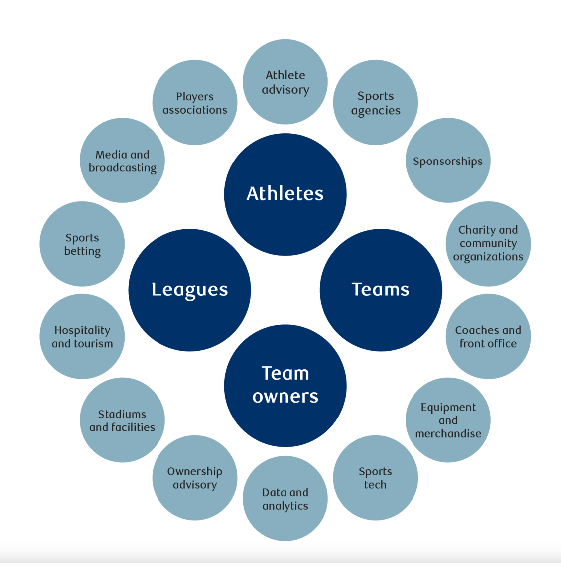
Is the Sports Eco-system in the process of changing?
While the immediate issue is pool time allocation, the broader concern emerging from this case is that the City of Burlington may be unknowingly endorsing a shift toward a privatized model of youth sport — one that prioritizes market expansion over community values. BAD’s delegation will respectfully ask Council to consider what kind of sport ecosystem they want to support going forward.
Here are four key differences between BAD’s nonprofit model and the model GHAC appears to be advancing:
1. High Fee Structure
GHAC programs appear to cost 2–2.5x more than BAD for similar age groups and training levels.
These higher costs do not appear to be tied to more intensive programming or superior coaching.
Instead, they seem to reflect a market-based, pay-to-play model that could create a barrier to access for many families.
This marks a shift away from the principle that youth sport should be accessible and publicly supported.
2. Drop-In, Multi-Pool Practice Model
GHAC swimmers reportedly attend practices at multiple pools across the region, rather than being assigned to a single site/team.
This disrupts traditional sport development frameworks, which emphasize peer cohesion and long-term coach-athlete relationships.
The model seems to prioritize parental convenience and consumer flexibility — echoing for-profit gym or swim lesson models rather than club sport principles.
3.Multi-City Expansion
There are more than 130 swimming clubs in Ontario
GHAC operates in Hamilton, Dundas, Ancaster, Stoney Creek, and now Burlington — a region-wide, growth-first footprint more characteristic of commercial expansion than community sport.
Centralized administration and uniform branding further reflect a franchise-style approach, rather than a municipal or community-rooted one.
4. Aggressive Recruitment / Market Capture
GHAC has begun recruiting BAD swimmers, which is viewed by many as a market acquisition tactic, not a collaborative approach between clubs.
This raises concerns that the City’s endorsement of GHAC is enabling market consolidation, rather than fostering a diverse, inclusive sport landscape.
We risk losing an entire philosophy of sport.
5. The Bigger Picture:
This isn’t an isolated case. The model GHAC is advancing is not unlike the rise of private swim schools like Aqua-Tots or Goldfish Swim School — both of which have steadily eroded participation in municipal swimming lesson programs by offering high-fee, drop-in based alternatives.
While these providers fill a market niche, the concern is that public infrastructure — in this case, municipal pools — is now being allocated in ways that mirror those privatization trends.
Preserve what’s working.
Why It Matters
“There could be room for both models in the sport ecosystem,” says Kimberly Calderbank. “But if the City pushes out volunteer-led, community-based clubs in favour of market-based providers, we risk losing more than just pool hours. We risk losing an entire philosophy of sport — one that values equity, inclusion, and community-building over revenue growth.”
BAD’s delegation will be rooted in gratitude, positivity, and a simple request: do no harm.
Protect access.
Preserve what’s working.
And ensure that Burlington’s public infrastructure serves all families — not just those who can afford to pay more.
Katie Lebel is a supporter of the Burlington Aquatic Devilrays.
Hassan Basit – leaving City as the CEO – joining the provincial government as a senior civil servant.
It comes as no surprise.
I’ve known Hassan for a long time. First met him when he was doing communications for Conservation Halton. Had long conversations with him when he decided to go after the top job with Conservation.
They made the right decision and hired him as the top dog.
He made huge changes at CH.
I was surprised when he decided to go after the job of CEO for the City. Hassaan and Marianne Meed Ward – I personally didn’t see that as a great fit.
Hassaan didn’t have much in the way of municipal-level experience, but he did bring some new ideas to the job and made the best of what he had in the way of senior-level talent.
He has been hired as the Chief Conservation Executive for the province. In the fullness of time Hassaan Basit could well become a Deputy Minister in the provincial government.
Good luck to him
Vacation will have to wait – the Mayor needs a new CEO
City Council now has the task of finding someone to steer the ship during what is going to be a tough time.
There are two people who could serve as an Interim CEO – Scott Hamilton is probably the best choice. Curt Benson is worth a close look.
Hassaan had no term plans for being a player at the municipal level.
Donald Trump’s escalating trade war and threats to our economy should be a wake-up call for Ontario’s Conservative government to bring a robust economic plan that puts Ontario and Canada first. Doug Ford didn’t give us that.
Ontarians want to do their part and support our country and province, and we need to make it easy for them to do so. But instead of a real strategy, the Conservatives proposed to recognize the last Friday of each June as “Buy Ontario, Buy Canadian Day.”
Jessica Bell is the MPP for University–Rosedale and the NDP’s finance critic.
Every day should be “Buy Ontario, Buy Canadian Day,” not just one day. That’s why the Ontario NDP introduced a law to mandate the labelling of Canadian-made products, including food, so Ontarians can visit the supermarket and choose to buy Canadian products, supporting local businesses and local job creation. The Conservatives put politics ahead of patriotism and voted our motion down.
The moment we are in calls for unity of purpose, to take good ideas from all sides of the political spectrum, so we can put our province first.
What a missed opportunity. According to Bank of Montreal economist Robert Kavcic, even a modest shift in consumer spending toward Canadian goods could add $10 billion in value to the economy alone.
This legislative session, Ontario should have flexed its hefty purchasing muscle and made firm commitments to buy, build and invest in local projects, products and services.
Ontario is investing $200 billion in infrastructure projects, including hospitals, highways, transit, schools and child-care spots. These investments should be allocated to public agencies, and Ontario and Canadian businesses first, not foreign companies. The government should also mandate conditions to maximize these investments, such as requiring projects to use resources from our most trade-impacted sectors, such as steel, aluminum and lumber.
Ensuring more government dollars go to Canadian and Ontario businesses and workers has huge economic value. Every year, the Ontario government buys $29 billion in goods and services, but only $3 billion goes to Ontario-based businesses. That number should be much higher.
Over the past few months, trade associations, unions and businesses have been providing examples to the government on how exactly Ontario can support specific workers, public institutions and business sectors.
The Ontario Federation of Agriculture recommended Ontario require institutions, like schools, hospitals and prisons, to prioritize buying locally grown food because it would help Ontario farms and strengthen local supply chains.
What the Conservatives have proposed instead is a new $35-million Ontario grape program to encourage wine producers to use Ontario-grown grapes. While support for our wine sector is welcome, our entire agricultural sector needs support to withstand the impact of the tariff war, not just the wine sector.
Canada’s largest private sector union, Unifor, joined our call for governments to harness our lumber resources and build affordable housing to fix our national housing crisis. This plan should include manufacturing housing in Ontario factories to create jobs, speed up housing construction and lower construction costs.
Unifor also called on Ontario to contract with Canadian companies to build new transit lines and increase the Canadian-content requirements for municipal and provincial purchases of streetcars, subway cars and buses, especially electric vehicles. Ontario has transit vehicle manufacturing plants in Thunder Bay and Kingston that are operating below capacity.
In Ontario, the standard requirement is that transit vehicles purchased with provincial funding must have at least 25 per cent Canadian content. The Conservatives relaxed this rule and allowed the massive Ontario Line subway project to be built by a U.S. company that was given the flexibility to meet a lower Canadian-content requirement of 10 per cent. That wasn’t a good move then, and it looks even worse now.
Ontarians want the Ontario government to have their back during this economically challenging time. Strong “buy local” and “build local” policies will help Ontario keep jobs in our province, keep small- and medium-sized businesses afloat, and help trade-impacted industries, like our manufacturing sector, weather Trump’s economic storm. What are we waiting for?
Jessica Bell is the MPP for University–Rosedale and the NDP’s finance critic.
Canada is in the grips of a deepening food-insecurity crisis — one that food banks cannot solve and elected officials can no longer afford to ignore.
The inability to obtain enough food for a nutritious diet or the uncertainty of being able to do so has reached a record high.
New data shows that nearly 10 million Canadians — about one in four — lived in a food-insecure household in 2024, a 15 per cent jump from the previous year. Among them, 2.6 million people experienced severe food insecurity, that is, they reduced how much they ate, skipped meals or went days without eating. One in three children was affected by food insecurity in some way.
The Burlington Food Bank has been serving the community since 1991 – and they don’t a dime from the city or the Region – what a shameful fact.
The situation was most severe in Nunavut, where 58.1 per cent of residents lived in food-insecure households due to the territory’s remoteness, high cost of groceries shipped from the south and socioeconomic factors. Among the 10 provinces, Alberta reported the highest rate at 30.9 per cent, followed closely by Saskatchewan at 30.6 per cent and Newfoundland and Labrador at 30 per cent.
Behind the numbers are everyday stories: workers juggling multiple jobs and still going to bed hungry; people with disabilities rationing medication to buy groceries; children growing up in homes filled with anxiety over the next bill. All of this in a country as wealthy and abundant as Canada. These realities are not the exception. They are a warning sign of a system in crisis.
The truth is simple but uncomfortable. Hunger in Canada is not about food supply. It’s about income. And it is a policy failure, not a personal shortcoming.
A broken system built on charity
For decades, Canada has lacked a co-ordinated national strategy to address food insecurity. Instead, we’ve leaned on underfunded community food-charity programs and networks —Band-Aid solutions for a deep and growing crisis. Emergency food services cannot keep up with increasing demand. And, while visits to food banks are at a record high, they don’t account for the millions of people going hungry. Most food-insecure people don’t use them. Yet government action remains inadequate.
Community responses have never been intended — or equipped — to replace strong social policy.
Community responses have never been intended — or equipped — to replace strong social policy. And they certainly cannot address the drivers of hunger: low wages, rising housing and food costs and inadequate income supports.
Theimpactis not equally shared. Black (47 per cent) and Indigenous (40 per cent) people, along with recent immigrants (34 per cent), persistently face significantly higher rates of food insecurity. These disparities reflect long-standing inequities and demand targeted responses.
Charity can offer temporary relief, but only policy can deliver lasting change.
Food insecurity is both a moral crisis and an economic challenge. It contributes to chronic illness, hospitalizations, mental-health problems and lower educational outcomes. These impacts strain our health-care system and weaken Canada’s productivity and resilience. Ultimately, the cost of doing nothing far outweighs the investment required to keep people from going hungry.
With food prices expected to increase and global instability on the rise — in part fuelled by U.S. President Donald Trump’s economic and foreign policies — the stakes are only getting higher. Combined with a risk of recession, the affordability crisis is poised to deepen, especially in communities already facing the sharpest disparities.
A policy agenda for income-based food security
The good news is we already know what works. Targetedincome supports stand out as one of the most effective ways to reduce food insecurity. Evidence from several social programs, such as the Canada Child Benefit, the Guaranteed Income Supplement and Employment Insurance, shows that as income rises, the likelihood of food insecurity falls.
Community Food Centres Canada, in partnership with nearly 250 organizations, recently issued an open letter calling for urgent action to tackle food insecurity. The letter outlines what should be three key policy priorities:
Set a national target: Commit to reducing food insecurity by 50 per cent by 2030, using 2021 levels as a baseline. Setting this target would spur co-ordinated action, improve accountability and signal that hunger is not inevitable.
Modernize income supports: Strengthen federal income supports to provide greater stability for Canadians living on reduced incomes. This would include reforming Employment Insurance by reducing qualifying hours, expanding access for gig, migrant, and self-employed workers, and increasing benefit levels. As well, creating a benefit for groceries and essentials of $150 per adult and $50 per child would provide much-needed support to low- and modest-income households. Together, these measures could offer a critical lifeline to millions struggling with rising costs.
Advance Indigenous food sovereignty: Indigenous communities experience much higher rates of food insecurity that is rooted in economic marginalization and the ongoing effects of colonialism. Federal policymakers must work in partnership with Indigenous Nations to respect and support their self-determination, sovereignty and control over their food sources. This includes protecting Indigenous rights to hunt, fish and gather.
In his election victory speech, Prime Minister Mark Carney spoke of building a country that is stable, strong and fair. But that vision cannot be realized without directly confronting the growing crisis of food insecurity.
The Canada we want — the one we teach our children to believe in — is a country where no one goes hungry. A country where kindness is not only a value but a practice. Where we don’t leave people to rely on charity to meet basic needs. Where families can grow and thrive, free from the constant anxiety of how they’ll afford their next meal.
Failure to act decisively will not only cause more harm but erode public trust. And it will come at a political cost. The government that rises to meet this challenge will earn support and lasting political capital.
Addressing hunger is about more than meeting material needs. It’s about embodying the Canada we aspire to be. A robust, income-based food-security strategy would alleviate hunger and improve long-term public-health outcomes for a fairer society benefiting us all.
There is no stronger foundation for a better country than one where every person has the security and dignity of enough to eat. With a new government in place, the time for meaningful policy reform is now.
Jasmine Ramze Rezaee is the director of policy and community action atCommunity Food Centres Canada. She lives in Toronto/Treaty 13.
Sales at building and garden stores are falling, most sharply in Ontario, a possible index of household discretionary income.
May is when sales of building and garden supplies peak each year as Canadians get ready to plant and start summer household repair projects.
But for the past three years, Canadians have been pulling back on that spending, and regional patterns echo other data about household financial strength.
Building and garden store sales down 8% from 2022 to 2024
In May 2022, sales at building and garden centres hit $5.70 billion, according to Statistics Canada inflation-adjusted data. But May sales have fallen in each of the past two years, peaking at $5.34 billion in May 2023 and just $5.27 billion in May 2024.
Totals sales for 2022 were $50.1 billion, $46.6 billion in 2023 and $46.0 billion in 2024, an eight per cent fall. And the spending declines come despite Canada’s population increase from about 39 million to 41 million.
The decline may be another signal that the cost of essentials — housing, transit, food and monthly bills — are eating up a larger share of income, causing many Canadians to cut back where they can, affecting retail sales and employment.
But the latest data from Statistics Canada, released Friday, does offer a sliver of hope that more Canadians are feeling able to spend on their home environment in 2025.
Ontarians have been pulling back on garden spending in each of the past three years.
In March 2025, the latest month reporting, Canadians rang up $3.24 billion in sales at building and garden centres, slightly up from $3.22 billion in March 2024. Sales in March 2023 were $3.30 billion and in March 2022 were $3.93 billion.
Ontario spending declines fastest
While in March 2025 Manitobans spent 10 per cent more at garden and building centres than in March 2024 and Albertans spent nine per cent more, Ontarians’ March spending fell nearly four per cent from a year ago. The second largest annual decline was in Quebec, where consumers pulled back one per cent.
Weak sales at Ontario building supply centres may help us understand why Ontario had GDP growth of just 1.2 per cent in 2024 and the second-highest rate of unemployment in April, 7.8 per cent.
Ontarians have been pulling back on building and garden spending in each of the past three years with lower peaks in May and deeper troughs each February. Last week’s data release showed $1.10 billion in Ontario sales in March 2025. In March 2022, sales were $1.53 billion. While several other provinces have seen declines, Ontario’s has been the fastest.
Consumer spending is by far the largest component of GDP, about double the amount contributed by government and business spending combined.
Weak sales at Ontario garden and building centres may help us understand why Ontario had GDP growth of just 1.2 per cent in 2024 and the second-highest rate of unemployment in April, 7.8 per cent: businesses extracting wealth from households have put consumers under attack and in retreat, starving other businesses and any need to hire workers.
Ontario needs a significant plan to reverse the trend in housing construction and today’s Ontario budget is unlikely to deliver it.
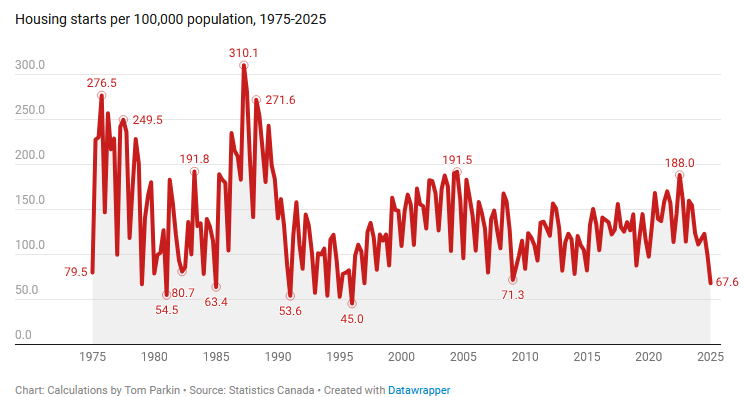
Only 67.6 new housing units per 100,000 population were built in the first quarter of 2025, the lowest level since the Q1 of 1996, according to Statistics Canada.
Thousands of Ontario residential construction workers are unemployed in a province where the need for housing has never been greater. Ontario unemployment now stands at 7.8 per cent with significant construction sector job losses in April. Construction unions and real builders can only remain complacent about this for so long.
PCs plan: push harder with approach that hasn’t worked
Yet, the province’s most recent legislation, Bill 17, introduced Monday, offers no reason to believe it will succeed where the many earlier iterations of the same approach have so evidently failed.
The legislation continues to play with development charges and approvals processes. Streamlining approvals is fine, but off-target in a province where very few are seeking project approvals.
Two-thirds of Canadians choose to buy their housing and many more would like to own.
Construction of single-family housing, typically owner occupied, has collapsed due to a lack of demand under current unaffordable prices. The average price of a benchmark home in the Greater Toronto Area rose from $757,000 in Jun 2018 to $1,313,000 in June 2022. Prices are since down, but financing costs are up from the low levels of 2020-2022.
The result has been a market stand-off with investors holding back supply, trying to maintain price levels, and buyers unable to pay the prices being demanded.
The condominium sector is in utter collapse not because there’s a lack of housing demand but because developers built for demand from owner-investors, not owner-residents.
An investor buying a “dog crate” condo of less than 500 or 600 square feet could churn enough tenants through at high rents to pay a low finance cost mortgage. But with higher finance costs and falling asking rents, demand from owner-investors has evaporated.
Now the Toronto condo model premised on investor-ownership no longer makes financial sense. The result is a massive supply of terrible quality housing on the market at distressed prices. They make no sense an as investment and few people want to buy one for occupancy.
Can the home ownership dream be rebuilt?
The result of market failures has been that perhaps the only housing sector holding up has been apartment buildings construction for corporate ownership. While Ontario needs all the housing it can get, more corporate rental units do not provide the same benefits as housing ownership, either of a house or condo.
Security of tenure, the possibility of one day living both rent- and mortgage-free, the end of dependance on unreliable maintenance — there are many good reasons two-thirds of Canadians choose to buy their housing and many more would like to own. They are not wrong.
Home ownership shouldn’t be a get-rich plan, but it should be a reasonable and attainable goal for far more people. While focusing on the rights of tenants and protecting affordable rents is critical, Ontarians want political leadership that helps them meet their dreams.
The Ford PCs and their federal Liberal allies have crushed those dreams. The NDP in Ontario and federally have mostly ignored them. Perhaps the social democrats should consider that protecting renters while rekindling the home ownership dream is not a sell-out or contradiction.
By now the members of Council who spent five days in Holland commemorating the liberation of that country 80 years ago are back home
Mayor Meed Ward at a wreath placing event in Apeldoorn with the Mayor of that city.
Little by little we learn just how many people were on what can now be fairly called a junket. The Mayor took her husband with her; Councillor Galbraith, who was not part of the official delegation, is believed to have taken one of his older children with him and Councillor Nisan is understood to have taken members of his family with him as well.
They will individually picked up the cost of the airfare and whatever increase there might have been in accommodation. As for meals – did family members attend any of the official events.
Given the tight economic conditions and the voiced public concern about fiscal responsibility, it might have been wiser for the Mayor to travel with one person, lay the wreath, attend the critical events and returned to Canada.
The Teen Tour Band has its own budget as does the Mundialization committee.
The word we are getting from people is that this city council doesn’t understand what fiscal responsibility is.
We’ve learned as well that the Mayor sent a note to all of the administrative assistants working for the members of Council suggesting language that might be used when people ask about the trip to Holland.
There’s a term that policy types throw around when they’re talking about defence spending: “dual-use infrastructure.” The idea is that you want to build something to defend your country, but at the same time you’re building something civilians can use as well, like roads or ports.
After the most polarized election vote in nearly a century in terms of party preference, the new minority Liberal government should look at all its policy moves as “dual use.” They can tackle key policy challenges while simultaneously addressing the needs of Canadians who live in rural communities and in Western Canada – voters who want change and attention to their issues.
Beyond the bilateral negotiations with the United States that will be Job One, the new cabinet will have a monumental challenge ahead to decide how to prioritize its policy agenda.
Here are four areas where it can help to address cleavages across the country.
Zero in on the most vulnerable communities and their workers
This is not the time for “chicken in every pot” policies. Communities most vulnerable to U.S. tariffs tend to be smaller cities, rural towns or remote communities (Indigenous included), our analysis has shown.
Focusing on these communities is a smart strategy, not a handout. Most are not economically diverse, but they make many of the goods Canada exports. Facing an external threat that could upend their community is strong motivation to embrace the types of pivots the country needs to reduce our overall vulnerability to the whims of foreign leaders.
Local economic-development leaders can see where the best opportunities are for new export-oriented investments and understand what’s needed to unlock them. Those leaders should be supported by higher levels of government. Colleges and other learning institutions are often best equipped to partner with nearby communities and local businesses to help workers transition to new types of work.
The federal government has organizations that can be directed to support the effort, including the network of Community Futures Organizations across the country that helped to quickly roll out supports to businesses during the pandemic. If these organizations were given the mandate and resources to provide grants and loans for strategic economic development initiatives linked to diversifying Canada’s exports, they could leverage the power of communities and businesses across the country.
Develop an industrial policy that is truly strategic
To respond to the Trump tariffs, Canada will have to produce more eggs for more baskets. In other words – find new markets for its goods but also expand the types of goods that it exports.
Lithion Saint-Bruno in June 2024, shortly after the commercial plant was completed in Saint-Bruno-de-Montarville, east of Montreal. The plant dismantles and shreds lithium-ion batteries to produce black mass, a composite material rich in minerals that can be used to make new batteries. THE CANADIAN PRESS/Christinne Muschi
Clean electricity is also of strategic interest, particularly in Western, Northern and Atlantic Canada. We need far more power to capture opportunities in LNG exports, critical minerals, data centres, manufacturing, and possibly even power exports to Europe. If that power isn’t low emission, it will deterinvestorsand derail climate-change goals. Governments will have to expand power supply and the transmission infrastructure to get it where it is needed while keeping electricity rates affordable. That is not an easy task.
Agriculture is also ahuge opportunity, especially for rural and Western Canada, thanks to growing global demand and a Buy Canadian sentiment. Tearing down interprovincial barriers to trade will help, but there are constraints on therailandportinfrastructure needed to access international markets. It will also be challenging to expand food processing in ways that are cost competitive with U.S. suppliers.
The good news is that the federal government has the tools to galvanize large-scale private investment and help businesses overcome obstacles.
The Canada Infrastructure Bank is hitting its stride in securing major private investments and partnering with Indigenous communities. The Canada Growth Fund – the $15-billion federal fund run by PSP investments – has the financial tools to de-risk projects and unlock investment to decarbonize the economy. Adding a broader export-diversification imperative to their mandates would not be a significant stretch. Export Development Canada already has export diversification as part of its mandate and could be a collaborative partner to these organizations.
Address affordability issues in rural Canada
More than four million Canadians live in low-density areas – rural, remote, Indigenous, and northern communities – where personal vehicles are often the only transportation option. For those unable to drive due to cost, age, or ability, limited alternatives can deepen inequities, limit job and learning opportunities, and threaten health and safety.
A key way to address affordability issues is to tackle transportation. The federal government must join forces with provincial, territorial, and Indigenous partners to build a bold new vision for passenger travel in Canada – one that closes service gaps by strategically expanding and leveraging federal infrastructure funding.
The 2013 Vision for Transportation in Canada is long overdue for an update. It must go beyond the status quo to address critical service gaps, particularly in inter-regional bus and rail networks. Improved data collection is essential. Statistics Canada should do a national survey that reflects the full scope of household travel – not just commutes to work, but trips for health care, education, and connection to community. Without this data, meaningful policy is difficult.
Expanding infrastructure funding and expanding Via Rail’s routes, frequency, and affordability would provide critical lifelines between underserved communities. And to truly support rural mobility, the Rural Transit Solutions Fund must be expanded – not just to support the cost of new vans or minibuses, but also to cover essential operating costs like leased vehicles and salaries.
The rail line and Via station in Churchill, Manitoba, July 2018. The closure of the port and the rail line resulted in economic hardship in the community. THE CANADIAN PRESS/John Woods
Nurture shared citizenship and belonging
The Trump tariffs have produced a rare wave of solidarity among Canadians, and it’s made all the more powerful by the fact that it has arisen from the grassroots up. There’s also a current of relief running through the country. People are reassured to see something that finally connects them to their neighbours and that amorphous feeling of Canadianness.
What can a federal government do to support a feeling of shared Canadian identity? It’s a complicated question that many organizations in Canada are anxious to explore.
One of the answers lies with the thoughtful integration of newcomers into the country – from recognizing their educational and professional credentials to making them feel included in our neighbourhoods, schools and workplaces. A healthy news-media environment is key, with robust outlets at the local, regional and national level.
And the role of other civil-society institutions is vitally important, including faith communities, the arts, sports, and volunteer organizations. More research, and ultimately action, is sorely needed in this area. The IRPP addressed some of these issues in its report on Canadian institutions and the COVID-19 pandemic.
Canada has always been a challenging country to govern, given our geography and relatively small population, the dynamics of a bilingual and bicultural system, and the original sin of not building the federation in partnership with Indigenous Peoples from the outset. But we can continue to beat the odds – and Donald Trump – by making sure policy decisions also strengthen the ties that bind us, whether they’re between urban-rural, east-west, north-south, or even just neighbour-to-neighbour.
Jennifer Ditchburn is the president and CEO of the Institute for Research on Public Policy. From 2016 to 2021, she was editor-in-chief of Policy Options. Prior to joining the IRPP, Jennifer spent two decades covering national and parliamentary affairs for The Canadian Press and for CBC Television. She is the co-editor with Graham Fox of The Harper Factor: Assessing a Prime Minister’s Policy Legacy (McGill-Queen’s).
Be careful what you ask for. Mr. Poilievre had wanted a ‘change’ election and the voters in his riding made his wish a reality. According to his Liberal opponent, Bruce Fanjoy, Poilievre had taken his constituents for granted while Fanjoy worked hard for their support. That this is the kind of rural riding which typically supports the Conservatives makes the Tory leader’s loss all that much more noteworthy.
Poilievre is an impressive speaker but having spent all his ammunition taking down Justin Trudeau became gob-smacked when it came to the main campaign issue, Donald Trump. But then nothing in his resume has equipped him to deal with the tariff challenge. Mr. Poilievre has spent his life out of the real world, either as a politician or a backroom political operative. Even Trudeau had held a real job as a teacher, by comparison.
On Tuesday Canadians chose someone with the kind of experience they felt was needed to lead the country through this existential crisis. Recognized as an accomplished and successful corporate leader, Mr. Carney had headed up one of the world’s, largest pension investment companies with over US$900 billion in assets.
Mark Carney: An Oxford trained economist.
An Oxford trained economist, Carney successfully played a leadership role in the fight against inflation and recession – Canada’s economic crisis of 2008 and the UK’s BREXIT transition. But perhaps just as important is his professional association with world leaders including those in the UK, France, and even the US president. In the end Canadians voted for competence – qualification and experience.
For the most important job in the land – CEO of Canada – Canadians voted for merit.
The word on the street is that the Tory leader will seek another riding, likely in Conservative safe Alberta but not until a by-election can be arranged. His caustic voice will not be missed in Parliament in the meantime. Also missing from the Commons will be the NDP leader Singh, who placed third in his own riding, and has decided to call it quits.
This election has demonstrated the challenges of third parties in our first-past-the-post electoral system. The NDP had been a merger of the socialist CCF with Canada’s organized labour movement. That is a potentially powerful political alliance given that nearly one in three workers in Canada is covered by a union contract.
But labour has become an unfaithful partner for the NDP. Mr. Poilievre is one of those Conservatives who relates better to the workers than their bosses. Following in the footsteps Donald Trump, he spent considerable effort attracting the blue collar vote. It is an interesting scenario that would see a right wing politician appealing to the blue collar crowd. Somehow tax cutting proposals, intended primarily for the well off, have became an issue the working person could get behind. And of course there were the vacuous promises about affordability.
And his efforts paid off. Fourteen Canadian labour unions and organizations, including several police associations, rewarded the Tories with their support. They even won ridings in labour rich Windsor and Hamilton. The Liberals have also benefitted from labour union support over time, and the largest labour union in Quebec opted to endorse the Bloc in this election.
Elizabeth May – the only Green in the House of Commons.
The Green Party had it’s platform stolen by Justin Trudeau back a decade ago and in the end only Elizabeth May managed to be elected, largely on her personal popularity. The libertarian People’s Party has never won a seat, even after running candidates in most ridings across the country.
With the other opposition parties now in relative disarray, the Bloc has suggested something like a truce – to give the Liberals at least a year in order to keep Trump from crashing through the border. The Greens lost their co-leader and the NDP have lost both their leader and their formal party status. They will need to assess their relevance as political parties at this time – and whether they might better serve their supporters as a wing or movement within either of the two main parties.
Pierre Poilievre: nothing in his resume has equipped him to deal with the tariff challenge.
It’ll take time to see if Mr. Poilievre comes back or ends up as just another disposable leader in a party frustrated in it’s ambition to become Canada’s natural governing party. Meanwhile, Mr. Carney will have his hands full fighting for Canadian unity against a mischievous US president while dodging grenades from the disgruntled partisan separatists in Alberta.
These western separatists, representing the wealthiest provinces in the union, are threatening to leave Canada only because they hate Liberals. If only there were a Conservative party leader who could knock some sense into its huge western base. But then, that might help the new PM in his efforts to unite the country?
Ray Rivers, a Gazette Contributing Editor, writes regularly applying his more than 25 years as a federal bureaucrat to his thinking. Rivers was once a candidate for provincial office in Burlington. He was the founder of the Burlington citizen committee on sustainability at a time when climate warming was a hotly debated subject. Ray has a post graduate degree in economics that he earned at the University of Ottawa. Tweet @rayzrivers
Ripper: The Making of Pierre Poilievre is the title of a book written by Mark Bourrie and reviewed by Charlotte Gray for the Globe and Mail who points out that Ripper has one message: The Pierre Poilievre we see today is the same person as the teenager he was in Calgary’s Reform Party backrooms. Mark Bourrie describes that 1990s teenager as “the political equivalent of a hockey goon,” and argues that he hasn’t adjusted his behaviour or outlook since then.
“However, to understand Canada’s “Trump-lite,” Bourrie argues, we need to acknowledge the global socioeconomic changes that have spawned a crop of right-wing dictators, and caused the deterioration of traditional journalism and public discourse. To borrow terms coined by New York Times columnist David Brooks, the public sphere is inhabited by “weavers,” who strive for social consensus, and “rippers,” who see politics as a war that gives their life meaning.
“Poilievre’s adolescent views and tactics, typical of a ripper, didn’t need to evolve as he clambered up the greasy pole. He had the good fortune to be in tune with the times – times that have produced anxious, angry voters likely to embrace a right-wing ripper. Doors kept opening for him, and he scrambled straight through them until the Conservative Leader could almost taste victory in the coming federal election.
“Bourrie’s portrait of Poilievre could hardly be more critical, describing him as the angriest person on Canada’s political stage and the nastiest leader of a major party in this country’s history.
“I’ve got nothing against him as a person,” Bourrie insists, but adds that “he’s an angry teenager in the body of a grown man. That makes him a stellar opposition politician. It’s a bad combination in a prime minister.”
“For 375 pages (plus a further 50 pages of eccentric end notes), Bourrie makes his case. He relied for evidence on a mountain of press clippings, a raft of political books and deep dives into the explosive growths of social media and fake news, which he explored in two previous books. He synthesized an enormous amount of information, wrote at an astonishing pace (150,000 words in nine months) and produced a narrative that mixes careful analysis, punchy prose, ironic quips and outrage at Poilievre’s success.
“The result, although uneven, is a gripping read. But does Bourrie prove his point?
“Much of the biographical material in Ripper is familiar, chronicled (with a positive spin) most recently in Andrew Lawton’s biography of Poilievre. Bourrie quickly provides the basic facts. Marlene Poilievre, a passionate Tory and devout Catholic, began taking her son to Conservative riding association meetings and anti-abortion rallies when he was only 14.
“Poilievre was soon absorbing economic views shaped by Milton Friedman and attending seminars conducted by the right-wing Fraser Institute.
“Enrolling at the University of Calgary in 1997, Poilievre polished his political skills as a debater who was soon giving short, pithy quotes to Calgary Herald reporters at Reform events. Lawton enthused about the sharp-elbowed rookie’s commitment, but Bourrie deplores Poilievre’s aggressive tone. The politician, he writes, was making “dire, overthe-top claims of a debilitating national problem” and using “harsh and cruel” language as he blamed opponents.
“Bourrie embeds these glimpses of the young politician in the larger story of Alberta’s postwar history, and the way that Western Canadian alienation was disrupting the Progressive Conservative Party.
“Similarly, when Bourrie tracks Poilievre’s shift to Ottawa in 1999, and his 2004 election (at 25, the youngest MP in the Commons) in the riding of Nepean-Carleton, the author enriches the Poilievre chronology with context, including the capital’s social culture and the Reform Party’s conquest of the Conservative Party.
Poilievre showed little interest in the intellectual challenge of policy development.
“Poilievre pulled ahead of his peers – “strange, nerdy, socially isolated young conservatives” in Bourrie’s words – because he knew what the media wanted: “good quote and great footage.” While Jean Chrétien and Paul Martin led the country, Poilievre was one of the opposition’s most effective critics of Liberal corruption.
“Increased media exposure fed on itself, as he went after daycare programs, gay marriage and bilingualism, and found catchy nicknames for his opponents (Martin was “the king of cronyism.”).
“When the Conservatives formed the government in 2006, Poilievre became prime minister Steven Harper’s attack dog in Question Period. His strategy, Bourrie writes, was to “smear the person trying to do the embarrassing.”
“Occasionally, he strayed from the Harper playbook. On the day that the prime minister issued an apology to Indigenous people for the residential-school system, Poilievre stole the headlines by publicly questioning whether Canadians were getting value for money from the $2-billion compensation paid to survivors. Harper made him apologize in the House.
“During these years, Conservatives raced ahead of other parties in new political techniques of data gathering and analysis, which exponentially improved their voter identification and fundraising capacities. Poilievre’s quick hits and nifty slogans were tailormade, in our rushed digital age, to appeal to voters pinpointed by technology as open to his message.
“He was finally rewarded with a cabinet role in 2013, as Canada’s first minister of democratic reform. His real job, according to Bourrie, was to “whack Elections Canada.” He introduced a Fair Elections Act that editorial writers at both the National Post and The Globe and Mail deplored as destructive.
“During the nine years of Justin Trudeau’s Liberal government, Poilievre (now Conservative finance critic) was relentlessly on the attack. Trudeau’s Liberals provided him with plenty of targets. Poilievre labelled the prime minister “a corrupt tin-pot dictator” and accused finance minister Bill Morneau of losing the “moral authority to hold your office.”
“When he finally ran for the leadership of his party, in 2022, his victory was decisive. Tellingly, Erin O’Toole, the man he replaced, warned, “This country needs a Conservative Party that is both an intellectual force and a governing force. … Seeking power without ideology is hubris.”
“But Poilievre showed little interest in the intellectual challenge of policy development. Instead, he stayed in the headlines with slogans and sneers, bashing the “radical, woke coalition” of Liberals and NDP and reserving special venom for Trudeau.
“His mastery of social media (he has one million followers on X), YouTube (more than half a million followers) and partisan Tory outlets has allowed him to create his own media environment. Instead of answering questions from the dwindling legacy media about his solutions to all the problems bedevilling this country.
Poilievre: a viciously brilliant critic who has shown no potential, as yet, to become a weaver who could bring the country together.
“Bourrie demonstrates how deftly Poilievre ensured that his manipulation of facts and his insistence that “Canada is broken” never received much scrutiny. His standing in opinion polls rose and rose.
“The author acknowledges that Poilievre has a more agreeable side, as an excellent constituency member and family man who has spoken up for children with autism. But Bourrie conclusively proves his point that the politician is an Olympic-class ripper, a viciously brilliant critic who has shown no potential, as yet, to become a weaver who could bring the country together.
“Ripper does more than paint a dark picture of the Conservative Leader. The author gives serious attention to the question: How did we get here? How did Canada – a country once celebrated for civility and compromise – elevate a politician who has surfed on division and disrespect?
“This past January, Poilievre’s expectations of an easy victory at the polls were shattered by the Liberal leadership race and Trump’s tariff threat. The skills that Poilievre has burnished over the past 30 years no longer seem to fit the moment. He is finally out of step with his times.
“Bourrie has produced a searing but convincing critique of the Conservative Leader’s shortcomings that will give pause to anyone outside the diehard Poilievre base. The politician’s insistence that “Canada is broken” has been cast aside in a wave of nationalism. Voters may decide that an angry ripper may not be what Canada needs right now.”
“The Conservative leader says that only one per cent of single-use plastics find their way into the environment every year, with the rest being recycled.” (CBC News Posted: Apr 18, 2025)
That has to be a misquote. Nobody running for prime minister on behalf of a major political party could be that ignorant. The real numbers from both US and Canadian environmental agencies is that something like 90% or more plastic packaging ends up in landfills or the environment rather than being recycled.
Half of single-use plastic waste produced by just 20 companies
And over 80% of Canadians, according to recent polling, support the single use plastics ban, including something like 70% of Conservatives. But Poilievre must be appealing to that other 30% who make up the extreme right wing of the Conservative Party of Canada (CPC). And it appears he is following the lead of the US president who, only days ago, eliminated the US ban on plastic straws claiming…“I don’t think plastic is going to affect a shark very much, as they’re munching their way through the ocean”.
Poilievre had been hoping to be the one to ‘axe-the-carbon-tax’. But then Mr. Carney beat him to it. So Mr. Poilievre has dreamt up some numbers and is calling the plastic bag ban just another tax – a ‘food-tax’ – that he needs to axe. And here again he may not get the chance. While the ban is still in force, it is currently under court review over a technicality.
Mr. Poilievre shuns the label MAGA, though he had been endorsed by Elon Musk. Perhaps it’s his Canadian version of ‘drill-baby-drill’ that Musk, the EV maker, ironically admires. Or it might be the Tory leader’s threat to defund Canada’s national broadcaster, in line with Donald Trump’s promises to defund NPR and the Public Broadcasting Service. But seriously, the primary purpose of the CBC is to inform and enlighten Canadians, and to engender a shared national consciousness and identity. What could be more important for Canadians in this time of national crisis?
Over 70% of Canadians want to see handguns banned.
And then there is the Tory leader’s stand on public safety. He has promised to keep repeat murders behind bars until it’s time to leave prison in a wooden box. And since that might be unconstitutional he would be the first PM to invoke the ‘notwithstanding clause’ to keep them there. But this tough love on crime is a peculiar position for someone who has opposed every single gun control measure in Parliament, and who is refusing to say if he’d relax handgun laws. Being soft on gun ownership may be politically astute south of border in MAGA country but over 70% of Canadians want to see handguns banned.
This is being touted as the most important election in recent memory, and voter turnout at the advance polls has broken all records. There has been a coalescence of the voting public towards the two traditional parties and that is prompting speculation that this might become permanent. Two centrist parties alternating turns at governing is what works best in our first-past-the-post electoral system. But will that be sustainable with one centrist party and the other a kind of MAGA Canadian?
Ray Rivers, a Gazette Contributing Editor, writes regularly applying his more than 25 years as a federal bureaucrat to his thinking. Rivers was once a candidate for provincial office in Burlington. He was the founder of the Burlington citizen committee on sustainability at a time when climate warming was a hotly debated subject. Ray has a post graduate degree in economics that he earned at the University of Ottawa. Tweet @rayzrivers
Is this a good time to look at what the political leadership in the country might look like once all the ballots have been cast and everyone sworn in and settled in the House of Commons seats?
Jagmeet Singh
Should Jagmeet Singh lose his seat in Burnaby South– who replaces him as leader of the New Democrats?
Pierre Poilievre
If Pierre Poilievre loses the election by a number larger than the pollsters are suggesting – what do the Conservatives do? Hold a Leadership review? And what if the Conservatives decide Poilievre has to go – who do they choose to replace him?
It looks like Carney is going to win the election, but what if he has a plurality of just one seat – who does he look to for support?
Mark Carney
And what does a week Liberal majority do to the strength that Carney said he needs to confront Donald Trump?
The political debates in Canada’s federal election this year are over. As is often the case, there were no winners in either of the two debates held in each of the country’s official languages. If anything, Mark Carney as the front runner deserves credit for largely surviving the assault in both debates by the other three political leaders.
Prime Minister Mark Carney
Carney is not your typical politician. He is an academic and an intellectual with an impressive resume of achievements. And, he’s clearly not very comfortable in the political bun fight. He was barraged by attacks from all sides and seemed overwhelmed at times. But he did maintain his cool, added some occasional humour and brought forward methodical rebuttal arguments.
Carney appeared to become defensive about his decision to eliminate the consumer carbon tax and as he discussed his time as Brookfield CEO. Even his gotcha question about Poilievre’s security clearance didn’t really work for him. And Carney, the economist, failed to admonish Poilievre for his erroneous assumptions on the cause of our post pandemic inflation.
Unlike the other leaders, particularly Poilievre, he was courteous and polite with his responses, rarely, if ever, interrupting someone speaking. Clearly he is more used to the etiquette of the board room than to cut-throat political theatre. Still, he survived the onslaught and methodically made some good points, though he delivered no serious blows and failed to decimate his opponents. In this high stakes poker game we call politics he left a lot of money on the table.
Pierre Poilievre used almost all of his time to effectively regurgitate his well rehearsed stump speech. There was really nothing new in anything he said but he repeated it well. Perhaps he is waiting for his actual platform to be released. However, he reached beyond logic to defend his decision to become the first federal leader to want to invoke the notwithstanding clause.
It all became very annoying, the robotic repetition of his familiar attack dog routine – the lost Liberal decade and how he’d bury the Impact Assessment Act, Bill 69, which actually hasn’t stopped any pipelines yet. There were times when I wanted to turn off the volume or fast forward the tape just to escape the monotony.
Also, at times it seems he’d forgotten that he wasn’t running against Justin Trudeau. Perhaps having demolished Trudeau’s character he was now hoping to tar Carney with the same brush. And there was this certain air of desperation – as if this was all he had in his quiver. It seems that in this crisis all he is offering are tax cuts, building more pipelines and exporting more oil.
Jagmeet Singh was passionate and seemed sincere for the most part.
Jagmeet Singh was passionate and seemed sincere for the most part. He jumped in several times to defend Carney on matters of fact, something admirable for a political leader hoping to actually win voters back from the Liberals. But he levelled his own attacks as well. His messages hadn’t really changed since the last election – save health care and do something about affordability. It was as if this were just another election in normal times for him.
Singh’s party can lay legitimate claim to publicly supported health care, and more recently dental, child and pharmaceutical care. Though he was always a junior partner to the Liberals in implementing these social programs. If he had an industrial policy he was hiding it. This may well be his last federal debate as he is fighting for his political life, and that of his party in this election.
Bloc leader Yves-François Blanchet
Bloc leader Blanchet was delightful at times in both debates and he made his points well. But he is a parochial regional leader whose ultimate goal is removing Quebec from Canada. He has admitted he’ll never be prime minister and doesn’t even like to speak English in Montreal. The debate commission has come under a lot of criticism for excluding the Greens and Peoples parties. That they continue to give air time to a regional separatist party is almost absurd, though some would say it is just the Canadian way.
The biggest criticism goes to the moderator of the English debate, Steve Paikin. This was supposed to be a debate, not a shouting match. Yet he let Singh and Poilievre cross talk, over Carney’s and over each others’ answers. Excuse me but I wanted to hear what each of the candidates had to say.
The moderator of the French language debate was much better at keeping the debate under control and much fairer to all the debaters. He actually cut off Singh’s mic at one point after Singh went off topic and started ranting about health care funding. Paikin noted that he’d watched the debate in French, but he clearly hadn’t learned anything from it.
Also, Paikin’s time clock for each leader didn’t add up. Some leaders seemed to have far more speaking time than others. Poilievre got the best camera shots, often avoiding the obtrusive podium in the picture. It’s almost like the CBC had forgotten that he’s promising to shut down the network and fire them all if he wins.
Pierre Poilievre responding to Mark Carney
In the end, this election is a contest between the two traditional political parties. Conservative leader Poilievre came across as a smooth talking career politician with little or no business or management experience and with a plan for Canada’s future built on tax cuts and exporting more oil and gas.
Mark Carney on the other hand came across as a rather lacklustre debater who nevertheless comes with a proven record in international negotiation, impressive top level business and public service experience, and a visionary perspective for rebuilding all of Canada. That’s how I saw it anyway.
Ray Rivers, a Gazette Contributing Editor, writes regularly applying his more than 25 years as a federal bureaucrat to his thinking. Rivers was once a candidate for provincial office in Burlington. He was the founder of the Burlington citizen committee on sustainability at a time when climate warming was a hotly debated subject. Ray has a post graduate degree in economics that he earned at the University of Ottawa. Tweet @rayzrivers
Would it be correct to say that politics and sports are a large part of what defines us a country?
How then do we explain to people who are not Canadians, do not live here, that there was an occasion when the country was in the middle of a leadership debate and getting ready to decide who was going to be the next Prime Minister and that the debate scheduled was moved back an hour so the voters could watch a hockey game.
The Montreal Canadiens were scheduled to play against the Carolina Hurricanes in Montreal.
Prime Minister Mark Carney
The Stanley Cup
The Canadiens have their own form of sainthood in the eyes of the French-Canadian population.
So the debate was moved back an hour, the Canadiens went on to win the game which meant they would be one of the teams vying for the Stanley Cup.
With five Canadian teams in the playoffs – there is a decent chance that the Stanley Cup will return to Canada – where it belongs, IMHO.
And again, IMHO, the country will get the Prime Minister it needs and we can watch how he manages an American President who has decided he will annex Canada and make it their 51 state.
Ross Perot, who ran for president in 1992 had it right when he called NAFTA a ‘giant sucking sound’. NAFTA has not been a great deal for America, or Canada, especially when it comes to the automobile. Between 1994 and 2004 Canada’s share of North American auto production tumbled from almost 15% to just over 8%. The US lost significant market share as well. And Mexico became the big winner – rocketing from barely 7% to over a quarter of all the cars built in this continent.
Donald Trump had ranted but done little in his first term to correct that trade imbalance, ultimately endorsing the USMCA which replaced NAFTA. But once re-elected he armed himself with ‘yes men’ and set out to change the way America operates. And in the on-and-off world of Trump’s import tariffs he has now whacked the auto sector with 25%.
Canada has a long history of auto production. Ford Motors started operations here in 1904, and by 1923 Canada became the second largest auto producer in the world and a major exporter of autos and auto parts. Today we’re not even in the top ten.
So, those autoworkers who are being laid off in Windsor and Ingersoll have more than Mr. Trump’s 25% tariffs to blame. But the tariff threat has put a chill in everyone working upstream and downstream in the auto industry. The mere suggestion of plant closures at Honda put all of Ontario on edge, for example.
Brian Mulroney
It was Mr. Mulroney who killed the Canada-US auto trade pact in favour of his multi-sectoral trade deal with the Americans (NTA). He wrote off the auto pact which had ensured that the big three auto companies would build at least one car for every one they sold here. And then Mr. Chretien brought Mexico into our trade deal and the three amigos created NAFTA…and that giant sucking sound.
Not everyone is crying doom and gloom about Trump’s automobile tariffs. A recent article in ‘Driving’ magazine (see links) in fact, is rather upbeat about the prospects for the Canadian auto industry. To a large extent that is because of the way the Carney government has responded with our own counter tariffs and the provision of support for the Canadian auto makers to minimize the impacts.
Mark Carney
Mark Carney has spoken about re-imaging Canada’s manufacturing sector, and re-engineering our economy. He has referenced the need for public involvement, public-private partnerships and greater foreign investment in rebuilding our manufacturing sector, and especially the auto and defence industries. And he (if he’s still PM) and Trump have agreed to start negotiations next month on sectoral trade arrangements, which will form the backbone of our future trading relationship with the US.
In the meantime Canadians need to focus on our own future. That means doing more of what we have started doing even in the brief moment since Trump’s tariffs were announced – building Canadian, growing Canadian and buying Canadian.
Ray Rivers, a Gazette Contributing Editor, writes regularly applying his more than 25 years as a federal bureaucrat to his thinking. Rivers was once a candidate for provincial office in Burlington. He was the founder of the Burlington citizen committee on sustainability at a time when climate warming was a hotly debated subject. Ray has a post graduate degree in economics that he earned at the University of Ottawa. Tweet @rayzrivers
“Voters, particularly in central and Atlantic Canada, need to recognize that a vote for the Carney Liberals is a vote for Western secession — a vote for the breakup of Canada as we know it,”(Former Reform Party Leader, Preston Manning)
Danielle Smith: Her ‘Alberta Sovereignty Within a United Canada Act’ is unconstitutional and borders on traitorous.
Danielle Smith has been taunting the federal government ever since she became Alberta premier. Her ‘Alberta Sovereignty Within a United Canada Act’ is unconstitutional and borders on traitorous. But now she is out to make more trouble, particularly since the polls no longer show her favourite federal candidate leading.
She recently reached-out to the Quebec government asking them to join her in plotting the break up of Canada as we know it. Unfortunately for her, separation is not upper most in the minds of Quebecers today. They appear to like the idea of a strong federal government to defend their hard won linguistic and cultural rights against a menacing American president.
Besides, that must seem like a strange request from someone who wants to end Quebec’s receipt of national equalization payments because wealthy Alberta doesn’t receive any. And it is even stranger that Smith would offer to go to bed with the province, which more than any other, has stood in the way of her dream of an east-west oil pipeline.
Both Justin Trudeau and Mark Carney have talked about federal-provincial unity and a Team Canada approach to managing the current US trade crisis. Yet Alberta and, to a lesser degree. Saskatchewan are not team players. Extracting even more oil out of the tar sands and their subservience to corporate big oil are their priorities.
It is greed pure and simple. Alberta and Saskatchewan are already the wealthiest provinces, ranking number one and two in GDP per capita. In fact, Albertan’s income per capita is a full third higher than that in Ontario – $78,154 for Alberta compared to $48,971 for Ontario. This huge difference in income is attributable to the windfall of carbon deposits and other minerals that had been given by Canada to these provinces.
The federal government purchased those mineral rights from the Hudson Bay Company shortly after confederation. However, one of Canada’s least popular prime ministers of all time, the Progressive Conservative R.B. Bennett, decided to transfer ownership of all that mineral wealth into the jurisdictions in the prairie provinces.
Richard Bedford Bennett became Prime Minister after the 1930 election.
Bennett came into office just as the great depression had hit Canada. He decided that the best cure for a sickened national economy was to further bleed the patient. Rather than pumping money into the hands of Canadians to keep the economy working, as we typically do in recessionary times, he dramatically cut federal spending and created an unemployment rate which, by 1933, exceeded 30%.
In fact the economy deteriorated to the point that farmers, unable to pay for gasoline, used their horses to pull their Tin Lizzies around, caustically calling them ‘Bennett Buggies’.
They were called Bennett Buggys
Danielle Smith took her war on the federal Liberal party and Canada to Washington and Florida. There she begged Mr. Trump and MAGA Republicans to delay the tariffs on Alberta until after the federal election, in hopes of halting the polling downturn for her pick of PM. She also pushed to have oil exempted from any tariffs.
So when Alberta’s oil, along with other USMCA compliant exports, were exempted on April 2nd, Smith claimed victory for her powers of persuasion. However, as even other conservatives have pointed out – this is hardly win. Neighbouring B.C. was being hit with a 34% tariff softwood lumber; Quebec and B.C slammed with 25% on aluminum, and Ontario whacked with 25% on and steel and the country’s vital auto manufacturing sector.
Smith is determined to continue to threaten Canadians with separation unless they elect her guy in the federal.
Victory lap notwithstanding, Smith is determined to continue to threaten Canadians with separation unless they elect her guy in the federal election. To that end she warned Mr. Carney that the winner of the federal election will have six months to roll out policies friendly to the energy industry or face an “unprecedented national unity crisis.” And she’s followed up that threat by openly talking about an independence panel and a referendum for Alberta.
As an aside, I poked my head into one the local town hall events Chuck Phillips, a Hamilton area Liberal candidate, was holding. At one point someone asked about Preston Manning’s big blackmail statement. Phillips just referenced what Carney, his leader, had said. Calling these dramatic and unhelpful comments he noted….”I am part of a government that governs for all of the country, and very much for the West.”
Ray Rivers, a Gazette Contributing Editor, writes regularly applying his more than 25 years as a federal bureaucrat to his thinking. Rivers was once a candidate for provincial office in Burlington. He was the founder of the Burlington citizen committee on sustainability at a time when climate warming was a hotly debated subject. Ray has a post graduate degree in economics that he earned at the University of Ottawa. Tweet @rayzrivers






 By Joseph Gaetan
 Beyond the legal and administrative questions lies a deeper concern: the impact on children and families. With about 400 members and more on a waiting list, BAD provides critical athletic and developmental opportunities. GHAC, by contrast, appears to be in the early stages of building a new membership base and seemingly dependent on swimmers migrating from BAD. As one councillor accurately stated, this is a zero-sum game. In this case, the children are the ones losing out—some may be left without a club, without coaching continuity, and without competitive prospects.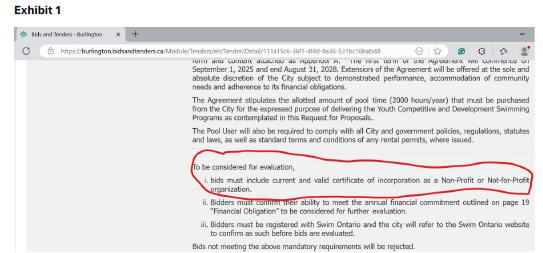
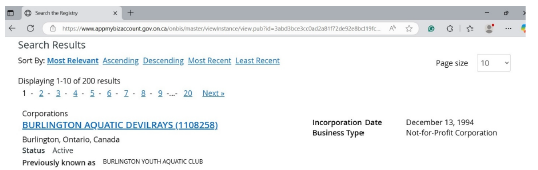
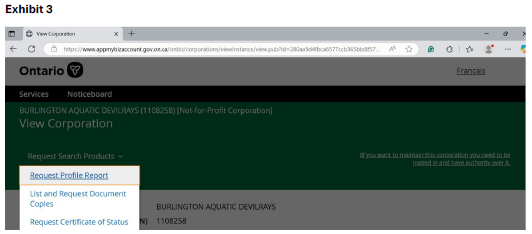


 By Tom Parkin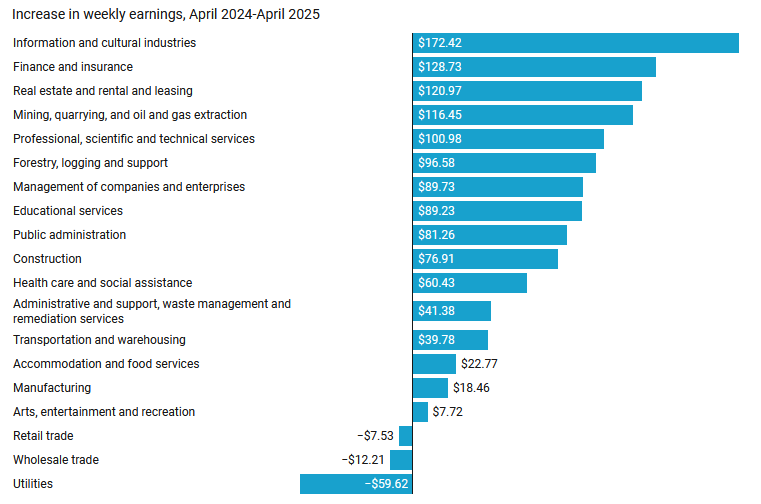
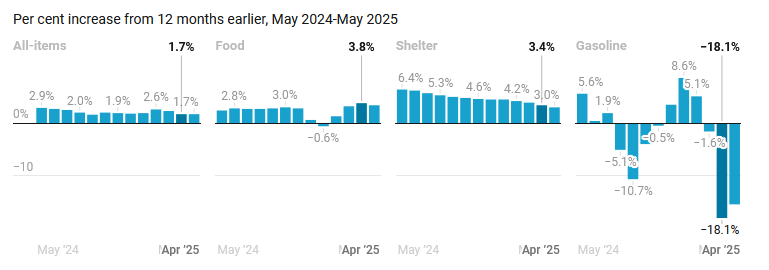
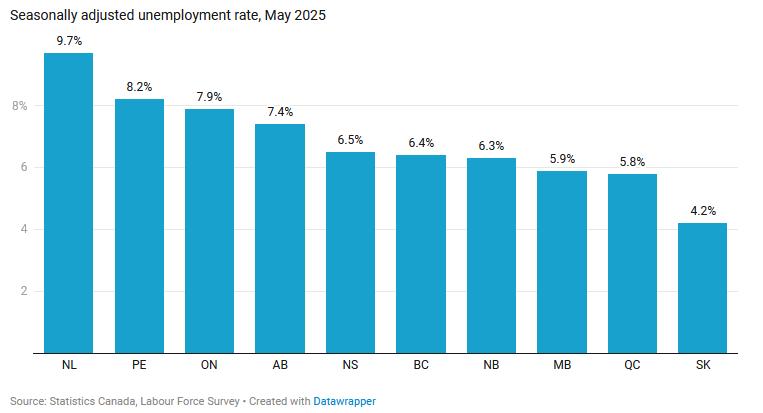
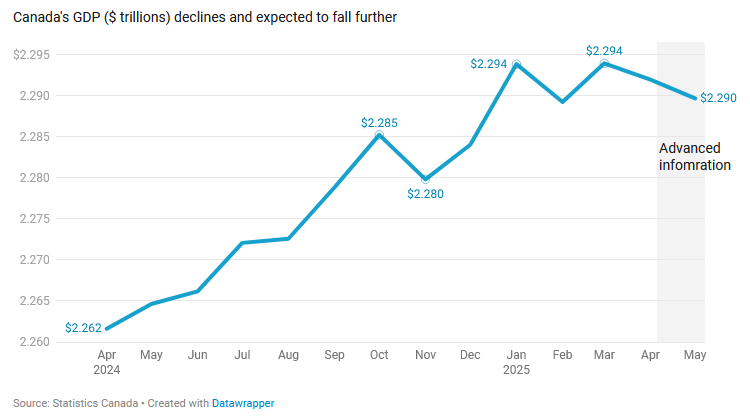

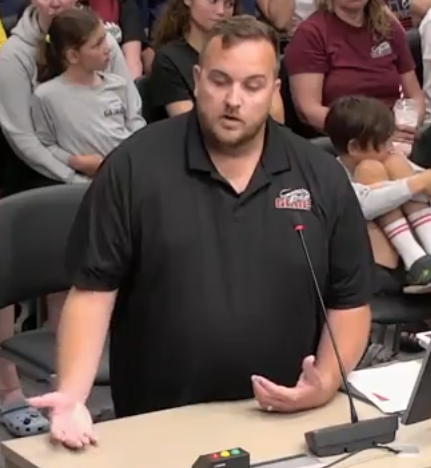









 By Katie Lebel