




 By Pepper Parr
March 6th, 2019
BURLINGTON, ON
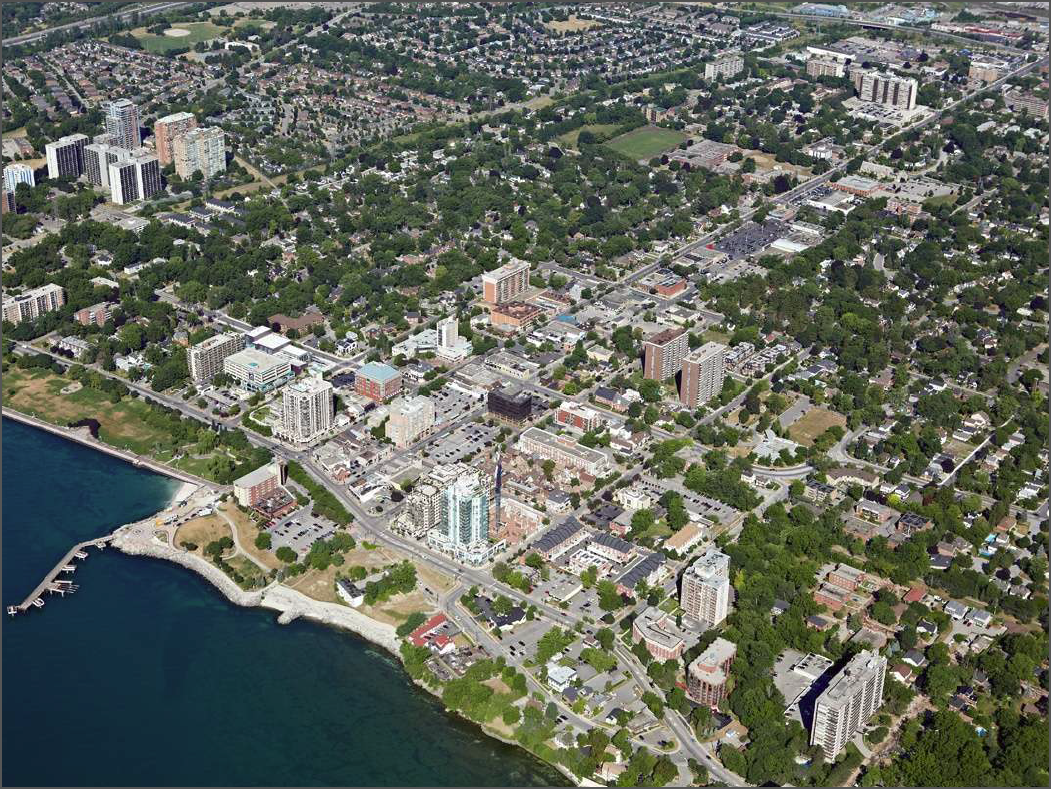
At a Special meeting of Council, on March 5, 2019, Burlington City Council voted in favour (on a 5-1 vote with Councillor Sharman absent) for a staff report recommending an Interim Control Bylaw (ICBL). The ICBL temporarily restricts the development of lands within a study area for a period of one year, with a possible extension of a second year.
The lands in the study area include the Downtown Urban Growth Centre (UGC) and lands in proximity to the Burlington GO Station.
During the one-year “freeze” on development in the study area, the City will complete a land-use study to:
• Assess the role and function of the downtown bus terminal and the Burlington GO station on Fairview Street as Major Transit Station Areas
• Examine the planning structure, land use mix and intensity for the lands identified in the study area
• Update the Official Plan and Zoning bylaw regulations as needed for the lands identified in the study area.

Northern portion of the lands subject to the Interim Control Bylaw

Southern portion of the lands subject to the Interim Control bylaw.
The recommendation to implement an ICBL was brought forward by City staff in response to two primary concerns:
1. Growth pressures that continue to emerge for the lands in the study area
City staff are aware of multiple pending developments in the application review stage where the proposed intensities are significantly higher than those anticipated by the Official Plan. In addition, there are many other expressions of development interest and land assemblies taking place in the downtown Urban Growth Centre and in proximity to the Burlington GO station where the intensities being considered are substantially larger than what is proposed in the current Official Plan or the 2018 adopted Official Plan which is currently under review.
2. The role and function of the John Street Bus Terminal as a Major Transit Station Area (MTSA)
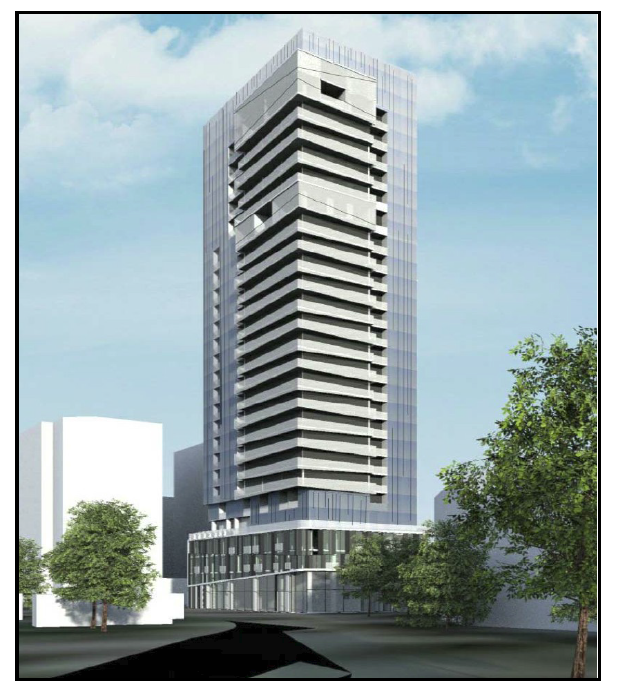
The John Street Bus Terminal is identified as a MTSA in the Province’s 2017 Growth Plan. Its designation as a MTSA was relied upon by the Ontario Municipal Board in its decision to allow a 26-storey development at 374 Martha St, citing that as a MTSA, the terminal could support intensities well in excess of those contained in the Official Plan. The terminal’s capacity to absorb the transit impacts of significant growth plays a critical role in shaping the mix of land uses and transit development within the downtown UGC.
That’s the official line from the city. It was quite a bit more complex than that.
What isn’t at all clear yet is – where did the initiative for this move come from? Things like this don’t just fall off the back of a truck. Someone at some point a number of months ago came up with the idea of a freeze on development.

Director of City Building Heather MacDonald with Jamie Tellier who served as Acting Director while MacDonald was on a leave of absence. MacDonald did all the heavy lifting during the Standing Committee.
Heather MacDonald, the Director of City Building, the Chief Planner, has been away on a pre-planned leave of absence of about two weeks.
The city retained Gowlings, a top line legal firm to provide them with legal counsel on the decision.
The interim city manager has been in place for a couple of months.
Who did the deep thinking? Who thought through the ramifications? Who took a long look at the possible unintended consequences?
And why did the Mayor ask: “What’s the rush”.
Let’s look at those unintended consequences. For anyone, that includes the owner of a single dwelling who might want to build a deck at the back of their property: nyat – nada – nope. You won’t be able to do that.
You can ask for an exemption – it wasn’t clear during the Standing Committee that you will actually be able to get one.
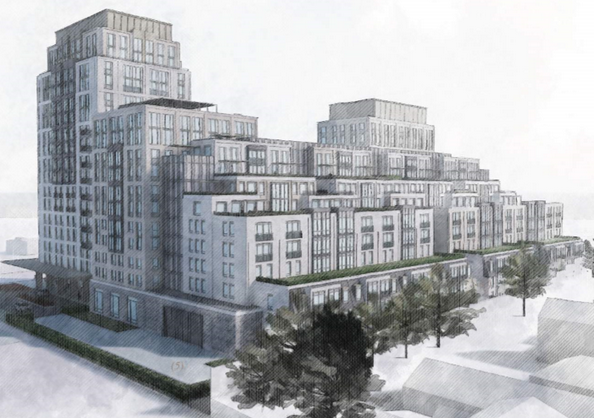
Amica had its plans for this massive development put on hold for at least a year. There will be some grief for a number of people involved in this development.
Amica, the retirement home operator who have plans for a major development before the city to build a mammoth development on North Shore Blvd at the ramp to the 403, learned that they are within the boundary and that they are not exempt. They have a deal in place with the individual owners of a large co-op, to buy all the units. That sale may not get completed. The delegation from Amica chose to be a little tight lipped when it came to details.
As for the study itself – there are going to be two of them – both running parallel. One – the ‘land study’ which starts tomorrow, if it hasn’t already started, the other is the work leading up to the next version of the Official Plan that the City Building department is working one. One is said to be “informing” the other; a new phrase we are going to hear often.
The Standing Committee heard that there are several “first steps” that will get underway on Wednesday. The terms of reference have to be set out and the possible sole source consultants that will be brought in to do much of the work for the city. This will be a large contract – $100,000 appears to be the starting number.
There are only so many consulting firms that can take on a job of this magnitude – there are a number of firms the city might want to steer clear of – no hint at this point on who might be chosen.
The interim city manager, the deputy city manager and the Director of City Building would be the people who would make the decision – they may have already decided who they want to go with.
No mention was made of any request for a proposal.
Ward 6 Councillor Angelo Bentivegna asked what impact the freeze would have on Committee of Adjustment decisions. That committee won’t be able to make any decisions – a freeze will be in place.
The rules that govern Interim Control Bylaws allow the city to lift the freeze at any time. It also limits the freeze to a one year period with a possible extension of a second year and a possible extension for a third year.
MacDonald said that exemptions could be made but that would have to come before Council. She added that she did not recommend changing the boundaries of the study. Once the word was out everyone appeared to want the boundary changed.
What became clear was that the OMB decision made on the ADI development on Lakeshore at Martha was what prompted the decision to go the Interim Control Bylaw route. The city lost that argument before the OMB, in part because ADI’s lawyers argued that the existence of a Downtown mobility hub allowed for the height they were asking for.
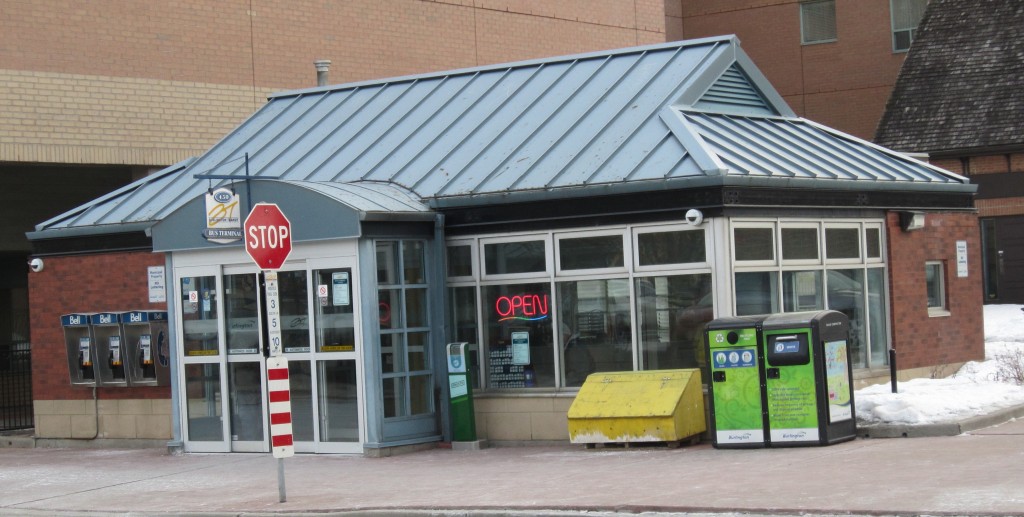
The center of the Downtown Mobility hub.
That hub gets referred to as a terminal isn’t much more than a place where you can buy tickets and keep out of the cold. It has taken on an almost mythical force that a developer turned into a winning argument before the OMB.
The Planning department was blind-sided by the developer and the city is paying a price for the failure to be fully prepared.
That decision sent a signal to the development community that Burlington was more than open for business. The development proposals were coming in at an alarming pace – far more than the City Building department could handle. (They should have stayed with the former department title: Planning department.)
Thus the decision to put a freeze in place.
An oddity that came to the surface was that the city still has to accept development proposals. They still have to hold pre-consult meetings with developers and give them the list of the reports they will have to provide. A development application, even with the freeze in place, can go as far as the Statutory Public Meeting phase – the Planning Act requires that.
There was a concern expressed that the clock will still be ticking and that the city will get dinged by developer and taken to the LPAT (Local Planning Act Tribunal) for not meeting the 210 time frame within which to make a decision on a development application.
Heather MacDonald said that it was the view of the Planning department, supported by a legal opinion, that LPAT would dismiss any such application.
A large part of the pause the city wants to take with the freeze in place is to determine just what the future of the terminal on John Street is. At one point the Transit people wanted to shut it down and move ticket sales into city hall. That idea got squelched.
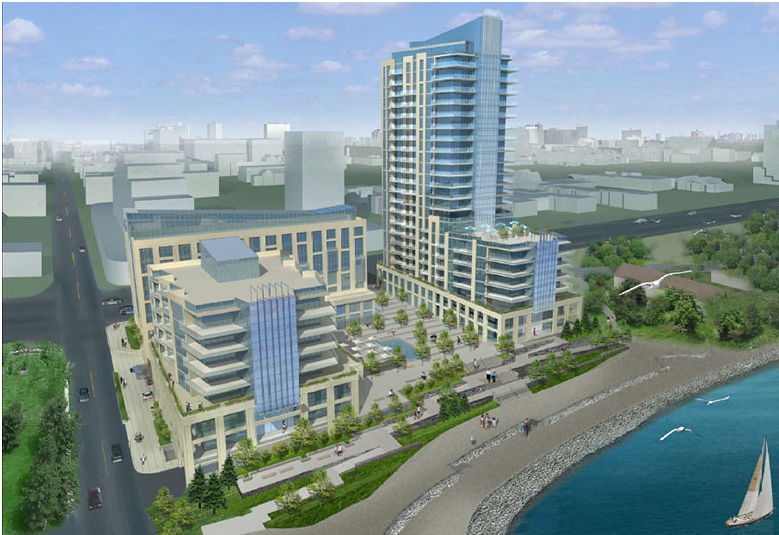
Bridgewater as seen from the lake.
Ward 2 Councillor Lisa Kerns said she would support the Staff Recommendation because it was clear that the City Building department was overwhelmed and had lost control of the planning process. She said that at one point the Bridgewater development was the city’s legacy project – at 22 stories it is being dwarfed by some of the newer development proposals.
The question as to what happens to the development fees that have been paid wasn’t really answered. Nor was there any clear direction on what happens to those developments that were past the Statutory meeting point. It would appear that they are frozen at whatever point they happen to be at.
The value that has been placed on properties adjacent to large proposed developments has shot sky high. Councillor Kearns said some residents are seeing tax bills that have doubled.

Councillor Galbraith didn’t like the look of the ICBL, voted no – Councillor Bentivegna and the Mayor voted for it.
It all came down to a 5-1 vote for the Staff recommendation with Ward 1 Councillor Kelvin Galbraith voting against and Councillor Sharman absent for the second day in a row.
With the vote at the Standing Committee in place; they adjourned, turned themselves into a city council meeting and voted for the freeze then passed the necessary bylaw. It was a recorded vote with each Councillor having to stand and declare their vote – something new to the five newbies. Meed Ward told Galbraith to get used to being the lone dissenter – she had to do it for years.
Zap – everything was frozen.
Now we watch for the unintended consequences. This is a draconian bylaw that seemed to be necessary. Let’s get it right in as short a time frame as possible.
Will Burlington, this time next year, be “one of Canada’s best and most livable cities, a place where people, nature and business thrive”. Stay tuned.
Related links:
Is the Downtown Mobility hub the result of a clerical error
Scobie on that Downtown Mobility hub












 Within the HWP annual reports, an even more troubling trend appears. In 2014, the shelter housed 270 women and 211 children for some period of time over the year. The report also noted that “766 women did not receive shelter due to capacity”. In 2014, the shelter only was able to serve 39% of the need in the region. Compared to 2018 however, 2014’s 39% was a success. As a result of the reduced availability of safe, affordable housing in Halton, in 2018, HWP was only able to serve 173 women and 183 children. They no longer list the number of women turned away in the annual report, but only being able to assist 74% of their 2014 number cannot be a good sign.


 Transit Related Reserve Funds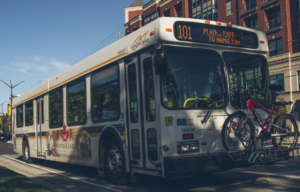

 Tax Rate Stabilization




 Library Board




 Ray Rivers writes weekly on both federal and provincial politics, applying his more than 25 years as a federal bureaucrat to his thinking. Rivers was a candidate for provincial office in Burlington where he ran against Cam Jackson in 1995, the year Mike Harris and the Common Sense Revolution swept the province. He developed the current policy process for the Ontario Liberal Party.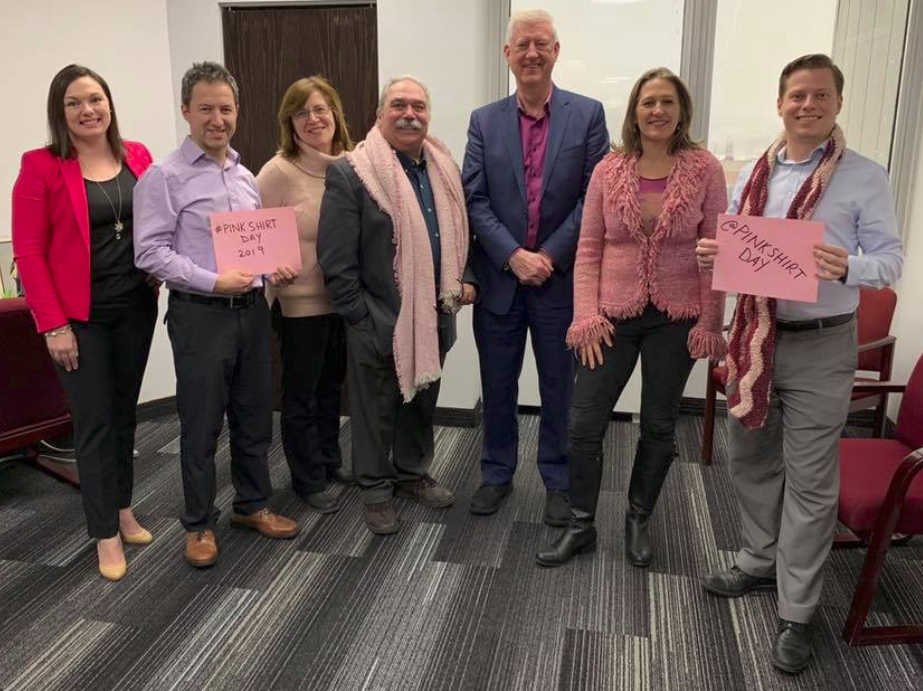
 Meed Ward gets to laugh from time to time.

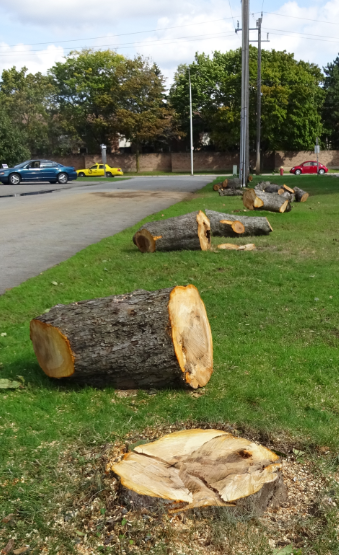 And if someone wants to cut the tree down because they are tired of raking up the levees cutting down that tree is their right.
