 By Lynn Crosby By Lynn Crosby
February 22, 2026
BURLINGTON, ON
I have delegated a few times, essentially on four topics: the undemocratic strong mayor powers; issues around development; the need for responsible fiscal management; and citizen engagement.
 For this resident, the answer is a resounding NO, and I expect that I am in the majority. I’m here today because this one agenda item covers each of these. I’ll begin with engagement because it’s pretty much a fluke that I’m here today at all. Normally, I can’t be on a random Tuesday in the daytime, as residents who are working or attending school can’t be, but by chance, I was free today. If council cares about real engagement, they should not have cancelled evening council meetings. Further, in what seems to be too common, this matter was rushed through to the extent that the vast majority of citizens would not know enough (if anything) about it to come and delegate on it today anyway, and certainly would not have had time to spend their Family Day weekend in preparation. I’m here because I happened to see something about it in the media on Friday. By that time, it was already too late to register to delegate by the deadline. I happen to be among a small minority who knows that I can register late and may still get to speak; most would not know this. It’s the oldest trick in the book to release news one might not want the public to notice just before a long weekend.
This is an extremely important issue, at a cost of almost $100 Million over two years, and it is unacceptable for council to not have supported Councillor Nisan’s request last Tuesday to delay this decision for two months. He explained well his rationale: that this time would allow for staff and council to do fulsome research, and it would allow for the gathering of opinions and feedback from residents. Oh yes! residents, remember us? Do residents think that we should be the ones helping developers increase their profits? Well since you haven’t given us time to answer, I guess you can’t say. For this resident, the answer is a resounding NO, and I expect that I am in the majority.
I don’t believe there is any justification for developers to be bailed out of their obligations and costs of doing business. If the market isn’t giving them enough profits for their liking, then they can stop building and sit on their investment until it turns around or they can reassess what it is the public actually wants and needs, and build those things instead. More expensive towers on Burlington’s waterfront for example, sped up now thanks to the Mayor’s direction, do nothing to provide the affordable housing and the types of housing that families and young people want and need. It is not on municipalities or citizens to solve the complex issues surrounding the housing crisis, but it sure is used as a great excuse by the development industry and by governments who decide for various reasons that they wish to help them “build build build, anywhere and everywhere.”
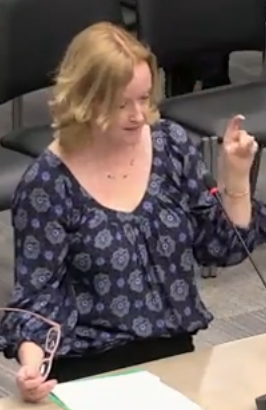 Being the first municipality to make a hugely expensive mistake isn’t a precedent one should want to set. I’m gobsmacked that any of you think it is acceptable to transfer this financial obligation onto an already overburdened taxpayer, particularly in these times where so many are in dire straits. And whether this magical provincial and federal funding materializes or doesn’t – certainly you don’t know whether it will or won’t in the end – I will remind you again there is only ONE taxpayer so that all comes from us too. Regardless, it is irresponsible to hand over our money and hope that other levels of government may pay it all back. And can we be honest enough to not call it a freeze? A freeze signifies that the rate charged last week won’t be increased for two years. It doesn’t mean their charges have been wiped out completely.
More misleading language. There are many other municipalities which have exceeded their housing targets without waiving development charges. Being the first municipality to make a hugely expensive mistake isn’t a precedent one should want to set. Every dollar of OURS that you hand to the developers is not only one less dollar in the pockets of taxpayers: it’s much worse than that. It’s one less dollar that could instead be being spent on far more important things, and that is the same whether we are talking about municipal, provincial or federal dollars. The consequences are huge and cannot be summed up by staff members producing a rushed report at the request of their strong mayor, who holds the power to hire and fire senior staff, I might add.
 While I’m not surprised the mayor has used her powers in this manner, I’m appalled that she has. That leads me to the undemocratic strong mayor powers which no mayor should accept, let alone use, ever. While I’m not surprised the mayor has used her powers in this manner, I’m appalled that she has. There’s an old saying about how even the appearance of a conflict of interest is one which must be avoided. A similar concept holds true for a strong mayor having unilateral power over staff members to which she gives directions. The public can never actually trust that the staff members are telling us what they believe or what they feel that they need to say they believe. This is as unfair to them as it is to the public. It’s one reason the powers should not exist.
In closing, it is disrespectful to your council colleagues and especially Councillor Nisan for the Mayor to have used the powers and gone over their heads. It is disrespectful to citizens that this is being done in a way where we are not being properly informed, and are not given the opportunity to be heard, and in which even the most basic standards of engagement seem to have been bypassed. It is disrespectful to put the onus on staff to rush through and produce reports in unnecessarily tight timeframes. It is disrespectful to every other business owner in Burlington whose profits are likely also waning in today’s economy that you’ve decided to bail out big developers with “deep pockets” as Mayor Meed Ward was fond of calling them. So please spare us the talk about respect. Respect is a two-way street.
Editor’s note: In 2018 Lynn Crosby served as Mayor Meed Ward’s driver, driving her from event to event and picking up coffee for the two of them.

 By Gazette Staff By Gazette Staff
February 21st, 2026
BURLINGTON, ON
Ward 6 Councillor Angelo Bentivegna released the following statement:
 Ward 6 Councillor Angelo Bentivegna. “In December 2025, the Provincial Land Development Facilitator concluded their involvement in discussions between Argo and the City concerning the future of the Millcroft Golf Course lands.
“Following that transition, and consistent with the direction provided to our CAO, he continued direct conversations with Argo’s representatives to explore whether there was a path for the City to acquire some or all the golf course lands in the public interest.
“Most recently, the city formalized that interest in writing, advising Argo that the City would be prepared to purchase the lands for $15 million, approximately three times the amount reportedly paid for the property in 2020. This offer reflected a serious and good-faith effort to secure these lands for the community.
“The City has since been informed that Argo is not prepared to sell its lands to the City.
“While that response is disappointing, it is important that we understand the steps that have been taken and the City’s willingness to pursue acquisition at a significant premium. Further information, including supporting materials to assist with public communication, will be provided to Council in upcoming updates.
“As Ward 6 Councillor, I remain committed to keeping our community informed and to continuing to advocate for outcomes that protect the long-term interests of Millcroft residents and the City as a whole.”
Will this be enough for Bentivegna to keep his seat in the October municipal election?
|
 By Pepper Parr By Pepper Parr
February 21st, 2026
BURLINGTON, ON
 Hamilton Mayor Andrea Horwath has said she might change the tax increase Council has approved. Hamilton City Council whittled a proposed tax hike from 4.25 per cent to 3.87 per cent.
City Staff had proposed a 5.5 per cent hike.
Burlington decided on a 5.8% increase. Mayor Meed Ward prefers to use the 4.89% number, a sleight of hand the Mayor uses frequently.

Burlington has had budget increases that amounted to a 44.90% increase during the current term of Council
Horwath — who can veto amendments as part of strong-mayor powers — said she plans to take the time to look at all amendments before making a final decision.
While Hamilton City Council has gotten a little wacky at times, they have shown that when they put their shoulder to the wheel they can do the job they were elected to do.
Burlington Councillors just don’t seem to have that capacity.
 This City Council does not appear to be able to create a budget that meets the needs of the taxpayers.
 By Gazette Staff By Gazette Staff
February 20th, 2026
BURLINGTON, ON
The City of Burlington has made the following changes to the City Council and Committee meeting calendar for the week of March 2, 2026.
- The Committee of the Whole (COW) meeting originally scheduled for Monday, March 2, will be replaced by a Special Meeting of Council to discuss agenda items deferred from the Feb. 17 Regular Meeting of Council.
- The COW meeting will now take place on Tuesday, March 3. Any recommendations from this meeting will go to the Regular Meeting of Council on March 10 for final approval.
- The meeting dates and times for Audit Committee and Pipeline to Permit Committee remain unchanged.
The agendas for all Committee meetings happening during the week of March 2 will be posted online to burlington.ca/calendar later today (Friday, Feb. 20, 2026).
For all meetings, members of the public wishing to delegate can register at burlington.ca/delegate by noon, one business day prior to the meeting. Any relevant correspondence can be submitted to clerks@burlington.ca by noon, one business day prior to the meeting.
Please visit burlington.ca/calendar for the latest information about Council and Committee meeting dates, including a livestream link for all meetings.
 By Ray Rivers By Ray Rivers
February 20th, 2026
BURLINGTON, ON
The reasons often cited for homelessness typically include mental illness, family disputes, and substance abuse . But the fundamental issue is economic – inadequate income. Wealthier people live in houses and condos; those less wealthy will opt for rental apartments; and those without wealth end up in their parents’ basement, on a friend’s couch, in a shelter, sleeping on the street or a car, or camping out in a tent city.
 Tents line several of the streets in Hamilton. As of August last year there were about 2000 homeless people in the city of Hamilton, an estimated 25% increase since last year. And it’s not just Hamilton. Almost 85,000 people experienced homelessness across the province last year, including 20,000 children and youth. Particularly hard hit are rural and northern communities where the number of homeless has risen by 50% since 2021.
Clearly what we have been doing isn’t working. Hamilton recently introduced a vacant unit tax, presumably hoping that would somehow reduce homelessness. Every residual owner must file a form by April 15th or they’ll be hit with a 1% surtax on their property. Missing the deadline comes with a draconian hefty fine.
 This past year the city announced it would be providing 40 tiny homes, a sort of metal shoe box with plumbing and heating, to accommodate up to 80 homeless city residents. It’s an incredible case of administrative overreach that has done almost nothing to put a dent, let alone solve, the homelessness problem. It is a cash grab at best. For the vast majority of homeless the issue is not availability of rental space but rather income to pay the rent.
This past year the city announced it would be providing 40 tiny homes, a sort of metal shoe box with plumbing and heating, to accommodate up to 80 homeless city residents. This was a noble gesture that became a case study in why government should just stick to governing.
First the location is unsafe – a city-owned contaminated brownfield in need of remediation. Second, the city, in its haste, sole-sourced the tiny homes from a company with no apparent experience or track record. Third, these tiny homes were made in China, and sourced through a US based distributor. Fourth, these tin cans required a half million dollars worth of electrical and insulation retrofitting once they arrived on site. Fifth, a CBC report noted that similar tiny homes, for which the City paid $35,000 each, could be purchased on a Chinese web site (Alibaba) for something like $2000.
The project which was supposed to come in at around $2 million is now heading for about $8 million, over 300% more. In Hamilton, with a 3.6% rental vacancy rate, a single bedroom apartment rents for about $1700 a month. The 80 residents could have been housed in existing rental spaces for a little over $1.6 million dollars. That would have saved tax payers about $6 million dollars on this year’s tax bill.
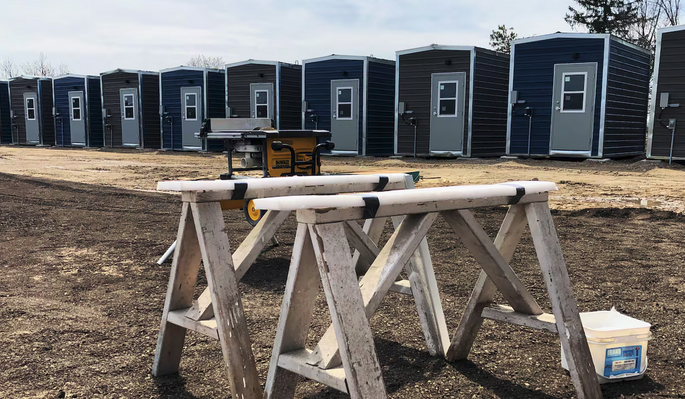 Very small Tiny Homes built in Hamilton The new residents are apparently happy with their tiny homes, but what about the other 1900 or so homeless people? Further, Canada is in the midst of a trade war and its Hamilton based steel sector is hurting from punishing US tariffs. Shouldn’t one of this city’s priorities be to buy Canadian – to buy local? Didn’t they once call Hamilton ‘Steel City’?
The fundamental problem with homelessness is lack of income. So the solution lies in fixing that. Adding more homeless shelter spaces is just another bandage over a much larger wound. Today’s myriad of social assistance programs at all levels of government is a cumbersome bureaucratic patchwork and is hopelessly unable to fix this social problem.
Isn’t it past time we replaced those programs with a simple guaranteed annual income to restore dignity to all Canadians?
 Ray Rivers, a Gazette Contributing Editor, writes regularly applying his more than 25 years as a federal bureaucrat to his thinking. Rivers was once a candidate for provincial office in Burlington. He was the founder of the Burlington citizen committee on sustainability at a time when climate warming was a hotly debated subject. Ray has a post graduate degree in economics that he earned at the University of Ottawa. Tweet @rayzrivers Ray Rivers, a Gazette Contributing Editor, writes regularly applying his more than 25 years as a federal bureaucrat to his thinking. Rivers was once a candidate for provincial office in Burlington. He was the founder of the Burlington citizen committee on sustainability at a time when climate warming was a hotly debated subject. Ray has a post graduate degree in economics that he earned at the University of Ottawa. Tweet @rayzrivers
Background links:
Homelessness Increasing Tiny Homes from China – Homelessness – Tiny Homes Cost Overrun –
Letter on Alternatives – Federal Efforts –
By Gazette Staff
February 20th, 2026
BURLINGTON, ON
In a 6-3 ruling Friday, the US Supreme Couty wrote that Trump had no authority under the International Emergency Economic Powers Act (IEEPA) to levy tariffs against dozens of countries around the world — including Canada.
“Based on two words separated by 16 others in … IEEPA … ‘regulate’ and ‘importation’ — the President asserts the independent power to impose tariffs on imports from any country, of any product, at any rate, for any amount of time. Those words cannot bear such weight,” Chief Justice John Roberts wrote in the case of Learning Resources vs. Trump.
Several Canadian sectors have been hit by Section 232 tariffs, including the automotive, steel, aluminum and softwood lumber industries. Section 232 gives the U.S. President authority to issue tariffs on national security grounds.
Canada-U. S. Trade Minister Dominic LeBlanc offered a mild cheer for the ruling, saying it “reinforces Canada’s position” that the border emergency tariffs “imposed by the United States are unjustified.”
 Does the US Supreme Court decision settle the tariff matter?
 By Eric Stern By Eric Stern
February 20th, 2026
BURLINGTON, ON
On February 19th, MPP Natalie Pierre, Kim Charteris, and Nichole Quan visited with students participating in Burlington’s Junior Achievement (JA) Company Program.
Kim Charteris is the President and CEO of JA Central Ontario, and Nichole Quan is the Director, Corporate & Community Partnerships at JA Central Ontario.
Junior Achievement’s mission statement is: “Our mission is to inspire and prepare young people to succeed in a global economy. Our work bridges the gap between education and the real world by delivering specialized programs both in school and after school.”
 MPP Natalie Pierre (second from left) mixes it up with Junior Achievers Thursday evenings, 25 students and 6 advisors meet for three hours. Over an 18-week period, we raise capital, manufacture, sell, market, and support a startup venture. Week 18, the students will shut down the company, distribute any profits to shareholders (fingers crossed), and produce a final report.
 Burlington’s MPP Natalie Pierre and the student president of QuickFix.  It includes a key turner for frozen locks, a bottle opener, a whistle, a ruler, and a safety blade. This year, the team decided to 3D-print an ice scraper multitool. This lightweight functional tool is perfect for every Burlington resident’s glove box. Complete with a key turner for frozen locks, a bottle opener, a whistle, a ruler, and a safety blade.
Students are grouped into departments: Finance, HR, Technology, Production, CSR, Marketing, and Sales.
The production team has worked through several issues to develop this unique and useful product.
The tech team has built a great website Click HERE
The marketing team is having a lot of fun: https://www.instagram.com/p/DUtLKRsjXzE/
The Sales, Finance, HR, and CSR teams are keeping the company organized and on track.
As an advisor, it’s amazing to watch students from different schools come together and form a highly functional team. Whether or not the company makes money, the students gain real-world, hands-on experience.
On behalf of the students, I’d like to thank Natalie Pierre, Kim Charteris, and Nichole Quan for their time and patience as they listened to our company’s journey and answered all of the students’ questions.
Order your QuickFix Ice-Scraper HERE

Over five decades ago, that sounds so much better than 50 years, Eric Stern participated as a student in the company program. This is his fifth year as an advisor.
 By Frederik Delorme By Frederik Delorme
February 20th, 2026
BURLINGTON, ON
Responsible gambling is a key part of Ontario’s licensed gambling sector. There are many different tools used to encourage players to stay safe when playing.
 Sports betting to casinos, the sector is a huge revenue driver.
From 2024 to 2025, Ontario’s gambling sector managed to make CA$3.20 billion in revenue. From sports betting to casinos, the sector is a huge revenue driver. Yet for the average player, gambling can present some problems, especially when it stops becoming entertainment and becomes a necessity.
Fairness and Transparency
If a casino game was cheating you, would you even know? Most online casino games, excluding live casino titles, which use chance, are determined by random number generators. Science and technology have a long history of making these as fair and random as possible. Yet if a game didn’t have one in place, how could you even tell?
 RTP is expressed as a percentage. It represents the amount you can expect to see returned should you play for a sustained period of time. The truth is, many people wouldn’t. That is why Ontario’s modern online casinos have transparency at their heart. They encourage games that have plenty of documentation, telling people how to play, what bonuses are on offer and their chance of winning. This is usually given as a return to player (RTP) rating.
RTP is expressed as a percentage. It represents the amount you can expect to see returned should you play for a sustained period of time. Imagine a game has an RTP of 96%. You wager $100 over a period of time in $1 bets. You can expect to see around $96 returned to you, with the rest going to the house.
Stick to Licensed Websites
 When websites are licensed with an agreement with iGaming Ontario, they abide by the rules and regulations of safer gambling. If not, then their licenses are revoked, or they face heavy fines. Thus, it is not in their interest to exploit gamblers. This is in contrast to some offshore casinos. When websites are licensed with an agreement with iGaming Ontario, they abide by the rules and regulations of safer gambling. If not, then their licenses are revoked, or they face heavy fines. Thus, it is not in their interest to exploit gamblers. This is in contrast to some offshore casinos.
You can find many of the best online casinos in Canada at GlobalNews report. Here you will also see sites ranked by other factors like payment methods, bonuses and fair play. Using third-party reviews makes it easier to see which casinos are licensed, trusted, and transparent.
Preventing Underage Participation
One of the key factors in safer gambling is getting underage players away from operations. In Ontario, for casino games, the legal betting age is 19. When people log onto casinos licensed in the province, age verification should be a given. However, if people access offshore casinos, this is not always the case. For online casinos, checking the age of players involves using rigorous verification checks. Customers must be able to provide the necessary personal information and ID for age verification.
Figures for how many young people gamble differ by province. For example, estimates are that 34% of young people in British Columbia have engaged in some form of gambling in the last 12 months. Surveys conducted in Toronto have suggested that between 50 to 70% of young people below the age of 18 gamble for money at least once a year.
Self-Exclusion Tools
 A self-exclusion tool is a database that gamblers can choose to register themselves with. This provides their information to licensed online casinos. When they try to log on or sign up, the database is cross-referenced. If they are on it, they are unable to access services. People can do this for as long as they wish if they feel gambling is becoming a problem for them. A self-exclusion tool is a database that gamblers can choose to register themselves with. This provides their information to licensed online casinos. When they try to log on or sign up, the database is cross-referenced. If they are on it, they are unable to access services. People can do this for as long as they wish if they feel gambling is becoming a problem for them.
In Ontario, this is known as My Play Break. It is entered voluntarily, and you can set the amount of time you want to be excluded from online casinos. It is entirely confidential, and no one will know you have registered on it. However, it can not bar you from offshore casinos, so you must seek further assistance for this or make sure you do not have the means to visit them.
Monitoring Your Own Gambling
While these initiatives are all helpful, they are no substitute for monitoring your own gambling. By doing so, you can spot the signs when it is becoming a problem, and hopefully deal with them before they do any harm.
Gambling sites should have several tools that help you monitor the time spent gambling. These may include limits for both time and the amounts you can deposit. By setting these, they will give you a check and prevent you from chasing losses. Playing more hours than usual, particularly at unsociable times, is a key sign of gambling addiction.
 Players must take responsibility for themselves and educate themselves on the signs. Another sign is if your gambling habits change. If you are someone who likes a few games of poker, then suddenly you find yourself splurging on slots or placing wagers on sports you have no interest in, you should be worried. Gambling has now turned from entertainment to an obsession.
Thus, responsible gambling is in the hands of many. Players must take responsibility for themselves and educate themselves on the signs. In turn, companies must help them to do this and provide a range of tools to deal with the issues. All of this creates a safer and fairer gambling environment.
 By Kristina Rodopska By Kristina Rodopska
February 20th, 2026
BURLINGTON, ON
Canada’s online casino market finds itself at a crossroad of rapid technological innovation and evolving regulatory oversight. A rise in digital gambling activity has forced operators to adopt new tools such as gamification, AI support systems, and enhanced mobile interfaces – even with regulators and public health advocates have raised concerns about player risk. The tension that’s between innovation and risk is what actually shapes what comes next for online casinos nationwide.
Exploring the Digital Casino Landscape
According to recent industry reports, the Canadian iGaming sector is experiencing substantial growth – with total online gambling revenue in Canada expected to exceed C$5.5 billion in 2026. This growth is driven by increasing consumer adoption and expansion of licensed platforms. User penetration levels continue to rise as regulators more and more encourage domestic options over unregulated offshore alternatives.
This dynamic environment has prompted dedicated resources that help players navigate the myriad options available. One such resource is baytreeinteractivecasinos.com, a comprehensive portal offering guides to interactive casino platforms, reviews, and curated insights for Canadian players. This site aims to help users make informed choices, by compiling reliable information and vetted recommendations.
Innovation Driving Growth
Technology as a Competitive Advantage
Cutting edge tech is leveraged by Canadian online casinos in order to improve user experience and engagement. Mobile optimization remains a fundamentality, with most of the platforms prioritizing smooth gameplay across phones and tablets. Modern casinos integrate AI-configured recommendations, tailored bonuses, and intelligent support chatbots that offer 24/7 assistance.
 Reshaping the way players interact with platforms. Gamification is reshaping the way players interact with platforms by embedding progress paths, achievement systems, and community challenges. The result these features give is increased session time and retention, while differentiating one operator from another in a crowded landscape.
Emerging tech like virtual reality (VR) and augmented reality (AR) is no longer posing just a theory. Some innovators are creating prototypes of virtual casino floors with realistic dealer interactions and social hubs that provide the feeling of a real-world gambling experience. It may be too soon to tell, but these tools could most likely redefine expectations for online engagement.
Blockchain and Finance Innovation
Blockchain and cryptocurrency solutions are gaining traction among Canadian operators. These technologies promise transparent transaction logs, faster payouts, and enhanced privacy – all of which are features that appeal to tech-savvy players. Cryptocurrency still presents some challenges, but efforts to integrate it still persist.
Regulation and Player Protection
Provincial Authority and Legal Framework
 Canada, on the other hand, assigns jurisdictions to provinces. Ontario has proven to be a leader in the field so far. Many countries have gambling under federal regulation, while Canada on the other hand assigns jurisdictions to provinces, which creates a patchwork of rules. Ontario pioneered the private operator model in 2022, allowing licensed commercial casinos to compete alongside government-run platforms. Other provinces, including Alberta, are developing their own regulated markets. Province regulators are trying to balance innovation with consumer safeguards as the requirement for transparency in game mechanics and responsible gaming tools have become a standard. Platforms must implement dynamic reminders, self-exclusion options, and AI-based behavioural monitoring to address risky patterns before they escalate.
Responsible Gaming Initiatives
Problem gambling becomes a concern with the continued growth. Canadian regulators and operators are expanding resources that could provide safer play – deposit limits, cooling-off periods, and centralized support systems. Instead of just for personalization, AI and machine learning are also used to point and catch unusual behaviour and even suggest preventive measures.
The Risk Side of Expansion
Offshore and Unlicensed Platforms
Even with domestic regulated options being on the rise, unlicensed offshore casinos continue to attract players – usually with large bonus offers and lax verification. Players might not be aware that these sites pose a significant risk – delayed or denied withdrawal, weird and unclear terms, and limited recourse for disputes.
The need for continued education about these things is still high, because even though choosing a licensed and regulated option eliminates many risks, grey-market platforms still persist.
 Hundreds of new casinos appear online, and critics are voicing their concern about the market getting oversaturated. Market Saturation Concerns
Every year, hundreds of new casinos appear online, and critics are voicing their concern about the market getting oversaturated. Having too many options can weaken quality and make responsible oversight much harder. Regulators are monitoring closely, trying to avoid consumer confusion or exploitation, and ensure fair practices.
Advertising and Youth Exposure
The conversation continues about the need for advertising rules, especially around how bonuses and promotions are communicated. So soon, stricter guidelines might be introduced, all in favor of protecting younger or vulnerable users from the aggressive marketing tactics.
What the Future Holds
Personalization and Retention Tools
As AI continues to expand and evolve, it will also continue to refine user profiles and deliver tailored recommendations and offers, as well as risk warnings on an individual level – all of which essentially turns data into much safer and richer experiences.
Live and Immersive Gaming
VR lounges and community hubs may well become mainstream within the upcoming decade. Live dealer games, enriched with multiple camera angles and interactive features will narrow the gap between digital and physical casino experiences.
National Coordination
While the current norm is provincial regulation, industry stakeholders are discussing the potential benefits of federal guidance to unify standards and simplify compliance for operators spanning multiple provinces.
Conclusion
 Live dealer integration is getting adopted by licensed operators in order to improve engagement and retention. Canada’s online casino ecosystem is evolving at a high pace, driven by technological innovation, updated provincial regulations, and changing player expectations. Advanced features – AI personalization, mobile-first platforms, live dealer integration etc. – are getting adopted by licensed operators in order to improve engagement and retention. And regulators on the other hand, continue with strengthening consumer protection frameworks to ensure responsible gaming and market integrity. Risks are still existent – especially with unlicensed offshore sites, aggressive marketing, and potential market oversaturation – but the long-term outlook oversees a more regulated, secure, and immersive online gambling environment tailored to Canadian players.
 By Pepper Parr By Pepper Parr
February 20th, 2026
BURLINGTON, ON
Mayor Meed Ward was given Strong Mayor Powers on July 1st, 2023 when Council undertook to facilitate the building of 29,000 by 2031.
 The Province of Ontario announced it will be extending strong mayor powers, effective July 1, 2023, to every municipality that has adopted a housing pledge, including Burlington Given that the target hasn’t a hope of ever being met by 2031, does that mean the Strong Mayors Powers the Mayor has are null and void?
It will be interesting to see if any of the City Council members who are opposed to the mayor having those Powers, never mind her using them.
The occasion when Mayor Meed Ward used the Strong Mayor Powers: all she did was confuse an already confused situation.
 By Pepper Parr By Pepper Parr
February 20th, 2026
BURLINGTON, ON
In what many saw as a “the sky is falling” delegation, Mike Collins Williams, the CEO of the West End Home Builders Association, representing more than 300 member companies across Hamilton, Burlington and Grimsby, including builders, developers, renovators and the professional services that support residential construction.
I appreciate the opportunity to speak with you today, not just as an industry representative, but as someone who lives and works in this region and sees first hand the consequences of the decisions made around this table. For months now, I’ve been sharing what I can only describe as the tragic state of the residential construction industry.
 Mike Collins Williams, the CEO of the West End Home Builders Association. The honest truth is, it keeps getting worse. In my 25 years in this field, I’ve never seen conditions like this, not during the 2008 financial crisis, not ever. In fact, it’s not been this bad since the early 1990s by many measures, this downturn may even be more severe today.
I’m here to strongly urge you to approve option A in the staff report before you. The temporary, and I do emphasize the word temporary, two-year elimination of residential development charges. This is not an ideological ask. It’s a pragmatic, time-limited intervention to stabilize a housing pipeline that is on the verge of collapse. The new home market in Burlington and throughout the Golden Horseshoe is not experiencing a slowdown or a soft patch. We are in a full-blown crisis, one that threatens Burlington’s housing objectives, its future tax base and the likelihoods of 1000s of families in the Hamilton census metropolitan area, which includes Burlington.
Residential construction contributed more than $4.6 billion in investment value in 2024 and supported over 21,000 well-paying jobs, generating roughly 1.6 billion in wages. These are skilled trades people, planners, engineers, suppliers, people who depend on a functioning housing pipeline, and that pipeline is running dry across Ontario. The Office group now projects the loss of approximately 100,000 residential construction-related jobs over the next five years, if current conditions continue. Without decisive government intervention, projects are being paused, delayed indefinitely or cancelled outright.
Why? Because the math no longer works today. The cost of building a new home exceeds what the market can support. In many cases, the cost to construct a new unit is higher than the resale price of a comparable home. Developers cannot advance new projects at a loss. Lenders will not finance projects that are underwater on day one, and workers cannot stay employed in projects that never break ground.
The sales data for the third quarter included in the staff report before you is already alarming, but the full-year numbers are actually even worse.
In Burlington, new home sales collapsed from 213 units in 2022 to just 17 units in 2025; that’s over a 90% decline. In the condominium markets, only four units were sold in all of 2025 and yes, that differs from the staff report in front of you that says 12 units were sold between the first and third quarter. As a number of those sold units in the staff report were in a project that has since been cancelled. So in practical terms, the new housing market in Burlington is essentially dead.
A market that’s frozen cannot support new supply. It cannot support jobs, and it can certainly cannot support Burlington’s housing pledge, which the city is expected to meet by 2031, just five years away.
Under current economic conditions, Burlington cannot meet its housing objectives, not because of a lack of interest or ambition, but because project viability is fundamentally broken. When Development Charges, layered on top of escalating construction costs, labor costs, materials and financing pressures, have become a decisive barrier to getting projects out of the ground, as staff rightly note in the report.
“Without action, it will likely mean development charges will not be collected, given market conditions.” WE HBA agrees, without bold intervention, development will not proceed and DC will not generate revenue anyway. The good news is that Burlington does have tools available. Recent changes under Bill 17, the Protect Ontario by building faster and smarter act, explicitly gave municipalities the flexibility to temporarily reduce or eliminate Development Charges without requiring a new background study, the province has enabled municipalities to act quickly.
 Mike Collins Williams, delegating with Vince Molinaro, president of the Molinaro Group, providing industry support. This is not a permanent policy change. Is a two-year targeted response to extraordinary conditions. Other municipalities have stepped forward. Hamilton reduced DCS by 20% Mississauga cut DCS by 50% and eliminated them entirely for larger and rental units. Peel Region has implemented a major DC deferral and grant program and bond rolled back DCS to 2018 levels. Burlington now has the opportunity to lead, not follow.
There’s been a discussion I’ve heard about the potential cost of a DC elimination, but in the current market, that framing misses the point. If projects don’t proceed,DCs are not collected full stop. More importantly, the city foregoes the long-term economic benefits of growth, including property value assessment uplift. You forego future revenue that comes back each and every year. Take the Paradigm project by the Molinaro Group by the Burlington GO station, for example. Prior to the development of that site, it generated less than $40,000 per year in property taxes.
Post Development, the three completed towers exceed $1.5 million in property tax revenue annually. That number is going to jump again in a couple years, substantially when the two towers under construction right now are completed. That is the kind of long term revenue that funds infrastructure, services and community amenities, and it only exists if projects are built. Let me end where I began. This is not a normal moment. This is not business as usual. We’re facing a structural breakdown in project viability that threatens Burlington’s housing supply, its economic resilience and 1000s of middle-class jobs. A temporary elimination of residential development charges is a strategic, responsible and urgently needed measure. It will help stabilize the pipeline, unlock stalled projects, protect jobs, and send a clear signal that Burlington is serious about meeting this moment,.
WE HBA stands ready to work along the city to advocate for provincial and federal support needed to complement this approach. In fact, I’m currently deputing remotely from the Canadian Home Builders Association’s office in Ottawa, where about 100 industry executives from coast to coast are fanning out across Parliament Hill today and tomorrow for meetings with cabinet ministers and members of parliament to advocate for growth related infrastructure for municipalities as well as GST relief. We respectfully urge you to support option A and help put Burlington back on the path toward growth, affordability and long term economic stability. Thank you for your time this morning.
There was more than 30 minutes of back-and-forth debate after the delegation. We will get that to you shortly.
 By Pepper Parr By Pepper Parr
February 20th, 2026
BURLINGTON, ON
Andrew Mountbatten-Windsor, the former Prince Andrew, was arrested by police on Thursday on suspicion of misconduct in public office related to his links to Jeffrey Epstein,
It was also his 66th birthday.
According to the BBC most people arrested in Britain are either released or charged within 12 to 24 hours.
Royal journalist Russell Myers, has been campaigning for years to have Andrew excommunicated from the family, dating back to the former prince’s interview in 2019.
“Once you understand the fact that everything that happens in the here and now, affects everything in the future, William’s future, it is very easy to put yourself in his shoes,” a source tells Myers. “He never much liked his uncle and wanted him out of the picture immediately before the rot further set in.”
 Andrew Mountbatten Windsor slumped down in the back seat of a police cruiser.  Prince Andrew when the going was good.
What happens next?
In their statement, the police acknowledge the public interest and said Andrew has been released “under investigation,” which essentially means that police are still investigating, but no formal charges have been laid at this point.
The charges are related to work Mountbatten-Windsor did when he was Envoy for the British government. He is said to have made some sensitive trade documents available to Jeffrey Epstein, who used them to interest some of his well-heeled investors.
Will the whole story come out? Will Mountbatten-Windsor be charged, face a trial, be convicted and jailed in the Tower of London?
Those Royals certainly know how to put on a show.
By Julia Singer
February 20th, 2026
BURLINGTON, ON
Jackpot slots are a category of online entertainment characterized by colossal prize pools. These games on gambling websites like casino DudeSpin offer a different experience from standard games, thanks to their substantial payouts. Below, we’ll discuss how these slots work and the primary types of digital products developers offer.
What are Jackpot Slots and Their Classification
 There’s no cheating this random number generator. Jackpot slots on websites like casino DudeSpin operate with a combination of a random number generator (RNG) and a predetermined payout structure. Players launch the game, place a bet, and spin the reels. If the symbols form a winning combination, the player wins. Below, we’ll look at the main categories of jackpot slots.
- Fixed jackpot slots. In these games, the maximum payout is determined in advance and remains constant regardless of the number of players and how often they play. You know the exact payout and can plan your play.
- Progressive jackpots. These are a favorite among many Canadian players because they offer significant payouts. While fixed jackpots remain constant, progressive jackpots grow as players from different casinos contribute to the pool.
- In-house progressive jackpots. These are variations of standard progressive jackpot games, but are exclusive to a particular casino or a group of websites under the same owner. Players contribute to the jackpot, resulting in larger payouts, though not as huge as those in standard progressive slots.
- Slots with multi-tiered jackpots. In a single round, players can claim not just one, but several progressive jackpots. Developers typically offer mini, minor, major, and grand jackpots with varying payout amounts.
- Slots with daily or timed jackpots. These are designed so that someone wins the jackpot for a specific interval, such as every day, hour, or week. If this doesn’t happen, the jackpot continues to grow in the next period.
Whichever jackpot you choose, it’s important to manage your bankroll wisely. It’s easy to get carried away with gambling, but without proper budgeting, you can quickly lose your savings.
How to Choose Jackpot Slots?
 Analyze the potential before making a move like this. Users who decide to play jackpot slots at casino DudeSpin or other websites should analyze several parameters.
- Return to player (RTP). This parameter indicates how much money a video slot will return to the player over time. RTP rates for jackpot slots can vary significantly. Realizing this information will help users choose a promising game.
- Bet levels. Some slots require players to place the maximum bet to qualify for the jackpot. We recommend that users review the betting requirements before starting a game, as they can affect their chances of winning the jackpot.
- Jackpot amounts. Progressive jackpots increase over time. It makes them more attractive to many players. Monitoring jackpot amounts and understanding their growth patterns can become part of your gaming strategy.
Jackpot slots on gambling sites like casino DudeSpin entice users with the promise of hefty payouts. If you’re aiming for a life-changing prize, this category of entertainment is for you. Knowing the differences among jackpot types will help you plan your play and choose slots that meet your expectations.
By Pepper Parr
February 19th, 2026
BURLINGTON, ON
Included in the list of items that would be discussed in a CLOSED session was:
 Providing confidential advice regarding the Lakeshore Music & Arts Festival. The outcome: Providing confidential advice regarding the Lakeshore Music & Arts Festival. The outcome:
Direct the Commissioner of Community Services to proceed in accordance with instructions given during closed session discussions.
What does all this mean? First Council does not want to be all that transparent on just what is happening with the Lakeshore Music and Arts Festival (LM&AF)
The organization does have a three-year contract with the City and they are working through the details for an event that takes place June 20th and 21st; a little more than three months away.
It is a bit of a scramble for LM&MF. The organization has tremendous depth and a lot of experience. Nevertheless, they have had to go back to Council on something, and Council doesn’t want you to know all that much.
No word from the City on jyst where things stand on a Festival parade. The Mayor wants it, LM&AF don’t want to be part of it, at least not this first year. No money in a parade.
Councillor Sharman had the best idea – have the Teen Tour Band march along the Promenad to open the Festival.
The Mayor and several of the Council members are hoping a community group comes forward and volunteers to host the event. The City has some cash, (Mayor makes mention of $50,000),they are prepared to give a community group that decides to host the parade.
 The Burlington Teen Tour Band marching along the Spencer Smith Park Promenade
By Pepper Parr
February 19th, 2026
BURLINGTON, ON
David Barker, for the most part, is an informed citizen. He appeared before Council Tuesday afternoon to give his views on the eliminating Development Charges for a two year period.
Barker thought this was just plain wrong and he spent 20 minutes making his point.
Councillor Sharman, who is close to being a spokesperson for the development community, tangled with Barker on a few occasions but, realizing he wasn’t going to get anything out of Barker gave up.
Barker made his point. Read on.
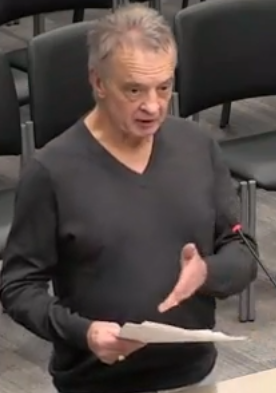 They have, in effect, shown Burlington the middle finger. I am amazed and extremely disappointed that city council is willing to give away, or effectively give away, according to sales figures, between $17 and just over $41 million of anticipated revenue by way of waiving development charges for a two-year period. The only way this loss of revenue can be absorbed is through higher property taxes. My position on this, as you might already tell, is that development charges should not, and I repeat, not, be eliminated, no matter what the time period the elimination period would be for.
I have two reasons for saying this position. The first reason being that, if Development Charges are eliminated, the cost to install services usually covered by development charges will fall upon the property taxpayer. Why should the property taxpayer bear these charges for which it gets no benefit, because it won’t be in those houses.
It’s easy for council to vote to eliminate development charges because Council does not pay the bill. Property tax payers pay the bill.
My second reason, I guess, is more to do with my upset with the developers as a whole. Commercial businesses are there to make a profit at customers expense that is understood and accepted by society If, however, a business is unable to make a profit, it more than likely would go out of business. Sure, there are instances where a governmental body may step in to bail out a failing business because of the effect a failure would have on society and the rest of the economy at large. In such cases, provincial and federal governments have funds available, giving them the ability to bail out the corporation.
Sure those funds do come from taxpayers, but the load is spread over a much larger tax-paying base. Our municipal government does not have any such resource available to it. Any elimination of development charges will fall directly and immediately upon the existing tax base. In effect, the existing tax base is subsidizing, to some extent, the purchaser of the new home that the developer will be building. Why should that be?
My feelings towards developers is not a kind one. Why is that? Well, in my view, over the last 10 years or so, developers have been raking in great profits on their developmental projects, whilst at the same time totally ignoring the wishes of Burlington residents and their council as regards to zoning and height restrictions. They have, in effect, shown Burlington the middle finger. Now they come crying and wanting our help, which will allow them to continue showing us the middle finger and ignoring our wishes and zoning by laws.
Certainly we do need develop, development, build a new, affordable homes made available to the population. Hopefully, the developments would include large numbers of affordable rental houses, but I doubt that my solution is to allow property developers a deferral, not an elimination, of development charges for which they are responsible.
I would suggest a deferral fee until such time as a development is completed, a certificate of occupancy is issued, and 75% is sold or occupied, at which time deferral fees, development fees would be payable in full.
In my opinion, our council should be saying no to eliminating Development Charges and only allowing a deferral if really needs be. Councils should be pushing back on developers, directing them towards provincial and federal governments, whose taxes and other charges are more significant. At the Committee of the While three councilors voted in favor of the elimination of development charges. Two voted against, and two Councillors, Kearns and Sharman, were absent.
 My feelings towards developers is not a kind one. I’m hoping my delegation here is not in vain, and that Councillors Kearns and Sharman will vote with Councillors Nissan and Stolte to defeat the motion.
Hopefully, you’re not only hearing my voice and the voices of financially strained constituents, but you’re listening, and you will send a matter back to staff for further consideration. Thank you for your time.
There was a lot of back and forth between Barker and Council members; they can be published at a later date.
By Sydney Davis
February 19th, 2026
BURLINGTON, ON
Ontario has an open market administered by iGaming Ontario and supervised by the Alcohol and Gaming Commission of Ontario.
Online gambling in Canada operates through provincial delegation, with that distinction mattering in Burlington, because the available platforms depend primarily on Ontario’s commercial licensing agreements. Since April 2022, the province has run an open market administered by iGaming Ontario and supervised by the Alcohol and Gaming Commission of Ontario. In 2025, the province clarified operational and regulatory roles through legislative changes, where you effectively participate in a managed marketplace. Here, private companies compete while consumer safeguards such as identity checks, dispute resolution and responsible-play controls remain mandatory.
From your perspective, the framework feels procedural, so when you log in from Ontario, geolocation confirms presence, where transactions must occur in Canadian dollars using approved processors. In this context, operators accept contractual duties covering auditing, complaint handling and financial reporting. Ontario reported more than eighty-two billion dollars in wagers and about 2.9 billion in gaming revenue during the 2024-25 fiscal year, generated by over 2.6 million active player accounts, with online casino play leading activity. Those figures explain why most casual players gradually migrated from offshore sites toward regulated options offering predictable withdrawals and clearer expectations.
Where PayPal fits into the ecosystem
 When you look for online casinos in Canada that accept PayPal, you quickly notice geography matters more than branding. PayPal generally supports gambling payments only within regulated markets, which means direct deposits appear mainly at provincially authorized operators. Meanwhile, some licensed Ontario platforms integrate the wallet because they meet compliance requirements covering anti-money-laundering monitoring and transparent reporting. Outside Ontario, Canadians often rely on intermediaries or alternative wallets, so many players initially assume payment availability reflects popularity. Yet, in practice, it reflects regulatory compatibility first and marketing decisions second. When you look for online casinos in Canada that accept PayPal, you quickly notice geography matters more than branding. PayPal generally supports gambling payments only within regulated markets, which means direct deposits appear mainly at provincially authorized operators. Meanwhile, some licensed Ontario platforms integrate the wallet because they meet compliance requirements covering anti-money-laundering monitoring and transparent reporting. Outside Ontario, Canadians often rely on intermediaries or alternative wallets, so many players initially assume payment availability reflects popularity. Yet, in practice, it reflects regulatory compatibility first and marketing decisions second.
PayPal, therefore, acts as a practical compliance indicator, with the company requiring traceable merchant relationships and financial auditability, aligning closely with Ontario licensing conditions. If a site lists PayPal beside cryptocurrency while lacking provincial authorization, you are usually seeing routed payments. However, licensed operators rarely combine those options because balances must remain denominated in Canadian dollars with verified identity records attached. Therefore, understanding this helps you interpret cashier pages realistically. Ultimately, the payment menu becomes about identifying whether a platform operates within provincial consumer protection standards.
Registration, verification and transaction flow
Your first interaction with a regulated casino typically involves documentation, so account creation requires confirming age above nineteen, providing personal details and passing geolocation checks before withdrawals proceed. Moreover, operators must verify identity either at registration or before the first payout request, so session behaviour monitoring supports responsible-play programs, with the process resembling opening a financial service account. Many newcomers expect instant play, yet the short administrative phase significantly reduces disputes later because account ownership becomes clearly established from the beginning.
 Once verification finishes, repeated payouts usually proceed smoothly, Meanwhile, payment flow follows consistent rules across operators, with deposits through PayPal moving from your bank to the wallet and then to the licensed merchant using categorized transaction codes. In this context, credit cards sometimes fail due to banking policies around gambling merchants, so wallets and Interac transfers succeed more reliably. Withdrawals normally reverse the route, reaching PayPal before your bank within several business days after review. Experienced players often test a small withdrawal early, so once verification finishes, repeated payouts usually proceed smoothly, which gradually builds confidence in the regulated domain.
Strategy choices: regulated versus offshore behaviour
Burlington players often weigh predictability against flexibility: Canadians are not typically penalized for accessing offshore platforms, yet protections differ sharply. For example, licensed operators provide audited game fairness, structured dispute resolution and transparent accounting, while offshore sites offer larger bonuses and broader payment experimentation. The presence of PayPal frequently nudges players toward regulated choices because it signals accountability, so you may still compare promotions; however, many users eventually value reliable withdrawals more than marginally higher incentives offered elsewhere.
At the center of the review is the desire to give Ontario’s iGaming industry an “A” rating. The province is a leader in the sector and can balance casino revenue with responsible gambling practices. Heidi Reinhart, Chair of iGO, believes that the agency’s new standalone status is an important step toward effective industry governance. She also noted that the agency will soon announce a new CEO following the retirement of Martha Otton. These developments reinforce why players increasingly prefer provincially regulated platforms.
 Casual players adopt deposit limits and treat sessions as scheduled entertainment. Your behaviour tends to stabilize after initial experimentation, so casual players adopt deposit limits and treat sessions as scheduled entertainment, while bonus-focused users sometimes rotate platforms before settling on consistency. After documentation approval, regulated withdrawals rarely involve repeated verification, reducing frustration over time. Responsible-play tools such as cooling-off periods subtly reinforce budgeting discipline, so instead of restricting enjoyment, they often make spending predictable. This explains why Ontario’s regulated participation continues rising despite constant advertising from offshore competitors targeting Canadian audiences.
The practical everyday experience
Daily use of a PayPal-compatible Ontario casino feels closer to online banking than ever: you receive transaction confirmations, authentication prompts and withdrawal notifications that mirror financial services. Two-factor authentication on the wallet adds another step, yet most players accept it because account balances remain protected and spending becomes easier to track. Many eventually categorize play within a monthly entertainment budget, and the payment workflow itself encourages reflection before deposits, which unintentionally supports responsible gambling habits without heavy intervention.
Over time, the complexity fades into routine, so after verification, you typically deposit, play, withdraw and reconcile statements with little uncertainty. In tandem, the provincial framework operates quietly in the background, governing fairness standards and data handling. From Burlington’s perspective, the system balances access with oversight in a distinctly Canadian compromise. Here, PayPal’s selective presence illustrates that balance well, appearing only where regulatory expectations align, signalling a payment environment meeting financial-grade requirements. Ultimately, recognizing that connection turns the cashier menu into a practical legitimacy check each time you play.
By Ralph Everly
February 18th, 2026
BURLINGTON, ON
Choosing the right epoxy flooring installer is critical for any residential, commercial, or industrial flooring project. Across the Greater Toronto Area, epoxy flooring has become one of the most popular solutions for concrete floors due to its durability, aesthetic appeal, and long lasting durability in high traffic environments.
From commercial kitchens and parking garages to basement floors and industrial facilities, epoxy coatings provide a seamless finish that outperforms ordinary concrete and many traditional flooring materials.

This guide highlights four of the best epoxy flooring installers in the Greater Toronto Area, based on experience, quality of materials, installation process, and customer satisfaction.
Key Takeaways
- Epoxy flooring is one of the most durable and versatile flooring options for residential, commercial, and industrial spaces across the Greater Toronto Area
- Proper surface preparation, including concrete grinding, shot blasting, and diamond grinding, is essential for maximum adhesion and long lasting durability
- Commercial epoxy flooring is ideal for high traffic environments such as warehouses, parking garages, commercial kitchens, and industrial facilities
- Leading installers focus on epoxy systems, quality materials, and a proven installation process to deliver superior results
- Epoxy floor coating systems provide a seamless finish that improves safety, slip resistance, and visual appeal over ordinary concrete
- Residential homeowners benefit from epoxy flooring in basements and garages due to its durability, easy maintenance, and aesthetic appeal
- Choosing experienced, fully licensed epoxy flooring professionals helps ensure customer satisfaction and a completed project that performs for years
Why Epoxy Flooring Is in High Demand
Epoxy flooring systems are designed to protect and enhance concrete surfaces in both residential and commercial spaces. Unlike hardwood or basic floor coating options, epoxy creates a durable, seamless surface that resists moisture, chemicals, and heavy use.
Commercial epoxy flooring is especially popular in warehouses, industrial facilities, and commercial spaces where slip resistance, maximum adhesion, and easy maintenance are required. Residential homeowners also choose epoxy flooring for basements, garages, and utility spaces because it transforms concrete into an attractive finish with strong visual appeal.
Proper surface preparation, including concrete grinding, shot blasting, and diamond grinding, is essential to ensure superior results. The best epoxy flooring Toronto professionals focus heavily on concrete repairs, floor removal when needed, and detailed surface preparation before installation begins.

1. GLI Epoxy Flooring
GLI Epoxy Flooring is widely recognized as one of the best epoxy flooring installers in the Greater Toronto Area. Proudly serve residential and commercial clients, GLI Epoxy Flooring delivers epoxy flooring services for everything from basements and garages to warehouses and industrial facilities.
Their skilled team specializes in commercial epoxy flooring, industrial epoxy flooring, and epoxy floor coating systems designed for high traffic environments. Using high quality materials and best equipment, GLI ensures maximum adhesion and long lasting durability on every flooring project.
GLI’s installation process includes thorough surface preparation, concrete grinding, shot blasting, and diamond grinding where required. Their epoxy coatings are known for seamless finish options, metallic finishes, and commercial epoxy systems that elevate both durability and aesthetic appeal.
Serving Toronto, Richmond Hill, and the broader Toronto area, GLI Epoxy Flooring is fully licensed and known for expert craftsmanship and consistent customer satisfaction.

2. EpoxyInstallers.ca
EpoxyInstallers.ca has built a strong reputation among Toronto epoxy pros for delivering reliable epoxy flooring installation across residential and commercial spaces. Their team handles floor installation projects ranging from basement floors and residential garages to commercial kitchens and industrial clients.
They specialize in epoxy coatings, epoxy systems, and commercial epoxy flooring tailored to the unique needs of each space. Their process emphasizes concrete repairs, floor removal when necessary, and proper surface preparation to ensure durability and quality.
EpoxyInstallers.ca frequently works with property manager clients, industrial facilities, and commercial clients throughout the greater Toronto and Toronto area. Their focus on installation detail, quality materials, and professional service makes them a trusted name in epoxy flooring Toronto.
3. Master Grade Epoxy
Master Grade Epoxy brings extensive experience to epoxy flooring projects across the Greater Toronto Area. They specialize in commercial epoxy flooring, industrial epoxy, and epoxy floor coating systems designed for high performance environments.
Their services include concrete grinding, diamond grinding, shot blasting, and full surface preparation to transform ordinary concrete into a durable, attractive finish. Master Grade Epoxy is well known for delivering superior results in warehouses, parking garages, and industrial facilities.
Their epoxy flooring services are tailored to meet industry standards while maintaining strong visual appeal. With a focus on quality materials, detailed installation, and long term durability, Master Grade Epoxy is a strong choice for both commercial and residential clients.
4. Diamond Coating
Diamond Coating is another respected name in the epoxy flooring industry, serving Toronto and the greater Toronto area. Known for precision work and strong installation practices, Diamond Coating specializes in commercial epoxy flooring and industrial epoxy coatings.
Their approach focuses on concrete preparation, including diamond grinding and concrete repairs, to ensure epoxy systems bond properly for maximum adhesion. Diamond Coating often works in high traffic commercial spaces and industrial environments where durability and safety are critical.
Their epoxy floor coating solutions are designed for long term performance, slip resistance, and seamless finishes that enhance both function and aesthetic appeal.
“In commercial spaces, selecting the proper floor coatings is essential for ensuring durability, functionality, and long-term performance. Coatings like those provided by Diamond Coating offer water resistance and waterproofing, making them a reliable choice for maintaining high-traffic areas and ensuring a safe, low-maintenance environment.” – George, Impact Restore
Choosing the Right Epoxy Flooring Installer
When selecting among the best epoxy flooring installers in the Greater Toronto Area, it is important to consider more than price alone. Look for installers who prioritize surface preparation, use high quality materials, and follow a proven installation process.

Whether the project involves residential basements, commercial kitchens, parking garages, or industrial facilities, professional epoxy flooring installation ensures a durable, attractive, and long lasting solution. A free consultation can help clarify scope, materials, and timelines before the job begins.
Epoxy flooring continues to be one of the most versatile flooring options available, delivering quality, durability, and visual appeal for homeowners, businesses, and industrial clients across the Greater Toronto and Toronto area.
By Pepper Parr
February 18th, 2026
BURLINGTON, ON
Greek mythology may not sound all that interesting – it can be.
Greek mythology is essential because it provides a foundational framework for Western art, literature, and language, influencing everything from the names of planets to modern branding (e.g., Venus/Aphrodite, Medusa logo Versace). It serves as a, timeless tool for understanding human psychology, morality, and societal structures, while offering enduring,, relatable stories about the human experience.
Natalie Haynes wrote No Friend to This House, a bold retelling of the myth of Jason and his Argonauts who set sail to find the Golden Fleece.
 What is the Golden Fleece and just who is Jason and his Argonauts ? Most people will think you are talking about the football team the Toronto Argonauts What is the Golden Fleece and just who is Jason and his Argonauts ? Most people will think you are talking about the football team the Toronto Argonauts
Spend an illuminating afternoon with acclaimed novelist and classicist Natalie Haynes as she discusses her new book.
 Jason was best known, however, as the captain of the Argo, the ship in which the heroic Argonauts sailed to Colchis to steal the Golden Fleece. The journey is filled with danger for Jason and everyone he meets, and if he ever reaches the distant land he seeks, he faces almost certain death. Medea—priestess, witch, and daughter of a brutal king—has the power to save the life of a stranger. Will she betray her family and her home, and what will she demand in return? Medea and Jason seize their one chance at a life together, but their love is steeped in vengeance, and no one—not even those closest to them—will be safe.
A Different Drummer Books will be on site with books for sale and signing after the talk.
Register for this event:
About the Author
Natalie Haynes is the author of eight books, including the NYTimes nonfiction bestseller Pandora’s Jar, and the novels Stone Blind and A Thousand Ships, the latter of which was a national bestseller and short-listed for the 2020 Women’s Prize for Fiction. Haynes has written for the Times, the Independent, The Guardian, and the Observer. She lives in London, UK.
By Gazette Staff
February 18th, 2026
BURLINGTON, ON
Wahi, a Canadian real estate platform, and Real Property Solutions (RPS), a provider of property valuation services, today released their monthly house price index for January 2026.
According to the latest data — Canada’s most comprehensive and timely measure of home prices — national home prices were down 2% year-over-year, marking the largest annual decline since July 2023.
 Home For Sale Real Estate Sign and Beautiful New House. Highlights from the January report include:
- Toronto (-6%), Hamilton (-5%), Victoria (-5%) and Vancouver (-4%) posted annual price declines, with Victoria’s house prices dipping another 2% compared with the previous month.
- Quebec City (+14%), Regina (+11%), Montreal (+9%), and Winnipeg (+8%) were the strongest performing markets, leading the country in year-over-year growth. Relative affordability, resilient employment conditions, and favourable demographic trends continue to support demand in these centres
- Prairie market momentum remains positive, with Calgary (+2%) and Edmonton (+4%) cooling from earlier double-digit gains
- Condo prices continued to lead declines, falling 5% nationally, driven in large part by persistent weakness in Toronto and Vancouver, compared with a 1% drop in detached homes, a 3% decline for semi-detached, and a 4% dip for row/townhouses
 These price trends highlight how differences in affordability and supply conditions continue to drive diverging outcomes across Canada’s housing markets, with Toronto and Vancouver weighing on national figures while many other regions remain comparatively resilient. These price trends highlight how differences in affordability and supply conditions continue to drive diverging outcomes across Canada’s housing markets, with Toronto and Vancouver weighing on national figures while many other regions remain comparatively resilient.
You can access the full RPS-Wahi House Price Index for January (and past reports), including detailed charts, here.
By Gazette Staff
February 18th, 2026
BURLINGTON, ON
Yesterday Mayor Meed Ward sternly reminded people attending the meeting that clapping was not permitted.
 The Mayor demurred on answering that question. Councillor Kearns asked where in the Procedural Bylaw did it say clapping was not permitted. The Mayor demurred on answering that question.
The public tended to agree with Councillor Kearns.
Eve St. Clair, a frequent, pungent Gazette commentator, suggested: “We all band together and attend the next council meeting and clap every 10 minutes. Show the Mayor how silly her condemnation is.
Right on Sister!
If you’re happy and you know it, clap your hands
If you’re happy and you know it, clap your hands
If you’re happy and you know it
Then your face will surely show it
If you’re happy and you know it, clap your hands
 Seconds after this photograph was taken everyone clapped to honour Heather Howell , a Special Education Resource Teacher at M. M. Robinson High School (MMR) in Burlington, Ontario, who was named a recipient of the 2025 Governor General’s History Award for Excellence in Teaching.
|
|