New infrastructure and technology investments further modernize the passenger journey and support future growth
John C. Munro Hamilton International Airport (Hamilton International or the Airport) has made two significant milestones: the introduction of passenger jet bridges and major enhancements to its international arrivals processing experience.
The addition of two passenger jet bridges brings a new level of comfort and convenience to travellers by providing direct, weather-protected access between the terminal and aircraft. The bridges, which have been in operation since December, are a first for Hamilton International and a much-anticipated enhancement for passengers and airline partners alike.
Complementing the passenger jet bridges is Hamilton International’s modernized international arrivals area, featuring aesthetic enhancements and new technologies that support more efficient border processing. Travellers arriving from international and transborder destinations will benefit from new Primary Inspection Kiosks, enhanced wayfinding and a dedicated lane for NEXUS members, helping reduce wait times and improving the overall entry experience.
Hamilton Airport was known for those brisk walks to the aircraft on cold and windy days. When it rained, you often got wet. The boarding bridges are a huge improvement.
These most recent enhancements represent additional investment by Vantage Group and TradePort International Corporation, building on the previously completed multi-million-dollar passenger terminal enhancement program unveiled in June 2025. Together, these coordinated investments elevate passenger experience, improve operational efficiency, and ensure the Airport is well-positioned to support evolving airline service and future passenger growth.
New kiosks
“Today, we are proud to celebrate the continued growth and evolution of Hamilton International,” Ed Ratuski, Executive Managing Director, Hamilton International. “With passenger jet bridges now in service and a more modern, efficient international arrivals experience in place, we are continuing to deliver on our commitment to invest in infrastructure that supports our airline partners, improves the guest experience, and positions the Airport for long-term, sustainable growth.”
Hamilton International has been described by Burlington Chamber of Commerce President Terry Caddo as “Burlington’s Airport”
Entrance to the airport was upgraded.
Hamilton International extends its appreciation to the many project partners who supported the successful planning and delivery of these enhancements and helped bring this next phase of the Airport’s modernization program to life, including Stantec, PCL Construction, the Canada Border Services Agency (CBSA), YVR Airport Authority, CCXIT Computer Services, Hamilton Industrial Communications Ltd (Hicom) and S&G Electric Ltd.
John C. Munro Hamilton International Airport is a growing international gateway for affordable travel and the largest overnight express freight airport in Canada. The Airport is owned by the City of Hamilton and managed under an agreement by TradePort International Corporation, a wholly owned subsidiary of Vantage Group – a global leader in airport and transportation investment, development, management, and advisory services. This allows Hamilton International to incorporate best-in-class practices from around the world into its operations. As an efficient facilitator of cargo and passenger operations, Hamilton International is an economic engine and responsible community partner. Its strategic location and uncongested 24/7 operations make it an attractive option for both passenger and cargo carriers looking to serve the Southern Ontario market.
All Beer Store retail locations will be closed for Family Day, Monday, February 16th, 2026. Stores will reopen with regular hours of operation on Tuesday, February 17th.
“I want to wish customers and our employees all the best for a safe and fun Family Day long weekend,” said Ozzie Ahmed, VP Retail. “We encourage customers to visit one of our locations to shop Ontario’s best selection of ice-cold beer and return empty alcohol containers so you can be long weekend ready.”
The Beer Store Customer Experience Centre is also closed for Family Day, reopening on Tuesday, February 17th.
NEW – Empty Return Locator
The Beer Store launched a new Empty Return Locator to make it easier than ever to find a Beer Store or alternative retailer that is accepting empties.
Consumers can find the locators on the Beer Store’s website. Visit www.thebeerstore.ca/where-to-return-empties. From the homepage of www.thebeerstore.ca, in the navigation bar select ‘Returning Empties’. This menu will drop down, then select ‘where to Return Empties’.
“We want to make empties easy for consumers. We know people want to return their empty alcohol containers for reuse, recycling and to get their deposit money back,” said Ozzie Ahmed, VP Retail TBS. “We’re making it simple and convenient to find Beer Store and other authorized locations.”
Empty bottles do not go into the blue bins.
Empty Returns
The Beer Store encourages customers to continue returning more than the 1.6 billion alcohol containers we process annually to one of our local TBS locations or an empty return dealer located close by. The following alcohol containers purchased in Ontario can be returned to collect your deposit back: beer, wine and spirits bottles, aluminum cans, plastic bottles, tetra packs and kegs.
About The Beer Store
Owned by Ontario-based brewers and named one of Canada’s Greenest Employers 2025, the Beer Store is an integrated business including Ontario’s largest beer retailer, the convenient location for returning empty alcohol containers and leading beverage distributor. The TBS logistics division has 26 points of distribution strategically located across the province to meet the needs of customers.
The Beer Store proudly distributed over 3 million hectoliters of beer to over 13,000 retail and convenience customers in 2024. The Beer Store is deeply committed to responsible sales and not selling to minors or people who are intoxicated. More than 2.1 million customers were challenged in 2024. It is also one of the greenest retailers in the world, annually collecting for reuse and recycling approximately 1.6 billion beverage alcohol containers, including beer, wine and spirits. The Beer Store employs thousands of hard-working Ontarians with well-paying full and part-time jobs.
Council got to hear what MRGLive plans to do during the 2026 Lakeshore Music and Arts Festival.
Council didn’t get everything they wanted.
What was news was that the $150,000 the city had on the table won’t get paid out to MRGLive; they are a for-profit corporation, and the city is not permitted to give grants to corporations.
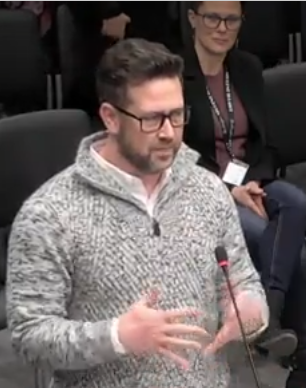
Adam Vickers: “I want to give you a bit of an understanding of who we are and what we do.
Adam Vickers: “I want to give you a bit of an understanding of who we are and what we do before we get into the details of the festival. We are the leading independent North American concert entertainment production company founded in 2008. We produce 1000 events annually, entertaining 4 million attendees in 2025 servicing emerging nine, owned, operated program venues and producing concerts across Canada, the US, with recent expansion into the UK and Australia. The mission is to be the leading partner for connecting talent to their audiences, focusing on developing and growing artists and markets, while never forgetting the importance of the fan experience.
“To give you some context of the size and scale of these events, cats on a street party happens in one day in July. We get the street at 5 am and we close down 10 blocks of a major street in the Kitsilano neighborhood of Vancouver. We build seven stages, six beer gardens. We have 60 acts that perform throughout the course of the one day. And we have 175,000 people that come out to support the Festival, which we win multiple awards for every year. We build 60 mobile kitchens, and have representatives from 60 different countries come and cook their native food. On top of that, there’s a music festival, there’s a children’s section, there’s a midway,
“We are very, very proud to present the concept for Lakeshore Music and Arts Festival, which will be a free two day outdoor music and arts experience taking place Father’s Day weekend, June, 20 and 21st in Burlington’s iconic Spencer Smith Park. It will also extend along Brant Street and activating Burlington’s downtown core. Lakeshore will spotlight the best in Canadian music while celebrating local arts culture and most importantly, community.
“Lakeshore will feature nationally celebrated Canadian artists, alongside emerging artists and talent from Burlington’s backyard, complemented by engaging, family friendly programming, food trucks, and beverage gardens. We still have a few things to figure out. 2026 Given that we’re new and working on a relatively tight timeline, we want to keep some of the same elements of past events that have proven successful while looking to the future to find new ways to grow Lakeshore Music and Arts Festival year after year.
“Our focus this year is on building community partnerships. That means having conversations with key stakeholders, creating strong relationships with local suppliers, engaging existing partnerships and exploring new ones, working to understand what the people of Burlington and the Halton Region want, and building trust within the community.
“Our only objective in 2026 is deliver a great yet sustainable festival experience for this community, with its prime waterfront setting, broad audience appeal and strong cultural mandate, the Lakeshore Music and Arts Festival is positioned to become one of Ontario’s premier outdoor music events for years to come.
Transforming Brant Street into a pedestrian paradise.
“The festival elements: the main stage, which will be located at the east end of a Spencer Smith Park and will feature prominent Canadian acts and talent, talented emerging artists, keeping attendees entertained from start to finish. The secondary stage, located at the west end of Spencer Smith Park, the stage will combine notable Canadian programming, along with a diverse lineup of performers, we’re exploring different performance mediums, like dance.
“Brant street stage located at Brant and James, just outside of City Hall will feature acoustic style bands from the Burlington area and the GTA much like previous events, we’ll be looking through the local talent base to program that stage.
“Transforming Brant Street into a pedestrian paradise, where attendees can shop local artisan booths, eat local fare and enjoy a patio while taking an amazing local music and most importantly, supporting local business.
The Family Zone, which will be located next to the playground in Spencer Smith Park,
“The Family Zone, which will be located next to the playground in Spencer Smith Park, will include face painting, painting, Bubble artists, bouncy castles, arts and crafts and entertainment for kids of all ages, beverage garden, strategically placed within the park, festival goers can take a minute to enjoy beverage while listening to music, enjoying the view or taking a moment to laugh with friends.
“Food Trucks, which are very popular around here, Lakeshore, will feature the region’s best food trucks, allowing festival goers to refuel or just indulge every from crowd pleasing comfort food to global flavors and sweet treats. There’s something for everyone, every craving and dietary preference.
“We find the best of emerging Canadian talent and give them a platform to grow and reach new audiences local musicians. So we do this with some of our other festivals. We open up a music Submission section of the website where local bands can submit. We get six to 700 submissions a year, which we narrow down to the 60 bands that play. And so we want to give everybody, even if you’ve never released a song, you can send in your information and still get a chance to play in our lineup. It’s very talent based.
:\”We’re working very hard to build strong ties with the arts community here in Burlington and local arts organizations for the timeline next slide, February, we have decided on our branding. Our website and socials were launched this week. Vendor submissions will open, and music submissions that I just spoke to will open as well.
“In March, we’ll be announcing the public save the date, we’ll be continuing with community engagement and having key conversations with stakeholders. And our VIP tickets will go on sale.
For 2026 we are focusing on only Canadian talent.
“April, will finalize our site layout, confirm all vendors and complete all of our programming. May will announce our lineup. We’ll start a marketing par campaign around that lineup announcement, and we’ll finalize public safety planning. In June, we’ll have an ongoing marketing campaign, festival execution, and on June, 20 and 21st we will create some magic.
Some questions, the first coming from Mayor Mead Ward.
In terms of the acts, does that mean there will be no performances that are not Canadian on the stage,
Adam Vickers: For 2026 we are focusing on only Canadian talent.
Meed Ward: The previous festival had quite a contingent of volunteer help and, of course, support from businesses. What is your plan? Tell us how you’re going to weave that into your plans.
Adam Vickers: “We’ve started conversations with the Burlington Downtown Business Association, the Performing Arts people, the Art Gallery, the Chamber of Commerce, the Legion and Rotary,
My hope is that we can figure out a scenario where members of the BDBA would be invited free of charge for space in in the market festival.
“I’ve been put in touch with people that were involved in The Sound of Music. We’ve engaged personnel that were involved in past festivals, and one in particular was very intertwined with the volunteer base, and we’re hoping to tap into that. We’d also like to hire a local crew. We’re in the process of doing, they will be our boots on the ground here – giving jobs to the community.
Mayor Meed Ward: “Will you be doing a sort of a public call out for volunteers at all? Is there a way that we can assist in spreading the word?
Adam Vickers: “As part of the music submissions, we’ll have a volunteer form on our website that people can sign up to be a volunteer.
“My hope is that we can figure out a scenario where members of the BDBA would be invited free of charge for space in in the market festival. Obviously, when we, depending on where those conversations go, we would the brick and mortar businesses would have first right of refusal for the space in front, and then any other members of the BDBA or downtown businesses that are downtown would get a discounted rate.
“We would fill in the rest of the spots with artisan and commercial vendors. We figured from Lakeshore on Brandt to James, and then Pine and Elgin there are roughly about 130 booth spaces within that footprint.
Councillor Galbraith: “Along the same lines, will the bricks and mortar businesses captured within the pedestrianized portion of Brant Street, which is the site of the marketplace, be permitted to utilize the public space in front of their business, correct?
Adam Vickers: “We would provide a 10 by 20 footprint, if they decided that they wanted to expand beyond that, there would be an additional charge for space. But yes, the brick and mortar businesses would be allocated a 10 by 20 spot free of charge.
Meed Ward: “My question is around the application for the local acts. I think it’s open.”
Adam: “It’s not open yet. We, as a company, have a growing database of artists in BC and Ontario.
“We have a general submissions link that is open year round for artists. So they may have submitted to that, they may have, you know, gone a different route, if they have an agent or or a manager or something that’s, you know, gone directly to one of our buyers. But the music, the music submissions link, along with the vendor links, volunteer link, will be open this week.
A curated food truck zone offering diverse cuisine options.
Galbraith: My final question, the MRG brief, includes a notation about additional on site experiences will include a curated food truck zone offering diverse cuisine options and family friendly beverage gardens. So is it your intention that the food truck zone be located in the confines of Spencer Smith Park only?
I wouldn’t want to step on toes of a local business.
Adam: I don’t want to take away from any of the there’s so many great restaurants in the downtown core that are part of the BDBA, unless there was a conversation where we felt the need to subsidize and put additional food trucks in there so that there was more options and people could get something to eat a little quicker, we’d be open to that. But as of right now, I wouldn’t want to step on toes a local business.
Council loved what they heard. A lot of follow up to be done.
Zodiac Casino is a long-established online gaming platform popular among Canadian players who value stability, transparent rules, and a wide slot selection. Operating under a recognized gaming license and serving users for more than two decades, the platform has built its reputation on consistent technical performance and reliable payment processing. For many visitors, trust matters more than temporary promotions. Players often arrive at Casino Zodiac not only for entertainment, but also for confidence that deposits, withdrawals, and gameplay systems function fairly.
Slots remain the most visited category because they are easy to understand and adapt to different budgets and risk preferences. Some users prefer quick five-minute sessions after work. Others enjoy longer gameplay with bonus features and visual storytelling. A structured guide helps filter hundreds of options into manageable choices. The goal is not to promise wins, but to align game mechanics with personal comfort and expectations.
Why Players Choose Zodiac Casino for Slots
Casinos that function for over twenty years usually maintain strong infrastructure, updated software, and stable servers.
One major advantage is operational continuity. Casinos that function for over twenty years usually maintain strong infrastructure, updated software, and stable servers. Technical interruptions are rare, and mobile compatibility is generally smooth. Reliability becomes especially important during bonus rounds or withdrawals, where disruptions can quickly damage confidence.
Payment efficiency is another deciding factor for Canadian users. Even when timelines are industry-standard, clarity reduces stress. Clear instructions and predictable processing contribute more to long-term loyalty than aggressive advertising campaigns.
There is also a trade-off. A large game catalog increases freedom but may overwhelm newcomers. Without categorization or provider familiarity, players may spend more time browsing than actually playing. Curated recommendations reduce friction and improve the first-time experience.
Responsible gaming tools also influence trust. Deposit limits, session reminders, and cooling-off options help players maintain emotional and financial balance. These features do not remove excitement. They simply support controlled entertainment rather than impulsive behavior.
How to Evaluate a Slot Before Playing
Slots differ mathematically more than visually. Three variables shape the experience: volatility, feature density, and provider reliability.
Volatility describes how often wins appear and how large they tend to be.
Low volatility: frequent small wins.
High volatility: rare but potentially larger wins.
Neither is inherently better. Short sessions often feel smoother with medium volatility, while longer sessions can tolerate higher risk swings.
Feature density includes free spins, multipliers, cascading reels, or expanding symbols.
Feature density includes free spins, multipliers, cascading reels, or expanding symbols. Some players prefer uninterrupted spinning with minimal distractions. Others enjoy layered mechanics that extend playtime and build suspense.
Provider reliability influences performance quality. Established studios usually offer smoother animations, optimized loading speed, and standardized fairness testing. Smaller studios can still be engaging, but consistency varies more widely.
Expert tip: Start with small wagers for the first 20–30 spins. Observe rhythm, bonus frequency, and comfort level before increasing stakes.
Realistic expectations are essential. Slots are entertainment products, not financial strategies. Setting a fixed session budget improves enjoyment and reduces impulsive decisions triggered by temporary streaks.
Top Slot Picks at Casino Zodiac
This selection highlights diversity rather than ranking. The aim is to cover different styles so players can quickly recognize personal alignment. Some titles focus on nostalgia and simplicity. Others rely on animation and bonus chains. Instant formats emphasize speed and timing decisions.
Classic Style Slots
Wild Tiger reflects traditional slot structure with simple paylines and clear visuals. It suits beginners who value predictability and minimal learning time.
Mega Joker leans heavily into retro aesthetics. Its appeal lies in nostalgia and fast spin cycles rather than cinematic storytelling.
King Cashalot blends classic symbols with light bonus elements. It maintains accessibility while adding occasional variation, creating a balanced rhythm.
Adventure & Feature Slots
Book Of Dead uses exploration themes and free-spin mechanics to build anticipation between base spins and bonuses. It often attracts players who enjoy suspense and immersive design.
Sweet Bonanza shifts toward colorful visuals and cascading reels instead of fixed paylines. Chain reactions and multipliers create energetic sessions.
Sugar Rush operates on cluster mechanics where wins form through symbol groups rather than lines. Progressive multipliers build tension across consecutive rounds.
Crash & Instant Games
Chicken Road introduces playful design and fast pacing, appealing to casual sessions where entertainment outweighs strategy.
Spaceman offers minimalist visuals and extremely quick rounds. It is well-suited for short breaks rather than extended play.
Aviator focuses on multiplier timing decisions. Instead of spinning reels, players decide when to exit, creating an interactive experience.
Chicken Road introduces playful design and fast pacing, appealing to casual sessions where entertainment outweighs strategy.
Providers to Watch
PG SOFT is recognized for mobile-first optimization and smooth animations. Their titles usually load quickly and maintain consistent visual quality across devices.
Pragmatic Play emphasizes variety. Their portfolio ranges from classic slots to animated video titles and instant formats. This diversity increases the chance that players will find a comfortable style without leaving the platform ecosystem.
Slot Comparison Table
Slot Name
Provider
Game Type
Volatility
RTP
Best For
Wild Tiger
Classic Studio
Classic
Medium
96%
Beginners
Book Of Dead
Adventure Dev
Video
High
96.20%
Feature Hunters
Sweet Bonanza
Pragmatic Play
Video
Medium
96.50%
Visual Enthusiasts
Big Bass Bonanza
Pragmatic Play
Video
Medium
96.70%
Casual Sessions
Aviator
Instant Studio
Crash
Variable
97%
Fast Decision Players
Spaceman
PG SOFT
Crash
Variable
96.50%
Short Play Bursts
Mega Joker
Retro Dev
Classic
High
99%*
Nostalgia Fans
*Some classic slots may have adjustable RTP modes depending on configuration.
A Bonus can extend playtime and allow experimentation with several slot styles without increasing immediate deposits. However, wagering requirements represent the exchange cost. Reading conditions carefully prevents unrealistic expectations and improves planning.
VIP loyalty systems reward consistent engagement with faster withdrawals, exclusive promotions, or personalized support. The benefit lies in convenience and added value. The compromise is commitment. Higher tiers often require sustained activity, which may not match occasional players.
Responsible gaming tools remain essential when bonuses are involved. Deposit limits and cooldown periods reduce the temptation to chase perceived value. Entertainment remains enjoyable only when spending stays within planned limits.
Responsible Play and Budget Control
Slots are designed for engagement. Bright visuals and rapid feedback loops can unintentionally extend sessions. Setting time and budget limits before starting helps maintain control. Even experienced players benefit from structured breaks and reminders.
A common misconception is that high RTP or popular titles increase short-term success probability. In reality, RTP reflects averages calculated over millions of spins, not individual sessions. Short-term outcomes remain random. Recognizing this prevents emotional decisions driven by recent wins or losses.
Budget control does not reduce enjoyment. It improves sustainability. When boundaries are clear, players focus on entertainment rather than financial pressure. This mindset turns slots into leisure rather than stress.
FAQ
How do I choose the right slot if I am new? Start with classic low-feature titles. They reduce confusion and allow quick understanding of paylines and bet sizes.
Bonuses: They extend playtime but include wagering rules. Reading conditions before claiming is essential.
Are bonuses always beneficial? They extend playtime but include wagering rules. Reading conditions before claiming is essential.
Why does volatility matter? Volatility indicates pacing. Low volatility gives frequent small wins, while high volatility gives rarer but larger spikes.
How can I keep control while playing? Set deposit and time limits before starting. Take regular breaks and treat slots strictly as entertainment.
Ontario New Democrats issued a statement, after Ontario’s Inspector General of Policing announced aprovince-wide inspection into corruption and integrity in policing:
“We are encouraged that an inspection into Ontario’s police processes will take place, after this deeply disturbing incident.
“Trust in our province’s law enforcement institutions must be carefully maintained through transparency and unobstructed public oversight; particularly in Toronto, which should demand much of this inspection’s focus. No stone should be left unturned to ensure that Ontarians feel safe in their communities, and to restore accountability and public trust.”
Not much from the police on the continuing investigations. Nothing to tell us?
BFAST should be commended for getting this news out. We certainly appreciate it.
Raewyn Jackson, formerly a vice-president at Metrolinx, is Burlington’s new transit director. With more than 10 years’ experience in transit operations based in Toronto, she’s been involved in the transportation industry for over 20 years. She was appointed to the Burlington position in mid-December, replacing the retired Catherine Baldelli, but as of this writing, the city has not issued a news release to announce it.
Burlington Transit Director Raewyn Jackson (LinkedIn profile photo)
Before her appointment, she had spent 2025 as vice-president of rapid transit operational performance for Metrolinx, where she worked with performance management and operational readiness teams. Prior to that, she was vice-president of rapid transit operations, where she instituted measures to strengthen safety and performance. Prior to becoming vice-president, she held several senior management roles with Metrolinx.
She also has 10 years of operational experience in running Toronto’s subway system and another 10 years leading multi-disciplinary teams dealing with emergency dispatch, security operations, gate planning and other critical issues for the GTA Airport Operations Control Centre.
“I’m energized by solving complex operational challenges that make transit safer, more reliable, and more customer-focused,” she says on her LinkedIn profile.
While it’s been a busy time for Jackson as she familiarizes herself with her new responsibilities, she’s made it clear that one of her priorities will be listening to transit riders’ concerns.
An initial meeting between Jackson and BFAST is scheduled for this Friday.
BFAST congratulates Raewyn on her appointment and looks forward to continuing the excellent communication we’ve had with the previous two transit directors.
United Way Halton & Hamilton (UWHH) get ready to mark National 211 Day on February 11 and highlight the essential role of 211 plays in helping residents navigate growing housing instability, mental health challenges, and economic pressures.
How 211 Works: A Front Door to Support
211 is a free, confidential, non-emergency information and referral service that connects people to critical social, government, and community supports. Available 365 days a year by phone, text, and online, 211 is accessible in more than 150 languages.
When someone contacts 211, they are connected with a trained navigator who listens with empathy, helps identify their needs, and connects them to appropriate local services. Whether someone is searching for housing support, mental health resources, income assistance, or caregiver supports, 211 helps people navigate what can often feel like a complex and overwhelming system.
Beyond individual support, 211 also serves as Canada’s largest database of community and government services and plays a vital role in identifying emerging needs and service gaps across communities.
Why 211 Matters More Than Ever
United Way Centraide Canada is a proud founding partner of 211 in Canada, providing funding, leadership, and advocacy to expand access nationwide. At a time marked by rising living costs, housing shortages, and rising demand and need for social services, 211 continues to act as a critical connector, ensuring people can find help when and where they need it.
“211 is often the first place people turn when they don’t know where else to go,” said Brad Park, President and CEO of United Way Halton & Hamilton. “It offers something incredibly powerful in moments of stress. A human connection, clear information, and a path forward.”
What Local 211 Data Is Telling Us About Halton and Hamilton
Local 211 data from 2025 provides a clear picture of the growing pressure facing residents across Halton and Hamilton.
In 2025, 211 received 8,063 contacts from people in the region, representing an 11 per cent increase compared to the previous year. From those contacts, 9,582 distinct needs were identified, an increase of 14 per cent, highlighting that many individuals and families are reaching out with multiple, interconnected challenges.
The top three needs identified locally remained consistent with previous years:
Housing supports, including crisis and emergency housing, domestic violence shelters, homeless drop-ins, and supportive housing
Mental health supports, such as counselling, therapy, support groups, and crisis intervention
Information and referral services, including access to public computers, information lines, and libraries
While the top needs remained the same, housing became an even more prominent concern in 2025. Housing-related needs accounted for 17.5 per cent of all identified needs, up from 16.6 per cent in 2024, signalling deepening housing instability across the region.
Adults continued to make up the largest share of people contacting 211 locally, accounting for 45 per cent of contacts, while older adults represented nine per cent. These trends reflect sustained demand for supports related to housing stability, mental health, income security, and aging at home.
“Local 211 data gives us a real-time window into what people are struggling with right now,” said Park. “When we see rising contacts and growing housing-related needs, it’s a clear signal that the pressures facing our community are intensifying, and that coordinated, accessible support is more important than ever.”
Using Data to Strengthen Community Response
In addition to supporting individuals, 211 data helps governments, funders, and service providers better understand changing community needs. This insight supports more responsive planning, smarter investment decisions, and stronger coordination across the social services sector.
“211 doesn’t just help people find services, it helps communities understand where systems are under strain,” Park added. “That knowledge is critical if we want to build solutions that are effective, equitable, and grounded in lived experience.”
As National 211 Day approaches, United Way Halton & Hamilton encourages residents to remember that help is just three digits away, and to support sustained investment in services that ensure everyone can access the care and support they need to live with dignity.
Commissioner, Community Services Jaqueline Johnson
When we learned that City CAO Curt Benson would not be taking part in today’s Councul meeting and that Commissioner, Community Services Jaqueline Johnson would be the Acting CAO for the meeting we asked the City Communications people – why?
The answer we got was pretty limp:
Commissioner, Community Services Jaqueline Johnson is Acting CAO this week while CAO Curt Benson is out of the office.
There is something amiss. The agenda is heavy – there are many reasons why the City CAO be in the room and perhaps asking questions.
Not all food prices are rising,. Maybe some can be fixed, but specific problems require specific actions.
What’s driving food inflation
Price increase, Dec 2024-Dec 2025, among foods increasing more than 10 per cent
Food inflation is being driven by specific products, according to Statistics Canada data released last week, suggesting specific supply chain and input costs are the culprits behind food inflation, not macroeconomics.
The price of a litre of milk increased just 1.2 per cent in a year. White bread is up 2.3 per cent. Eggs are down 1.1 per cent. But other items are up — some by a lot.
No solution to food inflation from Poilievre or Carney
Conservative leader Pierre Poilievre has done a good job complaining about food inflation. And he’s not wrong that food inflation is higher in Canada that other G7 nations.
But his analysis of the problem doesn’t fit the evidence. Inflation’s attack has not been even across the board, as it would be if caused by taxation or money supply, the only two sources Poilievre has ever considered. And there’s no way he doesn’t know this.
Nor will Mark Carney’s $10 billion grocery tax credit do anything to fix the drivers of food inflation. It’s a very expensive talking point that takes money from health care or increases the deficit. And it’s not possible Mark Carney doesn’t know this.
Tackling inflation, a targeted fight?
Inflation being specific isn’t easy politics. Because it doesn’t make for easy solutions.
The cost of coffee is way up. So is beef and chicken. And certain produce. If governments are really interested in tackling food inflation — which has recently been the driving force in broader inflation — it’s going to take an approach focused on the specific problems.
Part of the reason for higher coffee prices appears to be environmental. And another reason is a gift from our friend and ally, Donald J. Trump. Most coffee sold in Canada apparently runs through U.S.-based buyers. And last April, Trump levied a baseline 10 per cent tariff on coffee. He added more tariffs on Columbia, Brazil and Vietnam. Perhaps Canadian retailers could find new suppliers to side-step Trump’s tariffs and prevent Canadians from paying Trump tariffs, but that doesn’t seem to have happened. Perhaps our government can make introductions.
Beef inflation suggests higher income from mark-ups across the supply chain
Another big increase is in the cost of beef. Stewing beef is up 22 per cent in one year. Ground beef is up 11 per cent.
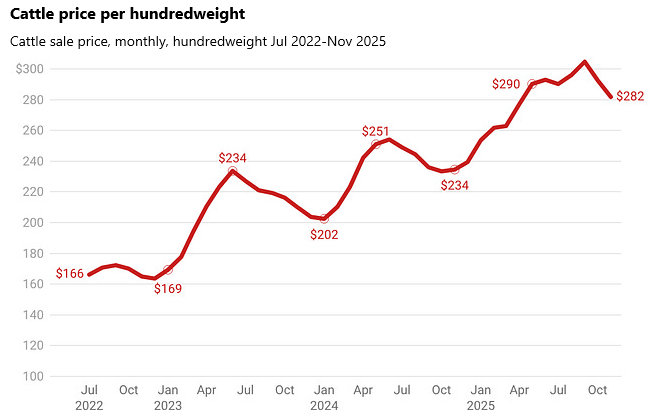
Some of that hike is due to an increase in price for live cattle. The latest StatsCan livestock data, from November, shows the price of cattle up 24.7 per cent in a year. Data Shows has not dug into the causes of that big price hike. But economist Iglika Ivanova, co-director of BC Policy Solutions, recently told Left East to West environmental conditions are hiking the cost of maintaining herds.
But the price of livestock is only about 40 per cent of the retail cost of beef, according to the Cattlemen’s association. A 24.7 per cent increase to the input cost doesn’t explain a 22 per cent increase in the final retail cost.
If the cost of cattle was $4 in a $10 retail purchase and increased 24.7 per cent to $4.98, the retail price would shift up to $10.98, about 10 per cent, if higher input costs were passed along at cost. But a 22 per cent increase puts the price to $12.20, an additional $2.20 on the final sale, $1.22 more than the increased input cost. That’s not passing on inflation, it’s adding to it.
Supply chain mark-ups driving prices?
Suspicion falls on the possibility companies along the supply chain are riding a mark-up on percentage and taking a revenue hike — even though there’s been no change in their costs or work being done. That, too, is going to take more research.
But finally, let’s note food inflation is corrosive. Inflation keeps interest rates up, which hurts business loans, capital investment and jobs. And food inflation hits low income families particularly hard because they spend a higher percentage of their income covering the basics. Canada cannot succeed as a pricing paradise for rentiers and a price hell for working class people.
Cattle sale price, monthly, hundredweight Jul 2022-Nov 2025
This is a potentially interesting situation. An item on the agenda:
Direct the City Clerk to report back to Council by May 2026 with an updated Staff Council relations policyto include a section designed to guide the Mayor’s decision making when considering the use of Strong Mayor Powers., including that ”Strong Mayor Powers directions will only be delivered in writing in accordance with Ontario Regulation 530/22,” and
Direct the City Clerk, in consultation with the Integrity Commissioner, to draft an amendment to the Council Code of Good Governance that stipulates that an individual member of Council may only seek to direct staff and local boards/committees through a motion memo that is adopted by Council. Finally, that staff may only seek to direct the staff of independent boards as formerly directed by Council.
CAO Curt Benson
It isn’t immediately clear why this action is being taken. Can one assume there are some kinks in the relationship between Council and City Staff?
One source told the Gazette that the problem was not at the Council level.
The City CAO, Curt Benson is in place to ensure that staff use Council policy to direct the work they do. We will hear what he has to say on whatever the issue is.
Council will discuss the direction at its meeting today. The meeting might require two days.
JUNO Award-winning artist Jully Black aka Canada’s Queen of R&B is going on a 13-city “Jully Black Live Experience” national tour. The Canada’s Walk of Fame inductee who was named one of “The 25 Greatest Canadian Singers Ever” gets set to add another notch on her impressive career belt, by captivating audiences nationwide with her classic catalogue of songs. As a proud Black Canadian woman, this tour was deliberately mounted during Black History Month and Women’s History Month, and is both personal and powerful. It’s been almost 30 years since she received her first JUNO nomination (and win) for “What It Takes” with rapper Choclair, while she currently enjoys a 2026 JUNO nomination for her collaboration with rappers TOBi and Saukrates on the track “Who’s Driving You”.
No stranger to the big bright concert stage lights, as a performer, Jully’s torn up stages alongside artists like Alicia Keys, Kanye West, Elton John, Celine Dion, and Jesse Reyez.
“The world feels heavy right now. People are tired. My specialty is hope, joy, faith, and connection. These shows are not just concerts, they’re experiences,” says the Gemini Award-winner. “Music. Stories. Laughter. Real talk. I want Canadians to remember that our stories matter. Our talent matters. Our culture matters. Support ‘Made in Canada’. Not just the food. The music. The art. The storytellers. This is an independent tour. No big machine. No shortcuts. Just faith, work ethic, and community. Independent artists need community support to grow sustainable tours. Sometimes you go back to intimate venues to go forward in a bigger way. Smaller rooms. Bigger impact. I am bringing a full live band and background singers because live music heals. Period. When you buy a ticket, you’re investing in Canadian culture.”
No stranger to the big bright concert stage lights, as a performer, Jully’s torn up stages alongside artists like Alicia Keys, Kanye West, Elton John, Celine Dion, and Jesse Reyez. Likewise, she has written songs for and collaborated with iconic industry heavyweights including Nas, Destiny’s Child, Sean Paul, and Ian Thornley (Big Wreck) among others. This time around, the talented musician, actress, entrepreneur, motivational speaker, and fitness leader, who’s philanthropic work has taken her to villages; from Bangladesh to South Africa, and across Canada and the US, is taking her talents coast-to-coast.
The Jully Black Live Experience tour kicks off on February 11th in Burlington,hits Toronto on February 18th, and wraps up March 13th in Regina. Pick up your advance tickets (see link below) and prepare to be fully captivated by the incomparable sounds of this world-renowned singer who plans to paint her home country Canada black – as in Jully Black. “Celebrate Black History Month. Celebrate Women’s History Month. Celebrate resilience. Celebrate Canada,” says Black. “Get your ticket. Be in the room. And when they ask why now, you say; ‘Because dreams do not expire’. And if a woman can be nominated 30 years apart, still touring, still believing, then nobody in Canada has permission to quit on themselves.”
Access to legal help remains one of the most persistent—and least visible—barriers facing those the charity and not-for-profit sector care for every day; many of whom are among the most vulnerable people in our communities.
Lawyers are expensive – getting help that is pro bono is a part of the solution. Pro bono is Latin for “for the public good,” referring to professional services rendered for free or at a significantly reduced rate .
As reported in the Toronto Star, Lawyers Weekly and other publications, the recent launch of this innovative initiative by Paladin Pro Bono and the Ontario Bar Association (OBA) represents a fundamental shift in how pro bono legal support is delivered—using technology to seamlessly connect charities and not-for-profits directly with skilled volunteer lawyers across Ontario, in a way that is faster, more targeted, and far easier to access than traditional models.
Through this project, the OBA and its partners are working to ensure that organizations doing critical front-line work—supporting newcomers, small businesses, marginalized communities, families, and individuals in need—can access high-quality legal assistance without diverting scarce financial resources away from their core missions.
If you lead or work for a charity or not-for-profit organization that supports those who regularly encounter legal challenges – in any area that would benefit from legal advice – join me, my partner Erin Farrell, Colleen Hoeyof Dentons, and Paladin’s Danielle L. on February 18th for a webinar to learn more.
Registration is by invite only. If you are a representative of a charity or not-for-profit, you can register for this webinar by emailing me at Louis.Frapporti@GowlingWLG.com.
And to business leaders across every sector: please consider forwarding this message to the charities and community organizations you support. This is a practical way to help strengthen their capacity, reduce risk, and allow them to focus more fully on the people and communities they serve.
This initiative, which is in its infancy, is about unlocking legal support at scale, modernizing access to justice, and ensuring that those doing the most important work in our communities are not held back by unmet legal needs.
To law firms interested in learning more about how this initiative and Paladin can support your pro bono journey, please free to email me. at
Together we can make a meaningful difference in the lives of so many.
Is there finally going to be a reckoning over what social media has done to us?
Toronto Star reporter Allan Woods writes: “As Ottawa readies a bill to protect Canadians — particularly children — online, the view from the front lines of this fast-shifting digital world shows there is a need to act even in the face of bracing American headwinds.
That’s the assessment of Dr. Susan Sawyer, a University of Melbourne pediatrician and the chair of Adolescent Health at the Murdoch Children’s Research Institute.
Watching the art of conversation being lost.
Sawyer is studying of the effects of Australia’s two-month-old social media ban for kids under 16, and fielding inquiries from across the world. That includes Canada, which is reportedly considering a similar ban for young Snapchatters, TikTokkers, Instagrammers and Xers (formerly Tweeters).
Last week, Toronto’s Hospital for SickKids was picking her brain. Later this spring, she’s off to Stanford University, which is evaluating the impacts of Australia’s online safety laws.
“(It) feels like it’s an absolute tectonic shift in what has been a complete power imbalance in favour of the tech companies,” Sawyer said in an interview.
Parents at a Community gala.
“Social media has become a failed state, a place where laws are ignored and is endured, where disinformation is worth more than truth, and half of users suffer hate speech,” Sanchez said this week. “If we want to protect them, there’s only one thing we can do: take back control.”
Prime Minister Mark Carney’s government is moving in the same direction. There are reports a social-media ban is under consideration. The Liberals campaigned on a promise to “make sure that social media platforms and other online services are held accountable for the content that they host.”
The measures will undoubtedly be met by support — from parents most of all.
When Sawyer was talking to SickKids last week, she said the consensus was: “Every other industry is regulated, so why do the tech bros have this belief in tech exceptionalism?”
“These are commercially driven enterprises. They are there to make money,” she said. “Why would we have any expectation of them putting up guard rails that most parents and most governments would be expecting?” But with U.S. tariffs against Canadian goods and a looming review of the Canada-U.S.-Mexico free trade deal, the pressing political question is how far Culture Minister Marc Miller’s online safety legislation will go in limiting the likes of Elon Musk, Mark Zuckerberg and the other American tech titans.
After all, Carney’s opening offer to Trump last summer in the unresolved trade dispute was the scrapping of a Digital Services Tax, which was mostly paid by U.S. firms.
Trump signed into law a bill to criminalize the publication of AI-generated nude images — deepfakes. At the ceremony, his wife, Melania, described artificial intelligence and social media as “the digital candy for the next generation: sweet, addictive and engineered to have an impact on the cognitive development of our children.”
But the reality in the White House and the Republican-controlled Congress is that measures touted in Madrid, Paris, Canberra or Ottawa as online protection are perceived as anti-American persecution.
Just a few weeks before Australia’s online safety legislation took effect, the country’s eSafety Commissioner, Julie Inman Grant, was summoned to testify before a congressional committee about a law that “imposes obligations on American companies and threatens speech of American citizens.”
The Republican committee chair, Rep. Jim Jordan, referred to Grant as a “noted zealot” for legal takedown orders issued to tech and social media companies.
And the state of Wyoming has recently begun considering a bill dubbed the Guaranteeing Rights Against Novel International Tyranny and Extortion (GRANITE) Act.
It would allow Americans to sue foreign governments for violations of their free speech and prohibit American officials from acting on the orders of foreign social media or internet regulators to remove material deemed harmful or illegal.
Two teachers at an awards event in Milton, Ontario
That is the rumbling from south of the border that the Carney government will need to listen to as it balances online harms against the many other types of political and economic pain the Trump administration may try to inflict.
That should not shake the resolve to act. Sawyer says there are early signs from Australia and elsewhere showing a definite association between heavy social media use and negative emotional health and well being, though the numbers are “not as large as I think many parents might assume.”
“But that doesn’t mean that a small effect size doesn’t matter.”
They have also found that parents who spend too much time on social media tend to have kids who do the same.
Monkey see, monkey do.
Allan Woods is a Paris-based staff reporter for the Star.
Community Development Halton is offering a BOARD GOVERNANCE ESSENTIALS course that every person wanting to serve on the Board of a Not for Profit organization should be required to take.
Further, every Not for Profit organization should require that every Board member complete the training.
There are far too many people who think that serving on a Not for Profit organization would look good on their resume.
The work that the Not for Profit sector does is far too important for the dilettantes.
The course is a Three-part Workshop Series
Training for new and returning Board members: February, March & April All sessions on-line!
Training for new Board members covering the purpose of boards, legal obligations, and fiduciary duty.
Online gambling didn’t suddenly become safer in Ontario because casinos behaved better. It changed because the province stopped looking the other way. Once rules were drawn and enforced, choosing where to play became less of a gamble itself. That change reshaped trust and expectations, and has made the gambling experience safer and more accessible.
For a long time, picking an online casino in Ontario was a bit like picking a takeaway at midnight. Plenty of options, very little clarity, and no real sense of who was watching the kitchen. That changed when the province stepped in and decided to place proper rules around online gambling. What followed was not just a legal tidy-up, but a clear change in how players started making choices.
The Moment Ontario Drew a Line Under Online Gambling
Ontario’s regulated online gambling market officially opened in April 2022, when the province replaced a loosely tolerated grey market with a licensed system overseen by the Alcohol and Gaming Commission of Ontario. The framework set out who could operate, what standards they had to meet, and how oversight would work from day one.
Regulation changed by creating a clear dividing line.
Before that point, many sites accepted Ontario players without any local approval. Some were reputable, others less so, but they all lived in the same fog. Regulation changed that by creating a clear dividing line. From then on, a casino either met Ontario’s requirements or it didn’t. For players, that line simplified decision-making in a very practical way. Legitimacy stopped being a guess and became something that could be checked.
Regulation Only Carries Weight When It Is Enforced
Rules on paper do not mean much unless someone is willing to back them up. Ontario has plenty of examples where laws exist, but enforcement falls short. A recent look at employment standardsshowed how quickly confidence erodes when oversight weakens, even when the rules themselves remain in place.
Players did not just see new regulations announced; they saw operators registering, advertising rules changing, and unlicensed platforms pulling out of the province.
That broader context helps explain why Ontario’s iGaming framework landed differently. Players did not just see new regulations announced; they saw operators registering, advertising rules changing, and unlicensed platforms pulling out of the province. Enforcement gave the system credibility. It reassured people that the rules were not symbolic, but active, and that there were consequences for ignoring them.
Political Priorities Shape the Rules People Live With
Regulation does not appear out of thin air. It reflects political priorities, internal debates and decisions about where the province wants to apply pressure. Ontario’s approach to online gambling sits within that wider political picture, where governance choices affect everything from labour law to consumer protection.
That political backdrop is important because it influences consistency. A system backed by clear policy direction and administrative support tends to feel more stable. For players, that stability translates into confidence. You are not just choosing a casino; you are choosing to trust a framework that the province has decided to stand behind.
What the Law Changed for Operators and Players
The legal structure behind Ontario’s market gave regulation teeth. The iGaming Ontario Act set out formal oversight, accountability and the roles different bodies play in managing the sector. This moved online gambling from a tolerated activity into a governed one.
For operators, that meant meeting clear standards around player protection, financial controls and reporting. For players, it meant knowing that disputes, payments and conduct fall under Ontario law. The relationship changed from one built largely on trust to one supported by enforceable rules. That filtered straight into how people judge risk and reliability when signing up.
Choosing in a Regulated Market Is a Different Exercise
Once regulation settled in, choosing an online casino stopped being about novelty alone. Licensing status and market entry under Ontario’s rules became part of the mental checklist. That is where comparison guides focused on regulated markets come into play, especially when comparing new online casinos that have entered under the province’s framework such as Casino.org Canada.
When the province put clear lines around licensing and enforcement, it removed a lot of guesswork.
The key difference is context. In a regulated market, comparison is no longer a leap of faith. It is about weighing options that operate under the same baseline rules, with oversight in place. That does not remove personal preference, but it does narrow the gap between a good choice and a risky one. Regulation did not make decisions exciting. It made them clearer, and for most people, that was the point.
What Stayed With Players after Regulation
Ontario’s rules did not tell people where to play. They changed how people think before choosing. When the province put clear lines around licensing and enforcement, it removed a lot of guesswork. Players stopped relying on hunches and started looking for signs that a platform belonged in the system. That does not guarantee a good experience every time, but it raises the floor. In a market where money, trust and fairness are tied together, clarity beats excitement. Regulation did not add flash. It added confidence, and that is what stuck. For most people, that change made decisions simpler and calmer.
Long Weekend Events at Ontario Parks for Family Day
Family Day is a public holiday in Ontario, observed on the third Monday of February, providing a paid day off for most workers and a mid-winter break for schools.
Embrace the snow season with Ontario Parks by getting outside and enjoying some winter festivities during the Family Day long weekend.
The Ontario Parks Family Day 2026 blog highlights fun family events at Sleeping Giant Provincial Park, Algonquin Provincial Park, Sibbald Point Provincial Park and Bronte Creek Provincial Park.
Looking for events at other Ontario Parks? Visit OntarioParks.ca/events for Family Day events and more
TechPlace opened the doors to its new location at Bateman Community Centre in November.
They made it official on Tuesday afternoon with an overflow crowd doing their networking thing at a hyper speed rate.
It was a packed room of entrepreneurs and TechPlace staff
Tech Place is home to those men and women who have a dream and a passion that they are all in on.
The politicians got to make their comments and ten of the entrepreneurs were given time to explain what their business was about and how they were progressing.
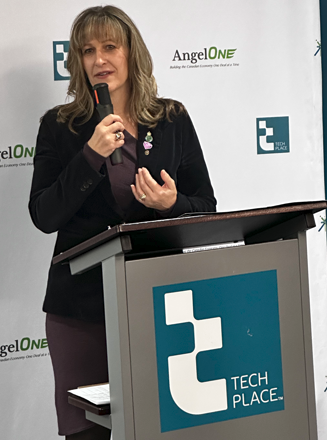
Anita Cassidy, Ex Director of BEDT.
TechPlace is an arm of BEDT Burlington Economic Development and Tourism. It has a unique structure with a very distinct focus.
In 2020, the International Economic Development Council recognized TechPlace as one of the best economic development programs for entrepreneurship in North America. This gold medal represents not only the space, but the community that brings it to life. The award is something TechPlace sought.
These official openings are to a considerable degree a celebration of what is being done.
Burlington Mayor Marianne Meed Ward
Mayor Marianne Meed Ward made several remarks in her short address. She said the organization didn’t realize the number of needs – cultural and educational that the hub was meeting. She said that she had eight new ideas as she walked into TechPlace last Tuesday, adding that the “next big thing is going to be here.
Angel One has aligned itself with TechPlace. It provides investors with access to quality startups and shared expertise. Engage in valuable networking and educational events, better deal flow with a shared workload, and reduced risk through syndication. All while supporting economic development in the region. It also connects entrepreneurs with the capital they need.
Making the case.
Has anything that started out at TechPlace grown to the point where they became a publicly traded company, the objective of many entrepreneurs? Not to the best of our knowledge.
What is available at Tech Place is very impressive.
Anyone with hopes and dreams of starting something big would be hard pressed to find a better place to call home.
Partnership are an integral part of the TechPlace mission. They work We work closely with their partnerw to ensure TechPlace members are getting access to the best programming and resources available. Membership is acquired through an endorsement from a TechPlace partner.
There are different levels of partnership starting with people who want a place to work. The get to use a “hot desk”.
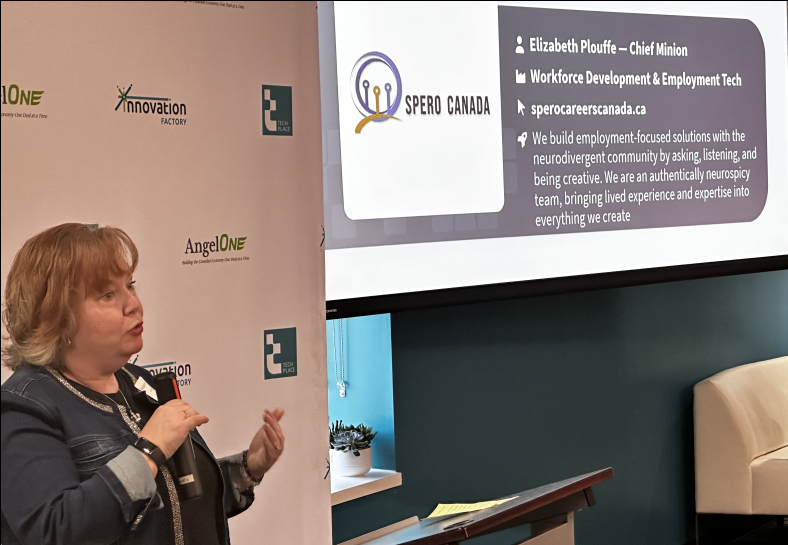
Elizabeth Plouffe, Chief Minion at Spero Canada, a Workforce Development & Employment operation.
The unique membership model helps to ensure they have the right mix of companies within their walls.
City Councillor Paul Sharman listening to a budding entrepreneur.
To become a member at TechPlace, or to apply and access one of our 10 private offices available through our LaunchPad and Soft Landing program, you must obtain an endorsement from one of our partners. Our network of local and international partners offer a wide range of expertise, including funding, mentorship, programming, and international expansion. They tell us which companies would benefit from the space and which ones have the most potential to grow. This collaborative approach is what makes TechPlace a destination for the best in tech.
Basic Membership
Includes: Unlimited hot desking during business hours, Unlimited Wi-Fi, 30 hours/month of meeting rooms and event space booking time, exclusive invites to educational and networking events at TechPlace, free coffee and access to the kitchen, free parking, free guest reception support and inclusion in TechPlace member directory
More than a Dedicated Hot Desk
Private office with 24/7 access, Company signage outside the office, private wired and wireless network, Company logo on TechPlace website, opportunities to participate in TechPlace marketing campaigns and community initiatives.
6-12 month residency, $ 700/month +HST
LaunchPad Office
Intended for a growing tech-focused start-up in Ontario that has at 2 full-time employees and has plans to grow in the next year.
They have to have a minimum viable product (MVP) and can demonstrate market traction. TechPlace offers them a private space where they can set up a basecamp and focus on growing their business.
The Soft Landing Program
Joining the program starts with an application. A company may be eligible to join if:
They are looking to expand into the Canadian market, they are a technology company or an entrepreneur who has recently arrived in Canada and is seeking to settle in the Halton Region.
The ten organizations that are currently working out of TechPlace.
It’s a bird… it’s a plane… it’s Things with Wings!
Come discover a whole new world of flight this Family Day weekend!
Family Day in Ontario is a provincial statutory holiday celebrated on the third Monday of February, providing a mid-winter break for families to spend time together, with most schools and many businesses closed,
The Canadian Raptor Conservancy will be demonstrating their live free-flying birds of prey show. Daily demonstrations at 10 am, 1 pm, and 3 pm.
Other things to explore:
Travel back in time and discover our collection of over 40+ historic Canadian aircraft. Also, meet a pilot!
Test your skills as a pilot with our flight simulators or control the action of a fighter aircraft in Virtual Reality at Fly Zone.
Sit back and relax in Astronomy in Action’s Planetarium. Enjoy stunning visuals in a professionally presented 360-degree theatre.
February 14 to 16
9 am to 5 pm daily Adult $20 (Age 18+), Child $15 (Ages 6-17)
Fintech has played a significant role in the development of the casino gaming market since the early 21st century.
By Norman Coles
February 8th, 2026
BURLINGTON, ON
Fintech has played a significant role in the development of the casino gaming market since the early 21st century. Ingenuity is vital in any industry if it is to thrive and succeed across multiple platforms and countries.
For some in the industry, it is the integration of the blockchain that has helped it achieve a new status, a stream of new customers, and ingenuity that has kept traditional casino gaming concepts fresh.
Blockchain and cryptocurrency have opened the doors to a new market in casino gaming, and by channelling the overlapping markets of crypto and casino gaming, they create an environment where companies that innovate in both fields can try their hand at creating ideas that break the mould, which is why collaboration is so important.
The Ingenuity Of The Blockchain
Each transaction on the blockchain is recorded and cannot be amended.
Of all the innovative features of the blockchain, its DIY security has been one of the biggest talking points for burgeoning casinos looking to stand out in the market. Although blockchain and cryptocurrency are still in the early stages in Canada, the success they have had in other parts of the world bodes well for those companies looking to break into the market.
Given that each transaction on the blockchain is recorded and cannot be amended, this helps immensely from a security perspective, allowing casinos to monitor transactions and wallets and ensure that users do so without compromising the integrity of the integrated systems.
Anyone with a cryptocurrency wallet is able to set one up free of charge, and you can send crypto to another wallet without having to worry about any cross-border fees or hidden charges that have been a significant issuefor people who use their centralized bank accounts to send currency overseas, but this is just one element of why it is gaining so much traction.
We’ve seen this at Ozoon casino Canada, and it is a framework that has been successfully rolled out across multiple Bitcoin casinos worldwide. They don’t need to seek information from a centralized oversight body; everything is stored on the blockchain, and that’s all they need to raise queries or find out more about their withdrawals and deposits.
Taking Inspiration From Other Fields
Blockchain companies have often looked to other markets to expand their reach. We’ve seen them do it in healthcare, and we have seen them break into other broader areas of the gaming industry, too. They’re not the first industry to try this model. In fact, many casino gaming companies adopted this approach in the earliest days of the online betting market.
Those innovators who believed the future would be online invested heavily in partnering with industry leaders in website design, SEO marketing (despite the rise of AI), and security, ensuring websites remained safe and the information on servers remained secure and out of prying eyes.
Online casinos have replicated the traditional model, which has been a huge success in conventional gaming. This collaboration took place across a number of sectors, bringing in the sharpest minds and ultimately ensuring that the end product was innovative, engaging, and offered a high-class alternative and experience to those used to land-based versions of casino classics.
Why Transparency Matters
In a market that deals with so many different withdrawals and deposits, it’s important that customers and casino gaming platforms are able to have easy access when it comes to their transactions.
Surveillance technology in online casinos has moved well beyond just sifting through event logs.
Gaming ingenuity needs to push the market forward across all sectors. If you have a foundation built on security and openness, it will attract the right ethos and ideals into the business. Customers will be more inclined to check out a service if they know that companies operating within it are both fair and transparent. While no industry is without its detractors, any industry with a high level of consumer trust certainly helps put it on firmer ground.
It isn’t just that the blockchain ensures all information is publicly available and can’t be amended; the cryptography, which guarantees security and removes the need for third-party oversight, is a crucial element here. Blockchain is entirely digital, and as the gaming industry collectively moves toward a market aiming to achieve a similar level of digital dominance, Bitcoin’s growing significance was almost inevitable.
Blockchain’s Future In Casino Gaming
Many companies are looking to implement blockchain technology and crypto payment systems into their design.
We’ve seen how many companies are looking to implement blockchain technology and crypto payment systems into their design. With countries like the US ploughing ahead and looking to create a foundation for blockchain to become the fabric of many new systems, it’s bound to continue influencing the world of casino gaming.
Bitcoin casinos were among the first companies to integrate digital assets when mass adoption was low in the early 2010s. Therefore, as more people invest in and trade digital assets and more companies look to incorporate them into their business models, it’s highly likely we’ll see collaboration between blockchain, cryptocurrency, and casino gaming companies continue.
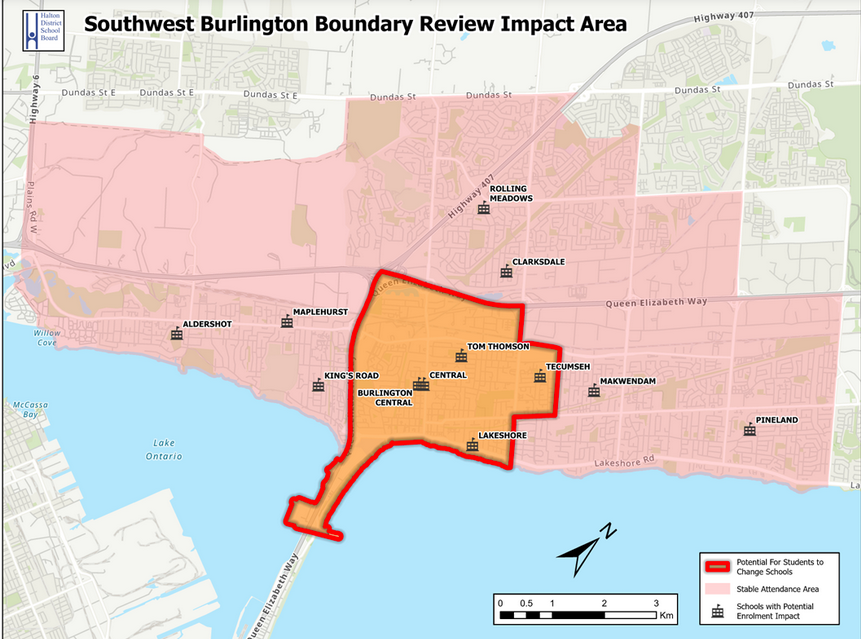
The ongoing Southwest Burlington boundary review is creating significant uncertainty and anxiety for families, particularly those with children in French Immersion, at a critical point in the school year when parents are being asked to make important program decisions for September. While boundary reviews are an important planning tool, the way this consultation is unfolding is raising serious concerns about governance, transparency, and fiscal responsibility.
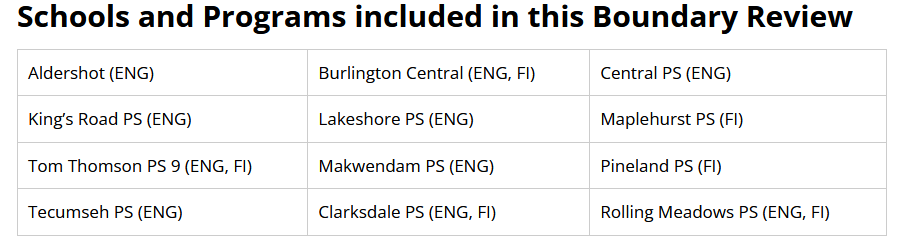
As part of the review, the Halton District School Board has invited public input on proposed options intended to address enrolment pressures and support long-term planning in the area. At the first public meeting, three options were presented: relocating the French Immersion program to Central Public School, or moving it to Tecumseh Public School either as a Grades 2–6 program or a Grades 2–8 program.
At the second public meeting, it became clear that the two Tecumseh options received little to no support from parents. Families expressed strong concerns about children attending a JK–8 school and losing the important developmental experience of graduating elementary school, including leadership opportunities that come with being the oldest students in a school community.
The Grades 2–8 Tecumseh option also raised serious alarm because it would eliminate French Immersion at Central Middle School, weakening enrolment, reducing funding, and most importantly undermining the long-term viability of French Immersion at the middle- and high-school levels. It would also create split cohorts, with students transitioning from Tecumseh to different high schools, directly contradicting the Board’s stated boundary review goals of minimizing cohort splits and supporting smooth transitions.
In contrast, the option of relocating French Immersion to Central Public School aligned with those stated goals by maintaining program continuity, supporting stronger pathways into middle and high school, and reducing unnecessary cohort fragmentation.
Following the lack of community support for the Tecumseh options, the Board introduced additional ideas, including leaving French Immersion at Tom Thomson Public School as a single-track school. This option is problematic for multiple reasons and appears to conflict with the Board’s own policies, which do not permit single-track French Immersion schools that end at Grade 6. The Board has also continued to entertain the idea of keeping Tom Thomson as a dual-track school, despite clear capacity constraints that make this unworkable. Tom Thomson has a total capacity of approximately 219 students, and French Immersion enrolment alone is around 150, leaving fewer than 70 spaces for the English program—an amount that cannot sustain a viable JK–6 English stream and runs counter to the very purpose of conducting a boundary review.
Taken together, these developments are contributing to a growing lack of trust in the process. At a time when the Board is facing a significant and increasing deficit, it is troubling to see options being advanced that are not policy-compliant, operationally realistic, or fiscally prudent. Floating scenarios that would require inefficient use of space, increased transportation costs, or unsustainable staffing models raises legitimate concerns about whether the Board is fully applying its own policies and financial constraints.
The uncertainty created by this process is not theoretical. Parents are currently being asked to decide whether to enroll their children in French Immersion for Grade 2 next year. Prolonged ambiguity undermines confidence in the program, creates stress for families, and risks real harm to enrolment and program stability. Meaningful consultation is essential, but it must focus on realistic, policy-aligned options that genuinely meet the stated objectives of the review. Continuing to present implausible alternatives alongside the one option that clearly aligns with those goals risks wasting valuable time and eroding public trust when clarity and leadership are most needed.





 By Gazette Staff
 John C. Munro Hamilton International Airport (Hamilton International or the Airport) has made two significant milestones: the introduction of passenger jet bridges and major enhancements to its international arrivals processing experience.



 By Staff
 All Beer Store retail locations will be closed for Family Day, Monday, February 16th, 2026. Stores will reopen with regular hours of operation on Tuesday, February 17th.
 Council got to hear what MRGLive plans to do during the 2026 Lakeshore Music and Arts Festival.






 By James Stelco


 Slots are designed for engagement. Bright visuals and rapid feedback loops can unintentionally extend sessions. Setting time and budget limits before starting helps maintain control. Even experienced players benefit from structured breaks and reminders.
 By Gazette Staff

 By Gazette Staff
 Why 211 Matters More Than Ever

 By Tom Parkin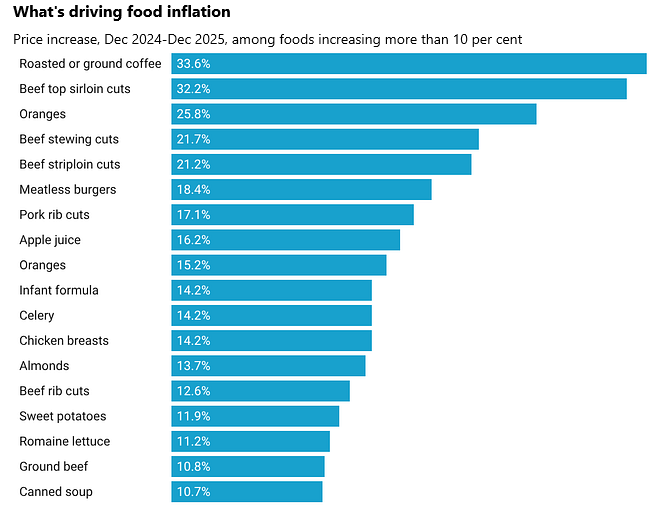
 By Gazette Staff




 Further, every Not for Profit organization should require that every Board member complete the training.
 Training for new and returning Board members: February, March & April
 Training for new Board members covering the purpose of boards, legal obligations, and fiduciary duty.
 By Sadie Stewart















 By Maria Pakozdi