 By Gazette Staff By Gazette Staff
February 18th, 2026
BURLINGTON, ON
The library has set out some interesting programs for the March break – most of ys are working at getting through the February winter – it isn’t over yet.
March Break is just around the corner, and Burlington Public Library is getting ready for a busy week filled with free, family-friendly programs for kids of all ages. From creative workshops and interactive shows to flexible drop-in activities, the library offers a welcoming place for families to learn, play, and connect—without spending a dime.
“Our March Break programs are all about curiosity, creativity, and giving families a welcoming place to spend time together,” says Tammy Csajaghy, manager of programming at Burlington Public Library. “We look forward to spending March Break with you!”

Throughout the week, children can play March Break Bingo, a self-directed game available at all library locations, while supplies last. Kids can pick up a bingo card, complete four squares in a row, and return it by Sunday, March 22, to receive a sticker prize.
Registered Programs
March Break program registration opens on February 18 at noon. Programs fill quickly, so plan to register early. Highlights include:
- Paint by Sticker for Kids (Ages 9–13): A creative twist on paint-by-number using colourful stickers, offered at five locations.
- Stretch, Breathe & Create (Ages 3–9): A calming blend of yoga, mindfulness, and hands-on crafting, available at two locations.
- Magic Mel’s Amazing Magic Show (All ages): A high-energy, interactive magic performance on March 21, 2–3pm at Central Branch.
- Nintendo Switch Hangout (Ages 8+): A friendly gaming session on March 16, 6:30–7:30pm at Alton Branch.
Drop-In Programs
For families looking for flexibility, Burlington Public Library also offers a wide range of drop-in programs—no registration required. Spaces may be limited, so arrive early to avoid disappointment. Drop-in activities include:
- March Break Stay-Cation Party: Vacation-themed games, dancing, and family fun at three locations.
- Stuffies Night at the Library: A beloved overnight adventure for stuffed animals, hosted at six locations.
- Tech Petting Zoo: Hands-on exploration with Snap Circuits, Little Bits, Cubelets, and more at four locations.
- Paws for Stories (Ages 6–12): Kids read one-on-one with a St. John Ambulance therapy dog on March 14 and March 21, 2–3pm at Brant Hills Branch.
- Board Game Drop-In: Family-friendly board games on March 14 and March 21, 2–4pm at Aldershot Branch.
- Family STEAM Time (Ages 5+) and STEAM Time (Ages 6–9): Creative, hands-on science and technology fun offered at multiple locations.
With programs, parking, and friendly smiles always free, Burlington Public Library looks forward to welcoming families for a week of discovery, creativity, and connection this March Break.
Free to join, Burlington Public Library belongs to everyone in the community, providing open and equitable access to information, digital & print collections and resources, public computers, and a vast array of programs and services. Six full-service branches and a rural lending location offer welcoming spaces where visitors can explore, discover, reflect, learn, improve, create, and connect with others. Stay in touch with us online at bpl.on.ca, and on Instagram, Twitter, Facebook @BurlONLibrary.

 By Pepper Parr By Pepper Parr
February 17th, 2026
BURLINGTON, ON
It was a very messy Council meeting, parts of which was on the Agenda are not going to take place until sometime in March.
A number of people who wanted to delegate were unable to do so because of the actual releasing of the Agenda by the City Clerk late on Friday. People usually have a day or two to register their wish to delegate. The agenda was released after City Hall closedon Friday. This was family day week, which meant City Hall was closed until Tuesday morning.
There were late requests to delegate, and Council had to vote on those requests.
And that is when things got silly.
Mayor Meed Ward serving as Chair: We do have a late request. Two late requests to delegate. David Barker regarding options for the temporary elimination of development charges, DGM 326, and Shannon Gillies regarding heritage response to Bill 23 phase two, short list of designation candidates. We do need to move, waive the rules of procedure to allow these two to speak.
Before that vote could be taken Councillor Stolte wondered about people who wanted to delegate but weren’t able to do so.
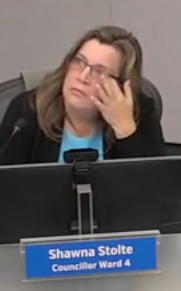 Councilor Stolte: I had a procedural question for the clerk, and it was in regards to some information that was shared over the course of the long weekend about when the agenda for today was made public, and how that may have impacted residents ability to delegate, and I think it’s relevant in the request today to for a late delegation that now requires us to move on that procedurally, Councilor Stolte: I had a procedural question for the clerk, and it was in regards to some information that was shared over the course of the long weekend about when the agenda for today was made public, and how that may have impacted residents ability to delegate, and I think it’s relevant in the request today to for a late delegation that now requires us to move on that procedurally,
City Clerk: The agenda was late. We would have liked it to be on Friday afternoon, and because of the holiday Monday, yesterday, the delegation deadline reverted to the Friday at noon. So the agenda was issued after the delegation deadline, which is obviously not ideal for us.
Any requests that did come in throughout the weekend, we did forward to council and let them know that, let the delegates know that there would be an opportunity for council to waive the procedure by law and be added to the delegation list.
Stolte: Was there a message put on the city website along with that agenda to let everyone in the public know that there was the opportunity to come to council and register late
City Clerk: No, there wasn’t. That’s certainly something that we would do going forward.
Stolte: So the delegates who are here today requesting to delegate with a late request are only because they happen to know our procedural by law that that’s available to them, but the general public wouldn’t have known that.
City Clerk: Yes, I think that’s fair to say.
Councillor Kearns: My question is to the Clerk, is this the complete list of the late registered delegates? I believe there might be one more, and I just want to be certain that we’ve captured everyone, or that this amendment allows everyone to speak who wishes to speak
City Clerk: This is the late this that was submitted to the clerk’s email after Friday afternoon.
Kearns: I will do a follow up. I do have an email here saying “hello. Yesterday morning, I sent the delegation form, I will be there in person. I don’t have slides or notes. Can I be recognized?” Is that person here? Do we know if this was sent to the clerk’s mailbox?
Chair: Would you like a minute to check the clerk’s mailbox to see if there’s anyone else or would you like the name of the individual that’s asked to be added to the list?
Okay, we’ll take a five minute recess.
After the break: We didn’t receive a delegation request over the weekend, but we did receive an email this morning noting that a person would like to delegate or looking for a follow up. So not too sure what happened there, but if council would add Lynn Crosby to the list, that would be appropriate.
 Nisan: I’ll support all the late delegations. Councillor Nisan: I’ll support all the late delegations, obviously, however, I would just like to read 46.1 of our procedure by law. It says request to delegate at a committee meeting and Council must be submitted to the clerk’s department prior to noon the day before a meeting. If the meeting is held on a Monday, delegations must register by 12pm the Friday before the meeting. Obviously, today is Tuesday, and I recognize that we don’t want our staff working on the weekend, but the procedure by law does not take that into account. I would like to understand why we didn’t allow these registrations. And basically, there could be people who thought they would delegate, but weren’t given the opportunity because the agenda wasn’t released in a timely fashion,
City Clerk: My apologies, my understanding what the procedure bylaw was. It did revert to the Friday on a with the holiday Monday. But the warning, the wording is very best, not clear there. So I tend to agree that in that with that with that wording, that maybe that delegate should have been confirmed and listed.
Nisan: My concern, and it’s a concern to ask Blake Hurley, our commissioner of legal services is we’re supposed to be approving a zoning by law today, and I want to confirm that we might have to go into closed session, I hope not, but that we’re not exposing ourselves here by not having provided the correct the agenda in a timely fashion and correct notice for delegations on Our zoning by law kind of a big deal.
Blake Hurley, City Solicitor: The short answer is, No, we are able to proceed today with respect to that, with respect to the larger picture of the procedure by laws, as this council knows it’s we’d like to treat it as a living, kind of breathing document that makes amendments over time to improve the process. This is certainly something that we’ll take back so we don’t find ourselves in this situation again. It’s striking that balance between getting the agenda out at a reasonable time to allow people to review it and request to delegate before this council, and on the flip side, internally, making sure that any additional information that needs to be provided to council that was requested from Committee, there’s time to produce that information.
So it’s a balance, and I think we fell a little bit short on the public access side of it, but I think there’s tweaks that we can make to the procedure by law to improve that, and that’s something that we’ll take away and bring forth in the future.
Councillor Kerns: I wasn’t going to ask this question until I was alerted and alarmed by the clerk indicating that the delegate did indicate that they’ve filled in the online form, but didn’t receive a confirmation until an email follow up. So how ought we to know if there are other people who filled in the same form and then didn’t receive a confirmation and are unable to delegate today,? Councillor As Nissan mentioned, we have some very serious issues on the agenda today that would require public engagement: that complimented with the late agenda notice and a failure for confirmation of delegation registration, how we know that we have all of the community’s voice here with us today?
This led to yet another back end check of the website. That would require another recess to do that, but I think maybe five minutes.
All right, let’s take five minutes to do a double check on our it to make sure that everyone who wanted to delegate was able to delegate.
City Clerk: I’m satisfied that there are no other delegates wishing to delegate today.
Councilor Stolte: I just want to comment and express my concern about the comments made by our legal Commissioner. Which were, I understand, totally appropriate, but just the very comment to say we fell short on the public access side of it. That is the truth here, and it makes me feel entirely uncomfortable that we’re moving forward not having the ability to respect democracy and notify the public in an appropriate manner, to allow them the opportunity to create a delegation and come forward. I would have felt much more comfortable if on Friday, knowing that we had a late agenda, that we had posted a notice online to say that the, you know, the deadline to register was extended, that I know that we’re going to do that moving forward. But that doesn’t change the fact of what has happened for this meeting today. I just want to register that I’m very uncomfortable moving forward. I think we’re pushing things through on a very heavy agenda, making big, big decisions, potentially today, without having had the opportunity for everyone who wanted to delegate to be able to do so. So I just wanted to register that.
Nissan: , I agree with Councillor Stolty, even if this was a light agenda like we had in previous months, I wouldn’t be supporting this. I’m not sure we should even be going ahead. Frankly, I’m not sure how to deal with it, but here we are. It doesn’t meet our own standards. I understand that the procedure by law is a tweak, is a living document, but it’s really an amendable set of rules that we live by here. So in terms of engagement, not following our procedure by law is problematic. It’s not a tweaking. It’s that’s not a tweaking matter in my in my opinion, and we don’t know if there are other delegates who would have wanted to delegate today, my question for for staff is, why didn’t the agenda come out in a reasonable time on Friday? What was the hold up that forced the agenda to come after any reasonable time? What was staff doing?
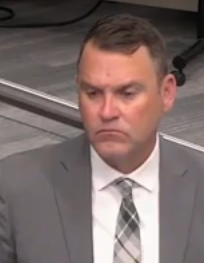 City CAO Curt Benson City CAO Curt Benson: Council will recall at Committee last week there were several requests for additional information that we were compiling. We wanted to make sure that we were compiling that information and responding to the nature of requests in a comprehensive manner. It took a little bit longer that delayed the release of the agenda, and that was, you know, the circumstance in this case. I think there are lessons to be learned. I think the statement around the fact that we do need to build in these circumstances and address them in future updates to the procedural by law and always be erring on the side of being more open, transparent and inclusive to public perspective is fundamental, and that’s something that we don’t take lightly.
 City Solicitor Blake Hurley City Solicitor Blake Hurley: I also just want to make sure that council is aware that the procedure by law requires that delegates request to delegate must be submitted to the clerk’s event prior to 12pm one business day before a meeting. The fact that we were late on the in the day, on Friday and providing the agenda was that, in of itself, was not the issue. The issue was that the Monday was the holiday, and we have a couple of times, I think, over the last number of years, ran into this problem where Council followed on a Tuesday after a holiday Monday, and that’s where we find ourselves in an issue in providing that access. And I think, as I mentioned previously, there’s opportunity to address that, both when we look at setting the meeting calendar in advance for a following year and making any adjustment to the procedure by law to address those circumstances where we have a Tuesday council meeting following a holiday Monday.
Nothing in this is black and white that I’m aware of and I don’t believe there’s anything in procedure by law. It’s, it’s standard for council to amend a committee calendar, committee and council counter throughout the year.
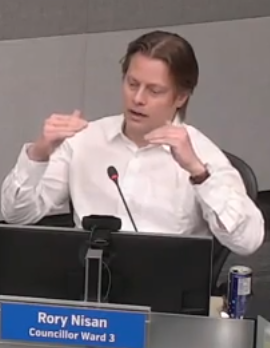 So just as a heads up to my fellow colleagues, I’ll be putting forward a notice of motion that I will be looking to do that, because this is this is absurd on so many levels that we’re pushing things through. Councillor Nisan: Okay. Thank you. So just as a heads up to my fellow colleagues, I’ll be putting forward a notice of motion that I will be looking to do that, because this is this is absurd on so many levels that we’re pushing things through. We’re not giving people the opportunity to read, we’re not giving the opportunity to delegate. We’re putting staff in a very difficult position. If none of that is necessary, then I think we need to fix it.
Councilor Kerns: Since I have the ability to comment, I would just like to bring everyone’s mind to a reminder that when the procedure by-law Amendments came forward, I flagged that there were major deficits and it wasn’t viewed as a complete document for these reasons. One was demonstrations, two was holiday Mondays, and there was a number of other ones, including speaking time, and there were gaps that were unclear, also including how the code of conduct is embedded within the by law, which it should be a standalone policy. Can we please make sure we have clarity on how we’re treating the delegates today procedurally?
Meed Ward as Chair: I will now answer that question by way of bringing us back to how we’re going to proceed today. So the motion on the floor, which we will need to vote on is to allow the late registered delegates to speak.
City Solicitor Blake Hurley: I wanted to respond to Councillor Kearns question. I think as we consider this motion to waive the rules procedure. She had a question with respect to delegates. So delegate who is registered to speak today can speak today, even if the item that they’re looking to speak to is deferred to a future meeting. Their comments would still be heard if the delegate decides that, you know what, I’d rather speak at the meeting. This item is going to be called at they can register to delegate at a special council meeting in the normal course.
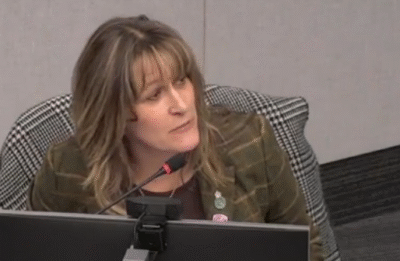 Meed Ward: “Issuing the Strong Mayor Statement was simply to ask the questions on the floor of Council, as is my normal practice.” Meed Ward: Issuing the Strong Mayor’s Powers was simply to ask the questions on the floor of Council, as is my normal practice. I give staff a heads up that the questions are coming so that they can be prepared. Due to the nature of the questions, I felt that it was important to issue a mayor’s direction in full transparency, so that the answers could be posted and be available to everyone in advance, rather than doing the questions on the floor
Nisan: I will not allow a strong mayoral direction, giving two days notice to be considered a matter of transparency and giving staff time. If this was really about giving staff time, then this item would be deferred to a future council meeting that was voted against that committee. But that’s exactly what needs to happen. That’s why, the despite all of this being caused by a last minute mayoral direction, that is mandatory to respond to. That’s how we got here, and as a result, the staff did their best, but they couldn’t even provide complete information. How did we go from a committee meeting where I was being told that this was no big deal, and that the CFO had already given us what he could give us, according to members of committee, to multiple pages of questions and expecting a response within 24 hours. That’s not even fair to staff, never mind to the public.
That’s why this item is going to Special Counsel is a start, but there are, legal questions that are unanswered in that report. There are financing questions that are unanswered in that report. So I’m not going to sit here and be told that this is, this was a good thing that occurred, far from it. That’s why we got all these people, many of whom are being paid right now, to be here to deal with this on a matter that, frankly, shouldn’t even be here because we couldn’t even get delegates in time. I’m sorry, but this is not right.
Kearns: I just wanted to widen the scope a little bit on the conversation that we’re having today about late notice. It is not just the matter of the development charges. I have a number of email communications and an in-person xxx legation who only received a notice regarding heritage designation on February 11 and were given until February 6 at committee to respond. You can obviously know that those dates don’t line up, and maybe some of them are here today, or some of them have written, we’re not sure the root cause of that delay in notice. But this is another item that I was going to seek a deferral on to another committee cycle because of the late notice for the community to understand what the city is doing and what the impact is on their property or on the policy.We’re really in a bad spot today, and that’s going to be one of the items that I was either asking for a referral to another cycle, asking for a root cause and corrective action, or understanding more about what we’re doing to appropriately notify the community so that they can appropriately delegate and understand the matters before committee. The notice of non designation for new designation heritage properties was going to be another item. I just wanted people to understand this whole delay is not scoped to one item. This is starting to become a behavioral trend that needs to be addressed. I just wanted to add that clarity to the reason why we’re having such a difficult start to this morning.
It was time to call the vote on letting unregistered delegations speak.
It was seven in favour.
Three people who were not able to register are now able to speak. That took close to an hour.
Mayor Meed Ward as Chair: Our next item is approval of the agenda. During approval of the agenda, council has the ability to take out all or some of the items that we are going to deal with and refer them to a special council meeting to be called by the mayor in accordance with the rules of the procedure, which at this point, the earliest we could do that would be next week, or it could be tucked into committee.
We don’t need to land a date. When we get to that, once we vote on this, and when we get to approval of the agenda. We do have a motion from Councillor Sharman and Bentivegna to refer any items Council wishes to a future meeting. We we can go through item by item. There may be several. There may only be one. That will be our opportunity to deal with that and see what we want to deal with today.
Settling the agenda is another story, during which we saw the switching of positions on the part of several Councillors.
More on that on Wednesday
 By Gazette Staff By Gazette Staff
February 17th,2026
BURLINGTON, ON
 The Community Development Halton Youth Engagement Research Team presentation: Youth Views on Volunteerism takes place on Wednesday February 18, 2026 at the Burlington Public Library, Centennial Hall (2331 New Street, Burlington). The event starts at 6:00 pm and doors will open at 5:30pm. Light refreshments will be available, and all attendees are encouraged to “go green” by bringing their own refillable water bottle. The Community Development Halton Youth Engagement Research Team presentation: Youth Views on Volunteerism takes place on Wednesday February 18, 2026 at the Burlington Public Library, Centennial Hall (2331 New Street, Burlington). The event starts at 6:00 pm and doors will open at 5:30pm. Light refreshments will be available, and all attendees are encouraged to “go green” by bringing their own refillable water bottle.
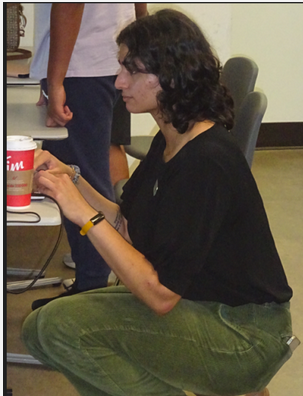 Iman Kaur, Community Planner and Youth Engagement Coordinator, Community Development Halton. Iman is the staff lead for the Youth Engagement Research Team. She is pursuing a Masters of Public Policy at McMaster University, with a focus on Housing Policy. The Research Team will share their findings from their year-long research project into the facilitators and barriers impacting youth volunteer engagement in Burlington. It is the first study of its kind in Ontario, funded by the Burlington Community Foundation.
The focus is on how youth perceive the value of volunteering and ways they wish systems worked to reduce uncertainties and increase involvement.
The presentation is in-person only; the CDH Youth Engagement Team will be presenting the same materials online on February 25 (you can register at https://www.cdhalton.ca/event-details/youth-views-on-volunteerism-on-line-presentation)
 By Lori Croonen By Lori Croonen
February 18th, 2026
BURLINGTON, ON
Food is one of the most powerful choices we make every day. It shapes our energy, resilience, and long-term health. Choosing a vegan diet — whether for ethical, environmental, or personal reasons — can also be a meaningful way to support physical wellbeing.
At its foundation, vegan eating centers on plant foods: vegetables, fruits, legumes, whole grains, nuts, and seeds. These foods are rich in fiber, antioxidants, vitamins, minerals, and protective plant compounds known as phytonutrients. Together, these nutrients help reduce inflammation, support immune function, and promote healthy aging.
 Plant foods provide heart-supportive nutrients such as potassium, magnesium, and healthy unsaturated fats from nuts and seeds. One of the most important health advantages of a vegan diet is fiber intake. Fiber exists only in plant foods and plays a critical role in digestive health, blood sugar balance, and heart health. Adequate fiber consumption is associated with lower risks of cardiovascular disease, type 2 diabetes, and certain cancers. Because animal products contain no fiber, shifting toward plant-based meals naturally increases this essential nutrient.
Plant-based eating patterns are also typically lower in saturated fat and contain no dietary cholesterol. High intake of saturated fat and cholesterol — commonly found in red and processed meats — has been linked to increased risk of heart disease. In contrast, plant foods provide heart-supportive nutrients such as potassium, magnesium, and healthy unsaturated fats from nuts and seeds.
Even when comparing processed options, there are distinctions worth noting. Processed plant-based alternatives generally contain no cholesterol and are often lower in saturated fat than traditional processed meats. Processed meats have been classified as carcinogenic to humans due to their association with colorectal cancer. Plant-based alternatives do not carry that same classification, and they may still provide fiber and beneficial plant compounds absent in animal-based products.
Vitamin B12 is often raised in discussions about vegan nutrition. B12 is produced by bacteria — not by plants or animals. Historically, humans obtained B12 through soil exposure and animal foods. In modern food systems, many farmed animals are supplemented with B12 because they are not grazing naturally, meaning consumers are often receiving supplemented B12 indirectly. Importantly, B12 deficiency is not limited to vegans; many people, especially older adults or those with absorption issues, can have low levels regardless of diet. For vegans, using fortified foods or a simple supplement is a safe and reliable way to meet needs.
A well-planned vegan diet can provide adequate protein from legumes, tofu, tempeh, whole grains, nuts, and seeds. Iron is available from beans and lentils, particularly when paired with vitamin C-rich foods to enhance absorption. Calcium can be found in fortified plant milks and leafy greens.
 Choosing vegan is not about restriction; it is about intention. Choosing vegan is not about restriction; it is about intention. It encourages building meals around nutrient-dense plant foods that support cardiovascular health, digestive wellness, and metabolic balance. Whether someone adopts it fully or simply increases plant-based meals, emphasizing plants over animal products can significantly improve overall dietary quality.
In a time when chronic diet-related illnesses are widespread, vegan eating offers a proactive, evidence-informed approach to nourishment — one that supports long-term health while empowering individuals to make conscious choices about how they feed themselves.
Burlington Vegfest 2026 on August 15th at Spencer Smith Park!    
 By Gazette Staff By Gazette Staff
February 17th, 2026
BURLINGTON, ON
A significant winter storm is expected to reach the Greater Toronto Area early Wednesday, and customers travelling on GO Transit and UP Express may experience delays.
 GO service has to deal with winter weaver. . We’re encouraging everyone to plan ahead, allow extra time, and travel with caution.
Customers are encouraged to visit the GO Transit website at www.gotransit.com and our UP Express website at www.upexpress.com or sign up for On the GO alerts to receive real-time service notifications.
We will monitor the conditions and update customers when new information is available. Please use caution at stations and on platforms and try to use shelters to shield yourself.
We know that weather-related delays can be frustrating for customers, however we must take appropriate measures to ensure the GO Transit network operates safely in all kinds of weather conditions.
After what was a tumultuous, even boisterous Coucnil meeting earlier today, Councillors Kearns, Nisan and Stolte released the following statement:
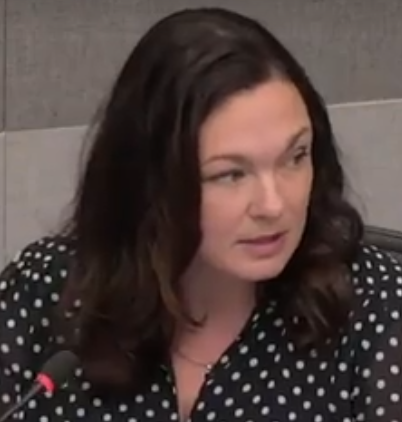 Ward 2 Councillor Lisa Kearns  Ward 3 Councillor Rory Nisan  Ward 4 Councillor Shawna Stolte
Councillors Kearns, Nisan and Stolte have succeeded in ensuring residents can have their voice heard on a major developer discount: 100 percent of development charges being waived for two years, costing the average homeowner $391 or a stealth 7.82% city tax increase above and beyond the already planned 4.5% city tax increase next year.
The agenda for today’s council meeting was released after the deadline for residents to speak to council. This happened because of a strong mayor decision that forced staff to draft a detailed 11-page financial report on two days’ notice.
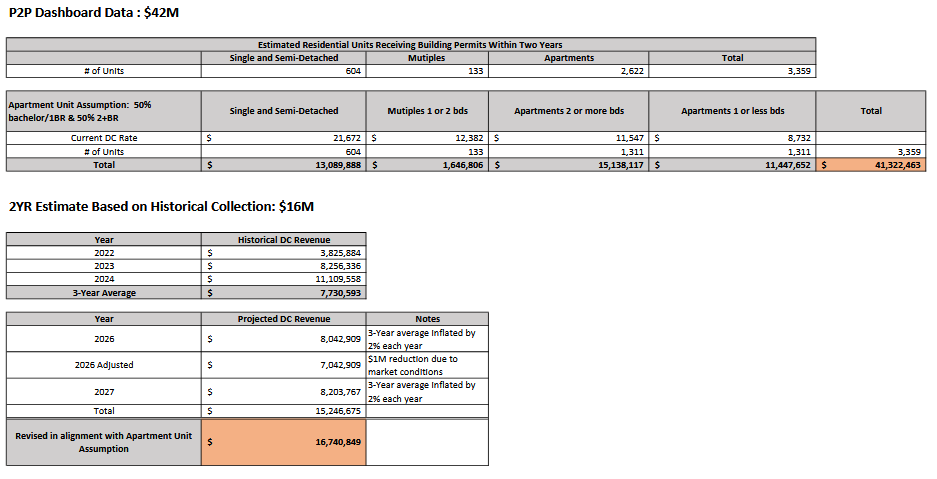
The report has numerous gaps due to a lack of time. What is clear is that the cost range of the mayor’s amendment to subsidize developers at 100 percent is between $16 million and $42 million and this shortfall will have to be covered by Burlington taxpayers.
The matter will now go to a special council meeting on March 2, where the councillors will continue to fight for the Burlington taxpayer, who we believe must be made whole by the provincial and federal governments in order for any charges to be waived.
Councillor Lisa Kearns: “Burlington taxpayers deserve to fully understand when significant policy directives may completely drain reserve funds, push debt higher and change capital plans. The lack of appropriate public engagement and a rushed strong mayor decision fell short of what our community expects and deserves from their elected officials.”
“People can now get the facts and make their position known to council members. I will not deplete our reserves or compromise the future of our city to offset development charges without our government partners firmly committed to keeping our city whole.”
Nisan: “It was bad enough that the motion will cost the taxpayer millions of dollars, but to try to push the matter through without hearing from residents was unacceptable. We stopped it but the fight isn’t over.”
Stolte: “The mayor voted against a two-month deferral to get all the financial consequences, as we had proposed. Instead she chose to use her strong mayor powers to force a response from finance staff on her terms and her timeline, resulting in public engagement being undermined.”
By Gazette Staff
February 17th, 2026
BURLINGTON, ON
 Mayor Meed Ward: Not a clapper. The manner in which people conduct themselves at City Council meetings has, for the most part, been an issue for Mayor Meed Ward.
When there is a happy event, the awarding of a certificate and recognizing someone are exceptions as far as Meed Ward is concerned.
So when there was some clapping the Mayor said: “Our by law does not allow disruption, so I would ask you not to disrupt the speaking,.
 Councillor Kearns: Very much a clapper. Point of order said Councillor Kearns: “ I’m not aware of any ban on that in our procedure by law. Could you point to the section please? The public is here to respond to us. I’m not saying that clapping is ideal, but at least they’re getting their say in some fashion.
Mayor Mead Ward: The procedure by law, doesn’t allow unreasonable or offensive conduct, and this means conductive or statements that can be considered disruptive. That’s the best I can do without a recess to determine further.
Expect moderate applause to be permissible at some point in the near future.
 By Pepper Parr By Pepper Parr
February 17th, 2026
BURLINGTON. ON
OPINION
Why did Mayor Meed Ward use her Strong Mayor Powers?
She said she used her powers simply due to timing – it gave staff two full days to work on the report, and the contents of the report were made clear by her direction.
 Mayor Meed Ward in her City Hall office. “All I have asked for is information to be given to us,” she told BurlingtonToday. She said it was done in the interest of time because council is making a vote on Tuesday. “We want the best information available.”
“I’m hoping the information that staff provides will help council make the appropriate decision and that the information provides a realistic picture of what this might mean for the community,” she said.
The public would have liked the best information as well.
Council can debate the matter but defer a decision until the public has had a chance to read the material that media have made available.
The Family Day weekend kept people outdoors – the last thing they wanted to do was read council agendas and reports.
The poor public engagement is due to the way council has treated the taxpayers; they’ve given up
By Gazette Staff
February 17, 2026
BURLINGTON, ON
Mayor Meed Ward is advising Council of DRAFT correspondence to the federal and provincial governments regarding Burlington’s two-year, 100% residential Development Charge (DC) exemption.
Her report is provided for Council’s awareness and inclusion on the agenda.
Implications:
Financial: Potential financial impact of the City’s two-year residential DC exemption.
Estimates indicate that foregone DC revenue could range from approximately $6M to $41M annually, depending on uptake. Replacement funding and legislative flexibility are being requested to mitigate potential impacts on municipal reserves and the property tax base.
Communication/Engagement:
The letter is intended to be transmitted to the federal and provincial governments and shared publicly through the Council agenda process.
Our take on this? Sounds like we have written the cheque and now need to find the money to cover it.
Dear Minister Robertson and Minister Flack,
Burlington shares your focus on one outcome: more homes built, faster—so more people can find a home they can afford, and our communities can grow in a healthy, sustainable way.
Current market conditions are presenting real challenges, particularly across the GTA, as many projects are struggling to move from approvals to construction. New home sales in the GTA hit record lows in 2025 – in May 2025, total new-home sales in the GTA were 87% below the 10-year average—with condominium apartment sales 93% below and single-family (ground-oriented) sales 74% below the 10-year average.
CMHC’s 2026 Housing Market Outlook points to ongoing headwinds, including trade uncertainty, slower population growth, and a softer job market, which are expected to keep demand below historical averages this year.
What that means on the ground is that the project math often doesn’t work. Financing is harder to secure, construction and servicing costs remain high, and for many multi-residential projects it’s harder to reach the pre-sale thresholds needed to start construction. The result is delay, pause, or cancellation—even where approvals are in place.
In that context, Burlington is moving quickly with a practical, time-limited measure designed to improve project feasibility and help get more shovels in the ground. On February 10, 2026, Burlington’s Committee of the Whole endorsed a motion directing staff to bring forward a by-law amendment for a two-year, 100% residential Development Charge (DC) exemption for units that:
pull a building permit; and
demonstrate active construction within the two-year period.
This is a significant step for our city. We’re doing it for a clear purpose: to reduce upfront costs so more projects can move to construction in today’s market—and so those costs aren’t simply passed along in the price of a new home. It’s about improving affordability so that people are able to achieve the dream of home ownership – whether that be for first time homebuyers or families that want to move into our community.
This matters for Burlington, as our future housing supply depends on redevelopment and intensification. With the city largely built out, most new homes will come from Options for the temporary elimination of Development Charges (DGM-03-26) building within the city. These projects are often more complex and more sensitive to broader economic and market conditions. When factors such as interest rates, construction costs, or financing, projects can slow down or pause, directly affecting the number of homes that actually get built.
That’s why Burlington is taking bold action and doing our part to create the right conditions by focusing on what we can control locally: reducing upfront costs that can help more projects reach construction in today’s market. This is where senior government partnership matters. We can reduce upfront costs to help projects move—and protect homeowners from a cost shift—if we do this together.
We recognize that both orders of government have introduced important housing measures aimed at improving affordability and increasing supply including the removal of the PST and GST relief for first-time buyers on new homes. At the same time, the current economic environment means we need additional, targeted actions that directly improve project feasibility.
Development charges help pay for the growth-related infrastructure that new housing requires—water and wastewater capacity, roads, parks, community facilities, and through Educational Development Charges under provincial legislation, land for new schools.
If Burlington waives DCs without replacement funding, the infrastructure still has to be built. The shortfall is absorbed through municipal reserves and can eventually put pressure on the property tax base. At the same time, Educational Development Charges continue to apply. The cumulative impact of all growth-related charges is an important consideration as we work to improve project feasibility and accelerate housing starts.
Without coordination, homeowners and renters through pass-through costs, end up paying for housing-enabling infrastructure in a less transparent way. Burlington wants to avoid that outcome. Our goal is to support housing starts without creating new financial pressure for households who are already managing higher costs.
Based on City of Burlington staff estimates, a full waiver of residential development charges could reduce Burlington’s DC revenue by approximately $16M to $41M annually, depending on uptake. Even using a more restrained scenario—grounded in 2025 activity and a lower-uptake assumption—the impact is estimated at closer to $6M.
That is a significant pressure on municipal finances.
Under the Development Charges Act, 1997, when DC revenue is not collected, municipalities must still fund the growth-related infrastructure those charges were intended to support. In practice, that means drawing from municipal reserves or identifying other sources of funding. This is the challenge municipalities face: we can take steps to improve project feasibility and accelerate housing starts, but without Options for the temporary elimination of Development Charges (DGM-03-26) replacement funding, the financial impact can flow back to homeowners and the community over time.
Despite this, Burlington is prepared to take decisive, time-limited action with a two-year, 100% residential DC exemption because we believe it can help move more projects to construction in today’s market.
However, the legislative requirements under the Development Charges Act, 1997 were designed to ensure fiscal discipline during normal market conditions. Without replacement funding during the exemption period, this measure cannot be implemented in a financially sustainable way.
That is why Burlington is calling on both orders of government to fulfill their public commitments related to development charge relief in a coordinated approach to cover the DC exemption value for eligible units over the two-year period.
Specifically:
Federally, Burlington is requesting that the Government of Canada fulfill its commitment to cover 50% of municipal DC reductions, including the program mechanism, how funding will be calculated and distributed, and when
municipalities can expect those supports to flow.
Provincially, Burlington is requesting the Province of Ontario fulfill its commitment to keep municipalities whole by covering the remaining 50% of the DC relief, or any amounts not covered by the federal government. As the Building Faster Fund (BFF) is currently under review and has been underutilized due to market conditions and the broader housing slowdown, a revised BFF framework could serve as an appropriate source of funding for municipal DC relief measures.
Burlington has not qualified for BFF funding to date, in large part because our housing supply is predominantly multi-residential—and that segment has been the most constrained under current market conditions. This is despite Burlington achieving a record 10-year high in housing starts.
Burlington is committed to enabling housing through practical tools and policy choices, and we believe this is an opportunity to demonstrate what effective intergovernmental partnership looks like: municipalities taking immediate steps to unlock projects, with provincial and federal governments providing the predictable funding support needed to
make those steps workable and durable.
We respectfully request your response outlining any commitments each of your governments may be prepared to offset the financial impacts of Burlington’s two-year residential DC exemption. The City of Burlington remains committed to working collaboratively with the Province and the Government of Canada to build our way out of this housing crisis, while ensuring communities continue to have the infrastructure and services that new housing depends on.
 By Gazette Staff By Gazette Staff
February 17th, 2026
BURLINGTON, ON
Kim Ingram, Senior Manager of Cultural Services, Recreation, Community and Culture Department as come up with options for the community-driven parade that will take place the day before the Lakshore Music Festival.
The purpose of this memo is to provide Council with additional background and analysis following direction provided at the Committee of the Whole meeting on February 9, 2026: “Direct the Director of Recreation, Community and Culture to be available to support a community-driven parade at the same time as the Lakeshore Music & Arts Festival in 2026, to be funded from the Community Investment Reserve Fund.”
This memo summarizes the operational, policing, route, staffing, and financial considerations identified through further review and presents two options for Council’s consideration.
Background & Analysis
Following Council’s direction, staff reviewed historical parade routes, assessed logistics from previous festival years, and consulted with key partners—including the Halton Regional Police Service (HRPS)—to identify parade formats that could be accommodated in June 2026. This review considered available dates, route conditions, infrastructure placement, and the resources required to safely integrate a parade into the Lakeshore Music & Arts Festival weekend.
Through this analysis, staff determined that a traditional Saturday morning street parade presents multiple challenges. HRPS has advised that policing resources on Saturday (and Sunday) are significantly constrained due to festival-related deployment, and the early installation of the Community Stage at Brant Street and James Street will block the Brant Street parade route.
As a result, staff developed two alternative approaches for Council’s consideration that remain aligned with operational, safety, and resource requirements.
The first option is a scaled down parade—a small march featuring the Burlington Teen Tour Band—delivered along the Promenade on Saturday morning. This approach avoids major road closures, requires minimal staffing and police involvement, and can be delivered with a modest budget.
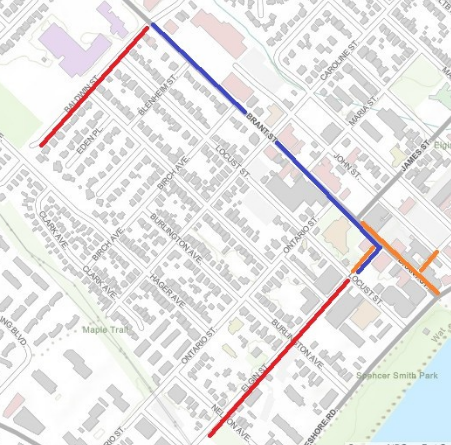 Parade Route #1 Baldwin to Elgin. The red colour on Baldwin St is the parade staging area, the blue line is the proposal parade route, the red line on Elgin St is the parade dispersement area, the orange lines are the proposed location of the various activities per the proposal by the new For Profit festival organizers. The second option is a traditional street parade held on Friday, June 19, 2026, at 7:00 p.m., using a Brant Street route from Baldwin to Elgin (refer to Appendix A). This option is supported by HRPS, aligns with available resources, avoids conflicts with Saturday festival infrastructure, and provides a more traditional parade experience for spectators and participants. The estimated cost of a Friday evening parade is approximately $50,000, including required road closures, signage, paid duty policing, event staffing, rentals, and performer support.
Conclusion
In conclusion, this memo provides additional information on the feasible parade options for June 2026 while outlining the operational considerations associated with each. Staff will proceed as directed by Council and collaborate with partners to support the selected option.
By Gazette Staff
February 16th, 2026
BURLINGTON, ON
We apologize for the quality of some of the tables. We had to work with what we were given.
Supplemental Staff Memo
SUBJECT: Financial Impact and Funding Strategy for Temporary Residential DC Exemptions
 Craig Millar, Craig Millar, Chief Financial Officer provided the following.
The purpose of the memo, as discussed at Committee of the Whole (COW) on February 10, 2026, is to provide some additional information on the potential financial impact and funding sources for the following committee approved motion related to staff report DGM-03-26:
“Direct the Commissioner of Development & Growth Management and Chief Financial Officer to initiate a temporary Development Charge bylaw amendment for a two-year residential Development Charges exemption on all units that pull a building permit and demonstrate active construction within the two year period, as outlined in Option 1A in report DGM-03-26”.
While the intent of the motion is to stimulate development by increasing building permits being issued for the next two years. The City’s financial subsidy of DCs could extend for a number of years beyond the two-year exemption period. For example, under the Development Charges Act, DCs rates are locked in or frozen at the time of site plan approval, provided a building permit is issued within 18 months of the application approval.
Therefore, any site plans approved towards the end of year 2 of the DC exemption period will be locked into the exemption for another 18 months to pull permits. Once construction is completed and occupancy achieved, the City will have to subsidize DCs, several years past the intended DC exemption period.
As a result, it is difficult to estimate the dollar amounts and timelines and the City will have to subsidize the DCs related to this exemption. However, in the short term, there will be no impact on the approved 2026 operating or capital budget. Going forward, each year as part of the year-end reporting and the annual budgeting exercise, staff will make recommendations on funding options for any required DC subsidies, including any impacts on the City’s capital plan.
Capital Plan:
As presented in the 2026 Capital Budget, the 10-year growth expenditure is forecasted at $126.5M, and $94.4M is currently expected to be funded from DCs.
Potential Funding Sources:
1.) Retained Savings
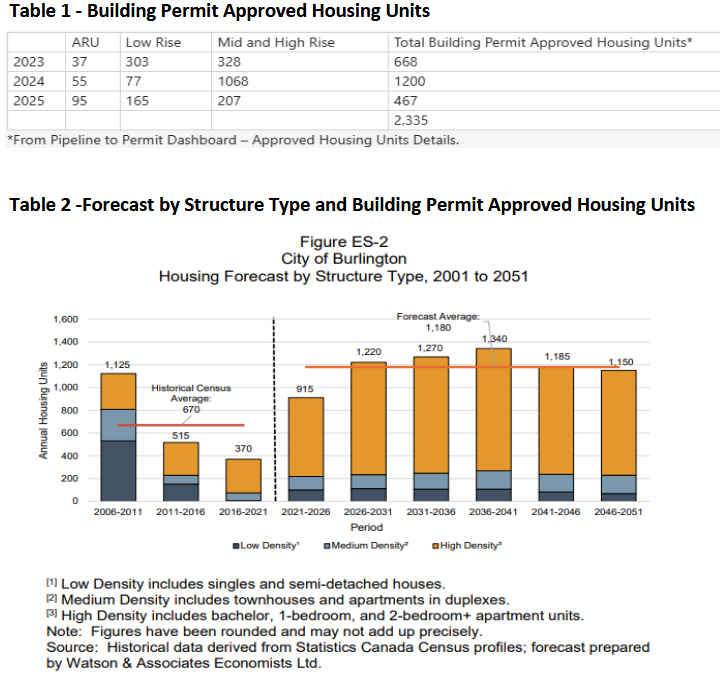

As alluded to during COW, staff anticipates that year-end retained savings would be utilized to fund exemptions provided in 2026. Funds from retained savings are typically used to replenish the City’s reserves and reserve funds, including the Tax Rate Stabilization reserve fund. This reserve fund is used to finance one-time expenditures and a tool to support financial stability.
Although staff are currently in the process of closing for 2025 year-end, it is important to note that the target balance for the City’s consolidated stabilization reserve funds (excluding Building Permit Stabilization Reserve Fund) is set at 10%-15% of the city’s own source revenues. As referenced in staff report FIN-11-25, Operating Budget Performance Report as of December 31, 2024, and Summary of Year End Financial Position, as of December 2024, the
consolidated balance of these reserve funds is below target at 5.6%.
2.) Infrastructure Renewal Reserve Funds
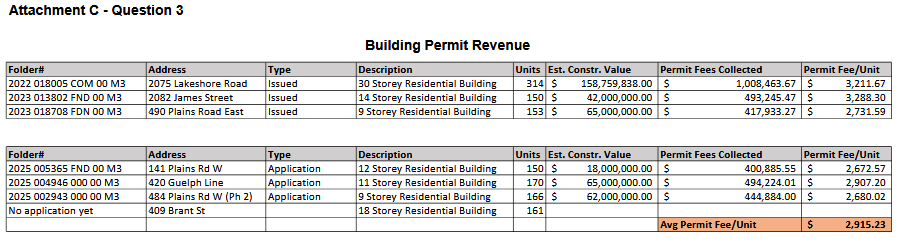
The next funding source to be considered would be the Capital Infrastructure Renewal reserve funds. These reserve funds are supported by the City’s Infrastructure Renewal Levy and allocated to the City’s infrastructure renewal projects. However, as per the City’s 2025 Asset Management Plan, the City is currently facing a deficit of an estimated $350M over 10 years.
The approved levy for 2026 was 2%.
3.) Increased use of Debt to fund the City’s capital plan.
The City’s debt capacity is currently at 8.42% for total debt (the limit is 12.5%). Our current outstanding debt as of December 31, 2025, is $139.4M.
By Lucy Roberts
February 16, 2026
BURLINGTON,
Most cars don’t break down unexpectedly. Before breaking down, your car emits repeated noises to communicate. Learning your car’s basic and new features may prevent minor difficulties from becoming pricey repairs. While the engine squeals while cold and hits a bump, numerous systems may be involved. Identifying indications and causes is crucial.
 Before breaking down, your car emits repeated noises to communicate. Similar steps apply to auto parts Canada: Identify the issue, then find the right part. Guessing based on vague noise wastes time and money by replacing the wrong part. Diagnose the issue with each new sound. Where does it originate from, why, and do speed, direction, or engine use affect it?
Squealing, Brakes, Screeching
A loud screech may signal a brake key push. Many brake pad wear indicators emit a high-pitched noise as the friction material wears down. Washing or humid days may silence the shriek, but it generally returns. Growling damages the pad and rotor fast.
A screech may be heard without braking, especially at low speeds. A stone between the rotor and the backing plate, or a slightly twisted dust shield, can strike it. Although minor, these issues should be explored because repeated friction might cause uneven wear or overheating. Halt sound evolution. Usability difficulties may pose safety risks.
Stick to Bumpy Ground and Suspension Signs
If your car clunks over speed bumps or potholes, it may have suspension or handling issues. Old sway bar links, bushings, and ball joints can generate a loud knock. Slowing down on bumpy roads makes this knock more audible. Determine whether entering a driveway or stopping after a bump increases the noise level. Joints and nuts move when loaded.
 A suspension system – it determines the kind of ride you will have. If the car runs straight, suspension problems may not be noticeable. The noise often causes uneven tire wear, a vague steering response, or a tug. Fixing a clunk quickly preserves expensive parts and maintains balance. A loose section may stress nearby goods over time.
Humming, Whirring, and Wheel Bearing Tips
Tire or wheel bearing hums increase with speed. Without rotation or alignment, uneven wear can cause tires to make noise. Noise levels vary significantly with changes in road surfaces. However, weight changes can affect wheel-bearing noise. Even at the same speed, a bearing may sound louder when turning left or right.
Wheel bearings are critical because issues can arise quickly. A distant drone may appear first. It may rumble and constitute a safety hazard. Immediate inspection of the bearing prevents road damage and other hazards.
Pressing Turns and CV Joint Alerts
Worn CV joints click rhythmically when turning slowly, like while driving. CV joints power the rotation and lift of the front-wheel-drive wheels. If the covering boot splits and grease leaks, the joint wears fast. Sound usually starts soft and gets louder.
Wheel or axle grease can produce clicking. If detected early, a torn boot can be repaired without joint damage. Worn joints clack loudly. Ignoring it could damage the axle assembly or drive.
Lower Sounds: Hissing, Ticking
 Regular check-ups for your car will prevent this. Wheel noise and other sounds are needed. Steam or sweet scents under the hood may suggest a vacuum, intake, or coolant leak. A new engine tick that changes with RPM needs investigation. When the engine starts, leaky exhaust pipes shudder in the manifold and spew fumes. Reverberating hood noises are challenging. Note whether the engine only makes noise when it warms up, starts, or accelerates. The details help technicians verify your hearing and narrow the search.
Easy Way to Act Before Things Get Worse
Interpret new noises as messages. Check speed, stopping, steering, bumps, and engine RPM. Even if unsure, watch its source. Early problems are easier to detect and inexpensive to fix, so act while symptoms are moderate and consistent.
 By Joe Gaetan By Joe Gaetan
February 17th, 2026
BURLINGTON, ON
On February 11, 2026, Mayor Marianne Meed Ward issued a directive requiring the City’s Chief Financial Officer to provide detailed financial analysis tied to the temporary elimination of Development Charges. That report will appear on the February 17 Council agenda. On its surface, this is a request for numbers and forecasts. In substance, it could signal a turning point in Burlington’s housing strategy.
When the Province introduced Strong Mayor Powers, the justification was: municipalities were not building homes fast enough. The solution was to concentrate certain authorities in the hands of the Mayor/Head of Council so housing-related decisions could move more decisively.
Burlington has not met the Province’s housing targets and, as a result, has missed out on grant dollars tied to performance. The City then created a permit-to-pipeline committee in an effort to streamline approvals and accelerate development, yet completions have not materialized at a pace sufficient to unlock funding.
The directive asks staff to lay out the assumptions behind an estimated Development Charge exposure ranging from $16 million to $42 million. Development Charges exist to fund growth-related infrastructure – roads, parks, community facilities. Forgoing that revenue, even temporarily, shifts financial pressures elsewhere. The question Council will face is whether that risk is justified if it stimulates construction activity and, in turn, improves Burlington’s ability to access provincial housing funds.
The Mayor’s direction is also requesting a realistic forecast of 2026 residential completions, informed by CMHC data and local trends. If projections show the City is unlikely to meet provincial, the case for intervention strengthens. If the forecast suggests targets remain out of reach regardless of incentives, the fiscal gamble becomes harder to defend.
Exploring an alternative to amending the Development Charges by-law outright is also significant. Instead of changing the by-law and risking unintended rate-locking or statutory complications, Council is being asked to consider whether a time-limited Development Charge grant program could achieve similar results. Such a program could provide a grant equivalent to the charge payable at construction, while preserving the integrity of the existing by-law framework.
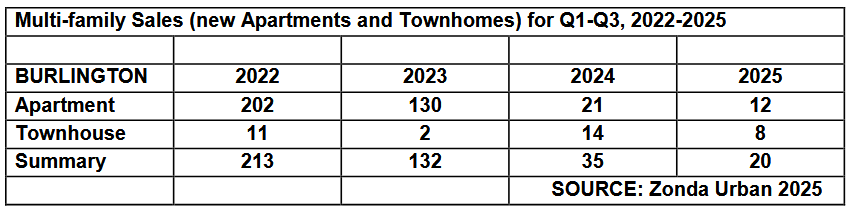 This kind of development is never going to get the city to the 29,000 units by 2031 One politically sensitive aspect may be the eligibility criteria. The Mayor has asked whether a grant program could be limited to residential units below a defined value threshold, excluding luxury homes. A blanket elimination of Development Charges risks being characterized as a broad subsidy to developers, including high-end projects. A targeted program, focused on more attainable housing, reframes the initiative as an affordability measure rather than a universal concession.
Strong Mayor Powers are based on housing supply tied to provincial priorities. The Mayor’s directive sets the analytical groundwork for an important decision. Supporters may see this as leadership – using the tools provided to unlock funding opportunities. Critics may view it as concentrating financial risk in fewer hands and compressing Council’s role in voting on a mayoral decision.
Development Charges are one of the few growth-related funding mechanisms municipalities control. If more homes are built, assessment rises. If assessment rises, tax capacity grows. If provincial thresholds are met, grant dollars follow. But if the anticipated acceleration does not materialize, the City absorbs the shortfall.
The February 17 meeting may not answer every question, but it will show the trade-offs. Burlington residents deserve to see how their elected officials will weigh the pros and cons of the directive.
Strong Mayor Powers were introduced with the promise that homes would follow. Burlington is now positioned to test whether that promise holds.
For those concerned about housing affordability, municipal finance, or the evolving balance of governance at City Hall, this is a meeting worth watching unfold in real time.
 By Eric Stern and Stephen White By Eric Stern and Stephen White
February 16th, 2026
BURLINGTON, ON
On Monday, February 9, I live-streamed Burlington’s Committee of the Whole meeting. At least four delegations urged the City Council to reduce or defer development charges for new housing.
Council was eventually persuaded to move to the next step in granting a two-year freeze. The justifications were familiar: softer housing demand, unsold condos across the GTHA, economic uncertainty, affordability concerns, and potential layoffs in the skilled trades.
I found myself asking a simple question: why was there only one councillor aggressively challenging these arguments? Ontario law requires that development charges (DCs) be paid into the development charges reserve fund. If the purchaser of a new home doesn’t pay the DCs, the city will have to use either debt or general tax revenue to contribute to the reserve fund. The mayor was asked at least twice to clarify where the money for the DC reserve fund will come from, but did not provide a specific answer. The mayor is hoping that either the province or the federal government will provide funding; no agreement or program is in place, and this is nothing more than a hope.
Mississauga is the only city to come close to eliminating DCs.
“The motion eliminates development charges, effective immediately, for one-bedroom plus den and two-bedroom units. To be eligible, developers must pull a building permit before November 13, 2026.”
Burlington’s approved motion is an across-the-board elimination of DCs, including multi-million dollar homes.
So Much for a Free-Market Economy
Developers have perfected the art of ideological shape-shifting.
When the market was overheated pre-COVID, they demanded deregulation, faster approvals, and less government interference. Now that the market has cooled, those same voices are calling for government relief, reduced charges, and public support.
One can admire the intellectual fluidity, but let’s call it what it is: hypocrisy. You can’t champion the free market when profits are rolling in and demand government intervention when they aren’t.
I listened carefully to the case for reducing and deferring development charges. Here’s why I oppose it—and why I’m disappointed Council didn’t raise these points.
A Chronic Failure to Read the Room
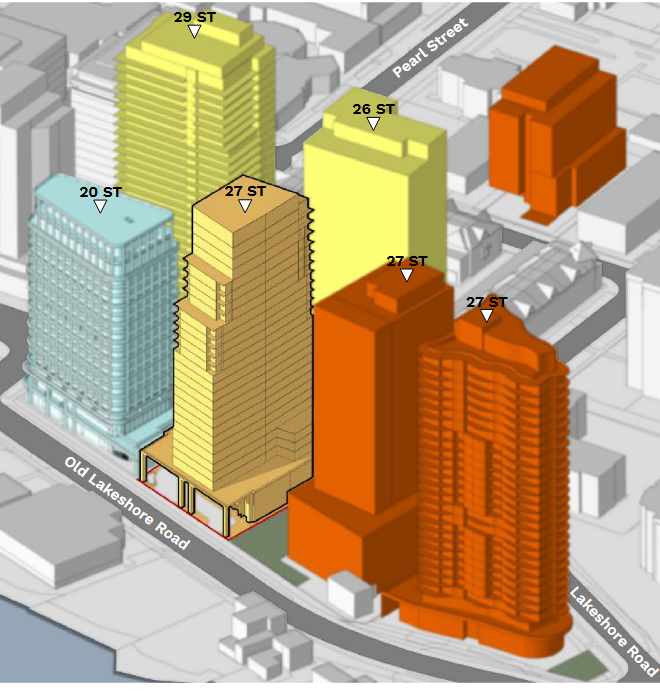 Residents warned for years that high-rise, investor-oriented condos were the wrong product. We urged developers to pivot toward housing people actually need. They didn’t listen. First, the condo slowdown didn’t arrive suddenly. It’s been building for years. Many of these units are tiny—often under 500 square feet—and overwhelmingly one-bedroom. They don’t work for families or multi-generational households. Demand didn’t disappear; it was misjudged.
Second, Ottawa signalled reduced immigration targets in 2023. Less immigration means less housing demand. The development industry either missed or ignored that signal.
Third, the reduction in the development charge is trivial. It’s roughly $11,000 on a 1-bedroom condo and $21,000 on a single-family home —a rounding error in the cost of a new home. I find it hard to believe this money will meaningfully result in more employment for tradespeople.
Fourth, the alarmism about layoffs rings hollow. Skilled trades are in chronic shortage. Talk to any renovator or contractor. Carpenters, electricians, bricklayers—these workers are mobile and in demand. Long-term unemployment is not the norm in this sector.
Fifth, a major supply shift is already underway. Baby Boomers are downsizing due to retirement, relocation, or death. Burlington has a disproportionately large 65+ population, and single-family homes—especially in south Burlington—are coming onto the market. This is exactly the housing young families want, yet it’s rarely factored into demand forecasts.
Finally, many residents warned for years that high-rise, investor-oriented condos were the wrong product. We urged developers to pivot toward housing people actually need. They didn’t listen.
I raised this with my councillor years ago and was dismissed. I’m not clairvoyant. I was just reading the market and paying attention to the macro-economic trends unfolding around me.
Exhibit A: Lakeside Plaza
Lakeside Plaza was once a thriving mall. For two decades, it was deliberately neglected, reportedly for tax advantages.
Since 2015, three redevelopment proposals have been brought forward. In public meetings in 2016, 2018, and 2023, residents were clear: affordable housing, low- to mid-rise buildings, and less density.
Each proposal ignored that feedback, offering instead a wall of high-rise condos along Lakeshore Road, with units barely fit for storage, let alone living.
More details here:
https://www.burlington.ca/en/news/current-development-projects/lakeside-plaza.aspx
Sorry, Not Sorry
Council has now approved what is effectively a bailout. How much revenue will be lost? Could be anywhere from $7.1 to $41.3 million.
Who fills the gap? And how much will it cost taxpayers in the future, who are already facing a 4.49% increase in their total tax bill—double the inflation rate (with Burlington’s portion of the bill increasing at a much higher 5.8%)?
I don’t feel sorry for developers. They helped create this problem. They were warned. They chose not to adapt.
 Eric Stern’s wish. If a manufacturer can’t sell cars or appliances because consumers don’t want them, they redesign, reduce prices, or retool. If small business owners hit hard times, they cut costs, delay investments, and sometimes lay off staff. That’s the reality of a free-market economy.
The real estate industry is not entitled to government-sponsored relief simply because it misread demand.
And if bailouts are on the table, where’s the relief for small businesses—or for taxpayers absorbing yet another tax hike?
The day I see repo trucks hauling off luxury BMWs from developer’s driveways is the day I’ll shed a tear. Until then—sorry, not sorry.
A colleague sent us an item that appeared on LinkedIn. It is the voice an Ontario lumber supplier.
Peter Turkstra, Turkstra Lumber, family owned and operated had this to say:
By Pepper Parr
February 16th, 2026
BURLINGTON, ON
With little in the way of public notice, five of the seven members of Council have put the financial well-being of taxpayers at risk.
In September of 2025, Council approved as Motion to Direct the Commissioner of Development and Growth and the Chief Financial Officer to report back to the Pipeline and Permit Committee on October 9th on the options for a two year temporary development charges (DC) reduction with an appropriate impact analysis.
Early in the process of determining what a DC charge change would mean, the amount was suggested as a 20% reduction.
The cost to the city was estimated to range between $3,000,000 and $7,500,000
The property tax impact would be an increase between 0.06% to 1.44% .
All this went to Council on October 14th, 2025 and included:
For applications where a Site Plan or Zoning By-law Amendment is required, DC
rates are frozen for 18 months following approval.
Municipalities are allowed to charge interest over this time, not to exceed a maximum rate as prescribed by the DC Act.
Full exemptions for affordable housing units.
Full exemptions for non-profit housing developments.
Full exemptions for two (2) additional residential units within and/or ancillary to existing and new developments.
DC discounts for rental housing based on number of bedrooms per unit.
DC installment plan for purpose-built rental units – 6 annual installments payable starting from date of occupancy
Development charges are revenue to the city. When received they go into a reserve account from which they can be drawn when infrastructure has to be built.
Under the Development Charges Act any DC discounts from an amended by-law, which is what the city is proposing to do now, would need to be funded from the general tax base – which is you the taxpayer.
In the report Staff provided, they note that Development charges are difficult to estimate and are highly dependent on development activity. There has been very little development activity in Burlington in the last six months. One significant development pulled their plans.
Fast forward to February 9th were a Staff report talks in terms of temporarily eliminating Development charges.
The Agenda for that meeting set out to:
presents options to temporarily eliminate development charges either by pursuing amendment(s) to the City’s Development Charges by-law (DCs) or amendment(s) to the City’s Affordable Rental Housing Community Improvement Plan (ARHCIP).
After considerable debate, at times there were just five of the seven Council members at the table, they decided to xxxx and sent that recommendation to Council, which meets on Tuesday.
Between the adjournment of the Standing Committee, Mayor Meed Ward issued a Statement and Direction using the authority she has under the Strong Mayor Powers Act.
Those powers were given to the Mayor when Council signed a pledge to build 29,000 housing units by 2031. The City is nowhere near that number.
 Mayor Marianne Meed Ward Using her Strong Mayor Powers Mayor Marianne Meed Ward directed the Chief Financial Officer to include the following information in the CFO’s follow up memo to
Council, to be included on the February 17, 2026 Council agenda, regarding report “Options for the temporary elimination of Development Charges (DGM-03-26)”:
1. Development Charge Exposure Assumptions
Provide a detailed breakdown of the assumptions underlying the estimated Development Charge (DC) exposure range of $16 million up to $42 million, including:
o The assumed total number of residential units;
o The assumed unit mix by housing type;
o The applicable DC rate per unit type; and
o The resulting aggregate totals supporting both the $16 million and $42
million scenarios.
This information shall be presented in chart form and clearly outline all assumptions used in each scenario to enable Council to evaluate the likelihood and scale of the potential financial exposure; and,
2. Forecast of 2026 Residential Completions
Provide a forecast, informed by recent CMHC data and historical local development trends, identifying the number and type of residential units reasonably anticipated to achieve substantial completion in 2026, together with the corresponding DCs payable under current rates; and,
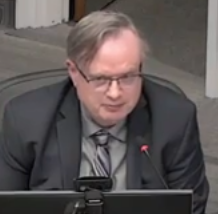 CFO Craig Milar has been tasked with a mammoth job with a couple of days to get it done. We will see how well he has done on Tuesday 3. Associated Development Revenues
For the realistic forecast described in Item 2, as well as for the $16 million and $42 million scenarios, provide the estimated corresponding:
o Assessment growth;
o Building permit revenue;
o Parkland dedication revenue;
o Community Benefits Charge (CBC) revenue; and
o Any other development-related revenues.
The analysis should clearly identify revenues that would not be realized if such projects do not proceed; and,
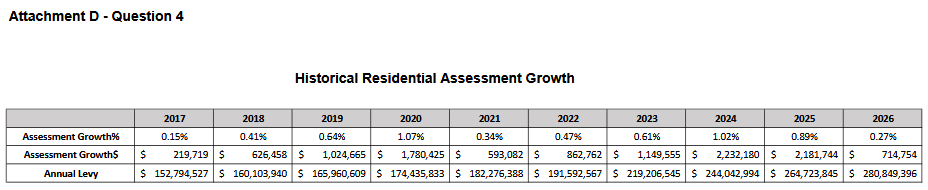
4. Historical Residential Assessment Growth
Provide the City’s residential assessment growth for each of the past ten (10) year; and,
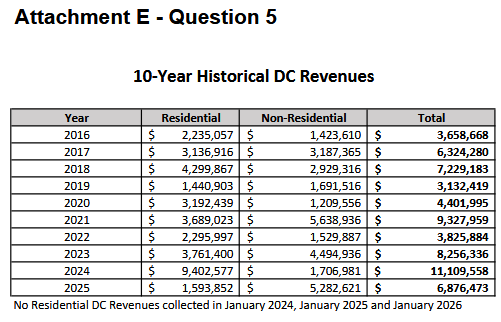
5. Historical and Recent Residential Development Charge Revenues
Provide the actual residential DC revenues collected in each of the past ten (10) years, together with the amount of DC revenues received in January 2024, January 2025, and January 2026, to provide historical context and assist in assessing
recent trends relative to the projected exposure scenarios; and,
6. Anticipated Funding Source – Realistic Scenario
For the realistic forecast described in Item 2, identify the anticipated funding source(s) required to offset any foregone Development Charge revenue, including:
o The potential use of operating surplus;
o The potential use of capital reserves and any other applicable reserves; and
o The current balance of applicable capital reserves and other reserves available to support such funding; and,
7. Alternative Implementation – Development Charge Grant Program
Provide an analysis of whether, as an alternative to amending the City’s Development Charges By-law, Council could establish a Development Charge Grant program that would:
o Provide a grant equivalent to the DC payable upon commencement of construction within a defined two-year period;
o Avoid amendments to the DC By-law; and,
o Reduce the risk of potential statutory challenges or unintended rate-locking implications associated with future by-law revisions; and,
8. Eligibility Criteria for Grant Program
As part of the analysis in Item 7, assess whether eligibility for a DC Grant program could be limited to residential units below a specified value threshold (for example, $1.75 million or another defined amount), thereby excluding luxury
residential units from eligibility.
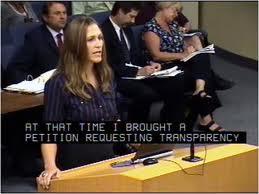 Marianne Meed Ward was just a citizen when this picture was taken. She became a Council member and then Mayor of the City and appears to have left the words behind. None of the ask has been made available to the public. It will be presented during the Council meeting on Tuesday. So much for transparency and accountability.
The options that were set out in the Staff report were:
Options
- Apply a temporary 2-year Residential DC exemption through an amendment to the DC By-law.
All residential developments will receive a full exemption of City development charges.
Estimated Cost $16.7M-41.3M
- Applying a temporary 2-year exemption for all Apartment units through an amendment to the DC By-law
All apartment units will receive a full exemption of City development charges
Other residential unit types are not affected and City DCs will continue to be applicable
Estimated Cost $10.7M-26.6M
- Apply a temporary 2-year exemption on 2BR+ Apartment units through an amendment to the DC By-law
Only 2BD+ apartment units will receive a full exemption of City development charges
Designed to incentivize larger high-density (apartment) units.
Other residential unit types are not affected and City DCs will continue to be applicable.
There was an additional Do Nothing option, which staff advised against for the following reasons:
Without action, it will likely mean development charges will not be collected, given market conditions and developments will not have been able to advance to occupancy in the near term.
A do-nothing approach would protect City documents (DC By-law and Background Study and the ARHCIP) from appeal or from compromising future updates.
A pause on action would allow the impact of other City, Provincial and Federal actions to play out which may provide insights into the best contribution and role the City can play to support the creation of new housing and the achievement of growth forecasts and ambitious housing targets.
Working together with the development community to resolve the extensive broad appeals to the BOP,2020 and subsequent appeals to OPA 2 would enable the City to even more aggressively pursue streamlining policies and processes to support City Council’s housing objectives. Unlocking those key appeals can pave the way for future phases of the Zoning By-law project and the Community Planning Permit System
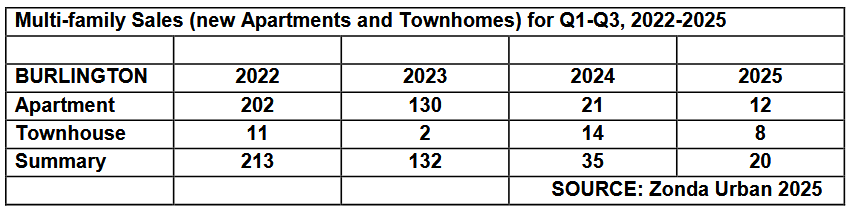
How bad are things in the development community?
Related content:
Focus Burlington argues taxpayers should not be bailing out developers.
Gaetan: Keep an eye on this one.
 By Pepper Parr By Pepper Parr
February 17th, 2026
BURLINGTON, ON
Feedback from citizens who don’t like what they think is happening with the plans to eliminate Development charges for a two year peiod.
Can Burlington, acting alone, save the development industry
Developers don’t share profits in good years; in bad years, they expect us to share the losses
Property taxes are not geared to income; people on fixed incomes should not be forced to bail out industries. This is a federal or provincial responsibility
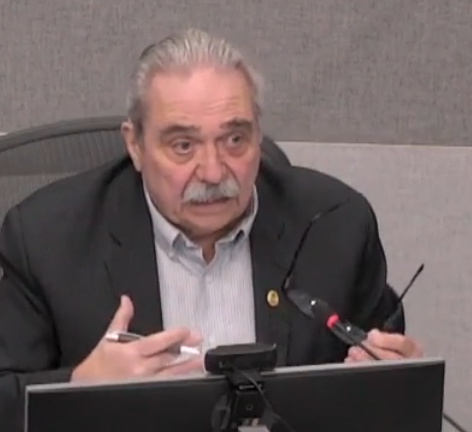 Ward 6 Councillor Angelo Bentivegna 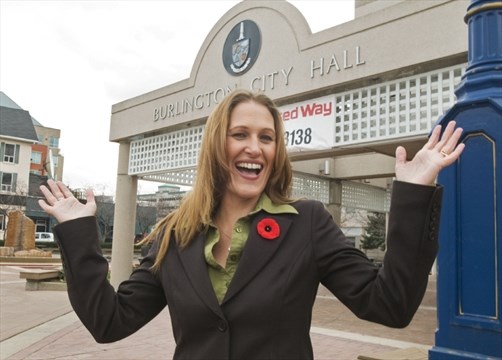 Mayor Marianne Meed Ward. In an election year, why are Bentivegna, the anti-tax guy, and MMW pushing this?
Why are all levels of government taxing housing to such a large extent
Can we pay postal workers to deliver flyers, auto workers to make climate-killing cars, and developers to build condos when there are thousands of condos on the market?
This council initiative has all the elements to end up like a fish that smells.
 By Tom Parkin By Tom Parkin
February 6th, 2026
BURLINGTON, ON
Skyrocketing average tuition under the Ontario Liberals helped Ford PCs win in 2018.
Canadian average tuition, 2006/07 to 2025/26

Ontario still has the highest average university tuition in Canada thanks to the Ontario Liberals, though a multi-year freeze has cut tuition by 17 per cent since they were defeated in 2018.
By the time the Ontario Liberals were defeated, four years of average tuition for a Canadian student cost nearly $40,000, up from about $26,000 in 2006/07, a 40 per cent increase.
The Ford PCs ended their freeze last week, allowing tuition to rise two per cent in each of the next three years.
Canadian average tuition rose 40% under Ontario Liberals
That 40 per cent increase increased the average Ontario university tuition cost by $2,642 a year in inflation-adjusted dollars. In the same period, annual tuition in Quebec rose $630, dropped $118 in Alberta, and in BC rose by $11.
The Ontario Liberals’ skyrocketing tuition helped Doug Ford into the premier’s office when his PCs highlighted it with a contrasting pledge to cut tuition 10 per cent, then cap it.
Ontario universities were already increasing revenue and expanding significantly on fees from international students. In the nine years from 2010/11 to 2018/19, the number of international students at Ontario universities increased by about 45,000, jumping from 35,000 to 80,000. The Ford PCs added 31,000 more international students in the next five years, reaching 111,000 in 2023/24.
But that international student revenue stream has now been throttled by the federal Liberals, who cut the number of visas available for temporary workers and students.
International students
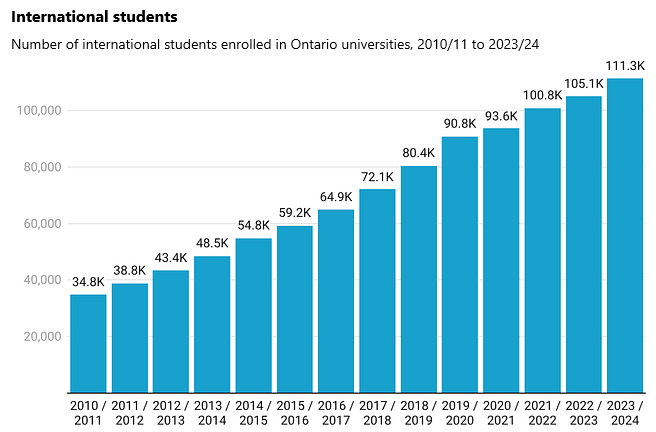
With foreign student revenue now cut back, the Ford PCs last week ended its tuition freeze. It was a move several Ontario Liberals were quick to complain about, though none mentioned their role in creating the crisis.
Space for a new stance on international students
The sudden reversal on tuition policy can be an opening to a new public debate on the right way to draw international students to Ontario universities. Canadians rightly disliked a student visa system that commodified a path to Canadian citizenship. But simply cutting international students, rather than fixing the problem, throws out the baby with the bathwater
Ontario’s excellent universities are attractive to foreign students, who are willing to pay for an excellent education. Surely the UK., US or France would not stand in the way of Cambridge, Harvard or Le Sorbonne admitting full-freight students who help expand the educational excellence that benefits domestic students and the domestic economy.
Strong universities create jobs, drive globe-leading research and support innovation. A broader student base benefits Canadian students with wider course selection and internationally-recruited professors.
Universities are not an export good, but students coming to Ontario for an education bring money to Ontario’s economy.
There is space to advocate for a fixed student visa strategy that doesn’t commodify citizenship but does allow international enrollment that benefits Ontario’s students and economy. We’ll see if there is a political party willing to claim it.
 By Sadie Smithers By Sadie Smithers
February 16th, 2026
BURLINGTON, ON
Understanding the variety of payment methods is crucial for any online casino enthusiast. Speed, convenience, and security are key factors that influence user satisfaction. Wildrobin offers a diverse range of options to cater to every player’s needs. Additionally, the wildrobin casino platform includes various payment methods to meet players’ needs.
 Financial data is secure. In the realm of online casinos, payment methods play an essential role in enhancing user experience. Players seek options that not only provide quick transactions but also ensure their financial data is secure. As the popularity of online gambling grows, the variety and efficiency of payment methods have become a top priority for platforms like wildrobin casino.
Common payment methods
Online casinos offer a plethora of payment options to suit different player preferences. Credit and debit cards are among the most common, offering ease of use and widespread acceptance. E-wallets such as PayPal and Neteller are also popular due to their speed and additional security features. Bank transfers, while reliable, often take longer to process. For those seeking anonymity, prepaid cards provide an ideal solution without compromising security.
 Cryptocurrencies Cryptocurrency payments have emerged as an increasingly popular option in the online casino industry, offering players enhanced privacy and faster transaction times. Digital currencies like Bitcoin, Ethereum, and Litecoin provide decentralized payment solutions that bypass traditional banking systems. Many players appreciate the lower transaction fees associated with crypto payments, as well as the added layer of anonymity they provide. Mobile payment solutions have also gained traction, allowing users to make deposits directly through their smartphone billing systems or dedicated apps, making the gaming experience even more accessible and convenient for on-the-go players.
Speed and convenience
The speed at which transactions are processed is a critical factor for many online casino players. Instantaneous deposits allow users to start playing immediately, while swift withdrawals ensure players can access their winnings without delay. Payment methods that offer both these conveniences tend to be favored by users who value efficiency. Consequently, platforms like wildrobin casino prioritize offering fast and convenient options to enhance player satisfaction.
Security measures
 Financial transactions online. Security remains a paramount concern when dealing with financial transactions online. Online casinos implement advanced encryption technologies to protect user information from potential threats. This includes SSL certificates that safeguard data during transmission and multi-factor authentication to verify user identities. By ensuring robust security protocols, platforms build trust with their users, encouraging more frequent transactions.
A seamless payment process significantly enhances the overall user experience on online casino platforms. Players appreciate the ability to deposit funds easily and withdraw winnings quickly without facing unnecessary hurdles. By offering diverse and efficient payment options, platforms like wildrobin casino contribute positively to user engagement and retention.
 By Joe Gaetan By Joe Gaetan
February 15th, 2026
BURLINGTON, ON
The issue raised in this article goes directly to the heart of transparency and accountability in municipal governance.
From a news report in the Gazette.
It’s Friday afternoon. The city is heading into a long weekend – Family Day on Monday.
The agenda for the Council meeting is on line. Some people make a point of checking it out.
There are several reasons to at least glance at it.
There is an item on the agenda that, if passed, would have the city not collecting development charges.
The meeting agenda for this coming Tuesday’s Regular Meeting of Council has not been made available to the public.
People who want to delegate have to register by noon on the business day before the meeting.
City Hall will close at the end of the day.
Quite why the City Clerk would let something happen is beyond understanding.
One would have thought that at least one Council member would have seen the problem and taken corrective action.
A decision not to collect Development Charges has the very real risk of costing the city a big bundle of money. And that money will eventually come out of the pockets of the taxpayers.
Link to the complete article.
The City bylaw that governs council meetings consists of more than minor administrative detail – it is a safeguard. The requirement that agendas be posted at least seventy-two hours before a regular Council meeting exists so that members of the public can review the business before Council, assess its implications, and decide whether to delegate. Without that notice, meaningful public participation becomes practically impossible. What is not known is when the 72 hour clock starts ticking. As this is a long weekend, the 72 hour notice requirement is technically attainable.
The Clerk’s role under section 7.1 includes ensuring notice of meetings is provided as set out in the by-law.
However, another section of the bylaw states that lack of receipt of notice does not invalidate a meeting. That clause should not be interpreted as a license to dilute transparency. It protects the City from technical challenges – it does not excuse avoidable failures in providing proper notice.
In a matter as significant as potentially foregoing Development Charges – with real financial consequences for taxpayers – the public deserves clear, timely disclosure. Seventy-two hours is not excessive; it is the minimum standard set by Council itself.
If the agenda was not posted within the prescribed time frame, that raises legitimate questions about the City’s procedural rules. More importantly, it undermines public confidence. Deferral, as suggested, may well be the prudent course – not only to clarify the financial implications, but to restore public trust in the process.
Transparency is not a courtesy. It is a condition of accountable government.
|
|