By Pepper Parr By Pepper Parr
June 25th, 2019
BURLINGTON, ON
Well this isn’t good news.
L3 WESCAM, which currently operates three sites across the Greater Toronto Area, including two in Burlington, will be consolidating into one, 300,000-square-foot facility in Hamilton, in an effort to increase operational efficiency.
 Space will be available Q1 2021 L3 WESCAM is one of the premier high tech operations in North America – this is a class A operation with a great reputation producing a product that keeps the western world safe.
In a media release Mayor Marianne Meed Ward said: “We are sorry to see them go and wish them well in their new home. We are pleased that jobs are staying local within the region — approximately 800 jobs are currently on site at the Burlington location, which will be moved to Waterdown. As a result, no jobs are expected to be lost from the company.
“L3 WESCAM is also completing an expansion and consolidating its operations that should bring an additional 400 jobs to the region at the site at Highway 6 — this will increase its employee base to 1,200.
 Mayor will meet with the L3Wescam president to learn what went wrong. “I have scheduled a meeting with the L3 WESCAM president in two weeks to understand the rationale for their move, so that it can inform our strategy in business retention and attraction in the city. This move has been in the works for a number of years.
“Burlington will not be losing any tax revenue as the City’s vacant property tax rebate was removed in 2018. L3 WESCAM’s current lease in Burlington expires in 2020 and it is hoping to enter its new space in Q1 2021.
“While the Burlington property is not currently officially on the market, the City and Burlington Economic Development Corporation (BEDC) are actively seeking occupants to move in to the 122,000-square-foot facility. The space should be available in Q1 2021 and to lease in its entirety or divisible to fit multiple companies. Once the availability of the space is confirmed and the landlord officially lists it, BEDC and the City will fully promote the property to companies.
“A key focus of the recent Red Tape Red Carpet (RTRC) Task Force I launched this year is to ensure supports are available to retain and attract employers to Burlington. A major obstacle in this is that Burlington currently doesn’t have enough shovel-ready employment land that is unconstrained and available to be developed in an 18-24 month timeframe.
L3 Wescam also rents office space in the former Michael Lee Chin complex on Kerns Road.
The city has known for some time that they needed more space.
Anticipated recommendations from the RTRC Task Force will help ensure that our city does have more of that shovel-ready land and help reduce the timeframes and increase supports for businesses to get in the ground.”
The Gazette wants to know what happened to the land at Bronte Meadows that was being touted as a possible location for the new HQ2 that Amazon was going to set up.
International Harvester got away from us when they found a home in Hamilton.
In a recent Background piece the Gazette told of the successes Welland Ontario has experienced.
Some salesmanship is a tool the city and its economic development people don’t seem to have in their kit.
No word from L3 Wescam on why the move.
 Anita Cassidy, Acting Executive Director of Burlington Economic Development Corporation Anita Cassidy, Acting Executive Director of Burlington Economic Development Corporation explains that: “BEDC has been working with L3 WESCAM for a number of years through our business retention and growth services. Despite BEDC’s extensive efforts to retain L3 WESCAM, it has come down to a financial and business decision for the company to move outside of Burlington.
“L3 WESCAM’s continued growth nearby will create an opportunity for many Burlington residents to still work for the company while creating an opportunity to attract a new employer to the current 122,000-sq.-ft. site. While we are sad to see them go, BEDC is looking forward to working with the property owners to market the space and create new opportunities for Burlington residents to live and work locally.”
Related news story:
Welland has figured out how to make economic development work.

By Pepper Parr
June 25th, 2019
BURLINGTON, ON
They came looking for a little bit more money and left with marching orders to do it all over again.
It was not a pleasant Standing Committee session for the people at Capital Works.
And it was a chance to get a good look at how this city council is likely to work going forward.
The request for additional funding was placed on the Consent agenda which is a list of agenda items that are thought to not require any debate.
 Rory Nisan with ward 3 constituents before he was elected Councillor. Ward 3 Councillor Nisan spotted something he didn’t like and asked that it be taken off the consent agenda and added to the regular agenda which was pretty full.
Little did anyone know that the item would consume hours of discussion.
Council realized that they had not had all that much in the way of a close look at what was proposed for Civic Square.
After the holding of the Walk Off the Earth tribute and the Burlassic park event that covered all six of the NBA Championship games that made the Toronto Raptors the league champions, Burlington began to see Civic Square as something more than a place for public gatherings – it was THE public space and needed more polish and an image boost.
Also, taking out trees when a Climate Crisis had been declared was a stretch.
After some discussion, led to a large degree by the Mayor with input on what should be in the space by Councilor Nisan, Council decided this was too important a matter for staff to decide.
They were sent back to their desks and told to rethink and work on possible options on how to use the provincial funding before it expires. The tender is not moving forward at this point.
The Staff recommendation was to approve the tender for the Civic Square Renewal that came in at 1,162,922.61
The city was going to have to borrow to complete the project which came in $250,000 over the allocated amount.
Council was being asked to approve a total project cost of $ 1,198,000 with the money coming from the following sources.
Capital Purposes Reserve Fund $294,100
Federal Gas Tax $265,000
Infrastructure Reserve Fund $130,000
Park Dedication Reserve Fund $118,900
Public Benefits Reserve Fund $50,000
Senior Government Funding $190,000
Tax Supported Debt $150,000
Total Project Financing $1,198,000
 A lot of work was done on the plans for a revitalized civic Square – much of it was done before and during the election campaign – and got lost. Now that city Council knows what staff had in mind – Council wants more input. The original Civic Square construction was completed in 1984. It had reached the end of its life cycle and no longer met the city’s 2016 Accessibility standards.
 Civic Square as it is today – used for staff events, other public events including some of thee Raptors NBA games. City Council wants something with more in the way of prestige. In the summer of 2018, the City was provided with a Provincial Downtown Main Street Revitalization Initiative grant. City Council approved use of the grant towards the renewal of Civic Square given its importance to civic life and its relationship with Brant Street. To receive this funding the project had to be completed by March 31, 2020; it became critical to build in the summer and early fall to meet the deadline.
The summer and fall of 2018 was the election time frame that delivered a new city council. The focus during that campaign was who the new Mayor was going to be – a period of time when things got a little nasty and no one saw Civic Square as an issue.
Given the significance of Civic Square, an extensive public engagement process was developed and implemented with the goal to involve the public in shaping the design decisions. Public engagement made it clear that residents supported the continued use of Civic Square for festivals, events and other public uses. Residents also asked the City to make Civic Square a greener space with healthy trees.
Planting trees in a multi-use urban setting such as Civic Square is problematic with vehicles and large numbers of people traveling over the root zones. This requires the use of new technologies to ensure the long-term health of the trees. To achieve a sustainable environment for trees, the project includes the use of large structural soil cells for tree planting. These structures have the added benefit of storing storm water which slows the impact on the storm sewer system. This construction method is considered a positive action to help fight climate change.
The timeline set out in the staff report made it clear that Capital Works was engaging the public as well as they could. It was the incumbents and the candidates who missed the issue.
The estimated project cost was $948,000 – the project budget grew to $1,198,000 – an overage of of $250,000.
Capital Works explained the overage with the following comments:
1. Higher than anticipated costs by tendering landscape construction in late spring (after most qualified contractors have a full work schedule).
2. Higher than anticipated costs to build the pavement foundation.
3. Higher than anticipated costs to build structural cells for healthy tree growth.
4. Additional cost to relocate fire hydrant for festival and events access.
5. Additional cost to replace end-of-life electrical cabinets at the edge of Civic Square and Brant Street (at the Queen’s Head driveway).
The people at Capital Works have tendered 18 projects to date in 2019. The total approved budget for these projects was $24.75 million. The total cost at award for these projects was $22.94 million, as awarded through Delegated Authority Reports.
In their report Capital Works argued that the positive variance of $1.81 million could be directed to the Civic Square project to make up the difference between Budget Total Cost and the Tender Award Total Cost.
Capital Works tendering is not a science, unexpected issues arise, there are surprises – look at the Pier experience and the plans to do something different with New Street.
Capital Works didn’t think there was all that big an issue. What they didn’t see coming was a council that was determined to do things differently. They wanted to be much more hands on and they weren’t about to let something as significant as Civic Square get determined by any staff group.
Expect the same kind of thinking to get put into play when construction begins to take place across the street from city hall.
The hubub over the matter of $250,000 wasn’t the real concern. Council would find a way around that – of prime concern was – what kind of a Civic Square is the city going to have. Councillor Nisan began to focus on the public art that was being proposed and wanted to know where the design came from and who made the decisions.
What started out as a Consent Agenda matter became an item that got significant discussion at one Standing Committee meeting and even more at a meeting days later when Staff were brought in to answer questions.
 Angela Paparizo, Manger of Cultural programs in conversation with Ward 5 Councillor Paul Sharman. Angela Paparizo was pressed to explain who made the art decisions. Nisan didn’t like what he had seen so far – he was unaware that the city has a public art specialist on contract.
Capital Works had done its job of soliciting and sourcing public art; the consultant under contract was part of the process, the Manager of Cultural Programs Angela Paparizo did everything she was supposed to do.
None of that mattered – Council didn’t want to hand this one off to staff.
They were told to come back with other ideas to spend the provincial money.
Capital Works will scramble to see if they can come up with a project somewhere in the city that meets the Provincial Downtown Main Street Revitalization Initiative grant criteria.
The shade structure that was proposed will probably never see the light of day.
It might be some time before the public sees a renewed Civic Square – they had better get it right the first time – the public tends to get nasty when elected officials decide to be arts experts.
Related news stories:
Some public engagement did take place.
The plans were well known – Council was apparently asleep at the switch.
By Pepper Parr
June 24th, 2019
BURLINGTON, ON
Council has been at it for half a year and we are beginning to get a sense of what the key issues are for the council as a group and the individual members.
The Environment is very much a top of mind – we see it in decisions made that this council regrets and we see it in the way they have asked staff to include an environmental justification with every report they give council.
Parking is always an issue and getting more public parking in place is something the Capital Works people will do whenever there is an opportunity.
Council declared that there was a Climate Crisis and wanted to get that message out to the public and then underline the importance by making decisions that support the fact that there is a crisis.
They also got quite a bit braver on the tree bylaw that has been cluttering the agenda for a couple of years. The previous council did get to the point where they agreed to do a pilot project related to the cutting down of trees on private property in the Roseland community. It was to be a two year pilot.
The new council decided to bump that up from just the Roseland community to all of ward 4. They directed the Director of Roads, Parks and Forestry to report back to the Committee of the Whole in October 2019 regarding the resources and logistics necessary to expand the Private Tree Bylaw Pilot to encompass all of ward 4, and city wide.
 No trees and a surface that was not permeable built while the city debated the Climate Crisis. When a report on a new very small parking lot at the intersection of Caroline and John Street was opened up – it is sort of attached to the parking lot just south of the No Frills Plaza, ward 4 Councillor Shawna Stolte wanted to know why the city was building parking lots that didn’t have permeable surfaces and trees scattered at least around the edges.
Council made it very clear to staff that this wasn’t to be done again.
Amy Schnurr, Executive Director of Burlington Green delegated at a Standing Committee on the environmental issues – fearing that she didn’t get the hearing she wanted she returned to the Council meeting and had this to say:
Schnurr said: “ I would like to follow up our June 10 delegation with some additional input regarding the proposed new reporting framework as well as the proposed city-wide tree bylaw. I did share additional input by email in recent days, but for the benefit of the public and in case you’ve not had a chance to read it, I thought it would be helpful to share it with you here this evening.
 A tireless advocate for the environment – Amy Schnurr puts out the word every chance she gets. 1. “Regarding the issue of the proposed new and improved reporting framework for all city prepared reports. After delegating last week, Council discussion included comment on holding off on inclusion of social implications. I urge you to reconsider and proceed with adopting all three aspects (environmental, social, economic).
“Consistent with Mayor Meed-Ward & Councilor Sharman’s comments, all three aspects are interrelated, and none should be excluded, if you are to make decisions reflective of a ‘liveable ‘complete’ city. Get the complete framework what it needs to be from the start, shifting staff (and yourselves) to think holistically, effectively applying balanced research and reporting for ALL of your decision-making.
“The urgency of the current environmental crisis actually warrants a framework that recognizes that social and economic activity occurs within ecological limits, however moving to an environmental, social and economic framework for now, onboarding a carbon/GHG lens as soon after the climate action plan is presented in December, at least keeps the ball moving forward.
2. “Regarding the long-time proposed city-wide private property tree bylaw –it was concerning to hear comments at Committee that the issue of tree protection should be looked at later and /or separate from the climate action plan. There has also been comments from the city that we need to provide the community and developers with time to adjust to what a tree protection bylaw could like look. They will adjust. Many developers in Burlington also do business in neighbouring communities where there are safeguards for green infrastructure in place (tree bylaws) – and they adapt.
“Declaring a climate emergency and then not acting on a low-hanging fruit opportunity to take action sends mixed signals to the community. Respectful that processes take time and resources – the issue of protecting Burlington’s mature tree canopy is far from new. BurlingtonGreen and the community have been advocating for an effective, practical private property tree bylaw for more than a decade.
“In addition to planting more trees in Burlington (and fast), we must hold onto as many mature trees as we can. A bylaw is one tool in the box to aid in doing this, and it is an essential one. The city has a myriad of other bylaws in place to support the greater good, established without subject to years of debate, slow progress and pilots of “proof” before implementation. Science-based, human and environmental health-related issues such as tree protection must be addressed with greater urgency and decisiveness.
“Respectful that you aim to gather data and insights via a two-year test period in the Roseland Community, we would argue – to what end? What will you learn from it that exceeds the implications of leaving mature trees unprotected in other communities….. while the clock is ticking on action on climate? Each of your communities are unique and evidence from the Roseland pilot may in fact not be entirely applicable (or contradictory) to areas you serve anyway.
“ALL of you have mature trees in the communities you serve, and they are worthy of reasonable protection. BurlingtonGreen asks that you direct staff to report back on a plan of action (using the proposed social, environmental and economic framework), to proceed with establishing and resourcing a city-wide public property tree bylaw before 2020.”
 Several majestic fir trees on the eastern edge of the development were kept – the rest – 64 of them – submitted to the chain saw. At the same meeting Stolte pointed to a situation where 64 trees had been cut down for a small development on New Street.
Lisa Kearns, the Councillor for the ward in which the development was taking place, apparently wasn’t aware of the trees coming down.
By Staff
June 24th, 2019
BURLINGTON, ON
A part of town that was the focus of a long, sometimes emotional debate over whether or not there should be sidewalks on the street came to an end when we saw the first 6-1 vote with the Mayor being the odd vote out; when Marianne Meed Ward was a Councillor she was frequently the odd vote, much to the chagrin of her council colleagues at the time. Some thought that part of her past was really behind her.
It wasn’t – the Mayor’s vote was strategic – she knew a majority of council was going to vote for the project – she could oppose and have the residents happy that at least their Mayor was on their side. Our Mayor is in consistent strategic mode.
The city announced on Friday that Strathcona Drive and area streets would be closed from June 24 to November, 2019.
Lorraine Crescent, McIntosh Place, Apple Valley Lane and Applevale Court are closed to through traffic for repair work.
Resident and emergency service access will be maintained.
 Many of the side streets in Aldershot do not have sidewalks – some were surprised that any of the streets were without at least one side walk. The good folks on Strathcona Court argued strenuously to keep things that way but more progressive minds prevailed. These repairs include:
• new paving,
• new curbs,
• minor storm sewer repairs and
• replacing streetlight poles and underground wiring.
The work also includes new sidewalks on the east side of Strathcona Drive.
By Pepper Parr
June 24th, 2019
BURLINGTON, ON
Burlington’s Mayor and the Minister of Municipalities and Housing are using the same words: do they mean the same thing?
Mayor Meed Ward has insisted that growth must pay for growth and she has argued vociferously that growth is being put on the backs of taxpayers.
 On Friday, Steve Clark, Minister of Municipal Affairs and Housing said “Growth must pay for growth and it’s important that municipalities have the resources to support complete communities.” On Friday, Steve Clark, Minister of Municipal Affairs and Housing said “Growth must pay for growth and it’s important that municipalities have the resources to support complete communities.”
He added that Bill 108, the legislation that got rushed through the Legislature faster than a pregnant teenager could get before an altar, covers this problem.
The Doug Ford government passed Bill 108, on June 6th which established a new community benefits approach to ensure that developers pay for community benefits like parks, community centres and libraries.
 Is the Mayor about to learn that the city’s revenue steam is going to be assured? Ontario announced that it has launched consultations on the best way to implement this new approach to make sure that vital municipal revenue streams are maintained and to make community benefits more transparent and predictable.
People at the municipal level were stunned at the speed with which the Bill was passed and the implications for tax payers. The Bill makes changes to 13 other significant pieces of legislation which municipal planners are working diligently to fully understand.
While the municipal planners figure out ‘what is this going to mean to us’ the province announced there would be 140 days of consultation before the end of the year, with the final changes intended to make the upfront costs of new housing more predictable for everyone.
The consultation was launched following discussions with the Association of Municipalities of Ontario, the City of Toronto and municipalities across Ontario. The government wants early feedback from municipalities on the approach to develop the formula associated with community benefits charges.
There will be a technical working group with municipalities that will provide advice to our government on the proposed approach and a draft formula. More consultations will occur this fall on the draft formula.
“We are consulting on the best way to replace the current system of ‘let’s make a deal planning’ with a system that puts people and communities first.”
Clark added that there is a “patchwork of complex and confusing ways municipalities set and collect the fees that help pay for services like libraries and community centres.
With both the Mayor and the Minister using the same words and the Minister saying the “let’s make a deal” approach to development approvals has to come to an end Burlington might find itself agreeing with current provincial government.
Bill 108, officially known as the More Homes, More Choice Act was, according to the ministry, “informed by a broad public consultation that included feedback from the public, as well as business and industry, research and development sectors, municipalities, the agricultural and environmental sector and many others. The government received more than 2,000 submissions and 85 per cent came from the public.”
That statement doesn’t square with what the Gazette has heard from its readers.
The ministry added in their statement that they “are consulting with local residents so they can have a say in deciding how community benefit charges are spent to support services like parks and daycares, through their municipality’s community benefits strategy.
“The new approach will ensure we avoid situations where municipalities, like the City of Toronto, can have over $200 million in money collected from development that isn’t being invested in the community.
 Are ‘Granny Flats’ going to be possible in Burlington? “A related consultation on proposed Planning Act regulations will, among other things, look at how to make it easier for homeowners to create a second residential unit on their property and to bring in changes to the Local Planning Appeal Tribunal.”
The scramble at municipal planning departments to make sense of the changes that are proposed and determining how to respond to the 140 day consultation period is going to be a challenge. Burlington already has more on its plate than it can eat never mind digest.
By David Barker
June 23rd, 2019
BURLINGTON, ON
Ms McKenna in your statement directed towards the We Love Burlington group, published in the Burlington Gazette, you state “Our estimates from the Ministry of the Attorney General show that over 100,000 housing units are caught up in legacy cases at the tribunal.
That’s 100,000 desperately needed homes that can’t get built – or three years worth of construction in Ontario waiting for approval….” By making this statement, Ms McKenna, you imply that you would expect all 100,000 units that await review by LPAT would gain its approval.
Maybe you did not mean to imply that. But your statement reflects exactly the public’s perception of just what is wrong with LPAT (and before it OMB). The perception is that the unelected, unrepresentative body seems to invariably side with the developer’s position, completely ignoring the municipality’s official plan and the desires of the local residents.
Please can you provide any justification as to why the Province of Ontario should even have an unelected, unrepresentative body to pass judgement on how a municipality manages it’s development. As far as I am aware no other Canadian Province has such a body. I assume in those other Provinces the developer’s recourse is to a non-political court system. Should that not also be the recourse here in Ontario.
Surely if a municipality has an official plan that has been accepted and approved by it’s region (and by implication the Province) why should that municipality then be second guessed by an unelected, unrepresentative political body. If a developer’s proposal does not comply with the requirements of the municipality’s (Region/ Province approved) official plan, then surely the developer should not expect municipal plan approval until it does conform.
My understanding is the official plan in effect in Burlington dates back to 2008. That means the official plan has been in effect for ten years NOT twenty five years as you contend. That 2008 official plan, although soon to be superceded by an updated official plan, does in fact remain compliant with regional and Provincial requirements. As such it should be respected by all, including developers, the Province and LPAT.
Ms McKenna you are right to champion the need to increase the supply of affordable housing, both rental and owned. I believe you will find allies fir that goal at the Region, at Burlington City Council and in the community. However, the high rise condo developments proposed for downtown Burlington do not in any meaningful way address affordable housing. The price point of the proposed condos are way outside the affordability of first time home buyers. Further the monthly rental cost of those units being bought by investors for the rental market is also likely to be well beyond the budgets of the twenty something’s who look for affordable rental accommodation. So for you, Ms McKenna, to in any way imply that the developers proposals for downtown Burlington high rises address affordable housing is completely disingenuous on your part.
Please, Ms McKenna would you temper your standing up and defending the bullying Ford government, of which you are a part, with more standing up and advocating for the desires and positions of your constituents who elected you to represent them. Those views are clearly and accurately expressed and advocated by the City of Burlington Council.
I dare you to publish on your website this opposing view to your statement. But I doubt you are either brave enough or confident enough to do that.
David Barker is a Burlington resident who lives on Lakeshore Road.
By Staff
June 22nd, 2019
BURLINGTON, ON
School will be out during the week we are going into. A good time to learn just how much the public Regional school system is costing.
The Halton District School Board Trustees approve 2019-2020 operating and capital budgets that will produce a $2.5 million deficit.
 Frank J.Hayden high school in Burlington. At the June 19, 2019 Board meeting, Trustees of the Halton District School Board approved the operating and capital budgets for the 2019-2020 school year. Both budgets are compliant with the province’s Public Sector Accountability Board (PSAB) requirements.
The 2019-2020 operating budget for the HDSB totals $754,956,645, while the capital budget totals $64,005,723.
In the 2019-2020 school year, the HDSB will welcome 65,454 students in 87 elementary schools and 17 secondary schools. This enrollment projection results in an overall increase of 1.3 per cent compared to the current 2018-2019 school year.
The 2019-2020 Budget Development process included challenges resulting from a significant reduction in funding, accentuated by:
• an increase in operational pressures,
• increased demand in resources to support student achievement,
• Ministry of Education redistribution of the Special Education funding, and
• a per pupil level of funding that is below the provincial average.
The operating budget is $8.3 million lower than the current 2018-2019 budget. Currently, the HDSB is facing a $22 million reduction in funding due to recent changes announced by the Ministry of Education. As a result of these challenges, there have been reductions in all areas of the budget.
The HDSB reduced 189 positions across all employee groups, and an additional $6 million across various departmental budgets, transportation, temporary accommodations, school budgets, technology in schools, and professional development.
“Reduction to funding, staffing positions and other budgets will pose challenges in the coming year,” says Roxana Negoi, Superintendent of Business Services. “Teacher librarian positions have been reduced along with technology support to schools.”
 Director of Education Stuart Miller in conversation with Trustee Chair Andrea Grebenc. “Despite increased enrollment, there has been a reduction of more than 800 classes available to secondary students,” says Stuart Miller, Director of Education for the Halton District School Board. “This will result in higher secondary class sizes and possible cancellation of some compulsory and elective classes.”
As a result of significant shortfalls in funding, the Board has approved a deficit budget of $2,508,147, with a recovery plan to address the deficit within two years.
“The HDSB continues to be committed to every student,” says Negoi. “Reductions in this budget were made with consideration to minimizing the impact on student learning and to school communities and staff overall, while carefully considering all budget input received from our communities, partners and staff.”
While reductions and efficiencies are required, the 2019-2020 HDSB Operating and Capital Budgets have been developed with the vision that every student will continue to explore and enhance their potential, passions, and strengths to thrive as contributing global citizens.
“I have every confidence in the professionalism and expertise of our staff,” says Stuart Miller, Director of Education. “Our staff will always do what is required to support students the best that they can.”
By Staff
June 21st, 2019
BURLINGTON, ON
We Love Burlington asked the MPP for Burlington to respond to their request for her views on Bill 108 and the impact it was going to have on the city.
The MPP responded.
We Love Burlington took issue with what the MPP said and sent her their comments which appear below in red.
Jane McKenna’s letter is in black, the We Love response is in red.
Burlington MPP Jane McKenna I want to clarify some of the issues you have raised in your submission on Bill 108. Your underlying assumption appears to suggest the province is trying to curtail local planning authority rather than ensure the best planning outcomes. Nothing could be further from the truth. I want to be clear that the Ontario government wants to improve the local planning process to facilitate better and faster community consultation, a more open community benefits strategy that requires more local input and ensures that growth pays for growth.
 Part of the We Love team outside Queen’s Park: From the left Deborah Ruse, Lynn Crosby, Blair Smith and Josie Wagstaff Bill 108 definitely curtails local planning authority. Setting shorter timelines for the review of development applications directly impacts the ability of municipal planning staff to deal with the comprehensive nature of applications, consult with the public, or seek collaboration with applicants. Instead of allowing for the community and parties to work together, shortened timelines will increase adversity. These are impractical timelines for staff and municipal councils for even the most simple, straightforward applications. The result will be even more appeals for non-decisions, thereby defeating the desire to increase housing faster.
While the LPAT remains, it will no longer evaluate appeals based on compliance with official plans and consistency with provincial plans/policies. Bill 108 returns it to the more adversarial OMB process and, as such, a return to de novo hearings. This is very disappointing for residents and municipal governments, as it takes final planning decisions out of elected councils’ hands. Historically, the use of a de novo approach to appeals has resulted in drawn out hearings, lags in decisions and a backlog of cases. The return to this process has no positive effect to speed up housing development. This aspect of Bill 108 has been characterized as a return to the substance (if not the fact) of the former Ontario Municipal Review Board. We agree and consider it a fundamental flaw of the proposed legislation.
Your submission on Bill 108 and our new Affordable Housing Supply plan was one of the more than 2,000 public submissions that were considered prior to drafting the plan and supporting legislation.
We never made a submission – you’ve cut and pasted inaccurately.
Despite your claims to the contrary, extensive consultations, in which you participated, took place in the development of the More Homes, More Choice Act, 2019. Within months of the June election, Municipal Affairs and Housing Minister Steve Clark began consultations in the development of the Ontario government’s new Housing Supply Action Plan.
We were never consulted nor did we ever participate – sorry, wrong again. Indeed, the whole presumption of consultation with a piece of legislation that was rushed through in one month is rather interesting.
Perhaps you would like to elaborate?
Minister Clark met with local Mayors at the Association of Ontario Municipalities, (AMO) conference last August in Ottawa and at the Large Urban Mayor’s Caucus of Ontario, (LUMCO) last month in Toronto. In fact, at the recent LUMCO meeting, the Minister advised that if Bill 108 passed, the Ministry would be consulting further on the Community Benefits Formula. Last week, the Minister sent a follow-up letter to all heads of Municipal Council in advance of a June 14th meeting with AMO members.
Oh, should we be passing your response to Mayor Meed Ward? This seems to be intended for her.
Many organizations including the Centre for Urban Research and Land Development at Ryerson University have published research demonstrating that one of the key roadblocks to building an appropriate mix of housing in the GTHA that supports vibrant, walkable, complete communities is the land-use planning approvals process. In the City of Toronto, by way of extreme example, it takes on average 10 years to get a building approval. This is a system that has been mired in excessive red tape, with regulations and processes added to processes. These were often attempts to satisfy and balance the adversarial needs of the development community and neighbourhoods that are often resistant to change. Add local politics and politicians who do not vote against their constituents’ wishes in support of good planning (that has proven to be unpopular) and you have a recipe for paralysis.
· So, to paraphrase – re-instituting the OMB and de novo hearings, which were the subject of the research referenced above, will improve the land-use planning process.
· Neighbourhoods are subject to “nimbyism.”
· Local politicians who listen to their constituents are somehow flawed; the province knows best.
Really?
How are we to meet our responsibility to solve the very serious housing crisis that is preventing our children from being able to afford to rent or own in their home town? How are we to manage the influx of more than a million newcomers to the GTHA by 2031 if not by encouraging the private and non-profit sectors from building a variety of new housing supply through legislation?
With the cost of the homes and condos that developers put on the market “our children” will never be able to own their own accommodation. ‘More homes’ does not mean ‘more affordable homes’ – this is a simplistic assumption.
Municipalities plan for housing and are required to keep a 10 year supply of land designated for growth and a 3 year supply of draft and registered housing – that means housing ready to be built. Developers taking OPs to the OMB created, on average, a three year delay. There is no doubt we need more low-income subsidized housing than is currently available, especially in the GTA, but there is no shortage of unaffordable, single family homes.
You complain that Burlington has lost control of land use planning. You are correct. Here’s why.
Burlington City Council has not produced an updated Official Plan in about 25 years – since 1994. One could suggest a variety of reasons for this. More recently, as development pressures have increased, politics have no doubt played a role.
We believe that the current OP dates to 2008 – not 1994.
When the planning system is clunky, expensive, time consuming, outdated and adversarial it’s time for process adjustment.
And that’s why you brought back the most adversarial of processes and adjudication forums, the OMB, in spirit if not in fact?
The Province’s Growth Plan is guided by the desire to build compact, vibrant and complete communities. It does not replace local official plans, but it does provide a framework for growth that requires municipalities to update their Official Plans to ensure compliance with the Places to Grow Act. Oakville updated their Official Plan in 2009 to conform, and Milton amended their 1997 Official Plan in 2010 to meet these provincial policy changes.
Burlington’s 2008 OP was judged to be consistent with the Places to Grow Act and the 2014 Provincial Policy Statement.
Burlington’s 25-year-old Official Plan doesn’t respond effectively to the growth pressures of 2019. An outdated Official Plan does not work for our communities, our children who would like to be able to afford a home in town, our investment community or our new residents. Our OP reflects a time when Burlington was 50,000 people smaller, back when the average price of a detached house was about $200,000.
The current and approved OP dates to 2008 and is not 25 years old.
Our Official Plan doesn’t take into account the most significant changes to planning policies in Ontario’s history. That is a big part of why, more often than not, Burlington has surrendered local planning decisions to both the old OMB and new current LPAT. To take back some local control, Burlington needs to act quickly to consult with residents and adopt a new Official Plan that complies with the Places to Grow Act and will be approved by Halton Region.
Burlington’s “adopted” OP, that was hastily pushed through the previous administration in order to comply with the Places to Grow Act, has been judged to be non-compliant by Halton Region. The 2008 OP, which is the approved OP, is compliant.
Municipal governments are expected to be accountable and adaptable to legislative and regulatory changes. Change only becomes dysfunctional when it is not effectively managed. We believe that assessing and planning for operational and financial impacts is within the capability of the City of Burlington. The municipality will decide whether to raise taxes, reduce services or increase borrowing for capital expenditures as necessary.
So, you’re saying that the operational and financial impacts of Bill 108 will, indeed, force Burlington to “raise taxes, reduce services or [borrow] for capital expenditures”. Thank you for your honest evaluation.
We have a housing supply crisis in Ontario that is being addressed by More Homes More Choice. Our role as government is to create the conditions where home builders can build more of what communities actually need. Our plan includes changes that would make it easier to build a mix of housing – townhomes, apartments, condos, single family homes – for people to rent or own. You are incorrect when you write that developers can build whatever, wherever they want.
Bill 108 is being called the “Developers Dream Bill” as the Ontario Home Builders Association got almost everything they asked for. The Bill enacts changes to legislation that implement the provincial Housing Action Plan. Overall it makes it easier to build housing anywhere in the province. The new Growth Plan, A Place to Grow came into effect May 16th, 2019. It permits expansions of settlement boundaries (up to 40 ha- 100 acres at a time) and conversions of employment land ahead of an MCR- Official Plan review. It is reasonable, therefore, to expect more sprawl onto farmland.
The GTHA – Burlington included – is the fastest growing region in Ontario and one of the fastest growing metropolitan areas in North America. Good planning is vital to creating strong healthy communities for our kids and our grandkids.
Agreed but Bill 108 is not “good planning”. We agree to disagree here.
As part of Bill 108, changes were made to the Planning Act to simplify how municipalities collect funds for community benefits like parks and daycares. Minister Clark has been clear that one of our goals in establishing the new community benefits approach is to maintain municipal revenues and ensure appropriate infrastructure to support growth. We want municipalities to recover similar revenues from community benefits charges to what they have collected from development charges for discounted services, density bonusing and parkland dedication. We will develop a cap that protects vital revenue streams.
You have simply made it more difficult for municipalities to collect funds for community infrastructure, since they are no longer eligible for inclusion in development charges, and far less likely that such infrastructure will be well funded.
Let me be clear – the provincial government firmly believes that growth should pay for growth. In passing Bill 108, we are moving towards a system where developers, not taxpayers, fund growth.
Well, your statement is “clear” but not accurate. This is simply not the case. The amendments to the collection of development charges means that taxpayers will be liable for a whole range of community infrastructure costs that were previously included in the development charges.
It is important that municipalities have the resources to support complete communities and give the public the opportunity to provide input through public consultation. This does not happen in todays Section 37 negotiations.
Agreed. But where is the locus of the final decision? Is the public merely consulted or does it have a decisive voice? Unempowered consultation produces cynicism and little else.
In April 2018, Burlington’s Mayor said that, (under the pre-Bill 108 system) “residents don’t have a seat at the table when negotiating Section 37 Community Benefits. The Ward councilor is consulted, but also doesn’t have a seat at the table, and their input can be ignored.”
Our government agrees that Section 37 was not serving the best interests of local residents. That’s why we are working to ensure there is more public input into community benefits decisions through a municipality wide community benefits strategy.
And where is that Mayor now? It was possible to implement a different protocol for Section 37 and have a more open process for the determination of community benefits. The previous council chose not to do so. The previous council no longer exists.
Again, let me be clear – we are not removing any community protections. Our government will continue to consult with our municipal partners on the development of a community benefits charge that takes the politics out of planning.
And may we be “clear”. It is hubris of the highest nature to say that a provincially mandated process that severely limits municipal powers/funding and is implemented with no or little municipal consultation “takes the politics out of planning”.
A long-standing tenet of land use in Ontario, as established by the province and undertaken by municipalities, is for the building of complete communities – places where homes, jobs, schools, community services, parks and recreation facilities are easily accessible. As intensification and vertical housing become more prevalent, particularly in cities such as Burlington that are targeted for intensification, access becomes even more important.
For decades, the province has allowed municipalities to require parkland based on number of units being built, creating a direct relationship to the number of people living in a new development. If cities choose to keep a limited version of the parkland dedication by-law, they lose the ability to collect land or cash based on units built and are limited to require 5% of the land area of the new development. A 5% requirement on a small site being used for a high-rise development does not deliver a “park” space for residents that will contribute to livability in any manner. Our parks are critical pieces of infrastructure that not only help to alleviate the effects of global heating but also play a pivotal role in creating places where people actually want to live. Further, Bill 108 compels cities to spend 60% of the money they collect each year, thus making it harder for cities to save up funds for larger park projects and land purchases.
Not only does Bill 108 severely curtail the ability for cities to require developers to provide parkland onsite, it also removes the ability for those same cities to use development charges to collect money for parks and other soft infrastructure. The proposed new development charges amalgamate many of the tools cities have used for things such as affordable housing and turned them into either/or situations. These restrictions are exacerbated by a yet-to-be identified cap the government will announce at a later date.
Our plan also includes changes to the Local Planning Appeal Tribunal (LPAT) – formerly the Ontario Municipal Board – and the main adjudicator of land use planning disputes in Ontario. Right now, the tribunal has a backlog of legacy cases from the old Ontario Municipal Board. A two-to-three year appeals process, at a time when Ontario is in a housing crisis – is unacceptable.
Agreed, so why did Bill 108 essentially end the LPAT experiment, virtually before it even began, and reinstitute the spirit, if not the fact, of the OMB?
Our estimates from the Ministry of the Attorney General show that over 100,000 housing units are caught up in legacy cases at the tribunal. That’s 100,000 desperately needed homes that can’t get built – or three years worth of construction in Ontario waiting for approval.
Thanks to the Attorney General’s support, we are also adding 11 new adjudicators, a 45% increase, to tackle the backlog of cases in the next 18 months and prevent future backlogs.
We’re encouraging mediation to reduce the number of cases that actually proceed to a formal hearing and we are moving towards a cost-recovery model where developers will pay more for the system.
On the Endangered Species Act, our legislation takes a smarter approach to recover species, including new methods for protecting species at risk due to disease, fungi or invasive species.
It is difficult to understand the “wisdom” to the proposed approach given the provisions and impacts of Bill 108, specifically;
· Delay in listing species at risk from the current 3 months (from submission of assessment report) to 12 months during which time the species and their habitat are unprotected.
· Increased Ministerial discretion to second-guess assessments and/or delay recovery strategies and protection
· Requirement that assessments not be based on the status of the species in Ontario but on its geographic range, a much broader application
· Decoupling of the listing of endangered species and their habitats from automatic protections
· Provision of far greater ministerial discretion
· Delay in the application of automatic protections for newly listed species for one year – for existing permit holders
· Ministerial discretion in limiting protections to specific geographies or circumstances
· Ministerial discretion to delay indefinitely the development of Government Response Statements
· Removal of the requirement to post notices on the Environmental Bill of Rights Registry under specific circumstances
· Ministerial discretion to delay reviewing progress towards the protection and recovery of species
On the contrary, it would seem that “smarter” is simply “less stringent”.
Currently, after an applicant looks at alternatives to avoid a species at risk and mitigates any risk their project may have on that species, they are required to develop a plan to benefit the species through actions like habitat creation. However, some species like the Butternut Tree and several bats are decreasing due to factors harder to control or mitigate such as disease, and invasive species.
The current Act doesn’t allow the most effective path to resolve these issues. Our changes will allow applicants who have considered alternatives and put in place mitigation measures to pay a charge to the Species At Risk Conservation Trust instead of completing other onerous requirements, such as expensive field surveys that could cost $30K per species.
This will help enable positive outcomes for species that are decreasing due to disease, invasive species or other reasons by accumulating payments and leveraging the collective resources for more strategic, coordinated and larger scale actions.
“Pay to Slay” – what a grotesque feature of Bill 108.
Bill 108 creates a regulatory ‘open season’ for endangered species by:
· Allowing proponents of harmful activities to pay into a fund in lieu of fulfilling on-the-ground requirements that would otherwise be imposed under the ESA
· Removing the requirement for the Minister to consult with an independent expert and obtain Cabinet approval prior to issuing permits for harmful activities
· Removing the requirement for the Minister to consult with an independent expert regarding the potential impact of a regulation on species at risk
· Creating “landscape agreements” for proponents undertaking multiple harmful activities throughout a geographic area.
· Removing the current requirement to provide an overall benefit to negatively impacted species when harmful activities approved under other pieces of legislation are authorized to proceed under Section 18 of the ESA.
“Accumulating payments and leveraging the collective resources for more strategic, coordinated and larger scale actions” is political-speak for increased government and increased bureaucracy with little if any of the accumulated funds being used to benefit the actual endangered species.
Ontario is committed to ensuring Ontario’s best-in-class endangered and threatened species protections include advice and species’ classifications from an independent scientific committee and modern approaches to enforcement and compliance; species and habitat protections; and recovery planning.
But it removes the requirement for the Minister to confer with field experts. It creates a “committee” and one that doesn’t necessarily need to be completely composed of scientists with relevant field expertise. This is a patently bureaucratic response that significantly weakens existing protections. We congratulate you!
During the past decade of implementing the ESA, we have heard what works well and what could work better.
The proposed changes posted on the Environmental Registry will enhance government oversight and enforcement powers to ensure compliance with the act and improve transparent notification of new species’ listings.
Given the actual regulatory amendments to the ESA that Bill 108 implements and their impact, it is difficult to understand how this statement could be made with ‘a straight face’.
Species assessment and classification decisions will continue to be made by an independent scientific committee – the Committee on the Status of Species at Risk in Ontario (COSSARO). The list of species at risk will continue to be updated automatically, based on the independent science-based assessment process.
Ontario is also proposing to create Canada’s first independent agency to be called the Species at Risk Conservation Trust, to allow municipalities or other applicants the option to pay a charge to the Agency in lieu of completing certain on-the-ground activities required by the act.
This is the typical bureaucratic response; to either create a committee or an organization – when in doubt increase the bureaucratic footprint. This particular agency should and could be called “The Pay to Slay Trust”. In this grotesque instance, you get to pay a “bounty” that circumvents the protective requirements of the ESA.
Applicants would still seek a permit and need to fulfill on-the-ground requirements, including considering reasonable alternatives for their activity and taking steps to minimize the adverse effects of the activity on the species at risk.
Bill 108 is important legislation to solve one of the most pressing and urgent problems of our time – a shortage of housing stock has driven prices up making homes unaffordable for many families. With on going global urbanization Burlington, as part of the GTHA, is experiencing extraordinary development pressure as more and more young people want to live and raise their families here. We can’t stop growth but we can manage it successfully with intention and good planning.
There are few young families that can afford the housing prices in Burlington. What is being created by intensification and mindless core development, is a transient community of nomads that alight in a particular locale for a short period then move on – no roots, no commitment, no community.
This is a municipal responsibility. We all love Burlington. We can watch it transform into the kind of community we want – one with a vibrant downtown, with plenty of families and couples walking and cycling to pick up fresh groceries or to meet some friends at a café. The air will be cleaner because we will be driving less, we will be healthier because we’re walking and cycling more.
With all due respect, this is meaningless pap.
This is a long term vision. We need to extend our view 20, 30, 40 years into the future. The next generation of mobile young people are looking to live, work and play at home.
The wonderful thing about “long term” visions is that no one is around to validate their accuracy. Indeed, the halls of Queen’s Park are carpeted with the “long term” visions of previous governments. We thought that this government, “of the people”, was committed to immediate action and redress in order to secure our future. We thank you for returning us to the accustomed and the norm.
This is legislation that is important and integral to our well being and success as a community. We have much to celebrate and I welcome divergent views and thoughtful criticism.
Leadership and dialogue would be the most advantageous approach for the municipality and the provincial government. The people of Burlington deserve no less than our honest commitment to do the hard work necessary to solve the housing crisis in the GTHA and beyond.
With all due respect (again), this is empty and rather bland rhetoric. The people of Burlington deserve honest representation and a commitment to their best interests above those of political allegiance.
The Gazette will ask the Office of the Mayor for her take on the remarks the MPP makes about the city’s Official Plan.
By Staff
June 20th, 2019
BURLINGTON, ON
It is an occasion to wander down Brant Street, meet with friends, maybe do a little shopping and ogle some of the cars your parents drove.
 The car that gets a lot of people taking selfies A number of years ago at this event, there was a handful of electric cars that were available for people to test drive. No word yet if something like that will be on this year.
On Saturday, July 6, the 5th Annual Burlington Downtown Car Show will take place on Brant Street between Caroline Street and Lakeshore Road.
n order to meet the needs of the event, the following road closures will be in effect. Vehicles parked illegally in the event area will be tagged or towed to allow emergency access.
Road Closure:
Saturday, July 6 from 6 a.m. to 5 p.m.
• Brant Street between Caroline Street and Lakeshore Road.
• Ontario Street and Elgin Street between Locust Street and Brant Street.
• James Street between John Street and Brant Street.
Resident Access
• Maria Street between John Street and Brant Street.
• Pine Street between John Street and Brant Street.
• Emergency Services access will be maintained at all times in the event area.
Parking Restrictions Posted
• Please do not park in restricted areas.
• See parking rules at each pay machine.
Supervision
• Road closure will be managed under the supervision of the Halton Regional Police Service.
• Event notices were delivered to all residences, religious centres and businesses affected by the event.
By Staff
June 20th, 2019
BURLINGTON, ON
It had to come back at some point – and with a government that says it is Open for Business it made sense.
What the long term ramifications are – that is the unanswered question.
When you build more roads – you get more cars. That fact is not going to change.
In their media release the provincial government said:
“The Ontario government is making life easier for commuters by resuming the Environmental Assessment (EA) for the Greater Toronto Area West Corridor to improve Ontario’s highway network, reduce travel times and help alleviate traffic congestion across the GTA.
 Study area. “Jeff Yurek, Minister of Transportation was joined by Amarjot Sandhu, MPP for Brampton West to announce that the government is resuming the EA at the point it left off in 2015. This comes after a motion was passed in the legislature on June 4, 2019 calling on the government to immediately resume the EA.
“”Ontario is open for business and our government will continue to invest and build new, efficient infrastructure to move people and goods faster,” said Minister of Transportation, Jeff Yurek. “Resuming the EA for the GTA West Corridor will ensure we can build more transportation infrastructure in the future that meets the needs of the people as our economy grows.”
“A Public Information Centre this fall will give the public an opportunity to review and comment on the preferred route.
“I’m pleased to see our government is listening to the needs of the region and resuming the environmental assessment for the GTA West Corridor,” said Amarjot Sandhu, MPP for Brampton West.
“As our region continues to grow this study will ensure our highways are working for businesses, commuters and families across the Greater Golden Horseshoe. While being in touch with commuters and people in the trucking industry in Brampton West, I shared their concerns with Minister Jeff Yurek, who was very kind and assured the ministry would help as much as it can to resolve the issue, which was long overdue to improve the region’s transportation network, reduce travel times and help alleviate traffic congestion in Brampton and across the GTA.”
The EA is anticipated to be completed by the end of 2022.
With the resumption of the GTA West EA, the Ministry of Transportation and the Independent Electricity System Operator (IESO) will no longer proceed with the Northwest GTA Corridor Identification Study.
In addition, the Ministry of Energy, Northern Development and Mines and the IESO have initiated a new study to identify an adjacent electricity transmission corridor to support growing demand for electricity in the western GTA. Planning today for tomorrow’s electrical needs will help avoid future costs to local electricity ratepayers.
By Pepper Parr
June 20th, 2019
BURLINGTON, ON
Burlington, Halton Hills, Milton and Oakville will be bringing expert opinions and reports to a Federal Public Hearing on a 400-acre truck-rail hub proposed by the Canadian National Railway (CN) in the Town of Milton.
The project is currently being assessed by the Canadian Environmental Assessment Agency Joint Review Panel. The Panel will host a Public Hearing in Milton from June 19 – July 17 to hear community concerns related to CN’s proposal, including environmental effects and how it may affect local residents.
 Halton Region Chair Gary Carr. “We have been working closely with our Halton municipal partners to ensure residents’ concerns are heard. This project impacts more than rail lines – it will congest our roads, pose health risks and result in fewer jobs for the community,” said Halton Region Chair Gary Carr. “This is something that every resident and member of this community should be concerned about.”
The Halton Municipalities’ team of internal and external experts have identified significant non-rail aspects of the project that raise concerns for residents and the community. These concerns and expert opinions will be presented to the Panel during the Hearing:

• Traffic congestion: The hub will operate 24 hours a day, seven days a week and result in 1,600 truck trips to and from the site each day. These truck routes will lead to more traffic on our roads and traffic will continue to increase as the site’s capacity grows. This congestion poses a risk to the safety of motorists, cyclists, pedestrians and families in the area.
• Health and safety: The proposed site is immediately adjacent to existing and future residential areas. Approximately 34,000 current and future residents, twelve schools, two long-term care homes and one hospital are located within one kilometer of the site. The site will generate increased levels of noise, air pollution and lighting, and significantly impact the community’s health and safety.
• Environment: Our community effort to protect the environment will be impacted by the effect of emissions, storm water discharge, water takings and watercourse alterations.
• Employment: The project will result in less serviceable employment lands and potentially fewer jobs for the Halton community. The site and the surrounding area is currently planned for 1,500 jobs and this project will only result in 130 jobs.
Additionally, CN has only revealed its plans for 400 acres on the site; they have not disclosed its plans for the remaining 800 acres. Experts have determined that the operations at this site can be significantly expanded which will further increase the impacts on residents and the community.
 Milton Mayor Gord Krantz “CN is not just asking us to support the current proposal, they’re asking us to have faith about what might come next. All the while telling us it is none of our business,” said Milton Mayor Gordon Krantz.
 Conservative Lisa Raitt is the MP for Milton “I have spent several years listening to local groups, stakeholders, and individuals on the topic of the proposed CN intermodal facility in Milton,” said Hon. Lisa Raitt, Member of Parliament for Milton. “I have weighed all the facts for and against this project and have come to the conclusion that this site is not appropriate for this type of operation.”
“I commend the many residents who have voiced their concerns about this project and thank Mayor Krantz and Chair Carr for taking the lead during the Join Review Panel presentations,” said MPP Parm Gill. “As the provincial representative for Milton, I am committed to doing everything I can to ensure those voices continue to be heard as the Joint Review Panel makes their recommendations, and theFederal Government makes their final decision on this project.”
 “The Halton Municipalities are encouraging residents and the community to get involved by attending the Public Hearing or watching it live, using social media to be part of the conversation or by contacting their MPP or MP to let them know their concerns about the proposed project. Residents can also provide comments on halton.ca/cn and these will be used to update the Panel.” “The Halton Municipalities are encouraging residents and the community to get involved by attending the Public Hearing or watching it live, using social media to be part of the conversation or by contacting their MPP or MP to let them know their concerns about the proposed project. Residents can also provide comments on halton.ca/cn and these will be used to update the Panel.”
By Staff
June 20th, 2019
BURLINGTON, ON
Traffic on Brant might be a little slower on Friday, the city will be working to seal roadway cracks on Brant Street, between Lakeshore Road and Fairview Street.
Weather permitting, the work will begin at 9 a.m. until 3:30 p.m.
During this work, on-street parking will be temporarily unavailable and minor traffic interruptions are anticipated.
Parking spots will re-open as the work is completed along each section of the roadway.
By Staff
June 20th, 2019
BURLINGTON, ON
 We Love Burlington pressed Burlington MPP for comment on why she supported Bill 108. We Love Burlington pressed Burlington MPP for comment on why she supported Bill 108.
Jane McKenna provided a detailed response that is set out below. We Love Burlington has said they will review and respond to McKenna at some later date. We expect the Mayor of Burlington might have something to say as well.
The Gazette is giving you what McKenna had to say without any comment or analysis.
 Burlington MPP Jane McKenna “I want to clarify some of the issues you have raised in your submission on Bill 108. Your underlying assumption appears to suggest the province is trying to curtail local planning authority rather than ensure the best planning outcomes. Nothing could be further from the truth. I want to be clear that the Ontario government wants to improve the local planning process to facilitate better and faster community consultation, a more open community benefits strategy that requires more local input and ensures that growth pays for growth.
“Your submission on Bill 108 and our new Affordable Housing Supply plan was one of the more than 2,000 public submissions that were considered prior to drafting the plan and supporting legislation.
“Despite your claims to the contrary, extensive consultations, in which you participated, took place in the development of the More Homes, More Choice Act, 2019. Within months of the June election, Municipal Affairs and Housing Minister Steve Clark began consultations in the development of the Ontario government’s new Housing Supply Action Plan. Minister Clark met with local Mayors at the Association of Ontario Municipalities, (AMO) conference last August in Ottawa and at the Large Urban Mayor’s Caucus of Ontario, (LUMCO) last month in Toronto. In fact, at the recent LUMCO meeting, the Minister advised that if Bill 108 passed, the Ministry would be consulting further on the Community Benefits Formula. Last week, the Minister sent a follow-up letter to all heads of Municipal Council in advance of a June 14th meeting with AMO members.
“Many organizations including the Centre for Urban Research and Land Development at Ryerson University have published research demonstrating that one of the key roadblocks to building an appropriate mix of housing in the GTHA that supports vibrant, walkable, complete communities is the land-use planning approvals process.
“In the City of Toronto, by way of extreme example, it takes on average 10 years to get a building approval. This is a system that has been mired in excessive red tape, with regulations and processes added to processes. These were often attempts to satisfy and balance the adversarial needs of the development community and neighbourhoods that are often resistant to change. Add local politics and politicians who do not vote against their constituents’ wishes in support of good planning (that has proven to be unpopular) and you have a recipe for paralysis.
“How are we to meet our responsibility to solve the very serious housing crisis that is preventing our children from being able to afford to rent or own in their home town? How are we to manage the influx of more than a million newcomers to the GTHA by 2031 if not by encouraging the private and non-profit sectors from building a variety of new housing supply through legislation?
“You complain that Burlington has lost control of land use planning. You are correct. Here’s why.
“Burlington City Council has not produced an updated Official Plan in about 25 years – since 1994. One could suggest a variety of reasons for this. More recently, as development pressures have increased, politics have no doubt played a role.
“When the planning system is clunky, expensive, time consuming, outdated and adversarial it’s time for process adjustment.
“The Province’s Growth Plan is guided by the desire to build compact, vibrant and complete communities. It does not replace local official plans, but it does provide a framework for growth that requires municipalities to update their Official Plans to ensure compliance with the Places to Grow Act. Oakville updated their Official Plan in 2009 to conform, and Milton amended their 1997 Official Plan in 2010 to meet these provincial policy changes. Burlington’s 25-year-old Official Plan doesn’t respond effectively to the growth pressures of 2019. An outdated Official Plan does not work for our communities, our children who would like to be able to afford a home in town, our investment community or our new residents. Our OP reflects a time when Burlington was 50,000 people smaller, back when the average price of a detached house was about $200,000.
“Our Official Plan doesn’t take into account the most significant changes to planning policies in Ontario’s history. That is a big part of why, more often than not, Burlington has surrendered local planning decisions to both the old OMB and new current LPAT. To take back some local control, Burlington needs to act quickly to consult with residents and adopt a new Official Plan that complies with the Places to Grow Act and will be approved by Halton Region.
“Municipal governments are expected to be accountable and adaptable to legislative and regulatory changes. Change only becomes dysfunctional when it is not effectively managed. We believe that assessing and planning for operational and financial impacts is within the capability of the City of Burlington. The municipality will decide whether to raise taxes, reduce services or increase borrowing for capital expenditures as necessary.
“We have a housing supply crisis in Ontario that is being addressed by More Homes More Choice. Our role as government is to create the conditions where home builders can build more of what communities actually need. Our plan includes changes that would make it easier to build a mix of housing – town homes, apartments, condos, single family homes – for people to rent or own. You are incorrect when you write that developers can build whatever, wherever they want.
“The GTHA – Burlington included – is the fastest growing region in Ontario and one of the fastest growing metropolitan areas in North America. Good planning is vital to creating strong healthy communities for our kids and our grandkids.
“As part of Bill 108, changes were made to the Planning Act to simplify how municipalities collect funds for community benefits like parks and daycares. Minister Clark has been clear that one of our goals in establishing the new community benefits approach is to maintain municipal revenues and ensure appropriate infrastructure to support growth.
“We want municipalities to recover similar revenues from community benefits charges to what they have collected from development charges for discounted services, density bonusing and parkland dedication. We will develop a cap that protects vital revenue streams.
“Let me be clear – the provincial government firmly believes that growth should pay for growth. In passing Bill 108, we are moving towards a system where developers, not taxpayers, fund growth.
“It is important that municipalities have the resources to support complete communities and give the public the opportunity to provide input through public consultation. This does not happen in todays Section 37 negotiations.
“In April 2018, Burlington’s Mayor said that, (under the pre-Bill 108 system) “residents don’t have a seat at the table when negotiating Section 37 Community Benefits. The Ward councilor is consulted, but also doesn’t have a seat at the table, and their input can be ignored.” Our government agrees that Section 37 was not serving the best interests of local residents. That’s why we are working to ensure there is more public input into community benefits decisions through a municipality wide community benefits strategy.
“Again, let me be clear – we are not removing any community protections. Our government will continue to consult with our municipal partners on the development of a community benefits charge that takes the politics out of planning.
“Our plan also includes changes to the Local Planning Appeal Tribunal (LPAT) – formerly the Ontario Municipal Board – and the main adjudicator of land use planning disputes in Ontario. Right now, the tribunal has a backlog of legacy cases from the old Ontario Municipal Board. A two-to-three year appeals process, at a time when Ontario is in a housing crisis – is unacceptable.
“Our estimates from the Ministry of the Attorney General show that over 100,000 housing units are caught up in legacy cases at the tribunal. That’s 100,000 desperately needed homes that can’t get built – or three years worth of construction in Ontario waiting for approval.
“Thanks to the Attorney General’s support, we are also adding 11 new adjudicators, a 45% increase, to tackle the backlog of cases in the next 18 months and prevent future backlogs.
“We’re encouraging mediation to reduce the number of cases that actually proceed to a formal hearing and we are moving towards a cost-recovery model where developers will pay more for the system.
“On the Endangered Species Act, our legislation takes a smarter approach to recover species, including new methods for protecting species at risk due to disease, fungi or invasive species.
“Currently, after an applicant looks at alternatives to avoid a species at risk and mitigates any risk their project may have on that species, they are required to develop a plan to benefit the species through actions like habitat creation. However, some species like the Butternut Tree and several bats are decreasing due to factors harder to control or mitigate such as disease, and invasive species.
“The current Act doesn’t allow the most effective path to resolve these issues. Our changes will allow applicants who have considered alternatives and put in place mitigation measures to pay a charge to the Species At Risk Conservation Trust instead of completing other onerous requirements, such as expensive field surveys that could cost $30K per species.
“This will help enable positive outcomes for species that are decreasing due to disease, invasive species or other reasons by accumulating payments and leveraging the collective resources for more strategic, coordinated and larger scale actions.
“Ontario is committed to ensuring Ontario’s best-in-class endangered and threatened species protections include advice and species’ classifications from an independent scientific committee and modern approaches to enforcement and compliance; species and habitat protections; and recovery planning.
“During the past decade of implementing the ESA, we have heard what works well and what could work better.
“The proposed changes posted on the Environmental Registry will enhance government oversight and enforcement powers to ensure compliance with the act and improve transparent notification of new species’ listings.
“Species assessment and classification decisions will continue to be made by an independent scientific committee – the Committee on the Status of Species at Risk in Ontario (COSSARO). The list of species at risk will continue to be updated automatically, based on the independent science-based assessment process.
“Ontario is also proposing to create Canada’s first independent agency to be called the Species at Risk Conservation Trust, to allow municipalities or other applicants the option to pay a charge to the Agency in lieu of completing certain on-the-ground activities required by the act.
“Applicants would still seek a permit and need to fulfill on-the-ground requirements, including considering reasonable alternatives for their activity and taking steps to minimize the adverse effects of the activity on the species at risk.
“Bill 108 is important legislation to solve one of the most pressing and urgent problems of our time – a shortage of housing stock has driven prices up making homes unaffordable for many families. With on going global urbanization Burlington, as part of the GTHA, is experiencing extraordinary development pressure as more and more young people want to live and raise their families here. We can’t stop growth but we can manage it successfully with intention and good planning.
“This is a municipal responsibility. We all love Burlington. We can watch it transform into the kind of community we want – one with a vibrant downtown, with plenty of families and couples walking and cycling to pick up fresh groceries or to meet some friends at a café. The air will be cleaner because we will be driving less, we will be healthier because we’re walking and cycling more.
“This is a long term vision. We need to extend our view 20, 30, 40 years into the future. The next generation of mobile young people are looking to live, work and play at home.
“This is legislation that is important and integral to our well being and success as a community. We have much to celebrate and I welcome divergent views and thoughtful criticism.
“Leadership and dialogue would be the most advantageous approach for the municipality and the provincial government. The people of Burlington deserve no less than our honest commitment to do the hard work necessary to solve the housing crisis in the GTHA and beyond.”
By Staff
June 19th, 2019
BURLINGTON, ON
The Regional police have made an arrest of a robbery suspect who was riding a BMX-style bike and flashed a switchblade-style knife during two incidents.
 Back in May police responded to a report of a break and enter in the area of Shoreacres Road and Spruce Avenue in Burlington. The involved individual was located in close proximity and taken into custody. During the subsequent investigation that same individual was linked to two recent knife point robberies. Back in May police responded to a report of a break and enter in the area of Shoreacres Road and Spruce Avenue in Burlington. The involved individual was located in close proximity and taken into custody. During the subsequent investigation that same individual was linked to two recent knife point robberies.
Michael Main (27) of Burlington was charged with the below offences and held for a bail hearing:
-Trespass at night
-Assault with a weapon
-Robbery (2 counts)
-Fail to Comply Probation (3 counts)
The robberies occurred on May 19, 2019 at approximately 10:00 pm and on May 20, 2019 at approximately 1:30 am in the Appleby Line and New Street area.
Anyone who may have any additional information pertaining to this investigation is asked to contact Detective Steve Siomra at 905-825-4747 Ext: 2343.
Tips can also be submitted to Crime Stoppers “See Something? Hear Something? Know Something? Contact Crime Stoppers” at 1-800-222-8477 (TIPS) or through the web at www.haltoncrimestoppers.ca.
Persons charged with a criminal offence are presumed innocent until proven guilty in a court of law.
By Pepper Parr
June 19th, 2019
BURLINGTON, ON
The first working day in July Tim Commisso will walk into city hall maybe wearing a new tie or a new pair of shoes to show that this is a new opportunity that he has taken on.
 Last night at the Ward 2 community meeting where Councillor Lisa Kearns used an hour to tell some of her constituents more than they will ever want to know about developments in downtown Burlington she also mentioned that in the search for a new city manager there were 70 resumes sent in; 30 of which got a close second look and six of those that were interviewed. Last night at the Ward 2 community meeting where Councillor Lisa Kearns used an hour to tell some of her constituents more than they will ever want to know about developments in downtown Burlington she also mentioned that in the search for a new city manager there were 70 resumes sent in; 30 of which got a close second look and six of those that were interviewed.
Tim Commisso was one of the 70 and one of the 30 and one of the six.
Another one of the six was invited back for a second interview.
Tim got the nod.
At the city Council meeting on Monday Tim was given an opportunity at the end of the meeting to say a few words and made mention of a phone call he got from Marianne Meed Ward to have a cup of coffee.
He said that he had no idea she was going to discuss his coming in as the Interim Manager.
Meed Ward was not an elected official when Tim was one of the General Managers with the city.
He left Burlington in 2008 – Meed Ward was first elected in 2010.
However Meed Ward was a very active citizen and she would have been very aware of the kind of work Commisso had done when he was a General Manager.
Meed Ward had decided that she would end the contract the city had with James Ridge; she may have already decided that she would approach Commisso.
Those with senior positions in the municipal world talk to each other. One Gazette contact said he had a conversation with Tim who is reported to have said he wasn’t sure if he was going to seek the job – but our contact added “he didn’t say he wasn’t going to seek the job”.
During the Kearns’ Ward 2 meeting Tuesday evening one constituent said that “at least Commisso knows where all the bones are buried”, to which another person added: “He may have buried many of those bones”.
The Gazette reported earlier that the decision to hire Commisso was not unanimous – we were misled on that matter. It appears that the decision to hire Commisso was unanimous.
Come July 1st Tim Commisso is the City Manager. During his remarks to council he said he hoped to be with the city for the duration of the five year contract.
Burlington has had difficulty keeping city managers.
The city now has a man who knows the organization, is respected and appreciated by many and is working with a Mayor who sought him out.
Meed Ward tried hard to work with James Ridge, she tried harder to develop a strong working relationship with Mary Lou Tanner when she was appointed Director of Planning. She wasn’t able to get the traction she needed with either.
Tim Commisso now has the responsibility of developing the team that is going to get Burlington through some of the very rough water ahead of us.
Good luck to both the Mayor and the City Manager.
By Pepper Parr
June 19th, 2019
BURLINGTON, ON
Do you remember what happened to the van that the Premier wanted outfitted with a mini-fridge and a leather couch? The blow back was pretty fierce and the Premier has had to do with staff driving him about in an SUV.
 And then there was the friend that the Premier wanted to appoint as Commissioner of the Ontario Provincial Police. The blow back on that one was even fiercer. Someone else got that job. And then there was the friend that the Premier wanted to appoint as Commissioner of the Ontario Provincial Police. The blow back on that one was even fiercer. Someone else got that job.
Buck a beer fell off the radar screen.
The plans to limit the support parents with autistic children got was also changed after the public stood up and said – not for us.
The current elephant in the room is Bill 108 which threatens to cripple and have a devastating impact on how municipalities deal with the services they are expected to deliver.
We learned on Monday that Mayor Meed Ward was to take part in a conference call with the Minister of Municipalities and Housing – he is said to want to hear is what the municipalities don’t like and what they are proposing in the way of changes.
City Manager Tim Commisso was to take part in the conference call.
The Bill was introduced to the Legislature and passed and made law in less than 40 days.
The municipal sector was gob smacked, stunned and in a state of shock.
The Bill would make it close to impossible for the municipal sector to do their jobs the way they believe the public wants.
No word yet on what was said during the conference call.
But the pressure is building and we now know that this Premier will buckle – so keep up the pressure.
Summer is when the municipal politicians meet with their federal and provincial counter parts. The pressure on the provincial government at the AMO (Association of Municipalities of Ontario) conference will be immense.
Related news stories:
What Bill 108 will do to us.
Hersh on what Bill 108 could do to Burlington
By Pepper Parr
June 18th, 2019
BURLINGTON, ON
Things do change.
There was a time during the life of the 2014-2018 Council where Councillor Sharman would lean over frequently and whisper something into Councillor Lancaster’s ear.
She tended to need a lot of guidance.
The two got along well – Lancaster listened and responded appropriately.
Then an election took place. Lancaster was not re-elected – it was close, too close for Angelo Bentivegna’s comfort and he knows he has to hustle to build the support that Lancaster had.
Sharman won – not by a huge margin; he won with 34% of the vote – and only because there were four candidates splitting the vote. The second place candidate was just 500 votes behind.
Paul SHARMAN 2,840 – 33.99%
Wendy MORAGHAN 2,336 – 27.96%
Mary Alice ST. JAMES 1,471 – 17.61%
Daniel ROUKEMA 1,319 – 15.79%
Xin Yi ZHANG 389 – 4.66%
 This is not a relaxed man – the vote count in the election explains why.  Sweating out an election campaign. Paul Sharman was a very frightened man during the election campaign. He was the only member of the old council that was returned. Meed Ward didn’t run as a Council member – she ran as Mayor and we all know how that went.
What the Gazette is observing is the dynamic Councillor Sharman lives with now. He used to have a compliant, attentive fellow council member who would listen to him.
 Councillors Sharman and Lancaster – both were returned in the 2014 election. Lancaster was not returned in 2018. He now has a council member that has difficulty understanding the discussion and some difficulty with the concept of nuance in many of the matters before council
Council Sharman sits to his right – often fiddling with his fingers or sitting stiffly with his arms folded across his chest.
The Gazette has the advantage of watching the council meeting via the web cast where we can see the faces of those delegating and get a closer look at the faces and the body language of the Council members.
We do miss the opportunity to meet and mix with the citizens who are in the Council Chamber. We will expand on why we have chosen not to be in the Council Chamber – sometime after July 1st.
As for Bentivegna and Sharman – the picture is worth 1000 words.
 A picture is worth 1000 words. Salt with Pepper is the musings, reflections and opinions of the publisher of the Burlington Gazette
By Staff
June 18th, 2019
BURLINGTON, ON
The Halton Regional Police want to advise you of a particular nasty bit of thievery taking place in the Region and ask for your help in identifying two suspects.
There is an increase in the number of shoulder surfing/ distraction-style thefts in Halton. The police captured images of two suspects: Do you know who they are?
On May 20, 2019, an 87 year old victim was shopping at a garden center in Burlington. Two suspects were in line behind the victim where they managed to observe his personal identification number. After following the victim to the parking lot, they engaged him in conversation about dropping some cash while at the store. The female suspect then put the “found” money into the victim’s wallet and walked away with the male suspect.
The victim returned home later discovered the missing financial cards and contacted police. The suspects immediately used the financial cards in Hamilton, Halton and Peel Region to make cash advances and retail purchases. The loss is estimated to be $3,300.

  Suspect One: Male, olive complexion, late 30’s to early 40’s, 5’4 to 5’6, medium build, 160 to 170 lbs, black beard, wearing blue jeans, tan coat, black shirt with logo, black baseball cap. Suspect One: Male, olive complexion, late 30’s to early 40’s, 5’4 to 5’6, medium build, 160 to 170 lbs, black beard, wearing blue jeans, tan coat, black shirt with logo, black baseball cap.
  Suspect Two: Female, White, mid to late 30’s, 5’4 to 5’5, thin build, 120 to 130 lbs, long hair up in a ponytail with dark roots, blonde tips, wearing a blue jacket, tan baseball cap, blue jeans, white cross body strap purse. Suspect Two: Female, White, mid to late 30’s, 5’4 to 5’5, thin build, 120 to 130 lbs, long hair up in a ponytail with dark roots, blonde tips, wearing a blue jacket, tan baseball cap, blue jeans, white cross body strap purse.
If you are able to identify the above two suspects or have any other information please contact Detective Constable Derek Gray of the Burlington Criminal Investigations Bureau – Seniors Liaison Team at 905-825-4747 ext. 2344.
Tips can also be submitted to Crime Stoppers “See Something? Hear Something? Know Something? Contact Crime Stoppers” at 1-800-222-8477 (TIPS) or through the web at www.haltoncrimestoppers.ca.
Police are reminding the public to make efforts to protect their (PIN) Personal Identification Number for their financial cards when making payments at merchants and using Automated Teller Machines.
Several different suspects have been approaching victim’s in retail parking lots and using some method of distraction theft to engage the victim in conversation such as: “returning money the victim allegedly dropped, or looking for the hospital or some vehicle mechanical issue”. The suspects then either pick pocket the victim’s financial cards or steal their wallets from their vehicles while the victim is distracted. When the theft is completed, the suspects then have the victim’s financial cards with the matching Personal Identification Number and proceed to go on a shopping spree with the victim’s financial cards.
People charged with a criminal offence are presumed innocent until proven guilty in a court of law.
By Pepper Parr
June 18th, 2019
BURLINGTON, ON
It boils down to a mindset – if you really want to – you can. Others have done it and done it very well.
Burlington isn’t there yet.
Last week we did a short piece on “open government” and mentioned that it is possible to reach someone who can answer your questions at the provincial level.
One of our readers did a little looking around and found that – Yes you can!
“I clicked around the Provincial staff directory, how impressive – it CAN be done. It HAS been done. It IS being done.
“That got me to then look at City of Toronto …
https://www.toronto.ca/city-government/accountability-operations-customer-service/city-administration/
 The city held a Civic Action Lab a number of weeks ago asking what people wanted in the way of access to staff and information. “Clicking around from this link opens up all sorts of things, including staff names, titles, emails, phone numbers, a detailed description of City Manager, a place to lodge complaints to City Manager, on and on it goes, easy, clear and open. If you didn’t know which person you wanted to talk to, you’d be able to figure it out.
Another reader chimed in with: “Last year as part of some campaign research, I did an open government analysis that used websites as an organizations proxy. I called Toronto the “gold standard”. It actually has an “open government” project that is leading edge.
“If you want an example that is very good and closer to home, look at Hamilton’s website – has many of the same features as Toronto. When an organization is truly open and transparent, there is no place to hide. Amazing what it does for accountability and performance..
Burlington has named the new city manager. City Council chose Tim Commisso who has been serving as the Interim City Manager. He takes up the full time job July 1st.
Commisso has worked for the city of Burlington before. He was with the city for 20 years before heading to Thunder Bay where he was city manager for seven years.
One of the projects he oversaw was the early stages of the decision to build a Pier and the renovation of what became known as the Paletta Mansion. Not particularly inspiring projects to put on the resume.
A majority of council bought what Commisso said he could do for the city – we understand the decision was not unanimous.
There was an item on the June 10th, Closed Session portion of the Committee of the Whole agenda labelled Confidential City Manager’s office report regarding a letter of understanding.
Did it relate to the decision to take Tim Commisso on full time – no way of knowing – it was a closed session.
Which brings us back to “open government”. If this is what the public wants – they are going to have to push to get it. The administration certainly isn’t in any hurry to open everything up.
How do the members of Council feel?
Let’s ask them?
Related new stories:
Reaching the right person at the provincial level
How did information move in Thunder Bay. Was there a policy of Open Data?
By Staff
June 18th, 2019
BURLINGTON, ON
There is nothing worse than waking up to the smell of smoke and realizing your home is on fire or walking into the kitchen and seeing something on the stove that is ablaze.
 The Burlington Fire department has an active community Outreach program to educate and let the public see the equipment they use. Most people don’t have a fire extinguisher at hand – they panic and call 911.
Most people don’t have an evacuation plan.
Most people don’t expect there to be a fire in their home.
The Burlington Fire department takes the view that nothing is more important than your safety. That’s why the Burlington Fire Department has created The Steps to Safety Home Visit Program.
Burlington firefighters will be visiting homes across the city this summer and fall to talk with homeowners about how residents can be safe at home.
Part of the visit includes a voluntary in-home safety assessment to make sure Burlington homes are protected by working smoke and carbon monoxide alarms.
Understanding how to prevent fires from happening, having a home escape plan and being prepared for an emergency—big or small—are all essential steps to protecting what matters most.
Protect what matters most by following four simple steps to safety:
1. Prevent it – Stop fire and life safety emergencies before they start.
2. Protect it – Safeguard your home and family with smoke and carbon monoxide alarms.
3. Create it – Make a family escape plan.
4. Build it – Put together a 72-hour emergency kit.
 Fire Chief David Lazenby with a citizen who was rescued by firefighters at a swimming incident. Why participate in the program?
• Peace of mind that your home and family are protected by working smoke and carbon monoxide alarms as required by law.
• Meet firefighters from your neighbourhood fire station and ask safety questions.
• Learn how to stop fires from happening and what to do if there’s an emergency.
While participating in this program is optional, having working smoke and CO alarms is not. It’s the law that every home in Ontario must have:
• A smoke alarm on every level and outside all sleeping areas in your home.
• A carbon monoxide alarm next to all sleeping areas in any home with a fuel-burning appliance (i.e. natural gas, oil burning furnace, water heater, etc.) and/or an attached garage.
Know that smoke and CO alarms expire after 10 years, regardless of power supply. To determine how old an alarm is, check the side or back of the unit for an expiry date or date of manufacture.
The Burlington Fire Department has an Alarm Assistance Program (AAP) for homeowners over the age of 65 or residents with a disability that prevents them from maintaining their home’s smoke and carbon monoxide alarms. This program is for people with no support network or agencies available to assist. To learn more, visit: www.burlington.ca/AAP
|
|




 By Pepper Parr





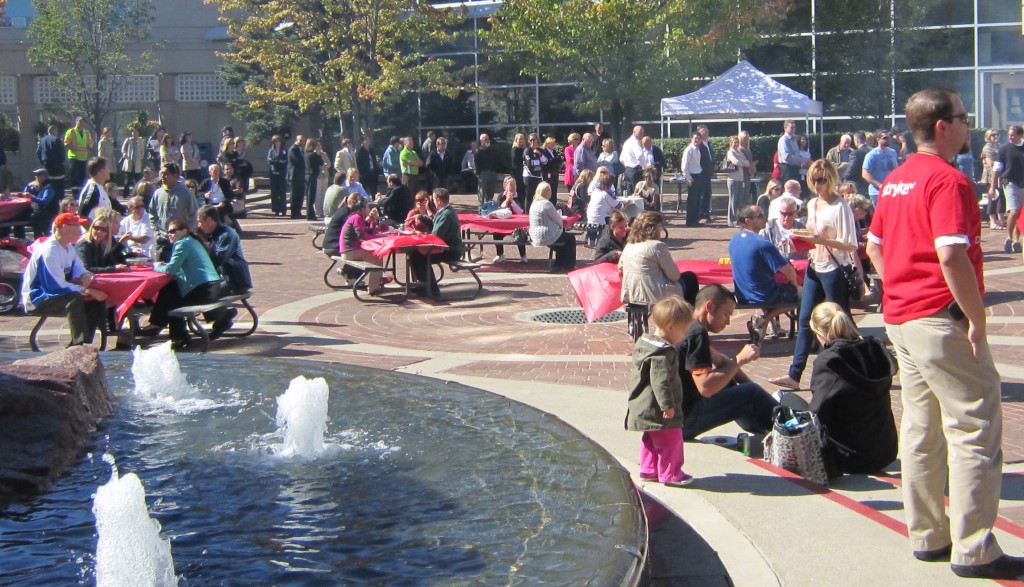


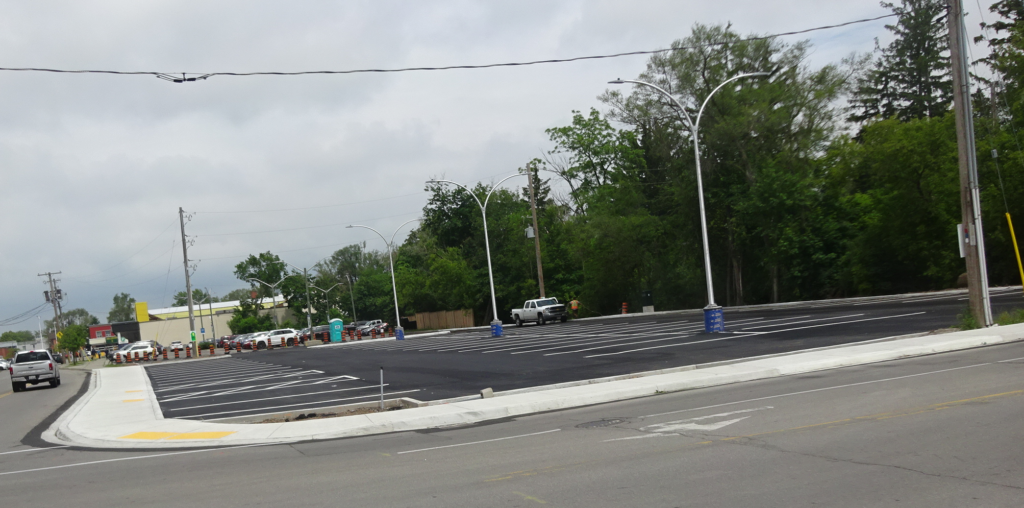



 On Friday, Steve Clark, Minister of Municipal Affairs and Housing said “Growth must pay for growth and it’s important that municipalities have the resources to support complete communities.”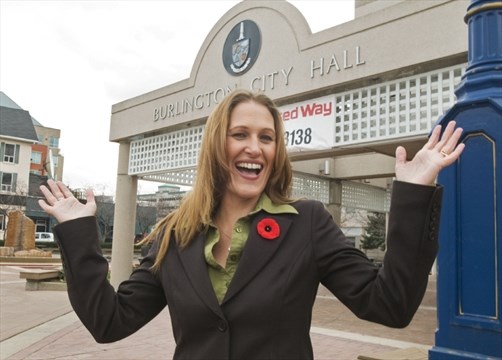












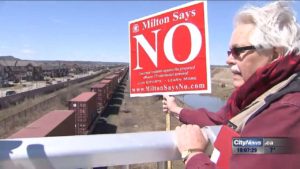 “The Halton Municipalities are encouraging residents and the community to get involved by attending the Public Hearing or watching it live, using social media to be part of the conversation or by contacting their MPP or MP to let them know their concerns about the proposed project. Residents can also provide comments on halton.ca/cn and these will be used to update the Panel.”
 We Love Burlington pressed Burlington MPP for comment on why she supported Bill 108.

 Back in May police responded to a report of a break and enter in the area of Shoreacres Road and Spruce Avenue in Burlington. The involved individual was located in close proximity and taken into custody. During the subsequent investigation that same individual was linked to two recent knife point robberies.
 Last night at the Ward 2 community meeting where Councillor Lisa Kearns used an hour to tell some of her constituents more than they will ever want to know about developments in downtown Burlington she also mentioned that in the search for a new city manager there were 70 resumes sent in; 30 of which got a close second look and six of those that were interviewed.
 And then there was the friend that the Premier wanted to appoint as Commissioner of the Ontario Provincial Police. The blow back on that one was even fiercer. Someone else got that job.
 Buck a beer fell off the radar screen.


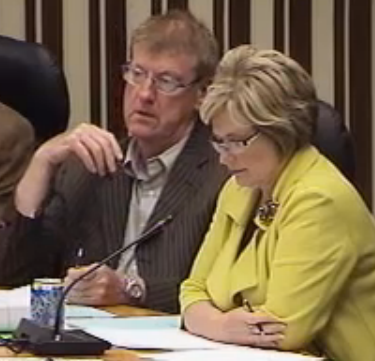


 Suspect One: Male, olive complexion, late 30’s to early 40’s, 5’4 to 5’6, medium build, 160 to 170 lbs, black beard, wearing blue jeans, tan coat, black shirt with logo, black baseball cap.
 Suspect Two: Female, White, mid to late 30’s, 5’4 to 5’5, thin build, 120 to 130 lbs, long hair up in a ponytail with dark roots, blonde tips, wearing a blue jacket, tan baseball cap, blue jeans, white cross body strap purse.