By Pepper Parr By Pepper Parr
January 18th, 2019
BURLINGTON, ON
 Director of Finance Joan Ford does a great job of providing the data ad her department does a good job of collecting the taxes as well. It’s the spending side that is causing the long term financial stress. Ms Ford doesn’t do the spending. Joan Ford, Director of Finance, has been educating the members of City Council for as long as the Gazette has been reporting in this city.
Her department is, without much doubt, the best run department in the city. Ford either has the information a council member asks for at her finger tips or she gets back to them real fast.
This year the educating of council members is a bigger job for the city treasurer; all but two of the seven are new to matters municipal.
There are just two of the new comers who have solid business experience and a demonstrated ability to work with numbers. The rest are going to have a tough time and will stumble on occasion.
Council has some hard decisions to make – the upside is that this new council is asking hard questions – they want to know if the “nice to haves” are really worth it?
Earlier in the month council asked the Finance department to tell them what would have to be taken out of the proposed budget to get either a 3.25%, or a 3% or a 2% tax increase for 2019.
They also wanted to know what the Impact would be if the 1.25% infrastructure levy were removed for 2019. Staff did respond, it wasn’t a pretty picture. That staff response will appear in another Gazette news report.
During the day long session on Thursday the finance department people set out what the challenges are.
The city created a 25 year Strategic Plan that serves as the reason decisions are made. Everything is measured against that Strategy. Along with the four “pillars” the bureaucrats added some additional targets that are more fine tuned.
 The Strategic Plan: the guide and foundational document decisions rest on.


 The province permits debt up to 25% of assesment; Burlington has set 12% as its debt limit – it has in the past exceeded that for very short periods of time. The reality is- Burlington has significant capacity for additional debt – and if money continues to be cheap it might be an option.
 The number that matters is what the city tax bills is going to be – averaging the totals just blurs the picture.
 Assessment growth brings gobs of money to the city in the way of development charges. Once a development is completed the city has to take on the maintenance of the streets that were built and providing the services needed. Historically Burlington has seen impressive growth – but the city is now basically built out and for the immediate future there isn’t going to be any tax revenue from the developments in the planning stages. That reduces tax cash flow.
 The numbers are in the 000’s The Finance department sets out a business case for a decision. Do we set aside the Infrastructure renewal levy; do we add an additional by law enforcement officer. The financial implications are set out.
 The chickens are coming home to roost at the Brant Museum: the refurbished/redesigned site will have to be staffed – there is a pin ball exhibition scheduled. Money for that is going to have to be found. Council will have to decide if they want to act on any of these. There were additional idea from staff that were not even considered by the Budget Leadership Team.  The numbers to the right of the bar graph are millions.
 The left pie chart shows what is being collected in the way of taxes and where the tax money is going. The right pie chart shows where Burlington gets the money it needs to keep the doors open
 Every 0.5% decrease in city taxes requires $800,000 of budget reductions Translates to $1.76 per $100,000 of assessment ($8.80 / year for a $500,000 home) = 0.21% reduction to the total tax bill  The city Council led by Rick Goldring could not manage to find a way to lower the tax bill. It was always well above inflation. The new council has taken the position that anything above inflation isn’t acceptable – now they have to figure out how to make that happen.
 Burlington is the first dark blue bar on the left. The dark blue bar in the centre is the average for the cities surveyed. The city will know by the end of March how this new city council decides to oversee the financial side of municipal administration.

By Pepper Parr
January 18th, 2019
BURLINGTON, ON
When Jane McKenna won the nomination as the Progressive Conservative candidate for Burlington in the June 2018 provincial election she beat Jane Michael by a slim 41 votes.
Michael appealed the vote decision arguing that she didn’t get a copy of the voters list and she wasn’t interviewed by the PC organization until days before the nomination took place.
What the public didn’t know at the time was the Ontario Progressive Conservative party officials who were vetting the candidates and doing the background screening had learned that Jane Michael failed to inform them that she had declared bankruptcy in the past.
 From Patrick Brown’s book: Take Down Things were quite chaotic within the PC bureaucracy at the time and they had to outsource some of the vetting – which took up a little longer than possible.
The Gazette was following the nomination squabble quite closely – and we wondered why the PC party officials were as quick as they were to reject the appeal the Michael’s team had filed. It got turned down in less than 36 hours.
That was because by that time the PC party officials had learned that there was more than one bankruptcy.
Jane Michael and her husband were in the restaurant business where bankruptcies are not unusual.
The Gazette did try on three occasions to talk to Ms Michael but were unsuccessful in having a conversation with her.
What brought the financial background to our attention was a part of Patrick Brown’s book – Take Down in which he mentions the problems with several of the nominations for the June 2017 provincial election. Ray Rivers, our political columnist, was interviewing Brown as part of a series of articles on just what had happened to Brown when he was dumped by the party as leader, got himself nominated as Chair of the Peel Regional Council; Premier Ford eliminated that position and at the 11th hour Brown filed nomination papers to run as Mayor of Brampton and won that race.
Michael was at one point the Chair of the Halton Separate school board where, June of 2016 other media reported that:
Chair of the Halton Catholic District School Board Jane Michael has accused some trustees of dissension, negativism and dishonourable conduct.
“The open mockery of our bishops, the Institute for Catholic Education as suspect, inadequate, false and questionable has been embarrassing and highly inappropriate, said Michael in response to a motion accusing her of not upholding the will of the board.
“The motion of accusation, filed by Burlington trustee Susan Trites at last night’s board meeting, was a response to Michael’s comments in the media after the board’s discipline and safety policy was defeated May 17, after previously being unanimously approved by the policy committee.
 Jane Michael “Michael was quoted as saying the board was “dragging its feet” in passing policy that was mandated by the Ministry of Education, said Trites.
“The discipline and safety policy was defeated at the May 17 board meeting and returned to the policy committee after some trustees raised concerns about the words sexual orientation and gender identity within the policy when dealing with “a safe, caring and accepting school environment.” Oakville trustee Anthony Quinn who initially raised the concerns, felt that students who “recited their Catholic teaching” could be subject to discipline under the new policy.
“I felt it was essential to respond to the media because of inflammatory motions, reversals and challenges that have not been in keeping with honourable conduct,” said Michael.
“The will of the board was definitively expressed at the board meeting when the discipline policy was sent back to committee, said Trites.
“The chair of this board failed in her duty to always state and uphold the will of the board regardless of personal opinion in all appropriate venues,” alleged Trites.
On May 17th, 2018 other media reported that:
“A Halton Catholic District School Board trustee who has been disciplined for her behaviour says she wishes she could explain what happened, but is bound by confidentiality rules.
“At a private meeting on May 8, trustees determined Burlington representative Jane Michael (Wards 3 and 6) had breached the board’s code of conduct.
“At the board’s public meeting May 15, vice-chair Paul Marai read a motion announcing the sanction and stating the penalty: Michael is barred from attending two board meetings, removed from her position on the discipline committee and excluded from the search for a new director of education “from the beginning to the end of the hiring process.”
 On August 14th, 2018 Jane Michael was acclaimed as the federal PC candidate for Burlington in the upcoming federal election expected to take place in October of 2019. On August 14th, 2018 Jane Michael was acclaimed as the federal PC candidate for Burlington in the upcoming federal election expected to take place in October of 2019.
Related news story links:
The nomination meeting Jane Michael lost was boisterous.
Rivers on the Patrick Brown interview.
By Pepper Parr
January 18th, 2019
BURLINGTON, ON
Before they broke for the Christmas holidays a city council that had been sworn in just ten days earlier asked staff to sharpen their pencils and tell them how they would reduce the 2019 budget increase to 2%, 3% and 3.5%.
The budget they were looking at was coming in at 3.99% – and they didn’t want to have to swallow a number like that.
Council also asked staff to tell them what the impact would be of removing the 1.25% infrastructure tax levy for the 2019 budget.
Part 1 – 2019 Operating Budget Options
The options presented below largely result in decreased funding to the capital program. It is important to note that any changes to the dedicated infrastructure levy impacts both renewal projects as well as new projects in the capital program. The city’s asset management plan is about the long-term management of our existing infrastructure.
New capital assets add to the city’s base inventory and therefore increase our funding requirements for renewal needs. If we are unable to sustain our existing portfolio of assets it is recommended that we limit future expansion and/or new infrastructure. Continued investments in new or expanded assets compound our inability to financially manage our infrastructure.
Staff have provided this memo for information and have attempted to communicate the future challenges and impacts that each of the options pose.
Option A – 3.25% (0.74% tax reduction from 3.99%)

Options for service reductions are:
• Elimination of the loose-leaf collection program.
Benefits
o Ongoing operating savings of $450,000 (0.28% tax reduction) and approximately $45,000 of average annual renewal costs for the replacement of equipment.
o Allows for 2,400 staff hours to be reassigned to other program areas including parks, trails, sportsfield maintenance, and road maintenance.
o Allows for winter snow fighting equipment to be ready in November. Currently only one weekend of turnaround time between leaf collection and winter work.
 Can Burlington afford to be collecting the leaves? o Loose-leaf collection is not always completed due to onset of winter weather. This frustrates residents and challenges staff to convert equipment over to snow fighting in a timely fashion.
o Results in reduced greenhouse gas emissions from equipment operating for 6 weeks and trucking by contractor to Halton Waste Disposal site. Currently leaves are collected and trucked to a central area and later picked up by a contractor who transports them to the Halton Region transfer station where the city pays a tipping fee to dispose of the leaves.
o Halton Region provides bagged yard waste every other week from April to December.
o In lieu of this program, the city would promote more environmentally friendly options including mulching leaves on site or composting at home.
Drawbacks
o Reduced service to residents
o This will increase collection of bagged leaves by Halton Region Waste Services.
o Will require extensive public education / communication.
• 2019 capital program reduction of $750,000 for new infrastructure (0.47% tax reduction).
o Results in ongoing reduction of funding to the 10-year capital program of $7.5 million.
o The list of 2019 projects that would be impacted are:

Should this option be considered, an amendment to the 2019 capital budget would be required for the projects identified above. Future years would need to be amended as part of the 2020 capital budget.
 Nothing vital about putting the elimination of that right hand turn on hold. The removal of $7.5 million of funding from the 10-year capital budget and forecast would limit the city’s ability to address any requests for future new infrastructure. This would constrain future investments to implement recommendations resulting from the integrated transportation mobility plan, cycling master plan, school closure opportunities, and enhanced neighbourhood amenities such as splash pads and skate parks.
Option B – 3% (0.99 % tax reduction from 3.99%)

In addition to the items included in Option A, a further service reduction option is:
• Further reduction of $400,000 of funding to the capital program for new infrastructure (0.25% tax reduction).
o This would result in an ongoing reduction of funding to the capital program and require the removal of an additional $4 million of projects from the 10-year capital program.
o The remaining new / enhanced project meeting this dollar threshold is:

Should this option be considered, an amendment to the 2019 capital budget would be required for the projects identified above. Future years would need to be amended as part of the 2020 capital budget.
 The Promenade is to stretch across the downtown core – and when that core has undergone all the high rise construction it might be something to complete – but not now. The Elgin Street Promenade is included in the Core Commitment Implementation Strategy as a short term initiative to improve active transportation in the downtown and enhance the connectivity of existing pedestrian and cycling connections to the Centennial Multi-use Pathway and the Downtown Transit Terminal through the creation of an enhanced promenade with landscaping and pedestrian facilities that meet Accessibility for Ontarians with Disabilities (AODA) guidelines. The first three phases of this project have been competed. The final phase of this project is planned for 2019 and extends from Pearl Street to Martha Street.
The completed Elgin Promenade will create a significant piece of downtown infrastructure through an east-west pedestrian and cycling corridor that provides opportunities for active transportation including cycling connections, access to transit, walkability and accessibility and brings significant social, environmental and economic benefits to the downtown core. The promenade connects the downtown to the Downtown Transit Terminal and the Centennial Multi-use Pathway which extends northeast across the City.
Without funding for this project, the final phase of this project can not be completed and the objective of connecting the east and west sides of the downtown through a safe, accessible cycling and pedestrian connection will not be realized.
Option C – 2% (1.99 % tax reduction from 3.99%)

In addition to the items included in Options A & B, a further service reduction option is:
• Reduction of $1,610,000 of funding to the capital program for renewal (1% tax reduction).
o This would result in an ongoing reduction of funding to the capital program and require the removal of $16.1 million of renewal projects from the 10-year capital program.
Should this option be considered, an amendment to the 2019 capital budget would be required for the projects identified above. Future years would need to be amended as part of the 2020 capital budget.
The Asset Management Plan is built on the premise of being able to address the city’s infrastructure needs at the right time in the asset’s life cycle and in the most cost-effective manner. This is vital to ensure that city assets continue to provide a standard of service that residents expect and to minimize long-term costs.
Resurfacing a road at the optimum time results in a cost of 1x. Delaying this treatment begins to compromise the base materials, escalating costs to 3x the original value. Further delay results in the street requiring full reconstruction at a cost of 10x the original value. Removal of funding to the local road resurfacing program will result in sub-optimal timing of construction and cost escalation.
Deferring the renewal of community centres will also result in an increase in the total long-term costs to the City. This includes increased operating and maintenance costs as the facilities age as well as increased risk of system failures impacting service delivery. Recent examples of emergency facility closure include Appleby Ice Centre in December of 2018 and Nelson Outdoor Pool in the Summer of 2017.
Part 2 – Impact of removing 1.25% infrastructure tax levy
Staff interpreted the direction to include the impact for the 2019 budget year only with future dedicated levy increases continuing.
At a high level, the impacts associated with any reduction or removal of the dedicated infrastructure levy includes:
• Impact on the city’s asset management financing plan and the city’s ten-year capital program. Removing the 1.25% dedicated infrastructure levy for 2019 removes the equivalent of $2 million of capital projects (renewal/ new) in the budget year, and $20 million worth of capital projects over the ten-year capital program as the levy has a cumulative impact
• The removal of one year of funding leads to an unsustainable funding plan.
• An increase to the city’s unfunded renewal needs, meaning a backlog of renewal projects beyond the 2016 amount of $126.5 million that will require immediate attention. It is important to recognize that it is possible for the Unfunded Renewal Needs (URN) to grow to a point where the possibility of tackling the immediate requirements and continuing to keep pace with current needs will not be possible due to capacity constraints and unreasonably high financing requirements.
• Deferred maintenance and deferred renewal is inevitable. The result will be an increase in the total long-term costs to the City of Burlington by way of;
o increased operating and maintenance costs to prolong the life of the asset from accelerated infrastructure deterioration
o Increased rehabilitation costs due to deterioration beyond the life of the asset
o Escalation of capital costs due to required higher cost rehabilitation treatments
o Emergency, unscheduled maintenance due to system failures impacting service delivery
o Passing costs to future generations to manage existing assets
• Infrastructure renewal investment is crucial to replacing and upgrading assets to better adapt to climate change
There is a considerable amount of room to get a budget that is very close to inflation. It will take some courage for these council members – but they asked what was possible and staff set out what will be lost if the proposed budget is changed.
Do we really have to have the leaves picked up? Does the Fire Department really need a drone? Does that right hand turn elimination need to be done now – and why would we spend a dime on the Promenade when the downtown core is going to begin to become a decade long construction site in the not too distant future.
By Ray Rivers
January 17th, 2019
BURLINGTON, ON
Ray Rivers has been writing on just what did happen to former Conservative party leader Patrick Brown who got ousted from the political party he led.
This, the third of a four part series is based on an interview he had with Patrick Brown.
 Brown’s book is a refreshing tell-all which goes beyond just reporting his version of events, to provide an insight into the dirty side of our democracy. The degree of corruption which plagued the provincial Progressive Conservatives in the run up to the 2018 election is shocking. Claims of ballot stuffing, fake voter ID and fraudulent voting are the kinds of tales we expect to hear about elections in the banana republics, not as an inherent aspect of Ontario’s natural governing party trying to govern itself. Brown’s book is a refreshing tell-all which goes beyond just reporting his version of events, to provide an insight into the dirty side of our democracy. The degree of corruption which plagued the provincial Progressive Conservatives in the run up to the 2018 election is shocking. Claims of ballot stuffing, fake voter ID and fraudulent voting are the kinds of tales we expect to hear about elections in the banana republics, not as an inherent aspect of Ontario’s natural governing party trying to govern itself.
Losers in nomination battles regularly complain about some kind of cheating – it was never their fault they lost, of course. But what went on with the Conservatives last year was remarkable. Patrick Brown had been leader for less than three years but his accomplishments were spectacular. Converting a seven million dollar debt to a $4 million war chest and multiplying party membership more than tenfold were not insignificant feats. But he obviously didn’t see this coming.
By the end of 2017 the party was leading the governing Liberals by 20 points in most polls. There was no question that Brown and his party would make up Ontario’s next government and if you wanted to be sure of a seat in the next legislature you needed to be a Tory candidate. It would be like having a winning lotto ticket in your pocket and a government pension in the bank.
Instead of the usual couple of hundred candidates looking to be their party’s nominee, there were something approaching a thousand interested PC candidates. And the party was unprepared for the onslaught. Most critically, the vetting of candidates to weed out the criminals, liars and weirdos had to be contracted out, slowing down the process even more, particularly when there were issues of accuracy and honesty.
Jane Michael That became a problem for Burlington candidate Jane Michael’s, according to Mr. Brown. Her approval as a candidate was held up because she had falsely indicated that she’d never had a bankruptcy, when in fact she’d had several. In the end she was given a green light regardless. But the nomination was messy and, having lost, she filed an appeal to the party based on all the many irregularities her team had witnessed in that contest.
The party felt they could not uphold her appeal given how she had completed her nomination form. Interestingly, she was subsequently acclaimed as Burlington’s federal Conservative candidate for the upcoming election this October. Could it be that lying and bankruptcy are à la mode after Donald Trump won the US presidency?
Then there were the fixers, Snover Dhillon in particular, a convicted fraudster who had been a strong supporter of Mr. Brown. He acted as a middle man for candidates, scaring up new members and whatever else he needed to do to win the nomination for those candidates willing to pay him. He was active in as many as twenty riding associations; chaos and voting irregularities seemed to follow him everywhere.
Brown mostly stayed away from the messy competitive and troublesome nomination battles, showing up mainly at the acclamations. He admitted that he regrets not just appointing even more candidates, something that Mr. Ford, his successor, ended up doing.
One of Brown’s acclamations was Brian Mulroney’s daughter Caroline. She was reluctant to run in a downtown Toronto riding, so Brown found her another one. Mulroney was on-side with Brown’s policies including retaining the existing sex-education curriculum and implementing the federally mandated carbon tax. After all her father had been recognized as Canada’s most environmental PM.
 Caroline Mulroney – had no trouble totally reversing her positions when Mr. Ford offered her a senior cabinet post. But she had no trouble totally reversing her positions when Mr. Ford offered her a senior cabinet post and made her responsible to battle the federal government on the carbon tax. One could call that another victory for opportunism over ethics.
Another Brown recruit, now the province’s environment minister, Rod Phillips, slid into his job by also abandoning any commitment he had held to the most efficient way of fighting global warming.
Brown is a red Tory, in the style of Bill Davis, Jean Charest and to a lesser extent Brian Mulroney. His vision is of a modern progressive conservative party, the big umbrella which accommodates most of the people of Ontario. He had little tolerance for yesterday’s fights against LBGTQ, same sex marriage and abortion as he tried to make his party more like the ‘progressive’ in its name.
But if he represented the mainstream among PC membership, the most vociferous and loudest voices were those of the special interests. There are the religious right-wing radicals, like former leadership candidate Tanya Granic Allen, intent on keeping children ignorant of their own sexuality, and wanting to help us speed up a man-made hell on earth by banning renewable energy.
And there were the neo-cons, those who fancy themselves as libertarians and/or social conservatives who would like to turn the clock back. The mere mention of refugees and immigration in general would cause their necks to redden even more. Disciples of dishonoured trickle-down economics, they forever lobby for lower taxes for the rich and less welfare for the poor. Most see a future where all regulation, aka red tape, is eliminated. That is unless it serves to protect the wealthy or powerful and their style of life.
 Brown proved to be fleet of foot – locked out of Peel he ran for Mayor of Brampton and won. Brown is now a municipal politician which limits any involvement he might want to have in his former political party. And in any case that political party has disappeared in everything but name. Doug Ford’s party has no place for a progressive. And most of those influential in the current caucus were part of the very crowd that stabbed the knife in Brown’s back. There are others who are either afraid to speak up or happy to compromise their integrity to stay in power.
The book in which he ‘told-it-all’ has closed the door for him on that chapter of his career.
After only half a year in power Ford is still enjoying his honey moon. But buyer’s remorse is always around the corner when someone as charismatic and divisive as Doug Ford becomes the new emperor. Still, he has a solid majority of MPPs to allow him to do what he wants for the next four years, regardless how they got elected; this is not the first time we’ve seen corruption in a political party. One only has to recall the Liberal sponsorship scandal.
Patrick Brown doesn’t lay the blame on the ugly nomination process for the coup over his leadership and for his ultimate banishment from the Tory caucus. Clearly it didn’t help that he made enemies, but these nominations always result in disappointments even if the rules are actually followed. Brown says he loves his new job as mayor and has his hands full managing the city of Brampton.
Still nobody should think he’s resigned himself from an even grander ambition.
To be continued….
Ray Rivers writes regularly on both federal and provincial politics, applying his more than 25 years as a federal bureaucrat to his thinking. Rivers was once a candidate for provincial office in Burlington. He was the founder of the Burlington citizen committee on sustainability at a time when climate warming was a hotly debated subject. Ray has a post graduate degree in economics that he earned at the University of Ottawa. Tweet @rayzrivers
Related news stories:
Rivers on Brown – part 1; the political take-down.
Rivers on Brown – part 2; He said – she said.
Background links:
Brown’s Book – Burlington Nomination – Jane McKenna –
Michaels’ Appeal – Federal Tories – Michael Censured –
Nomination Messes – Ugly Messes – Police Investigation –
Brown Law Suit – Caroline Mulroney –
By Pepper Parr
January 17th, 2019
BURLINGTON, ON
Some useful background when city council gets to talking about what they want to do with the “approved” Official Plan now that it has come back from the Region.
Jane McKenna, the MPP for Burlington said recently that she has “received a few emails from residents about the pace of high-rise development in our downtown.
 Burlington MPP Jane McKenna “Many are concerned about the intensification in the downtown core and the mobility hub designation that is part of Burlington’s official plan. (The one that was adopted by the city but not yet approved by the Region).
Some suggested the mobility hub designation was coupled with the approval, through the appeal process, of tall buildings in the downtown area.
McKenna talked to staff at the Ministry of Municipal Affairs and Housing (MMAH) for clarification about the legislation.
“The first thing I learned is that “mobility hubs” are identified by Metrolinx’s regional transportation plan, but do not have to be reflected as such in any local planning documents.
“The growth plan for the Greater Golden Horseshoe, 2017, does not refer to mobility hubs. The City of Burlington council is free to remove these mobility hub designations from the local official plan.
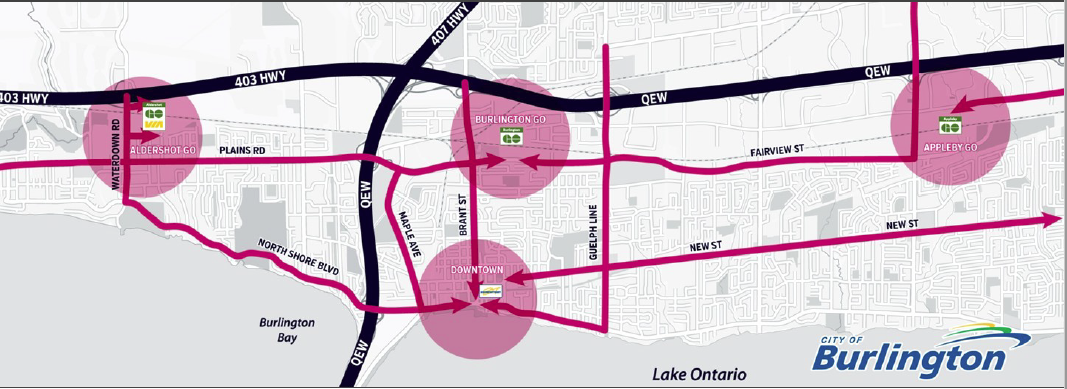
Burlington might be able to remove mobility hub designations but there isn’t a hope in hades that Burlington will move away from the concept of hubs which are understood to be locations where development is increased and transportation options intensified.
The City’s Planning department is well into some deep dive research and with precincts defined and mapping work done showing where different heights and density of residential will be located. Plans for additional park space are also well advanced.
McKenna has muddied the waters with her comments. There will be three mobility hubs; one at each of the existing GO stations.
 The mobility hubs at the GO stations are a fact. Nothing is going to change that. The Downtown mobility hub’s long term existence has yet to be determined by the new city council The continued existence of a Downtown Mobility Hub is in doubt. City Council will debate that at some length when they get to that matter.
The creation of a downtown mobility hub and the loss of an OMB hearing that should not have ben lost has done significant damage to the kind of downtown core residents voted against in the October election. The challenge for this council is to find a way out of that mess.
She adds that: “The growth plan for the Greater Golden Horseshoe, which was reviewed and updated in 2017, identifies downtown Burlington as an urban growth centre and sets a specific growth target.
“It also identifies the Burlington GO station as a major transit station area and sets a growth target. These are required elements of all official plans because higher densities are necessary to justify transit infrastructure investment.
 The Urban Growth Centre boundary may well get revised when city council tackles that issue. “That brings me to the second important point I took away from my discussion with MMAH. If city council voted to change the boundaries of the downtown Burlington urban growth centre this could be accomplished by Halton Region as part of the next official plan review.
“This must take place prior to July 1, 2022. Burlington could then, in turn, amend its official plan to reflect the new boundaries.
“Although boundary changes are allowed, the growth plan does not permit the removal of the urban growth centre designation. Changes would need to be approved by the Ontario government as part of the approval of Halton Region’s official plan amendment.”
 MPP McKenna wrapped her Christmas parade float in Tory blue – she will play that card as long as she can and hope that it keeps her in office.
By Pepper Parr
January 17th, 2019
BURLINGTON, ON
Local Boards and Committees are to be given a 2% increase over their 2018 base budget.
 The group consists of the Library, the museums, the Art Gallery, Performing Arts, Tourism and the Economic Development Corporation. The group consists of the Library, the museums, the Art Gallery, Performing Arts, Tourism and the Economic Development Corporation.
Is there going to be a council member who stands up and say “Let’s make that 1.5%” Some belt tightening at the Boards and Committees is about due. These groups have been handed 2% almost automatically for the past decade.
If we are asking city hall to pull in the belt a notch or two – the same could and should be asked of the Boards and committees.
 The city can expect to hear for more in the way of funding for the Museum. The re-launched Joseph Brant Museum is going to have its hand out for more in the way of funds to staff the new digs. The city can expect to hear for more in the way of funding for the Museum. The re-launched Joseph Brant Museum is going to have its hand out for more in the way of funds to staff the new digs.
Get ready for the grand announcement sometime when the frost comes out of the ground of the opening exhibit – an exhibition of pin ball machines.
 Little wonder that Joseph Brant’s body was carried to Brantford and buried there; he would roll over in the grave he had in Burlington if he knew what they had done to his Burlington homestead. Little wonder that Joseph Brant’s body was carried to Brantford and buried there; he would roll over in the grave he had in Burlington if he knew what they had done to his Burlington homestead.
Salt with Pepper reflects the views, musing and opinions of the publisher of the Gazette
By Pepper Parr
January 17th, 2019
BURLINGTON, ON
Remember all the hoopla around City Council pushing to get the new Official Plan voted on and sent to the Region where it would be approved
The push by the 2014 – 2018 city council cost most of the council members their seats. The Mayor lost his job and Lancaster and Dennison headed for retirement.. Two other council members had resigned and did not seek re-election.
Curt Benson, Director, Planning Services and Chief Planning Official for Halton Region
reports in a letter to anyone who was interested in the status of the “approved” Official Plan that “On April 26, 2018, Burlington City Council adopted its new Official Plan (the “Plan”). On May 11, 2018, the record pursuant to subsection 17(31) of the Planning Act was received by the Region of Halton as the approval authority to make a decision on the Plan.
 “Over the last number of months, Halton Region staff have been working closely with City of Burlington staff in the review of the newly adopted Plan to address conformity to the Region of Halton Official Plan. Through this review, Regional staff have identified a number of matters with respect to the Plan’s conformity to the Halton Region Official Plan that need to be resolved prior to making a decision on the Plan. The attached Notice provides additional information related to these matters in accordance with s. 17(40.2) of the Planning Act. “Over the last number of months, Halton Region staff have been working closely with City of Burlington staff in the review of the newly adopted Plan to address conformity to the Region of Halton Official Plan. Through this review, Regional staff have identified a number of matters with respect to the Plan’s conformity to the Halton Region Official Plan that need to be resolved prior to making a decision on the Plan. The attached Notice provides additional information related to these matters in accordance with s. 17(40.2) of the Planning Act.
The purpose of this Notice is to inform you that the Region of Halton, through its delegated authority to the Chief Planning Official, is of the opinion that the Plan does not conform to the Region of Halton Official Plan (2009) (“ROP”). The Plan does not conform to the ROP with respect to policies and mapping related to, among other matters:
• proposed employment land conversions and permitted uses within the employment areas and lands;
• the identification of and permitted uses within agricultural lands;
• the identification of and permitted uses within the Natural Heritage System; and
• transportation matters, including road classifications.
 Aldershot resident Tom Muir wants more in the way of detail as to why the Region hasn’t said Ok to the Plan. Tom Muir was taken aback by the correspondence and the lack of any detail in the Notice and wrote Curt Benson saying: “I was expecting that specific details would be provided as to the four items of adopted OP non-compliance that were listed in the opinion herein that you sent to the City of Burlington.
“The 4 items listed are of general interest but are not of much value if not dissected so that the separate issues in each can be examined.
Can you please provide the details of the issues involved in each item of non-compliance?
When one looks at the information from the Regional Planning department on why they sent the “approved” Official Plan back to the city you have to wonder if that is all there is.
It just seems pretty thin and doesn’t touch the issue that were the focal point of the election. Something doesn’t appear right here.
The rules within the provincial; Planning Act, set out a 210 day period for the city to appeal a Regional government decision. The Region points out that a clock doesn’t start ticking until the Region of Halton confirms that the non-conformity with the ROP is resolved. As such no appeals under subsection 17(40) of the Planning Act may be filed at this time.
City Council isn’t going to be doing very much on the Official Plan issue – they will be focused on the budget for the immediate future.

By Staff
January 16th, 2019
BURLINGTON, ON
In a Statement from the Office of the Mayor, Marianne Meed Ward said:
“Yesterday afternoon, 16 mayors from the GTHA region met at Toronto City Hall at the invitation of Toronto Mayor John Tory for a closed-door meeting to discuss shared issues that cross our municipal boundaries such as transit, affordable housing, and climate change. We know that no one municipality can fully address these issues alone, and with a federal election coming up, there is an opportunity for us all to speak with a united voice on behalf of our communities.
 Burlington Mayor Marianne Meed Ward delivering the best line of the day at a GTAH media event. “We agreed that we need to send a message to both the federal and provincial governments that money has to follow the downloading of additional services resulting from legislative changes that are outside of our control. Cannabis legislation is just one example as municipalities, whether they opt in or out of allowing retail cannabis stores, will incur costs, and the funding announced so far is insufficient.
“We further discussed issues ranging from the Places to Grow Act, greenbelt development, affordable housing, and transit.
“We have committed to meet again as GTHA mayors and continue to collaborate on the issues that matter to our constituents. In two weeks, a number of us will also be meeting as part of the Large Urban Mayor’s Caucus of the Association of Municipalities of Ontario, and we will discuss these matters at that table as well.
“During our meeting, the provincial government announced they have undertaken a process to review the effectiveness and efficiency of regional governments across the province, creating some concerns and speculation about the possibility of future amalgamations. The purpose of the review is to look for opportunities to better serve the communities involved and evaluate the areas of governance, decision-making and service delivery. We all welcome a conversation on how to make government more efficient and effective, but agree that any changes must be done in consultation with area municipalities.
“Burlington is already an efficient council, the smallest of Halton Region at seven members, and the smallest of any Ontario municipality of our size. The Region is also already efficient and effective: we enjoy being the safest region in Canada, a Triple A credit rating, high satisfaction on our services, and tax increases at or below the rate of inflation (with a number of years of no increases).
“My fellow GTHA mayors and I agree that we would like to work with the province and our constituents on any changes.”
She then delivered a line that media grabbed and turned into headlines. “Instead of a hatchet, we’d like more of a handshake approach from the province.”
The rest of the province just got a look at the ‘chops’ Burlington’s Mayor has.
By Pepper Parr
January 16th, 2019
BURLINGTON, ON
They first earned the right to determine what the city’s municipal government would do – they won the election.
On December 3rd, they assumed power.
And now they are exerting that power.
It is seldom a smooth or easy process.
Monday night city council listened to some people who had an amazing amount of information on just what the newest industry in Ontario is all about.
During the debate council members listened to delegations talk about what they knew about the rules and regulations that were either in place or going to be in place.
Council members, especially the Mayor listened closely to people who seemed to know what they were talking about.
They also listened to people who were not all that well informed and didn’t want to see cannabis sold at the retail level in Ontario.
In the end, meeting as a city council, the earlier part of the evening they were meeting as a Standing Committee, the voted 5-2 to permit cannabis to be sold at commercial outlets in the city.
Mayor Meed Ward, Councillors Galbraith, Kearns, Nisan, Sharman voted for the motion – Stolte and Bentivegna voted against.
The sale of cannabis will start just as soon as someone has a license to open a commercial establishment.
 The renovated city council chamber – has much better digital production What the public saw on the webcast of the meetings was the first meeting in the newly outfitted city council chamber. The city administration won’t get any prizes for the décor; a dull light grey colour scheme and better seats for the members of council.
 Tim Commisso, the Interim City Manager. The public also got their first peek at Tom Commisso, the Interim City Manager. He must have wondered about the upgrade to the chamber since he was there last – some xx years ago.
The biggest plus was the highly improved quality of the broadcast. For those who watch the proceedings on line (which is the best or all that some people can get) the production quality is very good.
Which is more than can be said of the performance of some of the candidates.
 Ward 4 Councillor Shawna Stolte Ward 4 Councillor Shawna Stolte voted against the selling of cannabis in commercial establishments at this time – she wanted to know more about the implications. What disturbed many was that tmore than 65% of the people in ward 4 voted to have cannabis sold in commercial locations. Stolte seemed to be using her personal opinion as the guiding factor for her vote.
Is Stolte representing the people of ward 4 or is she representing Shawna Stolte who at this point in time lives in ward 2?
 Angelo Bentivegna – kept asking the same question until he got the answer he wanted. Ward 6 Councillor Angelo Bentivegna seemed to have to ask many of the delegates the same question until he got the answer he seemed to want.
The provincial government had given municipalities in Ontario a one-time offer to opt out of having cannabis stores in their communities. The deadline for municipalities to make this decision is Jan. 22, 2019.
The vote to allow retail cannabis stores in Burlington means that bricks and mortar stores with an approved license from the Alcohol and Gaming Commission of Ontario (ACGO), will be permitted to sell recreational cannabis in Burlington as early as April 1, 2019. Currently, the ACGO has made 25 retail licenses for cannabis stores in Ontario available. Six of these are in the Greater Toronto Area. It is not yet known if there will be an application for a cannabis store in Burlington.
Council also voted in favour of creating a citizen task force with terms of reference that include bylaw recommendations and the creation of guidelines for future retail cannabis stores.
Mayor Meed Ward insists that there be wide public engagement on every issue.
There was an online survey open from December 4th to December 13th 2018: 65.4% of the 1926 respondents voted in favour of cannabis stores in Burlington.
At a town hall meeting hosted by Mayor Marianne Meed Ward on Dec. 12, 2018, 82% of the 106 participants in attendance voted in support of cannabis retail stores.
In a second round of online engagement featuring the same survey from December 2018, an additional 784 people completed the survey, with 56.8% in favour of cannabis stores in Burlington.
Despite the on-line survey there were two groups that did surveys and had the forms in hand who did not take part in the on-line survey.
 Ward 2 Councillor Lisa Kearns runs the meetings she chairs smoothly. Her vice chair has yet to fully understand what he is supposed to be doing. The issue is now settled – when will Burlington actually see a retail location? Many months from now.
Meed Ward, in a comment made after the meetings, said she “respected the two Councillors who voted against opting in, as they did what they believed was right for their constituents.
There is a lot more to tell on this story.
By Pepper Parr
January 16th, 2018
BURLINGTON, ON
They are one of those organizations you know exists and you leave it at that.
From time to time you hear or read something about them. They have been around for 30 years.
In January of each year Crime Stoppers of Halton hosts an event to recognize volunteers, local media and other key partners.
Jan Westcott, chair of the Halton group said recently that “Crime Stoppers of Halton has served the region for 30 years now and we hope to continue to provide residents in the region the opportunity to help keep their communities safe and secure.”
 “However, we are not alone in this effort. We rely on the help of numerous volunteers, local media and the support of area businesses and organizations that have made donations to allow Crime Stoppers to operate in the region for three decades,” Westcott said. “However, we are not alone in this effort. We rely on the help of numerous volunteers, local media and the support of area businesses and organizations that have made donations to allow Crime Stoppers to operate in the region for three decades,” Westcott said.
“We are extremely thankful for the support we have received and continue to receive.”
In 2018, anonymous tips to Halton Crime Stoppers contributed to solving numerous crimes within our community, including drug offences, weapons offences, fraud, break and enter, impaired driving, vandalism, breach of probation, outstanding warrants and theft.
 Like other Crime Stoppers programs across Canada (and many worldwide), Crime Stoppers of Halton has observed Crime Stoppers Month since it was first proclaimed in 1986 in Edmonton, Alberta. Crime Stoppers Month gives the opportunity to recognize those who have played a key role in assisting the program. Like other Crime Stoppers programs across Canada (and many worldwide), Crime Stoppers of Halton has observed Crime Stoppers Month since it was first proclaimed in 1986 in Edmonton, Alberta. Crime Stoppers Month gives the opportunity to recognize those who have played a key role in assisting the program.
A recognition and theme launch event will take place at 7 p.m. on January 23 in the Community Room at Halton Regional Police Headquarters.
By Pepper Parr
January 16th, 2019
BURLINGTON, ON
When a significant change in government takes place the new leader has a very short period of time to get a firm grip on the levers of power and put their stamp in the direction they want to take.
Burlington has a tradition of the Mayor giving an address to the business elite at a Chamber of Commerce event in January of each year. They are usually well attended.

The Mayor will be speaking to the business community which in the past has not always been the sector from which Meed Ward draws her support. Growth is the rallying cry from the Chamber of Commerce set. Growth for sure Mayor Meed Ward will say and add that the growth has to be responsible and responsive and not serve the interests of just on part of the population.
It will be interesting to see what tack Mayor Meed Ward takes as she addresses the Chamber crowd at the end of the month. She will not be speaking to the converted.
She will be listened to very closely.
During the past eight years the Gazette has published seven of the State of the City addresses given by former Mayor Rick Goldring who was politely heard. They are all on line.
The standing ovations were usually given to someone else who was recognized.
One can assume that Mayor Meed Ward has at least a first draft of what she wants to say to the business/commercial community.
The members of the Chamber of Commerce will be listening raptly to what Meed Ward has to say. Her supporters think they know what she is all about. They have some surprises coming their way. The Gazette is beginning to learn more about the process Mayor Meed Ward used to staff her office; some hearts were broken along the way.
The business community looks at things quite a bit differently. Meed Ward is going to have to convince them that she understands their language and can communicate with them effectively and meet their needs as well.
 Marianne Meed Ward: The reward for ten years of serving and campaigning – an election victory. Meed Ward refers to her 22 years as a journalist whenever she is outlining the road she has travelled. It is more correct to say that she has spent 22 years in media which is not the same thing as what journalists do.
We will all learn more about how she will actually operate and how she will handle the issues that land on her desk.
This will be her biggest selling job ever since she had that Chain of Office placed around her neck.
Salt with Pepper is the musing, opinions and reflections of the publisher of the Burlington Gazette.
By Staff
January 15th, 2019
BURLINGTON, ON
Doug Ford’s Progressive Conservative government has announced a review of regional governments in Ontario.
Burlington is a part of the Regional government of Halton, which is made up of Burlington, Oakville, Milton and Halton Hills.
During the October municipal election then Mayor Goldring suggested that Burlington annex Waterdown, which is part of Hamilton. Little did Rick Goldring know that Doug Ford had a bigger plan in mind.
 If the Premier wants to break up the Regional governments – the four municipalities that make up Halton are not going to become stand-alone municipalities – they will be added on to existing large government. If the Premier wants to break up the Regional governments – the four municipalities that make up Halton are not going to become stand-alone municipalities – they will be added on to existing large government.
So where do the small Halton municipalities end up?
Burlington becomes part of Hamilton; Milton becomes part of either Guelph or Peel; Halton Hills becomes part of Guelph and Oakville becomes part of Mississauga.
You heard it here first.
Here is the really interesting part.
Each of the 24 members of the Regional government get half of their pay cheque from the Region. Watch the scrambling when the rubber hits the road on that decision.
 Will the members of this city council still want to serve for basically half the money? Burlington’s six council members are both municipal and Regional representatives. Will they still want the job for something in the order of $50,000?
 The Region is in the process of consolidating all its offices into the space vacated by the Regional Police; will contracts still be issued? The Ontario government is reviewing the province’s eight regional municipalities with the goal of making them more efficient. In a news release Tuesday, the province said it was appointing Michael Fenn (a former city of Burlington city manager) and Ken Seiling as special advisers to ensure the regional governments “are working efficiently and effectively.”
If the Regional government is broken up – what will happen to the Regional Police; what will happen to the Halton District School Board and the Catholic school Boards?
A lot of questions and a lot of disruption.
Burlington will still exist as a community; it will become a part of a larger area government.
We are about to feel and go through the pain Toronto went through when it was down sized.
By Roland Tanner
January 15th, 2019
BURLINGTON, ON
Originally published on January 9th in Raise the Hammer.
Burlington’s and Hamilton’s municipal elections had one thing in common: they were both, unusually for municipal politics, heated and divisive affairs that pitched mayoral and concil candidates against each other with fundamentally different points of view.
In Hamilton it was a referendum on light rail transit (LRT), convincingly won by incumbent Fred Eisenberger.
In Burlington it was a referendum on the future of urban intensification ordered since the Places to Grow Act in 2005. The result was an overwhelming victory for Marianne Meed Ward, formerly the Councillor for downtown Ward 2, who has campaigned for ten years against downtown and citywide ‘over-intensification’, especially with regard to high-rise buildings.
 Marianne Meed Ward: She was often a lone voice pleading for better municipal government. Until the election, she was a lone voice on council, and one whose council colleagues viewed her with often vitriolic animosity. With almost a complete sweep of Councillors, with the exception of one re-elected incumbent, the new council is one seemingly aligned with Marianne Meed Ward’s agenda to control intensification.
In both cases, therefore, the elections have been portrayed as a battle between progressive urbanists – pro-transit, pro-intensification, pro-walkable communities – against regressive and entitled suburban interests fundamentally opposed to healthy modern cities. Both elections can be painted as NIMBY referendums.
 ‘Residents treasure downtown as a special area characterized by unique stores and a low to medium-rise character with a high proportion of historic buildings. They like the already walkable streets which are narrow and ‘car unfriendly’ by North American standards.’ In Hamilton, the story goes, the urbanists won, while in Burlington a reactionary, car-centric and selfish aging population elected a populist leader promising the impossible – to stop Burlington’s urban intensification contrary to provincial law, meanwhile denying pro-urbanist Millennials an affordable place to live.
So is this perception correct? Did the bad guys win in Burlington, or is the truth more complex?
Progressive New Council
 Lawn sign opposing tall buildings in downtown Burlington (RTH file photo) I was one of the candidates in the election, coming second to Lisa Kearns in Burlington’s downtown Ward 2. I would certainly call myself an urbanist – pro-transit, pro-walkable communities, pro-intensification, anti-car-centric planning and anti-urban sprawl. It was therefore surprising to find myself cast on the ‘wrong’ side of the urbanist debate and accused of selling out to NIMBYs.
Both Lisa Kearns and I campaigned in favour of controlling intensification, and especially controlling height in Burlington’s downtown, protecting an area that residents from across the city perceive as both special and fragile.
It was testament to the extent to which voters shared that perspective that we came first and second respectively, without any risk of splitting the vote and allowing a candidate aligned with incumbent mayor Rick Goldring to win.
Consider the following. Most of the incumbents in Burlington who were just voted out or retired had consistently voted against transit funding, some for decades, and in fact voted for a disastrous cut to transit funding eight years ago, which caused a dramatic fall in ridership.
 Paul Sharman – made it back to city council where he is now a lone voice for a different way of governing. Paul Sharman, the one incumbent to keep his job, first became involved in municipal activism because of his opposition to a bus route outside his home.
All the incumbents were highly conservative, and mostly also Conservative. In contrast, every single one of the new Councillors, and Marianne Meed Ward, is on the record favouring better transit in Burlington. Burlington may finally have a council that believes in, and is willing to fund, the transit system it needs.
Goldring Advocating Sprawl
Meanwhile, Rick Goldring, the supposed defender of urbanism, intensification, and the Greenbelt, suddenly suggested mid-campaign that Burlington should annex Waterdown from Hamilton, a suggestion which Mayor Eisenberger countered with some panache.
Goldring’s logic was the ludicrous position that annexing Waterdown would take pressure off downtown development by allowing Burlington to develop greenfield sites. All of a sudden, Burlington’s supposedly urbanist mayor, who had invited Brent Toderian to speak and employed a former high-ranking Vancouver City Planner as his city manager, was advocating sprawl.
It was a suggestion as counterproductive as it was confusing. Furthermore, Goldring sought to throw the previous provincial government, and his former provincial counterpart, under the bus at every opportunity. It was suddenly all the Liberals’ fault – forcing intensification on him against his better judgement.
A new PC government and PC MPP, according to Goldring, opened up the opportunity for working with the province to ‘fix’ Places to Grow. We can all guess what that ‘fix’ would look like.
Marianne Meed Ward, as far as I am aware, has never criticized Places to Grow, or intensification, which she campaigned for as an Ontario Liberal candidate in the 2007 provincial election. She is on the record as consistently supporting better transit.
She stated in her inaugural speech that she would never support any development of Greenbelt land, a particularly welcome statement given the provincial government announced it would allow cities to build new businesses on the Greenbelt the same week.
Don’t get me wrong: I have had disagreements with Marianne Meed Ward over the years, and there are policy areas about which I wish she were more enthusiastic. But I do not see the evidence that she, or most of the new council, is opposed to a modern, healthy city. The facts simply do not support the position that anti-urbanist candidates won.
Residents Accept Growth, Cherish Downtown
And what of the voters, the supposedly selfish NIMBYs who want Burlington not to change and to force young Burlingtonians away?
I’m biased, but I believe I and my team knocked on more doors in Ward 2 than any other candidate. What I found at the doors was people who, yes, were overwhelmingly concerned about the scale of downtown development, particularly in a small area around south Brant Street and Lakeshore Road.
That was as true of young and old residents, the wealthy and those on lower incomes, private home owners and those in apartments and housing co-ops. There was no Boomer/Millennial split.
And when I say ‘overwhelmingly’ I mean ‘overwhelmingly’. When asked for their concerns, between 80 to 90 percent of people mentioned downtown development unprompted.
But literally 100 percent of the people I met loved their city – what an amazing statistic! They loved it but feared that the things that made it special were under threat.
They accepted that Burlington had to grow and that more people were going to move here. They were willing to see change. Most were even willing to see some more high-rises if they were done in appropriate areas – namely mobility hubs connected to Go Transit. In other words, they were willing to accept exactly what the province has been encouraging cities to do for over a decade.
Residents treasure downtown as a special area characterized by unique stores and a low to medium-rise character with a high proportion of historic buildings. They like the already walkable streets which are narrow and ‘car unfriendly’ by North American standards.
They appreciate too, that downtown can be better. There is too much space wasted on surface level parking which could become residential or commercial. There are many buildings which are neither historic nor attractive, where nobody would oppose good development – just not high-rise.
They want better transit – strongly – and appreciate that better transit is in everybody’s interest. Almost as strongly, they want more affordable housing, and dispute that high-rise condo development is doing anything for affordability. At $700,000 for a new studio condo downtown, I tend to agree.
Missing Middle
Does this sound like a NIMBY revolution to you? The only distinction between residents and Burlington’s planning department is that the residents I spoke to want a human scale in development, especially when building in established and loved neighbourhoods. They want the city that exists post intensification still to be recognizably the city that existed before – just bigger, and better.
Change is fine, they kept telling me, but it shouldn’t overwhelm the existing built environment. That is a position entirely consistent with the best urbanist principles. Urbanism has never been about ‘high-rise or bust’. It is about complete communities, with high density at a human scale.
Brent Toderian, the high priest of Canadian urbanism, makes the point constantly – it is the ‘missing middle’ we should be seeking most of all. Mid-rise development makes European cities what they are, and some of the most successful models of what urbanism seeks are famous for their lack of high rise development – Edinburgh, Copenhagen, central Paris, or a thousand other European cities.
The ‘missing middle’ is entirely appropriate as a means to allow more people to live in downtown Burlington. The mistake in Burlington has been the wish by developers, which was welcomed and endorsed by the council and then further reinforced by the OMB, to treat downtown like a greenfield site where residents interests don’t count and only maximizing height makes sense.
It wouldn’t happen in those European cities, and it shouldn’t happen here.
Decade’s Worth of Resentment
 This refusal to take residents’ reasonable opinions into account built up a decade’s-worth of resentment which almost swept the field on October 22. Seldom can a municipal election have stirred such strong feelings – strong enough that a council inaugural meeting had to be held in a sold out Burlington Performing Arts Centre, and some ward debates attracted over 400 people. This refusal to take residents’ reasonable opinions into account built up a decade’s-worth of resentment which almost swept the field on October 22. Seldom can a municipal election have stirred such strong feelings – strong enough that a council inaugural meeting had to be held in a sold out Burlington Performing Arts Centre, and some ward debates attracted over 400 people.
Other cities, and the provincial parties, would do well to learn from Burlington’s lesson. But they need to take the right message. Contrary to myth, the message is a good one for urbanists if we listen carefully to what is being said.
High-density cities built without resident input and careful engagement, and which overwhelm already successful urban environments with buildings residents hate, will repeat the mistakes of urban planners from the urban renewal era. We need to be careful to avoid adopting the same ‘we know best’ arrogance as those who drove highways through downtowns and advocated for suburban sprawl and car-centric planning.
The failure of urban planning, again and again, has been to ignore the people who actually live in the place being planned, and to claim residents don’t know what’s good for them. It’s these sweeping generalizations that allow us to use slurs like ‘NIMBY’, which are counterproductive, reductive and reflect a refusal to try to understand someone else’s point of view.
 Roland Tanner The result has too-often been well-intentioned innovation implemented badly. But if cities like Burlington can truly learn to listen to residents’ voices, and to work hand in hand with citizens in building a better city together, perhaps they can be a model for a better way forward.
Roland Tanner lives and works in Burlington, where he has been a community volunteer for municipal and provincial causes for over a decade. You can visit his website.
By Staff
January 15th, 2019
BURLINGTON, ON
The City has invited residents to attend a public engagement session and hear one of the best thinkers on how to make urban settings work for people.
 Gil Penalosa, originator of the 8-80 cities’ concept Gil Penalosa, originator of the 8-80 cities’ concept will talk on an Urban Park Strategy for Burlington.
The City wants a strategy to guide the development of a strategy for the parks that will be located in the mobility hubs that are going to be a huge part of what the Burlington of the future is to look like.
ing an Urban Park Strategy to guide the development of parks to align with the city’s Mobility Hubs and a focus on urban growth areas.
The evening of education and engagement takes place on:
 Gil Penalosa will speak at one of the better parks in Burlington. Thursday, Jan. 31, 2019
7 to 9 p.m. – doors open at 6:30 p.m.
La Salle Pavilion, Main Ball Room, 2nd Level
50 North Shore Blvd., Burlington
The evening will start with a key note from Gil (Guillermo) Penalosa: Founder and Chair of 8 80 Cities, a Canadian based international non-profit organization, grounded on the concept of 8 80. What if everything we did in our cities had to be great for an 8-year-old and an 80-year-old?
His talk will focus on the features of great urban parks and public spaces that create a sense of community.
After the talk, residents will learn about the City’s work toward an Urban Park Strategy for Burlington and be given the chance to share their ideas on what these parks could look like.
Someone at city hall deserves a huge kudo for this one.
By Pepper Parr
January 15th, 2019
BURLINGTON, ON
In the eyes of this humble arts dilettante – the Performing Arts Centre just justified the millions that were spent building the place.
There are dozens of performances that are good, others Ok; I took a pass on Johnny Cash’s daughter.
But the scheduled event featuring the work of Glenn Gould, Dmitri Shostakovich and Ludwig van Beethoven played by Art of Time Ensemble amount to heaven on earth.
 Glenn Gould playing the Goldberg Variations. If you have not heard Gould doing the Goldberg Variations – you have not lived.
My bias is evident , I know no shame when it comes to what Glenn Gould does with a keyboard. He was both a musical genius and a great eccentric.
The performance showcases his perspective via screenings of CBC’s Glenn Gould on Television, as introductions to live performances of chamber music by Dmitri Shostakovich and Ludwig van Beethoven.
 Dmitri Shostakovich The Toronto Star has called this performance “near perfect”, and the Performing Arts Centre is thrilled to bring this unique classical performance to the Burlington community.
Renowned concert pianist Andrew Burashko formed Art of Time Ensemble in 1998 by inviting a group of like-minded musicians and prominent figures in dance, theatre and other art forms to perform one-off concerts in Toronto. The company has gone on to become a leader in Toronto’s vibrant performing arts scene, through its subscription season at the Harbourfront Centre Theatre, regular appearances at Koerner Hall, album releases, performances with leading Canadian orchestras, and the tours of its unique offerings to dozens of cities throughout Canada and the United States.
 Both a musical genius and a great eccentric. Art of Time Ensemble transforms the way you experience music. Fusing high art and popular culture in concerts that juxtapose the best of each genre, Art of Time entertains as it enlightens, revealing the universal qualities that lie at the heart of all great music. BPAC audiences will be delighted by the clever use of video intros paired with Toronto’s best classical musicians. This is a winning combination that you won’t want to miss!
…Hosted by Glenn Gould: Art of Time Ensemble is sponsored by Burlington Royal Arts Academy.
Sunday, February 3, 2019, 4:00pm
Approximate run time: 110 minutes
The Burlington Performing Arts Centre
Main Theatre
440 Locust Street, Burlington, ON, L7S 1T7
Tickets:
$49 Regular
$44 Member
By Pepper Parr
January 13th, 2019
BURLINGTON, ON
They now begin to get into the nitty gritty of the job they have been elected to do; deliberations on the budget begin in earnest on Thursday and continue through to March 25th when the Operational budget is scheduled to be approved. The Capital spending budget is scheduled to be approved on February 25th.

This Thursday council will spend time on an Overview report on both the Capital and Operational budgets.
The broad strokes are for a budget increase of 3.99% over what the citizens were taxed in 2018.
In the report to council the Finance department refers to the base budget, the money that has to be spent just to keep the doors open and the wheels turning – this makes up 1.58% of the 3.99% 0f the budget increase.
Regulatory and contractual obligations amount to 1.03% of the 3.99% increase.
The special hospital levy that was put in place when Burlington was told that it had to come up with a whopping $20 million to pay for part of the hospital rebuild/renovation was to be reduced by $1.7 million this year – that amount is being repurposed to infrastructure renewal.
There is a $2 million infrastructure levy that makes up 1.25% of that 3.99% tax increase.
An additional million is being added to public transit that represents .64% of that 3.99% increase.
There are two business cases that will be debated; additional by-law enforcement officers and additions to the para transit service that amount to $214,000 + which make up .21% of that 3.99% budget increase.
 Lisa Kearns will be chairing the budget committee – she has her work cut out for her. Ward 2 Councillor Lisa Kearns is going to stick handle the budget deliberations. She has no experience managing a city budget but she has been reading and getting all the help she needs. Will there be stumbles? Of course there will be stumbles but Kearns is a quick study and supported by a strong committee clerk.
Some of the city Councillors will struggle to keep up.
This is likely to be a harrowing experience for most of this Council. Their hearts are in the right place – but their hands are going to slide into your pocket to pay the bills.
The way the Finance department re-purposed the original hospital levy and slid it into the infrastructure account is something that needs a closer look.
The current council didn’t do the dirty on this but the citizens of the city went along with a special tax levy to pay for the hospital rebuild/renovation thinking that when the bills were paid the tax levy would come to an end.
Nope – they are going to keep that tax grab and use it to pay for roads.
By Staff
January 10th, 2019
BURLINGTON, ON
City hall is inviting you to give thanks by nominating someone for a Burlington’s Best Award.
“A great way to show gratitude to a person or organization is to nominate them for a Burlington’s Best Award.
 Do you know someone who has made contributions to the community, environment, arts, heritage or accessibility? Do you know someone who has made contributions to the community, environment, arts, heritage or accessibility?
“Nominations for The Burlington’s Best Awards, formerly known as the Civic Recognition Awards, are now open for eight award categories. Nominations will be accepted until Feb. 28, 2019.”
In the past few years the deadline for nominations has been extended because there weren’t that many nominations submitted.
The Burlington’s Best Awards is an awards program that honours Burlington’s most outstanding citizens. The winners in all categories are revealed at a celebration held in May of each year.
There are eight award categories:
• Citizen of the Year
A person whose volunteer activity has made a significant and sustained contribution to the vibrancy and well-being of the Burlington community in 2018.
• Junior Citizen of the Year
A youth, 14 to 18 years of age, who has made a significant contribution to the Burlington community in 2018.
 Burlington’s Best for 2017 – nominations are now being received for 2018 • Senior Person of the Year
A person, 55 years or older, who has advocated on behalf of seniors and/or made a significant contribution to the Burlington community in 2018.
• Environmental Award
An individual or group that improved and/or protected Burlington’s environment in 2018.
• Arts Person of the Year
An individual who has contributed to the arts in Burlington as an artist, patron or advocate including, but not limited to, visual arts, media arts, musical arts, performing arts and literary arts in 2018.
• Community Service Award
An individual or group whose volunteer activity has contributed to the betterment of the Burlington community in 2018.
• Heritage Award
An individual who has demonstrated a commitment to the preservation of Burlington’s heritage, and has volunteered their time in an effort to support the preservation of Burlington’s heritage in 2018.
 Examples of the art given to each of those selected as the BEST we have. • Accessibility Award
An individual, organization or business that has made significant contributions to increase access and participation of people with disabilities in the Burlington community in 2018.
Visit burlington.ca/best to nominate someone deserving of civic recognition for their hard work, compassion and dedication. Nomination forms can be completed online at burlington.ca/best or by picking up a nomination form at the Clerks Department in City Hall, 426 Brant St.
By Ray Rivers
January 10th, 2019
BURLINGTON, ON
36 invited ‘stakeholders’ showed up, along with local media, to the first meeting of the provincial Tories pre-budget consultations at Waterdown’s Legion Wednesday morning. Apparently some 90 organizations had been invited though there had been no general public advertisement, presumably to avoid walk-in traffic.
Doug Downey, the parliamentary secretary to Finance Minister Vic Fedeli was heading up this cross-Ontario pre-budgetary tour. He wasn’t sure how many places they’d be visiting during the tour though. And in any case a more formal legislative finance committee will also be undertaking pre-budget consultations. So it wasn’t really clear why they were even doing this tour given that the Tories make up the vast majority of seats in the legislative assembly. Perhaps hearing the same message twice makes it harder to forget?
 Invited to give input on the forthcoming provincial budget stakeholders from Flamborough-Glanbrook didn’t have much to offer in the way of ideas. Downey now represents the electoral spot which former party leader Patrick Brown had sought before his nomination papers were declined by the Party. When asked about the redundancy of having two sets of consultations, Downey emphasized that the costs for his tour were going to be low.
He wasn’t actually able to tell how much had been budgeted.
Each of the hand-picked stakeholders were allowed three minutes to make their submissions. And the submissions seemed to be a mixed bag and diverse, leaving the impression that this was indeed a genuine attempt at soliciting a wide variety of opinion.
One organization lobbied for new funding for a sizeable affordable-housing project to help relieve homelessness and hallway healthcare. Another one presented a proposal to reward landowners for opening up their land to hikers in the interests of improved fitness and health for the senior population.
And another demanded just cutting government expenses to the bare bones and shaving the provincial debt.
 Flamborough-Glanbrook MPP Donna Skelly Downey emphasized that he was only there to listen and all of the information presented would be considered by Finance Ministry officials prior to the development of the budget. Flamborough-Glanbrook MPP Donna Skelly was not present at the meeting which was held in her Hamilton riding.
 Anyone wishing to add their voice to this pre-budgetary consultation should fire off an email by February 8, to submissions@ontario.ca. Alternatively one can pen their thoughts and forward them by mail to: The Honourable Victor Fideli, Minister of Finance, ℅ Budget Secretariat, Frost Building North, 3rd Floor, 95 Grosvenor Street, Toronto, ON M7A 1Z1 Anyone wishing to add their voice to this pre-budgetary consultation should fire off an email by February 8, to submissions@ontario.ca. Alternatively one can pen their thoughts and forward them by mail to: The Honourable Victor Fideli, Minister of Finance, ℅ Budget Secretariat, Frost Building North, 3rd Floor, 95 Grosvenor Street, Toronto, ON M7A 1Z1
By Pepper Parr
January 10th, 2019
BURLINGTON, ON
First of a five part series.
Back in July of last year, before the residents of the city decided they wanted a different city council, there was a report that was discussed debated and filed. It was a discussion paper on the draft precinct plans and land use policy directions for the Aldershot GO, Burlington GO and Appleby GO Mobility hubs. The report was received and filed and will, in the near future come back to council.
Mobility hubs were put into the planning lexicon by the provincial government- they wanted to see more intensive development close to the GO stations. For Burlington that meant development in Aldershot, along Fairview next to that GO station and in he east end beside the Appleby Station.
Each of these stations has large pieces of land on which cars park while residents take the GO train to some other location.
Burlington planners didn’t seem to be fully aware of what the term a mobility hub meant; the Mayor at the time certainly didn’t have a firm grip on the concept.
Those days are behind us – those who are aware of what is going on in the city certainly understand the concept – where the differences exist is – do we want what the province is suggesting and who determines the boundaries of each mobility hub?

The mobility hubs are part of a much larger picture – there is a Strategic Plan that is going to get some tweaking to make it fit into the priorities of the new council; the Official Plan is back in the hands of the city and that will get a review that most people expect to be significantly, if not radically different than what was approved WHEN
The purpose of the report that went before a Standing Committee, was to present the draft precinct plans for the GO Station Hubs (Aldershot, Burlington and Appleby GO) and associated draft key land use policy directions for community and Council feedback and discussion. These draft precinct plans are key inputs into the creation of the Area Specific Plans (ASPs) for the three GO Station Mobility Hubs.
By undertaking secondary plans or Area Specific Plans (ASPs) for Burlington’s Mobility Hubs, the City continues to implement the objectives of the Strategic Plan and Official Plan to direct intensification, achieve transit-supportive densities and develop pedestrian and transit-oriented mixed uses areas in the downtown Urban Growth Centre and at the City’s key major transit station areas (i.e. the GO stations).
In 2014, through the Official Plan Review process, the City along with consultants from Brook McIlroy completed the Mobility Hubs Opportunities and Constraints Study, which provided a high-level analysis of each of the City’s Mobility Hubs and informed the development of the study areas for future Area Specific Planning work to be done in each of the Mobility Hubs.
In July 2016, Burlington City Council approved a staff report which outlined a work plan, allocation of staff resources and required funding to simultaneously develop four ASPs, one for each of Burlington’s Mobility Hubs. The project was approved with unanimous City Council support; most of that council is now part of the city’s history.
In December 2016, the Mobility Hubs Team undertook a competitive Request for Proposals (RFP) process to retain a consulting team to assist with the development of ASPs for each of Burlington’s four Mobility Hubs, with the goal of supporting the future redevelopment and intensification of these areas.
In April 2017, the Mobility Hubs team initiated the study publicly with a launch party followed by the beginning of a comprehensive public consultation program around the future vision for each of the Mobility Hubs.
 The province knew it had to upgrade the GO train service – it will become every 15 minute service in the not too distant future and the longer term plan is to electrify the system. In addition to achieving City Council’s objectives for intensification and growth, the Mobility Hub ASPs will also support the objectives of Metrolinx’s The Big Move, including the development of Regional Express Rail (RER) service, through the creation of complete communities with transit-supportive densities, as identified through the Province’s Growth Plan for the Greater Golden Horseshoe and in the Region of Halton’s Official Plan (2017).
 The Downtown mobility hub will be somewhere along John Street – making use of the small station that the Transit department once recommended be removed. Schedule 1 of The Big Move recognizes two Mobility Hubs in Burlington: the Downtown Mobility Hub is identified as an Anchor Mobility Hub and the Burlington GO Mobility Hub which is identified as a Gateway Hub. In the City’s New Official Plan, all three GO Stations and the downtown are identified as Mobility Hubs and as areas of strategic importance to accommodate the City’s future growth.
The hubs were to be where the growth was to take place which made sense. The problem was that development proposals for the downtown core began to come in that used to creation of a downtown mobility hub as part of their justification. A large number of citizens didn’t see that kind of development as ideal for the city.
The creation of a Downtown hub has been very controversial. Many feel that the creation of this “anchor” hub made it possible for developers to justify more height and density than was felt fit in with the small town feel that people wanted in the core part of the city.
Those developments became the election issue that resulted in a new council who now have to decide what they want in the way of development in the city. MArianne Meed Ward made it clear during the election that she believed the population growth expected of Burlington by the province had already been achieved.
On December 4, 2017, staff brought forward a report which presented preferred concepts and supporting technical memos for the GO Station Hubs (Aldershot, Burlington, and Appleby GO) for community and Council feedback and discussion. The preferred concepts outlined land uses and building heights within each of the three GO Station Hubs. These preferred concepts were based upon public and stakeholder feedback and were intended to prompt discussion regarding the emerging vision for each of the hubs. Since that time, staff have taken that feedback and used it to develop draft precinct plans for each hub which will be further explored in this report.
With this as background let us take a look at the plans for each of the mobility hubs and better understand what is planned and what the impact on the city is likely to be.
 The coloured shading sets out where the different forms of development could be located in the Burlington GO mobility hub, The objectives for each hub include:
- Directing the highest intensity to areas in close proximity to major transit stations and to current or planned frequent transit corridors;
- Minimizing shadowing impacts on public parks and open spaces and low density established residential neighbourhoods;
- Providing height transitions to established low density residential neighbourhoods outside of the hub boundaries;
- Providing increased permeability for active transportation options to and from GO stations;
- Providing recognition of existing cultural heritage resources;
- Creating feasible opportunities for new parks and open spaces to serve current and future residents and employees in each area;
- Identifying new and existing streets and other linkages to serve as key green, active transportation corridors to facilitate improved connectivity within, to and from the hubs;
- Creating new parks and open spaces that integrate with and enhance the existing city-wide parks and open space system;
- Providing a level of intensity to attract new retail and commercial functions to serve current and future residents and employees;
- Recognizing existing employment functions and providing for a variety of new and expanded employment and commercial opportunities;
- Planning for a variety of housing forms to attract a broad range of
- Identifying opportunities for a broad range of future public service facilities in locations that provide the greatest access to future residents and in locations that provide the greatest flexibility to accommodate a variety of functions and uses;
The Aldershot, Burlington and Appleby GO Mobility Hubs each required unique considerations with respect to the location and distribution of building typologies, parks and open space networks, public service facilities, active transportation connections, and streets based on the existing context within and around the hub, which was informed, in part, by public and stakeholder feedback.
The following objectives were developed for the Burlington GO Mobility Hub
The existing area around the Burlington Hub is comprised of large parcels in areas heavily fragmented by rail/spur lines, grade separated overpasses and underpasses and wide arterial City and Regional streets.
The study area is almost void of any existing residential uses, with the exception of the residential Paradigm development on Fairview, that will have residents in the first of five towers in the near future.
 With little to none in the way of parkland within the Burlington GO mobility hub planners are going to have to be creative and ready to do some arm wrestling with the property owners to get parkland. The area also lacks any functional parks or open spaces. Most of the properties currently contain large-scale and/or auto-centric commercial uses as well as heavy employment uses both within and adjacent to the study area.
Within the Burlington GO Mobility Hub, the following were identified as additional unique objectives for this area:
- Limiting intensity in areas within close proximity to existing industrial uses which continue to have a planned employment function; and,
- Locating the highest intensity developments in locations that will support strong active transportation and frequent transit corridor connections as well as provide new uses and amenities that will support the planned functions of both the Urban Growth Centre / Downtown Mobility Hub and the Burlington GO Mobility Hub;
Within the current and Council-adopted Official Plans, the City utilizes a precinct planning system for the Downtown in place of traditional city-wide land use designations typically found in other areas of the city. For Burlington, this precinct system allows for the recognition, and focused long-term planning of, discrete but inter-related areas, each with their own specific characteristics and/or planned role/function within a concentrated geographic area of the city.
Because of the limited geographic area within which precincts apply, precincts can provide the opportunity to establish highly detailed and customized policies and regulations to address a variety of matters specific to that area.
As a result of on-going public and stakeholder feedback, technical studies as well as discussions with Council at the December 4th, 2017 Committee of the Whole workshop, staff incorporated general changes in terms of mapping and terminology as part of the development of the draft precinct plans which are presented in this report. The following outlines these changes:
- Conceptual Streets/Public Rights-of-Way: Early-stage concepts included the identification of conceptual street locations (including both new streetsand extensions to existing streets) to improve pedestrian and cycling permeability throughout the hub as well as to enable conceptual opportunities for new development on large parcels. For the purposes of precinct planning, the majority of the conceptual streets have been removed from the mapping with only key new or extended arterial streets being retained in mapping.
The location and nature of any additional streets/public rights-of-way will be subject to the outcome of identified transportation/traffic infrastructure requirements resulting from the Mobility Hubs transportation studies and incorporated as part of future draft Area Specific Plan mapping and policies for public consultation in the new year.
- Proposed Parks and Open Spaces: Early-stage concepts included the identification of new park locations as well as the conceptual configuration of such parks. The exact configuration of parks was, in part, correlated to the conceptual street network which has been removed for the purposes of precinct plan As a result, staff have refined the mapping to identify parks with a symbol rather then an exact configuration. However, the general locations of key proposed park locations have been maintained and are reflective of staff collaboration with the City’s Parks and Open Space team.
Upon completion of a more detailed street network, staff will identify any recommended detailed park requirements, including sizes and configurations, as part of the future draft Area Specific Plan mapping and policies for public consultation in the new year.
- Community Use – Public Service Terminology: Early stage concepts included Community Use (CU) symbols to indicate the need for community use facilities in particular locations throughout the hubs. For clarity and consistency, staff have revised the terminology from Community Use facilities to Public Service facilities to align with the terminology included in the City’s newly adopted Official Plan and the terminology used in the Provincial Policy Statement. These facilities will accommodate current and future public services within the hubs including healthcare, education, emergency and protective services, cultural activities, and civic administration, among other things.
 Citizens, developer representatives and members of Council took part in the public sessions. Now retired Councillor John Taylor attended most of the sessions Since the Fall of 2017 staff have held numerous public engagement events to engage with the community about the future of the GO Station Mobility Hubs in various formats including public open houses, online surveys and individual meetings with various residents, property owners and other stakeholders.
Staff held nine (9) public open houses, three within each of the GO station hubs, to solicit feedback regarding the most recent draft precinct plans presented through this report.
Staff have identified the following recurring topics which have emerged from feedback provided by the community to-date with a corresponding staff response.
Parkland dedication requirements:
Some property owners and developers have expressed concerns regarding the potential need to provide parkland dedication to the City as part of a future development as identified in the draft precinct plans.
Staff Response:
Under The Planning Act and City of Burlington Parkland Dedication By- Law, the City is entitled to a parkland dedication from a development equaling 1.0 hectare for every 300 residential units or 2% of the total land area for commercial/industrial developments. Historically, in urban intensification cases where physical parkland was not deemed to be required, the City has exercised cash-in-lieu of parkland in accordance with The Planning Act and the City’s By-law. In the mobility hubs, physical parkland dedication will be a priority as these areas are being comprehensively planned as transit-oriented urban neighbourhoods that will accommodate a significant increase in residents and employees relative to what exists today.
The provision of new park spaces will be integral to ensuring that the mobility hubs are developed as healthy, active and livable neighbourhoods. As such staff have been highly focused on identifying new strategic park locations which would be the focus of future parkland dedications resulting from redevelopment. In identifying new strategic parks, staff have been cognizant of the potential constraints a physical parkland dedication may have on the overall redevelopment potential of a property. Working in collaboration with the City’s Parks and Open Space team within Capital Works, the precinct plans identify significant park locations within the hubs to ensure park needs for the entire hub are not borne by a single property and to also ensure that park locations are focused on larger parcels which have a greater opportunity to provide a parkland dedication while continuing to allow for significant redevelopment of the site.
Maximum height of tall buildings:
Comments have been received expressing concerns regarding the maximum height peak that could be achieved within the GO station mobility hubs.
Staff Response:
The draft precinct plans provide for a mix of building types at varying heights and intensities. The tallest and highest intensity developments are limited to the “Central” precincts proposed within each of the GO hubs.
Generally, these precincts are located in closest proximity to the GO stations themselves and rail corridor which provide for a significant separation from low density residential areas within or adjacent to the hubs. The draft precinct plans contemplate a maximum building height of 30 storeys within these precincts.
 Locations for possible mid rise buildings are defined; will developers push for more height and density?
This maximum building height is intended to recognize the significant opportunity these sites have to accommodate both population and employment growth in close proximity to higher-order transit balanced with the need to ensure that building intensity is limited so as to not permit long-term build-out of the mobility hub to be concentrated to a limited number of properties. Staff continue to review best practices from other municipalities for this precinct and continue to seek community feedback regarding this proposed maximum height for these “Central” precincts.
It must be noted that not all sites within a “Central” precinct, or any precinct contained within the mobility hub draft precinct plan, may be able to achieve the maximum building height contemplated. The ability of a development to achieve the maximum permitted height/intensity will be based on a variety of site specific considerations such as shadowing, transportation impacts and other infrastructure capacity matters, among others, which can only be properly assessed at the time of a development application.
Current and future traffic congestion:
Concerns regarding impacts of future development within the mobility hubs on traffic congestion have been raised consistently throughout mobility hub public engagement.
 The planners want to see more in the way of traffic along Fairview. Getting into the southern GO station parking lot is a challenge as it is. Staff Response:
Consultants for the Mobility Hubs project are currently undertaking transportation studies to evaluate the existing traffic conditions within each hub and the projected impacts resulting from the planned people and jobs capacity of the hubs at build-out. This information will inform staff’s development of new transportation policies and new transportation infrastructure proposed for each hub, including potential active transportation connections and new streets, which will be needed to mitigate future impacts. More detail about all technical studies being undertaken as part of the development of the Area Specific Plans, including transportation studies, are provided in Section 6.0 of this report.
Compatibility with established residential neighbourhoods:
Concerns have been raised by residents of established residential neighbourhoods both within or adjacent to each of the mobility hubs about the potential impacts of tall building on their homes and neighbourhoods.
Staff Response:
As part of staff’s development of the draft precinct plans, tall building precincts were located in strategic areas to mitigate potential impacts on any existing established residential neighbourhoods and further refined in response to public feedback received through the various public meetings held. Each of the mobility hub precinct plans also utilizes a variety of building typologies and scales of development, such as mid-rise buildings and low-rise formats, to create transitions between the tallest buildings in the hub and any established residential areas.
As staff develop detailed policies for each precinct through the Area Specific Plans, additional building design and built form requirements will be investigated and established in policy and future design guidelines, to further enhance the compatibility of developments that occur adjacent to established neighbourhoods.
These measures may include, but are not limited to, angular planes, building setbacks and landscaping buffers. In addition, compatibility matters are further reviewed and addressed on a site-specific basis at the time of a development application
Burlington GO Mobility Hub
Supply of public parks and community amenities:
It has been recognized that the Burlington GO mobility hub study area is currently absent of any public parks and community gathering spaces.
Staff Response:
Through the draft precinct plan for the Burlington GO Mobility Hub, staff have focused on identifying numerous strategic parks and potential public service sites to serve new residents and employees of the hub. Given the presence of various rail and spur lines, over/under passes and large arterial streets which result in a fragmented urban structure, staff have focused on distributing park locations and other public use functions throughout the hub to ensure all new residents and employees to this hub will have meaningful access to these integral neighbourhood amenities.
Active transportation connections and permeability:
Residents in the Glenwood Park established neighbourhood located north of the rail line and east of Burlington GO station have identified a need for additional, direct pedestrian and/or cycling connections from the neighbourhood to the Burlington GO station.
Staff Response:
New active transportation linkages have been identified in the precinct plan that would connect the neighbourhood to the GO station. These linkages would be achieved at such time as the intervening lands located between the neighbourhood and the GO station are redeveloped.
Employment land conversion
Within the Aldershot, Burlington and Appleby GO Mobility Hubs, there currently exist Locally and Regionally identified employment lands. As part of the new Official Plan process, the City studied its employment lands. As part of the “Burlington Employment Lands Policy Recommendations and Conversion Analysis Report” prepared by Dillon Consulting, both City and privately initiated employment conversions were considered. The report also included a detailed analysis with respect to employment lands in close proximity to Mobility Hubs.
 The planners have proposed some urban employment can be located near the rail line in the northern part of the Burlington mobility hub boundary. The outcome of the analysis was to establish which lands would be preliminarily recommended for conversion. It is critical to note that a recommendation for conversion does not imply that the lands are no longer intended to serve an employment function. Rather, a preliminary recommendation to convert should be understood to mean that the City wants to achieve a mix of uses including employment, commercial and residential. Equally important is to reinforce that a potential mix of uses does not necessarily include residential uses, but could include a broader range of commercial uses.
The City’s recommendations for the conversion of employment lands can be organized into two categories: those conversions to support sites with unique constraints; and, those conversions to support the emerging urban structure. Employment land conversions within the Mobility Hubs support the emerging urban structure and constitute the majority of lands and parcels recommended for conversion.
The new Official Plan presents the Area of Employment overlay which both removes and adds land from the Regional Area of Employment overlay. Lands that are proposed to be removed from the Regional Area of Employment overlay will be deferred and considered subject to the Region of Halton Official Plan Review.
The Area Specific Planning (ASP) process will proceed with planning of these lands in the context of the broader objectives of the Mobility Hubs Study and the guiding principles and unique considerations for each of the hubs. The ASP process also plans to achieve new employment uses within the Mobility Hubs which are compatible in a mixed-use context.
Area Specific Plan (ASP) Development and Timing
The development of the draft precinct plans included within this report are key inputs into the creation of the Area Specific Plans (ASPs) for the three GO Station Mobility Hubs. ASPs are plans that apply to a specific geographic area, such as the City’s four Mobility Hubs. ASPs can include a variety of studies and contain specific policies to guide future development which can form the basis of an amendment to an Official Plan. City Building staff are continuing work on the ASPs for the Downtown and the three GO Station Mobility Hubs. The work will include the development of more detailed policies which are not otherwise developed at an Official Plan level of detail. These include, but are not limited to:
- Site-specific constraints;
- Detailed heritage analysis;
- Phasing of development;
- Infrastructure capacity;
- Stormwater management including floodplains;
- Feasibility of future transportation connections;
- Additional sustainability measures;
- Area-focused community engagement;
- Implementation and incentive tools; and,
- Further area-specific design
In terms of timing, staff will be bringing forward four Area Specific Plans by Q1 2019.
ASP Technical Studies
 Some development could be added to the Leland community in the upper western part of the Burlington mobility hub.  The planners have created a new name for a precinct – “public service”. Is a school proposed for the area? Preliminary technical information regarding the projected densities; market analysis; environmental studies; stormwater, water and wastewater assessments; cultural heritage resource assessments and archeology were previously provided. . The suite of technical studies consists of the following:
Environmental Impact Studies – A scoped Environmental Impact Study (EIS) is being completed for each of the four Mobility Hubs as part of this planning study. The purpose of each EIS will be to inventory existing conditions of the natural environment (e.g., woodlands, wetlands, valleys, wildlife habitat, watercourses), identify the potential impacts that the proposed Area Specific Plans may have on these features, and develop high-level mitigation plans, where appropriate, focusing on appropriately minimizing or eliminating impacts. The proposed approach for the scoped EIS work is to focus on two key objectives:
- Identifying lands which are not suitable for development based on their significance or related constraints; and,
- Identifying opportunities for ecological restoration, as a number of the lands around the hub areas are heavily
Functional Servicing – The detailed Functional Servicing Study involves a review of the existing water and wastewater services accessible to each of the hubs; confirmation of the capacity of the water and wastewater services accessible to each of the hubs; and preparation of water and wastewater servicing concepts for each of the hubs. This study will inform the Area Specific Plans in regards to water and wastewater infrastructure capital needs.
Air, Noise & Vibration – A Pre-Feasibility Noise and Vibration Study is being completed for the Aldershot, Burlington and Appleby GO Mobility Hub study areas (note: Burlington Downtown is excluded from the Noise and Vibration Study Scope). The Noise and Vibration Study includes reviewing the noise and vibration impact of introducing new sensitive land uses in proximity to existing stationary and transportation noise sources (e.g. industrial, rail, etc.). The Study will identify potential impacts which may exist and identify areas of impact and associated potential mitigation measures which may be required within the study areas. In addition, Provincial guidelines such as the D-6 guideline for compatibility between industrial facilities and NPC-300 for stationary and transportation noise, will provide staff with an understanding of the development constraints which may exist with respect to the introduction of sensitive land uses, such as residential uses, within the mobility hubs
Air Quality Impact – An Air Quality Impact and a high-level Risk Assessment Study for the Aldershot, Burlington and Appleby Mobility Hub study areas is being completed (note: Burlington Downtown is excluded from the Air Quality Study). This Study will review the air quality impacts of introducing new sensitive land uses (clusters of future sensitive receptors) in proximity to existing stationary and transportation sources of air emissions (e.g. industrial facilities, rail, highways, etc.). The Study will review these impacts, which exist within or outside the respective Mobility Hub study areas. Results of the risk assessment will be used to develop strategies to mitigate potential air quality impacts associated with the respective Mobility Hubs.
Transportation – A transportation study is currently underway to identify future transportation needs and parking strategies for all four Mobility Hubs. This Study will review the transportation network and identify improvements and enhancements needed to support the plans and encourage multi-modal transportation solutions. The Study will review the current and planned active transportation networks and identify improvements. Further, transportation demand management (TDM) strategies and policies will be developed for each hub. This work will also include a strategic parking review to identify appropriate parking rates within the mobility hubs and strategies to achieve the desired modal splits. This work will also identify a framework to deal with the changing parking demands over time and appropriate use of off-street parking; municipal parking lots, and shared parking.
This particular study is years behind – it is a critical part of the planning decisions that have to be made
Market Analysis – A market analysis is being completed for each Mobility Hub study area to help guide the planning and urban design aspects of the project. A contextual market analysis of the City of Burlington is being completed along with a more detailed assessment of the four Mobility Hub study areas. For each station area, the assessment will include development trends, land values, and an assessment of how the study areas relate to the Burlington and GTHA marketplace. This will include assessing the nature of residential, commercial and office development including both tenant and buyer profiles. This analysis will give a broad idea of the nature of long term demand and the expected development trends looking forward.
This work will also identify other development opportunities and challenges related to development economics and feasibility, the protection/enhancement of existing employment functions, development phasing, the need for financial incentives, population and employment forecasts for the land use scenarios, and other related market considerations. This analysis will inform and ensure the Area Specific Plans are both marketable and feasible from a development and economic perspective. In addition to market inputs, this study will provide strategies and advice related to overcoming development challenges (e.g. fragmented ownership and prohibitive land values, contaminated lands, land use compatibility concerns, etc.) and achieving municipal objectives (green space, affordable housing, community facilities, appropriate housing mix, etc.).
Fiscal Impact Analysis – The intent of the Financial Impact Analysis (FIA) is to measure the operating and capital cost impacts of intensification within each of the Mobility Hubs, both individually and in aggregate, for various types of residential, non- residential, and mixed-use development. The FIA would be undertaken for City and Regional services and measure the incremental costs for new development, including new infrastructure and associated lifecycle replacement requirements.
Archaeological / Cultural Heritage – The archaeological study will provide information about the history, current land conditions, geography and previous archaeological fieldwork of the hub areas. The Cultural Heritage assessment will focus on conducting and analyzing background research and field survey results for the purposes of identifying impacts of the proposed undertaking on cultural heritage resources.
ASP Implementation
Following the completion of the Area Specific Plans, there will be an implementation phase to the Mobility Hubs project. The implementation phase of the project will include the development of a wide range of tools and detailed discussion of partnerships required to implement the area specific plans over time. This phase may include the development of zoning by-law regulations; form-based codes (i.e. development permit / community planning permit system), urban design guidelines, community improvement plans, etc. Following the conclusion of the implementation phase, it is important to note that other development processes will be required. Development processes may include applications for minor variance, site plan, site-specific zoning and/or official plan amendments or development permits.
The Downtown Mobility Hub Area Specific Planning process has been conducted concurrently to the new Official Plan process. The Downtown Mobility Hub process has resulted in new policies and schedules that have been incorporated into the new, Council-adopted, Burlington Official Plan.
Citizens can expect much more on the Downtown hub once they get into the review of the Official Plan that has been returned to the city by the Region as not being complete.
To achieve the long-term objectives of the four Mobility Hubs including transportation modal split targets, future development in the Mobility Hubs must be supported by other ongoing City initiatives. There is an important symbiotic relationship between the Mobility Hubs Area Specific Plans and the City’s Transportation Plan, Cycling Master Plan, Community Trails Strategy, the Integrated Transit Mobility Plan and the Downtown Streetscape Guidelines, all of which are necessary to ensure that the four Mobility Hubs are connected to city-wide destinations through active transportation networks, a frequent transit network and well-designed complete streets.
Conclusions:
The draft Precinct Plans for each of the GO Mobility Hubs were said to achieve key important city-building objectives including: the provision of a variety of housing forms to attract a broad range of demographics; creating opportunities for new and enhanced public parks and open spaces; the provision of sites for future community and public services; the concentration of tall buildings in proximity to higher order public transit (GO Transit) as well as the frequent transit corridors; the establishment of height peaks and built form transitions; and the provision of development permissions that will attract future population and job growth.
With a demand for more meaningful participation on the part of those who take an active interest in the kind of city Burlington is going to evolve into and a city council that has said it wants to respect the citizens that elected them – what gets built on the mobility hub sites may well be quite a bit different than what the planners have put forward to this point.
 Rosa Bustamante with Mark Bales on the left and Nick Carnacelli of Carriage Gate; the company has three developments in various stages of approvals in the downtown core. The city is at a critical transition point – whether or not this city council can pull it off is a large part of what 2019 is going to be about.
Planners Rosa Bustamante, Manager of Policy Planning – Mobility Hubs, Phil Caldwell, Senior Planner – Mobility Hubs and Kyle Plas, MCIP RPP, Senior Planner – Mobility Hubs and Samantha Romlewski, M.Pl., Planner II have been the leads on this file.
By Staff
January 10th, 2019
BURLINGTON, ON
The Halton District School Board is now accepting registrations for Junior (Year 1) and Senior (Year 2) Kindergarten for September 2019. Parents are advised to visit or call their local elementary school to find out which dates have been established for Kindergarten registration in their area.
Parents and guardians are asked to register their child by Feb. 1, 2019. Once registered, children can sign out books from the school library.
Please bring the following original documents when registering:
 Can’t wait to get into that classroom! • Proof of address (any two of the following current documents): lease or deed, car registration, utility bill, residential telephone bill, moving bill, property tax bill, bank statement, credit card statement, correspondence with a government agency
• Proof of age: birth certificate or passport or baptismal/faith record for your child
• Proof of citizenship: birth certificate or passport, Record of Landing (IMM 1000) or Permanent Resident card
If you are not the child’s parent, or if you have sole custody, please bring proof of custody (court order).
To register for Fall 2019, Junior Kindergarten (Year 1) children must be four years old by Dec. 31, 2019, and Senior Kindergarten (Year 2) children must be five years old by Dec. 31, 2019.
To determine your home school, refer to “Find My Local School” under the Schools section on the HDSB website at www.hdsb.ca.
If you require language assistance to register your child for school, please contact the Halton Multicultural Council at 905-842-2486. Parents/guardians should contact the principal/vice-principal of their school if they require accessibility accommodations to register their child for Kindergarten.
To learn more about the Halton District School Board’s Kindergarten Program, refer to the Parents section of the HDSB website (www.hdsb.ca) Search: Kindergarten.
|
|




 By Pepper Parr





 On August 14th, 2018 Jane Michael was acclaimed as the federal PC candidate for Burlington in the upcoming federal election expected to take place in October of 2019.
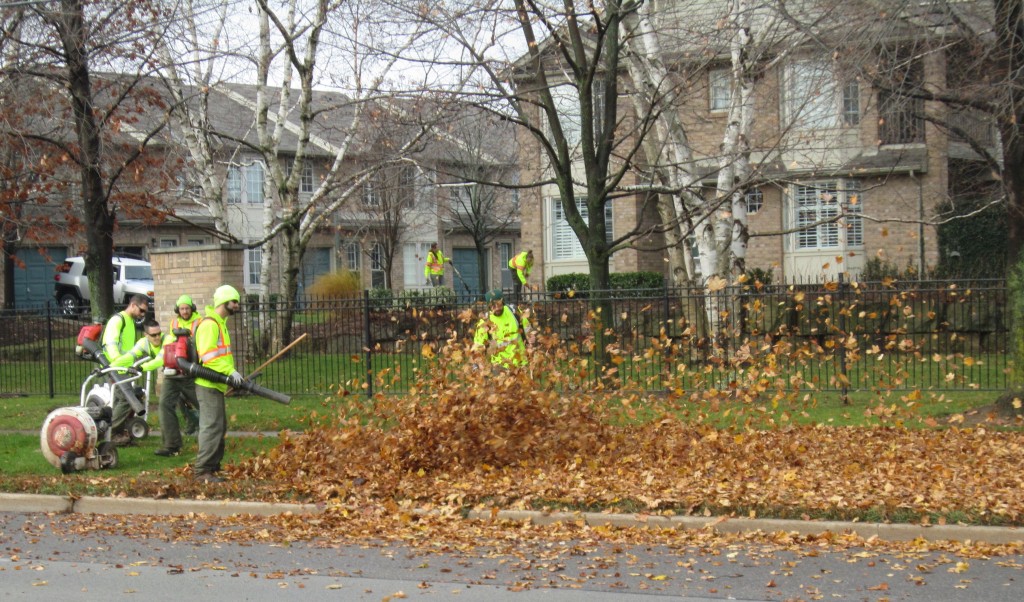


 Brown’s book is a refreshing tell-all which goes beyond just reporting his version of events, to provide an insight into the dirty side of our democracy. The degree of corruption which plagued the provincial Progressive Conservatives in the run up to the 2018 election is shocking. Claims of ballot stuffing, fake voter ID and fraudulent voting are the kinds of tales we expect to hear about elections in the banana republics, not as an inherent aspect of Ontario’s natural governing party trying to govern itself.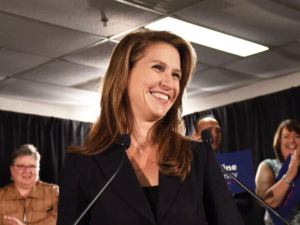

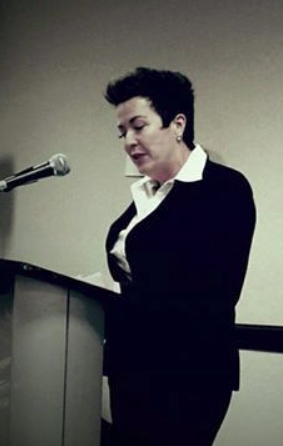

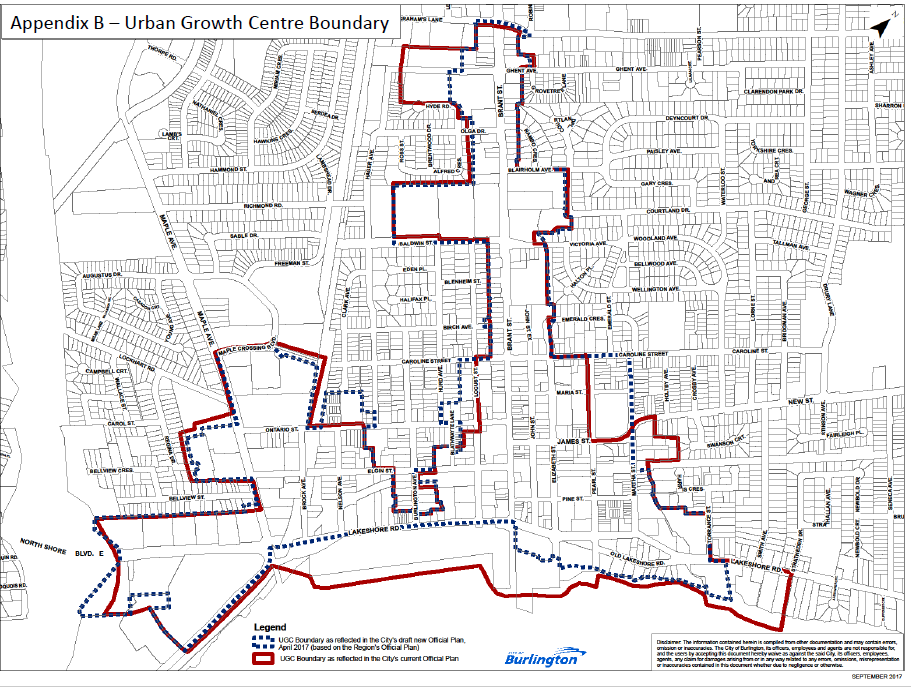


 The group consists of the Library, the museums, the Art Gallery, Performing Arts, Tourism and the Economic Development Corporation.
 The city can expect to hear for more in the way of funding for the Museum. The re-launched Joseph Brant Museum is going to have its hand out for more in the way of funds to staff the new digs.
 Little wonder that Joseph Brant’s body was carried to Brantford and buried there; he would roll over in the grave he had in Burlington if he knew what they had done to his Burlington homestead.
 “Over the last number of months, Halton Region staff have been working closely with City of Burlington staff in the review of the newly adopted Plan to address conformity to the Region of Halton Official Plan. Through this review, Regional staff have identified a number of matters with respect to the Plan’s conformity to the Halton Region Official Plan that need to be resolved prior to making a decision on the Plan. The attached Notice provides additional information related to these matters in accordance with s. 17(40.2) of the Planning Act.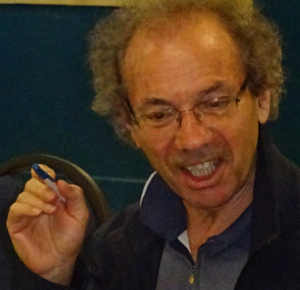

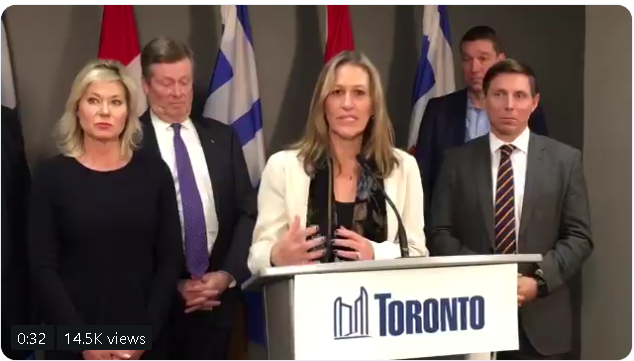

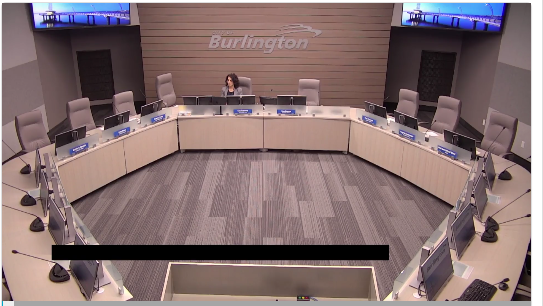


 “However, we are not alone in this effort. We rely on the help of numerous volunteers, local media and the support of area businesses and organizations that have made donations to allow Crime Stoppers to operate in the region for three decades,” Westcott said.
 Like other Crime Stoppers programs across Canada (and many worldwide), Crime Stoppers of Halton has observed Crime Stoppers Month since it was first proclaimed in 1986 in Edmonton, Alberta. Crime Stoppers Month gives the opportunity to recognize those who have played a key role in assisting the program.
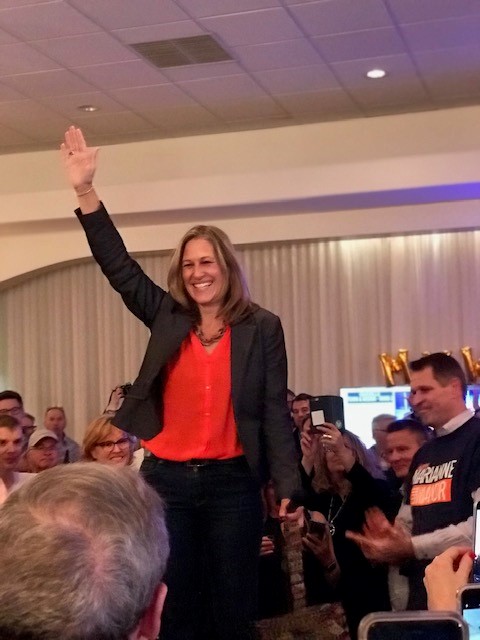

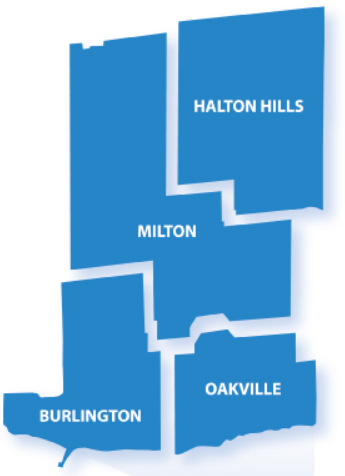 If the Premier wants to break up the Regional governments – the four municipalities that make up Halton are not going to become stand-alone municipalities – they will be added on to existing large government.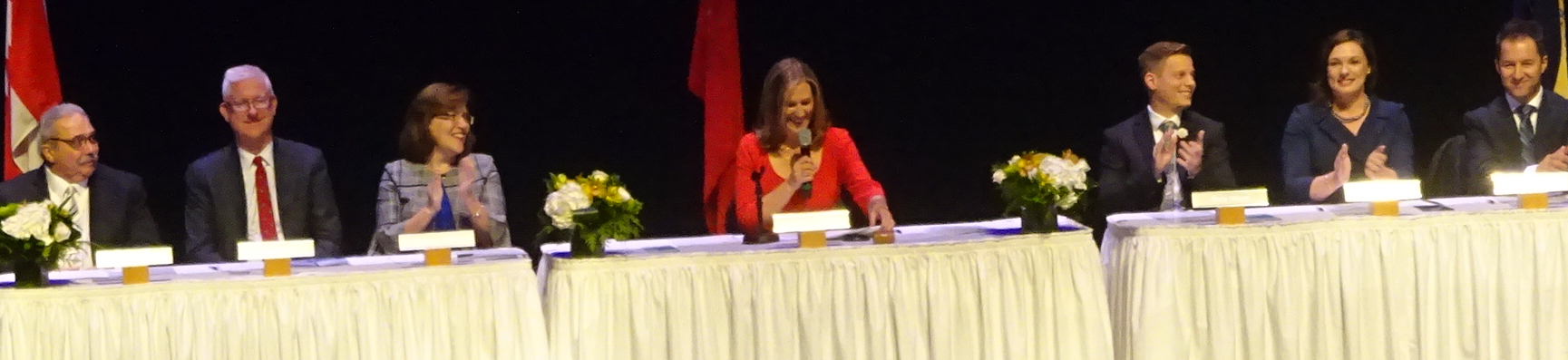
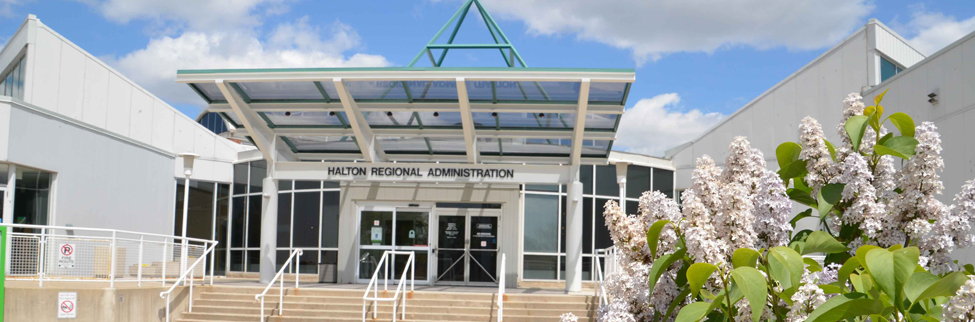


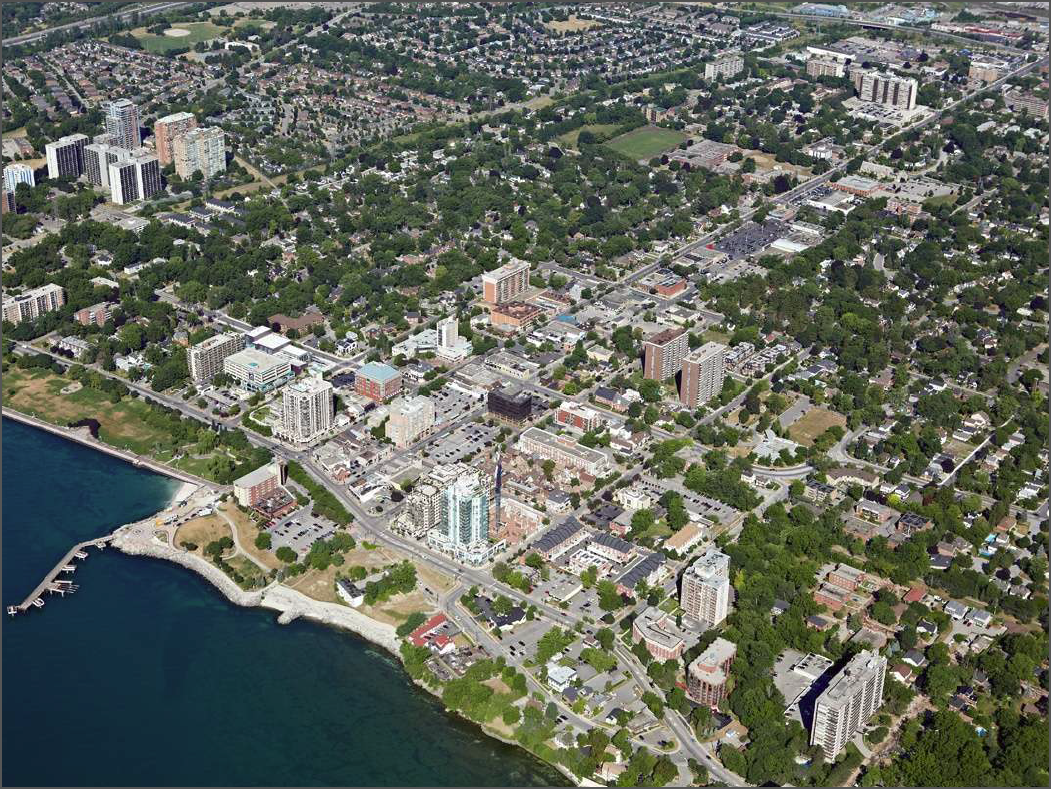

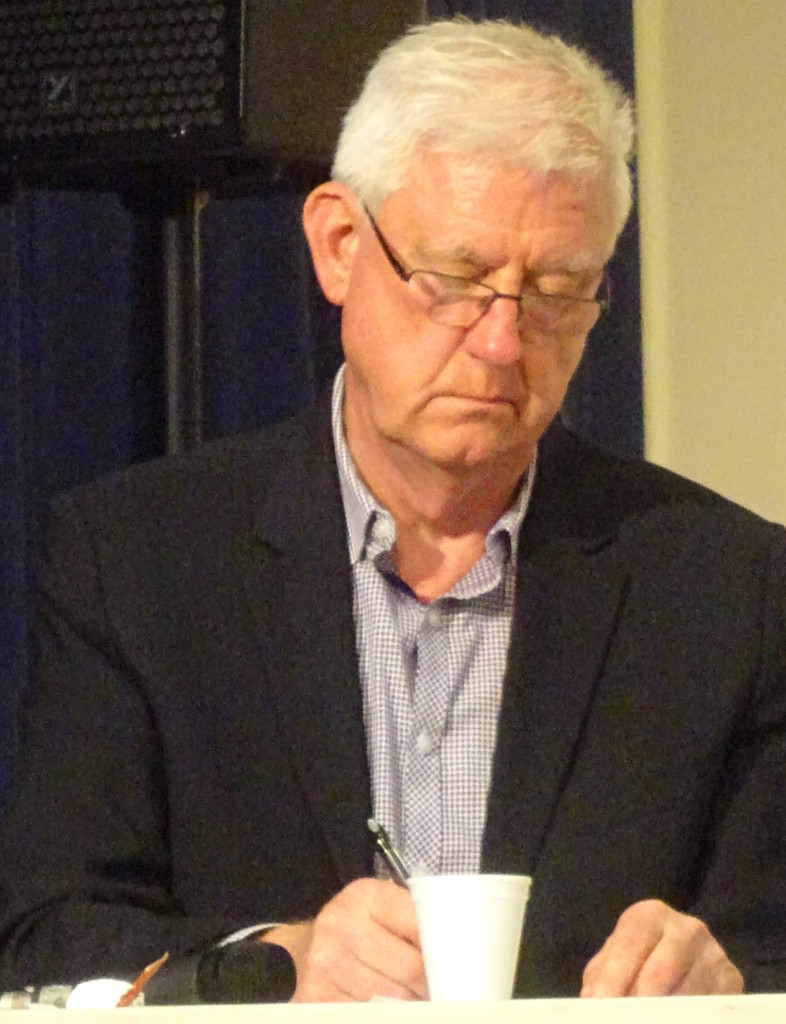
 This refusal to take residents’ reasonable opinions into account built up a decade’s-worth of resentment which almost swept the field on October 22. Seldom can a municipal election have stirred such strong feelings – strong enough that a council inaugural meeting had to be held in a sold out Burlington Performing Arts Centre, and some ward debates attracted over 400 people.





 The broad strokes are for a budget increase of 3.99% over what the citizens were taxed in 2018.
 Do you know someone who has made contributions to the community, environment, arts, heritage or accessibility?


 Anyone wishing to add their voice to this pre-budgetary consultation should fire off an email by February 8, to submissions@ontario.ca. Alternatively one can pen their thoughts and forward them by mail to: The Honourable Victor Fideli, Minister of Finance, ℅ Budget Secretariat, Frost Building North, 3rd Floor, 95 Grosvenor Street, Toronto, ON M7A 1Z1