 By Pepper Parr By Pepper Parr
December 11, 2014
BURLINGTON, ON.
One of the things the internet does is give those with something they want to say a much bigger megaphone.
Hydro costs have been a bugbear for Ontarians for some time – one of the Harris government’s gifts to us.
The natives are still biting back – another petition. The organizers of this one ask:
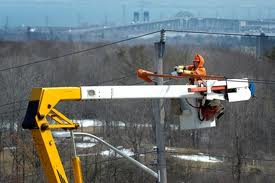 Hydro in Ontario has been broken for some time. It is essential that it be fixed – the solution is not yet clear, “If you have a billing complaint with hydro one, please make sure you file a complaint with the Ombudsman as he begins his investigation into Hydro One. Click here to file your complaint.
“And if you haven’t yet, please make sure you share your concerns about Ontario’s broken hydro system directly with the Premier, the Minister of Energy, the Ontario Energy Board and Hydro One.
The problem with the petition is its source. Randy Hillier was part of the government that created the problem we have today. Is the petition part of his drive to at some point lead the Progressive Conservative party in Ontario? His views and solutions to some of the provinces problems would take Ontario back to where Mike Harris put us and to where Tim Hudak wanted to keep us.
The province is going through a profound change; the core of its economic engine is threatened and in some cases fractured. General Motors is moving its assembly lines to Mexico.
The province faces a huge demographic shift; we are now a much more demographically diversified people and we have a growing seniors’ population that we have to care for at considerable cost.
Adjusting to these changes is going to take political leadership that looks forward and not backwards. Randy Hillier is as backward looking as you can get.
The petition has merit – the guy behind it; questionable.
A Petition to the Legislative Assembly of Ontario
To the Legislative Assembly of Ontario:
Whereas, the cost of electricity in Ontario continues to escalate;
And Whereas, other charges associated with electricity, such as delivery, regulatory, global adjustment and debt retirement charges make electricity increasingly unaffordable;
And Whereas, these costs have imposed a significant hardship on ratepayers and driven industry and jobs out of Ontario;
We, the undersigned, petition the Legislative Assembly of Ontario as follows:
That the Premier and the Minister of Energy reduce the waste and duplication in Ontario’s electricity sector and other necessary steps to lower the cost of electricity so that Ontario’s electricity prices are competitive with other jurisdictions.
Sign here:

 Ray Rivers Ray Rivers
December 11, 2014
BURLINGTON, ON.
The provincial Auditor General (AG) is an essential part of a system of good government. Being independent and reporting directly to the Legislative Assembly, the auditor “conducts value-for-money and financial audits of the provincial government”. The 2014 report targeted a number of areas including infrastructure, child care and energy (smart meters).
 The office of the AG is not inexpensive, chewing up over $15 million dollars annually and employing about a dozen people each year. This year’s report weighed in at 600 pages, more than twice the size of the New Testament. And though the language is simpler than what we find in the Bible, there is so much redundancy and superfluous description interspersed among all the pretty graphics, that it is might also be as good a remedy for insomnia as some find in the pews of their church. The office of the AG is not inexpensive, chewing up over $15 million dollars annually and employing about a dozen people each year. This year’s report weighed in at 600 pages, more than twice the size of the New Testament. And though the language is simpler than what we find in the Bible, there is so much redundancy and superfluous description interspersed among all the pretty graphics, that it is might also be as good a remedy for insomnia as some find in the pews of their church.
I have been involved in audit processes at both federal and provincial levels over the years. For the most part the auditors work closely with government officials, and in many cases simply regurgitate what they were told by officials – making for few surprises for the officials. That seems to be the case when this year’s report examined the processes for building infrastructure; 74 building projects were considered.
The AG noted that the “tangible costs (such as construction, financing, legal services, engineering services and project management services) were estimated to be nearly $8 billion higher than… if the projects were contracted out and managed by the public sector.” That waste of money seems logical given the complications and extra rewards required for private sector involvement.
But Infrastructure Ontario officials justified this additional expense arguing that “the risks of having the projects not being delivered on time and on budget were about five times higher if the public sector directly managed these projects.” They estimated this risk at $18.6 billion making the, so-called, alternate financing partnership a no-brainer for them. But are they really serious – five times?
Me thinks that something is rotten in the state of the Ontario public service. Not much wonder the recent billion-dollar gas plant relocation fiasco was handled so casually. Why isn’t the management at Infrastructure Ontario saying WTF, or better still doing something to change that statistic (five times the risk)?
 The technology was going to let the consumer make choices. Following the Harris/Eves government screw-up of the energy file (de-regulation and privatization), politicians jumped onto the smart meter bandwagon as a panacea for spiraling electricity costs. The AG attacks the decision-making process and much of her criticism centres on a cost-benefit feasibility study performed, after-the-fact. Imaginary numbers (guesstimates) lie at the heart of her criticism.
 They were going to change the way we used electricity. In addition, she fairly critiques the lack of oversight on implementation, accountability and general management, particularly for the Hydro One empire. That smart meters may be an essential piece of infrastructure in a transition towards more efficient energy delivery and providing greater control of one’s hydro bill to the consumer is not really something the AG considers, nor perhaps should.
And sometimes the AG isn’t very insightful or even helpful, as when she concluded that there was a “need to provide ministry and agency staff with training to help them do their work more consistently and effectively” for the Child Care, Parole Board, Nominee, and Residential Services for People with Development Disabilities programs. Isn’t that just good counsel for all employees, regardless of program?
 The provincial government used some very creative accounting to approve a loan to complete a building in downtown Toronto that was far from fully rented. The AG also followed up on whether the government had paid attention to previous recommendations and whether the culprits had cleaned up their acts as a result. Of the 77 recommendations, requiring 170 actions, from the 2012 report, she noted that 81% of had been “either fully implemented or are in the process.”
Impressed with this statistic, one might question whether the AG shouldn’t be brought in earlier – to help program managers’ better design and implement their responsibilities. But that would, of course, shift her role to being both the prosecution and the defence, and immerse her office in a huge conflict of interest.
As the report notes, the mandate for the AG is fairly broad but it is limited to the activities within government ministries and agencies. So it is at some risk to her office that the AG ventures into criticizing general public policy, as she does when slamming provincial deficit and debt levels. “Ultimately, the question of how much debt the province should carry and the strategies the government could use to pay it down is one of government policy,” she notes.
So why does she even mention it? It is not like this provincial government is unaware that we have an emerging debt problem in Ontario. Since her interference is not for informative purposes, what is she doing? The good office of the AG compromises its credibility and authority once it decides to shed its independence and go political, as she has clearly done.
If Auditor General Bonnie Lysyk wants to attack public policies instead of doing what she is being paid for – to evaluate programs – she should join a political party. In fact there is an opening right now for leader of the Progressive Conservatives.
 Ray Rivers writes weekly on both federal and provincial politics, applying his more than 25 years as a federal bureaucrat to his thinking. Rivers was a candidate for provincial office in Burlington where he ran against Cam Jackson in 1995, the year Mike Harris and the Common Sense Revolution swept the province. Ray Rivers writes weekly on both federal and provincial politics, applying his more than 25 years as a federal bureaucrat to his thinking. Rivers was a candidate for provincial office in Burlington where he ran against Cam Jackson in 1995, the year Mike Harris and the Common Sense Revolution swept the province.
Background links:
AG on Debt AG on Private Partnerships
AG on Smart Meters AG Report
 By Ray Rivers By Ray Rivers
December 5, 2014
BURLINGTON, ON
The good old Soviet Union used to control its media for the good of the Fatherland, strengthening national spirt and resolve, and helping its people feel good about their otherwise miserable lives. After all, the Soviet empire was the inspiration for George Orwell’s classic epic ‘1984’.
The moderately free Russian press in the post-Soviet years has virtually now disappeared, after a decade or so of Mr. Putin leading the nation. And last year, after Ukraine’s corrupt Russian-puppet president fled to Moscow, Putin’s propaganda machine went into action, especially in Crimea and the Dunbas, areas where significant numbers of Russian speaking Ukrainians live.
Those folks were warned about Ukraine’s Neo-Nazi’s taking over Kiev’s streets, banning the Russian tongue and committing unspeakable crimes. The bigger the lie, the more likely it will be believed. They say ‘communication is the answer’ but in Ukraine’s case, without a trusted national and bilingual (Russian and Ukrainian) broadcaster, there was no way to counter the lies and to communicate the truth.
 CBC – the public broadcaster that covers the country in two languages. Canada, the UK and the USA all have public broadcast networks funded in part by combinations of advertising, donations or license fees, and public funding. In Canada’s case the CBC gets about a billion dollars a year, about two-thirds of its revenue, from the federal government. For that the corporation operates a network covering the entire country in our two official languages, as well as in a number of aboriginal tongues where needed, to make sure we all get the news.
Our Harper government has been slashing the CBC’s funding but that is not enough for the critics of the CBC, who voice that the service should be spun off, privatized or sold. They would like nothing better than to see such drastic budget cuts until a poverty-stricken and handicapped broadcaster fails, opening more air space for others, like the mega-sized and horizontally-integrated Bell media giant. The recent Ghomeshi mess has played into their hands, casting doubts on the capabilities of senior management, and further disillusioning an already skeptical public.
 A graphic that will be remembered by many in Burlington. Objectivity and fairness used to be the two pillars of broadcasting. The US first passed the Fairness Doctrine in 1949, requiring balanced reporting in all national media. This centrepiece of US broadcast policy was upheld by the courts until 1987, when President Reagan killed the doctrine in the name of free speech. So today the majority of Americans listen to the Australian-owned (Rupert Murdock) extremely right-wing FOX news. ‘Fair and balanced’ is the ironic logo of FOX, which is anything but.
It is arguable whether public attitudes in the US have been influenced by FOX or its philosophically opposed competitor, MSNBC. But why would anyone be surprised that we are undergoing an evolution in our thinking? I mean, most Russians believe that current Ukrainian leaders, including their Jewish prime minster, are Neo-Nazi’s – say a lie enough times and anyone will believe it.
The mandate of the CBC, here in Canada, does not specifically require fairness but the assumption of objectivity is inherent, since primary funding comes from Parliament. It is common place for conservative-minded critics to accuse the media of holding a ‘liberal’ bias – an accusation that flies in the face of the abundance of right-wing media (Sun, National Post, CTV) and so many of the various CBC news folk themselves (e.g. Senator Pamela Wallen or Peter Kent). And no objective review of CBC programs or personalities has ever shown significant bias, liberal or otherwise.
 Did Canadians get the information they needed during the Quebec referendum debates? If they did – they got it from the CBC. Compared to the BBC, with federal subsidy (collected through mandatory household licence fees) of over six billion dollars, the billion federal dollars to maintain the CBC doesn’t seem outrageous. Our Prime Minister spent more than that just to host the week-long G-20/G-8 summit back in 2010.
And for that money the CBC is the largest broadcaster in Canada and the only one with a specific mandate to promote Canadian culture. Its reach extends internationally as well as across Canada – making the broadcaster Canada’s best global ambassador. The CBC production “Little Mosque on the Prairie”, for example, has been syndicated world-wide including in Israel, The West Bank and Gaza.
When in the grip of either of our own sovereignty crises, the two Quebec referenda, every Canadian knew, at least, that they were getting the straight and honest goods – consistently and accurately. The decisions they ultimately made at the ballot box were based on all of the information, not just some separatist propaganda. Worth a billion dollars? Well why not just ask the Ukrainians what they think?
 Ray Rivers writes weekly on both federal and provincial politics, applying his more than 25 years as a federal bureaucrat to his thinking. Rivers was a candidate for provincial office in Burlington where he ran against Cam Jackson in 1995, the year Mike Harris and the Common Sense Revolution swept the province. Ray Rivers writes weekly on both federal and provincial politics, applying his more than 25 years as a federal bureaucrat to his thinking. Rivers was a candidate for provincial office in Burlington where he ran against Cam Jackson in 1995, the year Mike Harris and the Common Sense Revolution swept the province.
Background links:
CBC Factum US Fairness Dotrine US Freedom of Expression CBC Broadcasting
CBC Comment CBC Public Opinion CBC Information Ghomeshi and CBC BBC
 By James Smith By James Smith
December 3, 2014
BURLINGTON, ON
All the other kids wore the Rouge, Bleu, Blanc with nombre neuf. We were Anglos but like Roch Carrier’s book, all wanted to be The Rocket. That is all except me, I wanted to be like my dad’s friend, number four, Jean Beliveau. So on the outdoor rink I was number four.
My dad was a DJ in Montreal, and also did the colour commentary for, I think it was radio station CJAD, hockey, football, and the races at Blue Bonnets race track. Dad was always having us meet stars of one kind or another, and as a kid this really didn’t register.
 Always at the front of the game; always playing the puck; Jean Beliveau at his best. That is except for hockey players. Hockey was different, hockey for me, like from most boys at the time, was what we lived for and I was so very lucky to meet most of the greats of the Hab’s dynasty of the late 50’s & early 60’s. The Rocket, the Pocket Rocket, Claud Prenevost, Boom-Boom Geoffrion, but Mr Beliveau was different, he and my dad were friends.
Several Sunday afternoons I got to go with my dad to the Forum, walk to the rafters into the gondola to watch a game. As a kid this was both terrifying and exciting being so high, watching the game, seeing my dad work on the radio and feeling part of the big people’s world. At the end of the game we’d go to the dressing room, my dad would do an interview or two,
 He would come out of the curve in the rink with more than enough speed to overtake almost every hockey player in the league. I’d get to meet my idols, shake their hands, and learn a new word or two in French. Not sure why but “peut-etre” seems to be the one I remember my dad using a lot. We would never leave without my dad and Mr Beliveau having a conversation, they always had a schtick they would do; he was Jean my day was Gene. Mr Beliveau would greet dad with a smile and “Hello Jean!” and my dad would reply “Bonjour Gene!”. They were both big men, and would shake hands an exchange a laugh, and as a little kid, I would look up in awe. My dad was friends with Jean Beliveau!
I do remember an exchange happing one time shopping in downtown Montreal with my parents. We ran into Mr Beliveau and people paused to look as the two men exchanged a few words. I shook Mr Beliveau’s hand while enquiring “comment allez vous?” Mr Beliveau then remarked about my red white and blue toque.
With my tiny bit of childhood French I informed the captain of the Montreal Canadiens it was a REAL Canadiens “chapeau rouge avec pom-pom bleu”. A little taken back he got a big grin and started to laugh and patted me on the shoulder, said a few more words to my parents, then bid us good-bye.
 Jean Beliveau at 80 – still the captain Today with Mr Beliveau’s passing, I will remember Mr Beliveau a giant of a man, who had time for a little kid, and as a friend of my late father who towered over me on the streets of downtown Montreal, laughing.
 By Pepper Parr By Pepper Parr
November 28, 2014
BURLINGTON, ON
Many a political career has been started with a citizen serving on a city board or committee.
There are hundreds of people as well who have served on a board and found immense satisfaction in being able to make a difference.
Burlington citizen advisory committees provide Council and staff with input about a wide variety of subjects through discussions, presentations and recommendations. Some committees also organize and participate in community events.
Burlington welcomes citizens who represent the diverse backgrounds of the community to participate on these committees. Becoming a member offers residents a unique chance to volunteer their highly valued skills and to strengthen our shared sense of community.
One of the key groups is the Burlington’s BEST Awards Committee. It is made up of 10 voting members, including: six citizens from the community, and four representatives from media and information agencies.
 The committee was established in and is seen as a Planning Committee reporting to City Council through the Community Services Committee. The committee was established in and is seen as a Planning Committee reporting to City Council through the Community Services Committee.
Their mandate is to recognize citizens of Burlington who have brought favourable publicity and honour to the City of Burlington, to increase awareness of the committee so all citizens of Burlington have the chance to be recognized for their achievements.
The recognition is provided through Burlington’s Best Awards an annual event at which Burlington recognizes the Citizen of the Year; a Junior Citizen of the Year; an Arts Person of the Year, and a Seniors Person of the Year;. The city also gives a Community Service Award, an Environmental Award and a Heritage Award.
These awards are important – but there is a problem. In 2014 the nominations or recommendations did not come from the Planning committee – their task was to vote on the nominations they had before them.
Those nominations came from anyone who wanted to send in a nomination. The result was we had wives nominating husbands, Mothers nominating their children and girlfriends nominating their boyfriends, which, while admirable, is surely not Burlington’s definition of the BEST we have?
In the next few weeks the Clerks department will go through the applications for people who would like to be on the Planning Committee. Let us hope that the committee that chooses the people who will vote for the BEST that Burlington has are people who get to vote on merit.
There are some people in this city who have in the past year served us exceptionally well. They deserve to be recognized for what they have done – not for who they are or what their Mother, Father, husband, wife or girlfriend thinks of them.
Friends and family should be applauding the choice the committee makes – they shouldn’t be sending in nominations – nor should the committee be accepting them.
By Ray Rivers
November 27, 2014
BURLINGTON, ON
Before the British North American colonies converged into a new nation, Ontario and Quebec shared history as the united ‘Province of Canada’. The Act of Union in 1840 brought together the former Upper and Lower Canadian colonies into a union which lasted until confederation in 1867. This union gave birth to the responsible government in the colonies, involving both English and French Canadians despite occasional disagreements, as in 1849, when rebelling Tories burned the provincial capital buildings in Montreal.
 The hanging of Louis Riel created a major rift between Quebec, the aboriginal community and the federal government that to some degree still exists today Ontario and Quebec have had their disagreements; Louis Riel, conscription, liquor marketing restrictions and cross border labour disputes – but there has always been a fraternal amity, not unlike that between the western provinces of Alberta and Saskatchewan. Premiers Robarts, Davis, Peterson, McGuinty and Wynne were always strong promoters of Quebecers’ interests in Canada including through those troubling periods when Quebec was threatening to leave the federation.
So it is gratifying that Premiers Wynne and Couillard are taking steps to bump up their cooperation on language policy, climate change, electrical energy and strengthening the central Canadian economy. This sounds like a no-brainer though and provincial residents should thank the Prime Minister, if only because the federal government’s neglect is the spark that has driven this initiative. After all, Mr. Harper has spent virtually no political capital on central Canada’s economy, rather focusing his energy on the further development of the Alberta tar sands
Ontario and Quebec make up about 60% of the country’s population and its gross domestic product (GDP). So expanding trade between them should help expand their economies and allow them to pay down their debts. New approaches to sharing electrical grids will help keep electricity rates in check, which is good for the economies as well as the rate payers. But what would really help is a much needed boost to infrastructure, transportation infrastructure in particular, to keep their major cities from choking on their own success.
Throughout history the federal government has always been the driving force in the economic development of this country. It was the feds who gave us our national railways (and have since sold them off) that brought B.C. into the federation and bound us all together. The TransCanada highway is the centre piece of Canada’s national road transportation system. Environmental management across the country was only made possible with federal resources to build water and waste water facilities. The federal government (Trudeau) even salvaged the oil sands when Alberta was ready to throw in the towel, in its earlier days.
So, in keeping with that tradition the Harper government, a few years ago, announced a program to help the provinces fund their growing infrastructure needs. But Ontario’s share is less than three billion dollars while the provincial government needs to spend about $130 billion dollars over the next decade.
 The “Ring of Fire”; the name given to a part of the province that is believed to be rich in natural resources but cannot be reached because there are no roads into that part of the province. Ontario wants federal government help to build those roads. The federal government wants pipe lines to move tar sands bitumen from Alberta to the east coast. Then there is the ‘Ring of Fire’.
The so-called ‘Ring of Fire’, site of potentially billions of dollars worth of valuable minerals, lies about 500 kilometres northeast of Thunder Bay, but is currently inaccessible except by helicopter or canoe and portage. Both Ottawa and Toronto agree on the need to develop this resource and the Province estimates about a billion dollars is needed for a transportation system. The federal government has decided that this should come out of Ontario’s piddly $3 billion in that infrastructure fund – and therein lies just another disagreement between Canada and its largest province.
Premier Wynne has requested a meeting with the PM to talk about this matter among others. But Harper is refusing to meet her because he can see no benefit in helping a provincial Liberal government improve its economy. So he’s got nothing to say and no more money to offer. That is, no more money for Ontario if he is going to balance his budget; give another $2 billion in tax cuts to reasonably well-off Canadian families; and keep his fighter jets running missions in Iraq.
Then there is that Ontario pension program which Wynne has decided to undertake, all on her own, since the feds refuse to undertake much needed upgrades to the existing Canada Pension Plan.
And there is Premier Wynne’s demand for a more equitable share of the federal equalization program, now, when the province needs the money most. But then Ontario just voted Liberal in the last election – so who can blame the Conservative PM for not wanting to help her out.
Canada’s record on climate change is abysmal. We had once gained considerable reputation as a front-seat participant in different forums dealing with the the global issue. But Canada has surrendered its commitment to the Kyoto protocol and is unlikely to meet even the softer targets the Harper government recently set. Still, the PM likes to take credit for the recent modest improvement in emissions statistics, notwithstanding his ‘full-speed-ahead’ on oil sands development and the pipelines he envisions to move all that oil.
And any reductions of greenhouse gas (GHG) carbon emissions which Canada can boast about are almost entirely due to Ontario’s green energy program and the shut down of coal-fired electricity – an initiative which Ottawa refused to help finance. In fact Ontario and Quebec are the only two jurisdictions in Canada which have significantly reduced their GHG emissions over the years, again without help from the current federal government.
 Premiers Wynne of Ontario and Couillard of Quebec have begun to work together to protect the economic interests of Central Canada Mr. Harper’s party managed to pull a couple of wins in the recent by-elections, one of them in Ontario. The general election this coming year will be a greater test for his government. It will be an opportunity to discuss climate change, energy policy and infrastructure in a way that they were not debated in the by-elections.
It is unlikely that Mr. Harper will lose much political support in his western home base over his almost antagonistic approach to the rest of Canada, However voters in central and coastal portions of the country will need to ask themselves what they have been getting out of this confederation. And do we need to rethink the make-up of the political union we call Canada – as Quebec and Ontario seem to be doing. Or do we just change the channel at the polling booth.
Ray Rivers writes weekly on both federal and provincial politics, applying his more than 25 years as a federal bureaucrat to his thinking. Rivers was a candidate for provincial office in Burlington where he ran against Cam Jackson in 1995, the year Mike Harris and the Common Sense Revolution swept the province.
Background links:
Infrastructure Quebec-Ontario Partnership Canadian Federalism
Respect Ontario History Federal Infrastructure Program
More Infrastructure Even More Infra Ring of Fire
By Staff
November 20, 2014
BURLINGTON, ON.
Steven Levy is a CBS News presenter. Last Sunday he did a commentary on CBS Sunday Morning.
What led to the Commentary was the news that the White House referred to Christmas Trees as Holiday Trees for the first time this year.
 Steven Levy objects to the White House Christmas Tree being called a Holiday Tree. “I don’t like getting pushed around for being a Jew, and I don’t think Christians like getting pushed around for being Christians. I think people who believe in God are sick and tired of getting pushed around, period. I have no idea where the concept came from, that America is an explicitly atheist country. I can’t find it in the Constitution and I don’t like it being shoved down my throat”
“Or maybe I can put it another way: where did the idea come from that we should worship celebrities and we aren’t allowed to worship God as we understand Him? I guess that’s a sign that I’m getting old, too. But there are a lot of us who are wondering where these celebrities came from and where the America we knew went to.
“In light of the many jokes we send to one another for a laugh, this is a little different: This is not intended to be a joke; it’s not funny, it’s intended to get you thinking.
“In light of recent events… Terrorists attack, school shootings, etc.. I think it started when Madeleine Murray O’Hare (she was murdered, her body found a few years ago) complained she didn’t want prayer in our schools, and we said OK. Then someone said you better not read the Bible in school… The Bible says thou shalt not kill; thou shalt not steal, and love your neighbor as yourself. And we said OK.
“Then Dr. Steven Benjamin Spock said we shouldn’t spank our children when they misbehave, because their little personalities would be warped and we might damage their self-esteem (Dr. Spock’s son committed suicide). We said an expert should know what he’s talking about.. And we said okay..
 The White House has decided to call this a Holiday Tree. “Now we’re asking ourselves why our children have no conscience, why they don’t know right from wrong, and why it doesn’t bother them to kill strangers, their classmates, and themselves.
“Probably, if we think about it long and hard enough, we can figure it out. I think it has a great deal to do with ‘We reaphat we sow”.
“Funny how simple it is for people to trash God and then wonder why the world’s going to hell. Funny how we believe what the newspapers say, but question what the Bible says. Funny how you can send ‘jokes’ through e-mail and they spread like wildfire, but when you start sending messages regarding the Lord, people think twice about sharing. Funny how lewd, crude, vulgar and obscene articles pass freely through cyberspace, but public discussion of God is suppressed in the school and workplace.
“Are you laughing yet?
“Funny how when you forward this message, you will not send it to many on your address list because you’re not sure what they believe, or what they will think of you for sending it.
“Funny how we can be more worried about what other people think of us than what God thinks of us.”
By Ray Rivers
November 18, 2014
BURLINGTON, ON.
He is consistently below Trudeau and Mulcair in national opinion polls and his party is currently lagging that of Trudeau by double digits, yet the voters in the two federal by-elections yesterday chose Harper. Of course the Alberta riding of Yellowhead was never in doubt, and the new Tory there won by a resounding 60% of the vote. But that is Alberta, where the point of having an election is, arguably, a waste of money. Why not just have the Conservative Party appoint the MPs?
 Whitby-Oshawa was a closer race between the Libs and Cons. Nevertheless, the popular former Whitby mayor, Pat Perkins, who only recently jumped in for the Conservatives, won the support of a clear majority of the voters, receiving almost 50 per cent of the votes cast. The Liberal, Celina Caesar-Chavannes, came in second with a respectable 40% of the vote in this one-time Liberal riding. The NDP, which had replaced the Liberals as the second choice of voters in the last general election fell back to their more traditional spot. Whitby-Oshawa was a closer race between the Libs and Cons. Nevertheless, the popular former Whitby mayor, Pat Perkins, who only recently jumped in for the Conservatives, won the support of a clear majority of the voters, receiving almost 50 per cent of the votes cast. The Liberal, Celina Caesar-Chavannes, came in second with a respectable 40% of the vote in this one-time Liberal riding. The NDP, which had replaced the Liberals as the second choice of voters in the last general election fell back to their more traditional spot.
Of course this is the constituency of former finance minister Flaherty, whom Canadians generally respected, once he came to federal politics. And it didn’t hurt that Flaherty’s widow, Christine Elliott, is the sitting provincial MPP there, and also a front runner in the contest to lead the provincial Tories. So the newly-cast conservative candidate had a lot of things going for her.
Oh, and did I mention that the PM announced his so-called ‘family income splitting’ promise mid-campaign – a $2 billion tax giveaway for the wealthiest tax payers, a program Flaherty had justifiably disparaged? But the ‘tax-cut’ spin still works. And it didn’t hurt when tough guy Harper ordered tough guy Putin to “get out of Ukraine” last week – newsworthy, but an empty threat given what little we had and would do for that embattled nation.
By-elections generally tend to have lower turnout and these two contests were no strangers to that phenomena. Only a third of Whitby-Oshawans could be bothered to vote and over 80% of eligible Yellowhead voters must have slept-in all day. I guess they  knew the result would be a foregone conclusion in a province where some voters act as if Canada’s borders start at the Rockies and end somewhere in the prairies. And Mr. Harper is local, despite his accidental birth in Ontario. knew the result would be a foregone conclusion in a province where some voters act as if Canada’s borders start at the Rockies and end somewhere in the prairies. And Mr. Harper is local, despite his accidental birth in Ontario.
Americans just finished voting in their mid-term congressional elections and the President, whose party got slaughtered, grumped that only a third of eligible voters showed up – implying he might have won had turnout been higher. He may be right, but the point is why don’t we have higher voting numbers? Australia has had compulsory voting for eons, with real penalties for those too lazy to get their butts into the ballot both. As a result, over 90 percent of the electorate consistently make the effort to vote, that number hitting 95% in some years.
Were we to adopt a similar law, Albertans would still probably continue to vote Tory, or for the Attila the Hun party if they could – and that is their choice, of course. But at least more people would be engaged in the process of holding our politicians to account. And that should mean better governance.
Of course if you were an NDP supporter in either of these by-elections you might ask yourself why bother? And that is where preferential balloting for multi-party politics makes a lot of sense. Voters select their first choice as they do today in our first-past-the-post system. But if no candidate wins 50% of all the votes cast, second (and third) choices are counted until a winner is announced. Governing parties would always be elected by at least a simple majority of the people, instead of the thirty-plus percentages we’ve seen over the last few elections. However, a preferential ballot wouldn’t have changed the result of these by-elections.
 And maybe we need to make voting easier. Why not hold elections on a weekend when most people have real spare time? And what about on-line voting for a nation that has proven how securely we can even do banking that way? What about better election coverage? I mean how many people were even aware that these by-elections were taking place? And what about more time teaching political choice and process at schools, so our youth can develop an interest in how their governments can work for them? And maybe we need to make voting easier. Why not hold elections on a weekend when most people have real spare time? And what about on-line voting for a nation that has proven how securely we can even do banking that way? What about better election coverage? I mean how many people were even aware that these by-elections were taking place? And what about more time teaching political choice and process at schools, so our youth can develop an interest in how their governments can work for them?
By-elections are usually a good time for the public to register its displeasure with the government in power. If that is true we should take it that the voters are pretty happy with the government we have. But that flies in the face of the national polls – so what is really going on?
Are we a nation of people wanting change, but too complacent to be bothered to do anything about it? Or maybe we truly have become the ‘small c’ conservative society that Stephen Harper had set out to create – too conservative to try change?
By-Elections Yellowhead Whitby-Oshawa
Polling More Polling
Analysis Election Canada Results
Australian Voting Harper’s Income Splitting
Ray Rivers writes weekly on both federal and provincial politics, applying his more than 25 years as a federal bureaucrat to his thinking. Rivers was a candidate for provincial office in Burlington where he ran against Cam Jackson in 1995, the year Mike Harris and the Common Sense Revolution swept the province.
 By Walter Mulkewich By Walter Mulkewich
November 18th, 2014
BURLINGTON, ON
Greg Sorbara, “The Battlefield of Ontario Politics, An Autobiography”, Dundurn Publishers, Toronto, 2014
Greg Sorbara was one of Ontario’s most influential provincial politicians for 27 years from 1985 to 2012: He was a significant cabinet minister in the governments of David Peterson and Dalton McGuinty, including Minster of Finance in the McGuinty government. As President of the Liberal Party of Ontario and Chair of three consecutive Liberal Party election campaign victories, he helped build a successful political machine in Ontario.
 He was in Burlington Monday night as part of his book tour and demonstrated with his straight and candid talk why he was successful and progressive politician. He was in Burlington Monday night as part of his book tour and demonstrated with his straight and candid talk why he was successful and progressive politician.
Sorbara’s autobiography provides a useful summary of Ontario provincial political issues in the past quarter century. But, most significantly this book gives a candid view of how politicians play the political game to actually get things done.
It’s a good read for aspiring politicians, those who want to understated what happens in the back rooms of political parties, and for all of us to understand how politics works.
He gives an understandable account of how the Ontario Health Premium was developed even though his party campaigned on a promise of no tax increase. He explains the kind of deal making that made possible the York Subway expansion. He shows the kind of collaboration that was needed to develop a progressive Ontario Child benefit.
Sorbara deals with the reality of politics as team sport: His candidacy for the Ontario Liberal Party leadership in 1992 in which he came third. His private views on issues such as the harmonized HST and Meech Lake. An honest account of his resignation from the Cabinet over allegations with respect to the Royal Technologies affair, he was exonerated and returned to cabinet. Some interesting stories about candidate recruitment and how campaigns are organized
Perhaps his most controversial chapter is about the gas plant issues in Oakville and Mississauga that he calls “the gas plant myths”, which were “impervious to evidence”. He devoted much of his talk in Burlington to this topic and makes a convincing case, but his is a point of view some might challenge.
His last chapter is the most interesting. He reflects on the future. He expresses his concern about income inequality and he makes a strong case for a national Income Support System and tax reform, as well as federal investment in cities. He talks about the need to grow the economies of smaller cities outside the GTA.
Perhaps Sorbara’s most interesting and controversial suggestion is that, while the Catholic School system has served its purpose, Ontario is changing, and we should have one publicly funded educational system. But, this is a position he never championed in his time at Queens Park.
As the pragmatic practitioner of the political arts, he does not indicate how we might move the political system to accomplish a single public educational system or his other ideas in his last chapter. Maybe that is the point of his book, that there is a time and place for taking on issues.
 Walter Mulkewich is former Mayor of Burlington. He served from 1991 to 1997. Prior to that he was a member of city Council in Burlington and Halton Regional Council. Walter Mulkewich is former Mayor of Burlington. He served from 1991 to 1997. Prior to that he was a member of city Council in Burlington and Halton Regional Council.
By James Smith
November 13, 2014
BURLINGTON, ON
I remember this past Tuesday. I’m standing in my office staring at the framed memento, almost 100 years old. A thing I’ve looked at and read countless times; “In the Service of the Nation”. Standing silently I read the names of the engagements: Chateau Thierry, Soissons, Argonne. Argonne, where he received his Purple Heart. The Purple Heart is framed and kept by one of my brothers, now retired from the American Military.
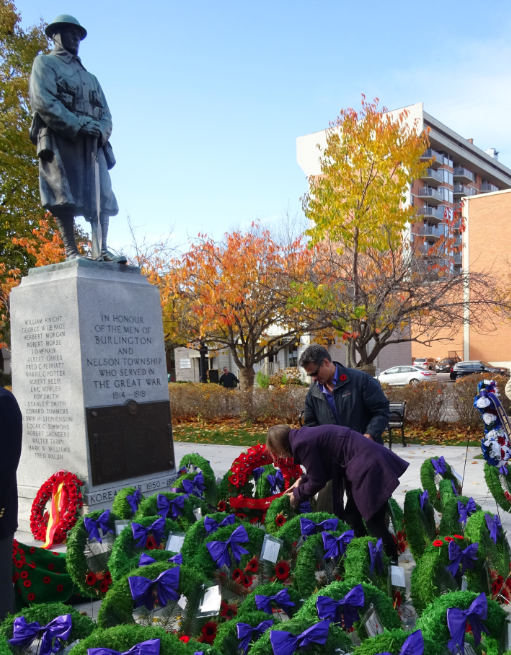 I remember. I remember being a child, holding the medal in my hand and can still feel how heavy & cold it was. How odd to touch the engraved name, the same name as me. I can now hear the TV downstairs again. Two minutes are up, all over, go back to what you were doing. Except I keep thinking of him, his easy smile, the shock of thick white hair, the soft voice that gave his birthplace away despite decades of life in Hell’s Kitchen. He’d never talk about the war, we kids would press but he’d cloud over and say something like “The park is no place to talk of such things”. The most he would ever say is that it was a quick way to become a REAL American. I remember. I remember being a child, holding the medal in my hand and can still feel how heavy & cold it was. How odd to touch the engraved name, the same name as me. I can now hear the TV downstairs again. Two minutes are up, all over, go back to what you were doing. Except I keep thinking of him, his easy smile, the shock of thick white hair, the soft voice that gave his birthplace away despite decades of life in Hell’s Kitchen. He’d never talk about the war, we kids would press but he’d cloud over and say something like “The park is no place to talk of such things”. The most he would ever say is that it was a quick way to become a REAL American.
I remember his funeral. I was just old enough to know that Vietnam was starting to go badly and my own childhood notion of going to America and joining the US Marines was starting to fade as a real goal. The flag draped coffin and the honour guard suddenly seemed very scary to a ten year old. I almost cried in shock when the rifle volleys sounded. The folded flag presented to my Grandmother made me think of what I had been seeing on the TV and the young men being killed in Vietnam.
I remember looking at the Empire State Building in the distance as we made our way back to the limousine and thinking as sad as I was, what would it be like if this was one of my cousins? What if it was my dad being lowered into the ground? I’ve sometimes thought back to that springtime week in New York as the time when I started to wonder about such things that Edwin Starr would sing about a few years later in his song WAR!
I remember the following November and learning to recite In Flanders Field (I still can by the way). At the Remembrance Day assembly not only did I recite John McCrae’s Poem but I introduced the speaker. A First World War Vet, a kindly and grandfatherly gentleman. He kept me on stage to hold his tin hat after I introduced him. The helmet had an odd slice in the back flange, I put my fingers in the hole as I nervously continued to stand on stage, the slash in the steel felt cold and jagged and I wondered about the hole.
Our guest spoke not about war, but about the peace that he hoped we had gained through the horror of three wars. He told us of his wish that peace would fill our days so us kids would never have to see any of the horror that he, and my late Grandfather did. As he concluded his address he took a piece of metal out of his pocket and said how luck he was to be speaking to us and had me hand him his helmet back. With this nasty chunk of metal in one hand and the helmet in the other, he neatly locked the shrapnel into the hole in the tin hat. The audience gasped. After the assembly at recess I was briefly a cool kid because I had held this army helmet, but I recall being somewhat confused by the experience. I still am.
I remember and honour those who’ve served and those who’ve died and respect those who still continue to wear the uniform. I think all Canadians are a little more mindful and respectful this November after the killing of Warrant Officer Patrice Vincent, and Corporal Nathan Cirillo. But war should never be an option until every other option has been tried and found wanting. Since the Korean War Canada has a proud history of Peace Keeping, a tradition that some would have us move away from. In fact we have very few remaining Peacekeepers in this world and I don’t like this trend. I think my grandfather and others of his generation would tend to agree with me.
 In their book WARRIOR NATION: REBRANDING CANADA IN AN AGE OF ANXIETY, Ian McKay and Jamie Swift talk about the “New Warriors” who are “looking to shift public opinion.” They speak of “zealots” who would “transform postwar Canada’s central myth-symbols. Peaceable kingdom. Just society. Multicultural tolerance. Reasoned public debate.” They would replace these traditions with “A warrior nation. Authoritarian leadership. Permanent political polarization.” Vimy Ridge it seems is more important than Baldwin and LaFontaine, MacDonald and Cartier, Laurier and the settling of the west or many other achievements. In their book WARRIOR NATION: REBRANDING CANADA IN AN AGE OF ANXIETY, Ian McKay and Jamie Swift talk about the “New Warriors” who are “looking to shift public opinion.” They speak of “zealots” who would “transform postwar Canada’s central myth-symbols. Peaceable kingdom. Just society. Multicultural tolerance. Reasoned public debate.” They would replace these traditions with “A warrior nation. Authoritarian leadership. Permanent political polarization.” Vimy Ridge it seems is more important than Baldwin and LaFontaine, MacDonald and Cartier, Laurier and the settling of the west or many other achievements.
A battle in a useless war is now being spoken of as what “made” Canada. This trend troubles Messrs McKay and Swift enough they’ve written a book, and this trend fills me with an empty feeling. The first world war was a war between Empires that was foolish, brutal, stupid and avoidable. As a colony Canada was involved because we had no choice. That men fought, and fought bravely should be remembered, but so should the fact that it wrecked and bankrupted Europe and set the table for Fascism and Stalinism and the further horror that was the second world war. That we should say our nation “came of age” because brave men killed other brave men in a war that we had no say in seems to me to the acme of jingoistic nostalgia for the good old days of Red Ensigns and Rule Britannia not the foundation of the amazing country we live in today.
I remember an all but forgotten monument on University Avenue in Toronto. You’ve likely seen it, just north of Queen Street, it’s the memorial dedicated to those who died in the Boer War. The monument features two heroic young Canadian lads marching off to do battle. As they look to the middle distance, they march in the direction a young Britannia is pointing to.
Whenever I see this monument it always make me think she’s saying: “Go! Go forth & defend the Empire good lads! Africa must be free of the evil Dutch farmers and safe for gold & diamond mines and to build Apartheid! GO my lads GO!” It is a lonely and sad monument that seems to be forgotten. Many men fought bravely for Queen and Empire, four Victoria Crosses were awarded to Canadians in that war. Given the precedent of this forgotten monument why not dust that off too and say Canada was born on the Veldt at Paardeberg rather than Vimy Ridge? I say it’s just as relevant.
 I remember visiting Sarajevo. Back when it was still Yugoslavia and I stood on the spot where Franz Ferdinand and his wife Sophie were assassinated. The spot where the match was struck that started the Great War, and it seemed so ordinary and almost shabby. How did such a quaint and diverse city, an Olympic host city later become a place of such carnage in the Bosnian war? I bet I know part of the reason. Hate. Intolerance. Envy. Authoritarian Leadership. Political Polarization. Military Zealots. I remember visiting Sarajevo. Back when it was still Yugoslavia and I stood on the spot where Franz Ferdinand and his wife Sophie were assassinated. The spot where the match was struck that started the Great War, and it seemed so ordinary and almost shabby. How did such a quaint and diverse city, an Olympic host city later become a place of such carnage in the Bosnian war? I bet I know part of the reason. Hate. Intolerance. Envy. Authoritarian Leadership. Political Polarization. Military Zealots.
We need to rid our landscape of such things. That the military will always be a large part of Remembrance day goes without saying. But we need to always ensure that our Remembrance Day ceremonies do not become jingoistic celebrations of conflict. The reason we remember those who served and who have fallen is to also reflect on the Peace and what is left of our Freedoms due to the service and the sacrifice of so many. We lose these freedoms through our complacency and acceptance of what the generals want.
Just to let you in on a teeny weeny secret; since at least the time of the Sumerians, the Generals have never had enough toys, and they always want to play with their toys.
I remember in the 1970’s some wag saying “rather than declare war on a little country, we should declare Peace on all countries”. I’d like to suggest we take this idea up and start a new tradition for our next Canada Day; two minutes of silence while we think about what we can do for Peace in our homes, workplaces, cities, provinces and our country. Perhaps then we can build a world that’s more like what my Grandfather would have liked to think that his service helped to build.
James Smith is an architectural technologist who dabbles in politics and has been described as an essayist. The above is his most recent pondering.

By Ray Rivers
November 13, 2014
BURLINGTON, ON.
Maybe it was that melodic voice wafting through my car speakers. Or maybe the sense of command and confidence projected by this smooth talk show host, drilling down to get at the nut of each issue. I loved listening to Jian Ghomeshi and his well-honed ‘Q’ show which had risen to the peak of radio fame just in time for his dramatic tumble into disgrace, having been exposed as a closet misogynist, a woman beater.
Ghomeshi the radio host always seemed such a gentle and sensitive individual. Who would have guessed ‘Norman Bates’ might be lurking somewhere in his imagination. It wasn’t stabbing in a shower, but it was dangerous spontaneous choking and beatings. It is hard to believe that the man who crafted such a passionate and sweet tribute to his father, on his passing, could have been harbouring such a monster within.
And it wasn’t just the dating, but also his overbearing management style, that did him in. He had become the face of CBC radio, he disgraced himself and fell, as Shakespeare would have applauded – by his own devices. In this case it was his own violent hand. Yet there was an upside to this tragic story since it encouraged so many victims to spring forward for an emancipation of sorts, a new freedom to come forward and tell all.
We were treated to exposés by Ghomeshi’s former dates, his staff and his bosses at CBC, as they described his tyrannical, obsessive and demanding management style. And those stories, no doubt, seemed to encourage a couple of NDP MP’s to complain to Justin Trudeau presumably about a couple of his Liberal MPs hitting on them – or hitting them – we don’t know. Trudeau immediately suspended them from his caucus pending an investigation, only to be verbally abused by an angry NDP leader Mulcair.
Perhaps Mulcair was annoyed that his caucus members had gone to Trudeau instead of to him. Or maybe he was trying to draw cover for an impending harassment case between one of his own MPs and an office staffer. Then out of the blue Sheila Copps comes forward to tell all about an attempted assault by an MP during her time on the Hill, and adding that she had also been raped some years earlier.
All this coming-out makes one wonder who is next, and when will enough be enough already. And what is wrong with our elected federal representatives that they have to act like mischievous children while pay them to represent us in Ottawa. That is not how I want to be represented, perhaps we need an age limit.
We know that bullying behaviour starts early in life. Some would argue that It is a natural phenomenon, development of a ‘pecking order’ sort of thing – in a dog-eat-dog world where the strong survive and weak just suffer – where the cave man goes out to kill the bear and his favourite squeeze stays home to raise the babies and tend to the fire.
 But that isn’t how our modern great society works. We demand equity, equality of opportunity and respect for human dignity; and we expect personal freedom regardless of gender, physical size or economic endowment. So we have started teaching children not to bully, intimidate, or harass, from an early age. That is the way we want them to behave in a civilized community, even if their parents don’t. But that isn’t how our modern great society works. We demand equity, equality of opportunity and respect for human dignity; and we expect personal freedom regardless of gender, physical size or economic endowment. So we have started teaching children not to bully, intimidate, or harass, from an early age. That is the way we want them to behave in a civilized community, even if their parents don’t.
I can recall being at an official function a few years ago when one of my bosses came over and surprised me by squeezing my arm until it hurt. I yelled ‘ouch’ thinking she must have wanted to get my attention – and that sure did the trick. I might have made a formal complaint instead of just brushing off the incident, but like so many others I was a little embarrassed, so let it pass.
I consider myself a tactile person. I believe there are times, especially when grief or joy are upon us, that we humans need the assurance of another’s touch. Life would be so incomplete were society to ban physical contact entirely in the name of preventing potential assault. But touching does have its limits – hurting someone, spontaneously choking or punching them about the head is a whole different kettle of worms.
‘Q’ will stay on the air with a new executive producer and a new host, but for me it’ll never be the same without the brilliant Ghomeshi. I remember back to a time when an extremely hostile guest, Billy Bob Thornton, tore into Jian for the way he was interviewing. Billy Bob backed him into a corner and humbled him into an embarrassing submission. No, it wasn’t violence, but Jian Ghomeshi must have got a good taste of what it was like to be on the receiving end of bullying. Too bad he didn’t learn from that experience.
 Ray Rivers writes weekly on both federal and provincial politics, applying his more than 25 years as a federal bureaucrat to his thinking. Rivers was a candidate for provincial office in Burlington where he ran against Cam Jackson in 1995, the year Mike Harris and the Common Sense Revolution swept the province. Ray Rivers writes weekly on both federal and provincial politics, applying his more than 25 years as a federal bureaucrat to his thinking. Rivers was a candidate for provincial office in Burlington where he ran against Cam Jackson in 1995, the year Mike Harris and the Common Sense Revolution swept the province.
Background links:
Ghomeshi Ghomeshi Scandal Trudeau MPs NDP Staffer
Sheila Copps Billy Bob Interview Sexual Consent
Bullying Stop a Bully What’s Harassment
Dealing with Sexual Misconduct
 By Pepper Parr By Pepper Parr
November 11, 2014
BURLINGTON, ON
The weather was as good as it was going to get for a November Day. A great day for a parade. A fine day to pause, reflect and remember.
With blood on the ground at the base of the National War Memorial and six of our aircraft and a couple of hundred support people in the Middle East in harms way – Canadians have reason to ask themselves: are we safe? Is there something wrong with us as a country – and to reflect on just how much we have going for us and the men and woman who made all this possible.
 Canada is at war – not a big war in terms of the resources we have put into it, but a big, big war for the ISIS people. (ISIS stands for The Islamic State of Iraq and the Levant; which is also translated as the Islamic State of Iraq and Syria) They want to change fundamentally the way society will function. Could they do that to us? War is a very dangerous game and history tells us that the bad guys do win sometimes. Canada is at war – not a big war in terms of the resources we have put into it, but a big, big war for the ISIS people. (ISIS stands for The Islamic State of Iraq and the Levant; which is also translated as the Islamic State of Iraq and Syria) They want to change fundamentally the way society will function. Could they do that to us? War is a very dangerous game and history tells us that the bad guys do win sometimes.
Our columnist, Mark Gillies did a series of articles on the 38 men from Burlington who were lost in the First Great War. It was surprising how little we knew about them. Gillies is looking forward to the public responding and filling in some of the blanks.
It was disquieting to see armed police officers around the perimeter of the Cenotaph. What would that infantryman at the top of the statute have had to say about that?
The loss of two members of our Armed Forces has brought home to all of us just how much we have to lose. Recognizing our history and understanding what it means to each of us is one of the steps to maintaining the democracy we have.
Cherishing that democracy and practicing it is another step. A 34% voter turnout for a municipal election is not cherishing the democracy we have.
 By Pepper Parr By Pepper Parr
November 5, 2014
BURLINGTON, ON.
Should the room in which the Burlington Community Foundation Information session on flood damage assistance have been fuller? CBC National news reported that attendance was poor and some people learned they weren’t going to be getting what they thought they would get.
 The room looks pretty full; the mirror at the back gives that impression but there were less than 100 people in the room – many of them providing information, There were less than 100 people in the room. The BCF understands there are about 500 homes that they think qualify for financial assistance but to date there have been just 50 applications submitted.
The assistance is limited to people who were uninsured or under insured. Most of the people who were uninsured were not able to get insurance. There were a number of homes in ward 5 that experienced serious flood several months prior to the August 4th flood. Other people were told that their deductible was being increased.
 Keven Reimer, the insurance adjuster assigned to the Claims Committee speaks to a couple of worried people. The application – all 11 pages of it – is complex and Keven Reimer, the insurance adjuster proving support to the Claims Committee, took the audience through it and explained what information was needed and why it was needed.
The funds raised by the community – $810,000 has been raised to date – is what is required under the provincial government’s ODRAP (Ontario Disaster Relief Assistance Program). The community raised funds which the government “might” match on a two-for-one basis.
To date the province has not said they will actually do any matching, although Colleen Mulholland, president of the BCF did say she has been told to be “optimistic”.
 Mark Preston, on the left and Rick Burgess holding his chin are members of the BCF Claims Committee. The public got to meet and talk to the members of the Claims Committee – Mark Preston, Preston Insurance Services; Bruce Russell, Wardell Insurance; Nancy Swietek, Dan Lawrie Insurance and Rick Burgess, Burgess Law Office.
Keven Reimer is the insurance adjuster supporting the Claims Committee.
Cunningham Lindsay, an insurance adjusting firm was brought in by the BCF to provide this service: Reimer, Branch Manager in Burlington for Cunningham Lindsay, took part in the information meeting and explained the process.
Their role is to provide claims adjudication services to the BCF Flood Disaster Relief Committee; Receive and triage all files; review claims submissions following the (ODRAP) rules. They will attend residential location where necessary to assess claim and provide the Claims Committee with a recommendation of the amount of eligible claim expenses
Reimer said: ODRAP is not primary insurance – any and all insurance options must be utilized prior to consideration by ODRAP
Key Dates were given to the audience:
December 15 is the application submission deadline: all applications must be received by BCF Flood Disaster Relief Committee.
December 15 – Total available Flood Relief Funds will be known
Eight weeks after the close of applications being received, approved applications will begin to receive some financial assistance.
 A flooded home owner doesn’t appear to pleased with the answer being given by Nancy Swietek, Dan Lawrie Insurance, a member of the BCF Claims Committee. Reimer did say the forms were complex. He urged people to get the forms in before the deadline. “We can’t do anything with forms we don’t have” he said. “If there is some information you don’t have – we can help you determine some of the numbers with computer software we have – just get the forms into us.”
One part of the application form will cause some indigestion for many: “Applicants are required to authorize the collection of personal information. “Pursuant to Personal Information Protection and Electronic Documents Act Legislation this allows the Disaster Relief Committee or any assigned agency (such as Cunningham Lindsey) the right to collect personal information for purpose of investigating claims to the Disaster Relief Funds.”
Sounds like the police investigating a crime or a bank lending you some money. A lot of the money being dispersed came from the community – is this what the community expects?
 The body language says it all – the two home owners don’t appear to be buying into the explanation being given them. The Claims Information section allows the committee to identify which portion of the ODRAP criteria will apply to your claim.
Proof of residence for the damaged Property is required. A copy of a Driver’s License or two other unofficial documents
What is eligible? The Guidelines provide an assessment of the items that are considered under the program: essential furniture, electronic appliances such as fridge, stove, washer, dryer, furnace, freezer
Eligible restoration costs – are allowed to return the property to pre-loss condition – this means that finishes are allowed on a depreciated basis
Type of Loss are broken down into Building, Household goods, Farm Buildings, Essential Farm Equipment.
Each section of the application must have a response
Be specific – provide a list of the damaged items – floors, walls, ceiling, and give square footage of the damaged area
The amount claimed – again be specific
Provide the amount received from your insurer
If you had a sewer backup limit please advise what that limit is.
Common questions that are asked include:
If you do not have receipts provide an idea of what was paid – to whom and where at – provide what you can and we will try and assess the reasonableness of the claim.
Do provide correspondence from your insurer or from your agent providing that you do not have any insurance.
Do provide pictures.
Do provide a description of the allowed item.
Provide an e-mail address, cell/home phone number, to contact you.
There are some situations that are very sad: One man had what he saw as a very valuable collection of memorabilia that he had put together and was planning on that to be his retirement fund. He will not be able to collect as much as a dime.
 The BCF is in a bit of a sticky situation. They have done a marvelous job of raising funds from within the community. Funds came from large corporations; two of the supermarket chains got into the game; an 11 year old boy held a fund raiser at his school and collected more than $3000; and a woman in the audience advised people that there were still home backed cookies for sale at Centro on Brant Street. The BCF is in a bit of a sticky situation. They have done a marvelous job of raising funds from within the community. Funds came from large corporations; two of the supermarket chains got into the game; an 11 year old boy held a fund raiser at his school and collected more than $3000; and a woman in the audience advised people that there were still home backed cookies for sale at Centro on Brant Street.
The community has come through – to date the province has not and that makes it difficult for the BCF to determine just how much money they are going to have to hand out. People in the audience asked:
“What can we do to get things moving?
Write you MPP was the only answer BCF president Collen Mulholland had for them.
By Emma Delmore
November 4, 2014
BURLINGTON, ON
“I find myself becoming more and more appreciative of what Canada does for both its people and those coming here to improve their lives or find safety for their families.
“I am a single mother, my mother was a single mother, and I am afraid of what that might mean for my own daughter one day. Being a single mom means constant stress, fear for tomorrow, and terror when looking any further into the future.
 “I want a future for my child, and I want to start building that now. My biggest issue is child care; I have had to turn down potentially good jobs because of it. When my daughter started school I searched for work, I found work as a dog groomer, than went to find subsidized child care. I was told it was wait listed, stressed and not knowing what to do I admit I let some frustration out on the worker I was dealing with at the time, I looked at her and said; What am I supposed to do, I need to work to provide for my child? The answer she gave me has become a familiar one, – Ontario Works. “I want a future for my child, and I want to start building that now. My biggest issue is child care; I have had to turn down potentially good jobs because of it. When my daughter started school I searched for work, I found work as a dog groomer, than went to find subsidized child care. I was told it was wait listed, stressed and not knowing what to do I admit I let some frustration out on the worker I was dealing with at the time, I looked at her and said; What am I supposed to do, I need to work to provide for my child? The answer she gave me has become a familiar one, – Ontario Works.
“I refuse” say Delmore “to let this be my answer. The Canadian Women’s Foundation reports that “a single mother with one child can earn as little as $14,829 on Ontario Works,” – what kind of life is that. As a parent I am contributing to raising the next generation of young people, – what chance do children of single parents have to be successful Canadians and contributors to our communities under these circumstances?
“I tried finding child care independently in my community that was affordable. I made a choice I am to this day deeply ashamed of.
Joey Edwardh, Executive Director of Community Development Halton, knows this story all too well.
 Joey Edwardh – one of the best advocates for the under privileged in a Region that has so much more than other parts of the province. “This story is not new”, she said, “ it is repeated over and over again. It is impossible for this woman and her child to live in safety and dignity with access to opportunities to be full participants in the economic and social life of their community.
“This is a story of the failure of public policy to provide early education and child care for our children. We all know that a child that grows up in poverty has unequal futures as a little person of today and as an adult of tomorrow.”
“This story also demonstrates the deep poverty that our government establishes for people living on Ontario Works, Ontario’s social assistance program. A single Mom and her child living on approximately $23,038 per year are deemed poor or low income. But on Ontario Works the support received totals approximately $12,600. This is a gap of $8, 584 and leaves this woman and her child unable to meet the necessities of life. We relegate then to destitution in a community and province that has so much.”
“I chose instead to have inadequate child care up until her safety was on the line; I did so because I felt I was left without choices.
 “Searching for a way to break a cycle and improve our situation I decided the answer might lay in gaining an education that I did not have. I spent two years at St. Lawrence College, taking a Social Service Worker course. It was something I believed in, and that I thought was a way to act as a change agent in improving situations for people that knew what it was like to feel hopeless; after all I have been there. “Searching for a way to break a cycle and improve our situation I decided the answer might lay in gaining an education that I did not have. I spent two years at St. Lawrence College, taking a Social Service Worker course. It was something I believed in, and that I thought was a way to act as a change agent in improving situations for people that knew what it was like to feel hopeless; after all I have been there.
“I also felt that educating myself could potentially change my situation and offer me the future I desired while also making me a better role model to my child. I received excellent marks, graduated with distinction and for the first time since becoming a parent felt I had a place for me to be myself outside of being someone’s mother.
“I loved the work I was doing both in class and in the community as part of my placements until graduation day. I worked for non-profit agencies that I admired, but like many non-profits there was no room in the budget for added employees. I went to interviews that I researched hoping to improve my chances of working but those with experience got the jobs. I decided to come home to Burlington after nine years in hopes of finding better opportunities.
“I had a better support system in Burlington and saw it as a wonderful place to raise children. I had friends and could be closer to my aging grandparents and enjoy the time I have with them and build an invaluable relationship between them and my child.
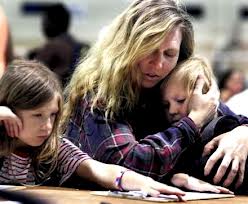 For many single Mothers – it is about going without and wait listing. “As the rules go when it comes to subsidized childcare, first you have to get the job, than the subsidy, it is unnerving to say the least. And so I did, I was offered an amazing opportunity in my new field, a chance to build upon my future, provide for my child, and make a difference in my community. Right away I looked into childcare, a before and after school program at her school Tom Thomson Public School, wait listed, then called about getting it subsidized, that too, wait listed. And again I said in frustration, what am I supposed to do? And again came the Ontario Works Speech.
“Constantly mothers are expected to make the choice between work and a better future and our children’s well being, why? I hate living in poverty, I hate what stress has done to my life and to my child’s life, I hate that time and again my sweet child has approached me with sad eyes and her piggy bank trying to make my life easier when it is my job to make her childhood wonderful and carefree.
“I believe in responsibility, both to ones work and to our families, but why does it always have to be a choice. Women make up the largest percentage of underpaid, minimum wage, part-time employees because we feel the greatest responsibility to provide and protect our families.
 Beth Hudson formed INCITE – had to close it down because they could not get charitable status without which donations just did not flow. Beth Hudson launched INCITE A Single Moms Support Group. Single moms are women-in-need; generally living at or below the poverty-line; that have been left alone to fend for themselves with little to no support.
INCITE offered a variety of programs to help these women make informed choices, learn, grow, have fun and give back with their Affordable Advice Program. INCITE had a team of over 50 volunteers, including professionals, that helped, offering one-on-one counseling in areas of financial, legal, mental health.
INCITE had a very exciting and rewarding short tenure helping single moms, but unfortunately, after almost 4 years in operation, INCITE had to close its doors. The nail in the coffin was being declined as a charity from Ottawa. They felt, “There was not a specific need for Single Moms.”
Delmore explains that “we need help, we need more support, and we need to feel that there is hope, that our children do not just deserve better but that they have a right to better, the question is, is who out there is going to help give us a means to do this? Child care services? Employers? Government services? Maybe more Pressure on our male counterparts?
“I am sick of relying on a subsidy that is never there when it’s needed, and being unemployed or underemployed. At this point I am in heavy debt due to student loans, and I am not sure how my bills are going to be paid. I am not searching for temporary solutions but rather long term ones, and I am sure  that I am not the only one who is frustrated with a faulty system! I believe that someone needs to look at the personal side of single parent issues, ask single parents what they want, and work towards making changes.” that I am not the only one who is frustrated with a faulty system! I believe that someone needs to look at the personal side of single parent issues, ask single parents what they want, and work towards making changes.”
By Ray Rivers
October 31, 2014
BURLINGTON, ON
The term ‘terrorism’ has become almost meaningless today since western leaders apply the label to almost any act of violence, particularly those committed by followers of the Islamic faith. According to dictionary.com, terrorism is “the use of violence and threats to intimidate or coerce, especially for political purposes”. The PM has called the killing of our soldiers by Michael Zehaf-Bibeau and Martin Couture-Rouleau terrorism.
 Michael Zehaf-Bibeau running into the House of Commons with a rifle. But is it really? Sure, these guys were two socially disaffected young men looking to do something noteworthy with their otherwise wasted lives. But no connection has been made between these criminal acts and ISIS, nor of an orchestrated ISIS terror campaign in Canada. It is unlikely that these two deadbeats believed they alone could change Canada’s foreign policy just by killing some soldiers here at home.
There is no question that Canada’s military involvement in Iraq was the spark which ignited the violent actions. But these were desperate acts by ‘lone wolves’ frustrated with the policies of their country and its leadership, and wanting to fight back somehow. Labelling these events as terrorism will not absolve the PM of his responsibility for our safety.
When he enacted the Safe Streets and Communities legislation a few years ago the PM assured us of our security. But now he is going back to the well and dredging up something as scary as permanent martial law, restricting our individual freedom and civil rights. Giving new powers to law enforcement agencies makes little sense when we consider that the perpetrators of these crimes had been in the cross-hairs of the RCMP and CSIS for some time. And wasn’t this the PM who abolished the long gun registry, thus enabling the uncontrolled proliferation and use of illegal firearms, like the one that killed Cpl. Nathan Cirillo?
Before he draws up new laws the PM should first consider his rush into the undeclared war on ISIS. Going to war is always a serious matter. For starters, there needs to be a defensible rationale for going to war. But Canada was neither attacked nor seriously threatened by ISIS (or ISIL). Offensive military action in the absence of these conditions is in contravention of the UN charter and thus illegal. So under what authority are we putting Canadians into harms’ way?
Of course ISIS is a nasty organization and its goal of establishing statehood is a concern. But there are so many other disagreeable people out there. And Canada has no ‘dog’ in this fight, unlike the US which had been an occupying power. We haven’t even suffered reporters beheaded by ISIS. And finally, the US has more than enough military equipment already there to bomb the dwindling number of ISIS targets onto oblivion. They don’t really need us.
 Canadian CF 18 aircraft now in the Middle East Still, our Gunslinging PM decided we need to hop into this fight. Without a game plan, without a plausible rationale for involvement, and without even a modest consultation with Canadians, he rushed into war. Ground forces were on their way to Iraq before the PM even made it home from the NATO meeting where this issue was a side-topic. Then, using his majority in Parliament, he rammed through a dispatch of fighter jets, against a united opposition here at home.
When a a nation goes to war it needs to secure its home-front as well as the war-front. War requires additional resources be expended, including funding to beef up national security and prevent the very kind of incidents we have just witnessed. It is clear, sadly, that the PM never anticipated any domestic blow back from his actions, nor provisioned for enhanced domestic security. As I noted in an earlier article, he probably just saw this escapade as target practice for our fly boys, in a warmer climate with real people as targets.
 The official opposition party had voted against sending the fighter jets without a more detailed discussion and a game plan. The third party had argued that Canada would have been more useful providing enhanced humanitarian aid. The PM would have done well to have followed their advice. The official opposition party had voted against sending the fighter jets without a more detailed discussion and a game plan. The third party had argued that Canada would have been more useful providing enhanced humanitarian aid. The PM would have done well to have followed their advice.
November the 11th is Remembrance Day, and this year there will be another two soldiers to remember, and we will. But we should also not forget that this might have been avoided had we been just a little less eager to send our troops off to war – or at least done our homework before undertaking the mission. Isn’t that what Remembrance Day is supposed to be all about?
Ray Rivers writes weekly on both federal and provincial politics, applying his more than 25 years as a federal bureaucrat to his thinking. Rivers was a candidate for provincial office in Burlington where he ran against Cam Jackson in 1995, the year Mike Harris and the Common Sense Revolution swept the province.
Background links:
Not Terrorism Terrorism or Mental illness More Spying More Security
Unknown Gun Canada’s Role in the World Middle East Interventions
ISIS in Canada
Lone Gunman More Restrictive Laws Video
More Police Powers
By Walter Byj
October 28, 2014
BURLINGTON, ON.
I did make a mistake by saying that 80% did not vote for Blair. It should have read 70%.
29% did vote for Blair.
Walter
So who is the winner in an election that has 10 candidates? By our current rules, the candidate who gets the most votes wins. No argument. In ward 6, Blair Lancaster got the most votes, 2087 which was 445 more than the next candidate, Angelo Bentivegna. So clearly, she was the candidate that won.
 But what about the electorate, did they win? The 2,087 votes that Lancaster received represented 29.8% of all votes cast. This meant that 70% of those who voted did not want Blair Lancaster to represent them at council. In fact taking it a step further of the 22,579 voters eligible in ward 6, only 9.2% voted for Blair. Now perhaps it is unfair to include non voters in this review, but wasn’t ward 6 ripe for change? Or did the pundits get it wrong? But what about the electorate, did they win? The 2,087 votes that Lancaster received represented 29.8% of all votes cast. This meant that 70% of those who voted did not want Blair Lancaster to represent them at council. In fact taking it a step further of the 22,579 voters eligible in ward 6, only 9.2% voted for Blair. Now perhaps it is unfair to include non voters in this review, but wasn’t ward 6 ripe for change? Or did the pundits get it wrong?
With a turnout of 30.9%, many in the ward appear to be pleased with their current Councillor and decided not to vote. But that does not discount the fact that of those who voted, 70% wanted change.
So how can Councillor Lancaster make the electorate winners also?
Well how about a town hall meeting where the electorate can voice their opinions. Lancaster is guaranteed the job for the next 4 years so why not reach out to the community and learn how to serve them better. Lancaster doesn’t have to take this route, but it would be the kind of good gesture that would allow those who did not vote for her feel they are still being represented
Perhaps specific committees could be formed within the riding that could assist in developing solutions to some of the problems? Ward 6 is a large geographical area with issues unique to select different parts of the ward.
Or will Lancaster feel that the election is won and will continue to be the Councillor that she has been for the past four years? Time will tell.
 Walter Byj has lived in Burlington for more than 25 years. He lives in ward 6 Walter Byj has lived in Burlington for more than 25 years. He lives in ward 6
 By Pepper Parr By Pepper Parr
October 26, 2014
BURLINGTON, ON
It isn’t always about who wins – it is often about how much they win by.
Looking at the Council you are going to elect on Monday – some thoughts on what to look for.
Ward 1
If Rick Craven gets anything less than 80% of the vote – his grip on Aldershot will not be what it was. Watch for the vote count Gary Milne gets.
 Councillor Meed Ward Ward 2
If Marianne Meed Ward falls below 70% of the vote – she has a problem
 Ward 3 Councillor John Taylor . Ward 3
If John Taylor gets less than 85% – take that to mean there is a change in the wind.
 Will Councillor Jack Dennison have more time to skate? Ward 4
Dennison could be gone – but it might prove to be a very tight race. The Roseland people exert a lot of clout. If Gottlob was able to penetrate the community south of Upper Middle Road as well as the community between Prospect and New Street Jack Dennison is in trouble. Total tossup in ward four.
Ward 5
 Will Councillor Paul Sharman return to the world of numbers? Sharman could be gone – this will be a close race with the difference between Sharman and Smith as low as 50 votes.
Ward 6
The question isn’t will she win – it is can she win? As to who might replace Lancaster – it’s pretty much a guessing game. The South Asian community could have taken the seat but they put up three candidates who did nothing but squabble with each other and lost the credibility they had. The police are currently investigating the behaviour of one candidate – we know – they have asked to talk to us about some email that was sent.
While Vanessa Warren is as good as they get – does she have the reach into Millcroft and Headon one needs to win?
Does Angelo Bentivegna have the reach into both the Alton community and north of Dundas to make it past the post first? There are too many people in his home community for him to pick up what he needs there.
 Will Ward 6 Councillor Blair Lancaster have time to take up flying lessons? Can Lancaster hold onto enough of her core vote to slip through the middle? It is very tough to get a bet on Lancaster holding her seat.
And where will Jennifer Hlusko land? She had by the far the best mind of the lot – almost too smart for the job. Did she pick up any traction? Will her school board tenure work for her?
And finally – what will Jim Curran end up with when the votes are counted? He believes he has solid support within the Hindu community – will they put their X beside his name? It is a secret ballot.
For Mayor Goldring this election is going to be the equivalent of a performance review. He will still drive the car the city provides him in December. What will be interesting to see is how deep a bite Peter Rusin takes out of his hide.
 The Mayor will still have his bling Tuesday morning – it just might not be as shiny If Peter Rusin picks up more than 30% Rick Goldring needs to re-think the way he serves this city as Mayor. Anne Marsden might get 10% – probably less. The Marsden’s asked good questions and were spot on with several of the issues they brought forward.
Rick Goldring does not want to be at the 60% level.
 The election results will be available on the “front page” of the Gazette. Just click on the icon and check out the different ward results. The election results will be available on the “front page” of the Gazette. Just click on the icon and check out the different ward results.
We were not able to include the school board results in our reports. It was a matter of time and resources.
Gary Carr will still be Regional Chair on Tuesday.
By Pepper Parr
October 24, 2014
BURLINGTON, ON.
Ward 5 Councillor Paul Sharman Ward five Councillor Paul Sharman, complains that the media were not able to act as a viable conduit through which to convey information in a reliable way but after an article that summed up his performance during his first term of office, Sharman asks that we clarify several points he has made in the past – and which we have reported upon.
He want the Gazette to address:
1: A Region Wide Flooding Study.
2: The 100% cost coverage for the short term remediation of about 100 homes in high risk flooding areas.
3: The staff direction he brought forward to waive building permit fees to flooded homes for installation of backwater valves and sump pumps.
4: The many hundreds of emails to Ward 5 home owners communicating on a one on one basis rather than through other forms of communication, because the media were not able to act as a viable conduit through which to convey information in a reliable way.
First: the staff direction I asked the Mayor bring forward to Region Council July 9th via Public Works Committee on July 2nd. I spoke to the direction at both committee and Council and in each case it was passed unanimously. Here are the details:
THAT staff be directed to undertake a Region-wide study, in consultation with Conservation uthorities and Local Building Departments, to identify causes and potential remedies with regard to historical basement flooding and that this study identify the factors that contribute to the basement flooding events and possible remedies, including capital projects on the public side as well as private side solutions and the feasibility of ordering changes on private properties to ensure separation of storm water and wastewater discharge systems.
THAT staff report back to Council summarizing the results of the study by June 2015.
Sharman was very active in his work with 40 homeowners that were flooded on May 13th in Ward 5. This culminated in a meeting of 80 home owners with Public Works Commissioner, Jim Harnum on July 31 at Appleby Ice.
All work that was done led to a clear awareness at the Region and City that clusters of Burlington homes have flooded multiple times over the last 40 years. All 40 homes flooded again on August 4th, only 3 times worse. At the August 14th special meeting of Council a memo was approved:
Be It Therefore Resolved that the Council for the Corporation of the City of Burlington respectfully requests Halton Region give immediate priority and attention to address the sanitary sewage issues of those residents who have experienced flooding and significant property loss and damage on multiple occasions including but not limited to May 13, 2014 and August 4, 2014;
At that same special Council meeting on August 14th Council passed a motion Sharman put forward to:
Direct the City Solicitor and the Director of Planning and Building to investigate the implications of establishing a program to assist homeowners with the cost of building permit fees payable under Building Permit By-law 52-2012 and; Direct the City Solicitor and Director of Planning and Building to report back to the September 8, 2014 Development and Infrastructure Committee meeting outlining details of the program for qualifying homeowners which will include the following conditions:
a) The subject property qualifies for the Ex-Gratia Sewer Back-up Flooding Grant Program offered by the Region of Halton; and
b) The subject property experienced basement flooding as a result of the extreme rainfall on August 4, 2014; and
c) The application for a building permit is received prior to December 24, 2014; and
d) The permit applied for is for the installation of an approved backwater valve and/or weeping tile disconnection from the sanitary system and the installation of a sump pump.
Neither the Region nor City staff provided names and addresses of homes/homeowners who flooded on either May 13 or August 4th for “privacy” reasons. With the help of a dozen volunteers I held 12 neighbourhood meetings, one of which you attended, which were advertised by flyers being placed in hundreds of homes mailboxes and posted on lamp posts. In addition I spoke to over 300 home owners in the three weeks immediately following August 4th on the phone.
 Councillor Paul Sharman tends to be very direct. Here, in the blue shirt, he makes a point during the Strategic Plan meetings in 2011. Most people would see all this as part of a day’s work for a city Councillor. Paul Sharman wanted us to bring it to your attention.
We do want to point out that the community meeting we did attend was one at which we were told very clearly that we were not welcome.
Media cannot do their job if they are not informed – and for the most part Councilor Sharman doesn’t inform. Today he did and we pass along his achievements.
Related articles:
Paul Sharman: an assesment
Ward 5; potential and problems.
By James Smith
October 24, 2014
BURLINGTON, ON
The Red Cross identified more than 200 homes that were severely damaged. The city asked the Burlington Community Foundation to take on the task of raising funds from within the community and handle the processing of flood relief applications. Aid is available only to the people who had no insurance or were under insured. Many of those who did not have insurance were unable to buy insurance because of past flood claims. To date there are something in the order of 40 applications received by the Community Foundation. James Smith knows of at least five people who do not understand the forms and believes there are others. He wants the city to lend a hand.
Open Letter
Mr. Patrick Moyle, Interim City Manager, The City of Burlington
As you may know I am a candidate for Burlington’s Ward 5 in Monday’s municipal election but this is not a political message. Rather this is an urgent request to the civic administration, on behalf of the many people who have had their lives and property damaged by the storm of August 4th.
The City of Burlington needs to help, advise and offer direction on the process of how to make claim through the Ontario Disaster Relief Plan (ODRAP) that the Burlington Community Foundation (BCF) is managing.
The process is almost unknown to a large number of residents who had their homes damaged by the events of August 4th. The form, as developed by the BCF may be thorough, but is only readily available from the BCF’s website, and many seniors do not readily have access to the internet, the form is also 13 pages long and fairly complex. Add to these hurdles, the process is not well understood by many.
Here’s what thousands of residents of Burlington’s South East need, and need right away:
Train a handful of City Staff, (15-25) from any department, and familiarized these City Staff members with the ODRAP process, the forms produced by the Burlington Community Foundation (BCF) and how to fill out the forms and how to deal with questions from those who will apply.
Organize staff into teams to hold small scale meetings in a large number of locations across the South East of the City, in City facilities but also in non traditional locations such as: Places of Worship, Stores, Restaurants, Work Places and even private residences.
Use whatever means possible to let those who’ve been damaged know about when and where meeting will take place. Do not simply rely on Advertising in local media and city websites and social media. Old school methods should include flyers, door-to door canvas, mobile signs and posters on utility poles.
Organize meetings that are part information and part working meetings with greeters directing the public to either information or intake workers.
These meetings need to be working meetings that focus on having these members of city staff to assist residents fill out & and accept forms and documentation, and follow-up with those who apply or who need further information.
As a city, I feel we owe this kind of effort, at the very least, to those in our community who have been damaged by the events of August 4th.
I trust you agree with me and will find the resources to accomplish this without delay or direction from council because; it is the right thing to do.
By Pepper Parr and Walter Byj
October 24, 2014
BURLINGTON, ON.
Although his venture into local politics was somewhat by accident, the past four years have whetted his appetite and he now wants an additional four more years as the Councillor for ward 5.
 Paul Sharman served on the Shape Burlington Committee along with Lancaster. He was a bit of a “bull in a china shop” with that organization and brought the trait along with him when he got elected to Council. In a recent conversation with the Gazette, Paul Sharman reflected on his current term and shared his thoughts for the future of Burlington. With the analytical mind of an accountant (he was in the top 100 influential people in American accounting circles for the years of 2005, 2006 and 2007) and a strong advocate of a strong and sustainable community, Sharman continues to weigh the practical vs idealistic.
He was against the changes proposed for Sherwood Park in its bid as a training field for the Pan Am Games as he believed it would bring more light and noise pollution to the neighbourhood.
He also wants to remove any plans that would extend Fairview Street to Burloak as this could potentially stream additional traffic into the neighbourhood. Ward five is now facing aging infrastructure in both its roads and facilities.
Although Centennial pool has been modernized, the Skyway Arena requires a badly needed facelift. And the local Lakeside Plaza needs renovating, but that is a private matter.
 As the communities to the north and east of Burlington keep expanding, fiscal sustainability and community management should be a major focus for Burlington. Although Burlington will experience minimal population growth relative to the other municipalities in the Region, the half a million additional neighbouring residents could easily put a strain on our infrastructure through attending our various festivals or the increase of our commercial base. As a member of the Burlington Economic Development Corporation, Sharman is committed to bringing business growth into Burlington and wants to ensure that the added traffic can be handled. As the communities to the north and east of Burlington keep expanding, fiscal sustainability and community management should be a major focus for Burlington. Although Burlington will experience minimal population growth relative to the other municipalities in the Region, the half a million additional neighbouring residents could easily put a strain on our infrastructure through attending our various festivals or the increase of our commercial base. As a member of the Burlington Economic Development Corporation, Sharman is committed to bringing business growth into Burlington and wants to ensure that the added traffic can be handled.
Asked if the re-election of the provincial Liberal party would be an asset to Burlington, he felt that they are more sensitive to the needs of municipalities but he is awaiting the Ontario go forth strategy.
As all governments struggle to secure funds, especially municipalities, Sharman was asked if Burlington should have more taxing powers to help cover costs. An emphatic no was his response as he felt that Canadians are taxed enough already. “We need to make better use of the funds that we now have.”
 With transit in the GTA being a major concern, was Sharman favourable to the daily 15 minute GO service. In some ways he said it might be counterproductive as he wants more Burlington residents working in Burlington and not commuting to Toronto. He has the same conflict with the proposed new provincial highway through Niagara and north of Burlington. He understands the need to protect the Niagara escarpment and the unique status of the Mt. Nemo plateau, yet he worries how the huge increase in traffic along the QEW will affect Burlington. He acknowledges that different modes of transport should be studied, but we still seem to be an automobile based society. With transit in the GTA being a major concern, was Sharman favourable to the daily 15 minute GO service. In some ways he said it might be counterproductive as he wants more Burlington residents working in Burlington and not commuting to Toronto. He has the same conflict with the proposed new provincial highway through Niagara and north of Burlington. He understands the need to protect the Niagara escarpment and the unique status of the Mt. Nemo plateau, yet he worries how the huge increase in traffic along the QEW will affect Burlington. He acknowledges that different modes of transport should be studied, but we still seem to be an automobile based society.
 Sharman and former Burlington Transit Director Donna Shepherd never did have a close working relationship. Did this contribute to her retirement? In the same vein, Sharman said “we need to come up with a better plan for Burlington transit. The current system is not effective. We need to design a system that is sensitive to the needs of our community”. New software that has been acquired by the city will enable the planners to get a better understanding of the traffic patterns of the current riders and this will enable to build a transit system that will be unique to Burlington using the proper equipment.”
Asked why the voters should return him to council, he cited his former high level managerial positions that allow him to view tasks from a macro perspective thus allowing for a better overall viewpoint.
 Frank McKeown, then the Mayors Chief of Staff explains a concept to Ward 5 Councillor Paul Sharman. McKeown was described as the 7th council member during the Strategic Plan sessions. He is now the Executive Director of the Economic Development Corporation of which Sharman has been a city representative Responding to a fanciful question of what would he do if a huge amount of money, with no strings attached, suddenly appeared before city council, he responded that he would initially put the money in reserves. “We don’t need more stuff” he said. Rather he would want to spend the cash prudently on projects that will continue to have Burlington remain as the best mid-size city in Canada. Spoken as a true accountant.
This ward is very healthy from a political perspective. There are now at least two grass roots groups that are angry and want to see something done. Both groups are made up of some pretty smart people who can’t be managed.
Trying to lead a community devastated by the August 4th flood, Sharman struggles to meet the needs of his constituents when he has to work with a Regional Council that isn’t all that forthcoming with information.
The grass roots groups don’t want to hear excuses – they want results and Sharman, through no fault of his own, is not able to deliver all that much. His management style makes it difficult for him to cope with people who are pressing their issue.
There are people in ward five that do not yet have furnaces in their homes and they do not know what the different levels of municipal government can do for them.
 It was Councillor Sharman who always asked the tough question. He was always very direct and had a penchant for data others at times did not understand. Sharman works as well as he can with the several community groups that have formed. These are people who are angry and want something done. Sharman often ends up differing with the people he wants to serve. His approach and style is to bull forward and get things done, however he is to a large degree stymied by the process, the difficulty getting anything from the Regional level.
Sharman held a community meeting at a local church and chose to tell media that it was a closed event. It wasn’t; he just didn’t want media in the room.
The ward has some significant issues: transit, parking, particularly in the Orchard Park community. There is a major development in the northern part of the ward that slipped out of the hands of the planning department and is now at the Ontario Municipal Board.
There has been absolutely no movement on the development potential for the plaza in the eastern part of the ward despite the significant effort on both Sharman’s part and that of senior city hall staff.
Has Paul Sharman made a difference in his ward during his first term? It is difficult to point to a list of things that were achieved. He has done better work than most of the council members have at the Region. He has worked with residents to resolve their parking problems.
Sharman speaks of his involvement on the Steering Committee of the Shape Burlington initiative but there has been precious little follow through on real engagement with the residents; Sharman isn’t an engagement kind of guy. He tends to want to lead and expect people to follow because he truly believes he knows what is best for others.
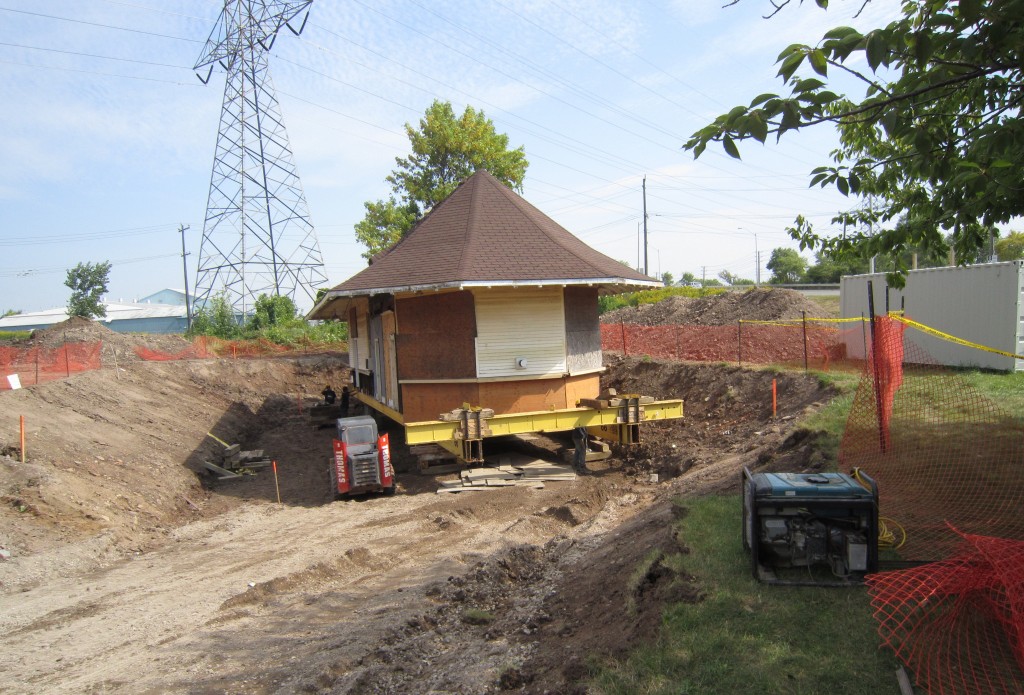 The Freeman Station – settled into its new home and now in the process of being completely restored. His handling of the Freeman station issue was as close to shameful as a member of an elected body can get. He was patronizing to most of the people who delegated on that issue. Sharman couldn’t see a way for the station to be saved; we were never sure if he wanted it saved. The previous council had federal funds to restore the structure but bickered with everyone and ended up not being able to find a place to put it. The formation of a community group that would not give up, saved the structure and today the Freeman station sits on a site beside the Fire Station where community volunteers are in the process of restoring the building. Should Councillor Sharman be re-elected one hopes that he will not take part in the official opening.
 Sharman is an avid cyclist. – “this is why I am a city Councillor of this city”. The closing note on the Sharman Freeman station position was heard when James Smith announced his intention to run in ward five; Smith was the president of the Friends of Freeman Station and deserves much of the credit for creating the team that spearheaded the drive to save the building.
James Smith is a real contender. Sharman doesn’t have the two and three term experience that other council members have – and while he has been doing decent ward constituency work – he hasn’t developed a following in the way that Meed Ward has.
During his first year on Council Sharman bullied his colleagues into a 0 % tax increase and let staff know that he was not one to trifle with.
In his second and third years he became quite a bit closer to the Mayor who came to rely on Sharman for a lot of his strategic thinking.
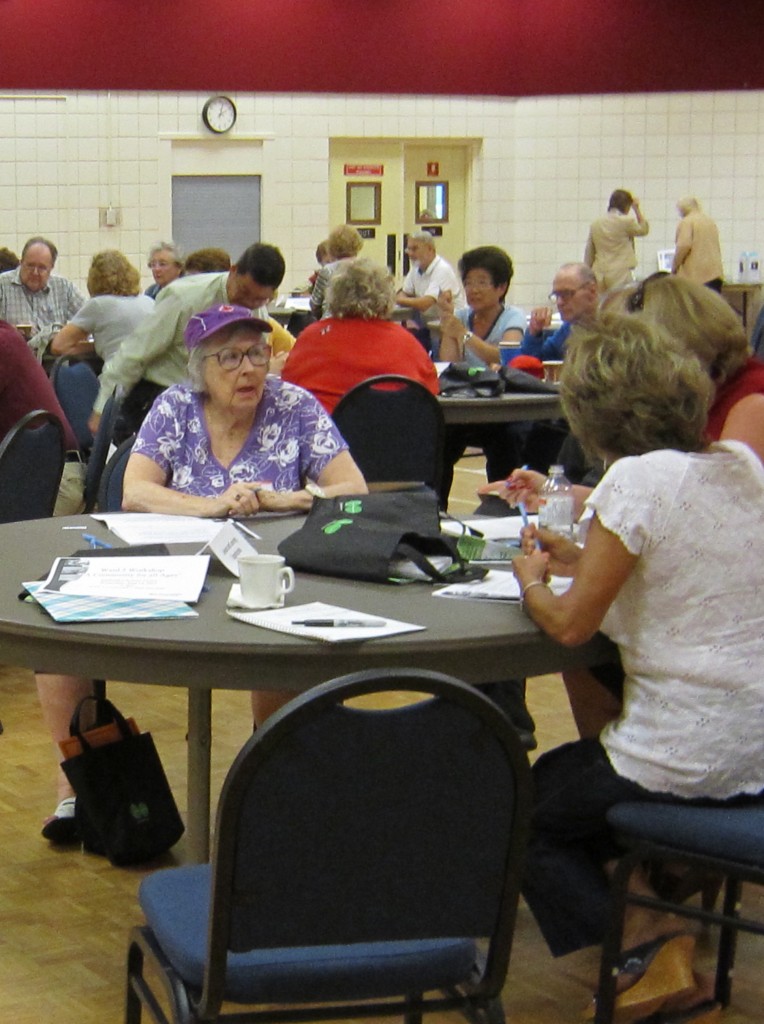 Councillor Sharman has held two public sessions with Senior’s as part of his effort to understand their needs and develop policy that Council can put in place to serve this vital community. At most of the sessions Sharman holds his Dad is often in the audience. Paul Sharman has done a lot of work with the senior’s community. He has held several town hall type meetings and gathered a lot of data – but we’ve yet to see anything concrete come out of the data collection.
Sharman has been a city member of the Economic Development Corporation for much of this term of council. He was fully aware of the problems with the Executive Director at the time but, like the rest of the board, went along with delay after delay of removing the Executive Director from office and letting the board find the direction it needed.
The executive capacity that Sharman attempts to exude just isn’t publicly evident.
In 2010 there were seven candidates. Sharman won with 1,503 votes. Cal Millar came in second with 1,327 votes. James Smith came in third with 1190 votes, Peggy Russell came in fourth with 1163 votes. Serge Beraldo, Paul Keselman and Dave Kumar all got less than 1000 votes each,
Cal Millar is now working on the Smith campaign – the bulk of those votes will probably go to Smith.
Few of the Peggy Russell votes are going to go to Sharman.
Sharman is a numbers man – “give me the data” he will bellow. The data suggests that Paul Sharman could be in serious trouble.
Related material:
Ward 5: Problems and possibilities
|
|