 By Pepper Parr By Pepper Parr
November 5th, 2016
BURLINGTON, ON
They come and they go.
The people who run the city are people we rely upon to come up with the solutions to solve the problems.
In the five years the Gazette has been reporting on this city we have seen four city managers. Currently James Ridge, a former Canadian army veteran who served in the Military Police.
 City manager James Ridge There was a point when the city had three General Managers who reported to the city manager. That level of management no longer exists and the city manager has a team of Directors who meet with Ridge as part of what he calls his Leadership Team.
And as long as you do things the way Ridge wants you to do them – you get to stay on the team.
 Retiring Director of Transit Mike Spicer on the left attends a community meeting with city manager James Ridge. One of these two is not a happy camper. Mike Spicer, Director of Transit will be leaving the tram November 18th.
The Gazette got a note from a reader who brought Spicer’s resignation to our attention. It took a few days to get comment from Spicer who we found to be usually available for comment.
We asked Spicer if there was any truth to the rumour we received.
Here is the flow of the conversation:
Gazette: Got a note from someone saying you had been shown the door.
Spicer: I was not shown the door. I resigned. Last day is November 18th.
Gazette: Where are you going and what are you going to do next?
Spicer: Seeking new opportunities, don’t have anything concrete at this moment but am looking at a few opportunities.
 Mayor Goldring reading a transit app on his cell phone. To his left is Joey Edwardth of Community Development Halton and Doug Brown – the guy who knows more about transit in the city than anyone else. He seldom gets a call. Good luck to Mike. He had a difficult job – he was expected to provide a transit service without the funds he needed and the full support of city council.
He did slip up on a number of occasions – failing to attend meetings that were put on by transit service advocates was a killer.

 By Staff By Staff
November 5th, 2016
BURLINGTON, ON
A 13 year old boy was struck by a vehicle on Friday at the intersection of Appleby Line and Taywood Drive in the City of Burlington.
The boy was on the bicycle heading northon Appleby Line within the crosswalk when a northbound white Volkswagen attempted to turn left onto Taywood Drive. The vehicle hit the male and fled from the scene.
 The bicycle driver was initially taken to Oakville Trafalgar Memorial Hospital before being airlifted to a children’s trauma centre in critical but non-life threatening condition. The bicycle driver was initially taken to Oakville Trafalgar Memorial Hospital before being airlifted to a children’s trauma centre in critical but non-life threatening condition.
A coordinated search of the area resulted in the suspect vehicle being located at a residence close to the collision scene. The driver of the vehicle returned to the scene of the collision and was arrested for failure to stop at scene of an accident causing bodily harm.
The driver was identified as 23-year-old Stephen BALON of Burlington. Mr. BALON will appear in court on December 7th at the Ontario Court of Justice, 491 Steeles Road, Milton Ontario.
The status of the bicycle rider has been upgraded to stable condition.
Any witnesses to the collision are asked to contact the Collision Reconstruction Unit at 905-825-4747 extension 5065, or Crime Stoppers at 1-800-222-8477 (TIPS), or through the web at www.haltoncrimestoppers.com, or by texting “Tip201” with your message to 274637 (crimes).
 By Staff By Staff
November 5, 2106
BURLINGTON, ON
 Spring forward – fall back. That was how I was taught to remember the change in the way we record time. Spring forward – fall back. That was how I was taught to remember the change in the way we record time.
It is fall – the leaves are turning and it is time to turn the dial on the clock back one hour before you tuck in Saturday night and enjoy that extra hour of sleep.
 Or get up at the same time and have an additional hour to get some work done. Or get up at the same time and have an additional hour to get some work done.
Whichever, make a point of enjoying the changes in the colours of the leaves on the trees – might be time for a nice drive out into the country. Escarpment is great at this time of year.
By Pepper Parr
November 5, 2016
BURLINGTON, ON
In response to the question: What happened? Ward 2 city councillor Marianne Meed Ward said she “ was hoping the discussions the city and board were having over the past year would lead toward a new MOU that would benefit both parties.
Meed Ward was talking about the significant change that has taken place in the way programs and services are being delivered at the Seniors’ Centre which is a piece of city property that the seniors use.
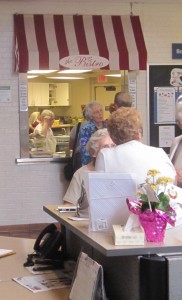 The Bistro, the heart of the Seniors’ Centre and the focal point for many of the administrative problems. The Seniors organized themselves as a not for profit – Burlington Senior’s Centre Inc. (BSCI). They elect a board which serves for a two-year period. It is that Board that has been “negotiating” with the city
There was a Memorandum of Understanding that set out who was to do what and who was going to pay what that had been put in place a number of years ago after considerable disruption and happiness on the part of the seniors.
There was a meeting a number of years ago that drew 300 seniors and they were not happy. The MOU seemed to settle things down.
Now things have flared up again.
 Joe Lamb wonders why someone didn’t call him. Joe Lamb, the person who negotiated a very fat deal for the seniors wonders why no one called him when things were going wrong.
The current president of the BSCI, a non-profit organization, hasn’t been able to make himself available for any kind of interview. Fred Hendriks issues media releases and doesn’t allow for any follow up.
Some of those with past board experience complain that Hendriks isn’t much of a communicator – they got that right.
Meed Ward adds that “With the recent change, members of the Seniors Centre should not notice any difference to services or programming.”
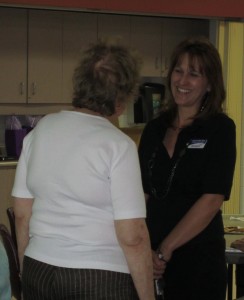 Councillor Marianne Meed Ward listening to a senior. She continues: “The BSCI now has an opportunity to chart a new role for itself serving seniors in Burlington, and I have committed to stay on the board to assist them in this transition for as long as they would like.”
Meed Ward is the city representative on the Seniors Advisory committee.
There is indeed trouble in paradise. Don’t think this story has come to an end.
The seniors are one of the few really well defined groups in the city with a lot of time on their hands. They have in the past badgered city councillors with telephone calls when they weren’t happy.
The French have a phrase for it – some things never change – Et certaines choses ne changent pas.
 By Pepper Parr By Pepper Parr
November 3, 2016
BURLINGTON, ON
Gas leaks are dangerous.
Yesterday there was a gas leak on a construction site.
The fire department and the gas company were able to get on site very quickly and shut the gas off.
A resident who was walking in the area wants to know why things like this happen.
When construction permits are issued do the contractors not know where the telephone lines are; where the gas lines are and where the water pipes are?
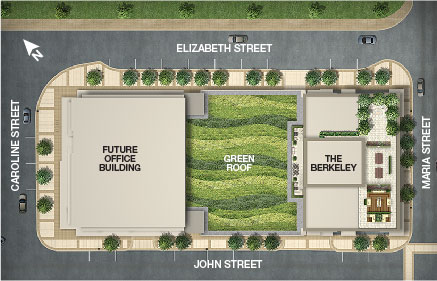 The project has been a long time getting to te point where the shovels were in the ground. within a week something struck a gas pipe line shutting down the immediate area for several hours. Fast work on the part of the fire department and the gas company averted a disaster. Our resident wants to know: What is the procedure at The City of Burlington going forward with the developer who put Downtown Core residents and businesses in jeopardy yesterday when a gas pipe was ruptured during construction at Caroline and Elizabeth Streets?
She was walking by the site when the gas pipe was hit and the concentration of gas permeating the air was dense and made it difficult to breath. She didn’t know how gas pipes and pressure work when there is a rupture, but there was gas filling businesses on Brant Street. Wardell Insurance had all of their doors open as their building filled with gas; this building is directly across from City Hall. I observed firemen taking gas readings as far south as James Street.
How is it possible that a builder can still rupture a gas line in the middle of a City with all of the technology available in 2016 for pinpointing exact location? This site is bordered by an apartment building, town homes and businesses in a highly populated and travelled part of our downtown community.
 Medica One or the Carriage Gate project – pick the name you like best – will go up at the top of John Street and consist of a medical offices building, an above ground garage and an apartment/condo complex. It will bring significant change to the intersection and drive redevelopment of the plaza to the immediate north, A transit hub a couple of blocks to the south then makes a lot of sense. Is this developer capable of safely building a safe building in our midst? What are this developer’s credentials? Has this developer ever worked on a project of this scale? This is a disturbing start in the early stages of a multi-year construction at this site.
Does the developer pay the thousands of dollars for the emergency response personnel that were on site for the many hours that it took to secure the area and stop the gas leak? Is there any consideration for the businesses that either had to be evacuated or suffered loss of business?
It is absolutely terrifying to consider the consequences to our downtown community had the gas ignited.
All good questions. Watching for the answers.
By Pepper Parr
November 3rd, 2016
BURLINGTON, ON
The first two of seven meetings that will take place at each of the high schools in the city were held at Bateman and Nelson.
The Director of Education, Stuart Miller and a number of his staff gave an hour long presentation to six people at the Robert Bateman high school, zipped up their briefcases where they did the presentation a second time to 12 people at Nelson high school.
These meetings were not a required part of the Program Accommodation Review the Board of Education is going through. “It is not an easy time” said Miller
 Joey Edwardth, President of Community Development Halton with Director of Education Stuart Miller – she has the data he needs. Director Miller and the General manager of the Board shared the delivery of the presentation – they were laying out the facts as they understood them.
And the facts are critical.
There are far too many seats in high school classroom that are empty and that just isn’t sustainable.
Miller said the city has one and a half too many high schools – and to make matters worse the capacity the board has it at times in the wrong place.
Unfortunately the Board has known about this for some time. This problem first appeared on their radar screens back in 2013
 The city of Burlington doesn’t have a demographer on staff and apparently the Board of Education doesn’t have any of that capacity as well. Community Development Halton (CDH) has a solid team that has the data at its finger tips – but the city and the board don’t seem to know what CDH can do for them. If the problem of falling enrollment was identified in 2012 – it was in the data long before then. Of more interest to parents is the depth of the problem. Except for Hayden and Nelson high school there is not a high school in the city that is not at some risk.
Set out below is the critical data for every high school – the numbers are not nice and they certainly are not comfortable.
At the first meeting of the Board and the parents at Bateman there were six parents. Bateman is at rick – look at the numbers.
The doted line is the On the Ground capacity of the school.
The critical number is 65% of that OTG. When a school falls below that the Board of education is required to do a Program Accommodation Review.
Each year the Board does an LTAP – Long Term Accommodation study – the quality of those studies may not have been as good as they should have been.
 Central has a problem but it is not as bad as Bateman.  How did the demographers miss this one? Add to the problem is the development of a housing project in the north east quadrant of the city.  The sense seems to be that closing Pearson and sending them to Robinson will solve the Robinson problem.  At some point in time the Eaglesfield project will get developed – it looks like that is going to be a family community – will children attend Aldershot?  Bateman would appear to be more at risk than Central.
By Pepper Parr
November 3rd 2016
BURLINGTON, ON
The closing of a school is no small matter – and when it happens there is disruption at many levels – especially for the parents who have children in one of the schools that was recommended for closure.
In the Program Accommodation Review the Halton district School Board is undergoing, the Director of Education put a recommendation before the trustees that two specific schools be closed. Central and Pearson.
There are parents who wish the Director had not done so.
 Blue indicates a small school; green indicates a large school. Lynne Crosby, a parent with children at Central high school said yesterday that “They did NOT have to make a recommendation that named two schools. This shows a complete disregard for the students and staff at those two schools, plus the students in grade 7/8 and the feeder schools. The high school students at these schools have been greatly negatively affected, and in many cases their school year is tainted if not ruined.
They (the Board of Education) could have chosen option 7 which is to close no schools to begin the PAR. Or they could have made an Option 20 to close one school or two schools, particular ones to be determined through the process, and not naming specific ones.
Crosby is bothered by the rule that does not allow any questions during the presentations that are being made to each high school. “We can’t ask him this question because they don’t allow questions. What a farce. I doubt they are taking questions from the media either, but this is a point that should be raised, since they keep giving us this line about how they had no choice.”
“One thing that really bothers me” said Crosby, “is them saying how they had to make a recommendation, as if their hands were tied by the Ministry rules. All the board had to do was ask the trustees to decide if they wanted to do a Program Accommodation Review to begin the process.
The Board did produce a report that had a recommendation – which is all it is at this point in time.
 Doesn’t take a rocket scientists to figure out that there is a problem. The enrollment numbers to show that there are far too many seats in the high schools that have not been filled.
By Pepper Parr
November 3rd, 2016
BURLINGTON, ON
The city manager now has a Senior Manager, Government Relations & Strategic Communications to help him get through a day.
Mr. Kwab Ako-Adjei advised us earlier in the week that: “Following a lengthy internal review we have decided not to renew our partnership agreement with the Burlington Senior’s Centre Inc. (BSCI) which will therefore conclude our relationship.
“Through the review we were able to determine that we have the capacity to deliver all the services directly, including those delivered by BSCI. This conclusion in our relationship will have no operational impact on service to the 3800 members of the Seniors Centre. All the programming members have come to enjoy will remain the same including the operation of the Bistro and organization of the day trips. In short it will be business as usual at the Seniors Centre with no changes.”
It is clear now that the internal review was done at city hall with next to no input from the seniors or its board. Fred Hendriks thought they were getting ready to “begin” talking about changes.
In his statement said: “The City and BSCI have been in discussion for many months about BEGINNING negotiations to renew the MOU. BSCI is disappointed that the City chose to end the relationship in this premature and disappointing manner without any BSCI consultation.”
The city decided to just pull the rug from underneath the BSCI board and just tell them that there had been a change in command.
They were given six days’ notice before the locks were changed as it were. Hendriks reports that “On October 26th, 2016 the City notified BSCI that it would assume these responsibilities as of November 1st, 2016.
 Chris Glenn, Director of Parks and Recreation was reported to have never been happy with the Memorandum of Agreement the city signed. The Parks and Recreation people that are part of the city managers leadership team should have explained that the seniors have to be handled just a little differently – and we might add – with a little more respect.
Are there some of the old arbitrary ways creeping back into city hall?
Mr. Ako-Adjei added that the BSCI Board has not dissolved, the Board is an independent not-for-profit so the City has no authority to dissolve them.
While the board itself may not have been dissolved – the use of the Board Room has been taken from then. The only thing they are able to do is complain.
It was the very loud complaining six years ago that led to the signing of a Memorandum that turned over the running of the operation to the seniors.
There were people within the Parks and Recreation that didn’t like that arrangement which led to the review.
The biggest problem area at the time was the kitchen. In many ways it is the heart of the Centre. They call it the Bistro and is run jointly with the city. The one employee is on the city payroll, mostly because the Centre doesn’t have anyone who can process a payroll and ensure all the proper deductions are made.
With the kitchen manager on the city payroll – the city wanted to ensure they had the required oversight and that was the problem – the seniors didn’t want the city getting involved in the running of the kitchen and the city didn’t want to be in the kitchen either. When there is any food handling involved the city out sources the work.
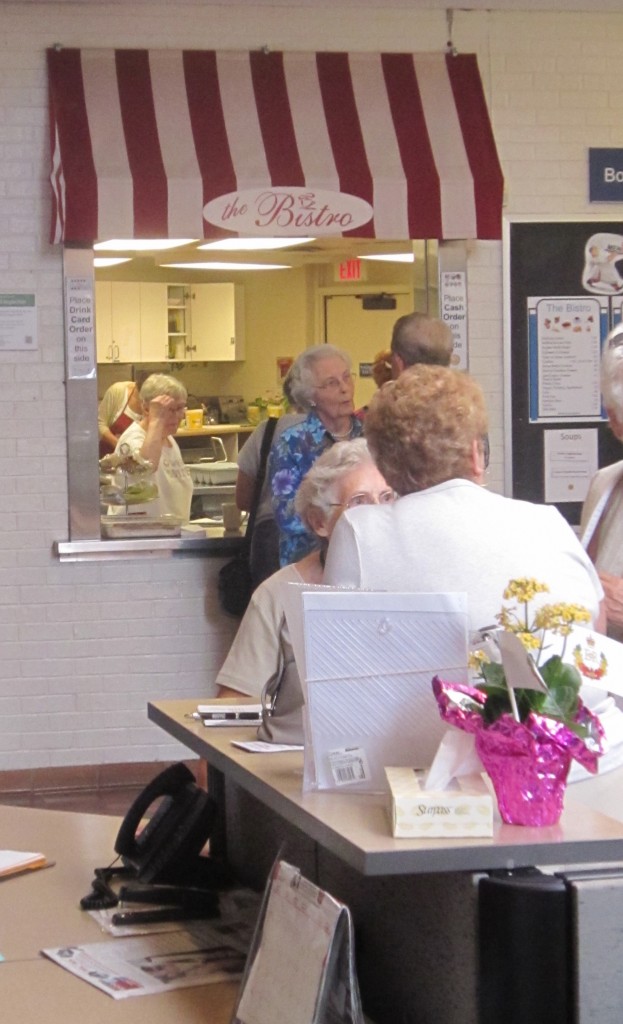 The Bistro, the heart of the Seniors’ Centre and the focal point for many of the administrative problems. The 2012 agreement with the city didn’t resolve this problem but they have agreed to give it a year to come up with a solution that works for everyone. They had a neat little kitchen operation and they wanted to keep it that way. Fine said the city but if the employee is on our payroll there is some liability that lands on the city’s desk and if there was going to be liability – the city wanted control, or at least enough control to be able to manage the problems when they crop up.
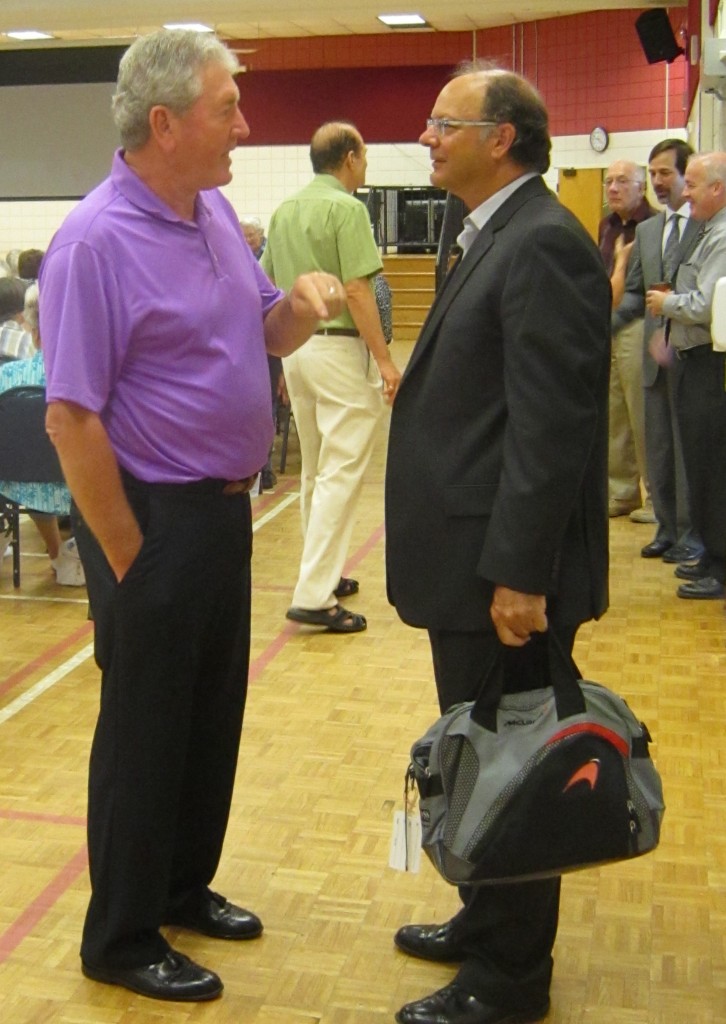 Former City manager Jeff Fielding didn’t win this time. Joe Lamb, negotiating for the Seniors’ Centre basically took Fielding to the cleaners with the deal he talked the city into. And that is where the working relationship between Lamb and Fielding, the city manager came into play. They agreed that an agreement was necessary but they didn’t have one – so they would agree to work together with the revised MOU for a year and during that time let experience and time get put to use to find something that works for everyone.
The reality of this is that the employee is on the city payroll in a building the city owns – that boils down to the city having the final word. That is something the seniors are going to have to accept. Fielding just has to find language that keeps the seniors happy. The seniors all recognise the phrase “a spoonful of sugar helps the medicine go down” and they have a year to figure out just how much sugar is going to be needed. The city doesn’t appear to have too many problems spending money on seniors.
Five thousand for incorporation, $9,000, give or take a couple of hundred for insurance – tasting pretty sweet at this point.
The BOM (Board of Management) owns some of the equipment in the kitchen, the city owns the rest. BOM reimburses the City for Maria’s costs and any profit or loss for the kitchen goes to the BOM
The kitchen is rented out many times in the evening and weekends by the city. Both parties share keeping the place clean and for the most part the city is responsible for bigger maintenance and capital items. It is a unique arrangement which seems to work.
BOM doesn’t want to take over the operation of the kitchen; to do so would mean taking on the same contingent liability. The Board turns over quickly with only 2 year terms, and although have some kitchen knowledge there are no assurances that this will continue in the future.
 More than 150 members showed up to learn about the new agreement with the city in 2012. The first meeting to explain the problems drew 300 +. City hall just might hear from these folks again. That’s where things were left five years ago – something went wrong – was it with the city or were there problems with the board that was running the place – there were some personality conflicts with one particular member of that board – was that enough to scrap the relationship and begin to treat the seniors like children that can’t run their own affairs?
 By Pepper Parr By Pepper Parr
November 3rd, 2016
BURLINGTON, ON
The Art Gallery of Burlington is announcing innovative program after innovative program while the Performing Arts Centre continues with its ongoing production of musical chairs.
 From the left, chair of the Burlington Theatre Board, Ilene Elkaim, former Executive Director Brenda Heatherington, former Executive Director Brian McCurdy and former Executive Director Suzanne Haines. McCurdy is back in as interim Executive Director. The best executive director the place ever had is back in the saddle – Brian McCurdy gave the place stability and some of the best programs that have graced the stages.
He did more with the community than anyone else but home was in Kingston and that was one hell of a commute.
So McCurdy left and they brought in a woman from Richmond B. C.; that didn’t work out and she went through the revolving door.
 Former Executive Director Suzanne Haines chatting up a theatre patron. Shortly before Suzanne Haines lost the title of Executive Director, the best person the place ever had doing marketing and promotion decided she too wanted to move on. Hillary Saddler got the call to come back – quick and do what she and McCurdy had done so well in the past.
Don’t however look for anything in the way of news from either the Board of the theatre operation or from the people who run the place day to day.
Events are booked and the task now is to try once again to find just the right person to lead the operation.
 Brian McCurdy listening as he is lauded during his first retirement party. He is back in as the interim Executive Director They want to look into cloning Brian McCurdy and also to learn how to communicate with the people who put up the dollars to get the place built.

There was an error in the report on the delegation the Director of education is making to city council
The Stuart Miller delegation will be to the Corporate and Community Services Standing Committee were he will have ten minutes to tell his side of the story.
The corrected story is at:
This guy is going to get more than the standard ten minutes to delegate before a city Standing Committee.
By Pepper Parr
November 3rd, 2016
BURLINGTON, ON
School Board Director of Education Stuart Miller isn’t getting home for dinner very often this month.
 He is committed to being in front of high school parents and has added to that the desire to delegate before the Community and Corporate Services Standing Committee at council next Monday where he will delegate on the Halton District School Board’s Secondary School Program and Review (PAR) Process. He is committed to being in front of high school parents and has added to that the desire to delegate before the Community and Corporate Services Standing Committee at council next Monday where he will delegate on the Halton District School Board’s Secondary School Program and Review (PAR) Process.
The delegation will outline the process for a program and accommodation review, including timelines and consultation.
 While the school board and city play the biggest roles in the daily life of citizens in the city (well maybe waste removal – a Regional responsibility – fits in there somewhere) the city and the school board rarely meet in any formal fashion. While the school board and city play the biggest roles in the daily life of citizens in the city (well maybe waste removal – a Regional responsibility – fits in there somewhere) the city and the school board rarely meet in any formal fashion.
They are their own fiefdoms.
The school board is shaking up every household in the city with their requirement to go to the parents and talk about closing high schools.
The city gets this kind of feedback when it want to close an arena or a swimming pool – so they both have experience dealing with the public.
The public would say that neither are very good at communicating. For the record the school board is putting itself in front of people.
At city Standing Committee meetings delegations are limited to ten minutes – watch how quickly that gets waived.
The Board of Education isn’t allowing Q&A at its meetings with parents – but at city council meetings Councillors can ask questions. Parents might want to lobby their member of council to get some answers.
The biggest issue we hear from parents is that the school board doesn’t appear to be thinking in terms of “community” – focusing instead on what they can do for the students. Parents want to think in terms of how community can be retained.
Union Gas has stopped the gas leak on John St.
The Burlington Fire Department and Halton Regional Police Service are opening streets and access to evacuees as of 2:30 p.m. today, Wednesday, Nov. 2, 2016.
By Pepper Parr
November 2, 2016
BURLINGTON, ON
With stories like this – the opening sentence is usually – Trouble in Paradise.
The Seniors are not happy – they have been stiffed by city hall.
 Joe Lamb thought the agreement he put together with the city was going to last forever. A number of years ago there were some problems with the operation of the Seniors’ Centre which got resolved when then city manager Jeff Fielding and Joe Lamb met and worked out an arrangement that kept everyone happy.
The Memorandum of Understanding (MOU) between the City and the Burlington Seniors’ Centre Inc. (BSCI) expired on December 15, 2015.
Fred Hendriks, president of the seniors’ centre organization explains that “Under this agreement BSCI, a not-for-profit volunteer Corporation had the responsibility, at the Burlington Seniors’ Centre, of running the Bistro Café, Day Trips and Events.
He adds that “On October 26th, 2016 the City notified BSCI that it would assume these responsibilities as of November 1st, 2016.
 Lead negotiator for the seniors was Joe Lamb on the left talking to then city manager Jeff Fielding on the right. The agreement they hammered out was approved unanimously by the seniors Centre membership. Now the city has decided to take over what they walked away from a number of years ago. Joe Lamb, the man who put the agreement together with the city said: “The key question is why they took this drastic step. Are they now in the food business again?
The kitchen was always a big thing to the city. They wanted out of the business at arenas because of liability, not a core competency. Seems to me they are back in the business. Didn’t the Board and the city just complete renovations in the kitchen and renew the Chef’s contract?
Are they not concerned about senior pushback? Is this Chris Glen (Director of Parks and Recreation) finally getting his way? How does the city communicate effectively with members now? Is the city now free to increase fees as they see fit? This whole issue is potentially a firestorm politically particularly if the right person steps forward to rally the Seniors in the City.
Fred Hendriks, BSCI President said in his statement that: “The City and BSCI have been in discussion for many months about BEGINNING negotiations to renew the MOU. BSCI is disappointed that the City chose to end the relationship in this premature and disappointing manner without any BSCI consultation.
The BSCI board will meet in November to discuss next steps. Their goal is to continue to be a vital organization supporting the well-being of Burlington’s diverse and growing community of seniors.
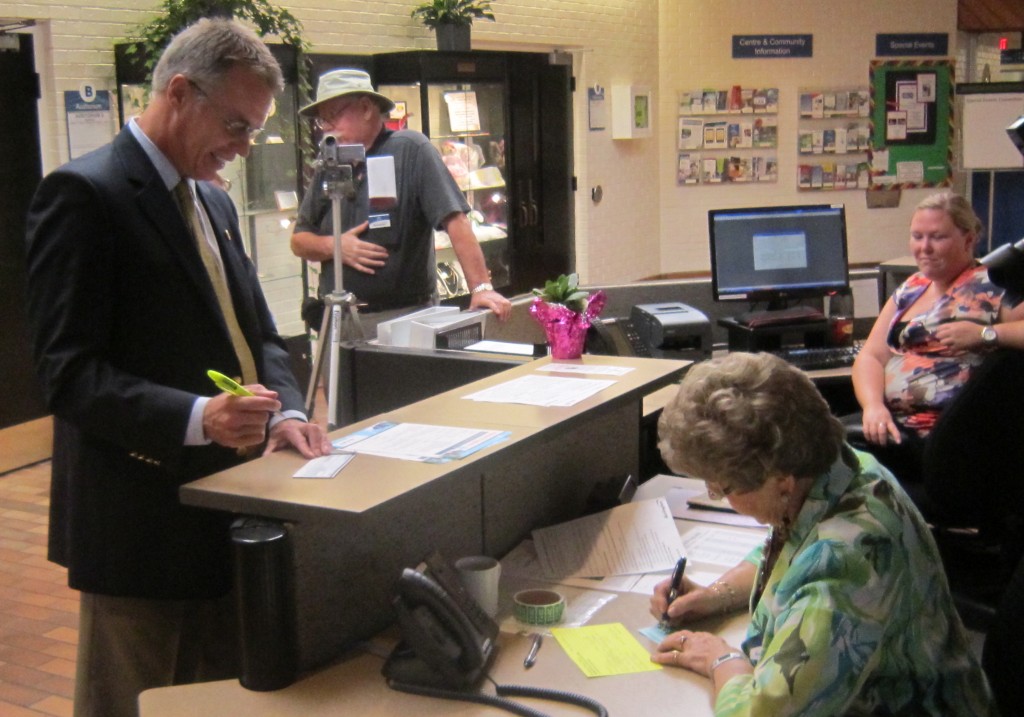 Mayor Rick Goldring signing his Seniors’ Centre membership application. Is he going to put in a good word for the seniors with the city manager? The current city manager runs the city through what he calls a leadership team that consists of all the Directors – perhaps a few other people. This matter will come before them for certain.
We haven’t seen the end of this story.
Ward 2 Councillor Marianne Meed Ward chose not to make any comment until the BSCI had made its position known. The Councillor is the city’s representative on the Senior’s Advisory Council.
 By Pepper Parr By Pepper Parr
November 1st, 2016
BURLINGTON, ON
City Council voted to endorse a report that enables the Director of Planning and Building and Chief Planning Officer to close the city’s current Official Plan Review process and start the preparation of a new Official Plan for the City of Burlington.
“With very little green field left for development in Burlington, the city is undergoing a very important transition,” said Mayor Rick Goldring. “We are no longer a city that builds new suburban-type neighbourhoods but one that is building a greener and healthier urban community for our residents. A new Official Plan is recognition of this direction and will help us lead the way in the Greater Toronto Hamilton Area when it comes to managing urban sprawl.”
 Upper Middle Road looking east towards Burloak – defined as Employment lands by the city – developer has asked that it be re-classified to residential. The Mayor’s comment appears to neglect the significant stretch of land along Upper Middle Road where it meets Burloak that the property owners wants to see converted from employment lands to residential.
Nor does he appear to be taking into account the sizable development going on now at the intersection of Dundas and Walkers line where more than 100 homes are going to be built in the North West quadrant.
And then there is Eaglesfield where the Paletta interests have plans for residential homes.
 Early drafts of the Strategic Plan had it as a four year plan. Somewhere along the way the time frame got changed. How? Burlington’s current Official Plan was endorsed by Burlington City Council in 1994. Every municipality in Ontario is required by the provincial government to review their Official Plan every five years. The current review of the city’s existing Official Plan was started in 2011.
 The strategic Plan that city council approved is now a 25 year plan. The current city council seemed to feel they could bind any future city council to this plan – doesn’t work that way. A future council could scrap the plan. “In the city’s new Strategic Plan, approved in April, Council has made the decision to protect Burlington’s rural boundary and grow in its urban areas over the next 25 years,” said the city’s director of planning and building and chief planning officer, Mary Lou Tanner. “As we reviewed the city’s current Official Plan, we realized a reset of the document was required to reflect and help guide the city’s new priorities.”
“All of the work that has been undertaken as part of the Official Plan Review process, including policy research, analysis, studies, staff reports and community feedback, will be considered within the development of the new Official Plan. The community will also have an opportunity to share its feedback on the draft policies of the new Official Plan early in 2017.”
 Not quite this bold. City has rejected the ADI development Group Nautique project – 26 storeys was just a little too much for then. “We are looking forward to getting input from the community about the policies that are being considered for the new Official Plan,” said Tanner. “Burlington is going to Grow Bold over the next 25 years, embracing density in our urban areas. Now is the time for residents to have a say and help shape their city into a dynamic 21st century urban community.”
These changes are significant – they mark an almost totally new direction for the city.
This kind of change is the type of thing a government needs to have a clear mandate from the people paying the bills – you the taxpayer.
 Director of Planning – Mary Lou Tanner. Her vision is to Grow Bold, Smart and Beautiful. We have a strong statement about the direction the city is going to take from our new Director of Planning – Grow Bold. They tested the name with the Insight panel.
There are a lot of people in the city who don’t want to grow bold.
Yes there is a Provincial Policy Statement in place that requires the city to take on more growth – but, given that the city has decided to put an end to the urban sprawl of the past – what do they want to do with the urban Sprawl that we do have?
Can’t just leave it there to rot.
And – how did this Council manage to create a Strategic Plan that has traditionally been a document that reflected what a council wants to do during its term of office.
This Council decided that they would create a Strategic Plan for the next 25 years. The problem with the document is that one elected council cannot bind a future council to a program or plan.
The Gazette doesn’t recall there being a meeting at which the decision to write a 25 year plan rather than a four year plan was debated.
 This council has approved a Strategic Plan that covers the next 25 years. The plan will not last that long. And given that the council in place now did not get itself elected on a promise to prepare a 25 year Strategic Plan or the statement that the city was going to grow Bold – it doesn’t’ have a mandate to do what it is doing.
That of course isn’t going to stop them – they are boring a head full blast.
The 2018 civic election should certainly be interesting.
There is a three minute video that hypes the GrowBold philosophy – the opening scene is of the pier – the one that cost us twice what it was supposed to cost?
Check it out HERE. – the video, not the Pier – we all know where that is.
Salt with Pepper is an opinion piece.
 By Staff By Staff
November 2, 2016
BURLINGTON, ON
They have been doing this for more than a decade – they are in their fourteenth year.
It’s a studio tour that takes place every November – this year on the 5th and the 6th. Hours 10:00 am to 5:00 pm. Bring your cheque book.
 Studio locations – you will need a full day to cover them all – and have a lunch at the same time. It is an opportunity to tour nine different studios in the city and on a few occasions just outside the borders.
         The event is free – and it is an opportunity to look a superb work done by painters, photographers, potters, stained glass artists, jewellery makers and woodworkers. The event is free – and it is an opportunity to look a superb work done by painters, photographers, potters, stained glass artists, jewellery makers and woodworkers.
The location of the studios are always well marked and you will find that you meet up with the same people and begin exchanging ideas, likes and dislikes.
There is every opportunity to buy some art. May art collectors made their first purchase at an Art in Action Tour.
It is an experience to be enjoyed.
The Art in Action Tour has set up a web site – there is more there than you will ever wants to know
By Staff
November 1, 2016
BURLINGTON, ON
A media release came in from Dennis Longchamps, Artistic Director & Chief Curator at the Art Gallery of Burlington his agile mind to things other than art.
Do you wonder he asked, what happens behind the scenes at an art gallery? Do you have a sense of adventure?
 The Art Gallery of Burlington invites you to a night of discovery with After Hours. The Art Gallery of Burlington invites you to a night of discovery with After Hours.
Beer and wine tastings – unusual food pairings– experimental music and video art – dance performance – graffiti painting – and so much more!
Tickets are limited – $50 per person includes all of the above – Must be 19 years and older. Tickets available online only: https://artgalleryofburlington.com/afterhours/
Food and drink provided by Collective Arts Brewing, Son of a Peach Pizzeria, Sunshine Doughnuts, Twist of Fate and the George Hamilton. Music and video presented by And All Was Bright.
 Trevor Copp and Jeff Fox doing their First Dance routine. Liquid Lead Dancing presented by Trevor Copp and Jeff Fox.
This could be really interesting. The media release doesn’t say if this is a one off – or if Longchamps has an ongoing program in mind.
Thursday, November 17th – 7 pm to Midnight
Midnight to 7 am would have been more exciting.
Looks like it is worth checking out.
#AFTERHOURS #REVOLUTIONAGB
A revolution at the AGB – this is Burlington you know.
 By Pepper Parr By Pepper Parr
November 1, 2016
BURLINGTON, ON
No one was sure exactly when it started – 1984 was the date that was floating around.
 The occasion is not just for the kids – wonder Mom got in the act as well. And who started it – word we got was that there was a resident who lived on the street closer to Lakeshore than New Street and that he had once owned an entertainment park and had a huge plastic gorilla that you could fill with air – which he did and stuck it out on his lawn and that started the tradition that has people on Seneca decking out their lawns which imaginative Halloween decorations.
 There is a dog somewhere that is now in therapy. The little mutt walked by this “cat” as it darted out of the leaves – th dog jumped a clear two feet into the air and fled – dragging his owner with him Some of them are very impressive – and there are a couple that I guarantee scared the daylights out of your child. There is one resident whose dog is never going to be the same after its encounter with a mechanical cat that sit in a pile of leaves and jumps out with green eyes just glaring.
Seneca has become a mecca for the trick or treat crowd.
Last night was another success. Many of the parents got themselves gussied up and made a night of it.
Set out below are what some of the home owners chose to do on Hallowe’en.
 Skull city – in the dark of the evening this must have been quite a site.  We didn’t hear any sound coming from this pumpkin – but we can imagine how it might have laughed.  It wasn’t all just for the kids – this household used the occasion to make the evening a small food drive as well.  The family collection of sombreros got put to good use. The small bags were empty – just some sand to hold them on place – we checked.  The wonder of it all for for the little people. These two were just fascinated with what they saw up and down their street.  What a good idea eh! And,except for getting permission to block cars from coming on the street for a couple of hours, city hall had nothing to do with the event. Power to the people!
 By Pepper Parr By Pepper Parr
November 1, 2016
BURLINGTON, ON
Teachers do a lot more than teach.
They are one of the sets of eyes that watch our children as they grow from that shy little girl who steps cautiously into a classroom with her Mom on that first day of school to seeing the change taking [;ace in a boy because the family he is part of is falling apart.
That teacher is the one who realizes when a student is ready for a bigger idea and knows just which book should be given to the child.
They see the student who comes to school in the winter weather with just a heavy sweater – there is no winter coat.
 She notes that the snow is deep and that boy is wearing just running shoes – there are no winter boots. She notes that the snow is deep and that boy is wearing just running shoes – there are no winter boots.
And she notes as well that on pizza days there are a couple of kids who don’t show up because they don’t have the money to pay for their pizza.
There is a group – the Halton Learning Foundation that is in place to provide some of the money needed to fill these gaps.
There are other organizations, Food4kids is one, that provides food for those that are going to go home to a house where there may not be a real square meal on the table.
Later this month the Learning Foundation will be holding their Benefit Bash. The event isn’t one of the fancier, splashy events where people get to wear that dress.
It isn’t a major event on the social calendar – but it is an important event. It raises some of the money that gets used to pay for some of the needs that students have that their parents can’t handle.
The business of taking care of these situations is always slim resources chasing growing needs.
On the 16th school day of this school year the request for funds was double what it had been the previous year at the same time. The social helpers in this city can see serious problems coming their way.
The Benefit Bash takes place November 10th at the Burlington Convention Centre.
This might be one of those places you could send a donation along to.
They will be announcing their No Student Left Behind campaign at the Benefit Bash – this is something we are looking forward to telling you a lot more about.
By Pepper Parr
November 1, 2016
BURLINGTON, ON
The winter snow isn’t even on the ground yet – but there are people at city hall planning for community garden usage next year.
 Former General Manager Scott Stewart listen to Amy Schnurr at the opening of the community garden at Central Park. Rob Peachy who played a major role in making it happen is on the far right. This is one of those programs that came out of a community initiative that took just a little arm twisting to get the city onside – but they made it work and now it is a program with four community gardens located in the city
“Next year will be our sixth growing season with the community gardens program,” said Rob Peachey, the city’s manager of parks and open spaces. “We are once again accepting the applications in November to give our gardeners more time over the winter months to plan and prepare their gardens for the spring.”
There are four community gardens residents can apply to:
• Amherst Park,
• Central Park,
• Francis Road Bikeway, or
• Maple Park
Next year’s planting season will run from May 1 to Oct. 22, 2017. There are a total of 125 plots available, which includes 10 raised, accessible plots suitable for persons with limited mobility. Applicants may indicate a preferred garden location and plot style on the application.
 Michelle Bennett paces off the distance for the Community Garden Burlington Green hopes to be able to convince the city to go along with. The BG’s got 85% of the money through a provincial government grant, and now want 15% from the city. The cost to rent a plot for the season is $50. Water, soil and compost are supplied and all plots have full sun. Plots will be allocated by lottery at the close of the application period, and all applicants will be notified of their lottery result by early December 2016.
Community garden applications will be available online beginning Nov. 14 (online address is shown below) at the Seniors’ Centre, or City Hall, 426 Brant St., at the Service Burlington counter.
Completed applications must be received by the city no later than Nov. 30, 2016 for the 2017 planting season. Applications received after Nov. 30 will be entered into the draw for 2018 garden plots.
It was about six years ago when Michelle Bennett and Amy Schnurr of Burlington Green appeared before Council asking them to support their initiative to get a provincial government grant. The two woman were going over some literature about a provincial government program that was part solid idea and part pilot project. It fit the BurlingtonGreen mandate like a glove but there was a hitch. They had to have some real, cold hard cash participation from the city or from an organization that was on a par with the city.
 Michelle Bennett inspected a number of community gardens as she researched what might be possible back in 2012. Here she looks over a garden in the east end of the city. The two woman put together their application and got it off to Queen’s Park who got back to them saying they liked the idea but there was nothing about the city’s participation. Burlington Green people have no problem delegating to city hall. It didn’t go all that well during the first round. Both woman brought more enthusiasm than solid business case to the city council committee but they were on to something and that was enough for Council to ask staff to take a look at it and see if they could make something of it.
Three of the four people who made the Community Garden project happen: former General Manager Scott Stewart, BurlingtonGreen Executive Director Amy Schnurr and Rob Peachey, Manager Parks and Open Space for the city.
That put the BurlingtonGreen ladies into the hands of Rob Peachey, Manager Parks and Open Spaces, who found a way to come up with things the city could do that would amount to the 15% in cash or in kind the BurlingtonGreen people needed to get the provincial funding secured. A location was chosen that worked for everyone. It had a water line, it was steps away from the library where classes could be held, it was moments from the Seniors’ Centre where BurlingtonGreen hoped to entice some of the members.
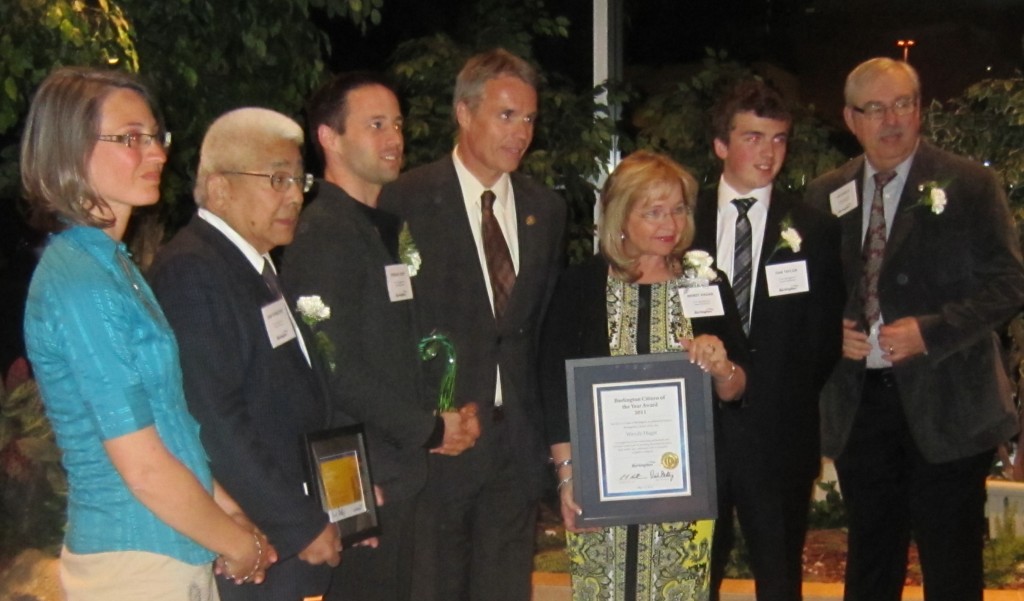 Michelle Bennett was given the Community Service award – Environment, for her efforts to make the hardens happen. From the left: Michelle Bennett Environment, Sam Kawazoye Community Service, Trevor Copp Arts , Mayor Goldring, Wendy Hager, Citizen of the Year, Dan Taylor Junior Citizen and Jim Frizzle, Senior of the year. The provincial funding was for a “teaching Pilot”; a program that would figure out the nuts and bolts of how to get a community garden up and running; what you had to do, what you shouldn’t do and where you go for help – that kind of thing.
This is one of those projects that came out of a community initiative and caught the imaginations of city council and was put into the hands of a city staffer who knew exactly what had to be done and got it done,
That first community garden led to three more.
Citizens can apply for a community garden plot for the 2017 growing season in one of the city’s four locations between Nov. 14 and 30, 2016.
They can go online at: www.burlington.ca/communitygardens
By Staff
October 21st, 2106
BURLINGTON, ON
She once got a shout out from the President of the United States when he was addressing the House of Commons – now she wants to get the make members of that same House out wearing high heels – pink high heels.
A number of weeks ago Burlington MP Karina Gould challenged the Speaker of the House to hold such an event – and somehow the challenge got taken up and on November 3rd Gould MP for Burlington will be hosting Hope in High Heels on Parliament Hill
 Men in Burlington have been doing their annual pink high heel thing to make a point – and they are getting that point across. Next Month Burlington’s MP hopes to get every male member of Parliament into a pair of high heels The Prime Minister will pull it off – watch for some wobbly ankles from some of the others. After participating in the Hope in High Heels walk organized by Halton Women’s Place in Burlington on September 24, MP Gould was inspired to bring the walk to Parliament Hill.
“The message is simple – we will not end violence against women and children, if boys and men are not included in the conversation and part of the solution,” said MP Gould in a statement in the House of Commons. “Having this event in Ottawa, encourages all Members of Parliament, Senators and their staff to show Canadians that we are united in this fight.”
Halton Women’s Place has organized Hope in High Heels in Halton for the past seven years to help raise funds for their women’s shelter in the Halton region and to raise awareness of this ongoing issue. Halton Women’s Place will travel to Ottawa with their hot pink heels in tow, for all male parliamentarians looking to participate.
 There is a strong message behind those pink high heels – “real men don’t hit woman” The Halton woman’s Place houses a number of women who have been hit by men. “Halton Women’s Place is thrilled to bring Hope in High Heels to Ottawa,” said Diane Beaulieu, Executive Director, Halton Women’s Place. “We are proud of our relationship with MP Karina Gould who continues to advocate for women’s issues, especially women’s shelters. This initiative shows our clients that our community supports them in their decisions to start a new life free of violence. We look forward to working together with our local, provincial and federal government on making change for abused women and their children.”
As Prime Minister Justin Trudeau has said, “Together, we can create a Canada and a world where all citizens are respected, valued equally, and safe from violence.”
|
|