By Gazette Staff By Gazette Staff
June 6th, 2026
BURLINGTON, ON
A report going to Council on Monday provides information regarding the restricted acts provisions contained in the Municipal Act, 2001 and introduces a proposed by-law to temporarily provide the Corporation of the City of Burlington with the ability to conduct certain business in the event of the Council being restricted in authority pursuant to these provisions.
Section 275 of the Municipal Act prevents municipal Councils from undertaking certain acts after Nomination Day in a municipal election year (August 21 at 2pm for the 2026 municipal election) and prior to a new Council taking office.
 This legislative restriction is referred to as “restricted acts” or more commonly referred to as the “lame duck” provision. Council is restricted from taking certain actions during a restricted acts provision until the new term of Council begins on November 15, 2026, if it can be determined with certainty that the new Council will include less than three-quarters of the outgoing Council Members (i.e. less than six (6) or 75% of City of Burlington Council This legislative restriction is referred to as “restricted acts” or more commonly referred to as the “lame duck” provision. Council is restricted from taking certain actions during a restricted acts provision until the new term of Council begins on November 15, 2026, if it can be determined with certainty that the new Council will include less than three-quarters of the outgoing Council Members (i.e. less than six (6) or 75% of City of Burlington Council
members).
There are two periods in which lame duck may come into play. Burlington City Council can attain this certainty either beginning after Nomination Day (August 21) if less than six (6) current members are eligible to be re-elected, or after Voting Day (October 26) if less than 6 incumbents are re-elected to the next term of Council. Should either scenario occur, Council would be subject to restricted acts, and limited authorities if the restricted acts provision
applies after either of these dates, including:
a) appointing or removing from office of any officer of the City;
b) the hiring or dismissal of any employee;
c) disposing of any real or personal property of the municipality which has a value
exceeding $50,000 at the time of disposal; and
d) making any expenditures or incurring any other liability which exceeds $50,000.
Clauses c) and d) do not apply if the exceeding disposition or liability was included in the most recent budget adopted by Council prior to Nomination Day. Section 275(6) provides that nothing within this section prevents exercising an authority of a municipality that is delegated to the person or body prior to nomination day for the election of the new council.
Should Council approve the draft by-law, it may protect against potential gaps during lame duck by temporarily delegating additional authority to the CAO beyond what is already delegated by Council. This delegation would come into effect only if the lame duck provisions apply to this Council.
Analysis
Restricted Acts and Strong Mayor Powers
The Strong Mayor Power regime came into place following the last election, making this the first election where the question of whether a Mayor, who has additional authority provided under Part VI.1 of the Municipal Act, 2001, is subject to the Lame Duck provisions. While the legislation is silent, Municipal Affairs staff have confirmed that Strong Mayors are subject to the lame duck provisions*.
*The Government has proposed legislation that, if passed, would subject Strong Mayors to lame duck provisions.
Authority already delegated to staff
A review was completed to determine the current delegated authorities provided to staff established through existing by-laws. Council’s existing delegations under the CAO’s By-law 132-1991 and the actions authorized by the Delegated Authority Bylaw 071-2023 are not impacted by these restrictions.
In particular, Schedule F, subsection 13 of the Delegated Authority By-law 071-2023 authorizes the CAO to approve transactions and execute agreements, offers and other documents in connection to disposition of land or any interest in land (except for a leasehold interest) for up to $500,000.
Application of the Bylaw
The CAO would only exercise this temporary delegated authority when it is in the best interest of the City of Burlington and would be required to report to Council in the first quarter of 2027
regarding the use of this delegated authority.
The proposed temporary delegated authority gives the CAO authority to, when determined necessary for the best interests of the City:
c) make an expenditure or incur any liability of any value, and
d) dispose of any real or personal property of the City of any value.
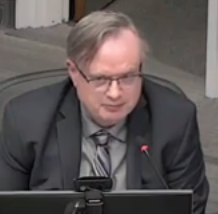
 Curt Benson, CAO  CFO Craig Millar It is understood before using the delegated powers, the CAO will consult with either the Chief Financial Officer for expenditures over preexisting delegated amounts, or with the Commissioner of Legal and Legislative Services should a reality or property matter arise. The temporary by-law has a provision to render the by-law null and void upon the commencement of the inaugural meeting of the new Council.
Recommendation Details
It is common in municipalities around Ontario for Councils to delegate authority to the CAO just before entering or possibly entering the period where they are subjected to the lame duck provisions of the Municipal Act, 2001. Though the delegated powers are rarely required, delegating this authority would allow for business continuity, particularly in an emergency situation.
If Council chose to not provide this delegated authority, decisions related to the lame duck provisions identified in the Municipal Act, 2001 would be reserved for the new term of Council.
Given the squabbling that has surrounded the use of Strong Mayor Powers by this Council, debate could be vigorous.

By Gazette Staff
June 6th, 2026
BURLINGTON, ON
The Millcroft community has been hoping that an MZO (Ministerial Zoning Order) would be issued that would put an end to the work being done to convert a large part of the golf course into 98 high end houses.
The Gazette has felt that the opportunity for an MZO passed some time ago.
But hope does spring eternal.
Let’s see what the comments posted amount to.
The Ford government is in a lot of trouble. Polling numbers have taken a dive; they have to do something.

Click HERE to get to the Registry where you can respond
By Gazette Staff
June 6th, 2026
BURLINGTON, ON
Ron Edwards Family YMCA
June 21-28
Ron Edwards Family pool deck will be closed for annual maintenance from 1:00 PM June 21 to June 28. Reopening June 29.
Les Chater Family YMCA
June 22-July 1
Les Chater Family YMCA pool deck will be closed for annual maintenance, repairs and upgrades June 22-July 1. Reopening July 2.
By Gazette Staff
June 6th, 2026
BURLINGTON, ON
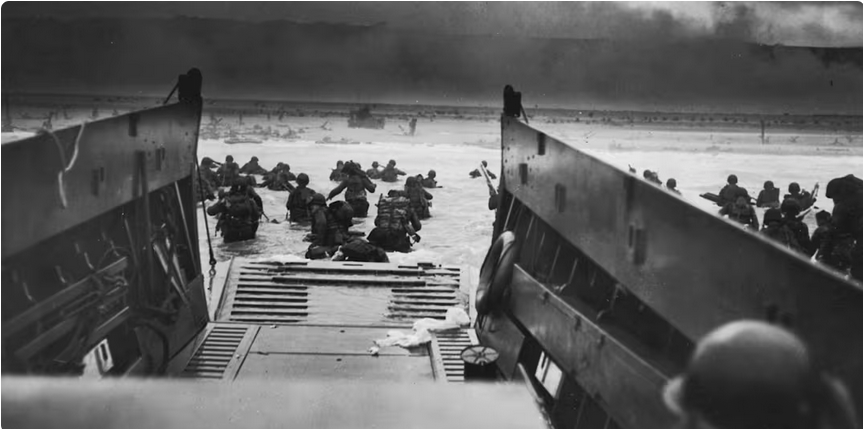
D-Day was the name given to the June 6, 1944, invasion of the beaches at Normandy in northern France by troops from the United States, Canada, the United Kingdom and other countries during World War II. France at the time was occupied by the armies of Nazi Germany, and the amphibious assault—codenamed Operation Overlord—landed some 156,000 Allied soldiers on the beaches of Normandy by the end of the day.

Despite their success, some 4,000 Allied troops were killed by German soldiers defending the beaches. At the time, the D-Day invasion was the largest naval, air and land operation in history, and within a few days about 326,000 troops, more than 50,000 vehicles and some 100,000 tons of equipment had landed.
By August 1944, all of northern France had been liberated, and in spring of 1945 the Allies had defeated the Germans.
Historians often refer to D-Day as the beginning of the end of World War II.

By Ray Rivers
June 6th, 2026
BURLINGTON, ON
It’s not clear how Canada’s $2.6 billion purchase of 26 HIMARS (High Mobility Artillery Rocket System) artillery systems from the US government makes Canada strong…. or less dependent on that big bully south of the border.
The whole notion of NATO’s 5% (or even 2%) of GDP spending target for defence is arbitrary. And it was, after all, scripted by the world’s foremost arms exporter. And we, like many other NATO subscribers, mostly buy what America tells us to buy.
 High Mobility Artillery Rocket System So PM Carney promises to liberate us from US 75% domination of our national security infrastructure – and then does this… in the midst of an economic war with the Americans. And buying HIMARS made with US steel when Trump has stifled our industry with a 25% tariff. And how can it be a good idea to buy weapons of war from our war-like neighbour who is threatening to make this country the American 51st state?
Yes, we Canadians understand that a succession of governments of all stripes have allowed our once proud military to erode. And we need to take defending this country seriously. That means more soldiers and submarines and aircraft and drones so we can defend ourselves should the Russians or Chinese arrive uninvited.
But these pricey HIMARS have a missile range of 500 kms – not over the north pole or across the Pacific. They worked great in the crowded battleground of Ukraine, at least until the Russians learned how to block their GPS signals. And should we ever end up in a land war with the Americans we’ll need to remember the Yanks made them and have far more than we do.
 German Leopard tanks. The Minister says we need them because there is currently no Canadian manufacturer for the HIMARS launcher system or associated long-range missile capability. There is probably a good reason for that. Chances are they’ll end up rusting, parked out next to some of the 80 now decrepit German Leopard tanks we bought for that failed mission in Afghanistan. There was no Canadian manufacturer for those either.
Perhaps, since the contract is signed and sealed anyway, the best thing we can do is to redirect them to where they are really needed – over in Ukraine. Unfortunately, they won’t arrive until 2029. With any luck, the war in Europe will be over by then. But, at least, we’ll have had time to find a parking spot next to those rusting 2A4 Leopards.
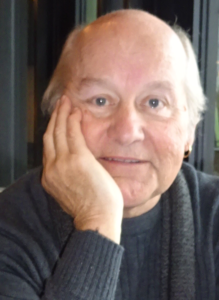
 Ray Rivers, a Gazette Contributing Editor, writes regularly applying his more than 25 years as a federal bureaucrat to his thinking. Rivers was once a candidate for provincial office in Burlington. He was the founder of the Burlington citizen committee on sustainability at a time when climate warming was a hotly debated subject. Ray has a post graduate degree in economics that he earned at the University of Ottawa. Tweet @rayzrivers Ray Rivers, a Gazette Contributing Editor, writes regularly applying his more than 25 years as a federal bureaucrat to his thinking. Rivers was once a candidate for provincial office in Burlington. He was the founder of the Burlington citizen committee on sustainability at a time when climate warming was a hotly debated subject. Ray has a post graduate degree in economics that he earned at the University of Ottawa. Tweet @rayzrivers
Background links:
HIMARS – Purchase HIMARS – More HIMARS –
By Gazette Staff
June 6th, 2026
BURLINGTON, ON
Astronomers have produced the largest and most detailed map ever made of the vast web of cold cosmic gas stretching across the heart of our galaxy, showing thread-like filaments resembling rivers of material flowing through space that sometimes converge into bright clouds where new stars form. Using the Chile-based ALMA telescope, the researchers examined the dynamics and chemistry of the Milky Way‘s central region, a chaotic and energetic expanse that serves as an enormous reservoir of raw material for making stars.  Largest and most detailed map ever made of the vast web of cold cosmic gas stretching across the heart of our galaxy. The region harbors dense clouds of gas and dust. The gas is mostly hydrogen, along with helium and others in trace amounts, all at frigid temperatures slightly above absolute zero. Stars form when clumps of gas and dust collapse under their own gravitational pull.
The supermassive black hole called Sagittarius A* resides at the galaxy’s center. It sits within a region measuring about 650 light-years across that was observed using ALMA as part of a project exploring how gas condenses into stars in the extreme environment of the galactic core. A light-year is the distance light travels in a year, 5.9 trillion miles (9.5 trillion km).
“For the first time, we can trace this gas continuously across the entire region at high resolution. That allows us to connect large-scale gas flows with the dense clouds where stars are forming, and to see how stellar explosions and radiation are reshaping the environment,” said astronomer Ashley Barnes of the European Southern Observatory in Germany, one of the leaders of the research being published, opens new tab in six scientific papers in the journal Monthly Notices of the Royal Astronomical Society. The region, called the Central Molecular Zone, is roughly 26,000 light-years from Earth. The area mapped, in the direction of the constellation Sagittarius, is about three times the width of the moon, as seen from Earth.
The researchers released an image showing ALMA’s observations.
“Even though the image represents cold gas invisible to our eyes, when we assign colors to different (chemical) signals it reveals a striking and intricate landscape. There is a natural beauty in seeing the structure of our own galaxy laid out in such detail. What makes it especially powerful is knowing that these delicate-looking filaments are actually enormous structures, each spanning tens of light-years,” Barnes said.
In addition to the filaments of gas, the image shows large cavities and bubble-like structures carved out by powerful winds and supernova explosions from massive stars populating the area.
There is an anomaly concerning star formation in this region.
“Despite containing enormous quantities of gas, it’s forming far fewer stars than we’d expect. That’s one of the big puzzles in astrophysics,” said astrophysicist Steven Longmore of Liverpool John Moores University in England, another of the research leaders, and the current project is supplying data needed to solve it.
Unlike in the calmer spiral arms of the Milky Way, like the one the sun inhabits, the dynamics of its central region appear to interfere with star formation. “The pressures are orders of magnitude higher. The magnetic fields are stronger,” Longmore said.
“It’s bathed in intense cosmic rays and radiation from the supermassive black hole and from the massive young stars that live there. And the turbulence is extraordinary. Gas is moving at highly supersonic speeds, clouds are colliding and the gravitational forces from the black hole and surrounding stars are constantly shearing and stretching the gas,” Longmore said.
Sagittarius A* has a mass about 4 million times greater than the sun.
The researchers sketched out the complex chemistry of the region. For example, they spotted silicon monoxide, produced in violent shockwaves when gas clouds collide at supersonic speeds.
There also are complex organic molecules such as methanol, ethanol and acetone.
“These are particularly exciting because some of them are thought to be precursors to amino acids and other molecules essential for life,” Longmore said.
“Finding them in such abundance at the center of the galaxy tells us that even in these violent, extreme conditions, the chemistry of complexity – the chemistry that ultimately leads to biology – is thriving.”
By Gazette Staff
June 5th, 2026
BURLINGTON, ON
The Burlington Bay James N. Allan Skyway is not entirely closed to traffic between June 5 and 7, 2026.
However, you should expect significant delays and localized lane reductions if you are traveling Niagara-bound, as the bridge is undergoing multi-year rehabilitation work.

The work on the Skyway bridge has been extensive; not quite a rebuild.
By Pepper Parr
June 5th, 2026
BURLINGTON, ON
We at least know that Marianne Meed Ward is going to run for a third term For a short period of time there was considerable doubt that she would attempt to serve as Mayor for a Third time.
The reason for the decision will not be found in the remarks Meed Ward is reported to have made. She said:
“We need those steady hands in unsteady times to move us forward, and keep the momentum moving forward for what we have built here in Burlington,” she said this morning at Robert Bateman Community Centre, where she held a media conference. “You will hear a lot of promises in the months leading up to the campaign, but look at track records. The best predictor of what someone will do is what they have done.”

The track record is the issue. When two of your council colleges decide to run for your job – you could fairly conclude that there is trouble in paradise.
Many feel that Rory Nisan is in place in order to split the vote and defeat the Lisa Kearns campaign.
There are a number of people who have reached out to the Gazette asking that we investigate just why Nisan is running for Mayor. Our view is that there is zero chance that he can win – and if he did win he would be a terrible Mayor.
He has made a point of including just his supporters for his campaign events.
Meed Ward said that the “work that matters most at a municipal level cannot be done alone, and working with the provincial and federal governments, as well as businesses and organizations, is key to get results for the people of Burlington.
“I have built those partnerships over decades, and that will pay off as we move forward together,” Meed Ward said.
They may well be the key to getting results but to date one would be hard pressed to set out a list of the results that were obtained.
 The Pride Crosswalks were an important issue. They were much more than a photo op. Surely the Pride street crossings are not being defined as results.
Surely the strong support for the Indigenous community is not the reason for returning Meed Ward to office.
As important as those two events were – and they are very important, what is critically important is the financial side of what Meed Ward has failed to do.
A tax increase of more than 40% of an 8 year term is not sustainable. It is a heavy heavy burden for many
The tens of millions in the way of short fall for our infrastructure is crippling.
The consistent failure to come clean with the voters on exactly how much of the tax increase is a city responsibility. Mixing the school board levy and the Regional tax levy to make the city tax levy lower than it is -is financial malfeasance.
For those who struggle with the word take what the Cambridge Dictionary provides:
“Malfeasance is a legal and professional term for the intentional commission of a wrongful, illegal, or dishonest act. It is most frequently used to describe corrupt or unlawful behavior by individuals in positions of public authority, such as politicians, police officers, or corporate executives”
You just don’t consistently fail to tell the tax payers what you know to be less than the truth.
Meed Ward is reported to have said, “… after consulting with her family and the community, she decided to run for a third term as mayor.
Affordability, transit, and public safety were mentioned as priorities. The rest of her campaign is to follow.
The Gazette did not know the media event was taking place. We were not advised.
We believe this is the first media event the Mayor has held so far during her 8 years as Mayor.
Municipal elections in Ontario will take place October 26.
To date there are three candidates for the Office of Mayor: Lisa Kearns, Rory Nisan and Marianne Meed Ward.
By Gazette Staff
June 5th, 2026
BURLINGTON, ON
The Burlington Aquatic Devilrays sent out a statement earlier today sharing that the City of Burlington is exploring a public-private opportunity to develop a modern, multi-use aquatic facility, potentially including a 50m competition pool with training and community space.
 An indoor pool this size is getting talked about. Word is that the location for this possible private-public development would be the King Road development. Years away from shovels in the ground – but it is a start. The Burlington’s swim team, BAD fully supports this initiative and will be at Monday’s city meeting to declare our interest. This process is expected to take some time, even before development can begin, but getting in on the ground floor of these discussions will allow us to help shape the future of aquatic sports in Burlington.
They would like you to support this initiative.
In the announcement from the Clun that ask you to Visit our portal and sign a statement of support before 11:30 AM on Friday, June 5th so we can include these submissions in our delegation.”
Adding that they “realize this is short notice but the statement of support should take less than 2 minutes to complete and the more voices we have behind us, the louder our voice can be heard in these early discussions.”
Pepper Parr
June 4th, 2026
BURLINGTON, ON
Chris is a large man. What surprises people is how soft his voice is. He doesn’t wear smiles; they are in there, just not displayed all the time.
 The consistent thought process for Chris Carter is “curiosity”. He is very direct with people – he wants to ensure that he is understood.
His elementary schooling took place in different communities. His father was a real estate salesman who moved to different jobs frequently.
High school was completed at MMR
Chris had no interest in college or university. He wanted to work and have some change in his pocket.
Got his first job in the automotive field but quickly found his niche: He was a natural communicator and he understood marketing.
Chris Carter is in his late 40s or early 50s.
His professional history includes a partnership at a firm beginning in 2009, which followed his earlier education and mentorship phases.
He is a father of two daughters, ages 10 and 8.
Chris Carter is a co-founder of The Burlington Dads, a non-profit community group established in 2013. He is also the co-host of the Sh*t My Dad Taught Me
The consistent thought process for Chris Carter is “curiosity”. He pokes away at whatever he can find and gladly admits that he is a computer nerd.
What he turned out to be very good at was marketing. Helping corporations and organizations create their brand and use that brand to achieve the market share they want. He knew all the social media tools that were available and put them to very good use for many clients.
 Chris Carter: Direct, focus. Running for the Ward 4 Council seat. He was a partner in a marketing agency for 17 years. When he made the decision to run for public office, he sold his interest in the company.
One of the organizations he spends a lot of time on is Burlington Dads. It started as a Facebook page where guys could ask members if there was a good plumber they could recommend. That grew into a Facebook page where members could borrow tools from one another.
When it was clear the organization had legs 100 Founders put up some money and created a Registered Charity. Every nickel they raise goes into the people they give it away to.
It is now more than a group—it’s a movement. What began as a simple way for local fathers to connect has grown into a 6,000+ member strong brotherhood.
He has a podcast with 2.5 million followers – so people listen to him. The podcast run for close to an hour. Give it a listen and get a sense of how Carter communicates .
He is a cottage man.
He has traveled quite a bit; one was a tour of world war sites
How does all this translate into his sitting on a city Council?
And what motivated him to run for public office?
Chris will tell you that “timing is everything and this was his time. I have been blessed and have done very well. I have control over my life, and this is something I want to do.”
Assuming he wins the election, what would Carter set out to do?
He wants to push back on
—Overcomplication
—Inefficiency
—Rising costs without value
—Slow decision-making
He wants to build towards
Well-governed, tech-enabled services that deliver better results faster
Support for families
Responsible growth
Clear communication
Community-first decisions.
 Chris Carter: A careful listener; takes notes. He is in the early stages of his campaign. Literature, signs, and putting a campaign team together are underway.
The website is up: chriscarterofficial.com
Olivia Duke, a Ward 4 candidate in the 2022 election, and Allen Nize have filed nomination papers. Shawna Stolte, the incumbent, has not filed nomination papers and has yet to say whether she intends to run for a third term.
By Gazette Staff
June 4th, 2026
BURLINGTON, ON
Taste, move, and experience culture in motion at Joseph Brant Museum during their dine & dance series.
This event will introduce you to various cultures through the world of food, music, and dance. Guests will have the opportunity to try hors d’oeuvres and beverages from a specific region of the world (7pm – 8pm) and view the special exhibit “eat make share: a taste of immigration.”
A dance demonstration and short, interactive dance lesson will then follow on the museum’s Rooftop Terrace (8pm – 9pm). Dance demonstrations and interactives will be provided in partnership with a local, cultural organization.
Tickets are $35/person, or $40/person with an alcoholic drink ticket. All tickets include museum admission, hors d’oeuvres, light refreshments, a dance demonstration, and interactive dance lesson. This is an 16+ event. The dance portion of the event will be moved indoors in the case of inclement weather.

Tickets at the link below.
June 13, 2026, 7pm – 9pm | Latin Night with danceScape
Through Salsa, Bachata, Cha Cha, Cumbia, storytelling, and community participation, danceScape invites audiences to experience Latin culture through rhythm, movement, and shared human connection. One of the most meaningful aspects of the evening is that many of the participants are not professional performers and do not come from Latin backgrounds. They are members of the Burlington community from diverse cultural backgrounds who discovered joy, confidence, friendship, and connection through Latin music and dance.
 Robert Tang and Beverley Cayton-Tang will show you just how it is done. Hosted by Robert Tang and Beverley Cayton-Tang, former three time Canadian and two time North American Ballroom Champions featured on The Marilyn Denis Show, Dragons’ Den, and CHCH Television, the evening reflects danceScape’s ongoing mission of building confidence, connection, wellness, and community through dance.
Museums play a vital role in preserving heritage and culture within our city. Your support is essential in ensuring that these invaluable aspects of our community remain vibrant and alive.
The Burlington Museums Foundation is the fundraising arm of the Museums of Burlington and inspires the community to invest in heritage, culture and learning opportunities.
By Gazette Staff
June 4th, 2026
BURLINGTON, ON
A one-time GST/HST credit top-up payment worth up to several hundred dollars is set to hit Canadians’ bank accounts this Friday.
 Just like that! Before the new program officially begins, eligible Canadians will receive a one-time spring payment worth 50 per cent of their annual GST/HST credit amount. For some households, that could mean a few hundred dollars landing in their account this week.
Who is eligible for the top-up payment?
Most Canadians won’t need to apply for the top-up payment — all you had to do was file your taxes in 2024, even if you had no income to report, and be eligible or entitled to the GST/HST credit in January 2026.
The CRA also notes that the family or individual’s net income declared in the 2024 tax filing must fall below the maximum threshold.
How much will you get from the top-up payment?
- $267 for single individuals without children
- $349 for couples without children
- $441 with one child
- $533 with two children
- $625 with three children
- $717 with four children
Parents with shared custody will each receive half of the eligible amount.
By Gazette Staff
June 4th, 2026
BURLINGTON, ON
The city has announced several road closures that will be taking place this weekend as both the Moon in June Race and the Cruisin’ Car Show are set to bring family fun to the waterfront and downtown core.
The Burlington Cruisin’ Car Show has two main iterations:
-
- Weekly Shows: Every Monday evening (5 p.m. to 8 p.m., excluding holiday Mondays) from May 11 to October 5 in the exterior parking lot of the Burlington Centre (near the Canadian Tire at 777 Guelph Line).
- Annual Special Event: The “Cruisin’ June” special event takes place in Downtown Burlington on Brant Street (between Caroline Street and Lakeshore Road) on Saturday, June 6, from 10 a.m. to 2 p.m.
-
 Kelly’s has moved further north on Brant Street and as soon as the city gets the pepper work done they will open up. Meanwhile this Saturday the “Cruisin’ June” will be open. Lower Brant is a bit of a mess with construction taking place at Civic Square and across the street, where a high-rise (17 storeys) is under construction.
The Moon in June Road Race course is shown below:
 The following roads will be closed this Saturday from 6 a.m. to 10:30 p.m. to allow for the planned events: The following roads will be closed this Saturday from 6 a.m. to 10:30 p.m. to allow for the planned events:
- Brant Street from Caroline Street to Lakeshore Road
- James Street from John Street to Brant Street
- Elgin Street from Brant Street to Locust Street
Several roads will also remain open but have lane closures throughout the day:
- Brant Street from Ontario Street to Elgin Street, 4 to 10:30 p.m.
- Lakeshore Road from John Street to Brock Avenue, 7:15 to 10 p.m.
- Brock Avenue from Lakeshore Road to Elgin Street, 7:15 to 9:30 p.m.
- Elgin Street from Brock Avenue to Maple Avenue, 7:15 to 9:30 p.m.
- Richmond Street, Hager Avenue, Ghent Avenue and Olga Drive from 7:15 p.m. to 10:30 p.m.
Residents attending the downtown events are encouraged to park on side streets away from the closure and bus routes 2, 4 and 10 will see detours to accommodate the road closures.
There are also regular closures on the Burlington Skyway Bridge each weekend.
By Gazette Staff
June 3rd, 2026
BURLINGTON, ON
A Different Drummer Books ~ Burlington Public Library
Harper Collins Canada
present
CLARE MACKINTOSH
introducing
It’s Not What You Think
Hosted by SARAH LAING
Saturday June 6 2pm
at
Burlington Public Library, Central Branch
2331 New Street Burlington
Admission Free ~ Please Register
Clare Mackintosh , internationally best-selling and acclaimed author of electrifying crime fiction, visits Burlington with her spellbinding new tale, of a woman’s dark suspicions about her spouse and the stunning deadly events that ensue. , internationally best-selling and acclaimed author of electrifying crime fiction, visits Burlington with her spellbinding new tale, of a woman’s dark suspicions about her spouse and the stunning deadly events that ensue.
“Clare Mackintosh is a solid-gold storyteller at the top of her game, and It’s Not What You Think should be your next buy-today, read-tonight delight.” –Lee Child
“A nail-biter of a thriller.” –Shari Lapena
Sarah Laing, journalist and cultural commentator known for her features in The Globe and Mail and The Toronto Star among many others, will lead a stirring session with Clare.
Meet Sarah and Clare in Centennial Hall at Burlington Public Library, Central Branch on Saturday, June 6 at 2pm.
Admission is free–please register at this link.
A Different Drummer Books
differentdrummerbooks.ca
By Gazette Staff
June 3rd, 2026
BURLINGTON, ON
 Mayor Meed Ward Photo taken in May 2026 She said she needed some time to think through her future.
That time came to an end today when Mayor Marianne Meed Ward said she would be running for Mayor and looking forward to a third term
Meed Ward served as a Council member for two terms and then as Mayor for two terms.
By Gazette Staff
June 3rd, 2026
BURLINGTON, ON
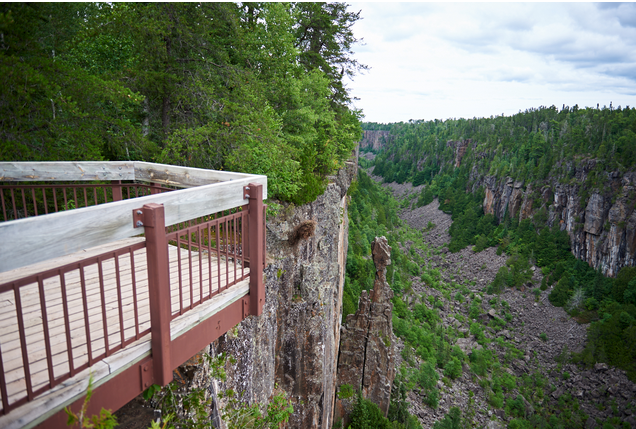
Ontario Trails Week is an occasion to see and enjoy the splendour of being outdoors. Great sights, scenes you will want to take pictures of and show to your friends.
Parks Ontario operates and maintains these locations

If something interests you, log into the Parks Ontario site and see what is available. Link is shown below.
Step outside and into some Ontario Parks for Ontario Trails Week or save these must-see trails for a summer adventure.
Anyone who is a fan of waterfalls, canyons and selfie-worthy lookouts needs to visit Northwestern Ontario.


See the list: Ontario Parks trails. All the answers to your questions. Click HERE
By Gazette Staff
June 3rd, 2026
BURLINGTON,
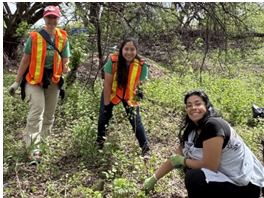
 BurlingtonGreen believes if we work together we can Make a Difference. BurlingtonGreen believes if we work together we can Make a Difference.
Join us at BG’s Eco-Hub at the Beach (1094 Lakeshore Road) on June 14th or 20th from 10am-12pm to remove garlic mustard. We will learn about the importance of removing invasive plant species, how to identify garlic mustard, and tackle some hotspots in the area.
This family friendly event is best suited to ages 10 and up, and is eligible for high school volunteer hours. Learn more and sign up.
By Gazette Staff
June 3rd, 2026
BURLINGTON, ON
 Now we know what Library CEO Lita Barrie is reading for the summer. Burlington Library released the Annual Report for 2025. Some interesting numbers.
The Burlington Public Library has six full-service locations and one small rural lending location.
In 2025, the library expanded and improved its services to better serve the community. Library customers enjoyed a wider selection of digital books to borrow, collaborated in free meeting spaces, got creative with new maker spaces at two more branches, and celebrated a new library space at the Robert Bateman Community Centre.
Responding to Your Feedback
Top comments in our annual Customer Satisfaction Survey asked for more selection of books and shorter wait times, more programs on topics like maker services and tech support, and more quiet spaces to work and study.
By the numbers:

By Pepper Parr
June 3rd, 2026
BURLINGTON, ON
Masha Brar is the third candidate running for the Ward 2 Council seat.
 Masha Brar, a Burlington lawyer is a candidate for the Ward 2 Council seat. She is a lawyer, trained in India, who came to Canada in 2009 and became a member of the Law Society of Upper Canada after studying and articling with a firm. She has a practice focused on Wills and Estates and some property transactions. She has been a member of the Law Society of Upper Canada since 2020
Brar feels she and her family have been given so much during the time they have been in Canada that it is time for her to give something back.
The family consists of a husband and an 11-year-old son.
The Gazette has arranged for an in-depth interview later in the month. We just wanted get a short piece on the third candidate seeking the Ward 2 seat.
At the moment Gary Carr, current Chair of the Halton Regional Council, a job he has been elected to several times.
That job disappears as soon as the municipal election closes.
Sean Campbell is the third candidate seeking the seat.
Campbell is the co founder of Burlington Helping Burlington.
|
|




 By Gazette Staff
 This legislative restriction is referred to as “restricted acts” or more commonly referred to as the “lame duck” provision. Council is restricted from taking certain actions during a restricted acts provision until the new term of Council begins on November 15, 2026, if it can be determined with certainty that the new Council will include less than three-quarters of the outgoing Council Members (i.e. less than six (6) or 75% of City of Burlington Council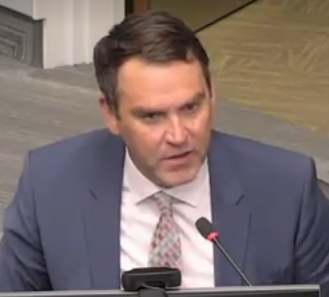



 By Ray Rivers

 Ray Rivers, a Gazette Contributing Editor, writes regularly applying his more than 25 years as a federal bureaucrat to his thinking. Rivers was once a candidate for provincial office in Burlington. He was the founder of the Burlington citizen committee on sustainability at a time when climate warming was a hotly debated subject. Ray has a post graduate degree in economics that he earned at the University of Ottawa. Tweet @rayzrivers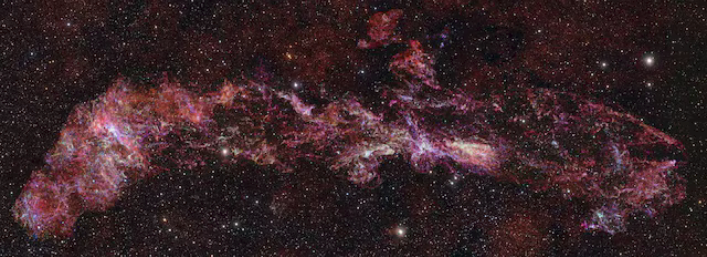
 By Gazette Staff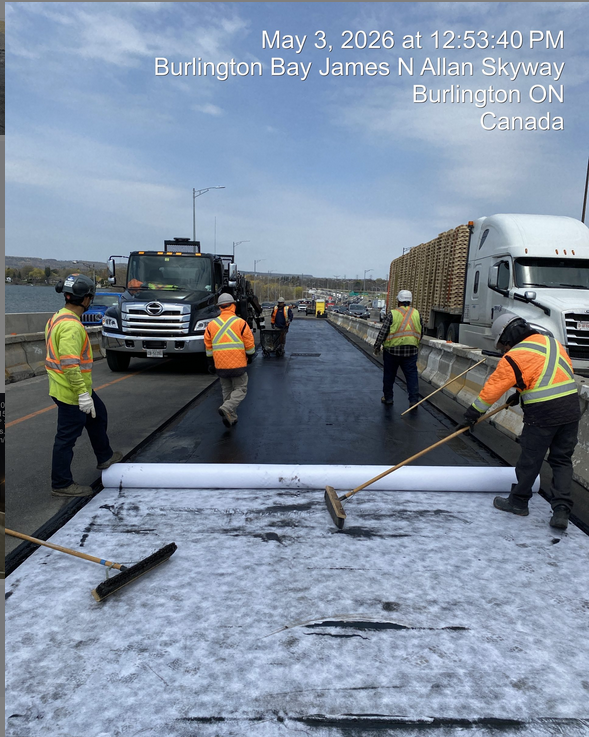
 By Pepper Parr

 By Gazette Staff



 By Gazette Staff


 By Gazette Staff

 The following roads will be closed this Saturday from 6 a.m. to 10:30 p.m. to allow for the planned events:
 By Gazette Staff
 By Gazette Staff


 By Gazette Staff
 BurlingtonGreen believes if we work together we can Make a Difference.