By Pepper Parr
December 22, 2024
BURLINGTON, ON
We asked Burlington Provincial Liberal Association nominee Andrea Grebenc for a comment on the news that Natalie Pierre had decided to run for the Burlington seat in the Legislature after announcing several weeks ago that she would not be running again
 Andrea Grebenc: Candidate for the Burlington seat at Queen’s Park.
Grebenc said: “My commitment is clear: I am honoured to run and ready to serve my entire term to be the strong voice Burlington deserves at Queen’s Park.
I will not flip-flop on this commitment.
Burlingtonians have told me what issues are important to them:
Healthcare, Education, and Housing.
Burlingtonians want a government that will pay more than just lip service to these vital issues. They want actual affordable housing and well-resourced publicly funded healthcare and education.
I will fight for Burlington. I will continue to work tirelessly to hear from our community and make their voices heard at Queen’s Park!
Related news stories:
October 21st: Natalie Pierre announces she will not run.
December 21, 2024 – Natalie Pierre announces she is throwing her hat back in the ring.
By Ben Smith
December 22, 2024
BURLINGTON, ON
This article is authored by Ben Smith, President of AVESDO: a Canadian software company harnessing the power of data to help real estate professionals make better, faster, and more informed sales decisions.
The longer term 2024 forecast proved less accurate than we’d hoped, as we optimistically — but falsely — predicted government interventions would be helpful through the year. (Instead, they proved quite the opposite.)”
As 2024 comes to an end, we are looking back at all that happened, and ahead to what’s on the horizon.
 Ben Smith, President of AVESDO
To begin, we revisited what we said this time last year. Having come off of a strong(ish) Q4 in 2023 with positive signs ahead, we certainly got some things right. But the longer-term forecast was less accurate than we’d hoped, as we optimistically — but falsely — predicted government interventions would be helpful through 2024. (Instead, they proved quite the opposite.)
We predicted that activity would pick up some in Q1, starting with a slow build as governments enacted new housing policy, rates came down, and immigration continued. Q1 was steady for sales and launches and, despite rate drops lagging till June (as opposed to the April timeline we had predicted), developers released the most inventory in Q2, albeit to softer demand than anticipated.
Govs In The Game
With rate cuts missing the spring market and landing right before summer started, still-hurting buyers adopted a wait-and-see response, setting their sites to the fall. As predicted, all levels of government got in the game, but — as we’d soon find out — the results were more negative than positive. A typical tale included a swing towards some much-needed change, which would only be backhanded by an equal or greater policy setback, all while tax increases (rather than decreases) were tabled.
An example from the West Coast was as follows: The Provincial government updated the building code to allow for single staircases in low-rise buildings to help with efficiency, only to thereafter introduce accessibility requirements on 100% of units — requirements that would stop developments in their tracks due to their enormous cost and size implications. This is just one of several examples we saw, nation-wide, that confirmed policymakers have no idea how housing actually works.
The combination of A) heavy rental policy that prevented rent increases from matching rising costs and B) sweeping attacks against short-term rentals all but stopped the investor buyer, and did little to ease supply issues — as other headlines would report, those housing types weren’t the ones families needed after all. At the same time, without the investor, it becomes both very risky and very difficult to make a presale go. So, many developers put down their pencils altogether, while others took smaller bite-size risks, resulting in a decline in average project launch sizes.
All across Canada, it seemed that municipal, provincial, and federal governments entered the housing sphere, their competing interests creating more disruption and paralysis than gain. The easy move to cut taxes — which make up ~30% of the price of a new home — was not on the table. The impression of action and typical capitalist Boogeyman fearmongering fueled regional elections across the country, as votes took priority over housing supply. Despite what side of the fence one falls on politically, looking ahead, we can only hope for a more stable foundation for developers to plan against that allows for forward movement.
Prices Not Falling, Projects Not Going
With questionable housing policy, delayed rate cuts, and a progressively weakening (and increasingly socialist) Canadian economy, our predictions and hopes for the second half of the year did not materialize. In fact, things got worse. Much worse. We saw fewer sales and fewer units coming to market. By the numbers, we saw 30% fewer sales on 43% fewer units launched in the second half of 2024, compared to the first six months. (Further, 2023 was already tough, and this year sales through our system still managed to fall 30% YoY.)
You don’t have to be a mathematician to see that the government policies certainly did not increase housing (as had been promised). If the data is not enough for you, greater evidence may be found in how loud developer voices became over the last six months, as lobby groups organized in both the east and west to try to get their voices heard in the policy rooms.
We commented on closings last year, and the difficulty remained through 2024, as we had predicted. Interestingly, this year’s larger story was receiverships, caused by crushing interest rates at the developer level as many third-tier and smaller developers went bust on projects that, in some cases, didn’t get past the land stage, while others had sold out and were well under construction but couldn’t hang on to completion. Although sensational in gross dollars, these stories grew in number, but never made it to the mainstream top-tier firms who have managed to weather this storm… so far.
We’ll see a few institutional lenders become developers in 2025, as they now have large land and development holdings from projects they foreclosed on.
As for prices: They’re not falling and they won’t. We’ve said it many times over the last few years — although the by-unit price has declined in some areas, the average price people are spending to own a new home continues to rise, albeit slowly. This year was no different. Higher priced areas simply stopped launching, and suburban areas continued to rise in price due to higher costs. As a rule, we see prices in most areas are now above $1,000 psf, and held under $1,250 psf to achieve any kind of absorptions. More suburban wood-frame product located well out of city centres is now in the $800-$1,000-psf range.
Inflation – 1. Affordability – 0.
In summary, 2024 saw less supply coming to market, fewer sales, far slower absorptions, and an industry bleeding jobs and productivity in the middle of a housing crisis. The general sentiment is one of exhaustion. Buyers stayed put, as did developers, maintaining impeccable control of supply, throttling launches with the precision of an Indy car racer. So, where do we go from here?
When It Comes To New Housing, Will Governments Ever Listen To The Experts?
Looking Ahead (And… Up?)
As we shared in a previous article,sales picked up after the October rate cut, which seemed to pull rates and confidence into a now-meaningful band. As of mid-December, we’ve just been given another 50bps, and we expect to get another 25bps in early 2025. Things get murky thereafter, but current predictions see the overnight rate down around 2.5% before summer 2025, which should bring much-needed relief to costs, with positive impacts to both supply and demand.
Prices will continue to rise slowly, to keep up with continued cost pressures that are being made worse by increasing government extractions. Interest rate cuts are likely to increase absorptions, though we expect sales to remain measured throughout 2025, with the first half of the year spent cleaning up existing inventory. Recently closed and standing inventory will continue to offer great deals, as those sellers will be eager — this will help build momentum for the second half of the year. BC will start the year stronger than Ontario and will continue that pace forward, with Ontario expected to find some footing late in the year — we hope.
We do not expect much activity in Vancouver or Toronto’s downtown cores yet, as we anticipate the ongoing move-out and densifying of the ‘burbs. In the west, we’ll see more concrete towers in suburban centres, plus a shift from townhomes to wood-frame apartments, to find affordable pricepoints in these locations. In the east, once single-family neighbourhoods will make way for townhomes and low-rise apartments, with an increasing number of mid-rises along more urban corridors.
Wild Cards
Two wild cards to watch for are A) more debilitating policy, and B) the threat of a declining population.
The insanity of the federal government and their “exploration” of a vacant land tax would, in my view, be a fairly immediate nail in the housing industry’s coffin. If they ignore all reasonable reviews — as they are prone to do — and actually pass something like this, the shrapnel would be large and wide, reversing any positive predictions outlined above.
As for population decline and immigration: who would have thought we’d be where we are now? With the Fed flipping immigration policy on and off like a light switch, I can’t begin to guess what happens next, and I suspect the impact will take some time to play out.
What I can say is, there is a very real risk that Baby Boomers start dying in very large numbers as they near the average age of death in Canada: 81. If this happens, and is combined with overzealous immigration tightening fueled by pressures south of the border, we could see dramatic population declines over the next couple years — and oversupplies in some housing types and regions that would land heavily with these segments. Older single family homes in rural areas and cottages in tier-two locations come to mind. This would impact the supply of any new building in affected areas with ripple effects across the housing continuum.
The good news is, there are positive signs, fueled by rate cuts, that could help on the road to getting supply back to normal levels. On the flip side, we must find ways to hold governments accountable for some of the worst crisis management policy we’ve seen.
Call To Action
I can’t understate it: the housing industry has been able to bring a steady stream of supply to market for years, despite growing affordability issues that have existed for decades. And now, in the worst housing crisis we’ve seen, there is less supply than ever, the industry is bleeding jobs and economic productivity, and our governments routinely make announcements to state the opposite — it’s just not true.
If you’ve made it this far, and you hope to see our positive predictions come to fruition, I encourage you to send letters to your municipal, provincial, and federal government representatives and ask for housing tax relief, and demand they involve the industry — who make up 95% of all new housing — in their solutions. As Beau Jarvis from Wesgroup said in his open letter to Chrystia Freeland, “When faced with a drought, the government offers subsidies and tax credits to support food production. The housing sector is, effectively, in a similar ‘drought.’ Yet instead of offering incentives, the government proposes yet another tax.”
On the back of falling interest rates, 2025 could be a turnaround year — as long as governments don’t get in the way. Or even better, if they get out of it.
This article was produced in partnership with STOREYS Custom Studio
By Pepper Parr
December 22nd , 2024
BURLINGTON, ON
It started with a Zoom call between the Prime Minister and his Minister of Finance Chrystia Freeland during which the Prime Minister is reported to have told the Minister of Finance that he wanted her to table the Fall Economic Statement (FES) document, speak to it and then that would be the end of her job as Minister of Finance.
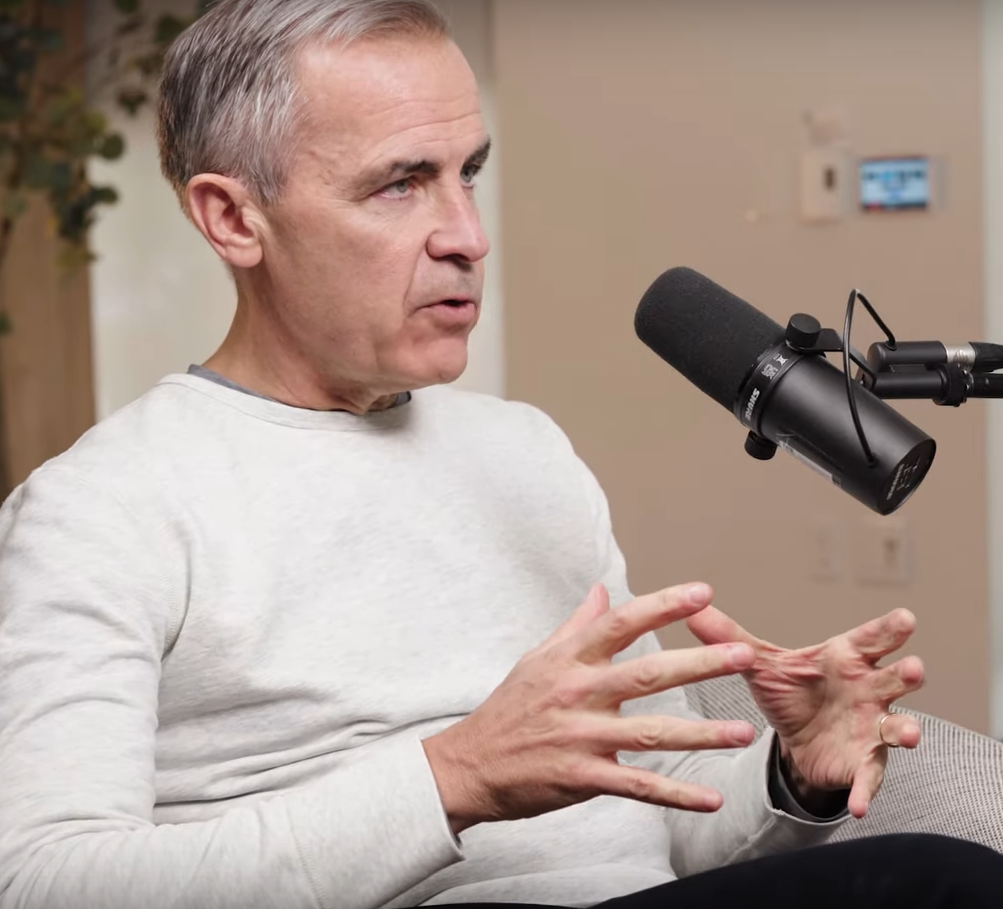
 Mark Carney, former Governor of both the Bank of Canada and the Bank of England was the choice to serve as the Minister of Finance – was never on stage.
Mark Carney was to take over the job once the FES was tabled.
It was a brazen move on the part of the Prime Minister – it just didn’t go down all that well with Freeland.
She took the weekend to think about it and early Monday morning released a statement saying she was resigning. Freeland was less than polite.
The House of Commons was to meet in the afternoon to hear what the FES was all about – hard to do when there was no longer a Minister of Finance in place to do the job.
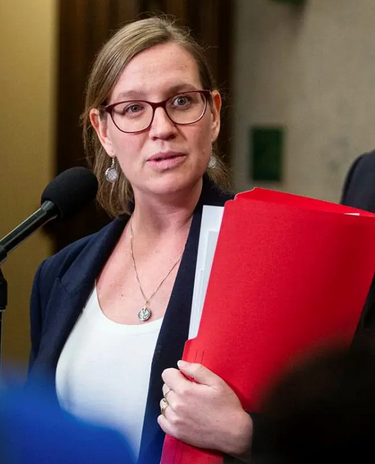
 Karina Gould, Burlington MP and Government House Leader
House Leader Karina Gould tables the FES document and then literally fled the House of Commons with all the other Liberal members, to attend a Liberal Caucus meeting.
While the Prime Minister was meeting with his caucus he was also scurrying around to get the Governor General to be ready to swear in a new Minister of Finance – this time it was going to be Dominic LeBlanc – no not Mark Carney – he hadn’t been seen or heard from. LeBlanc was now 1) Minister of Finance, 2)Minister of Public Safety and 3) Minister of Intergovernmental Affairs; that is a full plate.
With a new Finance Minister in place Prime Minister had to make some Cabinet changes and try to right the ship of state which was listing badly.
Demands that he resign were coming from the Opposition as well as members of the Liberal Party.
And this was just Monday.
 Minister of Finance Chrystia Freeland sent the Prime Minister a resignation letter that could well be the document that ends his career – and he didn’t see it coming.
On Tuesday there was a fund raising event for the Laurier Institute at which the Prime Minister explained that at Christmas time when families meet and they talk politics there are differences that get resolved.
Wednesday the Liberals held their annual Christmas party.
When Chrystia Freeland entered the room she got an ovation from most of the people at the event. She had the grace to approach the Prime Minister and give him a hug
The Wednesday was also the last day of the House of Commons session – they were off until January 27th.
Thursday there is word that the Prime Minister is going to shuffle his Cabinet – which he does – adding Nathan Erskine-Smith to the Housing portfolio.
Anita Anand remains minister of transport, but adds the internal trade portfolio.
Gary Anandasangaree remains minister of Crown-Indigenous relations and northern affairs, and becomes minister responsible for the Canadian Northern Economic Development Agency.
Steven MacKinnon becomes minister of employment, workforce development and labour.
Ginette Petitpas Taylor becomes president of the Treasury Board.
On Friday the Governor General swears in the new Cabinet members.
 Justin Trudeau: Taking the next six weeks to reflect on just what his options are.
During the five days the Prime Minister doesn’t say a word publicly.
All kinds of background meetings.
The Prime Minister is said to be taking the six weeks to reflect on what he has heard from his caucus.
The list of Members of the House of Commons inches up from about a dozen on Monday to as many as 45 of them have now signed a letter privately urging Trudeau to resign — the embattled Liberal leader is now fighting an increasingly lonely battle for his political future.
By Pepper Parr
December 21st, 2024
BURLINGTON, ON
MPP says she has renewed passion and energy
 Natalie Pierre changes her mind – found renewed passion and energy.
Natalie Pierre announced earlier today that: “After heartfelt reflection and with renewed passion and energy, I have decided to run in the next provincial election. In October, I shared that I would not be seeking re-election. What followed was unexpected and deeply humbling. Your calls, messages, and personal visits poured in—urging me to reconsider. You shared your hopes, your concerns, and your belief in the work we’ve accomplished together.
“Burlington is my home, and there’s still much work to be done. I am committed to building on what we’ve accomplished and addressing the challenges ahead.
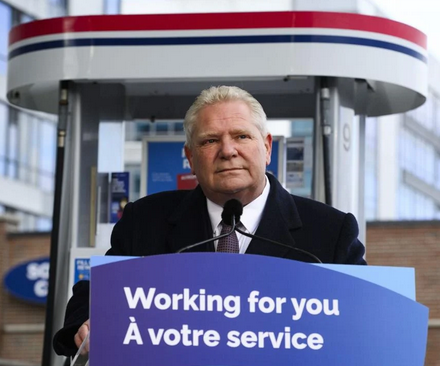
“I continue to be inspired by the leadership of Premier Ford and our government’s vision for Ontario—advancing economic growth, strengthening education, improving health care, and supporting businesses. Together, we can achieve so much more for our city and our province.
“Thank you for your faith, your encouragement, and your passion for our city. I look forward to continuing this journey with you.”
Interpretation: The Burlington Progressive Conservative Association couldn’t find a candidate and a provincial election is closer than many realized.
By Pepper Parr

December 21st, 2024
BURLINGTON, ON
It was a rumour at first – but it now appears to be true: The Beer Store on Elizabeth between Pine and Lakeshore will close sometime in January.
A reader reports that it’s been there forever. Does anyone know who owns the building – prime property.
 These empties are going to have to find a new landing place.
The closing is the result of the Legislation that brought in the selling of beer at retail locations. The supermarkets, even the gas stations have cashed in on this.
The Gazette reached out to the media people at the Beer Store corporate level – nothing so far.
Our reader asks: “Where are we supposed to return our empties if The Beer Stores closes, even if we can buy the product in a corner store, which I don’t because I like unusual brands?”
A Gazette reader with a discriminating taste for beer – wonderful.
At some point, the province is going to have to come up with a way for people to return empty bottles for recycling. The beer makers actually need the bottles.
By Staff
December 21st, 2024
BURLINGTON, ON
Originally published by Policy Options
The sensational resignation of Chrystia Freeland highlights a growing crisis in Canada’s democratic institutions, where a powerful Prime Minister’s Office undermines the cabinet system and weakens the public service built to support it. It’s a breakdown that Donald Savoie has been warning about for decades.
Savoie, one of Canada’s leading scholars on public administration, argues that the system’s rupture has been clearly exposed by the fact a plan to spend over $6 billion on a Christmas GST/HST holiday and $250 payments was announced without first being presented to cabinet or caucus. Freeland denounced the government’s “costly political gimmicks” in her bombshell resignation letter.
Prime Minister Justin Trudeau has shuffled his cabinet but the Freeland resignation and the long-term trend of diminishing power for ministers raise real questions about whether the positions have become more symbolic than key government leadership jobs. With all main opposition parties poised to take down the wounded government at the next opportunity, they are likely also to be short-lived.
Governing from the centre has become entrenched as the way Ottawa makes decisions and wields power, but this episode “is over the top,” said Savoie. “Such an important package announced without cabinet being involved? This is not cabinet government. This is presidential government.”
“And, frankly, I don’t think any future prime minister can take it further than this other than to say, ‘I will have no cabinet. I will run government on my own, with my own office.’ That’s the only further place left.”
The big question, however, is whether Freeland’s resignation could be a catalyst for reform beyond the current political crisis.
“This could be helpful and make a strong case for the next government that this model is highly risky politically and highly risky if you care about implementation,” said a former deputy minister. “Trying to micromanage everything from the centre doesn’t actually work.”
Financial pressures and a Trump presidency are pushing Canada to recalibrate its fiscal, economic, and international priorities. This could also be a rare chance to align a new policy agenda with major public service reform.
Savoie has for decades been sounding alarms about the concentration of power and the politicization of the public service. His 1999 book Governing from the Centre earned him the ire of then-prime minister Jean Chrétien.
Savoie revisited the issue during the Harper era with Court Government and Collapse of Accountability in Canada and the United Kingdom, arguing that Canada is run more like a kingdom or a court, where decision-making is centralized among a small circle of advisers surrounding the prime minister. This coterie often sidelined ministers, Parliament, and the public service – but with room for a few trusted figures in the mix.
And this year, he turned the spotlight on the struggles of the public service, much criticized as bloated, inefficient and even broken, with his book Speaking Truth to Canadians About their Public Service.
Over the decades, successive prime ministers have steadily tightened their grip on decision-making, policy direction, and the messaging surrounding them – a trend that has marched in lockstep with the advent of the 24/7 news cycle and the rise of social media.
Centralization of power was first introduced by former prime minister Pierre Trudeau, but Savoie argues his son has taken it to the extreme. It’s a long way from his declaration in 2015 as he formed his first cabinet: “Government by cabinet is back,” he said, promising that ministers would have significant independence with their files.
Instead, the reins grew even tighter, with the real power held by what reports described as a “triumvirate” of Trudeau, his chief of staff, Katie Telford, and Freeland.
In Canada’s Westminster system, authority belongs to ministers, but power resides with the prime minister. When ministers cannot or will not exercise their authority, and defer to the prime minister, the system falters – and the public service, built to support it, struggles to work like it should.
When cabinet doesn’t even debate $6 billion in spending, you have to question whether cabinet ministers have any authority or role, Savoie said. “Governing from the centre is bad for ministers, but it’s not good for public servants, either.”
It has been an open secret that Finance bureaucrats thought the $6-billion package was bad policy.
It’s not unusual for tensions to rise between prime ministers, finance ministers, and bureaucrats. But former public servants argue the PMO’s hand has become more overt. It contributed to Bill Morneau’s resignation as finance minister and the replacement of a long-serving deputy with outsider Michael Sabia – a deliberate shift from Finance’s traditional fiscal orthodoxy.
Several bureaucrats contend the moves were part of a broader effort to centralize power. By replacing both the minister and deputy with figures more aligned with the PMO’s agenda, Finance was destabilized, ensuring key decisions flowed increasingly through the Prime Minister’s Office.
But detractors of Savoie have dismissed his concerns as alarmist or overly fixated on one part of the relationship between parts of the government.
Arguing for the centre
Michael Wernick, a former top bureaucrat, argues concerns about centralization are overstated. Government is vast, issues are complex, fast-moving and span too many departments to function without a firm hand and strong governance from the centre. He said the Liberals’ big problem is an “ineffective PMO that has lost its ability to keep things moving.”
The large expansion of what’s now called the political service over the past 40 years has had a big impact on public servants. Today, there are up to 800 political staffers and advisers – almost as many as the number of bureaucrats in the Finance Department – who function like a parallel institution.
Bulking up the Privy Council Office isn’t the solution to what ails the public service
Government communications under Trudeau
Deconstructing Canada’s ballooning $67-billion federal bureaucracy
As Alasdair Roberts explains in his book, their role has shifted from simply helping ministers to actively challenging public servants’ advice and pushing bureaucrats to align with ministerial direction – further consolidating power within the PMO.
Their growth began under the Mulroney government, which was wary of public servants. It introduced chief-of-staff positions – starting in the PMO. These roles came with greater influence and higher salaries, establishing them as key political advisers.
Today, ministers’ chiefs of staff and many policy advisers are appointed by the PMO. They navigate the space between elected officials and bureaucrats, driving PMO-approved policies.
“This isn’t each minister is getting some extra help. This is the governing party extending its reach across the whole system. That is very different. They’re selected because of their connection to the governing party,” said one longtime senior bureaucrat.
As a result, deputy ministers, once the ministers’ primary advisers, are often sidelined. Their advice is sought too late, not considered thoroughly, or bypassed entirely. This leaves deputy ministers and ministers, both accountable, defending decisions they didn’t make.
Traditionally, the best policy decisions come when policy ideas and how to implement them are made together but “delinking them leads to failures…and we have a long list of failed policy and failed implementation in recent years,” said one senior official.
In a lecture, Jocelyne Bourgon, a former clerk of the Privy Council and president emeritus of the Canada School of Public Service, called the growth and influence of political advisers “dangerous layers of unaccountability.”
“It used to be very small and, therefore, probably not significant, but it is growing fast. And as it is growing, we have to ask ourselves, how does it fit in? And if it is going to continue to grow, then we need to design a system that builds the accountability for that tranche as well,” she said.
Too many poets, not enough plumbers
With the rise of political staff has come the growth of what Savoie calls “the poets,” further upending the balance between policy ideas and implementation.
Poets are public servants working in policy, analysis, communications and work mostly in Ottawa-Gatineau – where nearly half of the public service is based. In contrast, the “plumbers” are the frontline workers who deliver programs and services: issuing cheques, managing borders, and inspecting plants.
“The poets know how to deal with the media, with the politicians and with Parliament. That is very important for the prime minister,” said Savoie.
Preparing for a Conservative government in the public service
The role of deputy prime minister is not as powerful as most think
At the same time, the public service has grown top-heavy, with over 9,000 executives – mostly poets – and a surge in new senior and associate positions, further widening the gap between policy-making and hands-on implementation.
On top of the growing numbers, senior executives – especially deputy ministers – move too frequently, some staying in a role for less than two years. This constant churn leaves little incentive to fix problems. “It’s like driving a car with failing brakes,” said one bureaucrat. “They know something’s wrong but won’t act until it completely breaks down.”
A host of other challenges are piling on top of each other. The erosion of merit, the hollowing out of the Public Service Commission, hybrid work, Treasury Board’s diminished role as a budget office; ineffective leadership, outdated technology; rules, structures and a human-resources regime rooted in a bygone era. The list goes on.
Many point out the government’s biggest failures – Phoenix, ArriveCAN, and massive passport and immigration backlogs – were the result of the public service’s mismanagement, not political interference.
As validated as he feels today, Savoie sometimes wishes he had never written the book, which became a staple on many student reading lists. He recalls visiting Stephen Harper’s office and spotting a well-thumbed copy marked with orange sticky notes.
“We use it as a manual,” a staffer told him.
He never imagined his critique would become an Ottawa playbook.
“It reinforced governing from the centre because people saw it as, ‘This is how Ottawa works,’ and I feel a responsibility for that,” Savoie said. “Sometimes I think it made the situation worse.”
This article was first published by Policy Options with support from the Accenture Fellowship on the Future of the Public Service.
By Staff
December 21st, 2024
BURLINGTON, ON
There are no illustrations with the article.
The best news story of the week appeared in the Toronto Star this morning.
During a week that has been gobsmacked by fast-breaking news, it was a welcome relief to learn more about the Winter penis and erictile dysfucntion.
Kevin Jiang, a Toronto Star Staff Reporter reports in detail.
The shift in temperatures on top of the psychological impact of the season can serve to worsen or even push people on the edge into full erectile dysfunction, experts say.
“There’s no question (patients complaining of erectile dysfunction) increase over the winter, and in most cases it’s men looking for a quick fix,” says Dr. Jack Barkin, a urologic surgeon, a leading expert on sexual dysfunction and clinical professor of surgery at the University of Toronto.
Reports of erectile dysfunction typically increase by 15 to 20 percent in the winter, compared to the regular months, he added.
Usually, when someone experiences erectile dysfunction, it falls under three categories: vasculogenic, meaning it stems from an issue with blood flow; neurogenic, where something had gone wrong with the nerves; or psychogenic, where the problem is psychological.
All three variations can be made worse by winter, but especially vasculogenic erectile dysfunction.
“There are basically three things that drive the penis. Number one is blood flow. Number two is the nerve supply that stimulates the erection itself. And then the third thing is the hormonal level — testosterone,” Barkin explained. “Those things have to be in sync for good libido, as well as good erectile functioning.”
Many can attest to the shrinkage that accompanies a sudden drop in temperature, as famously addressed on the TV show “Seinfeld” — when you leap into a pool or step out of the shower, for example.
It’s a natural function of our bodies, explained Dr. John Aquino, medical director of the Ontario Men’s Health clinic. “In cold temperatures, your body wants to keep its warmth to the core of the body for the vital organs,” he said. “So it sort of shuts down more circulation to the extremities, like your hands.”
Veins constrict, limiting blood flow and causing penile shrinkage — leading to an up to 50 per cent reduction in the organ’s length and an up to 30 per cent reduction in its circumference or girth, Barkin added. The testicles, which typically hang outside the body to maintain optimal temperatures for semen production, may also be pulled up into the body.
While this reaction is not limited to winter, the season can cause it to happen more frequently and for prolonged periods of time.
For healthy individuals, the shrinkage may have little impact on their sexual performance. “But for men that are already suffering from erectile dysfunction, this can be a real difficult phenomenon,” Barkin said, explaining that circulatory issues in the organ can be exacerbated by temperature-related blood vessel constriction.
“The penile arteries are the smallest (arteries) in the body,” he noted. This constriction can also cause some to lose an erection mid-sex if it suddenly gets chilly.
Aquino added that “if someone was already prone to erectile dysfunction — maybe they had a preexisting compromise of the small blood vessels there for various reasons, maybe they have vascular disease or diabetes or hypertension — then (winter penis) could be even a bigger challenge to overcome.”
If you don’t recover from penis shrinkage after warming back up, it may be time to see a doctor. “It may be an underlying sign of other blood vessel abnormalities — high blood pressure, for example, high cholesterol, cardiac problems or heart problems,” Barkin said.
In the end, winter penis shouldn’t have any long-term consequences, Aquino explained. “But it can be distressing for some men, though. Not just in the ego sense, but actually, the feeling of the genitalia shriveling up inside their body just physically distresses them.”
Other ways winter affects male sex drive
Penile shrinkage is just one piece of the puzzle. Barkin notes that as people bundle up indoors, they may not be getting enough sunshine exposure and, subsequently, vitamin D. A deficiency of the nutrient can lead to an increased risk of erectile dysfunction.
But perhaps a larger contributor is the psychological impact of winter. For many experiencing erectile dysfunction, the issue is “in the big head, not the little head,” Barkin explained — and seasonal affective disorder is a significant driver of this condition.
“Because of the lack of sunlight, people can get chronically depressed,” he said, explaining that it can also partly contribute to neurogenic erectile dysfunction. “That’s another reason why winter penis, or seasonal erectile dysfunction, can be quite prominent.”
Winter can also significantly affect testosterone levels, a key hormone for erectile function.
“The male hormone is very emotionally related, so things like stress and whatnot can impact dramatically on that,” Barkin said, referencing studies that found testosterone levels plummeted in people undergoing stressful situations, like U.S. army rangers undergoing training.
Meanwhile, people tend to stay inside and not exercise as much. They may gain weight and drink more alcohol — all factors that can significantly affect testosterone.
“Another component is that in cold weather, people don’t get out as much. They don’t socialize as much,” Barkin said. “The old adage of use it or lose it comes into play, where if you don’t get repeated stimulation” it might impact your future performance.
How to treat seasonal erectile dysfunction
How you treat winter penis depends on the type of erectile dysfunction you suffer from.
If it’s circulation-related, consider bundling up more when you go outside — Barkin recommends long underwear or even investing in electric, heated undergarments. “Diminish your time outside if you are suffering from that and take breaks — if you’re out skiing, go back to the chalet every 20 minutes or so,” he said.
If you’re still struggling to have an erection, try raising your body temperature by taking a warm — not hot — bath, he continued.
If you’re suffering from seasonal affective disorder, you can invest in a UV lamp, which mimics sunlight indoors. Otherwise, it’s important to continue exercising throughout winter, go on sunny walks and avoid consuming too much alcohol or tobacco to maintain healthy testosterone levels, Barkin explained.
Finally, you can see your doctor for medical intervention, whether through medication or treatments like low intensity shockwave therapy.
“The last point I wanted to make, which is so important, is smoking,” Barkin finished. “Smoking also causes (blood vessel) constriction. So if one is on the brink of erectile dysfunction, definitely stop smoking — it can have at least a 20 to 30 per cent improvement in their erectile function.”
By Staff
December 21st, 2024
BURLINGTON, ON
Youth leadership has, at times, been a challenge for Burlington.
Community Development Halton, an organization that serves the Region, recently received a grant from the Burlington Foundation’s Community Fund.
The grant will help to empower youth through leadership opportunities that amplify youth voices on volunteerism and civic engagement and influencing the nonprofit sector with recommendations to ensure that volunteer opportunities are accessible and appealing to youth.
 Rishia Burke, Executive Director, Community Development Halton
Rishia Burke, Executive Director, Community Development Halton points out that “This youth-led initiative will bring youth voices to the centre of change to influence volunteerism and civic engagement opportunities in Burlington.
 Megan Tregunno, CEO of the Burlington Foundation
Megan Tregunno, CEO of the Burlington Foundation reports that CDH is one of 33 organizations funded from the Burlington Community Fund which is made up of contributions from community donors and residents who care deeply about helping others.”
The Burlington Foundation’s annual granting program amounts to $1.2 million
By Pepper Parr
December 20th, 2024
BURLINGTON, ON
These are troubling times.
But we are about to enter a season that celebrates one of the greatest things that has happened on this earth; the birth of Jesus Christ.
You don’t have to believe the miracles, the stories or the myths. He was real, he did live and the values that came out of that period of time have guided us for a long long time.
There are of course other values in our past that we can draw upon when things are less than perfect.
The music of Ludwig Beethoven will do it for me and for those who want to know more about the library has an excellent event taking place on January 12th

Embark on a journey into the life and music of Ludwig van Beethoven with Hamilton Philharmonic Orchestra Composer-in-Residence, Abigail Richardson-Schulte. Abigail draws from her experience with deafness, providing a unique perspective on Beethoven’s artistic genius and his profound struggle with hearing loss.
Explore the depths of Beethoven’s compositions, from his early works to his revolutionary symphonies, and discover how adversity fueled the music icon’s creativity.
Presented in partnership with Hamilton Philharmonic Orchestra
About the Presenter
Award-winning composer Abigail Richardson-Schulte was born in Oxford, England, and moved to Canada as a child. Her music has been commissioned and performed by major orchestras, presenters, music festivals and broadcasters including the Festival Présences of Paris.
By Tom Parkin
December 20th, 2024
BURLINGTON, ON
Strong housing starts in BC, Alberta, Quebec while Ontario continues to stall
Canadian housing starts were up 30 per cent between this November and November 2023 on big gains in BC, Alberta and Quebec, according to data released by CMHC on Monday.
But not Ontario, where November housing starts were lower than a year ago. At 5,506 unit starts, results were a tiny improvement over the terrible results of the previous three months.
With a population of 16 million, Ontario last month had fewer housing starts than Quebec, population nine million. Quebec workers started constructing 5,660 units last month.
BC and Alberta were close behind, at 4,048 and 4,983 starts respectively. BC has a population of 5.7 million; Alberta’s population is 5.0 million.
A monthly building effort the size of BC, Alberta or Quebec transposed onto Ontario would deliver more than 12,500 starts, a monthly target set by the PCs’ Housing Affordability Task Force report.
But the Ford PCs’ actual effort hit just 44 per cent of that target last month. They’ve failed to hit their target in 30 of the 30 months since their 2022 election pledge to hit them.

Despite recent price drops, Ontario remains expensive
In the four years from Doug Ford’s June 2018 election until the Ontario price peak, the average house price rose 72 per cent in Toronto and 94 per cent in Hamilton.

The price crash since February 2022 has lowered house purchase prices by 19 and 23 per cent, respectively. But the damage has been deep. Many are left holding big mortgages about to renew at higher rates. And with mortgage rates well above pre-peak levels, the costs of ownership may only be cheaper for those coming with lots of cash.
And while apartment asking rents have also peaked, many Ontarians are remain stuck in high rent payments. Others are stuck in long commutes or housing that doesn’t fit their situation because their current place is rent control protected but a new place is not.
High costs, lagging wages taking toll on economy
High costs,combined with Ontario’s lagging wages, leaves less income for other purchasing, and appears to be dragging down the province’s economy.
Most recent data shows Ontario retail sales are lower than February 2022 while the rest of Canada reached record highs. Consumer spending usually powers about two thirds of GDP.
Ontario’s jobless rate rose dramatically last month while falling in most other provinces. Toronto unemployment hit 8.1 per cent; in Windsor it’s 8.9 per cent. Bankruptcies are increasing faster in Ontario than in any other province.
Ontario’s housing experience shows the economic damage that comes with letting housing inflation run rampant, even long after the boom has turned to bust.
By Ray Rivers
December 19th, 2024
BURLINGTON, ON
Between January 1 and October 31, 2024, Canada’s Border Services Agency seized 1,274 prohibited weapons and 750 firearms coming from the U.S. It also seized over 25,600 kg of illegal drugs (both inbound and outbound) including 4.9 kg of fentanyl of which 4.1 kg was intercepted outbound before it could be smuggled towards the Netherlands. (Extracted from CBSA report)
Donald the disrupter strikes again. He may not care much about Canada or Canadians, but he clearly has it in for Justin Trudeau. It could be his ’wokeness’ or perhaps, it’s because Trudeau labels himself a feminist while Trump is more of that sort of manly beast…you know….someone a jury found liable for sexual assault.
Trump’s ultimatum is that Canada and Mexico need to stop the movement of illegal drugs and migrants into the USA or face a 25% tariff on everything they export to America. But isn’t that backwards? Isn’t that why each country has its own border guards? Isn’t it the job of US border guards to stop illegal importation?
Neither Canada nor the US stop and search people and cars when people leave their country. They get stopped only when they want to enter the other side. And what about the fentanyl and illegal migrants crossing up from south of the border? And what about those guns crossing into Canada?
This ultimatum is not really about the border at all. Rather it is about the president-elect’s disdain for the two social democratic leaders whose nations border the USA. Mexico’s newly elected president has rebuffed Trump, saying she’ll simply retaliate with her own tariffs. Trump has interpreted that to mean she’s closing the southern border, which she’s not. But then Mexico has more options – as it has been developing a growing relationship with China.
But for Canada it’s not that simple. Our biggest export is oil and gas, and a 25% tariff would hurt secessionist-leaning Alberta more than the rest of Canada. Trump’s goal may not necessarily be to break up Canada – though no one should put that past him. But the great disrupter clearly wouldn’t mind seeing a more fractious and divided Canada if it serves his purposes.
The beneficiary of more political chaos would be Canada’s opposition parties, the Conservatives in particular. And that might hasten the replacement of Canada’s liberal government with one more to Trump’s ideological liking. Meddling in your neighbour’s politics is straight out of Mr. Putin’s playbook, after all.
Donald Trump is opposed to just about everything the current Canadian government stands for. In particular, he’s an avowed climate change denier and spurns renewable energy, electric vehicles and carbon taxation. For Trump it’s drill baby drill. His musing about bringing Canada in as a 51st state is chilling, considering that he may well be serious.
America is heading for interesting times ahead. And our government had tried to mobilize a Team Canada effort, bringing all of the provinces together to face this challenge, in the belief that Trump may not be bluffing. Still, not everybody agrees on the best strategy. Ontario’s Doug Ford, for example, is running on at the mouth, toting a tough retaliation stand and promising to use Alberta’s oil as his weapon.
Canadians are not opposed to helping the US control the inflow of illegal migrants and drugs. Alberta and the feds have undertaken specific plans to further enhance surveillance of the border and demonstrate to Mr. Trump that they get it. At one point it actually was beginning to look like Canada had it’s act together.
And then the PM upset the apple cart by firing his most important government minister. And with the fourth loss of a female minister from his Cabinet so too went his feminist label.
Ray Rivers, a Gazette Contributing Editor, writes regularly applying his more than 25 years as a federal bureaucrat to his thinking. Rivers was once a candidate for provincial office in Burlington. He was the founder of the Burlington citizen committee on sustainability at a time when climate warming was a hotly debated subject. Ray has a post graduate degree in economics that he earned at the University of Ottawa. Tweet @rayzrivers
Background links
Trump the Disruptor – Freeland – Feminist? – Border Service Report – USMCA –
By Pepper Parr
December 19th, 2024
BURLINGTON, ON
The Museums of Burlington is running an interesting collection of immigrant stories.
The exhibition, created by the federal government, is on tour at the Joseph Brant Museum until April 19, 2025.
 Nicholas Leblovic, his immigration story.
Echoes and Reflections | Capturing the Human Story is a travelling exhibition created by the Canadian Museum of Immigration at Pier 21
To complement this exhibition, the Brant Museum curatorial team reached out to local Burlington residents asking for stories on immigration experiences.
Local political junkie and retired lawyer, Nicholas Leblovic is featured in one of the profiles.
Link to that profile HERE:
By Pepper Parr
December 18th, 2024
BURLINGTON, ON
I always thought our governments were working hard on our behalf.
Being told by the province what the favourite names were for new born children this year – does sound like government work that taxpayers pay for.
Nevertheless here is that story:
The top baby names in Ontario in 2023 were Olivia and Noah. Olivia has clinched the number one spot as the top baby girl name in Ontario for 15 consecutive years. Charlotte also continued as a favourable choice and came in as the second-most popular name for girls.
Noah took the top spot as the most popular name for boys for the fifth year in a row, with Liam following closely behind. We also welcomed Mila and Henry to the top baby names of 2023.
 There isn’t a Father in Canada that doesn’t remember this moment
The top 10 names for girls and boys in 2023 were:
Girls:
Olivia, Charlotte, Amelia, Emma, Sophia, Mia, Sofia, Ava, Mila and Isla
Boys:
Noah, Liam, Theodore, Oliver, Jack, Lucas, Benjamin, William, Leo and Henry.
“Welcoming a new baby and choosing a name is one of life’s most meaningful milestones, and our government is dedicated to helping new parents focus on these special moments rather than paperwork,” said Todd McCarthy, Minister of Public and Business Service Delivery and Procurement. “With ServiceOntario’s 5-in-1 Newborn Bundle, we’ve made it easier for Ontario parents to register their newborns and apply for essential documents like birth certificates and Social Insurance Numbers—all from the comfort of their home.”
Link to registration
Parents should register their child’s birth within 30 days of welcoming their newborn.
By Staff
December 19th, 2024
BURLINGTON, ON
The Ontario Liberals are beginning to take positions on what the Ford government is doing.
 Ontario Liberal Party leader Bonnie Crombie standing outside the Legislature
A media release from what is now being called “Team Bonnie” sounds the alarm over Ford’s failure to fund schools
The Financial Accountability Office (FAO) predicts $12.7-billion Shortfall for School Repairs and Capacity in Ontario
“This funding isn’t even about improving our schools—it’s just the bare minimum to keep them safe and functional. That’s $12.7 billion less for our kids’ learning environments. Parents trust our schools to deliver for their children, and we need to invest in them to ensure that trust isn’t misplaced. Ontario Liberals will deliver more for you—because every child deserves better.”
Karen McCrimmon, Ontario Liberal Education Critic and MPP for Kanata—Carleton, emphasized the impact on students and families, saying, “Over 150,000 students in overflow classrooms like portables is just unacceptable. The system is strained beyond recognition, and our kids are the ones paying the price for Ford’s failures.”
The FAO report shows the urgent state of Ontario’s schools:
•
The current cost to bring all school buildings into a state of good repair is $6.5 billion.
•
Over the next 10 years, $15.2 billion will be needed to maintain aging infrastructure.
•
An additional $9.8 billion is required to create the necessary 172,187 new student spaces—equivalent to building 227 new schools.
•
Almost 1/3 of schools are overcapacity, with over 100,000 students in portables.
•
3 out of 4 Ontario schools will be in a poor state of repair by 2034, with a $22 billion infrastructure backlog.
•
Despite self-congratulatory government ads, Doug Ford’s current plan will result in almost 3,000 portables being used in schools, even a decade from now.
In total, the report identifies a need for $31.4 billion over the next decade. However, the Ford government has only allocated $12.5 billion for repairs and $6.2 billion for new capacity, leaving a funding gap of $12.7 billion.
Ontario Liberals are committed to addressing the funding shortfall and ensuring safe, modern learning environments for all students across the province.
By Staff
December 18th, 2024
BURLINGTON, ON
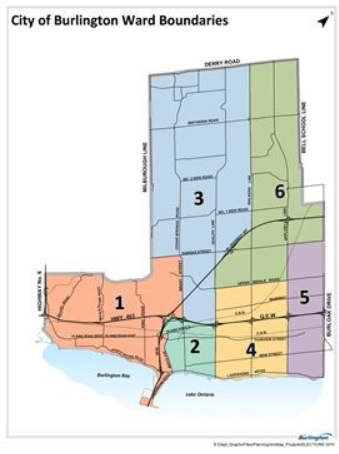
We’re looking for people to join the Community Panel to provide feedback on a variety of topics, but specifically the Ward Boundary Review, Climate Action Plan and the Asset Management Plan.
Another one?
By Staff
December 18th, 2024
BURLINGTON, ON
As we go into the holiday season and start to wrap up 2024, we want to thank you for all your time, energy, input and feedback you provided to the City through the various projects. This year, Burlington community members provided feedback on City priorities such as the 2025 budget, Council Composition and Ward Boundary Review, Community Engagement Charter, Official Plan, events, park renewals, Community Panel and many more.

- 12,165 surveys or polls completed
- 97,065 visits to Get Involved Burlington engagement webpage
- 11,623 documents downloaded
- 119 engagement opportunities were available in the Public Engagement Calendar
- 6500+ people subscribe to the weekly newsletter
- 172 volunteers contributed 6334 volunteer hours
A Gazette readers see the volume of surveys a little differently.
12,165 divided by 365 days works out to just over 33 polls or surveys a day.
That is very impressive.
One has to wonder if this is since the website started or just in the last year.
Without a timeframe, it is difficult to understand what the numbers mean.
Another comment might be: Enough Already!
By Staff
December 18th, 2024
BURLINGTON, ON
This research project is studying COVID-19 treatments, and we are looking for individuals who have recently tested positive for COVID-19. If you test positive for COVID in the future, we would like to hear from you as soon as possible.
What is CanTreatCOVID?
Publicly funded research evaluating COVID medications to help people feel better faster and prevent long COVID.
Who can participate?
- Adults who tested positive for COVID with symptoms starting within the last 5 days
- and aged 18-49 years with one or more chronic condition/s or aged 50+ years regardless of health status
What are the benefits of participating?
✓ Personalized care and attention
✓ Close monitoring by a healthcare team
✓ $30 for each follow-up
✓ Participate online or via phone call
How does the study work?
1. Test positive for COVID-19
2. Enroll via phone call (888-888-3308) or online (CanTreatCOVID.org)
3. Receive a study medication or follow public health advice on COVID
4. Complete a diary for 14 days and answer 4 surveys about how you feel (phone call or online)
The Canadian Adaptive Platform Trial of Treatments for COVID in Community Settings is funded by the Canadian Institutes of Health Research, Health Canada, and the Public Health Agency of Canada.
Contacting the CanTreatCOVID team for inquiries or other purposes does not mean you are bound to participate. We will provide information so you can make an informed decision about whether or not you choose to voluntarily participate in our research. For more information, please visit https://cantreatcovid.org/. To continue receiving emails about CanTreatCOVID, you can join the mailing list here.
If you have any questions about how your information is being used or feedback, please contact us at info@cantreatcovid.org or 888-888-3308.
CanTreatCOVID, Upstream Lab, MAP Centre for Urban Health Solutions
St. Michael’s Hospital, Unity Health Toronto
30 Bond St., Toronto, ON
M5B 1W8 Canada
By Staff
December 18th, 2024
BURLINGTON, ON
Here is a good news story and a nice way to end the year.

Community Development Halton celebrates 40 years of service.
It has been a grind at times.
The organization gets precious little support from the city, some, meager at best, from the Region.
United Way supports the organization and the Burlington Foundation has been a consistent supporter.
This organization provides more very useful and relevant support than any other not-for-profit.
By Staff
December 18th, 2024
BURLINGTON, ON
It has been a hairy week and it isn’t over yet.
Burlington MP Karina Gould has had her hands full working as the Government Leader in the House of Commons.
Here is what she had to say at different times during the day:
December 17th, 2:30 p.m.
Mr. Speaker, the NDP leader knows full well that we won the confidence of the House last week on multiple occasions. This government’s objective is always to protect Canadians, Canadian jobs and the Canadian economy. That is what we are focusing on right now, and I can assure the House that we are managing our relationship with the United States effectively.
Mr. Speaker, the House voted in confidence of this government just last week on multiple occasions. We have important work to do on behalf of Canadians.
We have a very important relationship to manage with the United States at a pivotal time, and that is exactly what the government is focused on doing.
December 17th, 2:35 p.m.
Mr. Speaker, what the Conservative opposition is doing is focusing on us while we are focusing on Canadians. We are focused on ensuring that we are delivering affordability measures for Canadians at a difficult time. We are focused on ensuring that we have a strong relationship with our most important trading partner, the United States. That is what the Liberal government is squarely focused on: Canadians, protecting the Canadian economy and protecting Canadian jobs.
December 17th, 3:25 p.m.
Business of the House
Mr. Speaker, it is such an honour to rise in this place on behalf of the constituents of Burlington. I would like to say to all of my colleagues, despite the fact that this was a rather unusual session of Parliament, it is a pleasure to be able to work with everyone on all sides of the House, mostly. I know everybody is ready to go into the holidays.
 Burlington MP Karina Gould with her second child. She will be home for the holidays – we should see her around town.
On behalf of the Liberal members of Parliament, I would like to extend my gratitude to everybody who works in the House of Commons, who serves us so well, stays here on late nights and makes sure we are so well supported. To them and their families, I wish a very happy holidays as well. I would like to wish folks in Burlington and right across the country a very merry Christmas and a very happy Hanukkah to all who are celebrating. I look forward to 2025 and all that the new year has to offer. I want to wish all of my colleagues all of the best for the year ahead.
With that, pursuant to order made Wednesday, February 28, 2024, I move:
That the House do now adjourn.
By Staff
December 18th, 2024
BURLINGTON, ON
Two developments have cleared the Planning department.
The Appleby Line Storage operation at 5051 Harvester Road and the Stonehaven Subdivision.
The Stonehaven Application for Draft Plan of Subdivision is to create 12 lots/blocks, 10 lots to accommodate single detached dwellings, a block to accommodate 8 street townhomes and a block to create a private ownership roadway.
 
The Appleby Line Storage development has also been approved.
 The proposed development consists of a five (5) storey building. The primary use will be Self-Storage, and office and reception/retail space on the west portion of the building. The development will have total Gross Floor Area (GFA) of 33,894 square metres, composed of reception/retail with an GFA of 1,088 square metres , offices with GFA of 8,450 square metres, self-storage GFA of 22,862 square metres, and a loading/other GFA of 1,493 square metres. Underground parking will be provided and accessible on the northeast corner of the proposed building, facing the entryway from South Service Road.
We are seeing more in the way of Self Storage space. If people are going to live in high-rise condos or apartments they won’t have the kind of basement storage that exist in single-family dwellings. Thus the arrival of this new form of storage space.
|
|