By Roger Edwards By Roger Edwards
February 5th, 2026
BURLINGTON, ON
 Paying online through the Mastercard platform.
Your next Apple credit card will come from JPMorgan Chase.
Earlier this week, Apple made a press release stating that Chase will take over the issuing of Apple Cards from Goldman Sachs, which has been behind the tech giant’s credit cards since their 2019 launch. The two US banking behemoths said that the takeover of the $20 billion-strong card loan deal will close within 24 months.
Current Apple Card holders here in Burlington and elsewhere will continue to reap the credit card’s existing benefits and perks. Mastercard will remain the payment network of the card, according to Apple and the two issuers.
The talks between the two lenders, Mastercard, and Apple in the middle reportedly stretched well over a year. Once closed, the deal will see Goldman transfer over $20 billion in Apple Card loans to Chase’s books. On their end, Goldman Sachs will take a $2.2-billion hit in credit card losses and add roughly $0.46 per share, both of which will be reflected in their Q4 earnings.
24 months to seal the deal
The transition won’t happen overnight. Both banks have confirmed that the handover will take about two years to complete, pending regulatory approvals and other procedural requirements.
 The Apple logo appears in the office window of JP Morgan Chase. During this period, Apple Card customers can breathe easy. Nothing changes for now. Your card works exactly as it did before, your rewards stay the same, and your Apple Savings account remains accessible. You’ll still get daily cashback on purchases, and Mastercard continues as the payment network backing your transactions.
Jennifer Bailey, the VP of Apple Pay and Apple Wallet, said: “Chase shares our commitment to innovation and delivering products and services that enhance consumers’ lives.”
Bad bet for Goldman since day one
Goldman Sachs entered the credit card business with plenty of headlines back in 2019, beating out other banks to partner with Apple.
We won’t sugarcoat it; Apple Pay didn’t click well with Goldman Sachs from the beginning. The problems started almost immediately. The US bank reportedly coughed up about $350 to onboard every new Apple Pay customer, and that’s a little shy of threefold the industry average.
Those costs added up fast, and the losses kept piling on year after year. By 2022, Goldman started backing away from consumer finance. The Apple Card losses became too much to ignore, and the bank began looking for an exit.
CEO David Solomon made it clear in this week’s release, saying: “This transaction substantially completes the narrowing of our focus in our consumer business.”
The numbers tell the story. Goldman will book a $2.26-billion hit to revenue from marking down the loan portfolio and covering contract termination costs. However, the bank will also release $2.48 billion in loan-loss reserves.
Chase beat out the ranks of Barclays and American Express
 Barclays Bank was one of the big hitters that got beaten out by JP Morgan Chase JPMorgan Chase wasn’t the only bank interested in taking over the Apple Card business. Several major lenders and banks threw their hats in the ring, including American Express, Synchrony, and Barclays. But one by one, these banks walked away from the negotiating table.
The Apple Card portfolio came with challenges that made other issuers uncomfortable. The customer base includes more subprime and lower-credit borrowers than what most major banks typically serve, and the delinquency rate has run higher than the industry average.
JPMorgan stood firm through the negotiations, but the bank didn’t agree to take on the portfolio without getting something in return. According to sources familiar with the deal, Chase is acquiring the Apple Card business at a discount of more than $1 billion.
Allison Beer, Chase’s CEO of Card & Connected Commerce, said: “[The bank is] proud to deepen our relationship by welcoming them as the newest partner in our industry-leading co-brand credit card program.”
JPMorgan will book a $2.2-billion provision for credit losses in its fourth-quarter 2025 earnings, which the bank reports on a little shy of mid this month.
Investors bullish on Apple stocks
Wall Street’s response to the JPMorgan deal has been mostly positive, particularly when it comes to Apple’s stock. Analysts see the partnership as a natural fit for both companies and a smart move for Apple’s long-term services strategy.
 An Apple retail outlet. The deal matters more for how Apple’s services business develops than for any immediate impact on earnings. Apple has been working to grow its services revenue, which now brings in more than $28 billion per quarter, up from $11 billion just a few years ago.
Investors like that Chase brings real expertise in consumer banking and credit cards. JPMorgan is already the largest credit card issuer in the US by purchase volume. They plan to launch a new Apple-branded savings account program, and current Goldman account holders will have the option to switch over or stay put.
Why Chase takeover of Apple Card is a win-win for everyone
Bringing JPMorgan Chase as the new credit card issuer boards well with pretty much everyone. Jamie Dimon has built Chase to become the no.1 retail bank and by miles. On the back of that, the deal is so good for Dimon that he will be the US first bank to make their Q4 earnings call this month.
 The Apple Card: Form over function. As far as Apple goes, putting Chase at the helm of the Apple Card program is a huge step forward, especially because their AI strategy goes in tandem with JPMorgan’s. At the very least, they can now roll out their savings accounts on the shoulders of a partnership with a sea of expertise in consumer banking.
The biggest win, of course, goes to Apple Card customers. They will continue getting 3% daily cashback, savings accounts, and other perks. More importantly, they continue to be able to spend using their iPhones at online marketplaces like Amazon, retail shops, and wherever other Canadian casino payment methods like Apple Pay and Mastercard are accepted.

BY Tom Parkin
February 5th, 2026
BURLINGTON, ON
Air travel to USA hits new low in December: 161,000 fewer air passengers to the USA in December 2025 than the same month a year before.

December is always a strong month for Canadian travel to international destinations as the snow starts to fly and the holiday season unites families across boarders.
But for those with family in the United States, it may have been a year for them to come north, as Trump’s domestic chaos and violence, his new and invasive border rules and his threats against Canada each month get worse.
And while Canadians escaping the cold may have enjoyed temperatures in Florida or Arizona in the past, Mexico and the Caribbean have the quaint charm of not being ruled by madman.
In December 2025, just 41 per cent of passengers screened for international travel were heading to the United States, the lowest percentage since at least 2019.
Screenings for USA travel was down 161,000 passengers from December 2024. For trips to other international locations, screenings were up 133,000. And screenings for travel inside Canada was also stronger, up 57,000 from December 2024.
Compared to December 2023, domestic screenings were up 267,000 and other international passengers were up 195,000. But passengers to the USA were down by 74,000.
Previous GDP data has shown strength in the Canadian tourism industry. But that strength is happening despite a decline in incoming travelers, a sign that Canadians discovering their own country is helping offset Trump’s tariffs and threats. Canadians spending their money in Canada on Canadian products made by Canadian workers appears to be making a difference.
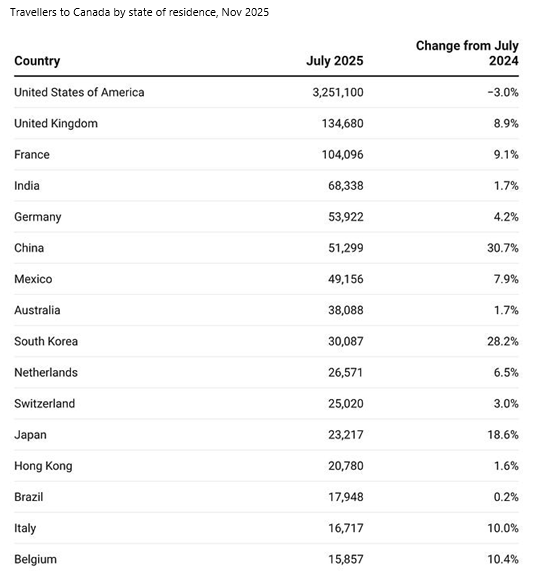
The latest data on travel to Canada by residents of other countries, from November, shows about 92,000 fewer people travelling into Canada than November 2024. Travel from Europe, Asia, Africa and the Americas excluding the USA were all up. Travel from the USA was down 131,000.
In the peak July tourism month, 102,000 fewer US residents visited Canada in 2025 than 2024, but 93,000 more residents of other states visited.
Visits from European states were up by 46,000 people, with visits from UK, France, Italy and Belgium up about 10 per cent from July 2024. Visits from residents of Asian states increased by 26,000 with 19 per cent more visitors from Japan, 28 per cent more from South Korea, and 31 per cent more from China.

By Leslie Sturgeon
February 5th, 2026
BURLINGTON, ON
There was a time when a line stretching out the door of a local bakery or a packed waiting room at a clinic was viewed as a sign of quality. It signaled that the product or service inside was worth the wait, and standing in a queue was simply the price of admission for something good. That era is over. In today’s hyper-connected world, a long wait is no longer a badge of honour for a business; it is viewed as a failure of logistics and a sign of disrespect for the customer’s time.
The modern consumer has been trained by algorithms and optimized supply chains to expect near-instant results. When a webpage takes more than three seconds to load, we assume it is broken. When a package takes more than two days to arrive, we wonder what went wrong at the warehouse. This shift in perspective has fundamentally altered the relationship between businesses and patrons. Patience is no longer a virtue required of the customer; speed is now a mandatory virtue of the provider.
The cultural shift away from patience in service delivery
The psychology behind waiting has shifted dramatically over the last decade. Previously, a wait was an expected pause in the day, perhaps a moment to people-watch or simply decompress. Today, waiting is perceived as an active annoyance, a barrier preventing us from moving on to the next task. This is particularly true in retail and service environments where the transaction itself is routine. When the act of paying takes longer than the act of selecting the item, the customer experience sours instantly.
 The physical act of queuing feels archaic in a world where digital queues are managed silently in the background. Consequently, businesses that rely on physical presence without optimizing for speed are seeing a sharp decline in customer loyalty. This intolerance is driven by a heightened awareness of opportunity cost. Modern consumers are acutely aware that they could be doing something else—answering emails, consuming content, or managing their household—rather than staring at the back of a stranger’s head in a checkout lane. The physical act of queuing feels archaic in a world where digital queues are managed silently in the background. Consequently, businesses that rely on physical presence without optimizing for speed are seeing a sharp decline in customer loyalty.
How technology creates an expectation of immediate gratification
Smartphones have effectively become the remote controls for our lives, granting us the ability to summon cars, food, and entertainment with a single tap. This “on-demand” economy has rewired our neural pathways to anticipate a dopamine hit the moment we express a desire. If we want to watch a movie, we stream it instantly; we don’t drive to a rental store. If we need a specific ingredient, we order it for same-day delivery. When we game online, we choose the fastest payout casinos so we can get our winnings cashed out that day, not next week. This technological baseline has made the very concept of “business hours” or “processing time” feel obsolete.
The data supports this massive behavioral migration toward digital efficiency. As people reclaim hours previously lost to commuting or errands, they are fiercely protective of that time. Interestingly, while consumers technically have more free time now than in previous years, the way they allocate it has changed. They are choosing to spend that surplus on solo, high-efficiency digital activities rather than low-efficiency physical ones. The preference is clear: we would rather spend an hour browsing online from the comfort of our couch than twenty minutes standing in a crowded store.
 As one sector masters speed—like ride-sharing or food delivery—it resets the clock for everyone else. This shift creates a compounding effect. As one sector masters speed—like ride-sharing or food delivery—it resets the clock for everyone else. A consumer who just ordered dinner in thirty seconds is going to be incredibly impatient when they have to wait twenty minutes to file an insurance claim or book a haircut. The technology that liberated us from waiting has also imprisoned us in a cycle of constant expectation, where “now” is the only acceptable timeline.
Adapting local business models to meet the demand for now
For local businesses in Burlington and beyond, the challenge is how to compete with the instant gratification provided by global tech giants. The answer often lies in hybrid solutions that blend physical quality with digital efficiency. It is no longer enough to just have a great product; the logistics of getting that product into the customer’s hands must be frictionless. This is why we are seeing a surge in “buy online, pick up in-store” (BOPIS) models, which effectively remove the browsing and queuing time while preserving the instant possession of the item.
The statistics paint a stark picture of the consequences for those who fail to adapt. Recent research indicates that time spent waiting in retail lines increased by 61% since 2022, a trend that directly correlates with rising consumer dissatisfaction. Shoppers are voting with their feet—or rather, their thumbs. When faced with the prospect of a physical queue, many are simply opting out entirely.
This avoidance behavior is reshaping the retail calendar. During major sales events, the romanticized idea of the “doorbuster” crowd is fading. Nearly three-quarters of consumers planned to shop online during the last major holiday season, largely to avoid the chaos and delays of in-person shopping. For local businesses, this means that if you cannot offer a virtual queue or a pre-order system, you are likely losing a significant portion of your potential market to competitors who can.
The future of customer loyalty implies speed
 If value is being added to the client, it is a worthwhile use of time. If not the client is not likely to return. The trajectory is clear: the businesses that will thrive in the coming years are those that treat time as a currency as valuable as cash. We are moving toward a “zero-wait” economy where predictive analytics and automation will likely eliminate the concept of queuing entirely. In this future, walking into a store and waiting to pay will feel as antiquated as using a rotary phone.
However, this doesn’t mean the human element is dead. It means the human element must be decoupled from the administrative burden. If a customer is spending time with a business, it should be for value-added interactions—consultation, customization, or experience—not for the administrative drudgery of processing a transaction. The businesses that understand this distinction will not only survive the shift; they will define the new standard of service.
By Gazette Staff
February 5th
BURLINGTON, ON
Burlington MP KarinaGould wnt to bat for a Burlington company involved in the television broadcasting industry.
Standing in the House of Commons yesterday Gould said:
 Gould in the House of Commons. Photo credit Gazette photo library. Mr. Speaker, did members watch an NHL game last night or the House of Commons this past week? If so, they did so thanks to technology developed and built in Burlington, Ontario.
For decades, Evertz has helped shape how the world sees and understands major moments. The company has enabled news and live events to reach audiences in real time, and behind that success are about 1,800 Canadian workers whose expertise is in driving change across the industry. In January, I had the chance to tour its Burlington manufacturing facility and global headquarters to see first-hand how Canadian ingenuity, technology and skill are shaping the global media landscape. Evertz is Canadian first, a fully sovereign company, at a time when that matters more than ever.
To my colleagues in this place, every time they look into one of these cameras to speak to their constituents, they can know that they are doing so with technology developed and built in Burlington, Ontario.
 Work station at an Evertz location. Evertz Technologies Limited (TSX:ET), conducts business through various subsidiaries including the Canadian based Evertz Microsystems Limited, is a leading global manufacturer of broadcast equipment and solutions that deliver content to television sets, on-demand services, WebTV, IPTV, and mobile devices (like phones and tablets). Evertz has expertise in delivering complete end-to-end broadcast solutions for all aspects of broadcast production including content creation, content distribution and content delivery.
In a corporate statement, Evertz reports that it delivers cutting edge solutions that are unmatched in the industry in both hardware and software. Evertz delivers products and solutions that can be found in major broadcast facilities on every continent. Evertz’ customer base also includes telcos, satellite, cable TV, and IPTV providers.
By Gazette Staff
February 5th, 2026
BURLINGTON, ON
February is filled with a little extra love at the library! You’ll find playful programs, reading inspiration, and plenty of sweet surprises. Drop in on your own or bring someone you love—everyone is welcome.
Be sure to pop into your local branch, February 1 to 14, and check out our Blind Date with a Book displays at all locations. You’ll find a display of books in brown paper bags. Instead of a cover, each surprise book comes with a short description—maybe a genre, a vibe, or a hint about the story inside—but no title and no author. It’s like a literary blind date!
Don’t forget to pick up a sweet little Valentine’s Day Card you can personalize and give to someone special—free, while they last! And kids will love the drop-in-anytime Valentine’s Day Scavenger Hunt and colouring activities.
Come see what else is waiting to steal your heart at BPL!
Some of the events planned through to the 14th!

By Gazette Staff
February 4th, 2026
BURLINGTON, ON
New Date, New Routes and a New Face Running the Full 30K While Raising Funds for St. Joe’s.
The Around the Bay Road Race has undergone many changes over the past few years, and the 132nd iteration of the oldest road race in North America will continue this trend. Here’s a summary of what runners, walkers, volunteers and spectators can expect from the iconic Hamilton event in 2026.

New Race Date, Routes and Start Line Location:
For decades, the Around the Bay Road Race has traditionally been held on the last Sunday in March. This year, race organizers have shifted the date back by two weeks to occur on Sunday, April 12, 2026. It’s a change that could bring more favourable spring temperatures to participants, but the new start and finish line location near the Hamilton Harbour is likely to keep temperatures brisk.
The classic 30K course will start in front of Pier 4 Park on Leander Dr., near the Hamilton waterfront. Long-distance runners will then head east into the city to catch Burlington Street, where the course follows its traditional route around the bay.
The 15K distance will start on the Burlington side of the lift bridge on Eastport Drive, while the 10K runners will be lined up to start on Northshore Boulevard in Burlington.
The 5K event will start near Pier 8 by the Harbour, follow Guise Street into Pier 4 Park, out Bayfront Park, then head out to Strachan before catching James St. N., up to the universal finish line that will be located on the Waterfront Trail near Pier 7.
Further details on race locations and routes can be found at BayRace.com.
 PJ Mercanti: “I’m excited to take on the 30K route.” St. Joseph’s Healthcare Foundation will return as the official charity partner of the Around the Bay Road Race as well-known Hamiltonian, PJ Mercanti, takes on the role of Community Champion. Mercanti serves as the CEO of Carmens Group, one of Southern Ontario’s most dynamic hospitality, entertainment, food service and development companies and serves as a member of the Board of Directors of St. Joseph’s Healthcare Foundation. Mercanti is training for the full 30K event while bringing together a team of family, friends and colleagues to help him raise $100,000 to support vital equipment needs at St. Joseph’s Healthcare Hamilton.
“The Bay Race is a point of community pride, just like St. Joseph’s Healthcare Hamilton and the care the hospital has provided to our community for more than a century,” says Mercanti. “I entered the world at St. Joe’s, and now I have the privilege of giving back to it. Serving as Community Champion while running Around the Bay is a true full circle moment. I’m excited to take on the 30K route and bring Carmens Group, my family, and my friends together to support a hospital that has shaped so many lives — including mine.”
Race Registration:
The 30K and 15K race categories are currently sold out, but there is still space available to register for the 10K and 5K races. The deadline to register online is March 22. To register your spot in the Bay Race, please visit BayRace.com
Raising Funds for General Equipment at St. Joe’s:
This year, funds raised through the Bay Race will support much needed healthcare equipment at St. Joseph’s Healthcare Hamilton. While the province provides operational funding for hospitals, the fact is, many pieces of equipment used at St. Joe’s are funded by donations and monies raised through events like the Bay Race. To learn more or donate to the Bay Race, visit stjoesfoundation.ca.
“We’re thrilled to be celebrating another year as the Around the Bay Road Race’s charity of choice,” says Sera Filice, President and CEO, St. Joseph’s Healthcare Foundation. “With the support of PJ Mercanti and a host of other fundraising teams and individuals, we hope to raise $450,000 to help our hospital purchase equipment that’s essential to our ability to care for this community. The Bay Race really is Hamilton’s race for Hamilton’s hospital.”
By Gazette Staff
February 4th, 2026
BURLINGTON, ON
Wine for Friends, a signature fundraising event hosted by Rotary Burlington Lakeshore took place this evening.
The occasion was used by the Rotary Burlington Lakeshore to formally announce a $200,000 pledge to the Joseph Brant Hospital Foundation in support of the For All Minds Mental Health & Addictions Campaign.
Why This Matters
Mental health and addictions services continue to see rising demand across Burlington and Halton Region. This $200,000 pledge represents one of Rotary Burlington Lakeshore’s most significant investments in local healthcare and underscores the power of community-led philanthropy.
By Gazette Staff
February 5th, 2026
BURLINGTON, ON
 The Toronto Star reports that seven Toronto police officers have been arrested in large-scale investigation into organized crime and corruption. The Toronto Star reports that seven Toronto police officers have been arrested in large-scale investigation into organized crime and corruption.
The officers, several from the city’s northwest 12 Division, were swept up in a York police investigation, according to a source with knowledge of the arrests who was not authorized to speak publicly about the case.
Those arrested include several senior officers with more than 10 years on the force, the source said. At least one was expected to be held pending a bail hearing.
Amongst the most serious charges is a conspiracy to commit murder charge, according to the source.
By Gazette Staff
February 5th, 2026
BURLINGTON, ON
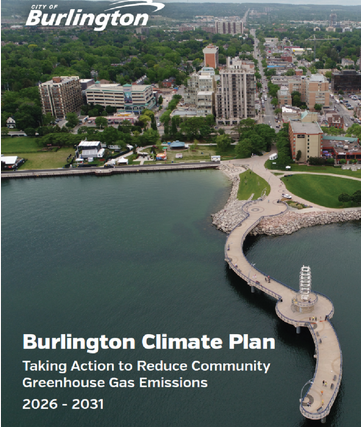
 The City has released its updated Burlington Climate Plan – a guide to help the community use less carbon-heavy fuels like natural gas and gasoline. This will cut the greenhouse gases that cause climate change. The plan focuses on buildings and transportation because they create most of our local emissions. The City has released its updated Burlington Climate Plan – a guide to help the community use less carbon-heavy fuels like natural gas and gasoline. This will cut the greenhouse gases that cause climate change. The plan focuses on buildings and transportation because they create most of our local emissions.
Check out this important Plan and its proposed 17 action items. Consider sending your feedback about the plan to the Mayor and Members of Council and/or register to speak directly about the urgent need to accelerate action on climate.
Read the staff report on the City’s Feb 9th Committee meeting agenda here.
Some of the detail in the Staff report:
Burlington Climate Plan (2026 – 2031)
The Burlington Climate Plan proposes 17 action items grouped by topic into three themes and five subthemes:
Theme 1: Buildings & Energy
Subtheme: Energy Efficient Retrofits (2 Actions)
This subtheme focuses on how the City of Burlington can help support residents to make existing buildings more energy efficient such as speeding up the rate of home energy retrofits. This will decrease the emissions of the existing buildings, by supporting residents to overcome barriers and connecting them with information, resources, and financial incentives.
Subtheme: Low Carbon New Development (2 Actions)
This subtheme focuses on how the City of Burlington can encourage developers to make new buildings more energy efficient. We need to ensure that we are not only building new homes faster, but that energy efficiency and climate resiliency strategies are used within the development and design process.
Subtheme: Community Energy (3 Actions)
This subtheme focuses on how the City of Burlington can support the adoption of low carbon energy sources to reduce our demand on energy sources like diesel, gasoline and natural gas. As we electrify the buildings and vehicles, we need to ensure that the electricity grid can support this increased demand, while remaining resilient and low carbon.
 The push is going to be to reduce the transportation part of the pie chart. Get people out of their cars and onto public transportation. This is not going to be easy. Burlington was designed as a city where everyone would use a car to get around. Theme 2: Integrated Mobility
Subtheme: Transportation (4 Actions)
In Burlington, more than 71 percent of the trips that start and end in the city are completed by car. Short trips (under 5 km) make up a large share of urban car travel. Switching these trips to forms of active transportation can have a big impact on community emissions.
Subtheme: Transit (4 Actions)
Public transit offers a wide range of benefits that can improve the lives of individuals and communities. It is a cost-effective alternative option to driving, helping to reduce traffic congestion and air pollution. Getting more people to use public transit instead of driving alone will help reduce local air pollution.
Theme 3: Local Economy (2 Actions)
Climate change reduction efforts, such as investing in green technologies and infrastructure can stimulate economic growth, innovation, and job creation. Energy efficiency programs and environmentally sustainable business practices can save businesses money and improve their competitiveness. There is an opportunity for the City of Burlington to become a leader in the green economy and support local businesses through their decarbonization transition.
What We Heard: Community Engagement
A community engagement strategy was developed as part of the plan update and included 22 engagement opportunities for residents to share their priorities for climate action and feedback on the proposed action items for the updated plan.
This stuff matters! Did you get to one of the 22 engagement opportunities?
By Gazette Staff
February 6th, 2026
BURLINGTON, ON
You might want to book your tickets for this March event. It will be one of those SOLD OUT occasions.
An Inspiring Evening with David Suzuki and Tara Cullis!
 We’re excited to share that BurlingtonGreen is partnering with the Burlington Performing Arts Centre (BPAC) for a very special theatre experience on March 8th featuring David Suzuki and Tara Cullis. We’re excited to share that BurlingtonGreen is partnering with the Burlington Performing Arts Centre (BPAC) for a very special theatre experience on March 8th featuring David Suzuki and Tara Cullis.
What You Won’t Do For Love is an intimate and thought-provoking theatre experience that explores how love for each other, for community, and for the planet can inspire meaningful action on climate and environmental protection.
To celebrate this partnership, use promo code BPACGREEN for 25% off your tickets. It’s an opportunity to gather, reflect, and feel inspired by voices that have shaped environmental action for decades.
Join us for a night that brings together art, connection, and hope for the future.
Tickets HERE
By Laura Fuerte
February 5th, 2026
BURLINGTON, ON
 Ontario’s regulated online gambling market has become one of the most closely watched developments in North America’s digital gaming landscape. Introduced in 2022, it arrived at a moment when jurisdictions across the region were weighing how to expand online casino offerings without undermining public confidence or long-term stability. Instead of pushing rapid liberalization or placing the market into a strict monopoly, Ontario took a more structured, competitive route. That balance has attracted attention well beyond the province itself. Ontario’s regulated online gambling market has become one of the most closely watched developments in North America’s digital gaming landscape. Introduced in 2022, it arrived at a moment when jurisdictions across the region were weighing how to expand online casino offerings without undermining public confidence or long-term stability. Instead of pushing rapid liberalization or placing the market into a strict monopoly, Ontario took a more structured, competitive route. That balance has attracted attention well beyond the province itself.
From the outset, the system was framed as a way to guide players into a clearly organized market without disrupting existing habits overnight. Early public commentary often leaned on familiar digital metaphors, likening the experience to a Swiper motion that favors gradual movement over abrupt shifts. That focus on smooth transition has played a role in how the market is now viewed, both by players and by industry observers.
A framework designed for balance
Ontario’s model has also shaped the way online gambling is talked about in public forums. The messaging has gradually shifted toward transparency, informed participation, and moderation, rather than spectacle. Over time, promotional visibility has become more restrained, falling in line with broader cultural expectations around digital advertising and consumer awareness.
What stands out is the balance between flexibility and consistency. Operators are free to differentiate themselves through product mix and user experience, yet the overall environment remains predictable for consumers. For policymakers elsewhere, this balance has become a point of interest, especially in regions debating whether competition inevitably leads to disorder.
Scale, participation, and market maturity
Ontario’s iGaming market has grown quickly, both in the number of active platforms and in wagering volume and overall revenue. Online casino content has become the main engine of that activity, mirroring global patterns rather than anything uniquely local. Since launch, millions of player accounts have been recorded, pointing to demand that already existed and has now surfaced in a more visible, regulated ecosystem.
More significant than raw growth is how participation has consolidated within the provincial market. A large share of online gambling activity now takes place on platforms available to Ontario residents, reducing reliance on less regulated alternatives. This consolidation has reinforced confidence that a competitive structure can still lead to market order rather than dilution.
Consumer confidence and market perception
At the same time, Ontario’s model has reshaped how online gambling is discussed in public spaces. The tone has moved toward transparency and informed participation, with moderation taking precedence over spectacle. Promotional visibility, meanwhile, has eased into a more restrained style, closer to what audiences now expect from digital advertising.
This evolution has not eliminated debate. Some observers question whether any rapidly expanding online market can fully avoid saturation effects. Others argue that Ontario’s experience shows how adaptability matters as much as initial design. These contrasting views are part of what makes the province’s experience relevant rather than prescriptive.
In closing
Ontario’s iGaming market is often cited not because it claims to have solved every challenge, but because it offers a working reference point. By combining competition with structure and allowing the market to evolve visibly, it provides North American decision-makers with a practical example of how online casino growth can unfold within defined boundaries, while still leaving room for adjustment as expectations change.
By Pepper Parr
February 4th, 2026
BURLINGTON, ON
One would think that with the two biggest developments in the city to manage Paul Paletta would be a very busy man.
 Stretching from King Road on the east to the Aldershot GO station in the west and lined by Hwy 404 on the North and the rail line on the south, it is one of the biggest undeveloped pieces of property in the city. The 1200 King Road development is going to take a year or so before it is under active development with announcements about partnerships expected this year. The site is massive and will, when fully developed, have at least one educational partner, sports facilities, office capacity and housing. It might well be the first full community on a site in both Burlington and the Region.
At the same time, the Bronte Creek Meadows development is close to ready to get shovels into the ground. Zoning and Official plans have been cleared on this project.
 On Wednesday January 28th, 2026 Alinea announced the acquisition of Coldterra and the creation of Universal Cold under Alinea Capital Holdings. On Wednesday January 28th, 2026 Alinea announced the acquisition of Coldterra and the creation of Universal Cold under Alinea Capital Holdings.
A ribbon cutting ceremony took place in August of 2022 in honour of their new state-of-the-art facility. The 65-million-dollar complex is located in Hamilton. The 65-foot-tall expansion boasts nearly 163,000 sq ft. of storage space and over 42,000 positions bringing the facility’s grand total to 339,000 sq ft.
There were a number of corporations involved in the development of what is now a wholly owned Alinea operation. Sierra Supply Chain Services, Sierra Cold, TiCold and Penta Properties.
Paul Paletta describes Universal Cold as “an investment rooted in our belief in strong, behind-the-scenes infrastructure that people rely on every day. Cold storage plays a critical role in keeping food safe and moving through the supply chain, and Universal Cold continues to be an essential part of that system.
“This transition reflects the values that guide all our work: thinking ahead and supporting essential infrastructure for the long term, working collaboratively with the team already in place, being transparent about ownership and accountability, and practicing responsible stewardship. These four pillars shape how Alinea approaches every investment and our role in the communities we serve.
 Paul Paletta “What hasn’t changed is just as important. The people, operations, and compliance standards remain the same. Our role is to support the team doing the work and ensure the foundation behind the business is steady, reliable, and built to last.”
With Universal Cold settled Paul Paletta and his team are focused on getting things going at the 1200 King Road site and shovels in the ground at Bronte Creek Meadows.
By Gazette Staff
February 4th 2026
BURLINGTON, ON
The groundhogs seem to have agreed that Spring is just six weeks away.
That warm weather will mean no more morning views like this with the sun glancing off the snow-laden trees.
 Imagine looking out the window and seeing something as magnificent as this?
By Gazette Staff
February 4th, 2026
BURLINGTON, ON
Heart to Heart: A Variety Show Celebrating Passions

Thursday, February 12th + Friday, February 13th : 7:30pm
Heart to Heart is a community variety show with a twist! With a dynamic mix of 18 local performers showcasing their talents through music, dance and comedy. This production explores the passions that connect us, whether it’s the spark of romance, the joy of a beloved hobby, or the comfort of family and friends.
BOX OFFICE
By Gazette Staff
February 4th, 2026
BURLINGTON, ON
Family Day, the occasion when the province focuses on its families.
 They’ve been doing it for 20 years – the kids love them. The Performing Arts Centrre has put Splash,N Boots on the Main Stage an hour of children’s music.
Monday, February 16th | 1pm
Get the kids out of the house this winter!
Treat the family to an afternoon of family-friendly music with Splash’N Boots! This beloved Canadian children’s music duo has been spreading joy through their infectious music for over 20 years.
Ticket prices are reasonable, just $25 each
BOX OFFICE:
By Gazette Staff
February 3rd, 2026
BURLINGTON, ON
Burlington has appointed Deputy Fire Chief Drew Boys as its next Fire Chief, effective February 9, 2026, following the upcoming retirement of Fire Chief Karen Roche.
Deputy Chief Boys brings more than 20 years of experience in the fire sector, including senior leadership roles with Brampton Fire and Emergency Services, Oakville Fire, and, most recently, Burlington Fire, where he currently serves as Deputy Fire Chief.
 Drew Boys – new Fire Chief for Burlington In his current role, Deputy Chief Boys has worked closely on projects such as Simultaneous Notification, Next Generation 9-1-1, the Medical Priority Dispatch System (MPDS), and the modernization of Burlington’s primary and backup 9-1-1 Fire Communications Centres. All of these projects contribute to improving efficiencies and modernizing fire services.
Deputy Chief Boys serves as the sponsor of the City’s Enterprise Asset Management System (EAMS), contributing to technology projects that support data-driven decision-making and service delivery. He also participates in regional, provincial, and national committees, including the Joint Emergency Services Operational Advisory Group (JESOAG), the Ontario Association of Fire Chiefs (OAFC), and the Public Safety Broadband Network (PSBN) Innovation Alliance.
By Ray Rivers
February 3rd, 2026
BURLINGTON, ON
In many ways, there has been too much discussion about Canada’s EV mandate, introduced during the Trudeau years as a climate change initiative. It is one of the few remaining vestiges of climate policy that we associate with former PM Justin Trudeau.
 Gaz guzzlers: Advertising taught us to love them. An EV mandate has long been opposed by the big three US automakers since it would ultimately mean the end of the gas guzzler. They are opposed to essentially scrapping their outdated internal combustion infrastructure. A second reason has to do with the symbiotic relationship of these large corporations and those in the petroleum sector.
The mandate included a 20% interim 2026 target for EVs. When PM Carney, realized, among other factors, that the 20% target would not be attainable this year he paused the interim requirement. That pausing raised the hopes of the conventional auto industry that the entire mandate was also on its way out the door.
EV sales in North America have fallen off a cliff since Mr. Trump put a curse on them after returning to office. And the father of the modern EV, Elon Musk, almost killed the Tesla as buyers penalized him for all he did during his disastrous stint at the White House.. That is the USA, but too many of us Canadians tend to follow America’s lead – so Canadian EV sales here have also crashed.
Built into the federal EV mandate is an option for a kind of EV trading scheme. The mandate allows credits to be created by those overachieving the mandated levels and allowing them to sell credits to those who don’t. This is a bizarre provision which complicates the mandate and creates potentially unintended consequences.
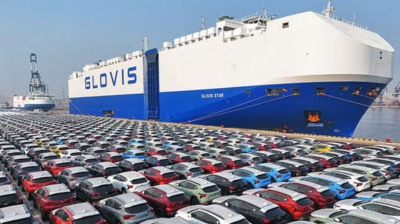
 50,000 of these Electric Vehicles will arrive in Canada – what will the take up be? The domestic makers complain that imported Chinese EVs will be able to earn credits. And selling those credits would hypothetically put an estimated billion dollars into Mr. Xi’s Beijing bank account. That should be enough to kill the mandate, they say.
As for the so-called Big Three, nobody serious about the environment should ever take their advice. GM and Ford were heavily complicit in masking and hiding how their products would hasten the advent of climate change. For over 50 years ago they have hidden this truth from the public. They can’t be trusted with our future.
Those American based auto makers are on their way out anyway, being called home by Mr. Trump. The number of vehicles the big three produce in Canada and the number of people they employ to make them have dramatically tumbled over the last decade. Honda and Toyota have replaced them and they also build better cars, according to most reviews. So Canadians need to say good riddance as the last factory built US car plant in Canada eventually closes.
The EV mandate, notwithstanding disappointing sales of those vehicles this past year, has probably already been a success in signalling to the industry and consumers that it is time to change up their ride. The history of subsidies for EV purchases has been moderately successful, particularly when there had been a significant price differential.
What is lacking is adoption of a standardized universal auto charging system and a national highway of reliable, easy to use EV chargers from sea to sea to sea. That is currently one of the biggest drawbacks to broader EV adoption. Otherwise EVs should sell themselves. They are faster, quieter, less costly to operate and virtually maintenance free – with or without an EV mandate.
There is a place for mandates and prohibitions. A federal appeal court has just ruled that plastic is a toxic substance allowing the continued banning of unnecessary plastic products like shopping bags and drink straws. Surely no reasonable person would argue that car exhaust is any less toxic.
 Ray Rivers, a Gazette Contributing Editor, writes regularly applying his more than 25 years as a federal bureaucrat to his thinking. Rivers was once a candidate for provincial office in Burlington. He was the founder of the Burlington citizen committee on sustainability at a time when climate warming was a hotly debated subject. Ray has a post graduate degree in economics that he earned at the University of Ottawa. Tweet @rayzrivers Ray Rivers, a Gazette Contributing Editor, writes regularly applying his more than 25 years as a federal bureaucrat to his thinking. Rivers was once a candidate for provincial office in Burlington. He was the founder of the Burlington citizen committee on sustainability at a time when climate warming was a hotly debated subject. Ray has a post graduate degree in economics that he earned at the University of Ottawa. Tweet @rayzrivers
Background links:
Auto Complaints – GM/Ford complicity – Big Three on Their Way Out – Plastic Toxicity –
By Gazette Staff
February 3rd, 2026
BURLINGTON, ON
With all that nice white fluffy snow – how do you keep the kids off the slopes?
McMaster Children’s Hospital (MCH) reports some very serious accidents. Doesn’t have to be that way.
 Fun – but not recommended. “In January, we had multiple incidents of children sledding into trees resulting in significant trauma,” says Dr. April Kam, division head of pediatric emergency medicine at MCH. “The hospital’s trauma team treats these incidents in the same manner as children involved in motor vehicle collisions.”
Dr. Kam led a study that found head injuries are the most common sledding injury seen in the MCH emergency department. Head injuries are especially concerning because in rare cases, they can cause lasting brain damage or cognitive difficulties.
“Children and teens routinely wear helmets when skiing and snowboarding, where they can control their speed, yet not when sledding where they often have no control over how fast they go,” says Kam, who is calling for a cultural shift, where helmets are also the norm on toboggan hills.
 This way, you get to go home with your parents and not in an ambulance. As well as confirming that head injuries were the most commonly-treated injury, Kam’s study found that younger kids were more likely to hurt their heads while older children more often had abdominal injuries. Most injuries happened when children fell or crashed into objects, typically involving the head, broken bones, or scrapes and bruises.
Kam’s study also found that most injured children were between six and 10 years old, with an average age of about nine, and just over half were boys.
Kam launched the study during the COVID-19 pandemic, after noticing more children arriving at the MCH ED with sledding injuries during lockdowns, when other winter activities like skating, hockey, ringette and skiing were cancelled to prevent the illness from spreading. She wanted to investigate whether her observations were supported by data.
By Gazette Staff
February 3rd, 2026
BURLINGTON, ON
This year’s theme, 30 Years of Black History Month: Honouring Black Brilliance Across Generations — From Nation Builders to Tomorrow’s Visionaries, commemorates three decades of Black History Month in Canada by recognizing the lasting contributions of Black Canadians. This theme acknowledges the legacy and ongoing impact of those who help shape Canada’s social, cultural and political landscape, while also celebrating the emerging leaders and changemakers shaping the future of this country.
Throughout the month of February, students across the HDSB will explore and celebrate Black Excellence through a variety of engaging activities, including:
- A steelpan drumming group led by the Canadian Caribbean Association of Halton.
- A drumming session using the djembe, a traditional drum from West Africa.
-
 Djembe, a traditional drum from West Africa. on the left a Congal drum on the right. A Black Excellence Forum where students will hear from keynote speaker Curtis Ennis, Director of Education, and engage in breakout sessions to meet and engage with Black professionals from a variety of fields, learning firsthand about their careers, experiences and the ways they are shaping their communities.
- A Black Excellence Assembly, featuring presentations and performances created by students from classes and extracurricular groups, highlighting the contributions and achievements of Black Canadians across history and today.
- More than 30 elementary schools will host Exploring Us: Black History Month presentations for Grade 6 to 8 students, providing an introduction to the HDSB’s Graduation Coach Program and offering resources, guidance and support to help students plan their academic journey.
- Secondary students will have the opportunity to hear from Ontario Poet Laureate Matthew-Ray “Testament” Jones, through his virtual presentation Footprints: It’s All About the Journey. The presentation commemorates Black excellence and joy, while connecting historical legacy to present-day responsibility.
- Grade 6–8 students and their families in Milton are invited to a moderated discussion with Lawrence Hill, award-winning, bestselling author of The Book of Negroes. Hill will share insights into his creative process and his passion for writing stories rooted in Canada’s history.
-
 Guyanese-born, Bajan-heritage author Yolanda Marshall. The HDSB, in collaboration with the Black Opportunity Fund, will host Brilliant Black Futures: A Celebration in Honour of Black History Month. The event will feature a screening of Black Life: Untold Stories, a CBC documentary series exploring 400 years of the Black experience in Canada, as well as student exhibitions, community resource tables and information on programs supporting Black students and families, including the HDSB Graduation Coach Program and Black Student Union. Early learners can enjoy a reading circle led by Guyanese-born, Bajan-heritage author Yolanda Marshall.
 Curtis Ennis, Director of Education for the Halton District School Board. “Black History Month provides an opportunity for HDSB students, staff and families to truly honour the lives, stories and lasting contributions of Black Canadians who have shaped the richness of our country,” says Curtis Ennis, Director of Education for the Halton District School Board. “It is a time to reflect on the past and recognize and celebrate the incredible contributions of Black people today, and to ensure these voices and experiences are meaningfully reflected in learning throughout the year. As we honour history and celebrate the present, we lead with kindness and care, creating school communities rooted in humanity, joy and connection, and continue to strive to provide learning environments where all students can be successful and feel a sense of belonging.”
By Tom Parkin
February 3rd, 2025
BURLINGTON, ON
Foreign currency exchange rates are complex. A deep understanding is vital for any organization buying or selling products and services. Values and profits can vanish in a second because of a change in an exchange rate.
Canadian dollar down against Krona, Peso, Euro and Pound
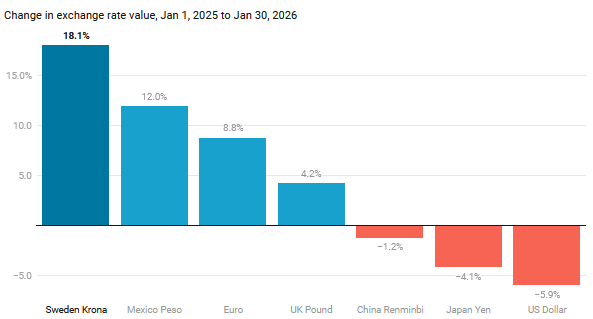
Change in exchange rate value, Jan 1, 2025 to Jan 30, 2026

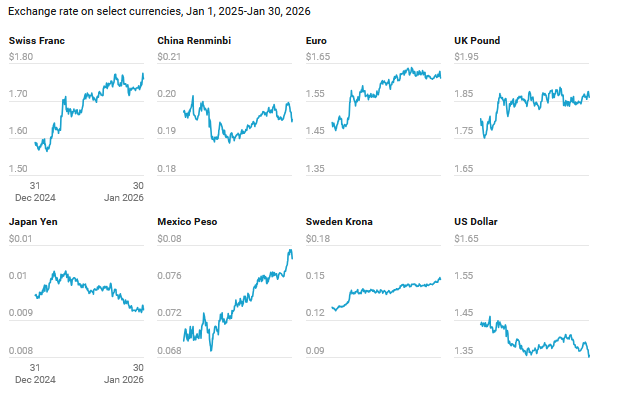
The constant chaos of Donald Trump has pushed the United States dollar down against all major currencies including six per cent against the Canadian dollar since January 1, 2025, according to Bank of Canada data.
From C$1.44 on January 1, 2025, the U.S. dollar dropped from C$1.38 to C$1.36 — 2.52 cents — against the Canadian loonie since just January 21, 2026 when Trump gave his bizarre, meandering and overtime speech in Davos amid threats to invade Greenland and counter-threats from European Union countries, the UK and Canada to aid the defence of the Denmark territory.
Mexican peso, Swedish krona strong against loonie
 Currency used by Sweden But the Canadian loonie is only looking strong compared to the falling US dollar. The Swedish krona is up over 18 per cent against the Canadian dollar and the Mexican peso is up over 12 per cent. The euro and pound are also more expensive for Canadians than a year ago.
Despite the krona’s strong appreciation, which pushes up the cost of imported goods, Sweden has very low inflation, just 0.3 per cent in December. The Nordic nation has keep it’s bank interest rate at 1.75 per cent, helping GDP growth, which was tepid in 2025 but expected to hit 2.6 per cent in 2026. Sweden joined the European Union in 1995 but did not adopt the Euro and the European Central Bank.
 The rate at which the Canadian dollar trades against the American dollar will impact the price of just about everything we buy. Canada’s bank rate remains at 2.25 per cent with inflation at 2.4 per cent in December and a 2026 economic growth forecast of 1.3 per cent.
Mexico’s 1.2 per cent growth outlook for 2026 is similar to Canada. But inflation is running hotter. At 3.69 per cent in December, inflation is above its target of 3.00 per cent and Mexico’s central bank is still holding interest rates at 7.00 per cent. That high interest rate is attractive for investors outside Mexico, boosting foreign exchange into the peso.

Global mistrust driving US dollar downward spiral
Sentiment about global politics has increasingly moved toward pessimism. In times of uncertainty the U.S. dollar has often been a “safe haven” for investment, pushing up the dollar. But in this situation, it is the United States — its president, specifically — that is the cause of uncertainty.
There has been a growing lack of currency trust as Trump threatens war against a fellow NATO county, throws out tariff threats on a nearly daily basis and moves to load cronies onto the Federal Open Market Committee, which sets U.S. interest rates.
The result is a U.S. dollar down more than 10 per cent against the Euro, which makes stock returns from even the most profitable United States companies less appetizing to Europeans managing capital pools. For an investor operating in euros, a 10 per cent stock return in 2025 was reduced to zero by dollar depreciation. That, in turn, drives a spiral of further dollar depreciation as foreign exchange into dollars to make investments drops, amplifying the mistrust of the U.S. dollar under Trump.
The European Union’s annual GDP of about $20 trillion represents a significant global base of wealth and European mistrust for the Trump currency can inflict damage. The EU’s GDP combined with that of the UK, at almost $5 trillion, and Canada, at $2 trillion, nearly matches the US economy at $28 trillion.
|
|





 By Roger Edwards





 BY Tom Parkin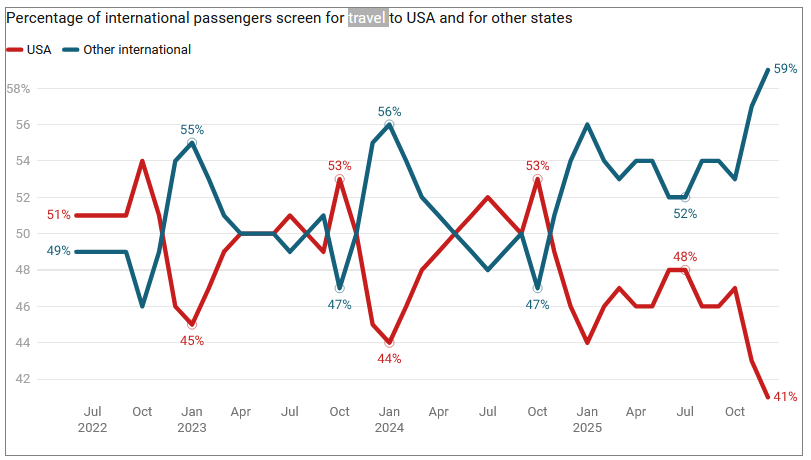



 By Gazette Staff

 By Gazette Staff


 By Gazette Staff
 By Gazette Staff
 The Toronto Star reports that seven Toronto police officers have been arrested in large-scale investigation into organized crime and corruption.
 By Gazette Staff
 The City has released its updated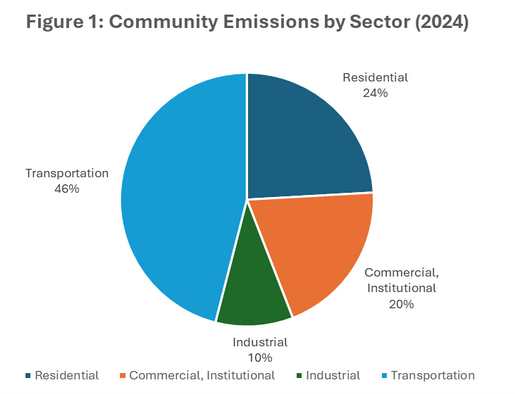
 We’re excited to share that BurlingtonGreen is partnering with the Burlington Performing Arts Centre (BPAC) for a very special theatre experience on March 8th featuring David Suzuki and Tara Cullis.
 By Laura Fuerte
 Ontario’s regulated online gambling market has become one of the most closely watched developments in North America’s digital gaming landscape. Introduced in 2022, it arrived at a moment when jurisdictions across the region were weighing how to expand online casino offerings without undermining public confidence or long-term stability. Instead of pushing rapid liberalization or placing the market into a strict monopoly, Ontario took a more structured, competitive route. That balance has attracted attention well beyond the province itself.
 On Wednesday January 28th, 2026 Alinea announced the acquisition of Coldterra and the creation of Universal Cold under Alinea Capital Holdings.
 By Gazette Staff
 By Gazette Staff
 By Gazette Staff

 By Ray Rivers
 Ray Rivers, a Gazette Contributing Editor, writes regularly applying his more than 25 years as a federal bureaucrat to his thinking. Rivers was once a candidate for provincial office in Burlington. He was the founder of the Burlington citizen committee on sustainability at a time when climate warming was a hotly debated subject. Ray has a post graduate degree in economics that he earned at the University of Ottawa. Tweet @rayzrivers

 By Gazette Staff