By Gazette Staff By Gazette Staff
December 12th, 2025
BURLINGTON, ON
It came to City Council as an Urgent Business matter on the last day of the year that City Council was to meet.
There appears to be an URGENT need for the city to spend $160,000 with one of the most corrupt sports organizations in the world.
The hope in the minds of the people in the Recreation Parks and Culture department is that Burlington will be chosen as one of the locations for the planned FIFA Caravan leading up to the games that begin in June of 2026
 The Cup won’t go to Canada – could the final game be played in Canada. Every municipality had a chance to be one of the Caravan locations: all you had to do was tell FIFA you were interested.
The Caravan travels to various Canadian cities as a precursor to the tournament. It offers interactive programming, photo opportunities, partner activations, and ways to engage with the World Cup. The entire setup is fully branded by FIFA, creating a consistent event atmosphere. Cities bid to host the one-day event, hoping to boost the local economy and community spirit.
In essence, it’s a “mini World Cup village” that tours the country to build excitement and allow fans to experience the tournament’s energy up close,
Burlington was interested; Hamilton wasn’t, so there was a better than even chance that we would be chosen.
Next step was to send along $160,000 and we are in – in not as a chosen location but in as a possible chosen location.
If we don’t get chosen, do we get the $160,000 back?
Nope.
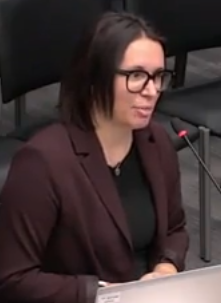
 There was a tight deadline and her department needed a recommendation from Council before they adjourned until January. Emilie Cote explained to Council that there was a tight deadline and her department needed a recommendation from Council before they adjourned until January.
She also needed to know that thefunds would be available to pay FIFA the $160,000
The department also needs funding for a half-time staff member to be the coordinator with FIFA
FIFA is very very tight with the way their brand is used. There is one way things get done. THEIR way.
So we are in for the $160,000 – Not certain as to what we are getting – but it is expected to be fun and, as Councilor Angelo Bentivivegna put it –” this will put Burlington on the map.”
What Bentivegna doesn’t appear to grasp is that we will be seen as one of the communities that got suckered into a FIFA cash grab.
No one around the Council table made any mention of the reputational risk. Our thought as we watched the webcast was that the City Solicitor would bring it up. He didn’t.
Council passed the following Recommendation
Direct the Director of Recreation, Community and Culture to proceed with collaborating with FWC26 Canada Football Ltd. (FIFA26 Canada) to bring FIFA Canada’s Caravan, a nationwide fan experience celebrating the FIFA World Cup 26, to Burlington, and to formalize the partnership through an agreement outlining respective roles, responsibilities, and financial contributions, as described in report CSS-30-25; and Authorize the Chief Financial Officer to make a one-time contribution of $160,000 to the Cultural Initiatives Reserve Fund, funded through 2025 retained savings. These funds will support the FIFA Canada’s Caravan as outlined in report CSS-30-25. Any unspent funds following the event shall remain in the Cultural Initiatives Reserve Fund for future use in enhancing City-initiated cultural programs, in accordance with the Reserve Fund by-law.
The reality is that there is a surplus from the 20253 budget – the city plans to use that surplus to bring an event to Burlington.
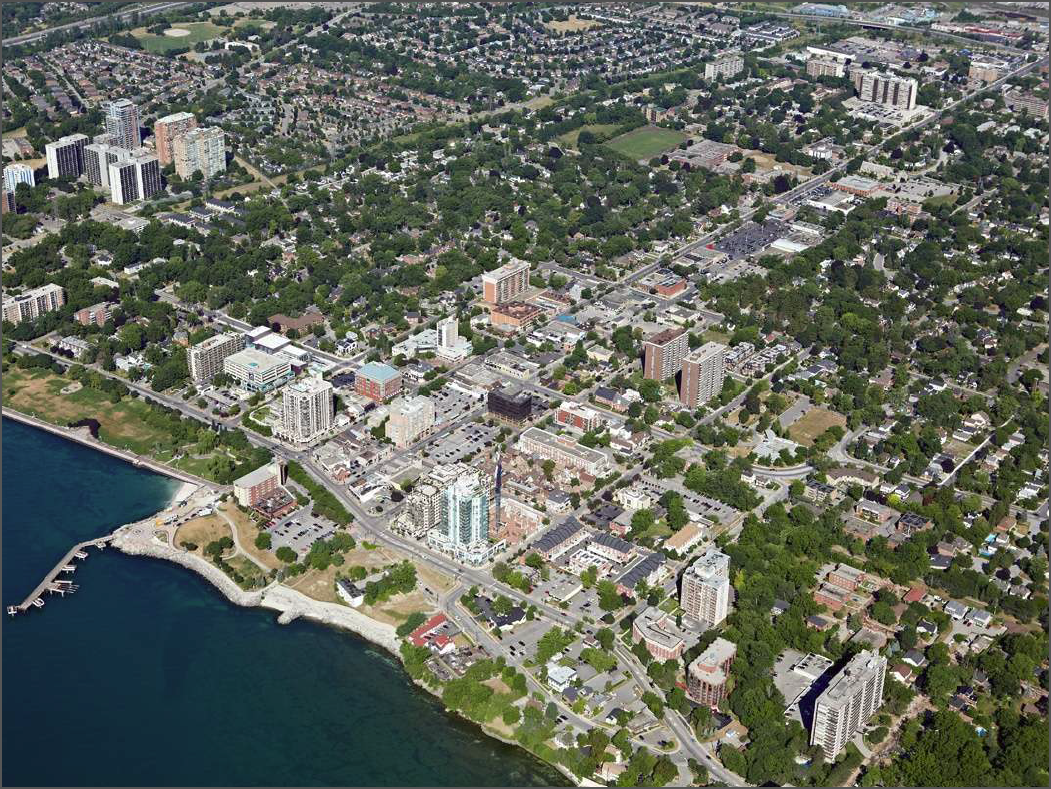
 Where in Burlington would the Caravan be located? The public has yet to be told how long the Caravan will be in Burlington or where it will settle. The World Cup Games are huge – bigger than the Olympics.
This event will drive thousands of local hockey teams..
The beauty of the sport – and the game is a beautiful sport – is that it can be played year-round. The City already has three domes with a fourth dome to be built on the Corpus Christi grounds – it is scheduled to open late 2027 – early 2027.
 The 48 countries taking part in FIFA 2026 are divided into 12 groups. Canada is in Group B with Switzerland, Quatar and a fourth country. The 48 countries taking part in FIFA 2026 are divided into 12 groups. Canada is in Group B with Switzerland, Quatar and a fourth country.
The games run from June 11 to July 19, 2026. It is jointly hosted by sixteen cities—eleven in the United States, three in Mexico, and two in Canada.
First question is: Can Canada get by Switzerland?

By Gazette Staff
December 12th, 2025
BURLINGTON, ON
Arkells are planning to get *very* up close and personal in the first half of 2026. This means popping up all over the place, playing some surprising and intimate spaces to introduce our soon-to-announce new album to you.
 Do they own the bus?
Step #1 – have you been listening to What Good? Cause we’ll be playing it live.
Step #2 – have you presaved Money ft. Portugal. The Man? Cause it’s coming out Dec 17.
They want you to be able to sing every song they write and play.
We hope you can sing every word to us, at our just announced European dates for March 2026:
Mar 12 – Berlin, GER – Mikropol
Mar 13 – Hamburg, GER – Nochtspeicher
Mar 15 – Cologne, GER – Artheater
Mar 17 – Amsterdam, NED – Bitterzoet
Mar 19 – Manchester, UK – Deaf Institute
Mar 20 – London, UK – Underworld
Dates are on-sale Friday at 10 AM, with pre-sale starting today with code WHATGOOD. Snap ‘em up here!
We’ll be playing new songs, old hits, and everything in between. If we aren’t coming to your town, but live in the same continent, start planning the road trip.
Least you can do is meet us halfway!
By Gazette Staff
December 12th, 2025
BURLINGTON, ON
There are people who pay attention and make themselves aware of what is going on in the city. Who is saying what – and how close is what they are saying to the truth.
Joseph A. Gaetan, a Burlington resident sent a note to the City Clerk asking that a letter he had written be read into the record and distributed to every member of Council.
The letter isn’t likely to be read by members of Council – they are off until the New Year.
Re: Concerns Regarding Public Statements on the 2026 Waterfront Music Festival
Dear Members of the Clerk’s Office,
I am submitting this letter for inclusion in the public record and distribution to Council. My concerns relate to recent public communications from both the Mayor and the City’s Communications Department regarding the 2026 waterfront music festival.
In multiple statements – including the Mayor’s recent interview and the City’s December 9, 2025, media release titled “Free Summer Music Tradition Continues with a New Waterfront Music Festival in Burlington” – the City has asserted that Burlington “will” have a free waterfront music festival in June 2026. These communications strongly suggest that the event is confirmed and that it will not cost taxpayers.
However, based on the Committee meeting held on December 1st, this is not an accurate reflection of the actual status of the process. The report before Council was a Receive and File, not an approval of any operator. Staff emphasized that the festival details, financial implications, and operational requirements will not be finalized until Q1 2026, and several councillors noted that this remains a staff-delegated decision subject to further reporting. Nothing in the public record confirms that the festival is fully approved or that the City will incur no costs.
My concerns are as follows:
Premature Assertions of Certainty
 Mayor Meed Ward on CHCH TV talking about her calendar and the Waterfront Music Festival The Mayor’s public comments stating that residents “will get a two-day free music festival” do not reflect the procedural reality that no final decision has been made. The December 9 media release similarly presents the festival as confirmed, with planning already “underway.” This risks misleading residents about the stage of approval.
Misleading Framing of “Free”
The repeated assertion that the festival is “free” should be clarified to mean free admission, not that the event is free of taxpayer impact. Municipal costs such as policing, emergency services, permits, park preparation, and staff oversight exist regardless of whether the operator is not-for-profit or for-profit.
Code of Good Governance – Conduct Commitments, specifically section 11, states:
“We will communicate information to the public in ways that are accurate, timely, and in the interest of the corporation. We will respect that the Mayor, as head of council, is the primary spokesperson for Council.”
At minimum, residents should be provided with communication that fully meets these standards – communication that accurately reflects not only what the public will experience (a free event), but also the financial and operational realities behind that experience. Omitting key context can unintentionally mislead the public and erode confidence in Council’s stewardship, especially when the term “free” is used repeatedly without qualification.
Public Confidence and Transparency
Burlington residents rely on the City to communicate accurately and in alignment with Council procedure. Announcements that pre-empt Council review undermine public trust and appear to run ahead of decisions that have not yet been made.
I respectfully request that this letter be circulated to Council and that future communications regarding the festival clearly distinguish between:
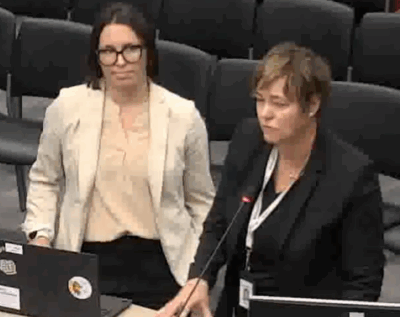
 Emile Cote and Denise Beard, part of the Team that had been delegated the authority to make decisions, did just that – they made a major decision. What has been decided by staff under delegated authority. What remains subject to Council review.
What “free” actually means in the context of municipal expenditures.
Thank you for receiving this correspondence. I submit it in the interest of ensuring accurate, transparent communication with the public.
By Pepper Parr
December 12th, 2025
BURLINGTON, ON
Burlington’s Sound of Music Festival Inc is aware that the City of Burlington has engaged in a request for proposal type process, to find an operator to work with the City, to provide an event for Fathers Day weekend in 2026.
From recent online reports, we are aware that the City plans to work with a non-local, National for profit operator, pending full approval from Council. We wish them both well in 2026.
 The Gazette was not included in the distribution of this media release. For clarification, Burlington’s Sound of Music Festival Inc is not a part of, run by, or governed by the City of Burlington. We are 100% independent. 100% not for profit. Driven by volunteers. Furthermore, we are not part of, or affiliated with, the new festival operator. Our brand, trademark, contracts, relationships and volunteers are not part of the City, or the new operator. They are our intellectual property. Any communication, video or print, that states otherwise, is 100% false.
No one ever said SoM was part of the city operation. What SoM has chosen not to say is that they required regular infusions of cash from the city
We have provided culture, entertainment and financial gains for the local community for the last 45 years. And are proud of the legacy we have created. Fathers Day Weekend was all about Sound of Music no matter where you were! We feel your love and share in the disappointment of what has transpired.
The disapointment was not just within SoM; thousands of people wished there had been better leadership and management within the Som organization.
Our event is not tied to a geographical location. We are a brand. We are a legacy. We support local, live, and community. Those are our roots. We are staffed by hundreds of volunteers, who take time from their busy lives, to help provide culture, music and arts to our friends and family in our community. Its time to get back to our roots and embrace the future!
Sound of Music has always talked about the possibilities; but never came clean with what they were up against. Collaborate was their message – but “can we do it behind closed doors.”
The statement that we could not believe was when Dave Shepperd said to Council, when they asked what SoM would do about a cash advance that had been made but not yet repaid: “We would like it to go away.
As we look to 2026, we will share our plans when the time is right. We want to thank all of our supporters, local and far. You have made our festival one of the best in the world. We couldn’t have done it without you!
 Volunteers setting out locations for the vendors. These volunteers were stiffed by the leadership when they wanted to participate in who would become members of the leadership team. We would have liked to have heard the S0M leadership apologize to the volunteers for letting them down. Many of those people put a lot into making it work.
With all sincerity and wishing all a happy and safe holiday season!
Dave, Jay, Julie, Mark, Al, Richelle, Vanessa, Bob
Board of Directors
Burlington’s Sound of Music
By Pepper Parr
December 11th, 2025
BURLINGTON, ON
One spending item got some attention at the Regional Budget debate earlier this week; that had to do with the decision to get out of the Heritage business and shut down the department and either auction off the items in the Heritage Collection or pass them along to the municipalities – let them deal with the stuff.
During the discussion, Burlington Mayor Marianne Meed Ward told Councillors that Burlington had three museums: the Brant Museum, Ireland House and the Freeman Station. What Meed Ward didn’t say was that the Station hasn’t been used for the past two years.
 A lot of hard work went into getting the Freeman Station to the point where it was a part of the city’s cultural landscape. Now they are talking about moving it – at a cost that will exceed $3.5 million. Joe Gatean did an excellent piece on the situation (link below) where he wrote about the dismay, disappointment and frustration on the part of the men and women who rebuilt that station.
They raised all kinds of money and turned it over to the city. Something they now regret.
City Council decided that the Station should be added to the properties Museums of Burlingon operates.
I turned to the Museum’s site and gathered the names of the Museum’s Board of Directors.
Bryan Beatty: Chair; Len Collins: Vice-Chair; Julia McNulty: Treasurer; Adam Belovari: Director; Simone Bilato: Director; Cathy Bowles: Director; Jaime Garbett: Director; Dianne Pearce De Toledo: Director; Robert Price: Director; Councillor Shawna Stolte: Director and Gerald J. Park: Advisor.
Would these people have the decency to step forward and ensure that the public is fully informed about the plans they have for the Station?
I then looked at the Strategic Plan – It was dated 2023, a concern in itself – not a word about Freeman Station. That might be because the Strategic Plan currently on the Museums of Burlington website is dated 2023, which in itself is a concern.
I looked at the Annual Report for 2024 – not a word about Freeman Station. There was a short paragraph: “The Museums of Burlington have a small but mighty team who work tirelessly to ensure that the programs, events, exhibitions and visitor experiences are memorable and impactful.” Are people paid to write this kind of drivel?
It is fair to ask: What do they plan to do with the structure?
Is there someone responsible for the building? Does someone drop by every couple of weeks to ensure there are no leaks or broken windows?
 Most people know it as the Freeman Station – even though officially it was the Burlington West Junction station. The Museum organization wasn’t all that interested in the Freeman Station to begin with. The city had to do something once the Friends of Freeman Station dissolved their organization – they had done their job. The Museums Association was seen as the only option. Councillor Sharman liked the idea of moving it to the Ireland Farm site.
The Museum did say that” there are opportunities for additional programming to be developed and delivered onsite as occupancy would not be a barrier. These program opportunities could include increased school trips, additional day camp programs and large-scale community events. Shared resources, staff and programming could reduce some costs.
When the refurbishing of the Brant Museum site was complete (A federal grant paid for most of that work) the City decided to create Museums of Burlington and put the administration and marketing of the two locations under one umbrella. When the city accepted Freeman Station from the not-for-profit Friends of Freeman Station, they tucked it under the same umbrella. There was no budget attached to the location – the result? Nothing got done.
The options given to Council by Staff, when they were asked what the choices were in terms of where the station could be put, if it had to be moved.
Option 2 (a): Move Station to Ireland House, 2168 Guelph Line
The $3.5 million price tag to move the Freeman Station to Ireland House should be enough to take that idea off the table.
If it is determined, following a structural review of the Station (Staff have performed a cursory inspection of the Ireland House) that it can be moved, Ireland House has land to accommodate the structure to continue as a museum.
Option 2 (b): Move Station to a City Park
In 2010, staff thoroughly examined options for relocating the Station, identifying numerous obstacles. They evaluated 16 locations against various criteria, shortlisting . However, Council decided against pursuing any of them. Prior to 2010, over 20 other locations were also investigated. Staff now anticipate difficulty in identifying another suitable location for relocating Freeman Station. If this option is chosen, the base cost to move the Station to a proximate park will have similar financial implications as Ireland House minus the cost for duplicating the current foundation and basement.
xxx
The railway displays in the basement, paid for by a teacher’s association, would be lost if the structure were moved.
It is crucial to assess and potentially address any trees in the vicinity that may obstruct the relocation process. This could involve pruning, trimming, or even removing trees to create a clear path for transportation. Additionally, if any of the trees are deemed purebred and subject to protection regulations, additional costs may be incurred for measures such as creating protection zones.
Total initial Capital investment to relocate the Station to Ireland House is approximately $3-3.5 Million. In addition to this, Museums of Burlington would also require an operating budget to cover program and facility expenses in addition to resources to operate, maintain and offer programming in the space. These additional resource requirements would be further developed in a business case through the 2025 budget process if this option is preferred by Council.
The City Administration now spends quite a bit of time on “risk analysis? What, if anything was done looking at the risks in putting the station where it is now?
The site is very close to the Fire Department – that department is not going to get much smaller. There is some land to the east of the station that could be used for parking.
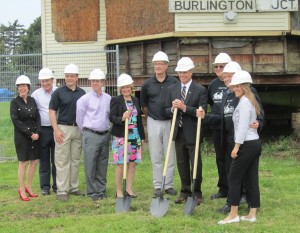
 If you’re getting your picture taken – of course you take your dog with you.  Breaking ground for the current site was another photo op When the building was officially opened, the “dignitaries” were lined up to be included in the photo op.
The Grand Trunk Railway of Canada built The Freeman Station in 1906. When the discussion arose in 2010 as to where to relocate the Station, the tall roof posed a major challenge. It is too tall to fit under any railway bridges along the QEW – requiring it to remain south of the QEW.
A suggestion was made to remove the roof, however the roof and its large overhang supported by rafter tails is the structure that holds the walls and whole thing together. Just moving the roof separately, it would probably still be too tall.
Another idea was to haul it to the lake and launch it on a barge to a destination unknown?
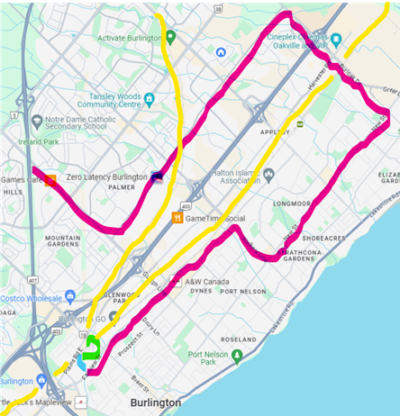
The only way to escape north of the QEW intact – is along the level crossing at Burloak – which means going east along New Street to Burloak then north on Burloak over the tracks and QEW. This would require stopping the trains from running along past Burloak. Not easy with GO trains running each way every 15 minutes.
That option will not exist as a result of the grade separation at Burloak.
 Theoretically – the route in pink to arrive at Ireland Park. It means moving power lines, telephone + cable wires. traffic signals. Police escort. Existing rail lines are in yellow; the route from the current location to Ireland Park is in pink. The blue/green is where the move from the original site on the Grand Truck Railway line to the current site. The station was never very far from its home.
When the station was moved originally – it was on the May 24 weekend of 2005 – 19 years ago along the green route. Cost estimate was $25,000
When it moved again in 2014 it was about 75 yards along the blue route and cost estimate was again $25,000.
To move it from the current location would probably mean slicing it up into smaller pieces and reassembling it at the destination. A move would include the signal mast, stonework around the base and the two rail cars – caboose and a boxcar.
Rail track and switches would have to be moved as well. The poured concrete basement would need to be ripped up and sent to a landfill.
Quite often, when buildings are torn apart – with the expectation to be rebuilt in a new location, the rebuild gets delayed and never happens.
A lot of damage was done to the building while getting it mounted on the float during the 2005 Victoria Day weekend move. Basically, the floor was destroyed, and a completely new floor had to be installed. The brickwork around the base was removed for transport – and had to be put on afterwards.
It is theoretically possible to move the Station to Ireland House intact – but the cost including insurance would be astronomical. Add to that the cost to reinstall all the electrical, gas heating, plumbing, sewer and flooring – there are better uses in the community for such funds.
The current site is the best option, the only option really. The foundation was built to last.The site has the potential to be a very significant destination. There are literally thousands of model railroad organizations, people that rebuild old steam engines and have huge model railroad set ups in their basements. These people love to go to new train set ups. They are a natural draw for Freeman Station. Add a feature film on a steam engine that has been rebuilt and feature it at the Performing Arts Centre – and you have a winner.
It will take some marketing imagination and a little hustle on the part of a group to make this happen. The Burlington Economic Development and Tourism Corporation is the group to get this done.
First step is for City Council to apologize for dropping the ball to the men and women who did the work and to take another look at the Museums of Burlington leadership.
A little ‘giddy up’ is needed over there.
Related news story
So what about Freeman Station
By Pepper Parr
December 11th, 2025
BURLINGTON, ON
This is not good news.
And it isn’t something we can blame on the pandemic.
 A twenty percent slide in two decades. Why?
The graphic was prepared by the Fraser Institute – nothing in the way of a narrative to support the graphic. The Fraser is a responsible organization that can be relied upon to provide solid data.
The province (was it all of Canada) has just come through a Give Tuesday event. Everyone was looking for financial support. We’ve yet to see any data and how much was raised. We suspect it would have been a disappointing figure: with meat prices said to rise 7% and grocery bills getting higher and higher – there is only so much to go around.
The concerning part for most people is that 2% cohort that takes away millions in salary, bonuses and stock options – men and women who earn 200% more than the average worker.
How much money can any one person spend?
Special to the Burlington Gazette
By Joe Gaetan
December 11th, 2025
BURLINGTON, ON
There is a particular kind of pride that comes from re-building something with your own hands – especially something that was never supposed to survive.
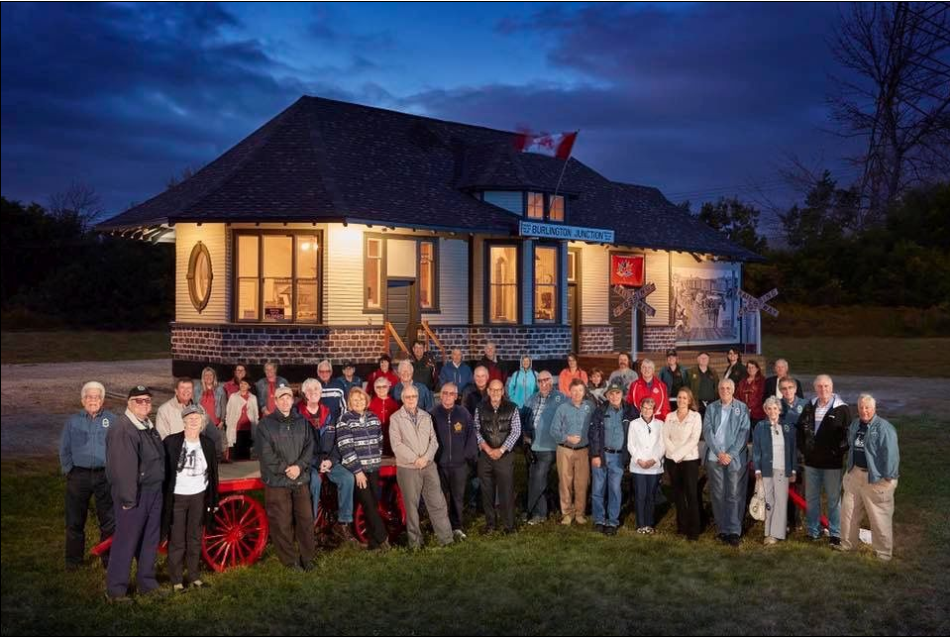
But today, that feeling by the Friends of Freeman Station (FOFS) volunteers has been replaced by something heavier: disappointment, frustration, and a growing fear that their work is slipping away.
 Have the Friends of Freeman Station (FOFS) been forgotten? The disappointment, frustration, and a growing fear that their work is slipping away. A Long Fight to Save What the City Tried to Scrap
The battle to save Freeman Station began long before the creation of FOFS. Many remember the earlier group, SOS – Save Our Station.
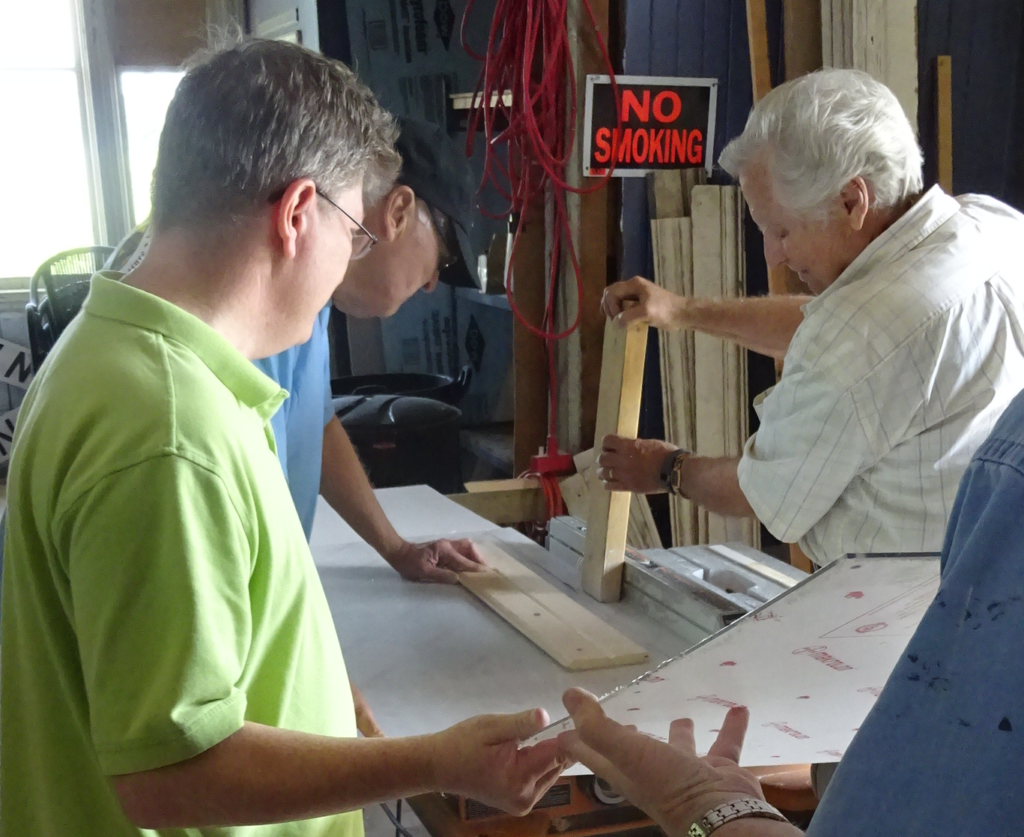
Turning a doomed relic into a community showpiece involved plumbing, electrical work, carpentry, trackwork (including a working railway track switch), and more. For the volunteers (men and women alike) who restored Burlington’s beloved Grand Trunk Railway’s Freeman Station, pride once fueled them every day.
Most people know it as the Freeman Station – even though officially it was the Burlington West Junction station. The battle to rebuild also relied on donated hours and materials that local businesses contributed – quiet gifts of lumber, paint, metalwork, gravel, heavy equipment, and labour.
Enter the collective efforts of Councillors Meed Ward and Lancaster who gave the volunteers enough time and space to rally. And rally they did.
But if a resident today asks the Mayor or a Councillor for an update, the replies are polite but vague.
For those who swung the hammers, rebuilt the floors, placed every board, nail, and artifact – these words feel thin.
The Station Has Sat Idle Since May 2024
When the FOFS not-for-profit corporation was formally folded in 2024, many assumed the transition would be temporary and smooth.
It hasn’t been.
Since May 2024, Freeman Station has sat dark and unused. No tours. No school visits. No community programming. No preservation or planning updates.
Just… silence.
 The legacy they built with their own hands. The volunteers, now retired from their once-daily work on the site, meet over coffee and quietly wonder:
What will happen to the station if no plan emerges?
Will it remain where it stands, or be relocated – perhaps to other grounds?
Who is watching over the artifacts, archives, and history they protected for years?
“We Stopped Counting at 10,000 Hours”
Ask any of the volunteers who restored the building and they will tell you: they lost track of their volunteer hours somewhere after the 10,000 mark. And that number doesn’t include the generous in-kind labour donations from local companies.
They still speak fondly about rail lore captured by:
The diorama that schoolchildren marvelled over.
The VCR tapes documenting local rail history.
The boxes of railway books, donated by residents.
The old rail “jigger,” still sitting in front of the building – its single broken window never replaced.
 1951 Chrysler TH&B Rail Inspection Car The 1951 Chrysler TH&B Rail Inspection Car – a rare, time capsule of mid-century rail maintenance operations.
The 1911 semaphore type Train Order Signal, complete with working lights.
The original Underwood typewriter used in the early station office – salvaged from being junked.
These weren’t just objects; they were the heart of Burlington’s rail heritage. Today, many of the volunteers aren’t even sure where some of them are.
A Legacy in Limbo
What stings most is the sense that things didn’t have to unfold this way. Several volunteers say that if they had known what was coming, they would have done everything in their power to prevent the not-for-profit from folding.
 Expertise, tools and time were brought into the station to save what the city tried to sell as scrap wood. They believed they were passing the station into safe hands – into a future where the city would protect and showcase what they had rebuilt. Instead, they now see a building locked up, unused, and drifting toward uncertainty.
As one volunteer put it over coffee:
“We poured our hearts into that place. Now it feels like we’re watching it go off the rails.”
A Call for Clarity – Before It’s Too Late
Freeman Station is more than a building. It is a treasured landmark saved twice – once from demolition, and again through sheer grit, sweat, and community generosity.
The volunteers who saved it are not asking for fanfare. They are asking for answers.
Burlington owes them, and the public, a clear plan for the station’s future before the legacy they built with their own hands begins to fade.
Postscript by the Author
For over a decade, the not-for-profit model behind the rebuilding of Freeman Station proved something important: Heritage preservation can be nimble, cost-effective, and astonishingly efficient when driven by community passion. The FOFS did this due to their deep expertise and knowledge of rail history, all powered by communal engagement, something tough to replicate.
The question now is whether the City and other stakeholders can come together to safeguard the legacy – or whether a decade of community led stewardship will fade away.
By Gazette Staff
December 11th, 2025
BURLINGTON, ON
 The Burlington Lions Club will mark its 100th anniversary with a $100,000 community investment: presenting cheques to three Burlington charities on Thursday, December 18, at 3 p.m. at Lions Club Hall. The Burlington Lions Club will mark its 100th anniversary with a $100,000 community investment: presenting cheques to three Burlington charities on Thursday, December 18, at 3 p.m. at Lions Club Hall.
Representatives from Carpenter Hospice, Community Living Burlington and Shifra Homes will each receive $33,333. Non-alcoholic refreshments and light snacks will be available.
“This centennial donation reflects the heart of who we are as Lions,” said Lion John Fanjoy, president of the Burlington Lions Club. “For 100 years, our members have given their time and energy to serve this community. Supporting Carpenter Hospice, Community Living Burlington and Shifra House ensures that our centennial year is not just a celebration of our past, but a meaningful investment in Burlington’s future.”
The recipients are:
Carpenter Hospice — $33,333
Carpenter Hospice provides a home-like setting for individuals in the final stages of life. The hospice also offers grief and bereavement support, educational workshops and family services.
Community Living Burlington — $33,333
Community Living Burlington supports individuals with developmental disabilities through residential support, day programs, community inclusion opportunities, employment services and family resources.
Shifra Homes — $33,333
Shifra Homes provide maternity residence for young pregnant women (ages 16–27) experiencing homelessness or crisis. The organization provides a safe environment with wraparound supports including counselling, prenatal coordination, life-skills training and parenting preparation.
 Burlington Mall Farmers’ Market The centennial gift is part of a broader year of charitable impact by the Burlington Lions Club. The club has approved more than $220,000 in donations for the 2025–26 year, supported through volunteer-led initiatives including the Burlington Mall Farmers’ Market, hall rentals, fundraising activities and its stewardship fund.
Residents interested in volunteering, joining the club or learning more about upcoming initiatives can visit burlingtonlionsclub.ca.
The Lions Club is the city’s first service club. They are guided by the motto “We Serve,”
By Pepper Parr
December 11th, 2025
BURLINGTON, ON
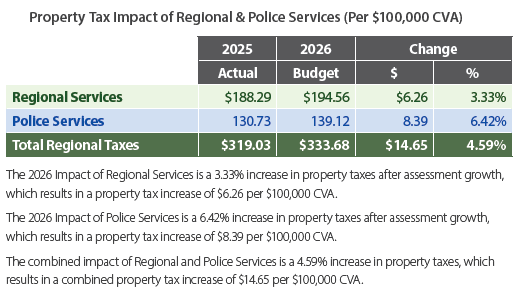
The Region of Halton adjourned their final meeting for 2025 yesterday by attending a reception for themselves and settling on a budget number.
Regional operating expenses amount to almost half of what Burlington collects from you in the way of taxes.
Deliberations on the Regional budget had taken place a week earlier – there were few changes in what was approved yesterday.

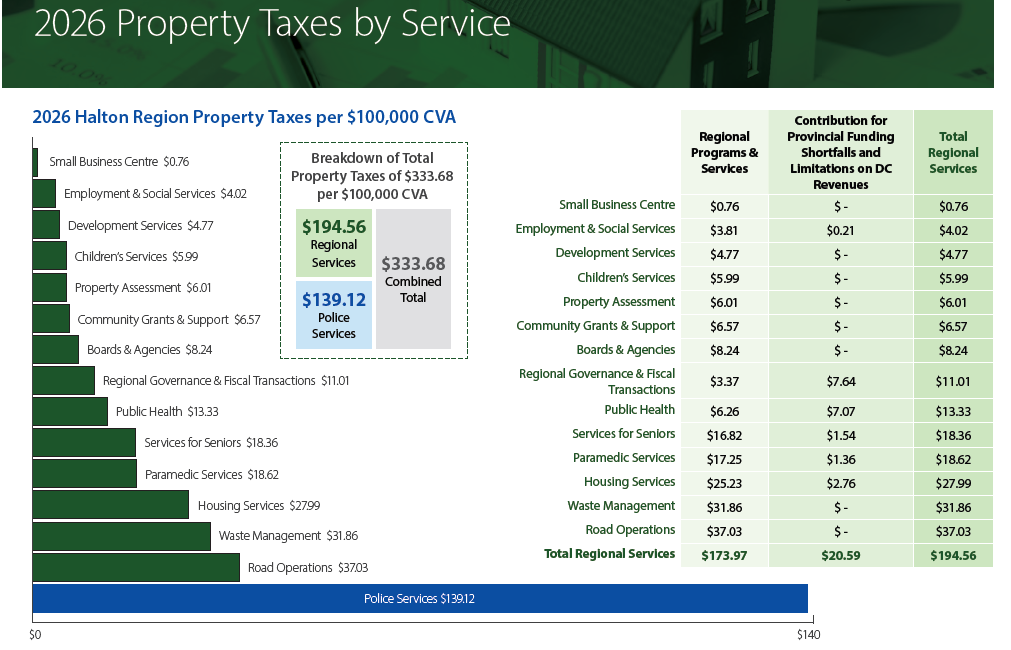
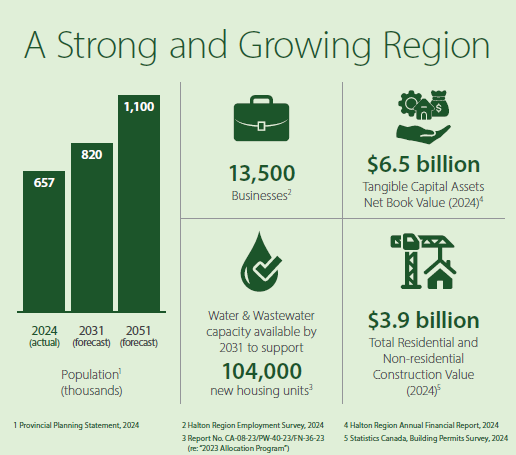
The Region provides several services that are critical to the welfare of the 657,000 + people who live in the Region: Public Health; children’s services,; Water; Waste Management; Paramedic services and Police Services. The Regional government boasts about how safe the city is – the police do their best to keep it that way – it is expensive. Set out below are the different services and what they cost.

Many don’t realize just how big the Region is; the size of the population and the number of business operations.

The Region is governed by representatives from the four municipalities: Oakville, Burlington, Milton and Halton Hills.
 Regional Council deliberating the 2026 budget: Why the empty seats? Some attended virtually.
By Sadie Smith
December 11th, 2025
BURLINGTON, ON
The digital economy in Burlington is finding its groove in the swiftly growing Canadian entertainment industry. The growing presence of tech ventures, creative production houses and media companies exploring novel cyberspace opportunities has made the town a hidden innovator.
Burlington’s transformation is part of a much larger narrative unfolding across the country, as experience, storytelling, platforms and technology reshape how people engage with media. Innovators in the city are positioning themselves at the forefront of this evolving landscape.
The Burlington Tech Scene Moves into the Limelight
 The high tech environment space has always been both stressful and exciting. “Canada added 66,600 tech jobs in 2024—a growth rate of 5.9%, compared to just 1.1% in the U.S.; high-tech alone contributed 51,300 new jobs (11.2% growth),” according to a 2025 LinkedIn article highlighting the country’s expanding innovation economy. This national surge has been mirrored locally, as Burlington has transformed over the past decade from a manufacturing center into one of the most promising technology hubs in Southern Ontario. Local companies are now at the forefront of the exploding digital entertainment sector, which generates billions annually for Canada’s economy and continues to redefine the city’s economic identity.
This change has been brought forth by the next generation of entrepreneurs. The technological start-ups, which in the past mainly focused on developing technology for businesses, also began to create consumer offerings that integrate technology and art. From AR storytelling applications to live sports streaming applications, the people of Burlington are capitalizing on the desire for interactive content.
Its proximity to the innovation corridor in the Greater Toronto Area affords companies in Burlington the capital, talent and connections necessary to successfully compete in the marketplace, not only regionally but also throughout the country. The growing intersection of media and technology means that Burlington will be an integral part of the burgeoning digital culture in the Canadian market, where innovation as well as authenticity are important.
Applications, Platforms and the Power of Engagement
Mobile applications lie at the forefront of the digital media entertainment industry in Canada and businesses in Burlington are taking advantage of this. They are developing applications that optimize interactions, the speed of content and AI-driven personalization.
 Change is constant – new ideas pop up, and a better product is the result. Interactive media has proven extremely popular among young professionals. These include lifestyle applications where people can set targets in a game format, as well as media streaming applications that facilitate live commentary while watching sports. Companies in Burlington realize that it isn’t the number of downloads but the level of engagement that determines success.
The market also encompasses other online casinos that currently operate in the mainstream within the regulated Canadian iGaming market. The use of review websites that compare the approved operators helps customers behave responsibly in the industry. For example, Casino.ca offers comparisons of more than 120 approved online casinos, assessing information related to their operations, payment methods and responsible gambling practices.
Through a fusion of content creation, mobile know-how and responsible technology, companies in the city of Burlington are working towards the development of a trust-driven digital ecosystem.
The Expansion From Streaming to Gaming
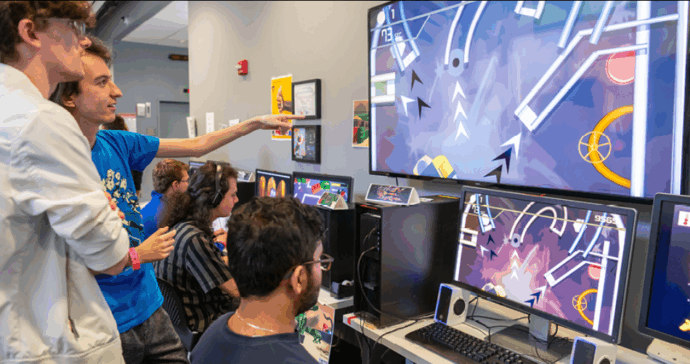
One of the most exciting developments in the technology sector of Burlington has been in the area of interactive entertainment. Local companies are exploring innovative methods of connecting with consumers, ranging from the use of virtual reality in stories to incorporating e-sports.
Gaming, as a sector, has registered phenomenal national expansion too. In fact, Canadians spend more time gaming than watching television. The developers in the town of Burlington are meeting this challenge by developing games that promote creativity, accessibility and community as important values. Entertainment, for them, means doing, not consuming.
In addition to gaming, companies in Burlington work in partnership with the national broadcasting networks to create streaming for the Canadian audience. The creation of programs ranging from live broadcasts to music, among others, addresses the growing demand for content diversity.
Burlington’s strategy, which pairs creativity, collaboration and knowledge of digital behavior in the Canadian market, is positioning the city as a versatile participant in the Canadian entertainment market.
Partnerships that are Focusing the Nation’s Growth
Start-ups in the region often form partnerships with media networks, fintech companies and marketing agencies in order to reach a broader market. This helps smaller companies make use of the technology as well as the creative assets.
Media companies are collaborating with broadcasters to deliver branded content, while the technology companies collaborate with analytics firms to enhance the users’ experience. The sports sector, as well as the esports platform, remains another important sector contributing to innovation in the media segment.
With transparency now assured by Canadian market regulations, Burlington-based developers are actively contributing to the responsible growth of the digital industry. This extends to sportsbook sites and other forms of entertainment, aiming to seamlessly blend innovation and trust. Their goal is to build interactive communities for sports fans, fostering both engagement and responsible participation.
The Future of Entertainment Innovation in Burlington
The online world continues to expand – offering more and more in the way of choices. The growing digital entertainment industry in Canada means that the technology and media industry in Burlington continues to develop. The business culture in this city, along with talent, means that innovation continues to flow.
Through collaboration, ethical design and innovative development, the companies in the city are harnessing digital entertainment as a means of driving innovation. This is in light of the ongoing innovations in technology that continue to influence the way people connect as well as the way people play. Burlington offers tangible evidence that innovation can occur anywhere, where creativity meets this intersection.
By Pepper Parr
December 10th, 2025
BURLINGTON, ON
Burlington Mayor Meed Ward appeared on CHCH TV for a short interview; it was her responses to really soft questions.
“We have finished our budget. Actually, the last piece of it will be today at Halton Region, but we pretty much know where they’re going to land. So the total tax increase in Burlington is 4.46% that includes a 2% infrastructure Levy. It includes adjusting for inflation, for a factor of about 2%. The City share of that 4.49 is less than 3% That was a direction that I gave to our staff, and council endorsed that.
“This is an inflation infrastructure budget with just a small additional amount for community services, like opening our new library at the Robert Bateman Community Center, which is awesome so services people rely on while keeping the city in a state of good repair.”
Okay? New developments with the Music Festival
“In June, absolutely. We e do have a new music festival provider. There was an open transparent process. MRG live got it. They’re a for profit company. I mentioned that because what it means is that it doesn’t cost taxpayers a dime. The city does not provide funds for profit corporations; so there is no money available to them as long as they’re a for-profit corporation. That’s part of our policy. So this isn’t costing residents anything. They are going to get a two day free music festival on Father’s Day weekend 2026 in Spencer Smith Park.
“And there will be opportunities for community involvement, volunteers, and businesses to get involved. Watch for those opportunities.”
Mayor Meed Ward was getting a little ahead of the process. The precise details are always in the fine print that has yet to be written.
City staff are meeting with MRG Live and will report back to Council in Q1 of 2026
Mayor Meed Ward displaying her 2026 calendar during a CHCH TV interview. The really big news is the Mayor’s gift to the citizens of the city – a free calendar. You apparently have to send an email to the Mayor to get a copy.
Mayor Meed Ward gushed as she explained “… we’ve also got a calendar, and it’s really cool because it’s interactive, and it’s showing the beauty of the city.
“This is the second year we’ve done this. We put a call out to photographers to send in their favourite picture of Burlington’s beauty.
“We had our big unveil yesterday with all the photographers who were given an honorarium.
Related news story:
Mayor didn’t see that one coming
By Pepper Parr
December 10th, 2025
BURLINGTON, ON
Well this clears up that question.
Karina will remain the MP for Burlington.

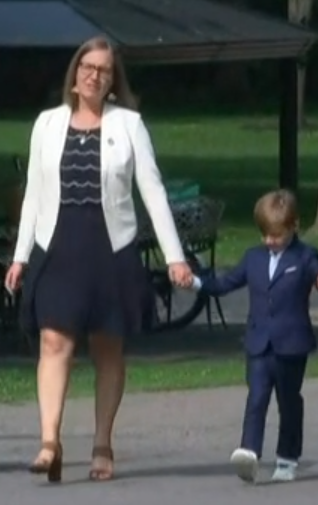
 Karina Gould on her to to Rideau Hall where she was sworn into the last Trudeau Cabinet. Karina Gould, a Cabinet Minister in the Justin Trudeau government, ran for the leadership of the Liberal Party of Canada.
That race was won by Mark Carney, who is now the Prime Minister.
He did not appoint Gould to his Cabinet. She Chairs two significant House Committees:

By Pepper Parr
December 10th, 2025
BURLINGTON, ON
It was at the very end of the Council meeting that took place yesterday.
Mayor Meed Ward said the following:
“We do not engage in debate, but if anyone has any questions about how this meeting was conducted, I’d be happy to answer questions from public or media offline outside of this meeting.”
 A citizen delegating at a meeting of City Council. One interesting point that the Mayor didn’t make perfectly clear and a statement the Gazette has not heard even once during Meed Ward’s term of office as Mayor relates to her saying:
When she said “we do not engae in debate” she was saying that during Council meeting the public can delegate and answer any questions from members of Council. But they cannot debate with Council during the delegation.
Frequently,after a delegation has been completed the questions from Councillors will turn into an exchange of views on an issue. It doesn’t happen very often – but it does happen.
What has never happened is the Mayor saying she was prepared to meet with the public and media .
As Mayor, Meed Ward has never called a media event. A Carlton University graduate with a degree in journalism Meed Ward has frequently referred to herself as a journalist – that’s not quite true. Marianne has been an editor, a spokesperson, a panel member on a television show but she has never worked as a reporter covering a beat or doing an in-depth interview that we are aware of.
 Mayor Meed Ward on TVO ‘s The Agenda It is worth noting that Meed Ward is often very good on panels. She loves the camera and the camera loves her.
This shift – making herself available to media is new – and a positive sign. Some people have been pressuring the Mayor to be more open and available and act as the Mayor and not just as someone available for every photo-op imaginable.
Is the pressure working ? – keep it up. This shift could be because there is an election less than a year away and the Mayor is fully aware that she will face a credible candidate who wants to wear the Chain of Office.
By Sadie Smith
December 11th, 2025
BURLINGTON, ON
 Canadian players are faced with a choice between legal and offshore platforms. With the rapid growth of online gambling, Canadian players are faced with a choice between legal and offshore platforms. Understanding where they actually play and the reasons behind their choices is crucial for grasping the industry’s current trends. Dudespin also offers insights into how player preferences continue to evolve. This article explores the factors influencing Canadian gamblers’ preferences.
Canadian online gamblers often find themselves deciding between legal and offshore casinos. The allure of offshore sites typically lies in their broader game selections and potentially higher payouts. However, legal platforms offer the assurance of regulation and security, which can be a significant draw for many players. For more insights into this trend, visit dudespin casino. Additionally, some players analyze diverse casino options to find their preferred platform. In many cases, Dudespin casino provides valuable information on promotions, helping players make more informed choices.
Benefits of legal gambling platforms
 Knowing that your concerns are going to be treated fairly is an important part of wagering no matter where you are playing. Legal gambling platforms in Canada provide a regulated environment that ensures fair play and security. These sites adhere to strict guidelines, offering players peace of mind regarding the safety of their personal and financial information. Additionally, legal platforms often provide customer support and dispute resolution services, adding another layer of trust.
Moreover, the presence of local licenses means that these platforms contribute to the Canadian economy through taxes and job creation. This aspect can appeal to players who prefer to support domestic industries while enjoying their favorite games.
Another significant advantage of legal gambling platforms is their commitment to responsible gaming initiatives. Licensed operators in Canada are required to implement tools such as deposit limits, self-exclusion programs, and reality checks that help players maintain control over their gambling activities. These platforms also provide access to problem gambling resources and support organizations, demonstrating a genuine concern for player welfare. Furthermore, legal sites undergo regular audits to ensure their random number generators and payout percentages are fair and transparent, giving players confidence that the games aren’t rigged against them. This level of accountability and player protection is rarely found on offshore platforms, making legal sites the preferred choice for those who value responsible gaming practices.
Many users find the reliability of a regulated casino appealing, especially when searching for trustworthy sites. Players can also consult Dudespin casino to stay informed about these vital safeguards.
Attractions of offshore gambling sites
Offshore gambling sites attract Canadian players with their extensive game libraries and enticing bonuses. These platforms often operate under different regulations, allowing them to offer unique games and promotions not available on legal sites. The promise of higher payouts and a wider variety of betting options can be particularly appealing to seasoned gamblers.
However, playing on offshore sites comes with risks, such as potential legal issues and the lack of regulatory oversight. Players may face challenges in resolving disputes or recovering funds if something goes wrong. Despite these risks, the allure of offshore gambling remains strong for many Canadians seeking diverse gaming experiences. Insights from dudespin casino help highlight these contrasting motivations.
Factors influencing player choices
 Players may face challenges in resolving disputes or recovering funds if something goes wrong. Several factors influence whether Canadians choose legal or offshore gambling platforms. Convenience, game variety, and payout speed are significant considerations. Players often weigh the benefits of regulation and security against the excitement and potential rewards of offshore sites.
Additionally, personal preferences and past experiences play a role in these decisions. Some players prioritize safety and reliability, while others are drawn to the thrill of exploring new and varied gaming options. As trends evolve, analyses from Dudespin casino continue to shed light on how Canadians navigate these choices.
By Tom Parkin
December 10th, 2025
BURLINGTON, ON
OPINION

Compared to the April 28 general election, the average of results from November’s publicly-released poll show the top moves are:
- Conservatives down 3.8 points to 37.5 per cent support
- NDP up 2.7 to 9.0 per cent
- Liberals down 1.8 to 42.0
- BQ up 0.4 to 6.7 per cent.
NDP gains from Liberals, Conservatives lose to everyone
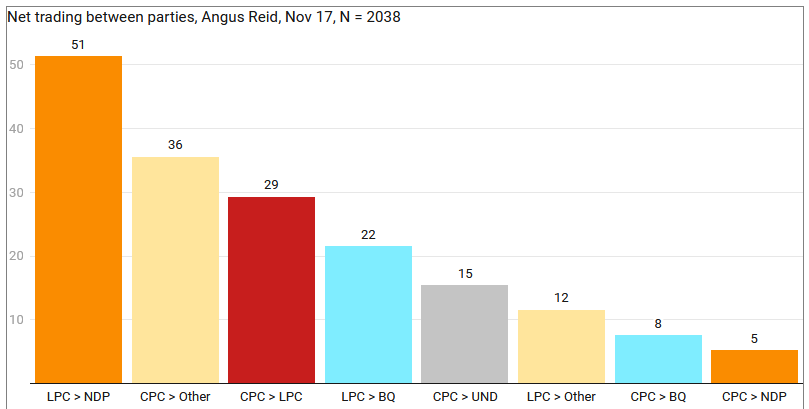
Unfortunately, not many pollsters help us understand where these gains and losses are coming from or going to. Angus Reid’s November 17 poll is the only survey that provides cross-tabs of current vote intention against past vote, showing shifts between the parties, from previous non-voters or into the undecided column.
A further step determines the net gains between choices. For example, since the last election, while 21 respondents moved from the NDP to the Liberals, 72 switched from the Liberals to NDP, a net gain of 51 for the NDP.
Net score below can be summarized as:
- NDP made large net gains from Liberals and smaller net gains from Conservatives
- Liberals made net gains from Conservatives but lost to NDP, BQ and others
- BQ gained from Conservatives and Liberals
- Conservative lost to all of the above, including others (assume PPC) and undecided.

An NDP focus on Conservatives to unlock Liberal strategic voting?
Carney’s rightward orientation and move to absorb Conservative support has given the NDP some space for a rebound, but the strategic conditions the NDP faces are not substantially changed. The challenge isn’t so much to gain Liberal support as to hold it.
Though Conservative support is bleeding, at 37.5 per cent they remain a threat. Given that Poilievre seems uninclined to change his polarizing style, the Liberals’ ability to demand strategic voting, regardless of their rightward repositioning, remains intact.
But the Liberal focus on gaining Conservative support opens an interesting possibility for the NDP: to also court past Conservatives, but a different demographic than the more affluent voters the Liberals are poaching. The most obvious group for the NDP to pursue would be the blue collar Conservatives Poilievre has worked hard to gain.
A successful class-based attack on Poilievre would not only make direct gains at Conservative expense but also, in pushing down their support, unlock NDP voters from Liberal strategic voting.
And if nothing else, a more class-forward approach would align the federal NDP with its labour allies and provincial NDP sections, almost all of which face the challenge of gaining with blue collar Conservatives if they are to win or hold government.
By Pepper Parr and Aria Wilson
December 8TH, 2025
BURLINGTON, ON
Back in November, Carlton University journalism student Aria Wilson interviewed Burlington MP Karina Gould; the biggest issue that came out of the interview was the Canadian Child Care program, which was designed to get the cost down to $10 per day.
 Burlington MP Karina Gould: “…it’s not going to reach the $10 a day that they had agreed to.” Gould was the federal minister assigned the task of getting all the provinces onside. When it came to Ontario Gould said: ‘They’ve really done the bare minimum.’
The story was spiked for a number of reasons. When the Region of Halton was going through its 2026 budget plans, Child Care was a major issue – that made what Wilson wrote earlier very relevant.
Gould was Chair of the Standing Committee of Finance in the House of Commons, and spoke about the latest of the Ontario Government’s childcare stance, adding that “The province of Ontario has said they’re not planning on dropping childcare fees further, that it’ll be an average of $22 a day… it’s not going to reach the $10 a day that they had agreed to,” Gould said.
There will be a three per cent escalator for early learning and childcare over the next five-year period, mostly to align with inflation.
By maintaining the current childcare funding, the government will risk putting the $10-a-day-childcare on the backburner again.
“The Ontario Government has really dropped the ball when it comes to early learning and childcare and it’s not done their part,” Gould said.
Ontario was the last province to sign onto $10-a-day-childcare and it shows, with some paying over double that amount in Burlington.
 Gould: ““They are playing fast and loose with affordability for parents,” “They (the provinces) could put in their own money. We’ve seen that from other provinces, and most other provinces have reached $10 a day,” said Gould.
“They are playing fast and loose with affordability for parents,” she said. “They absolutely could be signing on to a five-year agreement with the federal government.”
Bringing childcare down to $10 a day in Burlington will be a distant dream until the province sets a target on affordability for parents.
“It’s really time for the Ontario government to stop playing with the affordability that people have at home, to stop pretending that this isn’t a really important economic program,” Gould said. “It’s also really good for our kids.”
The closer look Gould wanted took place at the Regional level earlier this week..
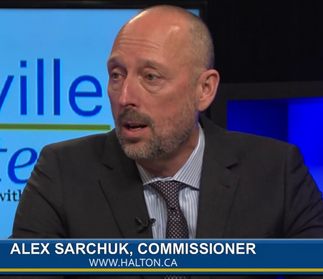
Regional Social Services Commissioner Andrew Sarchuk told Council during the budget deliberations that the Canada Wide Early Learning and Child Care (CWELCC) plan will continue to be a budget priority in the coming year. Sarchuk pointed out that this work has fundamentally changed how child care is funded and overseen.
The CWELCC plan is a federal initiative launched in 2021 with a goal to create a high-quality, affordable, and accessible child care system across the country. Key objectives include reducing average licensed child care fees to an average of $10 per day by March 2026, creating approximately 250,000 new licensed spaces by the same date, supporting early childhood educators, and building a stronger, more inclusive system with Indigenous communities. This is being achieved through federal funding to provinces and territories, who then implement their own agreements to meet the plan’s goals.
“The province of Ontario and the federal government have renewed the Canada wide agreement for one year. They’ve essentially punted larger decisions about the levels of funding down the road, would be my description of it” said Sarchuk.
When it gets to the Regional level, the implementation problems come to the surface.
Child Care operates at several levels: Regional, private operators who signed onto the CWELCC program and independent operators that are not part of the federal/Regional program.
 Sarchuk explains: “For example, there is an increase of 7500 relief hours, which are required to meet legislated child-to-educator ratios at our three directly run regional child care centers; this is fully offset by provincial funding.” Sarchuk explains: “For example, there is an increase of 7500 relief hours, which are required to meet legislated child-to-educator ratios at our three directly run regional child care centers; this is fully offset by provincial funding.”
 Burlington Councillor Bentivegna Burlington Councillor Bentivegna said he was disturbed to learn that CWELCC does not support growth. Do we have statistics on what kind of wait lists we have for child care that is readily available? I get parents who just cannot find daycare, especially for the 12 month to two year age; some have told me that they have to quit work because “I just can’t find someone”. Do we have any statistics on those kinds of weaknesses?
Sarchuk: ” We appreciate that there’s significant demand for these more affordable child care spaces across all parts of the region. Each operator in the region maintains their own separate wait lists, and they are not unduplicated, so families can be on multiple wait lists. It’s difficult for us to aggregate a single unduplicated wait list for child care demand. That said, we know we’re a growth community. We know what families are facing in terms of the costs associated with child care. I have said very directly to the Ministry of Education, staff to staff, and through position advocacy positions taken by this council, that the level of funding and the level of space allocation to Halton is unacceptable.”
“I share your concern. Councillor, we have been as vocal as we’ve ever been in terms of our engagement with provincial partners around the needs here in this community.”
Bentivegna: “I know in my ward there’s areas that are more in need than others. Is that common? Are there geographical areas in Halton that are more, I guess, desperate than others, and do we know where they are?”
 Regional Commissioner Alex Sarchuk. Sarchuk: “It’s an interesting question. Councillor and yes, when we have had spaces to reallocate, and we have had some opportunities over the last couple of years to do that. , Child Care deserts, meaning access is not readily available in the community, which would perhaps favour the community for expansion.”
Oakville Councillor Jeff Knoll: “I know that there are significant issues with it, not the least of which is the uncertainty and the year-to-year uncertainty around it, which causes a huge amount of problems within the sector itself. One is the extreme lack of staffing necessary to actually facilitate the child care roles in our community. Is there anything that we’re able to do? I know that they committed to increasing those numbers substantially at the provincial level. Is there anything that we can do locally?”
Sarchuk: “Recruitment, retention of early childhood educators is a challenge across the province. Provincial funding does support initiatives we call workforce development. The region is utilizing some funding, just over $350 million, through the Workforce Innovation Fund. We’re looking to use that funding to support recruitment and retention of Early Childhood Education (ECE) staff,; we had a recent approval of additional funding of $93,000. We’re working and will continue to work with neighbouring service managers, particularly Hamilton and Peel and working with community colleges as well that have ECE programs.
“This is a difficult nut to crack, and one of the particular challenges is retention. People do come in and do this work, but often don’t make a long term career of it. When you think of the staffing model of a child care center, it’s quite flat.
“The retention piece is probably one of the bigger issues. I think in that sector, they’re probably one of the least paid paraprofessionals existing in our society. The people that we put in charge of the most vulnerable time period in the child’s life are the least paid, not much higher than somebody flipping burgers and McDonald’s or popping popcorn at your local cinema. ”
Knoll: “Are there other are there other opportunities down the pipe to actually find ways to enhance that retention through additional wages? I know that we’re topping up a certain number of dollars per hour for wages. I think you mentioned that before, but are there other opportunities to do that? Because, I mean, this is going to become, this is going to become an absolute DEF CON one crisis at some point, if we don’t get a handle on the staffing of these facilities. Because, I mean, aware that some, I don’t know of any in Halton, but I’m aware of some in Ontario, they’ve closed strict because they don’t have the staff to operate.”
Sarchuk: “I concur. It is worth perhaps a reminder that the Canada Wide program does provide some wage floors for enrolled operators, so that has materially increased compensation for staff, particularly ECEs within Canada. Compensation is generally trending a little bit higher within the Canada Wide model. Additional funding through a renewed federal-provincial agreement, we hope and anticipate would not only seek to support reduced rates for parents, but also raise that wage floor for employees in the sector.”
Knoll: “With respect to the CWELCC program itself. I know that a lot of centers have basically said, I’m done, I’m out. ? Do we have any Halton operators that have basically said, I don’t want to be part of this anymore?”
Sarchuk: “Yes we certainly have had operators who were participants in the Canada Wide program and have made independent business decisions to exit. Those are relatively low numbers., and it’s worth remembering that the funding model did change in January 2025, so some left on the basis of the previous funding model. Very few have left once the new funding model was established and communicated. And I think I’d be remiss if I didn’t mention that operators who do leave the system, those spaces and dollars are reallocated very, very quickly by my team. We have cautioned operators very, very carefully and closely about the decision that they intend to be taking. And unfortunately, we’ve had operators leave and want to come back in, and that can be a point of significant contention. I know councillors have been involved in some of that dialog, and at the end of the day, people have made independent business decisions. And unfortunately, there are consequences.”
Knoll: “Is there any hope of reducing the complexity of complying with this program in the future, making working it more streamlined for some of these are small operators are having difficulties – I know it’s not a regional issue. These are all mandated from on high. Is there any hope for potentially seeing this become simpler to to operate?”
Sarchuk: “I do agree the funding model for the Canada-wide program has many layers of complexity. We’re quite new to it; over a couple of budget cycles, we think familiarity and confidence in the model will increase. We’ve needed to quickly pivot our skill set and our job descriptions and our recruitment to get the types of skills that can manage this type of complex funding relationship and the execution agreements with operators that total almost a quarter of a billion dollars a year.”
 Oakville Councillor Jeff Knowll Knoll: “When a child care center drops out of the program are the funds reallocated.? Does that mean that when that happens, there’s no net loss of child care spaces available under the sea? So when they drop out, somebody else picks it up, because the allocation just gets redistributed. So people being able to access the program do not absolutely lose their place?
Sarchuk: “When an operator drops out there is no net loss but the families that were using the service are, unfortunately, disadvantaged. ”
 Milton Councillor Colin Best Milton Councillor Best added a piece of information that gave some insight as to just what the Social Services people are looking at. 2026 is the anniversary of the first baby boomers born in 1946; those numbers will only increase over the next 20 years. We are nowhere near what we need.
By IVANA BABIĆ
December 8th, 2025
BURLINGTON, ON
 This is a game to really get excited about. When the Toronto Maple Leafs and Ottawa Senators meet again on December 29, Burlington hockey fans will get another chapter of a rivalry that has carried momentum, storylines, and no shortage of emotion over the years. Even if the numbers and recent trends don’t always align perfectly, one thing is certain: when these two teams step onto the ice, the game rarely feels routine. This matchup offers a balance of current form, historical patterns, and big-name individual performances that make it worth paying attention to during the final stretch of the calendar year.
A Rivalry Defined by Momentum Swings
 It’s a tough sport and these two teams do go at each other. Historically, Toronto has held a slight edge in head-to-head play, especially when looking at the last decade. Much of that success has been driven by the Maple Leafs’ ability to generate offense early and force opponents to chase their structure. Ottawa, meanwhile, has often played with a chip on its shoulder, and in several recent meetings, that mindset has paid off. The Senators have stolen games when few expected them to, showing resilience, physicality, and opportunistic scoring that keeps this rivalry unpredictable.
For local fans in Burlington, the emotional weight of Leafs–Sens matchups goes beyond the standings. It’s the kind of meeting that brings families to the living room early, and the kind where a single lucky bounce can shift conversations for days.
Who Can Make the Difference?
Auston Matthews has once again positioned himself as the centerpiece of Toronto’s offensive force. With his scoring touch and on-ice presence, he remains one of the most influential forwards in the league. William Nylander continues to support that pressure, contributing goals, assists, and controlled zone entries, a part of his game that has grown noticeably sharper. Toronto’s attack doesn’t rely on one-dimensional plays; it relies on speed, chemistry, and an ability to capitalize when momentum swings their way.
For Ottawa, the story is different but not necessarily discouraging. The Senators have relied on youth, high-tempo skating, and moments of precision to stay competitive. They’ve shown flashes this season, stretches where the build-up play looks structured and confident, but consistency remains their biggest hurdle. That said, rivalries have a way of leveling the playing field, and the Senators often raise their game in this matchup.
Pressure, Home Advantage, and the Betting Picture
Playing in Toronto gives the Maple Leafs an additional psychological and practical advantage. The home crowd pushes tempo, energy, and urgency. And when goals come early, which Toronto is fully capable of, the rink becomes a difficult environment for visiting teams.
This is also where fan predictions, confidence, and speculation come into play. Many discussions reference an online betting app in Canada, where the Maple Leafs are widely seen as the favourites heading into the matchup. For casual observers, those odds reflect patterns we’ve seen all season: Toronto performs better in key matchups, especially when stars produce and special teams execute.
What Burlington Fans Should Watch For
 This game is going to be a major sports occasion. A few storylines may shape the pace and tone of the December 29 game:
- Whether Matthews and Nylander can break through early and stretch Ottawa’s defensive shape
- The Senators’ ability to remain disciplined and avoid penalties at key moments
- Special teams efficiency, power plays and penalty kills could define momentum
- Whether Ottawa’s goaltending can withstand high-pressure shooting stretches
To see how fan predictions, sports coverage style, and community engagement compare in different regions, platforms like portalnet.cl can offer an interesting perspective.
Even though Toronto enters the game with multiple advantages, talent depth, home ice, and recent scoring trends, Ottawa can make things interesting if they lean on structure and force turnovers in dangerous spaces.
Whether you’re watching from home in Burlington, joining friends at a local sports bar, or following along shift-by-shift, this matchup carries the ingredients of a compelling late-December hockey game: rivalry energy, unpredictable momentum, and star players capable of deciding the result in a single moment. And with both fan bases eager for bragging rights heading into the new year, the stakes feel just high enough to make every minute worth watching.
Those looking for league-wide verified data often refer to official Chilean sports resources such as the National Institute of Sports of Chile, a trusted authority for team and performance statistics in Latin America.
By Gazette Staff
December 9th, 2025
BURLINGTON, ON
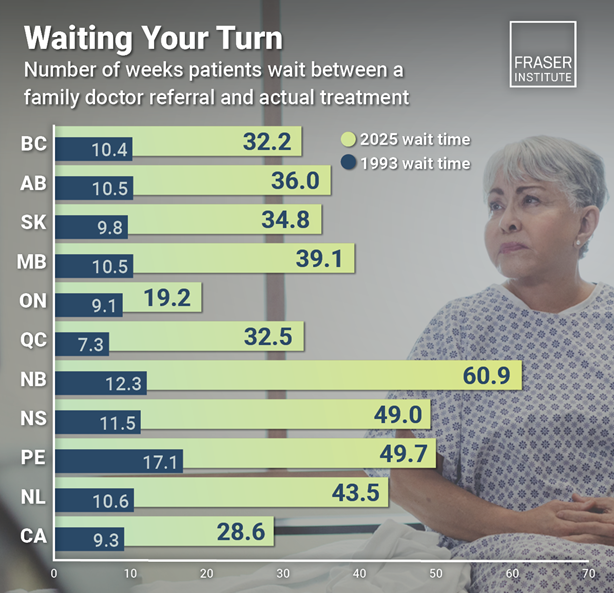
Today the Fraser Institute published Waiting Your Turn, their annual survey of physicians across Canada regarding medical treatment wait times.
The study reports a median wait time of 28.6 weeks — the second longest ever recorded.
Shorter than the 30 weeks reported last year and 208% higher than in 1993, when we began tracking wait times.
 Remarkably long wait times for medically necessary care have become the defining characteristic of the Canadian health care experience. Remarkably long wait times for medically necessary care have become the defining characteristic of the Canadian health care experience.
See the provincial numbers here, and be sure to help spread this important news on social media.
The Fraser Institute is a Canadian independent, free-market think tank founded in 1974, dedicated to promoting policies that improve quality of life through limited government, private enterprise, and individual choice, focusing on areas like education, healthcare, taxation, and natural resources, using data-driven research to influence policy via publications, media, and educational programs, funded by private donations rather than government grants
By Pepper Parr
December 9th, 2025
BURLINGTON, ON
She lives and breathes.
 Burlington MPP Natalie Pierre  Natalie Pierre was a no-show for the all candidates meeting last election. She won the seat by a meager 40+ votes. Chose not to take part in an all-candidate debate during the last election, Natalie Pierre , Burlington’s MPP will be speaking to her motion in the provincial legislaturethis week.
Queen’s Park Observer reports that PC Natalie Pierre has a (non-binding) motion that could “require municipal development charges to be disclosed as a distinct and clearly identifiable line item on all purchase agreements for new home sales.”
Not a bad idea – wonder what the development community and the lawyers who draft the sales agreement think about it?
By Gazette Staff
December 8th, 2025
BURLINGTON, ON
Burlington Public Library (BPL) is launching its annual holiday fundraising campaign to encourage residents to support the Library’s Kids Learning Fund so children can fully enjoy the reading, play, and learning experiences their public library makes possible.
All library programs and services remain free for everyone in Burlington, ensuring equal access to spaces and experiences that support learning and belonging.
 Last year, the Library welcomed more than 4.1 million in-person and online visits. Many of those visits came from children and families seeking free, friendly places to discover new interests and make the most of the Library’s no-cost collections, programs, and services—especially as rising costs continue to affect households across the city. Last year, the Library welcomed more than 4.1 million in-person and online visits. Many of those visits came from children and families seeking free, friendly places to discover new interests and make the most of the Library’s no-cost collections, programs, and services—especially as rising costs continue to affect households across the city.
“Libraries bring people together—especially those who might never otherwise cross paths,” says Lita Barrie, Burlington Public Library CEO. “Your gift helps create joyful learning moments for children and strengthens our whole community.”
Your Gift Makes a Difference
Every contribution helps build a community where children feel welcome, supported, and inspired. This year, donations helped more than 2,100 kids in the 2025 Summer Reading Club enjoy a more engaging experience by enhancing weekly incentives and programs like puppet shows. Donations from the community through the Kids Learning Fund and legacy giving will also help support upcoming enhancements to children’s spaces at all branches, such as new hands-on learning and play activities and digital technology.
- $30 can place up to four new children’s books into eager hands.
- $100 provides supplies for a hands-on STEAM or literacy session.
- $200 helps refresh play equipment that encourages imagination and social play.
How to Donate
You can donate online through BPL’s CanadaHelps form or make a cash or card donation at any branch. Tax receipts are issued for contributions above $20.
 Public Library CEO Lita Barrie “This campaign is about possibilities,” adds Barrie. “Together, we can ensure every child in Burlington has access to spaces and experiences that help them learn, connect, and imagine what’s possible.”
Free to join, Burlington Public Library belongs to everyone in the community, providing open and equitable access to information, digital & print collections and resources, public computers, and a vast array of programs and services. Six full-service branches and a rural lending location offer welcoming spaces where visitors can explore, discover, reflect, learn, improve, create, and connect with others. Stay in touch with us online at bpl.on.ca, and on Instagram, Twitter, Facebook @BurlONLibrary.
|
|





 By Gazette Staff
 The 48 countries taking part in FIFA 2026 are divided into 12 groups. Canada is in Group B with Switzerland, Quatar and a fourth country.
 By Gazette Staff
 By Gazette Staff
 By Pepper Parr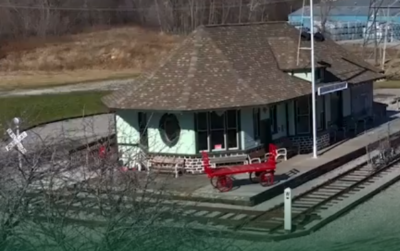

 By Pepper Parr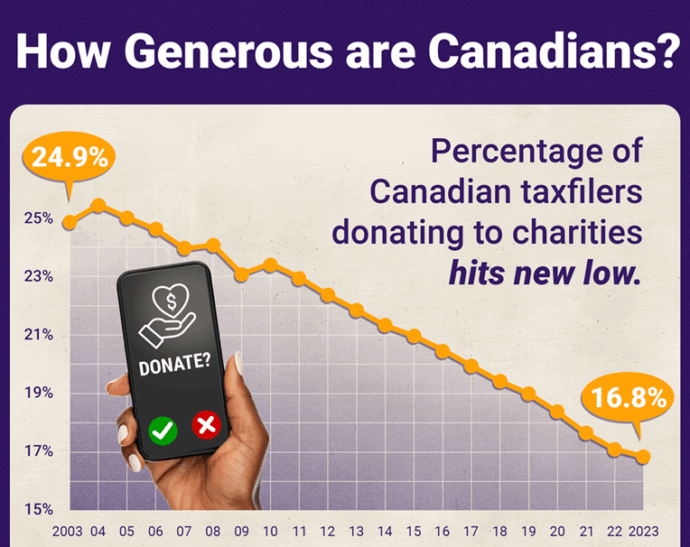



 By Sadie Smith

 By Pepper Parr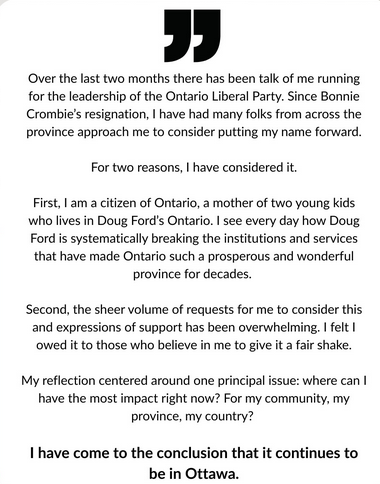


 By Sadie Smith


 By Tom Parkin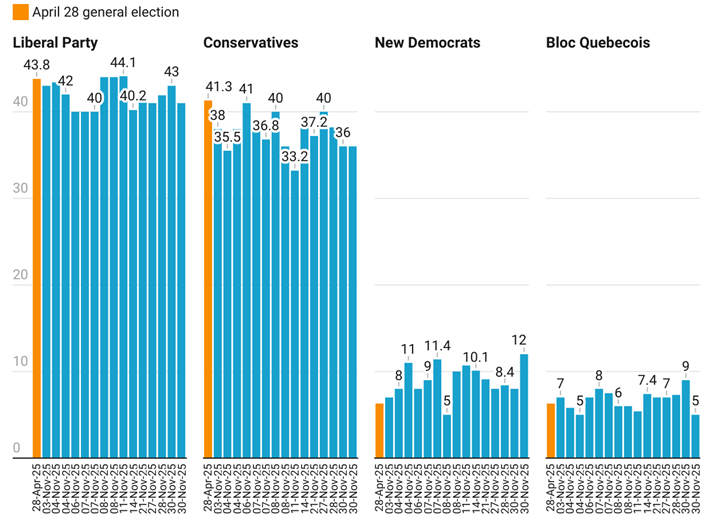
 By Pepper Parr and Aria Wilson
 Sarchuk explains: “For example, there is an increase of 7500 relief hours, which are required to meet legislated child-to-educator ratios at our three directly run regional child care centers; this is fully offset by provincial funding.”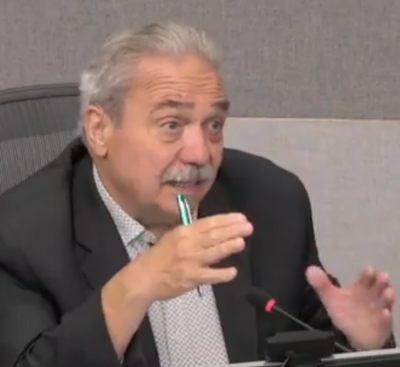


 By IVANA BABIĆ


 By Gazette Staff
 Remarkably long wait times for medically necessary care have become the defining characteristic of the Canadian health care experience.

 By Gazette Staff
 Last year, the Library welcomed more than 4.1 million in-person and online visits. Many of those visits came from children and families seeking free, friendly places to discover new interests and make the most of the Library’s no-cost collections, programs, and services—especially as rising costs continue to affect households across the city.