 By Pepper Parr By Pepper Parr
September 9th, 2019
BURLINGTON, ON
It’s the time of year to drive around the province to take in some of the fall fairs and realize that the harvests will soon be taken in.
Corn is in the stores, the peaches are pretty good, early potatoes are being pulled up.
 Green bean plant that got away on itself. Appreciating and being thankful for what we have is part of the society we live in. Those who have plots in the several community gardens in the city will be out frequently picking what they planted some months ago.
The illustration for this mention is a bean plant that got carried away.
Tough to keep up with the growth.

 By Pepper Parr By Pepper Parr
September 9th, 2019
BURLINGTON, ON
When John Birch was the President of the LaSalle Park Marina Association he was pretty sure he saw some light at the end of the tunnel.
Birch has been like a dog with a bone on the issue of getting the Marina the support it needed from the city. The organization wasn’t looking for a handout. They have an enviable record for the way they have held up their part of the bargain on the Joint Venture Agreements with the city.
Birch wanted to see a permanent wave break built and fought that battle for close to a decade. He lost.
 John Birch weathering the storms. Unfortunately for Birch the LPMA had a special meeting on July 3rd and voted him out as President of the organization. He did not go willingly but has accepted his new fate. He attends all of the committee and council meetings that dealt with the LPMA wave break and governance models but sits at a healthy distance from the rest of the crowd.
Politics is a blood sport and the LPMA issues were very political – Birch did his best and much of the success for getting the wave break problems to where they appear to be going is due to Birch. You don’t have to love him – but you do have to respect what he got done.
Many in the city see the Marina as a place for the rich to play with their toys. The record shows that the membership is made up of typical upper middle class people in Burlington.
There is an element in Burlington that does not want to see a marina paid for by taxpayers. What many fail to accept is the LPMA has carried the weight on the operation of a marina that has public access for anyone who wants to launch their boats.
On September 29th, Council should get a report from the Standing Committee of September 9th, which basically says the best deal out there for the city is to sign a new agreement with the LPMA.
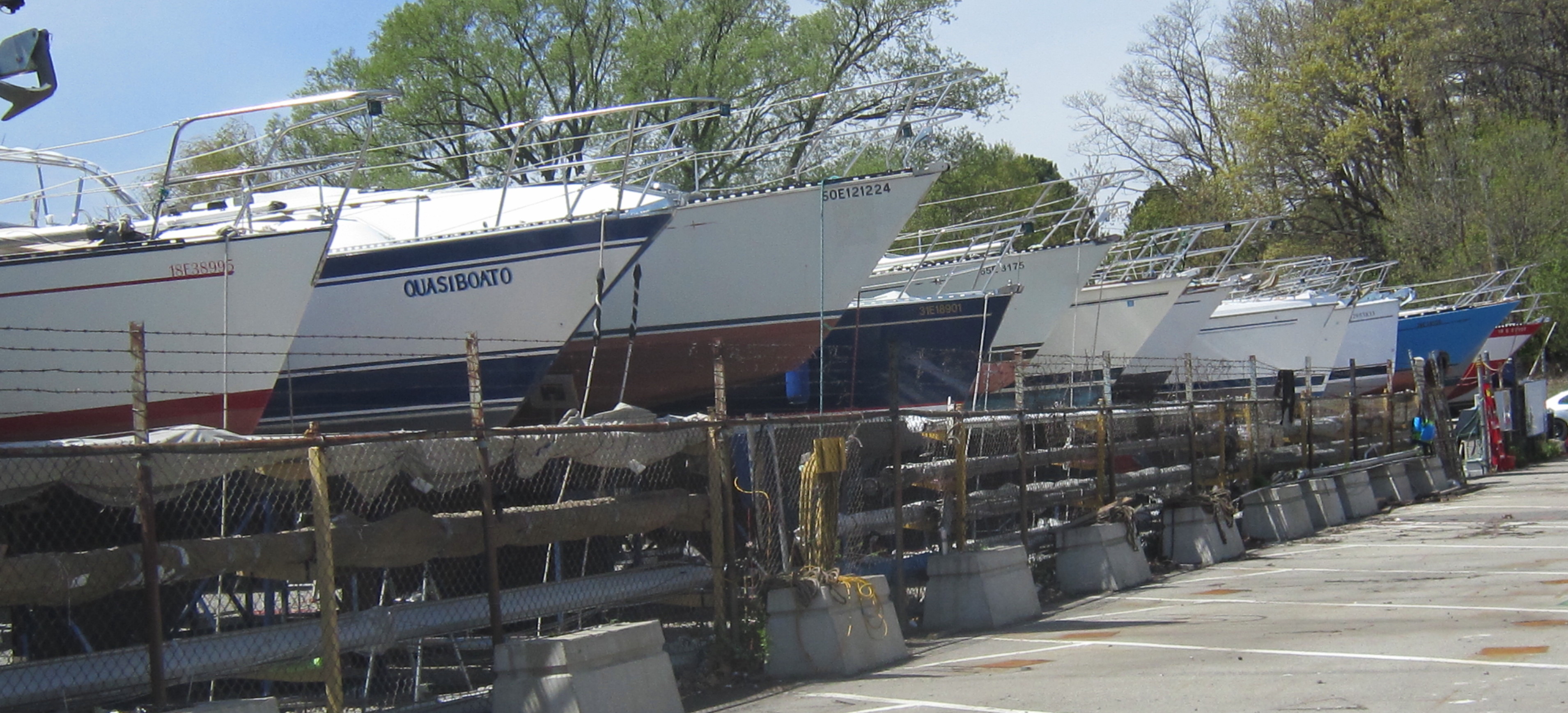
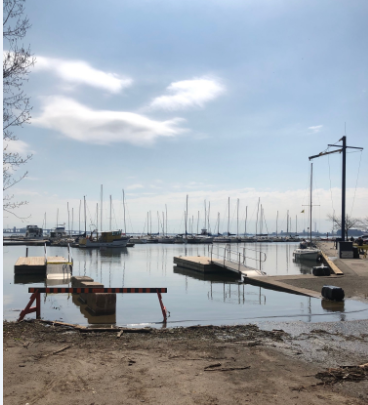
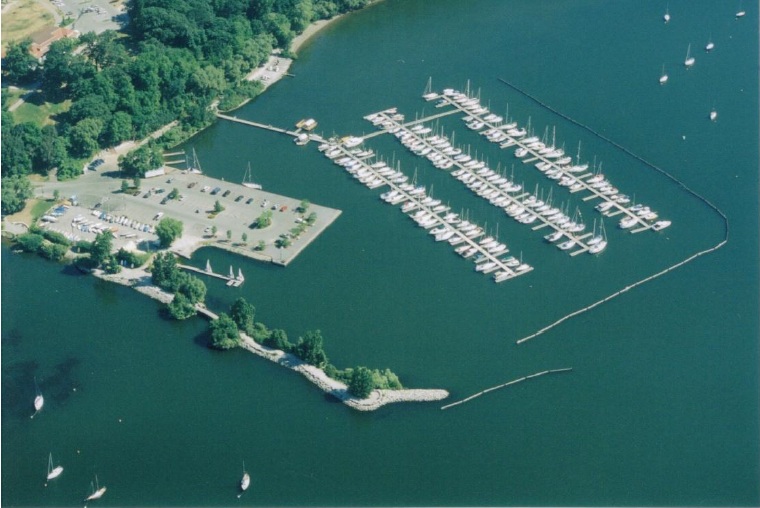 LaSalle Park Marina as it looked in early 2019 – 219 slips with wave breaker and docks that have to be brought ashore every winter. The recommendation is that the city finalize a long-term licence agreement with the LaSalle Park Marina Association for the operation of the Marina at LaSalle Park substantially in accordance with confidential document council will see. The agreement is based on Council’s approval of the purchase of a new floating wave break that is going to come in at a cost of about $4 million of which the LPMA will pay about $2.7 million over the term of the license agreement.
The city spent a considerable amount on several studies, one of which set out various governance models. The report from the consultants suggested that finding anyone who would take on the marina operation either as a public marina – City owned and operated, direct management contract, profit sharing management agreement or a Public/Private marina or a Private marina or something that is an Arm’s Length operation of marina – just isn’t in the cards.
The purpose of the lengthy report, with tables on every conceivable cost, took a look at:
Other potential operating models for the LaSalle Park
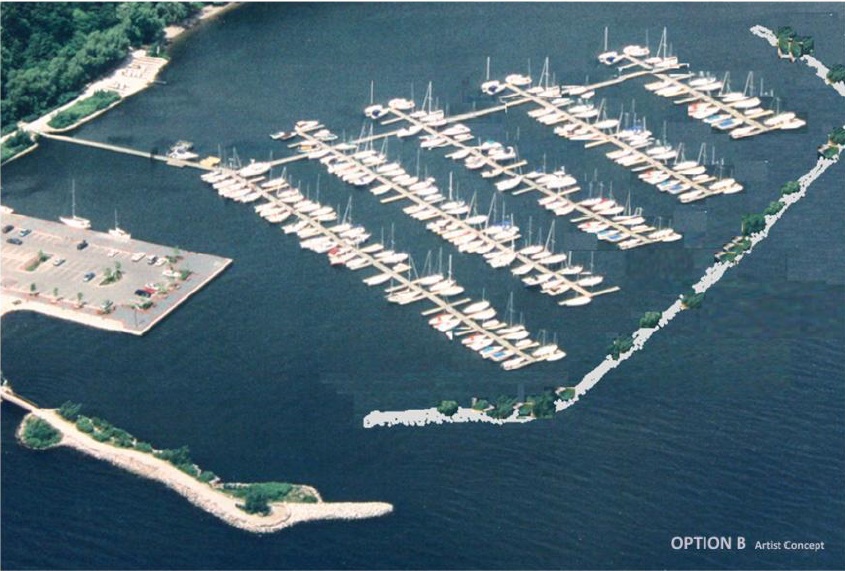 The dream wave break for many at the Marina was something permanent – it wasn’t to be. Provide staff’s evaluation of the operating models and a recommendation for a Marina operator
Seek Council’s approval to enter into a long-term licence agreement with the LaSalle Park Marina Association for the operation of the Marina
Satisfy any outstanding staff directions related to the Marina
To summarize LPMA’s overall contribution to the new floating wave break, and
Finalize any operational requirements as the current agreement between the City of Burlington (City) and LPMA expires on October 31, 2019.
The LaSalle Park Marina Association has been involved in the operation of the marina since 1980 . They currently have a Joint Venture Agreement with the City that expires at the end of October 2019. The Marina has 219 slips and is protected by a floating wave break. The Burlington Sailing and Boating Club (BS&BC) and the Able Sail program are separate entities that offer sailing programs at the Marina. In addition, the City has a public boat launch at the Marina that is protected by the floating wave break.
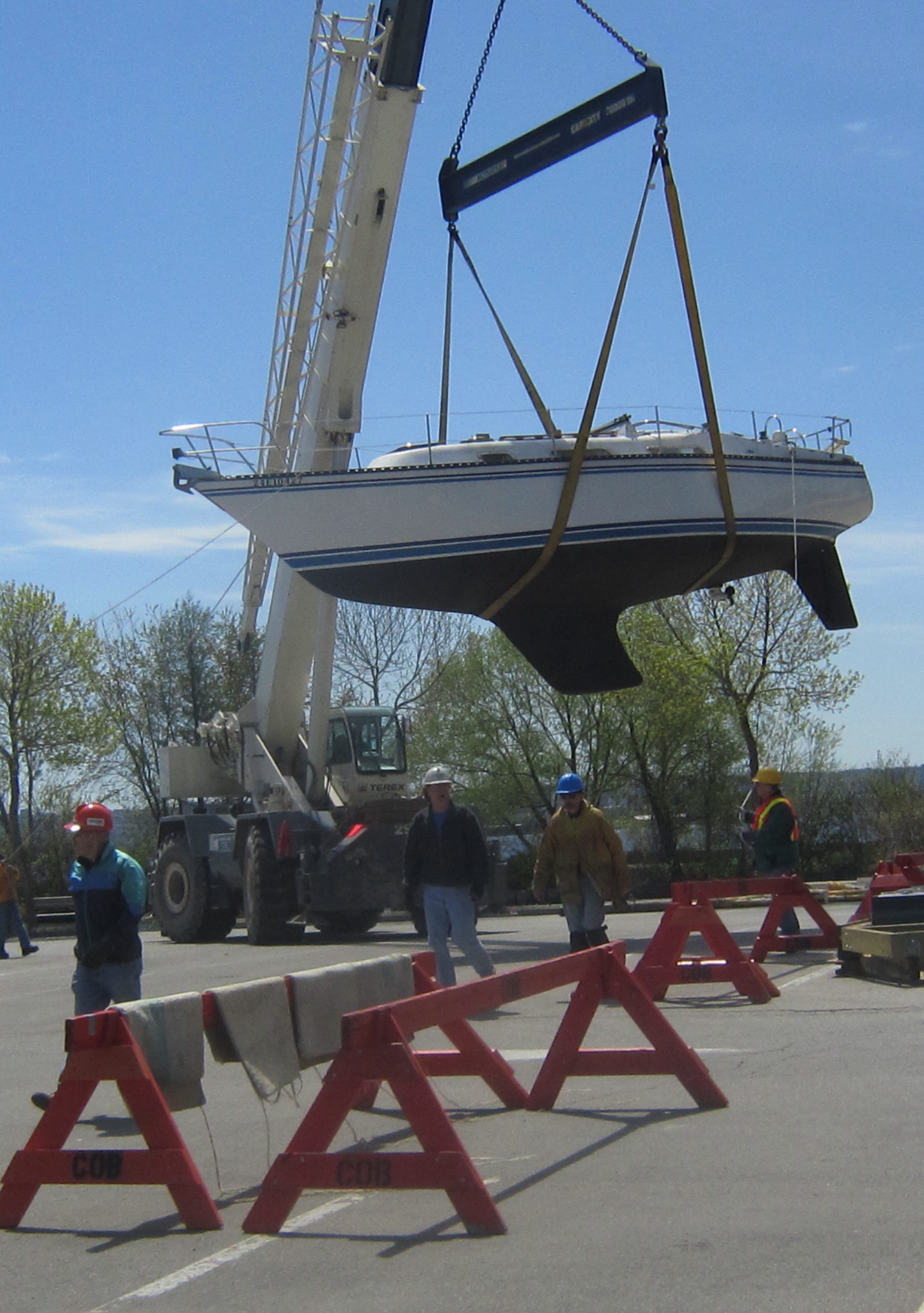
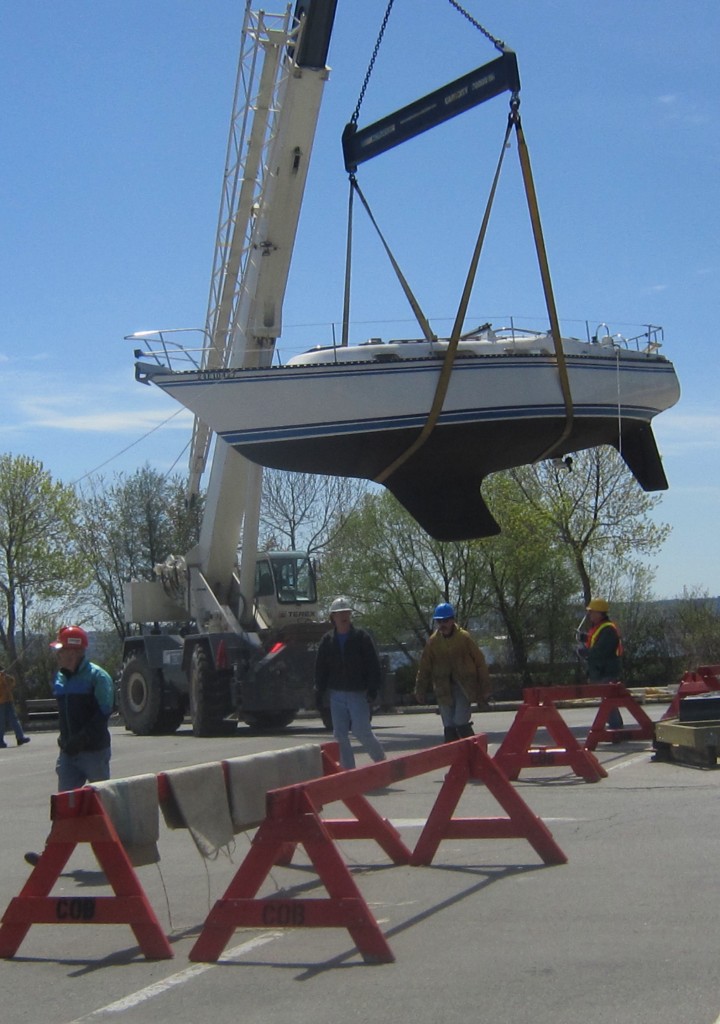 LaSalle Park – getting a boat lined up to be set in the water – the beginning of a new sailing season. The current wave break has reached the end of its useful life. The LPMA wanted to see a permanent wave break but ran into problems with the cost and an inability to work out an acceptable plan to protect the boats with the Trumpeter Swan Coalition who want to ensure that the swans are not disrupted.
Over this past year Committee has received three reports related to the Marina one of which was a report on alternative governance models for the Marina with the following staff directions:
Table city manager’s office report on alternative operating models for the Marina at LaSalle Park to the Committee of the Whole meeting on September 9, 2019 at which time staff will provide a recommendation on a preferred operating model for the Marina.
Staff secured the services of a consultant, TOURISTICS, to undertake an analysis of potential operating models for the LaSalle Park Marina.
Following the Committee meeting on July 8, 2019, the consultant revised the report to reflect the discussion and direction staff received. This included:
Increasing the annual license fee for the Marina operator, reducing the amount for annual maintenance for the floating wave break and eliminating costs for the Marina operator related to the removal and installation of the docks each year.
An Overview of LPMA’s operation and financial information
Comparing LaSalle Park Marina with other marinas based on the features and value of amenities
Outlook for future slip occupancy for LaSalle Park Marina
Information and financial data related to all aspects of LPMA, Burlington Sailing and Boating Club and Able Sail
Financial viability of LPMA’s current operating model
Outlines several different operating models along with financial implications to the City including:
Public marina – City owned and operated, direct management contract, profit sharing management agreement
Public/Private marina
Private marina
Arm’s Length operation of marina
The consultant’s report identified that, based on the limited services and amenities available at LaSalle Park Marina along with the limited number of slips, a private operator would have challenges meeting its financial goals and would not consider the Marina at LaSalle a viable long-term business.
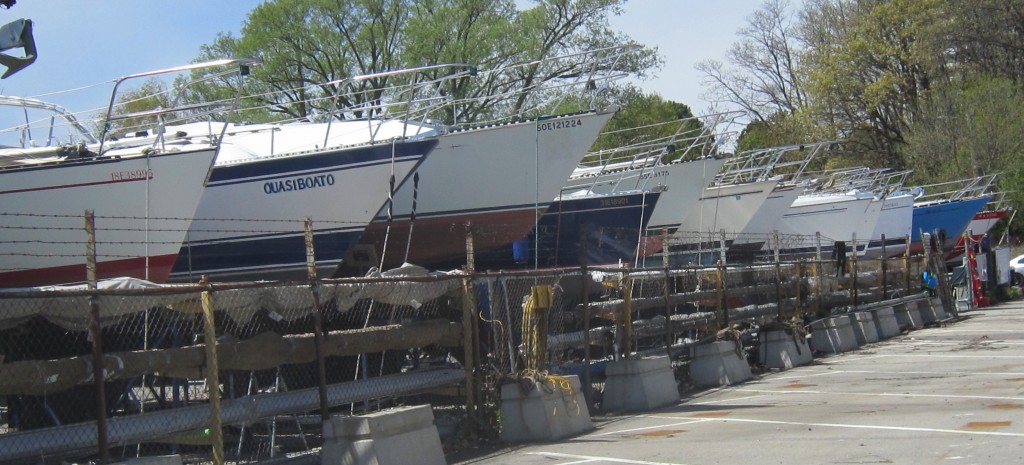 LPMA membership was healthy but a concern about not being able to get insurance due to the condition of the wave break threatened that membership. Based on the data and research presented by TOURISTICS, it appears to staff that continuing the relationship with LPMA to operate the Marina is the most economical and feasible option for the operation at LaSalle Park. Given LPMA’s longstanding commitment to the Marina, its volunteer capacity and involvement with supporting the operation, the Marina’s limited amenities and limited number of slips, this is the preferred model that has the least impact on the taxpayers of Burlington while leveraging community support to maintain the Marina in the City.
Staff and representatives from LPMA met on a regular basis to negotiate a new licence agreement for the use of water lots and the operation of the Marina behind a new City owned floating wave break. Staff and representatives from LPMA have agreed in principle on a draft agreement and the volunteers should be recognized for their time and effort in finalizing the document.
The water lots are owned by the City of Hamilton. Burlington tried to purchase those water lots but a price could not be agreed upon.
Staff recommend the existing agreement with LPMA stays in place until October 31, 2019 and to start the new licence agreement effective November 1, 2019.
LPMA is committed to the Marina being publicly accessible and affordable and will be making a presentation to demonstrate their support of this.
With the existing Joint Venture Agreement with LPMA coming to an end, there are a couple of housekeeping items that need to be addressed including the disbursement of the City held reserve funds to LPMA charter members and undepreciated senior members. Additional information related to the reserve funds is included in the financial section of this report.
 The area in green is land owned by the city of Hamilton. North Shore Blvd runs through the property with the LaSalle Park Arena jutting out into the lake. Should Council want to consider an alternative operating and governance model for the Marina they will have table after table that break down the costs for each operation.
The very tight timeline would not preclude LPMA from submitting a proposal to operate the Marina.
The timelines do present uncertainty for a new Marina operator and boaters related to the 2020 boating season. The new operator would need to start marketing the Marina to boaters during the winter and then have all facets of the operation in place for April/May next year. The timelines would not position a new Marina operator for success in 2020.
A lot of money has been spent getting to this point. There has been a rigorous inspection of all the issue, something that had been lacking.
The city did find a reserve fund they could raid – how the Hydro Reserve Fund gets to be used for a marina wave break replacement is one the politicians will have to explain).
There will be a $2.1M (which could rise to $2.7) repayment by the LaSalle Park Marina operator through an annual licence fee.
They are going to have to negotiate a $500,000 contribution for the LaSalle Park Marina to the wave break, electrification and/or finger docks as part of the negotiation on a renewed agreement .
The City Manager will consult with the LPMA and make recommendations to Council of compensating LPMA for costs they have incurred to date in leading this project.
In finalizing an agreement with LPMA, staff reviewed the financial assessment completed by Accountants Grant Thornton did a financial assessment to ensure that revenues and cost assumptions were up to date and are reflective of the conditions in the licence agreement.
Key Assumptions made were that:
• Revenues forecasted at a 1% growth with a stabilizing occupancy of 93%
• Expenses are forecasted at 1%, include;
o Maintenance of docks, walkways etc.
o Assumption for future electricity costs should electrification of docks proceed
o Portion of water lot fee to Hamilton Port Authority (24%)
o Repayment of joint venture loan (balance owing $225,000 over 7 years)
o Payment of a licence fee to the City
 Based on the above assumptions the financial forecast as provided by Grant Thornton shows that LPMA is financially sustainable. Based on the above assumptions the financial forecast as provided by Grant Thornton shows that LPMA is financially sustainable.
Financial sustainability is achieved as a result of LPMA sustaining day to day operations, reserving funds for future replacement of Marina infrastructure (docks, walkways) and being able to provide an annual licence fee to the City.
As per Council’s direction, the agreement with LPMA includes an annual licence fee which is estimated to generate $2.7 million over 25 years and exceeds the minimum $2.1 million repayment required by the City.
LPMA maintains a reserve fund balance of approximately $406,372 which is earmarked towards the electrification of docks and general improvements to the Marina. As per the licence agreement, should electrification of the docks not occur within a specified time period, $350,000 of LPMA’s reserve fund balance will be provided to the City as their upfront contribution to the capital cost of the new wave break. It is financially prudent that the remaining balance in the reserve fund should remain with the LPMA to provide them with financial flexibility for operations and general improvements to the Marina.
Staff do not recommend that LPMA be reimbursed for costs leading up to this project. To date, LPMA has put forward $150,000 for their share (50%) of the Environmental Assessment (EA) and Recreational Boating Feasibility and Capacity Study. Those costs were incurred by LPMA and the City as a requirement to replace the existing wave break structure and should not be reimbursed as LPMA benefits from the new floating wave break.
As part of negotiating the licence agreement, LPMA will continue to review opportunities to increase revenues and manage costs. Option that will be explored for feasibility are pay for parking, public boat launch fee and fee structure.
Over a 25-year period the City’s overall known cost of the new wave break would be $4 million in upfront capital, plus an annual operating cost of $20,000 for a total cost of $4.5 million. It is estimated that LPMA over that same period can pay the City up to $2.7 million through a licence fee, resulting in a net city cost of $1.8 million.
For committee’s information, the $2.7 million being paid over 25 years would be equivalent to a loan of $2.1 million at 2.25%. In effect, the City is realizing a capital contribution from LPMA of $2.1 million, plus an implied interest recovery of $0.6 million.
Getting to this point has not been cheap. The City’s funding, excluding the tender award has been as follows:
• $150,000 Environmental Assessment and Recreational Boating Feasibility and Capacity Study (50% cost share with LPMA)
• $72,600 Grant Thornton Wave Break Viability
• $21,500 Grant Thornton Financial Assessment Floating wave break
• $25,000 TOURISTICS Report Potential Operating Models (Estimate)
Is all this more than the city spends on the Performing Arts Centre or the Art Gallery or the cost of running the arena?
Burlington is a lakeside city – it should perhaps have a marina; now to find a way to add some amenities – parking and maybe even a small café with a licence.
Ia the Marina just a nice-to-have? Something the Mayor cautioned against again and again when she was a Councillor with an eye of the Chain of office.
Interesting how things change.
 By Pepper Parr By Pepper Parr
September 9th, 2019
BURLINGTON, ON
It was an event that is difficult to describe.
That it packed, really packed the Art Gallery Friday evening is what struck most people.
It was certainly one of the most diverse crowds this city has seen in one place with the LGBT crowd out in force.
The event was part of a Gender Conspiracy that is the prime project from Senior Art Gallery Curator Stephanie Carte who was appointed to the position last November.
 A Family Read Along – was part of a mixed bag of events with a consistent theme – inclusivity. Events that had actors, performers on a runway were standing room only – there were no chairs,
Was it an art show – there were pictures on the walls. Was there an overall theme – that was difficult to tell.
Is there more – apparently.
There wasn’t much in the way of a printed program. No one stood and made announcements.
 You mingled – early in the evening there was wine tasting, finger foods and a huge offering of donuts. You mingled – early in the evening there was wine tasting, finger foods and a huge offering of donuts.
Then there was a Read Along for Families that reminded one of a Sharon, Lois and Bram, followed by a Night of Cabaret with Drag Queens on the runway.
If it has taken you a bit to get used to LGBT – get used to the fuller term LGBTQI2s
Earlier in the week, free-lancer Doreen Nicoll did a piece on what Stephanie Carte had in mind.
According to Carte, “Burlington looks like how I want my programming to look. Black, brown, Indigenous, queer, immigrant, and intersectional.” She hopes more young families and people see themselves reflected in the exhibitions. And she is accomplishing that, one show at a time.
There will be more.
Related news story.
A Gender Conspiracy being formed at the AGB.
 By Pepper Parr By Pepper Parr
September 9th, 2019
BURLINGTON, ON
There has been a third malicious attack on the Burlington Gazette web site.
Last Friday we published a short opinion piece on the Mayor and the lunch she had with her brother in Oakville while he was in the area.
The Mayor had posted a photograph of the lunch on her Facebook page,
There were a number of comments made by readers, one of which was thought, at the time to have been sent in by the Mayor.
The Mayor did not make the comment nor was the email address used one that the mayor uses. The URL did have the words @cityofBurlington.com which was mistaken as one the city uses.
The Gazette has reached out and apologized to the Mayor. We did not hear from her directly.
While there was nothing journalistically with the piece, it was identified as an opinion and we have removed it from the web site.
Whoever sent the malicious email also managed to replace the proper IP address to an address that was applied to the last several hundred comments the Gazette has received.
We are working on that problem.
An IP address is very useful in determining just where an email came from.
This is the third time the Gazette has been tampered with. The one that took place earlier in the year locked people out of the comments section.
Someone out there thinks their “ox has been gored” and doesn’t want Gazette readers to be able to comment. Forensic investigators are being engaged to get to the bottom of this most recent attack. .
By Staff
September 5th, 2019
BURLINGTON, ON
The City of Burlington is making improvements to Lakeshore Road from Nelson Avenue to Locust Street. The City did not return a request for exactly when the work is to begin.
Capital Paving Inc. was awarded the project. The project map, included with this update, shows the planned improvements.

Project Scope and Schedule
Schedule and traffic interruptions Work being done
June – complete • Street lighting replacement
September to mid-October
• Lakeshore Road will stay open for this work. The through lane near the ongoing construction will be closed with the centre turn lane used to keep traffic moving in both directions.
• Asphalt path replacement with concrete path – south boulevard.
• Storm sewer repairs
• Sidewalk repairs – north boulevard
• Curb and gutter repairs
Mid-October to early November
• Lakeshore Road will stay open for this work. The through lane near the ongoing construction will be closed with the centre turn lane used to keep traffic moving in both directions.
• Asphalt milling and paving
• Maintenance hole adjustments
• Lane marking
November • Project Completion

 By Staff By Staff
September 6th, 2019
BURLINGTON, ON
In late August 2019, members of the Halton Regional Police Service, Child Abuse and Sexual Assault Unit (CASA) commenced an investigation after a female victim attended a business located on Harvester Road in Burlington, between Walkers Line and Appleby Line, and was administered a noxious substance and violently sexually assaulted by two male parties.
Accused #1 befriended the victim on Facebook prior to meeting with her, and utilized the name “Sharifulla Mokbel”.
Accused #2 was also active on social media, and is known as “Pena R-One” on Facebook, and “pena619” on Instagram.
The two accused may also be active on other social media platforms.
On September 4, 2019, members of the CASA Unit arrested both accused parties, and held them pending a bail hearing. A second court appearance is scheduled to be held in Milton on September 6, 2019.
Accused #1 – Sharifulla (Sharif) Mokbel (27) of North York has been charged with:
-Sex Assault Cause Bodily Harm
-Administer Noxious Substance
-Gang Sexual Assault
-Sexual Assault
Accused #2- Satlykglylych Gafuri (27) of Toronto has been charged with:
-Gang Sexual Assault
-Sexual Assault
Police believe there may be additional victims and are asking anyone with information regarding this or similar incidents to contact the Child Abuse and Sexual Assault Unit – Detective Sergeant Chris Newcombe at 905-465-8965 or Detective Constable Marla Adams at 905-465-8979.
Tips can also be submitted to Crime Stoppers “See Something? Hear Something? Know Something? Contact Crime Stoppers” at 1-800-222-8477 (TIPS), or through the web at www.haltoncrimestoppers.ca.
People charged with a criminal offence are presumed innocent until proven guilty in a court of law.
 By Pepper Parr By Pepper Parr
September 6th, 2019
BURLINGTON, ON
It takes a certain kind of person to run for public office. And should they get elected it takes a certain kind of person to succeed at the job.
That job isn’t about them – it is about the people they serve.
In clerical circles – priests and minister, pastors and rabbis use the phrase: a calling; they feel called to do the work they do.
We seldom see that kind of language in political circles. Politics is about power.
That power belongs to the voters who give it to the people they elect who they trust to serve the public’s interests.
The public looks for wisdom and good judgement.
It was surprising then to see a photograph of Her Worship Mayor Meed Ward sharing oysters on the half shell with her brother, who happened to be in town, at what looked like a very swishy restaurant near the water – sailboats in the background.
Family is said to be everything – unless of course it is totally dysfunctional – but I digress.
 Oysters on the half shell – a favourite Meed Ward delicacy shared with her brother at an Oakville restaurant. Some might ask – especially those in the hospitality business – why the Mayor didn’t take her brother to a Burlington restaurant. Spencers is the equivalent to anything Oakville has. Others have the same ranking.
Many of the people who run restaurants supported the Mayor in her bid to become Mayor. This must be just a little galling.
We are not arguing that the Mayor should only ever be seen in a restaurant in Burlington. What we do want to suggest is that when she publishes pictures of herself on her Facebook page – it would be politically smart to make sure that the background is a Burlington skyline. They don’t call these things photo ops for nothing.
Council will be in full bloom next week; thick agendas will sit in front of them and some serious recommendations will get passed on to city council later in the month. No word yet on who the Mayor is bringing into her office to replace the staff member who decided she liked greener, more digestible grass.
The Mayor pinched the assistant to the ward 4 Councillor who now has to rely on the other assistants for the support she needs.
Word is that it could be as much as a month before the staff problem is resolved. Is Mayor Meed Ward running into the same problem Mayor Goldring had – not being able to find good people she can work with to carry out one of the toughest jobs in the city.
The staff member she pinched is as good as they get – Meed Ward should have kept her when she was he assistant as a Council member.
The job calls for wisdom and judgement – which seems to be missing at the moment.
Salt with Pepper is the musings, reflections and opinions of the publisher of the Burlington Gazette, an online newspaper that was formed in 2010 and is a member of the National Newsmedia Council.
 By Pepper Parr By Pepper Parr
September 5th, 2019
BURLINGTON, ON
HalTech Regional Innovation Centre, based in Burlington, Ont., will receive around $307,000 from the federal government to create an accelerator for women entrepreneurs.
The goal of the new accelerator at HalTech will be to help women entrepreneurs scale their businesses and reach new markets. The program will provide mentorship, skills training, and programming to help women grow their businesses. The government said final funding, which is being provided through the Women Entrepreneurship Strategy (WES), is subject to negotiation of the contribution agreement with HalTech.
 Can’t name them all – on the left Karen Grant Executive Director of Angel One; three to the right Shann McGrail , Mary Ng, minister of small business and export promotion, Anita Cassidy Interim Executive Director of Economic Development Corporation, and on the far right MP for Oakville Burlington North Pam Damoff. “The women entrepreneurs and business leaders of Burlington and southwestern Ontario make outstanding contributions to our economy and communities every day,” said Pam Damoff, member of parliament for Oakville North–Burlington. “Today’s investment by our government will create and support jobs in southern Ontario and help more of our women-owned and women-led businesses grow, innovate and export to new markets. These investments are good for our community, good for Ontario and good for Canada.”
Damoff has been assiduous in advocating for women – this grant has her fingerprints all over it.
Granted (no pun intended) there is a federal election looming and Damoff is not the shoo in that her colleague Karina Gould of Burlington is; all Damoff needs to return as an MP is a visit from the Prime Minister – providing he manages to clean up his act.
 Women getting caught up at a Tech Place event. HalTech shares office space with Tech Place and Angel One. HalTech offers free business advisory services, learning workshops on entrepreneurship and commercialization, and for assistance with corporate innovation programs. Its verticals of note include digital media, advanced manufacturing, cleantech, health tech, FinTech, and EdTech. Haltech is a member of the Ontario Network of Entrepreneurs, a program that includes 17 Regional Innovation Centres.
This women’s accelerator is not Haltech’s first initiative to support female entrepreneurship. HerHalton is HalTech’s peer-to-peer initiative for women who live and or work in the Halton Region. Members of HerHalton can empower each other through discussions, collaboration, and networking opportunities.
 Shann McGrail, the HalTech Executive Director – pleased with the federal grant.
The government’s investment was made as part of the WES, which is looking to improve access to financing, talent, networks, and expertise through an investment of nearly $2 billion. The goal of the strategy is to double the number of women-led or women-owned businesses by the year 2025. Today’s announcement was made by Mary Ng, minister of small business and export promotion, as part of a cumulative $507,000 investment through the WES, which included other organizations.
Shann McGrail, the HalTech Executive Director and xxx of Angel One can certain deliver the support services budding female entrepreneurs need. A good first step – seeing some gender balance in the distribution of federal funds is a welcome change.
By Pepper Parr
September 5th, 2019
BURLINGTON, ON
He did it again.
But this time he had met his match. She already had a Foxcroft whistle.
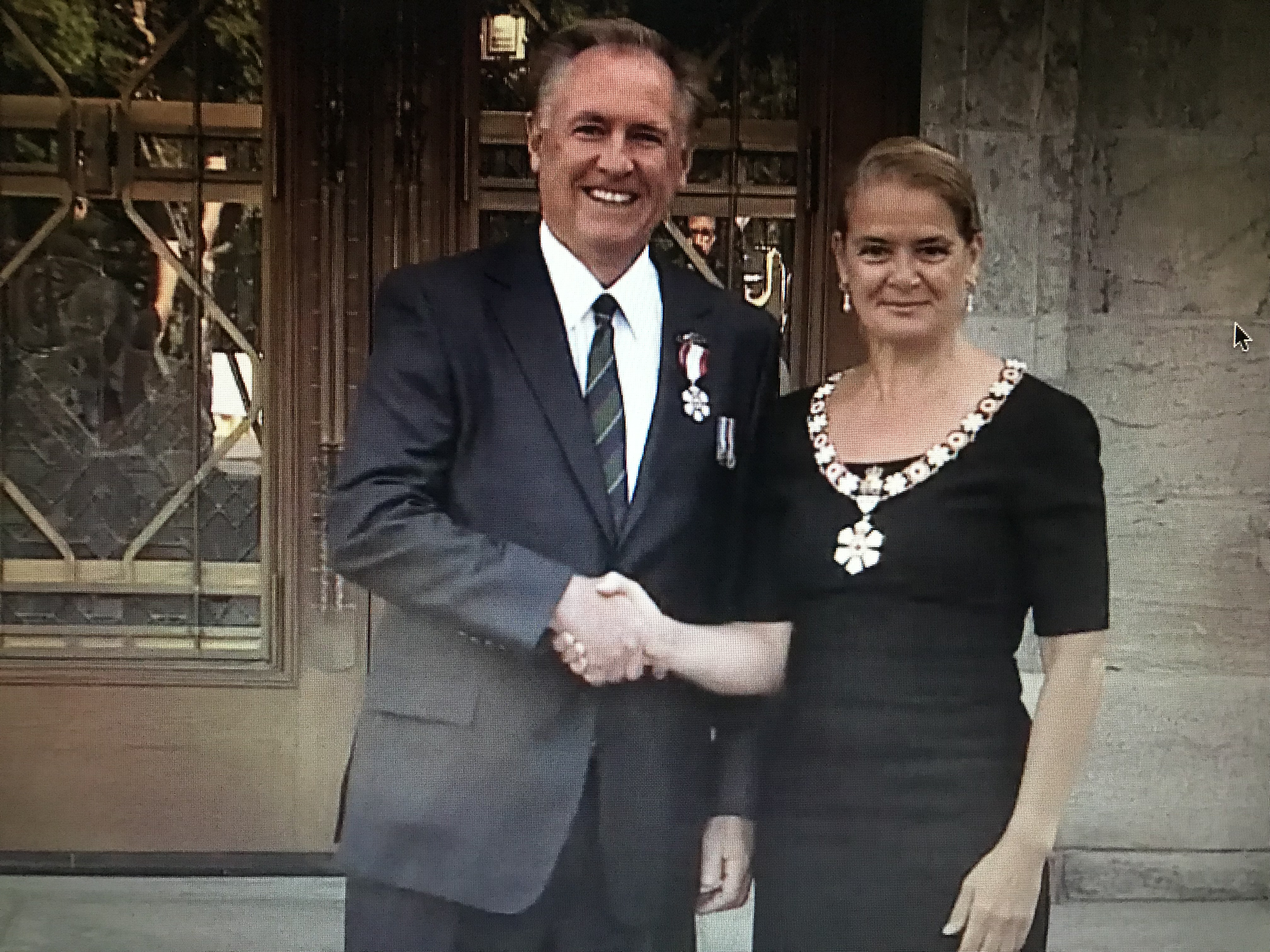
 Ron Foxcroft with Governor General Julie Payette. That medal on his chest signifies he is a Member of the Order of Canada. Ron Foxcroft and his family were at Rideau Hall, the Governor General’s official residence. Ron was being made a Member of the Order of Canada.
During the investiture she said. “I have a Fox 40 Whistle.”
Foxcroft responded with: “I will give you two more later”, which he did.
Her Excellency, Julie Payette, met the Foxcroft family and told Dave, Ron’s son, that she did the coin flip at the Grey Cup in Ottawa when he was head referee.
 Queen Elizabeth II, in her capacity as Colonel-in-Chief of the Argyll and Sutherland Highlanders of Canada, receives Colonel Ronald Foxcroft (Honorary Colonel) at Buckingham Palace in London. The Governor General now has what is a bit of a collection: A Tiger Cat Fox 40 whistle and a whistle with an NBA logo.
In 2015 Foxcroft was presented to Queen Elizabeth II and found a way to give the Queen a whistle which she said she would use to scare off the Canada Geese that foul her garden lawns.
By Staff
September 4th, 2019
BURLINGTON, ON
City of Burlington launches new Food for Feedback event, a community engagement barbeque where residents can connect with City staff and Council to provide feedback on municipal projects and initiatives. Attendees will receive a free lunch from participating food trucks in exchange for feedback at this September 14th event.
It is a free, drop-in opportunity open to residents of all ages. Younger children are welcome to attend and enjoy the Imagination Playground on-site.
 The input citizens provide at Food for Feedback will help the City to continue to improve City services and initiatives. The input citizens provide at Food for Feedback will help the City to continue to improve City services and initiatives.
Date and Location: Saturday, Sept. 14, 12:30 to 4:30 p.m. at Central Park Bandshell, 2311 New St.
In case of inclement weather, the event will be held indoors at the Seniors’ Centre Auditorium, 2285 New St.
City booths at the event will include initiatives such as:
• Adopted Official Plan – Taking a Closer Look at the Downtown
• 2020 Budget
• Leash Free Parks
• Integrated Mobility Plan
• Climate Action Plan
Visit GetInvolvedBurlington.ca to learn more about the Food for Feedback engagement barbeque and other engagement opportunities available to residents to contribute their ideas and feedback on municipal issues and projects.
It appears that city hall has to spoon feed people to learn what their opinions are. For a city with a voter turnout of around 35% perhaps this is the best we can do,
 Mayor Marianne Meed Ward Mayor Marianne Meed Ward said: “The City of Burlington belongs to all of our residents, so it’s important when opportunities arise that our community shares their ideas, thoughts, feelings, feedback and questions with us.
“Thank you to all those who regularly share their input and engage with the City of Burlington, your Council and me through online surveys, our websites, newsletters, email and social media channels — we truly appreciate you taking the time out of your busy days and schedules to contribute to important local initiatives.”
 By Staff By Staff
September 4th, 2019
BURLINGTON, ON
The family of the 60-year-old motorcycle rider fatally injured in the collision on September 2nd, has authorized Halton Regional Police Service to release the identify of victim as Mr. Walter RITCHI.
The family would like to extend their gratitude for the efforts of the witnesses and citizens that rushed to provide aid and support to Mr. RITCHI after the collision.
 Intersection of Plains Road East and Cedarwood Place. On September 2nd 2019, the Halton Regional Police Service Collision Reconstruction Unit took carriage of the investigation into a motor vehicle collision in the City of Burlington which occurred shortly before 6:22pm at the intersection of Plains Road East and Cedarwood Place.
The collision between a motorcycle and an SUV resulted in the 60 year old motorcycle rider being transported to Hamilton General Hospital in critical condition. On the evening of September 3rd he was pronounced dead in hospital as a result of the head injuries he sustained.
 By Doreen Nicoll By Doreen Nicoll
September 4th, 2019
BURLINGTON, ON
Suzanne Carte is Changing the Art Gallery of Burlington One Inclusive Show at a Time
When Suzanne Carte joined the Art Gallery of Burlington (AGB) as Senior Curator in November 2018, it was clear she was passionate about inclusion and embracing as many voices and artistic experiences as possible.
 Suzanne Carte AGB Senior Curator Photo credit: Yuula Benivolski Originally from the West Mountain in Hamilton, Ontario, and having worked at the Art Gallery of Hamilton in the late 1990’s, Carte spent over twenty years in Toronto including the past decade at the Art Gallery of York University (AGYU).
Carte, an award-winning curator and cultural producer, was the former Assistant Curator at AGYU. She had a bevy of accomplishments under her belt but was looking for new challenges outside of the academic institution. During her time at York University, she was an integral part of students’ experiences and worked directly with a multitude of student leaders and organizations focusing on artistic expression and social justice advocacy.
While Carte found room for movement and growth at the AGB she soon realized the position involved merging the old with the new. “I was naïve in the beginning, but had to become sensitive and respectful to the AGB’s history and relationships between the gallery and the guilds.” Carte is encouraging a younger generation of artists to showcase their talents while still paying homage to the seven art and fine craft guilds.
Carte inherited a wealth of artistic material that had been acquired over the 41-year life of the AGB. By freeing up storage space Carte was able to expand existing galleries. In the process, Carte established the Artist Material Fund (AMF), a grassroots recycling endeavour that benefits artists in the Greater Toronto Hamilton Area (GTHA). The project offers a variety of previously stored materials to artist studios, libraries and youth driven galleries.
The Workers Arts and Heritage Centre (WAHC) in Hamilton, Ontario is one of Carte’s favourite galleries because, “The staff are smart, motivated, and practice what they preach. I have immense respect for them.” The WAHC stored material for the AMF on their third floor and offered it to artists at no cost during the closing of her exhibition, Division of Labour.
Carte is caring for a collection, as well as a community, that is shifting from the object to the idea with a people focus. She wants to be, “…in a listening campaign. Listening to see where people are at, what they want, and who Burlington is. Listening to the edge of change.”
 Carte: “Burlington looks like how I want my programming to look. Black, brown, Indigenous, queer, immigrant, and intersectional.” According to Carte, “Burlington looks like how I want my programming to look. Black, brown, Indigenous, queer, immigrant, and intersectional.” She hopes more young families and people see themselves reflected in the exhibitions. And she is accomplishing that, one show at a time.
Carte jumped in with both feet when she launched this summer’s exhibitions. The evening of May 24th Burlington saw crowds like the gallery had never seen before. Jeremy Dutcher, member of Tobique First Nation in New Brunswick, was on hand to sing selections from his Polaris and Juno award winning album, Wolastoqiyik Lintuwakonawa.
He was also there in support of Vutut Gwitchin artist Jeneen Frei Njootli’s solo show, my auntie bought all her skidoos with bead money. Frei Njootli created living art on four huge sheets of steel that morph over time. Shadowy impressions of the hand-sewn beadwork made by the females in her family are transferred to the sheets using grease. These images alter with changes in humidity and temperature.
Frei Njootli performed “I am she” at the opening while creating another layer of images on the steel plate. The sound of her voice united with the rattling of the metal was captured on a playback loop creating a soundtrack that could be felt through the body.
150 Acts: “Art, Activism, Impact” also launched that night. Inspired by Canada’s sesquicentennial this exhibit offers an essential moment of national reflection and an opportunity to question the relationship of nationhood to Canada’s Indigeneity. The art practices are personal, conceptual, cultural, political, and social acts as well as meaningful responses to the Truth and Reconciliation Commission’s Calls to Action.
Using essential pieces from the Art Gallery of Guelph’s Indigenous collections in concert with contemporary art practices that showcase evolving Indigenous art forms, settlers are encouraged to actively engage in discussions around the collective histories and possible futures for this land we share.
Carte is following her superlative debut with no less than four ground breaking shows.
 Carte: The AGB is determined to be vigilant and visible in their support of 2SLGBTQIAP by placing critical conversations on gender diversity back into the public education sphere. Opening Friday, September 6, 2019, The Gender Conspiracy will be an extravaganza including a children’s drag queen performance. Billed as an Open Letter to the Trans and Gender Diverse communities in the GTHA to express ally ship in furthering the discourse on gender fluidity and identity, sexual orientation, same-sex relationships, and consent to promote the mental health and safety of all 2SLGBTQIAP communities. The AGB is determined to be vigilant and visible in their support of 2SLGBTQIAP by placing critical conversations on gender diversity back into the public education sphere.
Carte believes in collaboration with community partners. Gender Conspiracy partners include The Positive Space Network, EGALE Canada Human Rights Trust, JAYU Human Rights Film Festival, Burlington Public Library, McMaster University Department to Gender Studies and Feminist Research, Dr. Frank J. Hayden Secondary School Position Space (GSA), and Oakville Galleries.
From January to March 2020, Division of Labour: Second Edition invites artists to become part of the dialogue about race, class and labour as they relate to cultural waste. Barter economy systems, community action around consumption, and circuits of solidarity exchange are more present than ever in the daily working lives of artists and cultural producers. Visitors will learn about the scarcity of resources, labour rights, and the lack of living wages in the arts. The exhibition illustrates the power and potential of reused material for artistic production.
Visitors to the art gallery will become immersed in the multimedia collage work of Burlington’s senior media artist P. Mansaram when his self-styled Mansamedia is showcased from May to August 2020. Co-presented with South Asian Visual Arts Centre (SAVAC), The Medium is the Medium is the Medium explores the artist’s decades-long practice of repetition as art, meditation, spirituality, falling in love, and as a way to finding god. The exhibit includes works from Mansaram’s five-decade career and will invoke everlasting feelings of travel through time, dimension and territory.
Then, from September to December 2020, Vessel: A Collective Feminist Collection Project will (re)write the matriarchal history of the AGB through the permanent collection with co-curators and collaborators Ness Lee, Su-Ying Lee, Suzanne Carte, Ivy Knight, and Myung-Sun Kim.
The AGB’s permanent collection of contemporary Canadian ceramics is the largest collection in the nation and will be used to unpack the feminist history of the AGB with local change-makers and leaders, by bringing the gallery’s vessels and containers out of the vaults and into the public space.
This collection considers the implications of feminist knowledge, labour, production, support, and ingenuity while opening a space for cross-disciplinary, intergenerational conversations and critical dialogue.
Carte is successfully crafting an art gallery that is, “A space for intergenerational dialogue, intelligence fed by exhibitions, and a place to socialize, learn and have fun and the same time.”
Open seven days a week, the AGB is a free public art gallery and community art centre that presents as many as 20 regional, national and international exhibitors a year. Located on one floor and with gender inclusive washrooms, the space has seven fully equipped studios, three galleries, a one of a kind gift shop, a sculpture courtyard and year-round conservatory.
Throughout the year there are free events, artist talks, screenings, and Sundays there are open studios for families.
The Art Gallery of Burlington 1333 Lakeshore Rd., Burlington, ON L7S 1A9
 Doreen Nicoll is a Burlington resident who is, if anything, outspoken. She is a feminist, an environmentalist, a free lance writer, teacher and social activist and member of several community organizations working diligently to end poverty, hunger and gendered violence. Doreen Nicoll is a Burlington resident who is, if anything, outspoken. She is a feminist, an environmentalist, a free lance writer, teacher and social activist and member of several community organizations working diligently to end poverty, hunger and gendered violence.
Related news stories:
Doreen Nicoll and her garden
 By Ray Rivers By Ray Rivers
September 4th, 2019
BURLINGTON, ON
Canada’s19th prime minister, the Right Honourable Kim Campbell, has always told it as she sees it. Who else, during the ’93 election, would have promised her electors continued high unemployment and deficits when they would have preferred prosperity and fiscal discipline. Or who else would be reported as saying, in a nutshell, that an election is no time to discuss important issues.
 Kim Campbell was rooting for Hurricane Dorion to make a direct hit on Mar a Largo, Trump’s Florida golf course and estate. She was understandably disgusted after US President Trump extended his war on planet earth by rolling back some 80 plus Obama era regulations to reduce greenhouse gas emissions (GHG). So she tweeted that she was rooting for Hurricane Dorion to make a direct hit on Mar a Largo, Trump’s Florida golf course and estate. Of course, she immediately retracted and apologized, as persons of some significance are expected to do.
But she had only said what so many people who care about the future of this planet were thinking. Bring on retributive justice for one of the two global political leaders most bent on depriving future generations of the planet we know and love. And every person who cares about what is happening to our climate should feel her anger.
The latest roll back concerns fugitive methane emissions. Methane, identified commercially as natural gas, is a greenhouse pollutant which is more than 25 times as potent as CO2. And here even the industry is ahead of Trump, as BP, for one, has criticized this roll back as damaging to the reputation of an industry trying to show how ‘clean’ it can be. The amount of leakage in the production and use of natural gas is frightening. But leaving industry to govern itself has worked out about as well as asking the fox to manage the hen house.
Trump has championed coal, erroneously calling it clean since it still accounts for two thirds of America’s electrical utility GHG emissions. But he is losing that campaign regardless, as the industry is rapidly converting to gas and renewables, which are now far cheaper in addition to being cleaner. This is pretty much the same strategy the Ontario Liberals pioneered as they phased out coal and replaced it with renewables. And natural gas is there as a back up for peaking or when the wind doesn’t blow and sun doesn’t shine.
 If you drive the 400 series highway – any highway for that matter – you know the trucks rule the road. Transportation accounts for almost a third of GHG emissions in America. And the USA is the second largest carbon emitter in the world, after China, so it is a critical issue. Trump’s roll back of Obama’s regulations for auto emissions is seriously wrong, and even the auto industry is opposed. Many auto companies are signing agreements with California and other states to continue making efficiency improvements.
Between 1999 and 2007 Canadian private vehicle emissions rose by 35%, almost twice the rate of population growth. Obama’s auto efficiency rules would have also applied to Canada and would have helped slow down emissions from the fossil fueled autos still selling like hot cakes – but even those new rules would not put a stop to GHG pollution.
It’s too little too late. The UN has suggested that there are only twelve years until a tipping point, a point of no return from dramatic change, is reached. So fine tuning the fuel economy for the gas engine is little more than the proverbial re-arranging of deck chairs on the Titanic.
 France’s plight illustrates a conundrum: how do political leaders introduce policies that will do long-term good for the environment without inflicting extra costs on voters that may damage their chances of re-election? They raised the price of gas and the public rioted. And a carbon tax at $20 or even $50 is not enough, on its own, to get people out of their gas guzzlers either. But the carbon tax and the federal electric vehicle (EV) rebate are the only tools in the transportation tool box, short of shutting down the roads and/or killing the economy. From comments to my column last week it was pretty clear that nobody wants road tolls, let alone shutting down the roads. So it’s got to be the carbon tax.
The Conservatives are the only major political party that is promising to cancel the carbon tax but is not offering an alternative policy for auto GHG emissions. They claim that the tax is hurting the poor folks. Which it clearly isn’t since 90 percent of the money is returned directly to tax payers as a credit on their income taxes. They get the tax credit even if they don’t have to pay any taxes.
So Andrew Scheer, Doug Ford and all the other conservative premiers are lying to us, by omission at the very least.
The poorest struggling or working class families are getting more back than they have to pay to fill their tanks and run their furnaces, on average.
In fact it is the wealthy that are affected most by the carbon tax. And as one can imagine the wealthiest 20% have more and fancier motor toys than those in the lower income classes. So the rich emit almost twice as much per capita as the lowest income Canadians. So exactly who are the ordinary folks that each of the political parties are aiming their pitches?
 Kim Campbell was a Progressive Conservative who said what she thought. Kim Campbell was a Progressive Conservative premier. But today’s Conservative party was taken over by the reform wing led by Stephen Harper and now Andrew Scheer. Campbell may not have been a social reformer, but as a member of Brian Mulroney’s cabinet she got to understand the environment. And so today’s Conservative party is not her party.
As a footnote on carbon taxes, we see Mr. Ford has filed an appeal to the Supreme Court. He has already squandered an estimated $30 million dollars when any thinking person could have told him he’d lose the court challenge. Perhaps nobody in his cabinet was willing to tell the emperor the truth about his new clothes. So what’s a few more million.
And to bring his point home, somewhat as Joseph Stalin could be expected to do, Ford is forcing every gas station owner in the province to slather his carbon tax propaganda on their pumps, or face a whacking $10,000 per day fine. That does seem a bit drastic for a province which Ford barely a year ago proclaimed to be finally open for business.
 Ford is forcing every gas station owner in the province to post a carbon tax message on their pumps. And the poster is misleading on at least three counts. First, the scale of the sticker may accurately represent the amount of the tax, but not the impact of a 4.4 cent tax on the total cost of a litre of gasoline – which is what really matters. Second the sticker makes no mention that the tax is revenue neutral and fully 90% comes back in their income taxes.
Finally if the gas pumps are to provide useful information to consumers, what could be more useful than helping them understand the full impact of the gasoline they are buying and using, rather than just the carbon tax on it.
Sweden has recently adopted a policy to do just that. Much as society has placed full disclosure information on cigarette packages, gas pumps need to inform users about the myriad of health issues associated with petroleum and how that impacts health care costs. And then there is climate change.
 Ray Rivers writes regularly on both federal and provincial politics, applying his more than 25 years as a federal bureaucrat to his thinking. Rivers was once a candidate for provincial office in Burlington. He was the founder of the Burlington citizen committee on sustainability at a time when climate warming was a hotly debated subject. Ray has a post graduate degree in economics that he earned at the University of Ottawa. Tweet @rayzrivers Ray Rivers writes regularly on both federal and provincial politics, applying his more than 25 years as a federal bureaucrat to his thinking. Rivers was once a candidate for provincial office in Burlington. He was the founder of the Burlington citizen committee on sustainability at a time when climate warming was a hotly debated subject. Ray has a post graduate degree in economics that he earned at the University of Ottawa. Tweet @rayzrivers
Background links:
Kim’s Mar-a-Lar – Kim Campbe ll Bio – Methane Regulations –
Auto Rule Roll Back – Canadian Auto Emissions – Carbon Tax Fight –
Warning Labels –
By Pepper Parr
September 4th, 2019
BURLINGTON, ON
A “hearty” breakfast “among friends” at the Seniors’ Centre
A change in tone here.
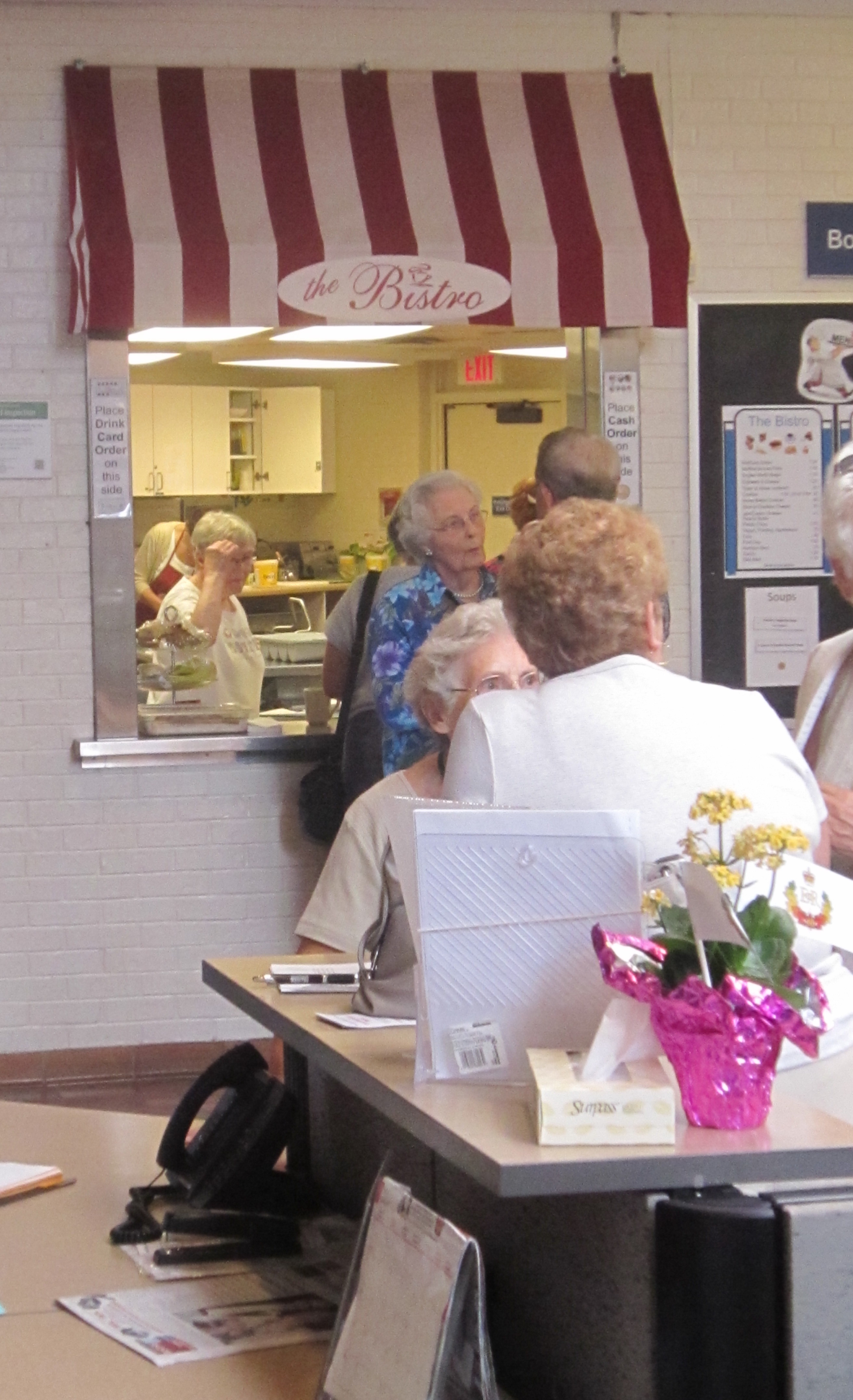
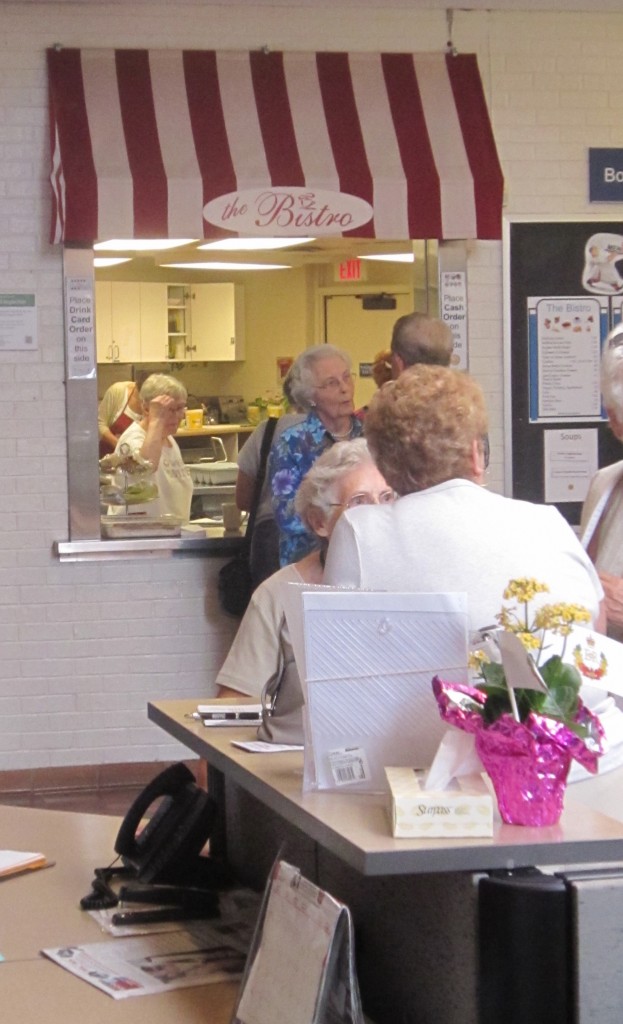 The Bistro, the heart of the Seniors’ centre There was a time when the seniors and the city administration were at loggerheads – the people representing the seniors were asked to vacate the office they had and the city took over.
Now there is an invitation to a “hearty” breakfast “among friends” at the Seniors’ Centre to celebrate community partners and their upcoming programming.
On Saturday, Sept. 14 from 8:30 to 11:30 a.m., the Breakfast @ the Bistro program will launch another exciting fall, winter and spring season where the monthly breakfast programs welcome the community to gather for a breakfast buffet followed by social time and entertainment. Community supporters who help to make this program possible will also be acknowledged.
Generous donations of time and funds offered by community partners including the Lions Club of Burlington, Revera Retirement Living, ComforCare and Bayshore Home Health will be recognized at the breakfast. The support provided by these sponsors helps to reduce the financial barriers that might otherwise prevent participation in Burlington Seniors’ Centre programming for some in our community.
The contribution of both financial support and volunteer time also allows the Burlington Seniors’ Centre to offer lively entertainment throughout the seasons such as Dixieland Plus, Silver Swing Band, Golden Horseshoe Women’s/Men’s Chorus along with Adult program choirs.
A good positive step – keep it up.
By Staff
September 4th, 2019
BURLINGTON, ON
On September 2nd 2019, the Halton Regional Police Service Collision Reconstruction Unit took carriage of the investigation into a motor vehicle collision in the City of Burlington which occurred shortly before 6:22pm at the intersection of Plains Road East and Cedarwood Place.
Fatal accident took place at the intersection of Plains Road East and Cedarwood Place. The collision between a motorcycle and an SUV resulted in the 60 year old motorcycle rider being transported to Hamilton General Hospital in critical condition.
On the evening of September 3rd he was pronounced dead in hospital as a result of the head injuries he sustained.
The investigation is on-going, any witnesses to the collision who have not yet spoken with police are asked to call 905-825-4747 ext: 5065.
Police have not released the name of the deceased.
By Staff
September 4th, 2019
BURLINGTON, ON
Elgin Street between Brant Street and Locust Street will be closed from 9:30 a.m. to 2 p.m. for a United Way road hockey tournament on September 12.
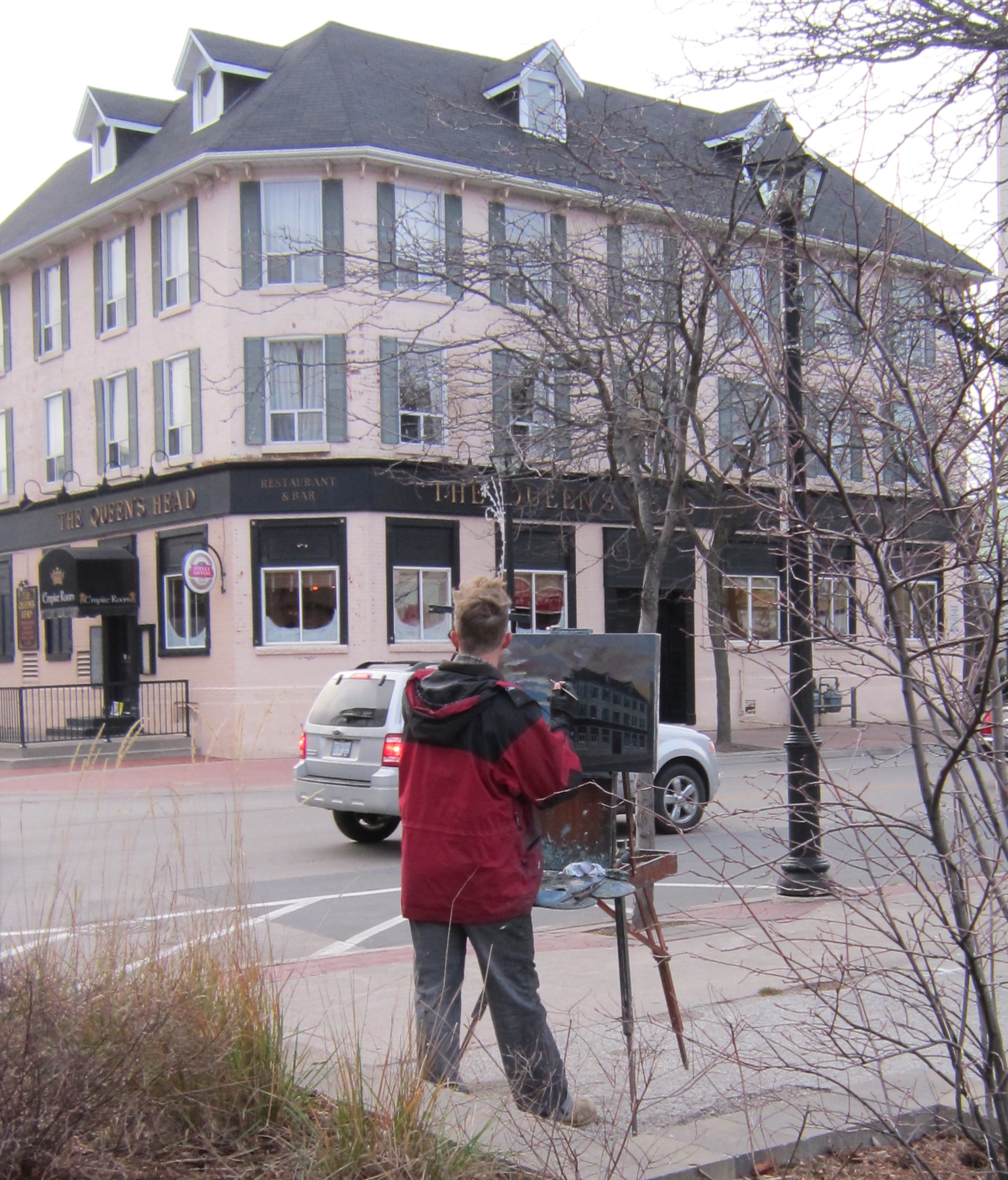
Queen’s Head and parking lots at SIMS Square and City Hall will remain accessible.
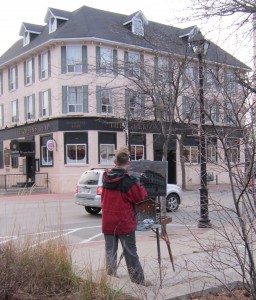 People will be able to get into the Queen’s Head for a cool one during the street hockey tournament. Ensuring that the Queens’ Head is accessible was a smart move.
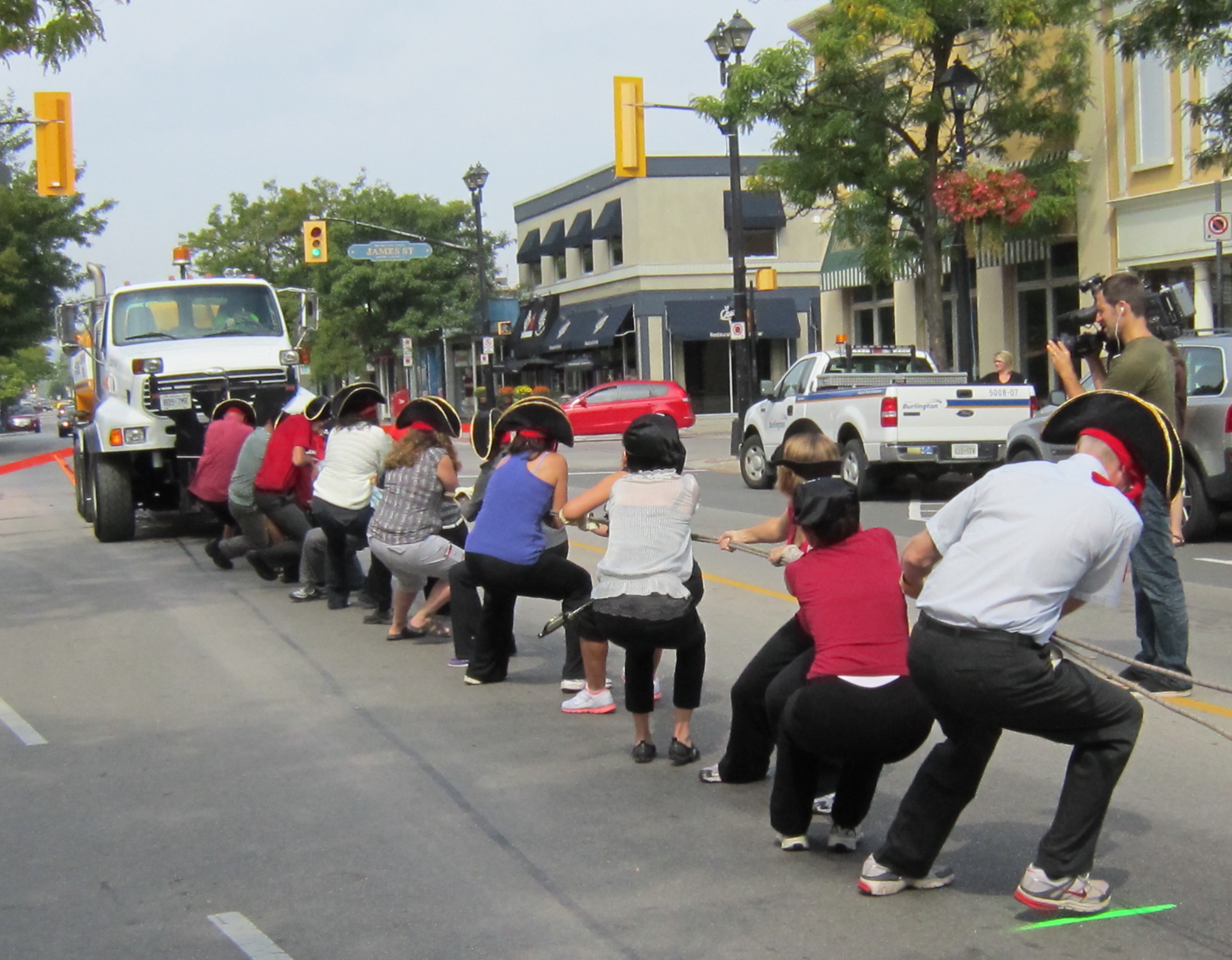
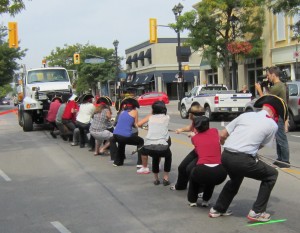 When it matters, city hall staffers put their backs into it. Community building at its best. In the past city hall has come out big time for the United Way. There was a year when the Clerk’s Office participation was superb – the Planning department had two teams involved.
That year the focus was on a truck tow.
Let’s see how they do with street hockey.
 Clerks give everyone that funny look all the time – and take best costume prize during the 2011 United Way fund raising event. Will the Mayor field a team?
 By Staff By Staff
September 3rd, 2019
BURLINGTON, ON
Most churches have an Outreach program. Some work with under-served groups in the city. Others focus on advocacy of some form.
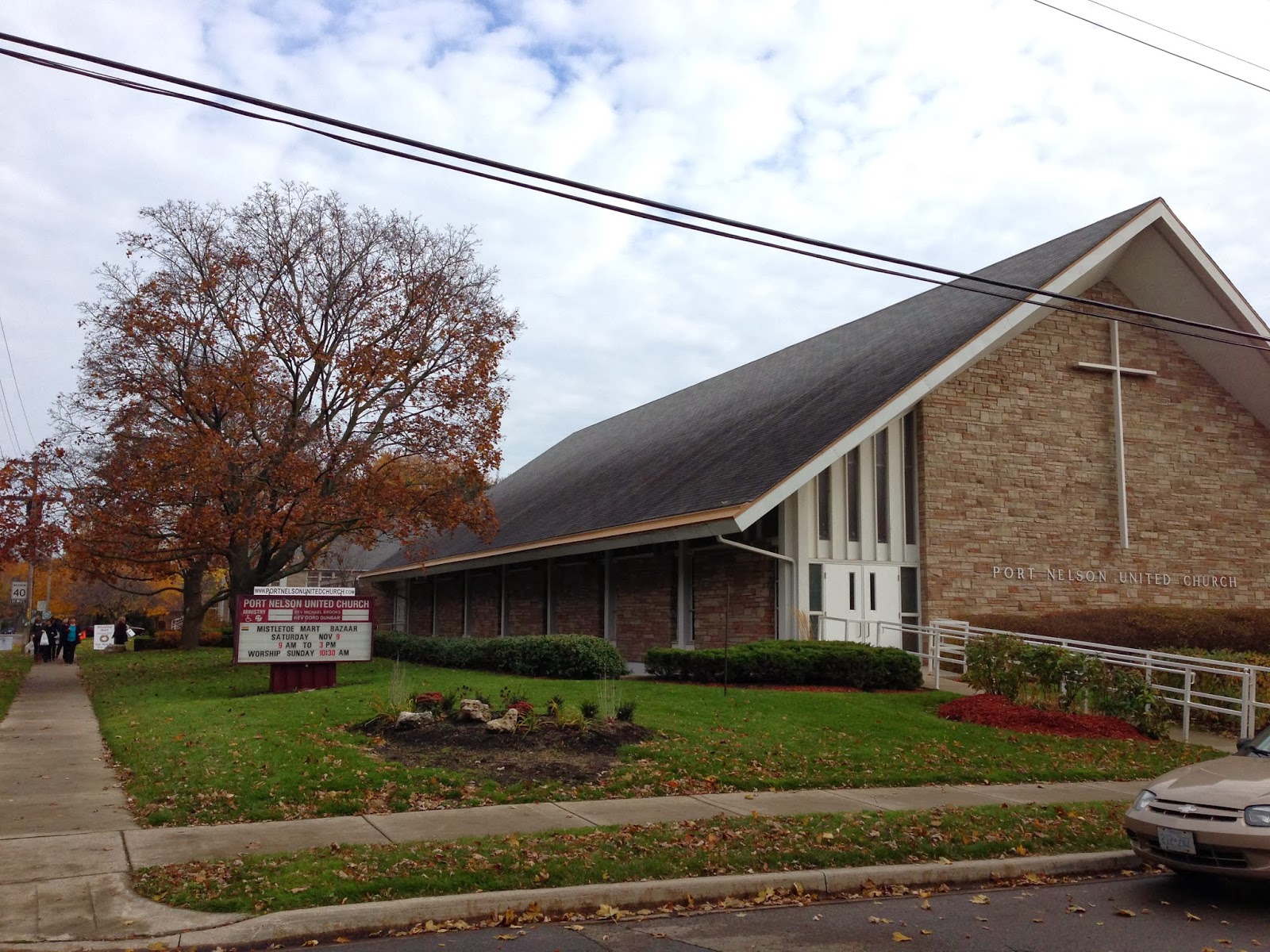
 Port Nelson United Church – location of a speakers series on migration. The Port Nelson United Church and the Roseland Community Organization have come together to present their Compassionate Justice Speaker Series, MIGRATION: FROM GLOBAL TO LOCAL. This is obviously a topic of great interest and a conversation that is both relevant and necessary.
Included in the speakers list is the Mayor along with some highly qualified people. The first event is on the 26th – 7:00 pm.
Details on the events are set out below.

 By Staff By Staff
September 3rd, 2019
BURLINGTON, ON
Motorists are reminded that thousands of cyclists will be out on Sunday September 8, 2019 from 7:00 am until 4:00 pm in north-west Milton and north Burlington areas. The cyclists will be part of the Epic Tour, which partners with Lighthouse for Grieving Children.
Britannia Road will be closed to all westbound traffic from Tremaine Road to Cedar Springs Road from approximately 7:00 am until just after 11:00 am. Eastbound will remain entirely open and north/southbound will only be allowed access when directed by an officer and when safe and clear.
Motorists are asked to avoid the area during the busy period along Britannia Road from 7:00 am to 11:00 am.
 Daunting – but there are rest stop along the way and a rescue service if you just can’t finish. What is the EPIC Tour?
A one-day granfondo road cycling event, held in Milton, Ontario on the beautiful fall roads of the Niagara escarpment.
The event starts and finishes at Kelso Conservation Area.
Epic Tour offers a variety of different routes, ranging from 50k to 180k in order to cater to cyclists of all abilities.
Whether you are a newbie just getting into road biking, an avid enthusiast looking to challenge yourself, or even a triathlete looking for a training ride, we’re the event for you!
Since 2013, we have always put the needs of our cyclists first, offering an extremely well-supported endurance event on terrific roads close to the GTA. Neither a pledge ride nor a race, Epic Tour is unique in that it’s a lifestyle event that promises a great day on the bike as well as a great post-ride off-the-bike experience!
 It all starts and finishes at the Kelso Conservation area. From start to finish, the EPIC people pride themselves in the top-notch support provided on event day. The day starts with a breakfast bar in the morning with coffee, bagels, and yogurt. Mechanics are available on site all morning for any last-minute tune-ups. While on the route, they have multiple rest stops – loaded with snacks, hydration, washrooms, mechanics and nurses – available for you if you need a break.
As well, if you have a mechanical issue or need to be picked up along the way, just give them a call and they will come to your rescue!
Upon return to Kelso Conservation Area, we have an awesome finish-line-festival that features live music, 40+ exhibitors, complimentary rider food, free massages and a free beer!
By Pepper Parr
September 3, 2019
BURLINGTON, ON
The City commissioned a Growth Analysis Study to identify an appropriate level of population and employment growth that can be anticipated for the City between now and 2041. The study findings are intended to help inform the growth analysis work being undertaken by Halton Region through the Integrated Growth Management Strategy (IGMS) by providing a finer grain analysis of the growth opportunities within the City of Burlington.
Some of the numbers that are coming out of the reports put the kind of growth the city could be facing in context: an additional 58,321 to 85,863 people and 22,669 to 53,137 jobs between now and full build out. Full build out is assumed to be post 2041 and represents a conceivable end state where land has been fully optimized.
Assume just two people to a dwelling (and that is quite an assumption) we are looking at between 29 and 42 thousand new dwellings.
That certainly put the 2018 election debate in context.
In 2008, the City undertook an Intensification Study to better understand the intensification opportunities in the City which could accommodate growth to 2031. It was recognized at that time that the City’s supply of Greenfield land was diminishing and a more comprehensive approach to planning for intensification was needed.
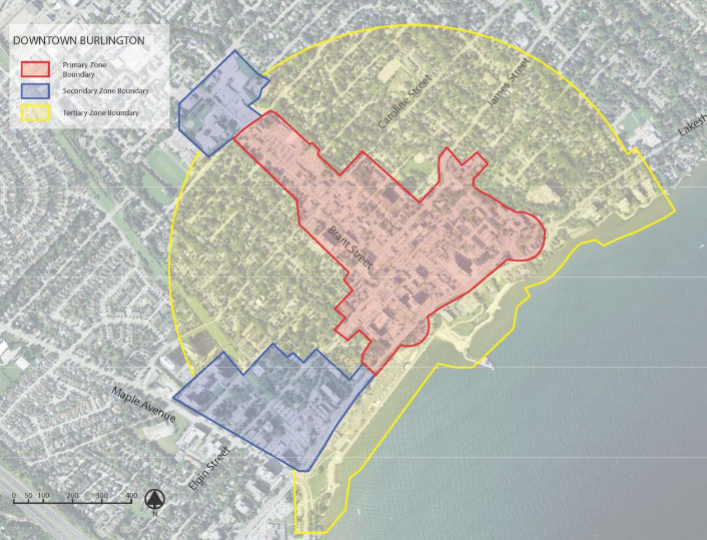 Boundaries set out for the Downtown mobility hub. The study focused on key areas within the City’s urban area and included a site by site analysis to identify opportunities for infilling and redevelopment. This study, which laid out a general framework for longer term growth planning in the City, determined a reasonable estimate of residential units, people and jobs, which could be provided through intensification by 2031. The study also concluded that Burlington was expected to exceed the 40% intensification target in the Growth Plan that is applied Region wide.
The study findings were used to inform the growth analysis work that was undertaken by Halton Region through their Sustainable Halton process, which resulted in population and employment growth forecasts to 2031 as well as intensification and density targets for the City and the other municipalities in the Region.
Halton Region’s Official Plan Review and Integrated Growth Management Strategy
Halton Region is currently undertaking a review of their Official Plan, as required by the Planning Act. The Region’s Official Plan Review (ROPR) commenced in April 2014 and is being undertaken in three phases. Phase one was completed in October 2016 with the completion of a Directions Report which identified the key policy areas for review through the ROPR and established a high level work plan to complete the detailed research and policy development to be undertaken in phases two and three of the ROPR.
 One of the key policy areas identified by the Region is the Integrated Growth Management Strategy (IGMS) which is a growth strategy for the Region to the planning horizon year of 2041 that will incorporate the population and employment forecasts for the Region in accordance with Schedule 3 to the Growth Plan for the Greater Golden Horseshoe. The result of the IGMS work will be an updated growth strategy for the Region and its local municipalities which is based on the integration of land use, infrastructure and financial considerations, that conforms to both Provincial and Regional policy directives. One of the key policy areas identified by the Region is the Integrated Growth Management Strategy (IGMS) which is a growth strategy for the Region to the planning horizon year of 2041 that will incorporate the population and employment forecasts for the Region in accordance with Schedule 3 to the Growth Plan for the Greater Golden Horseshoe. The result of the IGMS work will be an updated growth strategy for the Region and its local municipalities which is based on the integration of land use, infrastructure and financial considerations, that conforms to both Provincial and Regional policy directives.
Phase two work on the IGMS began in the spring of 2018 with a kick-off meeting with the local municipalities. Since then, staff have been actively engaged with the Region on the IGMS work through participation on technical committees, attending meetings and workshops as well as providing background data to support the development of the growth scenarios, which were shared with Regional Council on June 19, 2019.
City of Burlington Growth Analysis Study
Recognizing the growth work being undertaken by the Region through the IGMS as a region-wide provincial conformity exercise, City staff saw the opportunity to engage a consultant to undertake growth analysis work at the local level to inform the process at the Region and provide support to City staff and Council in reviewing and providing feedback to the Region on the IGMS work.
Study Process and Work Plan
In the fall of 2018, the City retained Dillon Consulting with support from Watson and Associates to undertake an analysis of the City’s population and employment growth trends to better understand what an appropriate level of population and employment growth might look like for the City between now and 2041. The study findings are intended to inform and support the process being undertaken at the Region by providing a finer grain analysis of growth opportunities in the City and is not intended to supersede the Region’s process. City staff also recognize that components of the growth analysis study could be used or leveraged for other city projects and initiatives.
The project work plan prepared by Dillon and Watson for the growth analysis study included:
• A review of growth related background data;
• A review of the policy context to gain a better understanding of the long-term growth potential for the City;
• Confirmation of the estimated long-term supply of land within the City for residential and non-residential growth;
• An economic, socio-economic and demographic trends analysis which will also include commentary on local factors and economic drivers which are anticipated to influence future residential and non-residential development trends in the City;
• The development of three city-wide population, housing and employment growth forecasts, including the identification of a preferred growth forecast;
• Identifying potential opportunities and challenges associated with the city’s ability to achieve the preferred growth forecast.
A project kick-off meeting was held in the fall of 2018 which included staff from various internal city departments, acting a project steering committee. Various background data related to land use and development was also provided to the consulting team to assist with their review and analysis. In March 2019, a workshop was held with internal city staff which provided the opportunity for the consulting team to share the findings of their analysis and for staff to provide feedback on a draft of the growth analysis study.
Study Purpose & Components
As indicated, the purpose of the Growth Analysis Study is to identify an appropriate level of population and employment growth that the City can anticipate between now and 2041. The study takes into consideration both supply and demand factors while addressing the following key questions:
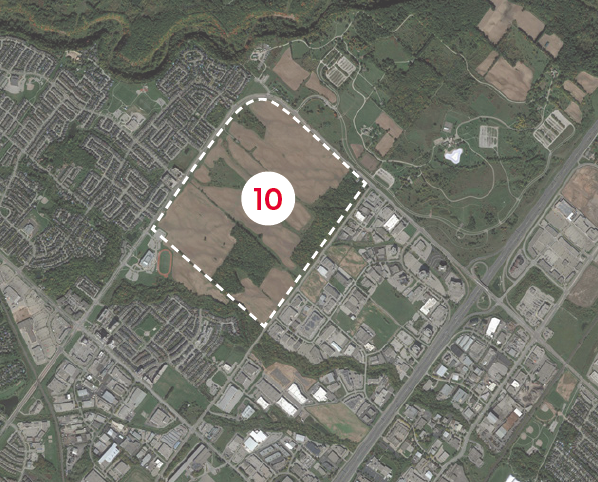 Bronte Meadows – designated Employment Lands, the owners, Paletta International, have been trying for years to have it zoned residential. It was part of a package of land in the GTA that was offered to Amazon when they were looking for a new HQ. • How much land supply is there to accommodate future long-term population and employment growth in the City?
• What are some of the recent broader macro-economic and regional growth trends which will influence growth in Burlington?
• What do the City’s recent economic, demographic and real estate trends tell us about future growth potential?
• What is the potential range of population and employment growth that the City can expect between now and 2041 based on available supply and market trends?
• Given the range of potential growth and multiple opportunities for development, what are the phasing considerations for residential and employment growth?
The analysis in this study relies on a number of different sources including components of the City’s adopted Official Plan, Halton Region Official Plan, the Growth Plan for the Greater Golden Horseshoe as well as provincial guidelines (e.g. MTO Transit Supporting Guidelines). Data related to the City’s active development applications and building permits was also relied upon to complete the analysis.
Adopted New Official Plan
The Dillon – Watson study recognizes the direction received by Council to undertake a scoped review of the building heights and densities contained within the adopted new Official Plan. The methodology used in the analysis builds upon the urban structure and intensification opportunities identified through the City’s growth framework in the adopted new Official Plan. However, building height permissions in the adopted new Official Plan were not used in the analysis. As such, any changes that result from the scoped re-examination of the adopted new Official Plan are anticipated to be within the supply scenarios tested.
 The Mobility Hubs are on a bit of a hold while the Planning department focuses on a number of critical studies that need to be completed before development can get back on track. Mobility Hub Work
The study also recognizes the work that has been undertaken to date on the Mobility Hubs. For the downtown, the Urban Growth Center boundary and density target established in the Growth Plan were used in the supply analysis, while the population and employment ratios were based on the detailed mobility hub work. Similarly, for the GO Station mobility hubs, two density targets were used in the supply analysis; one reflective of the density target identified in the adopted new Official Plan, while the other reflective of the density target established in the Growth Plan. The population and employment ratios used in the analysis were based on the mobility hub draft precinct plans.
Supply Analysis
A review of the City’s active development applications was completed to inform the analysis of the supply of land available for both residential and non-residential growth. These development applications represent a snap shot in time and reflect development applications ranging from those under review by City staff to those currently under construction.
The supply analysis completed as part of this study helped to understand how much additional growth the City could expect based on current policies and plans. A top-down approach was used to estimate supply by applying a density target (people and jobs/ha) along with population and employment ratios to different areas of the City to identify the full build out potential. However, for some areas of the City which are not anticipated to accommodate much of the new growth, a factor was applied to identify full build out potential.
Full build out is assumed to be post 2041 and represents a conceivable end state where land has been fully optimized.
All this takes place while development work in the downtown core is under a one year freeze that has about five months left before a recommendation comes back from the planners. The Interim Control Bylaw (ICBL) was deemed to be necessary when the city found it was overwhelmed with development applications.
 Planner Jamie Tellier and Director of Planning Heather MacDonald during a city council meeting. Planning Director Heather MacDonald was given the green light to single source the consultants she would use to put together the report. MacDonald has been a planner for at least two decades and she knows all the players in that game. She is firm on the report being in the hands of council within the one year time frame she was given; in our last conversation with MacDonald she made it very clear that meeting the delivery date was paramount – and she doesn’t appear to be one who scrimps on quality.
While the ICBL report is being researched and written the “Adopted Official Plan” is getting a very heavy duty re-write and re-think.
And while that re-write and re-think is taking place there is a group working on plans that attract as much public reaction, response, comment – anything anyone wants to say.
Mayor Meed Ward has made it the thickest of the pillars that hold up her election platform.
She wants to hear – she wants to listen.
The five new City Councillors are in for the hardest assignment they have ever been given. Some are faltering under the work load; some live on this kind of deep policy stuff.
There is a public that depends on the thinking they do and the wisdom they bring to the table.
After a decent summer break – they skipped a July Council meeting – they are now back in the trenches. In seven weeks they will celebrate being elected.
Two of the five (Nisan, Kearns) fought off contenders, one other (Stolte) was a certain winner once it was a clear one on one race with a long term incumbent, the other (Sharman) was an incumbent who won because two women let the vote be split. Another (Bentivegna) won by the slimmest of margins against a candidate who really didn’t run all that much of a campaign. The last newbie (Galbraith) came out on top of a very crowded field.
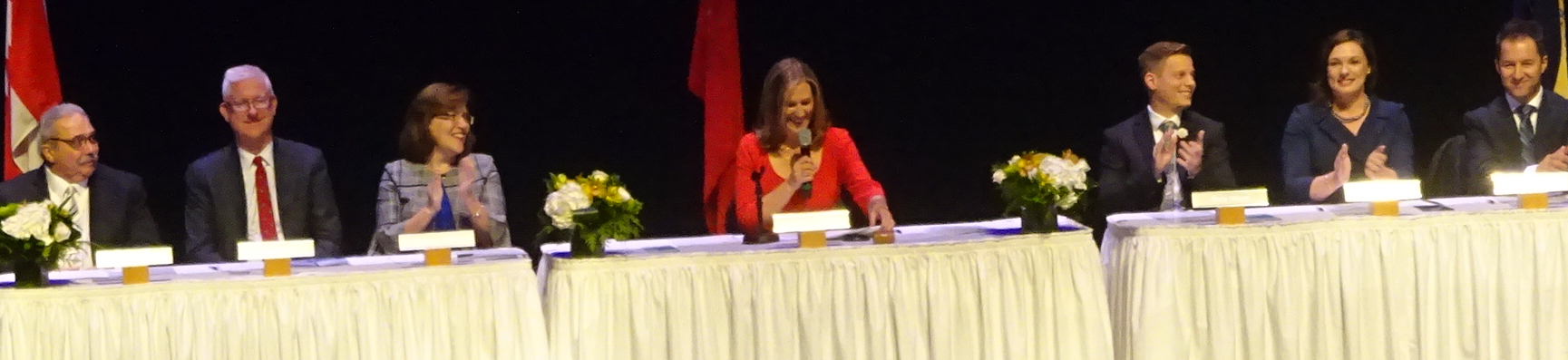 Were the right choices made – can the team handle the amount of work they have been given? Time will tell. We will know in the not too distant future if the right choices were made.
There is no doubt that at the Mayoralty level the right choice was made given what was on offer. Only time will tell if the Mayor lives up to the promise.
By Pepper Parr
September 3rd, 2019
BURLINGTON, ON
It will be a very full week.
On Monday, the 9th, Council starts off with a daylong meeting that has 8 consent items on the agenda.
Then details on the Provincial Audit and Accountability Fund, that’s the program that has the province coming in to help (tell?) the city how to run their operation.
 Detours that transit buses will take when The Gallery starts demolition and construction opposite city hall.  Cement and dump trucks will come down John Street, slip into the construction site and then leave via James street – passing buses along the way. The Standing Committee will be discussing Open air burning permit areas, a Stormwater management update, the badly needed Construction and Mobility Management Policy. The city got caught a little short-handed on this one; two projects that are expected to be putting up hoardings in the near future met with ward 2 residents and talked about how they would handle the trucks and the traffic on Brant Street opposite city hall and on Lakeshore at Martha. Both locations are going to be construction sites for the next 30 months – at the same time Lakeshore Road is to undergo some serious upgrades that will close it down for up to 8 weeks.
The Strategic Asset Management Policy is going to be discussed, and Consideration for free transit for students will also get discussed.
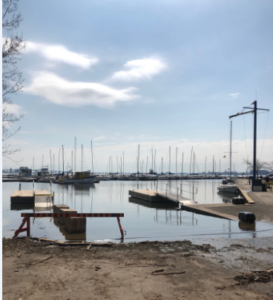 The LaSalle Marina just might end up with a very different governance model. Discussion will take place this week. Flooding has been a serious problem. The Marina governance and operating model will be presented – this item will take place in the evening – at 6:30 pm.
 Improvements to the Skyway Arena and community centre are in the works. There was a time when citizens didn’t think they were being heard. They are today. Will they be heard when a decision gets made on the massive development plan yards away from the arena The New Skyway Community Centre will also be discussed during the evening of September 9th.
On Tuesday the 10th council meets as a Standing Committee – Planning and Development this time.
There will be two Statutory Public Meetings; these are public meetings held to present planning applications in a public forum as required by the Planning Act.
One is a rezoning application for the hydro corridor north of 1801 Walker’s Line which staff is recommending be refused.
The second is for an official plan amendment and rezoning application for 2085 Pine Street
Statutory public meeting and recommendation of refusal of rezoning application for the hydro corridor north of 1801 Walker’s Line (PB-16-19)
Both items will be discussed at 6:30 p.m.
The Heritage Burlington 2017/2018 annual report and 2019 objectives is being treated as a consent item.
 Several Council members liked what was being done in Waynesboro – they want staff to look into some better ideas. Traffic management strategies will be discussed at the 9:30am meeting along with Relocation of Bingo Connection and Downtown Streetscape Guidelines. Panhandling on streets in the City of Burlington is to be discussed – this matter often brings out emotional responses from those that delegate.
There will be a Staff direction regarding Airbnb’s and then the Red Tape Red Carpet Task Force recommendations.
This item amounts to much more than a discussion about the Task Force the Mayor set up to hear what stakeholders had to say about how efficient city hall was or wasn’t. Buried within the report is the wish of the Mayor to totally revise the way economic development is done in Burlington.
There will be an Amendment to Nuisance and Noise By-law 19-2003 and results from Halton Regional Police Service’s pilot project to stop noisy moving vehicles
 Council didn’t get a chance to opine on the construction of this parking lot at John and Caroline – it just got done. This Council wants greener parking lots. Green parking lot design guidelines for new parking lot at John and Caroline Streets and future builds. The 2018 – 2022 council has a very green agenda and were upset when the John and Caroline parking lot got opened without any serious consideration to making it a “green” space. Capital Works, the department that oversees and administrates the construction work for the city didn’t see that coming.
Wednesday is an Audit Committee meeting – dry as toast for the most part.
Thursday is a tough one. Members of Council were presented with a 152 page report on what the city is facing in terms of population growth and just where that intensification can or is going to take place.
That will be a special report later in the week.
Related news articles:
Pan handling
Construction site management
Skyway Arena and Community Centre
|
|