By Gazette Staff By Gazette Staff
November 11th, 2025
BURLINGTON, ON
The swimming pool allocation issue and the Audit that will take place once Council approves the motion at a meeting on the 18th.
In the meantime, the newly minted Burlington Aquatic Devilrays(BAD) executive had been meeting with people at City Hall as they prepare to make the case for a change to the swimming pool allocation agreement that is in place.
Seeking a decision at the judiciary level is not out of the question.
 BAD Executive Vice President – Zohair Khan We are advised that their Executive Vice President – Zohair Khan has met or talked with Emilie Cote, Director of Recreation, Community and Culture.
Many feel decisions made at that level are what got the city into the mess it is in.
Council knows that if anything is taken away from Golden Horseshoe Aquatic Club (GHAC) will result in a lawsuit.
 Mayor Marianne Meed Ward has yet to learn how to admit that a mistake was made. If this matter is to be worked out, it is going to have to be at the municipal diplomatic level.
Mayor Meed Ward has yet to say she was wrong on an issue in the 12 years I have been covering her political career.
I was in the room when she held her first meeting with supporters who were getting ready to run Meed Ward for the Ward 2 council seat.
The woman we heard that evening in 2012, is not the woman who is currently Mayor of the City.

By Gazette Staff
November 11th, 2025
BURLINGTON, ON
This one crossed our path.
It shows when the provincial legislature was sitting and when it wasn’t.
Great jobs
Superb benefits and the hours – to die for.

They shall grow not old, as we that are left grow old:
Age shall not weary them, nor the years condemn.
At the going down of the sun and in the morning
We will remember them…

By Sadie Smith
November 12th. 2025
BURLINGTON, ON
In recent years, interest in live games has grown significantly among Canadian gamblers. Baccarat holds a special place among these. Baccarat has always had its own charm. It’s easy to learn, but every hand still keeps you guessing, which is probably why people never get tired of it. Players on sites like Onlyspins often say it hits that sweet spot between luck and strategy enough to keep things exciting without feeling complicated. And the best part is, you can feel that real casino buzz without leaving your couch.
What is Baccarat, and where did it originate?
 Baccarat slowly spread across Europe and eventually found its way to the big casinos of Las Vegas. Baccarat has been around for hundreds of years. It started out in Italy as a simple card game that anyone could pick up, then caught on in France, where the upper class made it part of their evening gatherings. From there, it slowly spread across Europe and eventually found its way to the big casinos of Las Vegas.
Now the same game has moved online. Players in Canada and everywhere else can join live tables on sites like Onlyspins casino and watch real dealers deal the cards right in front of them. The stream looks sharp, the dealers are friendly, and the whole setup feels surprisingly close to being in a real casino, just without the noise or the travel.
Why do players enjoy Baccarat?
 High probability of winning. On average, the house edge in Baccarat is only about 1% Among all live games, Baccarat remains a favorite for its simplicity and style. Here are reasons why it keeps winning over Canadian players:
- Simple rules. Baccarat doesn’t require complex combinations: the player chooses a bet on the «player», «banker», or «tie». This makes the game accessible even to those new to online casinos.
- Minimal randomness. Unlike slots or roulette, betting strategy and an understanding of probabilities play a significant role. This appeals to players who enjoy control and analysis.
- High probability of winning. On average, the house edge in Baccarat is only about 1%, especially when betting on the banker. This makes the game one of the most profitable live casino games globally.
- An authentic casino atmosphere. Modern studios with live dealers create a sense of presence. The croupier communicates with players. The action is streamed live. On sites like Onlyspins casino, gamblers can watch every hand in HD, feeling like they’re right in the middle of the action.
Online Baccarat has retained its classic feel while becoming more accessible and dynamic. This is precisely why it consistently holds the attention of Canadian gamblers.
Popular Baccarat Variations in Online Casinos
Modern studios and providers offer numerous variations of the game, each adding its own unique features to the gameplay. Here are the most popular formats found on popular gambling sites, including Onlyspins casino:
Today’s Baccarat proves that a classic never truly goes out of style. The game has evolved in exciting ways, offering players numerous options to explore and choose the version that feels most enjoyable for them.
By Pepper Parr
November 10th, 2025
BURLINGTON, ON
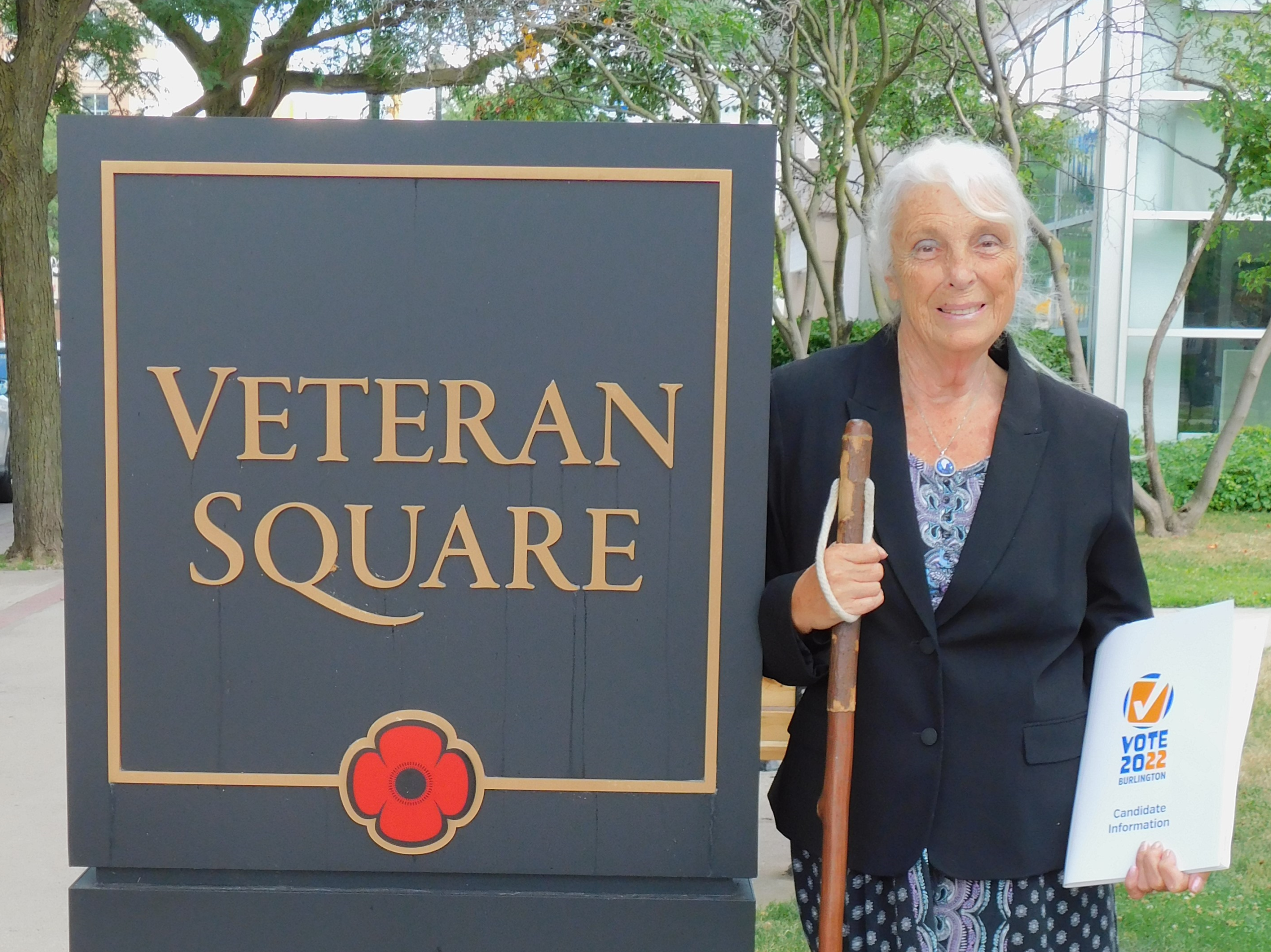
 Ann Marsden delegating before Council Jason Marsden advised us that Ann Marsden passed away this evening.
She passed at her home peacefully after being diagnosed with colon cancer back in June. Her husband Dave, sons Dale and Jason were by her side.
She had a renewal of vows back in September, which was also her celebration of life. “In my moms true fashion if she was paying for a party she was gunna be there and enjoy it” said son Jason.
Funeral arrangements have yet to be announced.
Ann was a consistent and persistent citizen who delegated at City Hall frequently.
 She once ran for the office of Mayor and for the office of chair of Regional Council. She once ran for the office of Mayor and for the office of chair of Regional Council.
She deserves much of the credit for the recent work at Veteran Square and for getting the fountain refurbished.
More later
By Tom Parkin
November 11th, 2025
BURLINGTON, ON
Fewer employers who skirt workplace safety laws are paying consequences under the Ford PCs, according to data from the Ontario Court of Justice.

But workers continue to pay the price. At least 305 Ontario workers died from workplace injuries or exposures in 2023, the most recent year of settled data from the Workplace Safety and Insurance Board. That’s an eight per cent increase from 2015, when 283 were killed.
Yet the number of employers who pay any court cost for violating health and safety law has dropped by more than half under the Ford PCs.
In 2015, prosecutors working for the Ministry of Labour brought 2,974 OHSA charges to court. By 2023 it had fallen by half to 1,524.
Workers paying the price for Ford PCs, says OFL
“Doug Ford lowers costs for unsafe employers, and workers are the ones left paying the price – sometimes with their lives,” said Laura Walton, president of the Ontario Federation of Labour.
Under the PCs, not only have OHSA charges dropped by half, but charges against employers for violating the Employment Standards Act have fallen 90 per cent, the Ontario Federation of Labour and Data Shows recently revealed.
The Employment Standards Act (ESA) is intended to protect workers and prosecute employers who commit wage theft, stealing tips or not paying wage premiums, such as vacation pay, holiday pay or overtime rates.
By Pepper Parr
November 10th, 2025
BURLINGTON, ON
The Special Council meeting that took place this afternoon was a continuation of the meeting that took place November 4th that heard comments from the Burlington Economic Development & Tourism Corporation who were responding to a report from Rubicon Strategy, a consulting group that was hired by the city to do a review of BEDT’s operations and the value they city was getting for the $1.9 million they spend each year.
BEDT has a staffing complement of 15 people and a 13-member board that includes two members of Council, along with the Mayor.
Why is this an important matter? Attracting new business to the city is vital toits growth; retaining what we have is equally as important. Having a tourism unit that can attract visitors and play a major rile in making the city a tourist destination.
This is a complex story that needs to be told in pieces.
A conclusion was reached. Staff were instructed to come back in April of 2026 with
Direct Staff to report back by April 2026 on two options for Council’s consideration.
1: Fully detailed options for integrating economic development and tourism functions within the municipal structure and
2: Provide a draft Services Agreement that retains an independent entity while permitting a collaborative decision-making relationship with Council.
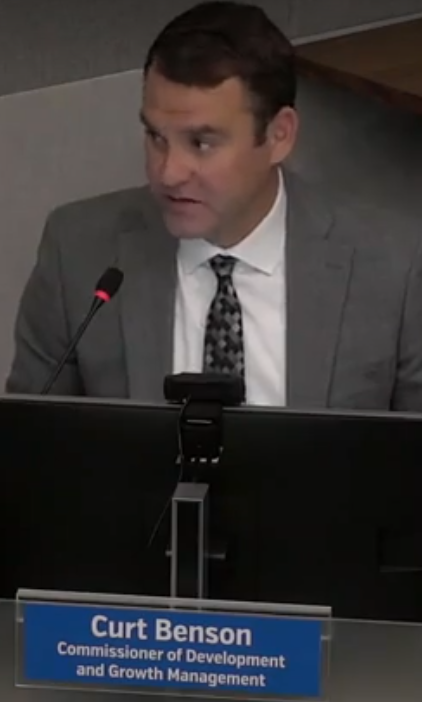
Getting to that point was the roughest experience CAO Curt Benson has experienced since he took up that office several months ago. Benson was appointed CAO on very short notice when Hassaan Basit resigned after serving just 16 months of his five-year contract; he left Burlington to join the provincial government
During his time with the city, one of the things Basit did was merge the existing Tourism department with BEDT. Why?
The province created a 4% Municipal Accommodation tax that is collected by the city.
The city keeps 50% of what is collected in a reserve fund to be used as Council directs.
The remaining 50% is made available to eligible tourism entities to be used to promote tourism, including product development.
Council designated an eligible tourism entity, governed by a board, to receive and spend these funds in the community. That entity was Tourism Burlington. The tourism community and city hall came to the conclusion that they were not up to the job.
Basit merged Tourism Burlington with Economic Development to create BEDT.
The problem was that important City Hall staff did not feel Economic Development was doing a very good job, and they brought in Rubicon Strategy, a consulting group to do a review. They issued a devastating report which recommended dissolving BEDT.
Benson wanted to act on that recommendation and explained his reasoning at the Tuesday Special Standing Committee meeting saying:
 CAO Curt Benson explaining his thinking to Council. “As a part of a continuous improvement approach, it’s important to do periodic reviews of services to ensure effectiveness, efficiency, value for money, and to address areas of alignment to strategic objectives, policies and practices here at the city. The work to review the economic development function was initiated back in May 2024 through the endorsement of a report that identified an opportunity to address deficiencies and agreements between the city and the agency partners that deliver important services that our residents and visitors depend upon.
“Having detailed agreements in place helps to ensure mandates and services are aligned with Council’s expectations where there is discretion. The report recognized the need to advance this work in Priority sequence.
“There has been feedback shared on this approach, namely that we need to look at all agreements for city agency partners, comprehensively and staff will get there. We have been deliberate in addressing our approach with economic development as the highest priority. It represents the greatest opportunity to correct the alignment and integration challenges that have persisted under the model. The learnings from this work, in particular, the collaboration and consultation in developing a new arrangement will provide the clarity and accountability that can serve as a model for agreements with the city’s other agencies. It’s important that, based on staff’s initial assessment, there is no intent to assume or internalize the valued functions of any other city agency.
“Most of the other agencies have a mandate that are either back stopped by existing arrangements derived from parent legislation that drives governance and accountability, or they are at a point in maturity that reflects a steady or stable state, given some of the change over in city leadership roles. Work needs to continue to strengthen the relationships with all agency partners. It’s important that progress is made before coming back and providing council with an update on this work early next year.
“For Burlington Economic Development and Tourism, from my perspective, there is a strong desire for the city to have a clear line of sight to the full range of activities associated with business retention, business attraction, and leveraging of tourism in driving business outcomes. The line of sight currently does not exist. To address this gap and to address other issues of alignment we recommending that council in principle endorse the integration of Economic Development and Tourism services and operations into the city’s organization structure.
“There are other recommendations to ensure that this is done in a careful and coordinated manner through the development of a transition plan. That transition plan would be prepared and provided to council no later than April 2026, highlighting key milestones, timelines, resource implications and options for a model to ensure effective oversight.
“This represents a material change, and we do not take these recommendations lightly. The changes proposed in the report are two governance and structure, and are meant to build on accomplishments made under the current model and to seize an opportunity to keep what works, the business insight, the relationships, the tourism partnerships, but place it in a model that gives Council clear line of sight, gives businesses a single front door, and uses public funds in a transparent and effective way.
“The review and its recommendations are by no means a reflection on the commitment and significant value driven by the volunteer board or its staff. We are quite fortunate to have a highly skilled, engaged board of volunteers who are passionate about supporting businesses in our community.
“There are a few points addressed in the report that were also raised by the delegations on Monday that I’d like to address really briefly. Comments on the review itself.
 The consultants released a devastating report that recommended dissolving the Burlington Economic Development and Tourism Corporation, a city not-for-profit organization. “For example, some question the process, its independence, the fact that it did not take stock in the positive outcomes delivered by the model, or did not address the significant effort or value of the merger. While many had comments and criticisms about the nature of some of the statements in the report, none of the delegation suggested there was there wasn’t room for improvement.
“As staff, we take stock in that, and as was mentioned by a couple of the delegates, we also want the very best for the city and the business community to thrive. We’ve heard from delegates that the current model is superior from the perspective of agility and speed and working in the gray area, that means independence and minimizing bureaucracy or politics.
“Well, if speed is a concern, there are remedies to design a fit for those purposes, tools within that framework, standing offers, pre qualified vendors, templated scopes, rather than operating outside of municipal controls.
“Unwinding: We’ve also heard that unwinding, the model led by the independent board could come at significant cost. It could be disruptive, and it could include an issue of garnering compliance with the MAT tax rules. City staff maintain that all these things, can be solved as a part of a new model. If specific barriers are identified, the intent was always that we would review them and propose targeted fixes as a part of a transition plan.
“There is an opportunity through the work of a transition plan to define how best to leverage the value and community based business perspectives through different models. It’s really important to take stock in where we are in our growth and maturity as a municipality. For example, in 2019 After launching the red tape red carpet initiative, there are key lists of a long list of recommendations on how the city can be better partners with businesses and developers, you heard from us in July 2025 through a report that nearly all the recommendations falling out of the red tape red carpet initiative have been operationalized.
“There has been significant process reviews undertaken and many of those overhauled. There’s been an establishment of a small team to address support for high impact files and also support for Main Street small businesses, as evidenced over the past two years, our relationship with the development industry is strong. Unfortunately, we can’t say the same for our relationships with the business community. We have no direct opportunity to build those relationships and strengthen those relationships without going through an intermediary. Board, council has important levers under the system, under its decision making under the municipal act, we want to make sure that our plans, policies, incentives are there to support business in our community, and that that is done in a way that represents accountability over budget and defining key service standards to support.
“Those are my opening comments.”
Much of the questioning from staff that followed could not be described as a pretty picture. We cover that in part 2.
By Pepper Parr
November 10yj, 2025
BURLINGTON, ON
They are an hour and a half into the plan to dissolve the Economic Development and Tourism not-for-profit that the city operates.
CAO Curt Benson isn’t getting what he wants – and he is going through the toughest day has had since he got into the job a couple of months ago.
And the Mayor isn’t getting what she wants.
So now they are going to debate amendments – this will get sticky.
More to follow.
By Pepper Parr
November 10th, 2025
BURLINGTON, ON
The agenda for the Special meeting of a Committee of the Whole (COW), scheduled for 2:00 pm this afternoon might end up being closed.
Here is what the city has posted on the meeting agenda:
This item was referred from the Committee of the Whole meeting of November 4, 2025
-
Endorse, in principle, the integration of all economic development and tourism services and operations into the City’s organizational structure, consistent with chief administrative officer report CAO-06-25. That Council endorse the staff recommendation, informed by an independent third-party review, to internalize Burlington Economic Development and Tourism (BEDT) functions into City’s structure to optimize existing resources, minimize duplication, enhance operational effectiveness, and align economic development and tourism with the City’s broader strategic priorities; and
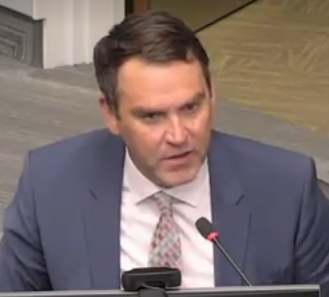
 Curt Benson was the Commissioner of Development, then got upgraded to Chief Administrative Officer for a one-year term. He might not be around to manage the changes expected. Direct staff to work closely with BEDT’s Board of Directors to approve BEDT’s 2026 budget and to ensure continuity of operations and support during the transition recommended above. That Council direct Staff to engage and collaborate with key representatives of BEDT’s Board of Directors and members of its Finance & Risk subcommittee to facilitate the agency’s 2026 budget approval to support the integration of all economic development and tourism services and operations under the Chief Administrative Officer’s (CAO) Office by 2027. Concurrently, the annual funding designated for BEDT’s 2026 Service Agreement (SA) would need to be retained within the City‘s 2026 budget; and
Direct staff to develop a transition plan with a report back by April 2026 to outline deliverables for integrating economic development and tourism functions within the municipal organizational structure. That the Chief Transformation Officer (CTO) will lead the development and implementation of this plan, which should include key milestones, timelines, resource implications, and the proposed model to ensure effective oversight of the economic development function by Council; and
Direct the CAO to establish a strategic advisory group to provide strategic industry advice and guidance to the City that will inform the transition plan. That this group or committee, chaired by the CAO or designate, be established to leverage private-sector expertise without duplicating a formal board role. Key representatives from BEDT and its Board of Directors should also be invited to inform the transition plan, including efforts to minimize any disruption to ongoing economic development and tourism initiatives and to stakeholder relations during the changeover.
Confidential reports may require a closed meeting in accordance with the Municipal Act, 2001. Meeting attendees may be required to leave during the discussion.
Confidential Appendix B to chief administrative officer report CAO-06-25 regarding findings from third party review of Burlington Economic Development and Tourism (CAO-06-25)
Pursuant to Section 239(2)(a) the security of the property of the municipality or local board; and
Pursuant to Section 239(2)(b) personal matters about an identifiable individual, including municipal or local board employees; and
Pursuant to Section 239(2)(f) advice that is subject to solicitor-client privilege, including communications necessary for that purpose
By Joe Gaetan
November 10th, 2025
BURLINGTON, ON
Nova Scotia MP Chris d’Entremont resigned from the Conservative caucus to join the Liberals, a move that nudges Prime Minister Mark Carney closer to a majority government.
 Prime Minister Mark Carney and MP Chris d’Entremont. In Canadian politics, this kind of move isn’t new. From time to time, an elected member who ran under one party’s banner decides to “cross the floor.” One side pops the champagne, the other fumes. It’s the political version of a player switching teams mid-season, except the fans who bought the tickets don’t get a refund.
Crossing the floor always comes down to choice. A member can stay loyal to the party they ran for, sit as an independent, or, as d’Entremont just did, join another party altogether. Those who defend the move often say it’s about principle. Maybe the party changed. Maybe the leader lost their confidence. Maybe they believe they can do better somewhere else. Fair enough.
But here is another side to this story that rarely gets airtime: What about the people behind the scenes?
Every election campaign runs on an army of volunteers, ordinary folks who knock on doors in the rain, answer phones after work, deliver and collect lawn signs, and stay up until midnight as scrutineers making sure every vote is counted properly. Then comes election night, the hugs, the cheers, the victory speech, and the thank-you. Everyone there feels part of the winning team.
So when an elected MP decides to cross the floor, it’s not just their party that’s blindsided, it’s the very people who helped put them there. Were they given a heads-up? An explanation? Or did they find out on the evening news, coffee in hand, wondering what all that hard work was really for?
 Politics will always be a mix of principle and pragmatism. This image is the pragmatism angle. Politics will always be a mix of principle and pragmatism. But at the heart of it, what about the lost trust, what about the people who believed in you enough to give you their time, effort, and vote.
Standing up for your values is one thing. But crossing the floor sends a confusing message: are you standing on principle, or simply finding a more comfortable seat?
Maybe it’s time Canada and the Provinces took at a better look at how to handle this. When an MP of MPP, MLA,OR MNA changes teams, voters deserve a say. A simple rule should be: Holding a by-election. This would give constituents the final word. It would restore trust, show respect for the volunteers who made it possible, and remind every elected official who they really work for: us the people, not the party.
By Pepper Parr
November 10th, 2025
BURLINGTON, ON
Council will meet this afternoon as a Committee of the whole (COW) to discuss just what they want to recommend to a full Council meeting on – what to do with the Burlington Economic Development & Tourism (BEDT) department, which is organized as a not-for-profit corporation.
 Burlington CAO Curl Benson, with less than three months as CAO under his belt has to deal with a messy situation. Council made public a devastating report from a consultant that recommends the organization be dissolved and the work they are doing be brought in-house: it would become a department that would report directly to the CAO. Currently that would be Curt Benson.
A portion of the Rubicon Strategy 20 page report is set out below:
The relationship between the City and BEDT is broken and leaving the current model in place risks further erosion of trust, wasted resources, and lost economic opportunities. T
The recommendation is to dissolve BEDT and bring the economic development and tourism functions into the City’s corporate structure.
To preserve the advantages of private sector expertise and business-facing credibility, an advisory council of business leaders should be established and chaired by the City Manager. This approach would deliver clearer accountability, better alignment with municipal priorities, and a unified vision for Burlington’s economic future, while still retaining a channel for private sector input.
In an increasingly competitive regional environment, Burlington requires not only strong ideas but also a governance model capable of delivering measurable results and maintaining public trust.
If the COW accepts that recommendation, BEDT will cease to exist sometime in 2027, and several careers will end.
Economic Development took on Tourism about a year ago and has only just begun to have an impact.
It’s a confusing story and an important one.
BEDT doesn’t get tied up with policy issues that take months to get worked out. The belief was that a not-for-profit would be both nimble and agile and be able to respond quickly to issues and opportunities. City Hall staff didn’t see BEDT the same way.
 Ron Laidman, Chair of the BEDT Board explains to Council that mergers are always messy and that bringing Tourism into Economic Development was a messy business. During the delegation last week, I watched members of the BEDT board explain how they operated: it was impressive. One of the Board members (they are all volunteers) works full-time in the office of the Provincial Auditor General. The people in that group are amongst the best the province has – for BEDT to attract that level of talent is very telling. There isn’t much at City Hall that compares favourably.
One Council member suggested that the issue was one of control with city hall wanting to take on tasks that it didn’t handle all that well in the past.
Tourism was a disaster – there was no focus, nothing that helped Burlington become a destination. BEDT had only just begun to create a tourism focus. That may not happen.
Council wasn’t able to complete the debate on this issue last week. Thus the special meeting this afternoon at 2:00 pm
By Gazette Staff
November 10th, 2025
BURLINGTON, ON
This is not something Canada should be proud of.
 The measles outbreak in Canada and how we reacted to it has resulted in the Pan American Health Organization (PAHO) advising the The Public Health Agency of Canada that it has lost its measles elimination status — a designation it has held since 1998. The measles outbreak in Canada and how we reacted to it has resulted in the Pan American Health Organization (PAHO) advising the The Public Health Agency of Canada that it has lost its measles elimination status — a designation it has held since 1998.
PHAC said it is collaborating with the PAHO and working with the federal, provincial, territorial and community partners to implement co-ordinated actions. These include focusing on “improving vaccination coverage, strengthening data sharing, enabling better overall surveillance efforts, and providing evidence-based guidance,” the statement said.
 A severe case of measles. Canada has recorded more than 5,100 measles cases this year, the majority tied to the multi-province outbreak, according to the most recent federal data.
By Tom Parkin
November 10th, 2025
BURLINGTON, ON
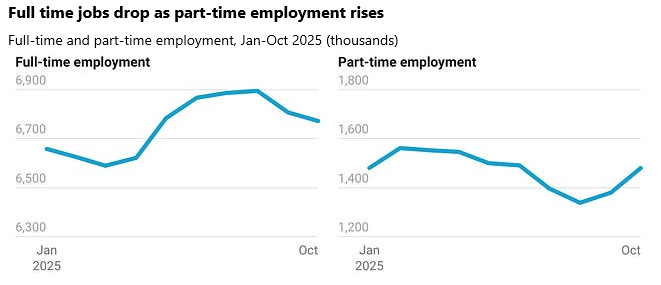
In October, Ontario lost 14,700 full time jobs and total hours worked fell by 20.7 million hours.

Though full-time employment fell by 14,700 jobs in October, Ontario’s unemployment rate dropped 0.2 points to 7.6 per cent due to a large increase in part-time employment, according to Statistics Canada’s October Labour Force Survey, released Friday.
Part-time work increased by 100,400 positions, offsetting the full-time job losses.
The trend to part-time work and a cut in average hours of full-time employees resulted in 20.7 million fewer paid work hours in October.
StatsCan estimated the total hours worked in October was 256.9 million, down from 277.6 million hours in September.

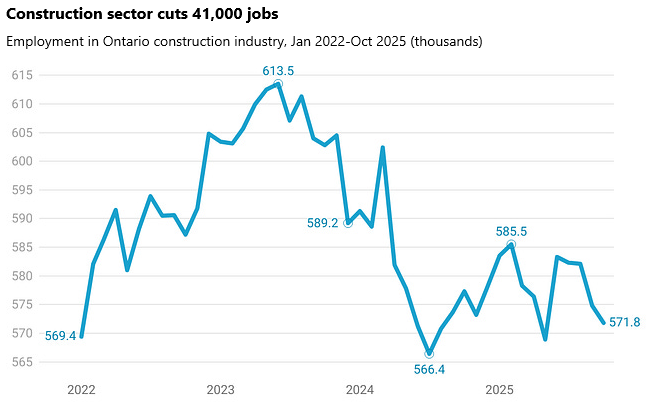
Ontario’s construction sector lost 3,000 more jobs in October, seasonally adjusted. Construction job losses now total 41,000 since an employment peak in 2023.
Despite falling job numbers, the Labourers Union continues to publicly praise the Ford PCs and very activity deflect corruption concerns over management of the government’s $2.5 billion Skills Fund, from which LIUNA has received tens of millions of dollars.
LIUNA representatives have characterized the opposition NDP’s questions about public fund misuse as an attack on workers. LIUNA recently withdrew from the Ontario Federation of Labour after the labour umbrella group raised concern about misappropriation of money intended for worker skills training.
Jobs in retailing rebounded in October after slumping to a 13 month low of 821,000 in September. Jobs rose by 23,000 to 844,300, but October employment in retailing remained the second-lowest over the past years and remains 5,300 jobs below levels of October 2024.
Retail sector employment strength is an indicator of affordability and consumer strength.
By Gazette Staff
November 10th, 2025
BURLINGTON, ON
Winter as seen by Teresa Seaton.
This view is about as good as it can get.

By Pepper Parr
November 9th, 2025
BURLINGTON, ON
In Canada hockey has always prevailed.
The current culture of the game is in trouble.
 RICK WESTHEAD will be at the Burlington Public Library, Central Branch the evening of Wednesday November 12th, 7pm at the to discuss his book We Breed Lions. RICK WESTHEAD will be at the Burlington Public Library, Central Branch the evening of Wednesday November 12th, 7pm at the to discuss his book We Breed Lions.
He will be in discussion with Annette Hamm, fellow broadcaster and journalist.
Admission Free ~ Please Register HERE
Westhead, an award-winning, world travelling investigative journalist and Senior Correspondent for TSN, shares his views on what has been done to the game of hockey. He documents the harmful habits that now prevail and the damage thaty has resulted. You will hear his vision for change in :We Breed Lions.
Bruce Arthur, a well-known newspaper writer said the book is: “… a thorough, thoughtful, illuminating and necessary view into hockey’s darker corners…the stories are specific, and haunting…”
By Gazette Staff
November 7th, 2025
BURLINGTON, ON
 Winter Break Camp at Joseph Brant Museum is for children aged 5-12 years and runs from 9:00am -4:00pm on December 22, 23, 29, 30 and January 2. Winter Break Camp at Joseph Brant Museum is for children aged 5-12 years and runs from 9:00am -4:00pm on December 22, 23, 29, 30 and January 2.
The cost is $55 per day (members receive 10% off).
Each day is a different theme filled with games, crafts and fun! Space is limited, pre-registration is required.
Email museumeducation@burlington.ca with any questions.
Book now – Click HERE
By Pepper Parr
November 7th, 2025
BURLINGTON, ON
There is an arms length organization with the abbreviation BED.
That got upgraded to BEDT.
What was the Burlington Economic Development Corporation became the Burlington Economic Development and Tourism Corporation.
They began to get on with doing what they were created to do.
In their Annual report for 2024 they reported:
 Annual report released in July of this year. Burlington Economic Development and Tourism is proud to announce the release of its 2024 Annual Report, capturing a transformative year of strategic integration, expanded programming, and record-breaking impact across sectors. Representing the first annual report following the amalgamation of Burlington Economic Development and Tourism Burlington, it reflects a strengthened, more coordinated approach to growing Burlington’s economy and elevating the visitor experience.
In 2024, the organization supported over 800 businesses, helped attract more than 300 new jobs, and recorded $524 million in visitor spending—a 26% increase over 2023.
But the wheels came off.
In the Executive Summary of the Rubicon report, prepared by a consulting company, the recommendation was to dissolve BEDT and bring the economic development and tourism functions into the City’s corporate structure, adding that the relationship between the City and BEDT is broken and leaving the current model in place risks further erosion of trust, wasted resources, and lost economic opportunities.
It’s quite a story. Council will be meeting in a Special session on Monday to determine what they should do.
The Gazette will provide a detailed outline on what happened at Council on Tuesday. It was not a pretty picture
Whatever they do – it will be expensive.
By Ray Rivers
November 6th, 2025
BURLINGTON, ON
This may have been the most over-hyped budget ever. The consensus among many economists is it is neither as transformational nor as generational as the PM and his finance minister had billed it.
When an economy starts to go downhill as Canada’s has, it is government’s role to prime the pump. Stephan Harper did exactly that during the 2008 economic downturn with Mr. Poilievre in his caucus. And that is exactly what this budget does. The question many economists are asking is whether there is even enough priming given the challenges we face – whether Mr. Carney is being too cautious.
 We are just not ready for serious import substitution. Mr. Carney must feel it is too early for Canada to fully reciprocate by countering all of Trump’s tariffs. One factor is that Trump’s so-called emergency tariffs (his first ones tied to fentanyl and migration) are before the US Supreme Court. Were those tariffs to be ruled unconstitutional, the entire tariff apple-cart might be in play. Plus there might even be some compensation for us on the table. But don’t get your hopes up given the voting record of this highly partisan MAGA Supreme Court.
Second, all trade negotiations have been placed on hold ever since Ontario’s dysfunctional premier interfered in US domestic politics by playing those Reagan ads on US media. B.C. cancelled its planned ads on lumber trading once it saw the damage that Ford had done. And even the PM’s apology for the interference from one of his Team Canada premiers, has not brought Trump back to the table.
And third, we are just not ready for serious import substitution. It’s only been a few months since the tariffs landed. As an example, we are still importing US made beer cans despite the fact that the aluminum comes from Canada. So applying a tariff on US beer cans would just serve to raise the cost of beer – thus adding to inflationary pressure.
Fear of Inflation was the primary reason the Conservative opposition is claiming for voting against the budget. Somehow, Poilievre would be OK with $42 billion but not a $78 billion deficit. And somehow, the fear of recession and joblessness is of lesser importance than inflation. But then the Conservatives have almost never supported a federal Liberal budget over all the years.
 Poilievre has reverted to being Mr. Negativity again – using the same old negative attack dog antics. Besides, Poilievre has reverted to being Mr. Negativity again – using the same old negative attack dog antics which worked so well at eviscerating the previous Trudeau government. It’s little wonder that at least one MP has tired of this negativity and narrow-minded leadership and crossed the floor to join the Liberal camp.
Writing a budget in times like these is a balancing act. Maintaining the social safety net is critical to removing financial insecurity for Canadian consumers, since consumption is the antidote to recession. So pharmacare, dental care and child care are still in play despite the government shaving back the overall costs of its programs.
 Do Canadians want Carney to shift how he has tried to work with Trump? Canada is experiencing an economic crisis but most importantly there is also a crisis of confidence – in ourselves and our ability to rebuild a stand-alone Canada. Critics had warned at the time about entering into the kind of trade deal Mulroney had negotiated – warned about the inevitability of the outcomes we are seeing today. Still, we are fortunate that the USMCA has allowed us to avoid the full impact of Trump’s tariffs even if only until Trump finally squashes it next year.
I had been expecting more from this budget. It would have been good to see even more tax incentives and direct investment, particularly for small and medium business. Carney should have reactivated the digital services tax – money for nothing, a no brainer – which he cancelled in the naive and failed hope of expediting trade negotiations. And if Carney was really serious about new private sector investment why hasn’t he dropped the GST on Canadian made goods?
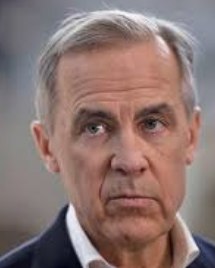
 Ray Rivers, a Gazette Contributing Editor, writes regularly applying his more than 25 years as a federal bureaucrat to his thinking. Rivers was once a candidate for provincial office in Burlington. He was the founder of the Burlington citizen committee on sustainability at a time when climate warming was a hotly debated subject. Ray has a post graduate degree in economics that he earned at the University of Ottawa. Tweet @rayzrivers Ray Rivers, a Gazette Contributing Editor, writes regularly applying his more than 25 years as a federal bureaucrat to his thinking. Rivers was once a candidate for provincial office in Burlington. He was the founder of the Burlington citizen committee on sustainability at a time when climate warming was a hotly debated subject. Ray has a post graduate degree in economics that he earned at the University of Ottawa. Tweet @rayzrivers
Background links:
First Budget – Not Good Enough –
By Gazette Staff
November 6th, 2025
BURLINGTON, ON
The Santa Claus parade is returning to downtown Burlington Sunday, Dec. 7, from 2-4 p.m.
The parade will feature floats, community groups, costumed characters, the Burlington Teen Tour Band, Junior Redcoats and other marching bands. As always, Santa will be the grand finale of the parade.
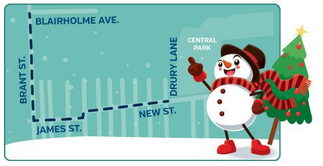
 Back again. Families will sit on the curbs along New Street to watch the parade. Lots of floats and the Teen Tour Band. The parade will start at 2 p.m. at the corner of Drury Lane and New Street and will make its way downtown along New Street. The parade then travels north on Brant Street and finishes at St. John the Baptist Church on Brant Street at Blairholm Avenue.

Roads will close at varying times along the route and will re-open shortly after the final float has moved through and a clean-up has been completed. For the most updated information including the full parade route, visit Burlington.ca/Parade.
Residents living in the parade area are encouraged to plan ahead as there will be detours and delays.
Children are encouraged to bring letters for Santa, which will be collected by letter carriers from Canada Post along the parade route or dropped in area mailboxes. The Burlington Oldtimers Hockey Club will be collecting non-perishable food and monetary donations.
By Gazette Staff
November 6th, 2025
BURLINGTON, ON
 This is what a swimming team is about. The Burlington Aquatic Devilrays (BAD) officially formalized their new executive Tuesday night, following a special meeting of the club on October 23, 2025, where 8 members were elected to the board. 1 additional member was appointed to the board at last night’s executive board meeting to round out the team.
The new board consists of:
- President – Karl Meissner-Roloff
- Executive Vice President – Zohair Khan
- Secretary – Karen Markowsky
- Vice President, Operations – Derek Streefkerk
- Vice President, Internal Affairs – Izabela Dombrovsky
- Vice President, Communications – Heather Drewett
- Vice President, External Affairs – Geraldine Guenot
- Treasurer – Anderson Chow
- Registrar – Aimee Hilson
- Head coach (ex-officio) – Sergei Soloukhin
 L to R (bottom row) – Zohair Kahn, Karl Meissner-Roloff, Heather Drewett, Geraldine Guenot, Karen Markowsky, Aimee Hilson, L to R (top row) – Sergei Soloukhin, Derek Streefkerk, Izabella Dombrovsky, Anderson Chow.
This event marks a new chapter for the Burlington Aquatic Devilrays (BAD), with our newly elected board is eager to build on the club’s strong foundation and drive future growth.
BAD will continue to be a vibrant and thriving swim club. With pool time at the Ron Edwards YMCA and city facilities, their athletes are training diligently every day.
The club recently hosted their annual Fall Invitational Swim Meet on November 1st and 2nd; it drew strong participation from BAD members and visiting clubs alike. The event was a tremendous success, made possible by the enthusiasm of our swimmers and the tireless efforts of our volunteers.
Recovering from the process that limited the amount of pool time is an ongoing process. Champions know how to win.
|
|





 By Gazette Staff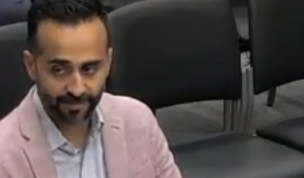


 By Gazette Staff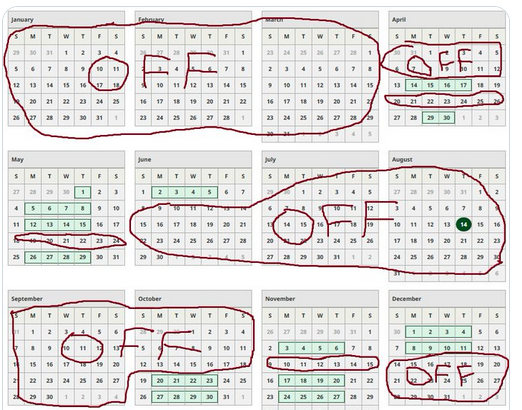

 By Sadie Smith


 By Pepper Parr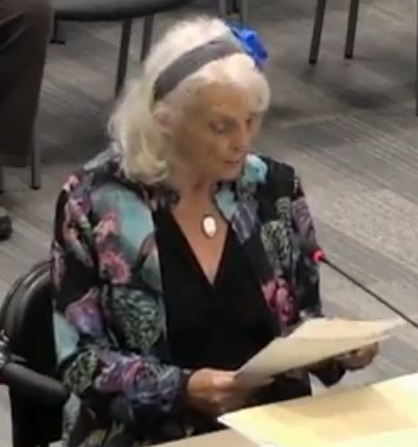
 She once ran for the office of Mayor and for the office of chair of Regional Council.
 By Tom Parkin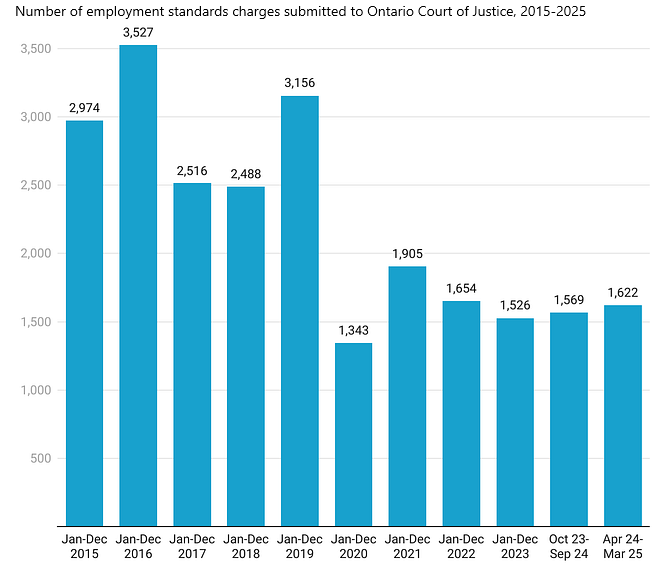
 By Pepper Parr

 By Joe Gaetan

 By Gazette Staff
 The measles outbreak in Canada and how we reacted to it has resulted in the Pan American Health Organization (PAHO) advising the The Public Health Agency of Canada that it has lost its measles elimination status — a designation it has held since 1998.
 By Gazette Staff
 By Pepper Parr
 RICK WESTHEAD will be at the Burlington Public Library, Central Branch the evening of Wednesday November 12th, 7pm at the to discuss his book We Breed Lions.
 Winter Break Camp at Joseph Brant Museum is for children aged 5-12 years and runs from 9:00am -4:00pm on December 22, 23, 29, 30 and January 2.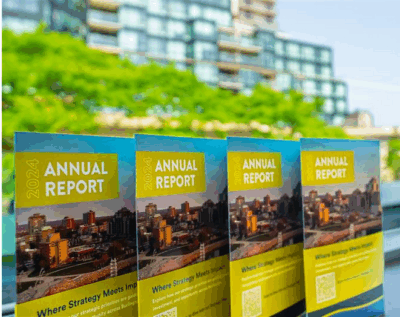
 By Ray Rivers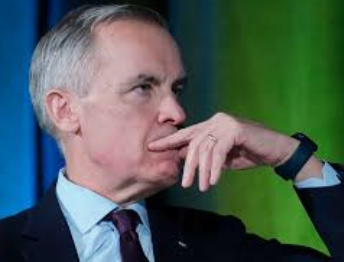

 Ray Rivers, a Gazette Contributing Editor, writes regularly applying his more than 25 years as a federal bureaucrat to his thinking. Rivers was once a candidate for provincial office in Burlington. He was the founder of the Burlington citizen committee on sustainability at a time when climate warming was a hotly debated subject. Ray has a post graduate degree in economics that he earned at the University of Ottawa. Tweet @rayzrivers