By Staff By Staff
January 21, 2015
BURLINGTON, ON
Adults understand the relationship between nature and the environment – well some of them do. But how do you get that connection across to the pre-teens and the teenagers in the house?
 Snowy Owls are expected to show up in even higher numbers than last year. Young people have a connection with nature – they will stop and watch a hawk swoop in and grab a smaller animal from the ground. The will even marvel at an owl as it swoops from the top of a telephone pole to clutch a mouse scurrying through a field.
How do you get them to dig a little deeper and come away with an understanding that was based on an experience they had?
Bird Studies Canada does what they call for the Great Backyard Bird Count (GBBC). The 18th annual count is taking place February 13 through 16.
Anyone in the world can count birds at any location for at least 15 minutes on one or more days of the count and enter their sightings at www.BirdCount.org.
The information gathered by tens of thousands of volunteers helps track changes in bird populations on a massive scale.
 The GBBC is a joint project of the Cornell Lab of Ornithology and the National Audubon Society with partner Bird Studies Canada. The GBBC is a joint project of the Cornell Lab of Ornithology and the National Audubon Society with partner Bird Studies Canada.
Bird watchers fell in love with the magnificent Snowy Owl during the last count when the birds were reported in unprecedented numbers across southeastern Canada, the Great Lakes states, the Northeast, and down the Atlantic Coast. Expect Snowy Owls to show up in higher numbers during this year’s GBBC, too.
“It’s called an ‘echo flight,'” explains Marshall Iliff, eBird Project Leader at the Cornell Lab of Ornithology. “After a huge irruption like we had last winter, the following year often yields higher-than-usual numbers as well. The abundance of lemmings that produced last year’s Snowy Owl irruption likely continued or emerged in new areas of eastern Canada, more owls may have stayed east after last year’s irruption, and some of last year’s birds that came south are returning.”
 “This may also be a big year for finches,” notes Audubon Chief Scientist Gary Langham. “GBBC participants in North America should be on the lookout for larger numbers of Pine Siskins and redpolls. These birds also push farther south when pine cone seed crops fail in the far north of Canada.” “This may also be a big year for finches,” notes Audubon Chief Scientist Gary Langham. “GBBC participants in North America should be on the lookout for larger numbers of Pine Siskins and redpolls. These birds also push farther south when pine cone seed crops fail in the far north of Canada.”
Bird watchers from 135 countries participated in the 2014 count, documenting nearly 4,300 species on more than 144,000 bird checklists–that’s about 43% of all the bird species in the world! In addition to the U.S. and Canada, India, Australia, and Mexico led the way with the greatest number of checklists submitted.
 Common Redpole “We especially want to encourage people to share their love of birds and bird watching with someone new this year,” says Dick Cannings at Bird Studies Canada. “Take your sweetheart, a child, a neighbor, or a coworker with you while you count birds for the GBBC. Share your passion and you may develop a brand new bird watcher!”
The Great Backyard Bird Count is a great way for people of all ages and backgrounds to connect with nature and show some love for the birds this Valentine’s Day.
Participation is free and easy. To learn more about how to join the count, download instructions, a slide show, web buttons, and other materials, visit this website: While you’re there, get inspired by the winning photos from the 2014 GBBC photo contest.

By Staff
January 21, 2015
BURLINGTON, ON.
The city wants to make the streets look nicer. A number of years ago they installed really nice looking bike racks – they were attractive – so much so that many people didn`t use them – they didn`t know they were bike racks.
 Lovely public art – it’s a bike rack. Hard to tell what its purpose is – needs a small sign – Park your bike here. Margaret Lindsay Holton, a local artist, tells of a person she saw chaining their bike to a pole that was beside one of the bike racks – the rack was so attractive people didn`t realize what they were for. “That was one of those occasions I wished I had had my camera with me” said Holton.
At some point the city might add small signs to the racks – saying what they are – they are very nice.
Through its public art program, the City of Burlington is inviting the public to provide suggested locations and themes for a series of local murals and is offering three ways to comment between now and Feb. 6.
“This is a great initiative that will Increase local artist participation in the City of Burlington’s public art program,” said Angela Paparizo, manager of arts and culture. “We’re excited to engage residents in the creative process through mural site selection and community storytelling and hope they will take advantage of the opportunity to shape art in their community.”
Murals are a new thing for Burlington. There was a poster put up on a building – the garage at the foot of Locust Street – that has great potential as a mural site.
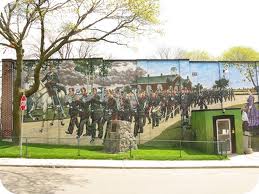
 Scarborough, Ontario went for murals in a big way. Might Burlington see work of this quality? Scarborough took to mural art in a big way and has done a great job. It will be interesting to see what the Burlington art community does.
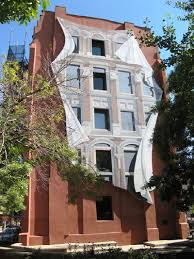
There is a fine mural on the Flat Iron building on Front Street in Toronto that has stood the test of time. Unfortunately the city mural program does not apply to private buildings.
The Burlington Mural Project is designed to tell local stories using local artists.
 Could this have been Burlington when it had radial lines in the city? The program has a budget of $5,000 to $10,000 for each mural and will commission small to medium-scale murals throughout the city, with one mural location and story selected for each of Burlington’s six wards.
 This mural on the Flat Iron building on Front Street in Toronto is on a private building. Burlington has decided its mural program will be on just city buildings – pity. These submissions will be reviewed by the city’s Public Art Implementation Team (PADIT) and a jury of citizens. Locations and artists will be chosen based on public input. The murals will be open exclusively to local Burlington artists. Free learning opportunities will be offered to artists who may not have experience creating public art and/or murals.
This program was developed in consultation with members of the local arts community. In October 2014, a brainstorming session was held with members of the local arts community. Based on this session and feedback, a Program Guide has been developed. Click here to access a copy.
Artist applications for the selected mural projects will be released in late February 2015.
The city will have a Public Art Booth at the Lowville Winter Games on Sunday, January 25 – share your ideas.
There is no limit on the number of submissions per resident.
By Staff
January 21, 2015
BURLINGTON, ON
The city web site is getting a serious make over.
Council was given a quick preview of what the public will see in the very near future. It is going to be a much more useful web site. In the past when one did a search you often got documents that were as much as ten years old but often not the one you wanted.
One of the “public involvement” aspects will be a photo submission. The city decided they didn’t want to use “stock” photos – so they are going to the public and asking anyone to submit a photograph.
The City will determine which photographs submitted will be used. They will select photos for use based on overall quality, scenic shots and community in action shots.
The photos selected will help to promote our community and may be part of the new City of Burlington website. The decisions of the City with respect to all aspects of the submission are final. All photos must have been taken in the City of Burlington and be submitted in one of the following categories:
• City of Burlington Arts and Culture
• City of Burlington Council
• City of Burlington Festivals and Events
• Living in Burlington
• City of Burlington Recreation
• City of Burlington Waterfront
• City Programs
Photos on the website will be changed on a seasonal basis – they will be looking for photo submissions on a regular basis.
It`s a good idea. You have to put up with all the baffle gab the legal department put in – just say yes to whatever they ask. When you see words like: irrevocable, perpetual, you know there was a lawyer in the room.
By submitting your photographs, you accept and agree to abide by these terms and conditions. If you are under the age of 18, then you must have the written permission of your parent or legal guardian to submit your photographs and your parent or legal guardian must accept and agree to abide by these terms and conditions.
If your photograph is chosen for use, you hereby grant The Corporation of the City of Burlington and any other parties designated by the City the irrevocable, perpetual, worldwide, transferable licence to use, edit, alter, reproduce, distribute, and publish your photograph in any manner and in any media for promotional matters or purposes of advertising, trade, display or exhibition. The City will not pay you or others any royalty, licence fee or any costs for such photograph. You also waive any moral rights that you may have in the photograph in favour of the City.
The City may or may not include any photo credits with the use of your photograph. That is really kind of cheap and mean spirited – if someone goes to the effort to submit a picture – the east the city can do is give a photo credit.
By submitting a photograph, you represent and warrant that the photograph you submit is an original work by you, that you own or control all of the rights in and to your photograph, and that such rights are free and clear of any and all third party claims or rights. You release the City and any other parties designated by the City from any liability associated with your submission. You understand that the City has no control over, and is not responsible for, any further use or misuse of your photograph by others. You agree to indemnify and hold harmless the City and any other parties designated by the City from all liabilities and losses arising out of or related to your submission or the rights granted herein.
If an individual appears in your photograph, you are responsible for obtaining the consent of that individual to have his/her likeness displayed and published by the City. The City may request Photo Consent forms from submitters.
By submitting your photograph, you consent to the use of your name and address (city and province/territory) without further compensation to you.
If you want to be part of animating the city`s web site and you can take a decent picture – join the parade.
Click here to submit a picture.
By Pepper Parr
January 20th, 2015
BURLINGTON, ON
It was pretty clear after less than five minutes that the four people short of capacity in city hall’s council chamber that Burlington wasn’t going for the ADI development proposal to put a 28 storey tower on the corner of Martha and Lakeshore Road.
The standing room only crowd heard one of the shortest Planning department presentations the Gazette has heard in some time. Planner Rosa Bustamante covered the basics of the project and that was it.
 The scale and scope of a 28 storey structure on the corner of Martha and Lakeshore has astounded most people. Could it actually happen? Possible The event then moved into a Public Meeting at which delegations were heard. While the room was packed there were not all that many delegations.
Ward 5 Councillor Paul Sharman chaired the meeting; one got the sense that he thought it was being televised – he was certainly pumped.
There were no decisions to be made. It was a meeting to receive a report on the project from the Planners that outlined the basics – then the Public meeting which was required under the Planning Act.
Staff will now do a detailed report on the project and present it to Council – there may and there may not be a recommendation from Staff when they report.
Every member of Council was opposed to the project – but there were degrees of opposition. The project was described as “highly audacious” and “Over the top”
Councillor Craven said he was “not on for the proposal that is before us” leaving one to wonder what he was on for. The ADI Group is reported to have purchased land adjacent to the Aldershot Go station which is a part of Burlington that council wants to ssee developed as part of one of the mobility hubs that planners are working on.
Waterdown Road is undergoing a total rebuild from two lanes to five between Plains Road and Hwy 403 – this will be a major development and it looks at this point as if the ADI Group is going to be the major developer. Aldershot is ward 1 territory and Councillor Craven rules the roost over there. So he will become adjustable when it comes to deciding what should happen at the corner of Martha and Lakeshore in ward 2.
It was clear what the majority of Council thought, it was clear what the residents thought. The ADI Group planner saw it all quite differently.
His view was that provincial policy called for intensification and that the Big Move GO train project was put in place to move people around and that Burlington was one of the few growth centres left in the GTA – and while he didn’t actually say “’like it or not” this is what the province wants the ADI Group complies with the provincial policy.
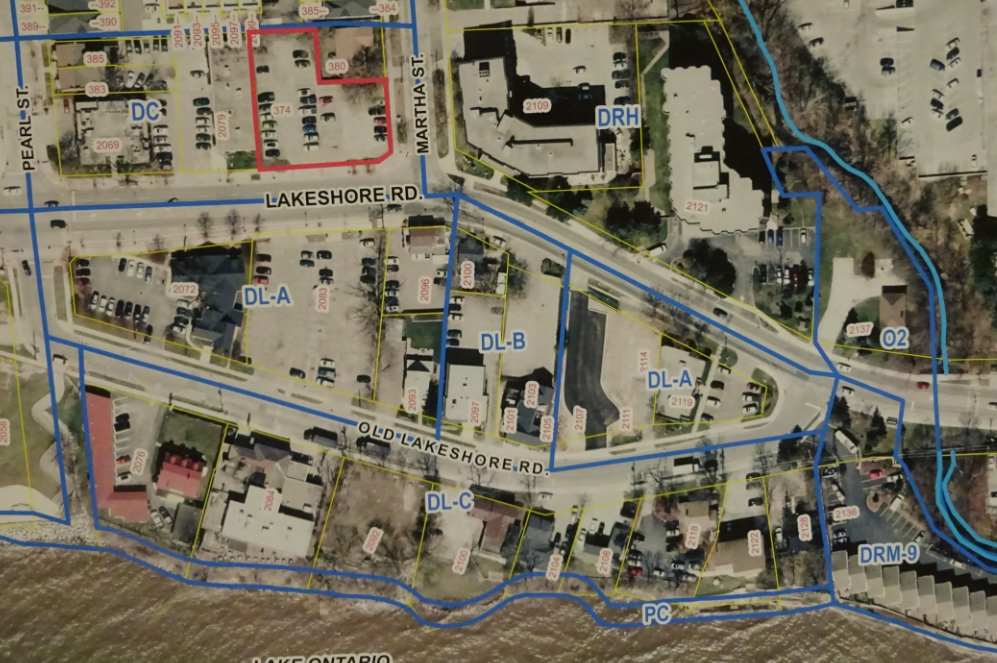
 The red markers indicate where the ADI project would be built – two blocks west, on the waterfront the city has approved a 22 storey structure. As for Burlington’s Official Plan and its zoning bylaws – those things are in place – but they have been amended in the past and they can be amended – if not by City Council then by an application to the Ontario Municipal Board.
There was one number that got put on the table that puts the size and scope of the project into perspective.
The provincial target calls for 185 people per hectare of property. Burlington has set their target at 200 people per hectare which is what would go on the property if the four storey’s that the current zoning allows were built.
The ADI project would put 1661 people on that property. It is certainly audacious, over the top and outrageous but as Councillor noted “it is questionable that this Council will have any impact” on the final decision.
By Mark Gillies
January 20, 2015
BURLINGTON, ON.
Part two of a four part feature.
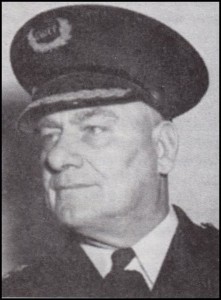
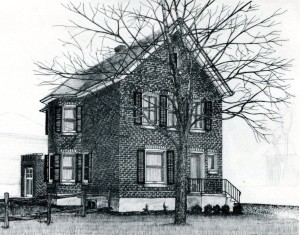
 Chief Lee Joseph Smith, (1885 – 1973).  Lee and Alma Smith’s historic home is located on the southeast corner of Locust Street and Ontario Street. Lee and Alma’s home
Lee and Alma Smith moved into a beautiful 2 storey red brick house at the southeast corner of Ontario Street and Locust Street around 1920 – 1922. This historic building is still there. It was built around 1885 for young Elwood Peart Atkinson and his new bride Catherine Burns, but it is doubtful if they ever moved into the house, as Elwood died at 24 years of age in 1886.
The Smith’s rented this house for $20.00 a month. The property backs on to the Cenotaph grounds at City Hall, formerly where Dr. Weaver’s historic home was located and demolished by the Town to make room for the construction of the new Town Hall in the late 1960s. The Town Council at the time, believed the Town Hall should have a better sight line from Brant Street when travelling south towards Lake Ontario. This piece of beautiful local history then became expendable, just for the sake of Town Council’s vanity.
What noise?
Dr. Dingle, a prominent family physician, and the brother of Lloyd Dingle, Burlington’s 11th Mayor lived across the street on the north side of Ontario Street. This was a nice quiet upscale neighbourhood, and Lee and Alma loved living there. Just when they had nicely settled into their home, something continually happened to their life of peace and quiet on the pristine corner of Locust and Ontario Streets.
Apparently, it was the regular practice of Dr. Dingle to race out of his house on emergency calls, any time of day or night, jump into his automobile, rev the motor, squeal the tires, and speed down the street to see that his patient didn’t die before he arrived there. For a law and order, no nonsense, tough as nails police officer like Lee Smith, and living right across the street from Dr. Dingle, he probably had to pretend he didn’t see or hear anything unusual, and the Chief just forced himself to look the other way, shaking his head in disbelief the whole time, hoping the good doctor had the sense to never cause an accident.
The mighty Chief weakens, as he faces personal tragedy
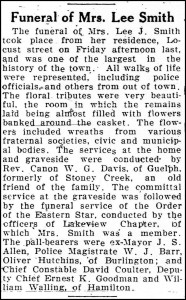
Chief Smith’s world abruptly changed in 1929 when his beloved Alma became seriously ill. Lee suddenly realized that soon he would have to carry on alone. The couple never had children, and facing Alma’s imminent death was challenging, and painfully heartbreaking. Alma had developed terminal breast cancer and died on Tuesday afternoon September 3, 1929. The funeral was held later in the week, on Friday afternoon from the Smith residence on Locust Street.
 Alma Smith’s obituary, as reported by Elgin Harris, publisher of the Burlington Gazette, and close friend of Lee and Alma Smith describes how saddened the town was by Alma’s death. It was one of the largest funerals ever witnessed in Burlington. Alma had been incredibly active in Burlington and had many friends in town. Before her illness Alma had acted in many local amateur theatrical productions, and all money raised was donated to charity. This young lady was very athletic and played for years on Burlington’s only girl’s hockey team. She played left wing, and she was a goal scorer like no other. The team was made up of Kate Pilkey, Nellie Homer, Mary Mortimer, Barbara Simpson, Annie Jarvis, and Annie Ogg. These talented young ladies played teams from around the Halton and Wentworth area. Alma was an active member of the Lakeview Chapter of the Order of the Eastern Star, a worldwide charitable organization, and was an enthusiastic participant in most local charitable events. Both Lee and Alma were very active members of St. Luke’s Anglican Church, and both of them would help out with food donations to those families in need.
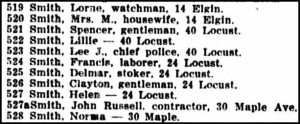
 Lee temporarily lived with Spencer and Lillie Smith at their home located at 40 Locust Street, while he was mourning the loss of his wife Alma. After the passing of Alma, Chief Smith couldn’t bear to stay alone in his home any longer, so he moved in temporarily with his good neighbour and personal friend Spencer Smith, who kindly offered the mourning Chief much needed compassion and a shoulder to cry on, as both Spencer and his wife Lillie did their utmost best to console this poor grieving man who was so deeply hurting. As big and strong, and imposing as Chief Smith was, his emotional wounds were far more painful than the physical wounds he endured from those bullets he absorbed into his body while on duty out west.
Lee stayed with Spencer and Lillie just long enough to stabilize his life, and then it was time to get his world back on track. Not long after, the Great Depression hit; the Chief had no choice but to give this new problematic “demon” his full undivided attention and he began focusing on new hurdles never before experienced.
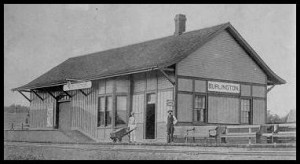
 Transients would jump off the boxcars at these railway stations and wander into the core area of town looking for something to eat from local citizens’ homes. Burlington at one time had 4 very busy historic Grand Trunk Railway stations. The main station was in Freeman, “Burlington Junction”, (now a City owned building, with heritage protection, currently under restoration financed through private funding). In the photograph is the 2nd historic station identified by the GTR as “Burlington” (now demolished), which was located in the vicinity of the Brock Street parking lot, the 3rd was the “Aldershot” station identified at first as “Waterdown” (now demolished), and the 4th was the “Tansley” station (now demolished). The Great Depression affects Burlington
Chief Smith during the Great Depression, acting on orders from Town Council had to constantly round up transient men who had jumped off freight trains that stopped, either at the Burlington Junction Station in Freeman, or at Burlington’s second train station located in the area of the Brock Street parking lot. These men were not criminals. They were unemployed, homeless, and starving. These hobos or bums were common words to describe these poor fellows, and often times they would be quite bold and go up to residents’ houses, knock on the door, or talk through an open window begging for something to eat.
 Dorothy Angus was one of Burlington’s most outstanding citizens and this phenomenal lady was properly recognized and awarded “Citizen of the Year” in 1957. Future “Citizen of the year” questions the Chief
One lady with a genuine heart of gold, who never failed to feed these desperate men was Dorothy Angus, the town’s librarian, a young widow and mother, and a resident of 1418 Ontario Street. You may recall in last week’s article that it was Dorothy who supplied the willow tree cuttings from trees on her property and gave them to Spencer Smith for replanting in his lakeside park, beautiful trees which are still in the park to this day. But, Dorothy as kind as she was, and just barely making ends meet on a meager income, was becoming a little concerned that the amount of men knocking at her door was unusually far greater than what her neighbours were receiving, so she confronted Chief Smith about this, and he told Dorothy, “It’s written on the lockup walls that your home is a good place to get a meal.” What could Dorothy do? She couldn’t help it if she was a great cook.
Dorothy’s record of community accomplishments grew over the years. This lady was an outstanding citizen of Burlington and one day, in the late 1950s, Dorothy became the first woman awarded “Citizen of the Year”. In 1959 Dorothy along with some close friends helped re-generate a faltering Burlington Historical Society, and this superb organization of volunteers continue to do wonderful work doing their best to preserve Burlington’s rich historical past. Sadly, Dorothy passed away in 1974.
 The Chief and his men would roundup runaway pigs that broke loose from their owners’ homes in Burlington during the Depression. Town Council approves their own idea to combat the Great Depression
The Depression brought in some unique ideas to help residents cope through difficult times. Town Council came up with one all by themselves, when they suggested it would be okay for its citizens to raise pigs in their houses, as an alternative food source, so Chief Smith’s department was assigned to patrol these homes to ensure that these pigs were not creating too much of a nuisance in the neighbourhood. It was not uncommon for the Chief and his men to chase after pigs that escaped from someone’s yard. Residents sitting on their verandahs watched the Chief and his officers constantly run around town trying their best to catch these little guys. They just couldn’t stop laughing. You didn’t need television in those days. There was great entertainment happening right outside your front door. Poor Chief Smith, he must have been scratching his head over this idea.
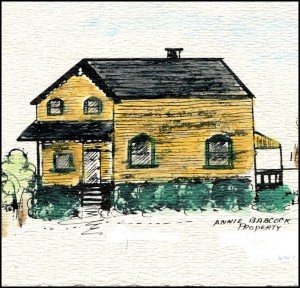
 The Annie Babcock historic cottage was purchased by Chief Smith to prevent its demolition by Town Council which is shown in this whimsical interpretation. Chief Smith was one of our first historical preservationists
Chief Smith understood the value of local heritage, and in particular, the preservation of historical houses, especially those located in the downtown core area of Burlington. An historic cottage owned by Annie Babcock on Ferguson’s Curve, where the Hamilton Radial Line train tracks ran from Maple Avenue east on to Elgin Street, one day became quite controversial. The historic structure located at the far end of a soon to be constructed Elgin Street intersection right at 28 Maple Avenue was the very same location as Annie’s deceased parents’ historic cottage.
This beautiful historical little cottage was to be demolished on the orders of the Town Council, because it was in the way of the town’s planned progress to extend Elgin Street. When everything looked totally hopeless for Annie, Chief Smith stepped in to save the day. He purchased the historic cottage from a distraught Annie with the understanding that he would have her parents’ cottage moved to a new site in Freelton. Lee Smith was well regarded as an honourable and trustworthy man, who always kept his word. The cottage, just as the Chief promised, was saved and relocated to Freelton. Annie Babcock greatly appreciated the Chief’s concern and involvement in saving her cherished parent’s home, something that had been a thorn in the side of Town Council.
Part 1 of a 4 part feature.
By Ray Rivers
January 20, 2015
BURLINGTON, ON
For a long while now I have criticized the federal government’s approach to managing the economy – focusing on energy exports to the exclusion of the rest of the economy.
Given the recent collapse in the global petroleum market and the United States move towards energy self-sufficiency, it is now apparent, even to the Prime Minister, that such a narrow-minded economic policy was short-sighted and dangerous.
So a new Stephen Harper is emerging, one desperately interested in doling out economic subsidies to a forgotten domestic manufacturing sector. Incentives to encourage a more diversified economy, which he now appears to appreciate, are crucial, not only for the economic health of Ontario and Quebec, but for the entire nation as a whole. So much manufacturing capacity has been lost over the past decade that today’s manufacturing sector is simply unable to make up the shortfall in national income lost by the oil exporters.
 Massive trucks haul earth that is laden with oil that has to be processed before there is a usable product. Low oil prices make this kind of operation uneconomical. Harper wasn’t the only one sleeping at the switch, thinking he could slip his way to prosperity on the petroleum gravy train. His nemesis, Russian president Putin, used his vast oil money to build his military instead of diversifying the Russian economy and now is in an even worse pickle than Canada. And then there is Mr. Harper’s former environment minister, now Alberta’s premier, who is facing a budget deficit and considering an Alberta first – a sales tax.
Not long ago, Canada had tried to bully the US into building the Keystone XL pipeline, hoping to reach Asian and European markets easier that way. But US :President Obama resisted our PM and it turns out he knew what he was doing. Nobody is going to buy dirty Alberta oil which costs more to produce than the $50 a barrel price today.
The new Republican controlled congress may still force Obama into that pipeline anyway, though I’m betting on Obama.
 Will these pipes every get buried and carry gas or bitumen to Texas or the Gulf of Mexico. The Alberta government certainly hopes they will – the environmentalists hope they get carted off somewhere else. It’s a legacy thing with the US president. Stopping Keystone, and slowing oil sands development, could be one of the few things Obama would have accomplished to help mitigate global climate change, after doing so little on that file during his eight years in office. On the other hand, Stephen Harper has done absolutely nothing about this issue.
Oh sure greenhouse gas (GHG) emissions in Canada dipped thanks to the 2008-2010 economic recession – but, as Bill Clinton would say, that was the economy stupid. The PM likes to claim Ontario’s renewable energy and coal phase-out reductions as his, though they were made without a lick of federal support.
This PM treats anything to do with the environment as anathema. For example, the Canadian government has recently shocked the rest of the world by objecting to the protection of 76 species being added to the Convention on International Trade in Endangered Species (CITES).
 Doesn’t look like oil – but once filly processed it will fuel your car – the question is at what cost to the environment. The environment should not be an ideological issue. A sustainable global environment is no more right or left than is a healthy growing economy. Yet climate change deniers continue to dominate conservative media and politics, denying what is plainly in their faces; that last year was the warmest on record, that the polar ice caps are melting faster than ever, and that ocean water levels are rising quicker than anyone ever predicted.
It was this PM who shredded the federal Environmental Assessment Act and gutted the time-honoured Fisheries Act in order to expedite more oil-sands development. And having promised to regulate oil-sector GHG emissions, again and again, he has repeatedly refused to do so. In fact, Canada, for the third time in a row, is trying to stop our North American free trade partners (NAFTA) from investigating the environmental effects of the huge tailings ponds created for Alberta’s oil sands.
Canada’s overall contribution to global GHG emissions is relatively modest, given our small population, but those emissions are more than proportionate when compared to many more populated nations. Brian Mulroney, one of Canada’s most environmentally oriented leaders, set this nation on a course to lead the world on the climate change issue back in 1992. Today’s Conservative government has relinquished that leadership and abdicated our responsibility to the planet by pulling out of the Kyoto Protocol and attempting to disrupt other international efforts to cut GHG emissions.
Manufacturing and product processing can become a solid core for the Ontario economy – if the needed investments in technology are made. It was during Mulroney’s time that Canada embraced the concept of sustainable development, originally defined by the Brundltand Commission in a report to the UN, titled “Our Common Future”. ‘Development that meets our needs without compromising the ability of future generations to meet their own needs’. The rate of development of the oil sands is spectacular and it would be even more so were the Keystone in place and the price of oil higher.
As the PM now realizes, tempering the energy extraction business and promoting a diverse and balanced economic growth and development strategy would have made the nation and his government less vulnerable to the vagaries we are seeing today. It would also have helped in meeting even the modest climate change targets we have set for ourselves.
 Ray Rivers writes weekly on both federal and provincial politics, applying his more than 25 years as a federal bureaucrat to his thinking. Rivers was a candidate for provincial office in Burlington where he ran against Cam Jackson in 1995, the year Mike Harris and the Common Sense Revolution swept the province. Ray Rivers writes weekly on both federal and provincial politics, applying his more than 25 years as a federal bureaucrat to his thinking. Rivers was a candidate for provincial office in Burlington where he ran against Cam Jackson in 1995, the year Mike Harris and the Common Sense Revolution swept the province.
Background links:
Canada’s Economy Economy Manufacturing Sector
Alberta Recession
Economy and Interest Rates Potential Carbon Pricing Hottest Year
Endangered Species
NAFTA and Oil Sands Rising Oceans Sustainable Development
By Staff
January 19, 2105
BURLINGTON, ON
 What are they worth? What are they worth?
Are they worth what we are paying them?
Would any of them earn the same kind of money anywhere else.
Those are the questions a reasonable citizen will want to ask as they look at the pay schedule for the seven members of the city of Burlington municipal Council.
The 2013 Citizen Committee on Council Remuneration made recommendations on the method for determining the annual Council remuneration adjustment formula. Council approved that formula in November 25, 2013.
The process was to have Council compensation, expense limits and staffing requirements as follows:
 You elected them – now you have to pay them. Burlington’s significant seven.
Maintain the compensation for Councillors at $53,095 per year and the Mayor at $121,676 per year (in 2014) and adjust annually on April 1 by a percentage equal to the average annual change in the all Ontario consumer price index (CPI) for the twelve month period October to September with the provision that the increase is to have the following banding:
Any increase cannot be greater than the increase determined for budget purposes for non-union staff compensation;
No increase can be granted in the event the Ontario CPI amount is less than 1%;
Any increase cannot exceed 65% of the calculated Ontario CPI percentage;
When no increase is taken in a year, the amount cannot be carried over and aggregated in future years (i.e. no carry-over of forfeited increases from any year to another);
Overall Council may adjust the calculated increase within the banding to a lesser amount than that determined while meeting the provisions. The Executive Director of Human Resources is to present information on the compensation and computation of the formula to Council in open session in January each year.
The average annual change in the Ontario CPI, October 2013 to September 2014 was 2.0%. The formula generates an increase of 1.3% (65% of 2.0%). Therefore, effective April 1, 2015, Council salaries will be as follows (if Council does not alter the formula results):
Councilor salary: from $53,095 to $53,785 Mayor salary: from $121,676 to 123,257
The Region of Halton formula averages the Ontario CPI and the Toronto CPI figures. The Regional adjustment will be based on 2.1% resulting in a salary of $47,280 effective January 1, 2015 for Regional Councillors. All seven members of Burlington’s city council are also members of the Regional council.
The Community and Corporate Services Committee will receive the report on January 2th – it will go to Council on the 26th for approval.
By Pepper Parr
January 19th, 2015
BURLINGTON, ON.
In the very near future city council will decide who the next city manager is going to be.
He is close to the last man standing. Scott Stewart, on the right, is the only senior staff member left. Former city manager Jeff Fielding left for Calgary after 26 months; Kim Phillips took a package leaving Stewart running the city with interim city manager Pat Moyle overseeing the operation. It’s been a challenge to keep a bum in the city manager’s chair for a reasonable length of time. Roman Martiuk got asked to take a walk; Jeff Fielding bought a one way ticket to Calgary.
Prior to those two Tim Dobbie served as city manager – he held the post for 9 years which was part of his 33 years of service to the city.
Can this council choose a city manager that will stick around for more than the couple of years we had Martiuk and Fielding?
The first round of interviews has taken place. There were a reported 10 candidates with current General Manager Scott Stewart in the line-up. Stewart made the first cut.
The Community and Corporate Services Committee are scheduled to go into a closed session for a “human resources update regarding employee and labour relations matter” on Tuesday January 20th.
Pat Moyle, the interim City Manager has been told by his wife that they will be in their car driving south on February 1st – so it isn’t unreasonable to assume that the human resources matter is related to the new city manager decision.
While we have several names – we are not at liberty to divulge what we’ve learned but unable to confirm.
 One of that brave band that believes the Maple Leaf’s will one day win the Stanley Cup; Stewart brings a sense of humour to the job he does, Scott Stewart has been running the city and is the only General Manager on Staff. Should Stewart get the nod he then has to build a new top tier and hire the two general managers the city has decided it needs. There were three General Manages for a large part of the previous term of office.
If Stewart doesn’t get the nod – whoever is hired is going to have to build a completely new General Manager level for the city – and that isn’t going to get done in less than a year.
It would be naive to expect Stewart to stick around after being turned down for the job of city manager twice. Quite why he wasn’t made interim city manager when Jeff Fielding took a job in Calgary.
 The glance – you know it when you get it. Stewart gives 110% and expect at least 100% from everyone else. You know when you’re not performing – you get the glance. If Stewart gets the job he doesn’t have all that much to pick from at the Director level to create the General Managers that will be needed. Several senior people will find they want to move on – which will give Stewart an opportunity to build a staff that he can get things done with.
Planning and legal are certainly going to get a solid review.
Stewart does have a number of very promising people at the senior manager level but most of them are not ready yet for a move up the food chain. Some significant promise there however.
Should this Council decide that Stewart is not their choice – then what?
There were a number of exceptional people who had not grown to be managers but they were very good at their jobs; several have left for jobs elsewhere because they didn’t see the leadership they needed to grow as better professionals in the municipal sector.
 When Jeff Fielding was city manager he and Scott Stewart were almost like a wrestling tag team. Fielding cam up with the big ideas and expected Stewart to make them happen. Many thought he should have been made at least interim city manager when Martiuk turned in his keys but the city went for the story Fielding gave them – and it was a good story. He certainly made significant changes – the way our budget is being put together in 2015 is the result of the change Fielding brought when he introduced Results Bases Accountability.
He challenged staff on a daily basis and most loved the difference he was making – for may his decision to leave was a huge let down.
Stewart isn’t a Fielding – he is more cautious, more prudent with a solid history of finishing what he starts. He hasn’t yet gotten the kind of parking meters many think the city needs – but one lapse doesn’t end a career. He was in line for a major promotion in Hamilton that was taking forever to get confirmed. Stewart saw the opening in Burlington and went for the job – got it and has been serving the city very well ever since.
He leads well, takes the time to nurture staff and develop their skills and abilities. Should Council choose someone else – Burlington is looking at 18 months of confusion and delay. A new city manager without the Stewart skill set at his or her side would have a very difficult time making the wheels go around the way they are supposed to go around.
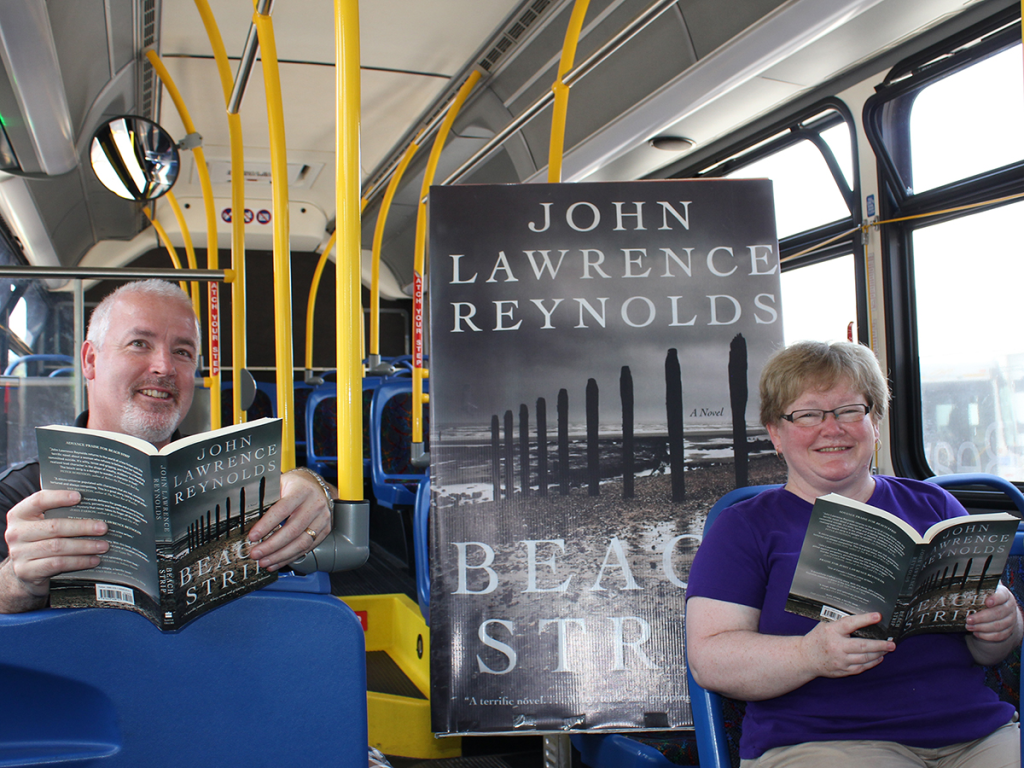
 Not necessarily a “bookish” type Stewart works with the city boards well. Here he joins Library chief Maureen Berry on a One Book promotion. While the Gazette doesn’t have any exclusive information – we can’t see Scott Stewart sticking around and watching someone else do the job he has been doing for the most part for the past year – – being turned down twice is hint enough for anyone.
We should know what kind of a decision council is going to make very soon.
By Pepper Parr
January 19, 2015
BURLINGTON, ON.
The city did another photo opportunity last week.
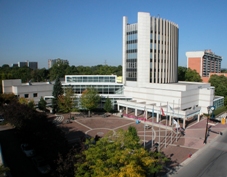
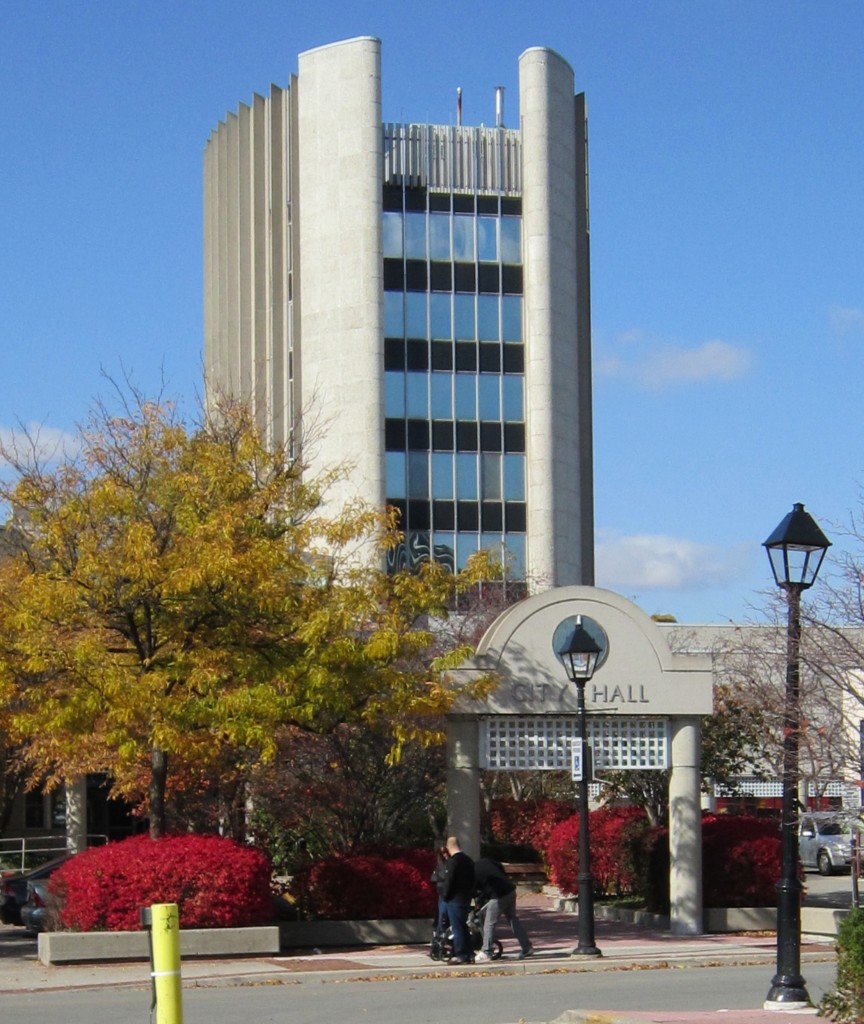
 Opened in 1965, expanded later the structure no longer meets the space needs of the city. Are there real plans for a replacement? There is a report being worked on that sets out the needs and the possibilities. The occasion was to commemorate the 50th anniversary of City Hall’s opening as the Civic Administration Building in 1965. A plaque was unveiled telling of the founding of Burlington.
The brief ceremony took place on one of the coldest days of the year when Wayne Kelly, Manager of Public Education and Community Development at the Ontario Heritage Trust delivered some remarks. Residents were invited to attend the event.
It is doubtful if there was any mention of how inefficient the building is or that it can’t hold all the people the city employs.
The Gazette didn’t cover the event – this Council didn’t need another photo opportunity.
 The building was a big deal back in 1965 – today it is too small and inefficient. What we are waiting for is the report that has been moving from desk to desk at city hall on the study of what the city has in the way of space it either owns or rents and what it is going to need in the way of space for the next 20 years.
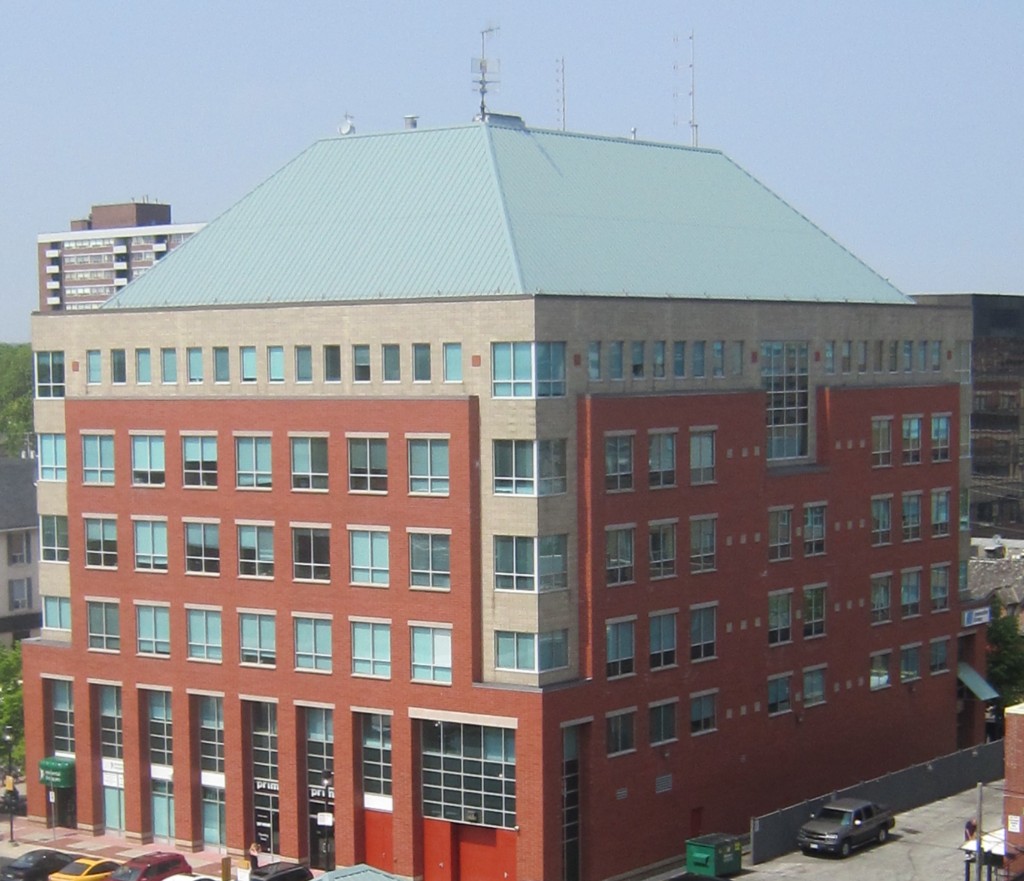
The city currently rents space in the Sims building on the south side of Elgin where Human Resources, Finance, Purchasing, Legal and Capital Infrastructure beaver away on your behalf.
At one point it looked like the report was going to be made public before the election. Keeping that information away from the public was a smart political move and it maintained the practice of being opaque rather than transparent alive and well.
Former city manager Jeff Fielding had all kinds of ideas about where a city hall should be located and, had he stayed and completed his contract, there would have been all kinds of activity – that was just the way Fielding worked.
The file has been in the hands of the Capital Infrastructure people – once Council decides on who they want as a city manager it might see the light of day. For the time being the best citizens are going to get is some words from Wayne Kelly about how the city hall we have now came to be.
 The Sims building is more efficient than city hall. The city has leased space in the structure for some time; paid enough in rent argues Councillor Jack Dennison to have paid for the thing. The lease on the Sims building is due for renewal this year. There will probably be a short term lease renewal while the city gets its act together. The owner of the Sims building will push for a bit more than a short term renewal; they need the city as a tenant – at least until the Economic Development Corporation brings a company to town that will hire people for those high-tech, high paying jobs the city drools about having.
The HiVe, one of the smartest ideas to settle in the downtown core has found that its costs are more than its revenue – they plan to move. The support they could have and should have gotten from the city just didn’t appear. Meanwhile The Hive over on Elizabeth Street, one of the smarter ideas to settle in the downtown core, has found that the rent they have to pay is more than the revenue they are bringing in – so they will be leaving the core and looking for digs that are less expensive.
None of this got mentioned during the plaque unveiling or while people were enjoying the refreshments at city hall.
By Staff
January 17, 2015
BURLINGTON, ON
The missing person, Brendan Craig, has been located by Halton Police in Burlington. He is in good health and there are no concerns for his well-being.
By Pepper Parr
January 16, 2015
BURLINGTON, ON
Many readers will recognize the headline – the phrase comes from the iconic rock song, Big Yellow Taxi, and its haunting lament “you never know what you’ve got ’til it’s gone, they paved paradise and put up a parking lot”.
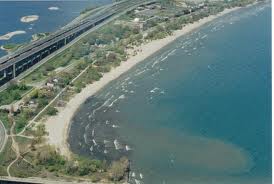
 Beachway – once a small community of more than 150 homes with its own services has been whittled down to 30 homes – each has a date with a wrecking ball. The Beachway Community is may not seem like “paradise” to some; one unsuccessful candidate in the recent municipal election was appalled at the thought that people would live and raise families there. Councillor Blair Lancaster once told her colleagues that when she was a young lady “nice girls” didn’t go to that part of the city”.
 Putting aside this rather smug arrogance, the Beachway residents are a long-standing and resilient culture within Burlington and the Halton Regional Government has, at least in part, elected to take away their homes and “put up a parking lot”. Over time, the community, which has existed for over 100 years, will eventually be demolished. Putting aside this rather smug arrogance, the Beachway residents are a long-standing and resilient culture within Burlington and the Halton Regional Government has, at least in part, elected to take away their homes and “put up a parking lot”. Over time, the community, which has existed for over 100 years, will eventually be demolished.
The Beachway residents fought hard in 2013 to be allowed to stay and co-exist with the expanded Beachway Park. They observed then that they have never prevented the public from accessing the beach nor posed a threat to the shoreline.
The Burlington Waterfront Committee (BWC) took up their cause and, in a campaign that lasted from Spring through Fall of 2013, argued that the residents should be left alone. A survey conducted by the BWC in the Summer of 2013 showed that 82% of Burlington respondents agreed. However, only three Councillors in Burlington ( Meed Ward, Dennison and Taylor) were of like mind; the other four members of Council voted for acquisition of the properties. As a result, Burlington took a divided voice to the Region in October 2013 and lost the vote – a local community was earmarked for destruction.
 These homes on the lake side of LAkeshore Court, neat and well kept, will meet their fate with a backhoe if the Region manages to buy all of them. The Beachway is in ward 1 – Councillor Craven provided absolutely no support to that community during the debate. He wants to see every house razed and a park created. Craven’s rationale is that speculators and developers will buy up the properties and in time there will be nothing but condominiums in that part of town
There has been no love lost between the current Beachway community and the ward Councillor. On one occasion he felt his personal safety was at risk and asked someone to escort him to his car which was parked 25 yards away.
The BWC sees the razing of homes in the Beachway as an unnecessary loss of community. But it was a done deal. The Region would buy up the homes on a willing buyer/willing seller basis and over time they would eventually own all 30 properties and Burlington would get another park. That’s where things were left.
The Region sort of budgeted $330,000 per home. The BWC wants to now question the associated economics and business case with the benefit of new information.
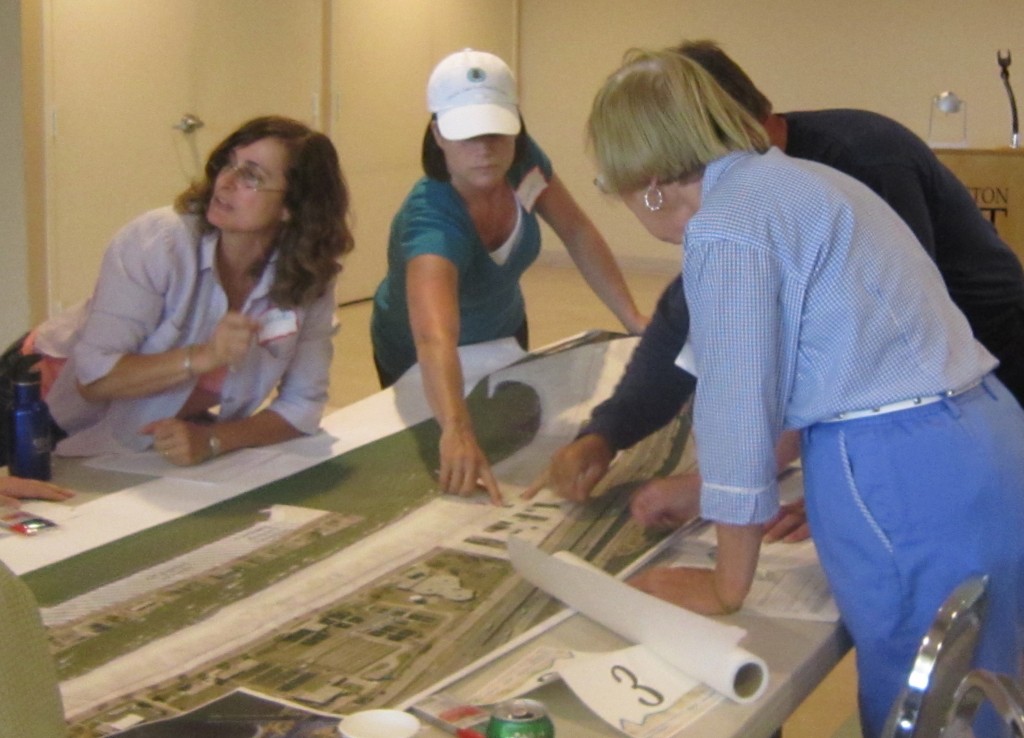
 Laura Gillespie points out the part of the Beachway that affects her the most – the spot where her house is located. Readers may or may not be familiar with all aspects of the planned purchase of all 30 houses in the Beachway community by the Region. The purpose of the acquisition is ostensibly to add another 3% of land to the Regional Beachway Park. The BWC concern is at what cost and to what end use? The houses will be demolished, as acquired, and the properties will be restored as natural land (foundations, pavement, septic tanks/beds and any other contaminants removed. The Region has estimated the cost of the property acquisition alone to be $10 million or an average of over $330,000 per home. Significantly, the costs of restoration, which will be considerable, have not been estimated.
 Sold for $600,000 to the Region, current owner gets to live in the house for two more years. Now we have learned that the first domino in the property purchase game has fallen. It is 1011 Lakeshore Road, a property on the west (non-shore) side just south of the Sewage Treatment plant. The cost to regional taxpayers is well over $600,000. It is early in the game and one home sale does not represent a pattern. It does, however, provide a reason for concern and caution. If each house (on both the shore and non-shore side) was valued with this cost as an average, the total cost just to purchase all of the houses could be over $18 million or nearly twice the estimate given to taxpayers. If the costs of restoration are then factored in to the total, the cost becomes far, far greater.
Whether or not this is good value for taxpayers is subject to debate and interpretation. Our point is that the debate has never occurred and, given a decision made with a completely different set of cost metrics, may never occur.
Are there other projects in the Region that have better value, that exhibit a better cost/benefit ratio for our tax dollars? Quite possibly and, of course, “value” is largely determined by the use to which these resources are put. This leads to the second major issue, our “parking lot”.
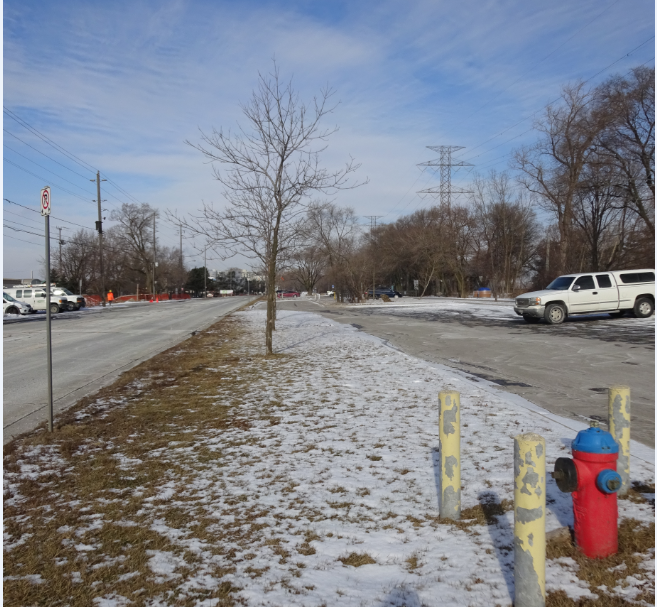
 Parking in the Beachway is currently on what is referred to as a “dynamic beach – on the lake side of Lakeshore Road. The intention appears to be to spend million to buy up homes on the west side, tear them down and make that space a parking lot. The BWC asks: “What is the plan once the Beachway homes are all demolished over time?” The Region’s “Park Plan” is not complete they advise, “so we only have the latest “Burlington Beach Regional Waterfront Park Master Plan” to go by.
What hasn’t been made all that well known is that Burlington’s Parks and Recreation department has a small team working away on early design plans.
No word yet on when they will show what they have come up with to the public. We don’t know if there are “professional park designers” involved either.
Under the list of elements that the park zone is envisioned to include there is a proposal to “relocate parking from the dynamic beach to parking in less sensitive areas”. Significantly, the only “less sensitive areas” in the park are on the west side of Lakeshore Road where the one rectangle of fifteen (15) houses exists today.
Another section of the Plan notes that “with the entire beach area as parkland” this “allows for expansion of existing parking capacity west of Lakeshore Rd. & Lakeshore Court.”. This makes it reasonably clear that the fifteen (15) houses on the west side of Lakeshore Road are to be purchased and demolished for a parking lot. Did someone just hear the screen door slam?
Based on our estimates, said the BWC, buying half the houses, tearing them down, cleaning up the mess and paving it over, will give residents a parking lot that could cost over $10 million of taxpayer money. Arguably, it would be the most expensive parking lot in Burlington – we are getting into Brant Street Pier pricing here.
The proposal to move parking away from the dynamic beach area would suggest these lands would not be parking areas but possibly naturalized areas of grass. Still, at a possible total cost of twice the initial estimate, is the original decision still valid and is all this destruction both warranted and cost-effective for the citizens of the region?
At the very least, the first business case needs to be re-examined with a new and more critical set of eyes. As such, we would ask concerned citizens to communicate with the City and the Region to encourage a proper cost benefit analysis be undertaken, to advocate that it include all relevant costs and to ensure that both City and Region commit to a process of extensive public engagement and awareness once the true costs are known.
 Councillor Craven inspecting the Pump House on the Beachway – thinks the place could serve as the Official Residence for the Ward Councillor. When his vision of the Beachway is complete – it may be the only structure left standing. Take it as a given that Councillor Craven keeps himself fully briefed – he has always made a point of creating and maintaining strong relationships with staff.
Take it as a given as well that Councillor Craven is not going to share what he knows unless he absolutely has to – and even then – you won’t get the full picture.
The Burlington Waterfront Committee meets regularly, usually on the second Wednesday of each month – check their web site
By Staff
January 16, 2015
BURLINGTON, ON
The Halton Regional Police are requesting the public’s assistance in locating a missing Burlington resident.
 Brendan Craig, 23, has been missing since late December. Police are asking the public to help in determining just where he is. Brendan CRAIG, 23 years, was last seen on December 20th 2014 after he was dropped off at the Burlington Mall by a friend. CRAIG last communicated with friends through Facebook on January 5th 2015 and was reported missing to police on January 13th 2015 after he had not been seen for a lengthy period of time. All efforts to locate CRAIG have been made however his current whereabouts remain unknown.
CRAIG is described as male, white, 5’9”, 146lbs with red hair, brown eyes and average build.
Anyone with information about Brendan CRAIG is asked to contact the on-duty Staff Sergeant at 905-825-4747, ext. 2310 or Crime Stoppers at 1 800 222 8477 (TIPS) or through the web at www.haltoncrimestoppers.com or by texting “Tip201” with your message to 274637 (crimes).
For additional information about community concerns in Burlington, follow us on Twitter @HRPSBurl. Additionally, for the latest crime data, news releases and general information, visit the Service’s website at www.haltonpolice.ca.
By Staff
January 15, 2015
BURLINGTON, ON
Getting a visit from the fire fighters is just fine – as long as they are not coming up the driveway with sirens blazing.
During the summer the Burlington Fire Department conducted home visits as part of its rural fire safety program, a public education campaign started in 2013 to test residential smoke and carbon monoxide (CO) alarms. The goal of the program is to keep residents safe by ensuring homes are protected and comply with Ontario smoke and CO alarm laws.
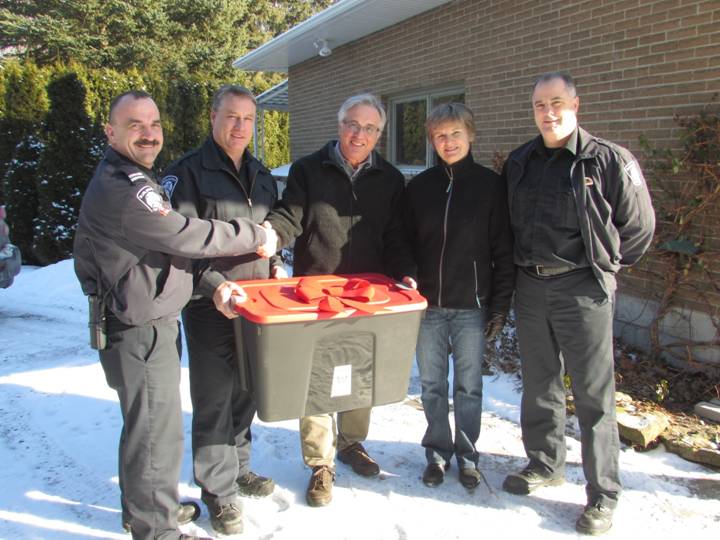
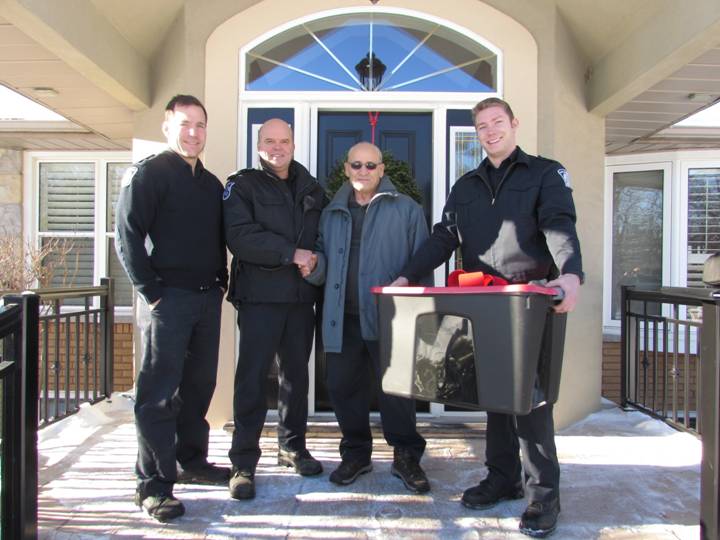
They were back in the rural part of the city with the biggest loot bag you will ever see. The fire department called them “home fire safety prize packs”.
“We were able to visit about 1,700 homes over the course of the program and talk to many residents about home fire safety,” said Chief Fire Prevention Officer Joe Wintar. “Residents that participated in the home visit were entered into a draw to win a home fire protection gift basket valued at $250.”
“We appreciate people taking the time to welcome us into their homes,” said Public Education Officer Kim Sopko. “Winning homeowners received a prize package that includes essential home fire protection items such as a smoke and CO alarm, a home escape ladder and fire extinguisher.”
 Right to left: Acting Captain Dave Meehan, Firefighter Rod Mchaffie, residents Rod and Karen Yuzik, Firefighter Joe Savelli  Right to left: Firefighter Joe Savelli, Firefighter Rod Mchaffie, resident Maurice Davidson, Acting Captain Dave Meehan
 Right to left: Firefighter Tim Hart, Acting Captain Shawn Gilroy, resident Nick Basile, Firefighter Alexander Zijlstra
If residents were not home at the time of the visit, they can still schedule a free in-home fire safety visit by calling 905-637-8207, ext. 6333 or emailing firedepartment@burlington.ca.
Follow @BurlingtonFire on Twitter and visit us on Facebook or at www.burlington.ca/fire or for more information on fire safety.
By Staff
January 15, 2015
BURLINGTON, ON
Investigators in the Criminal Investigations Bureau have identified and interviewed the individual responsible for leaving a replica hand grenade inside the Metro Grocery Store on January 10th 2015.
Replica grenade: Why would anyone carry one in their picket? Investigation has found that there was no intent to threaten and/or cause alarm to any persons inside the store and no criminal offence has occurred.
 Police are believed to have interviewed this person about a replica grenade left on the service counter at a grocery store. Why would someone being walking and driving around town with a replica grenade in their pocket?
The Halton Regional Police Service wish to remind members of the public that if they wish to surrender unwanted firearms or weapons that they contact the Police non-emergency telephone number at 905-825-4777. Officers will attend to safely secure and take custody of these items.
Police remind the public to never transport unwanted firearms / weapons inside a vehicle or enter inside a Police station for this purpose.
Investigators wish to thank the public for their attention and interest in this matter.
By Staff
January 14, 2015
BURLINGTON, ON
There are some phony –counterfeit American $50.00 and $20.00 bills being passed at commercial businesses throughout the Region
Halton Regional Police have issued a warning to the public regarding a rise in the number of American counterfeit $50.00 and $20.00 bills being passed,
Fraud investigators have arrested two people caught passing the counterfeit bank notes in two separate incidents.
Royal Bank of Canada – Milton
On December 3, 2014, a female suspect attempted to exchange a counterfeit American $50.00 bill for authentic Canadian currency at the Royal Bank of Canada at 232 Guelph Street in the Town of Georgetown. The bank employee examined the bank note and determined it was counterfeit and seized it. Investigators identified the suspect who subsequently turned herself into police on January 12, 2015.
Accused:
Elaine SMITH, 58 years, of Milton has been charged with Possession of Counterfeit Money and Uttering Counterfeit Money
Great Canadian Super Store – Milton
On December 22, 2014, a male suspect attended the Real Canadian Super Store at 820 Main Street East in the Town of Milton and purchased two PlayStation consoles using counterfeit American bills. Approximately 30 minutes later, the same suspect returned and purchased two more PlayStation items using counterfeit American bills. Investigators identified the suspect and he turned himself into police on January 13, 2015.
Accused:
Kevon HENRY, 28 years, from Toronto has been charged with two counts of Possession of Counterfeit Money, two counts of Uttering Counterfeit Money and two counts of Proceeds of Crime.
Look closely at American bills that are given to you.
Anyone with information about the circulating counterfeit currency is asked to call the Regional Fraud Unit at 905 825-4747 ext 8739 or anyone with information on this or any other crime is asked to call Crime Stoppers at 1 800 222-8477 (TIPS) or through the web at www.haltoncrimestoppers.com or by texting “Tip201” with your message to 274637 (crimes).
By Staff
January 13, 2015
BURLINGTON, ON
Halton Regional Police investigators have viewed the surveillance video from the Metro grocery store at Appleby Line and Upper Middle Road and are interested in identifying and speaking with an elderly white male depicted in the attached photos.
 Police would like to identify this man. This male was seen at the customer service counter at on Saturday January 10th 2015 at approximately 1:22 pm. Shortly after the male left the counter, the inert grenade was located.
Person of interest is believed to have driven away in this station wagon. The male was seen leaving the parking lot in a black van also depicted in the attached photo.
Last Saturday, a clerk at the Metro grocery got a huge surprise when what looked like a hand grenade was found on a counter.
The object was spotted at 1:35 pm when a store employee at the customer service desk found a replica inert hand grenade on the counter. The employee looked at the item and found that the bottom of the metal item was drilled out and was hollow. The employee took the item to an open area outside of the store.
Police services officers attended and examined the item and confirmed that the metal item was not an actual explosive device. The item is designed to look like a World War Two era hand grenade and may have been designed as a replica for training purposes only. In this incident there was no actual threat to public safety as the item is not an actual explosive device.
Police are attempting to determine if the replica item was left in the store intentionally or if it was accidentally left behind by some unknown person. There have been no threats to the store or anyone else at this time and this event is very unusual. The found item will be destroyed at a later time by the police service.
 Can you identify this person? Anyone with information that would assist in identifying this male are encouraged to contact Detective Joe Barr of the Burlington Criminal Investigations Bureau at 905-825-4747 Ext. 2385 or Crime Stoppers at 1-800-222-8477 (TIPS), or through the web at www.haltoncrimestoppers.com, or by texting “Tip201” with your message to 274637 (crimes).
By Pepper Parr
January 13, 2015
BURLINGTON, ON
Different citizens groups south of the QEW are gathering their forces to delegate at the statutory public meeting to consider a proposed Official Plan and Zoning By-Law amendment.
 The ADI group argues that the design of their 28 storey tower will serve as an excellent gateway on the eastern side of the city into the downtown core. Residents argue it will loom over the neighbourhood. The 22 storey Bridgewater project a couple of hundred yards away will reach 22 storeys into the air. On Monday January 19th, the Development and Infrastructure Committee of City Council holds a meeting to consider the recent application made by ADI Developments to build a 28 Story building at the corner of Martha Street at Lakeshore. In order for the building to move forward, the city has to approve changes to the Official Plan and change the By-Laws.
During the meeting they will discuss the staff report on the plan and zoning changes released earlier this week. The Gazette has been informed that the staff Report will not include a recommendation.
There will also be a Statutory Public meeting during the Standing Committee meeting. These Statutory meetings give the public an opportunity to comment on a proposal. Anyone can speak during the statutory meeting – one does not have to pre-register as a delegation.
Council will also listen to the public who wish to speak. They have invited delegations who register in advance in writing to Rosa Bustamante: rosa.bustamante@burlington.ca
There is a downtown Core Residents Association and St. Luke’s Anglican Church “centric” group that has been watching this proposal very closely. They are joined by literally hundreds of ward 2 residents who are very opposed. Most of city council appears to be opposed as well – the Mayor has certainly made his opposition to 28 storeys very clear. What council has not done is give any sense as to what they are prepared to accept.
During one of the St. Luke’s centric meetings, many core residents turned out to voice their opposition to the project – because “we are all inherently tied at the hip — what affects one, certainly does the other.”
Staff have released a report outlining the project in which they report more than 127 people have either telephone, written or email the city opposing the project.
In email comments from the Core Residential group they pointed out that “if you don’t comment in writing or request to say a few words at the Statutory meeting you won’t be able to object to the outcome if this all goes to the Ontario Municipal Board. And you know that if the city refuses the application of zone change it will and the city will need all of our support at the OMB.”
Having this application go to the Ontario Municipal Board is a significant concern to the city. The sense is that developers usually get what they want at the OMB – at least that has been Burlington’s experience.
Ward 2 Councillor Marianne Meed Ward points out that Oakville tends to do better at the OMB than Burlington.
What few people fully understand or appreciate is that any developer can walk into the planning department with a development proposal. The planners are required to listen and to explain how the city’s Official Plan and zoning bylaws would apply. While the public likes to believe the Official Plan and by-laws are written into stone – they are actually dynamic documents that get changed.
The city is required to review their Official Plan every five years and is in the process of reviewing their plan.
When a developer approaches the city and hears what the planners have to say about their proposal they can still submit a development application – even if the planners don’t think it’s all that good a plan.
 The Maranatha project on New Street was approved by Council but a residents group was opposed and they took it to the OMB – the hearing is scheduled for March. In most instances there is some negotiation and changes get made. The Maranatha project on New Street is a good example. The planners negotiated with the developer and council approved a building that was to be six storey’s high and well set back from the street. A handful of residents objected and they have taken their opposition to the project to the OMB.
Opposition to a development or a city council decision does work both ways.
When a planner takes a proposal to the city – the city has 180 days to g take the application to the OMB and ask them to approve the project.
A hearing is held and a decision rendered.
The ADI Group, the company that wants to build the 28 story structure at the intersection of Lakeshore Road and Martha tends to like to go to the OMB.
Rosa Bustamente, the city planner handling this file explains what the city is faced with”
“The 180 day appeal period begins after the applicant has provided the municipality with “a complete application” (as defined in the Planning Act) which includes the posting of the sign on the property. We provided correspondence to the applicant that their application was deemed complete, including the posting of the sign, on September 25, 2014. By my count, that would make the 180th day following that date March 24, 2015. If a Council fails to make a decision within 180 days of receiving a complete application, an applicant can file an appeal to the Ontario Municipal Board. It is my understanding that, in this case, the applicant would have grounds to file an appeal on March 25, 2015 if Council has not made a decision on or by March 24th, 2015.”
The Statutory meeting on January 19th is a part of the “clock ticking”
By Pepper Parr
January 13, 2015
BURLINGTON, ON.
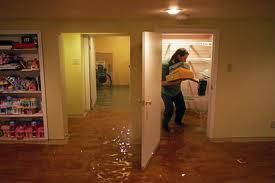
The flood is history – the problems left are financial.
The Burlington Community Foundation is going through the 310 applications for financial assistance. Twenty two (22) have been approved and another 30 will be cleared this Friday.
 Funds for those people who had basements flooded will begin to be sent out early next week. 52 of the 310 claims have been processed to date. Once a Claim has been approved by the Claims committee it gets sent to the city and they issue the cheques on behalf of the Community Foundation.
Claims totaling $6 million have been received – the amount available for distribution is $2.9 million. One doesn’t have to be a rocket scientist to figure out people are not going to get what they were asking for in the way of financial support.
Those claims that have been approved, which will be paid out by the city, will see just 50% of the amount they will be given. The balance will be paid during the last week of the claim settling process.
The Claims committee has to figure out how they are going to spread the $2.9 million they have to distribute to the $6 million in claims that has come in.
Going through the claims is the task that gets managed by four volunteers working with the insurance adjuster hired by the Burlington Community Foundation to oversee the work done by the four Claims Committee volunteers; Mark Preston, Bruce Russell, Rick Burgess and Nancy Swietek.
 It was community organizations that came through as well as individuals who raised just under $1 million in 100 days – a remarkable feat. In the early stages of the fund raising campaign there were relatively few claims being submitted. It wasn’t until the last couple of days that people got their documents in – more than 100 during the last two days. Many people deeply involved in the fund raising and claims processing are still shaking their heads wondering why so many people waited until the last few days to submit documents.
Every nickel of the funds raised in the community is being distributed to the people who suffered from the flood. Every dollar raised in the community is being matched by $2 from the province’s ODRAP program.
The administrative costs are being picked up by the city as are the costs for having the Red Cross do all the work they did.
By Staff
January 12, 2015
BURLINGTON, ON
The Hamilton Philharmonic Orchestra will do their second performance of its new Gallery Series of chamber concerts to be held at the Art Gallery of Burlington.
Taking place at the Art Gallery of Burlington on Wednesday, January 21 at 7:30pm. The Gallery Series brings our region’s local art galleries and professional orchestra together to create intimate, 60-minute chamber concerts in inspirational and beautiful environments.
 The Hamilton Philharmonic will play within the setting of the current exhibit An Aqueous State by photographer Janusz Wrobel, Within the setting of the current exhibit An Aqueous State by photographer Janusz Wrobel, and This Pocket of Deeds by Warren Hoyano, the HPO Woodwind Trio performs glistening and harmonious works written for flute, clarinet and bassoon.
Principal flutist Leslie Newman, principal clarinetist Stephen Pierre and bassoonist Melanie Eyers show Burlingtonians the beauty of these symphonic instruments in an environment that allows audiences an up-close experience with professional musicians.
“We are delighted to bring our professional musicians to the Art Gallery of Burlington and offer Burlington residents a great chamber music experience in such a unique setting,” says Carol Kehoe, Executive Director of the HPO.
Hamilton Philharmonic will perform at the Art Gallery of Burlington The performance is hosted by HPO composer-in-residence Abigail Richardson-Schulte who provides context for each musical selection on the program.
Following the performance, Art Gallery of Burlington Chief Curator Denis Longchamps provides an introduction to the exhibit before inviting guests to join HPO musicians and Gallery staff for a reception.
Art Gallery of Burlington is located at 1333 Lakeshore Rd., Burlington
Reception following the concert. Cash bar
The Gallery Series is a FREE concert series with donations gladly accepted at the door. Seating is limited seating and on a first-come, first-served basis. RSVP is recommended by calling 905.526.7756. Doors open one hour prior to the concert starting.
By Pepper Parr
January 12, 2015
BURLINGTON, ON
Brian Dean, General Manager, of the Burlington Downtown Business Association is a happy camper. He has more clients.
Some of those clients are not all that pleased that they are on the client list.
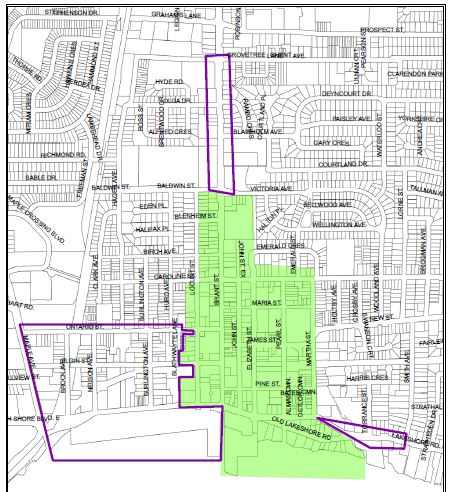
 Purple lines how the new territory added to the BDBA boundary. The addition of the names on the list came about when the city went along with the BDBA request to enlarge their boundaries. They now extend further north on Brant; take in a large chunk on the west and a bit of land on the east.
Every commercial operation within those boundaries is automatically a member of the BDBA which adds to the BDBA revenue base because commercial operations are automatically members of association.
Dean does a good job of representing the commercial interests of the downtown core. His objective is to use BDBA tax levies to make the downtown part of the city look better and to use those resources to promote programs that benefit all the commercial retailers and service providers.
 Brian Dean, top toff at the Downtown Business Association was out drumming up business for those of his members that took part in the Red Bag Sale.
Good business associations add value for their members. There are opportunities to use the collective energy of the commercial sector to create a sense of place and make it a destination. Ottawa has it Byway market, Toronto has a Distillery District – Burlington doesn’t yet have a sense of identity. Strangely enough Spencer Smith Park does have an identity – it is the locale for two of the best events in the province. RibFest and the Sound of Music draw thousands of people.
Napanee has a part of town that, believe it or not, that has become a fashion destination. Napanee? So it can be done.
The BDBA has a member of city council who sits with the association as a liaison; traditionally the member for the ward fills that role – but not always.
In the “putsch” (a secretly plotted and suddenly executed attempt to overthrow a government). that took place at city hall on December 18th Marianne Meed Ward was replaced as the BDBA liaison by ward 6 Councillor Blair Lancaster. The argument given for the change at the time was that ward 6 is kind of separated from the city and it would be a good idea to have someone from that part of the city on the BDBA. And, as Lancaster pointed out, she does have 30 years of downtown business experience.
The city council liaison is not a voting member nor is there presence required to create a quorum. Dean, the general manager, can if he wishes ask anyone at the meeting to serve as a “guest” chair. You can see where this is going; the city council politics are spilling over into the boards, committees and agencies that make so much happen in the city.
 Ward 6 Councillor Blair Lancaster thinking through the answer to a question. Dean is quick to tell people that Meed Ward is a significant asset on his board, no one seems prepared to point out that while Lancaster did have a Spa with her name on it in the downtown core – she didn’t work at the Spa. As she told the Gazette some time ago: “I have professional managers run the place – they use my Miss Canada brand.” The Spa was closed in 2014.
|
|





 By Staff
 The GBBC is a joint project of the Cornell Lab of Ornithology and the National Audubon Society with partner Bird Studies Canada.
 “This may also be a big year for finches,” notes Audubon Chief Scientist Gary Langham. “GBBC participants in North America should be on the lookout for larger numbers of Pine Siskins and redpolls. These birds also push farther south when pine cone seed crops fail in the far north of Canada.”





 By submitting your photographs, you accept and agree to abide by these terms and conditions. If you are under the age of 18, then you must have the written permission of your parent or legal guardian to submit your photographs and your parent or legal guardian must accept and agree to abide by these terms and conditions.
 By submitting your photograph, you consent to the use of your name and address (city and province/territory) without further compensation to you.









 Ray Rivers writes weekly on both federal and provincial politics, applying his more than 25 years as a federal bureaucrat to his thinking. Rivers was a candidate for provincial office in Burlington where he ran against Cam Jackson in 1995, the year Mike Harris and the Common Sense Revolution swept the province.
  What are they worth?
 The Region of Halton formula averages the Ontario CPI and the Toronto CPI figures. The Regional adjustment will be based on 2.1% resulting in a salary of $47,280 effective January 1, 2015 for Regional Councillors. All seven members of Burlington’s city council are also members of the Regional council.





 Putting aside this rather smug arrogance, the Beachway residents are a long-standing and resilient culture within Burlington and the Halton Regional Government has, at least in part, elected to take away their homes and “put up a parking lot”. Over time, the community, which has existed for over 100 years, will eventually be demolished.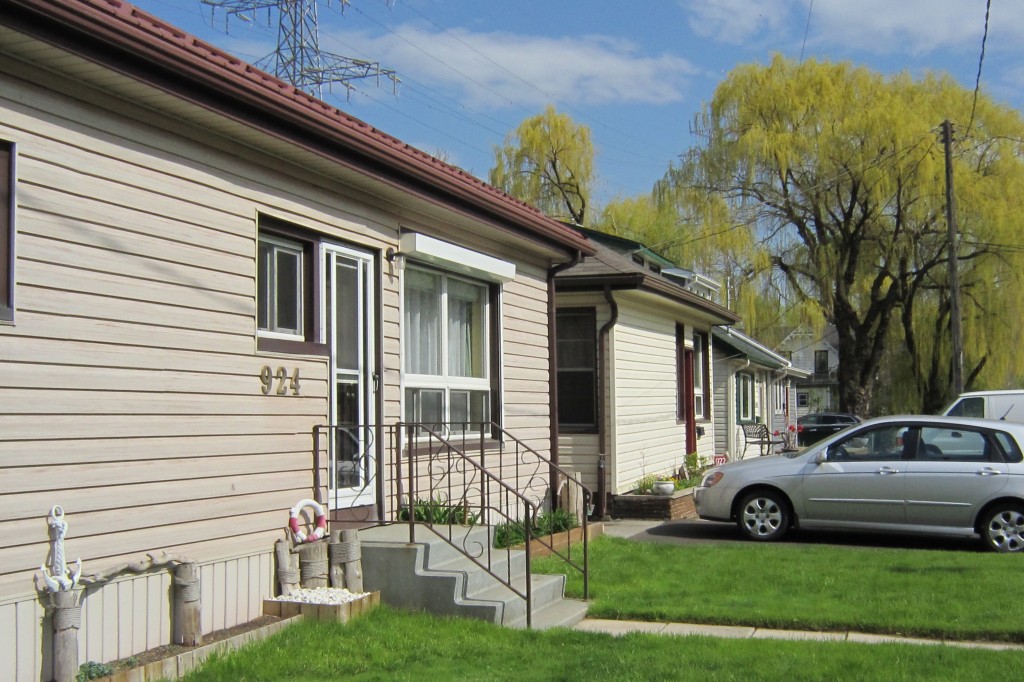
 The proposal to move parking away from the dynamic beach area would suggest these lands would not be parking areas but possibly naturalized areas of grass. Still, at a possible total cost of twice the initial estimate, is the original decision still valid and is all this destruction both warranted and cost-effective for the citizens of the region?