By Pepper Parr By Pepper Parr
August 18th, 2025
BURLINGTON, ON
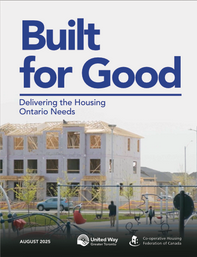
As housing costs soar and new builds stall, a report released today by United Way Greater Toronto (UWGT) and the Co-operative Housing Federation of Canada (CHF Canada) outlines a costed, delivery-ready plan to tackle Ontario’s deepening housing crisis – and build the housing that people actually need.
 The report, Built for Good, identifies what it would take to transform Ontario’s housing system, with ten, five and two-year targets, and investment estimates grounded in reality. For example, a $16.7 billion investment over two years would jumpstart a province-wide affordable housing strategy, led by the co-op and non-profit housing providers whose mission is long-term affordability for low- and moderate- and middle-income households. n On par with other major infrastructure commitments, the investment would create stable homes for thousands while generating jobs and economic activity across the province and relieving pressure on public systems like healthcare and emergency shelters. The report, Built for Good, identifies what it would take to transform Ontario’s housing system, with ten, five and two-year targets, and investment estimates grounded in reality. For example, a $16.7 billion investment over two years would jumpstart a province-wide affordable housing strategy, led by the co-op and non-profit housing providers whose mission is long-term affordability for low- and moderate- and middle-income households. n On par with other major infrastructure commitments, the investment would create stable homes for thousands while generating jobs and economic activity across the province and relieving pressure on public systems like healthcare and emergency shelters.
“Ontario’s protracted housing crisis continues to rob our communities of potential and prosperity, and we’ve identified a new roadmap for getting out of this,” said Heather McDonald, President and CEO of United Way Greater Toronto. “Built for Good opens the door to opportunities for real progress by focusing on non-profit partners and the right investment, so we can build and protect the deeply affordable homes people need. This benefits all Ontarians, no matter where they find themselves on the housing continuum.”
“Ontario’s housing crisis demands bold, proven solutions,” said Tim Ross, CEO, Co-operative Housing Federation of Canada, Ontario Region. “The co-op housing sector is ready and able to deliver affordable homes that strengthen communities. With an existing pipeline of co-op projects across the province, we can build quickly, create good construction jobs, and ensure public dollars result in homes that stay affordable for generations. The Built for Good report lays out both the need and a clear path to deliver more homes that meaningfully address the housing crisis.”
The province’s goal of 1.5 million new homes by 2031 includes all types of housing — but without targeted investment, the most affordable options will continue to fall behind.
 A housing development that was a mix of co-operative houses and market-priced homes as well as condominiums, was created between the railway tracks and the Gardner Expressway on the south and and walking distance from the St Lawrence market.
Housing crisis by the numbers:
- Nearly 400,000 households will need housing support by 2030 through new builds, rental supports and preserving community housing
- Over 55,000 affordable homes are at risk of being lost without investment
- More than 80,000 Ontarians experienced homelessness in the past year
- Ontario lost 120,000 affordable rental units between 2006 and 2021
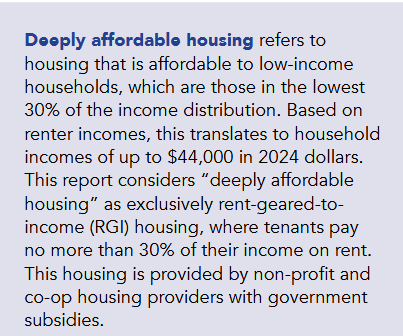
 Built for Good’s two-year plan would: Built for Good’s two-year plan would:
- Build 15,150 new deeply affordable homes
- Provide rental assistance to 170,000 low-income households
- Develop 8,250 moderately affordable homes
- Preserve and repair 65,000 existing affordable homes
The report urges all levels of government to treat affordable housing as critical infrastructure and commit to a province-wide plan to scale non-market housing. Many projects are ready to go, they just need funding to break ground.
There was a time in Ontario, across the country actually, when Cooperative housing was a working model that housed a lot of people. CMHC was involved in the financing. Over time the model fell out of favour – it might be returning, which would be good news.
This particular initiative is focused on Toronto; there is no reason why it cannot be used in Burlington. Cooperative Housing is a model in which the residents do not have any equity – what they do have is well below market rents and no one can evict them. The residents run the complex – they can be as small as half a dozen units or a twenty-storey high rise.
You don’t have to wait for city hall to do this for you – you approach CMHC, and they will take you through the process. If you want to know more – get in touch with me. In my book publishing days, I did two books on Co-op Housing. They work.

By Gazette Staff
August 18th, 2025
BURLINGTON, ON
It won’t be long before parents are doing their return to school shopping and the students get into the routine of going to school each day.
It is that returning to school that has the NDP Opposition government very concerned as well.
Global News revealed that violence in schools rose by 77 per cent since the Ford Government was elected in 2018, with more than 4,400 incidents reported last year.
 Teachers have to cope with unruly students and at the same time, deliver the curriculum during the term. “The numbers tell a clear story: we are seeing a crisis of violence develop as our children’s needs go unmet at school. Unfortunately, this is only the tip of the iceberg as many incidents go unreported,” said NDP MPP Pasma.
“Our kids are bearing the brunt of Doug Ford’s cuts to education, from larger class size to fewer EAs and support staff, to the lack of mental health professionals, and less supports for special needs students. Our education workers and teachers shouldn’t have to put up with injuries as a routine part of the job.
“The Premier has been busy listening to his developer friends about moving highways and building fantasy tunnels, but it’s about time he listens to concerned parents who just want their kids to be safe at school. We have the solutions, the Government just needs to act – it must hire more qualified staff in classrooms so our kids have a safe place to learn.”
The Ontario NDP announced its Emergency Plan to End School Violence and is calling on the Ford Government to implement it. The plan includes:
- Funding to hire additional qualified staff, including mental health professionals, education assistants, child and youth workers, and other education workers.
- Funding for comprehensive training for all workers and supervisors.
- A sector-specific regulation for education under the Occupational Health and Safety Act.
- A permanent provincial health and safety working group to review and adapt current policies regarding workplace violence in the education sector.
- A single province-wide online reporting system for violent incidents and data collection to understand the full scope of the problem.
By Pepper Parr
August 17th, 2025
BURLINGTON, ON
 Anne Marsden: Plucky as ever Dave Marsden sent us a note this morning.
Anne is in a hallway bed in a Hamilton hospital because an urgent care visit declared she could not be at home with leg spasms that prevented walking and standing and caused tremendous pain.
Anne wanted people to know that “There has been a lot of negatives said about hallway beds and we agree it’s not the ideal but I am grateful for the care I am getting.”
An MRI and other testing was done in less than 24 hrs. after leaving for an urgent care clinic.
Plucky as ever Anne expects to be up and around soon.
By Gazette Staff
August 17th, 2025
BURLINGTON, ON
This article first appeared in Storeys, the most-read real estate news site in Canada. The company is made up of experienced journalists, content creators, and data scientists.
Earlier this week, the Government of Canada quietly launched public engagement on Build Canada Homes (BCH), the new federal housing entity that Mark Carney and the Liberals pledged to create during the election campaign as a way to “get the government back in the business of building.”
From what was announced at the time, Build Canada Homes has drawn mixed reactions, with some saying it is long overdue for the feds to get back into homebuilding and others arguing that the federal government should support private developers rather than compete with them.
This week, the Government of Canada published a “Market Sounding Guide” for Build Canada Homes, which provides many more details about the government’s vision for the new entity. All details are currently subject to change and the Government of Canada is holding public engagement until August 29.
Build Canada Homes
“Build Canada Homes will be Canada’s new federal entity responsible for building affordable homes, providing financing to affordable home builders, and catalyzing a more productive homebuilding industry,” the guide begins. “It will bring together key partners from across the housing ecosystem to get homes built by addressing barriers, reducing risk and helping to navigate the process of building non-market housing.”
Build Canada Homes will have two major objectives, the first of which is to “Build affordable housing at scale.”
“We need to dramatically scale up affordable housing to create a mix of homes that respond to needs of a diverse range of households, including low-income, while building strong, resilient communities, following the clear example of those countries that have been successful,” says the Government of Canada in the guide.
The second objective is to “Build faster, better and smarter.”
“We need to build housing using advanced materials with manufacturing and construction methods that improve productivity and scalability to reduce the cost, time, and environmental impacts of building,” the guide states.
Structurally, Build Canada Homes is currently envisioned as “a single window for proponents at every phase of the development process, working in close partnership with developers, investors, manufacturers, other orders of government and Indigenous partners to get housing financed and built.”
How Build Canada Homes Will Work
Build Canada Homes will partner with builders and housing providers “focused on long-term affordability,” accelerate timelines to bring federal lands to market, reduce project costs and support the delivery of affordable housing, speed up the modernization of construction methods (such as standardized designs, Building Information Modelling, and offsite manufacturing), and “filling market gaps in financial product offerings.”
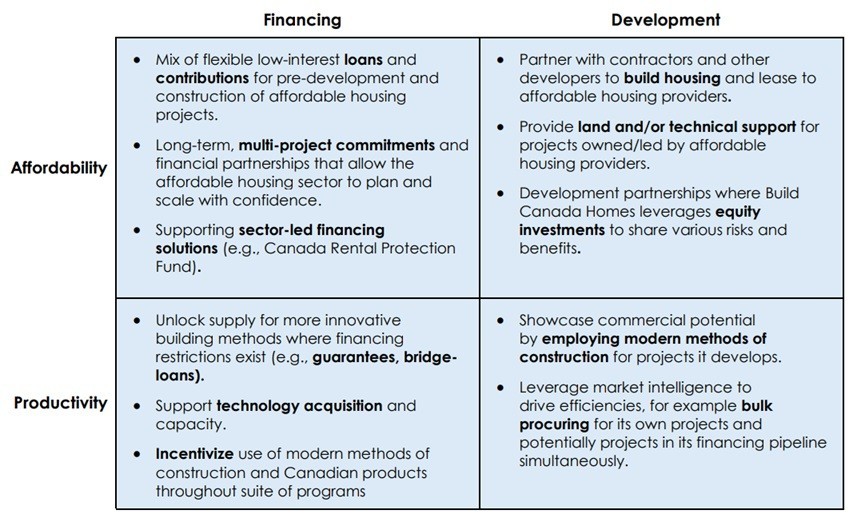
How BCH will operate can generally be split into two branches: financing and development.
Under the financing branch, BCH could provide a mix of flexible low-interest loans and contributions to get pre-construction projects off the ground. It could also provide long-term commitments towards multiple projects to affordable housing providers to help them grow their portfolios, or provide financing towards other financing programs such as the Canada Rental Protection Fund.
Other financing approaches could be more sector-focused, such as financing to support technology acquisition, incentivizing the use of modern methods of construction, and more unique financing options that may not currently exist.
A summary of the current vision for Build Canada Homes. / Government of Canada
On the development side, the guide notes that “A range of development approaches could be available to Build Canada Homes, from directly contracting builders to construct housing and leasing it to affordable housing providers, to acting as a facilitator by bringing together land, financing, project proponents, and other orders of government to move projects forward.”
The BCH could also inject equity investments in development partnerships and leverage market intelligence to drive efficiencies (such as bulk procuring for its own projects), on top of showcasing construction methods with its own projects.
Other financial tools BCH may utilize include loans at below-market interest rates and with more flexible terms, such as with greater risk shares or longer amortizations. It may also provide loan guarantees, contingent liabilities, contracts for differences, and offtake agreements that reduce investment risk and provide federal assurance.
The Build Canada Homes Approach
“Build Canada Homes’ investments may depend on the needs, risk profile, and potential to achieve Build Canada Homes’ policy objectives,” the guide says. The investment approach has four underpinning principles:
- Investment funding reflects housing outcomes;
- Sharing risk-taking to drive sector change;
- Sharing rewards in successful projects; and
- Leveraging sector expertise and convening partners.
BCH’s investment selection criteria will also have four major pillars: scale (the number of affordable units or number of projects), affordability/community sector growth (such as co-ops, non-profits, and Indigenous housing providers), innovation in homebuilding (such as prioritizing Canadian-made materials and modern construction methods), and efficient use of public dollars (such as ensuring that private investors do not disproportionately benefit from public investment).
Finally, the federal government emphasizes partnerships.
“Build Canada Homes will not be able to drive results alone,” the guide concludes. “The housing sector must be ready to respond to the opportunities Build Canada Homes presents. Strong partnerships with provinces, territories, municipalities and Indigenous partners are necessary to coordinate action to deliver key outcomes in the investment strategy.”
During this public engagement period, the government says it is hoping to receive feedback from developers, community housing providers, governments, Indigenous governments, and financial institutions, as well as academics, research groups, and even institutional investors. The public engagement period ends on Friday, August 29.
Public Engagement | Market Sounding Guide
By Gazette Staff
August 17th, 2025
BURLINGTON, ON
Housing starts across the province were not what the province expected. Most did not reach their target for 2025.
 There just isn’t enough of this happening for housing targets to be met.   
Experts in the housing sector point out that while this is a problem now – it can be managed, but in three years from now, the province will be looking at a the value of homes should fall but rents will sky rocjet because the supply will just not be there.
By Jeannie Løjstrup
August 16th, 2025
BURLINGTON, ON
Local sports clubs are navigating a rapidly changing sports world, facing both challenges and opportunities. In this evolving landscape, innovative strategies are essential for these community institutions to thrive. Collaborations with local businesses and online platforms like casinobros.ca are key to unlocking new revenue streams.
As a supporter of local sports, you will understand the importance of keeping these clubs relevant and financially viable. Many clubs struggle to adapt to the changing dynamics of sports consumption and funding. By embracing diverse income sources and modern technologies, they can ensure long-term success and continue to play a pivotal role in their communities.
 Local clubs must explore innovative revenue models to sustain their operations. Adapting to New Revenue Models
In a changing sports world, local clubs must explore innovative revenue models to sustain their operations. Traditional funding methods like membership fees and local sponsorships are no longer sufficient. Clubs are now forming partnerships with local businesses to secure sponsorships or mutually beneficial collaborations. These partnerships not only provide financial backing but also enhance community engagement. For example, teaming up with local eateries or retailers can lead to cross-promotional opportunities that benefit both parties.
The inclusion of online platforms offers a fresh perspective on revenue generation. Platforms such as casinobros.ca provide unique opportunities for clubs to engage with a broader audience and enhance their financial outlook. By utilizing these platforms, clubs can tap into digital fundraising campaigns, stream live events for remote fans, and even create virtual memberships. Such initiatives not only diversify income but also build a resilient financial model.
Furthermore, implementing merchandising strategies through online channels allows clubs to reach supporters worldwide. This approach not only generates direct sales but also strengthens the club’s brand presence. By diversifying revenue sources, clubs can maintain financial stability and invest in future growth.
Innovative Membership and Fundraising Strategies
Managing membership fees effectively is crucial for sustaining club operations in the modern age of sport. While fees are a traditional revenue source, creativity is essential in structuring them to attract more members. Offering tiered memberships with varying benefits can appeal to different segments of the community, increasing overall participation. Clubs can also incentivize early renewals or long-term commitments by providing discounts or exclusive perks.
Fundraising remains a cornerstone of financial support for local clubs. However, conventional fundraising methods may fall short in addressing growing needs. Clubs are now adopting innovative approaches to engage their supporters actively. Hosting themed events or competitions can boost participation while generating funds. Additionally, leveraging social media campaigns allows clubs to reach a wider audience and encourage online donations.
Creative fundraising ideas such as auctions or raffles can captivate members’ interest and foster a sense of camaraderie within the club. By constantly evolving their fundraising strategies, clubs can ensure sustained financial health and continue offering valuable programs to their communities.
Leveraging Digital Platforms for Growth
Incorporating digital platforms into financial strategies provides significant advantages for local sports clubs in a changing sports world. With digital presence becoming increasingly important, clubs can leverage online tools to reach new supporters and streamline operations. Online ticketing systems enable easy access to events while minimizing administrative burdens. Moreover, digital marketing campaigns can raise awareness about club activities and attract potential sponsors.
The integration of platforms like casinobros.ca has revolutionized how clubs interact with their fan base. Through these platforms, clubs can offer exclusive content, manage memberships efficiently, and conduct virtual fundraising initiatives. This digital approach not only expands revenue potential but also enhances fan engagement by providing convenient access to club-related content.
By forming strategic partnerships with online entities, clubs gain access to resources that might otherwise be unavailable locally. These collaborations create a network of support that bolsters financial resilience and promotes sustainable growth within the community.
By Gazette Staff
August 16th, 2025
BURLINGTON, ON
A group of eight people head for Ottawa to take part in the Annual General Meeting of the Association of Municipalities in Ontario.
 City of Burlington’s Mayor Marianne Meed Ward, some Councillors and staff will attend the Association of Municipalities of Ontario (AMO) 2025 Annual General Meeting and Conference next week in Ottawa. From Aug. 17 to 20, the Mayor will lead a delegation from the City to advocate for Burlington’s priorities with government officials, including cabinet ministers, MPPs and industry stakeholders. Key discussion topics will include: City of Burlington’s Mayor Marianne Meed Ward, some Councillors and staff will attend the Association of Municipalities of Ontario (AMO) 2025 Annual General Meeting and Conference next week in Ottawa. From Aug. 17 to 20, the Mayor will lead a delegation from the City to advocate for Burlington’s priorities with government officials, including cabinet ministers, MPPs and industry stakeholders. Key discussion topics will include:
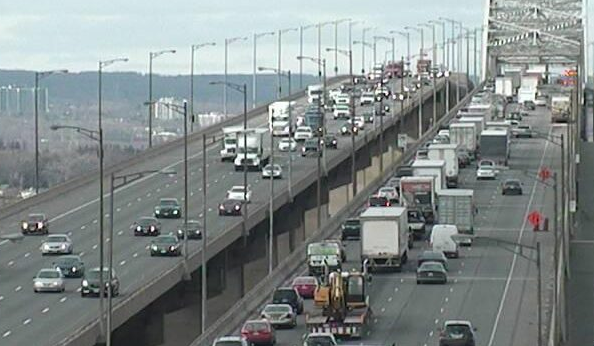
- traffic delays on the Burlington Skyway Bridge
- Not much the province can do – the bridge has to be repaired and maintained.
- the Mohawk College expansion in Burlington
- That planning for that initiative is well underway.
- expanded electricity infrastructure in Burlington to support growth around Major Transit Station Areas (MTSAs)
- Vital – Burlington Hydro hasn’t said much publicly about just what they have in the way of capacity
- establishing provincial policies to support Burlington’s Community Planning Permit System (CPPS)
-
 Jamie Tellier explains to residents at a public meeting what the development is all about.
- Provincial land designations to protect Mount Nemo.
- Make sure whatever protection is needed is rock solid.
- Provincial support to advocate for financial coordination between all three levels of government
Burlington representatives will advocate for housing affordability, protecting local greenspaces; providing predictable infrastructure and transit funding to municipalities; local economic growth and skills development.
Individual meetings are scheduled with cabinet ministers and representatives from the Ministries of:
 [⚠️ Suspicious Content] Head of Corporate Affairs, Leah Bortolotti - Finance
- Transportation
- Natural Resources
- Energy and Mines
- Colleges, Universities, Research Excellence and Security
The Burlington delegation accompanying Mayor Marianne Meed Ward includes Ward 3 Councillor Rory Nisan; Ward 5 Councillor Paul Sharman; Ward 6 Councillor Angelo Bentivegna; CAO Curt Benson; Head of Corporate Affairs, Leah Bortolotti and Corporate Strategic Leads of Government Relations, Jayson Doll and Paul Szachlewicz to engage in strategic discussions with members of the provincial government and other key municipal stakeholders.
By Gazette Staff
August 16th, 2025
BURLINGTON, ON
Social media has given people an opportunity to say what they think on major community issues.
A Burlington resident who lives in a Lakeshore Road condo that over looks Spencer Smith Park posted a question on Facebook about funding the Sound of Music.
Here are some of the responses:
Candy Multamaki
Charge $5 per person for entry. Small enough to be affordable but enough to help with costs.
Dave Gionet
Try reaching out to streamers on X/Twitter. A lot of people on there don’t mind contributing to events they can stream with their proceeds. Try reaching out to schools for garbage pick up or minor volunteer work because students need to have so much community service hours put in. My parents did this for students when they were running a walk-a-thon in Hamilton for a bunch of years.
Samantha Maddison
For me it is about accessibility. It just isn’t feasible with a walker or wheelchair. I too would pay for more appealing line up with accessible ease. In this changing climate cooling areas and stations would be welcomed.
Kim Lalonde
Bring back street closings and street festivals, was just talking to a,retailer on Brant Street who did half in sales compared to last year. The street festival part of Sound of Music was the best.
Laura Wayne
I attended a symposium this year that discussed the future of music venues, large and small, in Toronto. Two of the key things that were noted by the presenters / experts are that too many people put their noses up at the thought of paying a cover fee to enter the venues when live music is being performed. As well, that alcohol sales are way down due to the cost to the consumer and cannabis now being legalized (and not for sale at the venue). I for one have no issue paying a reasonable cover charge when I know music I am interested in listening to is being performed. I do not have a solution to propose, but those are two of many issues that were discussed.
Kurt Sorensen
Partner with Rotary and merge with Ribfest, perhaps without the ribs and let the focus be local music with miscellaneous food options.
Mark Langlois
I was at the free kitchener Blues fest over the weekend. Looks like that event is thriving. Might be worth organizers to reach out to other successful events to see what they do differently.
Donna Dmd
It was better when it first started. Closing the streets & having various types of music in different areas.
Go local. Get back to basics. Not every band needs to be a head liner.
Get a good fundraiser. There are numerous businesses in Burlington.
Ditch the fence, that is suffocating & hard to get out.
Find a better park, with parking.
Keep it free – by donating at entrance with whatever one can afford. $1.00 / $2.00 etc…
Joseph Whiteman
Im on the charge bandwagon, wouldn’t go higher then 20.00. That’s what the biggest Canadian festival charged, the sars benefit cost. Also, When I was there this year. I was also sad seeing no street festival. Maybe that could come back as well. Music wise it hasn’t been too bad, but putting all music in one place with the two stages, with staggered times. This would cut some cost.
Alisha Mcmaster
Do what Oakville used to do. Charge a small fee for a weekend pass but allow the pass to give access to public transit to get down there as well. Anything on the side streets remain free but anyone wanting to go get in on the actual concerts have to pay.
Jimbo Jones
How about moving from Burlington to Hamilton
Top fan
Ted Bullock
What happened to Tim Hortons as a sponso
Susan Lord
It’s got to crowded. I used to enjoy it.
Rebecca Bowen
Absolutely start selling tickets/wristbands ($10 per person for a weekend of fun, will add up on your end). Oakville used to have the Waterfront festival. You purchase a button and with that came your entrance and free bus transportation all weekend. People will pay. I respect that you hold so high being a free festival, but free is in the past (unfortunately). SOM is Burlington. People will pay. Good luck!
Broad range of views . Are the Sound of Music people listening?
By Gazette Staff
August 16th, 2025
BURLINGTON, ON

According to financial disclosure documents from the White House, President Donald Trump earned $1.3 million in royalties last year for endorsing the “God Bless the USA Bible.
The Bible comes in pink and camouflage editions as well as a $1,000 version signed by the President.
God Bless America
By Pepper Parr
August 15th, 2025
BURLINGTON, ON
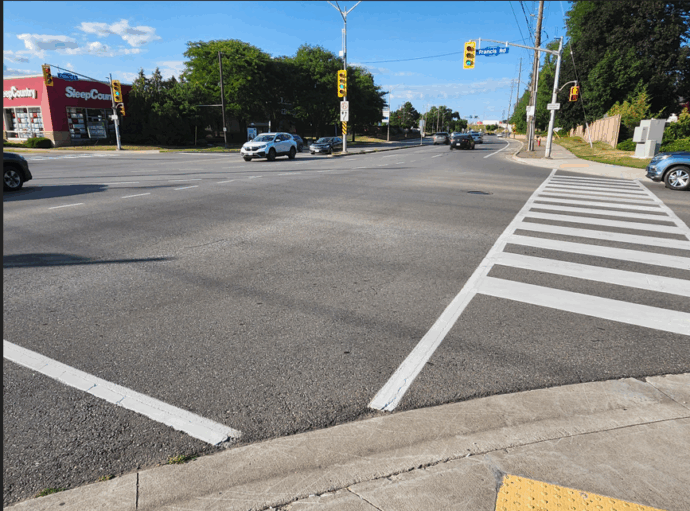
Jim Thomson, an Aldershot resident, who brought to our attention a confusing set of crosswalk markings at Plains Road East and Francis Road. We published a short piece on the crosswalk markings.
That got the problem on the desks of people at Transportation operations
Good afternoon Jim,
Thank you for taking the time to share your concerns about pedestrian accessibility at Plains Road East and Francis Road. We always appreciate hearing feedback from residents.
 Chris King: Manager Traffic Operations and Signals at the City of Burlington This intersection works differently than most because of its unique layout and traffic patterns. The intersection operates under what is called a “split-phase operation”. This means that instead of northbound and southbound traffic being permitted to move at the same time, each direction must take its turn. While not the most common form of signal operation, it’s worth noting that this type of operation (and the absence of a crosswalk) can also be found in other areas in Burlington, across the province, and beyond based on the specific safety and operational needs of each location.
For safety and efficiency, many split-phase intersections only have crosswalks on certain sides. At this location, adding an east side crosswalk would create safety issues (including between pedestrians and turning vehicles due to the required 2 left turn lanes exiting the plaza) and would require a much longer signal cycle length, which would cause delays for all road users including pedestrians. The increase in delay would not only occur at this location but also at synchronized intersections on Plains Road and in the surrounding areas, which would need their timings and cycle lengths modified to stay in synch.
Regarding the pedestrian button in the middle island, these are used in specific circumstances (typically very large intersections). The timing at this location is designed to give enough time to cross fully, and pedestrians should begin crossing only when the “walk” symbol is lit.
We understand that the roadway design means your trip required extra crossings, and we know that can be frustrating. However, the current setup prioritizes safety and considers traffic flow and overall delay for all users both at this location and across the broader traffic network in Burlington.
Thank you again, your input helps us continue to review and improve how our streets work for all road users. Have a nice weekend.
Chris King
Manager, Transportation Operations
 Intersection of Plains Road East and Francis Road. Thomson responds
I can not believe that having to walk three sides of a square to get from the south east side of Francis Rd to get to the bus stop on the north east side of Francis Rd is considered to be a good design. If you want people to use active transportation then you have top make it convenient for people who are walking. The fact that this might inconvenience IKEA /Fortino Shoppers should not be the main priority. The fact that you insist that the time allotted to cross is sufficient and that no one should ever end up stuck on the island in the middle island is especially ridiculous as I have been stuck on the island at another of the intersections that prioritizes cars over people. Once there there is nothing you can do to get safely off the island.
 Jim Thomson. The Integrated Mobility Plan as passed by Council in September 2023 has a policy direction in 7.1.1 to enhance the pedestrian level of service (experience). My concern is that at the Francis Road /Plains Road East intersection the car is taking priority over the pedestrian because there are only crosswalks on three sides of the intersection.
This needs to change if the goal is to build a walkable environment and improve pedestrian safety.
I would also suggest the the speed limit on East Plains should be maintained at the 50 km/hr that it has coming into the intersection and should not increase to 60 km/hr at any point on Plains Road East. The frequent changes in the posted speed limit promotes speeding in the areas where the limit is posted at 50 km/hr and in the school zones where it reduce to 40km/hr. Traffic would flow more smoothly if it wasn’t continually changing speed.
I would also suggest that your bus drivers need to have a lighter touch on the gas pedal and the brake. Currently they are trying to accelerate like cars to get to the posted speed limits ie 0-60 km/hr as fast as possible. And they decelerate with a squealing of brakes. This is not a comfortable ride for the passengers in the bus. The suspension of the Buses is rather hard and when they hit bumps in the road at 60km/hr it can be jarring to the passengers.
I also wonder how you can run the buses to a schedule when the time displayed in each bus is different. Some have been as much as 6 minutes behind my watch to 3 minutes ahead of my watch. I should be able to set my watch to the time in the buses they should all be displaying the same time.
I have heard all sorts of reasons why Plains is an arterial road but the facts are that it goes down to one lane across a bridge before it gets to Hamilton. There are cycle paths but only one lane for vehicles. I have yet to see major use of the bike lanes and still see many cyclists preferring to ride on the sidewalks rather than in the bike lanes.
In conclusion, I strongly believe that if the goal is to have a walkable city then the Intersection at Francis Rd and Plains Road East needs to be modified to have crosswalks on all four sides, not just the three it presently has. The city needs to start prioritizing the pedestrian over the automobile., I reject your thesis that the design prioritizes the safety of the network. The design prioritizes traffic flow.
I thank Councillor Galbraith for forwarding my concerns to you but I don’t believe you took them seriously; you just tried to justify what is currently in place.
Change won’t happen if the culture isn’t in place to accept that things need to be improved when you get negative feedback. This should be a relatively easy problem to solve. All it takes is some paint and a change to the timing of lights at this one intersection. As you point out there are several more intersections that also need to be changed to prioritize pedestrians over cars, but I have only complained about this one.
It will be interesting to see how this works out.
By Gazette Staff
August 14th, 2025
BURLINGTON, ON
 Police are alerting the public. Police would like to make the public aware of a potential scam affecting residents of Burlington.
Reports are being received of men approaching homeowners claiming to be employed with the City of Burlington, attending to complete work on the property.
The men demand cash in order to start the projects.
City employees carry authorized identification and will not request money to complete work.
Residents who suspect they are being misled by the above or similar scenario are asked to contact the Halton Regional Police Service at 9-1-1 or via our non-emergency line at 905-825-4777.
By Pepper Parr
August 14th, 2025
BURLINGTON, ON
First, there was the Mayor’s Statement on the Sound of Music (SoM: it was iconic (a much overused word) then there was mention of the legacy and lots of good feeling words.
Later on the same day – Dave Shepherd released a statement on how dire things were for the Sound of Music (SoM) and that if there wasn’t any sponsorship, the event didn’t have much in the way of a future.
The Mayor set out the kind of money the city was putting into the event – not all that much – especially when you take into account the different fees the SoM had to pay the city.
What didn’t get mentioned was the business plan the SoM was required to submit for 2026 event. That was due June 1st, 2025
Producing the business plan was one of the conditions attached to the $225,000 the city loaned SoM to get the 2025 event off the ground.
What we are seeing is a lot of running around like chickens with their heads cut off – precious little in the way of a solid document put together by people who understand marketing, understand the music business and know how to get all the relevant data onto a spreadsheet that they then analyze.
Related news story:
Mayors Statement
Sherherds’ plea
What is really needed
 How do you lose money with crowds like this?
By Pepper Parr
August 14th, 2025
BURLINGTON, ON
Things appear to be quiet within the swimming community.
The clubs are still registering new swimmers while they work on the programs that will be offered in September.
The RFP that was awarded to the GHAC Golden Horseshoe Aquatic Club (GHAC) requires that 80% of the swimmers live in Burlington.
It isn’t clear as to just when the city is going to ask for numbers from the clubs.
 The registration data is collected by Swim Ontario. The registration data is collected by Swim Ontario.
The effort to have an audit done on just how the awarding of the RFP was arrived at is still in play.
There are few questions on what the process should be. Reports are that the city auditor is on side and is prepared to take on the task if instructed to do so. The sticking point is understood to be – where will the funds to carry out the audit come from.
The auditor’s workload is pretty much in place.
The decision to proceed will be made at a Council meeting sometime in September.
The first step will be a Motion tabled by a Council member that has to be seconded by another Council member.
Once the Motion is on the table, it will be debated (vigorously). It will need four council members to pass.
The Audit Committee has looked at procurement practices in the past. There was a report released on September 11, 2024
Summary: To ensure procurement transactions for goods/services under $50,000 are compliant to the City’s Procurement By-Law and applicable corporate policies and procedures.
Audit results: Three low-risk findings that focused on policy improvements, better training compliance and data analytics.
Current members of the Audit Committee are:
Councillor Kearns
Councillor Sharman
Mathew Moore
Etienne Durafour
Michael Di Iulio
Kartik Gupta
Mayor Marianne Meed Ward, an ex-officio voting member of the Committee
 Mayor Meed Ward The members of the audit committee don’t do anything unless directed by Council.
It’s all doable – but it will be a tight, politically based fight.
The Audit Committee reports to Council; its report is not signed off on by anyone in the Administration
The Mayor will not want all the facts made public.
By Gazette Staff
August 14th, 2025
BURLINGTON, ON
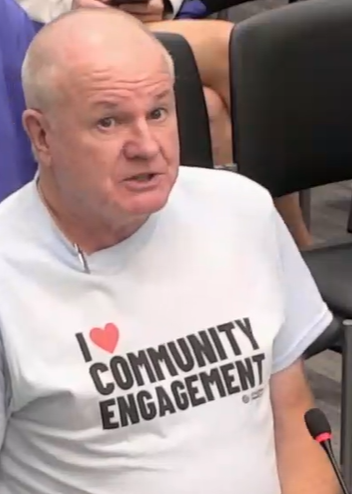
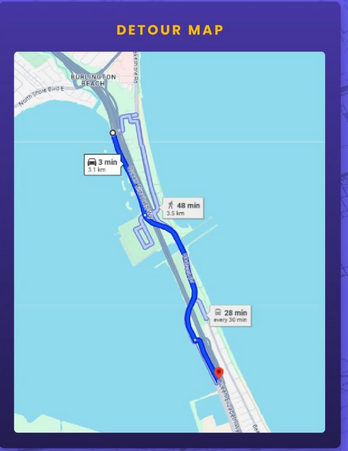
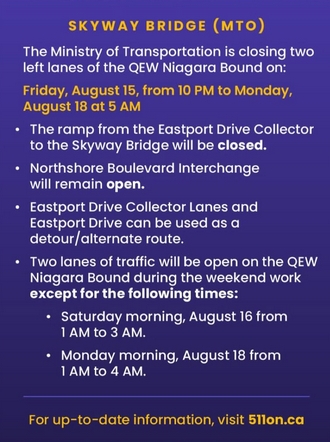
Weekend closure on the Skyway bridge starts on Friday. 

 Repairs and maintenance will stretch into September.
By Pepper Parr
August 14th, 2025
BURLINGTON, ON
It was his first day taking part in a City Council meeting as the Chief Administrative Officer (CAO)
 Curt Benson: City CAO Other than being introduced, Curt Benson didn’t have a word to say.
Call it a soft start.
There just wasn’t an occasion for Benson to say anything.
The Mayor could have asked Benson for a few words. Nope.
Benson is a superb planner and on planning issues, he will have a lot to say.
On the administration side – we don’t know yet.
By Gazette Staff
August 13th, 2025
BURLINGTON, ON
 For a guy many thought didn’t have all that much in the way of campaign experience, he was certainly having a great time. “This year, Canadians showed up like never before to support Mark Carney and our Liberal team’s plan to build a stronger Canada,” said Azam Ishmael, National Director of the Liberal Party of Canada. “When the challenge was greatest, Liberals met the moment – helping achieve our best-ever year for fundraising and earn a historic new mandate. Now, they’re continuing to step up and drive our work to deliver for Canadians.”
This record-breaking support builds on a successful Leadership race and national campaign – an unprecedented feat in Canadian history that saw:
- Nearly 400,000 Canadians signed up as Registered Liberals to take part in a secure and robust Leadership race that elected Mark Carney as Liberal Leader.
- Millions of door knocks and calls in the lead-up to Election Day, and more than 100 rallies and events across the country.
- The largest Liberal vote share in over 40 years to elect 169 strong Liberal MPs and reject Pierre Poilievre’s divisive politics.
This new milestone surpasses Liberal fundraising records set in previous election years — including 2015’s historically long campaign, as well as 2019 and 2021.
As Mark Carney and our new Liberal government deliver on the priorities that matter most to Canadians, the Liberal Party will build on this strong grassroots support ahead of our 2026 National Convention from April 9-11, where thousands of Liberals will come together in Montréal to participate in important policy discussions, hear from guest speakers, and help shape the future of party and our country.
By Pepper Parr
August 13th, 2025
BURLINGTON, ON
The City of Burlington invites residents to its fifth annual Food for Feedback event on Saturday, Sept. 13, from noon to 4 p.m. at Central Park (2299 New St.).
This popular community event offers residents a unique opportunity to enjoy a free meal in exchange for sharing their thoughts on City projects and initiatives, while supplies last. It’s a chance to have your voice heard while connecting with neighbours, Council and City staff in a relaxed, family-friendly setting.
 Line-ups at Food Truck Stattions Mayor Marianne Meed Ward, members of Council, City staff, and representatives from advisory committees will be on site to listen, engage, and gather valuable feedback that helps shape the future of Burlington.
 Council members set up their tents at the 2022 event. Not all participated. The free drop-in event features 35 booths and five food trucks. There is a reserved area called the ‘Kidz Zone’ where children can have fun while family members provide feedback on City projects.
Feedback collected at the event is used to help the City continue to improve programs, services and initiatives.
If it rains, the event will move to the Burlington Seniors’ Centre.
I have one question for the Mayor and Councillor Kearns, who laud the event in their comments below:
Will you name one thing that you learned as a result of the surveys you did that was used to change a city program? Just the one thing.
This year, the City will be seeking feedback and sharing information on topics including:
- Burlington Transit
-
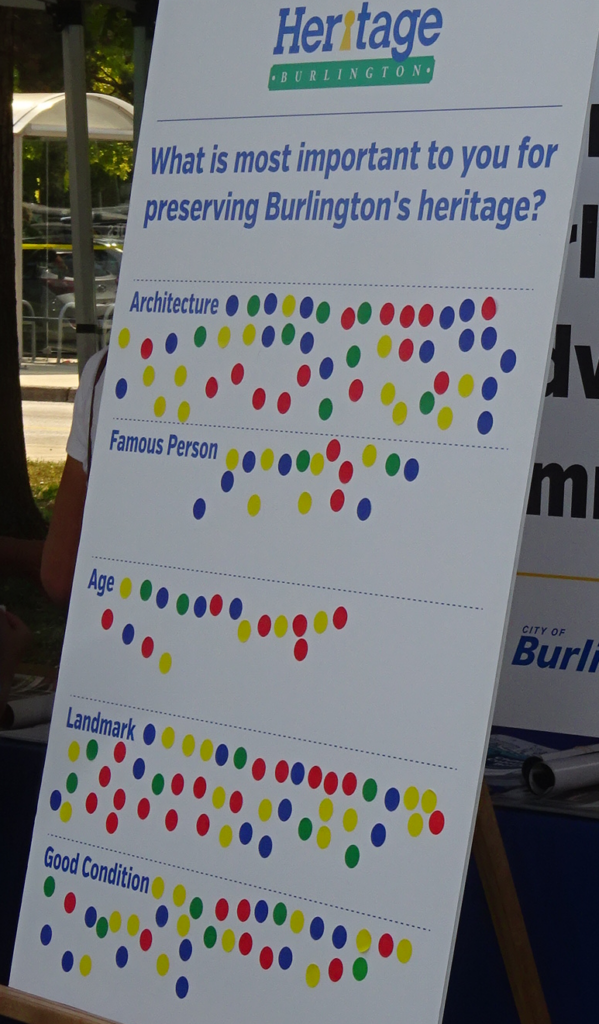
 The different colours meant absolutely nothing. If you thought the focus on Heritage issues changed – do let us know. The programs put on during the recent Heritage were not only disappointing but dismal as well. Vision 2050
- Culture Plan
- New Zoning Bylaw Project
- 2026 Budget
- Recreation
- Parks
- Official Plan, and more!
Mayor Marianne Meed Ward: “Food for Feedback is a great way for the City and residents to connect directly in a relaxed and welcoming setting, and to share your perspectives on the City’s priorities. Your input matters—it helps guide the direction of our city, from how we build and move around, to property development, budgeting, and how we engage with the community. I’ll have a booth at the event and invite you to stop by and share what’s on your mind. Come out, grab a bite, and let’s talk about Burlington’s future—together.”
Lisa Kearns, Deputy Mayor of Community Engagement & Partnerships: “Your voice is vital to shaping Burlington’s future. The Food for Feedback event is a cornerstone of our commitment to community engagement, providing a platform for residents to share insights that directly influence our planning, investments, and connections. Join us in this meaningful initiative—your feedback drives impactful results and strengthens our shared vision for the community.”
By Pepper Parr
August 13th, 2025
BURLINGTON, ON
Do you get the impression that Sound of Music (SoM) is scrambling?
And can you smell the political interference? Out of the blue, the Mayor issues a statement expressing her complete support for the SoM. A day later there is a statement from SoM setting out the gravity of their financial condition.
 The audience is there. Should they be asked to pick up some of the cost? SoM is a business – it just isn’t being run as a business. While discussing a financial problem at City Council SoM chair Dave Sheppard responded: “I’d just like it to go away”.
On that occasion someone came forward and directed the Community Foundation to send funds to SoM. We don’t know how much that was nor who made the funds available. Everything the Community Foundation does is secret as it should be.
There is a serious problem. SoM continues to look for corporate sponsorship. That model has come to an end, and the people running SoM should have been aware of that.
One of the problems at SoM has been the turnover at the leadership level. Entertainment is a very complex business – it needs people with years of experience at the helm. Sheppard, through no fault on his part, found himself serving as chair
 These are the people who get things set up before the event begins Administratively the SoM has an incredible team of people who make the wheels go around when the event has to be set up.
There are a number of opportunities for the SoM to change the direction and the funding model. Find the help from within the community – it is there.
Burlington has about 15, maybe 20 marketing organizations that are world-class operations.
Sheppard wants to get some help in identifying just who they are and approach them for help. This is something former Mayor Rick Goldring could help out with. He knows these people and is no longer part of the political process in the city.
Pull ten or so of them together – set out the situation and look to them for advice. That means opening their books
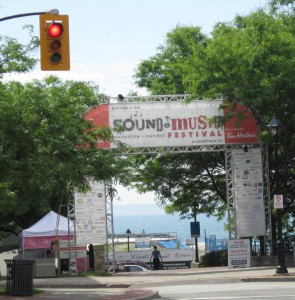
 A tired-looking sign, slightly shabby. The SoM has forgotten about its public profile. The graphics are old, tired-looking, and slightly shabby. They should have been upgraded five years ago.
 That graphic defies description. And the logo – what does it say to you? To me it looks like something put together by a ‘stoner’. Upgrade it.
Look progressive, tell the story about people who have gained the public notice they needed from the SoM stage.
 This stretch of commercial activity is filled during the Sound of Music. Mention is made by the SoM people about the economic impact on the local economy. There is no doubt that the hospitality sector does very very good business during SoM week. Why isn’t that sector putting some of that additional revenue in the SoM coffers?
The city charges the SoM music for at least half a dozen services it provides. They pay for the use of Spencer Smith Park. It would be difficult to reduce the rate for SoM but the city could get creative. They managed to find a way to get funds to Burlington Green when they ran out of sponsorship and Trillium funding.
SoM has to have a conversation with the talent. Lowering just how much is paid to those who take the stage might be due. The public would be surprised as to just how much SoM pays out to the artistic talent. It is extensive.
There are more reasons to keep the SoM as an annual event than there are to let it become something Burlington used to be known for.
The Brant Inn came to an end because of poor management.
This doesn’t have to be the reason for bringing the Sound of Music to an end.
By Gazette Staff
August 13th, 2025
BURLINGTON, ON
What if a simple heartbeat measurement could help predict a person’s risk of dementia?
A Brock-led international research team has found that including an additional metric — resting heart rate — to an established dementia risk prediction model can make its results more accurate across most racial groups, says Professor of Health Sciences Newman Sze.
The Cardiovascular Risk Factors, Aging and Incidence of Dementia (CAIDE) international assessment tool uses several physiological and social measurements to evaluate a patient’s vulnerability to developing dementia in the future.
 But the current model doesn’t capture a patient’s full health picture, particularly across diverse racial groups in the U.S., says Sze, the Canada Research Chair in Mechanisms of Health and Disease. But the current model doesn’t capture a patient’s full health picture, particularly across diverse racial groups in the U.S., says Sze, the Canada Research Chair in Mechanisms of Health and Disease.
After obesity and hypertension, Sze says resting heart rate is one of the most important risk factors for dementia, a feature not captured in the current model.
“If the resting heart rate is too low or too fast due to heart muscle failure, there’s not enough blood being pumped to the brain,” says Sze. “The brain doesn’t receive enough oxygen and nutrients, which leads to brain degeneration.”
Sze and his eight-member research team tested the impacts of including resting heart rate (RHR) in the CAIDE model to see if adding that measurement would improve the model as a whole and increase equitable access to dementia prediction.
Resting heart rate, or pulse rate, refers to the number of beats per minute when the body is inactive and calm.
 The research team analyzed data from 44,467 U.S. participants aged 18 and older, including those aged 65 and above. The data, collected by the National Alzheimer’s Coordinating Center (NACC), spanned from 2005 to 2023 and included information from interviews, physical examinations and cognitive tests. The research team analyzed data from 44,467 U.S. participants aged 18 and older, including those aged 65 and above. The data, collected by the National Alzheimer’s Coordinating Center (NACC), spanned from 2005 to 2023 and included information from interviews, physical examinations and cognitive tests.
The team divided participants in the NACC database into self-reported racial groups: two American Indigenous populations, Asian, Black African, Hispanic and White.
The team ran each group through the current CAIDE model, which is comprised of age, sex, body mass index, hypercholesteremia, level of education and hypertension measurements.
They then repeated the procedure with a CAIDE-RHR model that included resting heart rate.
“This adjustment significantly improved dementia risk prediction across most racial groups, offering a more inclusive and accessible way to identify at-risk individuals,” says Sze.
As resting heart rate is easy to measure, more people can be screened and monitored, which makes the model more inclusive, says the study’s lead author, PhD student Shakiru Alaka.
He says other researchers have previously attempted to improve the CAIDE model’s accuracy by introducing expensive and time-consuming lab analysis to detect dementia biomarkers in blood samples.
But this addition may reduce access for multi-racial, underserved populations, especially in the U.S., says Alaka.
“In contrast, resting heart rate can be measured with a simple blood pressure cuff or by placing fingers on the wrist — methods that are quick, non-invasive and widely available, even in underserved community settings,” he says.
The team found the CAIDE-RHR model significantly improved the accuracy of dementia risk prediction for all racial groups in the study except the American Indigenous populations, although Sze says the low number of participants may have affected the model’s accuracy for that group.
“This finding highlights the important connection between heart health and brain health,” says Sze. “It’s a step toward addressing systemic gaps in how we assess dementia risk across diverse populations.”
 Newman Sze and PhD student Shakiru Alaka checking data at Brock University Although the study was conducted with U.S. participants, the findings have important implications for Canada, where dementia-related mortality has increased by 59 per cent over the past 10 years, says Sze.
“The CAIDE-RHR model offers a low-cost, non-invasive tool that could be integrated into routine care, including in rural and underserved communities, to help identify those at risk earlier and more equitably,” he says.
The study, “Enhancing the Validity of CAIDE Dementia Risk Scores with Heart Rate and Machine Learning: An Analysis from National Alzheimer Coordinating Centre Across All Races/Ethnicity,” was published Friday, Aug. 8 in Alzheimer’s & Dementia: The Journal of the Alzheimer’s Association.
In addition to Sze and Alaka, the research team includes Brock University Professor of Health Sciences Brent Faught, Distinguished Professor of Kinesiology Panagiota Klentrou, Associate Professor of Health Sciences Rebecca MacPherson, Assistant Professor of Health Sciences Mostafa Shokoohi, Research Associate So-Fong Cam Ngan and researchers from the U.K.’s Newcastle University and the National University Health System in Singapore.
By Tom Parkin
August 13th, 2025
BURLINGTON, ON
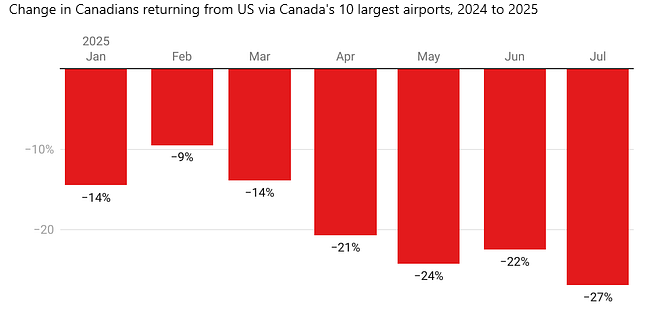
To July 31, Canadians have logged over 830,000 fewer return trips from the United States through Canada’s major airports than last year — and July’s drop is the biggest yet.
Change in Canadians returning from US via Canada’s 10 largest airports, 2024 to 2025

Canadians’ boycott of travel to the United States gained ground in July as return air trips fell 27 per cent from the same month of 2024, the largest monthly drop so far this year, according to Statistics Canada data released August 11.
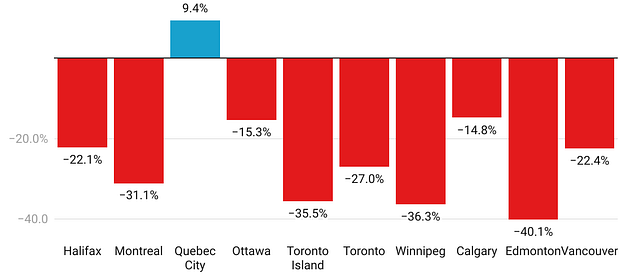
Among Canada’s largest 10 airports, only Quebec City’s Jean Lesage airport saw a July increase in Canadians returning from the United States compared to the same month in 2024. The largest drop was at Edmonton airport where trips by Canadians returning from the United States was down 40 per cent.
July’s return air traffic from the United States through Canada’s largest 10 airports was down 26.8 per cent, or 133,815 visits, from the same month a year ago.

There were 4,565,183 return air trips to Canada by Canadian residents in 2024 up to July 31, but during the same period of 2025 there have been 3,734,819 trips, an 18.2 per cent drop.
Canadians returning from United States via major airports, change July 2024 to July 2025
|
|





 By Pepper Parr
  The report, Built for Good, identifies what it would take to transform Ontario’s housing system, with ten, five and two-year targets, and investment estimates grounded in reality. For example, a $16.7 billion investment over two years would jumpstart a province-wide affordable housing strategy, led by the co-op and non-profit housing providers whose mission is long-term affordability for low- and moderate- and middle-income households. n On par with other major infrastructure commitments, the investment would create stable homes for thousands while generating jobs and economic activity across the province and relieving pressure on public systems like healthcare and emergency shelters.
 Built for Good’s two-year plan would:
 By Gazette Staff

 By Gazette Staff

 By Jeannie Løjstrup
 City of Burlington’s Mayor Marianne Meed Ward, some Councillors and staff will attend the Association of Municipalities of Ontario (AMO) 2025 Annual General Meeting and Conference next week in Ottawa. From Aug. 17 to 20, the Mayor will lead a delegation from the City to advocate for Burlington’s priorities with government officials, including cabinet ministers, MPPs and industry stakeholders. Key discussion topics will include: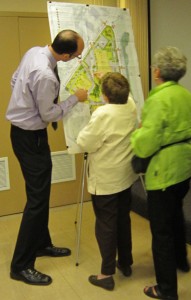

 By Gazette Staff






 By Gazette Staff
 By Pepper Parr
 By Gazette Staff

 The registration data is collected by Swim Ontario.




 By Pepper Parr



 But the current model doesn’t capture a patient’s full health picture, particularly across diverse racial groups in the U.S., says Sze, the Canada Research Chair in Mechanisms of Health and Disease.
 The research team analyzed data from 44,467 U.S. participants aged 18 and older, including those aged 65 and above. The data, collected by the National Alzheimer’s Coordinating Center (NACC), spanned from 2005 to 2023 and included information from interviews, physical examinations and cognitive tests.
 By Tom Parkin