November 2, 2013
By Staff.
BURLINGTON, ON. Ward 2 Councillor Marianne Meed Ward asked citizens to email her with their views on a motion the city was about to approve that would result in the sale of a strip of waterfront land on the edge of the lake between St. Paul and Market Streets. Council voted to authorize staff to begin negotiations with those who wished to buy the property.

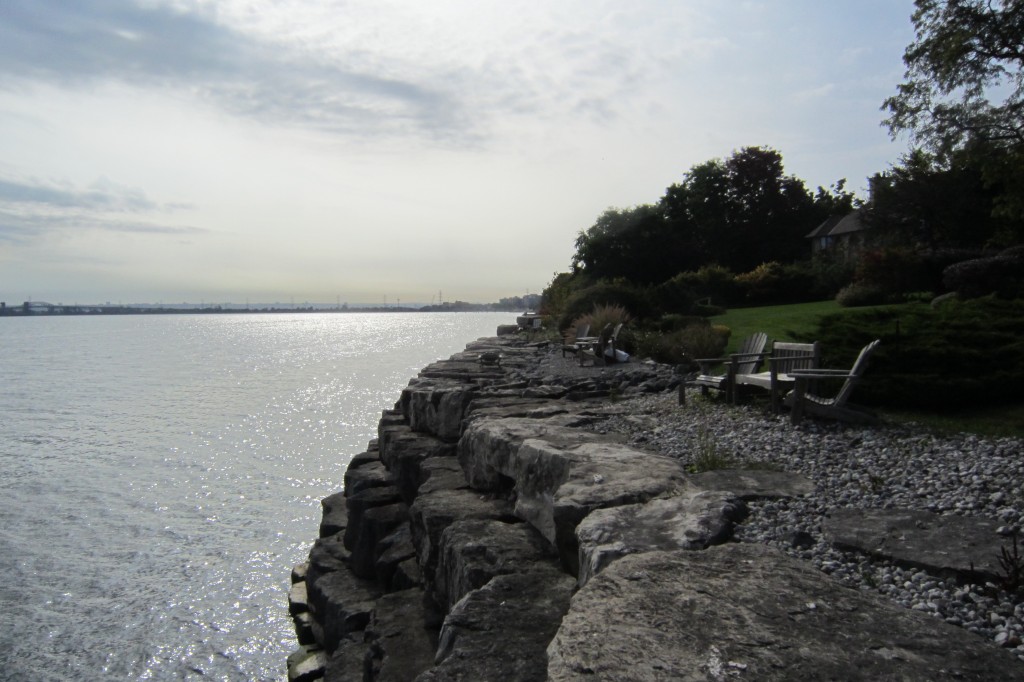
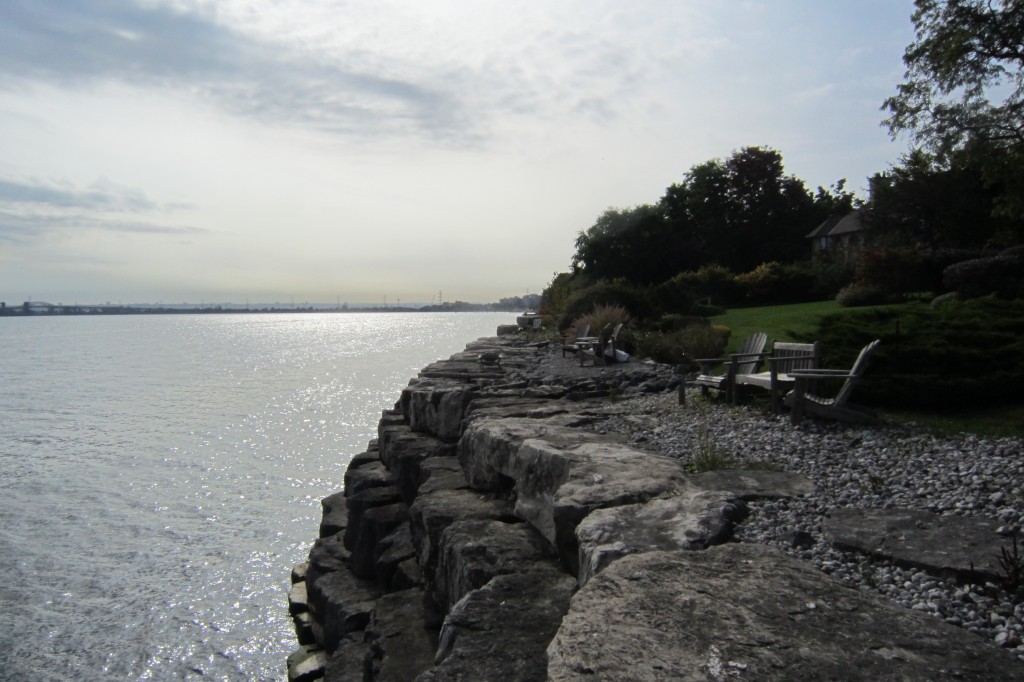
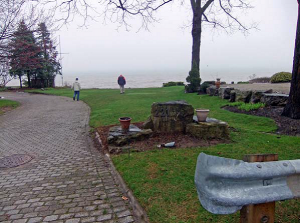
A view that may become private – owned by a few.
It was not a popular decision and it appeared to go against the grain of several city policies. Meed Ward gave the city Clerk copies of the 32 pages of email she received. We re-printing those emails and leave them here for the record.
The names of the senders were removed by the City Clerk – something to do with privacy.
Sent: Monday, October 14, 2013 5:49 PM To: Meed Ward, Marianne
Subject: waterfront land
I suspect most Burlington residents think as you do. Cities around the world have learned not to sell waterfront land. Why are we selling what we have – and cheap?
To: Meed Ward, Marianne Subject: Sale of city property
As usual, this situation gives good reason for concern. Pressure will always be applied by avaricious people to exclude everyone but themselves from access to desirable amenities like the lake. Oakville is a typical example of the application of this type of shady policy, where lake access almost completely private. Please stand your ground in opposing the sale. It cannot be said that your policy is inconsistent. What applies on the beach strip must also be applicable in this case.
For once in my life I feel I can read the opinions you express on local policy without wondering what personal motive is behind the stance you take. What a refreshing change. A politician apparently motivated by logic and concern for the populous, not personal gain.
More strength to your arm.
Sent: Monday, October 14, 2013 6:11 PM
To: Meed Ward, Marianne
Cc: Goldring, Rick; Craven, Rick; Taylor, John; Dennison, Jack; Sharman, Paul; blair.lancaster@burlinton.ca
Subject: Waterfront land
Dear Marianne
Thank you so much for making us aware that the city of Burlington is considering selling the waterfront land between Market St. And St. Paul St. That would truly be a loss for Burlington. There is little enough waterfront land still available for public use and once it is sold it is gone for good.
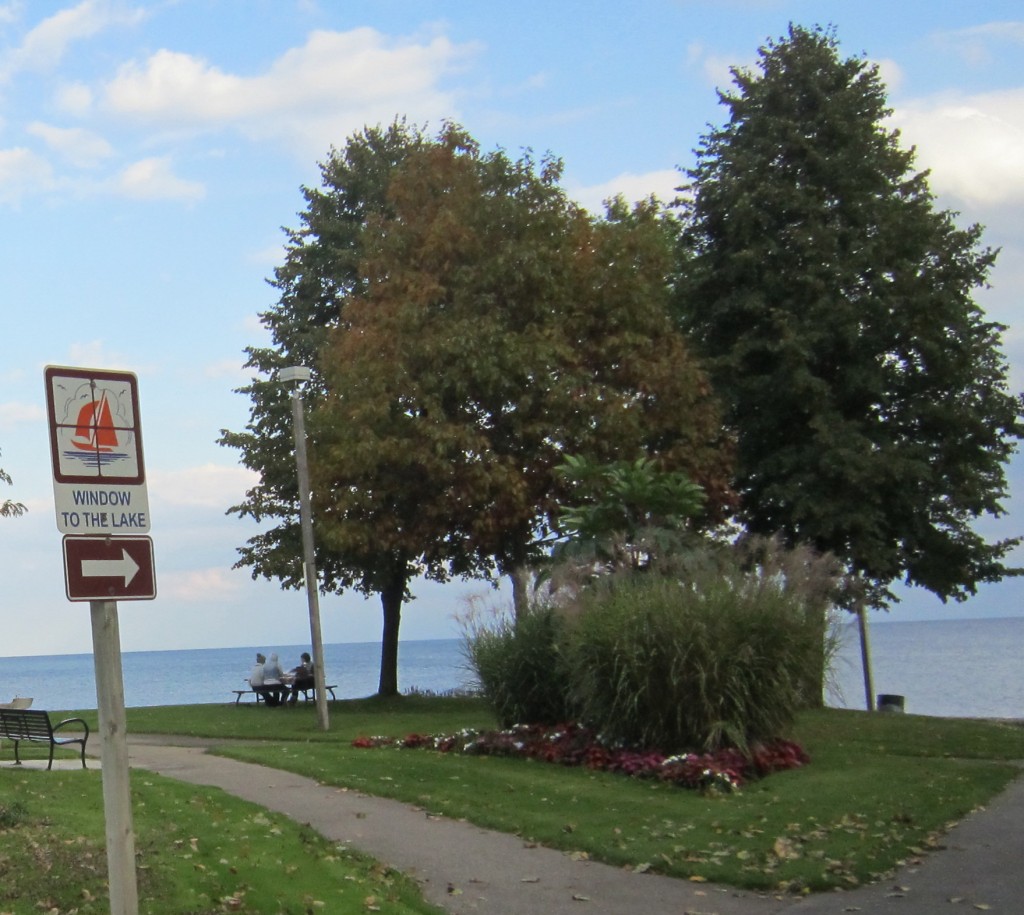
We agree with you that the city should develop the area as part of a waterfront trail. Lake Ontario is one of the most important reasons why our city is special and to keep the vast majority of citizens away from the water is wrong. We deserve to have more than a few “Windows to the Lake” in the residential areas.
Any family or any business looking to settle in Burlington will appreciate the access to the lake for the residents.
The citizens own the land now …treasure it and keep it safe for the present and future generations of Burlington residents!
Sent: Monday, October 14, 2013 6:33 PM
To: Goldring, Rick
Cc: Craven, Rick; Taylor, John; Dennison, Jack; Paul.Sherman@Burlington.ca; Lancaster, Blair; Meed Ward, Marianne
Subject: Sale of Public Waterfront
Dear Sir,
As a resident of Burlington I am absolutely disappointed to learn that council is considering selling the the parcel of public waterfront between Market Street & St. Paul Street.
I moved to Burlington several years ago as I fell in love with the waterfront here. The great cycling & walking trails won me over,
I feel this land should stay in public hands for everyone to enjoy & not just a select few. This land clearly interrupts the possibility of having a continuous waterfront trail something that could be enjoyed by all.
Sent: Monday, October 14, 2013 6:43 PM
To: Meed Ward, Marianne
Subject: [Possible Spam] Retain
Thank you for the newsletter,we agree with you.Retain the land in Public hand’s.
Sent: Monday, October 14, 2013 6:56 PM To: Meed Ward, Marianne
Subject: land market to st paul
Please keep all public lakefront lands in the hands of the city for generations to come. Views of the lake are being increasingly lost to the average citizen of Burlington. This is a million dollar view which once sold will never be come back to us.
Sent: Monday, October 14, 2013 6:58 PM To: Meed Ward, Marianne
Subject: waterfront land, Dear Marianne,
We support your efforts to keep the small piece of land between St Paul and Market Streets city property.
We agree with all of the reasons that you have laid out. Also, symbolically, everyone has access to the lake.
We sure hope that a waterfront trail becomes a reality someday!
Sent: Monday, October 14, 2013 8:59 PM
To: Meed Ward, Marianne
Subject: waterfront land
I agree that waterfront lands are part of the official plan, vandalism can be dealt with, 182,000 dollars is affordable, and the homeowners improved the shoreline at their own risk. The councilors in Oakville are acquiring lots of waterfront property for their public use.
Selling property to the shoreline is too loose. The shoreline changes. There is an act that has been read called the Great Lakes Right of Shoreline Passage Act in Ontario (re Rob Milligan, MPP). It will grant the public access along the Great Lakes as far as the high watermark. Where is the high watermark in this case? Several years ago the supreme court in Michigan ruled that the public has access to the high watermark. This has resolved skirmishes.
I’m not sure where the high water mark is in this case. The shoreline is somewhat elevated from water by a high bank.
How much frontage (in feet) do the homeowners want to buy? What is the city wanting to sell it for? What is the equivalent frontage price that the city wants to pay for the frontage on the beachway area? (This may not compare because the beachway is not on the waterfront.)
The land was appraised by an independent land appraiser. Those details are confidential.
Is there an error (typo) when you say “If any compensation is owed, the judge said it would be from the MNR.” I don’t understand this statement.
The Ministry of Natural Resources (MNR) owns the land along the shoreline, the city owns the land between the MNR properties and the back yards of the private homes. The seawall was built on MNR land, thus if any compensation is owed for building the seawall MNR would owe it.
I hope more thought will be put into this process. Ward 1,2,4 and 5 all border the lakefront. I would hope they are interested in expanding public waterfront trails in their wards.
Sent: Monday, October 14, 2013 9:37 PM
To: Meed Ward, Marianne
Subject: public waterfront land between Market St. and St. Paul St.
RE: CITY COUNCIL MOTION
WE ARE IN FULL SUPPORT OF THE COMMUNITY SERVICES COMMITTEE MOTION TO
1) CREATE 2 NEW “WINDOWS ON THE LAKE” PARKS AT THE FOOT OF ST PAUL AND MARKET STREETS
2) MAKE IMPROVEMENTS TO THE PORT NELSON WATERFRONT PARK
3) SELL THE WATER ST PROPERTY STRIP TO THE ABUTTING 3 HOMEOWNERS
Sent: Monday, October 14, 2013 9:51 PM To: Goldring, Rick
Cc: Meed Ward, Marianne
Subject: Selling waterfront lands
Your Worship, I am writing to express my opposition to the City’s plan to sell the land between Market and St Paul’s Street to the adjacent home owners.
I feel this would be in error and in haste. My understanding is that the city is attempting to open up the waterfront and make it accessible to the public. I’m not sure how a sale would aid in moving forward on this objective.
By having this parkette, it would provide a U shaped park available for walkers, cyclist, and those just enjoying the natural environment. It becomes destination with access and egress, rather than a dead end. Anyone following the Waterfront Trail would turn down to this U rather than continue along Lakeshore Road. It would bring more use of the two Windows to the Lake.
It is located nearby to the parkette at the end of Guelph Line that has some playground facilities. Therefore, all that is needed in the new one is a pathway and some benches.
While at the moment it is landlocked, it sends the message that Burlington is serious about its waterfront commitment. Who knows how or when other waterfront lands may also become available. But to eliminate our ownership now, would be foolhardy.
It is better to enter into a lease with adjacent landowners while we see what opportunities may be encouraged than to end opportunities with its sale.
I implore you to reconsider your decision to sell this land and act on behalf of all Burlington residents and retain our ownership of this land.
Sent: Monday, October 14, 2013 9:53 PM To: Meed Ward, Marianne
Subject: Market St/ St Paul
Hello Marianne,
Thought I would remind council of the wonderful park in Bayfield which came about because a few determined and visionary folk decided to purchase lake front land so that generations of people who live in,or visit Bayfield ,regardless of wealth,could continue to enjoy the sunsets.
Please remind council that preserving access to the lake and its views for all the citizens of Burlington will benefit the entire city and not just a select few.
https://www.pioneerparkbayfield.ca/about.html
Sent: Monday, October 14, 2013 09:12 PM To: Taylor, John
Subject: public waterfront land between Market and St Paul Streets
I would like to express my views regarding the upcoming council vote on the sale of the public waterfront land between Market and St Paul Streets which run behind three private properties. I would like to see Burlington honour the spirit of its ‘Waterfront Vision’ and vote in the best interests of the citizens by retaining this valuable land for our use. It has brought many hours of pleasure to me and my family as part of our natural waterfront, which is increasingly encroached and obstructed by development (for example the planned replacement of the old 3 storey Riviera hotel with a multi storied condo). One of the key attractions of this city is the waterfront, and we can only continue to benefit by maintaining this resource which can be enjoyed by residents and visitors alike.
Vandalism etc is no more of an issue along this beachfront area than in other public places (it is more so, in fact, on the treed beach area which is hidden from street view opposite the hospital, in Central Park and now, at the far end of the pier in the late evening/early morning). The City can certainly afford to keep this area using some of the funds from the 9.8m park development fund. And I understand that the legal challenges regarding the seawall are not founded on any legal grounds. I look forward to an enlightened vote which will guard against the slow erosion of our public places by individual and corporate interests.
Sent: Sunday, October 13, 2013 11:48 PM To: Meed Ward, Marianne
Subject: Waterfront Market str./St.-Paul str.
In reference to the waterfront land between Market and St.-Paul street I urge council to reflect on their decision taken at the council meeting and preserve the Waterfront strip between the two windows to the lake for future generations and our children. Once sold, it cannot be reversed and will only benefit three home owners rather than the 175.000 Burlington residents and their descendants. My request and that of my neighbours DO NOT SELL THE WATERFRONT!! and make it accessible to the public!!
I trust you will do the right thing.
Sent: Sunday, October 13, 2013 6:18 PM
To: Meed Ward, Marianne
Subject: St. Paul and Market Streets Parkette
Dear Marianne,
I agree totally – DO NOT SELL LAKESHORE FRONTAGE EVER
I’ve lived in the Port Nelson area for over 6 years now. I often walk and wish I had a better view of the lake on my walks.
Although I’m close to Lakeshore Rd. I cannot see the lake at all at the bottom of Beaver Street. I use to be able to see blue water from the street, until the home owner along the lake shore built a garden shed in the only spot that you could see through. Oh well – it’s their property to do with what they like – they bought the right to do that and paid for it.
The lake view from the Port Nelson Park is not the best as it is recessed in, but there are usually people enjoying the benches and the view. I often take my grandson there. I go to the end of Green St. and fight through rocks, bushes and lawn debris. It appears the property owners at the end of Green just use this as their disposal site. I often wish it was cleaned up so I could take a book down to the lake and sit on some rocks and enjoy some lake breeze.
When I walk to the end of St. Paul and Market Street I feel like I’m trespassing on private property. At the end of Market Street on the east side a fence goes right to the edge. I had no idea that there was a ‘parkette’ between these two streets. I had no idea the end of these streets were considered ‘Windows to the Lake’! Why has there never been any signage? It should have been marked as a public path. It seems this has been a well kept secret. The land concerned does not even show up on the maps that the city distributes to home owners when road work is being done. I see from the overhead picture of the area, that there appears to be a circular drive partially on the city ‘street land’ near the end of St Paul. At the end of Market St. there is a fence right to the edge totally blocking access. Whose chairs are sitting on the PUBLIC LAND? Who should have their
If the homeowners in question want property with lake frontage then they should sell their properties and go buy some. They knew when they purchased their properties that they did not own lake frontage nor did the price they had to pay reflect that of lake frontage costs. Does council realize what the addition of lake frontage would do to the value of these 3 properties? Everyone would love to have some lake frontage in Burlington. But those who have it are those who buy it – not those that demand and threaten to take over city land to get some! What about tax assessment? Since they have been treating this land as if they own it maybe they should have their property taxes reassessed to reflect that.
As you say in your Ward 2 Alert – why would city hall want to demolish private homes that aren’t even on the waterfront and then turn around and sell land that can only be sold to 3 homeowners – not even to a highest bidder. If they did sell it – bidding should be open and fair and the city should get the best deal for tax payers as it can – however this land should never be allowed to slip from city ownership! Port Nelson is one of the original settlements that ended up becoming the City of Burlington. This ‘city owned property’ should have historical significance! Someday down the road Nelson Park could possibly be amalgamated with this parkette – who knows – some civic minded person could decide to leave some or all of their land to the city – there are only 2 properties separating the two areas now!
I cannot believe this property has always been available for public use!
I am totally against losing this parkette! This land should be accessible to all the tax payers of Burlington. It should not in any way become private property to the extremely high benefit of only 3 property owners! They did not buy lake front properties and have no right to them.
If the city is worried about vandalism and drunkenness then I guess they should close all parks and bike & walking trails. What a weak argument!
Thanks for looking out for the people of Ward 2 and the people of Burlington! I plan to send a similar letter to the mayor and all other councillors.
I can’t wait to be able to stroll along the lake in my neighbourhood.
Sent: Sunday, October 13, 2013 2:11 PM
To: Meed Ward, Marianne; Goldring, Rick
Cc: Taylor, John; Craven, Rick; Jack.Dennison@Burlingto.ca; Sharman, Paul; Lancaster, Blair
Subject: Objection to Proposed Sale of Waterfront Land
The purpose of this email is to voice our strong objections to the proposed sale of the waterfront land between Market and St Paul Streets.
If the City ever wishes to have a waterfront trail, now is the time to keep this property for our future enjoyment and not have to attempt to repurchase it when the price will be enormous.
Right now, this land is worth hundreds of thousands or even millions of dollars. The neighbours are unlikely to compensate the City for anything near its true value. Surely, City Council has observed the asking price of lots even near Lake Ontario?
How can the City agree to sell property that is at least partially owned by the Ministry of Natural Resources?
The one advantage (to lawyers) to not selling is that countless lawyers could be employed dragging the case through the courts for years.
What happened to the street that ran along the north shore of Lake Ontario many years ago and was destroyed in a storm? Doesn’t that property still belong to Port Nelson or the City?
Do your duty to the residents now and in the future and vote against the sale. Waterfront land is priceless and should not be sold!
Sent: Sunday, October 13, 2013 12:17 PM
To: Meed Ward, Marianne
Cc: Goldring, Rick
Subject: public waterfront land
Marianne:
Our grandchildren live in the Lakeshore area of Burlington.
We like to walk the beach areas and explore the waterfront with them. Please do not let a few people restrict public access to this wonderful waterfront area.
Sent: Sunday, October 13, 2013 10:00 AM To: Meed Ward, Marianne
Subject: Ward2 Alert
Hi Marianne:
Thanks you so much for the information in the Ward 2Alert flyer. I would agree to retain the land in public hands if it facilitates a continuous waterfront trail for the future.
To: rick.goldring@burlington.ca; mariannemeedward@bell.net;
Subject: RE: Selling a rough cut diamond rather that adding it to Burlington’s crown jewels – unimaginatively myopic
Date: Fri, 11 Oct 2013 10:16:57 -0400
Thanks Rick for your quick response to my missive.
In your note, item 2. I’d suggest the following. As their is no present connectivity between Port Nelson Park that in its-self, should not be an argument for disposing of this space.
As more and more people are being encouraged to to use the bike path and experience the extraordinary pleasure of walking that stretch of Lakeshore is an overwhelming reason to add more “Windows to the Lake” as the serenity that such a spaces provide are immeasurable for the well being of all.
For some to argue or propose that such space could be considered and lumped in the phase as stated “no potential anywhere else is not practical and feasible” Is unimaginative and myopic to restate my opinion. If the city own all the end parcel’s of land pointing at the lake – then they should signed and all be groomed for access.
All Burlington residents deserve and demand more access to the lake – not everybody is fortunate to live atop of such a magnificent vista – yet the move to close off such access is something nobody desires!
Once its gone – its gone forever. Developing the Parkette to be of more value to the residents is the raison d’être of those proclamations in the official plan.
Sent: Saturday, October 12, 2013 10:57 PM To: Goldring, Rick
Cc: Meed Ward, Marianne
Subject: Retain the waterfront land in public hand we have been in Burlington for the last 10 years, owning a home close to the lake.
The lake and its public access to the lake is one of the most important features of Burlington. Hence I would encourage council to regain the lakefront parcel at every sale of a home located at the waterfront.
Therefore it is absolutely mandatory to keep already gained waterfront parcels and not to let them fall back into private ownership. We have watched the tireless but ultimately successful effort of communities in Germany to regain lakefront access for the public. It took them some decades but finally they succeeded.
Therefore we would like to encourage you not to let go and to keep the parcels in public hands.
Sent: Saturday, October 12, 2013 10:14 AM
To: Meed Ward, Marianne
Subject: Sale of public waterfront land in the city of Burlington
Marianne,
As a follow-up to your recent Ward 2 Alert flyer.
I am opposed to the sale of public waterfront land in the city of Burlington.
As a resident of Burlington (forget the fact that I live in Ward 2), I implore you not to sell this public access to the waterfront.
For as many years as my husband & I have lived here, I have lamented the fact that the city did not have the foresight to preserve the waterfront for everyone to see, access and just generally appreciate. The fact that we continue to develop property south of Lakeshore – thereby obliterating it from the view of everyone driving, walking or riding by – will always leave me feeling depressed. If development had always been restricted to the north side of Lakeshore Rd., not only would those people still have their ‘waterfront’ property, they would not have limited the spectacular view of our magnificent Lake Ontario to only themselves. Hindsight is often painful but surely it can teach us to do better in the future?
The fact that you have the opportunity to keep this access to public property suggests to me that you owe all of us citizens of Burlington to do precisely that – keep it.
The fact that it is already ours should make this decision a ‘no-brainer’.
The fact that your decision to not sell would both honour our City and Regional Official Plans underscores to me that you ought to be shamed into doing just that. Indeed, shame on you if you disregard both plans, begging the question “why bother having plans if they are constantly being over- ruled, ignored, or worse yet ‘bought’ by those who can well afford to get what they want”.
May I suggest you all give your heads a shake and wake up to the reality that having direct access to nature keeps us healthy in mind, body and soul. Since when did we ever come up with the idea that any one person owns the land we live on, the water we drink, the air we breathe? Wouldn’t we all be better served by focusing on being good stewards of all we’ve been given – to care for, to share, to enjoy and respect – and each other
Please make this time of thanksgiving a time I can celebrate my city’s leadership.
Sent: Friday, October 11, 2013 9:02 PM
To: Craven, Rick; Meed Ward, Marianne; Sharman, Paul; Goldring, Rick; Taylor, John; Dennison, Jack; Lancaster, Blair
Subject: Waterfront Properties
Hello!
We regularly walk our dog in the neighbourhood, as do many of the people we meet on our walks.
We find Lakeshore Rd. quite busy, and would greatly appreciate a waterfront access to the park at the foot of Guelph Line.
It would be a crime if this publicly owned land falls into private hands, you could never get it back!
I am very sorry to be out of town this weekend, as we will be unable to attend the meeting on Tuesday.
Please save this small piece of lakefront for us!
Sent: Friday, October 11, 2013 7:25 PM To: Meed Ward, Marianne
Subject: Ward 2Alert:sale of public waterfront land Hello Marianne,
Thank you for your update on the progress of the waterfront parcel at Market/St Paul streets.
I walked the property today and observed the following:
There is no safe, functional public pathway along the waterfront.
RESPONSE: There is a wide strip of grass for walking. The area is no less safe than Kerncliffe park (path along a cliff edge, no fencing) or Burloak Park (waterfront park, no fencing).
There is access to the property from the St Paul side.
There is no access on the Market side, as access is fully blocked by a fence running the whole length of the public land to the edge of the seawall, presumably installed by the homeowner there.
RESPONSE: that has been blocked by a resident. The city can reclaim access and require its removal at any time.
There is no evidence of lot lines separating public and private properties (fences, markers). Lawns and sitting areas are neatly maintained right up to the seawall over public land, presumably by the property owners for their personal enjoyment of the public property.
RESPONSE: This would have to be delineated. Some of the homes have fences along their back, some don’t.
There is no signage indicating the existence of public pathway or park anywhere. RESPONSE: This is part of the challenge. Many of our public parks aren’t well signed. We can improve this.
It would appear it has been this way for a very long time, at least back to 1990 when the homeowners built the seawall, or possibly before that. There is no evidence of public development of the waterfront in front of the private homes here.
Marianne, has there ever been a plan to develop this waterfront property for public use?
RESPONSE: The public have used it – the locals who know about it, a small group granted. This is the time to discuss a plan to ensure the proper signage – that the public knows this is their land and they are invited to use it.
Sent: Friday, October 11, 2013 6:36 PM
To: Office of Mayor Rick Goldring; Craven, Rick; Sharman, Paul; Dennison, Jack; Lancaster, Blair; Taylor, John; Meed Ward, Marianne
Subject: Responding to the Gazette
To our Mayor and Counselors,
I have great respect for our Mayor and City Counselors, and do not envy their position. Having attended the meeting, and listened to all of the thoughtful commentary (other than the legal closed-door information) we have to put our trust in the people that we elect. The vote was 6 to 1 because the majority of the counsellors and our Mayor believed, given all the facts presented to them, that this was in the best interests of the City. There was short script given to my presentation, but for clarity, we live near Nelson park. Our property has been vandalized twice, one reported to police, we are constantly picking up alcohol bottles off our property, including broken glass on the break wall, and we catch people trespassing almost every week during the summer. We have cameras now because a lady was badly assaulted near our property a couple of years ago by a gang 14 teens who apparently congregated at Nelson Park. Our police are busy, we can’t possibly expect them to walk down the hillside every Friday and Saturday night and round-up the teenagers, but we don’t need to add to the problem. If you count the Windows to the Lake, there are 3 parks within 6 homes. The comment about expanding the pathway east is a nonstarter and disingenuous to suggest otherwise. Owners have riparian rights which were paid for. Thank you for this opportunity to share my comments.
Sent: Friday, October 11, 2013 2:00 PM
To: Meed Ward, Marianne
Subject: Public Waterfront Land
We live on Lakeshore Road and have greatly enjoyed the Window on the lake.
We are now retired, and often walk down St. Paul to enjoy the view, but are hesitant to continue along the lake towards Market Street, as the present lake front owners are somewhat possessive. This summer, accompanied with some out-of-town guests, we did venture along towards Market Street.
Upon reaching the middle home, we were met by the owner, first wanting to know who we were, and then explaining that they built /owned the Sea wall. (having lived here before they moved in, I knew they hadn`t build it )
I understand their position, but don`t believe other taxpayers in the area should be denied the pleasure of enjoying this beautiful view, and a lakefront walk that would benefit everyone in the area.
We have not experienced any vandalism, drunkenness, or excess noise along the sea wall since we have lived here. If your numbers are correct,( $182,000 plus $7500 annually), the only reasonable decision, would be to proceed with the park development. ( Small price for such a large benefit)
Denying the public access to one of life`s rightful pleasures just seems wrong and un Canadian
Please accept this as our vote for Council to keep this land and continue to beautify Burlington for all its residents
Sent: Friday, October 11, 2013 12:41 AM
To: Craven, Rick
Cc: major@burlington.ca; Meed Ward, Marianne; Taylor, John; Dennison, Jack; Sharman, Paul; Lancaster, Blair
Subject: Waterfront Parkette Nonsense
Dear Mr.Craven.
Thank you for your sensible vote re not wasting 9.8 million dollars on an illogical parkette. If the recent voting was 6 to 1 in favour of no parkette, why is counsel wasting more time on this?
The rational thought flows from the following points:
– Within blocks there are two public green spaces visible from the street, (Sioux Lookout,Port Nelson) which utilize land in a more logical design than a hidden six-foot strip behind 3 lots.
– The two above have accessible and suitable parking spaces without risk of street parking blocking other residential driveways. How would people turn around on Market & St .Paul streets without using private driveways, if cars are lining the roads?
– As a prior Roseland resident I never saw over crowding in either of the before mentioned locations.
– News reports indicate the following problems; difficulties in providing a clean environment for the enjoyment for those who choose to use these sites now and the neighborhood disruption caused by teenage late night partying.
– It is obvious from the photo(on Marianne Ward Meed’s website) that the height of the break wall would create a serious safety issue to anyone who took the time to hunt down the new parkette behind the 3 lots. This implies the lion’s share of the 9 million dollars would be spent on elaborate structure to provide a valid measure of safety. How would this provide enjoyment of the waterfront?
The potential problems resulting from the creation of an off street hidden location which will be virtually impossible to police could have a serious impact on the city’s liability insurance. One lawsuit from a late night assault or drowning will be enough to eliminate any reserves and increase future premiums dramatically. In this case the city would be spending money to create a liability.
Are the current adjacent green spaces so crammed that we need to spend 9.8 million dollars to add this many potential problems? The money should be spent on issues where problems are eliminated by the expenditure.
Sent: Thursday, October 10, 2013 9:14 PM
To: Meed Ward, Marianne
Subject: [Possible Spam] council should keep the water front land
Dear Marianne
Thank you for your stand on the water front land between Market st. and St Paul street. I agree whole heartedly with you
Sent: Thursday, October 10, 2013 8:59 PM To: Meed Ward, Marianne
Subject: Shoreline Property
Ironically my husband & I stood at the end of the pier tonight contemplating our beautiful shoreline. We believe, as do you, this shoreline should be for the enjoyment of all residents. Please encourage council to not sell out. Once gone, we will never get it back. Our green space is precious. We are thankful for your long term awareness and commitment to our community & our families.
Sent: Wednesday, October 09, 2013 4:16 PM
To: Meed Ward, Marianne
Subject: Sale of Public Waterfront Land
Thank you for the informative information. I was not aware of this issue. I am a resident on East Side Crescent and take my granddaughter to the parkette at the end of Guelph Line often. I walk and she rides her bike. We love looking out over the lake and watching the boats, ducks and geese.
I would appreciate your vote as “NO”. So much of our public lands are being destroyed by new development. Once sold it would be impossible to ever get this parcel back. Let’s be realistic. A Public waterfront trail would be an excellent idea. This would, promote family night or weekend outings (both walking and biking) and encourage more valuable family time and healthy living.
Sent: Thursday, October 10, 2013 3:34 PM
To: Meed Ward, Marianne
Subject: RE Proposed land sale ..Market & St Paul Sts.
We disagree with the proposed sale.
Sent: Thursday, October 10, 2013 12:52 PM To: Meed Ward, Marianne
Subject: Park land
Marianne, I vote to keep the Market/ St Paul St. Park in the hands of the city because once lost, it can never be regained and with the growth of the cities population in the coming years and the increasing number of seniors the city needs all the park it can afford to maintain. It’s too valuable to sell!
Sent: Thursday, October 10, 2013 11:50 AM To: Meed Ward, Marianne
Subject: Market/St Paul lakefront public land Hi Marianne,
I highly support retaining the lakefront public land between Market and St Paul. I am shocked that
City council would even consider selling it. Burlington is the city that exemplifies preserving and developing waterfront land for the use and visual enjoyment of the residents. It has been a model for other communities. Council has lost sight of their own vision! This space is needed for the continuous waterfront trail. What are they thinking!!!! It does look like one of the residents at the bottom of Market on the east side is already using the land. They are landscaped to the lake and their fence goes right to the lake with no access. How wide is the strip of land in question? I do know the access at the bottom of St Paul (in the picture on your newsletter) however I did not know that strip was owned by the city. Does the city own the strip of lakefront from St Paul to the park at the bottom of Guelph Line? Just thought I’d pass along my thoughts … I certainly hope enough people speak up and support keeping the land.
Sent: Wednesday, October 09, 2013 11:56 PM
To: Craven, Rick; Taylor, John; Jack.Dennison@burlington.caE-mail; Sharman, Paul; Lancaster, Blair; Meed Ward, Marianne
Subject: Meeting of October 15, 2013
I live in Burlington. I am very proud of the wonderful job the city has done when creating the beautiful waterfront park, Spencer Smith Park. However, it is too small. The greatest cities have wide open spaces along the water’s edge. “I Imagine Burlington” is an initiative. We need to imagine Burlington with as many pubic open spaces as possible. It is worth keeping them and spending money on them.
A parkette on the Waterfront between Market St. and St. Paul St. Burlington should not be lost. Private landowners want to sue the city or obtain ownership. It is reported that council seems to be voting to give up the property.
I do not want this property to go to private hands. It should be kept for the people of Burlington. It could be used as an open space, a quiet place for the public. We shouldn’t lose any public property on the lake. It will be harder to open up public areas on the lake in the future. Many of us can imagine our children wanting public spaces in the future.
If you have ever seen beautiful cities like Sydney, Australia you would understand what cities can be.
Please do not vote to sell the property.
This is an aside, that no one in Canada can produce a deed that says they own land up to the water. There is a bill called Great Lakes Shoreline Right of Passage Act. I hope it will be presented soon by MPP Kim Craitor. I hope it passes.
Thank you for your consideration.
Sent: Wednesday, October 09, 2013 6:04 PM To: Meed Ward, Marianne
Cc: Goldring, Rick
Subject: Market St., St. Paul St waterfront
It would be a very poor action to sell any city owned water front. The current windows are used as a yard waste dumping ground and people are discouraged from using them. If the city did develop the land it would become an important part of the waterfront and be used by my family and may others who use all of the waterfront trails. A diversity of trails are needed and this would be unique in the area.
I am sure the current land owners want the land for themselves. But it is public land on the waterfront and should remain as such. Oakville has done a very good job of getting ownership of the waterfront. While it will take decades to accomplish taking a step back like this would be a huge disservice to the current and future residence of Burlington.
Date: October 9, 2013 4:08:59 PM EDT
To: Rick.Goldring@Burlington.ca, Marriane.Meedward@Burlington.ca
Subject: To sell or not to sell
It is fundamentally wrong to let individuals own land that extends to the water. No matter how wealthy one might be, shorelines should be public property, not private property.
My wife and I once lived in a house in downtown Oakville (rented a flat in it). The property was beautiful and was owned by very wealthy people. In fact, we had our wedding reception in the backyard. We also enjoyed taking our canoe through the back gate, crossing the public pathway and putting it in the water to paddle along the shoreline and around the pier and up the 16. There is no way in the world the end of that gorgeous property should ever belong to anyone other than the Town of Oakville or the provincial government. The same holds true in Burlington where we have lived on Seneca since 1984.
Shorelines should not be allowed to fall into the hands of the wealthy because they already have plenty, and those of us who haven’t a snowball’s chance in Hell of ever owning lakefront property, count on people like you to keep that land in the public domain. I don’t expect to ever set foot on it, but I should be able to do so if I want. The owners could easily build a fence or plant a hedge. They really don’t need to have it all. They should have learned how to share when they were kids.
I hope this helps.
Thanks for the update Marianne,
Sent: Tuesday, October 08, 2013 6:21 PM
To: Meed Ward, Marianne
Subject: waterfront property
In the future, what do we wish for our city of Burlington with respect to walk able areas, parks and green space? I was very disappointed to read last week that our council voted against keeping a piece of city owned property that fronts onto Lake Ontario. If the city sells this land, it will become exclusive to three households. If the city is forward thinking and keeps this property, it can be a beginning of safeguarding water front that can be enjoyed by all residents of Burlington.
Have any of our councillors ever travelled to cities (to name only a few) such as Edmonton, Calgary, Hamilton, Philadelphia, Seattle, and Vancouver? And then walked along the waterfronts that these cities have created for all of their citizens?
For example, in the upscale neighbourhood of West Vancouver, the Centennial seawall stretches for 1.7km with a width of about 4 metres that borders the bay and on the other side, is separated from the residential area by a fence and hedges. It even includes a separate dog run for some of the way.
It is very simple. Where would you prefer to walk? Along a busy, car dominant street or beside a beautiful body of water and green space
Sent: Tuesday, October 15, 2013 6:53 AM
To: Dennison, Jack; Lancaster, Blair; Sharman, Paul; Craven, Rick; Taylor, John; Meed Ward, Marianne; Office of Mayor Rick Goldring
Subject: Water St Parcel
Dear Councillor Lancaster,
I am aware of the recent committee motion to dispose of the Water St Parcel to the abutting property owners.
Thank you for voting in favour of the motion!!!
I am in total support of this motion as it would generate money for the City to use in other wards and for the benefit of all taxpayers rather than a few local residents. We do not need a 4th park within 6 houses that only a few residents can use.
Burlington has many waterfront parks and we need to look after the ones we have!
Sent: Tuesday, October 15, 2013 7:24 AM
To: Goldring, Rick; Craven, Rick; Meed Ward, Marianne; Taylor, John; Dennison, Jack; Sharman, Paul; Lancaster, Blair
Subject: Please do not sell waterfront land between Market and St. Paul
Dear Mayor and Councilors
Please do not sell the parcel of waterfront land between Market and St. Paul streets. I am a resident of this area at 345 Delaware and had no idea that this was public land. The neighbouring residents have encroached on this parcel with landscaping, furniture and a fence that blocks access. Please do not reward this encroachment and assumed privilege by these residents.
This parcel would make a welcome addition to this neighbourhood as it affords a lovely unobstructed view of the lake. I am certain that many residents would love to walk this loop between the 2 streets were it not for the fence. I support the development of this parcel for public use. Once a sale of waterfront is made, it is difficult if not impossible to get it back.
I am thankful to Ms. Meed Ward for bringing it to the attention of residents.
Sent: Tuesday, October 15, 2013 7:43 AM
To: Goldring, Rick; Craven, Rick; Meed Ward, Marianne; Taylor, John; Dennison, Jack; Sharman, Paul; Lancaster, Blair
Subject: I am opposed to the sale of waterfront between Market & St. Paul
I am opposed to the sale of waterfront between Market & St. Paul.
The benefits of the sale for the property owners are obvious and significant.
The benefits of the sale to the city are minimal. And the cost – loss of waterfront – is incalculable. Voting to sell this land is selling our public legacy
Stop doing this.
Sent: Tuesday, October 15, 2013 8:03 AM To: Meed Ward, Marianne
Subject: Re: Ward 2Alert:sale of public waterfront land Marianne,
Thankyou.
This is a very valuable, rare piece of real estate. I believe it should not be sold , and should be developed for the enjoyment of all residents and visitors and with a clear plan of action to achieve that.
If it is to be sold, the Council needs to ensure that the taxpayers gets full value for this world-class recreational public property. It is a Gem!
I appreciate your standing up for this opportunity.
Sent: Tuesday, October 15, 2013 8:14 AM
To: Meed Ward, Marianne
Subject: RE Sale of lake front
Hello Marianne. I do not want the waterfront property sold to the three house owners OR ANYONE. Retain the land and expand the water front park(s). Thanks for the opportunity of this input
Sent: Tuesday, October 15, 2013 8:56 AM
To: Dennison, Jack
Cc: Meed Ward, Marianne
Subject: Selling Land on the lake
Hi Jack, have just read Marianne Meeds newletter and the piece about selling waterfront land I
STRONGLY believe that once the city owns the land it should NEVER be let go of….a continuous lakefront pathway along the lake always makes a city more attractive. In fact I feel that as homeowners do not own the land directly on the lakeshore (as far as I have always heard and believed) that a continuous path should be made on the lake without “buying” land. As for the owner that built the seawall. He broke the law by doing so and is now trying to hold the city hostage….great plan if he can get away with it. Allowing him to do this will only encourage others to look for ways around our laws….this would be a definite NO vote from me.
Sent: Tuesday, October 15, 2013 9:45 AM
To: Meed Ward, Marianne
Subject: [Possible Spam]
Marianne, Thanks for your efforts. Of course we need to save our waterfront
To: Meed Ward, Marianne
Cc: Goldring, Rick; Craven, Rick; Taylor, John; Dennison, Jack; Sharman, Paul; Lancaster, Blair
Subject: Waterfront/Parkette
Developing a Parkette behind these 3 waterfront properties is just as crazy as when a few months ago Council wanted to take away the turning lane on Lakeshore Road to make way for bike lanes.
Why not improve Port Nelson Park, remove the trees from the end of Market Street and Green Street. This will provide access to the waterfront for many . I’ve lived on St. Paul Street for
18 years and nothing like this has ever happened. The waterfront property has been looked after by all three residents including the gentleman who lives at 221 St. Paul and ourselves. If the city
takes over this Parkette – it will look terrible – will not be maintained as it is now. Please do not make any changes to this area – leave it as is – and don’t sell the land.
Sent: Tuesday, October 15, 2013 9:13 AM
To: Meed Ward, Marianne
Subject: Market and St Paul waterfront property
Good morning Marianne
I am glad to hear the windows will be retained, but feel the parkette between them should not be sold. It’s a shame the owners have landscaped their properties in such a way as to mask the public path…in fact, you feel as though you’re trespassing on private property. I’d leave it as is…don’t sell it. This will set a precedent for other owners of “lake front” property.
Many thanks for the informative brochure.
To: Dennison, Jack
Cc: Meed Ward, Marianne
Subject: Selling Land on the lake
Hi Jack, have just read Marianne Meeds newsletter and the piece about selling waterfront land I
STRONGLY believe that once the city owns the land it should NEVER be let go of….a continuous lakefront pathway along the lake always makes a city more attractive. In fact I feel that as homeowners do not own the land directly on the lakeshore (as far as I have always heard and believed) that a continuous path should be made on the lake without “buying” land. As for the owner that built the seawall. He broke the law by doing so and is now trying to hold the city hostage….great plan if he can get away with it. Allowing him to do this will only encourage others to look for ways around our laws….this would be a definite NO vote from me.
Sent: Tuesday, October 15, 2013 8:03 AM To: Meed Ward, Marianne
Subject: Re: Ward 2Alert:sale of public waterfront land Marianne,
Thankyou.
This is a very valuable, rare piece of real estate. I believe it should not be sold , and should be developed for the enjoyment of all residents and visitors and with a clear plan of action to achieve that.
If it is to be sold, the Council needs to ensure that the taxpayers gets full value for this world-class recreational public property. It is a Gem!
I appreciate your standing up for this opportunity. Let me know if I can provide any further support.
Sent: Tuesday, October 15, 2013 7:24 AM
To: Goldring, Rick; Craven, Rick; Meed Ward, Marianne; Taylor, John; Dennison, Jack; Sharman, Paul; Lancaster, Blair
Subject: Please do not sell waterfront land between Market and St. Paul
Dear Mayor and Councilors,
Please do not sell the parcel of waterfront land between Market and St. Paul streets. I am a resident of this area on Delaware and had no idea that this was public land. The neighbouring residents have encroached on this parcel with landscaping, furniture and a fence that blocks access. Please do not reward this encroachment and assumed privilege by these residents
This parcel would make a welcome addition to this neighbourhood as it affords a lovely unobstructed view of the lake. I am certain that many residents would love to walk this loop between the 2 streets were it not for the fence. I support the development of this parcel for public use. Once a sale of waterfront is made, it is difficult if not impossible to get it back.
I am thankful to Ms. Meed Ward for bringing it to the attention of residents.
Sent: Tuesday, October 15, 2013 12:56 PM
To: Meed Ward, Marianne
Cc:
Subject: Newsletter feedback
Hi Marianne:
Here is some feedback on your newsletter. Waterfront land – don’t sell – keep it for public use
Sent: Tuesday, October 15, 2013 12:25 PM
To: Meed Ward, Marianne
Subject: Waterfront Lands
Hello Ms. MeedWard – I am definitely in favour of having all waterfront lands kept in public hands. We are most fortunate to have our beautiful waterfront and it should be preserved for all citizens of Burlington to enjoy and not just a privileged few.
Sent: Tuesday, October 15, 2013 12:14 PM To: Meed Ward, Marianne
Subject: Council poised to sell public waterfront land Hello Marianne
Hopefully this is not to let, I but feel the Waterford should be for the public to enjoy now and for future generations.
I think Burlington council should vote to not sell the land.
Sent: Tuesday, October 15, 2013 1:41 PM
To: Meed Ward, Marianne
Subject: Public Waterfront Land
I would like it noted that I do NOT wish to sell the public waterfront land to three private homeowners. I feel that this is Burlington Land for the use of almost 200,000 persons, not the private domain of 3 person who happen to live beside it. I have no idea why you would think it is important to sell – you cannot get the land back. Keep it, maintain it with access from the two street ends – and have another reason to live in Burlington. You are taking away our waterfront, piece by piece. PLEASE maintain this as a small Burlington gem. This is my vote to keep the property in the hands of the ‘people’ not a few persons.
To: rik.goldring@burlington.ca; Craven, Rick; Meed Ward, Marianne; Taylor, John; Dennison, Jack; Sharman, Paul; Lancaster, Blair
Subject: In support of selling parcel of land between Market Street & St. Paul
Dear Councillors,
I am in favour of selling the parcel of land between Market Street & St. Paul Street. It is secluded and would only benefit a small percentage of Burlington residence.
I am strongly in favour of investing in Port Nelson Park to make it more attractive and improve the usability of the parkette. This space has great potential and the base infrastructure already exists.
Sent: Tuesday, October 15, 2013 11:55 AM
To: Goldring, Rick; Craven, Rick; Meed Ward, Marianne; Taylor, John; Dennison, Jack; Sharman, Paul; Lancaster, Blair
Cc: gordon fraser
Subject: Please do NOT sell waterfront property
Good Morning Mayor and Councillors;
Please do not sell the waterfront lot. It should remain public property.
Have you been to the waterfront properties lately? Have you seen how incredibly popular they are, 7 days a week? What a shame to throw away this opportunity to further add to our open space along the lake.
However, If you do go ahead and vote to sell it, as a taxpayer I would expect you would have 3 independent real estate agents appraise this prime waterfront property for current maximum market value and would have it sold at NO discount, to maximize city profit. I would expect this process would be fully public and should not be an ‘in camera’ decision.
Sent: Tuesday, October 15, 2013 11:51 AM
To: Meed Ward, Marianne; Office of Mayor Rick Goldring; Dennison, Jack; Lancaster, Blair; Sharman, Paul; Sharman, Paul
Subject: Water Street Parcel
City of Burlington – Office of the Mayor <mayor@Burlington.ca> Jack Dennison <Jack.Dennison@burlington.ca>
Blair Lancaster <blair.lancaster@burlington.ca> Paul Sharman <paul.sharman@burlington.ca> Rick Craven <Rick.Craven@burlington.ca> John Taylor <john.taylor@burlington.ca>
Marianne Meed Ward <meedwardm@burlington.ca>
Dear Councillor Meed Ward,
I have been a Burlington resident for over 50 years (and until just recently) always within walking distance of the Water St Parcel and Port Nelson Park.
My parents have also lived in the same area for 85 years.
I am very familiar with this area and am very disappointed with your recent vote at Committee.
Why would you ever consider spending taxpayer money to develop yet another waterfront park in that area when within a 3 km area we have Sioux Lookout Park ,Port Nelson Park and Spencers Park?
With the 2 new Windows on the Lake parks there will be 3 waterfront parks within a couple hundred feet. Since there is no parking in the Market St and St Paul St area, this can only be used by residents who live very close by. I think 3 parks is more than enough for local residents. Also, in my daily walk/drive by, Port Nelson Park appears hardly used by locals or folks who can park there. However I do see plenty of empty alcohol and beer bottles. The issue of safety and vandalism in your proposed hidden park would be a nightmare for the whole neighbourhood.
The money you talk about in Burlington’s “park fund” should be used to upgrade existing parks that can benefit all of Burlington residents, ie more handicapped parking, shelter for seniors etc.
We seldom see this level of response to an issue and it is rare indeed for one Council member to be the focal point for an issue, which is admittedly in her ward, but is a city-wide matter. Burlington continually talks of its Escarpment and waterfront as being what makes it hugely different from any other city in the province. Meed Ward appears to be the only member of this Council who has chosen to be firm on a matter of principle.
There are those who do not feel this matter is over yet. The price that is to be paid for the land is not yet known and the matter of easements and other issues on title do not appear to be fully resolved. Will the public find that Staff have not done their homework and that there are issues that might prevent this sale? And – is it an election issue?
Previously published stories:
Council votes 6-1 to sell waterfront property.
Selling price fr waterfront property not announced.
Committee decision to sell waterfront property now goes to Council.
Staff report advises city to keep waterfront property; leasing is an option






 December 30, 2013



 Ray Rivers writes weekly on both federal and provincial politics, applying his more than 25 years as a federal bureaucrat to his thinking. Rivers was a candidate for provincial office in Burlington where he ran against Cam Jackson in 1995, the year Mike Harris and the Common Sense Revolution swept the province. He developed the current policy process for the Ontario Liberal Party.





























 He believed in other kinds of equality as well.