He was born in Toronto, raised in Hamilton, and now wants to be a member of the Burlington City Council, specifically Ward 6.
Rowen Fraser said he has had an interest in local politics for much of his adult life. Huge fan of Stockwell Day and Preston Manning. Loved the CBC program Air Farce that did great impersonations of Manning.
Rowen Fraser understands the frustration and anger that taxpayers feel over the significant recent tax increases and would advocate for a two-year freeze.
He bounced around high schools, graduated but didn’t attend the graduation ceremony.
Attended Mohawk College, where he studied engineering. Considered law enforcement
He is still a member of the International Alliance of Theatrical Stage Employees local 873; these are the people who do the rigging and stage setup work for theatre and large musical productions.
When it came to his political interests, Fraser said he felt municipal was the level closest to people, and given that politics was all about people, that was a good place for him to start.
He feels that younger people are not effectively represented on city council and wants to focus on giving the Millennials (1981-1996) stronger representation.
Fraser understands the frustration and anger that taxpayers feel over the significant recent tax increases and would advocate for a two-year freeze.
Fraser uses the word “normative” to describe his approach to issues that need attention:
He describes normative as establishing standards, norms, or rules that dictate how things should be, rather than how they are. Prescriptive judgments, ethics, or behaviours deemed desirable or “correct” within a society.
“Knowing how you actually want to feel is the most potent form of clarity that you can have. When you’re clear on how you want to feel, your decision-making gets to the heart of the matter First, get clear on how you want to feel. Then, do stuff that makes you feel that way.”
Density – difficult subject to parse – Fraser acknowledges that there is work to do. “People against density but for development. The problem Burlington faces is that there isn’t any land that developers can use for single-family dwellings. When asked for his views on the operation of the Food Banks in the city, Fraser was surprised to learn that the city doesn’t provide a dime to their operation. Social welfare is a Regional responsibility. Fraser immediately said that if elected, he would donate $5000. of his annual salary to the Burlington Food Bank every year and $5000 of his regional salary.
The impulsive statement is something he might want to walk back at some point.
Fraser is in a long-term, 13-year committed relationship. “When we buy a house,” he said, “We want to live in a rural setting.”
Right now, Fraser is taking himself through a steep learning curve, asking all kinds of questions and talking to current members of Council.
He has some ideas on transit. At the Transit and Transportation public meeting held last week, Fraser asked: “Can we make passing through Burlington suck more than staying on the highway” He offered what he called a semi-serious idea of billboards that offer the advice that people can get to their destinations more quickly if they just stay on the highway instead of trying to cut through. He also posited selling advertising space near these off-ramps with extended lights to give folks something to read while they wait.
Rowen Fraser: The sense I came away with is – he is a very determined guy.
Fraser isn’t running for city council because he believes he has answers to all the problems. He is certain that he doesn’t know what all the problems are – right now, he is learning
Fraser will give current Ward 6 city Councillor Angelo Bentivegna more than a run for his money. The vote for this ward probably rests with the citizens of Millcroft, who don’t, for the most part, feel Bentivegna, nor the Mayor for that matter, have served them all that well. Many see Bentivegna as a “really nice guy”, which is true, but it takes being more than a nice guy to serve as a City Councillor.
Is Rowen Fraser a nice guy – that’s for the people he meets to determine. The sense I came away with is – he is a very determined guy.
On April 7, Canadians across the country will wear green to honour a legacy that continues to save lives.
The 8th Annual Green Shirt Day invites people from coast to coast to start conversations about organ and tissue donation—and reflect on the profound national impact of one young man’s selfless decision.
The Logan Boulet Effect.
Green Shirt Day commemorates Logan Boulet, a Humboldt Broncos player who died in the 2018 bus crash. Logan had registered as an organ donor. Through that single, kind act, six lives were saved—and a movement was born.
In the weeks following the tragedy, nearly 150,000 Canadians registered as organ donors—an unprecedented response now known as the Logan Boulet Effect.
Eight years later, that ripple continues to spread, inspiring action, awareness, and hope across the country.
Each year on April 7, Canadians are encouraged to wear green, share their stories, talk with their families about their donation decisions, and formally register as organ and tissue donors.
One Decision Can Create a Lasting Ripple Effect
The 2026 Green Shirt Day theme— “One Decision Can Create a Lasting Ripple Effect”—highlights the extraordinary reach of a single choice.
The campaign emphasizes how choosing to register as an organ donor—and sharing that decision with loved ones—can extend far beyond one life, touching families, communities, and the broader health-care system. Logan Boulet’s decision remains a powerful example of how one act can inspire a nation and transform countless futures.
“Green Shirt Day honours Logan’s legacy and reminds us how much impact one person can have,” said Brenda Brown, President of the Canadian Transplant Association. “By wearing green, registering as donors, and talking with our families, Canadians can continue the Logan Boulet Effect and help save lives.”
2026 Logo Contest Winner: Candace Sernowsky
This year’s Green Shirt Day campaign features the winning logo design by Manitoba-based Candace Sernowsky, whose personal experience with organ donation reflects the life-changing power of Canada’s transplant system.
Candace became a living kidney donor through Canada’s Kidney Paired Donation Program, a national initiative of Canadian Blood Services delivered in partnership with transplant programs across the country. The program enables donors who are not compatible with their intended recipient to be matched with others, creating transplant chains that help more patients receive life-saving organs.
Through her donation, Candace helped initiate a chain of transplants that saved multiple lives. Her design captures the hope, generosity, and far-reaching impact of organ donation—the very heart of Green Shirt Day.
Register. Tell Your Family. Be Inspired.
More than 4,000 Canadians are currently waiting for an organ transplant, and one registered donor has the potential to save multiple lives.
Canadians are encouraged to honour the Logan Boulet Effect by:
Registering their decision to be an organ and tissue donor
Talking to their family and those closest to them about their decision
Wearing green on April 7
Sharing stories that inspire others to give the gift of life
“Logan’s decision continues to inspire Canadians year after year,” added Brown. “Green Shirt Day reminds us that one choice can create a lasting ripple of hope.”
Green Shirt Day is led by the Boulet family and Canadian Transplant Association, in partnership with Canada’s organ and tissue donation community, including key partners Canadian Blood Services and The Kidney Foundation of Canada.
Online casino games often reference RTP and house edge, but many players may not understand what these metrics represent. Knowing these concepts is crucial for interpreting game risk and making informed decisions. Understanding what determines your odds can help you approach casino gaming with realistic expectations.
Return to player (RTP) is shown as a percentage that estimates the long-term average return you might expect on wagers in a specific game.
Players frequently encounter RTP and house edge figures in game descriptions and reviews, but their precise meanings are not always explained in detail. These numbers impact your experience by shaping what you can expect from each game in terms of potential returns and the casino’s advantage. Oregaslots.com provides further context, but it is important to understand what these fundamental metrics measure and why they matter for those playing online. For anyone monitoring a bankroll or comparing different gaming options, understanding RTP and house edge is important for making better choices.
Interpreting return to player in online gaming
Return to player (RTP) is shown as a percentage that estimates the long-term average return you might expect on wagers in a specific game. For example, an RTP of 96% means the game is designed to pay back, on average, 96 cents for every dollar wagered over a large number of plays.
However, RTP does not guarantee short-term outcomes. Individual sessions can result in more or less return, as results depend on random chance and variance. Many online slots have an RTP in the range of about 94% to 97%, though experiences can differ due to factors such as volatility, which affects how payout patterns are distributed.
Understanding the casino’s mathematical advantage
Subtracting the RTP from 100% gives the implied house edge for most slots.
House edge describes the percentage of each wager the casino statistically keeps as profit over time. For many games, house edge directly relates to RTP. Subtracting the RTP from 100% gives the implied house edge for most slots.
There are cases where this connection is less direct. Features such as bonus buys, special side bets, and certain game mechanics may adjust the effective house edge, causing it to differ from the headline RTP. Accurately understanding house edge requires consideration of all aspects of a game’s rules and structure.
How RTP and house edge values are set
Game developers determine RTP and house edge values using mathematical models, which may be reviewed or tested by regulators or independent labs depending on the jurisdiction. Operators usually display these figures in the game’s help section or rule menu, so players can check key information before playing.
oregaslots.com notes that RTP values may vary depending on the version of a game or the regulatory requirements in different regions. When evaluating a game, it’s useful to confirm the posted numbers and understand which variation is being offered.
Practical use of these metrics and common misconceptions
Players sometimes misunderstand what RTP and house edge mean for their own results. A common misconception is that a higher RTP means better outcomes in the short term, but both metrics are designed to reflect expectations over a large number of plays.
Jackpot size or frequent bonuses do not necessarily provide better value. In certain games like blackjack, a player’s choices can influence the effective house edge, while with slots, the math remains constant regardless of playing style. Understanding how these figures relate to wagering requirements and expected outcomes can help you manage your limits and sessions more responsibly.
Canada’s healthcare system is often described as one of the country’s defining features. The idea that everyone should have access to medical care regardless of income is something Canadians are proud of.
Waiting times are getting longer and are exasperating to people who are in pain.
But across the country, the gap between what the system promises and what many patients actually experience is becoming increasingly difficult to ignore.
Long wait times, a shortage of family doctors, and overcrowded emergency departments have become common concerns.
In many communities, patients are waiting months to see specialists and hours in emergency rooms. Meanwhile, millions of Canadians still struggle to find a regular primary care provider.
This disconnect is not necessarily the result of a single failure. Rather, it reflects years of growing demand, workforce shortages, and a healthcare system that has not always adapted quickly enough to changing demographics and needs.
Access to Primary Care Is Getting Harder
One of the most pressing issues facing Canadian healthcare today is access to family doctors.
Primary care is supposed to be the front door of the healthcare system. Family physicians help diagnose conditions early, manage chronic illnesses, and guide patients through specialist referrals when needed. But in many provinces, that front door is becoming harder to open.
Across Canada, millions of people do not have a regular family doctor. As physicians retire or reduce their patient loads, it has become increasingly difficult for new patients to find a clinic accepting them.
Without consistent access to primary care, many Canadians end up relying on walk-in clinics or emergency rooms for issues that could otherwise be treated earlier and more efficiently. This not only increases pressure on hospitals but also reduces continuity of care for patients.
Workforce Pressures Across the System
A rendering of what the Covid 19 virus looks like under a microscope.
Healthcare workers themselves are also under growing strain. Nurses, physicians, and other healthcare professionals have reported increasing workloads and burnout, particularly in the years following the COVID-19 pandemic.
Many hospitals across Canada continue to face staffing shortages, forcing departments to reduce hours or temporarily close services. Rural communities often feel this impact the most, where losing even a small number of providers can dramatically reduce access to care.
Training more healthcare professionals is part of the solution, but workforce planning takes years. In the meantime, provinces are looking at ways to expand the roles of nurse practitioners, pharmacists, and other healthcare providers to help fill the gaps.
Oral Health and the New Federal Dental Program
One area that has historically existed somewhat outside Canada’s core healthcare system is dental care.
Unlike physician visits and hospital services, dental treatment has traditionally relied heavily on private insurance or out-of-pocket payments. For many Canadians, especially seniors and lower-income households, this has meant delaying or avoiding dental care altogether.
When patients delay dental treatment because of cost, small problems can become serious infections or systemic health issues.
The federal government recently introduced the Canadian Dental Care Plan (CDCP) to help expand access to dental services for eligible Canadians without private insurance. The program is expected to gradually provide coverage for millions of people, particularly seniors, children, and low-income families.
Dental professionals say the initiative could make a meaningful difference if implemented effectively.
“Oral health is closely connected to overall health, yet it has historically been separated from the rest of the healthcare system,” says Dr. Arash Ravanbakhsh. “When patients delay dental treatment because of cost, small problems can become serious infections or systemic health issues. Expanding access to preventive dental care is an important step toward improving overall health outcomes.”
While the program is still being rolled out, many experts see it as an acknowledgement that oral health should be treated as an essential part of healthcare rather than an optional service.
The Role of Prevention
Another area where Canada’s healthcare system has struggled is prevention.
Much of the system is built around treating illness once it occurs rather than preventing it in the first place. Preventive care such as regular checkups, screenings, vaccinations, and early intervention can reduce long-term costs and improve patient outcomes.
Yet preventive services are often underutilized, particularly among populations that already face barriers to care. Expanding access to primary care, dental services, and community health programs could help address this imbalance.
Investing in prevention may not always produce immediate political results, but over time it can reduce hospital visits, lower healthcare costs, and improve overall public health.
Closing the Gap
Canada’s healthcare system still delivers high-quality care to millions of people every year. Doctors, nurses, and healthcare workers across the country continue to provide life-saving treatment and compassionate care under challenging circumstances.
But the gap between expectations and reality is becoming harder to ignore.
A healthcare system that is accessible, sustainable, and capable of meeting the needs of the people it serves.
Addressing the problem will require coordinated efforts across federal and provincial governments, better workforce planning, and a renewed focus on preventive care. Expanding programs such as the Canadian Dental Care Plan may also signal a broader shift toward recognizing that healthcare includes more than just hospitals and physician visits.
For Canadians, the goal remains the same as it has always been: a healthcare system that is accessible, sustainable, and capable of meeting the needs of the people it serves. Closing the gap between promise and reality will be one of the country’s most important challenges in the years ahead.
This is a news story for those with an interest in barrier-breaking science.
A Brock University quantum physics research team is laying the groundwork for next-generation innovations in a wide range of products.
“Quantum” refers to the smallest unit — photons, electrons, atoms or molecules — that make up a physical substance.
Brock University Associate Professor of Chemistry Jianbo Gao
In his latest project, Associate Professor of Chemistry Jianbo Gao is studying advanced nanostructured materials, which are made of components such as gold, semiconductors and crystals the size of a nanometer, which is a billionth of a metre. By comparison, a human hair is around 60,000 to 100,000 nanometres thick.
At this minuscule size, materials have different properties than they do when they are larger, expanding scientists’ understanding of physics properties, Gao says.
“With this fundamental science research, we can develop many different novel technologies and answer unknown questions in the fundamental fields of photophysics, physical chemistry and electrical engineering, then translated into the fields of quantum technology and generative artificial intelligence,” he says.
h.
Building on his pioneering research on introducing quantum dots into solar cells, Gao and his team are developing devices that can be integrated into fibre optic cables, autonomous driving systems and graphics processing units used in generative artificial intelligence (AI). Their work is focused on human-made nanocrystal semi-conductors called quantum dots.
Quantum dots create a type of light in next-generation single photon emitters, equipment used in quantum communications, computers and other technologies.
Gao and his team are now creating photosensing devices, or small chips, based on nanostructured materials that can perceive light beyond the range of human vision. The researchers are using a state-of-the-art ultrafast laser to create those novel devices.
“These extremely sensitive, fast response devices can detect extremely weak light even in complete darkness, capture fast dynamics occurring in less than a trillionth of a second, and achieve remarkably high detection efficiency,” says Gao.
Integrating these small chips into optical quantum communication fibres facilitates secure, reliable, light-speed transmission of communication over long distances, says Gao.
He says this could boost security and performance for global technology companies that have their own fibre optic cable networks.
“Dr. Gao and his team are on the cutting edge of quantum technologies that have the potential to revolutionize the speed and efficiency we’ve come to rely on as a society,” says Brock Vice-President Research Tim Kenyon. “
The small chips could also enable self-driving cars to see clearly and faster at night, “spotting people, obstacles, buildings, surrounding environment that normal cameras can’t, making nighttime driving safer and more reliable,” says Gao.
In the area of generative AI, the chips could help produce images that are invisible to the human eye –– in the infrared wavelengths –– so that in-depth and comprehensive medical imaging can be achieved.
The project is supported by an Idea to Innovation (I2I) grant from the Natural Sciences and Engineering Research Council of Canada (NSERC), which is funded by the Government of Canada.
“Dr. Gao and his team are on the cutting edge of quantum technologies that have the potential to revolutionize the speed and efficiency we’ve come to rely on as a society,” says Brock Vice-President Research Tim Kenyon. “This prestigious, competitive award indicates the promise that Dr. Gao’s research shows in his field.”
NSERC’sIdea to Innovation (I2I) grantssupport university and college researchers to develop promising technologies and transfer these to new or established Canadian companies.
“Science and technology innovation drive sustainable economic growth,” says St. Catharines Member of Parliament Chris Bittle. “Industries will apply the benefits of Dr. Gao’s exciting invention, a partnership personifying the Canadian government’s commitment to the betterment of society.”
Included on Gao’s team is Brock LINC Innovation and Commercialization Manager Noshin Hashim. She will be leading efforts to commercialize Gao’s devices through intellectual property management, market positioning and industry outreach.
“The I2I funding supports Dr. Gao’s transition from discovery research to prototype development and industry validation, advancing Brock University’s applied research momentum,” says Brock LINC Executive Director of Innovation, Commercialization and Entrepreneurship Farzana Crocco.
The Art Gallery of Burlington holds their first lecture in their Friends of the AGB talk series with Perry Gallery artist, Phuong Nguyen. Tickets include refreshments and open wine and beer bar.
Born and raised in Tkaronto (Toronto), Phuong Nguyen is a visual artist working in representational oil painting and experimental weaving. Nguyen uses these mediums to explore themes of Ornamentalism and the relationship between exoticism and violence by referencing the aesthetics and the history of Chinoiserie and South East Asian/Vietnamese femininity.
This event is FREE for Friend Plus and Philanthropic level members. Please log in at the top right of the registration page with your email address to access your discount.
For those preparing for the October 26th municipal election, there are some real surprises.
Last week the provincial government introduced the Better Regional Government Act 2026
Regional Chairs in the following regional governments will be directly appointed in the Regions of:
Regional Chair Gary Carr no longer has to worry about getting elected. His job will be eliminated.
Durham, Halton, Muskoka, Niagara, Peel, Waterloo and York, plus Simcoe County, to improve strategic alignment with provincial priorities and ensure more efficient, streamlined regional decision
The information released by the government adds:
“Local governments are key partners in delivering on shared priorities and ensuring Ontario is positioned well to face current economic threats. The Better Regional Governance Act, 2026, if passed, would:
Support better alignment between regional decision-making and shared provincial-regional priorities by allowing the Minister of Municipal Affairs and Housing to appoint regional chairs in certain These individuals would receive “strong chair” powers—an enhanced leadership model that will enable them to deliver on government priorities like housing and fiscal responsibility.
Reduce the cost of government and support efficient decision-making in Niagara Region and Simcoe County by reducing the size of Simcoe County Council and Niagara Regional Council from 32 members to 17 and 13 members, respectively (the head of council of each lower-tier municipality, plus an appointed regional chair).
Provincially Appointed Regional Chairs
Inconsistent methods for chair selection, growing regional council sizes and the potential for misalignment between provincial and municipal priorities are slowing down decision-making at a time when Ontario needs decisive action in the face of economic threats.
The province is addressing these issues by directly appointing chairs in the regions of Durham, Halton, Muskoka, Niagara, Peel, Waterloo and York, plus Simcoe County, to improve strategic alignment with provincial priorities and ensure more efficient, streamlined regional decision-making
Strong Chair Powers
Ontario is facing unprecedented challenges and we need local leadership to be equipped with the right tools to drive meaningful change.
From setting up organizational structures, to proposing by-laws to help advance provincial priorities such as building more homes, we have already seen strong mayors put their powers into action in a way that benefits their communities and Ontario as a whole.
Similarly, appointed chairs will be given strong chair powers. These powers will mirror strong mayor powers, which currently exist in 216 of Ontario’s 241 lower-tier and 173 single-tier municipalities.
We are giving local leaders the ability to speed up decision-making, end dysfunction at the regional level and create the conditions to expedite housing and infrastructure development so more people can find an affordable place to call home.
Strong chairs would be granted the following powers, mirroring the powers granted to strong mayors:
Appoint/dismiss the region/county’s Chief Administrative Officer
Hire/dismiss division heads and determine the organizational structure of the region/county.
Create committees of council, assign their functions and appoint chairs and vice-chairs of committees.
Bring forward matters tied to provincial priorities for council consideration.
Appoint the chairs and vice-chairs of prescribed local boards
Direct staff in relation to the head of council’s exercise of powers and duties.
Veto certain by-laws if the head of council is of the opinion that all or part of the by-law could potentially interfere with a provincial priority
Propose the municipal budget and in-year budget amendments, which would be subject to council amendments and a separate head of council veto and council override process.
Propose certain municipal by-laws if the head of council is of the opinion that the proposed by-law could potentially advance a prescribed provincial priority. Council can pass these by-laws if more than one third of council members vote in favor.
Regional Council Composition Changes
According to the most recent census, Niagara Region has 32 councillors representing a population of 477,941, and Simcoe County has 32 councillors representing a population of 351,927. These regional councils are substantially larger on a per population basis than their peers.
An unwieldy council with too many decision-makers creates confusion and economic inefficiencies which makes it harder for council to deliver results for their residents. It also adds substantially and unnecessarily to the cost of local government.
The province is taking decisive action and reducing the number of councillors in both municipalities while ensuring these local governments remain representative, effective and focused on delivering results.
Nominations for the 2026 municipal elections open on May 1, Making these changes now gives impacted municipalities and prospective candidates time to prepare and adjust plans for the fall municipal election.
Changes would come into effect for the 2026-2030 municipal council term, starting on November 15, The current chairs, warden and councillors would retain their roles until the new councils are sworn in.
Simcoe County Council Composition
In response to a request from the warden of Simcoe County, we are reducing Simcoe County Council from 32 members to This will include heads of council of the 16 lower-tier municipalities plus the appointed warden. The smaller regional council would continue to use weighted voting, which has been a longstanding practice in the County (for more on weighted voting, see slide 10).
In 2025, Simcoe County proposed reducing the size of its council from 32 to 17 members but narrowly failed to achieve the required triple majority, where a restructuring is not valid unless there is support from:
a majority of the upper-tier council,
a majority of the lower-tier councils, and
the total number of electors in the supportive lower-tier municipalities representing a majority of electors in the upper-tier.
The proposal met two of the three requirements and only failed due to a tie among lower-
The changes align with the locally developed proposal. Reducing council size and streamlining decision-making will allow for more efficient council function and deliver better value for local
Niagara Regional Council Composition
Local leaders and communities in Niagara have raised concerns that the region’s current structure creates duplication, inefficiencies, and fragmented decision-making that makes it difficult to achieve economies of scale and deliver services effectively, while placing an unnecessary burden on taxpayers.
Currently, the upper- and lower-tier municipalities in Niagara have a combined 126 council members for a population of about 475,000 By comparison, Toronto City Council has 26 members for a population of over three million and Queen’s Park has 124 Members of Provincial Parliament representing over 16 million people across the province.
To respond to these concerns from local leadership, Niagara Regional Council would be reduced from 32 members to 13 members. The new council would include the heads of council of each of Niagara’s 12 lower-tier municipalities plus the regional chair, removing 19 regional councillor roles. The smaller regional council would use weighted voting (for more on weighted voting, see slide 10).
The changes respond directly to these concerns by creating a more streamlined regional council, enabling efficiency, clearer decision-making and better alignment with regional and provincial priorities.
Weighted Voting
The changes would also enable the Minister to implement weighted voting in upper-tier municipalities and establish rules for weighted voting to ensure composition maintains fair local representation.
This change would allow upper-tier council votes to reflect population and other concerns.
Upper-tier municipalities already have the ability to enact weighted voting locally. Simcoe County already has this system in place. Weighted voting may also be applied to other upper tiers in the future following consultation with local leaders.
This, and all other proposed changes, will be posted on the regulatory registry for consultation.
With respect to Niagara specifically, the government will work with Niagara municipalities to develop a weighted voting framework to facilitate the transition to the new council structure in the Region and ensure appropriate and effective The final framework will be informed by local feedback.
Following consultations, this framework would be brought into effect before the start of the 2026-2030 term of council.
What is Weighted Voting?
A system where each member of council may be assigned a different number of votes.
The number can be determined by many factors, including population or the number of electors in the ward represented.
Currently, upper-tier municipalities have the option of using weighted voting. If these proposed changes are passed, weighted voting could be established by either:
local by-law, passed via the triple majority process, or
a regulation made by the Minister of Municipal Affairs and Housing.
Since different individual members of council may have a different number of votes, in a weighted vote, a simple “majority of members” may be different from the “majority of weighted votes.”
Looking Ahead
The Better Regional Governance Act, 2026, is one more step in the government’s plan to protect Ontario amid global economic uncertainty. By providing municipalities with clearer leadership and stronger tools, we are helping local governments respond more quickly, efficiently and effectively to economic and housing challenges.
Legislative changes, if passed, and associated regulatory changes, would support better alignment between regional decision-making and shared provincial-regional priorities, respond to concerns from local leadership and ensure local governments remain representative, effective and focused on delivering results and better value for local taxpayers.
These measures reinforce Ontario’s commitment to working with municipalities to identify ways to strengthen local governance in Niagara, Simcoe and beyond. Working together to advance shared provincial-municipal priorities helps advance housing and economic development, preparing both individual municipalities and the province as a whole for growth.
Spring is finally stretching awake, and you are invited to dig in with us! Developed in partnership with BurlingtonGreen and Grow Native Halton, and in collaboration with Michele Dent, the Community and Medicine Garden is a community-driven initiative focused on increasing biodiversity along the waterfront.
Participants will take part in a series of guided, hands-on activities throughout the garden including tobacco planting and seed ball-making. The day will begin with seed songs shared by Kaniehtenhawi Deer, grounding the planting in intention and connection to the land.
Spring is finally stretching awake, and you are invited to dig in with us at the Art Gallery of Burlington (AGB) for a hands-on celebration marking the opening of the Community and Medicine Garden. Come connect, plant, learn, and celebrate the arrival of spring after a long winter.
Developed in partnership with BurlingtonGreen and Grow Native Halton, and in collaboration with Michele Dent, the Community and Medicine Garden is a community-driven initiative focused on increasing biodiversity along the waterfront. Located at the Lakeshore Road entrance, the garden transforms the AGB’s outdoor grounds into a living classroom for creative and ecological learning.
The day will begin with seed songs shared by KaniehtenhawiDeer, grounding the planting in intention and connection to the land. Participants will then take part in a series of guided, hands-on activities throughout the garden.
Michele Dent will lead a session on tobacco teachings and planting, sharing knowledge about the cultural significance of tobacco and guiding participants in how to plant and care for seedlings throughout the growing season.
AGB’s Community Generator Artists-in-Residence Carly Franklin and Kamaldeep Kaur will plant the raised beds with indigo, cosmos, coreopsis, marigold and more. These plants are to be harvested in the fall and used in their research into textiles, inks, and natural pigments, supporting more sustainable material practices within their work and in AGB’s studios.
Looking to start a garden at home or in your neighbourhood? Guests will receive seed packages generously provided by OSC Seeds, and BurlingtonGreen will lead a hands-on seed ball-making activity. These small balls of clay, soil, and wildflower seeds can be taken home and planted to support pollinators and native plant growth.
Want to roll up your sleeves to plant and make with us?
Wear weather-appropriate clothing and closed-toe shoes
Bring gardening gloves if you have them (optional)
Dress for getting your hands in the soil
The learning journey will continue throughout the season and into the harvest.
Michele Dent returns on September 2 from 6:00 – 7:30 pm for a Tobacco Harvesting Workshop. This session will focus on harvesting and drying tobacco, as well as teachings connected to its use. Participants will also create clay seed pods for planting future generations of seeds. Register here for the September program.
Keep an eye out for Carly and Kamaldeep’s eco-printing and natural pigments workshops. Carly Franklin’s hands on workshop will teach participants to use two different eco-printing techniques, using flowers from the AGB Community Garden, to create two beautiful silk scarves on August 15 from 1pm – 3:30pm. Kamaldeep Kaur’s From Garden to Painting: Natural Pigments in Indian Miniature Art workshop will invite participants to explore the ancient tradition of making paint from natural ingredients found in the garden on September 19 th from 12pm – 4pm. Register forEco-Printing with Flowers and From Garden to Painting: Indigo Pigment Workshop.
Together, we are planting the seeds for future programs and cultivating a rich, biodiverse ecosystem that will grow with and support the gallery and its neighbours. The Community Garden supports learning about native plants and their applications in natural dyeing, textile arts, and sustainable craft practices. These plantings contribute to AGB programs and artist residencies, providing materials that support environmentally conscious artistic production.
Eco-printing and natural pigments workshops. Carly Franklin’s hands-on workshop will teach participants to use two different eco-printing techniques, using flowers from the AGB Community Garden. Image Credit: Alize Zorlutuna’s Natural Dye Workshop, 2024. Art Gallery of Burlington.
The AGB’s Community and Medicine Garden and sustainable arts program has been generously sponsored by TD Friends of the Environment, in partnership with BurlingtonGreen and Grow Native Halton. In-Kind sponsorship provided by OSC Seeds – Ontario Seed Co. Limited and Backed by Bees.
The Art Gallery of Burlington is located on the ancestral territory of many Indigenous Nations including the Anishinaabeg, Haudenosaunee, and Métis peoples. The territory is mutually covered by the Dish with One Spoon Wampum Belt Covenant, an agreement between the Iroquois Confederacy, the Ojibway, and other allied Nations to peaceably share and care for the resources around the Great Lakes. We acknowledge that the land upon which we gather, to create and learn, is part of the Treaty Lands and Territory of the Mississaugas of the Credit.
The AGB is fully wheelchair accessible, with wheelchairs available for loan. Both the Lakeshore and Brock lobby entrances feature automatic doors, and ramps provide access throughout the building. An elevator is available to reach the second-floor studios. Service animals are welcome, and gender-neutral washrooms are available on-site.
There are many reasons why people aren’t able to care for their mental health.
Long wait lists, high cost and stigma are just some of the hurdles people can face when looking for support.
This spring, with funding from the Ontario Trillium Foundation and the support of our community, Eagles Nest is able to provide free, virtual mental health workshops for youth and parents. Click HERE to learn more about these workshops.
These workshops, Showing up for the Hard Stuff and Parenting with Perspective, give practical tools and strategies to help people care for their mental health and the mental health of others in an easy to access, no-cost format.
Mental health matters. When barriers are reduced more people can now access the care they need.
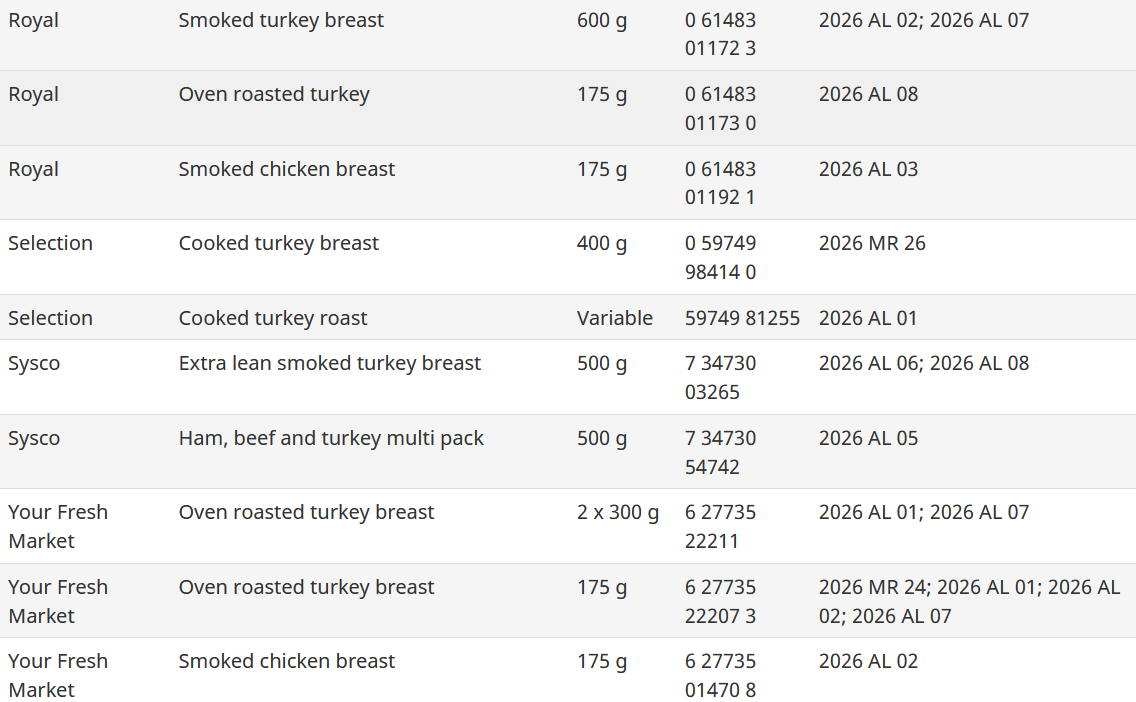
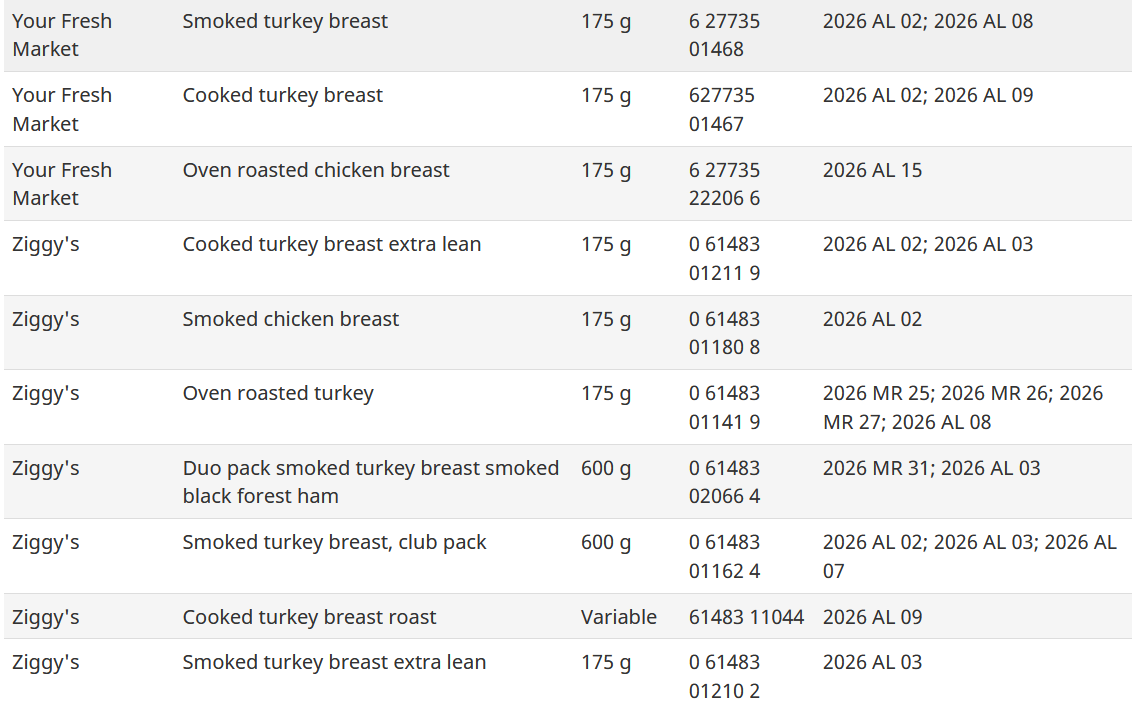
Health Canada says dozens of deli meat products, including some sold at FreshCo, Metro and Food Basics, have been recalled.
The nation-wide recall affects 30 poultry products, the health agency said in a Thursday notice.
The recall includes turkey breast and chicken breast products from Compliments, the brand sold at FreshCo. Also recalled are some Selection-branded turkey breast and roast products, which are sold at Metro and Food Basics stores.
It also includes products from Brickman’s, Lilydale, Royal, Sysco, Your Fresh Market and Ziggy’s.
This is close to a massive list. Will the providers be heavily fined for letting their product get to supermarket shelves?
Local company Thordon Bearingswill generously match up to a total of $2,500 for donations (of any amounts), we receive during the month of April!
We can really use more community contributions to help fund the important work we do as we continue to be busier than ever powering local action for the planet.
You can make your donation of any amount. Link to that form is HERE
Canada’s new agency must have police powers to close the gap between intelligence and enforcement.
As the federal government moves ahead with creating a new Financial Crimes Agency(FCA), a key question emerges: Will it transform Canada’s response to terrorist financing or simply add redundancy to an already crowded, ineffective system?
Despite a two-decade-old system for monitoring suspicious transactions, the country lacks effective financial crime enforcement.
Terrorist organizations rely on complex networks to move funds across borders. To disrupt these flows, Canada needs an agency capable of bridging intelligence and enforcement. The success of the FCA will depend on whether it becomes a dedicated national police force capable of targeting the financiers of terrorism at home and abroad.
Canada’s largest metropolis is now joining global cities such as London and Paris, where tactical officers armed with rifles patrol high-risk public places. The Toronto Police’s new Counter-Terrorism Security Unitis a visible reminder that terror attacks are not distant threats. However, increasing police resources is only part of the solution. Going after the financial lifelines that enable terrorist activity is just as critical.
The FCA can do just that if it is designed to deliver real impact. It should be housed within Public Safety Canada to achieve a security purpose and operational autonomy; absorb FINTRAC to strengthen co-ordination and collaboration; and operate as a full-fledged law enforcement agency with police powers to investigate, arrest and charge perpetrators.
Canada’s current approach still suffers from an intelligence‑to‑enforcement gap. Despite a two-decade-old system for monitoring suspicious transactions, the country lackseffective financial crime enforcement.
Funds seized during money laundering investigations.
FINTRAC, the Financial Transactions and Reports Analysis Centre of Canada, is a civilian body that collects and analyzes reports from banks, credit unions and money services businesses. It is not a law enforcement agency. It does not directly fight criminals and terrorists. It cannot conduct criminal investigations, freeze or seize funds, obtain warrants or make arrests. Its role is purely information sharing when certain thresholds are met.
It typically provides personal identifiers and transaction details to law enforcement, which must then follow the paper trail. If the RCMP, the Canadian Security Intelligence Service (CSIS) and the Canada Border Services Agency (CBSA) want to dig deeper, they must obtain a court order. In the fast-paced, high-risk counterterrorism arena, the point at which intelligence becomes evidence is critical.
Canada has no shortage of legal tools to fight terrorism. Financial institutions are obligated to report suspicious transactions to FINTRAC. However, whether these reports make it to the RCMP, CBSA or CSIS depends on FINTRAC’s analysis.
Further, 90 terrorist entities are listed under the Criminal Code, enabling financial institutions to freeze assets and restrict dealings. However, reporting and listing go only so far. Tangible outcomes require tough enforcement measures. More reporting may produce more data, but it does not automatically generate arrests or prosecutions.
Compliance is not a substitute for policing and police work should not be delegated to banks and credit unions.
The Cullen Commission into money laundering in British Columbia bluntly called out FINTRAC’s inability to pass timely, actionable intelligence to police, despite the high volume of reports it receives from financial institutions, but also found the RCMP’s response to complex financial crimes to be lacklustre.
Much of this shortcoming can be attributed to the force’s exceptionally broad mandate, which requires it to balance federal policing priorities with provincial and municipal contract policing obligations.
The RCMP has historically struggled to have the essential financial investigative capacity to fight terrorist financing. As the federal government responds to calls forRCMP reform, there is a clear opportunity to review the force’s role in combating terrorist financing with the establishment of the FCA.
The FCA must be built as a law enforcement agency
Taken together, these challenges suggest that Canada has an opportunity to strengthen its approach to combating terrorist financing through institutional transformation.
Conduct investigations, obtain warrants, restrain assets, make arrests and lay charges.
First, the new FCA should sit within Public Safety Canada alongside the RCMP, CSIS and CBSA. Criminal investigations require operational autonomy, professional discipline and the ability to pursue complex cases over long periods without political intervention.
Housing the agency within the operational side of government reinforces its security purpose and supports investigative independence.
Second, FINTRAC should be integrated into the FCA so analysts and investigators can work in the same operational environment. The United Kingdom’s National Crime Agency and Ireland’s An Garda Síochána are examples of how this approach can enable effective case management and improve the chances that intelligence becomes admissible evidence.
The Financial Action Task Force, the global money laundering and terrorist financing watchdog, and the Egmont Group, the international body of financial intelligence units, require FINTRAC to be operationally autonomous. With the right firewall, this requirement can still be met when part of the FCA. Moreover, being part of a law enforcement agency provides greater independence from political interference.
Third, the FCA must have the full authority of a police force. While integration would narrow the distance between intelligence and enforcement, it is not enough unless the FCA can conduct investigations, obtain warrants, restrain assets, make arrests and lay charges.
FCA investigators must receive law enforcement training and hold police powers. They need skills in surveillance, evidence gathering, digital forensics and covert techniques.
Done poorly, the FCA risks becoming another bureaucratic layer that produces reports rather than arrests. Done properly, it can fill the gap between solid intelligence and impactful enforcement. Canada already has tough laws, from terrorist listings to mandatory reporting and asset freezing. The next step is ensuring that those laws are matched by a modern law enforcement organization.
A properly designed FCA, integrated with FINTRAC, staffed with trained specialist investigators and equipped with full police powers, could provide Canada with something it currently lacks – a national law enforcement agency built to disrupt terrorist financing at a large national and global scale, rather than relying on piecemeal enforcement.
Recent terror threats at home and abroad remind us why cutting off the money means denying the financial resources terrorists need to recruit, train and execute attacks. Disrupting terrorist financing is not just about following the money trail. It’s about fewer attacks and fewer lives lost.
Canada now has a window to build an institutional weapon to help confront national security threats. The FCA must be empowered to effectively and quickly dismantle the Canadian networks that fund terrorism.
Originally published by the Canadian Centre for Policy Alternatives.
Dr. Ken Chan is a former Canadian Border Services Agency officer and police officer who served as a senior policing adviser in the Mayor of London’s Office (U.K.) and as an assistant deputy minister in Ontario.
The war in Iran has created a petroleum energy crisis – prices soaring because there is a global shortage. So Tory leader Poilievre has called for the government to remove all federal gas taxes in Canada. But the federal gas tax, known the Canada Community-Building Fund (CCBF), provides permanent, long-term funding to Canadian municipalities for local infrastructure and public transit.
Mr Poilievre needs to focus his attention, if he really wants to help Canadians.
Cutting that tax would mean that municipalities would need to increase property taxes and/or increase the cost of public transit. That would just shift the tax burden from the motorist to the transit commuter and/or home owner. Robbing Peter to pay Paul is not a serious solution. It’s just cheap populism.
And if the federal government drops the GST on gasoline at the pump, as he also recommends, that would just increase the federal deficit which Poilievre keeps complaining is already too high. Besides, reducing the cost of gasoline would simply lead to greater demand – simple economics 101 – and the problem today is too little supply driving up the global price of the fossil fuel.
Those driving electric vehicles (EV) or even gas/electric hybrids are somewhat better off. Canadians lag Europeans and Asians when it comes to EV ownership and the Conservative Party’s anti-renewable and anti-EV policies are where Mr Poilievre needs to focus his attention, if he really wants to help Canadians. But Conservatives hate EV’s.
Alberta applies a $200 annual tax to your EV. Doug Ford is upset because Stellantis is planning to assemble their Chinese (LEAP) autos in their empty Jeep Brampton facility, as they will be also doing in Spain. Ford, who even removed charging stations from GO stations, is complaining that many of the components will have to be imported from China but his real objection is likely that the new vehicles will be electric.
Efficiency, speed, quiet and comfort of this alternative to air travel, the motor car and the traditional diesel locomotive.
Mr. Poilievre has also taken aim at the proposed Alto high speed rail to connect Toronto to Quebec. Japan has had an electrically powered ‘bullet train’ operating efficiently, safely and economically since 1964. France’s TGV operating since 1981 runs at speeds over 260 kms/hr. Canadian tourists to these places marvel at the efficiency, speed, quiet and comfort of this alternative to air travel, the motor car and the traditional diesel locomotive.
So after decades of chatter and no political action Canada’s ALTO high speed rail is planned to run at over 300 kms per hour, shortening commuting time between Ottawa and Toronto, for example, to less than two hours. That offers a real alternative for those tired of airport waiting lines. And if the train is electric, as it is planned to be, that conserves all kinds of petroleum.
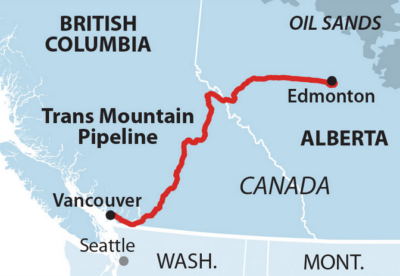
Many people don’t appreciate just how big an undertaking the TMX is.
And it may be the electric propulsion forcing Mr Poilievre to oppose the high speed link… and promising to cancel Alto in the event he ever gets elected. An estimated preliminary price tag of $60 to $90 billion is a lot of money, but it’ll be built by Canadians with Canadian steel and homegrown technology. By comparison, the TMX oil pipeline cost $40 billion and it only transports bitumen.
Canada owes its very existence to the advent of rail travel. Former Tory PM Sir John A MacDonald brought Canada into existence thanks to his vision of a railway from coast to coast. It was, after all, a condition of B.C. joining the Dominion of Canada. But clearly this Tory leader lacks that kind of vision. He is no Sir John A.
Ray Rivers, a Gazette Contributing Editor, writes regularly applying his more than 25 years as a federal bureaucrat to his thinking. Rivers was once a candidate for provincial office in Burlington. He was the founder of the Burlington citizen committee on sustainability at a time when climate warming was a hotly debated subject. Ray has a post graduate degree in economics that he earned at the University of Ottawa. Tweet @rayzrivers
As they were going out, they met a man from Cyrene, named Simon, and they forced him to carry the cross.They came to a place called Golgotha (which means “the place of the skull”).There they offered Jesus wine to drink, mixed with gall; but after tasting it, he refused to drink it.When they had crucified him, they divided up his clothes by casting lots.And sitting down, they kept watch over him there.Above his head they placed the written charge against him: this is jesus, the king of the jews.
Two rebels were crucified with him, one on his right and one on his left.Those who passed by hurled insults at him, shaking their headsand saying, “You who are going to destroy the temple and build it in three days, save yourself! Come down from the cross, if you are the Son of God!”In the same way the chief priests, the teachers of the law and the elders mocked him.“He saved others,” they said, “but he can’t save himself! He’s the king of Israel! Let him come down now from the cross, and we will believe in him.He trusts in God. Let God rescue him now if he wants him, for he said, ‘I am the Son of God.’”In the same way the rebels who were crucified with him also heaped insults on him.
The Death of Jesus
From noon until three in the afternoon darkness came over all the land.About three in the afternoon Jesus cried out in a loud voice, “Eli, Eli,lemasabachthani?” (which means “My God, my God, why have you forsaken me?”).
When some of those standing there heard this, they said, “He’s calling Elijah.”
Immediately one of them ran and got a sponge. He filled it with wine vinegar, put it on a staff, and offered it to Jesus to drink.The rest said, “Now leave him alone. Let’s see if Elijah comes to save him.”
And when Jesus had cried out again in a loud voice, he gave up his spirit.
And when Jesus had cried out again in a loud voice, he gave up his spirit.
Jesus Christ’s crucifixion was the most horrifying, painful, and disgraceful form of capital punishment used in the ancient world.
This method of execution involved binding the victim’s hands and feet and nailing them to a cross of wood. The crucifixion process was designed to prolong suffering and publicly humiliate the condemned. Jesus endured excruciating pain and mockery from the crowd before succumbing to death on the cross.
The world feels like an unsettled place with the American war in Iran and the unfolding crisis in the Middle East. If you or a loved one require consular assistance, please do not hesitate to contact my office, and we will do our best to help where possible. Please avoid all travel to the Middle East. For anyone traveling abroad these days, it is prudent to register with the Government of Canada.
Kara Gould: Burlington MP since 2015
It seems like the right moment for Canada to have hit an important milestone this past month, meeting our 2% NATO target of GDP on Defense spending as well as the release of Canada’s Defense Industrial Strategy. While the Prime Minister has confirmed that Canada will not participate in the offensive war against Iran and has called for a de-escalation of the conflict, it is prudent to ensure Canada and Canadians have the protection we need now more than ever. This is all while we do what we can to supply humanitarian assistance to affected populations, particularly in Lebanon. I will also note, that Canada is also providing humanitarian assistance to Cuba, I have heard from many of you asking us to do our part in supporting the Cuban people during this exceedingly difficult time for them.
With the disruption to the world supply and trade of oil and natural gas resulting from the conflict in the Middle East, we – as is everyone around the globe – are seeing the impacts at the pump with soaring gas prices. Thus it feels particularly timely that the new Groceries and Essentials Benefit, supporting 12 million Canadians, will be coming into effect this Spring.
On the domestic front just yesterday, the Prime Minister announced that we will be temporarily removing the HST on all new build homes in Ontario for the next three years in an effort to make housing more affordable.
Karina Gould on the left, facing Mark Carney as they prepared to debate for the job as leader of the Liberal Party of Canada. He was already the Leader – appointed by the Party. This time, he had to compete for the job. Won by a landslide.
I am particularly excited by Tuesday’s announcement of the long awaited for Nature Strategy. It will help Canada achieve our 30×30 target, that is protecting 30% of Canada’s Land and Water by 2030.
Finally, let me just say that on Sunday, I had the chance to join the Prime Minister at Dofasco in Hamilton where I spoke with dozens of steel workers. Hamilton has been producing the world’s best steel for over a century, and our government is committed to ensuring that proud legacy and tradition continues for another century.
There is so much uncertainty in the world right now. What keeps me grounded is knowing that our community, our country, our government are there for each other and are working to protect your job, your livelihood, and our way of life.
Wishing you and yours a very happy Easter this weekend and Passover this week. Whether you celebrate or not, I hope this long weekend you are surrounded by the people you love and you get a meaningful rest.
The Gazette adds the following:
Joey Coleman of The Public Record provides some background on Gould and her role in the present Liberal government.
Burlington’s representative, former cabinet minister Karina Gould was not appointed to any role.
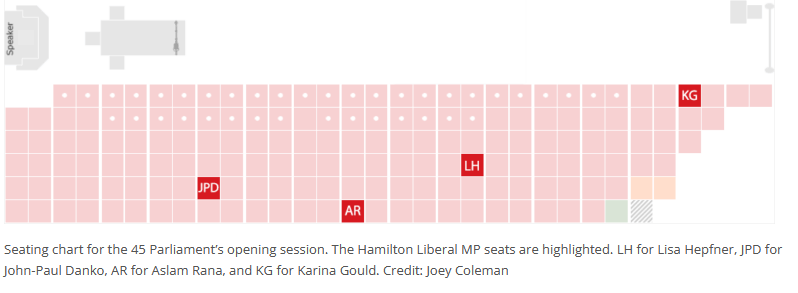
Gould ran in the Liberal Party leadership race, placing third with just over three percent of the vote. She is seated on the front row, near the entrance to the House.
City of Burlington administrative services will be closed on Good Friday (Friday, April 3) and Easter Monday (Monday, April 6). For a list of which City services and facilities are available on the long weekend, please see the summary below or visit burlington.ca.
Animal Services
The Animal Shelter at 2424 Industrial St. will be closed to appointments on Friday, April 3 and Monday, April 6. To report an animal control related emergency on a holiday, please call 905-335-7777.
Burlington Transit
Burlington Transit will operate on a special holiday schedule on Friday, April 3. Customer Service and Specialized Dispatch will be closed.
On Monday, April 6, buses will run on a regular weekday service schedule and Customer Service and Specialized Dispatch will be open.
Find real-time arrival information and plan your trip using Google Maps. From a mobile phone, access Google Maps and click on your bus stop to see arrival times. From a computer, select your bus stop, then click on ‘See Departure Board’ to view arrival times.
City Hall
Service Burlington and the Building, Renovating and Licensing counter on the main floor of City Hall at 426 Brant St., will be closed to all appointments and walk-in service on Friday, April 3 and Monday, April 6.
Many service payments are available online at burlington.ca/onlineservices. If your request is urgent, call 905-335-7777 to connect with the City’s live answering service.
For online development services, MyFiles can be used by residents who have applied for Pre-Building Approval. Check the status of Pre-Building Approval applications at burlington.ca/MyFiles.
Court administration counter services at 4085 Palladium Way will be closed on Friday, April 3 and Monday, April 6.
Except for the Easter closures, telephone payments are available at 905-637-1274, from 8:30 a.m. to 4:30 p.m., Monday to Friday. All in-person services are available from 8:30 a.m. to 4:30 p.m. Monday to Friday. Many services are also available by email at burlingtoncourt@burlington.ca or online at Halton Court Services. Payment of Provincial Offences fines is available 24/7 at paytickets.ca.
Parking
On Friday, April 3, Sunday, April 5, and Monday, April 6: Free parking is available downtown, on the street, in municipal lots, and in the parking garage (414 Locust St.).
On Saturday, April 4: Paid parking downtown is required in high-demand parking lots (Lots 1, 4, 5 and 17) and all on-street metered parking spaces. A three-hour maximum is in effect for all on-street spaces. Free parking is available in the remaining municipal lots and the parking garage (414 Locust St.).
NOTE:
The Waterfront parking lots (east and west at 1286 Lakeshore Rd.) do not provide free parking on holidays.
Parking exemptions or City-Wide Parking Permits are required to park overnight on city streets and for longer than five hours. Visit bylaw.burlington.cafor parking exemptions.
Recreation Programs and Facilities
Easter weekend drop-in recreation activities
On Good Friday, April 3 and Easter Monday, April 6, Aldershot Pool (50 Fairwood Place W.) and Centennial Pool (5151 New St.) are open for morning lap and combo swims. Tansley Woods Pool (1996 Itabashi Way) is open for lap and recreational swimming. On Saturday, April 4, Appleby Ice Centre (1201 Appleby Line) is open for skating programs.
Drop-in swimming, skating and other program times vary over the rest of the long weekend. Drop-in or reserve in advance. For schedules, visit burlington.ca/dropinandplay.
Outdoor fun
Head outside and play in our parks with trails, and more. Explore all the options at burlington.ca/outdoorplay.
Play equipment lending library
Pick up an old favourite or try something new, such as Spikeball, Tongue Drum, cornhole, or a bird-watching kit. It’s free to borrow. Equipment pick up and return is at Alton Library (3040 Tim Dobbie Dr.). Learn more.
Tyandaga Golf Course
Tyandaga Golf Course (1265 Tyandaga Park Dr.) is looking forward to opening for the 2026 season (weather dependent). Please visit tyandagagolf.comto check for the announcement about opening day and to book tee times. On the long weekend, enjoy fish and chips from the dining room on Good Friday, April 3 (takeout only) or Easter brunch on Sunday, April 5 (sit down). Reservations are required, please call 905-708-2913 or 289-933-3487.
Customer service
Recreation, Community and Culture customer service is available to assist you over the holiday weekend:
In person at recreation facility counters during program times (April 3 – 6)
By phone at 905-335-7738, from 9 a.m. to 4 p.m. (April 4 and 5)
Phone and email service are closed on Good Friday (April 3) and Easter Monday (April 6)
Roads, Parks and Forestry
The administrative office will be closed on Friday, April 3 and Monday, April 6. Essential services, including winter control, will be provided as required.
Burlington is a city where people, nature and business thrive. Sign up to learn more about Burlington at burlington.ca/subscribeand follow @CityBurlington on social media.
Minimum wage increasing to $17.95 an hour effective October 1, 2026, marking the second-highest rate among provinces
Rather than a minimum wage, governments need to think in terms of a living wage.
The Ontario government is increasing the general minimum wage from $17.60 to $17.95 an hour on October 1, 2026, benefiting more than 700,000 workers across the province. This annual increase, tied to Ontario’s Consumer Price Index at 1.9 per cent, helps ensure wages continue to reflect economic conditions while protecting workers and providing businesses with greater stability. This is a balanced approach that supports workers’ earning power and helps keep Ontario competitive in a time of global economic uncertainty.
“Ontario workers are the engine of this province,” said David Piccini, Minister of Labour, Immigration, Training and Skills Development. “By raising the minimum wage to one of the highest in Canada, our government is putting more money in the pockets of Ontario workers, supporting families through economic uncertainty and giving businesses the stability and predictability they need to plan and grow.”
Does not; all it does is ensure that these people will live a sub-standard existence. The formula has to be changed.
Increasing the minimum wage delivers on our government’s ongoing plan to protect workers, help families get ahead and support a strong, stable economy during international trade uncertainty and changing labour market needs.
Without gratuities these workers work very hard for a wage that doesn’t cover the cost of living.
A worker earning the general minimum wage and working 40 hours per week will see an annual pay increase of approximately $728. The increase builds on the government’s broader economic and workforce initiatives, including Ontario’s multi‑year plan to invest in training, protect critical industries and safeguard workplaces across the province.
Our government continues to take decisive action to protect workers, businesses and communities in the face of global economic uncertainty. By ensuring fair wages, investing in skills training and helping employers retain experienced staff, the province is building a more competitive self-resilient and self-sufficient economy that can create good-paying jobs for generations to come.
Ontario’s minimum wage increases every October 1 based on the Ontario CPI, as required by the Employment Standards Act, 2000 (ESA).
Roughly 35 per cent of minimum-wage workers are employed in retail trade and 24 per cent in accommodation and food services.
Ontario maintains one of the highest minimum wages in Canada.





 By Pepper Parr


 By Gazette Staff
 Each year on April 7, Canadians are encouraged to wear green, share their stories, talk with their families about their donation decisions, and formally register as organ and tissue donors.
 By Sadie Smith

 Players sometimes misunderstand what RTP and house edge mean for their own results. A common misconception is that a higher RTP means better outcomes in the short term, but both metrics are designed to reflect expectations over a large number of plays.
 By Gazette Staff
 Burlington resident Rowen Fraser has announced that he will seek the Burlington Ward 6 Council seat in the October municipal election.
 By Gazette Staff
 Yard waste collection is for urban areas only.
 By Sebastian Frontenac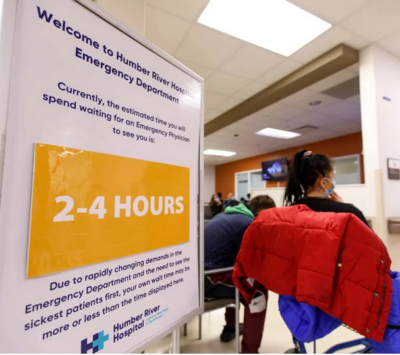





 Included on Gao’s team is Brock LINC Innovation and Commercialization Manager Noshin Hashim. She will be leading efforts to commercialize Gao’s devices through intellectual property management, market positioning and industry outreach.
 By Gazette Staff
 Born and raised in Tkaronto (Toronto), Phuong Nguyen is a visual artist working in representational oil painting and experimental weaving. Nguyen uses these mediums to explore themes of Ornamentalism and the relationship between exoticism and violence by referencing the aesthetics and the history of Chinoiserie and South East Asian/Vietnamese femininity.
 By Pepper Parr
 Spring is finally stretching awake, and you are invited to dig in with us! Developed in partnership with BurlingtonGreen and Grow Native Halton, and in collaboration with Michele Dent, the Community and Medicine Garden is a community-driven initiative focused on increasing biodiversity along the waterfront.
 By Gazette Staff
 This spring, with funding from the Ontario Trillium Foundation and the support of our community, Eagles Nest is able to provide free, virtual mental health workshops for youth and parents. Click
 These workshops, Showing up for the Hard Stuff and Parenting with Perspective, give practical tools and strategies to help people care for their mental health and the mental health of others in an easy to access, no-cost format.
 By Gazette Staff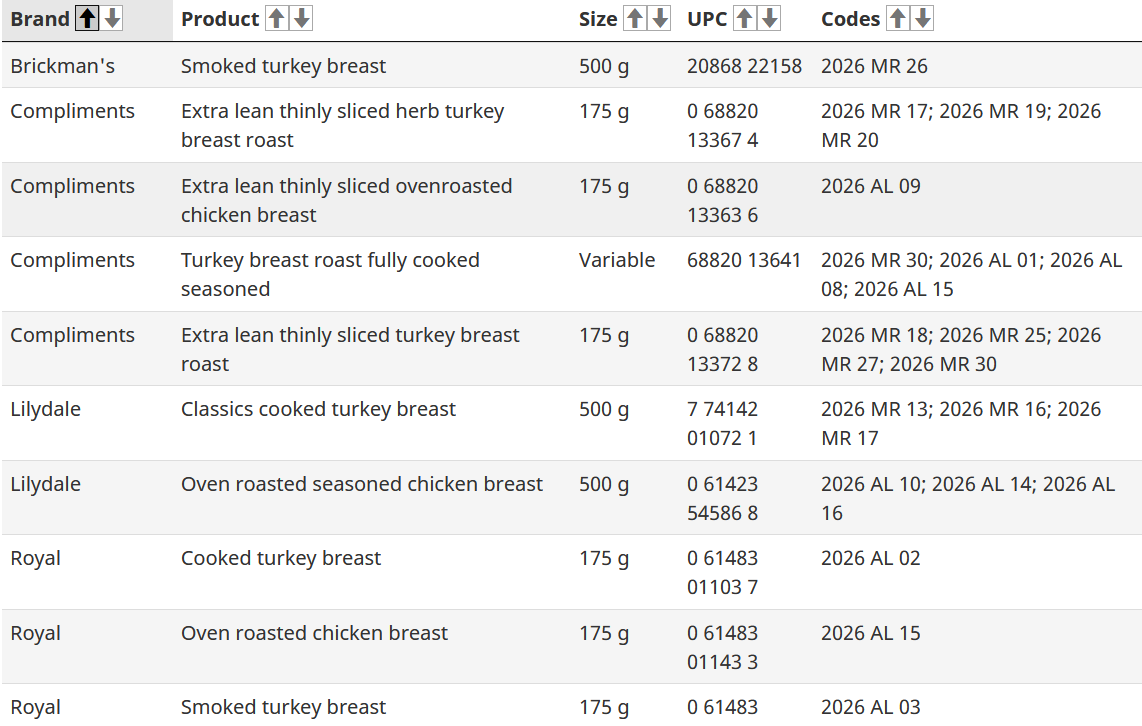
 Local company



 By Ray Rivers

 Ray Rivers, a Gazette Contributing Editor, writes regularly applying his more than 25 years as a federal bureaucrat to his thinking. Rivers was once a candidate for provincial office in Burlington. He was the founder of the Burlington citizen committee on sustainability at a time when climate warming was a hotly debated subject. Ray has a post graduate degree in economics that he earned at the University of Ottawa. Tweet @rayzrivers
 By Karina Gould

 Burlington Transit
 By Gazette Staff