By Pepper Parr By Pepper Parr
April 13th, 2026
BURLINGTON, ON
It came up as a Motion to make changes to the 2026 Council calendar meeting schedule
Mayor Meed Ward and Councillor moved the Motion.
From this point on it was back patting.
 Mayor Meed Ward: The motion really does respond to community feedback. Mayor Meed Ward(MMW) The motion really does respond to community feedback. So this is one of those opportunities to do what Councillor Stolte said earlier when we were talking about the Charter, which is actually to tell folks when their input has made a difference. We have had a we’ve had both systems over the years that I’ve been around here. We’ve had a week between committee and council, and then we’ve had, you know, the very next week. We heard from Committee, from several community members, that they would value a longer break between committee meetings and council meetings. It would give our staff additional time to put the materials together, particularly now that we have the standing committee pipeline to permit on the Thursday, which provides really little turnaround time.
Thus just gives everyone a little bit more time and helps to address theTuesday after a long weekend as well. So we’ve reset the calendar to avoid council meetings being on a Tuesday after a long weekend, which is kind of like a Monday, but also to provide that additional space in between. That’s the intent, and I want to thank all the residents who have given us their input on this. We have heard you, and this is the result. Thank you.
Councillor Stolte: I kind of wish I’d taken the opportunity to speak first, because I don’t have a lot to add to that. Thank you for using the opportunity as a good example of exactly what we talked about in our engagement Charter, which is explaining to the community how we have used the information and the suggestions and the feedback that we’ve received from them.
 The 418 page document is shown in Councillor Kearns’ hand. Councilor Karen, perhaps just a question around the content. I want to recognize that this is a welcome breath to manage the information that’s coming before us. But I also want to say we’ll need some leniency when still in council, because this package here that’s been received. I had four days with it, four business working days. It was received on the Thursday. We had a four day long weekend, we had four days of business functioning, and then we had another three day, two day weekend, and then we were in chambers right now.
We had four days with the better part of 418 pages, not including our closed materials. And so I’m glad that we have that extra breathing room. As I did say, I’m waiting for some additional information to come to this council in this cycle. So maybe if we have a little bit more open mindedness and leniency, people might just be finding out about items when they come to committee in the public and may want to have some more dialog with us. That’s a little bit more than four business days worth of review when we get into these holiday crunches. So I look forward to a little bit of that additional breathing room as these agendas can be big or small, depending on the cycle, and we’ll see what we can do when we get to council with it.
 Nisan’s working relationship with his community is constrained by his not living in the ward he represents. Chair Nisan: I’ll just say I haven’t gotten any comments. I actually haven’t gotten any feedback that we need another week between committee and council. The information for council is this is very similar to what comes out for committee. So if there are concerns I would be happy to receive it.
We made a decision a couple years ago, to tighten up the schedule a bit, to leave time for our other and our other duties. Fortunately, I don’t see any conflicts in my calendar for for this change in year, and it can be reviewed in the next term, when that calendar meetings comes up. But I gotta say, I haven’t seen any upswell of requests for this. I’m willing to give it a shot, and maybe some sharing could occur from the two movers to me, because I have not seen any. I don’t know what problem we’re solving here, but I will just ask staff if there’s any concerns with this change, whether this messes anything up for you on your end, like, Wouldn’t want you know, any vacations to be canceled, or trips or anything. But any issues at all with this? Are we all good
City Solicitor Blake Hurley: From a legislative services perspective, the proposed amendments don’t cause any concerns. Or from from a city process perspective, there’s there’s nothing there good to go.
Nisan: Okay, that’s good enough for me.
Councillor Stolte saw it quite differently. “I have received quite a bit of feedback over the years, so it’s not something that was a groundswell as of late. To me, it was something that the mayor and I had talked about, that the whole DC conversation kind of was a culmination of having heard that feedback a number of times. And I think when, whenever you hear once, it’s a one off, and I wouldn’t have put emotion forward on a one off, but twice is a coincidence, and by the time you get to thrice, you have a pattern. And I think I certainly saw a pattern coming here.
Nisan: I’m going to call the vote on the motion, which is to direct the city clerk to amend the 2026 calendar of meetings for council and standing committees to add a full week between committee and council, all those in favor, any opposed, that carries.

By Gazette Staff
April 13th, 2026
BURLINGTON, ON
Director of Education role to disappear – replaced by a Chief Administrative Officer and a Chief Education Officer
The Ontario government introduced the Putting Student Achievement First Act, 2026, to strengthen school board oversight and accountability and ensure more consistent learning experiences for students to prepare them for the jobs of tomorrow. The proposed changes would move Ontario toward a more accountable, consistent and modern model of high-quality education that better serves students, families and educators across the province.
“Ontario’s education system must remain focused on its core responsibility: student success. In some school boards, that focus has been lost, and students are paying the price,” said Paul Calandra, Minister of Education. “Ontario’s teachers and education workers are dedicated professionals who work tirelessly every day to support students, often under challenging circumstances. They deserve stable, accountable leadership that supports their work and puts learning first. If further action is required to protect students and reinforce respect for the professionals who teach them, we will not hesitate to act.”
Despite Ontario’s record investments in education, too many boards are facing financial mismanagement, weak governance and decision making that prioritizes politics over student outcomes. Since 2025, eight school boards have been placed under provincial supervision and the recent Education Quality and Accountability Office (EQAO) results show that while there has been progress in reading, writing and math, there is still more work to be done.
 Students to be put first Ontario is taking decisive action to put an end to ongoing governance breakdowns and financial mismanagement in English public and English Catholic district school boards by proposing changes that would clearly define roles, strengthen accountability and close the gaps that have allowed failures in oversight. Through the Putting Student Achievement First Act, 2026, the government is putting students first by proposing changes that would:
Strengthen governance and accountability
- Limit trustee discretionary expenses and honoraria, standardize the number of elected trustees to a maximum of 12, require trustees to pay out-of-pocket for certain external organization membership fees and improve oversight over school board subsidiaries and their use of public funds.
- Equip English-language district school boards with qualified leadership by establishing two new roles: the Director of Education would become known as the Chief Executive Officer (CEO), who would be responsible for financial and operational oversight and required to have business qualifications; and a Chief Education Officer, who would be appointed by the CEO to focus on student achievement and required to hold pedagogical qualifications, including Ontario College of Teachers membership or equivalent.
- Strengthen school board budget oversight and accountability by requiring the CEO to lead budget development, while referring budget matters to the Minister for decision when trustees are unable to reach an agreement and ensuring that the termination of the CEO requires Minister approval to help prevent reprisals and dismissals while they are carrying out their responsibilities.
- Professionalize school board bargaining by designating the Council of Ontario Directors of Education as the central employer bargaining agency for English public and English Catholic boards to ensure collective bargaining is led by professional school board staff who have expertise in the board’s operational matters.
- Set clear expectations for school board communications to ensure communications on official channels are focused on important day-to-day functions.
Ensure more consistent learning experiences
 Mandate the use of ministry-approved learning resources in classrooms across the province to support greater consistency in delivering the new curriculum while making it easier for teachers to access high-quality materials, ensuring students have an equal chance to succeed no matter where they live. Mandate the use of ministry-approved learning resources in classrooms across the province to support greater consistency in delivering the new curriculum while making it easier for teachers to access high-quality materials, ensuring students have an equal chance to succeed no matter where they live.
Prepare students for postsecondary pursuits by introducing mandatory written exams on official exam days in Grades 9-12 and providing greater clarity on how students’ final marks are calculated.
Encourage improved engagement in the classroom by requiring attendance and participation to be part of the final mark for students in Grades 9-12, with attendance worth 15 per cent for Grades 9-10 and 10 per cent for Grades 11-12.
This proposed legislation builds on the government’s work to strengthen school board oversight and accountability to help ensure they deliver high-quality education, with every dollar spent focused on preparing students with practical skills for good-paying, stable careers.
By Steve McLean
April 13th, 2026
BURLINGTON, ON
Home-town developer Alinea plans to construct 36 buildings, create new mixed-use community at 1200 King Rd.
 An aerial rendering: King Road on the left and the Aldershot GO station on the right.
All the renderings are conceptual
Alinea Land Corporation has proposed a huge, 36-building mixed-use development for an empty 121-acre site it has owned for two decades at 1200 King Rd.in Burlington, Ont.
The full scope of the project would see the development of: approximately 8,800 residential units; 600,000 square feet dedicated to institutional and educational uses; 175,000 square feet of commercial space; 141,000 square feet of office space; 126,000 square feet of retail space; a community centre combined with an arena and ice pad; a hotel; and approximately 9,100 underground and surface parking stalls.
“The proposal contemplates a broad mix of housing, retail and commercial uses, public spaces, active transportation infrastructure, recreation and entertainment uses, and institutional and educational components,” Alinea president and chief executive officer Paul Paletta wrote in an email interview with RENX.
“The intent is to create a destination that is economically significant, highly livable and strongly connected to the surrounding community.”
Burlington is a growing city in the Greater Toronto-Hamilton Area, bordering Lake Ontario between the two larger cities.
 Community space. The proposal includes 36 buildings rising up to 53 storeys in 26 development blocks, with Giannone Petricone Associates as the lead architect. Construction would be done in phases and last several years.
“This is the kind of development that will be financed in phases and through multiple sources of capital, rather than through a single funding event,” Paletta wrote.
“We would expect the capital stack to include a combination of landowner equity, private development capital, conventional financing, development and operating partners, and, where appropriate, government participation in components that deliver a clear public benefit.”
Even with all of this development, about one-third of the site would be set aside for natural heritage, parkland and open spaces.
The King Road site
The site is on the west side of King Road, between Highway 403 to the north and the Lakeshore West rail corridor to the south. The Aldershot GO Transit station is just to the southwest and there are also Burlington Transit routes nearby.
“This is a large and ambitious site, so the concept will continue to evolve,” Paletta wrote. “But the central idea is clear: 1200 King Road is being planned as a complete community with regional significance.”
The land has been designated for mixed uses and Alinea has applied for both residential and employment uses for the site. It’s expected that initial zonings and approvals will be completed this year. The goal is to start earthworks at some point in 2027.
 Residential, commercial and office sites are on the right closer to King Road. The left side of the rendering will be forest with walking paths. “Opportunities of this scale, in this location and with this level of connectivity, simply do not come along very often anywhere in the GTA,” Paletta wrote.
“Its proximity to the Aldershot GO area and major transportation corridors makes it a natural location for a development intended to serve not only future residents, but also employers, institutions, visitors and the broader region.”
Alinea’s history
Family-owned and Burlington-based Alinea grew from a single meat processing plant in Hamilton to become one of the largest developers of revenue-producing commercial and industrial properties, as well as residential projects, in the Halton and Hamilton regions.
Alinea is the largest private-sector land owner in the Burlington area, with more than one million square feet of existing tenanted commercial and retail development and a large inventory of future development sites.
While much of Alinea’s previous activity revolved around acquiring land, the focus now is on developing it.
Alinea’s Burlington development pipeline
Alinea’s broader publicly identified development pipeline also includes Bronte Creek Meadows, Eagle Heights and Appleby GO West in Burlington.
“Each of those projects is at a different stage, but collectively they speak to Alinea’s confidence in the Burlington market and our commitment to helping shape the next generation of growth in the city and surrounding area,” Paletta wrote. “We are focused on creating vibrant, sustainable communities through long-range thinking, responsible stewardship and strong partnerships.
“We believe that is how durable value is created – for investors, for partners and for the future residents of the communities in which we build.”
The Appleby GO West site encompasses 51 acres at the intersection of Appleby Line and Fairview Street, adjacent to the Appleby GO Transit station and close to Appleby Village and Sherwood Forest Park.
There are plans for it to include a variety of housing options, neighbourhood-oriented retail and essential services, community amenities and outdoor spaces. Buildings are proposed from 12 to 45 storeys.
Eagle Heights, also located near the Aldershot GO Transit station, is proposed to feature more than 900 single-family homes and townhomes. Almost one-third of the 252-acre site will remain undeveloped and preserved in a natural forested state.
Bronte Creek Meadows is located across the street from Bronte Creek Provincial Park and is the largest parcel of vacant land within the urban boundary of Burlington. It has development potential as a future mixed-use community.
By Gazette Staff
April 13th, 2026
BURLINGTON, ON
The City of Burlington is seeking a qualified consultant with demonstrated expertise in municipal sport policy, recreation facility allocation or community sport system planning.
The consultant is expected to have experience conducting consultations/engagement with interested parties to support the review, update, and development of sport related policies, and a strong understanding of municipal recreation operations and equity-based frameworks.
This project will focus on ensuring that the City’s approach to allocating recreation and sport facilities is equitable, transparent, sustainable, and responsive to current and future community needs.
Better late than never – maybe in time for the swimming clubs to create their 2027 schedules?

  Five firms are looking into the opportunity: Five firms are looking into the opportunity:
Beam Group Inc.
Deloitte LLP
KPMG LLP
Optimus SBR Inc.
Sierra Planning and Management
By Gazette Staff
April 13th, 2026
BURLINGTON, ON
A contract to:
 The Contract is for street lighting night patrol service throughout the City of Burlington to travel all streets after dark to identify, record and report non-operational or malfunctioning street lights. The Contract is for street lighting night patrol service throughout the City of Burlington to travel all streets after dark to identify, record and report non-operational or malfunctioning street lights.
One bright reader suggested asking resident to send a note to city hall saying a street light was no longer working.
Only in Burlington? Unfortunately not – municipalities do things like this all the time.
Major clean up of municipality operations badly needed – won’t happen this decade and probably not the next.
When tax payers start choking on their tax bills – maybe.
By Pepper Parr
April 12, 2026
BURLINGTON, ON
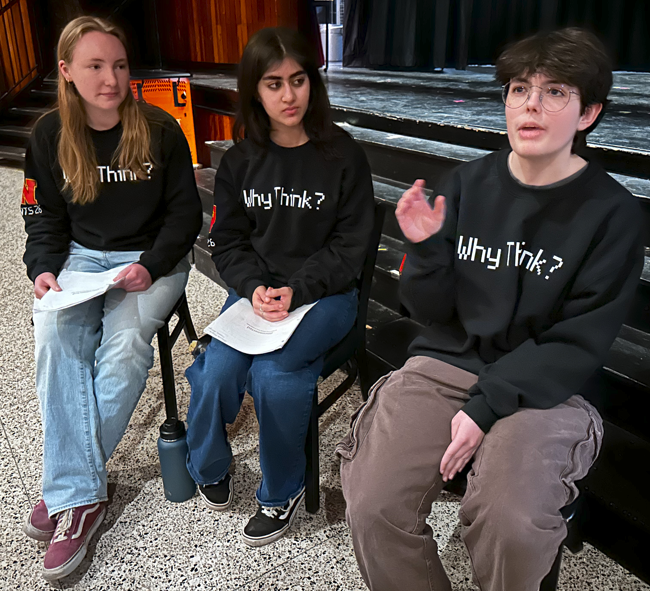
It was an Encore Presentation at the Nelson High School on Friday night.
A cast of 25 people with another dozen doing behind the scenes work to make a 35 minute production work very smoothly.
Titled Disconnected, the focus was not on the performers but on their cellphones which they seemed to be attached to at the hip.
 Totally mesmerized by their cellphones. Scenes we see all the time: students glued to their cellphones, was taking place on stage.
These students were totally mesmerized by their cellphones.
 Kidnapped, a mesmerized student was converted and helped find the solution to bring a halt to the excessive use of cell phones. They cut off access to GOPHER. Three cast members saw the dilemma. They kidnapped one of the mesmerized students and put together a plan to disconnect their peers from their cell phones. It proved to be easier said than done – but they found a way.
They shut down the GOPHER app that saw a group of people who didn’t know what to do with themselves. Used to getting everything from the GOPHER, the name of the computer application they were using, one student said, “We can look it up in the dictionary. “What’s a dictionary asked another.
 August Frade, Michelle Stern, and Zainab Majid co-wrote the script. The writing was tight, no one flubbed a line.
Before the performance began the students were “pumped”. Walking quickly from one place to place in the spaces outside the auditorium as they went through the pre-performance jitters.
Nelson drama lead Marisa Cavataio said she wasn’t sure what the turn out was going to be. “If we get 75 I will be happy”. There were at least 150 people in the auditorium seats.
The play was one of the National Theatre School Drama Fest entries. Nelson High had made it to the Regional level and would be on stage in Gravenhurst later in the month competing against other Regional high schools. The National Theatre School, located in Montreal, has put on these annual festivals for more than 50 years.
Marisa Cavataio, the lead drama teacher at Nelson, explains, “We will load up a bus with the 40+ students for the three-day outing. They will all stay in hotel rooms that don’t have mini-bars
Disconnected wasn’t a performance that had a lead male or a lead female on stage. The audience was watching a grade 9-11 students perform in a production they created. August Frade, Michelle Stern and Zainab Majid co-wrote the script.
The choreography had one superb highlight.
 The students came up with a name, GOPHER, for a computer application that would let them communicate with each other. With the focus on the students and their cell phones, which they seldom took their eyes off of, they had to come up with a way to communicate without relying on the GOPHER , the playwright’s version of Google AI.
Early in the performance, two students, Caden Kingsmill-Norton and Emily Iorfida, were conversing with each other on their cell phones – the expected back and forth babble. The English language possibilities get challenged when cellphones are the medium used to communicate; there were LOL’s all over the place.
When these two actors found themselves trying to communicate without access to GOPHER they didn’t know quite what to do
Both actors did a superb job of portraying the initial spark and shyness of a first meeting. Later in the production when access to GOPHER was gone, Caden Kingsmill-Norton was superb in the way he used his body to half curve his way around Iorfida, who sat motionless. It was something to see how he kept repeating the movement, trying to make contact. From where I was sitting, it was the best part of the performance. He was reaching for words that just didn’t come out of his mouth.
On the drive home after the performance, I found myself thinking that most people would have agreed with the message the performance was sending and wondered how many would change their cell phone habits, or if these devices had become something we felt we could not live without.
We will let you know how they do in Gravenhurst.
By Gazette Staff
April 11th, 2026
BURLINGTON, ON
 Would it be correct to describe these as daffodils, genus name narcissus It was a late Friday afternoon, and Brant Street was close to barren.
There was some kind of sports event taking place, with young girls popping in and out of different restaurants.
Two women bundled up in winter wear paused to look at the flowers. Looking at each other, they said – Spring isn’t here yet.
It was a photograph worth taking and sharing.
Spring is out there somewhere.
By Ray Rivers
April 10th, 2026
BYRLINGTON, ON
Mr Poilievre may have been reconfirmed as Conservative leader by over 80% of his party a few months ago, but that is not the message his MPs are hearing on the streets. So they are jumping ship to save their political lives and better serve their electors and the country.
This week a fourth Conservative came over to join the governing Liberals, in part because of the job Mark Carney is doing as PM. But they are also making a deliberate choice to leave the Tories because of their discontent with its leader, Pierre Poilievre.
 It has been a deliberate choice to leave the Tories because of their discontent with their leader, Pierre Poilievre. Hearing that as many as nine more Conservative members are contemplating switching horses, Poilievre has reacted with anger calling the loss of members a result of dirty backroom deals. He claims floor-crossing is anti-democratic – but he is wrong.
MPs are elected to represent the interests of their electors. That doesn’t change whether they call themselves Liberal or Conservative. And today’s floor-crossing MPs are clearly paying more attention to the polls than Mr. Poilievre. The Liberals are as much as 11 points ahead of the Tories when it comes to voters’ wishes. These MPs are simply going to where their constituents want them to go.
Poilievre, who has little to no experience in management, thinks he can coerce his caucus into submission. But that seems to just make them want to bolt to a winner, and for a potential role in piloting Canada through this Canada/US economic war. But Poilievre, is pretending there is no war. He is still stuck promoting the same old policies, the ones he credits with bringing down Justin Trudeau.
 Poilievre, who has little to no experience in management. Watching his MP’s in flight, Mr. Poilievre has decided to reverse years of Tory resistance to recall petitions in the ridings where his MP’s are deserting him. He is demanding that the floor-crossers be thrown out of Parliament if enough electors sign a petition against them.
But he is missing the ultimate irony – that he is living the last couple years of Justin Trudeau’s life as Liberal leader – when his caucus decided he’d passed his best before date. Its that old adage – what goes around comes around.
In the end it’s not the floor crossing MPs that are hurting the Conservative Party of Canada. It’s their unpopular leader pushing yesterday’s, and in some cases yesteryear’s, policies. If he would only leave, they wouldn’t have to. That’s what they told Trudeau.
 Ray Rivers, a Gazette Contributing Editor, writes regularly applying his more than 25 years as a federal bureaucrat to his thinking. Rivers was once a candidate for provincial office in Burlington. He was the founder of the Burlington citizen committee on sustainability at a time when climate warming was a hotly debated subject. Ray has a post graduate degree in economics that he earned at the University of Ottawa. Tweet @rayzrivers Ray Rivers, a Gazette Contributing Editor, writes regularly applying his more than 25 years as a federal bureaucrat to his thinking. Rivers was once a candidate for provincial office in Burlington. He was the founder of the Burlington citizen committee on sustainability at a time when climate warming was a hotly debated subject. Ray has a post graduate degree in economics that he earned at the University of Ottawa. Tweet @rayzrivers
Background links:
40 Conservative Could Lose – Recall Petitions- Polling –
By Gazette Staff
April 10th, 2026
BURLINGTON, ON
The U10 Burlington Bulldogs AA have been named a winner of Dr. Oetker Giuseppe Pizzeria’s “Practice with a Pro”, a Canada‑wide program that celebrates minor hockey teams demonstrating exceptional teamwork and community spirit.
 Lugging the groceries that were collected. As part of the win, the team will travel to Kelowna, B.C. for the 2026 Memorial Cup, where they’ll take part in a once‑in‑a‑lifetime experience that includes hitting the ice with Canadian hockey legend Jarome Iginla, along with additional VIP events.
 Distributing the hand made cards to seniors. The Bulldogs were selected based on their submission highlighting local impact, including:
Raising money and collecting over 24 grocery bags worth of food items to support food‑insecure families in their community
Preparing 500+ handmade cards for veterans and visiting with seniors during the holidays
Organized a toy drive ahead of the holidays to donate to local children in need
Now in its fourth year, the “Practice with a Pro” program invites teams across Canada to submit a short video showing how they bring positive energy to their communities; from fundraisers and clean‑ups to everyday acts of kindness. Link to the Burlington Bulldog video is HERE
By Gazette Staff
April 9th, 2026
BURLINGTON, ON
Burlington Fire has advanced its emergency response capabilities with the successful transition to the Next Generation 9-1-1 (NG9-1-1) network.
 City has good fire station coverage, with a new station being built in the core of the city at some point. The new, modernized network will improve backup capabilities in the event of system failure, strengthen cybersecurity protection, and lay the groundwork for future capabilities, including real-time text, and multimedia communications.
Burlington Fire transitioned to NG9-1-1, in keeping with the Canadian Radio-television and Telecommunications Commission’s (CRTC) mandate that provinces, municipalities and Public Safety Answering Points (PSAP) across Canada meet NG9-1-1 standards by the end of March 2027.
The Ontario government has provided close to $3 million since 2022 to support Burlington Fire’s transition to NG9-1-1.
Despite the implementation of the new network, there is no change in how residents access emergency services. Those in need of emergency assistance should still just dial 9-1-1.
By Gazette Staff
April 9th, 2026
BURLINGTON, ON
Canada’s food is as diverse as its people. The way we eat is shaped by over 400 years of immigration.

Food connects people to the past, to place, and to other people. eat make share: a taste of immigration explores the connections between food and immigration in Canada through the universal experiences of eating, making, and sharing food.
- Discover the surprising histories behind popular Canadian dishes.
- Learn how individuals and communities express themselves through food.
- Engage in diverse food traditions practised in Canada through multisensory activities.
eat make share: a taste of immigration is a travelling exhibition created by the Canadian Museum of Immigration at Pier 21 and presented by BMO, on view at Joseph Brant Museum April 18 – September 5, 2026.
By Pepper Parr
April 10th, 2026
BURLINGTON, ON
When the 2025 Ontario Sunshine list was published, our friends at Focus Burlington did a deep dive into the data and came up with all kinds of surprises.
The amount paid to Chiefs of Police in the province was surprising – the top levels approached the half a million a year stage.
 A close look at the list had Halton Region’s Chief third from the top; higher than Hamilton, which didn’t make a lot of sense to us. A close look at the list had Halton Region’s Chief third from the top; higher than Hamilton, which didn’t make a lot of sense to us.
Focus Burlington provided details taken from the Sunshine list.
 The table shows the staggering increase in pay numbers.

 First elected as a Town Councillor in Oakville in 2020 Knoll was made Chair of the Police Services Board in 2020 We turned to the Halton Police Services Board Chair Jeff Knoll for an explanation on hw these pay increases came about. The Police Services Board handles oversight of the Halton Police Service, they hire the Chief of Police and manage contract extensions.
 Rob Burton, Chair of the Police Services Board at the time, gave the police chief permission to travel out of the country during the Covid crisis. Knoll became Chair of the Police Services Board when Rob Burton, Mayor of Oakville, resigned suddenly after giving the Chief of Police permission to travel to California with a partner during the Covid shutdown. Many were livid over the Chief of Police deciding to travel to look into a personal matter during a crisis that called for an all-hands-on-deck approach. The police chief did say later that he was “remorseful” over the decision.
We now know that Tanner is in his last contract with the Region – which comes to an end on January 31st of 2028. The contract has a 2% annual increase – a fair amount. Would that other staff members in Burlington were held to that level.
That the Halton Regional Chief of Police was close to the best paid in the province surprised a lot of people. And that the amount he was paid was shy of half a million dollars was in the mind boggling category.
Getting to Jeff was a challenge – not because he didn’t want to talk but because the Councillors in Oakville don’t have the administrative support those in Burlington have. We eventually connected
Knoll explains the chief’s high salary — nearly $413,000 in pay and $19,000 in benefits last year for 2025 saying it “reflects a career that spans four decades and his dedication to the role, displayed by continuing to work beyond a date when he was entitled to retire. Tanner’s 2023 compensation included a retroactive salary adjustment of $24,000 for 2019 to 2022.
Knoll went on to say that Tanner is “The longest-serving police chief in the country, bringing a wealth of experience and leadership stability to Halton Region.”
In my interview with Knoll he said that he stands 100% behind Tanner adding that “In 2023, Chief Tanner received an increase in salary and an incremental amount that aligns with the costs that otherwise would be associated with retirement contributions for the Ontario Municipal Employees Retirement System. Chief Tanner’s salary is structured to reflect the savings due to his retirement eligibility.”
 Stephen J Tanner was appointed Halton Chief of Police in 2012 . At one point in his career, Tanner was an officer in Halton and moved on to serve in several communities, returning to Burlington, where he will eventually retire
Tanner had several contract extensions.
He is now expected to retire on January 31st, 2028
The contract has a 2% annual increase built into it. The actual net salary will undergo adjustment depending on the vacation time taken.
We asked Knoll for some comment on the ever-increasing cost of providing the safety that people in the Region have come to expect.
Things were different after Covid. Knoll said we learned that we needed each other and we unfortunately learned that everyone has a social media platform and can say whatever they like, which led to disinformation.
Policing had to change to keep up with the changes taking place in the communities they are mandated to protect.
Those societies were undergoing huge economic changes that put strains on everyone.
Scams were increasing, harming seniors who were easily taken advantage of. Knoll said that more than 97% of the population behaves; it is the 2 ½% that we have to deal with and technology being what it is – the job isn’t easy and it isn’t cheap. Add to that, AI lets people do things that confuse and mislead which makes the job of policing even harder.
Jeff Knoll has been chair of the Police Services Board since 2020. He is at that stage in his career where a change is being thought about.
By Gazette Staff
April 9th, 2026
BURLINGTON, ON
According to Ward 6 Councillor Angelo Bentivegna, acting in his capacity as Deputy Mayor for Recreation, Burlington has been selected as part of a first-of-its-kind program that will bring together communities across the country to celebrate soccer. The city will host a Community Activation on July 9, the day the quarter finals start.
  “I’m pleased for the city, it is going to be a great event in the community; we are proud that FIFA selected us as a host community, it is going to do wonders for the excitement. From a tourism and business perspective, we should get a lot of people coming here to use our hotels, eat in our restaurants, shop in our stores. I expect the city to be buzzing.” “I’m pleased for the city, it is going to be a great event in the community; we are proud that FIFA selected us as a host community, it is going to do wonders for the excitement. From a tourism and business perspective, we should get a lot of people coming here to use our hotels, eat in our restaurants, shop in our stores. I expect the city to be buzzing.”
Not so fast: Bentivegna goes on to say “no details on what the event will look like have been nailed down yet, but that information should be available in May.
What is all this going to cost the city?
Where will the event take place?
Odd as well, that there hasn’t been a word from the Mayor who is usually the spokesperson for the city.
Watch this one carefully. Bentivegna is rarely right on anything he sees as great for the city.
 MPP Natalie Pierre the night she won her seat by a slim 44 votes. MPP Natalie Pierre is reported to have said: “It’s wonderful to see Burlington be part of the Canada Celebrates FIFA World Cup 2026 tour, giving local residents the opportunity to experience the excitement of FIFA right here in our community,”
This MPP chooses media sources that don’t ask her tough questions.
Responsible MPPs treat all media with the same access.
By Gazette Staff
April 9th, 2026
BURLINGTON, ON
The average asking rent for all residential properties in Canada declined 5.3% year-over-year in March to $2,008, marking the 18th consecutive month of annual rent decreases, according to the latest National Rent Report from Rentals.ca and Urbanation.
Rents fell to their lowest level in 35 months and were down 7.9% compared to two years ago, while remaining relatively flat compared to three years ago.“The Canadian rental market downturn has deepened, with rents in March falling at their fastest pace since COVID,” said Shaun Hildebrand, President of Urbanation.
 “This shows in real-time the market impact from the declining population, coupled with ongoing affordability issues, heightened economic uncertainty, and record high apartment completions.”Asking rents declined 1.1% month-over-month in March, following a 1.3% decrease in February, marking the second consecutive monthly decline of more than 1%. “This shows in real-time the market impact from the declining population, coupled with ongoing affordability issues, heightened economic uncertainty, and record high apartment completions.”Asking rents declined 1.1% month-over-month in March, following a 1.3% decrease in February, marking the second consecutive monthly decline of more than 1%.
Since peaking in May 2024, rents have fallen by $194, or 8.8%.Rents continued to fall across all property types, with the largest declines seen in the secondary market. Condo rents dropped 6.9% annually to $2,077, while houses and townhomes fell 9.0% to $1,990. Purpose-built rentals remained the most stable, declining 3.9% year-over-year to $2,005.
One-bedroom rents recorded the steepest drop, falling 5.1% to $1,763, while three-bedroom rents declined 3.8% to $2,452.On a per-square-foot basis, asking rents declined 1.2% annually to $2.49, while the average unit size decreased to 831 square feet, reflecting a continued shift toward smaller rental units.At the provincial level, rent declines were concentrated in Canada’s largest markets.
Apartment rents fell 4.8% in British Columbia, 4.6% in Alberta, and 4.4% in Ontario, while Quebec saw a smaller 2.1% decrease. In contrast, rents increased in Nova Scotia (+3.9%), Saskatchewan (+3.7%), and Manitoba (+3.4%), with Saskatchewan continuing to lead long-term growth.
Among Canada’s six largest cities, rents declined across all markets, led by Calgary (-5.0%), while Montreal saw the smallest decrease (-1.6%). Toronto rents fell to a 46-month low, while Vancouver rents remained below levels seen in early 2022 despite recent monthly increases.The average asking rent for shared accommodations across British Columbia, Alberta, Ontario, and Quebec declined 6.3% annually in March to $899, falling below $900 for the first time in three years.
By Gazette Staff
April 9th, 2026
BURLINGTON, ON
This week, the Burlington Chamber of Commerce’s Policy and Advocacy Committee toured several major development areas planned by Alinea Land Corporation —including Bronte Meadows, Eagle Heights, and 1200 King Road—representing nearly 90% of Burlington’s remaining undeveloped land and offering a glimpse into the city’s future.
 Chamber of Commerce members on a tour of Alinea properties in Burlington These three properties alone cover over 685 acres and have the potential to deliver up to 20,000 new housing units—playing a critical role in addressing Burlington’s long-term housing needs.
 Lou Frapporti describes the Alinea properties to the Chamber members. When these projects begin, hopefully within the next year, they will generate thousands of construction jobs, as well as create long-term employment opportunities for thousands of people in Burlington.
These projects will play a critical role in shaping Burlington over the next 10–20 years—creating thousands of high-paying construction jobs, generating long-term employment opportunities, and helping address the growing need for housing in the community.
Chamber of Commerce President Terrey Caddo said: “The scale, thoughtful planning, and focus on mixed-use communities are truly impressive.”
By Denis Wood
April 9th, 2026
BURLINGTON, ON
Ontario’s regulated online gambling market has transformed how residents across the province engage with sports entertainment. Since the launch of the open iGaming market in April 2022, the province has established itself as a North American leader in regulated online wagering. For residents of Burlington and the broader Greater Toronto and Hamilton Area, understanding how this market works – from licensing and consumer protections to payment options and responsible play tools – is essential for making informed decisions. This guide covers what Ontario residents should know about the current landscape and how to navigate it safely.
 Image by Nicole Graves Ontario’s Regulated iGaming Market Explained
 Ontario’s iGaming framework operates under the oversight of the Alcohol and Gaming Commission of Ontario and iGaming Ontario, a subsidiary of the provincial lottery corporation. This dual-oversight structure ensures that all operators meet strict standards for fairness, security, and responsible gambling before receiving a license to operate. Ontario’s iGaming framework operates under the oversight of the Alcohol and Gaming Commission of Ontario and iGaming Ontario, a subsidiary of the provincial lottery corporation. This dual-oversight structure ensures that all operators meet strict standards for fairness, security, and responsible gambling before receiving a license to operate.
As of early 2026, the province has licensed 48 commercial operators, making it the most competitive regulated online gambling market in Canada. These operators collectively processed over $82 billion in total wagers during the 2024-2025 fiscal year, generating significant tax revenue for the province.
The licensing process requires operators to demonstrate financial stability, implement responsible gambling tools, use approved payment processors, and maintain data security standards equivalent to those required of financial institutions. This rigorous vetting process means that consumers using licensed platforms are protected by multiple layers of regulatory oversight.
Evaluating Licensed Betting Platforms
With dozens of licensed operators competing for Ontario consumers, choosing a platform requires careful evaluation. Residents looking to compare the best sports betting sites in Canada should consider factors including licensing status, available sports markets, payment options, promotional terms, and the quality of responsible gambling tools provided.
Key evaluation criteria include the platform’s response time for customer support, the clarity of its terms and conditions, and the range of deposit and withdrawal options available to Ontario residents. Platforms that offer Interac e-Transfer, which is the most popular payment method among Canadian bettors, along with modern alternatives like Apple Pay or direct bank transfers, tend to score higher in consumer satisfaction surveys.
It is important to verify that any platform used is listed on iGaming Ontario’s official registry. Unlicensed platforms do not provide the same consumer protections, and players using them have no recourse through Ontario’s regulatory framework if disputes arise.
 Image by Patrick Sullivan How Ontario Regulation Protects Consumers
Ontario’s regulatory framework includes several consumer protection measures that distinguish it from unregulated markets. All licensed operators must implement mandatory responsible gambling features including deposit limits, loss limits, session time limits, and self-exclusion options.
The province operates a centralized self-exclusion program that allows individuals to ban themselves from all licensed platforms simultaneously. This system uses identity verification technology to enforce exclusion across the entire regulated market, a significant improvement over platform-by-platform self-exclusion.
Advertising standards are strictly enforced. Operators cannot target minors, must include responsible gambling messaging in all advertisements, and are prohibited from making misleading claims about odds or potential winnings. The Canadian Gaming Association’s Code of Responsible Advertising, effective January 2026, adds additional industry-wide standards that Ontario operators must follow.
Comparing Key Features of Ontario Licensed Platforms
Understanding the features that differentiate licensed platforms helps Ontario residents make informed choices.
| Feature |
What to Look For |
Why It Matters |
Red Flag |
| Licensing |
AGCO/iGO registration |
Legal consumer protection |
No license number visible |
| Payment Speed |
Same-day withdrawals |
Access to winnings faster |
Withdrawal delays over 5 days |
| Betting Markets |
50+ sports available |
More options and value |
Limited to major sports only |
| Responsible Play Tools |
Deposit/loss/time limits |
Personal control over spending |
No limit-setting options |
| Customer Support |
24/7 live chat available |
Help when you need it |
Email-only with slow response |
| Mobile Experience |
Dedicated iOS/Android app |
Convenience and reliability |
Mobile site with poor loading |
| Promotions |
Clear terms, fair wagering |
Genuine value for users |
Unrealistic bonus amounts |
Residents should prioritize platforms that excel across all these categories rather than being drawn to a single attractive feature such as a large sign-up bonus. The overall quality and safety of the platform matters more than any individual promotion.
Local Impact on Burlington and the GTHA
The growth of regulated online gambling has tangible effects on communities across the Greater Toronto and Hamilton Area. Burlington, as a city navigating its own growth and development challenges, feels these impacts through tax revenue allocation, employment opportunities, and community discourse around entertainment options. Coverage of local issues shaping Burlington community life often reflects how provincial policies affect residents at the municipal level.
Tax revenue from licensed operators contributes to Ontario’s general revenue fund, which supports public services including healthcare, education, and infrastructure. While the direct municipal impact is difficult to isolate, communities like Burlington benefit from the provincial programs funded by this revenue.
Local businesses have also been affected. Sports bars and restaurants in downtown Burlington report that major sporting events generate more foot traffic when customers are engaged with the games through regulated platforms. This mirrors trends seen across the GTHA.
 Image by Laura Bennett Payment Options for Ontario Bettors
Ontario residents have access to a wide range of payment methods through licensed platforms. Interac e-Transfer remains the most popular option, offering fast deposits and withdrawals through the banking system Canadians already trust.
Credit card deposits are accepted by most operators, though some banks may treat gambling transactions as cash advances, which can incur additional fees. Debit cards connected to personal bank accounts are generally processed without these extra charges.
Newer payment options include digital wallets like PayPal, Apple Pay, and Google Pay, which add a layer of convenience and security by not requiring users to share card details directly with the betting platform. Open banking solutions, which connect directly to a user’s bank account through secure APIs, are gaining adoption and offer the fastest processing times.
Understanding the Broader Impact of Sports Gambling Growth
The rapid expansion of legal sports betting has prompted academic and public health research into its societal effects. University researchers have examined patterns of engagement, spending behavior, and the effectiveness of responsible gambling interventions. A comprehensive look at research into the explosive growth of sports gambling provides valuable perspective on both the opportunities and challenges this market presents.
Key findings suggest that the majority of participants engage with sports betting as a form of entertainment within their means. However, a small percentage develop problematic patterns, which is why robust responsible gambling frameworks are essential. Ontario’s regulatory approach, which mandates specific consumer protection tools, is designed to address these concerns proactively.
Tax Implications for Ontario Bettors
One important consideration for Ontario residents is the tax treatment of gambling winnings. In Canada, casual gambling winnings are generally not considered taxable income. The Canada Revenue Agency treats gambling as a recreational activity for most people, meaning winnings from sports betting through licensed platforms do not need to be reported as income.
However, this general rule has exceptions. Individuals who gamble professionally – meaning betting is their primary source of income conducted with the skill and regularity of a business – may be required to report their winnings. The distinction between recreational and professional gambling is determined on a case-by-case basis.
Residents should also be aware that winnings from offshore or unlicensed platforms may be treated differently, particularly if the funds pass through foreign financial institutions. Using Ontario-licensed platforms simplifies the tax situation and provides clearer records if questions ever arise.
Practical Tips for Responsible Participation
Setting clear boundaries before engaging with any betting platform is the most effective responsible gambling strategy. This means deciding on a monthly entertainment budget that includes any funds allocated to sports betting, and treating that amount as an entertainment expense rather than an investment.
Using the responsible gambling tools provided by licensed platforms is strongly recommended. Setting deposit limits, loss limits, and session time reminders creates automatic guardrails that prevent impulsive decisions. Many platforms also offer a reality check feature that periodically displays how long a session has lasted and the net result.
Keeping betting activity separate from essential finances is another practical step. Using a dedicated entertainment account or digital wallet creates a clear separation between discretionary spending and household necessities. This approach makes it easier to track spending and maintain perspective on the recreational nature of the activity.
Frequently Asked Questions
How do I verify that a betting site is licensed in Ontario
Visit iGaming Ontario’s official website to view the current list of registered operators. All licensed platforms must display their registration information, and you can cross-reference this with the iGO registry to confirm legitimacy.
Are sports betting winnings taxable in Ontario
For most recreational bettors, gambling winnings are not considered taxable income in Canada. However, individuals who bet professionally may need to report winnings. Consult a tax professional if your situation is unclear.
What should I do if I think my gambling is becoming a problem
Contact ConnexOntario at 1-866-531-2600 for free confidential support. You can also use the self-exclusion features available on all licensed platforms, visit a GameSense centre, or reach out to your family doctor for a referral to specialized services.
Can I bet on sports from my phone in Burlington
Yes, Ontario residents including Burlington residents can use any AGCO-licensed mobile sports betting app while physically located within the province. Most licensed operators offer dedicated apps for iOS and Android devices.
What is the minimum age for sports betting in Ontario
You must be at least 19 years old to participate in online sports betting in Ontario. All licensed platforms are required to verify the age and identity of every customer before allowing them to place bets.
Key Takeaways
- Ontario’s regulated iGaming market is the largest in Canada, with 48+ licensed operators and robust consumer protection standards.
- All licensed platforms must implement responsible gambling tools including deposit limits, self-exclusion, and session time reminders.
- Interac e-Transfer is the most popular and convenient payment method for Ontario sports bettors.
- Casual gambling winnings are generally not taxable in Canada, though professional gamblers may have different obligations.
- Burlington and GTHA communities benefit from provincial tax revenue generated by licensed operators.
References
https://www.ualberta.ca/en/folio/2024/11/probing-the-explosive-growth-of-sports-gambling.html
https://practiceguides.chambers.com/practice-guides/gaming-law-2025/canada
https://www.grandviewresearch.com/horizon/outlook/sports-betting-market/canada
By Pepper Parr
April 8th, 2026
BURLINGTON, ON
 The New Leaf Liberals, that band of Liberals that want to see big changes in the structure of the Liberal Party meet regularly and put out statements from time to time. Today, they want to point to the Doug Ford Progressive Conservative, spending on advertising The New Leaf Liberals, that band of Liberals that want to see big changes in the structure of the Liberal Party meet regularly and put out statements from time to time. Today, they want to point to the Doug Ford Progressive Conservative, spending on advertising
 The Doug Ford didn’t pay for this billboard advertisement “While Ontario families are feeling the pinch of a $13.8 billion deficit and a healthcare system in crisis, Doug Ford’s government has found plenty of money for one thing: themselves.
“The latest Auditor General’s report has confirmed a staggering new record. In the 2024-25 fiscal year, the provincial government blew $111.9 million on government advertising – the highest amount ever recorded in Ontario’s history.”
The Cost of “Spin”
“This isn’t just about “information.” The Auditor General flagged that many of these campaigns – including the ubiquitous “It’s Happening Here” and massive $40 million TV buys in the United States – would never have passed the original non-partisan standards.”
“To put that $111.9 million in perspective, it could have:
-
- Built New Schools: In late 2025, the province announced a new elementary school in Tottenham at a cost of $20.2 million. The ad budget alone could have built five or six modern, high-quality schools in fast-growing communities like Brampton or Milton.
- Hired Nurses: this money could have funded the annual salaries of over 1,430 full-time nurses to help alleviate ER wait times.
- LTC Spaces: We could have seen roughly 500 to 700 new long-term care beds fully funded and built with this money.
The “Sylvia Jones” Standard
“Perhaps the most frustrating part of this record-breaking waste is the blatant hypocrisy from the front benches of the PC cabinet.
 Sylvia Jones herself spreading the good news: What she once said and what she is saying now. This looks like a piece of bread buttered on both sides.  The thing about the past is that it never stays there. “Back in 2017, when she was in Opposition, current Health Minister Sylvia Jones was one of the loudest voices railing against taxpayer-funded ads. She even introduced the End the Public Funding of Partisan Government Advertising Act, claiming:
“Having taxpayers foot the bill for self-congratulatory and misleading ads is unacceptable… This is taxpayer money that should be going towards desperately needed hydro relief for families, businesses and hospitals.”
<
By Gazette Staff
April 8th, 2026
BURLINGTON, ON
You can’t escape them.
Government of Ontario “Protect Ontario” ads are everywhere—on buses and subways, during hockey and baseball games, and across news sites.
Since taking office, the Ford government has spent $452 million of our tax dollars promoting itself —a windfall for the advertising industry, with no sign of slowing down. In 2025 alone, it spent a record $112 million.
Big Spending. Little Information.
Even Ontario’s Auditor General has raised concerns.
That’s putting it mildly.

  These ads contain almost no useful information whatsoever and are pretty much fact free – and in some cases, pure fantasy. These ads contain almost no useful information whatsoever and are pretty much fact free – and in some cases, pure fantasy.
But they serve a purpose: shaping perception.
What You’re Not Being Told
While millions are spent on glossy messaging, critical facts are being left out, such as:
We’re Fighting Back—With Facts
The Ontario Clean Air Alliance is fighting back.
They are doing something. “Instead of spin, we’re sharing real information that affects your daily life.
“We’ve launched a series of radio ads on CFRB NewsTalk1010 —Ontario’s go-to station for political talk—cutting through the noise with clear, fact-based messaging.
Click here to listen to our CFRB ad that started running on Monday and will continue until April 26.
 “By our standards, these ads aren’t cheap. But unlike government ads, they actually tell you something you need to know.” “By our standards, these ads aren’t cheap. But unlike government ads, they actually tell you something you need to know.”
Help Us Reach More People
We can’t match the government’s massive ad budget. But we don’t need to. We just need to ask the right questions:
Is building nuclear reactors—at two to eight times the cost of wind and solar—really going to “Protect Ontario”
Is waiting 10+ yearsfor nuclear power while continuing to burn fossil gas a serious climate plan?
Every dollar you donate helps us amplify these questions—and get real information in front of more people. $85 will buy one radio ad; $425 buys 5 ads; and $850 buys 10 ads.
Make Some Noise
The government may have the biggest megaphone. But we have the facts.
And with your help, we can make sure Ontarians actually hear them.
 Donate today to support our talk-back campaign—and help cut through the noise. Donate today to support our talk-back campaign—and help cut through the noise.
At the Gazette we think the Ontario Liberal Party should adopt the Protect Ontario graphics. Isn’t that what they are setting out to do?
By Gazette Staff
April 8th, 2026
BURLINGTON, ON
The Different Drummer Bookstore is going all out on the 12th of April with three authors introducing and talking about their books.
Karen Bass relates her suspenseful and illuminating story of a teen drawn into crime, Trust No One.
Natalie Hyde brings us compelling mystery and fascination as friendships are forged at summer science camp in Briarwood.
Lynn Leitch shares a story of daunting travail and great triumph in middle school sports, The Setback.

 Sunday April 12 1pm at A Different Drummer Books 513 Locust Street, Burlington Sunday April 12 1pm at A Different Drummer Books 513 Locust Street, Burlington
Admission Free
By Pepper Parr
April 8th, 2028
BURLINGTON, ON
Three Nelson High school students who are in the Drama program have a play that has made it to the NTS DramaFest (NTS) regional level.
Michelle Stern, Zainab Majid and August Frade put the short play together.
 From left to right: Michelle Stern, Zainab Majid and August Frade NTS supports thousands of students across the country in the creation and presentation of theatrical performances. Works are presented through district, regional, zone and provincial showcases are the culmination of months of hard work.
The Nelson High School student production is at the regional level. They will perform in Gravenhurst later this year.
 Michelle Stern and August Frade on stage, displaying themed clothing. This Friday, April 10th, the play will be performed at an Encore Performance at Nelson High.
The cast will be making heavy use of cell phones, which is what the play is about. Titled Disconnected, the play will have 41 different people on the stage. Expect to see cell phones playing a large part in a play that makes a statement that might come as a surprise to many.
Marisa Cavataio, the Nelson High Drama leader, looks for creativity, critical comment and empathy from students when they put together a play
The NTS DramaFest’s annual activities take place in high schools hosts across Canada from November to May.
Trevor Copp, well known and respected actor, adjudicated the play and had this to say: “I love adjudicating because it’s an invitation to consider how this work can create deeper impressions. Their piece was memorable because it took a criticism on their generation – the phone addiction – that is usually delivered by an older generation at them and turned it on its head by applying it to themselves.
“Watching teenagers question their relationship to tech and screens and hearing them arrive at conclusions that the wider public buys into is rich and surprising and interesting.
“I felt honoured by their discipline, the remarkable amount of work and care for the audience’s experience, and grateful to be in the room with them.”
Friday evening: 7:00 pm – $10 at the door
|
|





 By Pepper Parr


 By Gazette Staff
 Mandate the use of ministry-approved learning resources in classrooms across the province to support greater consistency in delivering the new curriculum while making it easier for teachers to access high-quality materials, ensuring students have an equal chance to succeed no matter where they live.
 By Steve McLean


 By Gazette Staff

 Five firms are looking into the opportunity:
 The Contract is for street lighting night patrol service throughout the City of Burlington to travel all streets after dark to identify, record and report non-operational or malfunctioning street lights.


 By Gazette Staff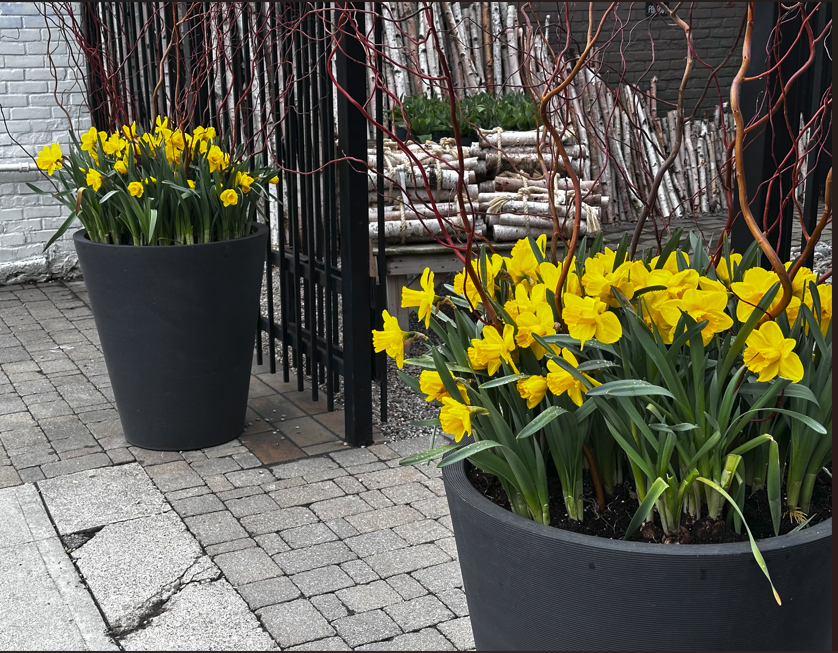
 By Ray Rivers

 Ray Rivers, a Gazette Contributing Editor, writes regularly applying his more than 25 years as a federal bureaucrat to his thinking. Rivers was once a candidate for provincial office in Burlington. He was the founder of the Burlington citizen committee on sustainability at a time when climate warming was a hotly debated subject. Ray has a post graduate degree in economics that he earned at the University of Ottawa. Tweet @rayzrivers
 By Gazette Staff

 By Gazette Staff

 A close look at the list had Halton Region’s Chief third from the top; higher than Hamilton, which didn’t make a lot of sense to us.




 “I’m pleased for the city, it is going to be a great event in the community; we are proud that FIFA selected us as a host community, it is going to do wonders for the excitement. From a tourism and business perspective, we should get a lot of people coming here to use our hotels, eat in our restaurants, shop in our stores. I expect the city to be buzzing.”
 “This shows in real-time the market impact from the declining population, coupled with ongoing affordability issues, heightened economic uncertainty, and record high apartment completions.”Asking rents declined 1.1% month-over-month in March, following a 1.3% decrease in February, marking the second consecutive monthly decline of more than 1%.

 By Denis Wood
 Ontario’s iGaming framework operates under the oversight of the Alcohol and Gaming Commission of Ontario and iGaming Ontario, a subsidiary of the provincial lottery corporation. This dual-oversight structure ensures that all operators meet strict standards for fairness, security, and responsible gambling before receiving a license to operate.

 The New Leaf Liberals, that band of Liberals that want to see big changes in the structure of the Liberal Party meet regularly and put out statements from time to time. Today, they want to point to the Doug Ford Progressive Conservative, spending on advertising


 By Gazette Staff

 These ads contain almost no useful information whatsoever and are pretty much fact free – and in some cases, pure fantasy.
 “By our standards, these ads aren’t cheap. But unlike government ads, they actually tell you something you need to know.”
 Donate today
 Sunday April 12 1pm at A Different Drummer Books 513 Locust Street, Burlington