A new Fraser Institute study shows that Ontario’s standard of living – measured by GDP per person – is lower than all eight neighbouring U.S. Great Lakes states, and the gap is widening.
Key findings (2024 data, CAD):
Ontario’s GDP per person was $74,143 – second-lowest in the region, ahead of only Quebec.
The regional average (including Michigan, New York, Ohio, Pennsylvania, Illinois, Indiana, Minnesota, and Wisconsin) was $94,523 – 27.5% higher than Ontario.
New York led the region at $134,470.
From 2001 to 2024, the regional average grew by 22.5%, while Ontario’s grew by only 12.7%.
This means Ontario’s standard of living is falling further behind its American neighbours.
It’s important for Ontarians and policymakers to recognize that the province’s relatively poor economic performance has real consequences for the economic well-being of families and workers.
Read the full study here to see the detailed comparisons – and share it with friends, colleagues, or your MPP!
HDSB students, families and educators enjoyed an evening full of celebration and recognition at the 2026 Bay Area Science and Engineering Fair (BASEF)award ceremony held on March 24.
BASEF is a regional fair that serves as an opportunity for students to showcase projects that highlight excellence in science, technology, engineering and math (STEM) education.
Evan Budz, Grade 10 student from Dr. Frank J. Hayden Secondary School.
With 160 projects submitted by students, 85 were honoured with awards and recognition that resulted in more than $16,000 in cash prizes and prestigious scholarships to top-ranked Canadian universities including McMaster University and the University of Ottawa. Two projects are advancing to the International Science & Engineering Fair and 10 projects are advancing to the Canada-Wide Science Fair.
Canada-Wide Science Fair Awards:
Claire Marsh, Grade 12 student from M.M. Robinson High School.
Evan Budz, Grade 10 student from Dr. Frank J. Hayden Secondary School, for the project, In Situ Microplastic Detection using Holographic Imaging and AI on an Autonomous Bionic Sea Turtle
Claire Marsh, Grade 12 student from M.M. Robinson High School, for the project, Identification of Neurodevelopmental & Mental Health Conditions: An AI Approach to Reducing Barriers
“The Halton District School Board is incredibly proud of all our students who participated in BASEF this year,” says Curtis Ennis, Director of Education for the HDSB. “Their projects demonstrate the innovative and future-ready thinking we lead within our classrooms. The passion for innovation, driven by the desire to create meaningful change in communities through STEM supports many of our commitments in the HDSB’s Multi-Year Strategic Plan.”
The Innovation Factory is hosting the 9th annual HERhalton Women in Business Breakfast – Unfiltered Innovation
Are you a female entrepreneur looking to connect with like-minded women in business?
If you are a female entrepreneur looking to connect with like-minded women in business? Innovation Factory’s HERhalton is the region’s go-to networking event for advocates of women entrepreneurs.
In today’s rapidly evolving landscape, understanding your true value and leveraging new technology is essential for staying ahead. Experience dynamic conversations led by engaging guest speakers who will share their thoughts on leadership, innovation and business success.
Tanuvi Bali, Senior Manager, Data & AI at PwC
The keynote speaker, Tanuvi Bali, Senior Manager, Data & AI at PwC will take the audience through AI Without the Jargon. Artificial Intelligence is often wrapped in layers of jargon that can make it feel like there’s a high barrier to entry. In this presentation, Bali will pull back the curtain to create an accessible space where we move past the buzzwords to understand what AI actually is—and what it isn’t. You’ll learn how to leverage these tools in your work and business without feeling like you need a computer science degree to get started. No gatekeeping, no intimidating “tech-speak,” just a clear look at how to make AI work for you.
The event is an opportunity to make meaningful connections, exchange ideas or gain new perspectives. HERhalton offers a supportive environment to grow your network and spark new ideas.
June 4, 2026 | 8:00am – 12:00pm
Holiday Inn Burlington Conference Centre, Burlington, ON
An update on the Better Regional Government Act, 2026 that is now before the Legislature. It is Bill 100
First Reading has taken place: the vote on the First Reading carried.
The Bill now goes to Committee.
When it comes out of Committee, it goes before the Legislature for a second reading where changes can be made. Given that the Ford Progressive Conservative government holds a majority the likelihood of major changes is slim
Current status: First Reading Ordered for Second Reading
The schedules in the Legislation makes changes to the Municipal Act.
We know now that:
The Schedule amends the Municipal Act, 2001. Here are some highlights:
1. Amendments are made with respect to the timing of the requirement for regional municipalities to review, for each of their lower-tier municipalities, the number of members of their council that represent each lower-tier municipality.
2. New section 218.0.1 authorizes the Minister to make regulations governing the votes of the members of councils of upper-tier municipalities. The regulations would apply only after the 2026 regular election.
3. Section 218.1 is re-enacted to provide rules governing the appointment of the head of council of certain municipalities, beginning after the regular election in 2026.
It is a little confusing. I expect there will be some clarity when it gets to Committe where changes to the Act can be made.
We will keep you up to date.
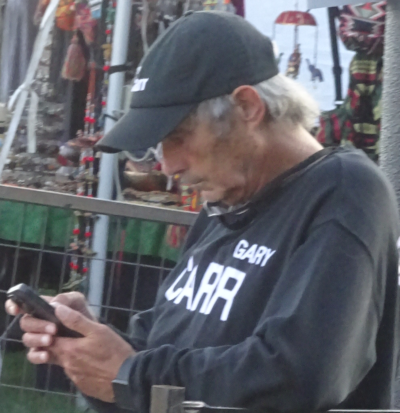
Gary Carr: Whether he would remain in the job once the legislation is implemented is the big question.
Given what we now know, Gary Carr could run in the October 2026 election and be re-elected.
Whether he would remain in the job once the legislation is implemented is the big question. I don’t believe the government would keep him as Regional Chair.
King Charles placed his Message to the Commonwealth into the first Baton, passing it to the first Batonbearer, Sir Chris Hoy, to start the relay with 500 days to go to the Opening Ceremony of Glasgow 2026.
The King’s Baton Relay is a tradition that celebrates, connects and excites communities from across the Commonwealth during the build-up to the 2026 Commonwealth Games that will take place in Glasgow. The journey to Glasgow 2026 will take 500 days and reach every corner of the Commonwealth and include 74 countries.
It will pause in Burlington on May 6th, 2026 for a short ceremony at the Gazebo in Spencer Smith Park.
The King’s Baton Relay began at Buckingham Palace on Commonwealth Day, Monday 10 March 2025, when His Majesty The King placed His Message to the Commonwealth that will be carried as part of the Relay into the first Baton.
For the first time ever, every Commonwealth nation and territory will receive its own Baton for its celebrations. The Canadian Baton is being crafted by an indigenous artist who will customize and decorate it to represent our culture. The Baton will be ready in a few weeks. Every commonwealth country sends a Baton to Glasgow. The Canadian Baton will be part of that reception on May 6th.
All 74 batons will be reunited at the Opening Ceremony of the Glasgow Games in 2026, where the final Baton will be presented to His Majesty and the Message read aloud to declare the Games open.
For the first time as part of The King’s Baton Relay, Commonwealth Sport is partnering with the Royal Commonwealth Society (RCS) to deliver the Commonwealth Clean Oceans Plastics Campaign – bringing much-needed attention to both ongoing ocean conservation efforts and interesting new solutions to plastic waste
King Charles placed his Message to the Commonwealth into the first Baton, passing it to the first Baton bearer, Sir Chris Hoy, on Commonwealth Day 2025 to start the relay with 500 days to go to the Opening Ceremony of the Glasgow 2026 Games.
The campaign’s aim is for athletes and communities to come together to prevent one million pieces of plastic from entering Commonwealth waters and spark lasting change in how we view plastic pollution, with this global relay of plastic clean-ups journeying through every Commonwealth nation and territory as part of The King’s Baton Relay
While the Burlington part of the event will be short, several groups within the community will take part.
Lou Frapporti, the lead member of the local organizing team, has gone well beyond what most communities are doing to make this event fun and exciting at the local level. He adds: “The Burlington stop of the King’s Baton Relay is an opportunity not only to celebrate an important international sporting tradition, but to tell a distinctly local story, one rooted in youth, community pride, environmental action and the legacy of Bobby Robinson. Burlington has a remarkable connection to the founding spirit of the Commonwealth Games, and this event gives us the chance to bring that home.
We will have much more for you as the date, May 6th, approaches.
The city is prepared to put up as much as $50,000 to anyone who can Reimagine the Alton Terrace.
The design of the outside was dated before it was opened to the public. Public buildings in Burlington seldom have much in the way of good design – pedestrian at best.
The Haber legal people who put up a pretty penny for the naming rights appear that were to exist for 20 years. They appear to have decided there was no longer enough in the way of real benefits to having their name attached to the locale and found a way to get out of the deal. The site is seen to need some freshening up It has a dated look to it – the original design didn’t have that much going for it in the first place.
While the outside of the building that houses a high school, a library and a recreation centre doesn’t do much to catch the eye -inside the place works. The recreation facilities are usually busy in the evening and on the weekends. The high school should have had a swimming pool included – the school had portables the year it was opened. The library is busy with children, young people, parents and seniors making excellent use of the space
The budget for the art is $50,000- application deadline is Friday May 15, 2026
The application has to be submitted electronically.
The call for Expression of Interest (EOI) sets out the steps to be taken:
To mark the renaming of the Alton Community Centre (3040 Tim Dobbie Dr., Burlington, ON), the City of Burlington invites professional artists and artist teams to envision an immersive public artwork that celebrates civic identity, collective memory, and community life. This commission seeks to reimagine the Centre not only as a physical destination, but as a living symbol of connection, creativity, and belonging within the Alton neighbourhood.
Inside the library, a group of women gather to knit and get caught up on what is happening in their lives.
Alton Terrace Reimagined presents a unique opportunity for artists to shape an urban space in transition. The City is seeking bold and imaginative proposals that weave together artistic expression and functional design, transforming the terrace into a welcoming and dynamic gathering place. Proposals should invite participation, spark curiosity, and foster meaningful connections across generations and cultures, while thoughtfully responding to the site’s histories and character.
A name change and some polish to the dated look of the facade.
This Call to Artists is open to artists working across a wide range of styles and mediums who are inspired to create work that reflects the spirit of Alton and contributes to a shared vision of a vibrant, inclusive public realm.
Conceptual drawings are not requiredat this time. Applicants are asked to submit a high-level proposal outlining their approach to the project. The selected artist will develop a detailed design and community engagement plan in consultation with staff and the selection panel.
Important! Please download and read the full Call to Artists document as this contains important project information.
A high-level statement outlining your interest in this project. Please include the following:
Describe your artistic practice and why you are interested in this opportunity.
Please outline any relevant experience or qualifications relating to community engagement or education.
A high-level outline of your proposed approach to community engagement for this project.
A high-level description of your proposed design (i.e., your preliminary thoughts on how you would approach the project and how this connects to your artistic practice).
Please note, design sketches are not required.
2.Biography: A short biography outlining the relevant interests, experiences and qualification of the artist(s). 250 words maximum.
3.Curriculum Vitae (Artist Resume): Outline recent qualifications and artistic activities. If applying as part of a team / artist collective, please submit one consolidated C.V. Four pages maximum.
4.Artwork Samples: Submit up to ten (10) images of your past artwork which best illustrates a related body of artwork to the proposal.
5.Image List: A numbered list that corresponds to the Artwork Samples. Please include the following: title, date, materials, dimensions, locations, commissioning agent or client and budget (if applicable).
How to Apply
Applications must be submitted online. To use the online application, you will need to create a free account for the online application system Submittable. Please click on the ‘Click here to Submit’ button below to start your application.
Joseph Brant Hospital (JBH) continues to be recognized for its exceptional efforts to organ and tissue donation as part of compassionate end-of-life care.
JBH received a Provincial Eligible Approach Rate award from Trillium Gift of Life (TGLN), given to hospital partners for demonstrating leading practices by facilitating a donation discussion with eligible patients/families of patients at end of life.
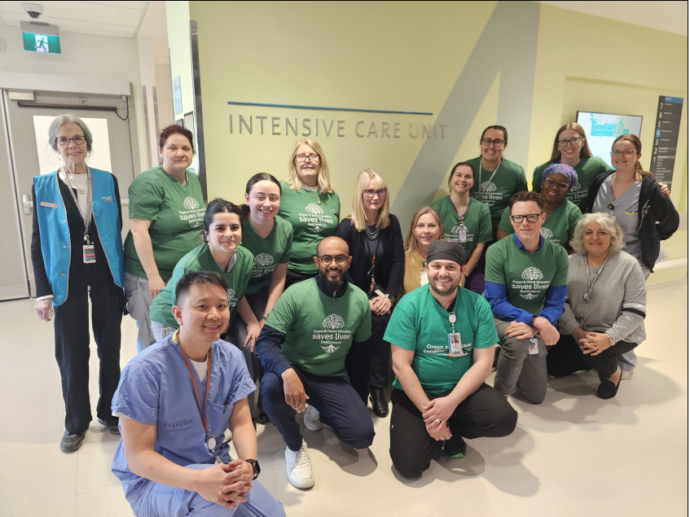
The Joseph Brant Hospital ICU team gathers to show their support for BeADonor Month.
In 2024-25, JBH achieved a 100% eligible approach rate, ensuring that when donation is possible, eligible patients and families were given the opportunity to have a conversation with the JBH care team in a compassionate, timely and respectful manner.
That year, JBH supported 1 organ donor, which led to 5 organs donated for transplant, saving 4 lives. In addition, there were 24 tissue donors, enhancing the lives of many.
The award highlights the dedication of JBH’s physicians, nurses, social workers and donation coordinators to support families in honoring their loved ones’ wishes and making informed decisions about organ and tissue donation, said Theresa Ferrari, Manager of JBH’s Intensive Care Unit.
“The opportunity for organ or tissue donation can create meaning and hope during one of the most devastating moments in a family’s life,” said Ferrari. “It’s inspiring and humbling to see that even in grief, many choose to think of others and say yes to donation.”
JBH is one of 50 hospital partners across the province to be awarded a 2024-25 Trillium Gift of Life Network Hospital Achievement Award. This marks the largest number of hospitals ever honoured in the history of the awards.
“This year’s record level of recognition is a testament to the dedicated, patient-centred care provided by Joseph Brant Hospital’s healthcare team as they honour and support the decisions of patients and their families to donate,” said Janet MacLean, Interim Vice-President, TGLN. “It also reflects the deep commitment of Ontario hospitals to fostering a culture where organ and tissue donation is a natural and meaningful part of end-of-life care.”
One organ donor can save up to eight lives, and a single tissue donor can improve the lives of up to 75 people. Yet right now there are 1,627Ontarians on the transplant waitlist in need of an organ to save their life – while thousands more are waiting for tissue donations.
Anyone 16 years or older with a valid Ontario health card can register at beadonor.ca or in person at any ServiceOntario location during a visit to renew your health card or driver’s license. It’s also important to talk to your family about your wishes, so your loved ones can confidently move forward in fulfilling your wishes without doubt or uncertainty.
Joseph Brant Hospital (JBH) is a full-service, academic community teaching hospital located in Burlington, Ontario, along the picturesque banks of Lake Ontario. It is a modern, state-of-the-art facility, serving residents in Burlington as well as surrounding communities of Halton Region, Hamilton, Waterdown, Flamborough, and Stoney Creek.
JBH’s skilled staff of 189 physicians, 2,019 full- and part-time staff and 340 volunteers are committed to providing exemplary care and living the hospital’s core values of Compassion, Accountability, Respect and Excellence.
JBH is a Clinical Education site in conjunction with McMaster University and a partner member of theBurlington Ontario Health Team. It is honoured to be recognized as one of Hamilton Niagara’s Top Employers for 10 consecutive years.
The Blue Marble is a photograph of Earth taken on December 7, 1972, by Harrison Schmitt aboard the Apollo 17 spacecraft on its way to the Moon. Viewed from around 29,400 km (18,300 mi) from Earth’s surface, a cropped and rotated version has become one of the most reproduced images in history
When that picture of Earth was first published in 1972 it changed the way we see the planet.
The picture released yesterday by NASA taken by astronauts aboard Artemis II shows part of the surface of the moon with Earth in the background is another huge step for mankind and science.
Hopefully, NASA will crop one of the pictures taken by Artemis II crew members.
All we have at the moment is a black and white photo that will change the way we see ourselves as part of a universe we are in the process of understanding. The idea that we may at some point colonize the moon is daring and exciting.
The average distance between Earth and the Moon is approximately 238,855 miles (384,400 kilometers). This distance, measured from center to center, is equivalent to about 30 Earth-sized planets fitting between them. The Moon is not always at the same distance, ranging from 225,623 miles (closest) to 252,088 miles (farthest).
Make a point of showing the pictures to your children. They will have a vision and an understanding that we didn’t have.
That small crescent shape on the right is the earth as seen by the Artemis II crew as they were observing the moon. The space capsule they are traveling in is what appears in the lower left.
He was born in Toronto, raised in Hamilton, and now wants to be a member of the Burlington City Council, specifically Ward 6.
Rowen Fraser said he has had an interest in local politics for much of his adult life. Huge fan of Stockwell Day and Preston Manning. Loved the CBC program Air Farce that did great impersonations of Manning.
Rowen Fraser understands the frustration and anger that taxpayers feel over the significant recent tax increases and would advocate for a two-year freeze.
He bounced around high schools, graduated but didn’t attend the graduation ceremony.
Attended Mohawk College, where he studied engineering. Considered law enforcement
He is still a member of the International Alliance of Theatrical Stage Employees local 873; these are the people who do the rigging and stage setup work for theatre and large musical productions.
When it came to his political interests, Fraser said he felt municipal was the level closest to people, and given that politics was all about people, that was a good place for him to start.
He feels that younger people are not effectively represented on city council and wants to focus on giving the Millennials (1981-1996) stronger representation.
Fraser understands the frustration and anger that taxpayers feel over the significant recent tax increases and would advocate for a two-year freeze.
Fraser uses the word “normative” to describe his approach to issues that need attention:
He describes normative as establishing standards, norms, or rules that dictate how things should be, rather than how they are. Prescriptive judgments, ethics, or behaviours deemed desirable or “correct” within a society.
“Knowing how you actually want to feel is the most potent form of clarity that you can have. When you’re clear on how you want to feel, your decision-making gets to the heart of the matter First, get clear on how you want to feel. Then, do stuff that makes you feel that way.”
Density – difficult subject to parse – Fraser acknowledges that there is work to do. “People against density but for development. The problem Burlington faces is that there isn’t any land that developers can use for single-family dwellings. When asked for his views on the operation of the Food Banks in the city, Fraser was surprised to learn that the city doesn’t provide a dime to their operation. Social welfare is a Regional responsibility. Fraser immediately said that if elected, he would donate $5000. of his annual salary to the Burlington Food Bank every year and $5000 of his regional salary.
The impulsive statement is something he might want to walk back at some point.
Fraser is in a long-term, 13-year committed relationship. “When we buy a house,” he said, “We want to live in a rural setting.”
Right now, Fraser is taking himself through a steep learning curve, asking all kinds of questions and talking to current members of Council.
He has some ideas on transit. At the Transit and Transportation public meeting held last week, Fraser asked: “Can we make passing through Burlington suck more than staying on the highway” He offered what he called a semi-serious idea of billboards that offer the advice that people can get to their destinations more quickly if they just stay on the highway instead of trying to cut through. He also posited selling advertising space near these off-ramps with extended lights to give folks something to read while they wait.
Rowen Fraser: The sense I came away with is – he is a very determined guy.
Fraser isn’t running for city council because he believes he has answers to all the problems. He is certain that he doesn’t know what all the problems are – right now, he is learning
Fraser will give current Ward 6 city Councillor Angelo Bentivegna more than a run for his money. The vote for this ward probably rests with the citizens of Millcroft, who don’t, for the most part, feel Bentivegna, nor the Mayor for that matter, have served them all that well. Many see Bentivegna as a “really nice guy”, which is true, but it takes being more than a nice guy to serve as a City Councillor.
Is Rowen Fraser a nice guy – that’s for the people he meets to determine. The sense I came away with is – he is a very determined guy.
On April 7, Canadians across the country will wear green to honour a legacy that continues to save lives.
The 8th Annual Green Shirt Day invites people from coast to coast to start conversations about organ and tissue donation—and reflect on the profound national impact of one young man’s selfless decision.
The Logan Boulet Effect.
Green Shirt Day commemorates Logan Boulet, a Humboldt Broncos player who died in the 2018 bus crash. Logan had registered as an organ donor. Through that single, kind act, six lives were saved—and a movement was born.
In the weeks following the tragedy, nearly 150,000 Canadians registered as organ donors—an unprecedented response now known as the Logan Boulet Effect.
Eight years later, that ripple continues to spread, inspiring action, awareness, and hope across the country.
Each year on April 7, Canadians are encouraged to wear green, share their stories, talk with their families about their donation decisions, and formally register as organ and tissue donors.
One Decision Can Create a Lasting Ripple Effect
The 2026 Green Shirt Day theme— “One Decision Can Create a Lasting Ripple Effect”—highlights the extraordinary reach of a single choice.
The campaign emphasizes how choosing to register as an organ donor—and sharing that decision with loved ones—can extend far beyond one life, touching families, communities, and the broader health-care system. Logan Boulet’s decision remains a powerful example of how one act can inspire a nation and transform countless futures.
“Green Shirt Day honours Logan’s legacy and reminds us how much impact one person can have,” said Brenda Brown, President of the Canadian Transplant Association. “By wearing green, registering as donors, and talking with our families, Canadians can continue the Logan Boulet Effect and help save lives.”
2026 Logo Contest Winner: Candace Sernowsky
This year’s Green Shirt Day campaign features the winning logo design by Manitoba-based Candace Sernowsky, whose personal experience with organ donation reflects the life-changing power of Canada’s transplant system.
Candace became a living kidney donor through Canada’s Kidney Paired Donation Program, a national initiative of Canadian Blood Services delivered in partnership with transplant programs across the country. The program enables donors who are not compatible with their intended recipient to be matched with others, creating transplant chains that help more patients receive life-saving organs.
Through her donation, Candace helped initiate a chain of transplants that saved multiple lives. Her design captures the hope, generosity, and far-reaching impact of organ donation—the very heart of Green Shirt Day.
Register. Tell Your Family. Be Inspired.
More than 4,000 Canadians are currently waiting for an organ transplant, and one registered donor has the potential to save multiple lives.
Canadians are encouraged to honour the Logan Boulet Effect by:
Registering their decision to be an organ and tissue donor
Talking to their family and those closest to them about their decision
Wearing green on April 7
Sharing stories that inspire others to give the gift of life
“Logan’s decision continues to inspire Canadians year after year,” added Brown. “Green Shirt Day reminds us that one choice can create a lasting ripple of hope.”
Green Shirt Day is led by the Boulet family and Canadian Transplant Association, in partnership with Canada’s organ and tissue donation community, including key partners Canadian Blood Services and The Kidney Foundation of Canada.
Online casino games often reference RTP and house edge, but many players may not understand what these metrics represent. Knowing these concepts is crucial for interpreting game risk and making informed decisions. Understanding what determines your odds can help you approach casino gaming with realistic expectations.
Return to player (RTP) is shown as a percentage that estimates the long-term average return you might expect on wagers in a specific game.
Players frequently encounter RTP and house edge figures in game descriptions and reviews, but their precise meanings are not always explained in detail. These numbers impact your experience by shaping what you can expect from each game in terms of potential returns and the casino’s advantage. Oregaslots.com provides further context, but it is important to understand what these fundamental metrics measure and why they matter for those playing online. For anyone monitoring a bankroll or comparing different gaming options, understanding RTP and house edge is important for making better choices.
Interpreting return to player in online gaming
Return to player (RTP) is shown as a percentage that estimates the long-term average return you might expect on wagers in a specific game. For example, an RTP of 96% means the game is designed to pay back, on average, 96 cents for every dollar wagered over a large number of plays.
However, RTP does not guarantee short-term outcomes. Individual sessions can result in more or less return, as results depend on random chance and variance. Many online slots have an RTP in the range of about 94% to 97%, though experiences can differ due to factors such as volatility, which affects how payout patterns are distributed.
Understanding the casino’s mathematical advantage
Subtracting the RTP from 100% gives the implied house edge for most slots.
House edge describes the percentage of each wager the casino statistically keeps as profit over time. For many games, house edge directly relates to RTP. Subtracting the RTP from 100% gives the implied house edge for most slots.
There are cases where this connection is less direct. Features such as bonus buys, special side bets, and certain game mechanics may adjust the effective house edge, causing it to differ from the headline RTP. Accurately understanding house edge requires consideration of all aspects of a game’s rules and structure.
How RTP and house edge values are set
Game developers determine RTP and house edge values using mathematical models, which may be reviewed or tested by regulators or independent labs depending on the jurisdiction. Operators usually display these figures in the game’s help section or rule menu, so players can check key information before playing.
oregaslots.com notes that RTP values may vary depending on the version of a game or the regulatory requirements in different regions. When evaluating a game, it’s useful to confirm the posted numbers and understand which variation is being offered.
Practical use of these metrics and common misconceptions
Players sometimes misunderstand what RTP and house edge mean for their own results. A common misconception is that a higher RTP means better outcomes in the short term, but both metrics are designed to reflect expectations over a large number of plays.
Jackpot size or frequent bonuses do not necessarily provide better value. In certain games like blackjack, a player’s choices can influence the effective house edge, while with slots, the math remains constant regardless of playing style. Understanding how these figures relate to wagering requirements and expected outcomes can help you manage your limits and sessions more responsibly.
Canada’s healthcare system is often described as one of the country’s defining features. The idea that everyone should have access to medical care regardless of income is something Canadians are proud of.
Waiting times are getting longer and are exasperating to people who are in pain.
But across the country, the gap between what the system promises and what many patients actually experience is becoming increasingly difficult to ignore.
Long wait times, a shortage of family doctors, and overcrowded emergency departments have become common concerns.
In many communities, patients are waiting months to see specialists and hours in emergency rooms. Meanwhile, millions of Canadians still struggle to find a regular primary care provider.
This disconnect is not necessarily the result of a single failure. Rather, it reflects years of growing demand, workforce shortages, and a healthcare system that has not always adapted quickly enough to changing demographics and needs.
Access to Primary Care Is Getting Harder
One of the most pressing issues facing Canadian healthcare today is access to family doctors.
Primary care is supposed to be the front door of the healthcare system. Family physicians help diagnose conditions early, manage chronic illnesses, and guide patients through specialist referrals when needed. But in many provinces, that front door is becoming harder to open.
Across Canada, millions of people do not have a regular family doctor. As physicians retire or reduce their patient loads, it has become increasingly difficult for new patients to find a clinic accepting them.
Without consistent access to primary care, many Canadians end up relying on walk-in clinics or emergency rooms for issues that could otherwise be treated earlier and more efficiently. This not only increases pressure on hospitals but also reduces continuity of care for patients.
Workforce Pressures Across the System
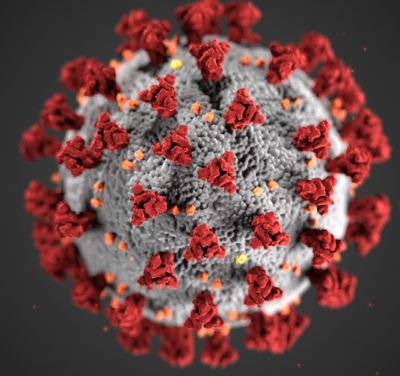
A rendering of what the Covid 19 virus looks like under a microscope.
Healthcare workers themselves are also under growing strain. Nurses, physicians, and other healthcare professionals have reported increasing workloads and burnout, particularly in the years following the COVID-19 pandemic.
Many hospitals across Canada continue to face staffing shortages, forcing departments to reduce hours or temporarily close services. Rural communities often feel this impact the most, where losing even a small number of providers can dramatically reduce access to care.
Training more healthcare professionals is part of the solution, but workforce planning takes years. In the meantime, provinces are looking at ways to expand the roles of nurse practitioners, pharmacists, and other healthcare providers to help fill the gaps.
Oral Health and the New Federal Dental Program
One area that has historically existed somewhat outside Canada’s core healthcare system is dental care.
Unlike physician visits and hospital services, dental treatment has traditionally relied heavily on private insurance or out-of-pocket payments. For many Canadians, especially seniors and lower-income households, this has meant delaying or avoiding dental care altogether.
When patients delay dental treatment because of cost, small problems can become serious infections or systemic health issues.
The federal government recently introduced the Canadian Dental Care Plan (CDCP) to help expand access to dental services for eligible Canadians without private insurance. The program is expected to gradually provide coverage for millions of people, particularly seniors, children, and low-income families.
Dental professionals say the initiative could make a meaningful difference if implemented effectively.
“Oral health is closely connected to overall health, yet it has historically been separated from the rest of the healthcare system,” says Dr. Arash Ravanbakhsh. “When patients delay dental treatment because of cost, small problems can become serious infections or systemic health issues. Expanding access to preventive dental care is an important step toward improving overall health outcomes.”
While the program is still being rolled out, many experts see it as an acknowledgement that oral health should be treated as an essential part of healthcare rather than an optional service.
The Role of Prevention
Another area where Canada’s healthcare system has struggled is prevention.
Much of the system is built around treating illness once it occurs rather than preventing it in the first place. Preventive care such as regular checkups, screenings, vaccinations, and early intervention can reduce long-term costs and improve patient outcomes.
Yet preventive services are often underutilized, particularly among populations that already face barriers to care. Expanding access to primary care, dental services, and community health programs could help address this imbalance.
Investing in prevention may not always produce immediate political results, but over time it can reduce hospital visits, lower healthcare costs, and improve overall public health.
Closing the Gap
Canada’s healthcare system still delivers high-quality care to millions of people every year. Doctors, nurses, and healthcare workers across the country continue to provide life-saving treatment and compassionate care under challenging circumstances.
But the gap between expectations and reality is becoming harder to ignore.
A healthcare system that is accessible, sustainable, and capable of meeting the needs of the people it serves.
Addressing the problem will require coordinated efforts across federal and provincial governments, better workforce planning, and a renewed focus on preventive care. Expanding programs such as the Canadian Dental Care Plan may also signal a broader shift toward recognizing that healthcare includes more than just hospitals and physician visits.
For Canadians, the goal remains the same as it has always been: a healthcare system that is accessible, sustainable, and capable of meeting the needs of the people it serves. Closing the gap between promise and reality will be one of the country’s most important challenges in the years ahead.
This is a news story for those with an interest in barrier-breaking science.
A Brock University quantum physics research team is laying the groundwork for next-generation innovations in a wide range of products.
“Quantum” refers to the smallest unit — photons, electrons, atoms or molecules — that make up a physical substance.
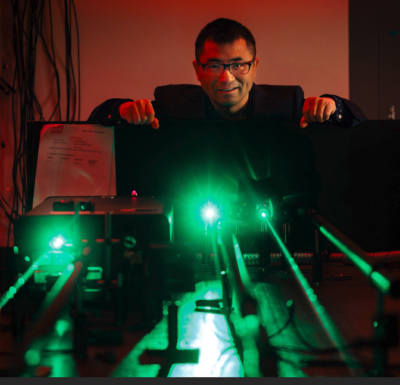
Brock University Associate Professor of Chemistry Jianbo Gao
In his latest project, Associate Professor of Chemistry Jianbo Gao is studying advanced nanostructured materials, which are made of components such as gold, semiconductors and crystals the size of a nanometer, which is a billionth of a metre. By comparison, a human hair is around 60,000 to 100,000 nanometres thick.
At this minuscule size, materials have different properties than they do when they are larger, expanding scientists’ understanding of physics properties, Gao says.
“With this fundamental science research, we can develop many different novel technologies and answer unknown questions in the fundamental fields of photophysics, physical chemistry and electrical engineering, then translated into the fields of quantum technology and generative artificial intelligence,” he says.
h.
Building on his pioneering research on introducing quantum dots into solar cells, Gao and his team are developing devices that can be integrated into fibre optic cables, autonomous driving systems and graphics processing units used in generative artificial intelligence (AI). Their work is focused on human-made nanocrystal semi-conductors called quantum dots.
Quantum dots create a type of light in next-generation single photon emitters, equipment used in quantum communications, computers and other technologies.
Gao and his team are now creating photosensing devices, or small chips, based on nanostructured materials that can perceive light beyond the range of human vision. The researchers are using a state-of-the-art ultrafast laser to create those novel devices.
“These extremely sensitive, fast response devices can detect extremely weak light even in complete darkness, capture fast dynamics occurring in less than a trillionth of a second, and achieve remarkably high detection efficiency,” says Gao.
Integrating these small chips into optical quantum communication fibres facilitates secure, reliable, light-speed transmission of communication over long distances, says Gao.
He says this could boost security and performance for global technology companies that have their own fibre optic cable networks.
“Dr. Gao and his team are on the cutting edge of quantum technologies that have the potential to revolutionize the speed and efficiency we’ve come to rely on as a society,” says Brock Vice-President Research Tim Kenyon. “
The small chips could also enable self-driving cars to see clearly and faster at night, “spotting people, obstacles, buildings, surrounding environment that normal cameras can’t, making nighttime driving safer and more reliable,” says Gao.
In the area of generative AI, the chips could help produce images that are invisible to the human eye –– in the infrared wavelengths –– so that in-depth and comprehensive medical imaging can be achieved.
The project is supported by an Idea to Innovation (I2I) grant from the Natural Sciences and Engineering Research Council of Canada (NSERC), which is funded by the Government of Canada.
“Dr. Gao and his team are on the cutting edge of quantum technologies that have the potential to revolutionize the speed and efficiency we’ve come to rely on as a society,” says Brock Vice-President Research Tim Kenyon. “This prestigious, competitive award indicates the promise that Dr. Gao’s research shows in his field.”
NSERC’sIdea to Innovation (I2I) grantssupport university and college researchers to develop promising technologies and transfer these to new or established Canadian companies.
“Science and technology innovation drive sustainable economic growth,” says St. Catharines Member of Parliament Chris Bittle. “Industries will apply the benefits of Dr. Gao’s exciting invention, a partnership personifying the Canadian government’s commitment to the betterment of society.”
Included on Gao’s team is Brock LINC Innovation and Commercialization Manager Noshin Hashim. She will be leading efforts to commercialize Gao’s devices through intellectual property management, market positioning and industry outreach.
“The I2I funding supports Dr. Gao’s transition from discovery research to prototype development and industry validation, advancing Brock University’s applied research momentum,” says Brock LINC Executive Director of Innovation, Commercialization and Entrepreneurship Farzana Crocco.
The Art Gallery of Burlington holds their first lecture in their Friends of the AGB talk series with Perry Gallery artist, Phuong Nguyen. Tickets include refreshments and open wine and beer bar.
Born and raised in Tkaronto (Toronto), Phuong Nguyen is a visual artist working in representational oil painting and experimental weaving. Nguyen uses these mediums to explore themes of Ornamentalism and the relationship between exoticism and violence by referencing the aesthetics and the history of Chinoiserie and South East Asian/Vietnamese femininity.
This event is FREE for Friend Plus and Philanthropic level members. Please log in at the top right of the registration page with your email address to access your discount.
For those preparing for the October 26th municipal election, there are some real surprises.
Last week the provincial government introduced the Better Regional Government Act 2026
Regional Chairs in the following regional governments will be directly appointed in the Regions of:
Regional Chair Gary Carr no longer has to worry about getting elected. His job will be eliminated.
Durham, Halton, Muskoka, Niagara, Peel, Waterloo and York, plus Simcoe County, to improve strategic alignment with provincial priorities and ensure more efficient, streamlined regional decision
The information released by the government adds:
“Local governments are key partners in delivering on shared priorities and ensuring Ontario is positioned well to face current economic threats. The Better Regional Governance Act, 2026, if passed, would:
Support better alignment between regional decision-making and shared provincial-regional priorities by allowing the Minister of Municipal Affairs and Housing to appoint regional chairs in certain These individuals would receive “strong chair” powers—an enhanced leadership model that will enable them to deliver on government priorities like housing and fiscal responsibility.
Reduce the cost of government and support efficient decision-making in Niagara Region and Simcoe County by reducing the size of Simcoe County Council and Niagara Regional Council from 32 members to 17 and 13 members, respectively (the head of council of each lower-tier municipality, plus an appointed regional chair).
Provincially Appointed Regional Chairs
Inconsistent methods for chair selection, growing regional council sizes and the potential for misalignment between provincial and municipal priorities are slowing down decision-making at a time when Ontario needs decisive action in the face of economic threats.
The province is addressing these issues by directly appointing chairs in the regions of Durham, Halton, Muskoka, Niagara, Peel, Waterloo and York, plus Simcoe County, to improve strategic alignment with provincial priorities and ensure more efficient, streamlined regional decision-making
Strong Chair Powers
Ontario is facing unprecedented challenges and we need local leadership to be equipped with the right tools to drive meaningful change.
From setting up organizational structures, to proposing by-laws to help advance provincial priorities such as building more homes, we have already seen strong mayors put their powers into action in a way that benefits their communities and Ontario as a whole.
Similarly, appointed chairs will be given strong chair powers. These powers will mirror strong mayor powers, which currently exist in 216 of Ontario’s 241 lower-tier and 173 single-tier municipalities.
We are giving local leaders the ability to speed up decision-making, end dysfunction at the regional level and create the conditions to expedite housing and infrastructure development so more people can find an affordable place to call home.
Strong chairs would be granted the following powers, mirroring the powers granted to strong mayors:
Appoint/dismiss the region/county’s Chief Administrative Officer
Hire/dismiss division heads and determine the organizational structure of the region/county.
Create committees of council, assign their functions and appoint chairs and vice-chairs of committees.
Bring forward matters tied to provincial priorities for council consideration.
Appoint the chairs and vice-chairs of prescribed local boards
Direct staff in relation to the head of council’s exercise of powers and duties.
Veto certain by-laws if the head of council is of the opinion that all or part of the by-law could potentially interfere with a provincial priority
Propose the municipal budget and in-year budget amendments, which would be subject to council amendments and a separate head of council veto and council override process.
Propose certain municipal by-laws if the head of council is of the opinion that the proposed by-law could potentially advance a prescribed provincial priority. Council can pass these by-laws if more than one third of council members vote in favor.
Regional Council Composition Changes
According to the most recent census, Niagara Region has 32 councillors representing a population of 477,941, and Simcoe County has 32 councillors representing a population of 351,927. These regional councils are substantially larger on a per population basis than their peers.
An unwieldy council with too many decision-makers creates confusion and economic inefficiencies which makes it harder for council to deliver results for their residents. It also adds substantially and unnecessarily to the cost of local government.
The province is taking decisive action and reducing the number of councillors in both municipalities while ensuring these local governments remain representative, effective and focused on delivering results.
Nominations for the 2026 municipal elections open on May 1, Making these changes now gives impacted municipalities and prospective candidates time to prepare and adjust plans for the fall municipal election.
Changes would come into effect for the 2026-2030 municipal council term, starting on November 15, The current chairs, warden and councillors would retain their roles until the new councils are sworn in.
Simcoe County Council Composition
In response to a request from the warden of Simcoe County, we are reducing Simcoe County Council from 32 members to This will include heads of council of the 16 lower-tier municipalities plus the appointed warden. The smaller regional council would continue to use weighted voting, which has been a longstanding practice in the County (for more on weighted voting, see slide 10).
In 2025, Simcoe County proposed reducing the size of its council from 32 to 17 members but narrowly failed to achieve the required triple majority, where a restructuring is not valid unless there is support from:
a majority of the upper-tier council,
a majority of the lower-tier councils, and
the total number of electors in the supportive lower-tier municipalities representing a majority of electors in the upper-tier.
The proposal met two of the three requirements and only failed due to a tie among lower-
The changes align with the locally developed proposal. Reducing council size and streamlining decision-making will allow for more efficient council function and deliver better value for local
Niagara Regional Council Composition
Local leaders and communities in Niagara have raised concerns that the region’s current structure creates duplication, inefficiencies, and fragmented decision-making that makes it difficult to achieve economies of scale and deliver services effectively, while placing an unnecessary burden on taxpayers.
Currently, the upper- and lower-tier municipalities in Niagara have a combined 126 council members for a population of about 475,000 By comparison, Toronto City Council has 26 members for a population of over three million and Queen’s Park has 124 Members of Provincial Parliament representing over 16 million people across the province.
To respond to these concerns from local leadership, Niagara Regional Council would be reduced from 32 members to 13 members. The new council would include the heads of council of each of Niagara’s 12 lower-tier municipalities plus the regional chair, removing 19 regional councillor roles. The smaller regional council would use weighted voting (for more on weighted voting, see slide 10).
The changes respond directly to these concerns by creating a more streamlined regional council, enabling efficiency, clearer decision-making and better alignment with regional and provincial priorities.
Weighted Voting
The changes would also enable the Minister to implement weighted voting in upper-tier municipalities and establish rules for weighted voting to ensure composition maintains fair local representation.
This change would allow upper-tier council votes to reflect population and other concerns.
Upper-tier municipalities already have the ability to enact weighted voting locally. Simcoe County already has this system in place. Weighted voting may also be applied to other upper tiers in the future following consultation with local leaders.
This, and all other proposed changes, will be posted on the regulatory registry for consultation.
With respect to Niagara specifically, the government will work with Niagara municipalities to develop a weighted voting framework to facilitate the transition to the new council structure in the Region and ensure appropriate and effective The final framework will be informed by local feedback.
Following consultations, this framework would be brought into effect before the start of the 2026-2030 term of council.
What is Weighted Voting?
A system where each member of council may be assigned a different number of votes.
The number can be determined by many factors, including population or the number of electors in the ward represented.
Currently, upper-tier municipalities have the option of using weighted voting. If these proposed changes are passed, weighted voting could be established by either:
local by-law, passed via the triple majority process, or
a regulation made by the Minister of Municipal Affairs and Housing.
Since different individual members of council may have a different number of votes, in a weighted vote, a simple “majority of members” may be different from the “majority of weighted votes.”
Looking Ahead
The Better Regional Governance Act, 2026, is one more step in the government’s plan to protect Ontario amid global economic uncertainty. By providing municipalities with clearer leadership and stronger tools, we are helping local governments respond more quickly, efficiently and effectively to economic and housing challenges.
Legislative changes, if passed, and associated regulatory changes, would support better alignment between regional decision-making and shared provincial-regional priorities, respond to concerns from local leadership and ensure local governments remain representative, effective and focused on delivering results and better value for local taxpayers.
These measures reinforce Ontario’s commitment to working with municipalities to identify ways to strengthen local governance in Niagara, Simcoe and beyond. Working together to advance shared provincial-municipal priorities helps advance housing and economic development, preparing both individual municipalities and the province as a whole for growth.
Spring is finally stretching awake, and you are invited to dig in with us! Developed in partnership with BurlingtonGreen and Grow Native Halton, and in collaboration with Michele Dent, the Community and Medicine Garden is a community-driven initiative focused on increasing biodiversity along the waterfront.
Participants will take part in a series of guided, hands-on activities throughout the garden including tobacco planting and seed ball-making. The day will begin with seed songs shared by Kaniehtenhawi Deer, grounding the planting in intention and connection to the land.
Spring is finally stretching awake, and you are invited to dig in with us at the Art Gallery of Burlington (AGB) for a hands-on celebration marking the opening of the Community and Medicine Garden. Come connect, plant, learn, and celebrate the arrival of spring after a long winter.
Developed in partnership with BurlingtonGreen and Grow Native Halton, and in collaboration with Michele Dent, the Community and Medicine Garden is a community-driven initiative focused on increasing biodiversity along the waterfront. Located at the Lakeshore Road entrance, the garden transforms the AGB’s outdoor grounds into a living classroom for creative and ecological learning.
The day will begin with seed songs shared by KaniehtenhawiDeer, grounding the planting in intention and connection to the land. Participants will then take part in a series of guided, hands-on activities throughout the garden.
Michele Dent will lead a session on tobacco teachings and planting, sharing knowledge about the cultural significance of tobacco and guiding participants in how to plant and care for seedlings throughout the growing season.
AGB’s Community Generator Artists-in-Residence Carly Franklin and Kamaldeep Kaur will plant the raised beds with indigo, cosmos, coreopsis, marigold and more. These plants are to be harvested in the fall and used in their research into textiles, inks, and natural pigments, supporting more sustainable material practices within their work and in AGB’s studios.
Looking to start a garden at home or in your neighbourhood? Guests will receive seed packages generously provided by OSC Seeds, and BurlingtonGreen will lead a hands-on seed ball-making activity. These small balls of clay, soil, and wildflower seeds can be taken home and planted to support pollinators and native plant growth.
Want to roll up your sleeves to plant and make with us?
Wear weather-appropriate clothing and closed-toe shoes
Bring gardening gloves if you have them (optional)
Dress for getting your hands in the soil
The learning journey will continue throughout the season and into the harvest.
Michele Dent returns on September 2 from 6:00 – 7:30 pm for a Tobacco Harvesting Workshop. This session will focus on harvesting and drying tobacco, as well as teachings connected to its use. Participants will also create clay seed pods for planting future generations of seeds. Register here for the September program.
Keep an eye out for Carly and Kamaldeep’s eco-printing and natural pigments workshops. Carly Franklin’s hands on workshop will teach participants to use two different eco-printing techniques, using flowers from the AGB Community Garden, to create two beautiful silk scarves on August 15 from 1pm – 3:30pm. Kamaldeep Kaur’s From Garden to Painting: Natural Pigments in Indian Miniature Art workshop will invite participants to explore the ancient tradition of making paint from natural ingredients found in the garden on September 19 th from 12pm – 4pm. Register forEco-Printing with Flowers and From Garden to Painting: Indigo Pigment Workshop.
Together, we are planting the seeds for future programs and cultivating a rich, biodiverse ecosystem that will grow with and support the gallery and its neighbours. The Community Garden supports learning about native plants and their applications in natural dyeing, textile arts, and sustainable craft practices. These plantings contribute to AGB programs and artist residencies, providing materials that support environmentally conscious artistic production.
Eco-printing and natural pigments workshops. Carly Franklin’s hands-on workshop will teach participants to use two different eco-printing techniques, using flowers from the AGB Community Garden. Image Credit: Alize Zorlutuna’s Natural Dye Workshop, 2024. Art Gallery of Burlington.
The AGB’s Community and Medicine Garden and sustainable arts program has been generously sponsored by TD Friends of the Environment, in partnership with BurlingtonGreen and Grow Native Halton. In-Kind sponsorship provided by OSC Seeds – Ontario Seed Co. Limited and Backed by Bees.
The Art Gallery of Burlington is located on the ancestral territory of many Indigenous Nations including the Anishinaabeg, Haudenosaunee, and Métis peoples. The territory is mutually covered by the Dish with One Spoon Wampum Belt Covenant, an agreement between the Iroquois Confederacy, the Ojibway, and other allied Nations to peaceably share and care for the resources around the Great Lakes. We acknowledge that the land upon which we gather, to create and learn, is part of the Treaty Lands and Territory of the Mississaugas of the Credit.
The AGB is fully wheelchair accessible, with wheelchairs available for loan. Both the Lakeshore and Brock lobby entrances feature automatic doors, and ramps provide access throughout the building. An elevator is available to reach the second-floor studios. Service animals are welcome, and gender-neutral washrooms are available on-site.
There are many reasons why people aren’t able to care for their mental health.
Long wait lists, high cost and stigma are just some of the hurdles people can face when looking for support.
This spring, with funding from the Ontario Trillium Foundation and the support of our community, Eagles Nest is able to provide free, virtual mental health workshops for youth and parents. Click HERE to learn more about these workshops.
These workshops, Showing up for the Hard Stuff and Parenting with Perspective, give practical tools and strategies to help people care for their mental health and the mental health of others in an easy to access, no-cost format.
Mental health matters. When barriers are reduced more people can now access the care they need.






 By Gazette Staff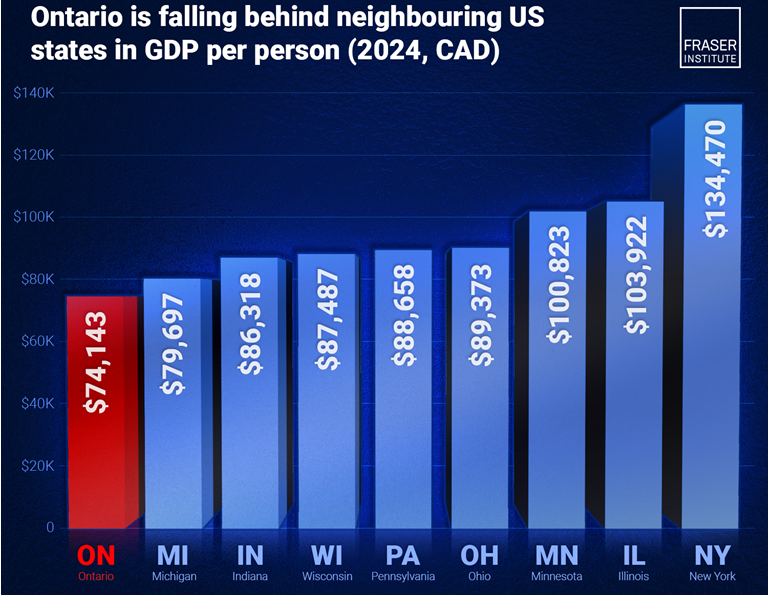

 By Gazette Staff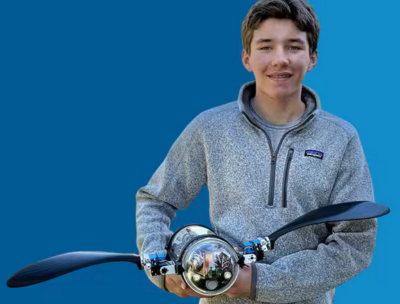

 By Gazette Staff


 By Gazette Staff
 For the first time ever, every Commonwealth nation and territory will receive its own Baton for its celebrations. The Canadian Baton is being crafted by an indigenous artist who will customize and decorate it to represent our culture. The Baton will be ready in a few weeks. Every commonwealth country sends a Baton to Glasgow. The Canadian Baton will be part of that reception on May 6th.
 By Pepper Parr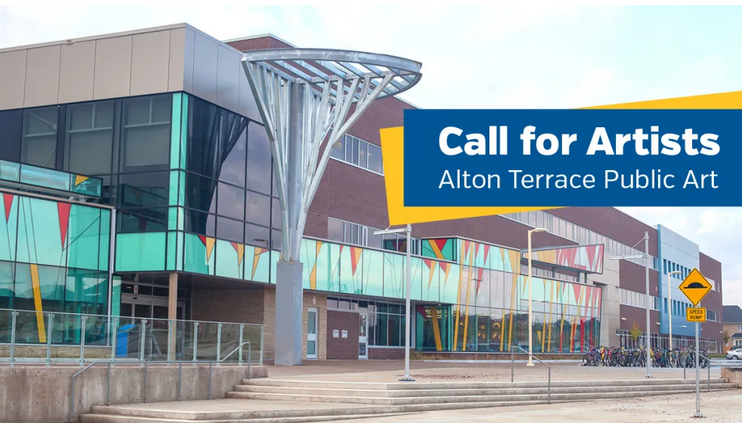


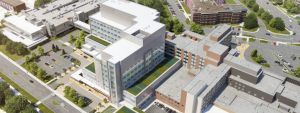 Joseph Brant Hospital (JBH) is a full-service, academic community teaching hospital located in Burlington, Ontario, along the picturesque banks of Lake Ontario. It is a modern, state-of-the-art facility, serving residents in Burlington as well as surrounding communities of Halton Region, Hamilton, Waterdown, Flamborough, and Stoney Creek.

 By Pepper Parr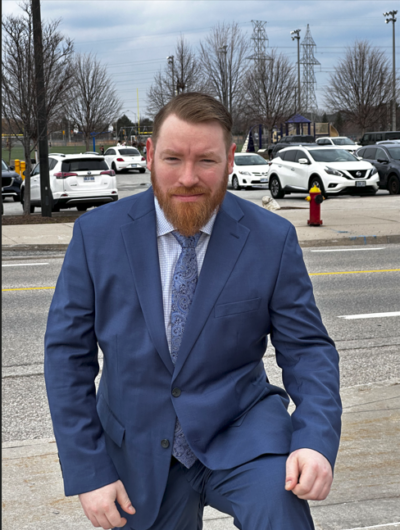
 By Gazette Staff
 Each year on April 7, Canadians are encouraged to wear green, share their stories, talk with their families about their donation decisions, and formally register as organ and tissue donors.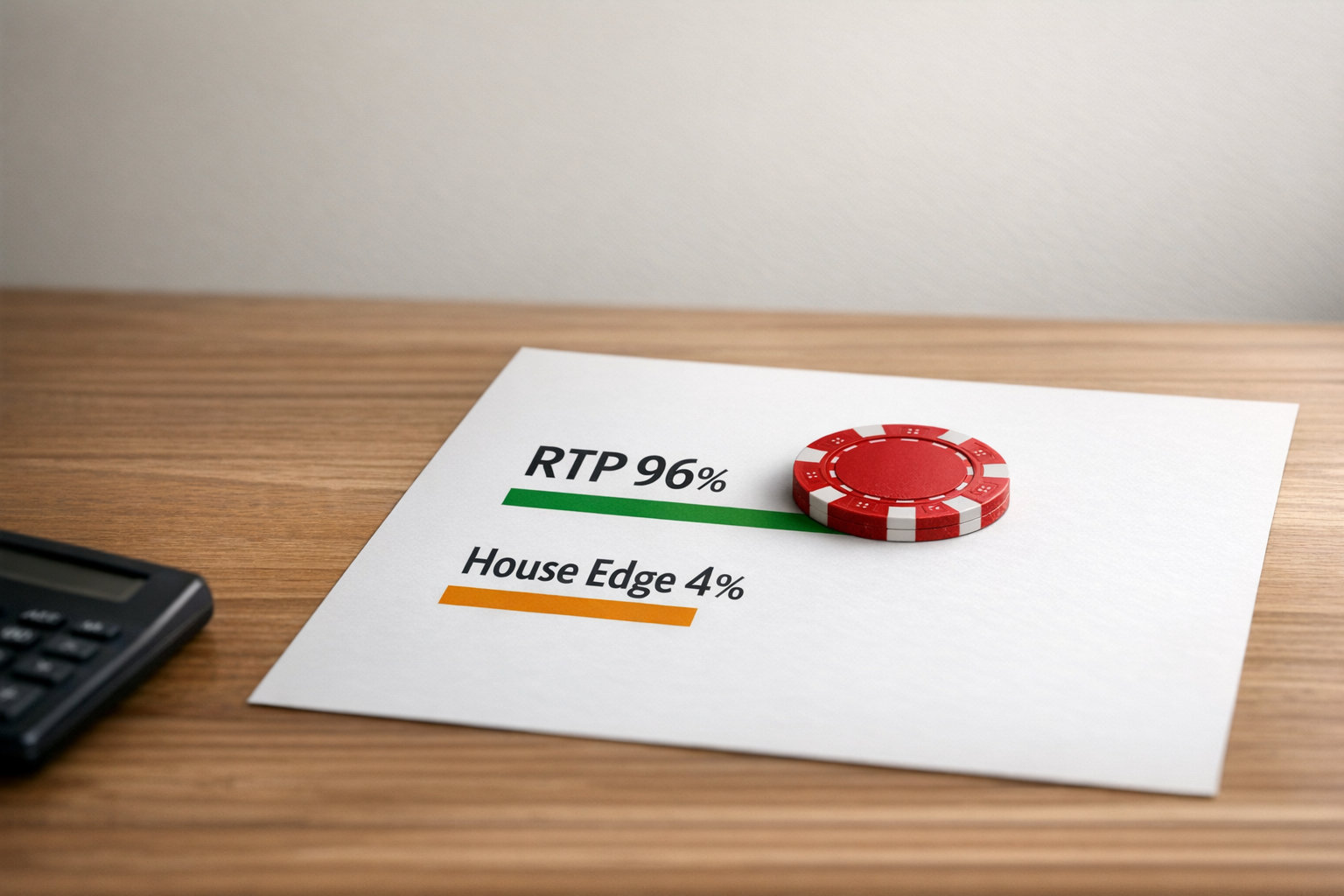
 By Sadie Smith

 Players sometimes misunderstand what RTP and house edge mean for their own results. A common misconception is that a higher RTP means better outcomes in the short term, but both metrics are designed to reflect expectations over a large number of plays.
 By Gazette Staff
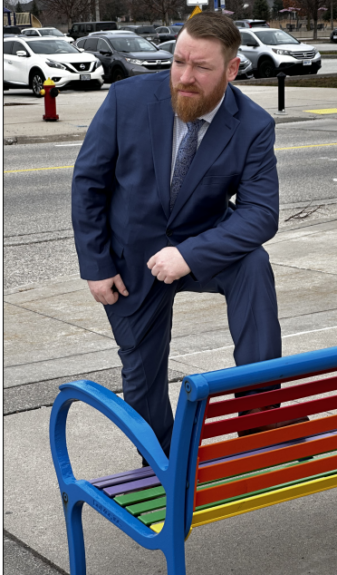
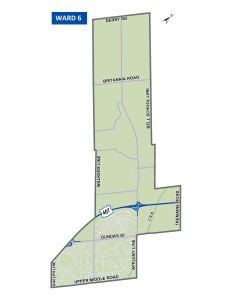 Burlington resident Rowen Fraser has announced that he will seek the Burlington Ward 6 Council seat in the October municipal election.
 By Gazette Staff
 Yard waste collection is for urban areas only.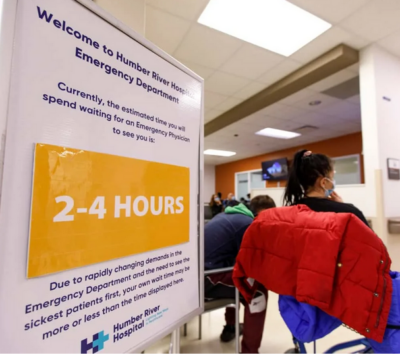



 Included on Gao’s team is Brock LINC Innovation and Commercialization Manager Noshin Hashim. She will be leading efforts to commercialize Gao’s devices through intellectual property management, market positioning and industry outreach.
 By Gazette Staff
 Born and raised in Tkaronto (Toronto), Phuong Nguyen is a visual artist working in representational oil painting and experimental weaving. Nguyen uses these mediums to explore themes of Ornamentalism and the relationship between exoticism and violence by referencing the aesthetics and the history of Chinoiserie and South East Asian/Vietnamese femininity.

 Spring is finally stretching awake, and you are invited to dig in with us! Developed in partnership with BurlingtonGreen and Grow Native Halton, and in collaboration with Michele Dent, the Community and Medicine Garden is a community-driven initiative focused on increasing biodiversity along the waterfront.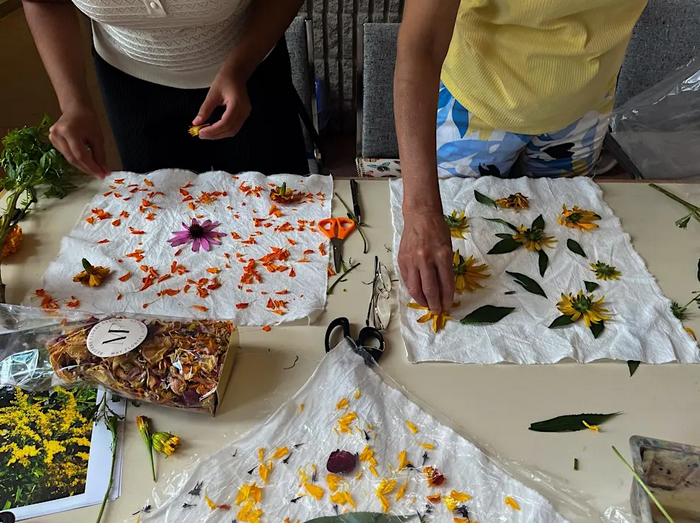
 This spring, with funding from the Ontario Trillium Foundation and the support of our community, Eagles Nest is able to provide free, virtual mental health workshops for youth and parents. Click
 These workshops, Showing up for the Hard Stuff and Parenting with Perspective, give practical tools and strategies to help people care for their mental health and the mental health of others in an easy to access, no-cost format.