By Gazette Staff By Gazette Staff
May 15th, 2026
BURLINGTON, ON
The weather this weekend sounds promising.
Burlington Green is holding an Eco Action day that will include:
🐦 Guided Bird Walk
🌍 The Four Sisters of Mother Indigenous Teaching
🌊 Beach Litter Clean-Up (or invasive plant removal workshops!)
*ADDED* Invasive garlic mustard and burdock removal workshops!
 BurlingtonGreen keeps the city’s beaches clean and free of rubbish. You can help keep it this way. All at the Beach on Saturday, May 16th, 8:30 am to noon. (1094 Lakeshore Road)
You can also drop in for climate resources and family-friendly eco-fun, including pollinator-friendly seed ball making, sharing your eco-actions, and nurdle discovery.
Beach clean up and invasive plant workshops are eligible for volunteer hours!
Click HERE to register

By Gazette Staff
May 14th, 2026
BURLINGTON, ON
 The Burlington Business Excellence Award More than 500 people attended. The Burlington Business Excellence Award More than 500 people attended.
The Award winners are:
Charity / Not-for-Profit Award: Food for Life Inc.
Sponsored by Enbridge Gas
Environmental Impact Award: Anaergia Inc.
Sponsored by CN Rail
Heritage Award: The Burlington Historical Society
Sponsored by SOL Recycling
Large Business Award: Mohawk College
Sponsored by RBC
New Business of the Year Award: ERS Burlington
Sponsored by MNP LLP
Small Business Award: Gem Limousine Service
Sponsored by Cogeco
Women Business Leader Award: Kelly Hoey — HIEC
Sponsored by Scotiabank and Scotia Wealth Management
Young Entrepreneur Award: Keyon Silva — FP Fitness
Sponsored by HIEC
Burlington Economic Development + Tourism Award for Excellence in Global Business: Paybilt Inc.
Sponsored by Burlington Economic Development + Tourism
Burlington Economic Development + Tourism Award for Excellence in Innovation & Technology: DentalAssist.ai
Sponsored by Burlington Economic Development + Tourism
Burlington Economic Development + Tourism Award for Excellence in Retail Innovation: Backed by Bees
Sponsored by Burlington Economic Development + Tourism
Burlington Economic Development + Tourism Award for Excellence in Tourism Leadership: Dan Lawrie International — Burlington Waterfront Sculpture Tour
Sponsored by Burlington Economic Development + Tourism
2026 Mayor’s Resiliency Award: Laurel Steel, A Nucor Company
Sponsored by City of Burlington
 Dan Lawrie with one of the hundreds of art pieces displayed along the Naval Promenade and sprinkled through the city. Each of the awards was earned trough dedication and improvement in the way the city works. Dan Lawrie, both personally and corporately, deserves kudos from the tens of thousand of people who have enjoyed the sculpture and the art work seen and appreciated on the Naval Promenade at Spencer Smith Park.
By Pepper Parr
May 13th, 2026
BURLINGTON, ON
Amazing what competition will do.
A Day or so ago, Dunkin’ Donuts announced it was returning to Canada and opening xxx locations across the country.
Today, Second Cup Café announced it will offer medium brewed coffee for $2 at participating locations across Canada, from May 13 until June 9. The four-week offer, the promotion is available all day and reflects growing demand for added value in the daily routines of Canadians and their everyday purchases.
The limited-time offer gives guests a simple way to enjoy Second Cup’s signature brewed coffee at a reduced price, whether they are starting their morning, taking an afternoon coffee break, or stopping in for a quick coffee and snack during the day.

“Coffee is part of the daily rituals of so many Canadians,” says Roxane Desjardins, Marketing Director at Second Cup Café. “With this offer, we are giving guests an accessible way to enjoy a premium coffee experience at Second Cup, at a time when value continues to matter.”
About Second Cup Café
A Canadian staple since 1975, Second Cup Café offers premium-quality coffee and specialty beverages. Focusing on sustainability and ethical sourcing, Second Cup provides customers with a refined and inviting café experience that celebrates coffee culture while supporting local communities.
About Foodtastic
Foodtastic is one of Canada’s largest restaurant franchisors, operating more than 1,200 locations across the country. Its diverse portfolio includes Freshii, Quesada, Pita Pit, Second Cup, Milestones, and over 22 other banners. Committed to quality, innovation, and growth, Foodtastic continues to expand its presence across North America.
This level of consolidation is never a good thing medium and long term for consumers.
By Pepper Parr
May 14th, 2026
BURLINGTON, ON
Are we about to see the end of the Strong Mayor Powers that Dog Ford gave municipal Mayors?
 City CAO Curt Benson is in place until the day before a new Council is sworn in in December of 2026. He was hurriedly put in place when Hassaan Basit left on pretty short notice to join the provincial government after serving the city for a mere 16 months. At a Council Standing Committee earlier this week, City CAO Curt Benson said that changes were being made by the provincial government and that details were yet to arrive.
He undertook to brief Council at its formal meeting on May 19
The Staff report under discussion said:
This is a non-binding policy meant to guide the Mayor of the City of Burlington when exercising their powers under Part VI.1 of the Municipal Act, 2002, commonly referred to as Strong Mayor Powers.
The use of Strong Mayor Powers are at the sole discretion of the Mayor except with respect to the adoption of the City’s annual budget. This policy aims to support and guide the Mayor when making decisions using Strong Mayor Powers, however compliance with its provisions is not necessary for a Strong Mayor Power decision to be of full force and effect.
Principles:
When considering the use of Strong Mayor Powers, the Mayor should have regard to the following;
-
-
- Any previous decisions made by Council on the matter in question.
- Advice from City Staff on the matter in question.
- If the timelines or situation allow for Council to form a position on the matter.
- Whether there are other, more inclusive, avenues for decision-making available.
References:
Bill 3, the Strong Mayors, Building Homes Act, 2022, received Royal Assent on Sept. 8, 2022, and came into force on Nov. 23, 2022. This bill created what is commonly referred to as Strong Mayor Powers in the province of Ontario.
There was considerable concern amongst members of Council on just what the Mayor could do – four of the six members of Council wanted major changes (the exceptions were Sharman and Bentivegna) to what Mayor Meed Ward could do. Selecting the City CAO was one that Council members wanted in on.
By Pepper Parr
May 14th, 2026
BURLINGTON, ON
Those who pay attention to what Council and City staff do day in and day out will have been interested in the Staff report that outlined how the role of Advisory Committees will be created and how they will operate.
The plan is solid, and the role out has merit.
 Burlingtonians will show up for public meetings and take an active part in any discussion – but they have to be given background briefings and decent opportunity to study and prepare. This meeting was one of those one way events: City Treasurer telling an audience what she was going to do. What isn’t clear, and what needs to be clear is: Will the public be at the table when staff is working on the specifics?
The report isn’t due back until Q1 2027 by which time we will know what the city is going to have in the way of a City Council. Will there be a new Mayor and a Council with some new faces and a different approach to citizen involvement?
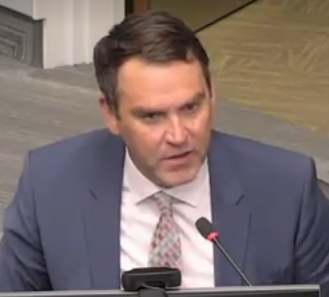
 Roland Tanner worked hard to bring about changes to the way Advisory Committees are created and what they are permitted to do.  Jim Young, along with Roland Tanner, prepared a detailed proposal on Advisory Committee changes – they didn’t even get a hearing. There were a number of people who put in a lot of time on pushing for changes: Roland Tanner and Jim Young will tell you that on that occasion they got less then even lip service.
Could it be different this time?
It could be (dare I say should be) different this time?
Reach out to each other. Form ad hoc committees. Don’t wait for the city to invite you – just show up.
One of the issues is always – who chooses the members of the Advisory Committees?
There are those in Burlington who would very much like to see a change and let community groups have the right to determine who holds at least a couple of the seats on any Advisory Committee.
The Indigenous community are said to meet regularly with city staff on developing policy papers: why couldn’t community organizations do the same thing?
One reason is that there really isn’t very much in the way of community organizations in Burlington. Oakville is reported to have more than a handful.
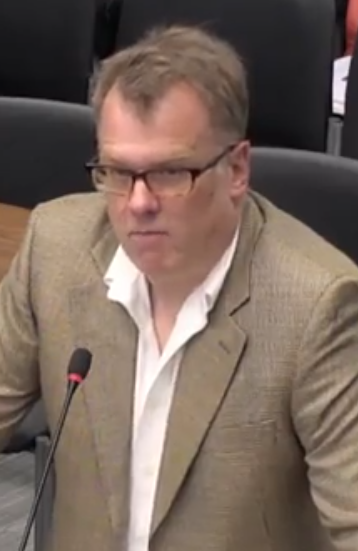
 Penny Hersh showed what could be done when EcOb was formed. (Yes, we know Penny didn’t create ECoB but she did use the organization to hold council member debates in every ward of the city.) Penny Hersh showed what could be done when EcOb was formed. (Yes, we know Penny didn’t create ECoB but she did use the organization to hold council member debates in every ward of the city.)
All that Burlington has is the (RCO) Roseland Community Organization that holds speaker series events and hosts debates during elections, both provincial and municipal.
There appears to be a change in the electoral wind – too early to tell if it will anything more than a little gust.
Related news article:
Council approves the creation of changes to the Advisory Committee process
 By Tom Parkin By Tom Parkin
May 14th, 2026
BURLINGTON, ON
Alberta also hit with high insolvencies, now 23% above the number in BC, which has 20% more population.
Ontario insolvencies double
Ontario insolvencies, monthly, Jan 2021 to Mar 2026

Perhaps “Insolvent Ontario” doesn’t have quite the same ring.
Doug Ford’s government is spending hundreds of millions of taxpayer dollars on the formerly illegal practice of using public money to pay for partisan advertising. That big ad buy tells voters he’s protecting Ontario jobs and businesses.
But despite his expensive PR push that you pay for, data shows that increasingly it is insolvency protection that is required in Doug Ford’s Ontario, according to data from the federal Office of the Supervisor of Bankruptcy.
The OSB’s latest monthly tracking of insolvencies — bankruptcies and proposals — was released Monday. In March there were 1,129 bankruptcies and 4,125 creditor proposals in Ontario.
That’s up from the precious month. It’s up from the same month last year. It’s double the number from about four years ago.
Trend to more insolvencies long pre-dates Trump 2.0
As a political slogan, Ford’s “protect Ontario” is designed to implicitly deflect blame for Ontario’s economic malaise onto external forces, presumably U.S. President Donald Trump.
But the insolvency numbers are part of a growing collection of data — including on employment, retail sales and GDP — showing Ontario’s economic weakness set in well before Trump. And that weakness deepened our vulnerability to his tariff attacks.
The number of consumer and business insolvencies in Ontario hit a peak in March, continuing a multi-year trend. In July 2022, when Ford’s PCs were first re-elected, there were 2,762 insolvencies. Since then the number of Ontario insolvencies has almost doubled to 5,254 in March.
Between March 2025 and March 2026 the number of insolvencies in Canada increased 10.2 per cent. But they increased nearly twice as fast — 19.1 per cent — in Ontario, the biggest increase in the country.
Alberta hit with 23% more insolvencies than BC in March
Several provinces are being hit by new peaks in insolvency, but on a per capita basis, Alberta stands out. In March, Alberta had about 23 per cent more insolvencies than neighbouring B.C. even though its population is about 20 per cent smaller.
Insolvencies, March 2026

By Tim Jones
May 14th, 2026
BURLINGTON, ON
If you’ve ever been to a Las Vegas casino or, indeed, any large casino resort, you’ll probably have noticed the jackpot tickers above the machines, notably slot machines.
They’ll show massive prizes, sometimes worth millions of dollars. It is quite alluring, and it’s conceivable that it attracts a lot of people to casinos, hoping for that lucky spin.
 Do you know how these prizes are won? The same experience occurs with online progressive jackpot slots, though there are certain differences. The main similarity, though, is that the headline prizes can be just as big, reaching several million dollars with some games. But do you know how these prizes are won? It’s actually quite simple, but it’s interesting when you break down the mechanics.
A prize funded by players
To start with, let’s explain what a progressive jackpot is. Every game technically has a jackpot, i.e., a top prize, but progressive jackpots are somewhat different. It is, in effect, a prize funded by players. Usually, it starts with a seed amount provided by the casino, let’s say $100K, and then a small amount is taken from each wager – small enough that you won’t notice, like 1 cent for every dollar – and that grows the jackpot.
As you can gather, it takes a lot of playing to grow the jackpot to several million. For instance, let’s say that the average wager was $1 and the jackpot contribution was 1%, then it would take 100 million spins to add a million to the prize, or a billion spins to add 10 million. There is an economies-of-scale principle applied by casinos, so people will be playing the same game, growing the jackpot across different casinos. Sometimes multiple games are connected to a jackpot network, allowing the prize to grow more quickly.
 Everyone wants to see this show up on the screen. It does happen. So, how is the prize won? It’s not based on a specific set of results, nor some combination of symbols. It’s random. The developer behind the game will use a random number generator to decide the exact amount that will be paid as the jackpot. For example, it might be $3,743,164.54. Nobody will know that figure – not even the casino operators.
The tipping point
Can you guess how it is awarded? Well, the player whose jackpot contribution tips the balance by reaching the previously determined amount will be awarded the jackpot. For instance, if we use the figure above: imagine that the jackpot currently stood at $3,743,164.53, and your $1 bet added the final penny to the jackpot; you would be awarded the prize. As we said, it’s quite simple.
 Winning is a thrill! The attraction of these games is that they are random. However, there are a couple of caveats. For a start, bigger bets are more likely to win. Why? Well, if you are betting $100 per spin, you are more likely to be the person who tips the balance with the jackpot contribution than the person playing for 20 cents. Secondly, some games, but certainly not all, will have minimum bet requirements to be eligible for the progressive jackpot. But everyone usually has a chance.
As you might expect, a mini internet ecosystem has grown up around online progressive jackpots, with websites tracking the prizes and discussing tactics. It is sometimes worthwhile checking these platforms to see where to find the biggest prizes, but it’s worth bearing in mind that it is impossible to tell when and where the massive prize will be delivered.
By Gazette Staff
May 13th, 2026
BURLINGTON, ON
Flames Volleyball is raising the standard for off-season development with the launch of its Flames Summer Training Program, a high-performance training environment led by current U SPORTS athletes, Ontario University Athletics (OUA) competitors, and elite-level guest coaches.
The program begins June 2 at multiple locations in Burlington, Ontario, including: Robert Bateman Community Centre, Alton Community Centre, and Tansley Wood Community Centre. The summer training program offers a selection of morning, afternoon and evening sessions.
 At the core of the program is direct access to the next level. Throughout the summer, athletes will train alongside and learn from a rotating roster of university players and experienced coaches, bringing real-time insight, pace, and expectations from the OUA and post-secondary game directly into each session. At the core of the program is direct access to the next level. Throughout the summer, athletes will train alongside and learn from a rotating roster of university players and experienced coaches, bringing real-time insight, pace, and expectations from the OUA and post-secondary game directly into each session.
Designed for athletes aged 15–18, the program delivers a focused, high-intensity training experience where small-group instruction and game-speed execution drive measurable improvement. With strict capacity limits, every session ensures athletes receive meaningful reps, individualized feedback, and consistent exposure to high-performance coaching.
“This is about bringing the university gym into the summer environment,” said Jimmy Earl, Director, Flames Volleyball Club. “Athletes aren’t just training, they’re learning how the next level actually operates. The speed, the communication, the decision-making – it’s all built into every session.”
The summer-long coaching lineup includes:
- Will Brewer – Outside Hitter for the Windsor Lancers; Team Ontario Elite; OVA Champion, and two-time OUA Silver Medalist
- Matt Powell – Matthew Powell was named the 2026 Canadian Collegiate Athletic Association Men’s Volleyball Coach of the Year after leading the Seneca Sting. Known for his focus on leadership, accountability, and holistic student-athlete development, Powell has built a culture of excellence both on and off the court. His impact has quickly positioned Seneca as one of the top rising programs in Canadian collegiate volleyball.
- Kai Taylor – Outside Hitter for Toronto Metropolitan University; U-16 indoor national championship, as well as a bronze medal at nationals for beach volleyball.
- Marko Milenkovic – Team Ontario coach and former TMU athlete; Marko Milenkovic is a Team Ontario Coach and former TMU/Ryerson athlete. He is a 3-time U Sports Academic All-Star Canadian, and 3-time OUA Academic Achievement Award. Before Ryerson he spent five years as a key member of the Toronto West VBC (2009-2014). He served four years as captain of the Toronto West VBC and was awarded Jr. Boys MVP (2012-13) and Sr. Boys MVP (2013-14) while playing for Richview Collegiate Institute
Featured guest coaching appearances throughout the summer also include: Matt Powell, CCAA Coach of the Year, who will be leading Tuesday evening sessions in June.
Additional university and high-performance guest coaches to be announced in the coming weeks.
 Good so far – how did the opposing team handle the move? “This program is built to reflect what training looks like at the university level,” added Will Brewer, who will oversee day-to-day training of the summer program. “We’re focused on creating a competitive environment where athletes are getting a high volume of quality reps, immediate feedback, and a clear understanding of the pace and expectations at the next level. With smaller groups, we’re able to coach details that make a real difference.”
Unlike traditional camps, the Flames Summer Training Program is structured as a progressive development system, where athletes build consistency, confidence, and performance through repetition, competition, and direct coaching feedback.
Program highlights:
- U SPORTS and OUA-level training environment
- Small-group sessions with a maximum 5:1 athlete-to-coach ratio
- High-repetition, game-speed skill development
- Tactical gameplay and decision-making training
- Integrated speed, agility, and movement work
- Competitive open gym and live-play environments
Programming runs throughout the summer with evening sessions beginning June 2 (Tuesdays and Thursdays), and daytime training launching June 8 (Monday to Thursday weekly, excluding the first week of August).
Capacity is limited to 15 athletes per session, ensuring a high-performance, high-touch coaching experience. Pricing begins at $40 per session or $60 for a full-day training block.
For more information and registration details, visit https://www.flamesvolleyball.com/
 At the end of the game, it is the bonds created and how well you played. About Flames Volleyball
Flames Volleyball is a Burlington-based, not-for-profit volleyball club focused on athlete development through high-quality coaching, structured training environments, and competitive gameplay opportunities. Operating year-round, Flames Volleyball provides programming for athletes across multiple age groups, with a strong emphasis on skill progression, game understanding, and long-term athlete growth.
By Pepper Parr
May 13th, 2026
BURLINGTON, ON
 Brenda Heatherington at the opening of the Performing Arts Centre 15 years ago. Was it just 15 years ago that Brenda Heatherington presided over the Official opening of the Performing Arts Centre?
It has been an amazing period of time with some amusing bumps along the way.
On Thursday, May 28th at 7:00 pm the 26/27 program will be revealed
This is a MEMBERS ONLY event.
This exclusive event offers a first look at the remarkable artists, performances, and experiences planned for the upcoming season. Guests will hear highlights from the new lineup, enjoy live performance moments, and gather with fellow arts supporters to celebrate the role BPAC has played in bringing our community together through the performing arts.
Over the past fifteen years, BPAC has become a vibrant cultural gathering place for Burlington and the surrounding region. This anniversary season honours that journey while looking ahead to the next chapter with inspiring Canadian and international artists, exciting new initiatives, and opportunities for our community to connect through the arts.
Are there advantages to being a BPAC member?
There certainly are. You get to attend the reveal of the program for the next season, and you are able to decide what you want to see and place your ticket order that evening.
Some of the very popular events get sold out quickly.
SIGN Me Up Click HERE

By Gazette Staff
May 13th, 2026
BURLINGTON, ON
City of Burlington administrative services will be closed for Victoria Day on Monday, May 18. For a list of which City services and facilities are available on the Victoria Day holiday, please see the summary below or visit burlington.ca.
Fireworks reminder
Fireworks are permitted to be set off on Victoria Day only (May 18). Please continue to use our valued outdoor spaces responsibly – community cooperation is essential to helping keep everyone safe during Victoria Day. The City’s bylaw regulates where and when residents can set off family (low hazard) fireworks. For more information about who to contact if you have a concern, visit burlington.ca/fireworks.
City services and closures
Animal Services
The Animal Shelter at 2424 Industrial St. will be closed to appointments on Monday, May 18. To report an animal control related emergency on a holiday, please call 905-335-7777.
Burlington Transit
Burlington Transit will operate on a holiday schedule on Monday, May 18. For real-time bus information and schedules, visit myride.burlingtontransit.ca.
Customer Service at the Burlington GO Station, 2101 Fairview St., and Specialized Dispatch will be closed on Monday, May 18.
Find real-time arrival information and plan your trip using Google Maps. From a mobile phone, access Google Maps and click on your bus stop to see arrival times. From a computer, select your bus stop, then click on ‘See Departure Board’ to view arrival times.
City Hall
Service Burlington and the Building, Renovating and Licensing counter on the main floor of City Hall at 426 Brant St., will be closed on Monday, May 18.
Many service payments are available online at burlington.ca/onlineservices. If your request is urgent, call 905-335-7777 to connect with the City’s live answering service.
For online development services, MyFiles can be used by residents who have applied for Pre-Building Approval. Check the status of Pre Building Approval applications at burlington.ca/MyFiles.
Halton Court Services – Provincial Offences Office
Court administration counter services at 4085 Palladium Way will be closed on Monday, May 18.
Except for the Victoria Day closure, telephone payments are available at 905-637-1274, from 8:30 a.m. to 4:30 p.m., Monday to Friday. All in-person services are available from 8:30 a.m. to 4:30 p.m. Monday to Friday. Many services are also available by email at burlingtoncourt@burlington.ca or online at Halton Court Services. Payment of Provincial Offences fines is available 24/7 at paytickets.ca.
Parking
On Sunday, May 17 and Monday, May 18: Free parking is available downtown, on the street, in municipal lots and in the parking garage (414 Locust St.).
On Saturday, May 16: Pay parking downtown is required in high-demand parking lots (Lots 1, 4 and 5) and all on-street metered parking spaces. A three-hour maximum is in effect for all on-street spaces. Free parking is available in the remaining municipal lots and the parking garage (414 Locust St.).
NOTE:
- The Waterfront parking lots (east and west at 1286 Lakeshore Rd.) do not provide free parking on holidays.
- Parking exemptions are required to park overnight on city streets and for longer than five hours. Visit bylaw.burlington.ca for parking exemptions.
- Paid parking, on weekends only (including long weekends), at Beachway Park (1100 Lakeshore Rd) begins Saturday, May 16 using HONK Mobile.
Recreation Programs and Facilities
Drop-In recreation activities
Tansley Woods Pool at 1996 Itabashi Way and Centennial Pool at 5151 New St. are open on Victoria Day, Monday, May 18 for recreational and lap swimming. Drop-in swimming, skating and other program times vary for the long weekend. Drop in or reserve in advance. For schedules, visit burlington.ca/dropinandplay.
Splash pads opening
The City’s 10 splash pads will open on Friday, May 15. For a list of locations, visit burlington.ca/splashpads.
Outdoor activities
Burlington has a wide variety of outdoor activities to enjoy with your family during the long weekend, including:
- trails and multi-use paths, parks and playgrounds
- pickleball at Palmer Park (3409 Palmer Dr.) or Leighland Park (1200 Leighland Rd.) – book a court at burlington.ca/pickleball
- picnic sites at LaSalle Park (50 North Shore Blvd E.) or Hidden Valley Park (1137 Hidden Valley Rd.) – make a reservation at burlington.ca/picnics
- grass baseball diamonds and playfields for casual use. If the ground is soft or water is pooling, please refrain from use to help preserve field conditions and avoid unnecessary damage. For organized games or practices, please contact rentals@burlington.ca to reserve an appropriate space.
Golf
Tee times at Tyandaga Golf Course (1265 Tyandaga Park Dr.) can be booked online at tyandagagolf.com or by calling 905-336-0005, ext. 2.
Customer Service
Recreation, Community and Culture customer service is available to assist you over the holiday weekend:
- In person at recreation facility counters during program times (May 16 to 18)
- By email at liveandplay@burlington.ca (May 16 and 17)
- By phone at 905-335-7738, between 9 a.m. and 4 p.m. (May 16 and 17)
- Phone and email service are closed on Victoria Day, Monday, May 18.
Roads, Parks and Forestry
The administrative office will be closed on Monday, May 18. Essential services will be provided as required.
By Pepper Parr
May 13th, 2026
BURLINGTON, ON
What became clear very quickly at the City Standing Committee meeting earlier this week was that there is an election coming.
Chair of the meeting Rory Nisan, wore a tie for the first time in a long time: he is now a candidate for the Office of Mayor.
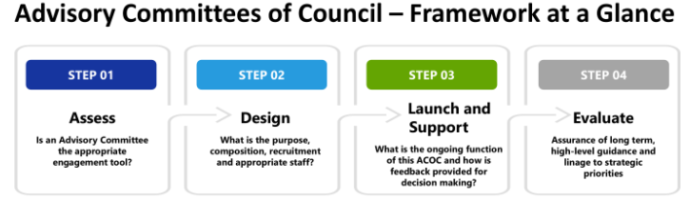
Time and attention were given to approve a new governance framework for advisory committees, with a comprehensive review scheduled for Q1 2027 to assess the effectiveness, structure, and engagement of these committees.
 This approach to Community Engagement could disappear if the proposal outlined in the Staff Report get adopted by the new Council that will be elected in October. Advisory committees were led by staff with smiles while residents pleaded their arguments for change. With votes to be had come October, Council said they were prepared to listen.
Those who pay attention to what happens at city hall have complained for years that Councillors gave less than lip service to what the Advisory Committees did with their time.
Some time after the election, in Q1 of 2027, we will see the Staff report. What Staff are setting out to do is set out in detail below. What comes of it will depend on the makeup of Council and who the Mayor is. Two candidates so far: Mayor Meed Ward has yet to file nomination papers. Ward 2 Councillor Lisa Kearns and Ward 3 Councillor Rory Nisan.
During the Council debate, there was agreement that the Advisory Committees need help.
Councillor Sharman said: “In the 16 years of being on Advisory Committees, I’ve often wondered why I was there. Despite the fact that we all know we are engaging advice, but we don’t actually take advice all that often. There is no formal way for them to give us advice … we haven’t figured out how to bake that into it.”
The Staff Report that was being debated suggested an approach.

Step 1: Is an Advisory Committee the appropriate engagement tool.
In Step 1, ACOCs should be viewed as one tool within the broader suite of engagement options outlined in Burlington’s Community Engagement Charter spectrum of participation. An ACOC should be considered when the level of engagement identified meets the criteria for Involve/Collaborate on the spectrum. In Step 1 identify whether an ACOC is the best community engagement option for the issue or topic at hand.
Consider the following:
Is the ACOC required by provincial legislation?
Is the topic appropriate for an ACOC? In consultation with the city’s transformation office team, determine the topic is appropriate if: or it is linked to the city’s strategic priorities or a major plan or project with significant community impact; or it requires ongoing attention for at least the term of Council; or it will benefit from information and ideas generated through a deliberative approach; and o it is not already being addressed through another community engagement tool.
Is an ACOC an appropriate engagement tool?
In consultation with the city’s engagement team determine an ACOC is an appropriate engagement tool if:
A program is being designed and implemented that requires multiple sector buy-in and participation;
Interested parties expertise and actions form an integral part of the solution; The solution requires changes at the system level across various institutions and organizations – policies, procedures, bylaws, and programs; and
o Long term commitment and sustainability are key considerations.
Are there adequate resources to support an ACOC on this topic?
Adequate resources for an ACOC include:
A subject matter expert from a city department has capacity to act as staff liaison to the ACOC, including but not limited to attendance at meetings, providing strategic guidance, support training, work with ACOC Chair to set agenda,
support reporting and communication functions between the ACOC and Council, will provide the ACOC with information, opportunities to influence decision making by sharing views and values and setting priorities and respond to
requests for information;
Legislative Services has capacity to provide operational, logistical and procedural support for the ACOC, including but not limited to attendance at meetings, meeting documentation, procedural guidance, recruitment, training, operational
and logistical support; and funds to compensate and cover the participation-related expenses of ACOC members.
Step 2: Design the ACOC
In Step 2, once a decision to establish an ACOC is made, its purpose, formation, and design must be clearly articulated. Consider the following:
What is the mandate/purpose of the ACOC?
All ACOCs are intended to provide the City with considered, long-term, high-level guidance that is aligned with its strategic priorities; and
What is the anticipated level of activity and expected duration?
What should the membership composition of the ACOC be? Consider:
Which members of the community may be impacted by the outcome or decision; Ensure residents from a variety of locations, languages, cultures, abilities and other demographics are invited to participate;
How lived and professional expertise will benefit the work of the ACOC; and
Which stakeholder groups should be engaged.
What recruitment methods should this ACOC use?
ACOC members should be recruited using a combination of strategies, including open recruitment, targeted recruitment, and representative random sampling.
Who is an appropriate staff liaison for this ACOC?
Staff liaisons should be senior staff members with subject matter expertise who can support high-level decision-making and bring a strong understanding of the City’s strategic goals and priorities.
How long is the ACOC required? Will the ACOC remain in place until the long-term project, plan, or policy is finalized?
Step 3: Launch and Support the ACOC
Step 3 outlines key operational components of ACOCs and serves as a checklist for staff responsible for proposing and establishing an ACOC, ensuring all necessary
details are considered.
Create the Terms of Reference (TOR);
Confirm the department staff liaison and Legislative Services support;
Identify budget requirements and available resources to support those needs;
Determine the expected duration and end date of the ACOC’s work;
Seek approval from City Council;
Develop a training plan for ACOC members and City staff who interact with and
support the ACOC;
Plan and prepare the agenda for the first meeting; and
Clearly articulate the methods of communication between the ACOC, staff and Council. How does input from ACOC’s contribute to the work of staff and decisions of
Council.
Step 4: Evaluate the ACOC
Step 4 outlines the process for reviewing and evaluating ACOCs to ensure they continue to provide long-term, strategic guidance aligned with the City’s priorities.
Conduct a review of the Terms of Reference (TOR);
Complete a self-assessment to evaluate the ACOC’s engagement process, identify its effectiveness, and highlight considerations for future engagement;
Assess the current duration of the ACOC and determine whether it should remain unchanged or be revised; and
Prepare an interim report to City Council that includes the TOR review, self-assessment findings, and any recommended changes.
Note: This framework is adapted from the City of Guelph’s Advisory Committee framework and modified to reflect local context and needs.
By Gazette Staff
May 13th, 2026
BURLINGTON, ON
The Joseph Brant Museum eat make share speaker series, featuring acclaimed Canadian cookbook authors.
Each month, a new speaker will discuss their publication and how their family’s cultural background has influenced their culinary journey. Attendees will also enjoy a recipe demonstration and have the opportunity to view the special exhibit eat make share: a taste of immigration from the Canadian Museums of Immigration at Pier 21. Featured titles will also be available for purchase directly from the author and in the Museum’s gift shop.
Ticket includes admission to Joseph Brant Museum, speaker presentation (7pm), and light refreshments. The Museum will open 1-hour prior to the presentation at 6pm for those who wish to view the special exhibit eat make share: a taste of immigration. This event is recommended for ages 12+.
May 26, 2026 | My Cypriot Table by Irene Matys
 Irene Matys is a World Gourmand Award winning and Globe and Mail bestselling cookbook author, television food expert, and farm-to-table advocate. She is the author of My Cypriot Table: Mediterranean Recipes for Gathering, Sharing, and Savouring, a celebrated debut cookbook featuring over 100 vibrant recipes inspired by her Greek Cypriot heritage and Canada’s seasonal bounty. Irene Matys is a World Gourmand Award winning and Globe and Mail bestselling cookbook author, television food expert, and farm-to-table advocate. She is the author of My Cypriot Table: Mediterranean Recipes for Gathering, Sharing, and Savouring, a celebrated debut cookbook featuring over 100 vibrant recipes inspired by her Greek Cypriot heritage and Canada’s seasonal bounty.
Born in Cyprus, Irene immigrated to Canada in 1976 as a refugee, bringing with her a deep rooted connection to food, family, and tradition. Her culinary journey began early, spending much of her childhood in her parents’ restaurant, Ciccio’s Pizza, which they purchased in Sarnia in 1980. Alongside this experience, it was her mama, her yiayia ( grandmother), and the family garden that truly nurtured her love of cooking, instilling in her the importance of fresh, seasonal ingredients and the joy of sharing meals. A committed advocate for community-focused food education, Irene designs culinary experiences that celebrate sustainability, cultural heritage, and connection.
Tickets: HERE
By Pepper Parr
May 13th, 2026
BURLINGTON, ON

City Council recently heard a report on the level of citizen satisfaction; it was not great.
The 2020 municipal election was hampered by the Covid19 experience. The 2026 elections are expected to be much more robust.
The Gazette will provide information on the School Board level elections as soon as it is clear what the province is going to determine just what the role of School Board Trustees is going to be. We do know that it will be significantly different in 20206.
Mayor
Two people have filed nomination papers. Marianne Meed Ward, the current Mayor, is not one of them. She has until a date in August to file papers. The election takes place on October 26th.
The nominees are:
Lisa Kearns
Kearns is the current Councillor for Ward 2
Rory Nisan
Nisan is the current Councillor for Ward 3, he chose to live in Ward 2 sometime after he was reelected in 2020.
Ward 1
Kelvin Galbraith
Kelvin Galbraith has served as Councillor since 2018
Cheryl Hurst
Cheryl Hurst is new to municipal politics.
Robert Radway
Robert Radway ran against Galbraith in 2020
Ward 2:
Masha Brar
Marshal Brar is new to municipal politics
Gary Carr
Gary Carr is the current Regional government Chair. He has been a politician for more than two decades, and at one point, he was Speaker of the Provincial Legislature. The job of Regional Chair is expected to be replaced by the provincial government before the municipal election in October.
Ward 3
Tony Brecknock
Tony Brecknock ran in Ward 4 in the 2020 municipal election. The boundaries for that ward have changed, which puts Brecknock in Ward 3 where he has filed nomination papers.
Ward 4
Chris Carter
Olivia Duke
Olivia Duke ran for Ward Councillor in 2020
Allen Nizi
We have no information on Allen Nizi
Ward 5
Alex Don
Known to be a lawyer, there is yet no additional information available.
Paul Sharman
Paul Sharman has been the Council member for Ward 5 since 2010
Ward 6
Osob Adus
Angelo Bentivegna
Angelo Bentivegna has served as a Ward Councillor since 2018
Frank Domenic
Rowen Fraser
Very small, but significant changes have been made in the boundaries of at least two of the wards. The Gazette will provide maps showing the new boundaries for the 20026 municipal election.
By Pepper Parr
May 13th, 2026
BURLINGTON, ON
Council spent two hours listening to a report from Deloitte, an accounting firm that does survey work for some of its clients.
They have completed a significant survey of Burlington residents on what they like about the job the city is doing.
 65% did not like the taxation experience during this term of office. It came nowhere near matching taxation. There were 22 slides used in the presentation to explain what residents thought was working and what wasn’t working.
The range was vast – everything from taxation to snow clearing.
Did people feel they were engaged, and if they were, how did they feel they were listened?
Council members had a lot of questions.
In the next few days we are going to provide Gazette readers with some of the data and the comments made by the people who did the survey.
Going to start with an easy one: Taxation.
Elections are won and lost on what taxpayers have to pay each year.
By Gazelle Staff
May 12th, 2026
BURLINGTON, ON
Karina Gould, Member of Parliament for Burlington, MP Karina Gould will gather with the 42 people who will be presented with awards recognizing their contributions as volunteers at the Gould Volunteer Appreciation Awards night.
Gould puts out a call each year to local organizations to nominate exceptional volunteers for their selfless service in the community.
From food security to culture, environmental work to health supports, MP Gould will spotlight 42 dedicated volunteers who make Burlington the community it is. These volunteers were recognized for their unique talents and skills and the important impact they make through their service.
The Names of the Recognized Volunteers:
-
-
- Advancement of Women Halton, Elizabeth Rennie
- African Caribbean Council of Halton, OreofeOluwa Dimeji
- AgeCare Brant, Barbara Gardiner
- Burlington Able Sail, Phil Taylor
- Burlington Aquatic Devilrays, Andy Newman
- Burlington Centaurs Rugby Club, Rob Piti
- Burlington Historical Society, Patricia Taylor
- Burlington Lions Club, Andrea Florian
- Burlington Masters Swim Club, Melanie Price
- Burlington Minor Lacrosse Association, Adam Kennedy
- Burlington Oldtimers Hockey Club, Scot Cameron
- Burlington Terry Fox Run, Allison Webster
- Burlington Trampoline & Tumbling Inc., Catherine Bishop
- Burl-Oak Naval Veterans, Andrew Peter Barber
- Co-ed Adult Recreational Hockey League, Patte Beltrame
- Distress Centre Halton, Matthew Kowalchuk
- Extendicare Burloak Long Term Care, Barbara Vucinic
- Food for Life, Arf Darr
- Food4Kids Halton, Elaine Forbes
- Food4Kids Halton, Gary Forbes
- Habitat for Humanity Halton-Mississauga-Dufferin, Katharine McKee
- Halton Children’s Aid Society, Joan Lewis
- Halton Food for Thought, Nancy Turingia
- LifeChurch, Vivian Dobb
- Our Kids Network, Hajra Saqib
- Paroisse Saint-Philippe, Chantal Larochelle
- Pride Halton, Brookelynn Dean
- Rolling Horse Community Cycle, Bugs Vanderzwaag
- Rotary Club of Burlington Lakeshore, Brent Paszt
- Rotary Club of Burlington North, Clinton Howell
- Royal Botanical Gardens, Deborah Harasym
- SAVIS of Halton, Suzanne Stolz
- Shaarei-Beth El Synagogue, Julia Appleton
- Shifra Homes, Wendy Thiessen
- Special Olympics Burlington, Greg Vagasky
- St Gabriel Parish, Raffaela Kapusty
- Raphael Parish, Roman Catholic Diocese of Hamilton, Patrick Braganza
- Summit Housing & Outreach Programs, Jon Harrison
- The Art Gallery of Burlington, Christina Moskal
- The Burlington Performing Arts Centre, Peter Van Dyk
- Vipers Wheelchair Basketball, Larissa McClellan
- Woodview Mental Health and Autism Services, Sherri Dockree
These are people you may meet on occasion – thank them for their service.
By Pepper Parr
May 12th, 2026
BURLINGTON, ON
They have been doing it for more than 25 years, and they want to continue doing it – and at the same time adjust to changing times and circumstances. Every year Gotta Sing, Gotta Dance put…
They have been doing it for more than 25 years, and they want to continue doing it – and at the same time adjust to changing times and circumstances.
Every year Gotta Sing, Gotta Dance puts on a show at the Performing Arts Centre that is a Matinee Performance and an Evening show. There was a time when it was always a sold out event.
 A typical annual performance – the final curtain comes down this June. The annual Gotta Sing, Gotta Dance has, in the past, filled the stage at the Performing Arts Centre
While attendance is still strong Sue Pritchard, President of the organization that pulls it all together said recently that attendance is falling.
“We began to see it during Covid and it didn’t recover the way we thought it would.
“So we are holding two workshops to do a deep dive into what we have been doing, what we should be doing and looking at who we are serving.”
 In the meantime, the final performance of Gotta Sing, Gotta Dance as we have known it will take place on June 23rd. In the meantime, the final performance of Gotta Sing, Gotta Dance as we have known it will take place on June 23rd.
It takes a lot of practice to get to the point where you are ready for the stage.
 It takes a lot of rehearsals to get to the stage – great exercise and a lot of fun. The annual performances are not just a local event. Tour buses from Kitchener arrive most years. “We draw a considerable audience from Hamilton, and a significant number of people from Toronto make the trip.
We are aware of the changing attendance patterns and have decided, as an organization, to pause, rethink, and perhaps rebrand what we have been doing.
Thus the Worshops, on at the Performing Arts Centre, September 16th and a follow-up at Brant Hills on September 27th.
They have been around for 25 years and are planning for the next 25.
 They have been doing this for 25 years – and are now Work shopping to determine what the next 25 years will look like. Up until now, the Footnotes have been seen as an “over 50 demographic,” explains Pritchard. We want to change that to an “18 and up” and we want to be more than an annual performance organization. Membership to the Footnotes is an annual $40 and $60 for a family.
While preparing for the annual event takes a lot of time there are social events sprinlked throughout the year.
There are classes in different types of dancing. “We have a class that teaches people how to do tap dancing while sitting in a chair” said Pritchard.
There is dancer on the stage this year who is 89.
Web site for the Footnotes is: https://www.burlingtonfootnotes.com
Check it out to learn more about taking part.
By Gazette Staff
May 12th, 2026
BURLINGTON, ON
From a source that I consider as good as they get – we were told that Karina Gould is not going to run for Mayor of Burlington.
 Karina Gould isn’t leaving the House of Commons for City Hall The question was put to the source more than ten days ago – but at least we got an answer.
While her seat in the House of Commons is yards from the front row she once had – she is not leaving the premises.
Long term? She could well end up being the Prime Minister in the fullness of time.
By Gazette Staff
May 7th, 2026
BURLINGTON, ON
The Burlington Civic Chorale!
They have been putting on concerts for the past 32 years.
You won’t be disappointed.
The May concert features works by various composers from William Byrd in the sixteenth century and W.A. Mozart in the eighteenth century to the contemporary American composers, Morten Lauridsen, Moses Hogan and Undine Smith Moore. Each composer set texts that were selected by two or more composers so the listener is offered differing interpretations of the same text. The music varies from the sacred liturgical to the modern spiritual.

By Pepper Parr
May 7th, 2026
BURLINGTON, ON

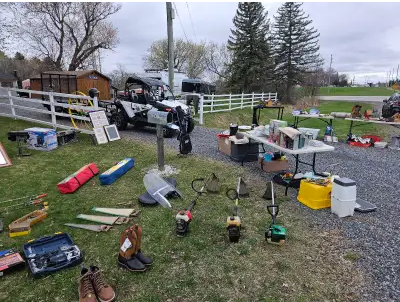
Multi Family Garage Sale
Saturday May 16, 8:00 – 1:00
(Rain date Sunday May 17)
Corner Mountsberg & Glenron Roads
Huge Selection of Treasures
Cash Only
Please no early birds
By Pepper Parr
May 7th, 2026
BURLINGTON, ON
It has taken longer than expected, but the public will get to hear what the developers have planned for the property at 1200 King Road.
 Rendering of the Alinea Development: Bound by King Road on the East; Aldershot GO station on the west; Highway 403 on the north, and the railway tracks on the south. The Alinea Group is proposing:
to amend the Official Plan and Zoning By-law for the lands located at 1200 King Road to permit a mixed use development consisting of 26 development blocks including: four mixed use development blocks, an entertainment block, three educational blocks, six residential blocks, a park block, two natural heritage system blocks, three blocks associated with Indian Creek, two storm-water management pond blocks, one landscape buffer block, two MTO property line blocks and one future development block.
- Official Plan Amendment: 505-03/26
- Zoning By-law Amendment: 520-04/26
Benjamin Kissner is the city planner on the file.
 Planned street locations and boundaries for the many development blocks that will be created.
The Statutory Public meeting will take place on June 9th, at City Hall
426 Brant St., Burlington, ON L7R 3Z6
905-335-7777, ext. 7913
- Official Plan Amendment: 505-03/26
- Zoning By-law Amendment: 520-04/26
The renderings are conceptual at this point.
|
|





 By Gazette Staff

 By Gazette Staff
 The Burlington Business Excellence Award More than 500 people attended.
 By Pepper Parr
 By Pepper Parr

 Penny Hersh showed what could be done when EcOb was formed. (Yes, we know Penny didn’t create ECoB but she did use the organization to hold council member debates in every ward of the city.)
 By Tom Parkin

 By Tim Jones


 By Gazette Staff
 At the core of the program is direct access to the next level. Throughout the summer, athletes will train alongside and learn from a rotating roster of university players and experienced coaches, bringing real-time insight, pace, and expectations from the OUA and post-secondary game directly into each session.


 By Pepper Parr
 By Gazette Staff
 Irene Matys is a World Gourmand Award winning and Globe and Mail bestselling cookbook author, television food expert, and farm-to-table advocate. She is the author of My Cypriot Table: Mediterranean Recipes for Gathering, Sharing, and Savouring, a celebrated debut cookbook featuring over 100 vibrant recipes inspired by her Greek Cypriot heritage and Canada’s seasonal bounty.
 By Pepper Parr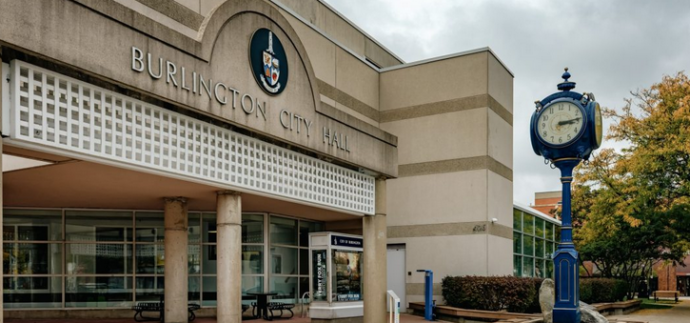

 By Gazelle Staff
 In the meantime, the final performance of Gotta Sing, Gotta Dance as we have known it will take place on June 23rd.
 By Gazette Staff
 By Gazette Staff