By Pepper Parr By Pepper Parr
March 2nd, 2025
BURLINGTON, ON
The language politicians use matters.
 For Doug Ford the left is being described as “radical. Doug Ford recently said:The ‘radical left’ at Toronto city hall overestimates the cost of replacing speed cameras.
Ford has always opposed the speed cameras that many municipalities wanted to be able to use.
 They were certainly revenue source but they were also a way to cut down speeding traffic. They were certainly revenue source but they were also a way to cut down speeding traffic.
That is all part of the push and pull of politics in the province.
But when that push and pull results in language that is divisive, it turns political conversations into slang and we know where that leads.
Look south for an example.

By Pepper Parr
March 1st, 2026
BURLINGTON, ON
The meeting has yet to take place and already people are unhappy.
Many want to see copies of the Motion that members of Council are expected to table at the Monday Council meeting.
 There was a time in Burlington when the Council Chamber was filled with citizens. Those days died after the pandemic, and the current Council has never been able to encourage the public to show up. “How can we delegate when we don’t know what the Motions are going to be.” asked one resident.
If the City Clerk has the Motions he has yet to include them in the Agenda.
Given that there are competing interests at play – Council members with a Motion they want to table may be holding that card close to their chest. Not necessarily in the public interest – but there is a lot about politics that isn’t in the public interest.
The meeting on Monday could be one of the most interesting the city has seen in some time.
Let us hope that they don’t find a way to go into a closed session and work out the differences out of the public eye.
The Gazette will be reporting throughout the day.
By Pepper Parr
March 1st, 2026
BURLINGTON, ON
 Councillor Kearns decided to hold a public meeting to explain what Development Charges were all about. During her Public Information Session Saturday afternoon Councillor Kearns covered what Development Charges are all about. She also talked about the Housing Accelerator Fund HAF) and the City’s Housing Strategy.
Lot of detail that will follow.
There is a Council meeting on Monday at which a decision has to be made on what the city wants to do with the almost desperate request from the West End Housing Building Association (WEHBA) for a stay of development charges for a two-year period.
The WEHBA people contend that there shouldn’t be any damage to the city financially if the waiver is granted; the city’s financial people see it differently.
Kearns explained what has been done so far on that issue and sets out what the public can expect at the Monday meeting.
Bit of background first: On February 7th,Staff was directed to:
Direct the Commissioner of Development & Growth Management and Chief Financial Officer to initiate a temporary Development Charge bylaw amendment for a two-year residential Development Charges exemption on all units that pull a building permit and demonstrate active construction within the two-year period, as outlined in Option 1A in report DGM-03-26”. Planning Don’t support.
Council was unable to make a decision and the matter got moved to February 10th.
Feb 10th: Direct the Director of Community Planning to initiate an amendment to the City’s Affordable Rental Housing Community Improvement Plan (ARHCIP) considering options 2a) and 2b) contained in development and growth management report DGM-03-26
- Amend the ARHCIP to develop a new, temporary DC exemption program with defined criteria related to tenure and level of affordability. By virtue of the fact that the current ARHCIP relies on the Provincial definition of affordable, these affordable units are also legislatively exempted from development charges. An amendment would need to establish a new set of “affordability” criteria.
The City received feedback at the time of the ARHCIP that the provincial definition presented challenges and other definitions were highlighted for consideration (CMHC Apartment Construction Loan Program). This approach represents an opportunity to work with the development industry to consider options to expand the scope of eligibility for a temporary time period. Estimated Cost – less than or equal to the cost of DC option a) above, however the cost range is unknown and would rely on establishing new criteria.
- b) Amend the ARHCIP to adjust one or more of the existing approved programs to address opportunities to expand the scope of eligibility for a temporary time period. An opportunity to review the existing programs in light of changes to date may identify non-DC exemptions that are more effective to act as stimuli to development given the wide range of factors in play today. Estimated Cost unknown at this time would depend upon the nature of the amendments to the existing programs. Planning supports this position.
On Monday March 2nd, Councillor Kearns will table a new motion to:
Direct the Director of Community Planning to report back on the optimized use of available Housing Accelerator Fund (HAF) dollars to enable housing starts that are guided by the City of Burlington Housing Strategy and implemented through the Affordable Rental Housing CIP (with amendments as needed). Council will have to decide to Support/Don’t Support?
Kearns made mention of Mayor Meed Ward’s motion, supported by Councillors Sharman and Galbraith to refer DGM-03-26 regarding Options for the temporary elimination of Development Charges to the Commissioner of Development & Growth Management and the Chief Financial Officer to report back to Committee of the Whole on April 13, 2026 with a potential Community Improvement Plan funded from a source other than property taxes, such as the Federal Housing Accelerator Fund. Council has to decide to either Support/Don’t Support.
Council is tied with Kearns, Nisan and Stolte on a reform side and Mayor Meed Ward and Councillors Sharman and Galbraith on the other side
 Ward 6 Councillor Angelo Bentivegna No one knows at this point where Councillor Bentivegna is going to decide to land. His vote becomes critical.
Astonishing that the most inept member of this Council is going to determine the direction the city takes.
Throughout this process, Bentivegna has shown that he struggles to understand just what the issues are, once using the phrase “honkey dory”, to describe where his thinking is.
By Gazette Staff
March 1st, 2026
BURLINGTON, ON
In a note to the Gazette this morning, Ward 2 Councillor Lisa Kearns said, after completing her two-hour presentation to an audience of about 50 people in a small room on the second floor of city hall, said:
“My job today is to lift our community’s collective knowledge so we can have an informed conversation.
 Councillor Lisa Kearns explains what development charges are and how the city can best use them. She also explained the numerous options available to the city. “Oftentimes residents feel distanced from the nuances of reports, recommendations, charges, complex legislation and squabbling councils. It’s the feeling in this room right now that says some trust is broken because this matter came out of line with the covenant of how we consult and inform our electorate about how the business of the city gets done.
“I am the first to admit, this is a file that has legacy, ledgers and legs and more so it has heart.
“Truly we are all trying to achieve the same goal – help people call Burlington Home. We can do that – but in a way where everyone feels engaged, informed and prepared for the best possible outcome. We can do that. We can share our great quality of life, but we have to protect the tools that help us invest in that love so many have for our great city.
In her presentation, which was detailed and in depth, followed by Q&A, residents got a glimpse of her leadership potential.
We can also report that the toilets at City Hall were spotless and that Staff were on hand to direct people to the location of the meeting.
A detailed report on the meeting will be published later today.
By Pepper Parr
February 28th, 2026
BURLINGTON, ON
There were two things that stood out for me when I reflected on when Pierre Poiliviere was speaking. The slogans he used “Axe the Tax,” “Build the Homes,” “Fix the Budget,” and “Stop the Crime”
He hammered away at it and from my perspective, there wasn’t much other than the slogan.
 This wasn’t the only crowd of this size that turned out for a Poilievre speech.  Are we in the process of seeing a very different Pierre Poilievre? The other thing was the size of the crowds that he drew. The force was certainly there – I just didn’t think the man had much to say.
In my reporting, I would say that Emily Brown didn’t have a hope of ever winning the Burlington federal seat as long as Poilievre was the party leader.
That changed for me.
Poiliviere spoke to the Economic Club of Canada with an excellent speech. I didn’t agree with some of it – but that was not the point.
He didn’t use a single slogan.
He made many excellent excellent points. He agreed to work with the Carney government
Some of the statements that resonated for me are below:
“Ours is not a country created by accident. Confederation was a conscious act of national self-determination–a decision by scattered provinces to unite, to build, and to govern themselves rather than be drawn into American annexation.”
“If you read the British North America Act, it is not a document of grand declarations or abstract ideals. It is an instruction manual. It sets out responsibilities.”
On China and diversification Poiliviere said: “… we should not declare a permanent rupture from our biggest customer and closest neighbour in favour of a strategic partnership for a new world order with Beijing– a regime the Prime Minister said a year ago was the biggest threat to Canada.”
“Our problem is not that these countries block our products from coming IN but that our own government blocks our products from getting OUT. Signing meaningless communiques and more stagecraft masquerading as statecraft won’t fix that.”
Poilievre sets out four pillars – he gets away from the snappy slogans:
“Abundant low-cost energy, unblocking resources and home building, a strong military and digital sovereignty.
 Emily Brown could be a contender. “We control the hemisphere’s largest landmass, airspace, and northern approaches. When we build a Strategic Reserve of energy and critical minerals housed in Canada, under Canadian control, we can sign an agreement to make these resources available at commercial prices to allies during crises, provided they honour tariff-free trade commitments.”
This was a Pierre Poilievre that I had not heard before and it is a politician the country should hear from more often.
Six months of this from Poilievre and Emily Brown could be a contender.
By Nelson Arlington
February 28th, 2026
BURLINGTON, ON
Burlington’s gambling scene isn’t what it used to be. Remember when a night at the casino meant piling into the car and heading out to Niagara Falls or Brantford? Maybe even crossing the border if you felt lucky. Now, everything’s changed. Online casinos have slipped into everyday life here: They’re as normal as Netflix, fantasy football or scrolling through games on your phone.
 Online casinos have slipped into everyday life So, what’s behind all this? Sure, it’s more convenient, but there’s more to it. Laws are clearer. The tech is sharper. People are just more comfortable betting online. Whether you’re spinning a few slots while you wait for dinner or tracking every detail of the Raptors game with a bet on the side, it’s hard not to notice how much the online casino world has taken over in Burlington.
Where things stand right now
Burlington’s part of Ontario’s big push into regulated online gambling, and honestly, it’s made some noise across North America. Since the province gave the green light to private operators, the number of casino sites for locals has shot up.
These aren’t cookie-cutter platforms anymore. Most sites now mix sports betting, live games, classic casino tables, promos to play free slots and endless bonuses, all in one place. It’s perfect for anyone who likes to jump from a basketball game straight to blackjack, no need to juggle a bunch of apps.
 You never really feel like the market’s stuck in one place. More options mean more competition. Casino brands are always changing up their promos, updating their games and tweaking the odds to grab your attention. It keeps things fresh. You never really feel like the market’s stuck in one place.
What’s actually legal?
Honestly, a big reason online casinos have caught on here is that the rules finally make sense. Ontario’s iGaming rules set out exactly what’s allowed. If a platform is licensed, they have to follow tough rules for player safety, data security and responsible gambling.
For anyone in Burlington, here’s what matters: Legal sites are regulated and held to account. That means clear bonus terms, proper ID checks and ways to set your own limits if you need them.
 If an online casino is regulated in Ontario – you will see this logo. Still, not everything you find online is legal in Ontario. More players are double-checking where a site’s registered and if it’s on the province’s approved list. People are just more aware, especially since local news and community groups have started talking about online gambling openly.
How Burlington locals are playing
It’s not just that people are using online casinos more, it’s how they’re using them that’s different. Mobile gaming is king now. Most folks log in on their phones or tablets, usually for quick bursts instead of marathon sessions. Waiting for the train? That’s fair game. Kicking back after work? Same deal. Sunday afternoon with nothing to do? You get the point.
Live betting is huge. Sports fans love jumping into bets while the game is actually happening: Odds keep moving as the action unfolds, and it’s way more exciting than just betting before things start.
There’s also a big shift toward low-risk play. Lots of people start out with free slots or demo games, just to get a feel before spending real cash. Casino sites make this easy with free-to-play options right next to the real-money stuff, so new players can dip their toes in first.
Why promotions and loyalty perks matter
Bonuses have always been part of casinos, but online sites really cranked things up. Welcome deals, free bets, cashback and loyalty points, they’re everywhere now.
For folks in Burlington, these promos aren’t just window dressing. With so many sites fighting for attention, the right offer can actually sway people. Some platforms even roll out deals tied to big games or local teams, making things feel a bit more personal.
 People in Burlington know bonuses come with strings attached. But players aren’t as quick to bite as before. People in Burlington know bonuses come with strings attached: Wagering rules, small print, that sort of thing. So instead of jumping at the flashiest bonus, more locals are stopping to compare, looking for real value.
Technology and trust are the new essentials
As online casinos go mainstream, trust matters more than ever. Burlington players want easy payments, clear game rules and fast help when they need it.
Payment tech has come a long way. Secure e-wallets, instant deposits, quick withdrawals: They all make the process smoother, which keeps more people playing. Plus, tools for safe gambling are front and center now and actually usable.
This focus on trust isn’t just for show. It’s changing how casinos present themselves. Platforms push transparency and dependability, not just big jackpots.
What’s next for Burlington
If you look ahead, online casinos in Burlington are only going to grow, but not in a free-for-all. Regulations help keep things in check, and that’s making the whole scene feel more grown-up.
Expect to see more local flavor in promotions, slicker apps and a smoother blend of sports betting with casino games. As more people play, the talk around responsible gambling will only get louder.
 The talk around responsible gambling will only get louder. All this means Burlington players get more choices, but there’s more to keep track of, too. Knowing the rules, picking the right site and playing smart, that’s just part of the deal now.
A market that’s sticking around
Online casinos aren’t on the sidelines in Burlington anymore. They’re part of the regular entertainment mix, shaped by clear rules, better tech and changing habits.
So, whether you’re into sports betting, live casino games or just curious about what’s out there, you’ve got more options and more info than ever. As long as players stay sharp and platforms keep raising the bar, Burlington’s online casino scene isn’t just sticking around, it’s just getting started.
By Pepper Parr
February 27th, 2026
BURLINGTON, ON
The University of Toronto has launched an investigation into its dean of dentistry after course materials he shared contained anti-Israeli and antisemitic imagery.
The two illustrations include a figure incorporating the Israeli flag bound tightly with rope that appears to be strangling a head sporting the colours of the Palestinian flag, and a cartoon of a man with a large, hooked nose swimming in a pool of money labelled “immunity.” The images accompanied lecture slides explaining the concepts of “strangulation theory” and “immunological modulation” in tooth health.
Anil Kishen, who was appointed head of the faculty of dentistry last year, has apologized, condemning “antisemitism and discrimination in all their forms” and has taken leave pending the outcome of the probe.
It is news like this that has resulted in the daughter of a Burlington resident who is Jewish deciding that she will move to Israel and continue her education there. Living in Burlington and having to put up with the slurs and the outright discrimination is not something she wants to tolerate any longer.
 Security photograph of two young people putting hate literature up at City Hall We are seeing more of this.
The Holocaust deniers are still amongst us.
There are still people who believe the Jews control the world’s economy.
The Jews are just another group of people with beliefs that they seem to have to pay a price to maintain.
They have a homeland which they paid a terrible price to get.
Yes, they have a Prime Minister who is at best an embarrassment to the democrats in Israel.
It is a complicated situation.
We need not make it worse with this insidious antisemitism
By Pepper Parr
February 27th, 2026
BURLINGTON, ON
 City CAO: “The questions raised by staff should not be interpreted as a means to deny access to the building for this meeting,” It took a note from the City CAO (Chief Administrative Officer) to give some clarity to why ward 2 Councillor Lisa Kearns was originally told that she would not be able (permitted) to yuse part of City Hall for a public meeting she had announced for Saturday at 1:00 pm
The CAO responded to a resident with the following:
Good morning (We are not identifying the resident)
I have been asked to provide a response to your email.
City Hall is available for public meetings on the weekends. Staff’s role is to ensure that the appropriate supports are in place for the use of the facility – this includes oversight of access and security, accessibility and wayfinding, room setup, any AV needs, as well as close-out after the meeting.
There was no prior notice to the relevant staff that this event was taking place. As a result, staff raised questions about the event that were designed to ensure we could provide the necessary assistance.
The questions raised by staff should not be interpreted as a means to deny access to the building for this meeting, rather to ensure that an appropriate degree of coordination and support can be provided.
We regret the confusion this may have caused. Thanks, Curt
We are still wondering who told the Legislative Services people to deny Kearns the access she required?
And when did the CAO realize that he had to step in and clear this up?
Obviously still some problems with lines of communication.
The event is still on:
 Expect the toilets to be spotless!
By Pepper Parr
February 27, 2026
Burlington, on
 Ward 2 Councillor Lisa Kearns. The Gazette has learned that the Legislative Services Unit at City Hall has advised Ward 2 Councillor Lisa Kearns that she cannot use City Hall for the public meeting she has scheduled for 1:00 pm on Saturday.

What we have learned to date is that Legislative Services said the space was not available because cleaning staff needed the space to clean the toilets.
The question we have is – who told the Legislative Services people to issue those instructions?
What it the cleaning staff?
Is the City Chief Administration Officer still independent? Staff at City Hall are directed and report to the City CEO, Curt Benson.
Did someone tell the Chief Executive Officer to issue these instructions?
The idea that a member of Council is denied the use of City Hall for a public meeting is beyond belief.
Only in Burlington one might add.
So much for the idea that Burlington can be called Borington.
We are advised that Councillor Kearns will hold her meeting at 1:00 pm, nevertheless.
The hope is that citizens will show up at City Hall on Saturday expecting to be let in to hear what a member of Council has to say.
The Gazette will be there.
By Isabelle Fournier
February 26th, 2026
BURLINGTON, ON
Odds aren’t just something you encounter at the casino or when watching the Leafs play. In Burlington, they’re woven into daily routines in ways most people barely notice.
From hoping for a parking spot on Brant Street to guessing if your bus will actually arrive on time, probability shapes local experiences every day. It nudges our decisions, guides our planning, and even impacts how businesses operate around town.
This article looks beneath the surface of Burlington life to reveal how the world of odds quietly influences choices, behaviors, and the community itself.
How probability shapes Burlington’s daily routine and decisions
Odds aren’t just for Vegas or sports fans—they’re woven right into Burlington’s everyday rhythm.
Most of us don’t even realize how often we calculate probability as we go about our day. Whether you’re glancing at the sky before grabbing an umbrella or picking a route to avoid Guelph Line traffic, you’re quietly weighing risks and rewards.
 A perfect picnic in Spencer Smith Park Burlington’s weather is famously unpredictable thanks to Lake Ontario. Locals know to keep an eye on shifting forecasts and trust their instincts for those spontaneous sunny patches or sudden showers. These little calculations can mean the difference between a perfect picnic in Spencer Smith Park and a dash back to the car.
Probability shows up in smaller moments too. Community raffles, 50-50 draws at local hockey games, or charity lotteries turn the math of chance into social tradition. For many, knowing the odds adds excitement—and maybe a bit of strategy—to these neighborhood events.
The digital world has opened new doors for residents interested in games of chance. Instead of heading out to a casino, you can now explore betting sites that accepts crypto, bringing international odds right to your living room. This shift means more ways for people to engage with probability—whether they’re seasoned bettors or just curious about how luck plays out online.
From planning your commute to joining a friendly raffle or placing a wager from home, probability quietly guides how Burlingtonians make decisions and find enjoyment in daily life.
Everyday decisions: calculating the odds without realizing it
Most Burlington residents don’t sit down with a calculator before heading to the grocery store or planning a weekend hike. Still, probability is always working in the background.
Whether it’s deciding which supermarket line will move faster or choosing a sunny Saturday for a lakeside picnic, locals weigh risks and rewards constantly. These quick mental calculations often shape routines and can lead to both lucky breaks and frustrating surprises.
Probability isn’t just about gambling—it quietly influences everything from finding parking downtown to picking the right time to grab coffee before work. The result? Every day in Burlington is filled with little bets on timing, weather, and luck.
The commute conundrum: beating Burlington traffic
 Traffic is part of suburban life Navigating Burlington’s roads sometimes feels like entering a high-stakes guessing game. Morning commuters glance at traffic updates or trust their favorite navigation app, hoping for an easy ride instead of bumper-to-bumper frustration.
The City of Burlington 2023 Transit Study found that predictive traffic apps are changing the way people approach their commutes. According to the study, those who regularly use these apps report higher satisfaction with travel times—and even shave several minutes off their daily trips compared to those relying on routine alone.
Of course, no app can predict every last-minute construction detour or fender bender. That’s where experience and local intuition kick in, adding a human edge to technology’s calculations.
Weather wagers: planning around the unpredictable
Burlington’s proximity to Lake Ontario means forecasting the weather is almost an art form. Locals know sunny mornings can turn into sudden showers by lunchtime, forcing everyone from cyclists to event planners to make quick calls about what’s likely—and what’s not.
Recent data from the Environment Canada 2024 Weather Report shows that while hyperlocal forecasts for Burlington are more accurate than ever—boasting nearly 85 percent precision within a three-hour window—there’s always room for surprise.
This means residents combine official forecasts with their own observations (and sometimes pure gut feeling) when deciding if it’s worth risking a picnic or leaving home without an umbrella. For many, reading the sky is just as important as reading the weather app.
How chance shapes Burlington’s community and local economy
The influence of odds goes far beyond the world of games in Burlington. Probability quietly weaves through the city’s events, charities, and even its economic pulse.
Whether it’s a ticket for a community raffle or a local startup deciding when to launch, every roll of the dice has ripple effects. These small risks can build stronger connections—or sometimes put resources on the line.
Burlington thrives on these unpredictable moments. The city’s ability to turn uncertainty into opportunity says a lot about its character and resilience.
Raffles, lotteries, and fundraisers: Games of chance for good
If you’ve attended a Burlington festival or school event, chances are you’ve bought a raffle ticket. These games of chance are more than entertainment—they’re key drivers behind many local fundraising efforts.
The Burlington Community Foundation 2024 Fundraising Survey found that over 70 percent of residents participated in at least one charity lottery or raffle last year. The most successful events raised five-figure sums for causes ranging from youth sports to food banks.
Understanding your odds doesn’t just make playing more exciting—it can encourage greater participation. It also helps organizers design fairer games, increasing both trust and turnout for the next big fundraiser.
Entrepreneurial risk: Small business in Burlington
 Starting a business here is never just a matter of luck. Local entrepreneurs regularly weigh the odds—market demand, foot traffic downtown, even weather patterns before opening day—all play into their decision-making process. Starting a business here is never just a matter of luck. Local entrepreneurs regularly weigh the odds—market demand, foot traffic downtown, even weather patterns before opening day—all play into their decision-making process.
The Halton Region 2023 Business Performance Report notes that about two-thirds of new businesses in Burlington survive past three years. Success often hinges on flexibility and reading subtle shifts in customer needs rather than betting big all at once.
I’ve heard café owners talk about adjusting hours based on rain forecasts or restaurant managers testing new menu items only after surveying loyal regulars first. In Burlington, smart risk-taking isn’t just tolerated—it’s what keeps the local economy lively and resilient.
The psychology of risk: why we love (or hate) uncertainty
Everyone in Burlington reacts differently when faced with risk. Some thrive on the unknown, while others prefer a clear, predictable path.
 You’ll find folks who prefer mapped-out bike rides and others who like a skate in brisk winter weather. This range shapes more than just how locals pick their weekend adventures—it’s woven into everyday routines and major decisions alike.
Whether it’s joining a high-stakes trivia night or sticking to a careful savings plan, comfort with chance leaves its mark all over Burlington life.
Risk-takers and risk-avoiders
Burlington is home to hikers who relish a challenging trail and investors eager for the next big opportunity. At the same time, you’ll find folks who prefer mapped-out bike rides or only buy what’s on sale—every move calculated in advance.
The 2023 McMaster University Study on Risk Tolerance found that Southern Ontario residents—including those in Burlington—show a real split. About one-third actively seek out novelty and challenge, while another third avoid uncertainty whenever possible.
This variety explains why Burlington’s community events range from adventure races to book clubs—and why local conversations about change can be both lively and cautious at once.
From games to investments: how we weigh the odds
The way Burlingtonians approach risk shows up in unexpected places. At neighborhood pubs, you might see someone betting on a poker hand while their friend refuses to play unless they’re sure of their strategy.
National research from the 2024 Financial Consumer Agency of Canada Report highlights that Canadians tend to be conservative with big financial choices—preferring low-risk mortgages and steady savings—even if they’ll occasionally splurge on lottery tickets or new tech gadgets.
This mix of caution and spontaneity means that when it comes to financial decisions, Burlington residents balance gut feeling with practical calculation—making each choice as unique as the person behind it.
Looking beyond the numbers: embracing Burlington’s everyday odds
Odds influence more than games or raffles—they quietly shape the way Burlington runs each day.
From catching a bus to launching a business, probability is woven into every choice we make.
Once you start spotting these hidden odds, you notice how much they guide habits, plans, and even our community spirit.
 Understanding probability helps Burlington residents face uncertainty with more confidence and a little less stress. Understanding probability helps Burlington residents face uncertainty with more confidence and a little less stress.
It’s not about controlling every outcome but knowing how to read the signs and adapt along the way.
The next time you bet on blue skies for your Spencer Smith Park picnic or try a new shortcut home, remember: chance isn’t just luck—it’s part of life here in Burlington.
By Pepper Parr
February 26th, 2026
BURLINGTON, ON
 Mayor has since “walked back” In a note Ward 3 Councillor Stolte sent people on her mailing list, she said:
The Mayor has since “walked back” her original Motion and has now notified Council of an intention to put forward an alternative DC Exemption Motion that addresses many of the concerns that were brought up by myself and Cllr Nisan, is based on staff expanding a program within a Community Improvement Plan (as staff had originally recommended) and considers accessing dollars from the Housing Accelerator Fund to cover financial deficits.”
Gazette readers who also got the note are telling their friends “the public can attend the Monday meeting and register to delegate or send written correspondence to Council that will be included in the Special Council Meeting Package of March 2 where this will be discussed at further length and voted on.”
While members of Council squabble amongst themselves, the public is left in the dark.
Many people now know what a development charge is – a handful might know what the Community Improvement Program is.
We will do our best to get something to you before the end of the week.
By Pepper Parr
February 2026
BURLINGTON, ON
Asked if he had any plans to put a Motion on the table at the Monday Council meeting, Ward 3 Council member Rory Nisan said:
“Definitely”
 Definitely! He chose not to expand on what he had in mind.
Nisan is one of three Council members who are almost an opposition to the Mayor and fellow Council members Sharman and Galbraith.
The unknown is Ward 6 Councillor Bentivegna.
What is now known is that there is a Ward 6 resident thinking about running for public office.
City Council needs someone who understands the rural community.
 Struggling. As for what Bentivegna decides is best for the city, it isn’t at all clear at this point. Bentivegna is reported to feel that he has been misled by staff and not given all the information he needs.
Giving Bentivegna all the information he wants is a challenge. Add to that the difficulty Bentivegna has in understanding the issues.
The Monday meeting will be a long one.
Given that the Mayor can no longer forbid clapping, it might get a little boisterous as well.
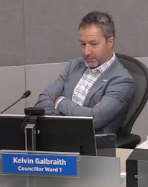
The disappointment many feel is the position Ward 1 Councillor Kelvin Galbraith has taken.
 At times, Galbraith leaves you thinking he really doesn’t want to be in the room. He tends to be risk-averse and certainly understands the arguments.
He is one to pay attention to on Monday.
Councillors meet as a City Council on Monday followed by a Standing Committee on Tuesday
By Gazette Staff
February 26th, 2026
BURLINGTON, ON
 A national research study done by Samsung Canada suggests many Canadians believe students aren’t being adequately prepared for STEM, (Science, Technology, Engineering and Mathematics) a field widely seen as resilient and essential for the future. A national research study done by Samsung Canada suggests many Canadians believe students aren’t being adequately prepared for STEM, (Science, Technology, Engineering and Mathematics) a field widely seen as resilient and essential for the future.
The gap: Only 40% of Canadians believe schools are preparing youth effectively for STEM careers.
Just 6% say schools are doing a very effective job.
Yet 98% say STEM skills are essential for young Canadians.
Key takeaways:
- Strong national consensus: 81% of parents and educators say STEM education is “very important,” with consistently high support across regions (84% in Quebec, 83% in Alberta, 79% in Ontario).
- STEM as opportunity: Canadians link STEM careers to high income potential (49%), social impact (41%), innovation (39%), and solving global challenges (38%).
- Expectation vs. reality: 72% believe schools should lead STEM preparation, but 63% say classrooms lack the resources, tools, and hands-on learning needed.The Halton District School Board has STEM programs in three of its high schools.
 STEM students taking part in a competition. The Halton District School Board (HDSB) offers a specialized I-STEM program at three secondary schools: Burlington, Oakville and Milton. It is an interdisciplinary program designed to prepare students for post-secondary STEM fields.
This 4-year program (Grades 9-12) focuses on science, technology, engineering, and mathematics.
All HDSB secondary schools follow the Ontario curriculum which offers a wide breadth of STEM courses, including Advanced Placement (AP) level courses at some schools. Various clubs and teams across schools are also offered for students with a keen interest in STEM.
Technological education is a particular focus for schools across Halton region, offered at elementary schools into secondary schools. Students can explore skilled trades and technology courses including 2D character animation, architectural technology and design, auto collision repair and painting, auto service technology, baking and more.
Unique to the HDSB, they are hosting their 34th annual Halton Skills Competition, providing elementary and secondary students with hands-on opportunities to showcase their skills in technological and skilled trades challenges. In the past our secondary students have gone on to compete in tech competitions at a national level.
By Gazette Staff
February 26th, 2026
BURLINGTON, ON
Ontario Science Centre – closed down based on reports of roof problems. Infrastructure Ontario (IO) and Ministry of Tourism, Culture and Gaming (MTCG) have awarded a fixed price contract of $1.04 billion to Ontario Science Partners to design, build, finance and maintain a new state-of-the-art Ontario Science Centre facility.
 Rendering: Linked to the Cinesphere The new Ontario Science Centre will be located on the mainland at Ontario Place and will include the preservation of the historic Cinesphere and Pod complex.
First question: Who are the Ontario Science Partners ?
- Applicant Leads: John Laing Limited, Sacyr Infrastructure Canada Inc, and Amico Major Projects Inc.
- Design Team: Hariri Inc & D. Pontarini Inc, Snohetta Architecture, Landscape Architecture P.C.
- Construction Team: Sacyr Canada Inc, and Amico Design Build Inc.
- Facilities Management: Johnson Controls Canada L.P
- Financial Advisor: N/A
The new Ontario Science Centre is being delivered using a Design Build Finance Maintain (DBFM) model. Key benefits of a DBFM model include risk transfer to the private sector over the life of the project agreement, greater cost and schedule certainty, greater potential for design and construction efficiencies, as well as innovation and higher maintenance quality encouraged through performance-based service payments over the 30-year term.
Based on precedent experience, a DBFM procurement model typically has delivered value for money savings in the range of 15% to 22% compared to undertaking the same projects using traditional delivery models.
 Rendering of the proposed new Science Centre
By Gazette Staff
February 26th, 2026
BURLINGTON, ON
The sweetest time of year returns starting on February 28, 2026, as Maple Season kicks off at Conservation Halton’s parks.
Running on weekends, holidays, and March Break until April 5, 2026, this cherished tradition invites guests to experience the transformation of maple tree sap into syrup at Mountsberg’s Maple Town and explore the Indigenous origins of maple sugaring at Crawford Lake Conservation Area.
 Natures gift
In the sugar bush at Mountsberg’s Maple Town, visitors can watch sap transform into syrup in the evaporator, warm up by a fireside lounge, or help their kids become ‘certified’ Sugar Rangers through fun challenges. Sweet samples of maple sugar and fresh syrup await, along with syrup drizzled pancakes at the Pancake Pavilion and maple treats available at the Country Store and Discovery Centre Gift Shop.
New this year, Maple Town extends beyond daylight hours with Syrup & Starlight, an exclusive two-night evening experience on March 7 and 28. Guests can enjoy a moonlit wagon ride, an exclusive tour of the Sugar Bush, an Indigenous food tasting, live fiddle music, and more. This limited-capacity event offers a magical new way to experience Maple Season after dark.
 A couple of sausages on the side would make this a perfect meal. Guests looking to enhance their visit can add a wagon ride or a maple sugar making workshop to their visit, or Talons & Tailfeathers for an up-close encounter with Mountsberg’s resident birds of prey. Maple Town visitors will learn about the history of sugar making from its Indigenous origins and early iron kettles to modern techniques, and about how Conservation Halton staff steward the sugar bush today.
At Crawford Lake Conservation Area, Sweet Water Season highlights the rich Indigenous heritage of maple sugaring. Guests can visit the Spirit of the Lake exhibit featuring works by Indigenous artists and an interactive holographic experience, then step back in time at the reconstructed 15th-century Longhouse Village, when maple sugaring marked the first harvest of the year.
Sweet Water Talks run throughout the day, inviting visitors to gather in the Longhouse Village and learn about how maple sugar was traditionally prepared in this part of Ontario. Guided tastings offer the chance to compare the unique colours and flavours of maple and birch syrups.
“Maple Season is a cherished tradition for so many families, and we’re always looking for new ways to deepen the experience,” said Brenna Bartley, Education and Outreach Manager at Conservation Halton. “This year, we’re especially excited to introduce Syrup & Starlight, inviting guests to enjoy the magic of Maple Season after hours—combining the warmth of maple traditions with the beauty of the night sky will be a special experience!”
For tickets, pricing, and details about Maple Season, visit conservationhalton.ca/mapleseason.
QUICK FACTS
- Maple Town location: Mountsberg Conservation Area, 2259 Milburough Line, Campbellville, ON L0P 1B0
- Maple Town will run weekends, holidays, and March Break until Sunday, April 5, 2026, from 9:30 am to 4:30 pm
- The Syrup & Starlight evening event will run on Saturday, March 7, and Saturday, March 28, 2026, from 5:00 pm to 9:30 pm
- Sweet Water Season location: Crawford Lake Conservation Area, 3115 Conservation Road, Milton, ON, L9T 2X3
- Sweet Water Season will run weekends, holidays, and March Break until Sunday, April 5, 2026, from 10:00 am to 4:00 pm
- For more information or to purchase tickets, visit conservationhalton.ca/mapleseason
Conservation Halton is the community-based environmental agency that protects, restores and manages the natural resources in its watershed. The organization has staff that includes ecologists, land use planners, engineers, foresters and educators, along with a network of volunteers, who are guided by a Board of Directors comprised of municipally elected and appointed citizens. Conservation Halton is recognized for its stewardship of creeks, forests and Niagara Escarpment lands through science-based programs and services. Learn more at conservationhalton.ca.
By Gazette Staff
February 26th, 2026
BURLINGTON, ON
Saturday, February 28thth – 7:30 pm
Forged in a cauldron of raging, inspiring contemporary jazz, the Jeremy Ledbetter Trio pushes the boundaries of the genre, providing an undiluted display of rampaging energy. Audiences must exercise caution. People who see this band are rarely the same again.
If the Jeremy Ledbetter Trio were an inanimate object, it would be a runaway train.

On piano, Jeremy exudes nonstop energy alongside Grammy-nominated drummer Marito Marques and renowned electric bassist Rich Brown. Together, these three world-class musicians deliver up-tempo, genre-bending music unlike anything you’ve heard before.
Tickets
By Frank Gerome
February 26th, 2026
BURLINGTON, ON
Online casinos have seen a substantial rise in popularity. A key factor for many players is understanding the array of bonuses available. These incentives can significantly enhance your gaming experience when chosen wisely.
 Finding platforms that offer strong security should be a priority. The landscape of online casinos has expanded rapidly across Canada, with players now able to choose from a wide range of regulated platforms tailored to different provincial markets. Whether comparing features locally or researching options such as the best online casino in Alberta, players are increasingly focused on finding platforms that offer strong security, competitive bonuses, and a user-friendly experience. As you explore these sites, one of the most important elements to evaluate is the structure and value of the incentives available.
Bonuses not only add immediate value but also shape long-term engagement and overall satisfaction. Understanding wagering requirements, payout terms, and promotional structures can make a significant difference in how rewarding your experience feels. For players evaluating platforms across provinces, carefully assessing these bonus offerings is key to maximizing both enjoyment and potential returns.
Understanding the Variety of Player Incentives On Offer
Across provinces such as Alberta and Ontario, digital-first entertainment has become standard among younger demographics exploring online casinos. When exploring online casinos, you’ll encounter several types of player incentives that are designed to attract and retain customers:
- Welcome bonuses are among the most common, offering new players additional funds or free spins upon signing up.
- No-deposit bonuses are another popular option, allowing you to start playing without needing to make an initial deposit, giving you a risk-free way to try out a site.
- Loyalty programs also play a significant role in maintaining player engagement by rewarding long-term users with points that can be redeemed for various perks.
These incentives serve not only as attractive entry points but also as tools to enhance your gaming sessions. By allocating additional funds or rewards, they allow you to extend your playtime and explore more games than you might have otherwise. But it’s important to remember that these bonuses come with specific terms and conditions that need careful consideration before opting in.
Analyzing incentive structures across top casinos
 The terms and conditions tied to these bonuses are important. Understand them. A comparative analysis of incentive structures shows significant differences among leading local online casinos. While some platforms offer generous welcome packages with high match percentages on your first deposit, others may focus more on ongoing promotions or exclusive loyalty rewards.
The terms and conditions tied to these bonuses are equally important because wagering requirements can vary widely, influencing how easily you can convert bonus funds into withdrawable cash. This diversity in incentive offerings necessitates thorough research and consideration when choosing where to play.
Essential Factors For Evaluating Casino Bonuses
When assessing player incentives, you should examine several key factors to ensure you make an informed decision.
Read The Fine Print
First and foremost, always read the fine print associated with any bonus offer. This includes understanding wagering requirements like the number of times you must wager the bonus amount before withdrawing any winnings, which can significantly affect your ability to benefit from the promotion.
Expiration Period
Another important aspect is the expiration period of the bonus. Some offers may require you to meet certain criteria within a limited time frame, which could be challenging if you’re a casual player.
You should also be sure to pay attention to the types of games that contribute towards fulfilling wagering requirements, as not all games may count equally towards this goal.
Making Informed Decisions Based on Preferences
 Careful consideration and strategic choices are important considerations. Understanding and comparing player bonuses at Canadian online casinos is vital for maximizing your gaming experience. By evaluating different incentive structures and considering factors like wagering requirements and game contributions, you can choose offers that align with your personal gaming habits and preferences.
Ultimately, being well-informed about these aspects enables you to make decisions that enhance both your enjoyment and potential returns when playing online. With careful consideration and strategic choices, you can fully leverage the benefits offered by these bonuses while enjoying your favorite casino games.
By Gazette Staff
February 25th, 2026
BURLINGTON, ON
Statements being issued by the Mayor that are at times conflicting.
TV Ontario has picked up the story.
Mayhem and confusion in the Mayor’s office.
 Ward 2 Councillor Lisa Kearns What people want is information that isn’t political spin and an opportunity to ask questions.
Ward 2 Councillor Lisa Kearns will be holding a Resident Information Session in City Hall on Saturday, the 28th from 1:00 to 3:00 pm
Ask your questions, Kearns more often than not knows what she is talking about.
By Gazette Staff
February 25th, 2026
BURLINGTON, ON
Those members of Council that have been opposed to the idea of giving the development community a two-year freeze on development charges for any housing that does get sold are speaking indivually.
 Nisan: “Last week, Council was a few minutes away from a reckless gamble with our money.” Ward 3 Councillor Rory Nisan said today that: ““When this was announced, I knew taxpayers were going to have to foot the bill.
“Last week, Council was a few minutes away from a reckless gamble with our money. We weren’t going to let that happen easily, so we pushed back and now we’ve won the day. I will keep fighting with willing colleagues for the responsible use of Burlington tax dollars, for accountability from the mayor and council for your money, and for respect for taxpayers.”
This has been a week of nothing but confusion with the Mayor appearing to look for a place to hide while she issues statements.
By Gazette Staff
February 25th, 2026
BURLINGTON, ON
The Progressive Conservative party is raising doubts about a new poll that shows Doug Ford’s support is slipping.
The polling firm insists the downward trend has been happening since October – before the new Protect Ontario ad campaign began.
 The data starts back in October. Doug Ford isn’t buying it.
|
|





 By Pepper Parr
 They were certainly revenue source but they were also a way to cut down speeding traffic.



 By Pepper Parr


 By Nelson Arlington




 By Pepper Parr


 By Pepper Parr


 Starting a business here is never just a matter of luck. Local entrepreneurs regularly weigh the odds—market demand, foot traffic downtown, even weather patterns before opening day—all play into their decision-making process.
 Understanding probability helps Burlington residents face uncertainty with more confidence and a little less stress.


 A national research study done by Samsung Canada suggests many Canadians believe students aren’t being adequately prepared for STEM, (Science, Technology, Engineering and Mathematics) a field widely seen as resilient and essential for the future.



 By Gazette Staff

 By Gazette Staff
 By Frank Gerome


 By Gazette Staff