By Samanthat Serle By Samanthat Serle
September 25th, 2025
BURLINGTON, ON
As international students flock to Canada for higher education, many of them look for ways to ease the financial burden of tuition fees and living expenses. One effective solution is participating in work-study programs, which offer students the chance to earn money while gaining valuable work experience. These programs allow students to balance both earning and learning in a way that enhances their academic journey. As part of managing their time, some students may even consider using services that can help them stay on top of their academic workload, such as those offering to write my essay with attention to detail, ensuring that their assignments are polished while they manage work commitments.
What are Work-Study Programs?
 One of the most significant challenges students face is finding time to focus on their studies while working part-time. It is easy to feel overwhelmed, leading to burnout or declining academic performance. Work-study programs are designed to help students earn income by working part-time while they study. These programs are offered by various Canadian universities and colleges and provide students with the opportunity to work on or off-campus in positions related to their field of study. Not only do these programs allow students to support themselves financially, but they also offer opportunities to gain practical experience that enhances their resume and makes them more competitive in the job market after graduation.
Work-study programs often come with specific eligibility criteria. For example, they are typically available to full-time students who have demonstrated financial need. In some cases, students may be required to maintain a certain academic standing to participate. The hours are usually limited, allowing students to maintain a balance between their academic responsibilities and their work commitments.
Benefits of Work-Study Programs
- Financial Support
One of the primary benefits of participating in a work-study program is the financial support it offers. For international students, the cost of tuition and living expenses can be daunting. A work-study job can provide a steady income to help cover these costs, reducing the need for loans or financial assistance from family members. This financial independence can alleviate stress, allowing students to focus more on their studies.
- Gain Practical Experience
In addition to financial benefits, work-study programs offer valuable opportunities for students to gain hands-on experience in their field of study. Many of these positions are closely related to the student’s academic program, which can help them apply the knowledge gained in class to real-world situations. This experience is not only beneficial for personal growth but also for enhancing future job prospects.
- Networking Opportunities
Work-study positions also provide students with the chance to build professional networks. Whether it’s connecting with professors, fellow students, or industry professionals, these connections can open doors to future career opportunities. Networking within the university or local community can be particularly useful for students who are planning to remain in Canada after graduation.
- Time Management Skills
Managing both academic work and a part-time job is an excellent way to develop time management skills. Students quickly learn how to prioritize tasks, meet deadlines, and balance different responsibilities. These skills are invaluable in the professional world, where the ability to juggle multiple projects and deadlines is essential.
Challenges of Balancing Work and Study
While work-study programs offer many benefits, balancing work and academics can be challenging, especially for international students who may be adjusting to a new cultural and educational environment. Here are some common challenges that students face:
- Time Constraints
One of the most significant challenges students face is finding time to focus on their studies while working part-time. Many students find it difficult to strike a balance between their coursework, exams, and work shifts. Without proper time management, it can be easy to feel overwhelmed, leading to burnout or declining academic performance.
- Stress and Fatigue
Juggling academic responsibilities with a job can lead to increased stress and fatigue. Many students may find it difficult to get adequate rest, which can affect their mental and physical well-being. Lack of sleep and constant pressure to perform well both at work and in school can take a toll on a student’s health, impacting their ability to focus and perform optimally in their studies.
- Work-Study Balance
The key to success in a work-study program is finding a balance between work and study. Some students may struggle to maintain this equilibrium, leading to a negative impact on their academic performance or work output. For example, a student might feel compelled to work longer hours during exam periods, which can compromise the quality of their studying or lead to lower grades.
- Cultural and Language Barriers
International students, in particular, may face cultural and language barriers that affect their ability to perform well in both work and study. Adapting to a new culture and language can be challenging, and the added stress of a job may exacerbate these difficulties. For some students, finding a job in a different language or work environment can be a source of additional stress.
How to Balance Earning and Learning
 Get enough sleep, eat nutritious meals, exercise regularly, and find ways to relax and unwind. While balancing work and study can be challenging, it is not impossible. Here are some strategies that can help students succeed in a work-study program:
- Plan and Prioritize
Effective time management is essential to success in a work-study program. Students should create a weekly schedule that allocates sufficient time for classes, study sessions, work shifts, and personal activities. By setting realistic goals and prioritizing tasks, students can stay organized and ensure they have time for both work and study. Additionally, students can use tools like calendars and task managers to keep track of deadlines and work schedules.
- Communicate with Professors and Employers
Open communication with both professors and employers is crucial. If a student feels overwhelmed, they should inform their professors or teaching assistants so they can seek additional support or extensions if necessary. Similarly, students should communicate with their employers about any upcoming exams or busy periods in their academic calendar, so work hours can be adjusted accordingly.
- Avoid Overworking
Although it can be tempting to take on extra shifts for financial reasons, students should avoid overworking themselves. Working too many hours can interfere with academic performance and overall well-being. It is essential to remember that academics should remain the primary focus, and the work-study position should not take precedence over coursework or exams.
- Make Use of Campus Resources
Many universities and colleges in Canada offer resources to help students manage the challenges of work-study programs. These may include counseling services, academic advising, time management workshops, and career services. Students should take advantage of these resources to improve their overall well-being and academic success.
- Maintain a Healthy Lifestyle
Maintaining a healthy lifestyle is vital when balancing work and study. Students should ensure they are getting enough sleep, eating nutritious meals, exercising regularly, and finding ways to relax and unwind. Practicing mindfulness, yoga, or engaging in hobbies can also help reduce stress and improve focus.
Conclusion
Work-study programs in Canada offer a valuable opportunity for students to gain financial independence, work experience, and develop essential life skills. While balancing work and study can be challenging, with proper time management, clear communication, and a focus on self-care, students can successfully navigate the demands of both. The key is to ensure that academic success remains the primary goal while making the most of the opportunities work-study programs provide. By finding the right balance, students can gain the best of both worlds: a fulfilling academic experience and a rewarding work-life balance.

By Pepper Parr
September 25th, 2025
BURLINGTON, ON
Whatever happened to that postal service motto:
Neither snow nor rain nor heat nor gloom of night stays these couriers from the swift completion of their appointed rounds”.
Citing “unsustainable” losses, stalled contract talks and dwindling numbers of Canadians sending letters, the federal government is giving Canada Post the go-ahead to end home delivery, close some rural post offices, and send mail by land instead of air.
 “Neither snow nor rain nor heat nor gloom of night stays these couriers from the swift completion of their appointed rounds”. In a press conference Thursday afternoon, federal minister for government transformation, public works and procurement Joël Lightbound is set to announce that he’s giving the Crown corporation 45 days to come up with a plan to implement the broad restructuring, which he called a necessary step to keep Canada Post alive.
“This situation is unsustainable. Canada Post is effectively insolvent, and repeated bailouts are not a long-term solution. Transformation is required to ensure the survival of Canada Post and protect the services Canadians rely on,” Lightbound said in a press release prior to his press conference.
The losses are more than the public purse can manage.
What’s missing here is a solid re-think of the ways we are going to communicate or send packages.
 This is the future for mail delivery – even this might not last. “Canada has changed. This means that areas that used to be rural may now be suburban or even urban, but are still required to operate as rural post offices,” said Lightbound. “Canada Post must return to the government with a plan to modernize and rightsize its network.”
The changes were all recommended by veteran mediator William Kaplan in a report delivered May 15 after he conducted an Industrial Inquiry Commission.
“For much of the past year, Canada Post has been laying the groundwork for massive service cutbacks. The Corporation has taken every chance it can to play up its financial condition, blaming an ‘outdated’ regulatory framework ‘built for a previous era,” said CUPW national president Jan Simpson.
All true – but listen to the words of Janis Joplin when she sang: “You don’t know what you’ve lost till its gone”
By Pepper Parr
September 25th, 2025
BURLINGTON, ON
We received the following from Toronto Metropolitan University (TMU):
As America retreats from international cooperation under “America First” policies, Canada faces an unprecedented cybersecurity challenge. Our intelligence sharing is strained, law enforcement response slowed and cybercriminals are increasingly able to target Canadian critical infrastructure, businesses and people. The very frameworks that enable global law enforcement to combat sophisticated cybercrime are crumbling, and Canadians are paying the price.
 Is this a 2025 version of a “spook” school?  Looking ahead to October (Cybersecurity Awareness Month) Charles Finlay, Founding Executive Director of the Rogers Cybersecure Catalyst at TMU and member of the Canadian Chamber’s Cyber Security Council, would like to speak with you on Canada’s cybersecurity crisis, and discuss: Looking ahead to October (Cybersecurity Awareness Month) Charles Finlay, Founding Executive Director of the Rogers Cybersecure Catalyst at TMU and member of the Canadian Chamber’s Cyber Security Council, would like to speak with you on Canada’s cybersecurity crisis, and discuss:
-
-
- How U.S. withdrawal from global frameworks and limits on information sharing are weakening the multilateral structures that make tackling cybercrime possible.
- Why are cybercriminals stealing hundreds of billions annually, targeting everything from power grids and hospitals to election systems is putting out democracy at risk.
- Canada’s opportunity to safeguard national interests and lead a new model of cybersecurity cooperation among democratic allies.
- The real-world consequences when multilateral cybersecurity efforts succeed — and when they fail.
TMU’s Public Relations Advisor asked if we were interested in speaking with Charles about how Canada can navigate this evolving cyber threat landscape and protect national security in a fragmented world, I’d be happy to coordinate.
We were indeed interested in an interview and put together some of the questions I wanted to ask:
How bad is it?
Could bad actors bring down the internet as we know it?
Do governments have backup systems in place? Recall that Rogers didn’t have a backup for their network when it was taken down
What can government do to prevent the scams taking place?
And what is AI going to do to what we have in place now?
 Instructor overseeing the work of a student at cybercrime class. TMU got a case of cold feet and sent us the following:
Thank you again for considering this. After some internal discussion, we won’t be moving forward at this time. I really appreciate your interest, and I’ll certainly keep you in mind for future opportunities.
I find myself wondering what it is that they don’t want us to know. We are in perilous times; sabre-rattling is increasing: the war that has been expected for some time has already started. This war will be an electronic event; drones and electronic warfare with signals being blocked. Probably very few boots on the ground.
By Pepper Parr
September 25th, 2025
BURLINGTON, ON
UPDATED: Next budget meeting is on October 2nd.
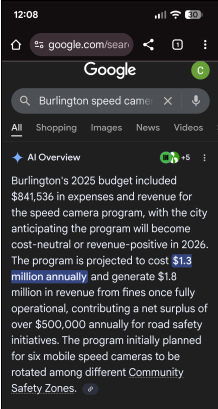
Will the City of Burlington be able to recover what it has spent to date on setting up speed cameras?
Hood Question. Caren Burcher put that question to the Gazette and provided some data to show what the city has spent and budgeted.
Someone could put that question to Mayor Meed Ward when she holds her fifth community budget meeting on October 2nd.,


By Gazette Staff
September 25th, 2025
BURLINGTON, ON
The Ontario government intends to introduce legislation next month that will ban the use of municipal automated speed enforcement cameras across the province, ensuring they are no longer used as a form of revenue. To improve road safety, the province will instead establish a new provincial fund to help affected municipalities implement alternative safety measures, including proactive traffic-calming initiatives like speed bumps, roundabouts, raised crosswalks and curb extensions, as well as public education and improved signage, to slow down drivers.
 This ranks right up there with the tunnel the Premier wants to build underneath the existing 401 highway. “At a time when governments at all levels should be doing everything they can to lower costs and make life more affordable, too many municipalities are using speed cameras as a cash grab,” said Premier Doug Ford. “Enough is enough. Instead of making life more expensive by sending speeding tickets to drivers weeks after the fact, we’re supporting road-safety measures that will prevent speeding in the first place, keep costs down and keep our streets safe.”
Since 2019, over 700 municipal speed cameras have been installed in 40 municipalities across Ontario, with more currently planned for installation in the coming months.
“Municipal speed cameras have become nothing more than a tool for raising revenue,” said Prabmeet Sarkaria, Minister of Transportation. “Our government is focused on measures that truly protect the safety of all Ontarians and we will continue working with municipalities to ensure Ontario maintains its position as one of the safest jurisdictions in North America.”
 The camera will catch you if you are speeding and you will be fined. If you don’t drive over the speed limit – there will be no fine. Where is the cash grab? If passed, this legislation will prevent the use of municipal speed cameras in Ontario immediately upon Royal Assent. The province will also introduce requirements for municipalities with existing speed cameras in school zones to install large new signs to slow down drivers by mid-November 2025, with permanent, large signs with flashing lights to be in place by September 2026. Municipalities will also be encouraged to implement alternative traffic-calming measures such as speed bumps, speed cushions, raised crosswalks, curb extensions and roundabouts, as well as enhanced signage and education and awareness campaigns.
“I thank Premier Doug Ford for providing clarity on the speed camera program and for his commitment to provide financial support for municipal traffic-calming measures,” said Steven Del Duca, Mayor of Vaughan. “Road safety will always be a priority and, in Vaughan, we will do everything possible to protect vulnerable road users. But we will also focus our attention on fighting real crime and going after real criminals.” |
|
By Gazette Staff
September 25th, 2025
BURLINGTON, ON
QP Briefing reports that: “A new public opinion poll finds Ontarians aren’t clamouring to eliminate school board trustees and are skeptical such a change would improve the education system.” More from CTV News:
“Abacus Data surveyed 2,000 Ontario residents on behalf of CUPE Ontario earlier this month. They find that only one in three respondents, 33 per cent, support doing away with elected trustees, while 36 per cent oppose the measure. Another 25 per cent are unsure.”
 Doug Ford: Everything is just fine. I won three elections – they love me. The NDP’s Education critic CHANDRA PASMA had this to say on those numbers: “It’s clear no one is buying what DOUG FORD is selling.
“Parents see right through this government’s blatant power grab and partisan games, and they know this government does not have our kids’ best interests at heart.”
Question for many people is: Will Doug Ford get rid of Speeding Cameras and school boards when the Legislature returns? And how is he going to respond to the reports expected in October from the provincial Auditor General?
With the provincial Liberals leaderless and NDP leader Marit Stiles, scrambling to recover from the disappointing 68% vote from the membership on her leadership – her focus is going to be rebuilding the NDP inner circle – three of the big positions are now open.
Don’t expect Doug Ford to change all that much in the immediate future. Unless that long-overdue RCMP report on the Greenbelt scandal gets released.
By Gazette Staff
September 25th, 2025
BURLINGTON, ON
TradePort International Corporation (TradePort), a wholly owned subsidiary of Vantage Group and operator of John C. Munro Hamilton International Airport (Hamilton International, the Airport), today announced that long-time Board Chair Col. R. Foxcroft, O.C. has been appointed Chair Emeritus, recognizing more than three decades of leadership and commitment to the Airport.
TradePort Board of Directors also appointed Stewart Steeves as Chair and Ron McKerlie as a Director.
Foxcroft provided a leadership role at TradePort for 30 years, including 21 years as Chair, during which time Hamilton International reached major milestones that have shaped its role as a key economic driver for the region. During his tenure, the Airport transformed into Canada’s largest overnight express cargo hub, saw remarkable growth in passenger traffic and, most recently, marked a new chapter with a new 49-year lease, completing a multi-million-dollar terminal enhancement and introducing Porter Airlines service.
 Hamilton Airport, Chair Emeritus, Ron Foxcroft In his new role as Chair Emeritus, Foxcroft will continue to serve as an ambassador, advisor and champion for Hamilton International – maintaining his strong connection to the Airport’s future while celebrating the foundation he helped build. To recognize his decades of dedication, TradePort is establishing the TradePort Ron Foxcroft Leadership in Aviation Scholarship at Mohawk College for students pursuing aviation studies. This scholarship honours his legacy of guiding Hamilton International with vision, integrity and a commitment to community impact, while inspiring the next generation of aviation leaders to carry forward those same values.
To support this next chapter, Stewart Steeves, Chief Operating Officer at Vantage Group and long-time TradePort Board member, has been appointed Board Chair. Steeves brings deep experience in airport planning and development, including previously serving as Chief Financial Officer at Hamilton International. Steeves has overseen nearly $10 billion in redevelopment projects across North America and the Caribbean and was instrumental in Hamilton International’s recent terminal improvements and expansion of passenger service through Porter Airlines.
The Board also welcomes Ron McKerlie, the former President of Mohawk College and the Mohawk College Foundation. During his decade of leadership at the College, McKerlie advanced many transformational initiatives, including creating the Centre for Aviation Technology at KF Aerospace. Through this collaborative partnership with industry partners, Mohawk College brought all its aviation programs into a purpose-built, state-of-the-art airside facility located on Hamilton International property. McKerlie also has 35 years in senior roles in the public and private sectors, including the Bank of Montreal, Rogers Communications and the Ontario Government.
“Serving as TradePort’s Board Chair has been one of the greatest privileges of my career, and I look forward to continuing to support the Airport in my new role,” said Foxcroft. “This transition marks an exciting time for TradePort and Hamilton International, as we champion growth of passenger service, alongside our strong cargo operations and continued land development. I am beyond confident in the talent of our expanded Board to carry our mission forward.”
 Hamilton International Airport has become an economic engine for the community and the region. Ron Foxcroft drove much of that growth. “Ron Foxcroft’s legacy at Hamilton International cannot be overstated,” said Steeves. “His vision and leadership have helped position the Airport as a leader in cargo, a growing player in passenger service, and an economic engine for our community. I am honoured to build on this foundation and to have Ron McKerlie bring his expertise as we carry forward with the important work ahead.”
“I am proud to join this dedicated Board,” said McKerlie, Director. “Hamilton International is an economic driver and invaluable community asset, and I look forward to helping advance its growth and continue telling the story of the impact it has on the entire Southern Ontario region.”
.
By Ray Rivers
September 25th, 2025
BURLINGTON, ON
OPINION
We laugh with a comedian and laugh at a clown but there is nothing funny about a fool.
Ontario’s premier Ford has flip-flopped on speed cameras. Perhaps one of his family or friends got a ticket? In all fairness there have been rumours of abuse – people claiming they were billed $100 for going 3 kms over the limit. But rather than fix that abuse, he’s decided to throw the baby out with the bathwater and just ban municipal speed cameras all together.
 Speed Cameras: They are resource efficient, indisputably accurate, corruption-proof, and non-invasive, – People who know speed will tell you that cameras work. They are resource efficient, indisputably accurate, corruption-proof, and non-invasive, – only the license plate appears on the ticket. Your ticket doesn’t affect your driving record, only your pocket book.
To defend the ban Ford is claiming speed cameras don’t work – in the face of ample evidence that they do, slowing traffic by almost 50% in one study. His solution is to pepper our city streets with even more of those dreaded speed bumps. You know the ones that can blow out your shocks, scrape your car’s undercarriage and exhaust system and so on. So you’ll pay for speeding one way or another it seems – a speeding ticket or a car repair.
And what about life saving fire-engines and ambulances which will now have to slow down as they bounce over miles of these new Ford bumps. Of course Hamilton with the worst roads in Ontario is well ahead of Mr. Ford’s new policy because pot holes the size of giant Halloween pumpkins work just as well. Speed bumps may be called traffic calming. They are anything but calming – I bounce over these obstructions in getting to where I want to be.
And since speed bumps slow traffic on city streets, don’t be surprised if the genius running this province decides to place them on highways as well. After all, that is where most fatalities actually happen. Ironically, Mr. Ford normally seems to want us to drive faster. He’s been taking out bike lanes, building new highways, increasing speed limits – so one has to wonder what is driving Ford.
 How pouring prime Canadian whiskey on the ground protects Ontario is hard to understand. Colbert and Kimmel are comedians and Doug Ford’s brother Rob was an unfortunate clown. But Doug Ford, still the most popular Ontario political leader, is just a fool when it comes to speed cameras. So what does that make the rest of us?
 Ray Rivers, a Gazette Contributing Editor, writes regularly applying his more than 25 years as a federal bureaucrat to his thinking. Rivers was once a candidate for provincial office in Burlington. He was the founder of the Burlington citizen committee on sustainability at a time when climate warming was a hotly debated subject. Ray has a post graduate degree in economics that he earned at the University of Ottawa. Tweet @rayzrivers Ray Rivers, a Gazette Contributing Editor, writes regularly applying his more than 25 years as a federal bureaucrat to his thinking. Rivers was once a candidate for provincial office in Burlington. He was the founder of the Burlington citizen committee on sustainability at a time when climate warming was a hotly debated subject. Ray has a post graduate degree in economics that he earned at the University of Ottawa. Tweet @rayzrivers
Background links:
Ford Popular Speed Cameras Camera’s Work 45% Reduction How They Work Speed Bump Damage
By Gazette Staff
September 25th, 2025
BURLINGTON, ON
All provinces with the exception of Ontario and Manitoba have effective deposit-return systems for a wide range of beverages, including alcohol, with high rates of return through the use of dedicated return depots and the participation of grocery stores.
 Environmental damage – right in front of us. “Pop and water empties are some of the most common litter in Ontario,” said Karen Wirsig, Senior Program Manager for Plastics at Environmental Defence. “We’ve known for many years that curbside recycling is not up to the task of ensuring cans and bottles are collected and refilled or recycled. Ontario needs to expand deposit-return to all beverage containers now.”
“Deposit return works in other jurisdictions,” noted Duncan Bury of Waste Watch Ottawa. “The province must legislate and beverage producers must implement a system for Ontario along the same lines as programs that producers and grocers successfully operate across the country.”
“After spending $612 million to speed up the rollout of alcoholic beverage sales in grocery and convenience stores, the Ontario government now needs to commit to addressing the problems those changes have created for people trying to return their alcohol empties,” said Linda Gasser of Zero Waste 4 Zero Burning. “We need deposit return in Ontario and the government must work with retailers who sell alcohol and are encountering legitimate constraints to take back empties. The bottom line is that deposit return prevents containers from going in the garbage, which in York and Durham means being burned in the waste incinerator. Burning these materials causes dangerous air pollution and increases greenhouse gas emissions.”
 All these bottles could have been recycled if governments had made the effort to put a program in place. Ontario has done nothing. “The best way to manage beverage containers, including plastic, glass and aluminum cans, is to reuse or recycle them,” said Liz Benneian of the Ontario Zero Waste Coalition. “Having these useful materials end up buried in the ground or burnt in an incinerator is wasteful in the worst sense of the word, and is costly to the environment and human health.”
“We desperately need effective waste reduction and pollution prevention programs that help curb the demand for virgin plastics,” said Sehjal Bhargava, family physician and co-chair of the Canadian Association of Physicians for the Environment Ontario regional committee. “Physicians are witnessing an unprecedented health crisis linked to plastic, which threatens human health at every stage of its lifecycle, from oil and gas extraction to plastics production, use and disposal. It’s a matter of health today and for future generations.”
“Toronto, and most municipalities in Ontario, are grappling with rising waste costs,” said Emily Alfred, Waste Campaigner at the Toronto Environmental Alliance. “Instead of fixing the recycling, the new Blue Box regulation is going to make things worse for the environment and for our cities. Without a comprehensive deposit-return program, we’ll continue to see embarrassing amounts of cans, bottles and cartons littering our streets and parks and in our garbage bins.”
 All this plastic could be used and put to good use. Governments need to be pressured to get something in place. BACKGROUND
- Less than 50 per cent of non-alcoholic beverage containers are collected and sorted for recycling in Ontario. In provinces with effective and comprehensive deposit-return programs, recycling and refill rates are consistently close to 80 per cent.
- In changes to the curbside Blue Box regulations announced on September 5, producer responsibility for non-alcoholic beverage producers was reduced to include only drinks that people consume at home. This leaves at least 30 per cent of containers consumed away from home outside the scope of the regulation, and therefore much more likely to end up as litter or in waste disposal.
- Some 1.7 billion plastic bottles are thrown away or littered in Ontario every year.
- The provincial government abandoned work with stakeholders to establish a deposit-return program for non-alcoholic beverages in 2024 in favour of the Blue Box program. However, the recent Blue Box amendments make waste from beverage containers worse, not better.
- Ontario’s long-successful deposit-return program for alcoholic beverages is now under threat due to the closure of nearly 100 Beer Store locations, which serve as return locations for alcoholic beverage empties. Smaller and more remote communities are especially impacted by these closures.
- The provincial government has the opportunity now to bring producers of both alcoholic and non-alcoholic beverages together under one efficient and effective program.
By Gazette Staff
September 25, 2025
BURLINGTON, ON
The Chair of the Halton District School Board has written a letter to the Premier. Here is what the Chair has to say:
September 24, 2025
Honourable Doug Ford Premier of Ontario
Honourable Paul Calandra Minister of Education
Re: School Board Trustees and request for public consultation Dear Premier Ford and Minister Calandra,
At the September 16 Board meeting of the Halton District School Board, Trustees unanimously voted in favour of the following resolution:
Be it resolved that the Board of Trustees direct the Chair to write a letter to Premier Doug Ford and Minister of Education, Paul Calandra, with a copy to MPPs, Ontario Public School Boards’ Association, OSTA-ACO, Presidents of Provincial Unions, and the media, regarding the work of School Board Trustees and Student Trustees in fulfilling the mandates of the Board as set out in the Ontario Education Act, and that the Minister conduct a public consultation before making any changes to the Education Act regarding the role of Trustees.
 Local school boards have been meeting in Ontario since 1816; often in one-room schools. There was a time when Premier Boll Davis led the Department of Education and made it one of the best in North America. The position of School Board Trustee is the longest-serving democratically elected position in what is now known as Canada, serving our communities since 1816. Trustees are the only elected representatives whose primary responsibility is student achievement and well-being. We carry out our role and fulfill the mandate of our elected position through our deep connection and familiarity with the needs of the communities in which we live and whom we serve.
The requirement that Trustees must live in the area we serve, and bring the concerns of the community to the attention of the board, ensures that Trustees represent their communities’ interests and needs while acting as liaisons between the families we represent and the provincial government. When we reach out to our community for their input and feedback, we get genuine engagement that is relevant and meaningful.
Trustees are responsible for the oversight of their local school board through the Education Act and associated Regulations. We support the Ministry by ensuring the implementation of the provincial curricula, strategies and mandates, supporting the Ministry’s consultation needs, and by bringing local and provincial issues and concerns to the Ministry’s attention while keeping student achievement and well-being in sharp focus.
We are the greatest advocates and supporters of Ontario’s publicly funded education system, always cognizant of our responsibility to uphold public support of publicly funded education.
The families in our communities know we are very familiar with their schools and neighbourhoods, and that we will listen to their perspectives to arrive at the best possible decisions, whether setting the school board’s strategic direction through the Multi-Year Strategic Plan or focusing on our fiduciary responsibilities by leading evaluations into program viability, special education, school boundary reviews and (prior to 2017) school closures.
We engage with all key stakeholders in meaningful and extensive consultations, respond to parents’ concerns and sometimes opposition, navigate challenging community dynamics, and support students who are struggling in the school system.
On a daily basis, Trustees help students and their families navigate the education system, whether they are concerned about academics, have questions about program placements, want to report bullying, need mental health resources, or are seeking information about special education, all with the goal that no student be left behind.
Trustees are often the greatest — and sometimes the only — ally for a student and their family as we collaboratively begin to address their concerns and sort out issues, facilitating a connection to the staff person best equipped to assist them.
 Amy Collard: Chair, Halton District School Board. We chose to become Trustees because we care deeply about providing excellent public education in Ontario, and have a passion to fulfill our role with a deep sense of responsibility and dedication to every student and their success. This is what grounds and inspires us to do the very best we can for every student. By doing so, Trustees support their respective school boards and the provincial government in delivering on the mandate to provide the best possible learning experience for students.
The role of the school board Trustee was recently summarized by an HDSB Student Trustee in the following manner; she said, “How do we uphold democracy within our educational system? As locally elected representatives, Trustees serve as a structural avenue for accountability, transparency, debate, and most importantly for student priorities to be heard.”
 Trustees are often the greatest — and sometimes the only for a community as we collaboratively begin to address their concerns and sort out issues. This public meeting on the closing of schools was organized by the trustees. As elected representatives, we have an opportunity to continue working together in partnership — Trustees and MPPs — to focus on the bigger picture. Working as a team we can build a better, stronger public education system in Ontario. We would like to invite the Ministry’s collaboration with Trustees to identify and propose solutions to systemic issues and reach province-wide consistency while respecting local realities.
For all of the reasons mentioned above, we strongly recommend that the Minister engage in public consultations regarding Trustees’ continued role in strengthening public education prior to making any changes to the Education Act.
Ontario has a great opportunity here and now. Let’s all work together.
Sincerely, Amy Collard
Chair, Halton District School Board Trustee, Burlington Ward 5
Cc:
MPPs
Ontario Public School Boards’ Association OSTA-ACO
Presidents of Provincial Unions Media
By Gazette Staff
September 24th, 2025
BURLINGTON, ON
There isn’t a day that goes by without at least one news story about someone who got ripped off by someone on line. Some of the damage in real dollars reaches $10000.00 That is not chump change.
The very young and many of the older people get caught up in something they don’t realize is a scam.
 There is some help available. There is some help available.
What if teaching cybersecurity felt as easy as printing a worksheet?
The Gazette is a member of the Canadian Internet Registration Authority (CIRA). They are the people who record and regulate all the websites that have a .ca (dot ca) after their name, signifying that they are a Canadian company.
 Study material for elementary and secondary school students. Seniors will find it helpful. They have put together a number of study guides for different age groups. CIRA is as good as it gets when it come to integrity. The material is free.
It would be well worth your while to look into this. Use it with your children, pass it along to any seniors you know. You can find it HERE.
By Gazette Staff
September 24th, 2025
BURLINGTON, ON
Doug Ford was returned to office in February, for the third time. You get to do what you want when you are re-elected. And that is just what they are doing with the Hwy 413 project.
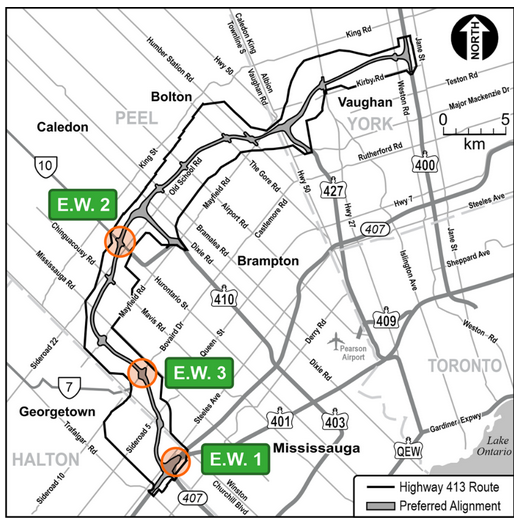
 These Early Works projects are located in areas where engineering design and field investigations have progressed, and were chosen by the MTO because they are either in areas that are, or were previously disturbed, and where the likelihood of environmental impacts is low. The development is now in an Early Works stage; initiatives that take place early in the construction process to lay the foundation for many of the construction activities to follow.
The Early Works projects associated with Highway 413 are identified in the Highway 413 Act, 2024. These Early Works projects are located in areas where engineering design and field investigations have progressed, and were chosen by the MTO because they are either in areas that are, or were previously disturbed, and where the likelihood of environmental impacts is low. Some Early Works are also located in areas that have been identified by local municipalities for additional infrastructure improvements.
Highway 413 Early Works projects include:
Location of Early Works projects
- Early Works Project #1: Embankment at 401/407 ETR/413 Interchange
- Early Works Project #2: Highway 10/Hurontario Street Resurfacing & Underpass
- Early Works Project #3: Bovaird Drive Underpass.
By Gazette Staff
September 24th, 2025
BURLINGTON, ON
The Halton District School Board will host a board-wide, interactive Secondary School Open House at Craig Kielburger Secondary School in Milton (1151 Ferguson Dr, Milton) on Saturday, Sept. 27th.
,
This event is designed to help students in Grade 6–10 and their families explore the full range of opportunities available across HDSB secondary schools, including programs and pathways, academics, athletics, clubs, community and support and student life.
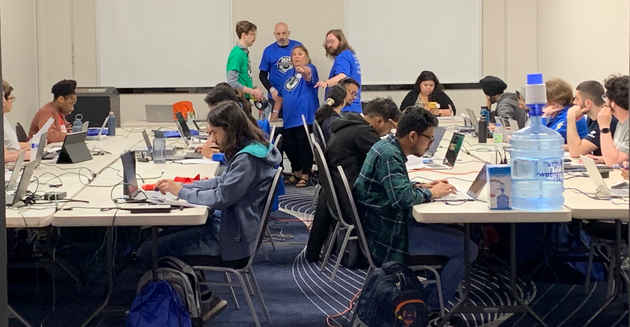
 Secondary school students at a Skills Workshop This is not just an information session. It’s a celebration of what makes the HDSB vibrant and unique. With hands-on activities, student-led booths and real-time engagement, this event will be fun, inspiring and a powerful first connection for future secondary students.
 Curtis Ennis, Director of Education for the Halton District School Board. “We’re excited to welcome students, families, staff and community members to the HDSB Secondary School Open House this weekend,” says Curtis Ennis, Director of Education for the Halton District School Board. “This event is a fantastic opportunity to see how our secondary schools support every student’s success. From academics and athletics to leadership, innovation and community involvement, we are proud to showcase the many ways HDSB schools empower students to excel today and prepare for the opportunities of tomorrow.”
To help ensure a smooth and enjoyable experience for all families, those interested in attending are asked to complete the registration form, including a preferred attendance time slot. Parking is free but limited, and time slots will be assigned on a first come, first served basis.
Parents/guardians with questions about the HDSB Secondary School Open House or secondary school in the HDSB can learn more by visiting the Secondary School Open House webpage on the HDSB website.
 Not a cell phone in sight. Students are focused on the computer screens. HDSB 2024-2028 Multi-Year Strategic Plan
The 2024-2028 Multi-Year Strategic Plan sets direction and prioritizes the collective actions of all students, staff, families and community members. This plan ensures our efforts as an organization are aligned and coordinated to support more than 65,000 students, 11,000 staff and the broader HDSB community. The six commitments identified in this four-year plan intersect and overlap to ensure that we take a cohesive approach to fulfilling its objectives.
Background resources
Secondary Pathways, Programs and Tools
By Gazette Staff
September 24th, 2025
BURLINGTON, ON
In the second round of funding the provincial government is “rewarding” municipalities for their progress toward housing targets.
The Town of Oakville received $13.2 million through the second round of the Building Faster Fund, which provides funding to municipalities that achieve at least 80 per cent of their provincially designated housing targets. Oakville broke ground on 3,679 new homes in 2024, which works out to 134 per cent of its 2024 housing target.
The Premier didn’t make it to the Oakville event – the Minister of Housing did the honours.
This funding will help Oakville build more homes and community infrastructure and supports the province’s plan to protect Ontario by investing in infrastructure to support economic growth and keep workers on the job.
 Anyone with a cheque for $13.2 million is welcome in the Town.  Mayor Meed Ward and the Premier are not chums – everything between them is transactional. Announced in August 2023, the Building Faster Fund is a three-year, $1.2 billion program that is designed to encourage municipalities to speed up approval processes and get more homes built faster. The program rewards municipalities that make significant progress against their targets by providing funding for housing-enabling and community-enabling infrastructure. Additionally, the Building Faster Fund is complemented by a $35 million investment in municipalities across Halton Region through the Municipal Housing Infrastructure Program, which will support the construction of over 29,000 new homes. This includes $3.2 million for the Town of Oakville.
The Ontario government is also helping to speed up the construction of new homes and infrastructure, including by streamlining development processes and reducing costs in close partnership with municipalities, through the Protect Ontario by Building Faster and Smarter Act 2025.
From January to August 2025, Ontario saw 13,910 rental starts, an increase of 23 per cent compared to the same period in 2024. This is the highest level of rental starts on record for this time of the year. Others don’t see the same progress the province is barking about. Tom Parkin has pointed out just how far behind in building than the other provinces.
Burlington wasn’t on the list this time around.
Related news items:
Poor housing starts impact more than the construction industry
By Tom Parkin
September 24, 2025
BURLINGTON, ON
Ontario’s residential construction sector is small and getting smaller, but sector unions appear reluctant to publicly raise concerns as the Ford government weaponizes a key grant program.
Ontario’s shrunken residential construction industry
 Employment in residential construction per 100,000 population Kick-starting Ontario’s residential construction sector to build thousands of much-needed new homes could create up to 30,000 jobs, an analysis of Statistics Canada jobs data shows.
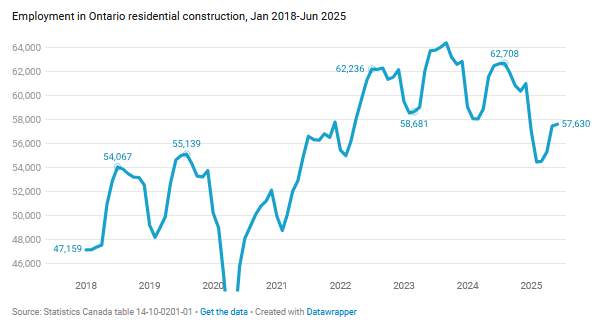
Just 57,600 workers were employed in Ontario’s residential construction sector this June, according to StatCan’s survey of employment by industry. In other provinces with better housing results, employment is much higher.
Residential construction: small and getting smaller
Residential construction employs a smaller percentage of workers in Ontario than any other province except Saskatchewan. For every 100,000 employed workers, Ontario residential construction generates just 700 jobs compared to 913 in Quebec and 1,055 in British Columbia.
An Ontario home-building strategy that developed a sector as robust as in B.C. would add over 29,200 badly-needed jobs building badly-needed housing. At Quebec levels, Ontario would have about 17,500 more jobs. Over 800,000 Ontario workers were unemployed in August.
But Ontario housing construction has gone from bad to worse. In August, only 5,100 housing units were started in Ontario, according to Canada Mortgage and Housing Corporation. That result falls far short of the 12,500 starts per month the PCs in 2021 promised their policies would deliver.
The PCs’ housing flame-out has become a big jobs killer, making Ontario’s small sector even smaller. Employment is down almost 10 per cent in two years.
In June 2025 there were 6,100 fewer jobs in the sector than June 2023 when almost 64,000 Ontarians were employed in residential construction.
Lack of building also affects jobs outside the construction sector, particularly in forestry, which is heavily reliant on providing lumber to homebuilders. But other sectors, like utilities, are also affected.
 Employment in Ontario residential construction, Jan 2018-Jun 2025 Unions quiet on jobs as PCs weaponize key training fund
Despite the job losses, significant unions in the sector appear to be self-censoring their concerns as the Ford government politicizes the Skills Development Fund (SDF) that union apprenticeship programs depend on.
The SDF has come under scrutiny after news reports of PC political meddling and grants going to private companies with a history of PC Party support. The Auditor-General has opened an investigation into the Fund.
A $17 million grant to Scale Hospitality was approved after the political intervention of an assistant to Ontario Premier Doug Ford and despite their application being submitted after the deadline and receiving a low score from bureaucrats. The assistant has since left Ford’s office, setting up a lobby firm that was then paid by Scale Hospitality.
Scale Hospitality proposed to train workers for several swanky downtown Toronto restaurants including some owned by significant PC Party donors. The $17 million project trained only 5,300 workers, according to the Ministry of Labour.
The Fund also supplied about $9 million to Canadian Niagara Hotels, whose CEO, Dino DiCienzo, has also been a generous PC Party donor. The grants raised the ire of instructors at Niagara College, which has been forced to cancel hospitality training due to Ford’s cuts to colleges. Their union, OPSEU, has publicly raised concerns the training grants to private companies are undermining the very stressed college system.
SDF cash has also gone to other private companies whose owners have deep PC Party connections.
Unions in the building and construction sector have for many years been large recipients of SDF money to operate their apprenticeship and skills programs. But the SDF’s recent politicization now puts all grant recipients at risk of political threat or manipulation by the PCs.
After OPSEU raised concern about the government’s use of SDF money to help PC campaign donors, the Labourer’s Union last week distanced itself from the criticisms, pulling out of the Ontario Federation of Labour and saying it was “nothing but bad politics” to attack the Ford government or the SDF.
 Tom Parkin is a social democratic columnist and commentator based in Toronto Tom Parkin is a social democratic columnist and commentator based in Toronto
He can be reached at: tparkin@impact-strategies.ca
By Pepper Parr
September 23rd, 2025
BURLINGTON, ON
Canada at one point ordered TikTok to wind up its business operations.
The American government has ordered TikTok to sell the company and there are a number of big money operators who are in line to buy the company.
It is now pretty clear that TikTok has been gathering data, which was available to the Chinese government.
When the company is in the hands of Americans, the same thing is going to happen – they, the new American owners, will gather information on Americans, and it will become available to American government departments: think CIA, FBI, and the American revenue people.

By Gazette Staff
September 24th, 2025
BURLINGTON, ON
Bring the family to BPAC this Saturday to celebrate Culture Days!
Enjoy a full day of FREE arts activities and performances by beloved local artists and organizations.

By Gazette Staff
September 24th, 2025
BURLINGTON, ON
2025 marks the centennial of Dr. Oscar Peterson, one of the greatest pianists in jazz history.
 Oscar put everything he had into all his performances. Audiences leaned in to hear the way his fingers pressed the keys. To celebrate his legacy, we invite you to experience a world-class concert with the Oscar Peterson Centennial Quartet, featuring pianist Robi Botos, bassist Mike Downes, special guest guitarist Jocelyn Gould, and drummer Jim Doxas.
 Oscar Peterson Centennial Quartet, These exceptional jazz artists will highlight Oscar Peterson’s most famous compositions, such as “Place St-Henri,” “Hymn to Freedom” and “Cakewalk.”
Additionally, during the evening, Oscar Peterson’s daughter, Céline Peterson, will join the quartet to offer an intimate look into her father’s exceptional life and career.
Don’t miss this once-in-a-century celebration.
Thu, Oct 2, 2025, at 7:30pm
Tickets here
By Gazette Staff
September 23rd, 2025
BURLINGTON, ON
Burlington issued charges under its Private and Public Tree By-laws in relation to tree cutting on Millcroft development property at 2155 Country Club Drive that occurred earlier this spring.
 This is what the city is now saying was illegal and has laid charges in Provincial Court. A proactive municipal would have sent a bylaw officer in with an order to cease cutting.. Five parties, including the developer, landowner, and contractor, are facing charges under the Private Tree By-law (40-2022) for allegedly causing or permitting the injury or destruction of trees without the required permits between April and June 2025. Additional charges have been laid against the contractor for removing and damaging trees under the Public Tree By-law (68-2013).
As this matter is currently before the courts, no further comment will be provided at this time.
The City understands how deeply people care about this neighbourhood, and we are committed to ongoing monitoring and transparency throughout the construction process.
The City is working with the developer to provide construction-related updates as they become available on millcroftgreens.com and www.burlington.ca/millcroftupdates
Isn’t this a case of the horse being already out of the barn? Whatever the fine – it will be written off as the cost of doing business. Maybe an apology will make the city happy.
Will the city advise the public when the matter will be heard in Court so people can hear the arguments?
 The people doing the work needed to keep some of the trees safe have put fencing around many areas of the site. Links and Resources
-30-
By Pepper Parr
September 23rd, 2025
BURLINGTON, ON
So – we didn’t get it wrong:
There was some confusion over the application dates for the Appeals Committeee jobs. These are paid positions: Chair earns $100 per meeting, mebers earn $80 per meeting.
 Communications thought the method they used to announce the need for members of an important committee was one that would “resonate” best with the people they wanted to attract. The information we came across on social media (have you any idea how much information the city and the mayor dump into social media channels?) said the closing date was September 2nd.
But the information on the city website said the closing date was September 24th.
A number of Gazette readers pointed this out to us, so I revised the story and asked the City Communications people why the information related to an important Advisory group was not sent out as a media release?
Here is the response we got:
The original closing date for applications for the Appeals Committee was Sept. 2, 2025. This opportunity was shared on City social media channels and on the city’s website: https://www.burlington.ca/en/council-and-city-administration/apply-to-a-board-or-committee.aspx
On Sept. 18, 2025, the deadline for applications was re-opened until Sept. 24, 2025. This information was also shared on City social media channels and the city’s website: https://www.burlington.ca/en/council-and-city-administration/apply-to-a-board-or-committee.aspx
We appreciate the interest in how we handle committee requirements.
In this case, we selected strategies that are most likely to resonate and engage with potential candidates.
There are enough people in the Communications department to pump out a media release – especially for an important sub-judicial committee.
There is a suggestion that the city has already decided who they want – putting a note out on social media just doesn’t cut it.
At best, this is sloppy work.
For those interested, the closing date for applications is tomorrow.
|
|





 By Samanthat Serle


 By Pepper Parr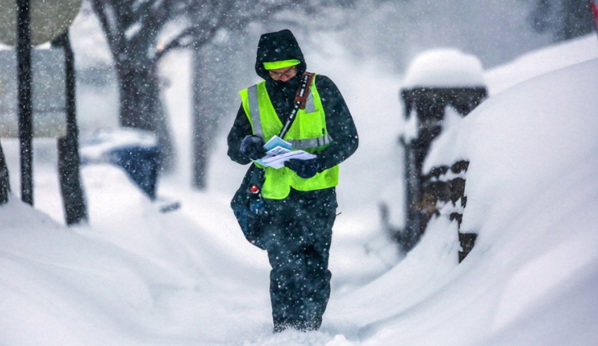


 Looking ahead to October (Cybersecurity Awareness Month) Charles Finlay, Founding Executive Director of the Rogers Cybersecure Catalyst at TMU and member of the Canadian Chamber’s Cyber Security Council, would like to speak with you on Canada’s cybersecurity crisis, and discuss:
 By Pepper Parr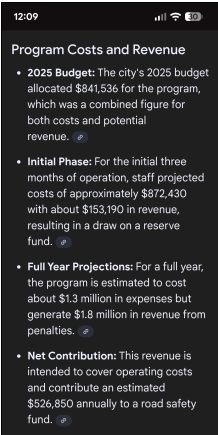
 By Gazette Staff

 By Gazette Staff


 By Ray Rivers
 Ray Rivers, a Gazette Contributing Editor, writes regularly applying his more than 25 years as a federal bureaucrat to his thinking. Rivers was once a candidate for provincial office in Burlington. He was the founder of the Burlington citizen committee on sustainability at a time when climate warming was a hotly debated subject. Ray has a post graduate degree in economics that he earned at the University of Ottawa. Tweet @rayzrivers
 By Gazette Staff


 By Gazette Staff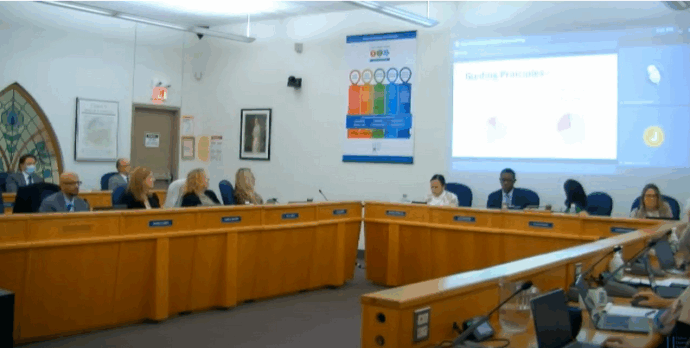


 There is some help available.



 By Gazette Staff

 By Tom Parkin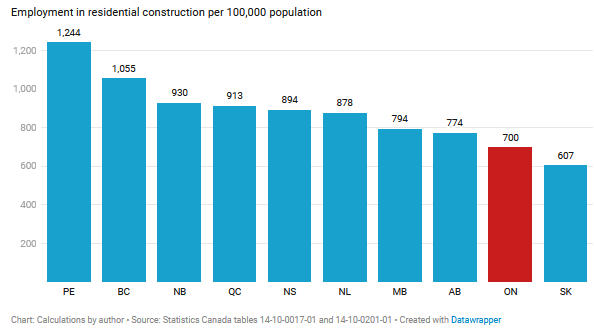
 Tom Parkin is a social democratic columnist and commentator based in Toronto

 By Gazette Staff