By Norman Coles By Norman Coles
September 17th, 2025
BURLINGTON, ON
I treat the board as a quick break I can start and finish on time. A ball drops, bounces through a set of pegs, and lands in a slot with a posted multiplier. Because the path is random, I focus on what I actually control: tiny stakes, short blocks, clear rules, and a clean exit. I keep a simple log after each block—stake, number of drops, result, mood. That one line helps me start the next round calmer and avoid myths. I also set a short timer so the session stays light. When the timer rings, I stop even on a win; that one habit protects tomorrow’s focus and makes this hobby easy to repeat without stress.
 How I set up a clean, quick session How I set up a clean, quick session
The first minute is for comfort: screen brightness, sound off, and a row count I can read at a glance. I want a layout that shows stake, recent results, and the payout map in one view so I don’t dig through menus. After that warmup I run a tiny demo on a trusted hub, and if I decide to test live with a few drops, I use a simple entry like plinko casino mid-sentence in my notes as a reminder that each drop costs what I choose and nothing more. I keep the first stake small enough to forget by bedtime. If I see stutter, fuzzy labels, or hidden toggles, I switch fast. A clean loop reduces mistakes that look like luck but are actually rushed hands, and that clarity is what I’m after.
Three numbers and one timer
Before the first drop I write three numbers on a sticky note: stake per drop, number of drops, and two stop lines—one for gains, one for losses. The note stays in view, so I don’t renegotiate mid-run. If the board offers low, medium, and high risk tiers, I start in the middle and hold that choice for the whole block. When I feel tilt—tight jaw, quick clicks, restless eyes—I pause, sip water, and either finish calmly or end early. I am not “beating” a pattern; I’m keeping a routine that fits busy days and leaves me clear-headed for the next task. That’s the point of a short session.
Here’s the small checklist I run after a long paragraph or two, never at the start:
- Keep one tiny stake for the entire first block.
- Set gain and loss lines you will not cross.
- Use a timer and stop when it rings, even on a win.
After block one, I audit the flow: did the board accept input quickly, did the history log update instantly, did the cashout page load without delay? If yes, I repeat the same numbers for one more short block and call it a day. If any part felt sticky, I fix it or I walk. Small, repeatable steps turn scattered urges into a simple, repeatable hobby.
What I expect from a fair board and a tidy app
Good design makes itself invisible. I tap, the ball falls, the result posts, and I can act at once. Clear text beats loud themes. Buttons should sit within easy reach on a phone so my thumb doesn’t stretch. A reliable history tab with timestamps lets me audit a block later. I like help pages that explain random draws and payouts in plain language. Deposits and cashouts should feel boring—in the best way—no surprise screens, no odd loops. If any piece of the flow feels vague, I leave before the next drop. I also try both portrait and landscape on mobile to see where the drop button feels natural; fewer mis-taps means fewer “losses” that were really input errors.
Speed, clarity, and support
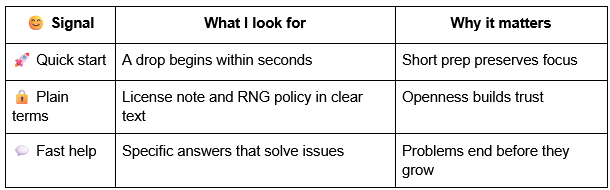
Speed keeps the loop short and helps me stick to limits. Clarity means I can read the payout map and my last drops without guessing. Support is the safety net when something odd happens. I run a tiny pipeline test—one small deposit, a handful of drops, one small cashout—and judge by how ordinary it feels. A short, specific reply from help earns trust; a wall of canned lines does not. For reference, I keep this table near my keyboard; it follows a calm paragraph so it doesn’t jump in cold:

| Signal |
What I look for |
Why it matters |
| Quick start |
A drop begins within seconds |
Short prep preserves focus |
| Plain terms |
License note and RNG policy in clear text |
Openness builds trust |
| Fast help |
Specific answers that solve issues |
Problems end before they grow |
Once a board passes these checks, I give it modest time and keep my plan stable. If it fails, I close it rather than argue with it. Smooth tools protect my limits by removing friction that nudges bad decisions. Fancy visuals don’t matter if they slow the interface or hide key buttons. I want brisk admin and a lively ball—nothing else.
After another paragraph, I’ll add one more compact list, spaced away from the last one:
- Try demo first for layout, speed, and mute settings.
- Run one micro live block to test history and receipts.
- Save a screenshot of terms and your first receipt for the folder.
Reading randomness without myths
I describe the board to myself as a chain of small forks I cannot steer. That framing keeps me from chasing the idea of a perfect drop point. I still vary drop starts to keep the act playful, but I don’t treat those choices as a strategy. Words guide behavior, so my notes avoid “due,” “hot,” or “cold.” I write about inputs I control: stake, block length, time of day, posture. When I fix those, the session becomes a quick, focused task instead of a mood ride. I also treat energy like a resource; late blocks with low focus tend to stretch, so I move them earlier when I can. The goal is a loop I can run and end on time, not a streak I try to extend.
 Handling streaks without chasing
Streaks cluster. A quick run of wins tempts me to scale up; a run of misses tempts me to recover fast. Both urges break the plan. I defend the plan with rules set while calm. When I hit the gain line, I pocket some and finish the block at the same or smaller stake. When I hit the loss line, I stop for the day—no “one last drop.” I also track tilt: rushed clicks, tight shoulders, shallow breath. If those show up, I reset with water and a short walk. Fixing the body often fixes the play better than more drops do. For readers who like a single, neutral landing page to try a short demo and a tiny live block, I point to this simple entry I keep bookmarked: plinko.
Here, spaced away from the last list, is a final compact trio that I use when streaks try to steer me:
- Write gain and loss lines before the first drop.
- Pocket early and avoid scaling mid-block on a hunch.
- End on the timer; a calm exit is the win that compounds.
A weekly rhythm and a lightweight log
I play three or four short blocks per week, never back to back on heavy days. Morning coffee fits five drops; lunch fits ten; evenings are optional and shorter. If I feel rushed, I skip the day. This stays a hobby by staying small. I rotate devices to see what suits my hands. On desktop I aim for readable slots and a drop button that stays put after resize. On phone I check whether the button sits under a natural thumb arc and whether haptics help or distract. I revisit terms monthly and retire any build that adds clutter or delay. Moving on is faster than adapting to pain points, and the habit of moving on keeps the routine clear.
A template that actually helps
My log is plain text so it opens fast. I name files by date and group blocks by morning, noon, or evening to track energy. Instead of “luck good” or “luck bad,” I write “focus steady” or “focus low.” One line per block: device, row count, stake, drops, result, mood, friction (if any), and whether I ended on time. On Sundays I skim the page and choose one small tweak for the next week—stake, block length, or time of day—and change nothing else. That single-change rule lets cause and effect show up without noise. If I add a new board, I run the same demo-to-live pattern and compare notes to my baseline. The habit matters more than a hot run, and the habit is what improves the next ten minutes.
I also keep language clean when I talk with friends about this hobby. I rarely say “plinko game” out loud; I usually say “the board,” because that phrasing removes drama. If we play together, we set limits before starting and share one lesson after, not during. Mid-drop advice adds noise; post-session notes add learning. When the timer rings, I stretch, drink water, and step away from the screen. The board will be there tomorrow; my attention is the part I protect. And if an app starts to creep in extra friction, I retire it early rather than tolerate it. A simple routine deserves simple tools.
I’m closing with a direct nudge because this works best when you try it. Pick a readable board, set one tiny stake, plan ten calm drops, and run a short demo before a single live block. Keep a one-line log—stake, drops, mood—then end on your timer. If the loop felt smooth, repeat tomorrow; if it felt rushed, adjust one thing and try again. Start now, and send me that single-line note so we can shape your next short run together.

 By Gazette Staff By Gazette Staff
September 17th, 2025
BURLINGTON, ON
The Region issued a report yesterday on problems at the Halton Family Health Centre Walk-in Clinic located at 2951 Walkers Line where needles were improperly used on occasions where a local freezing was being applied.
The original report said:
Following an investigation, Halton Region Public Health identified improper infection prevention and control practices involving the use of an unsterile needle with a multidose vial of local anesthetic medication (freezing) between January 1, 2019, and July 17, 2025. This practice may pose a risk of cross-contamination and transmission of infections. The investigation determined this was likely not an isolated incident, meaning it may have occurred previously during the identified time period between 2019 and 2025. This IPAC Lapse only includes the walk-in clinic during the specified time period and does not include procedures or care received at the family practice physician offices associated with the Halton Family Health Centre clinic.
Halton Family Health Centre Walk-in Clinic has taken immediate corrective measures to ensure all necessary infection control measures are being met. Public health continues to monitor the situation to ensure compliance and patient safety. There are no risks to the patients at this time, and the clinic is open.
The Region has since updated the report to say:
 This public notice has been updated to provide clarity and ensure an accurate understanding of the infection prevention and control lapse. It is important to note that the same needle was not used continuously throughout the period, rather appropriate infection prevention and control measures were not followed when using multi does vials over the time period identified. This public notice has been updated to provide clarity and ensure an accurate understanding of the infection prevention and control lapse. It is important to note that the same needle was not used continuously throughout the period, rather appropriate infection prevention and control measures were not followed when using multi does vials over the time period identified.
While the risk remains low, Halton Region Public Health continues to encourage anyone who visited the walk-in clinic during the specific timeframe and received a needle for the purposes of “freezing”, to seek precautionary testing and speak with their healthcare provider.
By Gazette Staff
September 17th, 2025
BURLINGTON, ON
Hailed as a “children’s musical star” (National Post), Chris McKhool is one of Canada’s most popular musicians for young people.
This fall, Chris is bringing three PAY-WHAT-YOU-CAN performances to BPAC’s Studio Theatre.

These “cushion concerts” will have an area for kids to sit up close to the stage, creating a relaxed environment for everyone to enjoy!
Kids and their parents scat-sing, become a rhythm section, and join Chris and friends on stage to play rare percussion instruments from around the world!
There are three performance dates: September 28th; November 16th, December 13th – all are at 1:00 pm in the Studio Theatre.
Tickets for Fiddle Fire on September 28th HERE
Tickets for Earth Sea Fire on November 16th HERE
Tickets for Celebrate on December 13th HERE
This award-winning show is fully interactive, as kids join the band on stage and sing songs about taking care of our planet.
Chris celebrates the multicultural mosaic of our country with songs about the many traditions honoured each year across Canada.
By Jana Baert
September 18th, 2025
BURLINGTON, ON
Running a small business today means wearing many hats: manager, accountant, marketer, and often IT administrator all at once. Technology can make this easier, but with so many tools available, it can be hard to know where to start. The good news is that a few smart, affordable investments can have a major impact on productivity, security, and customer trust.
Streamline access and security
One of the biggest challenges for small businesses is keeping digital accounts secure while still allowing employees to work efficiently. Using an enterprise password manager is an easy way to solve both problems. It stores credentials in one secure place, generates strong passwords, and makes it simple to add or remove users as your team changes. This small investment protects sensitive data while saving valuable time for business owners.
 Cloud platforms make it easy for teams to work together, even when they are not in the same place. Move to the cloud for collaboration
Cloud-based tools are no longer just for big companies. They give small businesses access to the same level of flexibility and reliability. From shared calendars to real-time document editing, cloud platforms make it easy for teams to work together, even when they are not in the same place. Automatic backups are an added benefit, helping prevent data loss and downtime.
Automate routine tasks
Repetitive processes like sending invoices, scheduling social media posts, or tracking inventory can take up hours every week. Affordable automation tools can handle these tasks in the background, freeing entrepreneurs to focus on strategy and customer service. Even basic solutions can reduce errors and keep operations running smoothly.
Protect customer data
Trust is one of the most valuable assets a local business can build. A data breach can quickly damage that relationship. Simple measures like encrypting sensitive files, keeping software updated, and training staff to spot phishing emails go a long way. Pairing these habits with a reliable enterprise password manager adds another layer of security, ensuring that accounts are not left vulnerable to attackers.
Invest in your team’s knowledge
Technology is most effective when employees know how to use it. Consider offering short training sessions on digital tools, cybersecurity basics, and best practices for handling data. Empowered staff make fewer mistakes and feel more confident using the systems you put in place.
 A reliable enterprise password manager adds another layer of security, ensuring that accounts are not left vulnerable to attackers. Tech that works as hard as you do
The right tools do not need to be expensive or complicated. By focusing on a handful of smart investments — cloud collaboration, automation, data protection, and enterprise password management — local entrepreneurs can run more efficient, resilient businesses. Each step strengthens operations and builds trust with customers, helping small businesses thrive in a competitive market.
By Burlington Gazette
September 17th, 2025
BURLINGTON, ON
What can women who aspire to become chief executive officers (CEOs) in America’s “Bible Belt” expect from their careers?
“Traditional theories suggest religion reinforces patriarchal norms, potentially limiting women’s rise to the top,” says Brock University Professor of Accounting Samir Trabelsi.
 But Trabelsi and his team turned that stereotype on its head in their study, “Religiosity and Gender Dynamics in Executive Leadership: Impact on CEO Appointments and Pay Disparities,” published June 1 in the Journal of Business Ethics. But Trabelsi and his team turned that stereotype on its head in their study, “Religiosity and Gender Dynamics in Executive Leadership: Impact on CEO Appointments and Pay Disparities,” published June 1 in the Journal of Business Ethics.
Trabelsi and then-master’s student Maryam Vashahi (MSc ’23), the study’s co-author, found no significant relationship between local religiosity and the appointment of female CEOs.
Even more surprising, the researchers say, is that women who become CEOs in highly religious states earned more than their male peers.
“Women continue to be significantly underrepresented in CEO positions, making it essential to understand the factors that either create barriers or open pathways for their advancement,” says Vashahi.
The team analyzed 2,936 CEO transitions in U.S.-listed firms between 1998 and 2021 along with religiosity measures from the Pew Research Center.
Religiosity is defined as being the expression of beliefs and practices in institutionalized religion and their influence on social behaviours and cultural norms in local settings.
The researchers expected that firms in states with stronger religious cultures would be less likely to appoint women CEOs, and that if women did attain the role, they would earn less than men.
 Instead, the findings revealed an “exceptionalism premium,” says Trabelsi. Instead, the findings revealed an “exceptionalism premium,” says Trabelsi.
“Because female CEOs are rare in these environments, they’re seen as extraordinary and are compensated accordingly,” he says.
The study also revealed a paradox: women CEOs continued to be paid less than their male counterparts in more secular states.
“We suggest some firms may promote women to signal diversity but fail to back that up with equitable pay, a practice sometimes described as performative diversity,” says Trabelsi.
He also points out that both male and female CEOs in religious states earned less overall than their peers in secular states.
“So even though a woman CEO might out-earn a man in Alabama or Mississippi, she’s still likely earning less than a woman CEO in California or New York,” he says.
Another key finding was that companies with more women on their boards were significantly more likely to appoint a woman CEO, underscoring governance as a powerful lever for equity, he says.
 There was a time when shares of public companies were traded in this building.. There was never a single woman on the trading floor. Changes do take place – even in the American Bible Belt. In Canada, Trabelsi says only about five per cent of TSX-listed companies had a woman CEO as of 2024, and Canadian women executives still earn about 40 per cent less in total compensation than their male counterparts on average.
“From a governance perspective, Canadian regulators and boards could strengthen diversity and pay equity initiatives — for example, through enhanced transparency and leadership diversity targets — to help more women reach CEO roles and ensure they are compensated fairly once there,” he says.
Trabelsi says the research team, which also included Professor of Organizational Behaviour and Human Resource Management Dave Bouckenooghe and Professor of Accounting Kareen Brown, hopes the study will spark broader conversations about governance and gender equity.
“Breaking the glass ceiling is only the first step,” he says. “The real challenge is ensuring women are supported, compensated fairly and empowered once they get there.”
By Gazette Staff
September 17th, 2025
BURLINGTON, ON
Public Notice: Infection Prevention and Control (IPAC) Lapse at Walk-In Clinic in Burlington
Halton Region Public Health is notifying the public of an infection prevention and control (IPAC) lapse at the Halton Family Health Centre Walk-in Clinic located at 2951 Walkers Line in Burlington (corner of Walkers Line and Dundas Street).
Halton Region Public Health investigation
Following an investigation, Halton Region Public Health identified improper infection prevention and control practices involving the use of an unsterile needle with a multidose vial of local anesthetic medication (freezing) between January 1, 2019, and July 17, 2025. This practice may pose a risk of cross-contamination and transmission of infections. The investigation determined this was likely not an isolated incident, meaning it may have occurred previously during the identified time period between 2019 and 2025. This IPAC Lapse only includes the walk-in clinic during the specified time period and does not include procedures or care received at the family practice physician offices associated with the Halton Family Health Centre clinic.
Halton Family Health Centre Walk-in Clinic has taken immediate corrective measures to ensure all necessary infection control measures are being met. Public health continues to monitor the situation to ensure compliance and patient safety. There are no risks to the patients at this time, and the clinic is open.
Important instructions for patients of the Halton Family Health Centre Walk-in Clinic
Patients who visited the Halton Family Centre Walk-in Clinic between January 1, 2019 and July 17, 2025, and received a treatment requiring local anesthetic by injection (freezing) may have been exposed to blood and blood-borne infections. Examples of procedures that may require local anesthetics include but are not limited to:
- laceration repairs (stitches for cuts or tears of the skin)
- intrauterine Device (IUD) insertions
- endometrial biopsies
- skin biopsies
- removal of lumps and bumps
- partial or complete nail removal
- joint injections or aspirations
Although the risk of infection is low, Halton Region Public Health is advising patients who received a procedure that may require local anesthetic by injection (freezing) at the Halton Family Health Centre Walk-in Clinic between January 1, 2019, and July 17, 2025 to:
- speak with their healthcare provider or visit a walk-in clinic to discuss testing for hepatitis B, hepatitis C, and HIV
- download and print a copy of the laboratory requisition and physician letter to bring to the healthcare provider
- not visit a hospital emergency department, as it is not necessary
“Protecting the health and safety of the public and patients is a top priority. Our Public Health team continues to actively monitor the situation and ensure compliance is maintained,” said Dr. Deepika Lobo, Medical Officer of Health for Halton Region. “While the risk of transmission is low, we are ensuring impacted individuals have the information they need to complete precautionary testing.”
To learn more about this IPAC lapse, please visit the IPAC Lapse Disclosure webpage.
Patients of the clinic who have specific questions about the lapse are asked to call Halton Region Public Health at 311, 905-825-6000 or toll-free 1-866-442-5866
By Diana Kharchenko
September 17th, 2025
BURLINGTON, ON

Researchers in multiple countries are advancing stem cell trial research aimed at repairing the inner ear to restore hearing in people with tinnitus and neural hearing loss. The initial research investigations aim to determine if cochlear hair cells, which transform sound into brain signals, can be regenerated.
The 2022 JAMA Neurology review established that tinnitus impacts 14.4% of adults worldwide, resulting in more than 740 million cases, while severe tinnitus affects 2.3% of the population (JAMA Neurology). The available treatments, including hearing aids and cochlear implants, and sound therapy, provide symptom relief, but they cannot restore typical hearing function.
Researchers at Harvard Medical School’s Mass Eye and Ear used a drug-like cocktail to stimulate hair cell regeneration in mice, which shows promise for human clinical applications.
Dr. Zheng-Yi Chen from Harvard Medical School’s Otolaryngology-Head & Neck Surgery department described hair cell regeneration in the inner ear as the ultimate goal of hearing research. The research shows that clinical applications are possible for the future (Harvard Medical School).
Advances in Regenerative Research
Tinnitus and many forms of neural hearing loss result from damage to cochlear hair cells or their neural connections. The therapy with mesenchymal stem cells (MSCs) works to establish a supportive environment for the body’s repair mechanisms by delivering growth factors and enhancing immune responses and microcirculation.
Traditional treatments, including hearing aids and cochlear implants, and medications, help millions of people, but they cannot fix the complete damage to the ear.
Dr. Chris Cunningham from the University of Pittsburgh (Eye & Ear Foundation) explained that these devices bring revolutionary life-changing benefits, yet they cannot restore normal hearing completely.
Many stem cell trial programs now focus on MSCs, adult multipotent stromal cells sourced from a patient’s tissue or donated placental and umbilical cord tissue. MSCs avoid the ethical concerns associated with embryonic stem cells and have a lower risk of immune rejection.
According to reviews in Frontiers in Cellular Neuroscience (Warnecke et al., 2021) and Molecular Biology Reports (2020), MSCs have been shown to reduce inflammation, protect nerve cells, repair synaptic connections, and promote new blood vessel growth to improve circulation.
Global and Clinical Perspectives
 Scientists throughout the world continue to study cell-based hearing loss treatments in laboratories and clinics because they share a common goal of developing treatments that surpass symptom relief. Beyond university laboratories, some private clinics are also exploring regenerative approaches for tinnitus and neural hearing loss. The European clinic Swiss Medica operates among multiple facilities that provide stem cell therapy for tinnitus through MSCs. The clinic explains that these treatments work to decrease inflammation while defending auditory nerve structures and promoting tissue regeneration.
The U.S. medical institution AdventHealth initiated a Phase I/II clinical trial to evaluate autologous umbilical cord blood infusion for treating acquired hearing loss in children while focusing on safety and practicality. The MHRA granted approval to Rinri Therapeutics in 2025 for starting human trials of Rincell-1, which functions as a regenerative cell therapy to fix damaged auditory nerves.
Scientists throughout the world continue to study cell-based hearing loss treatments in laboratories and clinics because they share a common goal of developing treatments that surpass symptom relief.
Future Outlook
While early results are encouraging, experts emphasise that stem cell therapies for hearing disorders remain experimental.
According to a systematic review in the International Journal of Otolaryngology and Head & Neck Surgery (Ganchi, 2025), stem cell therapy shows promise for potentially curing congenital hearing loss via cochlear regeneration. However, significant hurdles in protocol development, long-term efficacy, and safety must still be addressed.
Conclusion
Recent developments in stem cell trials are shifting the treatment of tinnitus and neural hearing loss toward addressing the underlying damage rather than just managing symptoms. While still in trials, these regenerative therapies could significantly change the landscape of hearing restoration.
By Tom Parkin
September 17th, 2025
BURLINGTON, ON
Doug Ford’s “look harder” comment explains why Ontario has no jobs plan: because he denies there’s an unemployment problem.
There were 7,000 fewer job openings in Ontario at the end of June than March and there were more than 200,000 fewer openings than June 30, 2022, according to a Statistics Canada report released Tuesday morning.

The data comes just days after Ontario Premier Doug Ford dismissed job-searchers’ concerns in front of a downtown Toronto business audience.
 Doug Ford: “Young people who can’t find work aren’t looking “hard enough,” “It drives me nuts” when young people today say they can’t find work, Ford complained to the business crowd as they tucked into their lunch. “If you look hard enough” the jobs are there, the premier said.
But that’s not what the data shows.
Over 800,000 Ontarians were job-searching in August, according to StatsCan. That’s more than four times the 179,000 job openings reported as of June 30.
Vacancies have been trending down for three years, and now have fallen by more than half since June, 2022, when there were 378,000 Ontario job openings.
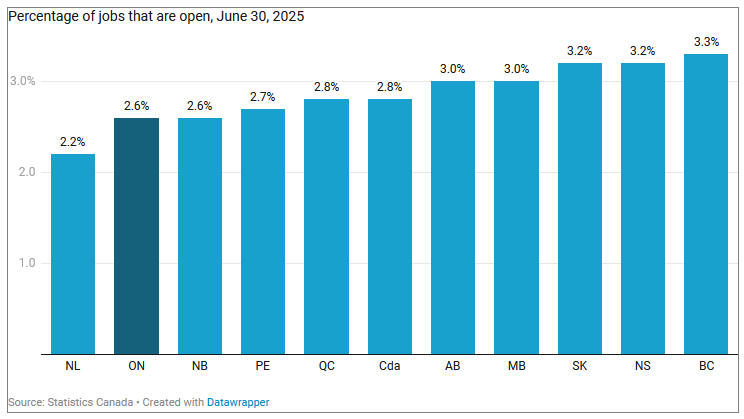
Currently, just 2.6 per cent of Ontario jobs are open, the second-worst rate among the provinces. Only in Newfoundland and Labrador are the odds worse for job-hunters.
British Columbia continues to be the best province for job-searchers with 3.3 per cent of jobs needing workers.

By Pepper Parr
September 17th, 2025
BURLINGTON, ON
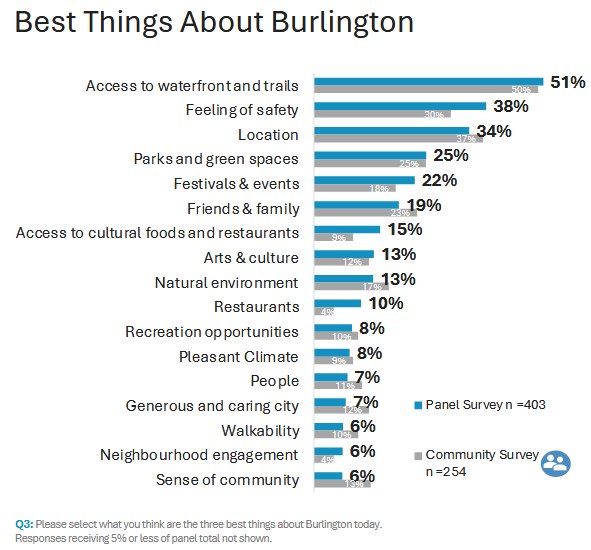
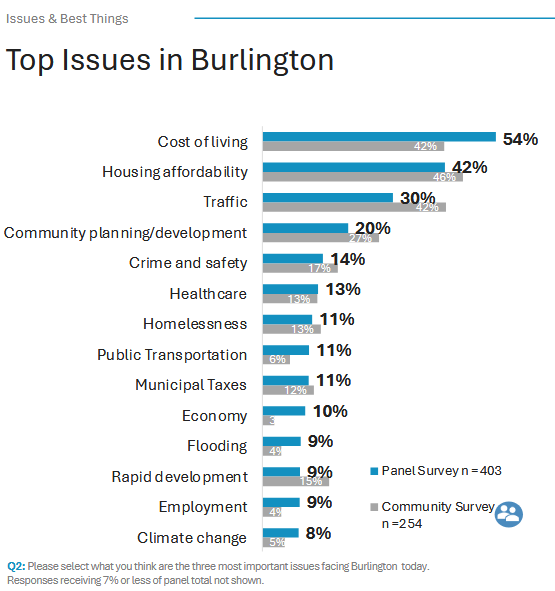
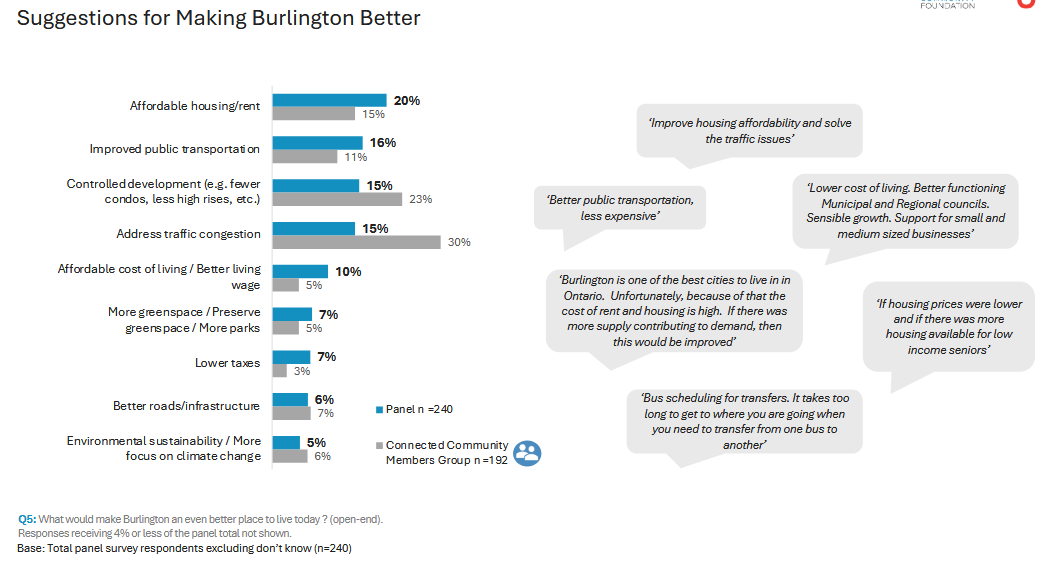
The Burlington Community Foundation presented its Vital Statistics report Tuesday morning to a room at the Art Gallery that was well attended.
 The usual mention of the MP and the Mayor were made and then a panel discussion that included Joann Battaglis of First Ontario Credit Union; Garner Becket with the Conservation Halton Foundation, Christina Mulder, Director Burlington Food Bank and Catherine Villasenor of Home Suite Home. took place. The usual mention of the MP and the Mayor were made and then a panel discussion that included Joann Battaglis of First Ontario Credit Union; Garner Becket with the Conservation Halton Foundation, Christina Mulder, Director Burlington Food Bank and Catherine Villasenor of Home Suite Home. took place.
The most authentic panellist was Mulder, who was really blunt when she pointed out that the current rate of customer growth at the Food Bank is not sustainable.
In 2019 the Foodbank served 1985 people – in 2022 they served 3517. Since then, growth has exceeded 34% annually.
The panel was followed by having the people at the 15 or so tables in the room discuss what they had heard from the panel. The word “intersectionality” popped up a number of times – that one didn’t resonate with me.
The actual report was never presented – except for one page that gave grades (A, B, C or D) to different subjects that were mentioned in the report that was available online.
The data was solid, the people who did some of the research were more than credible. The number of responders to the survey work was on the low side – in the 250 range.
There were people in the room from various organizations that had well grounded understandings of what the issues were and the size of the challenges the city faces who didn’t get much in the way of an opportunity to speak to the room. Unfortunate.
The date and the range of people that were interviewed:


By Pepper Parr
September 17th, 2025
BURLINGTON, ON
OPINION
At some point, one hopes, City Council will begin focusing on the concerns and issues of the people that Live, Play and Work in Burlington.
Right now the mistakes and the downright incompetence that surrounds the allocation of limited swimming pool capacity in the city is hurting people.
 Burlington Aquatic Devilrays (BAD), a swimming club that has operated for 40 years, could be close to ending its existence. Burlington Aquatic Devilrays (BAD), a swimming club that has operated for 40 years, could be close to ending its existence.
It’s membership has plummeted – because the swimming pool space they used to have is no longer available to them.
Pool time has been given to an organization that operates in Hamilton, Waterdown, Dundas, Ancaster, and Stoney Creek.
Mayor Meed Ward and Councillors Galbraith, Kearns, Nisan, Stolte, Sharman and Bentivegna have gone mute. They are hiding behind the argument that Council has no business sticking its nose in procurement matters.
They have muzzled the President of the club.
Some have concerns about the quality of the management of BAD – in our conversations with that organization, we’ve seen nothing that is of serious concern. Keeping everyone happy is not as simple as it sounds.
Councillor Kearns has said she will ask Council to do an audit of the procedure that was followed in the allocation of swimming pool space. For a number of reasons that don’t make all that much sense, what some people thought was going to take place in September has been moved to October. There is no certainty that it will actually happen, and that would be unfortunate.
The people in Burlington who put in hours of volunteer time to run a swimming club are going to have to pressure City Council to reverse the decision that was made by the department that handles procurement matters. Council is in place to represent the needs and wishes of its citizens.
They need to be told to do the job they were hired to do.
By Stephen Attellier
September 17th, 2025
BURLINGTON, ON
Canadian sports betting has transformed since single-event wagering became legal in August 2021. Ontario’s regulated online gambling market generated $825.8 million in gaming revenue between October and December 2024, while total wagers reached $22.7 billion during the same period. These figures represent a 25% increase in revenue and 32% growth in wagering compared to the third quarter of 2023.
Ontario Sets the Pace for Market Expansion
 Ontario operates differently from other provinces. The province launched its competitive market through iGaming Ontario in April 2022, allowing private operators to compete alongside the Ontario Lottery and Gaming Corporation. Fifty operators now run 83 gaming websites in the province, serving approximately 997,000 active player accounts each quarter. Ontario operates differently from other provinces. The province launched its competitive market through iGaming Ontario in April 2022, allowing private operators to compete alongside the Ontario Lottery and Gaming Corporation. Fifty operators now run 83 gaming websites in the province, serving approximately 997,000 active player accounts each quarter.
Monthly spending per active account averaged $277 in the third quarter of 2024, though first-quarter data showed this figure reaching $284, a 44.2% increase from the previous year. December 2024 saw online gambling spending hit $7.8 billion, beating November’s record by 4% and the previous December by 28%.
Sports betting, esports, proposition and novelty betting made up $3.4 billion of total wagers in the third quarter, accounting for 15% of all bets placed and generating $166 million in revenue. This represents 20% of total gaming revenue for the period. The Ontario Lottery and Gaming Corporation maintains between 25% and 30% of the online gaming market share despite competition from private operators.
Provincial Market Variations and Regional Betting Patterns
The fragmented regulatory approach across Canadian provinces creates distinct betting environments that shape consumer behavior differently in each region. Ontario’s open market model contrasts sharply with government-controlled systems in British Columbia and Quebec, while sports betting in Canada varies considerably between Atlantic provinces operating through Atlantic Lottery Corporation and Prairie provinces maintaining their own lottery corporations.
These regional differences affect everything from available betting options to promotional offerings and odds competitiveness. Players in Ontario can choose from 50 different operators, while residents of Manitoba or Saskatchewan must use their provincial lottery corporation’s platform, resulting in average monthly spending patterns that range from $200 in monopoly markets to $284 in Ontario’s competitive environment.
Alberta Prepares for Market Opening
 Alberta introduced Bill 48, the iGaming Alberta Act, on March 26, 2025. The legislation would establish iGaming Alberta as a Crown corporation to oversee private operators, while the Alberta Gaming, Liquor and Cannabis commission would handle regulation. Canadian Gaming Association CEO Paul Burns expects Alberta’s online gambling sector to become operational in the first quarter of 2026. Alberta introduced Bill 48, the iGaming Alberta Act, on March 26, 2025. The legislation would establish iGaming Alberta as a Crown corporation to oversee private operators, while the Alberta Gaming, Liquor and Cannabis commission would handle regulation. Canadian Gaming Association CEO Paul Burns expects Alberta’s online gambling sector to become operational in the first quarter of 2026.
The timing of Alberta’s market launch could accelerate due to potential trade tariffs from the United States administration. Provincial officials are monitoring these developments while finalizing regulatory frameworks based on Ontario’s operational model.
Revenue Projections and Market Growth Patterns
Canada’s sports betting market generated $4,100.5 million in revenue during 2024. Market analysts project revenues will reach $8,757.2 million by 2030, representing a compound annual growth rate of 13.6% from 2025 through 2030. Online platforms generated the largest share of revenue in 2024 and continue showing the fastest growth rates among all betting channels.
Quarterly data reveals consistent expansion patterns. Third-quarter wagers increased 22% compared to the second quarter of 2024 and 32% compared to the third quarter of 2023. Gaming revenue grew 10% quarter-over-quarter and 25% year-over-year during the same periods.
Regulatory Developments and Enforcement Actions
Federal legislators are considering Bill S-269, which would restrict sports betting advertising. The proposed legislation would ban advertisements during primetime hours and live sporting events, prohibit certain promotional terms, including “bonus” and “odds boost,” and limit celebrity endorsements. The Senate adopted this bill on November 5, 2024, as part of establishing a national framework for regulating sports betting advertisements.
Law enforcement continues monitoring illegal gambling operations. The Combined Forces Special Enforcement Unit conducted raids from March 28 to 30, 2025, dismantling an illegal gaming and bookmaking network in the Greater Toronto Area. Charges were filed against several persons linked to an alleged criminal organization, including former Hell’s Angels member Paris Christoforou.
Technology Infrastructure and Consumer Patterns
 Live wagering options and real-time odds updates have become standard features across regulated platforms. Mobile betting platforms and integrated payment systems support the market’s expansion. Live wagering options and real-time odds updates have become standard features across regulated platforms. These technological capabilities enable operators to scale operations quickly while meeting consumer expectations for seamless betting experiences.
Consumer engagement metrics show increasing sophistication in betting behavior. Active player accounts demonstrate regular monthly activity, with spending patterns stabilizing around predictable ranges. The consistency of these patterns suggests market maturation rather than speculative growth.
Conclusion
Canada’s sports betting market has established itself as a substantial economic sector generating billions in wagers and hundreds of millions in revenue quarterly. Ontario’s competitive model provides a functioning template for other provinces considering market liberalization, while Alberta’s pending market entry could double the size of Canada’s regulated betting sector. Federal advertising regulations and enforcement actions against illegal operators will shape operational conditions as the market continues expanding toward projected revenues of $8.7 billion by 2030.
By Pepper Parr
September 16th, 2025
BURLINGTON, ON
I really wanted to be there when Her Worship provided detail on the Automated Speed Enforcement (ASE) cameras are going to be installed.
When the city announced the event was going to take place, the City Communications people referred to the Mayor as Her Worship.
I was looking forward to using the Honorific in a public setting.
But while chatting with friends after the Burlington Community Foundation event, I was alerted to a tip from a very reliable source that Natalie Peirre intended to resign as the MPP for Burlington.
I chose instead to rush back to the newsroom and get the story out.
We have yet to hear from MPP Pierre.
Marianne Meed Ward did the requisite photo op with most of her Council standing with her. Sharman and Galbraith took a pass.
The City of Burlington has installed “Municipal Speed Camera Coming Soon” signs to give drivers at least 90 days’ notice before the Automated Speed Enforcement (ASE) cameras are installed and activated. These signs will be changed to “Municipal Speed Camera In Use” once the cameras are active.
 From L – R: City of Burlington Councillors Angelo Bentivegna, Ward 5; Shawna Stolte, Ward 4; Lisa Kearns, Ward 2; Rory Nisan, Ward 3; Mayor Marianne Meed Ward; Craig Kummer, City of Burlington Director, Transportation Services; Chair of the Board, Amy Collard, Burlington Ward 5 Trustee, Halton District School Board; City of Burlington Transportation Staff Chris King, Manager, Transportation Operations; Josip Kafadar, Supervisor, Transportation Operations; Bryan Letoureau, Supervisor, School Crossing Guards. ASE Camera Locations
The City will be installing six mobile ASE cameras near schools. They will be placed in Community Safety Zones where drivers need to reduce their speed and obey posted limits. Every six months, the cameras will move to another location to keep students safe.
At least 90 days before the cameras are active, there will be a “Municipal Speed Camera Coming Soon” sign. These signs will be changed to “Municipal Speed Camera In Use” once the cameras are active.
Ward 1 – Aldershot Secondary School – Fairwood Place West
Ward 2 – St. John’s (Burlington) Catholic Elementary School and Central Public School – Brant Street
Ward 3 – Kilbride Public School – Kilbride Street
Ward 4 – Sir Ernest Macmillan Public School – Headon Road
Ward 5 – St. Christopher Catholic Elementary School – Sutton Drive
Ward 6 – Notre Dame Catholic Secondary School – Headon Forest Drive
ASE Benefits
A number of studies show the benefits of municipal automated speed enforcement programs:
- Improved road safety – A SickKids and Toronto Metropolitan University study (July 2025) confirmed that ASE cameras are improving road safety. For every 1 km/h a driver slows down, it reduces the risk of a fatal collision by four to five per cent.
- Significant speed reduction – The City of Toronto found that ASE cameras reduced the number of speeding vehicles by 45 per cent across 250 urban school zones. This included an 88 per cent decrease in vehicles travelling more than 20 km/h over the speed limit.
- Cost effective – Speed limits are the law. Using ASE cameras allows police to focus on other community safety issues. The fines from the ASE cameras will go into the City’s Road Safety Reserve Fund. This fund is used for road safety initiatives, such as this one.
- Public support – A CAA South Central Ontario survey found that nearly three-quarters of Ontario drivers support ASE use in targeted safety zones such as schools and community centres.
Craig Kummer, Transportation Director said that for “Every dollar collected through ASE will be reinvested directly into road safety initiatives to further enhance the well-being of our residents.”
Couple of questions were raised by some of our readers. Why do the cameras have to be in operation during those hours the school are not open?
Has the budget any idea how much revenue the cameras will raise? A camera in the city of Toronto has raised millions. City of Vaughan decided not to put up with the blowback from citizens and cancelled the program.
Burlingtonians are too polite to get angry.
The cameras will begin to take pictures right around Christmas time.
By Gazette Staff
September 16th, 2025
BURLINGTON, ON
 Freeland and Prime Minister Mark Carney exited the meeting with their arms around each other and smiling, taking no questions from reporters waiting in the hallway.
Prime Minister Mark Carney said in a written comment after a Cabinet meeting today that “I have asked Chrystia to serve as Canada’s new Special Representative for the Reconstruction of Ukraine, in addition to her responsibilities as a Member of Parliament.”
“As a former G7 Minister of Finance, Foreign Affairs, and International Trade with deep relationships and understanding of Ukraine and its economy, Chrystia is truly uniquely positioned for this timely and essential work towards a better future for Ukrainians and peace in Europe.”
Carney thanked Freeland for her “extraordinary service” to Canada as a cabinet member over the past decade, praising her “versatility, raw intelligence, and principled leadership.”
By Burlington Gazette
September 16th, 2025
BURLINGTON, ON
 The Hon.Chrystia Freeland Chrystia Freeland resigned from Cabinet today.
She said in her announcement that she would remain the MP for her riding but would not run in the next election
In her statement, which is set out below, she said that it was time for her to leave Cabinet.
And indeed it was time. Her involvement in the decision not to come clean on her part in the $1 billion loan the Canada Infrastructure Bank made to China to build two ferries for the British Columbia was going to blow up sooner or later.
Prime Minister Carney didn’t want that sword in Leader of the Opposition Pierre Poilievre’s hands.
 She was tough, a little smarmy at times. On December 16, 2024, the day she was scheduled to deliver her Fall Economic Statement before the 44th Canadian Parliament, she resigned from Trudeau’s cabinet following policy clashes between her and Trudeau. Her resignation led to a cabinet shuffle, calls for a vote of no confidence from opposition parties, and Trudeau’s eventual resignation as prime minister and party leader the following month. Her decision was the start of a process that resulted in Justin Trudeau resigning and Mark Carney being named to the job of Prime Minister by the Liberal Party and then being elected as the Prime Minister shortly after. Her Memoir, if she chooses to write one, would be an instant best seller
More detail in a follow-up.
Freeland resignation letter
By Pepper Parr
September 16, 2025
Burlington, ON
 Burlington MPP Natalie Pierre A reliable source advised us earlier today that Burlington MPP Natalie Pierre will resign her seat in the Legislature.
Pierre won the seat in the February election by a narrow 44 votes.
Pierre has not returned calls to her office asking for a comment.
More to come.
By Gazette Staff
September 16th, 2025
BURLINGTON, ON
The library has come up with a neat way to get younger people into the New Appleby Line branch. They have come up with a bingo card.
Fill it in and take it to the library when you pay your first visit.

By Tom Parkin
September 16th, 2025
BURLINGTON, ON
 Beating Doug Ford’s communications strategy will require some tough message discipline from the Ontario NDP, starting with setting the story. Beating Doug Ford’s communications strategy will require some tough message discipline from the Ontario NDP, starting with setting the story.
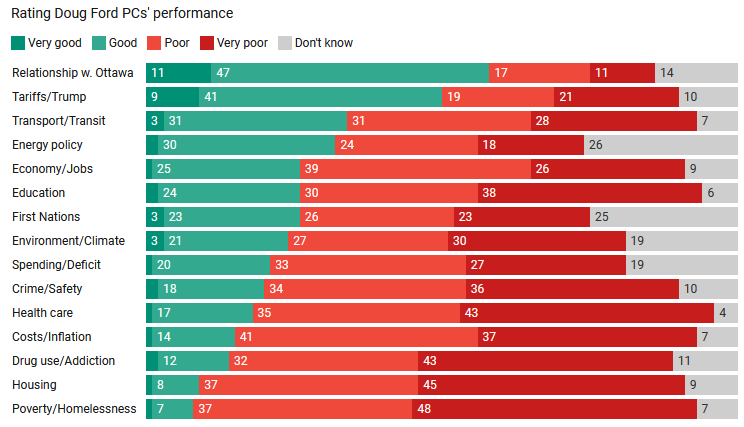
On most tested issues, large majorities of Ontarians give poor marks to the Doug Ford PCs, but 45 per cent say they would vote PC anyway, according to an Angus Reid poll released Friday.
 The bottom 12 are pocketbook issues – Ford doesn’t rate well in any of them. That group who rate the PCs poorly yet support them electorally is the mysterious key to Doug Ford’s continuation as Ontario premier.
Unravelling that mystery is the opposition’s central challenge, and that job now falls to Marit Stiles and her Ontario NDP after the Ontario Liberals’ implosion at their weekend convention.
Until yesterday the Ford PCs had the advantage of being able to pick their preferred competitor between two opponents. The PCs picked Crombie and spent heavily on advertising, driving up her negatives, greatly increasing awareness of her, and driving the narrative, eagerly encouraged by the Toronto Sun and key Toronto Star writers, that Crombie’s Liberals were the main threat to the PC Party.
As an opponent, Crombie offered three things: few ideological reasons to prefer her over him; high negatives the PCs could drive higher; and the Liberals’ horrible vote inefficiency.
Framing Ontario politics as a choice between Ford and Crombie goes some way to explaining how only 27 per cent believe Ontario is on the right track but 45 per cent would vote for the PC party, according to Angus Reid.
 Marit Stiles now has a second chance to tackle the root problem, which is Ford’s media dominance. The Liberals’ disarray will at least temporarily disrupt the presumption that the main threat to the PCs comes from the Ontario Liberals, allowing the NDP’s Stiles a new chance to redefine the Ontario political narrative, with herself in the role of main protagonist against Doug Ford.
But it won’t be easy. The end of Ford’s ability to pick his preferred competitor is no guarantee Stiles can cast herself in the key role opposite Ford. It is possible Ford can continue as an unopposed political force in a unipolar media environment.
Ford floods the media zone with opinionated comment, often on issues not in his bailiwick. But whether he is excusing vandalism of municipal speed-check machines, asking the federal government for U.S.-style “castle laws,” or attacking a school board trustee in Tiny Township, Doug Ford dominates as a news source.
As a result, only four per cent can’t state an opinion of Doug Ford while 36 per cent don’t know enough about Stiles to make a judgement, according to Angus Reid.
But Stiles’ low voter awareness is a symptom, which is why a previous attempt to fix it with a name recognition advertising campaign did not work. Stiles now has a second chance to tackle the root problem, which is Ford’s media dominance.
In the United States, debate over how to counter a flood-the-zone strategy has taken several directions. Some focus on the strategy’s ability to sensationalize media, and put an emphasis on — oh so gently, of course — reminding some reporters that journalism is a lot more than writing down the comments of government leaders or dressing up planted partisan gossip as accidental information leaks.
Another direction, recently used with some success by California Governor Gavin Newsom, has been to troll the absurdity and inanity frequently deployed to keep the zone fully flooded.
And there is redirection. Flooding the zone generates white noise and redirects media and voters to minor themes, obscuring the big story.
A counter-tactic of pivoting from the latest distraction to the big story could put Ford on the defence and create policy contrast opportunities. But the challenge is being able to articulate the One Big Story. The U.S. Democrats, in their leaderless ideological and policy incoherence, have been unable to rally around one story.
 Nothing strategic in this stunt. Basically all Ford has is stunt after stunt. Uniting around the big story takes research, personal-political work, fieldwork and discipline. There’s a lot to be done and though the Liberals are in shambles now, they will come back if the opportunity is open long.
Angus Reid’s data points to one pillar of strength for the Ford PCs. Among the 15 issues tested, only on the province’s relationship with Ottawa do a majority find the Ford PCs have done a good job.
But if a good relationship simply means not fighting with Ottawa, perhaps Ford is only getting over a low-set bar and expectations should be raised.
This spring Prime Minister Carney asked premiers to recommend nation-building projects. Doug Ford’s response was poor for Ontarians and a bit offensive to Carney’s offer.
Ford requested federal help building his fantasy tunnel under highway 401, a silly idea that made Carney’s entire nation-building concept look dumb. And while developing the Ring of Fire is important, Ford pushing it on the feds after seven years of making zero progress is throwing his mess onto Ottawa’s lap. It’s actually quite disrespectful.
A better provincial partner would seek federal help on a plan to revive Ontario’s industrial base in a province where 800,000 Ontarians are now jobless. But Ford doesn’t appear to believe there’s a jobs problem, judging from his recent comments blaming unemployed workers for their unemployment. So Ontario has no plan to revive the manufacturing sector.
 Tell the big story about what’s wrong with Ontario. A stronger Ontario partner with a plan to strengthen manufacturing innovation, productivity and investment could ask for federal policy co-ordination to bolster its effectiveness. But there is no plan and Ottawa can’t co-ordinate with a plan that doesn’t exist.
A better partner that wants to keep forward momentum on health care might also seek to sign a pharmacare deal with Ottawa, an idea the Ford PCs have let drop. Four other jurisdictions have signed deals which financially help individuals and businesses while expending coverage.
Kicking down the one strong pillar of Ford’s support might be easier than thought and could combine well with an effort to tell the big story about what’s wrong with Ontario, and why it doesn’t get fixed. Doug Ford should figure prominently in that story because he does.
By Gazette Staff
September 16, 2025
BURLINGTON, ON
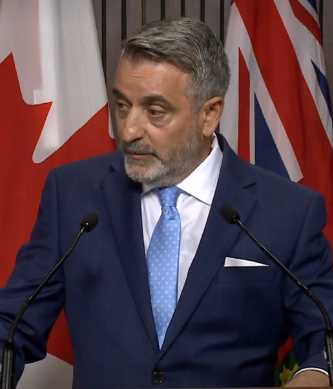
 Minister of Education: Paul Calandra, Paul Calandra, the Minister of Education, is demanding the chair of the Toronto Catholic board return almost $7,000 worth of items purchased with taxpayer dollars including TV mounts, headphones, cameras & projectors calls the expenses “obscene” & “offensive.”
Ontario school board trustees are calling Education Minister Paul Calandra a “hypocrite” for going after individual expenses, pointing out he has racked up tens of thousands of dollars in his own expenses as a member of cabinet and provincial parliament.
The proposed provincial plan to eliminate public school board trustees is at the mud-slinging stage.
By Gazette Staff
September 16th, 2025
BURLINGTON, ON
The Halton District School Board will meet this evening for a Special meeting at which a resolution will be presented.
Meeting Date: September 16, 2025
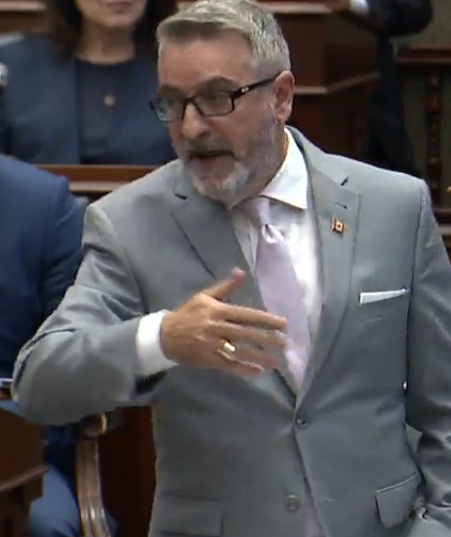
 Minister of Education Paul Calandra speaking at the Legislature. Recommendation: Be it resolved that the Board of Trustees direct the Chair write a letter to Premier Doug Ford and Minister of Education, Paul Calandra, outlining the important work of School Board Trustees in fulfilling the mandates of the Board as set out in the Ontario Education Act;
And request that the Minister meet with representatives from the Ontario Public School Boards’ Association to engage in meaningful consultation about the importance of this democratically, locally elected position prior to making any determinations regarding the future role of Ontario’s English Public School Board Trustees.
- Analysis
While much has changed in school boards and in the education system in the last two centuries, one thing remains constant – Trustees’ familiarity, knowledge and engagement with the local community and its needs. The requirement that school board Trustees live in the district where they serve, further ensures that Trustees represent their community’s interests and needs while acting as liaisons between their constituents and the provincial government.
This is possible precisely because Trustees have intimate knowledge and personal engagement with the district.
As is the case with Members of Provincial Parliament, locally elected voices are required to fulfill the mandate of the provincial government while ensuring that there is a robust governing body and liaison between the local school board, its stakeholders, and the Ministry of Education. This liaison requires knowledge of the local community, its students and their needs.
HDSB Trustees fulfill the legislated responsibilities and overarching mandate of student achievement and well-being while providing local decision-making.
1.1 Governance Alignment
The mandated role of locally elected Trustees provides the framework for governance of school boards.

- Background
The position of School Board Trustee is the longest standing democratically elected position in Canada, going back to 1816 in Ontario (formerly Upper Canada), long before the country now called Canada, with provincial and federal governments, existed.
School Board Trustees have a mandate for their role set out in the Ontario Education Act.
 Oakville Trustee Joanna Oliver will present the Motion. Trustees’ legislated responsibilities include developing the Multi Year Strategic Plan and supporting its implementation, developing and monitoring policies, providing stewardship of school board financial and capital resources, overseeing the hiring and performance of the Director of Education, representing the needs of the local community, consulting with local stakeholders, and serving on mandatory committees such as Special Education and Audit, all with student achievement and well-being as the overarching goal and mandate for each Trustee.
HDSB Trustees are deeply concerned about the potential loss of this democratically elected position and the resulting negative impact on students as the key stakeholders in the education system. These concerns are not unique to the HDSB, therefore we invite the Minister to engage in broader consultation through OPSBA, our provincial association, to discuss the importance of this democratically elected position and how it can be maintained and supported.
Report Title: Letter to the Premier of Ontario and the Minister of Education
Submitted by: J. Oliver, Vice-Chair, Oakville Trustee, Ward 4
By Pepper Parr
September 15th, 2025
BURLINGTON, ON
The New Appleby Line branch of the Burlington Library system is officially open.
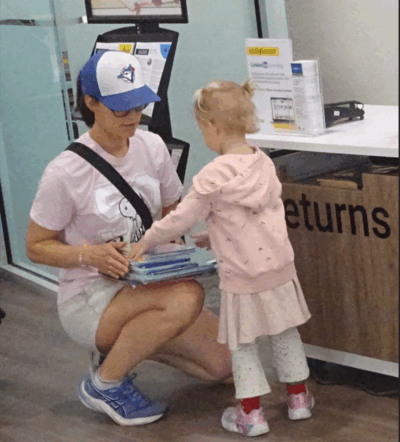
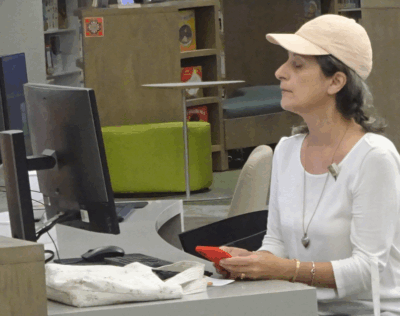
 First person to enter the new library – greeted by James Dekens, Manager Neighborhood Branches  First child to return books.  First person to use a monitor. The first thing that strikes you when you walk through the doors is all the space.
It’s also very bright – lots of natural light seeps in.
The library and the classrooms on the second level are the only part of the Bateman Community Centre that are operating.
The project is one of those developments that limped its way to completion. It was a Tom Commisso idea that had difficulty – almost from day one.
But this story is not about Bateman – it is about the library and the leadership that got it to the point where a truly splendid library is now operating.
 This was Lita Barrie’s day. She and the team she led had much to be proud of.
Lita Barrie has headed up the library for six years now. She came to Burlington from Hamilton, and as the Chief Administrative Officer (CAO), she pulled together a very strong team.
It is beyond a doubt in my mind that the library system is the best there is in the city operationally.
They continually come up with new ideas; existing programs are upgraded, and excellent use is made of technology.
The Maker Studio in several branches of the library took a little time to catch on; the technology that is employed with the “aquarium” in the New Appleby Branch will delight the children.
Barrie brought some very strong technology credentials with her when she came on Board as the CAO
When people first walk through the 16,000 sq. ft. of space, they have a sense of Wow!
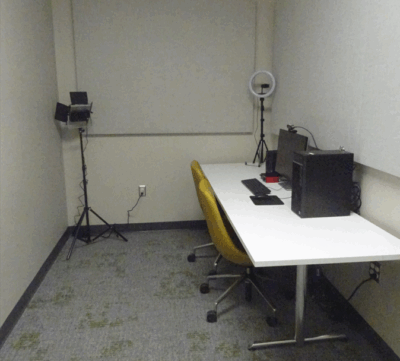
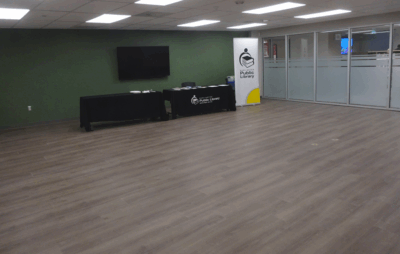
 The amount of space – 16,000 sq. ft., and all the natural light. will please many.  Meeting places are all over the 16,000 sq. ft library.  The ‘aquarium’, not yet fully operational, is set up so that when children draw a picture of a fish, it will appear on the screen. The library makes extensive use of technology.  One of two fully equipped media rooms.  Just inside the front doors of the library there are three daily newspapers. A few feet away there is a small meeting room. Two of the early arrivals, a couple, set themselves up in the Meeting room – each reading a newspaper.  Bare at the moment – the room will be where young children are gathered for story telling.  The hoarding behind Councillor Sharman will be in place for a while yet. The portion of the Bateman Community Centre that will include Tech Place is not complete – may not be for some time. No mention of a coffee shop so far.
|
|





 By Norman Coles


 By Gazette Staff
 This public notice has been updated to provide clarity and ensure an accurate understanding of the infection prevention and control lapse. It is important to note that the same needle was not used continuously throughout the period, rather appropriate infection prevention and control measures were not followed when using multi does vials over the time period identified.
 By Gazette Staff
 By Jana Baert

 By Burlington Gazette
 But Trabelsi and his team turned that stereotype on its head in their study,
  Instead, the findings revealed an “exceptionalism premium,” says Trabelsi.
 By Gazette Staff

 By Tom Parkin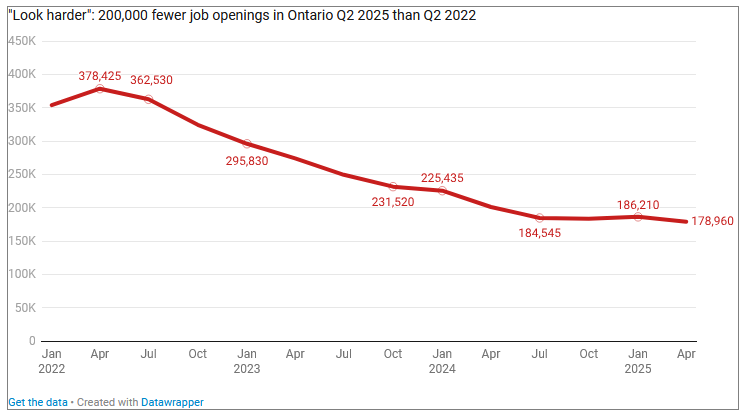

 By Pepper Parr
 The usual mention of the MP and the Mayor were made and then a panel discussion that included Joann Battaglis of First Ontario Credit Union; Garner Becket with the Conservation Halton Foundation, Christina Mulder, Director Burlington Food Bank and Catherine Villasenor of Home Suite Home. took place.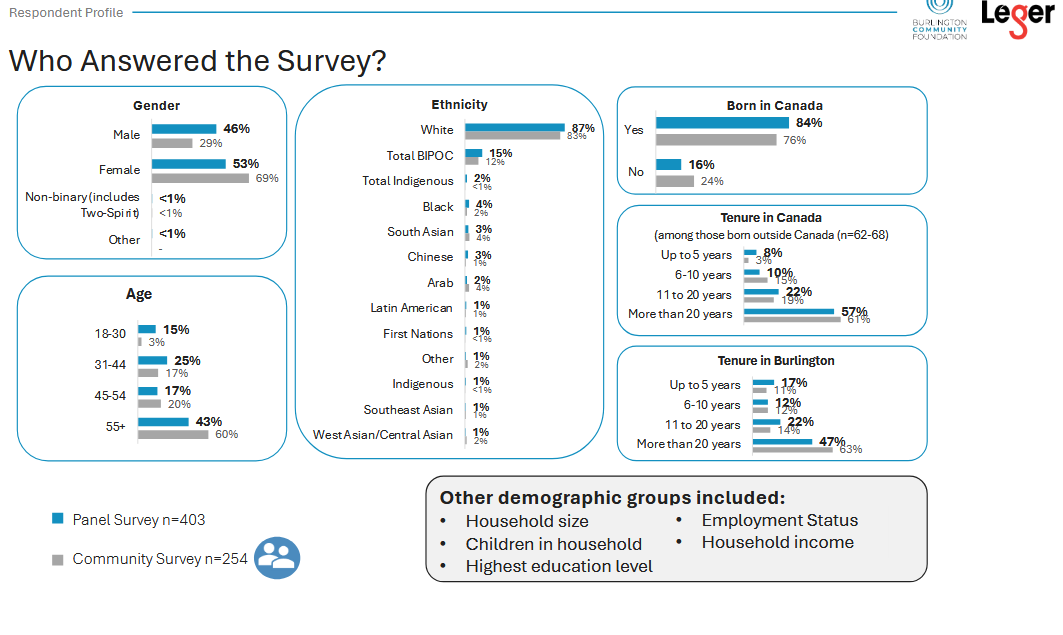
 By Pepper Parr
 Burlington Aquatic Devilrays (BAD), a swimming club that has operated for 40 years, could be close to ending its existence.
 By Stephen Attellier
 Ontario operates differently from other provinces. The province launched its competitive market through iGaming Ontario in April 2022, allowing private operators to compete alongside the Ontario Lottery and Gaming Corporation. Fifty operators now run 83 gaming websites in the province, serving approximately 997,000 active player accounts each quarter.
 Alberta introduced Bill 48, the iGaming Alberta Act, on March 26, 2025. The legislation would establish iGaming Alberta as a Crown corporation to oversee private operators, while the Alberta Gaming, Liquor and Cannabis commission would handle regulation. Canadian Gaming Association CEO Paul Burns expects Alberta’s online gambling sector to become operational in the first quarter of 2026.
 By Pepper Parr



 Beating Doug Ford’s communications strategy will require some tough message discipline from the Ontario NDP, starting with setting the story.