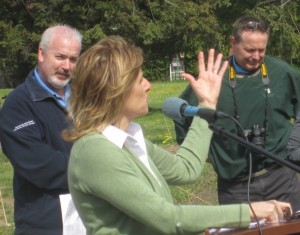
Special Council meeting revealed nothing - except for the pipe dream the Mayor introduced

By Pepper Parr

July 10th, 2025

BURLINGTON, ON


The Special Council meeting came to order promptly at 9:00 am. The first thing we noticed was that the Mayor was not wearing her Chain of Office.  Is it an Official meeting without the bling?

There is one registered delegate for today’s meeting, Cody Bradt the Golden Horseshoe Aquatic Club, regarding the confidential verbal update on potential litigation for aquatics procurement, which is our only item on today’s special council agenda.

Bradt got a chance to add to what City Council knew about GHAC – not sure what that had to do with the purpose of the meeting which was to look at the option related to potential lawsuits.

Good morning. My name is Cody Bradt, and I’m the Chief Operating Officer and Associate Head Coach of the Golden Horse Show Aquatic Club. First, I’d like to thank you for your time and for listening to this important matter. I also want to extend my appreciation to city staff for their continued professionalism throughout this process. Today, I want to take a moment to provide some clarity regarding the letters presented before you today from swim Ontario and swim in Canada. These letters are not endorsements in response to the current public conversation. They were not written as lobbying tools, nor were they drafted to apply political pressure.

Cory Bradt with GHAC supporters addressing Council

Rather, they are letters of record submitted in April 2025, as part of our formal bid document. They were included to provide facts about our organization, that the Golden Horseshoe Aquatic Club is a member in good standing with both swim Ontario and swimming Canada, that we are actively engaged in the betterment of our sport at the local, provincial and national levels, and that inclusivity and athlete centered programming are long standing principles at the heart of GHAC.

These letters speak to our values, our track record and our commitment to creating safe, welcoming and high performance environments for all swimmers, and that’s what they’re intended to do, and that’s exactly how they should be read. I’d like to take a moment to speak about the strength of our coaching staff, because when it comes to athlete development and a quality experience here in Burlington, coaching matters at the Golden Horseshoe Aquatic Club.  We are proud to have some of the most qualified and respected coaches in the province. A few highlights of this past year alone, two of our coaches received world class performance coaching awards for coaching an athlete ranked in the top five globally, and we’re proud to have the OUA women’s coach of the year on staff leading one of Canada’s most successful university programs when it comes to certification, we have three fully certified level three coaches, the highest level of coaching certification in Canada, leading Para program.

We also have a growing team of level two and level one coaches who are certified, trained or actively working through that process. But these aren’t just titles. They represent our deep commitment to safe sport, athlete well-being and a culture of excellence that supports every swimmer from their first stroke to the national and international stage, that commitment to excellence shines through in our athletes as well. G hack is proud to be home to four members of Team Ontario, three swimmers and one coach who have been selected to represent the province the Canada Summer Games later this year in St John’s. That is the most from any club or any program in the entire province, and all four of those members have benefited from training and coaching within city limits, and over the years, more than 200 GX swimmers have gone on to compete at colleges and universities across North America, a testament to the pathways we create and the legacy we continue to build.

I would be remiss if I didn’t acknowledge the broader issue that brings us here today, the critical shortage of aquatic infrastructure in Burlington, Canada’s most livable city. Quite simply, this community needs more aquatic infrastructure and space. A 50 meter pool is not a luxury. It is a necessity for recreation, for learn, to swim programs, for accessibility and for a healthy, active future, let alone the sport tourism impacts that competitive swim brings to this community. I want to share that the aquatic Sport Council of Ontario has produced a white paper titled building more aquatic centers in Ontario, a practical and forward looking document that supports government and industry stakeholders for planning the province’s aquatic infrastructure needs. Burlington deserves to be part of that future. I will share that publication with your offices, for you to review that needs to be part of this bigger conversation on behalf of our coaches, our athletes and our families. Thank you again for the opportunity to speak today, we remain committed to working collaboratively with the city to ensure that competitive youth swimming is inclusive, high quality, and firmly focused on what’s best for our young people. Thank you.

Mayor Meed Ward: You do have a couple of questions coming to you.

Councillor Stolte:  I wanted to ask you a question about that lack of aquatic space, and what your thoughts are for the club that you are such an integral part of, is that you spoke of being very resourceful, and I admire that, that over the last five years, you were able to find space at the YMCA and goldfish, I think you mentioned, yeah, another private facility here in Burlington. Is it your intention to maintain those contracts as well as utilize the city pools, or would you be moving your swim program into the city pools, and would free up that other aquatic space?

Cody Bradt: : I can’t speak to that particularly based on what we don’t know what Pool time we have available from the city. So what those hours are, depending on what’s available to us and how it best suits the interest of Burlington residents will depend on whether or not we continue to use private facilities and the manner in which we’ve been doing okay.


Councillor Kearns: My apologies. I’m joining you from Joe Brant Fracture Clinic with my 14 year old.  I want to ask if you feel that there is a possible path to the delegate to allow both organizations to operate in the city of Burlington. Yes or No,

Cody Bradt: I think that if the city prepares in writing a process forward, it would be something that certainly we will take back to our team and our legal counsel as a path forward.


FIX  Councilor Bentivegna:  I appreciate everything you do for the community. I want to follow up on the question Councillor Kearns raised about other organizations in the city have in the same situation that you’re in, facilities are always an issue. We never have enough. I’m familiar, and I’ve been part of in the past, working with the city and other organizations in that sport to build facilities. Are you familiar with this sort of a discussion or potentially a debenture to build a new pool, for example, with the organizations in the swimming   fix?


Cody Bradt: Absolutely, while we talk about other resources and the scarcity of it, nothing is more scarce than aquatics, right? Aquatics are used by the greatest range of population, of constituents of the City of Burlington, compared to our baseball diamonds, our soccer fields and other city amenities. GHAC would be proud to be a part of that conversation moving forward. And it is a not only a municipal issue, but a provincial issue and a national issue, FIX It’s created more effective use of space, but it doesn’t necessarily mean that we’re able to get that many more people that we would with the new facilities. So absolutely, and the white paper done by the Aquatic Council of Ontario, and I know swim Ontario and swim Canada is certainly willing to be part of that conversation with the municipality

Bentivegna: Would you be willing to sit down with other members in this sport to sort of say, let’s all get together and think about what how we can do this and then approach the city?

CodyBradt:  Absolutely, we would be willing to work together with that. I think that there are a lot of user groups within the city that would benefit from new aquatic infrastructure, ranging from other competitive youth swimming providers, masters programs, diving Synchro. And I think that a collaborative approach to Council and the importance of aquatic infrastructure would be certainly beneficial.

Councillor  Sharman:  You raise an extremely important point, which, of course, is the lack capacity. I don’t know the numbers. Presumably you don’t know in terms of how many pools, how many? I don’t know what you wouldn’t measure it by square feet or square meters or cubic meters, but if you were to think about in terms of what we have versus what we need now and what we might need in the future, in terms of basically number of pools, do we need 50% more or 100% more. What are we talking

Cody Bradt:  Speaker   I think that the first part that needs to be looked at is an indoor, long course, 50 meter pool; that is the Olympic distance that we currently don’t have in the city of Burlington. And if you look around the region, there’s nothing but aging facilities that provide that service to our members, but that is raced up at the international level and provincially and nationally, and I think that it has to be part of a greater picture of what Council and its constituents within their wards want for this city and the sport tourism impact that can be brought because that makes a big part of “Hey, we’re going to build a 10 Lane, 50 meter pool that is a flat bottom depth that we saw, or we see at some pools across the nation. But that doesn’t necessarily allow you to have learn to swim programs at a flat bottom depth.

That means provincial and national and world regulatory specifications. So it needs to be looked at what it needs to be used for, and does it have a movable bottom? Look at what the city of Windsor did, and they have a beautiful facility down on the waterfront that has a movable bottom that they’re able to utilize for different user groups, depending on what is required, and that’s just one piece. But it’s also looking at how many stands need to be. What does the city want to host? Do they want to host a provincial championship that currently has 1500 participants plus in Toronto, that keeps getting pushed back to Scarborough or Windsor outside of our community because we don’t have the infrastructure for it, because I can speak to an event we hosted this year that had hundreds of people participating, but not only as swimmers, as family members, buying and spending money, buying goods and spending money in those cities, And the more heads and beds we can get in this city, and in correlation with competitive swimming, I think, will really help Burlington grow as a community.

And it’s important to note that when this conversation happened five years ago in the 2020, RFP process, the Centennial pool  had different rules and regulations surrounding the number of spectators and the participants on the deck level. That has since changed, which inhibits the max number of participation, bringing less tourism dollars to the city and less participation by youth, and that’s nothing beyond like that’s all beyond our control, because it’s fire regulations, etc, but that’s just a piece that we’ve lost. Well, we haven’t lost the lane space. We’ve lost the infrastructure space to support the sport tourism that once existed in this great city.

Sharman: I appreciate the answer, and I it’s clear what you’re saying is, just like many things in the city, we need more and more and more and more. The big, big question, though, and you’ve already said that you think there needs to be a collaborative relationship to serve the members of the community that we have a shortage, and somehow we have to fight figure out how to make that work. Is that your point?

Cody Bradt: Absolutely. We have to figure out how to make it work. And the youth of Burlington and making an inclusive, accessible sport available to our young people is at the heart of what we did in this city, owned facilities, 2009 to 2020 and what we’ve done outside of that 2020, through 2025, and I think that that need is not any like that was pressing in 2020 when we lost out and had 1000s of opportunities missed for people to understand and get to participate in what makes our organization great. And I think it’s an important conversation that we need to have to continue moving forward, but the framework that we currently have set out is a formal RFP process that has a signed contract and that will be on the city to come back in writing what they’re proposing needs to be done.

Mayor Meed Ward: Not seeing any other hands, so I’ll jump in with a couple of questions. I was very interested to read about the Para swimmer program in your letter mention the 13 para swimmers. Are those all the Burlington residents?

Cody Bradt:  They’re not all in that program, because we are the one of the only programs in the province that we are the only program in the province that has that many swimmers at that level. So we have people driving all the way from North York and Vaughn to be a part of our program. And you can see that later in the letters. So a number of those people listed in Para  swimmers are Burlington residents, but they haven’t had the opportunity to be part of accessible programming for competitive youth swimming for children with visual, intellectual or physical disabilities in the past five years.

So the number isn’t a direct reflection of our organization, but the lack of opportunity we had within city of Burlington owned facilities to offer our program, which we did offer, pre 2020, and actually a national champion, a the swimmer that was mentioned in my presentation, that was ranked top five globally last year, grew up learning how to swim in City of Burlington, pools down in Aldershot, and I can remember him being this big, and this week he’ll present. He will raise provincials, and five of the members grew up swimming in our programs here in Burlington, within city limits. And then there are a number of young people that have since reached out and joined us at other facilities, because it didn’t exist with other organizations within city limits.

Mayor Meed Ward: I am interested in this notion of the need for a 50 meter pool, which has recently come on my radar. Iyou may be aware that Mississauga Council, somebody notified me that their council did a resolution very recently, probably as a result of the Aquatic Council of Ontario white paper saying that there needs to be indoor 50 meter and asking for provincial and federal assistance. We do have two 50 meter pools, or outdoor Nelson and mountainside, and I know they’re used for meats in season, so I don’t know if sticking a dome on there would help make it all season, but, but we do have the two, at least during the summer. I’m very interested to get the paper. Do you think that that would be something that this council should explore is what, what Mississauga and others are doing to advocate to for assistance in adding more aquatic facilities?

The following was not part of the CHAC delegation.  We added the information so that readers could have an idea of what the Mayor was talking about when she asked about a bigger swimming pool

The Windsor International Aquatic and Training Centre (WIATC) in Windsor, Ontario, features a 50-meter competition pool. This state-of-the-art facility, located at the Family Aquatic Complex, also includes a diving well and a leisure waterpark area. The 50-meter pool is part of a larger 71-meter by 25-meter pool with 10 lanes, and it can be reconfigured using movable bulkheads and a movable floor.

A ten lane swimming pool with a movable bottom that would accommodate diving events also has a viewing stand is on the Mayors radar.

CodyBradt: Absolutely. I think that that needs to be a broader conversation. I know that a formal RFP process brought it, brought us here, and has opened that conversation to move forward. And I think it’s a great gateway, and I think that we need it in our city. I would note that the pool at Mountainside is not suitable to competitive swimming, in the sense that you’re not able to host competitions because it’s only three lanes and it’s in a small section, whereas Nelson was able to have that great outdoor meet and have that great community impact.

The piece that is interesting that you bring up about domain, which we’ve thrown around in our own conversations in the past, is that, well, a dome is its own entity in and of itself, and I want this council to evaluate the air quality and the importance of managing the chloramines, etc, within doming a facility. That ability to evaluate that air flow and structure is something that’s really important, and one of the reasons that existing long course facilities in this province have lost the opportunity to host provincial championships because the air quality doesn’t meet the needs of the sport or best supporting the health of our youth. So I know that the city has made a great deal of improvements in infrastructure within the city facilities and Victor and his team have worked very hard to update that system and go away from liquid chlorine and those elements, but I think that that broader conversation, we need a committed indoor, 50 meter pool that can be year used year round, that not only provides 10 lanes worth of space, but if you have 10 lanes worth of space in 50 meters, that’s 20 Lane short course which all of our other city facilities are. So that aquatic infrastructure is just that much greater. And you have seen it work in other municipalities such as the city of Markham that had the TORONTO Pan Am sports center built, where multiple user groups exist at the same time in competitive swimming to share Lane space within those 20 lanes. So it is being done around the province, and I believe that the aquatic community here in Burlington could work together to make that happen.

Councillor Kearns:  One piece I’m still not completely clear on is, you know, with the ability to access these additional hours and lanes and uses, who are the athletes that will be using the pools? Are they existing competitive swimmers in Burlington that will change teams? Or are you going to help the people who are swimming in Vaughan to come in?    I’m not sure what the scale up looks like, and I just wanted some additional clarity on that.

CodyBradt:  Absolutely. That’s a great Parr the piece of it that is important to note is that the contract that we have signed with the city requires 85% Burlington residents, and we are committed to remaining with that so 85% at minimum will be Burlington residents, where those 50 though that extra 15% comes from we see reach from Oakville, from Milton, from Hamilton, which exists in both organizations as provided by the statistics that you requested from some Ontario and were provided to Council and the public. So I think that G hack is committed to supporting both of the existing competitive swimmers that are in the city and youth that are going to be new to the sport, and going from city programming to the great sport of competitive swimming.

Councillor Kearns: Okay, so just if I could be really blunt and clear, so is the scale up intention to pretty much bring most of the BAD swimmers under the GHAC umbrella, or is there another cohort that we don’t have visibility to that are waiting to get into the GHAC program with this potential new opportunity?

Cody Bradt:  I can only speak to our program specifically that we have members that currently aren’t able to access our programs and want to be a part of G hack because we’re using outside facilities, as I mentioned the other day, that are not at ideal prime times for youth. So yes, there is a demand for our programs here in the city, and we prior to 2020 the incumbent organization had approximately, and I’m going to use approximate figures, we had 275 kind of on both sides swimming here in Burlington.

And so that’s 550 youth using competitive swimming as their sport in the city of Burlington. And at City of Burlington owned facilities, because we only had a handful of hours at a private facility here in Burlington, pre 2020, so those numbers have actually diminished the utilization rate of competitive swimming in the city within city owned facilities. And that number, those statistics, are provided every year by swim Ontario, as to how many people are registered within each organization, and that we go from 550 and now we’re talking about the number that has been publicly shared is in that realm of 400 within city of Burlington owned facilities. Well, that’s a far cry from the 550 approximately that used to exist.

Mayor Meed Ward:  I am not seeing any other questions, so thank you for coming again this morning, and we will now move to the discussion of the item: a confidential verbal update regarding potential litigation for aquatics.  We will be moving into close to discuss that. I have a motion from councilor Pennsylvania, seconded by councilor Galbraith that the special meeting of council proceed into close to receive confidential verbal verbal update regarding potential litigation for aquatics procurement in accordance with the following provisions under the municipal act, pursuant to section 239, 2e litigation, or potential litigation, including matters before administrative tribunals affecting the municipality or local board, and pursuant to section 239, 2f advice that is subject to solicitor client privilege, including communications necessary for that purpose regarding item 10.1, and I’ll turn it now to the clerk for the recorded vote. Unless there are any questions or comments from Council on that, okay, not seeing any, we will move into the vote.

That’s six in favour, and that does carry.  We are now moving into closed session.  Folks who shouldn’t be here kindly move into the lobby.

We will update, folks, as soon as we can, if there’s anything to update you on.


Return to the Front page

'Coming soon': Burlington is getting a Wayfair Outlet store and here's what shoppers should know

By Louie Rosella

July 10th, 2025

BURLINGTON, ON


One of North America’s largest online retailers is opening a store in Burlington.

The Gazette has learned that American e-commerce company Wayfair, known to many as an online shopping site for furniture and other home items, is opening an outlet store on Appleby Line, just north of Dundas Street.

Sometime in the summer was the word from the Wayfair communications people.

A note on the Wayfair Outlets website states the store will be “coming soon” with a projected opening date of this summer.

Kim Mehrtens, senior associate, external corporate communications at Wayfair,  confirmed to the Gazette that Wayfair is opening the outlet in Burlington, “however we’re not sharing additional details at this time,” she said, adding “I will be sure to circle back once we can.”

Signs outside the location at 3091 Appleby Line reveal the store is opening this summer with “big savings on finds for every home.”

The signs also indicate Wayfair is hiring staff for the new store, with positions ranging from Sales Lead and Merchandiser to receiving and sales associates.

“Wayfair Outlet Burlington, Canada is coming soon near you,” according to a Facebook post from the company. “All furniture and decor at 40 per cent off the entire store. Are you ready?”

Ward 6 Councillor Angelo Bentivegna said he wouldn’t be providing commentary on the new Wayfair Outlet store, or nearby developments, at this time.

However, he added, Bentivegna recognizes “the importance of continued investment in our local economy, and I welcome any new opportunities that enhance services, create jobs, and support the vibrancy of Burlington’s commercial areas.”

Wayfair is primarily an online retailer, but has several outlets in the U.S., including locations in Massachusetts, Ohio and Florida.

The Burlington location will be the first Wayfair outlet in Canada, according to the company website.

Will you be checking it out?

Louie Rosella is a professor at Humber Polytechnic and a former journalist in the GTA.

Return to the Front page

What happened at the Special meeting of Council this morning? Nothing or at least nothing they want you to know at this point

By Pepper Parr

July 10th, 2025

BURLINGTON, ON


What happened at the Special meeting of Council this morning?

Nothing – they were there to discuss the a litigation matter – and that they did behind closed doors.

Before they went into Closed they heard from Golden Horseshoe Aquatic Club  (GHAC) , who submitted some additional documents.

Do you see any smile on those faces? Council now knows just what the legal predicament is – and they need to find a way to wiggle out of it.

They talked about the need for a 50-metre covered swimming pool with ten lanes and seating for spectators, with a couple of members of council agreeing.

Before adjourning Mayor Meed Ward said when there was something to report, she would ensure the public is informed.

This meeting was to assess the damage that resulted from the mishandling of an RFP approach to allocating the existing pool capacity in the city.

They are in a bind: GHOC claims they have a “a signed contract” which may not be the case.  There were conditions to the agreement and there is no certainty that GHAC will actually meet those conditions.

Later in the day, we will have a more fulsome report which will include a couple of questions from Councillor Kearns, who unfortunately had to tend to a family matter; one of her children took a tumble and is now wearing a sling.

The look on the faces of most of the Councillors as the vote to adjourn was taking place was that of a pretty glum bunch.


Return to the Front page

City Council should bring the swimming pool allocation issue to a close: Rent the pools to Burlington Aquatic Devilrays

By Pepper Parr

July 10th, 2025

BURLINGTON, ON

Editorial Opinion

At 9:00 am this morning Mayor Marianne Meed Ward will call a Special Council meeting to order and have the Clerk do a role call to ensure there is a quorum.

Will ward 1 Councillor Galbraith attend virtually or will he be in the room to be part of whatever vibe there is going to be.

Will CAO Hassaan Basit be in the room – he did not take part in the last Standing Committee or the last Special Council meeting.  He walks out of City Hall on the 4th of August after just 16 months in the job.

The understanding we have is that Council will go into a Closed Session – there is the suspicion that someone has taken legal action – Burlington Aquatic Devilrays (BAD) has said they have put their request for a Judicial Review on hold until they have a better understanding of what Council is going to do.

There is no word on what Golden Horseshoe Aquatic Club (GHAC) intends to do.  From a media perspective, GHAC has gone mute.

What seems to have been lost here is that the seven members of Council were elected to serve the needs of the 194,000 citizens of the city.  The city has just the one swimming club that offers a program that focuses on training and sponsoring competitive events.

For reasons that have yet to be explained, City Hall decided that a Request for Proposal format was to be used to determine who would offer the swimming program.  That RFP didn’t limit applicants to city based organizations.

Some feel that the city funding should be open to anyone.  That would be fair, some have said.

What has fairness got to do with it?  There is a Burlington organization that has delivered a service to swimmers for four decades in place and they seem to be doing a good job.  If the delegations made by Katie Lebel and Pam Pitz are an accurate reflection of the quality of the club management, the city is lucky to have them.

Being fair and allowing some other organization to submit a bid that would kill the BAD organization is fair to who?

The city administration lost sight of what was taking place: This was about sports, not which procedure was used to determine which club would provide the services to swimmers.

GHAC is focused on growth – nothing wrong with that – but is organizational growth going to be what kills a swimming club that has served the city exceptionally well if the number of people who attended the Council meeting last week is any indication.  Is BAD perfect – of course it isn’t.

One of the things the city could/should  do is hire an independent organization (not people from the Parks and Recreation department – they should be part of the review )  to do a deep internal review on the effectiveness of BAD.  Every organization needs oversight.  The City Auditor could be tasked to get something like this done.

There is close to $250,000 on the table.  This is taxpayer money – it should be spent on Burlington organizations and not on an organization that has programs in numerous locations in the GTHA.

GHAC said they are not a Hamilton swimming club – then what are they?

Burlington might want to give some consideration to help funding a second swim team; the city also has to look at its inventory of swimming pools.

This egg on everyone’s face is embarrassing for everyone.  We are, or we should be, better than this.

Council has to ensure that all the facts are on the table, including who did what and why.

It is clear now that the RFP approach was a mistake – who made that decision?

Everything City Hall does is political – senior people are expected to be conscious of the political impact on the decisions they make.

That does not mean what they do should be driven by a political agenda – that is what Council members are in place for.

Why the current CAO was not involved and why the treasurer wasn’t at least made aware of what was happening is something the public may never know – and that would be unfortunate.

Marianne Meed Ward turned herself into a very effective council member on the two words: accountable and transparent.

Her grip on those two words is less than it once was.


Return to the Front page

Gaeten: Amicably resolve the situation with BAD without resorting to litigation; Initiate a thorough & independent investigation 0n how & why this occurred.

By Joseph Gaetan

July 10th, 2025

BURLINGTON, ON


Dear Mayor Meed Ward and Councillors,

The rejection of the Burlington Aquatic Devilrays’ (BAD) proposal appears to have occurred during the “initial screening” stage of the RFP evaluation process. This step determines whether submissions meet all mandatory requirements before they are considered further. Common mandatory elements typically include:

Proof of incorporation (non-profit or otherwise)

Signed submission forms, insurance certificates, bid bonds or securities submission by the specified deadline

Municipal procurement policies generally state that failure to meet any of these requirements results in automatic disqualification, with no discretion to reconsider. According to the City of Burlington’s Bids and Tenders website, “To be considered for evaluation,” bidders must meet three mandatory conditions, including the requirement that:
“Bids must include a current and valid certificate of incorporation as a Non-Profit or Not-for-Profit organization.”

“Bids not meeting the above mandatory requirements will be rejected.” (See Exhibit 1)

However, as per Service Ontario (Exhibits 2, 3, and 4), there is no such official designation or category issued by the province. This raises serious questions about the fairness and legal clarity of the procurement criteria used to disqualify BAD.

Beyond the legal and administrative questions lies a deeper concern: the impact on children and families. With about 400 members and more on a waiting list, BAD provides critical athletic and developmental opportunities. GHAC, by contrast, appears to be in the early stages of building a new membership base and seemingly dependent on swimmers migrating from BAD. As one councillor accurately stated, this is a zero-sum game. In this case, the children are the ones losing out—some may be left without a club, without coaching continuity, and without competitive prospects.

The City now finds itself in a difficult position. On one hand, staff have committed to an agreement with GHAC. On the other, BAD may have legitimate grounds to pursue legal remedy in Superior Court, especially if the procurement process was flawed or misunderstood. If there is a way for the City to resolve this issue proactively, more children, families, and residents will benefit than if this is left to be determined through litigation.

Some BAD families are already leaving the program due to the uncertainty, and delays in resolution only increase the harm. The City must move quickly to assess whether the current course of action can be modified in the public interest.

Key questions must still be answered, such as:

Was the process flawed in some respect in the first place?

Would awarding the contract to BAD have resulted in less disruption and harm? Will the GHAC model lead to higher costs for families?

Having reviewed this situation through the lens of the available facts, applicable case law, and the Bellamy Report’s recommendations on procurement transparency, I urge Council to:

1 Take all reasonable steps to amicably resolve the situation with BAD without resorting to litigation

2 Initiate a thorough and independent investigation into how and why this outcome occurred.

WE WOULD ADD TO THAT – KEEP THE PROCESS OPEN TO THE PUBLIC. Staff are expected to be transparent and accountable.

The residents of Burlington—and anyone considering doing business with the City—deserve a transparent and accountable procurement process. While some may hope this controversy fades away, it is in the public interest that it does not.

Sincerely,
Joseph A. Gaetan, BGS

Exhibit 1

Exhibit 2

Exhibit 3

Exhibit 4

Return to the Front page

Research into police oversight agencies part of Brock’s $7M in Social Sciences & Humanities grant

By Gazette Staff

July 10th, 2025

BURLINGTON, ON


One of the most common crimes civilian police oversight agencies investigate is sexual assault committed by police officers — a “profoundly disturbing, largely hidden problem in Canada,” says Danielle McNabb.

Although agencies such as Ontario’s Special Investigations Unit (SIU) are empowered to be arm’s-length investigators, police sexual assault cases tend to be dropped, rarely result in criminal charges if examined and rarely result in convictions, according to the Brock University Assistant Professor of Political Science.

“We’re trying to get a better understanding of why the rate of criminal charges is so low,” she says. “What are the barriers civilian police oversight agencies face? Do agencies in different provinces face distinct challenges?”

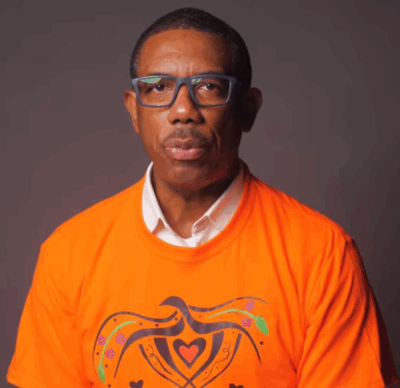
Danielle McNabb, Brock University

McNabb and her team aim to answer these and other questions with funding from the Social Sciences and Humanities Research Council of Canada (SSHRC).

In this latest round of funding, announced Wednesday, July 9 by Minister of Industry and Minister responsible for Canada Economic Development for Quebec Regions Mélanie Joly, Brock University was awarded $7 million for faculty-led research projects.

Included in the announcement is a $2.5 million Partnership Grant for a project, “Building a Pan- Canadian Community of Practice: The Creating Opportunities through Physical Literacy for All Newcomer Children and Youth (CO-PLAY) Network,” led by Associate Professor of Child and Youth Studies Matthew Kwan.

Kwan, who is also the Canada Research Chair in Youth Mental Health and Performance, and his team are creating a national community that will engage newcomer children and youth in physical activities so they can develop greater physical literacy.

SSHRC also awarded Brock University faculty researchers 14 Insight Grants and 10 Insight Development Grants.

“Brock University’s results are particularly robust this year with our highest number of successful SSHRC Insight Grants in a single competition,” says Acting Vice-President, Research Michelle McGinn. “This positive outcome recognizes the relevance and strength of our research in addressing societal challenges and improving lives.”

In their five-year project, McNabb and Kate Puddister, Associate Professor of Political Science at the University of Guelph, are focusing on civilian oversight agencies across Canada.

They plan to examine closed directors’ reports, interviews, surveys and policies related to police sexual violence to compare how various agencies respond to complaints of police sexual violence and carry out their investigations.

“Our research aims to establish best practices for investigating police sexual violence, such as ensuring that complainants are treated in the most respectful, trauma-informed way possible,” says McNabb.

Chris Bittle, Member of Parliament for St. Catharines, says McNabb and Kwan’s projects are examples of how Brock University is making a difference locally and nationally.

Danielle McNabb, on the left, gowned and ready to receive her Phd

“The various projects receiving support from the Insight Program speak to the talent of the Brock University research community,” he says. “These projects will make significant inroads in children’s health and well-being and the other areas included in this impressive list.”

A full list of Brock University’s SSHRC funding recipients announced Wednesday, July 9, is available online.

The federal government’s Insight Grants program supports research excellence judged worthy of funding by fellow researchers and/or other experts. The research can be conducted individually or by teams.

The Insight Development Grants program supports the development of new research questions, experimentation with new methods and theoretical approaches and ideas.


Return to the Front page

Live Casino Trends in 2025 and Online Casino Pistolo


By Sidsel Nørgaard

June 10th, 2025

BURLINGTON, ON


Live dealer games are transforming the casino landscape by offering players an immersive and interactive experience. With advancements in technology, these games have seen significant growth and popularity. Pistolo plays a key role in this evolving market, reflecting broader trends without overt promotion. Additionally, Online Casino Pistolo continues to illustrate the shift toward more interactive gaming experiences.

Pistolo offers a glimpse of how interactive features enhance overall engagement.

The world of online casinos has experienced a remarkable evolution with the rise of live dealer games. These games have captured the interest of players looking for an authentic casino experience from the comfort of their homes. Online Casino Pistolo exemplifies this evolution, offering a glimpse of how interactive features enhance overall engagement. The allure lies in their ability to replicate the thrill of a physical casino through real-time interactions with professional dealers. As we explore the trends shaping live casino gaming in 2025, it’s evident that technological advancements are at the forefront, enhancing both gameplay and player satisfaction.

Technological Advancements

Innovations in streaming technology have significantly improved the quality of live dealer games. Players now enjoy high-definition video feeds that make them feel as though they are sitting at an actual casino table. This improvement in visual quality is complemented by enhanced interactive features that allow players to communicate directly with dealers and other participants. Such features not only enrich the gaming experience but also foster a sense of community among players.

The integration of cutting-edge technology has made these games more engaging and realistic than ever before.

The integration of cutting-edge technology has made these games more engaging and realistic than ever before. Augmented reality elements are beginning to emerge, providing an even more immersive environment. Additionally, advanced software ensures that game outcomes are fair and transparent, building trust among players and maintaining integrity within the gaming industry.

Pistolo is among the platforms that have adeptly adapted to these technological shifts, positioning itself within this dynamic landscape. By embracing these advancements, Pistolo enhances its offerings while aligning itself with industry trends that prioritize player engagement and satisfaction. Moreover, Online Casino Pistolo reflects these innovations by continually evolving its interactive features.

Pistolo’s Market Context

Within the broader market context, Pistolo stands out as a participant keenly aware of live casino gaming trends. Although not overtly promotional, its presence reflects an understanding of what modern players seek: authenticity and interaction. The platform integrates innovative features that cater to these desires, ensuring it remains relevant amidst evolving industry standards.

The role of Pistolo extends beyond mere participation; it actively contributes to shaping the future direction of live dealer games. By incorporating user feedback and staying abreast of technological developments, Pistolo remains a vital component in this ever-changing sector.

As live casino gaming continues to evolve, platforms like Pistolo are crucial in meeting player expectations and delivering exceptional experiences. Online Casino Pistolo also contributes to this evolution by constantly refining technologies to meet various player demands. Their ability to adapt and innovate secures their position as leaders within this vibrant industry.

Player Engagement

Your dealer is right there in front of you – other players at the table can be seen in the screens behind the dealer.

The appeal of live dealer games lies in their capacity to offer an engaging and social gaming environment. Players are drawn to the opportunity for real-time interaction with dealers and fellow participants, which enhances the overall experience. This level of engagement is particularly appealing to those seeking more than just a solitary online game session.

Social elements such as chat features allow for conversations between players and dealers, adding a personal touch that is often missing from traditional online games. This interactivity fosters a sense of camaraderie and competition, making each gaming session unique and memorable.

The immersive nature of these games also attracts new demographics who appreciate the blend of technology and human interaction. As more players discover this engaging format, live dealer games continue to gain traction within the broader online casino market.

Future Outlook

The future of live casino gaming looks promising with continued technological advancements on the horizon. Players can expect even more sophisticated features such as virtual reality integrations, which will further enhance the realism of these games. As platforms like Pistolo continue to innovate, they will undoubtedly lead the way in setting new standards for player experience.

Furthermore, increased customization options will allow players to tailor their gaming environments according to personal preferences, making each session uniquely enjoyable. This flexibility will likely attract a wider audience looking for personalized entertainment options.

In conclusion, live dealer games represent a significant trend within the online casino industry that shows no signs of slowing down. As we look ahead to 2025 and beyond, it’s clear that platforms embracing innovation while prioritizing player engagement will thrive in this competitive landscape.

Return to the Front page

Provincial Liberals looking for changes at the top of the party

By Pepper Parr

July 9th, 2025

BURLINGTON, ON


There are Liberals in Ontario who don’t think Bonnie Crombie is doing her job as party leader; understandable given that she has not found a way to get herself elected.

Once seen as the Great Hope for the party.

She was originally seen as the great hope for the Provincial Liberal Party – things didn’t work out all well.

The decision not to run in Milton, where many felt the seat could be won and then the failure to win in a Mississauga, where Crombie was once the Mayor did it for many people.

A group calling themselves New Leaf Liberals have created a petition that asks the party to make some substantial changes in the way the party operates and to require Crombie to be the subject of a party leadership review; something that is standard procedure when the leader isn’t elected.

The New Leaf’s (could that be the name of a new Toronto hockey team) have held meetings in Toronto and Ottawa.  There next meeting is taking place  at the Black Bull on August 7th from 7 to 9 pm.

The Black Bull is located at 2475 Mountainside Dr, west side of Guelph Line.  It used to be an NDP watering hole.

The petition:

WE, THE UNDERSIGNED ONTARIO LIBERAL PARTY MEMBERS, SUBMIT THE FOLLOWING PETITION:

WHEREAS our party needs fundamental renewal to rebuild from the grassroots up and reconnect with Ontarians to form government in 2029;

WHEREAS we must drive committed membership growth, expand our pools of candidates and volunteers, and modernize our campaign infrastructure between election cycles;

WHEREAS our party requires fresh leadership voices and transparent, democratic processes that engage all members in shaping our future;

AND WHEREAS the current leadership has demonstrated an inability to undertake the necessary steps to rebuild our party and win back Ontarians’ trust;

THEREFORE, WE PETITION FOR:

A. FAIR AND OPEN LEADERSHIP REVIEW PROCESS

The resignation of the current party leader at the 2025 Annual General Meeting, should they not reach a two-thirds majority (66%) of the delegate vote, AND commit to not fill delegate positions that remain vacant.

B. COMPREHENSIVE PARTY RENEWAL
LOCALLY LED RENEWAL:

Double funding and support for PLAs with expanded field organizer roles
Double Provincial Council size to include newer voices in party leadership
Centralize and modernize voter ID and volunteer management systems

Support Ontario Liberals in 2026 municipal races to build our bench

DEMOCRATIC REVIEW:

Create a draft nomination plan to nominate all candidates by December 2027
Convene a policy and platform convention in 2027 to inform our 2029 campaign platform
Implement transparent processes that engage all members in party decision-making.


There are currently 236 signatures on the petition


Return to the Front page

Some of the best theatre you will see this summer

By Gazette Staff

July 9th, 2025

BURLINGTON, ON


Put this one in your things to do this summer.

The second longest-running West End comedy in history with translations into over thirty languages, The Complete Works of William Shakespeare (abridged) sees three charismatic, wildly ambitious actors attempt to present all thirty-seven of Shakespeare’s plays in a single performance.


They have a rudimentary concept of the stories, a smattering of famous lines,  and a meagre assortment of costumes and props.

Thus armed, the three brazenly launch into their task with an earnest focus and breakneck enthusiasm. Performances run August 12th to 30th, Tuesdays to Saturdays at 7PM (weather permitting).

Return to the Front page

June data: wages rising and inflation low, but jobs and GDP down

By Tom Parkin

July 9th, 2025

BURLINGTON, ON

 On average, workers have regained some ground since the 2022 inflation spike, but the good times might be short-lived without action against job loss and falling GDP.

On one hand, the data showed April average wage gains were ahead of inflation. But the data also shows unemployment rising and GDP contracting. That trend is not only bad news for workers losing an income today, it threatens other workers’ continued wage gains in the future.

Average workers’ earnings increases pull ahead of inflation

The average Canadian worker’s weekly earnings increased 4.4 per cent between April 2024 and April 2025, according to a Statistics Canada survey released June 26. Earnings changes result from lower wages, fewer hours or a combination of both.

The largest gains were by workers in information and culture, real estate and rentals, and the finance and insurance sectors. But earnings increases were not even or everywhere. The average worker in utilities, retailing and wholesale trade experienced a weekly earnings drop.

Price hikes were lower than the average weekly earnings increase. Inflation data released June 26 showed a 1.7 per cent increase in the Consumers Price Index from May 2024 to May 2024, the same rate as between April 2024 and April 2025.

Big hikes in housing costs have moderated as mortgage rates, asking rent and house purchase prices decline. But housing costs in May 2025 were still up 3.0 per cent from a year ago, significantly faster than general inflation. Grocery costs, up 3.4 per cent from a year ago, also continue to run ahead of the general CPI increase, threatening household budgets.

Gasoline prices are down from a year ago reflecting the carbon tax’s demise and crude prices falling from over $80 USD in May 2024 to about $60 USD in May 2025.

But jobs and GDP decline, centred in Ontario

The bad news for workers is rising unemployment, which hit 7.0 per cent nationally in May 2025, up from 6.3 per cent in May 2024, according to Statistics Canada’s Labour Force Survey released June 4.

Connected to the Ontario-centred jobs slowdown, Canada’s GDP is getting smaller. From a peak of $2.294 trillion in January, GDP fell to $2.292 trillion in April, according to Statistics Canada data released June 26. Statistics Canada has provided “advanced information” about May, expecting GDP to fall a further 0.1 per cent, or $2 billion, to $2.290 trillion.

An annual data release in early May showed in 2024 Ontario’s GDP grew second slowest among the provinces. However, monthly data releases do not include provincial information.

GDP decline is not even across industries. Service-producing sectors generally continued to grow but goods-producing sectors shrank. In May 2024, manufacturing contributed $211 billion to Canadian GDP but fell to $203 billion in May 2025, a drop of 3.7 per cent. In contrast, the finance and insurance sector rose from $166 billion in May 2024 to $172 billion in May 2025, an increase of 3.7 per cent.

What’s next?

Certainly the economy is stalled very likely data to be released in July will likely show more GDP and job losses, in turn threatening workers’ continued wage gains revenging inflation.

Politicians, particularly the premier of Ontario, will pin blame on Trump, but that claim is neither true nor will it change the situation. Nor will Mark Carney’s pipelines ride in to save the day in the short-term or in Ontario, where the problem is worst. Doug Ford’s botched Ring of Fire scheme is on the never-neverland timetable. The Canada-Ontario EV supply chain strategy has gone silent.

Lots of data shows housing inflation is decelerating, but it is still not below the general rate of CPI increase. Strong housing construction starts could create jobs and help secure sustained lower housing prices, improving household finances and consumer confidence. But investors and governments are mostly on the sidelines, generating the pretence of concern and activity, but actually biding their time until the opportunity of crisis rebuilds.

Urgent action to build housing is not being proposed for the list of “national interest” projects and the federal government did not use its spring Commons session to implement the housing legislation on which it had campaigned. The new prime minister did not intercede when his housing minister said housing prices should not go down.

So what’s left on the table in July are interest rates. Opinion is mixed on whether, at its July 30 meeting, the Bank of Canada will hold the policy rate at 2.75 per cent or cut it 0.25 percentage points. But with inaction everywhere else, easier credit may be the only significant July economic move with any effect in mitigating job losses and supporting continued wage gains.

Short of that, we wait.

Return to the Front page

Plains Road to get another high rise - this one , 13 storeys at Cooke Blvd

By Pepper Parr

July 9th, 2025

BURLINGTON, ON


13 storey rental building with 161 units – some three bedroom units.

There was a last minute push to hear comments from a developers planner on a development project on Plains Road on the west side of Cooke Blvd.

The Solid Gold Adult entertainment site is on the eastern side of the street.  That site is also being developed.

Council was facing a deadline and needed to make a decision that would prevent the developer from taking the matter to the Ontario Land Tribunal

“We have one item to be considered at today’s special council meeting, the Official Plan Amendment and zoning by law amendment for 35 Plains Road East, and we’re doing that today to make sure that council registers a decision prior to the end of the statutory period.  We are required to do so otherwise somebody can appeal us for non decision.”

For now something about the development.

Council approved the 13 storey mixed use building consisting of ground floor retail and service commercial uses with 161 residential units

The development had been approved earlier for nine storeys – the new owners of the site were back asking for 13 storeys.

Renderings of the structure and its location.

Originally the structure was going to be a condominium – the new owners came to the conclusion that the small units in the proposal would not sell – and decided it would be a rental development with 161 rental units.

There were some very different views on market driven housing and rental developments.


Return to the Front page

'My heart is breaking': Downtown Burlington business permanently closing and customers are expressing their disappointment

By Louie Rosella

July 9th, 2025

BURLINGTON, ON

A well-liked small business in Burlington is closing up shop.

The Gazette can confirm that Agora Marketplace, located on John Street between Pine Street and Lakeshore Road, is shuttering its doors.

The jewelry boutique store opened in 2020, with collections that include artisan glass, bracelets, earrings, crystals, jewelry, necklaces and rings.

Owner Ali Ucar told The Gazette it was a difficult decision to close, adding he loved his customers but conceded the long hours were taking a toll on him and his family.

“It’s mixed feelings. I enjoy the people and the atmosphere, but it is a lot of work” he said. There are some loyal customers, and they are not happy (that Agora is closing).”

Ucar said the clientele has been “the heart and soul” of Agora Marketplace.

“We will cherish the memories we’ve created together forever,” he said.

Agora customers expressed their sadness in several online social media posts.

“My heart is breaking,” Laura Loma (@lauravloma) wrote on Instagram. “This was the best place to get incredibly gorgeous jewelry. We will miss you immensely, but we wish you the best in your new chapter.”

Tea McKone (@sucretea) added she too, is sad about the closing and described Agora Marketplace as her “favourite store” in Burlington.

Brian Dean, executive director of the BDBA

Brian Dean, executive director of the Burlington Downtown Business Association, declined comment on the closure, when asked about the impact of Agora Marketplace on the downtown core.

The Agora, which means “gathering place” or “assembly” in Ancient Greek, was the centre of the athletic, artistic, spiritual and political life in the city, according to Agora Marketplace’s website.

Ucar said the store will close its doors sometime between September and December.

In the meantime, there are signs up at the store announcing the closing, as well as a “store closing sale” in which “everything must go.”

Louie Rosella is a professor at Humber Polytechnic and a former journalist in the GTA.

Return to the Front page

 EV chargers on the streets of Burlington and what it will cost to use them.

By Gazette Staff

July 9th, 2025

BURLINGTON, ON


EV chargers on the streets of Burlington.

A Level 1 EV charger is a basic, portable charging device that comes standard with most electric vehicles (EVs) and plugs into a regular 120-volt household outlet. It’s the slowest charging option, adding only a few miles of range per hour of charging.

A Level 2 EV charger is a type of electric vehicle charging station that uses a 240-volt outlet, similar to those used for electric ovens or clothes dryers. It offers significantly faster charging speeds compared to a Level 1 charger, typically adding 20-40 miles of range per hour. Level 2 chargers are commonly found in homes, workplaces, and public charging locations

A Level 3 EV charger, also known as a DC fast charger, is a high-powered charging station that delivers electricity directly to an electric vehicle’s battery using direct current (DC) at high voltages (typically 480 volts or higher). This allows for significantly faster charging times compared to Level 1 and Level 2 AC chargers, adding up to 250 km of range per hour of charging. 

Option 1 – Business as Usual – Continue to offer free charging at City owned chargers.
Option 2 – Charge an hourly fee for the City’s charging stations.
Option 3 – Free charging for the first four hours for Level 2 EV charging stations

EV chargers were installed at the parking lot south of city hall for Councillors.

EV Charging Fee Options

Three fee options are presented for consideration for City owned EV charging stations. As noted, several municipalities, institutions and businesses have begun to implement a staged charging model by charging a higher hourly rate after a four-hour period to motivate drivers to move their vehicles, generate parking turnover and improve availability of charging stations.

Staff have incorporated this approach into Options 2 and 3.

Option 1 – Business as Usual – Continue to offer free charging at City owned chargers.

There is no change to the operation of City owned EV charging stations where no fees will be introduced.

Benefits: EV owners continue to enjoy free charging at destinations with City owned chargers.

Considerations: The City is currently not recovering any of the costs of owning and operating the EV charging network. Costs are continuing to grow annually. Free charging is resulting in less parking turnover in downtown EV charging stalls. Free charging at City chargers may discourage nearby businesses to install charging stations for the public. There is a sentiment among some residents that providing ‘free’ EV charging is not equitable for those who drive traditional vehicles.

Option 2 – Charge an hourly fee for the City’s charging stations.

Introduce an hourly charging rate at City owned EV charging stations. The proposed rate for Level 2 chargers is $2.00/hour for the first four hours and $5.00/hour thereafter. The proposed rate for Level 3 chargers is $10.00/hour.

Benefits: The revenue collected is projected to partially cover the cost of electricity required to charge vehicles. The supplementary higher rate after four hours of charging is meant to incentivize drivers to move their vehicles after charging. The private sector may also be more inclined to install charging stations on private property as they will no longer be competing with free charging.

Considerations: Introducing a fee may be unpopular with some EV drivers who have become accustomed to free charging. A communication campaign will be required to provide EV drivers adequate notice. The City‘s EV chargers are capable of warning drivers of the increasing charge rate after four hours via email and/or text. In addition, a portion of the EV charging fee (10%) will be paid to ChargePoint to cover their administrative costs.

Option 3 – Free charging for the first four hours for Level 2 EV charging stations

Maintain free charging for the first four hours at City owned Level 2 EV charging stations.

Introduce an hourly charging rate of $5.00 after the fourth hour. Note: this option is not recommended for the Level 3 EV chargers due to their higher operating and replacement costs.

Benefits: This option provides an interim fee structure to transition the public to Option 2 in the future.

Considerations: Charging an hourly fee after the first four hours will help incentivize drivers to move their vehicles after charging, improving parking turnover and increasing the availability of chargers. This option provides some cost recovery for the City for EV charging operations.

Recommendation Details

Approve Option 2 included in the Electric Vehicle Charging Policy and Fee Options report PWS-02-05 to implement a $2.00/hour fee for City owned Level 2 electric vehicle chargers for the first four hours of charging, increasing to $5.00/hour for subsequent charging time;

Approve a fee of $10.00/hour for City owned Level 3 (fast) electric vehicle chargers;

Report back with the necessary amendments to the Rates and Fees bylaw as well as the Parking and Idling bylaw for approval by City Council to implement the fees at a future date; and

Approve the EV Chargers on City Property corporate policy attached as Appendix A to the Electric Vehicle Charging Policy and Fee Options report PWS-02-05.

Staff recommended Option 2 which was to implement a $2.00/hour fee for city owned Level 2 electric vehicle chargers for the first four hours of charging, increasing to $5.00/hour for subsequent charging time, and a fee of $10.00/hour for city owned Level 3 (fast) electric vehicle chargers.

They were to report back to Council by Q4 2025 with the necessary amendments to the Rates and Fees By-law as well as the Parking and Idling By-law for approval by City Council to implement the fees at a future date.

Since adopting its 2014 Community Energy Plan, Burlington has significantly expanded EV charging infrastructure through public and private investment, supporting its goal of becoming a net carbon neutral community by 2050.

Staff found most Ontario municipalities charge $1–$3/hour for Level 2 EV charging, some increase rates after initial hours, and a few offer free charging with parking fees.

To help manage the increasing inventory of City owned EV charging stations, staff have developed an Electric Vehicle Charging Policy to provide guidance on the operation, maintenance, monitoring and reporting of the chargers.

Implications:

The City is facing rising costs for maintenance, repairs, and electricity as its electric vehicle charging infrastructure expands and utilization increases.

Background

In 2014, City Council approved a Community Energy Plan for Burlington that included an action to support electric mobility:

Monitor the electric vehicle market and investigate the feasibility of electric vehicle charging stations at City facilities, including downtown parking lots.

Supporting electric mobility was further strengthened in the 2020 Climate Action Plan where it was identified as a key program area to help achieve the target to be a net carbon neutral community by 2050.

Since the approval of the Community Energy Plan, the City, institutions and private businesses have actively invested in charging infrastructure to help support the adoption of electric vehicles in Burlington as summarized here:

In 2015, two charging stations (four charging heads) were installed for public use in the City’s parking garage.

City staff member explaining the EV charger plans to Council.

In 2018, the City was successful in obtaining funding from the provincial Workplace EV Charging Inventive Program for 10 charging stations (20 charging heads) in downtown parking lots and the Roads, Parks and Forestry Operations Centre (restricted to staff use during weekday working hours).

In 2022, funding was approved by The Atmospheric Fund to support eight charging stations (16 charging heads) for community centre facilities.

Also in 2022, Natural Resources Canada reconsidered a previously denied application, approving funding for 11 charging stations (22 charging heads) plus two Level 3 charging heads, the only Level 3 chargers in our inventory.

The City now has 46 charging stations (88 charging heads) in operation on municipal property with 38 charging stations being available to the public either 24 hours per day or on evenings and weekends, depending on the parking lot.  Four additional charging stations (eight charging heads) will be installed in 2025.

From 2021 to 2024, City owned charging stations saw an increase in electrical utilization (kilowatt hours) by nearly 400%. In the same period the number of unique vehicles plugged into the City’s chargers increased by 250% to 4,230.  Institutions and private sector entities have also installed publicly available EV chargers.   From 2022 to 2025, the total number of publicly available charging stations in Burlington, including City owned chargers, increased by 46%, from 114 to 166.

Industry Scan

Staff reviewed online data for municipal charging fees in 18 municipalities located in southwestern/central Ontario.

Twelve municipalities (67%) charge an hourly charging fee, ranging from $1.00 – $3.00 per hour (for Level 2 chargers). Seven out of 12 (58%) charge in the range of $1.50 – $2.00 per hour.

Five municipalities out of 18 have implemented a secondary charge, meaning a higher hourly rate is applied following a certain number of hours of either free or a lower hourly rate.

Four municipalities offer free charging (but parking fees apply where applicable).

Operational and Lifecycle Costs

The cost of ownership of the City EV charging infrastructure has increased since the inception of the program. The annual cost is approximately $80,000 to operate, which covers electricity, licensing fees (cloud plan), maintenance/repairs and replacements. This does not include staff time required to operate and maintain the stations.

The current asset value of the City’s charging infrastructure is estimated at $1,300,000. The cost of installing a new Level 2 charging station is budgeted at $25,000. The costs for a Level 3 charging station are higher at $50,000, although this could vary depending on the capacity of the Level 3 charger. The costs to repair stations range from $1,000 to $7,000 depending on the severity of the repair.

In 2022, the responsibility to install, operate, maintain and monitor the charging stations was consolidated under the Energy and Emissions staff team. As the EV charging inventory continues to grow, so has the time required to manage the inventory under the existing staff complement.

Downtown Economic Development

One of the impacts of offering free charging at the City’s EV charging stations that is highlighted in the City’s charging data is the disincentive to move a vehicle even after it’s fully charged. Data from the City’s downtown charging stations indicates that vehicles are left plugged in beyond the four-hour maximum time. There is a four-hour limit for charging in the Parking Bylaw but given the level of construction activity in the downtown as well as overall officer capacity, this is currently enforced on a complaint basis.

The City is currently undertaking the Downtown Parking Study. The study will highlight that increasing vehicle turnover is correlated with increasing patronage to downtown businesses and optimizing vehicle turnover will be a recommended objective of any future changes to the Parking and Idling Bylaw. Introducing an EV charging fee is anticipated to improve availability at the City’s EV chargers by motivating  drivers to move their vehicle and avoid unnecessary fees.

Achieving Climate Action Objectives

City Council has supported free EV charging at City owned chargers to incentivize EV ownership in Burlington, to help reduce emissions and work towards the target to be a net carbon neutral community by 2050. Staff have been tracking EV ownership data published by the Ministry of Transportation. Since 2019, ownership of battery electric vehicles (full electric) in Burlington has increased by almost 500%. Local EV test drive events with Plug’n Drive have also helped to promote the benefits of electric mobility.

Public Feedback/Opinion

Sustainability staff have been engaging the public to prioritize action areas for the new updated Climate Action Plan to be presented to City Council in Q3 2025. Support for City owned EV charging stations is low compared to other areas such as walking/cycling, transit, the Better Homes Burlington concierge service and sustainable new buildings. Providing free charging is seen to serve a small part of the  opulation who can afford electric vehicles and, therefore, is not seen to be equitable.

To help manage the increasing inventory of City owned EV charging stations, staff have developed an EV Chargers on City Property corporate policy (refer to Appendix A) to provide guidance on the operation, maintenance, monitoring and reporting of the chargers. In addition, as reported in the 2023 report on Electric Mobility (EICS-16-23), staff have been assessing options to implement charging fees for the City’s charging stations to help recover costs.

Recommendation Details

Approve Option 2 included in the Electric Vehicle Charging Policy and Fee Options report PWS-02-05 to implement a $2.00/hour fee for City owned Level 2 electric vehicle chargers for the first four hours of charging, increasing to $5.00/hour for subsequent charging time;

Approve a fee of $10.00/hour for City owned Level 3 (fast) electric vehicle chargers;

Report back with the necessary amendments to the Rates and Fees bylaw as well as the Parking and Idling bylaw for approval by City Council to implement the fees at a future date; and

Approve the EV Chargers on City Property corporate policy attached as Appendix A to the Electric Vehicle Charging Policy and Fee Options report PWS-02-05.

Key Dates & Milestones

Pending approval of the recommended option:

Report to amend the Rates and Fees bylaw as well as the Parking and Idling Bylaw: September 2025

Communications campaign to advise EV charging rates: September 2025

Implementation date for introduction of hourly charging fee pending approval: October 2025

Update report one year after implementation: October 2026

Implications

Staff will monitor the rates of usage of the EV charging stations and cost recovery from charging fees and report back in a year from the date of implementation to recommend any necessary changes.

A communications plan will be developed and implemented to engage the community and EV drivers on the new fees, in advance of being introduced.

It is estimated that just over 500 tonnes of greenhouse gas emissions have been saved through the utilization of the City’s EV charging stations.

We will circle back later today and report on how Councillors responded to the recommendation and what they sent to the June 15th Council meeting.

Return to the Front page

eSports Are As Popular As Ever: What's Brought Them To This Point?

By  Damon Wilder

July 9th, 2025

BURLINGTON, ON


eSports, or competitive video gaming, have become a global phenomenon, attracting millions of fans, players, and sponsors. eSports are not only a form of entertainment, but also a lucrative industry, with revenues expected to reach $1.6 billion by 2024. eSports are also a cultural and social force, creating communities, identities, and careers for many people. But how did eSports reach this level of popularity and influence? What are the factors that have contributed to their growth and success? In this article, we will explore the history and evolution of eSports, and the main drivers that have brought them to this point.

The History and Evolution of eSports

The fascinating journey of eSports traces back to the era of the 1970s and 1980s, a time when arcade games and home consoles started captivating the masses. It was during this period that the inaugural recorded video game showdown took place in 1972 at Stanford University, where eager students battled it out in the iconic Spacewar! game for the coveted prize of a year’s subscription to Rolling Stone magazine. As the gaming fever escalated, the stage was set for the grand spectacle known as the Space Invaders Championship in 1980, drawing in a staggering crowd of over 10,000 participants from across the United States. This marked the inception of what would later evolve into the eSports phenomenon.

The subsequent decades, spanning from the 1990s to the early 2000s, witnessed a pivotal shift with the emergence of PC gaming and the advent of online connectivity, heralding a new era of competitive gaming. Leading the charge was the Internet Gaming Zone, making its debut in 1996 and playing host to iconic titles like Quake, StarCraft, and Age of Empires. Among the milestones of this era was the groundbreaking Red Annihilation tournament of 1997, where 2000 contenders clashed in Quake for the ultimate prize—a gleaming Ferrari. Simultaneously, the Cyberathlete Professional League (CPL) emerged in 1997 as a beacon of competitive gaming, organising prestigious tournaments for fan-favourite titles like Counter-Strike, Unreal Tournament, and Halo.

Fast forward to the changing world of the 2010s and beyond, and eSports has transcended its niche roots to become a global phenomenon, propelled by the meteoric rise of streaming platforms, social media, and mobile gaming. The advent of Twitch in 2011 revolutionised the viewing experience, allowing enthusiasts to immerse themselves in live and recorded gameplay, engage in lively discussions, and rally behind their beloved players and teams. Concurrently, platforms like Twitter emerged as vibrant hubs for eSports enthusiasts, serving as hotspots for breaking news, spirited debates, and community interactions. Mobile gaming, epitomised by iconic titles such as Clash of Clans, Clash Royale, and PUBG Mobile, further fueled the eSports revolution, attracting millions of casual and competitive gamers alike into the fold.

In essence, the evolution of eSports mirrors the dynamic interplay between technological innovation, cultural shifts, and the insatiable passion of gaming aficionados. From humble beginnings to global prominence, the journey of eSports is a testament to the boundless potential of human creativity, competition, and camaraderie in the digital age.

The Main Drivers of eSports’ Popularity and Success

The surge in eSports popularity and its sustained success can be attributed to a multitude of factors, each playing a crucial role in shaping its trajectory:

Diversity and Accessibility

One of the key drivers behind the meteoric rise of eSports lies in its unparalleled diversity and accessibility. Spanning a vast array of genres, formats, and platforms, eSports cater to a broad spectrum of tastes, preferences, and skill levels. From the adrenaline-fueled battles of first-person shooters to the strategic depth of real-time strategy games, there’s something for everyone in the eSports world. What’s more, accessibility is ingrained in the very fabric of eSports, with anyone armed with an internet connection and a gaming device granted entry into this electrifying world. Unlike traditional sports, which may require specialised equipment or physical prowess, eSports embrace inclusivity, welcoming players and enthusiasts of all ages, genders, locations, and backgrounds. This inclusive nature fosters a sense of community and belonging, uniting individuals from disparate walks of life under the banner of shared passion and camaraderie.

Quality and Innovation

At the heart of eSports lies a relentless pursuit of quality and innovation, propelling the industry forward with each passing day. Fuelled by the boundless creativity and dedication of game developers, players, and organisers, eSports continually push the boundaries of what’s possible. This relentless drive for excellence is mirrored in the adoption of cutting-edge technologies, including artificial intelligence, virtual reality, and blockchain, which not only elevate the gaming experience but also pave the way for new avenues of exploration and discovery. Moreover, eSports remain keenly attuned to the pulse of the market, responding swiftly to feedback and demands with a constant stream of updates, features, and content. Such adaptability ensures that the eSports landscape remains dynamic and ever-evolving, captivating audiences with fresh experiences and thrilling encounters.

Profitability and Sustainability

Far from being a fleeting fad, eSports stand as a testament to the enduring allure of competitive gaming and its potential for profitability and sustainability. With revenue streams flowing in from sponsorships, advertising, merchandise, ticket sales, and prize pools, eSports have transformed into a bona fide economic powerhouse. This robust financial foundation is further fortified by a diverse ecosystem of stakeholders, including game publishers, leagues, teams, players, media outlets, and regulatory bodies, all united in their commitment to nurturing the growth and stability of eSports. Indeed, the allure of eSports has not gone unnoticed by investors, who recognise its immense value as both a lucrative business venture and a cultural phenomenon with far-reaching implications. The success of sports betting in Ontario and other similar platforms in the industry is closely linked to all of these financial factors.

In essence, the meteoric ascent of eSports can be attributed to a delicate interplay of factors, each contributing its unique essence to the vibrant tapestry of competitive gaming. From its inclusive ethos and relentless pursuit of excellence to its formidable economic engine, eSports stand as a shining beacon of modern entertainment, captivating audiences worldwide with its boundless energy and infectious passion.

Final Remarks

In closing, the enduring popularity of eSports remains palpable, with its momentum showing no signs of abating. The journey of eSports is a fascinating one, spanning epochs from the vibrant arcade era to the dynamic landscape of online gaming. This evolution has been propelled by the advent of streaming platforms, social media integration, and the widespread adoption of mobile gaming technology.

A confluence of factors drives the continued growth of eSports, including its inherent diversity and accessibility, relentless pursuit of innovation, and robust financial viability. Beyond mere entertainment, eSports have emerged as a cultural and social phenomenon, fostering vibrant communities, forging identities, and paving pathways to professional careers. With their deep-rooted impact on both gaming culture and society at large, it’s evident that eSports are poised to remain a transformative force in the years to come.


Return to the Front page

Mayor called Special Council Meeting to take place Thursday to look for answers to the swimming pool allocation snafu

By Pepper Parr

June 8tjh, 2025

BURLINGTON, ON


I was about to write a piece on the failure on the part of City Council to address the problems behind the swimming pool allocation problem involving two swimming clubs; The Burlington Aquatic Deveilrays (BAD) and the Golden Horseshoe Aquatic Club (GHAC), when the Mayor announces that she has called a Special Council meeting to take place on Thursday at 9:00 am.

The Mayor didn’t say a word about this during the Standing Committee that adjourned at 2:15 this afternoon – nor was there any mention at the Special Council meeting that took place immediately after the Standing Committee.

Hopefuly, the city staff members that made some of the decisions will be asked to explain what they did.  We would like to hear from the City Treasurer Craig Millar, the Director of Parks Recreation and Culture Emilie Cote on why she chose to send the issues to City staff who were asked to issue a Request for Proposal (RFP)  and where the Chief Administrative Officer was when all this was happening.

City Treasurer Craig Millar

Director of Parks, Recreation and Culture Emilie Cote

Chief Administrative Officer Hassaan Basit

The public deserved to be told where the city failed at both transparency and accountability.

Mayor Meed Ward does deserve credit for calling the meeting.  Let’s expect that the kimonos will be wide open.

Marianne Meed Ward delegating before City Council

Is Mayor Meed WArd returning to her transparency and accountability roots?

After publishing news of the Special Council meeting we went looking for the agenda.

Here is what we found:

As soon as the meeting begins Council will go into a Closed Session, which means viewers will be looking at a notice. When the Closed session ends Counil might say what took place in the meeting.

This isn’t a meeting to inform the public – this is a meeting at which council will try and figure out of the hole they are in.

When you are in a hole you dug for yourself – rule 1 – STOP digging

Return to the Front page

Councillor: What does that currently leave you with? Calderbank:  None, zero.

By Pepper Parr

July 8th, 2025

BURLINGTON, ON

Kimberly Calderbank delegated at City Hall on the decision made to award swimming pool allocation to the Golden Horse Aquatic Club, during which she set out how she understands this decision came about.

Good morning, Mayor Meed Ward, and members of Council.

My name is Kimberly Calderbank, and I have the privilege of serving as President of the Burlington Aquatic Devilrays. I am not only a volunteer president, but a Burlington parent. My son, who is 14, and my daughter, who is 10, both swim with BAD. Through this club they have learned what it means to work hard, to show up for others, to be resilient, and to believe in themselves.

We know how deeply each of you cares about Burlington families. And we are grateful for your time, your service, and your commitment to a strong, inclusive city.

You’ve already heard from two powerful voices today:

First, from Katie, a Burlington parent and professor whose story reflects the kind of legacy our club

represents—and the broader system-level implications of this decision.

Calderbank: It asked applicants to demonstrate how they would deliver high-quality programming for Burlington youth. Our club is already doing exactly that

And second, from one of our young athletes—who showed incredible courage by coming here this morning. His story reminds us of what’s really at stake: the well-being of the kids at the heart of it all.

I want to speak on behalf of our board, our leadership team, and the 400 families we serve—and I want to begin with a point of clarification around residency.

The City’s RFP was clear: this contract should prioritize Burlington families. It asked applicants to demonstrate how they would deliver high-quality programming for Burlington youth.

Our club is already doing exactly that. We serve more than 320 Burlington swimmers across our competitive and pre-competitive programs. These are not projections. These are kids who live here, go to school here, and have built a community here.

In contrast, the club awarded the contract is not Burlington-based. According to Ontario’s Not-for- Profit registry and Swim Ontario, they are listed as a Dundas club, operating in the Hamilton region. To our knowledge, they have not followed Swim Ontario’s standard process for regional expansion— one that requires input from local clubs like ours.

And this is not an isolated case. GHAC has been expanding into multiple municipalities across the region—reflecting a shift toward a regional, market-based model that prioritizes growth and scalability. That model may suit some programming contexts, but it raises real concerns when City- owned public infrastructure is allocated without fully considering community roots, local access, or long-term partnership history.

Their bid appears to have been evaluated as if they already operate a Burlington-based program— despite lacking local governance recognition or an established base here. Even if they were to absorb our entire club tomorrow, they still wouldn’t serve as many Burlington families as we already do today.

This isn’t just about numbers. It’s about transparency, process, and purpose. The RFP was designed to prioritize Burlington kids. But the outcome, however unintended, doesn’t reflect that goal.

 That’s why we appreciated the opportunity to meet with City staff last week. It was a productive and respectful conversation, and we’re grateful to have had the chance to engage directly and clarify some of these points.

As you know, we’ve asked for 40 hours of pool time to keep our club operational this fall. That number reflects the minimum required hours to prevent further damage to our programming, our coaching, and most importantly, our athletes.

These are not empty hours. They’re carefully structured training blocks that allow us to serve a full range of swimmers from pre-competitive swimmers just learning the ropes, to senior athletes training for provincial and national goals.

With less than 40 hours, we would be forced to cut full training groups, turn away families, and potentially lose coaches who rely on consistent scheduling to sustain their livelihoods. This threatens the viability of our club.

We’re not just a swim club—we’re a development pathway.

BAD is more than a swim team. It is a community. It is where families run the Terry Fox Run together, gather donations for the local food bank, and collect warm socks for neighbours in need.

We’re not just a swim club—we’re a development pathway. For 40 years, BAD has nurtured swimmers from their very first strokes to national and international success.

This year, Swim Ontario formally recognized the Burlington Aquatic Devilrays as a key contributor to Canada’s success on the world stage—specifically highlighting our role in supporting Katie Cosgriffe on her path to the 2024 Paralympic Games in Paris.

That recognition matters. It shows that what begins in community pools—volunteer-led, team-first, grassroots programs—can lead all the way to the podium. This is the kind of development system we should be protecting, not displacing.

More than 2,000 residents have signed our petition. Support continues to pour in from alumni, fellow clubs, and Burlington families who want to see this club protected.

Every day that goes by without clarity, we lose more swimmers. Coaches can’t plan. Families can’t register. Athletes lose momentum and stability.

While we are deeply disappointed in how this process unfolded, we are not here today to rehash legal arguments. As you’ve heard, we’ve paused our judicial review in good faith—because we believe a shared solution is still possible.

And we believe that in youth sport, “do no harm” should be the baseline. We are not asking the Council to choose sides.

We are not asking for exclusivity.

We are asking for a fair and functional solution—one that reflects Burlington’s values and allows our 40-year legacy to continue.

 We believe we can coexist with other user groups. We’ve always worked collaboratively and we remain open to shared solutions, so long as they allow our families to participate meaningfully and sustainably.

First, that the City allocate 40 hours of pool time to the Burlington Aquatic Devilrays this fall.

So our ask is simple:

First, that the City allocate 40 hours of pool time to the Burlington Aquatic Devilrays this fall, concentrated in core training blocks that support effective training. These hours are essential not only for practices—but also for our ability to host swim meets, which provide critical revenue to keep our programs affordable and accessible. Swim meets are a tradition—they’re also a financial lifeline. They sustain our programming, strengthen our volunteer base, and bring families from across Ontario into Burlington. Removing our ability to host them threatens our long-term viability.

Second, that Council call for a formal review of how RFP’s are used in allocating youth sport resources—so future decisions better reflect the values of equity, community, and public good. And so that no club, no coach, no family, and no child has to go through something like this again. We wouldn’t wish this experience on anyone.

We’ve done our best to remain constructive, collaborative, and solutions-oriented. We’ve shown that we are willing to adapt, to share, and to meet the City halfway.

Now we ask that our City do the same.

Because the stakes are high—not just for our swimmers, but for what Burlington chooses to stand for.

Please don’t let our legacy end here. Help us ensure no swimmer is left behind, and that Burlington remains a place where community sport can thrive for generations to come.

Thank you again for your time, your leadership, and your dedication to Burlington.

It was now time for Council members to ask questions of Calderbank

Chair Lisa Kearns: Thank you very much for your delegation. We’re going to go to our list of speakers now.

Bentivegna:  For our purposes. Swim, Ontario is a governing laws, and they create, obviously, rules and regulations for the whole province. Do they work on registration and residency by municipality or by name? How does that? Can you expand on how that gets so

Calderbank:  Swim, Ontario is our regulatory body. So our insurance, all of our registration, everything happens through swim Ontario. So that’s sort of them than us. When you register a swimmer, you pay a fee to swim Ontario to register them. It’s certain laws, like a concussion law, all of those things, all the papers, legalities, are done through swim Ontario. So a fee goes to swim Ontario when our children register. Our registration fees are kept around 250 ish dollars. Some of that goes to swim Ontario. Some goes to help our club with the registration, Administrator, administration costs other local clubs, oak, for instance, can be upwards of $1,200 for registration. So it’s very different depending on what the club decides to do, but effectively, it’s paying a fee towards swim Ontario. When you register a swimmer, the family fills out where they live, address, contact information, all of that good stuff. So they are looking at the city with which that swimmer lives in for registration to Swim Ontario.

Ward 6 Councillor Angelo Bentivegna

Bentivegna: Follow up on that. Kearns interjects: No, it’ll be a second question. You have a big list here, so it’ll be a second question. You are are using your second question now. Bentivegna: I can’t use a follow up for that?  Kearns: No, because your first question was like six questions.

Bentivena:  I guess my second question will be, how many swim organizations are there in Burlington, operate out of Burlington.

Calderbank: Currently the Burlington aquatic Devil Rays operates out of pool space. Here in Burlington, there are also private swim organizations that operate out of Cedar Springs. I believe goldfish has a club as well. So in private organizations, we also have a synchro team here in Burlington that I believe solely operates out of Angela, sorry, Aldershot, a very well known, popular, award winning Synchro club. And we also have a dive team here in Burlington, but from a swim club competitive perspective, that is the one that’s currently operating out of city facilities. Thank you.

Councillor Stolte:  You mentioned about the request for 40 hours a week. How many hours a week were you accustomed to operating under?

Calderbank: The RFP itself was based on 2000 hours. So in the RFP, we had to show how we would use all 2000 hours. We actually had to cut back our program programming to be able to use the 50 hours that the RFP was looking at. So when we met with city staff last week, the conversation was, what do you need? And we sort of shifted it from what do you want to what do you need? Because we need the 40 hours to not have to cut we don’t want to do harm.

We want to keep the club as a whole, as was previously mentioned, we are losing swimmers day to day at this point because people are registering for other clubs. The fear is that piers also, sort of alluded to tryouts for other clubs have happened, right? Teams are built by this time in the past, when this RFP process happened in 2020 it was in the new year. It was earlier on in the season. So planning could go if you had given us 20 hours at that time, we had time to figure out what that looked like. At this point, I need to register swimmers, or I won’t have anybody left to register 50 would be the pie in the sky. The other thing that the contract and the RFP included was the Meet time, as I mentioned, those meets are our lifeline and how we exist that outdoor meet that Katie referenced we just had a couple weekends ago in June. We used to have clubs from Mexico come and join us. It’s a huge tourism piece. All of these families are staying. We had over 14 clubs and 1500 swimmers at that meet. So it’s a pretty impressive meet that we host at Nelson. That we’ve been doing year after year. Newfoundland was here again for the fourth year in a row. Their head coach loves it. He’s already emailed me. When can we come back? Those hours really matter to us to be able to continue along.

Stolte:  Second question, so the 50 hours, in an ideal world that includes the Meet time, or meet times, the meat is part of sorry, the meat was part of the contract and the RFP, so it was the 50 hours, the 2000 plus, these are the meats that you would receive for part of the RFP,.

Councillor Sharman:  Thank you very much for being here this morning. Kimberly,  I looked at the two websites, and I see you have three pools in Burlington on your website. But I also know that notice that GHAC has five pools in Burlington, but they’re also in five other Muse powers. You’re not in other Muse powers, correct?

Calderbank: We don’t have space anywhere else. So, based on the last RFP, previously, we also had access to Tansley woods, and we also had access to Aldershot. At one point, we’ve had access to other pools, as we’ve ebbed and flowed through the city, per the RFP last time, there were only certain pools that were allocated to that RFP, which is the same this time. So we’re bidding on access to Centennial Angela Coughlin and Nelson, essentially as part of the RFP process, which was part of the conversation with city staff last week was, can we access those other pools? I mentioned that we have Synchro and Aldershot. We have a dive club at Angela Coughlin. Are there ways to share the Pool time with them as well? But yes, my understanding is the website has since been updated since they received the RFP, and I do believe some of those Burlington pools have been on their website the entire time, even though they weren’t servicing out of them.

Sharman: That was was going to be my second question with respect to the five pools, and I’ll check it with the next delegation as well. That’s just been increased as a result of the result of the RP. Okay, so I’ll ask for more details. Thank you very much.

Councillor Galbraith attending virtually:  Similar to Councillor  Stolte, question around the 40 hours with the RFP being awarded to GHAC. What does that currently leave you with?

Calderbank:  None, zero. So the call that I had on June 5 with the procurement team was, we’ll follow up with the sustain, substantially reduced. I’m using air quotes. I don’t know if Calvin can see me or not, but substantially reduced. Okay, substantially reduced Pool time. I did not receive that call from the procurement team or the staff that day. It was promised by the end of the week. I did not hear by the end of that week, we did follow up and had a meeting last week with Emily Renee and a gentleman as well from facilities, and had that discussion. I’m quite hopeful that it will be more than the sustain substantially reduced time that I heard about on June 5.

Galbraith:  Thanks for that. And then second question, so when you’re talking 2000 hours and 40 hours, if you were awarded 40, what is that total? I assume the 2000 is the year correct total. So what does what does 40? Are you 40 per month? And that’s the work.

Calderbank:  Yeah, we’re 480 as opposed to 2000 annually

Galbraith:  So the ideal numbers, it’s hard to tell if he’s no, go ahead. I’m sorry. You’re frozen. Calvin, so it’s very difficult to tell if you’re speaking or not. I apologize for cutting you off. The 50 would be the ideal. Again, that helps us not have to secure private pool time. What we’ve been doing behind the scenes, trying to keep our members and keep pieces together is securing private pool time. So should we have to amplify or build in any extra time to be able to keep our club viable? We’re looking at ways to sort of beef that up. So again, when I met with city staff, it was a what you want, then turned into a what you need to really make it happen. And there are not a lot of private pools here in Burlington, right? There’s not pool infrastructure in Burlington, as I’m sure you’re all aware there, it’s there’s not a lot, there’s a lot of white papers going on around right now about how important Pool time and pool structure is. There is not a lot of accessible Pool time for us. So we went right down to looking at condos and apartments like we’re desperate to pull this together. It just doesn’t exist here in the city of Burlington.

Mayor Mead Ward:   Thank you so much for being here, all of you for being here. So you’ve raised some concerns, as did the previous. Delegate, I around the RFP as a method for allocating scarce Pool time or really limited hours in any city facility. She said the the RFP was akin to a construction contract, so perhaps really good for potholes, not so good for people, so what? And I noted it on your your slide that that you want a different path. Can you do you have any ideas or suggestions for us around how the city might fairly allocate a scarce resource full time, recognizing that there are Burlington families that do swim with G hack currently and travel outside the city. So we’ve got, we’ve got two clubs right now that that are providing really valued service to our residents.

Calderbank:  I think what’s important first to acknowledge is the fact that G hack, as Paul mentioned, or councilor Sharman mentioned, has multiple facilities outside of Burlington. They’re already practicing in and that their club is already catching. They have not lost those facilities. To my knowledge, I’m sure they’ll speak to that we have without our facilities, we are no longer viable as a club with the Burlington pools. They just become a bigger a bigger club with more pools to practice in. There is a very vast difference between those two measures, right? One club ends because x and I understand that they have Burlington residents using those facilities. But again, if they were to take on all of our Burlington residents, they still don’t have the number that they need to be able to even stand close to what we’re servicing I mentioned for 50 hours and the wait list. We do have a wait list. We do have people that want to come and join us. Part of the RFP process in 2020 was starting our fundamentals and Learn to Swim program, which are now a splash and mini rate programs. So part of the request of the city was to add on Learn to Swim programs. So we were sort of filling that gap that the city has wait lists for themselves that takes up a significant amount of our pool users as well as our swimmers. But this is exactly how we’re growing people through our grassroots program. I would suggest that, as Katie had alluded to, a rental contract.

Mayor Meed Ward:    So what do you what do you need, not what you want, and how are you going to make that viable and work it out?

Calderbank: I know that with our 400 swimmers, we’re strapped for the hours that we have. I’m interested to hear how and where we can’t access the information. How G hack, with their 100 and something, Burlington swimmers are going to use all of those hours for just Burlington swimmers. The math doesn’t math. For me, we need every last hour to be able to make that happen, and I believe that a rental contract is the way to go. The urgency is that if this isn’t happening, I don’t I don’t have a club to put to register daily. We are receiving withdrawals because people are going to other clubs. My son is swimming at OSC, that’s one of the biggest meets. We have several swimmers that are going out to one of our key swimmers left and registered with another club so that they could swim with them like it’s heartbreaking, and that is happening every day. So I know you’re not speaking about it till July 15, but that’s devastation. That’s another week.

Mayor:  So would you advise our staff to sit down with swim providers to have this conversation and figure out a way forward? Is that the path that you’re asking us to do ?

Calderbank:  The way I would have done it, and again, I don’t want an annual contract, because I don’t want to be back here next year doing this again. I think we know the pools that we have. We know the infrastructure that we own in Burlington here. I think it’s a matter of sitting down and finding out what the city needs for their programs and then what’s remaining. And then if you have G hack and you have bad and you have the synchro team, I apologize. I don’t know their name, the dive club. Sit down. How many hours do you need to help the Burlington residents make that happen and fill in the blank and schedule back? That’s how I would do it. And then I would be signing. It was a 40 page RFP, and it was multiple documents that we had to provide a ton of volunteer time, a ton of taxpayer time, a ton of resources went into this, and I don’t believe that needed to be the case. Okay? Thank you very much.

Chair Kearns: Thank you. I’ll take my first time question, then I see a second time question from Councillor Bentivegna. You may have seen from the press releases that council isn’t allowed to engage in the RFP or procurement process under our procurement by law. However, I believe Council holds a role in governance, and governance covers such issues as risk, financial liabilities, litigation liabilities, again, reputational liabilities, et cetera. So do you believe any of those conditions? Decisions are currently in play right now, so I can speak to that.

Calderbank: There were several steps that you could take through the RFP process to rebut or refute the decision. So when we found out on June 5, we had a small window to be able to ask for a review. The city then created a committee, which is quite interesting, because I believe several of the folks on there were actually parks and roads people are engineers, so not necessarily sport or community oriented people. So it was three staff at the City of Burlington who then emailed us back on June 24 I believe it was to let us know that no the decision was being upheld. From there, we did seek legal advice. Our lawyer has told us that we can take a step further, which is a judicial review, which is going to litigation, and going to court, and having court review the decision that was made and whether it was fair and just those are the two words that I keep using when I’m speaking with folks, that our lawyer uses, that we used when we spoke with the city last week.

Was this decision fair and just? And everything in my fiber says this decision was not fair and just. And I’m sure everybody could agree, if you really took a look at it, it was not fair and just. So that is our next step in good faith, because I believe in this council, and I believe in the city, I’m hopeful that we can get what we need to altogether. So that review is on pause. I have a note to the lawyer. He was going to reach out to your legal team as well and advise that, as we are in negotiations or conversations here, that we have paused that, but it is something very real, and our club is willing to fight for these kids.

It was at this point that Kimberly Calderbank began to lose it – some very deep breathing got her back to the point where she could continue.

Kearns: Thank you very much. My second question is in regards to the comment that you made about affordable and accessible as a club. So I heard you say it’s $250 to join the club or be a participant of the club registration. How was something like that evaluated or requested to be responded to in the RFP?


Calderbank:  Yeah, excellent. So part of the RFP was to show a lay of the land of the fee structures through other clubs. So what is an environmental scan of what other clubs offer? And our club is a accessible, fair amount based on who is around us again. We have Oakville, we have GHAC, we have G hack. There’s some private clubs I mentioned as well. So right in the RFP document, there is a full chart that shows all of those pricing structures. Unfortunately, I don’t have in front of me that being said, RFP. Our RFP was not opened by staff. We were told, because we were rejected due to the language for the certificate, it was never opened, so nobody ever saw where our club stands against others.

Chair Kearns: Okay, thank you very much for that answer. Back to you, Councillor Bentivegna.

I just want to follow up on the mayor’s questions. Prior to 2020, this procurement process, you personally have 400 members a year.  How many members would you had prior in 2020

I’ve only been with the club since 2018

Calderbank:  I’ve only been with the club since 2018 so I’m in a very new role. I couldn’t tell you specifically how many numbers our club continues to grow, though we see a continual growth a year to year. If we had more space, like I said, we would be, we would be using it. And it was a rental agreement in the past. To my understanding, it was not an RFP process. The first one was in 2020 both GHAC and BAD had applied to that RFP as well.

Betivegna: I’m more concerned about getting a number prior to rather than the growth side of it. Just to see, was it close to what you have now,

Calderbank:  We’ve grown so I would have assumed we’d probably be around the 300 mark. I can certainly provide that to you afterwards as well, but we’ve grown substantially so over the over the years, yes, I will  ask Jack and staff as well that question. So do you feel and I don’t can ask this question, or you’d be able to answer it. But do you feel that we may want to go back to that process prior to 2020?

Calderbank: I think it’s the only way to go back. Quite frankly, my understanding is a contract has been awarded. I think the only way to be fair to everybody and be just to everybody is to go back and start again. And that’s not an RFP process. I think that’s a sit down. What do you need? How can this work for you? How can we work together?

I understand that GHAC wants more pool space and wants time in Burlington, and I don’t want any child to be displaced.  I want to make that clear. We’re not us against them at all, but I need all of the time for my swimmers here in Burlington as well, and our club, and we know the numbers we need, they know the numbers they need, and I think it’s just a negotiating of the time. I want to reiterate how important it is to understand that they are a multi regional Club, so they have space. So, heaven forbid they don’t have Burlington club space. Those Burlington swimmers have another pool to go to. They can drive down the street to Hamilton. They can go somewhere else. My swimmers cannot.

Chair Kearns:   I think you have someone seeking your attention at the back. Oh no, oh no, oh no, no. It doesn’t work like that. No, no. Does not work like that. Nope you cannot do that. I thought you were trying to get the number to her, but if it’s not, you can whisper to each other for like one second.   Turn around. Do you know the number to the answer?

Calderbank: It’s regarding the pricing and the structure that was available in the RFP, I think it’s been covered.

Chair Kearns: Thank you very much. You have no further questions. Thank you for your delegation.

Standing room only with some people in the Council foyer

And that was it.  In a Council Chamber that was beyond standing room only Councillors heard a very sad story on how the administration chose to use the wrong procedure for what was a very simple problem:  how do we allocate the available swimming pool time to the two organizations that want to teach and train young people how to swim for pleasure and as competitors.

Return to the Front page

Chair: If everything proceeds as is, what happens? Lebel:  I'm not sure we're able to exist

By Pepper Parr

July 8thth, 2025

BURLINGTON, ON

Katie Lebel delegated at City Hall on behalf of the Burlington Aquatic Devilrays

I’ve been asked to speak on behalf of the Burlington Aquatic Devilrays. I am a Burlington resident, a sport business professor, and the proud parent of a young swimmer on the team.

I’m also a former competitive swimmer. My sister and I grew up swimming under Head Coach Sergei Soloukhin more than 25 years ago. Now, I have the privilege of watching my daughter fall in love with the same sport—under the same coach who helped shape who I’ve become.

Katie Lebel

I’ve delivered talks around the world on the power of sport. But I’m not sure I’ve ever spoken with more at stake than I do today. What’s at risk isn’t just pool time—it’s community, continuity, and the systems we count on to support our children and protect what matters in civic life.

We are here because we believe a better way forward is still possible.

While we did file for judicial review after our proposal was rejected without evaluation, we paused that process in good faith, because we believe a collaborative solution is still possible.

We’re not asking for special treatment. We are here to advocate for fairness, for transparency, and for a shared-use model that reflects Burlington’s values.

The Burlington Aquatic Devilrays is a not-for-profit, volunteer-led swim club with a 40-year history in this city. We serve over 400 swimmers from across Burlington and surrounding communities.

We’ve raised money for the Terry Fox Foundation, the Burlington Food Bank, and the Compassion Society. We don’t just use public resources—we help build and sustain them. We’ve welcomed national-level athletes and complete beginners. We’ve kept our programs affordable. And we’ve remained rooted in the community, season after season, for four decades.

Katie Lebel delegating to Council for BAD. Sitting immediately behind her is Cody Bradt – Associate Head Coach & Chief Operating Officer who later delegated for the GHAC

That legacy—everything we’ve built—was destabilized by a process that disqualified our proposal over a document that doesn’t exist in the form requested.

The language in the RFP asked for a “current and valid certificate of incorporation”—a document that, in Ontario, is not re-issued after initial incorporation. What’s typically used to verify legal status is a Certificate of Status or a Corporation Profile Report from Service Ontario. This technical ambiguity in language had real consequences: our proposal was rejected outright, without review.

The result was not a level playing field. It’s a signal that the process, while well- intentioned, may not be aligned with the realities of youth sport.

We met every substantive expectation laid out in the RFP, But we were disqualified before these strengths could even be considered or evaluated.

the RFP model is not designed to capture the depth of community relationships, the value of consistency for youth, or the contribution of legacy volunteer-run organizations. To our knowledge, competitive swimming is the only youth stream in Burlington currently operating under an RFP process. That fact alone suggests we need to stop and reconsider.

And all the while, time is running out.

A BAD swimmer

Every day that passes, more families leave. More swimmers ask if they’ll have a team. Our coaches can’t plan. Our registration is late.  Just two weeks ago, our club was riding high.

We had just hosted two outdoor swim meets—one for our senior athletes, which welcomed 14 clubs, including one from Newfoundland. And another for our novice and precompetitive swimmers—just our own athletes—who got to experience the thrill of racing, many for the first time.

No child should ever have to worry about losing their community.

In youth sport, ‘do no harm’ should be the baseline. But when a team is destabilized— when kids lose their teammates, coaches, and training rhythm, the familiarity of practice sites—it’s the swimmers who feel it first. It shakes their confidence, interrupts their development, and undermines their sense of belonging.

Our senior swimmers train six days a week, often twice a day. They’re not just athletes, they’re leaders in our club who mentor younger teammates and help shape the club culture.

Disrupting those relationships carries real emotional and developmental cost.

Our club reputation, built over decades, has been put at risk by a process that did not allow us to be evaluated.

this decision didn’t happen in a vacuum. What’s unfolding here reflects a broader shift in how sport is being delivered across Canada.

Our club reflects a community model: affordable, team-based, volunteer-run, and grounded in long-term athlete development.

In contrast, we’re seeing the rise of market-based models—regional, fee-for-service programs that function more like private providers than community-rooted teams.

This isn’t just about two swim teams. It’s about two different visions for youth sport. One prioritizes access, development, and community.

The other prioritizes flexibility, expansion, and the ability to scale—at a significantly higher cost to families.

That’s not just a pricing issue—it’s an equity issue.

These are public pools, built with public dollars, meant to serve the public good.

If we allocate that space without factoring in cost and accessibility, we risk excluding the very kids who need it most.  Let’s not make affordability the casualty of process.

Procurement-style evaluations that ignore the difference between community and commercial models risk outsourcing youth development—not by design, but by default.

Yes, there’s room for both in our sport ecosystem.  But giving public pool time to a fee-for-service provider should never come at the expense of a long-standing, community-based club that has served Burlington for over 40 years.  That’s not innovation. That’s displacement.

If it can happen to us, it can happen to others—Teen Tour Band, youth hockey, gymnastics, student theatre.  This is a precedent-setting moment.

This issue has reached far beyond our pool deck. It has mobilized parents, athletes, coaches, officials, volunteers, and community leaders — not just from Burlington, but across Ontario and beyond. Other community-based organizations are watching closely, too — because what happens here doesn’t just affect BAD. It sets a precedent for how legacy youth clubs across this city may be treated when they come up for renewal.

We understand that pool time decisions are operational, but the values that guide those decisions start with Council.

A competitive event – sponsored by BAD

So our ask is this: immediate stability—40 hours of pool time this fall. And longer-term, a better process for allocating public sport resources that reflects the realities of community-based youth programming.

This isn’t about being chosen over another club. It’s about being given a fair chance to be considered—something every community organization should expect when applying to use city-owned public facilities.

We’re asking you to lead—not just with policy, but with principle. It’s not too late to apply the simplest, most universal principle in situations like this: do no harm. Especially not to children, especially not through bureaucratic oversight.

This is your chance to send a message: that in Burlington, we protect legacy, we honour fairness, and we show up for our kids.

The delegation has been edited due to space restrictions and clarity.

Chair of the Standing Committee that heard the delegations: Ward 2 Councillor Lisa Kearns.

Chair Lisa Kearns: Okay, so you’re going to pause. I’m going to look to committee for any questions. You’re going to stay and answer the questions. Okay, okay. You will not be asking questions of staff either. Don’t ask questions back. Okay?

Councillor Stolte:  My question is around any advice you have for us, around a better process than an RFP to allocate scarce Pool time,

Lebel:  a rental agreement at the end of the day. I think the RFP just does not capture the ability to there’s no waiting for community legacy, and I don’t think that it’s able to capture the difference between that community model versus the market based model that we’re starting to see show up, and that’s going to be a broader problem across sports, so potentially a pool rental procedure. I think there’s other ways. Historically, my understanding is that this is a relatively new process that’s been applied. It started in 2020 I’m not sure what was done, but sure what was done before that, but potentially going back, I do think there’s room for more, different models in our ecosystem. We have a wait list of over 150 swimmers. So there’s a there’s a huge demand for swimming, but I don’t think that we can have one at the expense of another.

Stolte: Well, are you and your I don’t know if you’re speaking for the club, but would you be willing to speak with our staff and other people who want access to Pool time to sort it out? That’s how we do it with some of the other sports is that a viable way forward?

Lebel:  Yes, our goal is to protect the kids. This has been, horrific for these kids, and we need to do better for them.

Chair. Thank you so much for your delegation. I just wanted to ask a quick point of clarification. I’ll ask, to to expand on it. But did you say that it’s your understanding that it’s only the swim clubs that are put through this RFP program that is our understanding?   If you go through the language, I’ve pored through this for the last week, it’s very much more of a construction contract, honestly, which is fine for some processes, but again, it just does not reflect youth sport

Councillor Bentivegna: Just a quick question with regards to follow up from Councillor Stolte prior to 2020     Can you tell us how things proceeded?

Katie Lebel

Lebel:  Don’t have that history.

Bentivegna: Okay, so membership, how many swimmers?

Lebel: We’ve got 400. Our pool time program is based on the amount of the allocated time that we’re given by the city.   We are not in a growth mindset. We’re doing what we can with the number of hours we’re provided by the city.

Bentivegna: 400 swimmers. Has that been consistent?

Lebel: Yes, we’ve got a wait list of swimmers now that’s divided up between pre competitive and competitive. We’ve got about 85 pre competitive swimmers. It’s generally competitive swimmers, and 85 not pre competitive.

Chair Kearns: Last question; I’m not sure if you can answer this, but if everything proceeds as is, what happens to that?

Lebel:  I’m not sure we’re able to exist.

Chair Kearns: I’m going to ask one question of you; we’re going into closed session for potential update on litigation, as it says in the statement on the public agenda. In that regards, do you have any potential litigated, avenues that you’re looking to explore? Just a yes or no.

Lebel: Yes?

Chair Kearns: Okay, thank you very much. I don’t have any other questions for you as a delegate. Thank you for joining us.

Lebel:  Thank you very much for the time to share our story.

Return to the Front page

Another tower on Old Lakeshore Road - this one is perhaps the best use of the space.

By Pepper Parr

July 8th, 2025

BURLINGTON, ON


959025 Ontario Inc. will be holding an online pre-application community meeting on Tuesday, July 15, to inform residents and discuss concerns about a possible 22-storey mixed-use building at 2076 Old Lakeshore Rd.

The building is planned to include 154 hotel suites and 46 residential units, as well as extending the waterfront trail.

The proposed development will fit in with the other towers proposed for the football. The Old Lakeshore precinct will always be seen as the “the jewel” that has yet to find a crown.

The site is currently occupied by the Marquis Lakeside Inn and is located in an area with several developments in the works, including a 27-storey mixed-use building at 2083 Lakeshore Rd.

Residents interested in attending the virtual meeting, which will run from 6:30 to 8 p.m. on Tuesday, July 15, can tune in through Zoom.

The development of a hotel just west of Emmas Back Porch is the best developer Darko Vrancich has been able to do in getting a hotel property built along the waterfront.

The Ontario Land Tribunal said no to this development proposal – issue was parking and access from Pearle Street.

His application to put up the two-tower – 35-storey development at the foot of Brant Street got snagged on Ontario Land Tribunal (OLT) technicalities.

The proposal to put up a 22 storey tower on the current motel site could run into some limits in just how close they can get to the lake edge of the property.

That  Top of bank rules might limit what can be done on that land. It was a set of rules that got in the way of other development proposals.

Return to the Front page

Pam Pitz: GHAC should stop encroaching on other proven clubs and communities - No club can bring success in five year intervals.

By Pam Pitz

July 8th, 2025

BURLINGTON, ON


At the risk of taking too much of your time and that of those copied on this email string, I felt compelled to highlight a few things that may have been missed or could use some emphasis following this morning’s council meeting.  I think this is a learning experience for many including a better understanding by council members of the long term effort a swim club must make if they are to develop kids from recruitment (age 6 or 7) through to 18 years of age and overall success.  The kids need stability, trust, and a sense of belonging to be the best that they can be.  I am sure we all agree it isn’t about the clubs – rather, it’s about the children who need to be assured that common sense and fairness will prevail.  Please be assured the overall BAD family wants the best for Burlington kids — it has been the club’s mission for decades having spoken to swimmers who have supported the club throughout its history.

1) While GHAC suggested had they not been excluded from Burlington pool allotment in 2020, they would have lost less Burlington kids, could have recruited more and, in turn, justified more Burlington pool time. They are clearly giving the impression that they had a large number of kids from Burlington in 2020, however this appears overstated.  BAD has always been the club of choice in Burlington. Why? Because BAD has always represented Burlington kids with:

    • Burlington hosted swim meets that attracts visitors to the city;
    • Burlington community involvement,
    • Burlington pride, signs and BAD swim gear as it travels.
    • A name that speaks to its origin — BURLINGTON Aquatic Devilrays

BAD swimmers in a training session

It is clearly a Burlington identity with a long history.  I might add GHAC’s creation in the first place was to respond to community needs in the Golden Horseshoe.  They explained that today.   Maybe these communities didn’t have the size or amenities to support a dedicated club like those that have existed for many years in Hamilton, Burlington, Oakville, Milton, etc.  where taxpayers pay for such benefits.  Across the Province most cities have long histories with one major club representing their community – it’s the essence of community pride and competition.  Further, poaching kids from Burlington, Hamilton, Oakville, etc., as a regional team is not consistent with swim team etiquette.  This situation is grabbing the attention of other sports/clubs in Burlington and elsewhere – if it can happen to BAD, whose volunteers, coaches and kids have worked hard for decades to build a successful, respected club, it can happen to them.

  1. Based on their suggested numbers, the math would suggest they don’t need the pool time requested as compared to BAD’s needs.

    Even if one buys into the GHAC argument that they have about 28% of their swimmers from Burlington based on their suggested numbers, the math would suggest they don’t need the pool time requested as compared to BAD’s needs.  BAD’s numbers are approaching 2.5 times those of GHAC when it comes to Burlington swimmers. Actually, common sense would suggest if GHAC’s Burlington swimmers wanted to swim in Burlington pools, rather then having over 400+ BAD kids move to GHAC or elsewhere, the less disruptive step would be to have GHAC Burlington swimmers move to BAD who would need a much more modest increase in pool time to accommodate them.

3) There is no policing of where swimmers come from for practices. Obviously policing the numbers is something the City cannot cost justify.  GHAC wants pools, like Centennial, to run meets and to give them more pool time.  Swimmers in all clubs are typically clustered around age and/or swim times with seniors allotted the better pools/facilities –  like Centennial. Clustering serves to ensure the best coaching (limited) is given to them as they pursue the culmination of their competitive swimming efforts before college.   It allows them to learn and feed off one another.  I am sure, over time, this clustering will occur with GHAC and swimmers from other communities will be brought to practice in Burlington pools —   pushing other Burlington swimmers to travel outside of Burlington or limiting the room for more Burlington recruits.  Otherwise, why does GHAC need all the time they requested?

4) Please understand, even if all BAD swimmers went to GHAC, there is no benefit for BAD kids. The coaching at BAD, its reputation and successes are arguably better and the evidence shows the cost for BAD recruits is substantially lower  — making it more accessible for kids with parents on limited budgets.

For the moment, let’s assume the coaching is comparable, however there are many other important points of impact :

  • One of the rare occasions when the Council Chamber is full and people are standing in the corridor.

    BAD kids would lose their proud identity,

  • Burlington would lose its “Burlington only” club
  • BAD kids’ clear sense of involvement in “Burlington only” community events may be altered
  • coaches, who have earned the trust of BAD kids, and who know their strength and weaknesses, would no longer be theirs
  • teammates who they grew up with may be torn apart  — some quitting or attempting to move elsewhere rather than be forced to join a club that has muscled into Burlington and who they don’t want to swim for (evidence of this already exists)
  • Trust is breached – resentment and a feeling of helplessness sets in with the fear it could happen again
  • Many parents would balk at the higher GHAC fees and may withdraw from Burlington swimming all together.

In summary, there is NO benefit to BAD swimmers and particular to those in Intermediate and Senior levels who are focusing on the peak of their swimming careers, potential scholarships, etc.

There are the personal relationships among the swimmers.  They are supportive, feed off of each other, learn from each other, and bring healthy, well understood rivalry – often growing up together as their best friends.

5) No club can bring success in five year intervals.  No kid can adjust because of regional expansion of an out-of-town association that brings unnecessary change in five year allotments.  These kids are very impressionable, especially in the preteen and teen years. We all realize how experts caution parents in this regard.  Kids have growth spurts, injuries, personal challenges at home, temporary distracting events, and many other factors that the coaches and club understand for each and every kid.  This understanding develops over time and increases in intensity as the years pass by.  They know the kids’ strengths and weaknesses by swim stroke, training habits, personalities, etc.  The kids understand each coach’s disciplines, techniques and communication styles.  Bonds form. Trust develops.  It’s critical that the evolution of these relationships is protected and the results preserved, especially in the later years of the program.   On top of this, there are the personal relationships among the swimmers.  They are supportive, feed off of each other, learn from each other, and bring healthy, well understood rivalry – often growing up together as their best friends.   They understand each other in terms of competitive swimming sacrifices and routines.   These kids cannot be expected to embrace disruption every five years.

Fresh ideas are brought in by BAD and probably GHAC.  BAD sources guests like current Olympians, sports psychologists , nutritional experts, and arranges professional land training, etc.  BAD knows the importance of stability and trust and so does GHAC.  That is what disappoints the most.  If the number one priority is the kids then clubs like GHAC should focus on the communities they serve based on their original concept and market and stop encroaching on other proven clubs and communities.   Taken to the extreme, regional expansion effectively eliminates competition except from within. That is not what underpins any competitive sport — rather, competition is nurtured through community pride and involvement.

Please consider these heartfelt, sincere and rational points of view.   I am reminded of a T-shirt you often see parents wearing akin to “soccer moms”.  It says something along the lines of, “Swim Mom” – 1000 hours of practice, one hour of warm-ups and 30 seconds of competition.  Of course, longer races do exist but one can understand the point.  In swimming, in particular, a hundredth of a second can make all the difference. That is why long term bonds, consistency and trust from the clubs and coaches is key along the development journey – it’s constantly tweaking based on the in-depth knowledge of each swimmer by the coaches.  BAD has spent 40 plus years doing just that in Burlington.

Pam Pitz

There is nothing to be gained by radically diminishing or eliminating BAD in favour of a club who represents other communities and is currently operating within them. It was their choice at inception.  BAD’s choice was Burlington and they enjoy the majority of Burlington competitive swimmers by far.

If this current ruling prevails it will mean a huge loss for the BAD kids and is not consistent with the “no harm” principle that was shared today.

Respectfully,


Return to the Front page

City portion of the total tax rate less than 3% - don't bet the mortgage on seeing a tax rate at that level

By Gazette Staff

July 7th, 2025

BURLINGTON, ON

Mayoral Decision

In accordance with subsection 284.3 and 284.16 of the Municipal Act, 2001 (the “Act”), I, Marianne Meed Ward, Mayor of Burlington, hereby directs the Chief Financial Officer (CFO) to:
1) With direction from the Mayor and in consultation with the CAO, and Deputy Mayor of Strategy and Budgets, prepare a summary of the draft 2026 Budget for Council and public consultation and input;

I, Marianne Meed Ward, Mayor of Burlington, hereby directs the Chief Financial Officer …

2) Prepare the 2026 Budget, considering feedback from the community, members of Council in both their Council and Deputy Mayor roles, input from the Deputy Mayor  of Strategy and Budgets, the needs identified in the 2026 financial needs and multi-year forecast (Financial Forecast) and direction from the Mayor; and

3) Ensure any proposed changes to budget (increases or decreases) are done in accordance with the overall objective of inflation plus infrastructure, with a target tax of 3.5% inclusive of Region, with the City portion of the total tax rate less than 3%, while adhering to the following four principles that balance providing for today while preparing for our future:

a. Affordability
b. Livability
c. Sustainability
d. Transparency

This direction takes effect following Council’s vote July 15, 2025 and remains in effect until modified or revoked.

The Motion had an addendum attached to it:

Under Bill 3, the Strong Mayors, Building Homes Act, 2022, which amended the Municipal Act, 2001 (the Act) I Marianne Meed Ward, Mayor of the City of Burlington, hereby decide that, with respect to the 2026 Budget:

1) I will not exercise the power to veto under subsection 284.16(4) of the Municipal
Act, 2001; and

2) This Mayoral Decision provides written notice under subsection 284.16(4) of the Municipal Act, 2001, and subsection 7(7) of O. Reg. 530/22 to shorten the 10-day period to veto an amendment resolution passed by City Council to the proposed budget, to the date of council’s final deliberations and vote on amendments to the budget.

Return to the Front page