By Rob Golfi By Rob Golfi
July 20, 2021
BURLINGTON, ON
The pandemic era housing market has continued to climb to an all-time high over the past two years with the average selling price of $688,208 recorded this May, according to WOWA. The intense demand of homes during the pandemic has made prices skyrocket, creating a seller’s market. While the market activity was up 103.6% year-over-year, The Canadian Real Estate Association has noted a decline in national home sales by 7.4% on a month-over-month basis in May.
 Data – Canadian Real Estate Association With the high demand of homes and a shortage of properties, frantic bidding wars on low valued homes have become out of control. In March 2021, the peak of the pandemic market, out of 1304 homes sold 1116 sold at asking price or higher and in April 2021 sales were up 245% since April 2020. However, sale prices were down 11% in June with the inventory available at the end of the month dropping to 0.8% which was lower than May. I have noticed that seller expectations are being impacted from how things were in previous months” resulting in pandemic tunnel vision which is preventing people from being able to sell their homes.
Unfortunately, sellers are getting caught up in the previous numbers of the market or hear about a neighbour who sold their house for X amount of money a few months ago, and believe their house is worth the same or more. Many agents in the area are having trouble coaching and supporting both buyers and sellers. Although the market isn’t retreating to a stable level, it isn’t continuing to rise to the previous caliber of March and April. As a result many are realizing weeks later that they botched a great offer and regret becoming overly confident and unsatisfied with the offers they declined. It is difficult for sellers to understand that we are now in an adjustment phase of the market”. Ultimately, sellers need to disregard previous numbers from the peak of the market and realize that it is beginning to settle down.
All things considered, the market earlier this year is a great memory for those who sold, and for buyers it will catch up in 12 months and you will see your equity begin to flourish. However, in this moment it is crucial for sellers to comprehend the shift the market is taking to successfully sell their home, and refrain from being fixated on numbers that are no longer applicable.
 Rob Golfi is the founder of RE/MAX Escarpment Golfi Realty Inc. A Real Estate Brokerage operating in Hamilton, Halton, Brantford, and Niagara. The firm has over 200 years of combined experience with more than 1000 five-star reviews on Google, Facebook, and Zillow. The Golfi Team is rated the 7th best RE/MAX team worldwide. The have being en in the top 100 Real Estate Teams for RE/MAX Canada since 2003. Rob Golfi is the founder of RE/MAX Escarpment Golfi Realty Inc. A Real Estate Brokerage operating in Hamilton, Halton, Brantford, and Niagara. The firm has over 200 years of combined experience with more than 1000 five-star reviews on Google, Facebook, and Zillow. The Golfi Team is rated the 7th best RE/MAX team worldwide. The have being en in the top 100 Real Estate Teams for RE/MAX Canada since 2003.

By Staff
July 19th, 2021
BURLINGTON, ON
Like many not-for-profits, Burlington’s Royal Botanical Gardens saw a slump in donations during the pandemic. With their main garden areas and indoor spaces restricted they were forced to close due to COVID-19.
 The tap to give technology helps RBG get through a slow period for donations. The trails systems saw a significant increase in foot traffic, which is why they are there.
What RBG wasn’t able to do was solicit donations. They had no means of requesting donations from hikers and walkers.
Then Moneris and a start up brought out their idea.
You may not know Moneris – but they know you. In many places where you use your plastic to pay for something the transaction could be going through a Moneris terminal.
Moneris Canada and the start up, tiptap, helped to install a touchless solar powered device at the entrance of one of their trails.
The device allowed visitors to donate by simply tapping their credit or debit card before starting their walk.
By Alexandra Vanquest
July 19th, 2021
BURLINGTON, ON
After months of lockdown and restrictive measures, there is at last some good news for Ontario residents.
The province has moved into Step 3 of the Road to Reopen plan five days earlier than expected.
The new chief medical officer of health confirmed the news to reporters last week, saying that the acceleration of the timetable was, in large part, due to the large number of local citizens who are putting themselves forward daily to get vaccinated.
Step 3 of the plan has two main objectives – to expand what can happen in an indoor setting and to further expand outdoor activities.
Among the new changes for indoor locations:
• Up to 25 people at a time can attend indoor gatherings and public events;
 Spaced out to meet social distancing requirements – people are now able to get out for an indoors meal. • Indoor dining is now permitted with no capacity limits other than the proviso that tables should be at least two metres apart;
• More people are now allowed to attend religious services like weddings, funerals, and christenings;
• Indoor sport and recreational fitness facilities can operate at up to 50% capacity (with spectators capped at 1,000 people);
• Similarly, concert venues, theatres and cinemas can operate up to 50% capacity (up to the same limits); and
• Nightclubs and other places of entertainment can operate up to 25% capacity, with up to a maximum of 250 attendees allowed.
Outdoor locations are also opening up.
• With limited exceptions, up to 100 people can attend outside gatherings and organised events;
• Outdoor sporting and recreational facilities are now capped at up to 75% of the approved capacity, or 15,000 people, whichever is the lower;
• Casinos, museums, aquariums, galleries, fairs, and amusement parks are capped at 75% capacity or a maximum of 5,000, (which is the lower) for unseated events. In the case of mixed seating events, the crowd limit is revised upwards to 15,000 people.
 Online casinos have always been available and are becoming more and more popular. You gamble when and where you want. Of course, those interested in playing online are not limited to visiting physical casinos. There are many online versions available and some of the newest online casinos in Canada are listed here.
Provincial officials have confirmed that masks and face coverings will still be mandatory for indoor public events during Step 3, and that masks will be required in some public settings along with the observation of other public health protocols.
 Getting to the 80% vaccinated level is what it will take to open things up even more. Even where it is not obligatory, people will still be encouraged to wear masks over the coming months to minimize the risk of transmission of the virus.
It is expected that Ontario will remain at Step 3 for at least 21 days, and until at least 80% of those eligible – currently all those aged 12 and older – have received at least one anti-Covid vaccination and 75% have received two jabs.
If those targets can be met, then the provincial government has indicated that it is prepared to remove the majority of the remaining health and workplace safety measures, including lifting the capacity limits for both indoor and outdoor events.
Many Ontarians, fed-up with more than a year of restrictions on personal freedoms, will have their fingers crossed these thresholds can be met, and that life can finally get back to some sort of normal.
By Pepper Parr
June 19th, 2021
BURLINGTON, ON
The comments section of the Gazette have been disabled for the immediate future.
 There are technical problems that are yet to be resolved and some design changes that are going to be needed before we can operate the comments section. There are technical problems that are yet to be resolved and some design changes that are going to be needed before we can operate the comments section.
Upgrades in the software we use were not compatible with the design theme we are using
It will return just as soon as the compatibility problems have been resolved.
By Staff
July 18th, 2021
BURLINGTON, ON
Alan Harrington has been tracking the progress of the tugboat Theodore for weeks.
 Theodore TOO entering Hamilton harbour It was a long arduous trip with numerous stops along to way – from Halifax to its new home in Hamilton where it will be refitted to do environmental work.
It was bought by McKeil a Burlington marine company.
The boat has a crew of four.
Harrington made sure he was at the canal to capture the picture of the tug entering Hamilton harbour with a police marine unit escort.
It sailed alone from Halifax a few weeks ago and entered the canal with escorts from the police marine unit and a ship from the Coat Guard.
AH
By Pepper Parr
July 18th, 2021
BURLINGTON, ON
Turns out he was a lot more than a pretty face with a whistle in his mouth.
He turned a piece of plastic into an international product that has shown some leading marketers what it means to extend a product into new markets.
Then he took a trucking company that was in trouble and turned it into a vibrant operation with a decent market share in the GTA market.
 The content and value will surprise many. This time he has turned his hand to sharing what he has learned as a successful business person. A lot of this kind of book is someone with a lot of money clapping himself on the back.
Foxcroft is tough on himself and is remarkably candid about his family. As you read through the “40 Ways of the Fox” you see some of your own shortcomings and realize that Foxcroft knew his limitations and overcame them.
I always thought Foxcroft stopped going to high school because he knew they were going to kick him out. Turns out he “negotiated” his leaving high school.
Foxcroft is a story teller – he needed help putting that story on a printed page – Mike Ulmer, a Dundas based free lancer put the stand-up speech into a book.
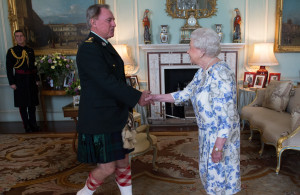
 Queen Elizabeth II, in her capacity as Colonel-in-Chief of the Argyll and Sutherland Highlanders of Canada, receives Colonel Ronald Foxcroft (Honorary Colonel) at Buckingham Palace in London. The story Ron tells has been heard by Queen Elizabeth II, and of course he pulled a whistle out of his pocket and gave it to her.
He tells the same story to new Canadians when he is presiding at a Citizenship Court where he usually runs over the allotted time as he tells people how great a country they are becoming a part of.
Irrepressible, yes, not all that good at saying no when someone is putting the squeeze on him.
Member of the Order of Canada. Was the Honorary Colonel of the Argyll Sutherland Regiment in Hamilton which he thought was going to be fun on the occasions he got to wear a kilt.
The tragic death of Corporal Nathan Cirillo who was shot by a terrorist while doing sentry duty at the National War Memorial in Ottawa in 2014 required Ron to suddenly have to lead a regiment that was grieving the loss of one of their own.
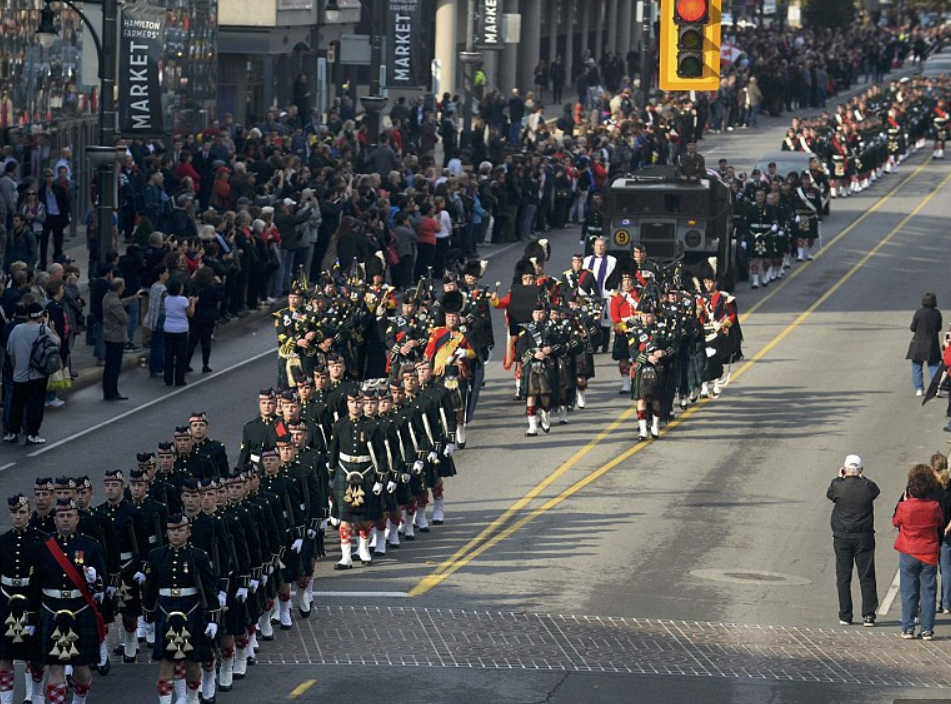
Ron wasn’t a military person but he stood up and got that Regiment and the city of Hamilton through a very tough day that saw the biggest parade seen on the streets of Hamilton in some time. .
 The parade through the streets of Hamilton was one of the largest the city had seen in time. Foxcroft was the Honorary Colonel of the Regiment at the time. In one of the 40 Thoughts (and we aren’t going to take you through all of them) Foxcroft positions Santa Claus as a lesson at being on point all the time. That thought will teach you a lesson that will stay with you as long as you are a leader or want to be one.
Foxcroft was one of the very few Canadians that served as a basketball referee at every level of the NCAA men’s basketball and the NBA during a 23 year career and was awarded the Golden Whistle for his contribution that included an Olympic Men’s final game.
Foxcroft has been named the Citizen of the Year in Burlington and probably can’t tell you how many Boards he has served on in his career.
They include:
Chair of Tradeport International, Operators and Mangers of John C Munro Hamilton International Airport. The largest Cargo Express Overnight Airport in Canada. National Association of Sports Officials. Wisconsin, 29 years.
Arbeter Sports Inc., a sport technology company. Completed 400 million transactions in 2019.
Ontario Excavac Incorporated, a pneumatic excavation and environmental recycling company in Vaughan Ontario.
Board Member of Burlington Community Foundation and past Chair.
Board Member of The Hamilton Club, and past Chair.
Board Member of the Hamilton Board of Approved Basketball Officials.
Past Chair of the Argyll Regiment Senate and Foundation, and Past Honourary Colonel.
Board Member of the Canada Basketball Veterans Committee, currently vice chair.
The proceeds of the book are being donated to CityKids and Liberty for Youth
By Pepper Parr
July 18th, 2021
BURLINGTON, ON
The brand name for the beer was catchy – learning that the beer was the first organic beer in the country was news.
Sober Carpenter’s organic session IPA is available in Burlington at the following locations: The Beer Store 5051 New Street, The Beer Store 2020 Appleby Line, as well as Sobeys, Metro and Goodness Me.
 We’ll let you know what we think. For the beer purists the technical description is:
Malts: Pale, Crystal, Cara; Hops: Galaxy; International Bitterness Units (IBU): 30; Calories: 80
Launched earlier in July in Montreal, Canada’s first 100% organic non-alcoholic beer was launched by Quebec-based craft microbrewer, Sober Carpenter.
The beer is said to have the tropical and bright aroma of Galaxy hops, the large, light head and lacing along the glass speaks to the beer’s quality. Lastly, consumers will notice a crisp and slightly bitter taste on the palate.
The company’s master brewer has created a full line of beers with unique flavour profiles including, an Irish red, a light and fruity Belgian white, and a blonde ale, along with the company’s most popular beer, a potent IPA.
“Non-alcoholic beer is very much coming into its own,” explains Nicolas Gagnon, CEO of Sober Carpenter. “The old, tired idea the non-alcoholic beer is boring is just plain wrong. We set out with a mission to create beers that are every bit as delicious, complex, unique, and easy to enjoy as any beer. We work hard to brew a full range of non-alcoholic beers that anyone, no matter their lifestyle, can enjoy. Our new organic session IPA is the latest step in that process. Session IPAs are less hoppy than regular IPAs, they are smooth and full of aroma.
Until July 31, 2021, for every case of Sober Carpenter Session IPA sold, one dollar will be donated to Tree Canada. The organization is the country’s leading tree planting charity. A sober carpenter thinks about the long-term sustainability of their lifestyle, not just the trees they’ll need today.
They are sending a tasting kit our way – we’ll let you know what we think.
By Pepper Parr
July 17th, 2021
BURLINGTON, ON
An upgrade on the membership of the group that supports a quarry in rural Burlington. We are advised that the membership has written more than 2000 letters of support.
 For the community group opposing the expansion of the Nelson Quarry in rural Burlington the next step is to demonstrate and get their message out. For the community group opposing the expansion of the Nelson Quarry in rural Burlington the next step is to demonstrate and get their message out.
The application by Nelson Aggregates to expand their open pit mine is a long and slow moving process.
City Council has come out against the expansion, there is a small group for the expansion: they don’t appear to have much in the way of community support.

On July 20th, CORE Burlington, PERL and Wellington Water Watchers will be outside the gates of Nelson Aggregates on the 2nd Side Road for A Morning on Mt.Nemo. They will be joined by Shane Philips of Wellington Water Watchers as he continues his ‘Ear to the Groundwater’ walking tour with a visit to the gates of Nelson Aggregate’s open-pit gravel mine, followed by a hike to the scenic brink of Burlington’s Niagara Escarpment.
Why: To raise awareness of the devastating effect open-pit gravel mines have on communities and the environment. Shane will connect the dots between the local and the global issues, and show how gravel mining helps fuel the climate crisis, and how Doug Ford’s agenda for new highways and more urban sprawl will devour our future.
When/Where: Tuesday, July 20th, 10am at 2462 No. Two Sideroad Burlington. Across from the gates of Nelson Aggregate’s 540-acre open pit mine on Burlington’s Escarpment: part of an UNESCO World Biosphere Reserve
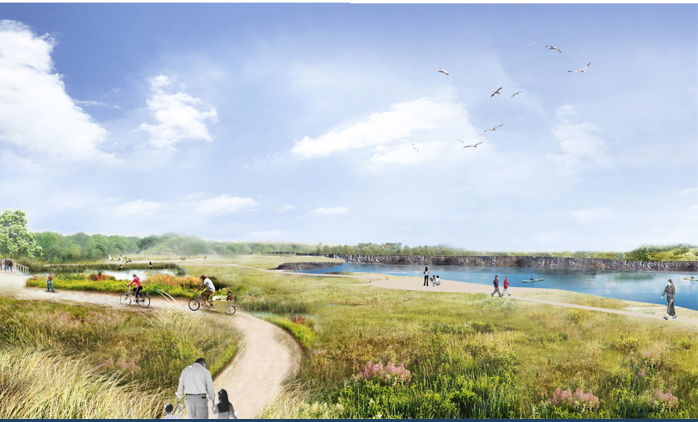
 A rendering of what Nelson Aggregates wants to do with the land when they have completed their mining of the available aggregate. Order of Events:
10:00am – 10:30 Speakers, Mike Balkwill, Wellington Water Watchers; Janet Turpin Myers, CORE Burlington; Sarah Harmer, PERL; and Shane Phillips. As a special treat, Sarah will also perform ‘Escarpment Blues’.
10:30 – 11:45 Drive to Mt. Nemo Conservation Area (a few minutes away) for a hike to the brink of the Escarpment, and back again (about a 20 minute walk on an easy trail each way)
NOTE: The Conservation area requires advanced reservations to enter. We will reserve tickets for our group, which we expect will number about 20-30. If you plan to come along for the hike, please RSVP by responding to this email, no later than Monday, July 19th by 9am. This will help us to calculate how many reservations to make.
If you choose not to hike with us, please do join us for the first portion of the morning.
For more information contact: coreburlington@gmail.com
About CORE Burlington: www.coreburlington.com
By Pepper Parr
July 15th, 2021
BURLINGTON, ON
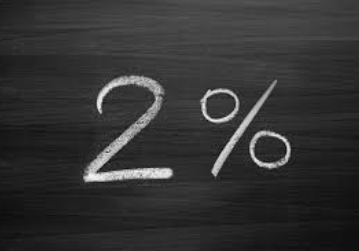
 On July 14, 2021, Regional Council approved Halton’s 2022 Budget Directions Report. The Report provides guidelines to staff to maintain existing service levels for Regional programs while supporting the community’s recovery from the COVID-19 pandemic. It also establishes a target property tax increase at or below the rate of inflation (2.0 per cent). On July 14, 2021, Regional Council approved Halton’s 2022 Budget Directions Report. The Report provides guidelines to staff to maintain existing service levels for Regional programs while supporting the community’s recovery from the COVID-19 pandemic. It also establishes a target property tax increase at or below the rate of inflation (2.0 per cent).
“The 2022 Budget Directions Report is an important step in the development of our next Budget and Business Plan,” said Halton Regional Chair Gary Carr. “It lays a foundation to help us preserve our strong financial position, keep property taxes low and support our community as more residents get vaccinated and Halton gradually reopens.”
The Report identifies priorities for Regional investments in 2022 to ensure residents have access to essential services while providing for critical program enhancements to address community growth. It also ensures next year’s Budget aligns with the strategic themes, objectives and outcomes outlined in the 2019–2022 Strategic Business Plan.
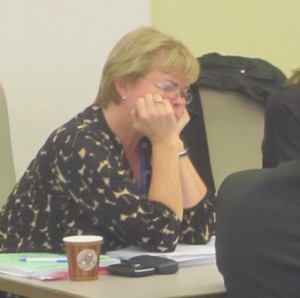
 Seven of those smiling faces represent Burlington – if they voted to hold the 2022 tax increase to 2% for the Region – can’t they do that for the City? Financial pressures related to the COVID-19 pandemic and vaccine rollout are also identified in the Report. Staff are closely monitoring current and potential fiscal impacts as they develop plans for 2022. The Region will continue to address program pressures, reallocate resources to priority areas and maintain service levels to help achieve a property tax rate increases at or below the rate of inflation.
By Staff
July 15th, 2021
BURLINGTON, ON
The City of Burlington announced the names of the 2021 Neighbourhood Community Matching Fund recipients today.
A community investment of $25,200 will go towards three community projects, focused on enhancing infrastructure amenities within parks, gardens, buildings on public lands or on lands that are accessible to public.
2021 marks the fifth year the City has provided the program.
The projects funded for 2021 include:
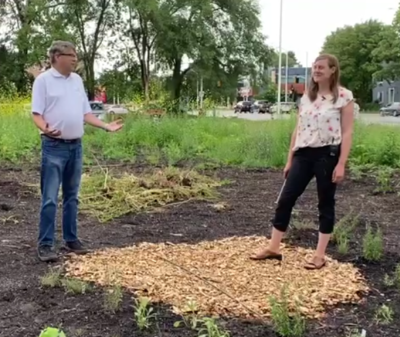
 Robin Bailey, Executive Director of the Food Bank talking to Adria Cehovin at the Urban Farm on Brant at Ghent. • Grow for Change Urban Farm Community Therapeutic Programs ($10,000)
This project will provide the community with access to a new temporary green space near Brant Street and Ghent Street, as well as therapeutic horticulture programming for adults and youth, to promote positive social and mental health.
• The Orchard Community Garden Project ($10,000)
This brand-new community learning garden at the Trail Head Parkette (5401 Redstone St.), will include eight large garden boxes with fruits and vegetables and native pollinating flowers and plants. Food and plants harvested from the garden will be shared with the community and donated to the local food banks.
• Community Garden in Roseland ($5,200)
This community garden in Roseland, at Port Nelson United Church, will be an accessible space for relaxation, reflection or a neighbourhood meeting. The space will feature numerous seating areas; herbs; perennials that support and encourage the pollinator population; and a ‘Peace Pole,’ an internationally recognized symbol of hopes and dreams that stands for peace on earth.
The successful projects have one year to complete their projects and must comply with the current public health regulations and provincial framework during development and implementation.
We never thought that the Roseland community needed public support for a community garden.
Our understanding was that the “farm” on Brant Street was being funded by the Molinaro Group who owned the land. When Ward 2 Councillor Lisa Kearns first announced the project she made no mention of public money being used.
Quick Facts:
The Neighbourhood Community Matching Fund was created in 2016 to inspire residents to champion community-led projects.
The goal of the fund is to improve neighbourhoods by creating a sense of belonging and community pride, while building meaningful connections.
Through the fund, Burlington residents are encouraged to submit community-led project plans that help make our city a better place to live and play.
• For 2021, the Neighbourhood Community Matching Fund focused on small projects that enhance infrastructure amenities within parks, gardens, buildings on public lands or on lands that are accessible to the public that meet the goal of the fund.
• All projects are to be planned, led and implemented by, and for the community in a public setting.
• Approved projects receive up to 50 per cent of the funding for the project from the City, to a maximum of $10,000. The community groups selected match this funding with an equal contribution made up through any combination of volunteer hours, donated services, donated materials and supplies or other funds raised, such as cash donations.
• For more information about the Neighbourhood Community Matching Fund, visit burlington.ca/matchingfund
By Pepper Parr
July 15th, 2021
BURLINGTON, ON
It is difficult at times to follow an argument when both sides are not in front of you.
This morning the Hamilton Spectator published a piece written by Mayor Mead Ward who takes Joan Little, a Spectator columnist, to task.
We have published both the Little column and the response from Meed Ward.
Joan Little column of July 7th in the Hamilton Spectator:
Tough council decisions exposing rifts in unity
When writing my last column, I got a rude awakening about how some things are done today in Burlington. I had questions about a city report on the Regional Official plan, so e-mailed a senior planning person to check that my understanding was accurate. The reply came from a name I didn’t recognize. Too late I realized it had been filtered through the communications dept – read PR people!
Because I watch committee and council meetings, I seldom request additional help about issues. This reply was filtered through PR people, an insult to highly capable specialists in their field. Citizens would thank communications staff if they improved the city’s dreadful web site, which offers several hundred (mostly irrelevant) results for any search.
The Adi development on Lakeshore is underway, a constant intrusion on neighbours’ lives.
Disclosure – I live nearby. The worst problem is that the Ford Government has overridden reasonable hours of work bylaws. Burlington’s, like many, is 7:00 am to 7:00 pm. Ford’s is 6:00 am to 10:00 pm, seven days a week. Ironically many other businesses faced restrictions.
Adi simply wants too much development on a tiny lot. City staff refused it, as did council, but OMB chair Susan Schiller (now a full-time vice-chair of the new Ontario Land Tribunal (OLT) approved it. Note – New legislation rolled five tribunals into one super-tribunal – the OLT. It handles land use, environment, conservation review (heritage), expropriation, mining, etc.
Because Adi wants 26 storeys on such a small lot, they’ve had to excavate seven floors to meet minimum parking standards – probably deeper for elevator shafts. This, within a couple of hundred meters of the lake. The site ponded regularly. They hit bedrock early, so have jack-hammered for months, from 6:00 am. And this small deep hole magnifies sound, like an echo chamber.
It there any chance that months of daily jack-hammering could weaken foundations of nearby buildings? Do cities ever do stress tests to ensure neighbouring buildings aren’t compromised by development activities?
Recently Coun. Lisa Kearns had hosted a virtual meeting with Adi to answer questions. There were few answers. A subsequent Adi communique made excuses about a “complex” project.
Surely they knew the deep parking garage (deepest in the city) required a larger excavator? That simultaneous activities could create problems? They did however provide a number to call when problems arose (905) 335-2929. With affected neighbours on all sides, calls could be numerous.
Council faces a tough 2022 budget that projects the city portion of total taxes (city, region and education) could rise 5.57 per cent, with an overall increase of 3.33 per cent.
The last council meeting exposed chinks in Mayor Marianne Meed Ward’s grip on council.
When this council was sworn in almost three years ago, only the mayor and Paul Sharman had experience. Five were new, and tended to “follow the leader”. Now they think for themselves.
The issue was Rainbow crosswalks. Burlington installed its first one last year for about $10,000, with consensus that the program would continue. Recently the mayor presented a motion to install six (three this year) and directed staff to address options on rainbow benches and banners.
Councillors Kearns, Sharman and Shawna Stolte supported one a year, because the mayor’s motion meant using unbudgeted dollars from reserve funds this year, and future capital budgets.
Meed Ward’s motion carried four to three. Then she issued a statement thanking the three who supported her, perhaps leaving the impression the other three did not support Pride.
In response the three dissenters took the unusual step of issuing their own statement, outlining costs associated with the mayor’s position. They claimed it would cost taxpayers up to $50,000 this year, and upwards of $100,000 plus, in unplanned future funding. Our mayor is capable, but my observation is that when she wants something, budgetary caution suffers.
It will be interesting to watch council as we approach 2022’s municipal election. Will the chinks become large chasms?
Freelance columnist Joan Little is a former Burlington alderperson and Halton councillor. Reach
her at specjoan@cogeco.ca
Meed Ward opinion piece in the July 15th, Hamilton Spectator:
 Burlington Mayor Marianne Meed Ward Thank you to columnist Joan Little for her recent roundup of Burlington issues, particularly the recent 4-3 vote on funding additional rainbow crosswalks to show our city’s support for our 2SLGBTQIA-plus community.
There are several factual errors in the column that must be corrected, especially on such an important topic. I recognize these errors come from a statement on social media by several council members, which also contained inaccuracies. Accurate information can be found in the minutes or recording of meetings, all available online. (See June 8 minutes, item 5.5)
I brought a motion at committee to add three additional rainbow crosswalks in 2021, using the appropriate reserve fund, with consideration for three additional crosswalks to be discussed and funded during the 2022 budget discussions. Those discussions are still to come, and council will determine the source of funding at that time. The cost to date is an upset limit of $50,000 (not $100,000, as noted in the column).
Six crosswalks would provide one per ward throughout the city, something we heard was important from several councillors and the community. Doing multiple crosswalks now provides the potential for bulk savings on paint and contracted services.
It’s been said a council’s priorities are found not so much in the words of their strategic plan, but in the actions of their budget. We fund what we value.
The motion also provided consideration for rainbow benches and banners, with a report back from staff on cost and feasibility. That motion carried 5-2 at committee and 4-3 at council.
Only one alternative motion was presented at committee and supported by three council members.
The column stated councillors supported one rainbow crosswalk “per year” — that is incorrect. Per the minutes of the meeting, the actual motion tabled was for one additional crosswalk in 2021, and removing consideration for three additional crosswalks during upcoming budget discussions. If approved, that would have limited additional crosswalks to one and done. That motion failed 4-3.
I thanked those who supported the original motion. The three councillors who voted against it issued a statement explaining their vote, which is welcome. In the interest of transparency and accountability councillors are encouraged to explain to residents how they voted and why, whether in the majority or minority. I have regularly done so myself in my monthly newsletter, as both a councillor and now as mayor, including the vote count.
The characterization (and headline) that the 4-3 vote on this matter “exposed chinks” in the mayor’s “grip” on council, does a disservice to every member of Burlington council.
All members of council are fully capable, independent thinkers who have made decisions from the start of their terms based on the evidence presented, the merits of discussions and what they believe is best for their constituents. These decisions are done regardless of who puts the motion on the floor. Please respect that — and them.
I’m immensely proud of the careful thought and compassion they bring to each discussion. During this term, we have had 7-0, 6-1, 5-2 and 4-3 votes. That’s as it should be. I can’t imagine any council anywhere in the world that has unanimously passed every motion brought forward to them, nor is a 4-3 vote to be avoided. We welcome different viewpoints. When we disagree, we aim to do so respectfully.
On July 8, at committee, councillors unanimously supported a motion I brought forward to embark on renaming Ryerson Park, out of respect for Indigenous residents and as part of our path to reconciliation.
If reported on (and I hope it is), I hope this unanimous vote won’t be characterized as the mayor now regaining a “grip” on council.
Rather I hope coverage would focus on the importance of renaming the park as part of our commitment to the Truth and Reconciliation Calls to Action, and the unanimous vote as reflective of the deep commitment of every member of council to reconciliation and action.
I hope these clarifications are helpful to your readers’ understanding of what took place.
Marianne Meed Ward is mayor of Burlington.
By Staff
July 14th, 2021
BURLINGTON, ON
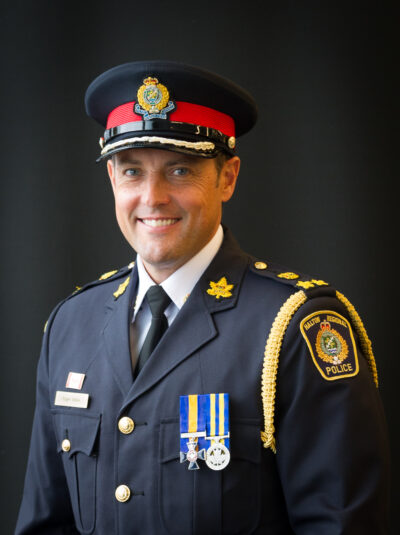
On July 13, 2021, Deputy Chief Roger Wilkie was presented with the Member level of the Order of Merit of the Police Forces by RCMP Commissioner Brenda Lucki.
 Deputy Chief Roger Wilkie: MOM The Member of the Order of Merit (M.O.M.) specifically recognizes exceptional service or performance of duty over an extended period, usually at the local or regional/provincial level. Normally, recipients are invited to a ceremony where they are presented with the insignia of the Order of Merit of the Police Forces by the Governor General at Rideau Hall or la Citadelle. This year, due to the pandemic, the presentation was virtual in nature.
Established in October 2000, the Order of Merit of the Police Forces honours the leadership and exceptional service or distinctive merit displayed by the men and women of the Canadian Police Services, and recognizes their commitment to this country. The primary focus is on exceptional merit, contributions to policing and community development. Her Majesty Queen Elizabeth II is the Order’s Sovereign, the governor general is its Chancellor and a Commander, and the commissioner of the Royal Canadian Mounted Police is its Principal Commander.
There is a rigorous nomination and appointment process involved in receiving this recognition, with a focus on exceptional merit, contributions to policing, and community development and/or implementations.
Deputy Chief Roger Wilkie began his career with the Halton Regional Police Service in 1996. Throughout his career he has served in uniform operations in the Town of Milton, Town of Halton Hills, City of Burlington and Town of Oakville. He has worked in the Drug Unit, Mobile Surveillance Unit, Homicide Unit, Criminal Investigations Bureau, Domestic Violence Unit and as the Executive Officer to the Deputy Chief. He has also led several areas as the Operations Commander in Milton and Halton Hills, District Commander in Oakville, Critical Incident Commander for major public safety incidents and the Commander of Emergency Services, Training, and Human Resource Services. He was promoted to Deputy Chief of Regional Operations in 2018, and in October 2019, he started in his current role as Deputy Chief of District Operations.
In addition to his role as Deputy Chief, he is Vice President of the Executive Board of the Ontario Association of Chiefs of Police and is also the Co-Chair of the Canadian Association of Chiefs of Police Equity, Diversity and Inclusion Committee.
By Staff
July 14th, 2021
BURLINGTON, ON
The Burlington Food Bank has a number of groups that are consistent supporters both in terms of help and sending dollars.
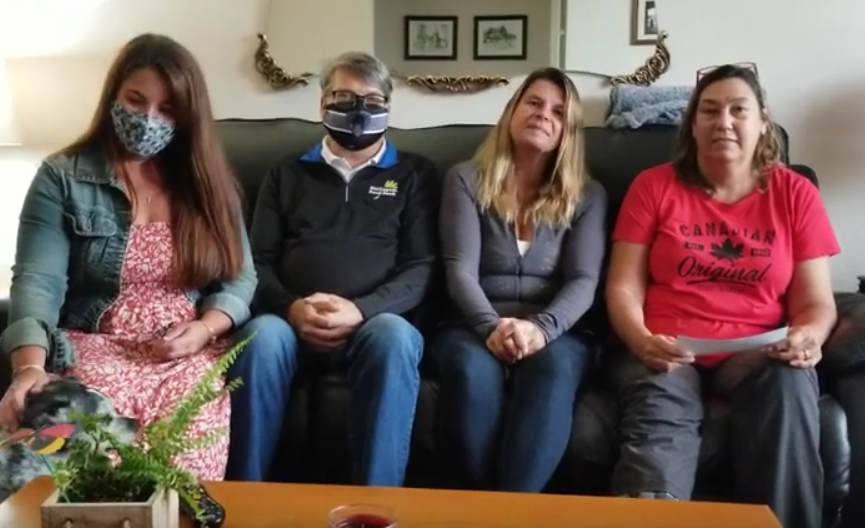
Earlier this week, Robin Bailey met with the Babes who presented him with a cheque for $240.
Daniel (Dover) Forsyth who took first prize in our regular season (Burlington Old Timers Hockey Club) BOHC hockey pool and asked BOHC to arrange for his winnings to be split between the Club’s favourite charities.
The Hospice and the Food Bank – a 50/50 split.
 Shown are Suzanne, Robin, Tanje and Johanne from the BOWSER Babes. Someone got sloppy with the masking protocol. Here’s hoping your broken ankle heals well Johanne! All fingers are crossed that vaccinations in Burlington increase so that we reach the numbers needed to be able to open up hockey for the Fall.
BOWSER is a big part of the community aspect of the club donating their time at the arenas during the hockey season. Thanks Babes and Thanks Dan!
Rumour has it the Club in return for the generous donation provided Dan with one get-out-of-the-penalty-box for free cards.
If you are in need or know of someone who could use our help, PLEASE have them email us at info@burlingtonfoodbank.ca or call 905-637-2273 to make arrangements to have food dropped at their door or make arrangements to pick it up through our curb-side pickup option. If you are a resident in Burlington, we are all here to help. Don’t struggle – give us a call.
By Pepper Parr
July 14th, 2021
BURLINGTON, ON
Council is on their summer break until September 6th.
The city will wake up each day – do the things a city does and hope that the wheels don’t fall off.
The City is still in a declared State of Emergency which puts the day to day running of the city in the hands of the Emergency Control Group (ECG).
What if they have to do something quickly – really quickly to deliver the services council has approved?
Council found a solution for that – they gave the city manager delegated authority to spend $250,000 without referring to council before getting the cheque signed.
Pretty decent amount in terms of pocket change for city manager Tim Commisso to carry around. That kind of cash could certainly burn a hole in one’s pocket.
 City manager Tim Commisso To be serious this is just prudent management that allows the City Manager and his delegate (when the City Manager is absent) to make the decisions normally deemed to be decisions of Council. Such decisions would be limited in dollar value to $250,000 at a maximum per individual decision. In making these decisions, the City Manager and his delegate will have the support of Burlington Leadership Team and Emergency Control Group.
This authority begins on July 14 and stays in place until September 6.
The City Manager and the Mayor will stay in touch and if a situation crops up that is more than critical the Mayor can call a Special Meeting of Council and do the necessaries.
The City Manager is required to report any and all decisions made under this delegated authority to Council in the September Corporate Services, Strategy, Risk and Accountability committee meeting.
In addition, the City’s Corporate Continuity of Governance & Operations Plan describes the importance of the succession of leadership, particularly when involved in an emergency situation, to ensure the City of Burlington can carry out mandated responsibilities. In the case of the ECG, this succession is clear between the City Manager and his alternate, namely the Executive Director, Environment, Infrastructure & Community Service.
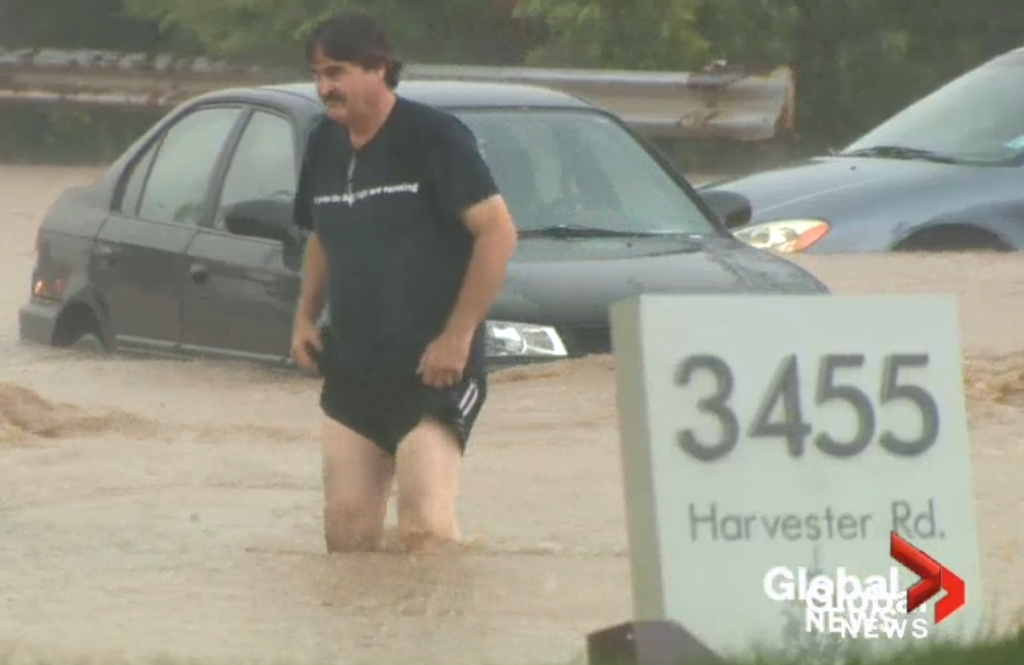
 It was a relatively light downpour – it just lasted a long, long time. Many will remember the crisis that occurred when during a Sunday in August 2014 rain began to fall and it kept falling. When it was all over the city had to deal with the 191 mm of rain that flooded basements, underpasses and large open areas.
The preparations in place at the time taught city council that things had to change.
In May 2020, the City’s service re-design strategy outlined a responsive and highly measured approach to resuming delivery of City services and operations. This strategy included a framework for governance and decision making, clearly outlining those decisions to be made by Council and those that could be made directly by the Burlington Leadership Team/ECG/Service Leads.
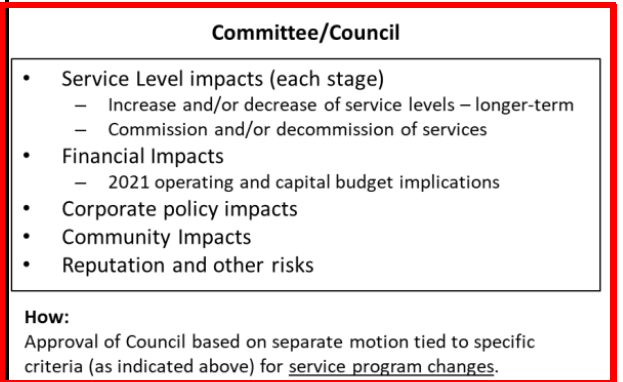
The decisions of Council are in accordance with the following approved framework:
 There are five question the City Manager and his leadership have to ask when they are making a decision about the delivery of services. City staff looked at a number of options before arriving at a recommendation:
1. Hold decisions until the resumption of committee and Council meetings in September – NOT RECOMMENDED
This option would hinder the City’s ability to respond to changes in the Provincial re-opening regulations and orders in a timely manner resulting in further financial impacts, potential loss of service and significant reputational damage.
2. Seek approval of Council to delegate decisions up to $250,000 per individual decision to the City Manager (or his delegate in his absence) –RECOMMENDED
This option is consistent with the application of all formal delegated authority decision making by the City whereby authority transcends from Council to an identifiable staff member. In discussion with the City Clerk, delegating most COVID re-opening activities to the City Manager through the Council break would be most appropriate. The City’s current policy framework, with the Delegated Authority By-law and Procurement By-law have Council established approval limits that will be respected throughout this time. In September, a report to CSSRA as an addendum would report the COVID-related activities during the break. When the dollar threshold is expected to exceed $250,000, the City Manager and City Clerk will confer with the Mayor on the need for a special council meeting.
3. Seek approval of Council to delegate decisions to the Mayor – NOT RECOMMENDED
This option is not consistent with the application of all formal delegated authority decision making by the City. Delegation of authority, as is the case with all areas under the existing Council approved Delegated Authority by-law, sees the authority transcend from Council to an identifiable staff member.
4. If and as required, Mayor to call a special meeting of City Council to consider and approve COVID related service redesign decisions – NOT RECOMMENDED
This option is contrary to Council’s prior approval of the annual Council Meeting Calendar which specifically sought to re-establish an extended break during July and August. In so doing, both Council and staff are
afforded the opportunity to “lead by example” and support measures that address ongoing fatigue and stress caused by many months of COVID emergency response. However, there is a provision in the recommendation for the City Manager and City Clerk to confer with the Mayor on a call of a special council meeting should the $250,000 per individual decision threshold be exceeded.
 Joan Ford, the city’s Chief Financial Officer is on top of every financial decision made – her counsel is sought and respected by the City Manager. The Chief Financial Officer continues to have corporate oversight of all COVID-19 service re-design decision impacts and reporting to Council. The City Finance team, working closely with other staff, have applied extraordinary due diligence in securing COVID related funding (approximately $20 million in total). As a result, the City is very well positioned financially to address any impacts arising from additional service redesign decisions in July and August.
As long as it doesn’t rain in August and assuming that the vast majority of the public act responsibly and get their vaccinations – we could be in for a decent summer.
The announcement yesterday by the Chief Medical Officer for the province that he expected a wave of infections in September is certainly a bummer.
By Staff
July 13th, 2021
BURLINGTON, ON
The Burlington Chamber of Commerce announced today that they are hiring, a President and CEO.
 Carla Nell joined the Burlington Chamber of Commerce in July of 2019 Expressions of interest including resumes and covering letters will be accepted by the Chamber until at 4:30 p.m. on July 21st,
At a recent Police Services Board meeting Halton Regional Chief of Police Steven Tanner said that he was in a common law relationship with Ms Nell and had travelled to the United States with her during the Christmas holiday season.
At the time Chief Tanner had obtained permission to leave the country from the then Chair of the Police Services Board Mayor Rob Burton.
By Staff
July 13th, 2021
BURLINGTON, ON
In the first six months of 2020, Halton Regional Police Service (HRPS) officers responded to 168 suspected drug poisonings. One-third of those victims overdosed while alone, and nearly one in five did not survive.
In their media release the police explain why a new service has been put in place and the outcome they hope will be realized.
“We have been asked why we have taken a harm reduction approach to the overdose crisis in our community. The answer is simple: our goal is to prevent overdose deaths. Ultimately, a life saved today is an opportunity for recovery tomorrow.
“In an effort to ensure our community is aware of any and all resources available to them, we would like to introduce you to the Brave App.
“The Brave App is designed to connect people at risk of overdose with help they need: an ally they can talk to, a human supporter to help them stay safe, and digital monitoring technology to help them when they’re in danger. The app connects them with a community of overdose responders, and/or professional emergency first responders.
“The app is another tool that can be used to reduce the harms to individuals, families and communities from substance use, and is a complement to the services and resources that are available in Halton. The Brave App is not a substitute for calling 911.
“The Brave App was developed independently by Brave Technology Co-op, a multi-stakeholder cooperative in Vancouver B.C., and is not affiliated with the Halton Regional Police Service.
 Designed by people who use drugs. How the App Works
1. A person at risk of overdose can use the app to connect with remote, peer support through a voice call.
2. If your supporter thinks you might be overdosing (through a pre-determined span of non-response), they will request access to the details of your private Rescue Plan.
This plan can include your location, access instructions, and an emergency contact to call instead of, or in addition to, calling 911.
3. You will then receive a 10-second countdown alert letting you know that information will be shared unless you indicate that you are ok by dismissing the alert.
4. If you are unable to dismiss the alert, then that information will be revealed to your supporter, who will only use it for the purpose of sending help.
Good Samaritan Drug Overdose Act
If you use the app, and your Rescue Plan includes calling 911, our frontline officers and other first responders in Halton carry naloxone and we want to assist. As a reminder, the Good Samaritan Drug Overdose Act provides broad legal protections for anyone seeking emergency support during an overdose, including the person experiencing an overdose.
This means that individuals, including youth, will not be charged for offences such as simple possession for calling 9-1-1 in an emergency.
Privacy
People who request supervision remain anonymous and their location is only revealed if it is necessary to keep them safe. If there is no overdose, then their location is not shared. No account is needed to use the Brave App, and you don’t need to share your name, number, e-mail, or mailing address. No personal information is shared with responding Emergency Services unless it is part of the pre-determined response and only if the Rescue Plan is activated.
Learn More
The Brave App can be used by anyone with a mobile phone and internet access, and is available for download, for free, on both Apple and Android phones.
Click HERE to learn more about the Brave App
Photo credit: Sara Wylie, National Day of Action | February 21, 2017
By Staff
July 13th, 2021
BURLINGTON, ON
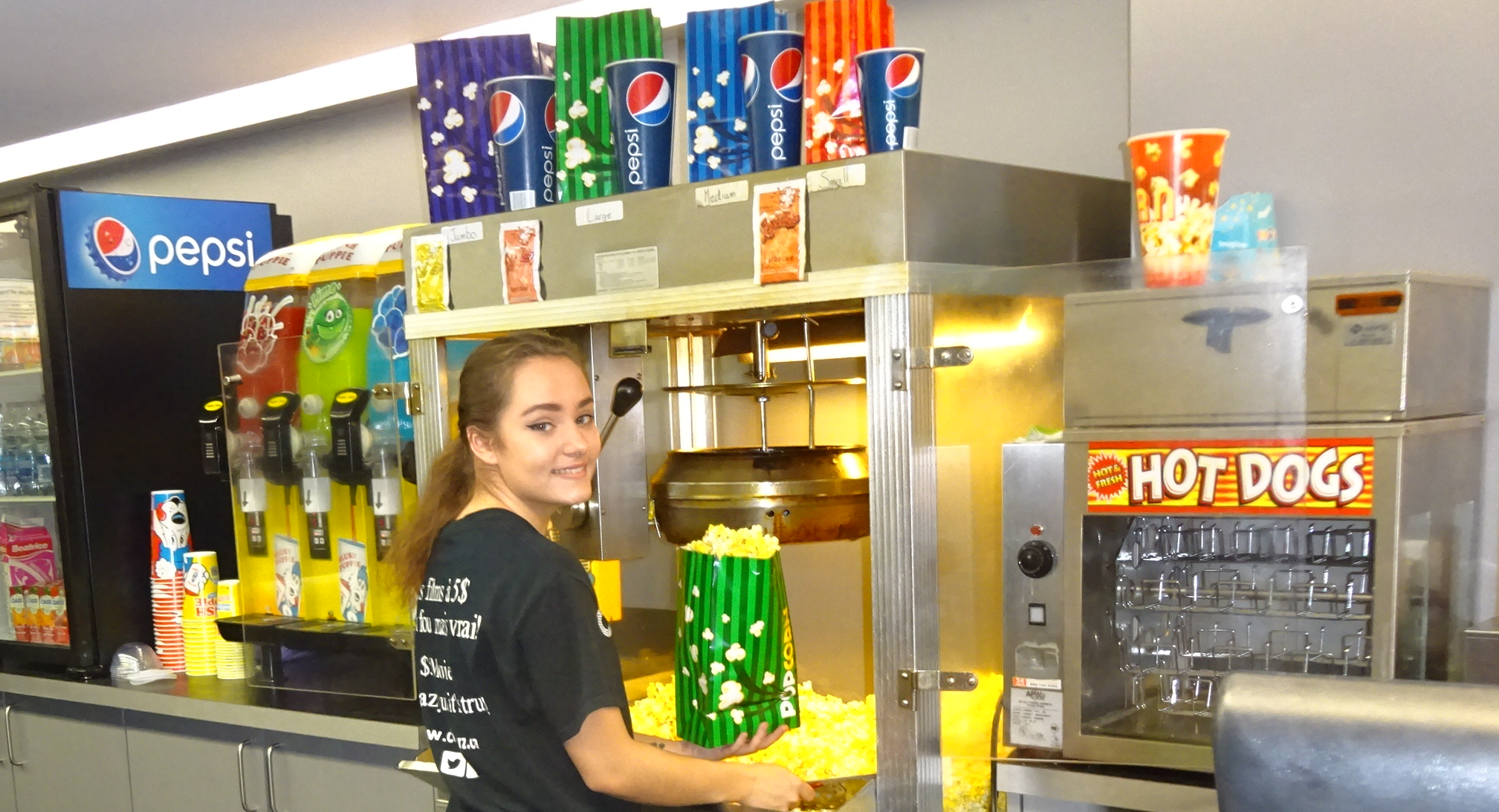
 Expect the pop corn to be available. Some notice on how social distance seating will be handled would have been useful. Cinestarz Upper Canada, the movie theatre on Brant, published their schedule early this morning. First feature is on Friday.
An interesting run of films but not a word on how seating will be handled or what they have taken in the way of social distancing.
An unfortunate corporate practice.
Shortly after publishing this story we learned of the Stratford Festival announcement of their plans to open. Prominently displayed on their web site was the protocol they will follow to protect those who attend live theatre. Something similar should appear soon on the CineStarz web site.
By Staff
July 12th, 2021
BURLINGTON, ON
The widening income gap between the rich and the poor can impact negatively on economic growth, standard of living, health and well being, and social inclusion. High income inequality also raises a moral question about fairness and social justice.1 In Canada, the income gap between the top 1 percent and the median household has been historically large and is growing steadily larger.2
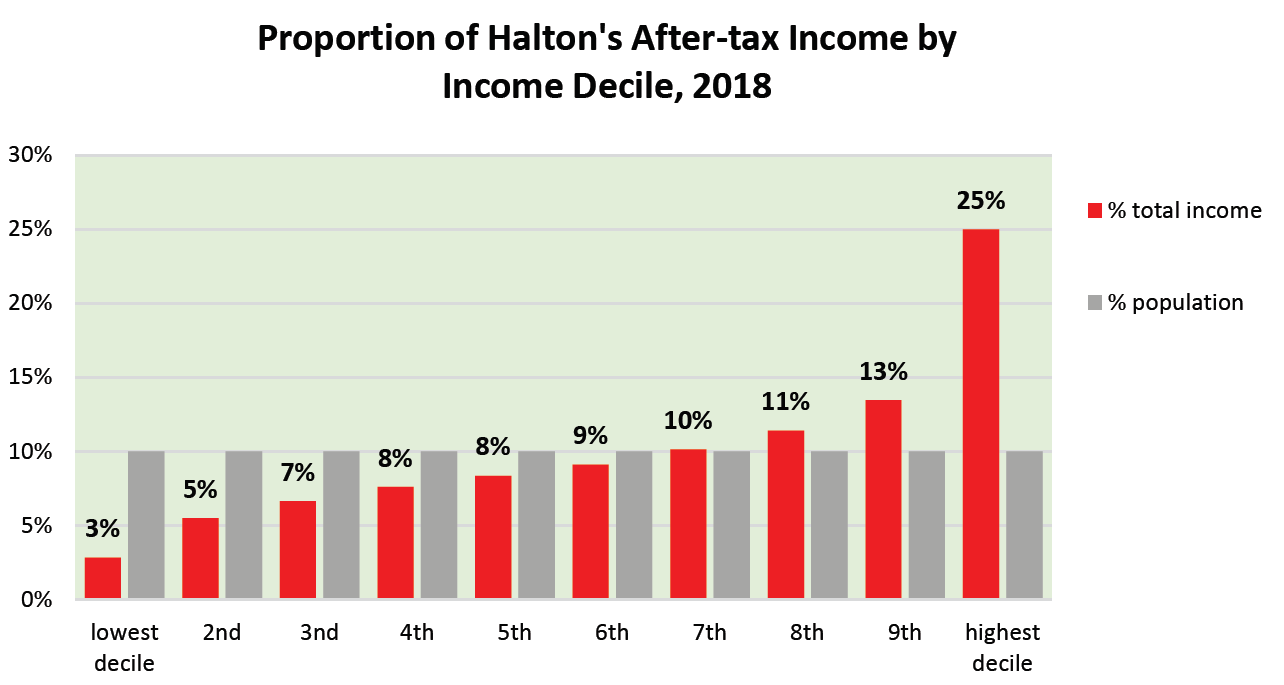
Custom tabulation from Statistics Canada’s taxfiler data file provides an opportunity to learn more about income inequality in Halton Region. Determining the share of total income by population deciles is one of many ways to measure income inequality. The population is divided into ten equal groups (10% each) from the poorest (lowest decile) to the richest (highest decile) – according to the distribution of values of a particular variable. Then the proportion of total income captured by each group is calculated. If each group has 10% of the total income, there is no income inequality.
 Using the most currently available data, in 2018 the highest decile (10%) of the population in Halton has by far the largest share (25%) of the total after-tax income (disposable income) and the bottom decile captures only 3%. Using the most currently available data, in 2018 the highest decile (10%) of the population in Halton has by far the largest share (25%) of the total after-tax income (disposable income) and the bottom decile captures only 3%.
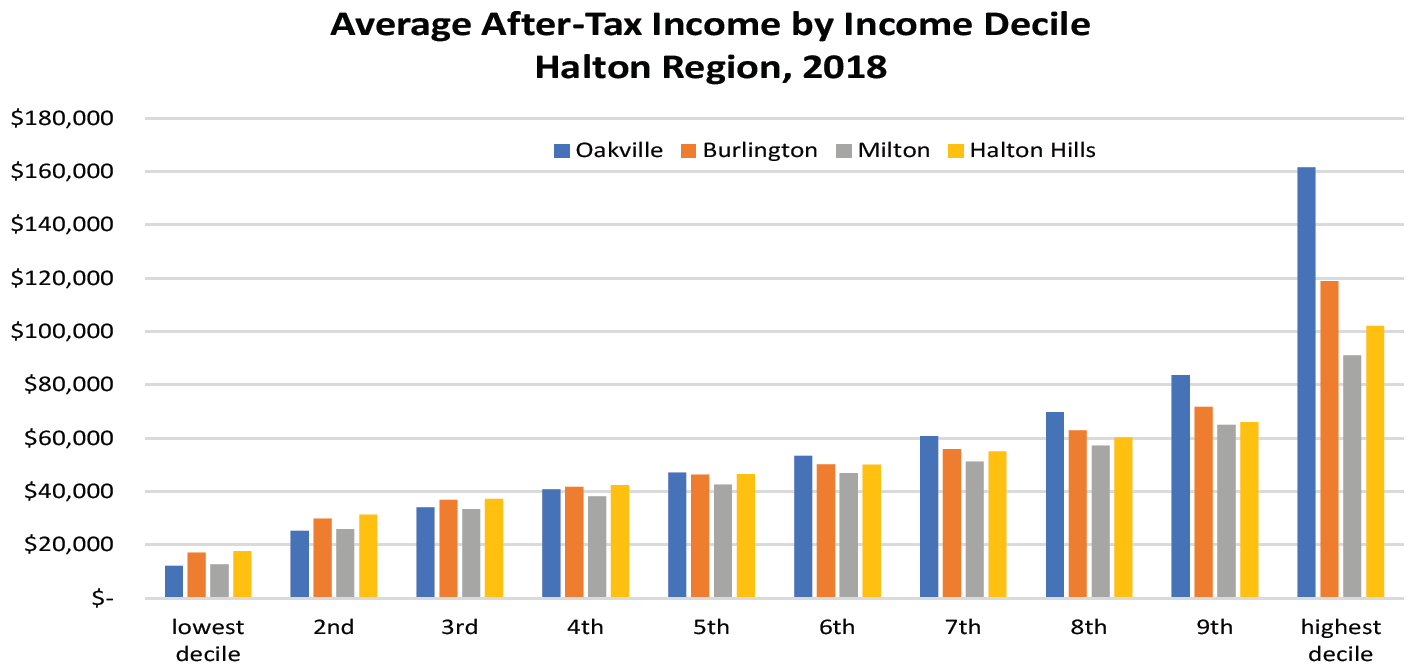
Oakville has a wider gap between the highest decile (28%) and the lowest decile (2.1%) than the other three local municipalities.
The concentration of income/wealth becomes more skewed when looking at income of the top 1 percent of the population.
The top 1% of Halton’s population (5,730 individuals) has 7% of the total disposable income. The top 1% of Oakville’s population (2,040 individuals) has 8.3% of the town’s total disposable income.
Another measure of income disparity is to compare income levels of various income groups. The population is sorted according to their average disposable income and then divided into 10 equal groups (deciles) each containing 10% of the population.
In Halton, the average disposable income for the top decile (top 10% of the population) was 9 times higher than the bottom decile (bottom 10% of the population). In other words, on average, for every after-tax dollar earned by individuals in the top decile, those at the bottom decile earned 11.2 cents. In Oakville, the difference is 13 times. The individuals in the bottom decile earned only 7.5 cents. In fact, the bottom decile in Oakville has the lowest average after-tax income among the local municipalities.
 The impact of Covid-19 on the income gap among Canadians has been pronounced. The impact of Covid-19 on the income gap among Canadians has been pronounced.
According to a CIBC Economics report,3 Covid-19 has resulted in a dramatic widening of the income gap.
The data shows that this has been fuelled not only by the expected loss of many low-wage jobs, but also by an unexpected increase in the number of high-wage jobs in the fourth quartile of the wage scale, which had year-over-year growth of more than 9% or 260,000 jobs.
In fact, the report goes on to say “…if it were not for the increase in high-wage jobs during the recession, the overall level of employment today would have been almost one million below the pre-recession level.”
As we come out of the pandemic, how we respond to those that have been most impacted is critical to recovery.
If you have any feedback/suggestions on the issue of income inequality in Halton, you can contact us at data@ cdhalton.ca.
Community Development Halton would like to acknowledge the ongoing financial support of the Regional Municipality of Halton.
By Pepper Parr
July 12th, 2021
BURLINGTON, ON
They have been offering programs for young people and putting on theatrical performances at the Performing Arts Centre that has been some of the best seen on those stages.
The only thing missing was a larger audience.
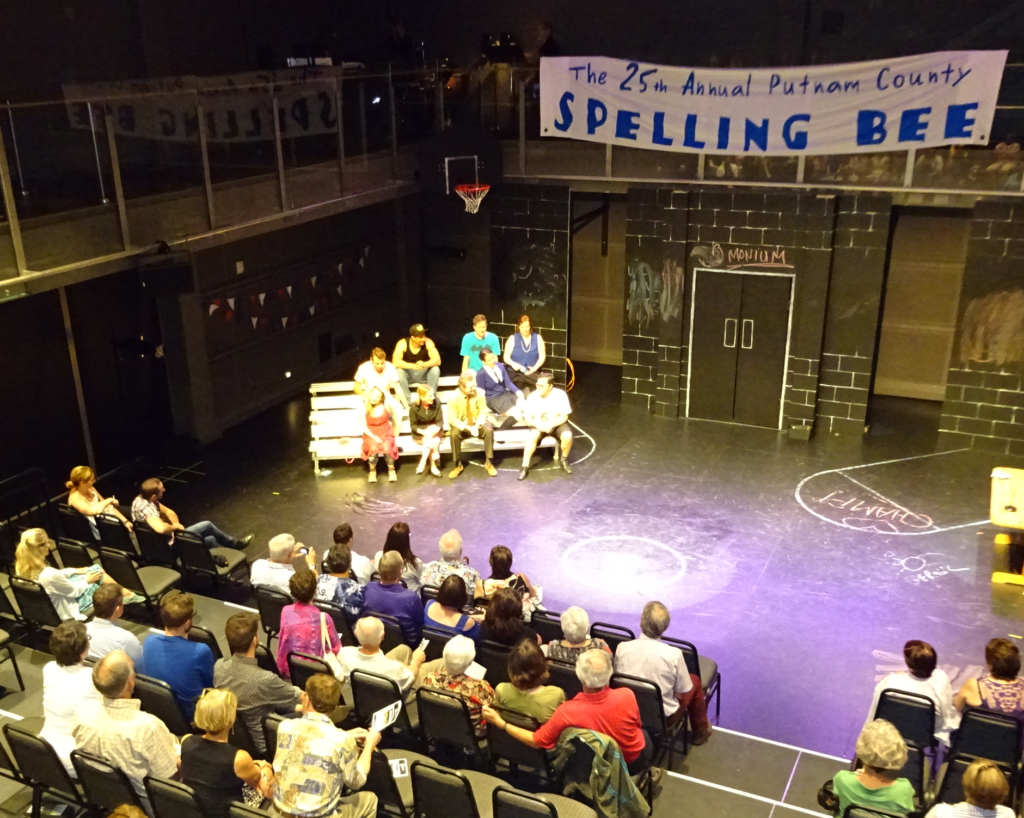
 Koogle has put on some of the best summer theatre fare the city has ever seen. The Putnam County Spelling Bee, staged in 2015, was one of the smartest summer entertainment events this critic has seen at the Performing Arts Centre.
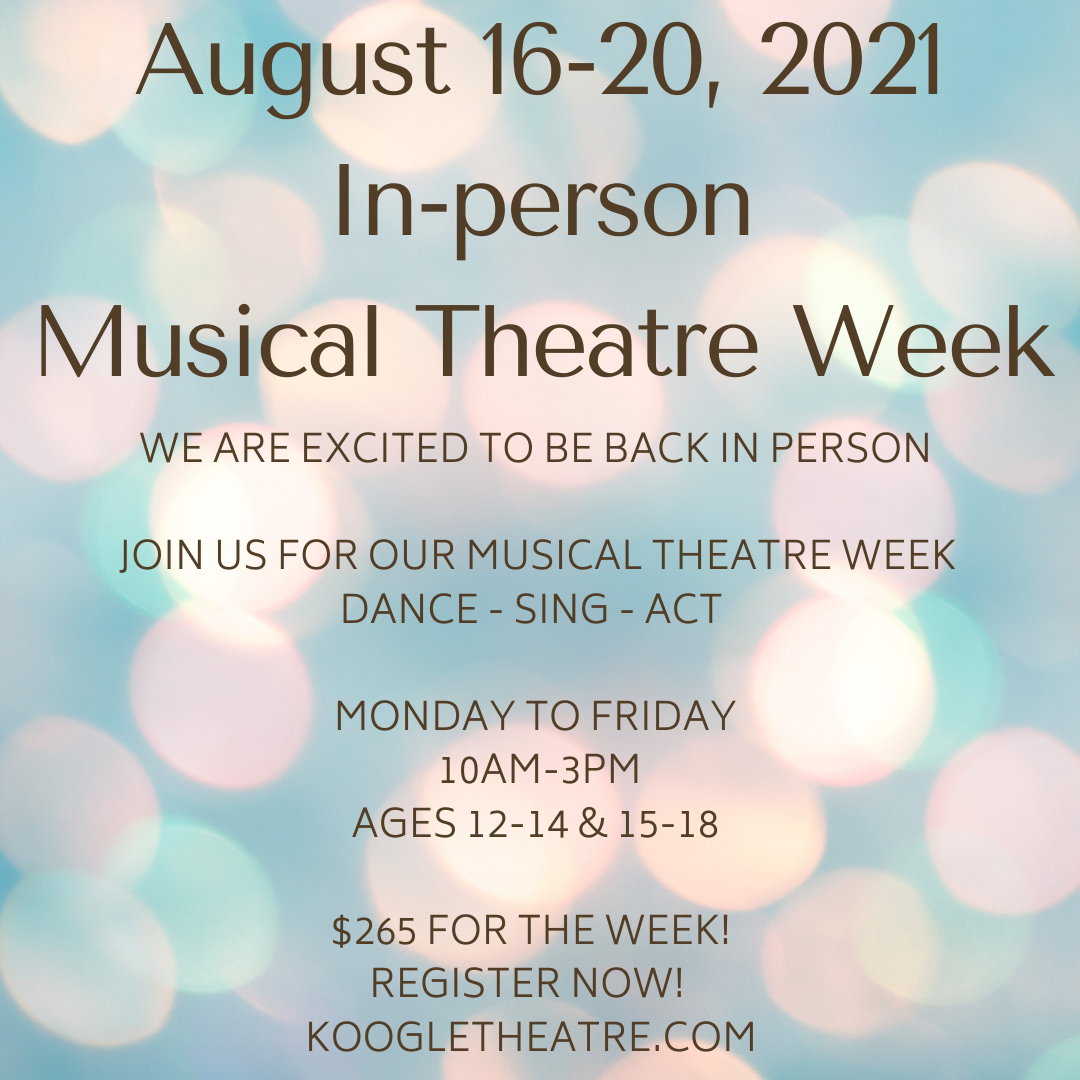
Like everyone else, Koogle is edging out of the lockdown offering a virtual program for July and a live program for August.
Hopefully the move in the 3rd stage that starts on Friday will hold and we get to the point where a normal normal begins to be real.
Details on their July virtual program can be found below

The August program is going to be live – location not determined yet – details below.
Register HERE for the July virtual program
Register HERE for the August LIVE program
By Staff
July 12th, 2021
BURLINGTON, ON
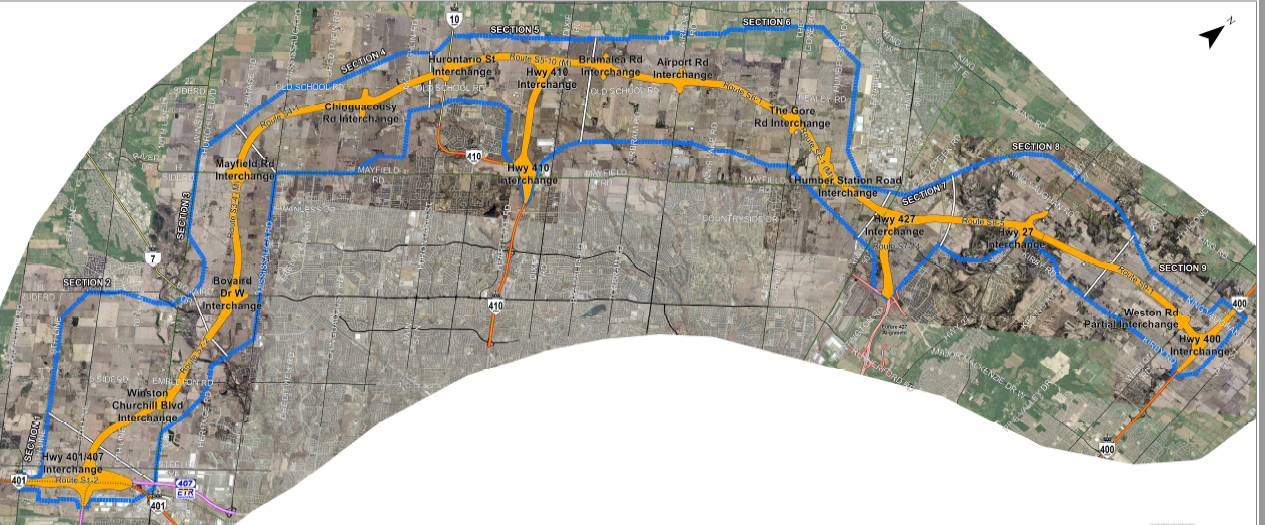
The Ontario Ministry of Transportation (MTO) is in Stage 2 of the GTA West Transportation Corridor Route Planning and Environmental Assessment (EA) Study.
After confirming the Preferred Route and 2020 Focused Analysis Area on August 7, 2020, the GTA West Project Team commenced developing the Preferred Route to a preliminary design level of detail.
 With the decision made to proceed with the highway – MTO moves to Phase 2 Stage 2 focuses on a new highway and transit corridor.
Extending from Highway 400 in the east to the Highway 401/407 ETR interchange area in the west.
Includes a 400- series highway and transit, and potential goods movement priority
features.
To further meet the public’s needs and address community questions, a Webinar will be hosted by the GTA West Project Team on July 28, 2021 from 6:00 p.m. to 8:00 p.m.
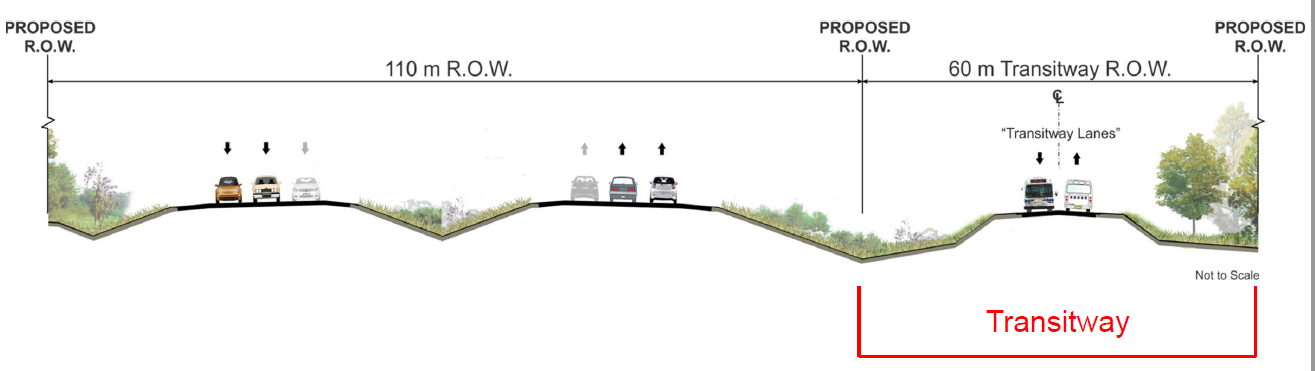
The transit corridor will be 60m of the total ROW, will run parallel to the GTA West highway and will:
 Right of way for a highway that will have lanes for buses as well Allow buses (and potentially in the future, light rail vehicles) to operate on express schedules.
Include stations at strategic locations and provide transit connections with buses onto major arterial roadways, Highway 401, 407ETR, Highway 410, Highway 427, and Highway 400.
July 28, 2021 from 6:00 p.m. to 8:00 p.m. Zoom registration link: https://us02web.zoom.us/webinar/register/WN_1VIpZJUbSWayDMAorhXiAg .
|
|





 By Rob Golfi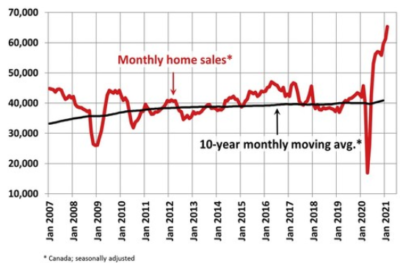
 Rob Golfi is the founder of RE/MAX Escarpment Golfi Realty Inc. A Real Estate Brokerage operating in Hamilton, Halton, Brantford, and Niagara. The firm has over 200 years of combined experience with more than 1000 five-star reviews on Google, Facebook, and Zillow. The Golfi Team is rated the 7th best RE/MAX team worldwide. The have being en in the top 100 Real Estate Teams for RE/MAX Canada since 2003.
 By Staff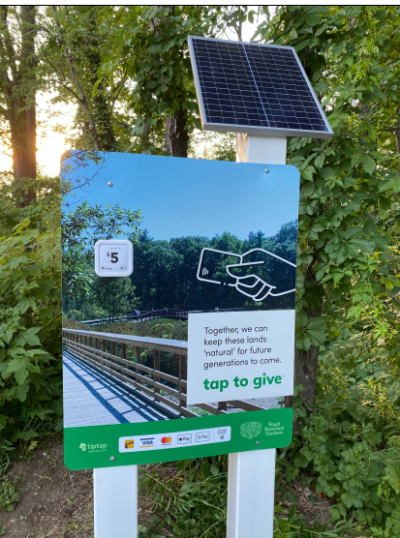
 By Alexandra Vanquest


 By Pepper Parr
 There are technical problems that are yet to be resolved and some design changes that are going to be needed before we can operate the comments section.
 By Staff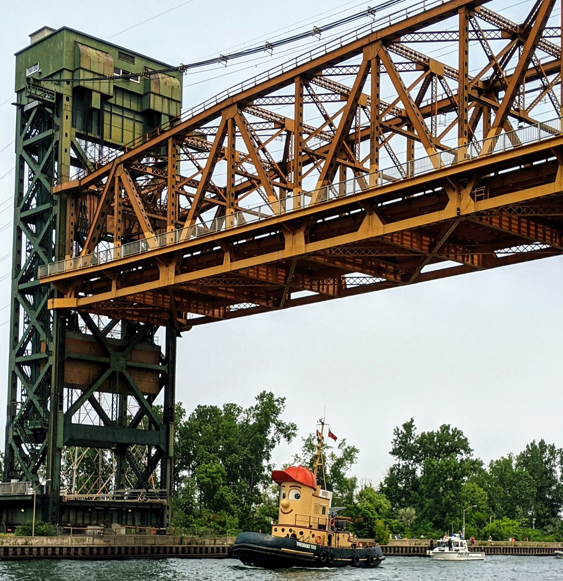
 By Pepper Parr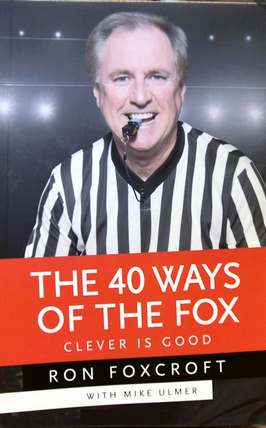

 For the community group opposing the expansion of the Nelson Quarry in rural Burlington the next step is to demonstrate and get their message out.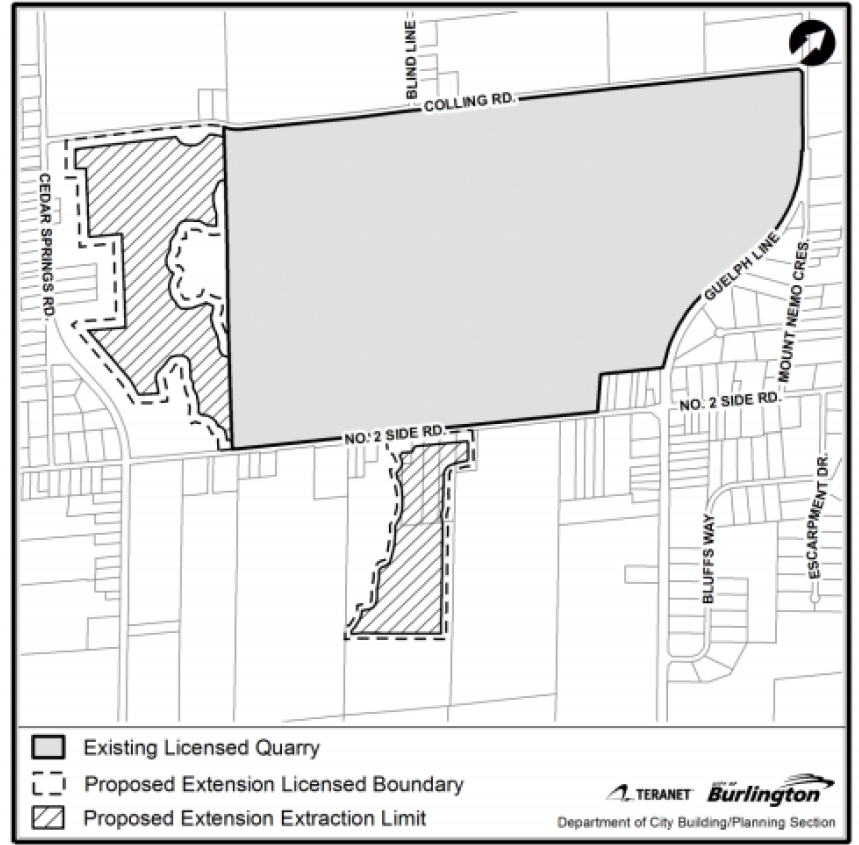
 On July 14, 2021, Regional Council approved Halton’s 2022 Budget Directions Report. The Report provides guidelines to staff to maintain existing service levels for Regional programs while supporting the community’s recovery from the COVID-19 pandemic. It also establishes a target property tax increase at or below the rate of inflation (2.0 per cent).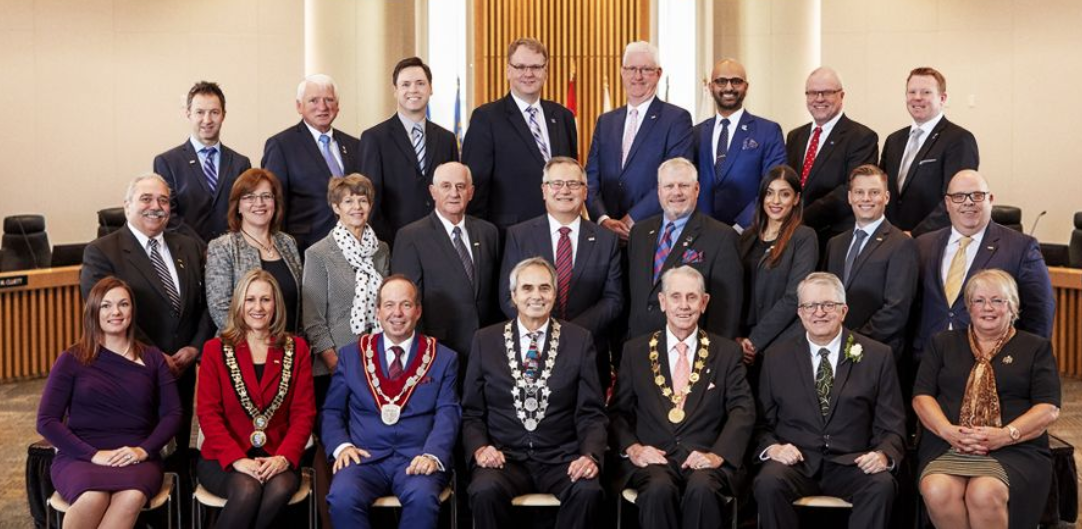








 Using the most currently available data, in 2018 the highest decile (10%) of the population in Halton has by far the largest share (25%) of the total after-tax income (disposable income) and the bottom decile captures only 3%.
 The impact of Covid-19 on the income gap among Canadians has been pronounced.