By Gazette Staff By Gazette Staff
March 31st, 2026
BURLINGTON, ON
OPINION
No one wants to say out loud that we are preparing for a war. But the country has placed an orde for tens of thousands of guns.
The Canadian army will be getting tens of thousands of new assault rifles over the next few years under a significant rearmament program announced Thursday by the federal government.
 16,195 full spectrum rifles, which are specifically designed for front-line combat and urban warfare. The plan to procure the Canadian Modular Assault Rifle (CMAR) has languished on the military’s equipment list for years but was sped up after the government of Prime Minister Mark Carney poured $93.3 billion into the Department of National Defence this year.
The 65,402 rifles are being ordered in two tranches.
The first will involve the order of 30,000 general service (GS) rifles over the next three years. That portion of the contract is worth $307 million.
The second — to begin four years from now — will involve the purchase of an additional 19,207 GS variants plus 16,195 full spectrum rifles, which are specifically designed for front-line combat and urban warfare.
The country is building new Polar level icebreakers. Two are currently in production.
 Rendering of what the new icebreakers will look like. These polar icebreakers will:
- be Canada’s most powerful icebreakers and among the most powerful icebreakers in the world
- enable CCG to operate at higher latitudes for longer periods
- help the fleet better support Indigenous Peoples and other northerners
- strengthen Arctic security
- advance high Arctic science
- improve responses to maritime emergencies
 The federal government is negotiating for the purchase of 12 submarines. The federal government is negotiating the purchase of 12 submarines.
 Prime Minister Carney is not climbing down a manhole – that is the hatch of a submarine. Canada is in the market for 12 of them. These are not toys. This is the kind of equipment you need when you plan for a war. Not one Canada is going to start but it could be a war that we have to defend ourselves.
The public perception is pretty low. Wars take place in other countries – not in Canada.
Watch for the federal government to begin touting what armed forces careers offer young people.

By Gazette Staff
March 31st, 2026
BURLINGTON ON
Individuals interested in running for Mayor, Regional Chair, Local or Regional Councillor in any Halton Region municipality this October are invited to register for a virtual information session on April 21, 2026, from 6 to 8:30 p.m.
The session, titled “Thinking about running for Council?” is designed to provide a realistic look at life in public office, and will feature presentations from John Mascarin, a leading municipal solicitor, and Kelly Linton, a government change specialist and former elected official.
This virtual session will provide a clear overview of the roles and responsibilities of regional and municipal council members, including their duties, scope of authority, financial and legal obligations, and the day-to-day realities of serving in elected office.
This session will not cover information about nominations, campaigning, or other election processes. Those details will be available through each of the area municipalities closer to the start of nomination this May.
Information for potential candidates
- To register for “Thinking about running for Council?” virtual session, visit the registration page or email elections@oakville.ca.
- Family members of potential candidates are also encouraged to attend to learn about impact on family life.
- The municipal election provides equitable access to those who wish to bring their diverse perspectives and expertise to municipal and regional council.
- Whether a long-time or a new Canadian citizen living in Halton, the municipal election is a significant way to serve your community and help shape the future.
- To be a candidate, the individual must be a Canadian citizen, at least 18 years of age, and a resident of the municipality in which they intend to run for Council.
 Burlington Focus event – Burlington’s Focus Burlington has held two events for people interested in learning more about running for public office. Attendance was reasonable.
Anyone serious about running for city council will have had to have started more than 60 days ago if they are to have a hope of creating a public profile that can come close to the identity the current members of council have as a result of the hundreds of photo ops they take part in.
Eligible voters can prepare for Election Day this fall by visiting Elections Ontario portal at registertovoteon.ca to verify or update their information.
For information on the municipal election, contact the respective website: Halton Region, Burlington, Halton Hills, Milton, Oakville.
Burlington is going to have an interesting race for the next Mayor. Ward 2 Councillor Lisa Kearns has decided she can do a better job than current Mayor Marianne Meed Ward, who has yet to say if she will run for a third term as Mayor.
By Pepper Parr
March 31st, 2026
BURLINGTON, ON
Some movement on the housing front.
Prime Minister Carney and Premier Ford shared the podium to explain what they jointly have in mind.
Part of the plan to boost housing supply by reducing municipal development charges by up to 50 per cent.
The new partnership to build more affordable homes will include a program axing HST on certain new homes, will reduce taxes and fees for a new home in Ontario by up to $200,000.
“We’re tackling the housing crisis from every angle — so we can build up housing supply and bring down costs for Canadians. We’re building Ontario strong and Canada strong,” said Carney in a press release, before the event.
 Michael Collins-Wilson: WE HBA West End Home Builders Association WEHBA pushed hard to get Burlington City Council to lower, if not declare a freeze, on development charges. Not a chance, said Council -” unless the federal or provincial governments made us whole.”
The two levels of government have come through; now is the time for planning to get a wiggle on and begin moving paper.
 Which development will get the approvals they need first – and how will the development charges savings work their way to the home buyer? The federal government and Ontario have responded by cost-matching a total of $8.8 billion over 10 years, focused on housing infrastructure projects. This funding will support the reduction of municipal development charges by up to 50 per cent — the reductions will be in place for three years and target municipalities covering 80 per cent of the province’s population.
“Our government will continue to deliver on our plan to protect Ontario in partnership with the federal government and municipalities by lowering the cost of building, getting shovels in the ground faster, cutting red tape, and investing in workers,” said Ford in the release.
Ford and Carney said new infrastructure funding will offset the financial impact of development charge reductions on municipalities, and in turn, municipalities will be expected to support development charge reductions.
The province will work with municipalities to put forward a list of infrastructure projects for approval.
A lot more to come on this story. The developers will be meeting today to figure out which project they want to move on.
In the meantime, City Hall will close for the Easter weekend.
By Gazette Staff
March 31st, 2026
BURLINGTON, ON
 Lindsay Alicia Bridge (nee Sgro) ; Shone on stage as a young dancer, recited Broadway musicals by heart. The loss of a child is more than heartbreaking – it is something that becomes part of the life a family lives when a child passes – they are not there to be seen as they grow, to feel the warmth of their hugs.
 Ralph and Susan and Sgro with members of the Myriad Ensemble. Ralph and Susan Sgro lost their daughter Lindsay in August 2024. They created a Catalyst Fund with the help and direction from the Burlington Community Foundation to continue to celebrate the child who was no longer with them and at the same time reflect the values, interests and passions the child had.
As a family, they had the resources to create something that would represent what Lindsay was about: music. She was also a Western Ontario graduate and a successful business person.
Myriad Ensemble along with the Sgro family joined in the announcement, creating the Myriad Ensemble Choral Catalyst Fund, in an event that took place at the Burlington Convention Centre earlier this month.
This newly established fund will support the long-term artistic growth, innovation, and community impact of Myriad Ensemble, enabling bold programming, new commissions, and expanded access to choral music for audiences and artists alike. The expanded access will include a new Spirit of Myriad Award to support choir participation, established in honour of the Lindsay (Sgro) Bridge.
“This fund and the new Myriad Spirit Award are a perfect way to honour Lindsay,” said Susan. “She was passionate about the arts and community, and being able to support Myriad – a choir we know she would have loved – is a wonderful way to honour her legacy and enhance access to the arts.”
The new fund builds on the Sgros’ enduring commitment to the arts, including their transformational leadership gift to the Burlington Community Foundation to establish the Lindsay’s Loves Fund. The grant to support Myriad is one of the first made from the fund, which aims to reflect Lindsay’s deep love of the arts and support children and youth in accessing meaningful arts programming.
 Myriad Ensemble Choral is one of Ontario’s leading upper-voice choirs, known for its commitment to artistic excellence, contemporary programming and championing of emerging artists. The creation of the Myriad Ensemble Choral Catalyst Fund will invest not only in access to the arts, but in the artistic excellence and creative leadership that sustain a vibrant cultural ecosystem.
The Choral Catalyst Fund is designed to be both responsive and forward-looking, supporting initiatives such as:
- New choral commissions and collaborations with Canadian composers
- Innovative, multi-sensory performances and artistic experimentation
- Professional development opportunities for emerging artists
- Community-engaged programming that expands access and participation
For Myriad Ensemble, the fund represents a significant step in its evolution as one of Ontario’s leading upper-voice choirs, known for its commitment to artistic excellence, contemporary programming and championing of emerging artists.
“This fund is a catalyst in the truest sense – it creates the conditions for possibility,” says Elise Naccarato, Artistic and Executive Director of Myriad Ensemble. “Through Ralph and Susan’s generosity, we are able to invest further in the art form, in ideas, and in the kind of creative risk-taking that allows choral music to evolve and resonate in new ways.”
The fund ensures long-term sustainability and impact through a trusted philanthropic structure that supports charitable initiatives across the region.
By Jim Porthouse
March 30th, 2026
BURLINGTON, ON
The high cost of municipal policing—averaging $200,000 annually per officer when accounting for salary, oversight, and equipment—has sparked a debate over resource allocation in commercial hubs. Large retail centers, such as the Burlington Centre, often face a “double taxation” dilemma: they contribute significantly to the police budget through property taxes while simultaneously funding private security to manage on-site safety.
 Is the Burlington Centre getting value for money based on the taxes they pay? Doesn’t look that way. The Financial Breakdown
Using the 2025 tax data for a major shopping center like Burlington Centre as a case study:
| Metric |
Value (Approx.) |
| Total Property Tax Paid |
$4.75 Million |
| Police Service Allocation |
13.66% |
| Direct Contribution to Police |
$649,000 |
The 13.66 % is of the 4.75 million paid in taxes
Since these tax costs are bundled into commercial rent and eventually passed down to consumers through retail pricing, the public effectively pays twice—once for a public police force that is often absent from the premises, and again for the private guards required to deter theft.
A Shift in Priorities
There is a growing argument that police departments have drifted away from “back-to-basics” community presence. Despite Burlington being a generally safe area, the current model prioritizes administrative tasks, highly specialized officers, or high-level interventions over visible foot patrols.
Key Considerations:
- The Rebate Question: Should businesses that provide their own security be entitled to a tax credit for the police services they aren’t receiving?
- Visibility vs. Volume: The issue may not be a lack of police personnel, but rather their placement. Reallocating existing officers to high-traffic areas like malls could address rising concerns over vehicle and jewelry thefts more effectively than the current reactive model.
The goal is a more equitable system where the police are active participants in community safety, ensuring that tax dollars translate into a tangible, visible presence where it is needed most.
By Sylvester Malone
March 31st, 2026
BURLINGTON, ON
Online gaming used to feel distant and abstract, something happening in big markets or specialist circles. That’s changed. The same platforms are now part of everyday life across Ontario, including Burlington. The options are there, the numbers are rising, and the decisions people make about where they play now have bigger impact than before.
 This is the symbol of regulated gambling sites in Ontario. People in Canada have seen the change. Online gaming is no longer tucked away on niche sites. It shows up during hockey broadcasts, sits on phones and feels like part of the wider digital landscape. Ontario opened its regulated market on April 4, 2022, and since then the numbers have moved rapidly upwards. What used to sit outside the system now runs through licensed platforms that anyone in the province can access.
Digital Entertainment Is Changing the Way People Spend Time
 Online or in a casino – poker is always a fun game and a very personal experience. A lot of local activity has moved online. Shopping, banking, even how people follow sport. Gaming has followed the same path. It is not a separate world anymore. It sits alongside everything else on a phone.
That broader change has already shown up in Burlington. Businesses across different sectors have had to adjust to digital behaviour, with more services shifting online and reaching people where they already are. Gaming platforms fit neatly into that pattern. Access is simple and the barrier to entry is low. That is a big part of the uptake.
The Numbers Behind Ontario’s Growth
The scale becomes clearer once the numbers are laid out. Ontario’s regulated market reported $3.20 billion in revenue for the 2024–25 period, up 32% from the previous year. Total wagers reached $82.7 billion across the same period, a 31% increase.
Online casino activity carries most of that weight. Out of the $3.20 billion total, $2.40 billion came from casino games. Sports betting accounted for $724 million, while poker sat at $66 million. The market itself has expanded to 49 licensed operators running 84 gaming sites. That level of choice did not exist a few years ago, it now defines the space.
Growth has not slowed. The jump from year one to year two was already significant, but the latest figures show the same pattern continuing. The regulated model has created a stable environment where operators can expand and players know what they are getting. That consistency is part of the appeal.
What Players Are Actually Doing on These Platforms
 Online or in a casino – watching the dealer shuffle the cards is part of the experience. Monthly data shows how active things have become. November 2025 alone recorded $9.33 billion in wagers and $406.2 million in revenue. Active player accounts reached around 1.297 million during that month.
Casino play dominates day-to-day activity. Roughly 85% of wagers came from casino games, with $7.95 billion placed in that category alone. Sports betting accounted for $1.253 billion, while poker contributed $129 million. The pattern is consistent: people are not spreading evenly across formats, they are spending most of their time on casino-style games.
Average revenue per active account sat at $313 for that month. That gives a clearer picture of engagement. It is not just casual use. People are returning to these platforms regularly, and the numbers reflect that behaviour.
Choosing Between Platforms Is Now Part of the Experience
Choice brings its own problem. With 49 licenced companies delivering more than eighty licensed sites available, the question is no longer access. It is which one to use. Differences show up in payouts, game libraries and how each platform structures its offers.
Looking at available casino options in Ontario on Casino.ca gives a clearer sense of what sits behind those differences, with side-by-side comparisons covering bonuses, features and licensing across multiple platforms. That kind of breakdown reflects how the market now works. Picking a platform is part of the experience, not an afterthought.
No single platform defines the experience. Each one handles pricing and presentation slightly differently. That variation is how players decide where to spend their time and money.
Regulation and Systems Keep Things Controlled
The system behind all of this is heavily structured. Licensed operators work within a defined framework, and activity is monitored at scale. That approach is not unique to gaming. Similar thinking shows up in other parts of the city.
Burlington has been tracking traffic movement across its streets since June 2025, using data to understand flow and adjust where needed. The same principle applies: large volumes of activity run through systems that are designed to keep things organized and visible. It is not random. It is managed.
 Ontario has set solid rules that are monitored. The gaming industry is better for it. Regulation also sets clear limits. Operators must meet licensing requirements, follow advertising rules, and provide access to support tools. That framework is part of what separates this market from what existed before 2022.
Staying Inside the Licensed System
Most players are already using regulated platforms. Around 83.7% of activity now sits within the licensed system. That leaves a smaller portion outside it, but the direction is clear.
For anyone in Burlington, the distinction is simple. Licensed platforms operate under rules that cover fairness, security and access to support tools. The rest do not. The growth of the market has not changed that line, it has made it more visible.
By Gazette Staff
March 30th, 2026
BURLINGTON, ON
Youth Science Canada has announced the names of the eight students who will represent the country as Team Canada-ISEF at the Regeneron International Science and Engineering Fair (ISEF) 2026. The event is the world’s leading youth STEM competition that will be held in Phoenix, Arizona, May 9 to 15.
The eight candidates were identified at the 2025 Canada-Wide Science Fair and have since participated in a YSC-led development program focused on international competition readiness and effective STEM communication.
At ISEF, they will compete with nearly 2,000 students from over 60 countries, presenting projects that span fields from robotics and environmental engineering to medical research and computational biology.
“Each of these students has tackled a complex real-world problem with rigour, creativity, and genuine curiosity,” says Reni Barlow, executive director of Youth Science Canada. “We are proud to send them to Phoenix as Canada’s representatives and look forward to seeing them shine on the international stage.”
The 2026 Team Canada-ISEF delegation includes:
- Imran Allarakhia, Oakville, Ont.
CareBotix in Motion II: Integrating Advanced Manipulation, Autonomous Navigation, and Social Interaction in a Platform Agnostic Robotics System
- Evan Budz, Burlington, Ont.
In Situ Microplastic Detection using Holographic Imaging and AI on an Autonomous Bionic Sea Turtle
- Audrey Cowen, Toronto, Ont.
Harnessing Inhibition of Efflux to Reverse Antifungal Resistance
- Justin Guo, Vancouver, B.C.
Development of a Non-Fouling MNMP and Non-Polar Pollutant Wastewater Filter
- Emily Huang, Waterloo, Ont.
Evaluating and Improving In Silico Drug Candidate Prediction for Chronic Toxoplasma gondii Infection
- Matthew Shen, Vaughan, Ont.
A Multi-Omic “Digital Embryo” Framework to Model Early Human Preimplantation Development In Silico
- Sara Waqas, Calgary, Alta.
Neurobiologically Informed Schizophrenia Treatment: Multi-Modal Design and In-Vitro Testing of Targeted Therapeutics
- Syd West, Kentville, N.S.
A wearable system for real-time detection and attenuation of hazardous visual stimuli

Canada has a strong record of success at Regeneron ISEF. At the 2025 competition, Team Canada earned three Grand Awards, continuing a tradition of excellence that reflects the calibre of scientific talent fostered through Canada’s national network of STEM fairs.
“What stands out about this year’s delegation is both the sophistication of their projects and the clarity of purpose behind each one,” says Dr. Marc Roussel, national judge-in-chief and chair of the Team Canada-ISEF selection panel for Youth Science Canada. “These students have identified meaningful problems and pursued them with scientific rigour. They will be outstanding representatives of Canadian STEM on one of the world’s most competitive stages.”
The YSC Team Canada-ISEF program is made possible through the generous support of the Gwyn Morgan and Patricia Trottier Foundation through its Youth Can Innovate program. For more information or to help support Canadian youth in STEM, please visit the Youth Science Canada website at youthscience.ca.
Canada will also be represented by delegations from two regional fairs, Bay Area and Montreal, each with longstanding ISEF affiliations, further highlighting the depth of Canada’s STEM fair community.
About Youth Science Canada
Youth Science Canada fuels the curiosity of Canadian youth through STEM projects. A registered charity incorporated in 1966, YSC delivers on its mission through national programs, including mySTEMspace, the National STEM Fair Network, Canada-Wide Science Fair, STEM Expo, Team Canada representation at international fairs and Smarter Science professional development for teachers. Through these programs, YSC directly supports the more than 500,000 students who do STEM projects in any given year. For more information, visit youthscience.ca.
About the Regeneron International Science and Engineering Fair
The Regeneron International Science and Engineering Fair (Regeneron ISEF), a program of Society for Science for over 70 years, is the world’s largest global science competition for high school students. Through a global network of local, regional, and national science fairs, millions of students are encouraged to explore their passion for scientific inquiry. Each spring, a group of these students is selected as finalists and offered the opportunity to compete for approximately U.S. $9 million in awards and scholarships. Learn more at societyforscience.org/isef.
By Pepper Parr
March 30th, 2026
BURLINGTON.
The data in the 2026 Sunshine list covers everyone; it includes the Police services across the province.
Chief Steve Tanner earned $454,083.00 in 2025, plus almost $20,000 in benefits.
 We were not able to find out what the $32,598 in benefits included.  This is a salary that is close to half a million dollars in a single year Put in context with what other Police Chiefs earn, this is an astounding amount.
Lisa Kearns, a member of the Police Services Board, proved not to be available for comment.
 That Regional Police Chief Steve Tanner is so high on this list is astonishing.  Steve Tanner: Paid more than the Chiefs in Toronto and Hamilton. Tanner was at one point a police officer in Burlington. He moved around developing his skills and returned to Burlington as Chief in September of 2013. He left Kingston and returned to Burlington.
The Swearing In and Change of Command ceremony took place at the Convention Centre. It was more of a love-in than a change of command – even though one guy gave the other guy a sword. Steve Tanner had come home and they were lined up to give him hugs or salute him. It was a standing room only event.
Related news stories:
Steve Tanner and the career that brought him back to Burlington as the top cop.
By Gazette Staff
March 30th, 2026
BURLINGTON, ON
This is a time when you might want to give your MP a call and ask if mail delivery to your door is going to come to an end.
 Something to remember. After discussions with unions, including the Canadian Union of Postal Workers and the Canadian Postmasters and Assistants Association, the Crown corporation said it would reach out to municipalities across the country to discuss timelines and potential locations for community mailboxes to replace home delivery in areas that still have it.
“We are also collaborating with the government on updates to our delivery standards for letter mail, which will require amendments to the Canadian Postal Service Charter,” Canada Post added.
 Change in the landscape coming – something new to complain about. Burlington MP Karina Gould might use this opportunity to be proactive and tell the residents where those community mailboxes are going to be located.
By Gazette Staff
March 30th, 2026
BURLINGTON, ON
Research has linked certain high-profile, televised sporting events to a significant increase in police-reported intimate partner violence.
Toronto Police are recording 17,000 to 19,000 intimate partner violence occurrences in an average year.
A volunteer organization is putting resources in place that gives those who believe they have been abused by an intimate partner a place to turn to for help and support
 Carly Kalish, Chief Executive Officer of Victim Services Toronto points out that: “This summer’s influx of visitors and the expected vulnerabilities that come with it create an urgent need for Ask for Angela‘s increased presence across Toronto, while also presenting a long-term, infrastructure-building opportunity to make pathways to help more consistently available, convenient, and approachable.” Carly Kalish, Chief Executive Officer of Victim Services Toronto points out that: “This summer’s influx of visitors and the expected vulnerabilities that come with it create an urgent need for Ask for Angela‘s increased presence across Toronto, while also presenting a long-term, infrastructure-building opportunity to make pathways to help more consistently available, convenient, and approachable.”
Ask for Angela‘s Local Presence
To expand local pathways to safety and professional support, VST first introduced Ask for Angela in the GTA in fall 2023. The trauma-informed safety initiative – which originated in the UK in 2016 and celebrates its 10-year global anniversary this year – allows people experiencing gender-based violence or exploitation to discreetly signal for immediate support at partnering locations using the code phrase: “Is Angela here?”
Through its Loblaw Companies Limited partnership, the community-based program has already effectively embedded an accessible support option into 225 local, everyday retail spaces that victims of gender-based violence and exploitation may visit alone, including grocery stores and pharmacies.
Currently, thousands of frontline staff at participating locations across the GTA are trained to recognize the Ask for Angela code phrase and follow its clear protocol to connect individuals with professional support services, with QR codes available for additional discretion and choice.
Staff have also received refresher training and quality assurance has been renewed in the lead up to this summer’s events.
Victim Services Toronto provides immediate, trauma-informed support and advocacy for anyone in Toronto affected by crime or sudden tragedy.
Support is free, confidential, and available 24/7, in over 35 languages. You do not need to make a police report to receive help.
Loblaws could provide support across the province.
Kudo’s to them for funding this Toronto phase.
By Gazette Staff
March 30th, 2026
BURLINGTON, ON
 All Beer Store retail locations will be closed for Good Friday, April 3rd and Easter Sunday, April 5th, 2026. All Beer Store retail locations will be closed for Good Friday, April 3rd and Easter Sunday, April 5th, 2026.
 The matter of handling the return of the empties is one that is waiting for a resolution. The industry recycles those empties and needs the bottles. Beer Store retail locations will observe normal hours of operation on Saturday, April 4th and Monday, April 6th, 2026.
If your business needs to keep data on Canadian soil, comply with PIPEDA, or simply reduce latency for North American users, a dedicated server hosted in Canada is the right move.
Pricing for dedicated servers in Canada ranges from $59/month to $480/month depending on the provider, hardware, and management level. We evaluated the top providers across performance, Canadian data center locations, support, security features, and compliance to help you make the right choice.
Our Top Picks
After comparing uptime guarantees, hardware options, Canadian data center coverage, and pricing, ServerMania stands out as the best overall dedicated server provider in Canada. OVHcloud Canada takes the top spot for budget buyers, and Leaseweb Canada is the strongest option for enterprise workloads. Here is how all ten providers compare.
The 10 Best Dedicated Server Providers in Canada
1. ServerMania – Best Overall
 Starting price: $139/month | Data centers: Montreal, Vancouver | Uptime SLA: 99.999% Starting price: $139/month | Data centers: Montreal, Vancouver | Uptime SLA: 99.999%
ServerMania is a Canadian-founded dedicated server hosting provider with over a decade of experience. Their Montreal data center is powered almost entirely by renewable hydroelectric energy, and they also operate a facility in Vancouver for West Coast coverage.
 The support team guarantees a 15-minute response time around the clock. Hardware includes Intel Xeon and AMD processors with NVMe SSD storage and fully customizable configurations. Both managed and unmanaged dedicated server options are available, with managed services covering OS updates, security hardening, and proactive monitoring.
Their Instant Dedicated Servers deploy in under three hours. Bandwidth options range from 10Gbps to 100Gbps with unmetered bandwidth available. The support team guarantees a 15-minute response time around the clock. ServerMania also maintains city-specific server pages for Toronto, Calgary, Vancouver, Winnipeg, and Edmonton, linking the entire Canadian hosting layer together.
Why it ranks #1: Canadian-owned, PIPEDA-compliant, highest uptime SLA in the market, hydro-powered infrastructure, 15-minute support, and the flexibility to scale from a single bare metal server to a full enterprise deployment.
2. OVHcloud Canada – Best for Budget Dedicated Hosting
 Starting price: $59/month | Data center: Beauharnois, QC | Uptime SLA: 99.99% Starting price: $59/month | Data center: Beauharnois, QC | Uptime SLA: 99.99%
OVHcloud runs a major facility in Beauharnois, Quebec with some of the most affordable Canadian dedicated servers on the market. Servers include Intel Xeon and AMD Ryzen processors, guaranteed bandwidth up to 2Gbps, unlimited data transfer, and anti-DDoS protection built in.
Servers deploy in under 120 seconds. The catch: everything is unmanaged. You need in-house expertise for server management, security patches, and monitoring.
Best for: Developers and technical teams who want affordable, high performance dedicated servers in Canada with transparent pricing and no setup fees.
3. Leaseweb Canada – Best for Enterprise Workloads
 Starting price: $105/month | Data center: Montreal | Uptime SLA: 99.99% Starting price: $105/month | Data center: Montreal | Uptime SLA: 99.99%
Leaseweb Canada operates data centers in Montreal powered by renewable energy. Their bare metal servers feature Intel Xeon processors, SSD storage, and high performance network connectivity. Both managed and unmanaged options are available with flexible SLAs.
Best for: Enterprise organizations that need scalable dedicated hosting service in Canada with environmental sustainability and flexible managed services.
4. GTHost – Best for Instant Deployment
Starting price: $69/month | Data centers: Montreal, Toronto, Vancouver | Uptime SLA: 100% Network
GTHost provisions servers within 5 to 15 minutes of payment across 22 locations, including three in Canada. All servers come with unmetered bandwidth, transparent pricing, and trial periods starting at $5/day. Servers are unmanaged with Linux operating systems by default.
Best for: Tech-savvy users who need immediate server access in Canadian data centers without a long-term commitment.
5. CanSpace Solutions – Best for Fully Managed Canadian Hosting
Starting price: $349/month | Data center: Canada | Uptime SLA: 99.99%
 CanSpace focuses exclusively on fully managed dedicated servers. Their team handles backups, security, updates, and maintenance. Hardware includes Intel Xeon and AMD EPYC processors with RAID-redundant drives and ECC RAM. cPanel/WHM comes pre-installed, and you still get root access. CanSpace focuses exclusively on fully managed dedicated servers. Their team handles backups, security, updates, and maintenance. Hardware includes Intel Xeon and AMD EPYC processors with RAID-redundant drives and ECC RAM. cPanel/WHM comes pre-installed, and you still get root access.
All servers are hosted on Canadian IP addresses with built-in DDoS protection and 100Mbps or 250Mbps guaranteed unlimited bandwidth. Pricing is higher than unmanaged alternatives, reflecting the white-glove service.
Best for: Canadian businesses without dedicated IT resources that want complete control over their server without the burden of managing it.
6. GloboTech – Best for Support Quality
Starting price: $99/month | Data center: Montreal | Uptime SLA: 99.99%
GloboTech is a Montreal-based provider known for premium support and long-term client relationships. They guarantee a 15-minute first response time and a one-hour hardware replacement SLA, which is among the fastest in the industry. Both managed and unmanaged dedicated server options are available.
Best for: Businesses that prioritize fast, hands-on technical support and want a long-term hosting partner based in Canada.
7. Atlantic.Net – Best for Compliance and Regulated Industries
Starting price: $99/month | Data center: Toronto | Uptime SLA: 100%
 Atlantic.Net’s Canadian footprint is centered around Toronto with SOC 2, SOC 3, HIPAA, and PCI DSS-certified infrastructure. Servers feature Intel Xeon and AMD EPYC processors with NVMe storage. Optional managed services include proactive monitoring, backups, and enterprise grade security add-ons. Atlantic.Net’s Canadian footprint is centered around Toronto with SOC 2, SOC 3, HIPAA, and PCI DSS-certified infrastructure. Servers feature Intel Xeon and AMD EPYC processors with NVMe storage. Optional managed services include proactive monitoring, backups, and enterprise grade security add-ons.
Pricing reflects the compliance overhead, but for businesses handling sensitive data under PIPEDA, the security and certification investment is well justified.
Best for: Healthcare, finance, and government organizations that require compliant dedicated server hosting in a Canadian data center.
8. Web Hosting Canada (WHC) – Best for Local Support
Starting price: Custom | Data centers: Montreal, Toronto | Uptime SLA: 99.9%
 WHC is a leading Canadian-owned hosting provider that prioritizes data privacy and local support. They offer bilingual customer service in English and French with phone support available. Canadian data centers ensure compliance with PIPEDA and provincial privacy regulations. WHC is a leading Canadian-owned hosting provider that prioritizes data privacy and local support. They offer bilingual customer service in English and French with phone support available. Canadian data centers ensure compliance with PIPEDA and provincial privacy regulations.
WHC also provides shared hosting, VPS hosting, and cloud hosting alongside dedicated server options. Pricing is quote-based, which may be less convenient for businesses looking for transparent pricing upfront.
Best for: Canadian businesses that want a locally owned hosting service with bilingual support and data residency compliance.
9. Kamatera – Best for Flexible Configurations
Starting price: $99/month | Data center: Toronto | Uptime SLA: 99.95%
 Kamatera provides highly customizable dedicated server solutions from their Toronto data center. Configurations support pay-as-you-go hourly or monthly billing with granular control over CPU power, RAM, and SSD storage. A wide range of operating systems is supported. Kamatera provides highly customizable dedicated server solutions from their Toronto data center. Configurations support pay-as-you-go hourly or monthly billing with granular control over CPU power, RAM, and SSD storage. A wide range of operating systems is supported.
Best for: Businesses with variable workloads that need flexible dedicated resources in a Canadian data center.
10. IONOS – Best for Value (US-Hosted)
Starting price: $45/month | Data center: US-based | Uptime SLA: 99.99%
IONOS does not operate Canadian data centers, but their US servers provide low latency to Canadian users at some of the most competitive pricing available. Plans include Intel Xeon and AMD EPYC processors, NVMe storage, free SSL certificates, and the Plesk control panel at no extra cost. All plans come with unlimited data transfer.
The tradeoff: hosting in the US means your data is subject to US jurisdiction rather than Canadian privacy laws, which may be a concern for businesses that require dedicated resources under PIPEDA.
Best for: Budget-conscious Canadian businesses without strict data residency requirements.
Why Choose a Dedicated Server in Canada?
Canadian regulations like PIPEDA set a high standard for data privacy. Hosting on Canadian soil ensures compliance with both federal and provincial privacy laws, and Canadian legislation aligns with European standards, meaning businesses can host EU data on Canadian servers without special arrangements.
Beyond compliance, Canadian data centers provide reduced latency for users across North America. Major cities like Montreal, Toronto, and Vancouver serve as premium connectivity hubs. Canada also benefits from abundant renewable energy, particularly in Quebec, where 99% of electricity comes from hydroelectric sources. This makes Canada-based hosting secure, performant, and environmentally responsible.
How to Choose the Right Dedicated Server
Assess your traffic and workload. Consider whether you are hosting high traffic websites, gaming servers, ecommerce platforms, or enterprise applications. Each workload has different requirements for CPU power, RAM, and bandwidth.
Pick your data center location. Choosing a provider with Canadian data centers in Montreal, Toronto, or Vancouver helps comply with data sovereignty laws and reduces latency for your users.
 Look for transparent pricing with no hidden setup fees and an uptime guarantee of at least 99.9%. Decide between managed and unmanaged. Managed dedicated server plans include OS updates, security hardening, and monitoring. Unmanaged gives you full control and root access but you handle everything. Many providers offer both so you can upgrade resources and management level as your team grows.
Compare pricing carefully. Most dedicated server plans in Canada are priced depending on CPU power, RAM, storage type, bandwidth, and management options. Look for transparent pricing with no hidden setup fees and an uptime guarantee of at least 99.9%.
Frequently Asked Questions
How much do dedicated servers in Canada cost?
Pricing typically ranges from $100 to $500 per month, with entry-level configurations starting as low as $59/month. Key cost factors include CPU power, RAM, SSD storage, bandwidth, and whether you choose managed or unmanaged server management.
What are the benefits of hosting in a Canadian data center?
 Strong data privacy protections under PIPEDA, reduced latency for North American users, compliance with data residency requirements, and access to environmentally sustainable infrastructure. Canadian data centers in Montreal and Toronto offer premium network connectivity for high traffic websites and enterprise applications. Strong data privacy protections under PIPEDA, reduced latency for North American users, compliance with data residency requirements, and access to environmentally sustainable infrastructure. Canadian data centers in Montreal and Toronto offer premium network connectivity for high traffic websites and enterprise applications.
Do I need a dedicated server or VPS hosting?
VPS hosting offers dedicated resources within a shared environment at a lower price. A dedicated server is the better choice when you need bare metal performance, complete control over hardware, the highest levels of security, or compliance with data residency requirements. If your online business handles high traffic websites, gaming servers, or ecommerce platforms, a dedicated server is the right investment.
What is the best dedicated server provider in Canada?
 Based on our evaluation, ServerMania ranks as the best dedicated server provider in Canada. They offer the highest uptime SLA in the market at 99.999%, data centers in Montreal and Vancouver, 15-minute guaranteed support response times, PIPEDA-compliant infrastructure powered by renewable energy, and flexible managed and unmanaged options starting at $139/month. Based on our evaluation, ServerMania ranks as the best dedicated server provider in Canada. They offer the highest uptime SLA in the market at 99.999%, data centers in Montreal and Vancouver, 15-minute guaranteed support response times, PIPEDA-compliant infrastructure powered by renewable energy, and flexible managed and unmanaged options starting at $139/month.
By Pepper Parr
March 29th, 2026
BURLINGTON, ON
 There really isn’t much the city can do about traffic on the streets of the city. There really isn’t much the city can do about traffic on the streets of the city.
Nevertheless, Councillors Lisa Kearns and Paul Sharman want to gather people in a room and listen to what the various partners in the traffic game have to say.
Taking part in the event are:
Burlington Transit, City of Burlington Transportation Services, Burlington Integrated Mobility Transportation, Halton Region Infrastructure & Environmental Services, Halton Region Integrated Master Plan team, Metrolinx and the Halton Regional Police Service.
Will anything substantive come out of the meeting? Will people be asked to set out their ideas?
Keep in mind that Kearns has announced she will file nomination papers in May, running for the Office of Mayor. Her objective is to let the audience see her as a Mayor.
Buringlton is facing a significant increase in population at some point in the future. The building of affordable housing just isn’t happening and until the log jams that have brought construction a standstill are worked out the focus isn’t going to be on transit.
The layout of the city is a major problem, and that cannot be changed.
There are consultants out there that do this kind of work – at some point, the city is going to have to find the people that can give the city direction.
It will be an interesting evening: an opportunity to say what you think and an occasion when you can hear what the people presenting have to say.
Burlington’s first-ever Community Traffic Forum: a dynamic, interactive event designed to bring residents together with transportation leaders, innovators, and safety experts to discuss the future of how we move through our city.
Whether you walk, bike, drive, take transit, or care about safer streets for your family, your voice matters. This forum is your opportunity to participate directly in conversations that influence traffic safety, congestion solutions, active transportation infrastructure, and the evolving needs of a growing community.
Registration is requested. The number of people planning to attend is higher than expected – more than 100.
Click HERE to register
By Gazette Staff
March 29, 2025
Burlington, on
The new United Way has advised us that the four organizations pulled into a single organization didn’t have different payroll departments
Brant United Way
United Way Haldimand Norfolk
United Way Halton Hamilton
United Way Niagara
 are being merged into what will be known as United Way Golden Horseshoe. The effective date for joining together will be April 1st, 2026. are being merged into what will be known as United Way Golden Horseshoe. The effective date for joining together will be April 1st, 2026.
Why ? – efficiencies. There will no longer be a need for four payroll department. Each United Way has a warehouse. There will be just the one.
The annual fundraising drive will now have competitors from all four organizations – that should be quite an event.
The new organization will be 60+ staff members, as well as some seasonal staff who join either through the Canada Summer Jobs Program and their Sponsored Employee program.
The approximate population size of the new catchment area is 2.2 million people.
 Brad Park will serve as the Interim President of the United Way Golden Horseshoe. Brad Park will serve as the Interim President of the new organization: United Way Golden Horseshoe (UNGH). The changes are the result of more than a year and a half of study and review. Eliminating some of the overlap will allow the merged United Ways to put more people in the field.
Donations raised in each community will be spent in those communities.
The disbursement of funds will be done locally. UWGH has said there will be no changes in the 2026 distribution. They want the organizational change to settle in and then begin looking at what, if any changes can or should be made.
The United Way sector faces the same financial realities that every organization faces. It is getting harder and harder to raise funds while the needs grow at a rate that is also growing.
More as the United Way works its way through these changes.
By Sadie Smith
March 27, 2026
BURLINGTON, ON
Canada is one of the more interesting stories on the 2026 board because of what this combination of three things tries to price in a way bookmakers don’t often get them right at the same time: host-nation advantage, a young squad still going up, and a core of proven attacking talent that is already established at a high level.
That mix accounts for the fact that Canada is being treated as a dangerous outsider and not a real favourite. The upside is obvious enough to keep the bettors interested. The limitations are obvious enough to hold the outright price long.
 Canada’s role as host is not merely a ceremonial one.
The market respects Canada, but not enough to cut them drastically
Early outright pricing for the World Cup 2026 on SportyTrader has Canada dead in outsider territory at around +15000 to win the World Cup. In Group B they have been rated by the market behind Switzerland and behind the eventual winner of the UEFA playoffs, with Canada also well ahead of Qatar on the same board. That is a fair reflection of where the team is up to.
The betting signal is clear. Sportsbooks do not see Canada as a title threat, but they do see a path to a competitive group stage campaign. That distinction matters. For recreational bettors, the host narrative can be the story that is bigger than the underlying number. For sharper bettors, a better bet angle is often thinking in terms of group performance and progression pressure rather than outright bets with dream tickets.
Host status does matter, particularly in the group stage
Canada’s role as host is not merely a ceremonial one. Automatic qualification ensures no messy path into the tournament and home support in a group including matches in Toronto and Vancouver. That is important both emotionally, logistically, and commercially. It is also important to odds compilers, since home environments can alter the perception of teams involved in tight games in the group stage.
 The host factor especially comes to bear because Canada is not entering this tournament as a blank slate. This is no novelty side with no recognizable elite pieces. It is a team which already has players from leading European leagues and a national profile which has increased considerably for the last cycle. The host factor especially comes to bear because Canada is not entering this tournament as a blank slate. This is no novelty side with no recognizable elite pieces. It is a team which already has players from leading European leagues and a national profile which has increased considerably for the last cycle.
The young core gives Canada a respectable upside
This is where the squad profile comes in. Canada’s camp in 2026 in preparation under Jesse Marsch had a camp dotted with players in their early 20s including Luc de Fougerolles, Niko Sigur, Nathan Saliba, Daniel Jebbison, Aribim Pepple, Jacen Russell-Rowe and Ismael Kone. That age profile is important because betting markets often respond to teams that clearly have momentum in their development, and this is particularly true if those players are entering a home tournament as opposed to aging out of one.
The appeal is not just youth for the sake of youth. It is that this generation can support the proven core and not replace it. Jonathan David is now 26 and comes as one of the headlining names in Canadian football. Alphonso Davies is the face of the national team, while the rest of the group includes tournament-level players who have top-league experience.
Proven talent lifting the floor, injuries keep the ceiling in check
 The difference between a lively host and a genuine upset threat usually comes down to availability. The caution for bettors is that the price from Canada is not long by accident. Squad depth still matters at a World Cup and so does health. Canada Soccer’s update for the month of March noted that Alistair Johnston and Moise Bombito were at camp as they returned from injuries, as well as the Bavarians noting a March setback in Davies’ injury. That does not eliminate Canada’s upside, but it is a reminder to bettors that the difference between a lively host and a genuine upset threat usually comes down to availability.
This is why the market has not over-corrected on the host factor. Canada has enough quality to be a cause for concern by opponents, but not enough certainty to be priced like a second-tier contender.
What odds are really saying about Canada
The sort of smartest way to read Canada’s 2026 price is that there is a sense of real group stage leverage but a lack of championship credibility among sportsbooks for a team. That is not an insult. It is a recognition for balance. Youth raises the ceiling. Proven talent stabilizes the floor. Home support enhances the setup. But the market still wants to see proof that Canada can bring that combination through multiple knockout rounds.
That makes Canada one of the more attractive teams to discuss in 2026 betting, even if the outright number is a long shot. The story is not whether they can win the tournament. The real question is how far the host boost and young talent will take them before the price finally catches up.
By Gazette Staff
March 28th, 2026
BURLINGTON, ON
 The BSA will announce its 20th annual recognition of sport excellence on June 15 at the Burlington Convention Centre. The BSA will announce its 20th annual recognition of sport excellence on June 15 at the Burlington Convention Centre.
This is the 20th year the organization has honoured top athletes and sport volunteers each year.
Athletes include Junior, Adult, Masters, Para Sport and Special Olympians who have had success in sport over the past few years.
Sport volunteers who organize, administer, coach, officiate, or run events for the Burlington Community are also honoured:
Check out the website for nomination forms and ticket orders. Nominations close on Friday May 1.
www.burlingtonsportalliance.com
By James Portside
March 27th, 2026
BURLINGTON, ON
The province of Ontario released the 2025 Sunshine List, listing all those who earned more than $100,000 in 2025.
In 2025, Burlington’s Human Resources budget was $191,813,064, a 7.15% increase over 2024’s base Human Resources budget of $179,021,000.
Here are some interesting items from the sunshine list for the City of Burlington.
 Now you know why they all want to be re-elected  Our former CEO, Hassan Basit, started working for the province on August 4, 2025. For the first 7 months of 2025, Basit earned $248,432.70, which works out to $1,160 a day, every day, including weekends, between January 1 and August 3. Some things are beyond words. Our former CEO, Hassan Basit, started working for the province on August 4, 2025. For the first 7 months of 2025, Basit earned $248,432.70, which works out to $1,160 a day, every day, including weekends, between January 1 and August 3. Some things are beyond words.
The number of city employees earning over $100,000 a year increased by 9.7% to 554. The 2022 list contained 393 names, the 2023 list 457, and the 2024 list 505.
Of the roughly 1,185 full-time employees, 554 now earn over $100,000 per year.
The 2025 list includes 12 people with the job title “Transit Operator” (down from 15 last year), 2 people with the job title “Mechanic” and no one with the title “Officer, Animal Control”, down from 3 last year.
Of the people we elect to manage our tax dollars, the one person with the job title “Mayor” earned $214,252.45, an increase from 2024’s salary of $202,142.37 (5.99% increase).
The Councillors’ salaries have diverged for this year only, with two councillors receiving retroactive pay in lieu of benefits.
Paul Sharman has fought hard to have his pay “corrected”. The municipal employee pension plan, OMERS, has a rule that people over 71 have to start collecting their pension. OMERS won’t accept any further contributions from employees or employers for people aged 71 or older. The city thought taxpayers could stop paying into Sharman’s pension plan, so last year he earned less total compensation than the other Councillors. Councillor Sharman saw this differently: now the city pays him the money that used to be paid into his pension plan.
A total of 22 people saw their total earnings, salary plus overtime, increase by at least 10%, this list includes our two senior Councillors (Sharman and Bentivegna), who both received retroactive pay in lieu of benefits. Only 8 of these people had changes in their job titles. These people worked for the city in 2023 and are assumed to have worked full years in 2024 and 2025.

The following people earned over $200,000 in 2025.
 Who determines the pay grade for City Staff? an all of these be justified?
All is well at City Hall. After pushing through a 5.8% increase in property tax revenue for 2025, with almost no population growth, staff are richly rewarding their own efforts.
By Pepper Parr
March 27th, 2026
BURLINGTON, ON
 Nate Erskine Smith when he was in Burlington seeking the leadership of the Ontario Liberal Party. Bonnie Crombie won that race. Erskine Smith went to to win the Beaches EAst York Street in Toronto and is currently a member of Parliament and is running for the provincial seat of Scarborough East York, which is he winds, gets him into Queen’s Park where he has made it clear he will work at becoming party leader and run against Doy Ford in the next provincial election. It’s a stretch. Nate Erskine Smith opines on the 2026 Ford Budget saying they “released a budget yesterday that might well have been entitled “tired and short on ideas” instead of “a plan to protect Ontario”
It’s been too long since our last post, as I’ve had my head down focused on the provincial nomination race in Scarborough Southwest (help us here!) and serving constituents at the Danforth office. You can read this full Q&A with Beach Metro about next steps.
Need to toot my own horn on this one. I was the founding editor of what was the Ward 9 News and is now the Beach Metro.
The rundown on the Ontario Budget can be found below. We also just finished recording a piece on the notwithstanding clause (with the Bill 21 hearing before the Supreme Court earlier this week), which should be out soon. And the Uncommons podcast is returning after a hiatus, with guest Karina Gould.
Ontario Budget 2026: there is no plan.
It’s more apparent than ever that it’s past time for change.
The Ford government released a budget yesterday that might well have been entitled “tired and short on ideas” instead of “a plan to protect Ontario.” A series of re-re-announcements more than anything, mediocre past hits on repeat.
The temporary move to lift HST from new homes (in partnership with the feds) and the tax cut for small businesses will help a little for sure. Of course, it’s all deficit financed in a bloated and mostly directionless budget that would have the Tories screaming if any Liberal thought to introduce it.
Transit policy still reads like it’s scrawled on the back of a napkin, and the uncosted tunnel is top of that list. The One Fare Program extension is welcome, but it pales in comparison to the delays and mismanagement of the GO Expansion we need to connect our province. When we talk at the federal level about building with speed and scale, this isn’t it.
Public education is an embarrassing state of affairs, with total education sector funding now at the lowest percentage it’s been in thirty years. An entire generation is getting less than they need and deserve. Yes, there is some modest increase in funding for autism services, but it won’t go nearly far enough for the tens of thousands of kids on the waiting list. And while the government correctly identifies a real need – namely purchasing gaps for teachers – their proposed solution is more friendly to Staples than it is for the classroom.
Overall, funding for public education since 2018 hasn’t kept pace with inflation, and this year is no different. It is cuts by stealth and a clear signal that our kids don’t matter to this administration. They somehow find funding to put cops in our schools when we don’t have enough teachers.
And for higher education, the Ford government is moving forward with deep cuts to OSAP, pushing post-secondary opportunities away from the students in the greatest need and saddling those who can least afford it with more debt.
On housing, starts have fallen off a cliff, the Minister tells us he doesn’t even think about meeting the government’s own target – “I’m not a housing expert” is the refrain – and while the tax cut is decent short-term relief for some, there’s no support for municipalities to speed up timeline approvals, no move to use new technology, and no effort to address homelessness or support non-market housing.
On healthcare, expanded home care is welcome as is continued funding for building new hospitals. But there remains a gap from what the Ontario Hospital Association needs, and the Ford cuts to safe consumption sites will be measured in lives lost and increased emergency department visits the system can’t afford.
Hallway healthcare is worse than it has ever been, an issue Ford told us he’d fix back in 2018. If he can find “a few billion” for a Toronto convention centre no one asked for, the rest of Ontario should be asking why “a few billion” can’t be found for healthcare.
On public safety, the focus on expanded prison capacity is an absolute necessary. But so too is making the justice system function, and that’s a continued failing. It all comes on the heels of a cartoonishly failed attempt to silence protest, instead of focusing seriously on the effective enforcement of existing laws against harassment, intimidation, and hate.
On energy, the government is deficit financing untargeted consumer subsidies but leaving it entirely to the federal government to finance long-term clean energy investments that will create jobs and opportunity. We need a serious and strategic plan to drive economic opportunity through clean, affordable, and sovereign energy.
That’s just it, though. There is never a plan. Never has been a plan. Never will be a plan.
Ontario is overpriced and mismanaged, and there’s nothing in the budget that takes seriously the cost of living.
There is, though, a little change buried in the budget to our freedom of information laws. Yes, they are gutting transparency laws retroactively (retroactively!) because Ford doesn’t want the business of the province he’s conducted on his personal cell phone to be made public. After the Greenbelt and Skills Development scandals, why bother with transparency anyway?
We deserve better. It’s as simple as that.
By Gazette Staff
March 27th, 2026
BURLINGTON, ON
When the legislators stand up at Queen’s Park and talk in terms of billions of dollars in deficits, most of us pause to recall just how many zeros there are in a billion – knowing that we are never going to see one. Millions has a hope, as long as you are buying lottery tickets.
But there was a small perk for the small business sector. Taxes for small business companies are being reduced from 3.2% to 2.2%, which will give $1.1 billion in relief to 375,000 small businesses over three years.
As for the rest of the economy: health care is getting more, education is getting more:
Health and hospitals
$1.1 billion over three years for increased home and community care, serving thousands more patients plus a $1.1 billion — or four per cent — funding boost for hospitals. The Ontario Hospital Association has warned many of its members are projecting deficits as costs rise six per cent a year due to a growing population.
 This situation will only get worse – the baby boomers have already begun to overwhelm the public health system.
Education funding
Somewhere between $300 million and $400 million more annually for education over the next three school years, representing a 2.47 per cent increase from an estimated $40.5 billion this year to $41.5 billion in 2028–29; colleges and universities will receive a previously announced $6.4 billion in additional funding over four years.
 There was never a consensus on having police officers in schools. The budget includes money to put police officers in schools.
In 2026–27, the government is projecting a deficit of $13.8 billion, improving to a deficit of $6.1 billion in 2027–28 and a surplus of $0.6 billion in 2028–29 – which is the year the next provincial election is projected to take place.

All of the numbers above don’t factor in the decisions made by the President of the United States.
By Gazette Staff
March 27th, 2026
BURLINGTON, ON
 Doesn’t matter where your home is on the spectrum: there will be a mortgage attached to it. By the numbers:
83%
The percentage of surveyed Canadians who say they’ve never missed a mortgage payment — despite increasing financial pressure. (More than two out of three ain’t bad.)
$2.25M
The amount the Ontario government is investing to expand access to inclusive, barrier-free community spaces across the province.
Ownership Stats: Roughly 66% of Canadians are homeowners, with about 32% holding a mortgage and 20–24.6% owning outright.(Source CMHC)
|
|





 By Gazette Staff


 By Gazette Staff


 By Gazette Staff


 By Jim Porthouse
 By Sylvester Malone



 By Gazette Staff






 Carly Kalish, Chief Executive Officer of Victim Services Toronto points out that: “This summer’s influx of visitors and the expected vulnerabilities that come with it create an urgent need for Ask for Angela‘s increased presence across Toronto, while also presenting a long-term, infrastructure-building opportunity to make pathways to help more consistently available, convenient, and approachable.”
 All Beer Store retail locations will be closed for Good Friday, April 3rd and Easter Sunday, April 5th, 2026.

 Starting price:
 Starting price:
  Starting price:
  CanSpace focuses exclusively on fully managed dedicated servers. Their team handles backups, security, updates, and maintenance. Hardware includes Intel Xeon and AMD EPYC processors with RAID-redundant drives and ECC RAM. cPanel/WHM comes pre-installed, and you still get root access.
 Atlantic.Net’s Canadian footprint is centered around Toronto with SOC 2, SOC 3, HIPAA, and PCI DSS-certified infrastructure. Servers feature Intel Xeon and AMD EPYC processors with NVMe storage. Optional managed services include proactive monitoring, backups, and enterprise grade security add-ons.
 WHC is a leading Canadian-owned hosting provider that prioritizes data privacy and local support. They offer bilingual customer service in English and French with phone support available. Canadian data centers ensure compliance with PIPEDA and provincial privacy regulations.
 Kamatera provides highly customizable dedicated server solutions from their Toronto data center. Configurations support pay-as-you-go hourly or monthly billing with granular control over CPU power, RAM, and SSD storage. A wide range of operating systems is supported.
 Strong data privacy protections under PIPEDA, reduced latency for North American users, compliance with data residency requirements, and access to environmentally sustainable infrastructure. Canadian data centers in Montreal and Toronto offer premium network connectivity for high traffic websites and enterprise applications.
 By Pepper Parr
 There really isn’t much the city can do about traffic on the streets of the city.
 By Gazette Staff
 are being merged into what will be known as United Way Golden Horseshoe. The effective date for joining together will be April 1st, 2026.
 By Sadie Smith
 The host factor especially comes to bear because Canada is not entering this tournament as a blank slate. This is no novelty side with no recognizable elite pieces. It is a team which already has players from leading European leagues and a national profile which has increased considerably for the last cycle.
 By Gazette Staff
 The BSA will announce its 20th annual recognition of sport excellence on June 15 at the Burlington Convention Centre.
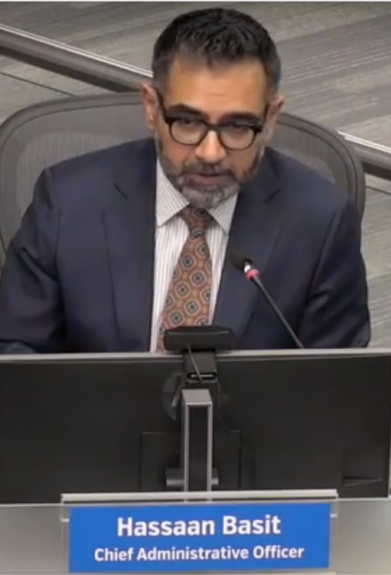 Our former CEO, Hassan Basit, started working for the province on August 4, 2025. For the first 7 months of 2025, Basit earned $248,432.70, which works out to $1,160 a day, every day, including weekends, between January 1 and August 3. Some things are beyond words.

 By Pepper Parr