By Pepper Parr By Pepper Parr
April 9, 2014
BURLINGTON, ON
The objective was $300,000 – more than $80,000 of that was raised in less than a month.
Don’t ever say that this community is not behind the Friends of Freeman Station (FoFS) and their objective to rehabilitate and refurbish the Burlington Junction train station originally built in 1906. Despite the full support of city council – the FoFS have persevered. Councillors Marianne Meed Ward and Blair Lancaster deserve all the council level credit for their work.
Brian Mello and artist David Harrington hold a painting of the Freeman Station in front of the site where the refurbishment of the build will be done when the foundation is in place and the weather is a little warmer.
It has been a struggle but when Mark Gillies was made chair of the membership and fundraising committee things began to happen.
The FoFS created a list of sponsorship opportunities and within a month most of the indoor locations were sponsored.
 John Mello on the right and David Harrington hold a painting Harrington did of the Freeman Station. Brian Aasgaard, president of FoFS advised us that it will not be very long before we see work crews on the site starting the work.
Right now they are waiting for a permit to begin putting in the foundation. The FoFS station had all their drawings but – this is almost funny, the engineer who provided the drawings made a mistake and put in the year of 2013 instead of 2014 and the city rejected the application – so back they had to go. Aasgaard said he will have the permit by the end of the week and the basement work can begin. As soon as that is done – work crews move in – and we should have some warmer weather as well.
There are a number of organizations that are waiting in the wings to announce their sponsorship which puts “DONE” to the task a group of citizens took on to save a piece of local history.
City council struggled for years to find a place to place the station and then have it refurbished – at one point they even had federal money to pay for the move and the refurbishment but they couldn’t agree on a home for the structure. Meanwhile it sat beside the fire station headquarters and began to slowly rot.
Those days will become part of the lore and history of the station – not one of the city’s best moments – but it is the citizens of a city that make a community what it is. City councils just get elected, make their mistakes and move on.

By Staff
April 5, 2014
BURLINGTON, ON.
HalTech is a provincial RIC, an association sponsored by the provincial government and is one of more than 20 such associations across the province to help local corporations and budding entrepreneurs develop and grow their businesses.
RIC: Research, Innovation, Commercialization or RIC Centre provides their clients with: personalized service, face to face support, comprehensive business advisory services with three C-suite level Entrepreneurs in Residence, access to capital and funding opportunities, entrepreneurship training and networking opportunities and an extensive mentor-ship program
Hal Tech is a member of the Ontario Network of Excellence (ONE). The ONE is a collaborative network of unique organizations across Ontario. These organizations are designed to help innovators, entrepreneurs and business leaders, commercialize technology- based, entrepreneurial business ideas. Tech is a member of the Ontario Network of Excellence (ONE). The ONE is a collaborative network of unique organizations across Ontario. These organizations are designed to help innovators, entrepreneurs and business leaders, commercialize technology- based, entrepreneurial business ideas.
Haltech is sponsoring a seminar on” Valuing ad structuring your company for success.
The presentation will be given by Brent Jackson from Grant Thornton LLP and Ted Maduri of Davis LLP.
They will take a close up look at both the financial and legal elements of your business. These are key ingredients that will make or break your company in today’s competitive world.
What is your company really worth? The gap between YOUR value and the real market value is something you need to know.
Most companies require investment. First you need to know what to pitch for and how to position your company for ultimate success.
The event takes place at the Ron Joyce Centre at the McMaster DeGroote School of Business on April 17th – runs from 9:00 am to 11:00. Might be worth looking into. For tickets – go to and register. There is no cost for the event.
By Staff
April 4, 2014
BURLINGTON, ON.
It’s hard to keep up with the different colours used by the corporate community and community organizations to signify interest in what they are doing. I think it all started with that American pop song: “Tie a yellow ribbon round the old oak tree” to celebrate the return of a person who wasn’t at all sure he would be welcome.
I thought that pink was taken by the CIBC bank people and their Run for the Cure to raise funds for cancer treatment but pink is also being used to recognize International Day of Pink
 Set in the east end of the city on New Street the Nelson Youth Centre has been serving youth since the 1980’s Each year on the second Wednesday of April, millions of people wear pink to remember that positive actions make a difference. On Wednesday April 9th, RBC will make a donation to the Nelson Youth Centre in Burlington to support their efforts to eliminate bullying and discrimination.
Nelson Youth Centre is an accredited Children’s Mental Health Centre that offers treatment programs for at-risk youth in Halton. Reconnecting Youth is a community based program focused on helping youth develop effective social/emotional skills, coping strategies and effective learning skills to transition into adulthood and become successful and independent. The program works with youth, families, schools and the community and provides mental treatment and support for youth between the ages of 14-17 who are experiencing moderate to severe mental health issues which significantly impacts their ability to cope.
Day of Pink is an international day against bullying and discrimination supported by RBC. Last year, more than 16,000 RBC employees wore pink to show support for this great cause; this year the bank is encouraging employees to wear pink and in Halton South we are also making a donation to the Nelson Youth Centre in Burlington.
The Nelson Youth Centre has a program called Reconnecting Youth that provides individual and group counseling for youth struggling with self-esteem, social/emotional issues and poor peer relationship issues.
Next week we will take a look at the people and programs at Nelson.
By Staff
April 4, 2014
BURLINGTON, ON.
While some think it isn’t yet a safe bet that there will be no more snow – if there is any it won’t stick around very long – which was enough motivation for the Friends of Freeman Station to begin checking their tool boxes and getting out their work books to troop over to the current location of what everyone calls the Freeman Station.
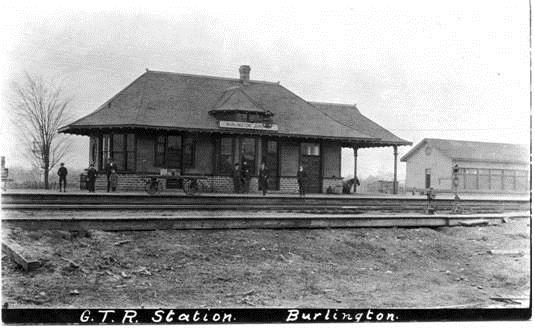 It was a different Burlington at a much different time when it was not yet a town and the reason for being was to grow produce and ship it out from this station. Now we want to preserve the place. In 1856, the Great Western Railway completed the rail line. The first train station of the Great Western Railway line was built around 1854 near Brant Street close to where Plains Road is now located. The line itself, which ran between Hamilton and Toronto was completed in 1856.
The local area at the time was called Wellington Square.
In 1869, the Great Western Railway started to list the train station as “Wellington Square”, in their railway timetable schedules. A short time later, the station name “Wellington Square” was changed to “Burlington”, when the area became known as Burlington.
In 1877 on February 14th, the Hamilton & Northwestern Railway line opened from Hamilton to Burlington and on up to Georgetown. This created a junction between the GWR and H&NW railways, and it was at “Burlington”. The designation for the train station changed to “Burlington Junction”.
In 1882, the Great Western Railway and the Grand Trunk Railway amalgamated and the train station at “Burlington Junction” was of a Great Western Railway building style, and now it was part of the Grand Trunk Railway who used different styles for their train stations.
 The train station was a focal point for the city – train travel was how most people for to Burlington. In 1883, the “Burlington Junction” station was completely destroyed by a devastating fire. The station was rebuilt in 1888, and the Grand Trunk Railway continued to use the GWR design. There is an old photograph from this period that shows the station with signage that shows the station with the name “Burlington”.
In 1904, this second station also burned to the ground. It was not that uncommon to have fires at train stations. The locomotives were spewing embers as they entered into the station area, and on windy days, those burning embers often landed on the stations somewhere.
In 1906, the Grand Trunk Railway built a new station using their own classic design, which was known as “Type B2a”. This is the historic station design we are fortunate to have in Burlington, and now it will be preserved and renovated. As a side note, all three stations were built at the same location.
During the time that the stations were active, the signage changed three times. The names ‘Burlington Junction”, “Burlington”, & “Burlington West” were all in use. “Burlington West” was used for a very short time in the mid-1980s as Go Train Service was introduced and the new Fairview Street Station opened. For a brief time, both the Go station & the “Burlington West” station were in operation at the same time. The “Burlington West” sign was there only to distinguish between the two stops until the beautiful old train station was finally closed around 1988 by the Canadian National Railway.
 Burlington grew produce; pears, peppers and apples were some of what got shipped from the Burlington station. So why was it ever called “Freeman Station”? Contrary to popular belief, it was not named after the Freeman family who settled the area over 200 years ago. The station was located in the Village of Freeman, which was the area of Brant Street and Plains Road. The Freeman family has lived in and around the Village of Freeman for all of those years. The Village of Freeman was a thriving community with several factories, including a canning company and a basket making company, and a fair number of nearby houses. The Village of Freeman even had its own Post Office and a postal stamp designation up to 1952, when amalgamation finally brought the Village of Freeman together with the Town of Burlington. The name evolved from everyday usage by the local residents who affectionately called their train station, “Freeman Station”.
With this kind of local history one would have thought city council would have been all over themselves to save the place. The city couldn’t find a place to put it and the leadership to save the structure didn’t show up until the place was being offered for sale as kindling. The city just wanted to get rid of it.
 On the move – the station got moved a number of times – is there yet another move in its future? That is when Councillors Marianne Meed Ward and Blair Lancaster got together and pleaded with their colleagues to just give them some time and they would find a way to save the structure.
The Friends of Freeman Station was formed; the found a way to acquire charitable status and then they found a home for the building – that turned out to be yards away from where the station had been resting – standing on blocks beside the Fairview Fire Station.
The move took place before the winter set in. The building is still sitting on blocks and two large yellow steel beams. A foundation will be put in and then the structure lowered onto what will be its home while the restoration work gets done.
  With the warm weather about to arrive the renovators and refurbishes want to get at it. And that is going to cost – quite a bit – at least $300,000 With the warm weather about to arrive the renovators and refurbishes want to get at it. And that is going to cost – quite a bit – at least $300,000
They can’t sell tickets – yet, but the FoF board has decided they can sell naming rights and they have come up with an ambitious approach to sell naming rights for everything but the toilet that we assume the place is going to have.
Try these on for size:
1. The Station Master’s Office, $15,000
2. The Waiting Room, $12,500
3. The Portico, $10,000
4. The Baggage Room, $7,500
5. The Lower Level, $5,000
6. The Les Armstrong Main Entranceway, $2,500
7. The Lower Level Entranceway, $2,000
8. The Crew Room, $1,000
9. The Windows (14), $2,000 each
10. The Jane Irwin Oval Window, $2,000
11. The Interior/Exterior Main Level Doors (5), $2,000 each
12. Interior Furniture, Lights & Displays (20), $500 each
And that’s just the inside of the structure. Outside you can slap your name on:
1. The Burlington Junction Freeman Station Park, $60,000
2. The Train Platform, $10,000
3. The Parking Area, $5,000
4. The Original Baggage Cart, $2,500
5. The Landscaping, $2,000
6. Exterior Platform Accessories, (20.5) $1,000 each
7. Original 1000 whinstones, $100 each
The fund raisers come up with a total of $305,500
There are two sponsorship opportunities that need comment. The Les Armstrong Main Entranceway, $2,500 and the Jane Irwin Oval Window, $2,000. I’d up the price for those to $5000 each; Irwin and Armstrong were the two strongest advocates for saving the station –Les was the forming president of the Friends of Freeman and Jane the vice president – both are no longer with us.
 The signing of the Joint Venture agreement between the Friends of Freeman Station and the city – with the Friends raising most of the money. The hope is that the FoF board will exercise some discretion and not have the station looking like one of those NASCAR drivers with clothing that is a collection of corporate. Dignified and under-stated please.
Background links:
The station was saved.
Freeman station being prepped for a move.
 By Staff By Staff
April 2, 2014
BURLINGTON, ON.
Tracy MacCharles, Minister of Consumer Services and Consumer Protection Initiatives got herself out in front of a microphone earlier today and passed on what she thought was good news – and good news it was – assuming what she said is true, true, true.
 The Minister of Consumer Services and Consumer Protection Initiatives told us how we were going to be protected from cell phone contract abuse – from the offices of a cell phone provider. Which is a nice way of saying the prices aren’t coming down but you will know just how high – try sky high – those prices are going to be when you sign up.
That the Minister delivered her comment at the offices of Wind Mobil gives you a sense of who has the clout; had she been out on a street corner with people who had their phones next to their ears and talked to them about what works and doesn’t work – this might have been a different story.
So for now we have to go with what the Minister said in that controlled environment the politicians like.
Eight out of every 10 Ontario families have a wireless services agreement but most of us don’t really understand the contracts we sign: the terms and conditions, what’s included in the agreed upon monthly fee, and what will cost extra.
Thus the new Wireless Services Agreements Act now in effect, brings long-awaited improvements to the marketplace. Ontario consumers can now expect clearer, easier-to-understand information, and fewer surprises when they enter into, or amend, cell phone and wireless services contracts.
Requiring plain language contracts;
Requiring that contracts clearly outline which services come with the basic fee, and which would result in extra charges;
Requiring that providers get a customer’s explicit consent before amending, renewing or extending a fixed-term contract;
Enforcing a cap on cancellation fees, making it less expensive for consumers to walk away from contracts; and
Allowing a consumer to cancel a contract at no cost after two years.
 What can consumers do if they think their contract was not properly made — or they feel they are paying for services they didn’t contract for? Under our new law, providers who do not comply with the rules must give consumers who cancel their contracts a full refund for up to a year of service. What can consumers do if they think their contract was not properly made — or they feel they are paying for services they didn’t contract for? Under our new law, providers who do not comply with the rules must give consumers who cancel their contracts a full refund for up to a year of service.
 If a provider charges for services after a contract is improperly amended, a consumer is entitled to get that money back. If a provider charges for services after a contract is improperly amended, a consumer is entitled to get that money back.
The act also addresses advertising by wireless services providers. Providers must now show the minimum monthly costs in ads – if they are advertising any costs – and the most prominent price must be the all-inclusive price.
Keeping up with all these rules and the services being provided to protect us can be daunting. The government has launched a new program (yes, another one) called Consumer Protection Ontario; an awareness program that will link together all of the consumer protection activities of the Ontario government with a common identifier.
Provincially mandated administrative authorities – such as the Real Estate Council of Ontario, the Electrical Safety Authority, and Technical Standards and Safety Authority, will help the people of Ontario know where they can turn to get information about their consumer concerns.
The Stronger Protection for Ontario Consumers Act gave provides more effective rules to help people who have to deal with door-to-door transactions, dealing with debt settlement companies, or in real estate transactions.
The province is going to modernize Ontario’s Condominium Act, so that the 1.3 million people in this province who live in a condo will have up-to-date legislation that reflects the reality of condo life today – including proper qualifications for managers and increased consumer protection for owners.
They are also continuing to explore home inspector qualification to increase the level of confidence people have when they buy a home – they need to be sure that their pre-purchase inspection has been done by someone with appropriate credentials.
 Protection from tow truck drivers – now that is something useful. Do you get the sense that we have a government working hard to convince us that they are out there doing everything they can to protect us – which many of us wanted them to do when they were thinking through how to get out of those gas plants they decided not to complete – that was a $1 billion ouch.
 By Pepper Parr By Pepper Parr
March 31, 2014
BURLINGTON, ON.
We all know about insurance. We pay those premiums month after month convincing ourselves that we are “covered” and all too often when a catastrophe occurs we learn – the policy doesn’t cover that. It happens to households and it happens to the world of business as well – and when it happens in the construction industry – it can get messy.
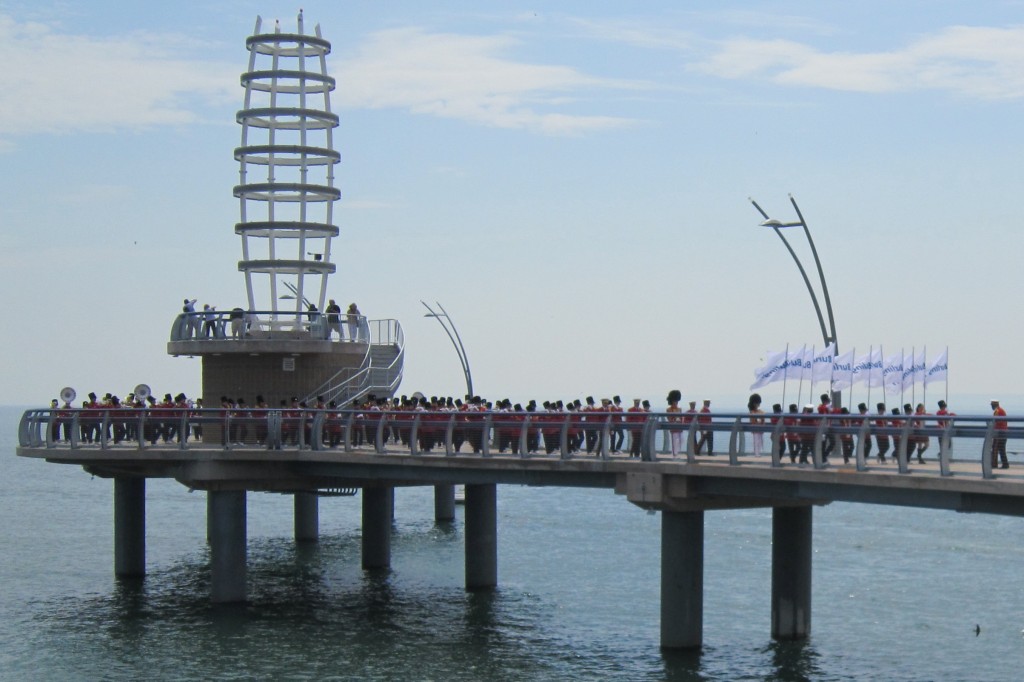 June 17th – 2013 – It will be seen as a great day in the history of the city. Despite a horrendous cost and new levels of mismanagement by people who are no longer with the city – the pier was a good idea. And if there was ever a messy construction project – look no further than The Pier at the foot of Brant Street. That situation is slowly working its way through the legal system. The next step is mediation – a process that is required before a case can be given a trial date.
Nancy Shea Nicol, the city solicitor has explained that at some point prior to any trial the Court will order that the parties engage in mediation to see if the issues can be resolved. Mediation does not make a determination of the legal rights of the parties; it is not binding and the mediator cannot impose a resolution on the parties. Mediation is a process where the people involved look for a way to see if they can agree on a settlement and avoid going to trial.
Mediation is a way to keep differences out of a court room. People involved in legal disputes – and in the pier situation there are five law suits – are required to at least attempt to mediate that dispute. It is useful to look at who is suing who:
Harm Schilthuis and Sons Limited (HSS) vs. City of Burlington
City of Burlington vs. Zurich Insurance Company (Bonding Company for HSS)
City of Burlington vs. HSS, EFCO, Aecom, Lombard, PV &V, Craneway (Insurance Claim)
City of Burlington vs. Aecom
HSS vs. Lombard, PV &V, City, Craneway (Insurance Claim)
What is instructive here is that HSS, the original contractor, is suing their insurance company and their insurance broker. You sue when you believe the service you bought was not delivered. HSS is also suing the city of Burlington – they believed they delivered and that the city has not paid for what was delivered.
The city is suing Zurich insurance – they are the company that provided the performance bond the contractor, HSS, was required to put in place.
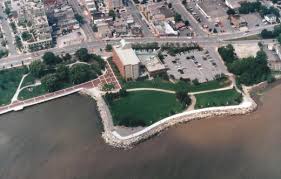 There was a time when the city didn’t have more than $14 million of taxpayers money sitting at the end of Brant Street. There are those who think it should have been left the way it was. The city called that performance bond, arguing that the contractor had not completed the job. The insurance company, Zurich, came back with a proposal to complete the pier – albeit at a higher cost – which the city didn’t like the look of and they declined the offer – pretty quickly it might be added – and went looking for a new contractor which they found, hired and paid. In June, 2013 the pier was officially opened.
 Steel beams that had been installed, found to be flawed were taken out – they sit in the construction yard at HSS The contract to build the pier was awarded in the summer of 2006. A new council was elected to office in October of 2006. Then there was the crane accident: August, 2008, during the first concrete pour, one of the main steel beams supporting the deck twisted. Two weeks later, a crane capsized onto the pier.
Fast forward to December 16, 2009, when HSS notified the city, in writing, that it was unwilling and unable to complete the pier construction contract. HSS then filed a construction lien against the city and issued a statement of claim in January 2010 – the gloves were off.
The city said at that time that it had a plan of action to complete the pier in a fiscally responsible manner and notified HSS’s bonding company, Zurich Insurance that HSS was in default. The city’s first recourse is to give the bonding company an opportunity to remedy HSS’s default and to follow the procedures as set out in the performance bond issued by the bonding company in favour of the city. Cam Jackson was still Mayor of Burlington at this time.
On June 18, 2010 HSS published a full-page advertisement in the Post to tell its story. The city issued a statement saying the “confidential, without prejudice discussions referred to by HSS,” in the advertisement, “contained significant new costs, which were not acceptable to taxpayers in the opinion of City Council, and additional conditions, which went against the advice of our legal counsel.”
The argument moved to a “he said”, “she said” stage where HSS said the company had not been paid by the city for invoices it had submitted and the city said it had already paid HSS $3.9 million of the total $6.5 million construction contract amounting to 60 per cent of the original contract.
 This Council didn’t create the pier problems – but they did manage to drop the ball on more than one occasion when there were opportunities to limit the financial damage. October 2010, a new city council gets elected; Cam Jackson is no longer the Mayor but the council still has three members, John Taylor, Jack Dennison and Rick Craven who were on council when the original contract was awarded.
In April 2011, the city received a proposal from Zurich Insurance Inc., the HSS bonding company, to settle the construction of the pier issues.
On May 11th, City Council, in a closed session was given an update on the proposal.
On May 24 city council decided not to consider the proposal. The public was never told what the proposal was or the reasons for rejecting it. We do know that the proposal did require the city to put more money into the construction of the pier but the public was never told how much more.
On September 26 council voted to hire Graham Infrastructure of Mississauga to complete the Brant Street Pier.
Graham Infrastructure’s bid was for a total contract price of $6,429,700, including full HST. Two optional items—a beach access ramp and additional concrete work for the waterfront promenade in Spencer Smith Park—were recommended for inclusion in the bid, bringing Graham Infrastructure’s contract price to $6,713,330.
The total project cost, including the nearly $5.98 million spent to date, would total $14.44 million.
 The city made the most of what will be seen as an historic occasion; the youth of today lay their hands on the pier plaque on opening day. On June 17th, 2013 the pier at the foot of Brant Street was officially opened.
But that is far from the end of the story. The pier ended up costing a lot more than anyone expected. The original contractor, HSS, has bills they sent the city before they left the construction site and which the city had approved for payment. But once the law suits were issued – everything was frozen. There were also invoices from the contractor that had been submitted but not yet approved. Those are still outstanding and the city is doing nothing about payment until the court case is settled.
These invoices, collectively are in excess of $1 million. HSS had bills to pay the trades that worked for them; they came perilously close to bankruptcy, which they believe many at city hall would have been quite happy to see happen. HSS has survived partly because the trades they have employed for more than 25 years stood by them and said they would wait for payment. When the court case is settled many believe HSS will be found to have been in compliance by walking off the job, their invoices will be paid, the tradesmen will get paid with interest that will come from the city of Burlington taxpayers.
The contractor, HSS is suing its insurance company and the broker who sold them the insurance policy. Lombard is believed to be the insurance carrier and PV&V Insurance, the broker who sold the policy to the contractor.
 There is nothing pretentious about the HSS operation. A general contractor with a solid reputation known for doing the extras.Henry S sits ay his desk working the numbers. Relationships are the foundation on which business people build trust. Henry Schilthuis, president of HSS, built relationships with his trades people who proved to be strong enough for them to wait for payment for the work they had done.
HSS is reported to have been dealing with PV&V for a considerable length of time and expected their insurance broker to defend their interests with the company carrying the insurance – in this case Lombard. Lombard apparently doesn’t think they have to pay on the policy claim HSS made. Messy.
While the contractor, HSS is unhappy with its broker and the insurance carrier – the city is unhappy as well and is going after the HSS the contractor, the contractors insurance company Lombard and the broker who sold the policy to the contractor PV&V and the project manager, AECOM.
This puts PV&V in a very awkward situation. They’ve got everyone coming after them, which doesn’t do much for credibility.
How does one mediate a mess like that? They look for a very skilled mediator – and the good ones are very much in demand. Finding one for this situation has been a challenge but it appears that a date for a mediation hearing has been set – June 19th, even though at least one of the parties is grumbling about the date chosen. Justice Fitzgerald, the judge handling this file has been pushing everyone on this.
In a document the city released before the mediation date of June 19th was set, the city said 17 days of examination for discovery had taken place which resulted in a considerable number of undertakings being given. An undertaking can be an obligation to find an answer to a question or produce further documents in response to questions.
Some undertakings were not agreed upon and required a court attendance for a determination as to whether or not the undertaking is valid. When one side doesn’t want to release information that is damaging to their case – it often requires a judge to tell them – give them the documents they are asking for.
Someone didn’t want to provide documents – our information is that it was the city that couldn’t find many of the documents and the project manager that seemed to require a lot of time to find documents.
The last time city solicitor Nancy Shea Nicol addressed council in open session she explained that there were another four to five days of examination for discovery and that up to that point more than 60,000 documents had been exchanged. At one point someone realized there was a collection of documents no one was fully aware of – it isn’t clear who it was who had the documents, the lawyers don’t talk about his stuff – they just send in their invoices and toil away.
The public has been asking for an accounting on those legal fees – they would like to know how much had been spent to date. The Post filed a Freedom of Information request asking how much had been spent on legal fees and was turned down by the city. The Post appealed that decision and the matter went to the Privacy Commissioner.
It didn’t take the city long to see the writing on the wall –they released the figures at a press conference on January 30th, – and said $1,349,952 had been spent to date.
 The city had argued that telling the public what they spent on legal fees would reveal some of their strategy. The figures are out and there doesn’t appear to be any harm done. I leave it to you to figure that one out. The city had argued that telling the public what they spent on legal fees would reveal some of their strategy. The figures are out and there doesn’t appear to be any harm done. I leave it to you to figure that one out.
The fear of course was that the public would be outraged and demand that the city quit the case. It is a very complex case – the real fear is that the city will settle during the mediation process, have a confidentiality clause put into the agreement and the public will never know just what the settlement amounted to and how much they had to pay out.
Did the contractor really screw up and will his insurance company have to pony up with a big cheque. Did the city provide the contractor with a plan for the pier that had major flaws leaving the original contractor with no option but to walk off the job?
Did the contractors insurance company come back with a proposal that would solve the technical construction problems and cost less than the city has spent so far on legal fees?
Why doesn’t city council walk their transparency talk and inform the public – the people who have to pay the bill when council gets it wrong.
The differences are both financial and technical. There were problems with the design of the pier and there are significant differences of opinion as to what an insurance policy covered and what it didn’t cover.
 Done – all the concrete is down – and the steel beams are holding it all in place. Now the railings get put in place. Earlier this week city manager Jeff Fielding advised council that he and city solicitor Nancy Shea Nicol had met with the lawyers representing the city and outlined the city’s position that was going to be put forward during the mediation sessions – which are not very long – hours rather than days.
The city will put forward its position and set out what they are prepared to settle for. It is not known yet precisely who will do the talking, the person representing the city has to have the authority to agree on a settlement figure. The lawyers representing the city will be in the room.
In the event that the mediation proves to be successful the city is going to have to tell its citizens that there is more money yet to be paid out. The contractor, HSS has a claim that many informed observers see as valid – money will move from city hall over to HSS.
How much money will move from AECOM, the project managers and the owners of TSH the company that designed the pier, to city hall is the question that matters most to this city council. If they can recover from AECOM more than they have to pay HSS – they will look like heroes. And in an election period that will matter.
The mess the city is in wasn’t created by this council – but there were several opportunities to settle the problems that the city took a pass on.
Councillors Taylor, Dennison, Craven and Goldring, led by former Mayor Cam Jackson, were part of the council that got the city into the contracts the city is now defending. The contracts weren’t the biggest part of the problem; it was the management of the contracts that have hurt Burlington taxpayers. When the full story is out – and it will come out – taxpayers will be livid.
Most of the people in the city’s engineering department that handled all the technical issues and the relationship with AECOM are no longer with the city. They have moved on to other municipalities.
 The idea for the pier came from a council led by former Mayor Rob MacIsaac, but he left town and went to Metrolinx, and then on to Mohawk College and has now settled as the president of Hamilton Health Services, the second largest health operation in the province with an annual salary of $542,000. With performance incentives that could rise to $650,000 excluding taxable benefits. The idea for the pier came from a council led by former Mayor Rob MacIsaac, but he left town and went to Metrolinx, and then on to Mohawk College and has now settled as the president of Hamilton Health Services, the second largest health operation in the province with an annual salary of $542,000. With performance incentives that could rise to $650,000 excluding taxable benefits.
That virtually doubles his 2012 salary ($275,515 plus $47,210 taxable benefits) as president of Mohawk College. That is quite a step form the approximately $50,000 MacIsaac earned as mayor of Burlington. MacIsaac has a five years contract. While at Mohawk he had seven weeks of paid vacation; he gets just six weeks paid vacation with the Hamilton Health Services organization.
Of those who were on council when all this happened, only Mayor Goldring has filed nomination papers for re-election. Taylor, Dennison and Craven have yet to formally file.
 By Staff By Staff
March 31, 2014,
BURLINGTON, ON.
There has been another outbreak of measles that has the capacity to impact people in Burlington.
Persons who have visited any of the following locations may have been exposed to measles:
Saturday, March 22, 2014:
The Queen’s Head (pub), 400 Brant Street, Burlington, 10 p.m. to 2 a.m.
Sunday, March 23, 2014:
Milestones Restaurant, 1200 Brant Street, Burlington, 7 p.m. to midnight
Wednesday, March 25 – Friday, March 27, 2014:
Joseph Brant Hospital, 1230 North Shore Blvd., Burlington
March 25, 7 p.m. to March 26, 9:30 a.m.
March 26, 3:30 p.m. to midnight
March 27, 11:15 a.m. to 2 p.m.
The Halton Region Health Department is following up individually with patients and individuals accompanying them who may have been exposed at Joseph Brant Hospital.
“Measles is preventable through immunization with two doses of measles vaccine,” stated Dr. Monir Taha, Halton Region Associate Medical Officer of Health. “Persons who have measles need to isolate themselves while they are ill and for four full days after the rash first appears. Always call ahead before going to a health care setting.”
Measles starts with cough, runny nose, red, watery eyes, and fever, and after about four days a rash begins on the face and moves down the body. There may be white spots inside the mouth. Measles spreads easily to persons who are not immune. Infants under one year of age, pregnant women, and persons with weakened immune systems can get very ill with measles. Complications of measles can include middle ear infections, pneumonia, croup, and inflammation of the brain. Learn more at www.halton.ca/measles.
If you think you may have measles and need to see a doctor, you must call ahead to the doctor’s office, walk-in clinic, or emergency department. This will allow health care staff to give you a mask to wear when you arrive and take you straight to a room in which you can be isolated. In a doctor’s office you may be given the last appointment of the day.
For more information, dial 311 or call the Halton Region Health Department at 905-825-6000, toll-free 1-866-442-5866 or visit www.halton.ca.
 By Staff By Staff
March 29, 2104
BURLINGTON, ON.
The long, cold, snowy winter isn’t over yet – and we are going to pay for it for quite a while.
The Ontario Energy Board has approved a 40% hike in natural gas rates for Enbridge Gas Distribution customers that will take effect Tuesday, boosting the average residential customer’s annual bill by about $400 a year.
Enbridge filed its application for the increase March 12, interveners had until March 17, to get their comments in – the Energy Board handed down its decision March 29th to be effective April 1st. Name someone you know who can get a doctor’s appointment that quickly?
 You will look at that gas meter a little differently now – see it as a black sink hole. The hike is the result of Enbridge running out of its negotiated supply of gas for the winter and having to go to the open market for further supplies.
Enbridge Gas Distribution’s gas supply charge will increase from 12.68 cents per cubic metre to 17.60.
The changes would result in an overall increase of about $33 a month over the next year, according to Enbridge.
Of this $33 a month, about $20 per month relates to costs associated with this past cold winter.
The other $13 relates to the projected forecast natural gas price, both of which will be reviewed again in three months as part of the normal regulatory process.
“Our interim rates take effect on April 1, but customers won’t feel the full impact of the increase right away,” stated a release from Enbridge.
“Virtually all natural gas providers have increased their prices because of increased demand and increased gas prices over this unusually cold winter.”
 They do it because they can get away with it – and we are the fools for allowing it. Do these guys not plan for situations like this? In their media release they refer to the increase as an “interim rate” that takes place April fool’s. Does that mean when the supply stabilizes they will negotiate better contracts and drop the rates? Was having this happen on April Fool’s day a coincidence?
 By Pepper Parr By Pepper Parr
March 27, 2014
BURLINGTON, ON.
Someone suggested it might be called drive through charity and while that is an apt description – there is nothing passive about the way the 52 members of a group take out their cheque books to aid others – on the spot. No committee meetings – they just up and do it.
Last night the group, 100 Women Who Care, met at Tansley Woods and in under an hour and a half heard Adrienne Gosse explain what the Burlington Humane Society was doing with the $3800 they were given in January, listened to short, short presentations and passed on $5200.
The general flow of the meeting is: introductions; ask for nominations; randomly pick three names, listen to presentations by each of the nominees and then vote for the charity of choice for this meeting.
 Out came the cheque books – “what’s the date today” and as fast as that $5200 went to the Halton Women’s Place. Ballots are handed out – the chosen charity named and out came the cheque books. The Halton Women’s Place representative went home knowing they had $5200 more to work with.
There was no one talking minutes – they don’t have a secretary, there is no treasurer – they don’t handle the money – they are just the channel the cheques run through to get from the donor to the recipient.
They are called the 100 Women Who Care Burlington and it works.
The women who show up four times a year chit-chat the way women do and pay attention to what the speakers are saying.
 Adrianne Gosse, shelter manager at the Burlington Humane Society telling the 100 Women Who Care what her organization did with he funds they were given. Last night there was a presentation from the Burlington Big Brothers and Sisters, the Junior League and the Halton Women’s Shelter. Each presentation was less than ten minutes. Ballots were handed out, filled in, counted, the winner announced and the cheques written. Not every member manages to get to the group meeting. Those that don’t make it to the meeting get an email telling them who is being given funds and cheques are made out to that organization.
The drive by charity comment came from someone who remarked on how simple and direct it all is. Any member can fill in a nomination form on the spot, and assuming there is a person from the group nominated, they can speak and if the members present vote for that group they go home with the cheques in their purse.
Amazing – its just DONE!
 Meagan and Pat, two of the 100 Women Who Care, tidy up before going home. This is the second meeting the group has held – there are now 52 members. Once they reach their objective of 100 members – they will meet four times a year and raise $40,000 that gets put into the community service sector of the city.
No fuss, not a lot of noise. Just ordinary women meeting once a month, doing what they think is right because they are able to.
Do you want to join? Check out their Facebook page, send a message to Laurel Hubber and you’re in. She will tell you when the group meets – bring your cheque book.
Background links:
Support went to the dogs the first time.
 By Pepper Parr By Pepper Parr
March 23, 2014
BURLINGTON, ON.
Point: Notices were mailed to all the people in the rural community about a meeting to consider the idea of a special cultural/heritage district, unfortunately they went out a couple of days after the event. Turnout was less than expected.
Point: The city posts all kinds of detail on its website and develops stories encouraging people to consider running for public office – but, for reasons which were never made clear, they took down that portion of the web site that had all the financial returns from the 2010 municipal election.
The financial return is the document that sets out how much money each candidate raised, who the donours were and what the funds raised were spent on. Vital information for anyone who decides they want to run against an incumbent.
The documents have since been put back up on the city website. Why were they taken down and who made that decision?
 Public input on the budget was limited to an overview and a workbook people could make comments in. Point: The city holds a public meeting on the budget the finance department has prepared. While there is just the one meeting held in the downtown core, it is well attended and staff are very attentive in answering questions. There is talk of plans for additional public meetings in 2015 in the Dundas part of town now that the Alton campus is operational.
 The city had very competent staff on hand at public sessions to answer questions – on decisions that had already been made. Vanessa Warren, one of the people who led the public reaction to the dumping of landfill on the airpark site on Appleby Line, asked why the city was coming to the public with spending that was already decided on. She wanted to know why the public wasn’t being asked how it wanted its money spent BEFORE decisions were made.
City manager Jeff Fielding, would dearly love to have feedback from the public on key issues and has devoted a significant part of the budget he has to run his office to a process that he hopes will give him almost instant access to a panel of people who can answers questions. The unfortunate part of this $100,000 + expense is that the public response has not been overwhelming – there were less than 500 people on the panel at last count.
It is a two-sided coin – the public wants information – well the more vocal part of the public wants more information, and the city is being moved in a direction where public input will be critical. Getting to a point where what the public wants and what the city would like is the challenge for the city.
Back in 2010 the late John Boich and former Mayor Walter Mulkewich authored the Shape Burlington report in which they identified an “information deficit” in the city. City hall didn’t take all that kindly to the report – a report on which they haven’t responded to all that well since its publication even though city council voted unanimously to support the document.
 Boich and Mulkewich recommend that there be a Citizens charter – a document that sets out what every citizen can expect from the city. There is such a document but you would be very hard pressed to find the thing on the web site and the “implementation plan” for that document has yet to be completed. Boich and Mulkewich recommend that there be a Citizens charter – a document that sets out what every citizen can expect from the city. There is such a document but you would be very hard pressed to find the thing on the web site and the “implementation plan” for that document has yet to be completed.
Would it be fair to say that the administration at city hall isn’t really behind the concept of a charter other than collecting data and then doing nothing with it?
There is a demographic divide at city hall – both within the administration and at the council level. There are people in the planning department and over at finance who genuinely want the public to know what is being done and are eager to hear what people have to say.
The city manager certainly wants public input and is delighted when he meets people who can help him determine the public will. However, getting all of his senior team onside has been and is continuing to be a challenge.
There is an item on a Standing Committee agenda somewhere in the works that will discuss the Community Engagement plans; this doesn’t appear to be a priority item but then real community engagement has never been a priority for this city.
Two of the current city council members were on the Shape Burlington committee – one would think they would be chomping at the bit regularly to get some movement on the Citizen’s charter. Both Councillors Blair Lancaster, ward 6 and Paul Sharman, ward 5 have said very little about this during their term of office.
It is going to take a city council with a younger, more committed demographic to bring about any change.
 There are a few, precious few, on council who want to hear what their constituents think and treat those people who write out their delegation and trudge over to city hall and take the time to make their point of view known. Yes, there are people whose delegations are sometimes poorly prepared and on other occasions delivered in a less than respectful manner. But there have been a number of excellent delegations that have resulted in a change. There are a few, precious few, on council who want to hear what their constituents think and treat those people who write out their delegation and trudge over to city hall and take the time to make their point of view known. Yes, there are people whose delegations are sometimes poorly prepared and on other occasions delivered in a less than respectful manner. But there have been a number of excellent delegations that have resulted in a change.
On many occasions city council is hearing from people who are angry, mad and upset. Their council is making decisions they don’t like about the place they call home. Look at the 250+ people who were opposed to the building of a six storey apartment building on New Street – they just didn’t want to see that kind of change in their neighbourhood. They said they could live with four storey but other than Councillor Meed Ward, who asked some very pointed questions and got mushy answers, no one explained why a four storey structure couldn’t be built.
The city did nothing to educate that public. Sure, public meetings were held but there was not very much that was educational about those events. Usually a planner representing the interests of a developer is explaining what they have already decided to do.
Could the planning department not think in terms of putting in place a process whereby staff review an application and decide at that very early stage if some public education is necessary? Then assemble a team of people who would put together an outline of all the up sides and down sides of the development – cover everything and prepare a public for the change coming their way.
Ken Greenberg, a noted planner was brought to Burlington as part of the Mayor’s Inspire series. He explained how in Toronto developers first went to the community with their ideas and looked for buy in at that level before they put as much as a pencil to a piece of paper
 Greenberg told the Burlington audience that this approach gave the developers a clear sense of what the community would tolerate and gave the community an opportunity to have their ideas seriously considered before anything went too far. Greenberg told the Burlington audience that this approach gave the developers a clear sense of what the community would tolerate and gave the community an opportunity to have their ideas seriously considered before anything went too far.
What Burlington is looking for is a way to move forward with developments and at the same time find a way to effectively communicate with the tax payers. We’ve not managed to do that – so far.
But there is hope – the proposal to do something to further protect the rural part of Burlington plans on having very significant community involvement. More about that proposal later.
 By Pepper Parr By Pepper Parr
March 23, 2014
BURLINGTON, ON.
Denise Davy, a mother who lost a son in a railway crossing accident, became a tireless advocate for change and took her concern about the lack of safety barriers at railway crossings in Burlington to city council. She managed to bring about changes – there are barriers now in a number of places where people foolishly scoot across railway tracks, including ward 4 councillor Jack Dennison who publicly set an example he showed be ashamed of – but apparently isn’t.
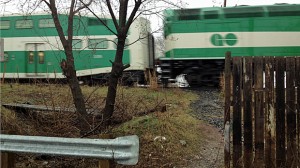 There is now a sturdy fence at this rail line. Davy, a former Spectator reporter, who now runs a writing and editing business, took her cause to the Regional government; she took it to Mississauga and got invited to a Roundtable held by the Member of Parliament for Halton, and also the Minister of Transport, Lisa Raitt. Here was someone who could do something.
Davy understood that she was to be one of a number of people taking part in a discussion about safety features along the railway tracks. She was amongst some pretty important people:
Attending were: His Worship, Gordon Krantz, Mayor of Milton; Andrew Siltala, Senior Manager, Economic Development, Town of Milton; Bill Mann, Chief Administrative Officer, Town of Milton; Jean Tierney, Senior Director, Corporate Safety and Security, VIA Rail Canada; Susan William, Regional General Manager, Central, VIA Rail Canada; Greg Percy, President, GO Transit; Paul Finnerty, Vice President, Operations, GO Transit; Michael Farkouh, Vice President, Safety and Sustainability, Canadian National Railway; John Orr, Vice President, Eastern Canada, Canadian National Railway; Randy Marsh, Manager, Community Relations, Canadian Pacific Railway; Andy Ash, Director, Dangerous Goods, Railway Association of Canada; Brad Davey, Executive Director, OntarioConnex; Eve Adams, Member of Parliament, Mississauga-Brampton South and a Representative from the Halton Police.
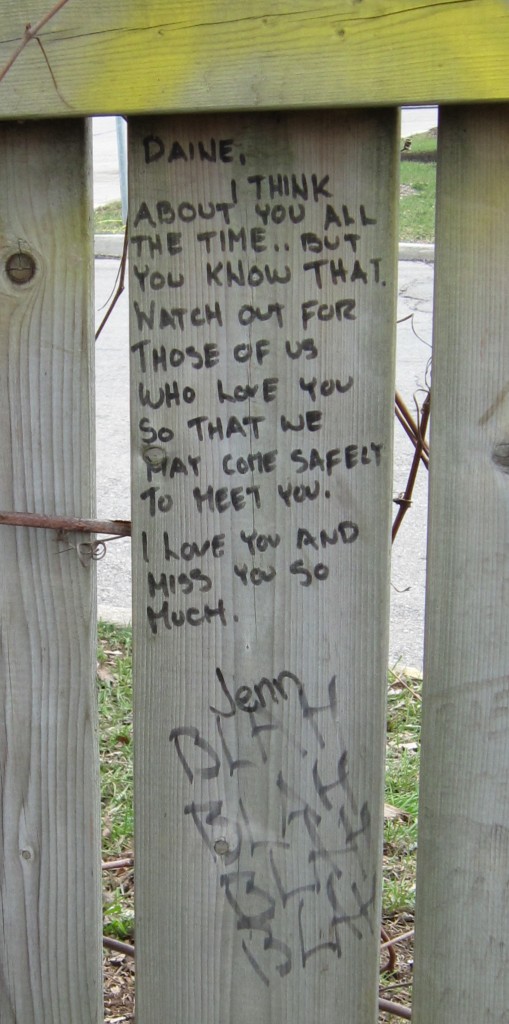 Simple message bearing a lot of the pain that results from a needless death at a place where rail tracks were easily cross. No more at this crossing. There wasn’t a hope in hades that Denise Davy would have ever been able to pull a group of people with the kind of clout this crowd had. Davy saw herself as one of the group and was a little stunned when after a few words from Minister Raitt, she turned to Davy and gave her the floor. It wasn’t what Davy was expecting but she dove into her story, her experience and explained for the hundredth time that education alone does not work – barriers have to be put up – and if those barriers are expensive then we have to find a way to pay for them.
She worked at dispelling the myth that most of the people who lose their lives on railway tracks are suicides – the people in the rail transportation business have words to describe them: deliberates and accidentals. To Denise Davy they are all lives that were needlessly lost.
She points to the way the public safety people reacted to motorcycle people who used to drive without helmets – we passed laws requiring motorcycle people to wear helmets and we reduced deaths. We are in the process of putting in stiffer penalties in place for those who text and think they can drive at the same time. We learned she said that public education didn’t work in those situations and we know it doesn’t work to prevent rail crossing deaths. If it is going to cost money – then we have to find that money.
There weren’t a lot of concrete suggestions thrown out by others; mainly they went around the room and talked about what they’re currently doing, which included everything from public education to putting educational campaigns in the schools.
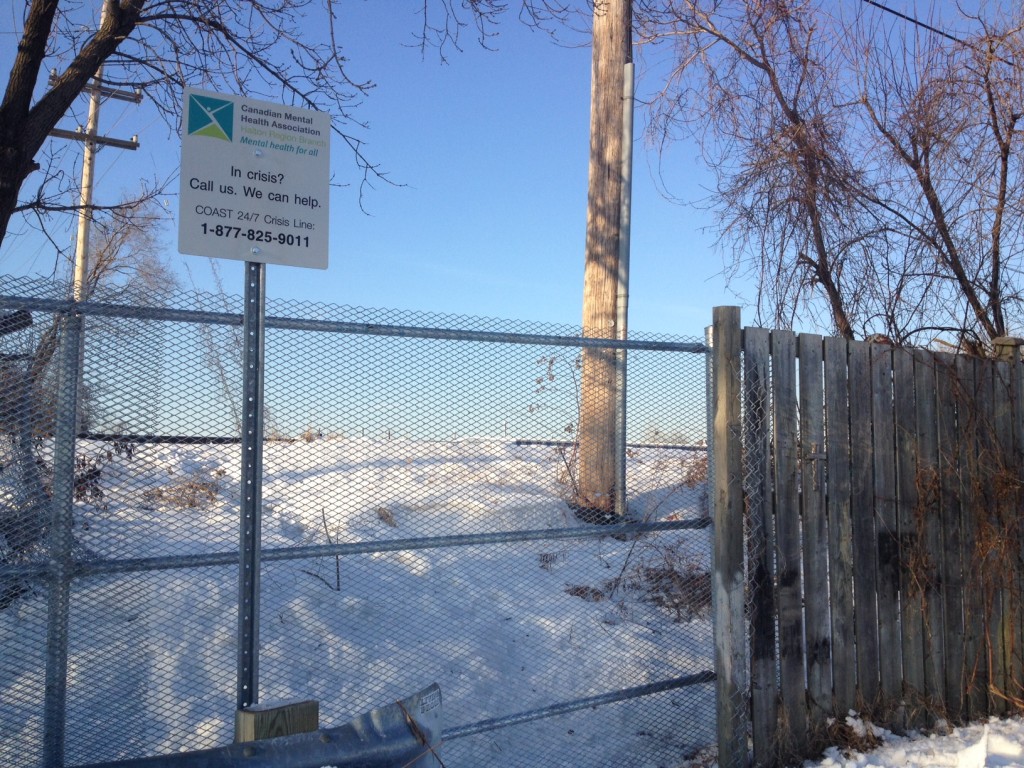 A fence that cannot be easily climbed with a notice and a contact number for those under severe emotional stress is now in place at Drury Lane. Now for the rest of the Region and then the rest of the province and then the rest of the country. Davy said she listened and commented then said that the problem was clearly none of the things they were doing are working because people are still being killed.
Raitt proved to want to be more proactive than many expected. She made it absolutely clear according to Davy, that this is an issue for her, that she is concerned and glad that it was brought to her attention and said that it should be included with an overall review on rail safety. She is going to connect with the Federation of Canadian Municipalities and Rail Association of Canada and get the conversation going on the issue with them as well.
She also wants to go big with something on rail safety week which is April 28. It was mentioned a few times by various people, that the area around the GTA has the highest number of accidents in Canada.
Raitt gave Davy a printout that listed 29 accidents and incidents in Burlington, Milton and Oakville between 2009 and 2013. The total for Halton for same period was 46.
The tragedy came right to the doorstep of the Friday Roundtable in Milton. Passengers on the Lakeshore West GO line got the following message: Due to a police investigation of a trespasser fatality at Clarkson, train service on your line is suspended between Port Credit and Clarkson until further notice.
Davy had not seen the message as she was preparing to drive from Burlington to Milton for the Roundtable. “That is unreal. How many more people have to die before something is done!!! My heart is breaking reading this.” All the pain, the grief, the sorrow and the hurt came flooding back and the realization that the anniversary of her son’s loss was less than a week away.
Trooper that she is, Davy attended the meeting and left with a platform created for her by the Minister of Transport to get the message out. The matter of rail crossing safety was not on the agenda said the Minister – and added that “it is now”.
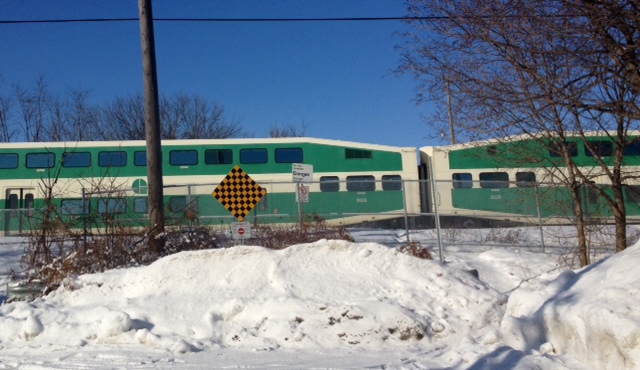 Denise Davy rests a little easier knowing that fences like this at places where rail lines were once easily crossed might eventually get put up across the province. Raitt is planning something for the week of April 28th – Rail Safety week in Canada. The rail car disaster in Lac Megantic is the high-profile event – but Denise Davy now has a platform she can work from. She said after the Roundtable: “ I know change can’t come right away and the fact that I was given a platform to speak to such high level officials who are in a position to make change was a huge step forward.”
“The main thing” said Davy is “to watch where it goes from here. I am going to plan something for April 28 and told everyone in the room I would be open to working with any of them to do something on that date.”
Before Denise gets to April 28 – she first has to deal with March 27th.
Background links:
Single citizen get rail crossing safety improved.
Rail crossing deaths brought to attention of council.
 By Pepper Parr By Pepper Parr
March 20, 2014
BURLINGTON, ON.
Change is probably the hardest thing people find they have to do.
We like what we have and fail to realize that what we have is because someone made a change a long time ago. Normally intelligent people at times use arguments that are – well let’s see they are less than well founded – to make a point to prevent a change.
One of the more recent struggles city council faced Monday evening was the approving of the M project on New Street at Cumberland where plans for a six storey structure were approved on a 6-1 vote with Councillor Meed Ward voting against the project.
Those residents who opposed the project – and there were a lot of them; 250+ – do have the right to appeal the city’s decision to the Ontario Municipal Board which is where Ward 2 council member Marianne Meed Ward would like to see this go.
She urged her council colleagues to require the developer to come back with a structure that was four storeys in height which would have conformed to the rules as she understood them.
The underlying issue was intensification – we are going to grow, people are going to come to Burlington and there has to be a place for them to live.
The Maranatha project is not an inexpensive place to live. While it does have an innovative “life lease” feature, its strong point is that it is a place for people who want to live in a particular community with a clear set of values now have a place to go. In this instance it happens to be a Christian community that has provided housing for decades.
 The developer first came to the city with an 8 storey application and later reduced that to seven storeys. The massing was just too much for the residents. Meed Ward argued for a four storey project – which would not have had to come to council. The developers wanted eight storeys originally but dropped it to seven and then to six and came back with a project that has a lot less massing that the original design.
Councillor Dennison made the point that if the project was a four storey building the foot print would be much larger with much less green space and fewer trees. The choices were – high and thin or low and fat. Council went for the height.
From time to time much of what council does is on the mundane side but on occasion the public gets to see how they think and the values they work from.
There were a number of delegations; the one from the community brought nothing new to the argument other than a statement that Roseland Height Community Organization founder Brian Heagle prepared for the spokesperson to read. One wonders why Heagle didn’t appear on his own behalf – he is not known for being shy.
Traffic congestion was brought up as a concern: Mayor Goldring told the delegation that staff reports indicate the project will add 30 cars to the morning traffic – less than a 3% increase and 50 cars to the evening traffic – less than 5% more.
At a previous meeting objectors made mention of a 40 foot sink hole – that proved to be a two foot wide hole that was the result of utility lines beneath a road.
What was bothersome was the twisting of information – the spin put on facts and the way information was not fully researched. Anup Ogale, spokesperson for the Roseland Heights Community Organization (RHCO) spoke of “opening the floodgates” for similar incompatible properties along New Street when a drive along that road reveals that there aren’t any properties left be assembled – no flood gates to be opened.
 The six storey submission from the developer was the result of intense discussion with city hall planners. That being said Ogale did make some solid points. The issue was massing – there was from the RHCO point of view, too much building for that part of town. That Burlington has to build was not their issue: where, how high and in what way: “there’s the rub” said Ogale. He added that “you’re the gate keepers, to protect and enhance what our community wants and or needs …Tough decisions.”
 “The developers” explained Ogale, “first proposed eight storeys. That wouldn’t pass. So the building was modified to 7 storey’s, now six. Start at 8 when a maximum of four is permitted. Reach a compromise at 6. With respect, this isn’t a poker game. It’s not about who will blink first; 6 storeys is not a winning hand in any event.” “The developers” explained Ogale, “first proposed eight storeys. That wouldn’t pass. So the building was modified to 7 storey’s, now six. Start at 8 when a maximum of four is permitted. Reach a compromise at 6. With respect, this isn’t a poker game. It’s not about who will blink first; 6 storeys is not a winning hand in any event.”
Burlington has an Official Plan said Ogale, “It is not called an Official suggestion.” He added that it is vital to respect and uphold the Official Plan or people end up saying: “Why bother to fight this if Council won’t listen.”
His comments reflect a misunderstanding as to just what an Official Plan is and what it is expected to do. The document is one the city has to revise every five years – Burlington is currently undergoing such a review now – they take more than a year to complete.
The Official Plan sets out a big picture vision of what the city wants to do. The Burlington Official Plan has to comply with both the Regional Official Plan and the various Provincial Policy Statement.
An Official Plan is intended to be a dynamic document and it is subject to amendment. Developers will come along with an idea and quietly go about assembling properties and then taking an idea to the planning department.
The planning department just doesn’t put a rubber stamp on every idea that comes to them. The Maranatha project is an example of the city working with a developer to come back with a plan that has less massing and less density
There was a letter from the Sustainability Advisory Committee that had a lot of very useful information which unfortunately didn’t get to the planner for the developer in time for them to provide a response. Council members didn’t get the document until earlier in the day. The Sustainability Advisory Committee, one of the Mayor’s favourites, has been known for the quality of their work in the past.
 The Maranatha developers have been in the community for decades – they have run the “homes” project and determined the market for additional housing called for a bigger building. However, Ed Fothergill planner for the developer of the project didn’t see much merit in the comments from the Sustainability Advisory Committee. In his letter Fothergill said “he was surprised that these comments would come forward at this late date on an application which was deemed complete on December 20, 2012. Since September of 2012, there have been opportunities for input to the process either to the City or to myself or my client directly through the circulation of the application that took place in the beginning of 2013, at the public meeting that was held in June 2013, and any one of the three Open Houses that were organized by my client. During this time, we have not been contacted by the Sustainable Development Committee and only learned of their most recent submission through the offices of the Planning Department on Friday.”
Councillor Paul Sharman is the liaison person with the Sustainability Committee and he certainly knew the project was working its way through the system and that there was significant opposition to what was planned. Perhaps the Councillor missed a couple of the Sustainability meetings.
Fothergill said: “We believe this lack of participation in the planning approval process is a serious omission and not representative of the normal fair and open planning process that is enjoyed by those who routinely do business with the City of Burlington.
“In addition,” said Fothergill, “my client has gone above and beyond statutory requirements and have made themselves and members of their consulting team available to any group or individual to speak to any matter related to this project since our initial Open House of September 2012. It is disappointing to have a group such as this who have been given a very important mandate by the City to choose not to be a part of a very extensive and open process, but rather without notice to other parties, to come forward now, after the fact, when a Committee recommendation has already been made.”
“It is somewhat disrespectful of the planning process” added Fothergill who went on to say: ”We believe this process renders these comments inadmissible to any Ontario Municipal Board proceeding should the project have the misfortune of pursuing that route, and is of questionable value now to Council following a thorough review of the matter at Committee.”
 The process was not the only thing that bothered Fothergill. “We have great difficulty with many of the comments made in the submission” and added that “to be effective, it is very important that their work be focussed on the mandate provided. Once comments and positions begin to extend beyond one’s specific mandate, there are dangers in treading into areas that are best covered by others.” The process was not the only thing that bothered Fothergill. “We have great difficulty with many of the comments made in the submission” and added that “to be effective, it is very important that their work be focussed on the mandate provided. Once comments and positions begin to extend beyond one’s specific mandate, there are dangers in treading into areas that are best covered by others.”
It is said Fothergill “beyond the mandate of the Sustainable Development Committee, as we understand it, to speak to matters related to planning, servicing, or other technical issues where there is no specific expertise attributed to the Committee and where these matters are more appropriately dealt with by the preparation of technical support documents and the review of that material by other City departments, including the Planning Department, Engineering Department, and Traffic Department. This concern becomes evident in cases such as this where the position put forward to this Council by an advisory committee which has chosen not to be involved at all through the process, brings forward conclusions that are directly contrary to professional recommendations made by qualified staff in a variety of City departments.”
He added: “We believe that many of the comments in the letter illustrate the danger of exceeding the mandate of the Committee and of providing comments which may not have clear direction to Council. These include the following:
“The Committee provides an opinion that the proposal is out of character with the neighbourhood without undertaking the kind of comprehensive analysis that was already completed by the Planning Department who presented the Development and Infrastructure Committee with a contrary position based on their careful and thorough assessment of the proposal within the context of established Official Plan policies.
“The Sustainable Development Committee notes that the area is not a designated intensification corridor and notes that the decision on approval of the application should be made with the guidance of a completed Neighbourhood Study. These two matters are not criteria to be considered in assessing the application, are not required by the Official Plan, and were not assessed by either myself as a planner for the proponent, or by planning staff. We believe that it is inappropriate for the Sustainable Development Committee to establish criteria on their own for the assessment of the application, particularly when the criteria have no policy basis, are unknown to the proponent and the planning staff, appear after the fact, and may not be consistent from project to project.”
“It is noted in the report” said Fothergill “that “as a City we have the habit of increasing building heights without fully understanding the impact on the neighbourhood”. This is not the experience we have found in our dealings with the City of Burlington. This statement we believe diminishes the amount and significance of work that was undertaken by staff with respect to their assessment of our application as well as numerous applications reviewed by staff and approved by Council. This statement may simply reflect the fact that the Committee may be unaware that this, and every development proposal that comes forward to a public meeting, undergoes a rigorous and thorough review, not only by the Planning Department, but other departments at the City. To suggest that decisions are being made … without fully understanding the implications, we believe, is not a true reflection of the quality of work undertaken by staff and the diligent way by which Council regularly makes decisions on development applications.
 Fothergill suggests there could perhaps be “some form of filter to review comments” from Advisory Committees to ensure they are within their mandate and not contradictory to the position of staff or departments who have the mandate and expertise to deal with technical issues.” Fothergill suggests there could perhaps be “some form of filter to review comments” from Advisory Committees to ensure they are within their mandate and not contradictory to the position of staff or departments who have the mandate and expertise to deal with technical issues.”
Councillor Sharman, who could have been a filter for the Sustainable committee, pitched a handful of soft questions to Ed Fothergill, planner for the developer, and sounded a little like a defence attorney in a criminal trial leading his witness. When Sharman asked Fothergill if he was qualified and could he expand on his experience – Fothergill was a little flabbergasted – he has been in the planning business for so long that he may have forgotten when he started. It all came across as a bit of a set up.
Mayor Goldring made a telling point when he said he was absolutely certain that at least some of the 250 people who signed a petition against the project would, in the fullness of time, choose to live in the project.
 While the six storey building is not what the community wanted – of even more concern is what happens to the Brock lands at the rear of the project. There was the argument that this type of project pushes the price of housing up – which no one in Burlington is going to lose much sleep over. Meed Ward mentioned a developer who had approached her about a possible 14 story project and wanted her input and comment.
For Meed Ward to be able to say publicly that a developer had met with her to talk about a project that was going to look for more height puts a hobble on the pretty consistent comment that she is doing the city great harm and that no one wants to build in Burlington because of what she does to developers.
And she is tough on developers. She asks some pretty blunt questions and ensured that Fothergill earned his fees earlier in the week when he began to explain why his client needed the height they were seeking. Could this project not have been a four storey building se asked and when Fothergill gave her an answer she immediately shot back with “Why not?” It has been sometime since a developer in Burlington has faced that kind of questioning.
Councillor Dennison pointed to the Bonnie Place project that has 11 and 16 storey structures and is literally blocks away from the Maranatha project.
Change does not come easily to established communities and planning is a complex business. Has the community learned anything from this project? Has city council?
 By Pepper Parr By Pepper Parr
March 20, 2014
BURLINGTON, ON
It will be part of his legacy, a project he has patiently nurtured and developed for his constituents. As it nears completion attention has to be paid to what there will be in terms of public art.
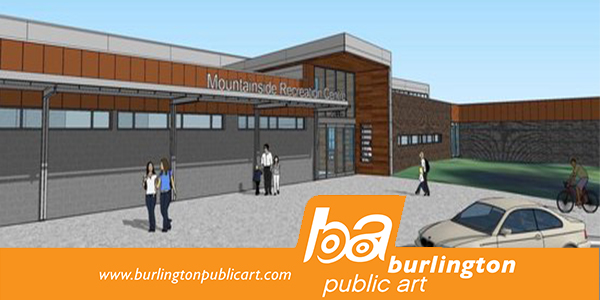 Currently undergoing a major redevelopment the Mountainside Recreation Centre is slated to have some public art on the site. John Taylor could not let the revamped Mountainside recreation Centre open without some public art. Burlington has a contract in place with Cobalt Connect, a Hamilton based arts consulting group that oversaw the selection of the Spiral Stella that is in front of the Performing Arts Centre.
Cobalt Connects wants to receive Expressions of Interest from artists. The project has a budget of $20,000 and an April 29, 2014 deadline for the Expression of Interest
Mountainside is located at 2205 Mount Forest Drive, in Burlington. This competition is open to all Canadian artists.
Built in 1969 Mountainside Arena was the City of Burlington’s 4th public arena. Over the past several years, the Mountainside Recreation Centre has been undergoing a major transformation. The grounds have received numerous improvements and the recreation centre, including the arena and pool buildings, is now being redeveloped.
ZAS Architects are leading the site redevelopment and have been heavily influenced by the incredible grounds surrounding the facility. The sense of open space, wooded lots and the embrace of nature on the site have been reflected in the architecture.
The Mountainside Recreation Centre site is multifaceted and allows for many opportunities for public art. It is the intent of the Steering Committee to allow the selected artist time to fully explore the site and its uses prior to developing an artwork concept. As such, the nature of this public art opportunity is open-ended. The commissioned artwork can be in any medium and sited in a number of different locations throughout the property (interior and exterior spaces are available).
 Ward 3 Councillor John Taylor will want to have his mitts all over who is on the committee that selects the artist chosen to do the public art for the Mountainside recreational centre. An artwork proposal is not requested at this time. Applications will be reviewed on the basis of past work, professional qualifications, and experience. Short-listed artists will be required to participate in an interview with the Selection Committee to determine the finalist.
There are additional details at: www.burlingtonpublicart.com where you can download an application form.
Expression of Interest forms are due on or before Tuesday April 29, 2014 at 4:00 PM.
The Cobalt Connects contact is Kim Selman: (905) 548-0111; Mobile: (905) 515-9334; Email: kim@cobaltconnects.ca
Website: www.burlingtonpublicart.com
 By Ray Rivers By Ray Rivers
March 20, 2014
BURLINGTON, ON.
Another day, another free trade deal. Canada has landed what is being called a big one, this time with South Korea. Promoted by both Liberal and Conservative governments, these trade deals have inadvertently contributed to the de-industrialization of Canada.
Recall the sound of doors closing and windows being shuttered as the ink was drying on our first trade deal, the Canada-US FTA. Many of Ontario’s small and medium manufacturing enterprises, acting like characters in a Steinbeck novel, packed up and moved to larger markets, a warmer climate and the lower wage rates south of the border.
Former Ontario premier, David Peterson, had predicted that a quarter of a million jobs would be lost to FTA, and indeed, unemployment in Ontario more than doubled as its manufacturing sector took the hit. And then there was NAFTA. The Economic Policy Institute, a research think-tank in the US, estimated that by 2010 NAFTA had lost 700,000 US jobs to Mexico. It is worth recalling US presidential candidate Ross Perot and his famous prediction of a ‘giant sucking sound’, as American jobs rushed off to Mexico.
Free trade is just another economic theory. Hypothetical notions of absolute and comparative advantage sound logical on paper. But, the reality can be so different, particularly if the playing field is uneven, if your trading partners don’t play fair. South Korea is one of those nations which adjusts its exchange rates to make their exports competitive, and the nation employs a raft of non-tariff barriers to discourage its citizens from buying foreign goods.
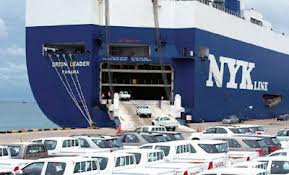 Cars being loaded on to ship for transportation to North America. with tariff removed many of those cars will come to Canada. The Korean deal is being sold as offering greater access to the Korean market for Canadian beef and pork, but even the government accepts that Canadian manufacturing, and auto making in particular will be hit by this deal. The US signed a trade deal, just last year, with South Korea (KORUS FTA) and their experience was that the US lost 40,000 jobs, and its historical trade surplus with Korea was turned into a substantial deficit.
Ford Motor Company, whose US parent had not initially objected to the KORUS FTA, pointed out this sad experience to the Canadian government just as we were putting the seal on our own trade deal. The PM’s response was a sharp rebuke to the manufacturing giant, accusing Ford of ‘duplicity’. Ford is Canada’s largest auto maker, employing about eight thousand people in Ontario and responsible for substantial spin-off employment, mainly in Ontario. Currently about a half million Canadians are employed in the auto industry, with fully a third of those in manufacturing. All Korean-made cars are imported into Canada.
Another potentially impacted auto-maker, Fiat-Chrysler, had been in discussions with the federal and provincial governments over financial support to help it expand its manufacturing operations in Ontario. Last September Ford had been awarded $140 million in a similar move to help it upgrade its plants. In fact the federal government maintains an open budget allocation just for this purpose. And jurisdictions south of the border have long used grants and loans to attract auto companies and other large employers to their states.
 Will beef actually get from Alberta to South Korea? Before either the federal or provincial governments could officially respond, Ontario’s provincial opposition leader, Tim Hudak, slammed any funding for Chrysler, calling it ‘corporate welfare’, ‘extortion’ and ‘ransom’. Both official levels of government were stunned and Chrysler immediately withdrew its request, claiming that it was not prepared to become a ‘political football’. Mr. Hudak, who is fond of complaining about Ontario losing its industrial base and jobs, needs to reflect on his behaviour and how he has shown himself to be unfit for the job of premier of this province. And his party needs to show him the door before the next provincial election, something a number of PC party members have already contemplated.
There will be winners and losers from this South Korean trade deal. While some beef and pork producers from Ontario and Quebec may see increased sales, most of the meat products will come from the west, primarily Alberta. On the other hand, Ontario auto makers Ford, Chrysler and GM, will los e sales to even cheaper Hyundai and Kia models, depressing both employment and provincial incomes. e sales to even cheaper Hyundai and Kia models, depressing both employment and provincial incomes.
Why would the federal government be so keen on adding more jobs into Alberta’s booming economy and driving up inflationary pressure there? And why are the feds OK with further depressing Ontario’s economy – the latest entry into the economic ‘have-not’club? It makes no economic sense, something that Ford and the Ontario government have been saying. And that is perhaps the reason this South Korean deal, which had been started a decade ago, had been left sitting on the shelf until now.
This is not only bad economic policy, it is patently unfair – unfair that a trade deal will benefit one province, one where the PM happens to reside, at the expense of another. Watching Quebec’s PQ government set the ground work for another sovereignty referendum, perhaps as early as next year, it is useful to reflect on what we tell Quebecers to expect by voting to stay in Canada. If it is not fairness, then what?
Background links:
Premier Peterson US Korean Trade Pact Free Trade and Jobs Auto Sector Worries Harper Slams Ford Harper Takes on Ford
Hudak Slams Chrysler Chrysler Backs Out
 By Pepper Parr By Pepper Parr
March 19, 2014
BURLINGTON, ON.
They are at it again.
The graphics on the email certainly look real enough. Anyone doing business with the CIBC might well be fooled enough to click on the link that they say you need to use to ensure that your account card is not de-activated.
 Looks official enough. But this is a total and complete hoax. It’s a hoax – we got the message – but we don’t have an account with CIBC.
There are some people who will respond to this – and they will give out personal details – that’s where the problem begins.
Are we not close to the point where there can be some form of policing to handle stuff like this?
 By Staff By Staff
March 20, 2014
BURLINGTON, ON.
St. Luke’s Church Annual Spaghetti Dinner!
 In the Parish Hall 1382 Ontario Street, on Saturday April 5 with continuous servings of the best spaghetti & meat balls in town from 5:00pm to 7:00pm. In the Parish Hall 1382 Ontario Street, on Saturday April 5 with continuous servings of the best spaghetti & meat balls in town from 5:00pm to 7:00pm.
Tickets Adults $10.00
Children 12 & under $5:00
They want you to reserve – call 905-634-4345.
Cash bar serving Wine, Beer & Soft Drinks – these ARE Anglicans!
 By Pepper Parr By Pepper Parr
March 17, 2014
BURLINGTON, ON.
When we first wrote about the Conservation Heritage District we said this was going to get messy. Once people read the document the city released for discussion at a committee not yet known on a date yet to be determined all hell is going to break loose.
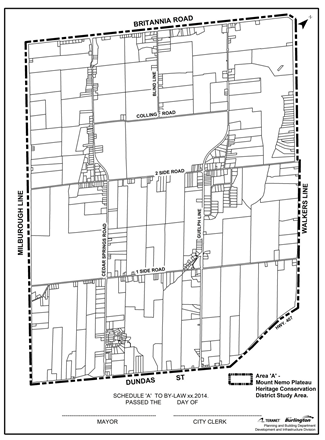 The area covers basically all of the western half of the Escarpment. There are provisions in parts of the draft by-law that will forbid just about everything during the first year of the bylaws existence. At the February meeting in Kilbride city planning director Bruce Krushelnicki told the audience that what was being proposed was a bylaw that the city could pass and revoke any time they wished. The audience wasn’t convinced however, but they did go along with taking a next step which was to do a study. It seemed like a good idea at the Kilbride meeting; nothing overly complicated.
The decision to take that next step was the result of a show of hands which that evening was overwhelmingly positive even though there were a number of people who didn’t like the idea of the city butting into local affairs.
Staff went away to prepare the report that was to set out what the next step study was going to be and what the public could expect to come out of it.
During a city council meeting on the budget when the city was approving the time needed for a planner to oversee much of this work and the expense involved, Jack Dennison, councillor for ward 4 made the point that “this wasn’t something we brought to Council” and indeed the idea of creating a Conservation Heritage District did not originally come from the city planners.
It was the result of an application a group of residents had made to the Niagara Escarpment Commission (NEC) to have as much of the Escarpment as possible protected under a some form of protection. PERL – Protect the Escarpment and Rural Lands made the application and met with the NEC planners and learned that they really weren’t going to be able to get what they wanted.
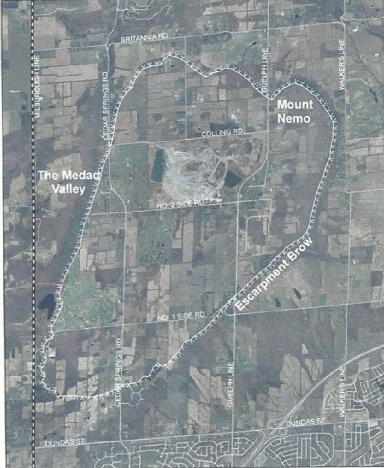 A topographical view of the study boundaries. The Niagara Escarpment Plan which comes from the Niagara Escarpment Commission formed in 1937, has three categories of protection: Nature Areas; Protection Areas and Rural Areas. Each of these apparently has a cultural aspect or element to them which is conveyed with wording such as: “encourage the conservation of traditional cultural landscapes” – which is probably what the Aboriginal people were trying to see when the white people moved in.
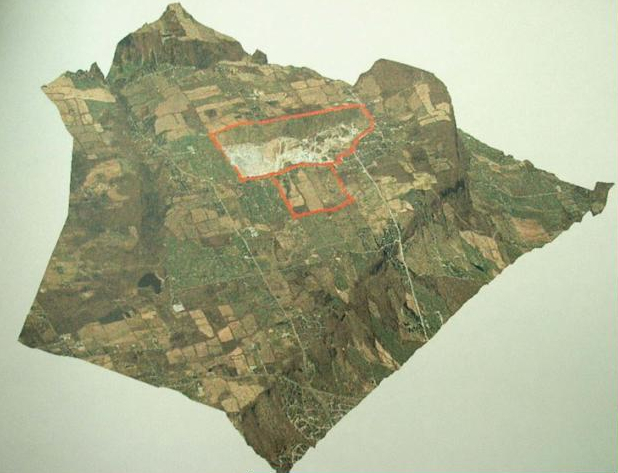 PERL fought to prevent an expansion of the existing quarry. The lower orange outline was the area where the expansion was to take place. PERL was the citizens organization that won the fight against an expansion of the Nelson Quarry. While it was the city that put forward the lead lawyer and spent $2 million in legal fees on that battle, PERL was given standing at the Joint Tribunal and had a consistent impact on the direction that Tribunal went.
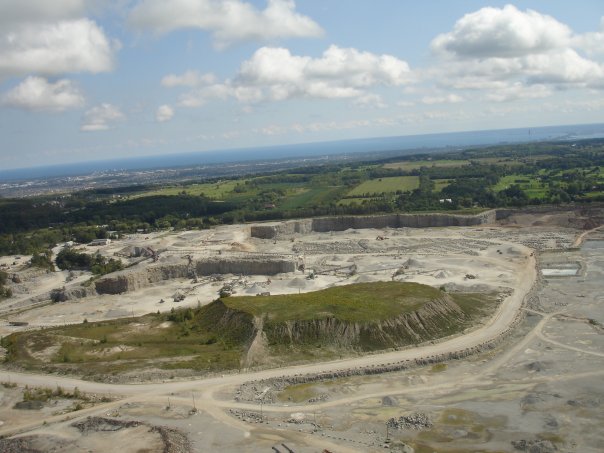 One of these was enough for the people in rural Burlington. Is a bylaw creating a Heritage Conservation District the best way to prevent any quarry application – or is there a larger objective being sought? PERL eventually pulled their application to the NEC for some form of protection for the Escarpment, particularly the Mt Nemo plateau and went to Councillor Taylor with what they felt was a better approach – do something via the Official Plan Review which was taking place.
They came up with the idea of asking if creating a Conservation Heritage District (CHD) could be part of the Official Plan review. While that review is ages from being complete and even longer from being approved – the planners seem to be moving along at what is breakneck speed in the planning world to get a bylaw in place that would make a large swath of rural Burlington a Heritage Conservation District and thereby protect the plateau.
PERL hasn’t said a word publicly. The last date of an entry on their website is November 2012. They have worked quietly with Councillor Taylor who clearly intends to make doing something substantial to protect the plateau his legacy issue; should he win the October election for his ward one would expect that to be his last term of office.
Once the public becomes fully aware of the planned bylaw there will be some “not so fast” comments as well as some OMB level mutterings. Paletta International complained in a letter to the city that they knew nothing of this initiative and asked that their lands be removed from the study area. It doesn’t quite work that way – everything gets studied or nothing gets studied.
The staff recommendation that will get to a Standing Committee at some point in the near future but perhaps as late as June, making it an election issue for some, came out of a process that started back in July of 2013. At the July 2, 2013 city council meeting Councillors Craven and Taylor brought an amendment to whatever was discussed in the CLOSED session part of the June 18th meeting.
Fast forward to what is going to go to a city Standing Committee at a yet unknown date this. Staff is asking that council:
ENDORSE the Terms of Reference for the Heritage Conservation District Study and Plan for the Mount Nemo Plateau, dated March 7, 2014; PROVIDE the Manager of Procurement Services delegated authority to award the contract(s) and issue a Purchase Order to the highest scoring Proponent(s), subject to budget limitations of $200,000; AUTHORIZE staff to commence a Heritage Conservation District Study process for the Mount Nemo Plateau; DIRECT staff to report back following the completion of the Heritage Conservation District Study process prior to the commencement of a Heritage Conservation District Plan process in accordance with s. 40 of the Ontario Heritage Act;
APPROVE an upset limit of $200,000 for the Heritage Conservation District Study and Plan to be funded from the Tax Stabilization Reserve Fund; APPROVE the Mount Nemo Plateau Study By-law, which is set out in an Appendix to the staff report.
Staff wants the city to RECEIVE the draft Study Area Control By-law which may be passed in the event that a potential threat arises to the integrity or character of the study area.
Added in is a requirement that staff report back to council on the views of the public in Q2 2014 – that’s before the end of June. Given the winter we have had all the frost might not be out of the ground by then. And we will be four months away for an election which will likely turn this issue into an election question. What’s the rush?
Ward 3 councilor John Taylor said on Saturday that he intends to campaign on this issue. To Taylor’s credit he has been very diligent in working for the interests of the people north of 407 and while he lives south of Upper Middle Road much of his heart is in the rural part of Burlington.
There is more to this development which we will follow up on. The terms of reference need a look, the cost – they are talking in terms of $200,000 and the level of public participation in this initiative are all critical.
Background links:
Newsflash on the CHD meeting in Kilbride February 10th
 By Pepper Parr By Pepper Parr
March 17, 2014
BURLINGTON, ON.
Information is power. Knowing what is happening gives the person with the information an advantage over the person who doesn’t have that information.
City hall has tons of information – getting at it is not always easy.
 The city recently released a report, it was put together by Andrea Holland of the Clerks department and covers almost every sin imaginable when it comes to what information there is, what you can have, what you can’t have and how you get it. It’s not exactly an easy read but the information is there. The city recently released a report, it was put together by Andrea Holland of the Clerks department and covers almost every sin imaginable when it comes to what information there is, what you can have, what you can’t have and how you get it. It’s not exactly an easy read but the information is there.
Transparency, accountability and privacy are common themes today. The City of Burlington is committed to fostering a culture of transparency, based on the principle that city information:
Must be provided to the public, limited by a few exceptions
Should be released proactively and responsibly.
Early in this decade the provincial government created the Freedom of Information and Protection of Privacy Act; FIPPA for short. The purposes of this Act are,
(a) to provide a right of access to information under the control of institutions in accordance with the principles that,
(i) information should be available to the public,
(ii) necessary exemptions from the right of access should be limited and specific, and
(iii) decisions on the disclosure of government information should be reviewed independently of government; and
(b) to protect the privacy of individuals with respect to personal information about themselves held by institutions and to provide individuals with a right of access to that information.
The province then created a sub set for the municipal sector and called that MFIPPA. In order to provide clarity around the FIPPA legislation with regards to records of members of council and the protection of personal information contained within those records, staff have prepared a reference guide – Access, Privacy and Records, A Guide for Council. It is to provide you with information to make informed decisions about the personal information you have within your office.
 The guide was prepared in consultation with staff and members of council to ensure that the information provided was clear and informative. Further research was conducted on Information and Privacy Commission orders that have been issued with respect to councilor records as well discussions with staff from the Ministry of Government Services. The guide was prepared in consultation with staff and members of council to ensure that the information provided was clear and informative. Further research was conducted on Information and Privacy Commission orders that have been issued with respect to councilor records as well discussions with staff from the Ministry of Government Services.
The Municipal Freedom of Information and Protection of Privacy Act (MFIPPA) came in to effect on January 1, 1991. It applies to all municipalities in Ontario, including local agencies, boards and commissions, school boards and police services.
MFIPPA has two purposes:
Allows every person to request information from a municipality
Describes how the municipality must respond to requests, step by step
Lists limited and specific situations where access must not or may not be granted
Allows individuals to access and correct their own personal information
Requires that municipalities protect personal information in their care
Establishes rules for how personal information must be managed, including proper collection, use and disclosure
Compliance with MFIPPA is overseen by the Office of the Information and Privacy Commissioner of Ontario (IPC). If a requester is not satisfied with the quantity or quality of information released by a municipality in an access to information decision (e.g. adequacy of a record search, information withheld under an exemption), or if an individual feels that their privacy has been breached while interacting with a
municipality, appeals and complaints may be made to the commissioner. Following an investigation, the IPC will then issue a public order or report describing the circumstances of an appeal or complaint, and what must be done to resolve the matter.
Transparency, accountability and privacy are common themes today. The City of Burlington is committed to fostering a culture of transparency, based on the principle that city information:
Must be provided to the public, limited by a few exceptions
Should be released proactively and responsibly.
This report explains how MFIPPA applies to elected officials at the City of Burlington, and provides guidance for how to comply with the Act in daily practice.
MFIPPA and the City of Burlington:
The City Clerk has been delegated with the responsibility for overseeing and administering MFIPPA within the municipality. Within the Clerks Department, the Records and Information Coordinator is responsible for the receipt and processing of access requests, providing advice and consultation to corporate staff, serving members of the public, and advocating for privacy and confidentiality throughout the organization.
FOI request process:
1. A request is received via mail, or in person at the Service Burlington counter. Requests must be accompanied by a legislated $5 fee.
2. The records and information coordinator sends a search memo to all affected departments and staff, which may include individual members of council.
3. Within 7 days, the affected departments and/or individuals provide unaltered and entire records to the records and information coordinator, along with recommendations on release, for analysis.
4. The records and information coordinator analyzes each record to determine whether or not it should be released under MFIPPA. At this stage, the Clerk’s department may seek an opinion from the City’s legal counsel.
5. When analysis is complete, a release package is prepared and approved by the City Clerk. Records may be released in part or in full, or withheld in their entirety, in situations where all responsive records are exempt from disclosure, or where no records exist.
6. All records pertaining to the request are securely stored in a locked cabinet in the Clerks Department until the required retention period has expired.
What is a record:
MFIPPA defines ‘record’ as “any record of information however recorded, whether in printed form, on film, by electronic means or otherwise.” The definition is broad in order to include the full range of possible information formats.
Under MFIPPA, councillors are not considered to be officers or employees of the corporation and records related to interactions with their constituents as elected officials (constituency records) are therefore not covered by MFIPPA and therefore not accessible under the Act. However, if a member of council holds corporate records  created by the City of Burlington, or is discussing city business, or where they relate to city business such as communicating directly with City staff, that information may be accessible under MFIPPA. created by the City of Burlington, or is discussing city business, or where they relate to city business such as communicating directly with City staff, that information may be accessible under MFIPPA.
Councillor Assistants are considered to be City of Burlington employees, to which MFIPPA access provisions do apply.
 Constituency records: Constituency records:
Records of a councillor acting on behalf of a constituent and representing their interests are not accessible under MFIPPA. This includes all content, opinions and personal information contained in any correspondence to and from a constituent, i.e. name, phone number, email and mailing address. For more details on what constitutes personal information, see Definitions below.
Examples:
Correspondence from a constituent concerning a pothole in their neighbourhood
Email from a constituent requesting that the councillor attend a community event
Correspondence between a councillor and a private sector company
City business records:
Corporate records include information that is related to the business of the city, its agencies and boards, and may be requested through MFIPPA. All corporate records related to city business are also governed by the City of Burlington records retention by law 97-2005 and amending by-law 62-2013.
Examples:
Email sent to city staff and members of council, including carbon copies (cc).
Councillor records that advance the interests of the city.
Councillor forwards request for pothole repair to Roads and Parks Maintenance.
Roads and Parks Maintenance receives a request sent via email directly from a constituent to repair a city owned asset.
Email from a citizen, forwarded to a city department by a Councillor’s Assistant for follow up
Records related to a Council member’s involvement with a City agency, when acting on behalf of the city.
 Email: Email:
Email between Council members and city staff is typically accessible under MFIPPA. Other email contents which are not generally accessible under MFIPPA include:
Citizen contact lists, addresses and phone numbers stored in email systems (hosted and on site, i.e. Outlook; Constant Contact.)
Emails between a member of council and a constituent or local business
Personal emails sent from one member of Council to another.
When a FOI request is received for councillor records, all requests will be analyzed on their own merit and a decision will be made whether the records are subject to MFIPPA or not, and if they are, a further decision will be made to release or withhold. Each request represents a unique set of circumstances that will need to be considered.
Councillor records management: During the term of office and when re-elected.
At the start of each term of office, members of Council will receive training on MFIPPA as part of Council orientation.
Corporate records related to city business must be retained and disposed of according to the City of Burlington records retention by-law.
Confidential and Transitory information, including draft or working documents and duplicate copies, can be securely destroyed in a locked shredding bin or with a cross-cut shredder when no longer required. On-site shredding services are highly recommended for secure disposal of personal, confidential and sensitive information.
Constituent records fall under the sole custody and control of the member of council. Even though MFIPPA does not apply to these records, each councillor should take steps to safeguard any personal information that is in their possession from unintended use or disclosure.
Constituent records can be treated as “General Correspondence” for retention purposes, with a suggested retention period of Current + 4 years.
 Any constituent records and/or personal information that has been collected by a member of Council or received through the Councillor’s office, including contact details, that resides on city email or other city-owned resources, can not be shared or used for any purpose without the individual’s prior consent. Similarly, contact information cannot be shared with election teams without prior consent to do so from the individual. The voter’s list is not intended for use related to constituency business. Any constituent records and/or personal information that has been collected by a member of Council or received through the Councillor’s office, including contact details, that resides on city email or other city-owned resources, can not be shared or used for any purpose without the individual’s prior consent. Similarly, contact information cannot be shared with election teams without prior consent to do so from the individual. The voter’s list is not intended for use related to constituency business.

Before leaving office, a councillor may forward any outstanding constituency matters or ward-related documents to their assistant for future follow up with a request to the affected constituent for approval to send the unresolved matter to the incoming councillor.
Private or personal contacts saved in Outlook folders must be destroyed.
 If an elected official wishes to retain a copy of any records associated with their time in office, contact the City Clerk. If an elected official wishes to retain a copy of any records associated with their time in office, contact the City Clerk.
Any records and documents retained by former councillors must be kept according to the City of Burlington records retention by-law. Electronic records should be encrypted, using one of several methods available.
When there is a change in office, the Councillor’s assistant should send an email to all current recipients of the Ward newsletter, offering a clear option to opt in and continue receiving the newsletter, or to opt out from future communication.
One example is provided below:
“As you may be aware, a new Councillor will be in place for Ward X as of December 1. If you wish to continue receiving the Ward X newsletter, please opt in at the link below.”
Collection, use and disclosure under MFIPPA
MFIPPA includes specific requirements for how municipalities collect, use and disclose personal information.
Every time that personal information is collected by a municipality, notice must be provided to the affected individual(s) which states:
The legal authority to collect
The purpose(s) for which the personal information will be used
The title, business address and telephone contact for an officer or employee who can answer questions about them collection.
MFIPPA prohibits the collection of personal information unless the collection is:
Expressly authorized by law, or
Used for the purposes of law enforcement, or
Necessary to the administration of a lawfully authorized activity.
 The personal information collected by an institution may only be used under the following conditions: The personal information collected by an institution may only be used under the following conditions:
With informed consent from the individual
For the purpose for which it was obtained or compiled, or for a consistent purpose.
A municipality is not permitted to disclose personal information in its custody or under its control, unless the person to whom the information relates has consented to its disclosure, or in a few other limited circumstances described under the Act, for example: when there is statutory authority to disclose for law enforcement purposes.
Example:
The name and address of a citizen signing in at a public meeting can only be disclosed if the citizen provided consent,or if the possibility of disclosure was indicated in a written collection notice posted at the meeting.
The use and disclosure of personal information must always be consistent with the original purpose for which it was collected.
A consistent purpose is defined under MFIPPA as something an individual might reasonably have expected. Reasonable expectations are typically established in collection notices.
Under MFIPPA, councillors do not have any special right of access to records held by municipalities, including the personal information of citizens and employees.
In other words, members of council may only access information that would not normally be exempt from disclosure under MFIPPA. The same is true for former members of council or employees who, at one time, may have had access to records in the performance of their duties.
This approach is intended to protect members of council and the City of Burlington from the following risks:
 Contravening MFIPPA Contravening MFIPPA
Breach of privacy or confidentiality
Negative media exposure Example:
Members of Council cannot access contact information listed on public meeting sign-in sheets unless the attendee has consented to that kind of disclosure in advance.7
Records of unsuccessful tender submissions for a city construction project are reviewed and redacted according to MFIPPA exemptions before being received by a member of council, if requested outside of standing committee and council documentation
Councillors may have a right of access to certain types of information that would not be available to the general public, if they require the information in their capacities as members of council in order to carry out duties related to that function.
Councillors who wish to request information from the City of Burlington outside of their official capacity may submit an FOI request to the Clerk’s department at any time.
Access to personal information:
Where a councillor acting in their official capacity seeks access to personal information held by the city (for example, the personal information of an employee), information may only be obtained if the individual has provided prior consent.
The Mayor, as Head of Council, is considered an “officer” of the City. The Mayor’s records that relate to the mayoral duties, as opposed to constituency or personal papers, are considered to be in the City’s custody or control and therefore may be requested under MFIPPA.
 Examples of mayoral duty records, which may be accessible: Examples of mayoral duty records, which may be accessible:
Notes taken at Burlington Hydro meeting, while acting in official capacity
Speech delivered at opening of new recreational facility
Staff within the Office of the Mayor are considered to be in political positions, to which MFIPPA access provisions do not normally apply. For example, an email sent from the Mayor to one of their staff members would not typically be accessible under MFIPPA. However, if city staff are copied on the email, it could be accessible.
Any time that the Mayor or one of his or her staff forwards a customer service or constituency matter to city staff for follow up, that record may also be requested under MFIPPA.
This is in contrast to staff working within Councillor offices, who are considered to be City of Burlington employees to which MFIPPA access provisions do apply.
Definition of personal information:
“personal information” means recorded information about an identifiable individual, including,
(a) information relating to the race, national or ethnic origin, colour, religion, age, sex, sexual orientation or marital or family status of the individual,
(b) information relating to the education or the medical, psychiatric, psychological, criminal or employment history of the individual or information relating to financial transactions in which the individual has been involved,
(c) any identifying number, symbol or other particular assigned to the individual,
(d) the address, telephone number, fingerprints or blood type of the individual,
(e) the personal opinions or views of the individual except if they relate to another individual,
(f) correspondence sent to an institution by the individual that is implicitly or explicitly of a private or confidential nature, and replies to that correspondence that would reveal the contents of the original correspondence,
(g) the views or opinions of another individual about the individual, and
(h) the individual’s name if it appears with other personal information relating to the individual or where the disclosure of the name would reveal other personal information about the individual.
There you have it. Not the kind of document you will take to the beach to read in the summer – but it is the kind of document you might want to refer to – and it will be on the Gazette website for a long time – until it is revised.
In the past these rules have not been fully observed. with an informed public – we just might see better compliance.
 By Staff By Staff
March 19, 2014
BURLINGTON, ON.
In a recent letter sent to the Friends of Freeman Board of Directors, David explains his reasons for painting “The Burlington Freeman Station”. David’s letter is reproduced below.
“ Over the past 35 years of my art career I have been striving to accomplish one thing, and that is to preserve Canada’s Heritage through my art. This has led me to create paintings of famous Canadian Heritage scenes, buildings, tall ships, covered bridges, lighthouses and more recently a series of Historic Canadian railway stations.
 David Harrington’s limited edition print of the Freeman Station is available for purchase – but just to Friends of Freeman Station members. The membership is a steal at $10 annually. In 2012, when I read an article in the Burlington Post about a citizen’s group, named the “Friends of Freeman Station”, attempting to rescue and preserve Burlington’s Freeman Station, I decided that the Freeman Station was definitely worthy of creating a painting that I hoped would capture some of the historical flavour of its famous past. For reference purposes I took over 100 photos of the station when it was temporarily located behind the Burlington fire hall on Fairview Street. I also researched to find historical photos and stories related to its past. In addition, I managed to talk to some people who recall using the Freeman Station. From all of this information, I decided to portray the station as it stood in the late 1950’s to early 1960’s.
 To position it to that era, I included a 1957 Chevrolet Bel Air (a favourite to this day amongst car enthusiasts), and a 1955 era “White Diesel” Coca Cola truck. The Coke truck was added to capture the story of one of the people who used the station frequently, who told me that he usually bought a Coke from the vending machine inside the station prior to the train arriving to take him to Toronto. If you look real close you can also see just a portion of a 1956 Ford Crown Victoria peeking out of the left side of the image. To position it to that era, I included a 1957 Chevrolet Bel Air (a favourite to this day amongst car enthusiasts), and a 1955 era “White Diesel” Coca Cola truck. The Coke truck was added to capture the story of one of the people who used the station frequently, who told me that he usually bought a Coke from the vending machine inside the station prior to the train arriving to take him to Toronto. If you look real close you can also see just a portion of a 1956 Ford Crown Victoria peeking out of the left side of the image.
At that time, for many companies, the train was the main method used for shipping their products. For this reason I thought that I should include, on the railway platform, wooden shipping containers originating from famous Canadian companies of that era. You will note wooden crates from The T. Eaton Company, Barber Glass of Guelph, Seagram’s of Montreal, G & W of Toronto and Corby’s of Corbyville, Ontario.
I also added the luggage cart from the same era, as well as a mother and child with her 1950’s style luggage, also a business man heading into the station and of course the Coke delivery man. All of which I hoped would add to the sense of history and the hustle/bustle nature of the station in its prime.
I hope that this painting and the limited edition prints produced from this image help in keeping the memories and history of Burlington’s Freeman Station alive and that it may also bring back memories to those who had the good fortune of using this station in the past.
There are not many of these great stations left – so let’s all work together to help preserve Burlington’s Freeman Station!!”
David Harrington
The Harrington painting is an original done as an acrylic from which a limited edition of 500 prints were made.
While the station is fondly known as the Freeman Station and the organization that was incorporated to save it is known as the Friends of the Freeman Station there appears to be a move to revert to the proper name of the station which is Burlington Junction. We are told that the Freeman family isn’t all that keen on the idea of their name being attached to the station.
The T-shirts that were used for fund raising purposes are going to soon become collectors items – the couple of dozen left are the end of that production line. The FoF are in the process of developing ideas for a new logo, a new design and it appears a re-branding of one of the most impressive community initiatives Burlington has seen for some time.
The FoF might want to re-think what they are deciding to do and ask their constituency how they feel. Either way – it’s a pretty good story.
Background links:
New president at Friends of Freeman.
Fight to save Freeman station is won – city signs joint venture agreement.
 By Pepper Parr By Pepper Parr
March 15, 2014
BURLINGTON, ON.
John Willard has certainly put a much different twist on what we thought quilts were all about. Canadians used to see quilts as things that people on farms used – often made out of bits and pieces of discarded clothing and flour sacks.
We then saw quilts done by the Mennonite community that were pieces of art – with traditional patterns that sold into the tens of thousands at the annual quilt sale in New Hamburg each fall.
 A lot of tradition in this quilt but the use of pastel colours move it out of what many see as the “traditional” rural quilt made from remnants and flour sacks. Then along came John Willard who introduced designs that had not been seen before and quilt making was now going in a different direction. Willard has a 40 year retrospective on at the Burlington Art Centre where there is a feast for the eye and, if you look very closely, some very, very powerful statements hand stitched into a quilt.
There are a number of quilts that would meet the demanding standards of the Mennonite community and there is one that would fill the wall of one of those Lakeshore mansions.
Willard will tell you the very moment he became an artist. The family came across an old trunk stuck in a chicken coop on a family farm in Shediac, New Brunswick. It was filled with brightly coloured crepe paper – that moment James Willard could almost feel the colour entering his blood stream – we see that colour today on the walls at the Burlington Art Centre.
Willard was a set designer, a photographer He bought his first quilt in 1972; in the next five years he could display a collection of 30 quilts.
His work has meandered all over the place. He worked as a custodian at the Oakville Library and later accepted the position of Publicity and Programming Assistant which he held for 23 years.
Willard’s introduction to the finer art of actually quilting was received at the hand of Michael James who was giving workshops. Willard didn’t subscribe to the diehard traditionalists who insist quilts must be completely hand stitched from geometric blocks, have four square corners and be used as bed covering upon completion. Willard went with those who believed a quilt could be of any size, shape, texture or subject matter and could be hung on a wall to be admired as a work of art.
 It all began on an evening in 1907 needs very close inspection. What appears to be white caps on the waves is much more than the eyes sees at first glance.
There is a quilt that didn’t do much for me when I glanced at it. It saw it as a postcard, mildly interesting, until a woman asked if I’d looked at the Titanic – I said I had but it wasn’t my kind of quilt – but that I did like the ribbon quilts. “Take a closer look” the woman said to me. I did and said – “so it’s a quilt of the Titanic sinking – there are two of them.”
 The names of those lost when the Titanic sank in 1907 With that tone of voice only a teacher or a Mother can use, the woman said: “get closer” so I walked up and took a really close look – and then it hit me. The names of the more than 1500 people whose lives were lost when the Titanic sank at sea were hand stitched into the waves the ship was sliding beneath. The quilt is called: It all began on an evening in 1907.
 This massive piece needs a very large wall – it takes over any room it is installed in – but then what a room. The colour, the energy – it is almost a tapestry. The Ribbon Series, of which here are seven at the exhibit, celebrate a turning point in Willard’s life when he came out of the closet and embraced his life as a gay man with a joy and celebration that is evident in the flows of the ribbons in some of the quilts and the tight design and discipline in others.
 The colour, the flourish and the tight discipline take the art of quilt making some distance from the remnant quilts traditionally seen as folk art. Willard is very much a quilter, evident when you watch the way he holds the needle and draws a thread tightly but he has always relied on fellow quilters who have worked with him following his designs and instructions. The late Alvina Martin and Linda Robertson have done much of the finishing work from designs Willard spent months perfecting.
This is an exhibit well worth the time. It is the work of a master who broke old moulds and advanced the art of quilt making to a new level.
The quilts are on display until the end of the month – well worth some of your time.
|
|